
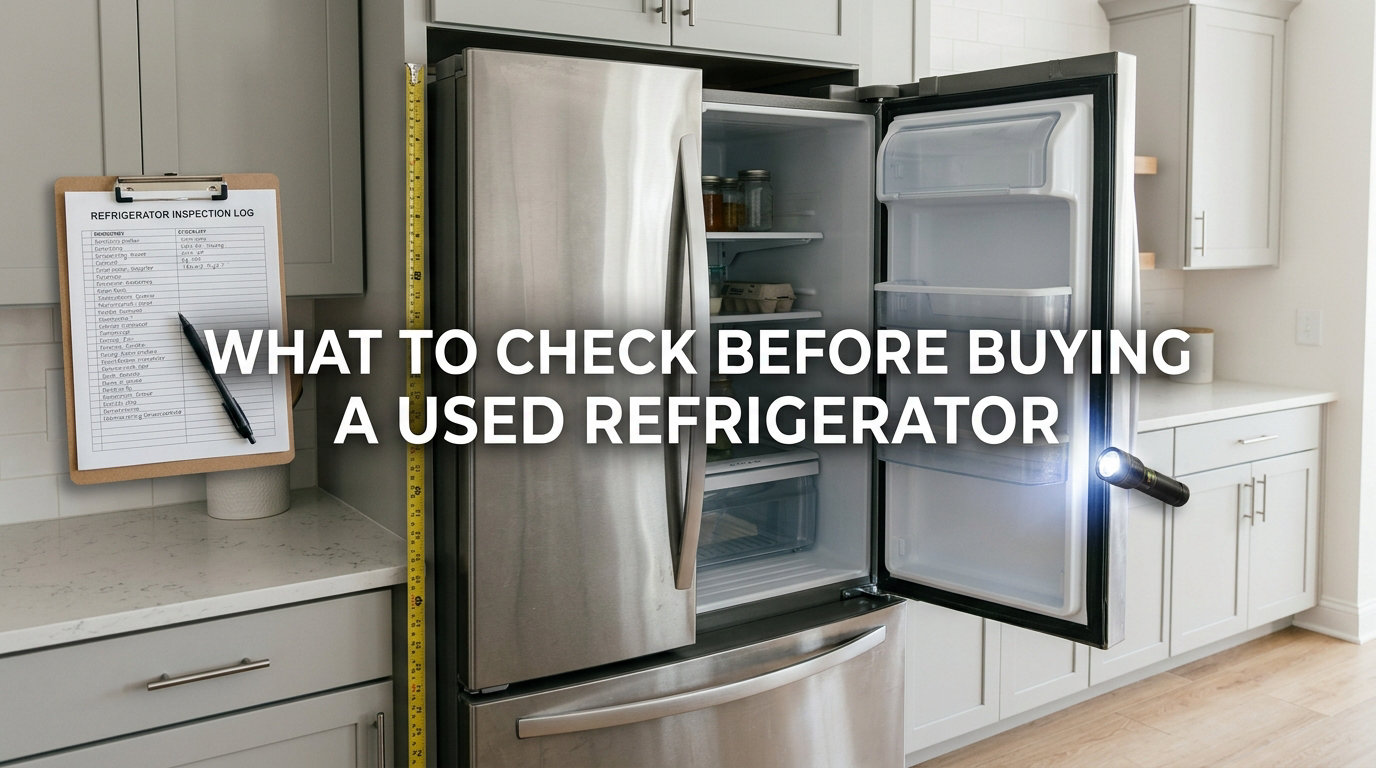
A used refrigerator can save you hundreds of dollars compared to buying new, but only if you know what to check before buying a used refrigerator. I have helped friends and family inspect dozens of secondhand fridges over the past several years, and the difference between a great deal and an expensive mistake always comes down to the inspection.
The stakes are high because most used refrigerators come with no warranty. Once you hand over your cash and load it into a truck, any repairs become your problem. A compressor failure can cost $400 or more, and a bad door seal silently wastes electricity for months.
This guide walks you through every check I run during a used refrigerator inspection. Follow these steps in order and you will catch the vast majority of problems before money changes hands.
Table of Contents
Complete Checklist: What to Check Before Buying a Used Refrigerator
Here is the quick version of what to check before buying a used refrigerator. I break each item down in detail below.
Measure your space, including ventilation clearance on all sides
Check the fridge age and research the brand reputation
Inspect the exterior and interior for rust, dents, and missing parts
Test the door seal using the dollar bill or paper test
Plug it in and confirm the compressor kicks on within minutes
Verify the fridge reaches 35 to 38 degrees Fahrenheit and the freezer hits 0 degrees using a thermometer
Smell the interior for lingering odors that may never come out
Inspect the condenser coils for dust buildup and damage
Check the drip pan and defrost drain for standing water or mold
Listen for strange banging, clicking, or humming noises
Verify energy efficiency using an Energy Star label or a kill-a-watt meter
Ask the seller about age, repair history, and reason for selling
Print this list or take a screenshot before you head out to look at any used fridge. Having it on your phone keeps you focused when a seller is eager to close the deal.
Step 1: Measure Your Space Before You Shop
Nothing is worse than buying a fridge that does not fit. Measure the width, depth, and height of the space where the refrigerator will live. Write down all three numbers and bring a tape measure to every viewing.
Do not forget about door swing clearance. A side-by-side or French door model needs extra room for both doors to open fully. Measure the path from your front door to the kitchen, including any tight hallways or stair turns.
Ventilation clearance matters just as much as the opening size. Most manufacturers recommend at least one inch of space on the sides and back, plus two inches on top, so the condenser can release heat efficiently. Cramping a fridge into a tight space makes the compressor work harder and shortens its lifespan.
Step 2: Check the Age and Brand Reliability
The age of a used refrigerator tells you a lot about how much life it has left. Most refrigerators last 10 to 18 years, with simpler top-freezer models often outlasting complex French door units. Ask the seller for the manufacture date, or look for a sticker inside the fridge compartment.
If you cannot find a sticker, the model number on the nameplate can be looked up online. Many appliance parts websites have free age lookups where you enter the model and serial number to get the exact build date.
Brand reputation is equally important when buying secondhand. In my experience helping people shop for used appliances, older Whirlpool, GE, and Roper models from the early 2000s tend to run reliably for 15 to 20 years. On Reddit forums like r/Appliances and r/Frugal, many homeowners specifically recommend avoiding newer Samsung and LG refrigerators due to recurring compressor and control board failures.
Brands like Bosch, Danby, and Summit frequently get positive mentions for longevity. Research the specific model number before committing, not just the brand name.
Step 3: Inspect the Exterior and Interior Condition
Walk around the refrigerator and look at it from every angle. Check for rust along the bottom edges, large dents in the doors, and cracked or missing plastic trim. Small cosmetic scratches are fine on a used unit, but deep dents can signal the fridge was dropped or roughly handled.
Open the doors and inspect the interior carefully. Look for cracked shelves, broken drawer glides, and missing bins. Replacement shelves and drawers often cost $50 to $150 each, which can wipe out your savings in a hurry. Count every shelf and drawer and compare against what the model originally shipped with.
Check that adjustable shelves actually move and lock into place. Test every drawer by pulling it out fully and pushing it back in. If a drawer binds or falls off its track, the glide mechanism may be worn or broken.
Look at the door hinges too. Sagging doors or hinges that look bent indicate the fridge has carried heavy loads on its door shelves or has been knocked around during a previous move.
Step 4: Test the Door Seal with the Paper Test
A faulty door seal, also called a gasket, lets cold air escape and forces the compressor to run constantly. This drives up your electric bill and wears out the compressor prematurely. Testing the seal is one of the most important things to check before buying a used refrigerator.
The paper test is the easiest way to check a gasket. Open the refrigerator door and place a dollar bill or a strip of paper between the rubber gasket and the fridge body. Close the door on the paper, then try to pull it out slowly.
You should feel consistent resistance along the entire seal. If the paper slides out easily with little friction, the gasket is weak or broken in that spot. Repeat this test at five or six points around the door, paying extra attention to the corners where seals fail first.
Also inspect the gasket visually for cracks, mold, hardening, or areas where it has pulled away from the door. A gasket replacement costs roughly $50 to $100 in parts, plus labor if you do not install it yourself. Factor this into your offer price if the seal is compromised.
Test both the main door and the freezer door. Freezer seals tend to fail faster because of the wider temperature difference.
Step 5: Plug It In and Test Cooling Performance
Never buy a used refrigerator that the seller refuses to plug in for you. If a seller on Facebook Marketplace or Craigslist says they cannot demonstrate the fridge because it is unplugged, treat that as a warning sign.
Ask the seller to plug it in at least 30 minutes before you arrive, or plug it in yourself when you get there and wait. Within 5 to 10 minutes of plugging in, you should feel cold air flowing from the interior vents. Place your hand near the vents inside the fridge compartment and feel for a steady stream of cold air.
Listen to the compressor when it turns on. A healthy compressor makes a low, steady hum. Loud rattling, clicking that repeats every few minutes, or a compressor that never starts at all are all red flags for imminent failure.
Feel the back or sides of the refrigerator after it has been running for 15 to 20 minutes. The exterior should be warm but not hot to the touch. Excessive heat can indicate a refrigerant problem or a failing compressor.
Check that the interior light turns on when you open the door. A dead bulb is a trivial fix, but it tells you the electrical system is working.
Step 6: Verify Temperature with a Thermometer
This is a step that most competitors and most buyers skip, but it is one of the most reliable ways to confirm a fridge is genuinely working. Bring a cheap appliance thermometer with you, or pick one up at a hardware store for under $10.
A properly functioning refrigerator should hold an interior temperature between 35 and 38 degrees Fahrenheit. The freezer should maintain 0 degrees Fahrenheit. These are the ranges recommended by the FDA and the EPA for safe food storage.
Place the thermometer in the center of the main compartment and check it after 20 to 30 minutes. If the fridge is struggling to get below 42 degrees after running for half an hour, the cooling system may be degraded.
If the seller has had the fridge running for hours before your visit, so much the better. A thermometer reading in a fully cooled fridge gives you the most accurate picture of how it will perform in your kitchen.
Keep in mind that opening and closing the door repeatedly during your inspection raises the interior temperature. Take your thermometer reading before you start opening doors for other checks.
Step 7: Smell the Interior Thoroughly
Every used refrigerator will have some odor. The question is whether that odor will come out or whether it is permanent. Close the door, wait a minute, then open it and take a deep breath.
A clean but slightly musty smell usually comes out with a thorough wipe-down using baking soda and warm water. A strong spoiled food smell can be removed with effort if the fridge was recently powered off.
Be wary of a chemical or ammonia smell. Ammonia odor can indicate a refrigerant leak, which is a serious and expensive problem. A fishy electrical smell points to a failing component in the control board or wiring.
Check the defrost drain area inside the fridge. Clogged defrost drains trap water and food debris, creating persistent odors that return even after deep cleaning. Look for standing water or slime near the drain hole at the bottom of the fridge compartment.
If the seller claims they already cleaned it and it still smells strongly, consider that the odor may have soaked into the plastic liner permanently. Some smells never fully leave.
Step 8: Inspect the Condenser Coils and Compressor
The condenser coils are typically located on the back of the fridge or underneath it behind a kick plate. These coils release heat from the refrigerant, and their condition tells you a lot about how well the previous owner maintained the appliance.
Dusty, clogged coils are actually a good sign in one sense because they are easy to clean. A coil brush costs under $10 and the job takes 15 minutes. However, extremely thick dust packed into the coils suggests the fridge has been running inefficiently for a long time, which may have stressed the compressor.
Look for physical damage to the coils. Bent fins, oil spots, or green corrosion on the copper tubing can indicate a refrigerant leak. A fridge with low refrigerant will not cool properly even if the compressor runs continuously.
The compressor is the black or dark gray tank-like component near the coils. It should be firmly mounted with no loose brackets or excessive vibration when running. According to repair technicians on appliance forums, a compressor that clicks on and off rapidly every few minutes has a bad start relay, which is a $30 to $80 part but signals the compressor itself may be on its way out.
Control board failures are another expensive problem on modern refrigerators. Look for warning signs like the display flickering, buttons that do not respond, or the ice maker cycling erratically. A replacement control board can cost $200 to $600.
Step 9: Check the Drip Pan and Defrost Drain
Few inspection guides mention the drip pan, but it is worth checking. The drip pan sits underneath most refrigerators and collects condensation that drains from the defrost cycle. Pull the kick plate at the bottom front of the fridge and slide the pan out if it is accessible.
A small amount of clean water in the drip pan is normal. Standing water that is murky, slimy, or foul-smelling means the pan has not been cleaned in a long time and the defrost drain may be partially clogged.
Mold in the drip pan is a health concern, and a clogged defrost drain causes water to pool inside the fridge compartment instead of draining properly. If you see water pooling on the floor inside the crisper drawers, the defrost drain is likely blocked.
A clogged drain is usually fixable by flushing it with warm water and a little vinegar, but a cracked drip pan needs to be replaced. Replacement pans typically cost $20 to $40.
Step 10: Listen for Strange Noises
Stand next to the refrigerator for a full five minutes with everything else quiet. Normal sounds include a low hum from the compressor, occasional gurgling from refrigerant flowing through the lines, and a click when the defrost timer switches on and off.
Loud banging when the compressor shuts off can mean the internal springs are worn. Rapid clicking that repeats every two to three minutes usually points to a failing start relay. A high-pitched squeal from the compressor area can indicate bearing failure inside the sealed unit, which requires a full compressor replacement.
Rattling or vibrating often comes from loose components like the condenser fan blade or an unlevel installation. These are generally minor fixes, but constant loud noise from the compressor itself is a deal-breaker.
Trust your instincts on noise. If the fridge sounds wrong compared to units you have owned before, it probably is.
Step 11: Verify Energy Efficiency
Older refrigerators use significantly more electricity than modern Energy Star certified models. A 15-year-old fridge can cost $150 to $200 per year more in electricity than a current Energy Star unit. This ongoing cost eats into your upfront savings.
Look for a yellow EnergyGuide label on the side or back of the fridge. This label estimates annual electricity usage and cost. If the label is missing, look up the model number online to find its energy consumption rating.
For the most accurate test, bring a kill-a-watt meter to the inspection. Plug the fridge into the meter and the meter into the wall, then let it run for 30 minutes. Multiply the reading by 48 to estimate daily consumption. A healthy fridge uses roughly 1 to 2 kilowatt-hours per day. If the reading is double that, the compressor is working too hard and the unit may be failing.
Forum users on r/Appliances frequently mention that a failing refrigerator can use two to three times the normal electricity as it struggles to maintain temperature. Catching this before you buy saves you from inheriting an energy hog.
Questions to Ask the Seller
Asking the right questions is a key part of knowing what to check before buying a used refrigerator. The seller’s answers, and their willingness to answer, tell you a lot about the unit’s history.
How old is the refrigerator? The seller should know or be willing to find the manufacture date.
Why are you selling it? Moving or remodeling is a good reason. Avoid sellers who are vague or say it was replaced after problems.
Has it ever been repaired? Ask specifically about compressor, control board, and refrigerant work. Request receipts if available.
Does it have all the original shelves and drawers? Missing parts add up quickly in replacement costs.
Can I see it plugged in and running? This is non-negotiable. Walk away if the answer is no.
Do you have the manual or any service records? A seller who kept documentation likely took better care of the appliance.
Is there anything wrong with it that I should know? Some sellers will be honest if asked directly.
If you are buying from a used appliance dealer or reseller rather than a private seller, check their reviews on Google and Yelp first. Forum users strongly recommend this step because some resellers flip broken units without properly testing them.
Red Flags That Mean You Should Walk Away
Sometimes the smartest move is to walk away. Here are the clear red flags I look for during every inspection.
The seller will not plug it in. There is no legitimate reason a working refrigerator cannot be demonstrated.
The compressor never starts or clicks repeatedly. This points to compressor or start relay failure.
You smell ammonia or chemicals. This indicates a refrigerant leak that is expensive and sometimes impossible to repair.
The interior will not get below 42 degrees after 30 minutes of running. The cooling system is compromised.
Rust has eaten through the bottom panel. Structural rust means the cabinet is compromised and may leak.
The seller pressures you to decide quickly. A legitimate seller understands you want to inspect the appliance.
The price seems too good to be true. A full-size refrigerator in working condition for under $100 usually has a hidden problem.
Mold is visible in the drip pan or on the interior liner. Deep mold is a health hazard and difficult to fully remove.
Remember that there will always be another used refrigerator. Walking away from a bad deal saves you money and headaches.
Hidden Costs to Budget For
The purchase price is rarely your total cost. Budget for these common expenses when buying secondhand.
Missing parts are the most common hidden cost. Replacement shelves run $40 to $80 each, crisper drawers cost $50 to $120, and door bins add $30 to $60 each. A fridge missing two shelves and a drawer can cost an extra $200 before it is fully functional.
Transportation is another cost many buyers forget. If you do not have a truck, renting one or hiring a delivery service runs $50 to $150. Appliance dollies and moving straps are essential for safely moving a heavy refrigerator without damaging it or hurting yourself.
Plan for immediate maintenance too. A new water filter costs $30 to $50, a door gasket runs $50 to $100, and cleaning supplies for a thorough deep clean add another $20. Setting aside $100 to $150 for these items is realistic.
Getting It Home: Transportation Tips
How you transport the refrigerator matters as much as the inspection itself. A fridge that works perfectly at the seller’s house can break during a rough move.
Always transport a refrigerator upright. Laying a fridge on its side allows compressor oil to flow into the cooling lines, which can destroy the compressor when it is plugged back in. If you absolutely must lay it down, wait at least 24 hours before plugging it in so the oil can settle back.
For upright transport, secure the refrigerator with straps and pad the corners. Keep it away from the cab of the truck to prevent shifting during stops.
After any move, even an upright one, wait 4 to 6 hours before plugging the refrigerator in. This gives the refrigerant and compressor oil time to settle back into their proper positions. Plugging in too soon after transport is one of the most common ways buyers accidentally damage a perfectly good used fridge.
If you are buying from a scratch-and-dent outlet or used appliance store, ask if they offer delivery. Many do for a reasonable fee, and their staff knows how to move refrigerators without damaging them.
FAQs
How to tell if a used fridge is good?
A good used refrigerator cools to 35-38 degrees Fahrenheit in the main compartment and 0 degrees in the freezer, has a tight door seal that passes the paper test, runs with a quiet steady hum from the compressor, and has no ammonia or chemical odors. Plug it in for at least 30 minutes and verify the temperature with a thermometer before buying.
What to check before buying a second-hand fridge?
Check the age and brand reputation, measure your space including ventilation clearance, test the door seal with the paper test, plug it in and verify it cools to proper temperatures, smell the interior for permanent odors, inspect the condenser coils and compressor, check the drip pan for mold or standing water, listen for strange noises, and ask the seller about repair history and reason for selling.
What refrigerator brand to stay away from?
Appliance forums and repair technicians frequently report reliability problems with newer Samsung and LG refrigerators, particularly compressor and control board failures. Older Whirlpool, GE, and Roper models tend to be more reliable for used purchases. Always research the specific model number rather than relying on brand name alone.
What to ask when buying a second-hand fridge?
Ask the seller how old the fridge is, why they are selling it, whether it has ever been repaired, if it has all original shelves and drawers, whether you can see it plugged in and running, if they have the manual or service records, and if there are any known issues. Avoid sellers who refuse to demonstrate the fridge or who are vague about its history.
How old is too old for a used refrigerator?
Most refrigerators last 10 to 18 years. A used fridge over 12 years old may still work well, especially simpler top-freezer models from reliable brands, but it will use more electricity than a newer unit and is closer to needing major repairs. For models over 15 years old, factor in higher energy costs and the likelihood of compressor replacement when negotiating price.
Final Thoughts on Buying a Used Refrigerator
Knowing what to check before buying a used refrigerator turns a risky purchase into a smart investment. The inspection comes down to a few core principles: make the seller prove it works, verify temperature with a thermometer, trust your nose, and never be afraid to walk away.
Bring a tape measure, a thermometer, a flashlight, and this checklist to every viewing. These tools cost almost nothing and they protect you from the most expensive mistakes. A 30-minute inspection can save you hundreds of dollars in repairs and months of frustration.
Used refrigerators from reliable brands that pass every check on this list can serve you well for years. Take your time, inspect thoroughly, and negotiate with confidence based on what you find.