
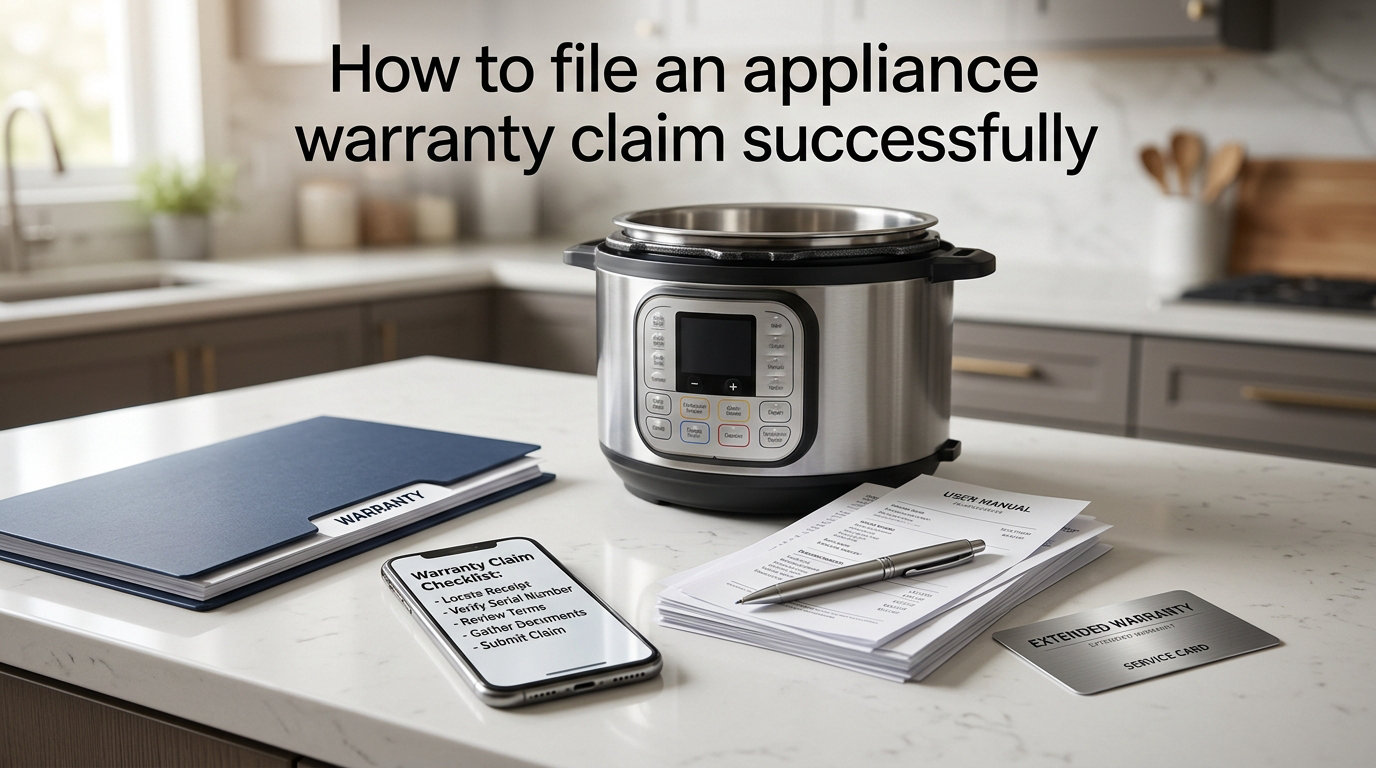
When your refrigerator stops cooling or your washing machine starts leaking, your first thought is probably about the repair bill. But if your appliance is still under warranty, you might not have to pay for parts or labor at all. The problem is that many homeowners don’t know how to file an appliance warranty claim properly, and simple mistakes can lead to outright denials.
I’ve seen it happen too many times. People throw away receipts, skip reading their coverage terms, or try DIY repairs before calling the warranty company. By the time they realize their mistake, the claim is already compromised. One Reddit user in r/Appliances described waiting over two and a half weeks for a simple washer repair, only to get denied because they had attempted a fix themselves first.
This guide walks you through the entire warranty claim process step by step. You’ll learn what documents you need, how to avoid the most common denial reasons, and exactly what to do if your claim gets rejected. Whether you’re working with a manufacturer warranty or an extended protection plan from a retailer, the process follows the same core steps.
Table of Contents
Understanding Appliance Warranty Coverage Before You File
Before you file anything, you need to understand what your warranty actually covers. Coverage varies significantly between manufacturer warranties and extended protection plans, and assuming the wrong type of coverage is one of the fastest ways to get denied.
Manufacturer Warranty vs Extended Warranty
A manufacturer warranty comes free with your appliance purchase and typically lasts one to two years from the date of purchase. It covers defects in materials and workmanship but not damage from normal wear, misuse, or accidents. If your fridge compressor fails six months after you bought it, that is a manufacturer warranty issue.
An extended warranty, also called a protection plan, is something you purchase separately from retailers like Home Depot, Lowe’s, or Costco. These plans kick in after the manufacturer warranty expires and often cover additional issues like power surges or accidental damage. Costco’s AllState protection plans, for example, are frequently recommended on forums as offering better value than manufacturer extended coverage.
The key difference matters when you file. Manufacturer warranties require you to contact the brand directly, whether that’s Samsung, LG, Whirlpool, or another brand. Extended plans are filed through the retailer or their third-party administrator like SquareTrade or OnPoint Warranty.
What Appliance Warranties Typically Cover
Most appliance warranties cover mechanical and electrical component failures that occur under normal use. This includes motors, compressors, heating elements, control boards, pumps, and seals. If a covered part fails on its own without any external cause, your warranty should pay for the repair or replacement.
Coverage limits vary by plan. Some plans cap the total payout at the original purchase price of the appliance. Others cover the full cost of parts and labor up to a set dollar amount per claim. Always check your coverage limit before filing, especially for expensive repairs like a refrigerator compressor replacement that can run $2,300 or more.
Also look for a workmanship guarantee in your plan. This means if the repair fails within a certain period, typically 30 to 90 days, the provider must fix it again at no additional cost. Keep your service report so you can reference the original repair if the same issue comes back.
Common Warranty Exclusions to Know
Exclusions are where most claim denials happen. Here are the most common ones that catch homeowners off guard.
Pre-existing conditions: If the issue existed before your coverage started, the warranty won’t pay. Providers often define this as any problem present within the first 30 to 90 days of a new protection plan. This is the most commonly cited denial reason in forum discussions.
DIY repairs and unauthorized modifications: If you opened the appliance, replaced parts yourself, or used an unlicensed technician, the warranty company can deny your claim. Forum users consistently report this as a top denial reason.
Cosmetic damage: Scratches, dents, and surface rust are almost never covered, even if they appeared alongside a mechanical failure.
Improper installation or maintenance: If the appliance wasn’t installed according to the manufacturer’s instructions, or you failed to perform required routine maintenance like cleaning refrigerator coils, the provider may deny the claim.
How to File an Appliance Warranty Claim Successfully
Filing a warranty claim follows a clear six-step process. Follow each step carefully, because skipping even one can delay your repair or cause a denial.
Step 1: Verify Your Coverage and Warranty Status
Before you spend time on paperwork, confirm your appliance is actually covered. Find your warranty documents or log into your protection plan account online. Check the coverage start date, end date, and whether the specific component that failed is listed as covered.
If you have a manufacturer warranty, look up your appliance by model and serial number on the manufacturer’s website. For extended plans, check your account with the retailer or administrator. Many plans have a waiting period of 30 days before coverage begins, so verify your effective date.
Write down your warranty or protection plan number. You’ll need this for every interaction with the claims department.
Step 2: Gather Your Documentation
Documentation is the single most important factor in whether your claim gets approved. Warranty companies process thousands of claims, and the ones with complete documentation move to the front of the line.
Collect the following before you start the claim: your original purchase receipt, the warranty or protection plan contract, the appliance model number and serial number, photos or videos of the problem, and a brief written description of when the issue started and what happens when you try to use the appliance.
Take clear photos from multiple angles. If the appliance makes an unusual noise, record a short video with sound. This evidence helps the claims adjuster understand the problem without needing a second inspection.
Step 3: File the Claim Online or by Phone
Most warranty providers let you file online, which is almost always faster. SquareTrade and Home Depot recommend filing online for the quickest processing. Lowe’s Protection Plan holders can file at lowesprotectionplus.com. For manufacturer warranties, check the brand’s support website for their claims portal.
When filing, have your plan number, model number, and serial number ready. Describe the problem in simple, factual terms. Avoid guessing at the cause, because incorrect assumptions can trigger a denial. Stick to what you observed: “The refrigerator stopped cooling on July 15” is better than “The compressor probably broke.”
If you prefer to call, do it during off-peak hours like early morning to reduce hold times. Write down the name of the representative you speak with and get a claim reference number before ending the call.
Step 4: Pay the Service Fee and Get Pre-Authorization
Many warranty plans require a service fee, also called a trip charge or deductible, for each repair visit. This fee typically ranges from $50 to $150 depending on your plan and the type of appliance. Some plans have no deductible, so check your contract first.
Once you pay the fee, the provider issues a pre-authorization number. This number confirms they have approved the diagnostic visit and assigned a technician. Never let a technician start work without a valid pre-authorization number, because you could be held responsible for the full repair cost if the claim hasn’t been officially authorized.
Step 5: Prepare for the Technician Visit
Make the technician’s job as easy as possible. Pull the appliance away from the wall so they can access the back and sides. Clear the surrounding area of clutter, dishes, or stored items. If the appliance is a refrigerator or freezer, have a cooler ready for perishable food in case the repair takes time.
Be present during the visit. The technician may need to ask you questions about how the failure started and how you’ve been using the appliance. Write down what the technician finds, including the diagnostic report and any part numbers they mention. Ask for a copy of the service report before they leave.
If the technician says the problem isn’t covered, don’t argue on the spot. Get their findings in writing and contact the claims department directly to discuss your options.
Step 6: Follow Up and Track Your Claim
After the initial visit, stay on top of your claim. Most providers give you a claim portal or phone line to check status updates. If you don’t hear back within the expected timeframe, call and ask for a status update using your claim reference number.
Forum users report that claims often stall when parts are on backorder. If your repair is delayed beyond two weeks, ask the provider about expedited options or a replacement authorization. Many plans include a clause that grants a full replacement if repairs can’t be completed within a certain number of days.
Keep a log of every call, email, and interaction. Note the date, time, representative name, and what was discussed. This record becomes your best tool if you need to escalate.
Essential Documentation Checklist
Use this checklist every time you file a warranty claim. Having everything ready before you start saves hours of back-and-forth with the claims department.
Original purchase receipt or order confirmation (digital or printed)
Warranty or protection plan contract with your plan number
Appliance model number (usually on a sticker inside the door or on the back panel)
Appliance serial number (same sticker, different field)
Date of purchase and date coverage began
Photos or videos clearly showing the defect or malfunction
Written description of the problem, including when it started
Maintenance records, if applicable (filter changes, professional servicing)
Installation receipt, if the appliance was professionally installed
Your contact information and preferred appointment times
If you’re missing the original receipt, check your email for order confirmations or contact the retailer. Most major retailers can look up past purchases using the credit card used or your loyalty account.
Common Mistakes to Avoid When Filing a Claim
Most claim denials are preventable. Here are the mistakes that derail more claims than anything else.
Attempting DIY repairs before filing: Opening the appliance or swapping parts yourself is the fastest way to void your coverage. Even if you’re just trying to diagnose the problem, the warranty company may argue your intervention caused additional damage. Always file the claim first.
Throwing away the original receipt: Without proof of purchase, many providers won’t even open a claim. Digital receipts count, so screenshot them and save them to a folder you can find later.
Waiting too long to file: Most plans require you to report issues within a certain window, often 30 to 60 days from when you notice the problem. Some forum users reported claims denied because they waited too long after the failure. File as soon as you identify the problem.
Not reading the exclusions: Every warranty has a list of what it doesn’t cover. Reading this list before you file saves you from wasting time on a claim that’s guaranteed to be denied.
Accepting the first denial without appealing: First-line representatives often deny claims that would be approved on appeal. If your claim is denied and you believe it should be covered, escalate it. Many approved claims come through on the second or third attempt.
What to Do If Your Appliance Warranty Claim Is Denied?
A denial is not the end of the road. Many claims that get rejected on the first attempt are later approved through the appeals process. The key is knowing how to respond.
How to Appeal a Denied Claim
First, request the denial reason in writing. The provider is required to give you a specific explanation, not just a vague “not covered.” Common denial reasons include pre-existing condition, improper maintenance, out-of-warranty expiration, or unauthorized modification.
Once you know the reason, build your case against it. If the denial cites a pre-existing condition, provide evidence that the appliance was working normally before the coverage start date. Maintenance records, previous service reports, or even photos from social media showing the appliance functioning can help.
Submit your appeal in writing through the provider’s formal appeals process. Include your claim number, the denial reason, and your evidence. Send it via email so you have a timestamped record.
If the appeal is denied again, you still have options. File a complaint with the Better Business Bureau, leave a detailed review on Trustpilot, or contact your state’s attorney general’s office or consumer protection division. Providers often reconsider claims when a formal complaint is filed.
Sample Dispute Script for Claim Denials
Use this script when calling to dispute a denial. Adapt the specifics to your situation.
“I’m calling to formally appeal the denial of my claim number [your number]. The denial reason cited was [specific reason]. I have documentation showing that [your evidence: the appliance was working before coverage began, I have maintenance records, the issue was not pre-existing]. I’d like to submit this evidence for review and request that my claim be reconsidered. Can you confirm the appeals process and provide a reference number for this request?”
Stay calm and factual. Document everything the representative tells you, including their name and any timelines they commit to.
Timeline Expectations: How Long Your Claim Takes
Most warranty claims are approved within 48 to 72 hours of filing. Once approved, the technician visit is typically scheduled within 3 to 7 days depending on your location and contractor availability.
The actual repair timeline depends on parts availability. Standard repairs with in-stock parts are often completed within one week. Repairs requiring ordered parts can take 2 to 3 weeks. Forum users report refrigerator compressor replacements and HVAC repairs taking the longest, sometimes stretching beyond three weeks during peak seasons.
If your repair exceeds the provider’s maximum repair timeframe, typically 14 to 30 days, ask about replacement authorization. Many plans include this provision, and knowing about it can save you weeks of waiting.
FAQs
What can I do if a company won’t honor their warranty?
If a company refuses to honor a valid warranty claim, start by requesting the denial reason in writing and filing a formal appeal. If the appeal is denied, file a complaint with the Better Business Bureau, your state’s attorney general consumer protection division, or the Federal Trade Commission. Public reviews on Trustpilot and Google often prompt companies to reconsider. For manufacturer warranties, the Magnuson-Moss Warranty Act provides federal protections for consumers.
How long does it take for a warranty claim to be approved?
Most appliance warranty claims are approved within 48 to 72 hours of filing. Online claims through providers like SquareTrade or Home Depot typically process fastest. Once approved, a technician visit is usually scheduled within 3 to 7 days. The full repair, including parts ordering, can take 1 to 3 weeks depending on availability.
What voids an appliance warranty?
Common actions that void an appliance warranty include performing DIY repairs or modifications, using unauthorized or unlicensed technicians, failing to perform required routine maintenance, improper installation, commercial use of a residential appliance, and damage from power surges, flooding, or acts of nature. Always file a claim before attempting any repair yourself.
What documents are needed for a warranty claim?
You need your original purchase receipt, warranty or protection plan number, appliance model number, serial number, photos or videos of the problem, and a written description of when the issue started. Having maintenance records and installation receipts also strengthens your claim and helps prevent denials.
Can I use my own technician for a warranty repair?
Most manufacturer warranties require you to use their authorized service network. Some extended protection plans offer more flexibility and may allow you to use your own licensed technician, often through a reimbursement process. Check your specific plan terms before hiring anyone, because unauthorized repairs can void your coverage entirely.
Conclusion
Learning how to file an appliance warranty claim successfully comes down to preparation and following the process correctly. Verify your coverage, gather your documentation, file promptly, and never attempt repairs before contacting the warranty provider. Keep a record of every interaction and don’t accept the first denial without appealing.
The homeowners who get their claims approved are the ones who show up organized. Have your receipts, photos, and plan numbers ready before you pick up the phone. If you hit a wall, use the escalation tools available to you, from formal appeals to BBB complaints. Your warranty is a paid benefit, and you have every right to use it.