
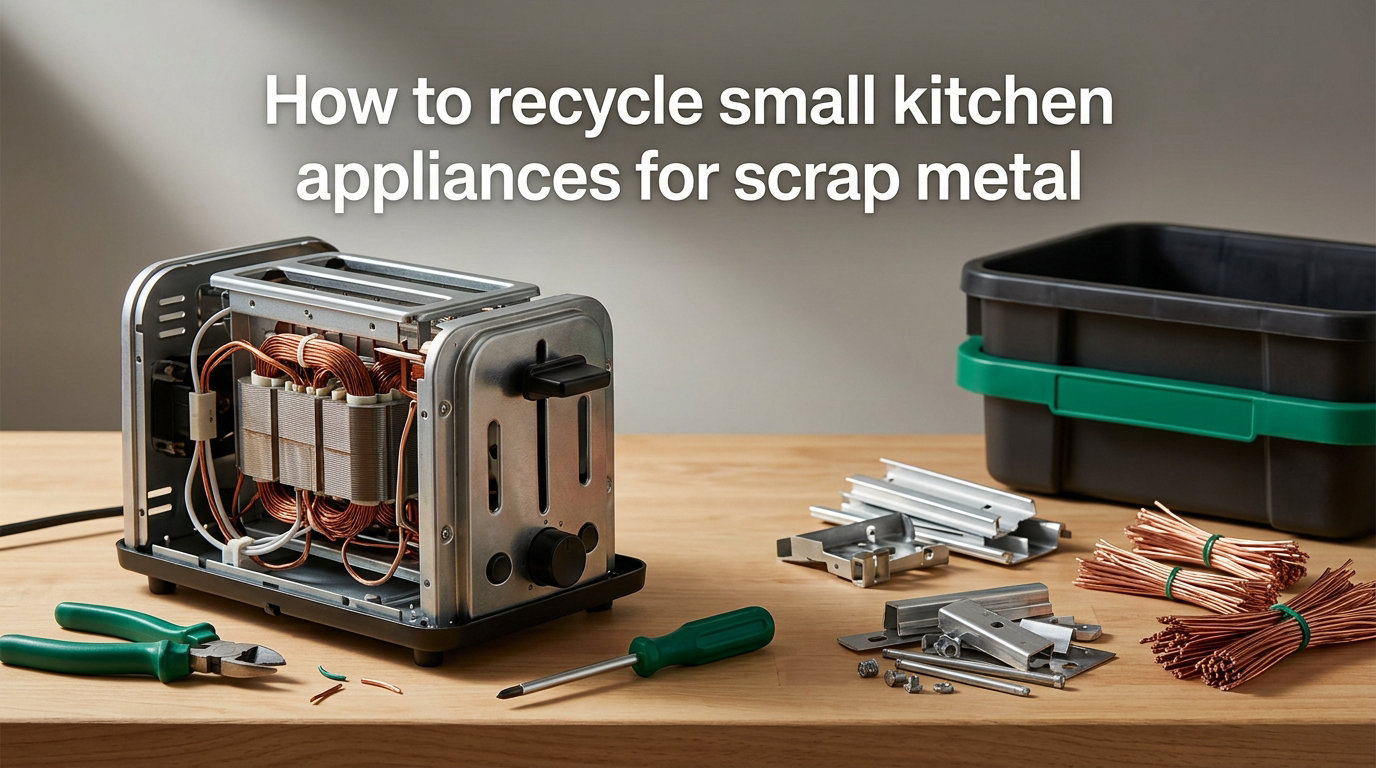
If you have a drawer full of dead toasters, a blender that gave up last month, and a coffee maker that refuses to brew, you are sitting on a pile of recyclable metal. Learning how to recycle small kitchen appliances for scrap metal keeps those materials out of landfills and puts them back into circulation.
Nearly every small kitchen appliance with a power cord contains steel, copper, aluminum, or a combination of all three. That makes them valuable to scrap yards and recyclers who process these metals into raw material for new products.
In this guide, we walk you through exactly which appliances can be recycled, what metals are hiding inside them, how to prepare them for drop-off, and where to take them. Whether you want to make a few dollars at a scrap yard or just dispose of a broken microwave responsibly, the steps below cover everything you need.
Table of Contents
What Metals Are Inside Small Kitchen Appliances?
Small kitchen appliances are packed with recoverable metals, and that is exactly why recyclers want them. Understanding what is inside helps you see why these items should never go in the trash.
Steel is the most common metal in small appliances, making up the outer housing, internal brackets, and structural components. Toasters, microwaves, and slow cookers contain large amounts of steel that can be melted down and reused indefinitely.
Copper wiring runs through every corded appliance. The power cord, motor windings, and internal wiring all contain copper, which is one of the most valuable scrap metals you can recover. A single microwave can contain several feet of copper wiring.
Aluminum appears in heating elements, internal frames, and some appliance housings. Coffee makers and electric kettles often use aluminum in their heating components because it conducts heat efficiently.
Beyond the big three, many appliances also contain smaller amounts of brass, zinc, and even gold-plated contacts on circuit boards. While you will not get rich pulling these out, they add up when processed at scale by a recycling facility.
Quick Metal Breakdown by Appliance Type
Microwaves: Steel housing, copper wiring, aluminum components, and a circuit board with trace precious metals.
Toasters and toaster ovens: Mostly steel with nickel-chromium heating elements and copper wiring.
Blenders and food processors: Steel or aluminum base, copper motor windings, and some plastic.
Coffee makers: Aluminum heating elements, copper wiring, steel internal parts, and a small circuit board.
Electric kettles: Steel or aluminum body with a heating element and copper wiring.
Which Small Kitchen Appliances Can Be Recycled
Almost any small kitchen appliance with a power cord or charging base is recyclable. The general rule is simple: if it plugs in and is at least 50 percent metal by weight, a scrap yard or recycler will likely accept it.
Commonly accepted small appliances include microwaves, toasters, toaster ovens, blenders, food processors, coffee makers, electric kettles, stand mixers, slow cookers, rice cookers, electric griddles, deep fryers, and indoor grills. Humidifiers, electric irons, and hair dryers are also widely accepted.
Items that need special attention include anything with a rechargeable battery, such as some modern cordless blenders or milk frothers. These contain lithium-ion batteries that require separate handling and should never be tossed into a standard scrap metal bin.
Appliances with refrigerants, like mini fridges or wine cooliers, fall into a different category. They contain Freon or similar refrigerants that must be professionally recovered before the metal can be scrapped. Most scrap yards accept these but may charge a small fee for refrigerant recovery.
How to Recycle Small Kitchen Appliances for Scrap Metal: Step-by-Step
The process of recycling small appliances is straightforward, but a little preparation goes a long way. Follow these steps to get the most value and ensure proper recycling.
Step 1: Unplug and Discharge
Start by unplugging the appliance completely. If the item has a capacitor, such as a microwave, allow it to sit unplugged for at least 24 hours so any stored electrical charge dissipates. This protects you and the workers who will handle the item.
Step 2: Remove Non-Metal Parts
Take off any easily removable plastic, glass, or rubber components. Glass carafes from coffee makers, plastic pitchers from blenders, and rubber feet can usually be separated. Some scrap yards require this step, while others accept appliances as-is, so call ahead to confirm.
Step 3: Cut the Power Cord for Copper
Many scrappers cut the power cord off appliances and strip the insulation to collect bare copper wire. Copper sells at a higher price per pound than mixed metal, so separating it can increase your payout. Use wire strippers or a utility knife carefully.
Step 4: Sort by Metal Type
If you are taking multiple appliances to a scrap yard, group similar metals together. Separate steel items from aluminum and copper. Clean, sorted metal always fetches a better price than mixed loads because the yard does less work to process it.
Step 5: Find a Drop-Off Location
Search for a local scrap yard, transfer station, or electronics recycler that accepts small appliances. Call ahead to confirm what they take, their hours, and whether they pay for small loads. Some locations have minimum weight requirements for payment.
Step 6: Weigh In and Get Paid
At the scrap yard, your metal will be weighed on a certified scale. You will be paid based on the current market rate for each metal type, usually per pound. Payment is typically issued as cash or a check, depending on the yard and local regulations.
Where to Take Small Appliances for Scrap Metal
You have more options than you might think when it comes to getting rid of old kitchen appliances. The best choice depends on whether the item still works and how much effort you want to put in.
Scrap Yards and Metal Recyclers
Scrap yards are the go-to option for broken or non-functional appliances. They pay by weight for the metal content, and most accept anything that is at least 50 percent metal. Call ahead to ask about minimums, accepted items, and current scrap prices.
Reddit users on r/ScrapMetal confirm that most yards accept microwaves, toasters, blenders, and coffee makers without issue. One user noted that a full pickup load of mixed small appliances netted around $15 to $25, which gives you a realistic expectation.
Curbside Recycling Programs
Some cities accept small metal appliances in curbside recycling, but this varies widely. Municipalities like Kirkland, Washington allow small metal appliances alongside regular recycling if they are at least 75 percent metal. Check your local waste management website for specific rules.
Never assume your curbside program takes appliances. Tossing a toaster in the bin when it is not accepted contaminates the recycling stream and can result in the entire load being sent to a landfill.
Transfer Stations and Drop-Off Centers
County transfer stations and municipal drop-off centers frequently accept small appliances and scrap metal for free or for a nominal fee. These facilities are reliable options if you do not have a scrap yard nearby. Sonoma County Zero Waste, for example, accepts small scrap metal appliances at its transfer stations.
Donation Centers for Working Appliances
If your appliance still works, donation is often the best choice. Habitat for Humanity ReStore, Salvation Army, and Goodwill accept working small appliances in many locations. Call ahead to confirm they will take your specific item.
Donating extends the life of the appliance and helps someone in your community. It also saves the energy and resources that recycling would consume, making it the most environmentally friendly option for functional items.
Manufacturer and Retailer Take-Back Programs
Some manufacturers and retailers offer take-back programs for old appliances. Best Buy, for example, runs an electronics recycling program that accepts many small appliances. These programs are often free and conveniently located.
Mail-In Recycling Programs
For small electronics and appliances, mail-in programs through certified recyclers offer a convenient option. Look for programs certified by R2 or e-Stewards, which are the two major third-party certification standards for responsible electronics recycling.
Safety Tips When Handling Old Appliances
Safety is something most recycling guides skip, but it matters. Old appliances can hide hazards that you should address before loading them into your car.
Microwaves contain capacitors that can hold a dangerous electrical charge even after being unplugged. If you are not experienced with electronics, do not open the casing. Leave the internal components intact and let the recycling facility handle disassembly.
Sharp metal edges are common in broken appliances. Wear thick work gloves when handling damaged items, especially anything with cracked housings or exposed internal parts. A tetanus shot is not how you want to remember your recycling trip.
Rechargeable batteries inside cordless appliances can catch fire if punctured or crushed. Never throw lithium-ion batteries in the trash or in a standard scrap bin. Remove them and take them to a battery recycling drop-off separately.
Some older appliances may contain hazardous materials. Coffee makers with thermal carafes, for instance, may contain small amounts of oil or chemical sealants. When in doubt, ask your recycler how to handle specific items.
Is It Worth Scrapping Small Appliances?
This is one of the most common questions on forums like Reddit, and the honest answer is: it depends on your goals. If you want to make significant money, small appliances alone will not do it. But if you are already clearing out a kitchen, scrapping them is better than throwing them away.
Scrap yards pay by weight, and small appliances are light. A toaster might weigh two or three pounds, netting you pocket change. A microwave weighs more and contains more copper, so it brings in a bit more.
The real value comes from volume. If you are doing a full kitchen cleanout with a dozen or more appliances, the combined weight adds up. One Reddit user reported earning around $25 for a truckload of mixed small appliances, which covered gas and lunch.
Beyond money, the value is environmental. Every appliance you recycle keeps steel, copper, and aluminum out of a landfill. That conserves natural resources and reduces the energy needed to mine and refine new metal.
Common Mistakes to Avoid When Recycling Appliances
Avoiding a few common mistakes will save you time and frustration. These are the errors we see most often from people new to appliance recycling.
Putting appliances in the curbside bin without checking: Many people assume anything metal goes in the recycling bin. Most curbside programs do not accept small appliances, and doing this contaminates the recycling stream.
Not calling the scrap yard ahead of time: Every yard has different rules. Some require minimum weights, others do not take certain items, and hours vary. A two-minute phone call saves a wasted trip.
Mixing e-waste with scrap metal: Circuit boards, remote controls, and electronic components are e-waste, not standard scrap metal. They require different processing, so keep them separate.
Throwing away rechargeable batteries: Lithium-ion batteries inside cordless appliances are a fire hazard in landfills and recycling facilities. Always remove and recycle them separately.
Overlooking donation: People often scrap appliances that still work. If it functions, donate it first. Working appliances help people in need and skip the energy cost of recycling.
Why Recycling Small Appliances Matters
The environmental impact of recycling small kitchen appliances is bigger than most people realize. When you recycle steel, copper, and aluminum, you reduce the need for environmentally destructive mining operations.
Recycling aluminum saves 95 percent of the energy required to produce it from raw bauxite ore. Recycling steel saves about 60 percent of the energy compared to making new steel from iron ore. These energy savings translate directly into reduced carbon emissions.
Small appliances also contain materials that do not belong in landfills. Circuit boards can leach heavy metals, and certain components contain chemicals that contaminate soil and groundwater over time. Proper recycling ensures these materials are handled safely.
Every appliance you keep out of the trash contributes to a circular economy where metals are reused rather than discarded. That means less waste, less mining, and a more sustainable approach to the resources we already have.
FAQs
How do you get rid of small kitchen appliances?
You can get rid of small kitchen appliances by taking them to a scrap yard, dropping them off at a transfer station, donating working items to a charity like Habitat for Humanity, or using a retailer take-back program. Never put small appliances in your curbside recycling bin unless your local program explicitly accepts them.
Do scrap yards take small appliances?
Yes, most scrap yards accept small appliances that are at least 50 percent metal by weight. Microwaves, toasters, blenders, coffee makers, and mixers are commonly accepted. Call ahead to confirm their specific requirements, minimum weights, and current prices.
Can I recycle small electronics in my curbside recycling program?
In most cases, no. Curbside recycling programs are designed for paper, cardboard, glass bottles, aluminum cans, and plastic containers. Small electronics and appliances require specialized processing and should be taken to a scrap yard, electronics recycler, or municipal drop-off center.
Can a mini fridge be scrap metal?
Yes, a mini fridge can be scrapped for its metal content, but it contains refrigerant that must be professionally recovered first. Most scrap yards accept mini fridges but may charge a small fee for refrigerant recovery. Never attempt to remove refrigerant yourself, as it requires EPA-certified equipment.
Is it worth scrapping old appliances?
Small appliances are lightweight, so individual payouts are small, often just a few dollars each. However, if you are doing a full kitchen cleanout with many items, the combined weight can add up. The bigger value is environmental, as recycling keeps metals out of landfills and conserves natural resources.
What to do with small electrical appliances that still work?
If a small appliance still works, donate it. Habitat for Humanity ReStore, Salvation Army, and Goodwill accept working small appliances in many locations. Donation extends the life of the item, helps someone in your community, and is more energy-efficient than recycling.
How do I prepare appliances for recycling?
Unplug the appliance, allow microwaves to discharge for 24 hours, remove non-metal parts like glass and plastic, cut off and strip the power cord for copper if desired, and sort metals by type. Call your chosen drop-off location to confirm their specific preparation requirements.
Wrapping Up
Knowing how to recycle small kitchen appliances for scrap metal gives you a practical way to clear out your kitchen while doing something good for the planet. The metals inside those old toasters, blenders, and microwaves are too valuable to waste in a landfill.
Start by unplugging and preparing your appliances, then choose the option that fits your situation: a scrap yard for broken items, a donation center for working ones, or a municipal drop-off for convenience. Every appliance you recycle keeps steel, copper, and aluminum in circulation for years to come.
Take a few minutes this week to round up your old appliances and find a local recycler. It is one of the simplest ways to reduce waste and make your kitchen cleanout actually count.