
If your garbage disposal is completely dead right now, the fix is almost never a new unit. In my experience testing and repairing disposals for years, about 80 percent of “dead” units come back to life with a reset button press, a tripped GFCI, or a flipped circuit breaker. This guide walks you through every check in the right order, starting with the easiest and most common causes.
We built this checklist because most online guides scatter the steps across long articles. You want one page you can follow top to bottom in under 15 minutes. By the end, you will know exactly whether your disposal is fixable or whether the motor is genuinely burnt out.
Below you will find a fast symptom checklist, the safety steps you must take first, where the reset button hides on every major brand, and a real cost comparison between repair and replacement. Let us get your sink running again.
Table of Contents
Quick Diagnostic Checklist: Find Out Why Your Garbage Disposal Is Completely Dead
Start here before you touch anything else. Match your symptom to the most likely cause, then jump to that section.
Symptom: Garbage disposal completely silent, no hum, no light
Most likely cause: no power reaching the unit. Work through this list in order: the red or black reset button on the bottom of the disposal, the GFCI outlet under the sink, then the circuit breaker in your electrical panel. A dead silent unit with no hum almost always points to a tripped breaker, a tripped GFCI, or a blown reset.
Symptom: Disposal hums but blades do not spin
Most likely cause: a jammed flywheel or impeller. Power is flowing, so the electrical side is fine. The motor is straining against a physical block. You need the hex wrench procedure in the jam clearing section below. Pressing the reset button alone will not fix this.
Symptom: Reset button pops right back out after you press it
Most likely cause: a persistent jam or an overheated motor. The thermal overload protector keeps tripping because the motor is still under load. Clear the jam first with the hex wrench, wait 10 to 15 minutes for the motor to cool, then try the reset again.
Symptom: Reset button will not stay pushed in at all
Most likely cause: the motor has not cooled down, or the internal overload switch has failed. Wait the full 15 minutes. If it still will not latch, the reset switch itself is likely dead and the disposal needs replacing.
Symptom: Disposal works for a few seconds then dies again
Most likely cause: thermal overload from a hard jam, a dull blade, or an aging motor drawing too much current. Clear any jam, run cold water, and feed waste slowly. If it repeats on light loads, the motor is on its way out.
Symptom: Disposal tripped the breaker or GFCI and will not reset
Most likely cause: a short inside the motor windings or water leaking into the electrical compartment. This is one of the few cases where you should stop and call a professional. A disposal that trips the breaker repeatedly is a fire risk.
Safety First: Do This Before You Touch Anything
Before any troubleshooting, cut the power. Go to your electrical panel and flip the breaker that controls the disposal to the off position. Do not rely on the wall switch alone. Wall switches fail, and someone walking into the kitchen could flip it while your hand is near the chamber.
Never, ever put your hand inside the disposal chamber. The impellers are sharp even when the unit is off, and a partial jam can release without warning. If you must retrieve an object like a spoon or a ring, use long tongs or magnetic grabber tool.
Run a flashlight under the sink first. Look for water drips around the electrical connections at the bottom of the unit. Water and 120 volts do not mix. If you see moisture near the wiring, dry the area completely before continuing, and consider calling a pro if the leak is active.
Keep a bucket and towel handy. Some steps, like checking for a jam, can dislodge water trapped in the chamber. A little prep prevents a mess.
What Is the Garbage Disposal Reset Button (and Why It Trips)
The reset button on a garbage disposal is a thermal overload protector. It is not a fancy feature. It is a small safety switch that cuts power to the motor the moment it overheats or jams under heavy load. Think of it as a circuit breaker built into the disposal itself.
When the motor draws too much current, a small piece of metal inside the switch heats up, bends, and breaks the electrical connection. That is why your disposal suddenly goes silent in the middle of grinding. The button pops outward, and the unit goes completely dead to protect the motor windings from burning out.
Pressing the button back in resets the internal circuit and lets power flow again. But here is the catch: if the original cause is still there, the button will trip again within seconds. That is why you almost always need to clear the jam or let the motor cool before the reset will hold.
This is also why “the reset button did not work” is rarely the end of the story. The reset almost always works once you fix what tripped it in the first place.
Step-by-Step: How to Find and Press the Reset Button
Here is the exact procedure I use every time, broken into clear steps. Follow them in order.
Step 1: Locate the reset button
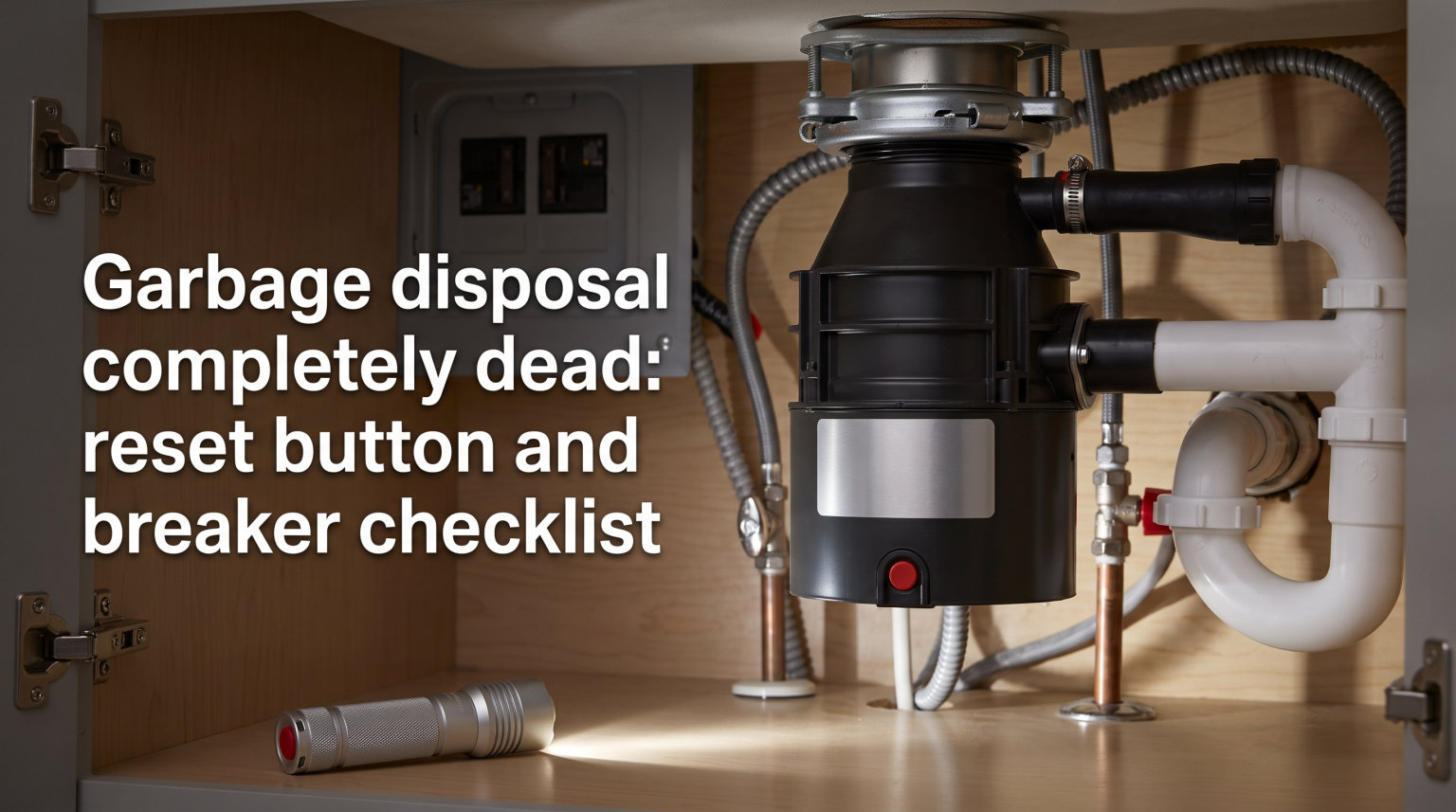
The reset button sits on the bottom of the disposal unit, usually dead center, pointing straight down toward the cabinet floor. It is typically red and about the size of a pencil eraser. On some Waste King and Moen models it is black instead of red. On InSinkErator Badger and Evolution series it is almost always red.
If you cannot find it, feel around the flat underside of the unit with your fingers. There is usually only one small protruding button down there.
Step 2: Cut the power
Flip the breaker off in your panel and confirm the wall switch is also off. Yes, this matters even for a reset, because you may need to reach under the unit.
Step 3: Clear any obvious jam
Look into the chamber with a flashlight. Use tongs to remove any visible debris. A reset will not hold if the blades are physically stuck against a bone or a piece of silverware.
Step 4: Press the reset button firmly
Push the button straight up into the unit until you feel it click and latch flush with the housing. You should feel a distinct snap. If it feels mushy or pops right back, do not force it. See the troubleshooting notes below.
Step 5: Restore power and test
Flip the breaker back on. Turn the wall switch to on, with cold water running, and listen. If the disposal spins up, you are done. If it hums but does not spin, move to the hex wrench section. If it is still completely silent, move on to the GFCI and breaker checks.
How long should you hold the reset button?
You do not need to hold it. A firm push until it clicks is enough. Some people press it for three to five seconds, which is fine, but not necessary. The mechanism is a latch, not a timer. If it clicked, the circuit is closed.
Brand-specific reset button notes
InSinkErator (Badger, Evolution): red button, center bottom. Waste King: usually black or red button, center bottom, sometimes slightly off-center. Moen: red or black button, center bottom, often paired with a hex hole next to it. Frigidaire, GE, and Whirlpool units follow the same red button convention. If your unit has no visible button, it may use an internal breaker, and you should rely on the wall GFCI and panel breaker instead.
Check the Power Supply: GFCI Outlet and Circuit Breaker
If the reset button is latched and the disposal is still completely dead, the problem is upstream. The two most common culprits are a tripped GFCI outlet under the sink and a tripped breaker in the panel.
Step 1: Find the GFCI outlet under the sink
Many kitchens built or remodeled after 2015 have the disposal plugged into a GFCI outlet inside the sink cabinet. Look for a standard duplex outlet with two small buttons in the center labeled Test and Reset. If your disposal is hardwired with no plug, skip to the circuit breaker step.
Step 2: Reset the GFCI
Press the Reset button on the outlet. If it clicks and stays in, the GFCI had tripped, which is likely why your disposal is dead. Plug something else like a phone charger into the outlet to confirm it has power, then test the disposal.
If the Reset button will not stay in, the outlet has detected a ground fault. Unplug the disposal and try again. If the GFCI resets fine with the disposal unplugged but trips the moment you plug the disposal back in, the disposal has an internal short. That is a motor replacement situation.
Step 3: Check the circuit breaker panel
Open your main electrical panel and look for a breaker labeled kitchen, disposal, or small appliance. A tripped breaker sits in a middle position, not fully on or off. Flip it fully to off first, then back to on. You should feel it snap into the on position.
Listen at the panel when you flip it. If it trips again immediately, you have a short circuit on that line. Do not keep resetting it. Call an electrician or a plumber who handles disposals.
Why GFCIs trip under sinks
Under-sink outlets are damp environments. Small water leaks from the supply lines or the disposal itself can seep into the outlet box and trip the GFCI as designed. If your disposal keeps dying every few weeks, hunt for the slow leak. Fixing the leak fixes the recurring electrical problem.
Inspect the Wall Switch and Wiring
If your disposal has power at the outlet but still will not turn on, the wall switch and the wiring inside the cabinet are next on the list. This is a less common cause than the reset or breaker, but it does happen.
Test the wall switch
Flip the wall switch on and off a few times. Listen for any faint click from the disposal area. A working switch should let you hear the disposal attempt to start. If nothing happens at all, and the switch feels loose or makes a crackling sound, the switch contacts may be burnt out.
Wall switches on kitchen circuits fail more often than people think. They handle a motor’s full starting current every day for years. Replacing a wall switch is a 15 minute job if you are comfortable working with wiring, but it does require cutting power at the breaker.
Check the wire connections under the disposal
With the breaker off, look at where the power cable enters the bottom of the disposal. The wire nuts connecting the black, white, and ground wires can work loose from years of vibration. A loose wire nut will cut power completely and randomly.
If you see any discoloration or melting on the wire nuts or the cable insulation, the connection has been overheating. That needs to be re-terminated properly. If you are not sure what proper wire nut torque looks like, this is where a professional earns their fee.
Clear a Jammed Disposal with the Hex Wrench
A humming disposal that will not spin is a jammed flywheel. This is the single most fixable problem in the entire troubleshooting flow, and most people skip it. Here is the technique that actually works, based on what experienced DIYers on plumbing forums recommend.
Step 1: Cut the power at the breaker
Do this every time, no exceptions. A jammed disposal can break free suddenly, and you do not want your fingers or tools near spinning blades when power is on.
Step 2: Find the hex socket on the bottom of the unit
Look at the underside of the disposal, right next to the reset button. Most InSinkErator and Moen units have a small hex-shaped hole in the center of the motor shaft. This is the manual override socket.
Many disposals ship with a matching Allen wrench tucked into a small pocket in the polystyrene packing material or taped to the side of the unit. If you cannot find it, a standard 1/4 inch Allen wrench fits most units. Waste King units use a slightly different fitting, so check your manual.
Step 3: Insert the wrench and rock it back and forth
Push the short end of the Allen wrench into the hex socket. Grip the long end and rock it clockwise, then counterclockwise. You are manually breaking the jam free. Reddit users who have done this hundreds of times say the key is short, firm rocking motions, not long cranks.
You will feel resistance at first, then the wrench should start to move more freely. Keep going until the wrench spins a full turn in both directions with no catches. That means the flywheel is clear.
Step 4: Remove whatever caused the jam
Use tongs to fish out whatever was stuck. Common culprits are bottle caps, fruit pits, small bones, and the ever-popular fallen spoon. Leaving the object in means the jam returns the instant you turn the unit on.
Step 5: Press the reset button and test
Press the red reset button back in. Restore power at the breaker. Turn the wall switch on with cold water running. The disposal should spin up cleanly. If it still hums, the jam is deeper and you may need to rotate the wrench more aggressively or call a pro.
Signs Your Garbage Disposal Motor Is Burnt Out
If you have worked through the reset, the breaker, the GFCI, the switch, and the hex wrench, and the disposal is still completely dead, the motor itself is likely the problem. Here is how to confirm it.
The disposal makes no sound at all after every check
A completely silent disposal that has confirmed power at the outlet, a working reset button, and a clear jam is almost certainly a burnt motor. The internal windings have failed open. No reset or breaker will bring it back.
You smell burning plastic or ozone
A burnt motor has a distinct acrid smell, like overheated electrical insulation or burning hair. If you noticed that smell right before the disposal died, the windings overheated and melted. There is no repair for that.
The housing is hot to the touch
After running the unit for a minute or letting it hum, feel the bottom of the disposal. If it is too hot to keep your hand on, the motor is drawing excessive current and cooking itself. A healthy motor stays warm but not scalding.
The unit is over 12 years old
The average garbage disposal lifespan is 8 to 15 years depending on use and brand. If yours is in that range and has been struggling for months, motor failure is the natural end of life. Spending money on a repair rarely makes sense at that age.
It trips the breaker every time you turn it on
A motor that has shorted internally will trip the breaker or GFCI instantly. If unplugging the disposal lets the GFCI reset, but plugging it back in trips it again, the disposal is shorted internally. Replace the unit.
Repair vs Replace: Real Cost Comparison
Most homeowners assume disposal replacement is expensive. It usually is not. Here is what you can expect to pay in 2026, based on what contractors and hardware stores charge.
DIY replacement
A new mid-range disposal from a brand like InSinkErator, Waste King, or Moen runs roughly $80 to $200 depending on horsepower and features. If you are replacing a unit and the mounting hardware and electrical are already in place, the swap takes 30 to 60 minutes with basic hand tools. The only specialty item is the wrench that usually comes with the new unit.
Professional replacement
A plumber typically charges $150 to $400 total for disposal replacement, including the unit and labor. Most of that is the labor minimum, since the job is quick once they are on site. If you also need a new outlet, switch, or GFCI installed, add another $100 to $250.
Repair costs
Honest repair options are limited. The only commonly repairable failure is a stuck flywheel, which the hex wrench fixes for free. Internal motor failures, leaking seals, and cracked housings are not worth repairing. The labor to diagnose and attempt a repair often exceeds the cost of a new unit.
When repair actually makes sense
Repair is worth considering only for a disposal under five years old that is still under warranty. Many InSinkErator and Moen units carry 3 to 8 year warranties. A warranty replacement motor or full unit costs you nothing but shipping. Always check the warranty before paying for anything.
The bottom line
If your disposal is out of warranty and over eight years old, replacement is almost always the better call. You get a fresh warranty, quieter operation, and better grinding performance for less than the cost of a service call.
Prevent Future Problems: 7 Maintenance Habits
Most disposal deaths are preventable. These habits keep the motor cool, the blades free, and the chamber clean.
Always run cold water while grinding and for 10 seconds after. Cold water keeps any grease solid so it gets chopped and flushed instead of coating the walls.
Never pour grease or oil down the disposal. It solidifies inside the chamber and on the impellers, creating jams and bad smells.
Grind small amounts at a time. Overloading the unit is the number one cause of thermal overload trips.
Avoid hard items like bones, fruit pits, and eggshells in large quantities. They jam the flywheel and dull the impellers.
Run citrus peels or a handful of ice cubes once a week to knock loose buildup and freshen the chamber.
Keep silverware out of the sink side with the disposal. A dropped spoon is the classic jam cause.
Check the under-sink area monthly for water leaks. A damp outlet or wet disposal housing will eventually trip the GFCI and corrode the motor.
When to Stop and Call a Professional
Stop troubleshooting and call a plumber or electrician if any of these happen.
If the disposal trips the breaker or GFCI repeatedly, even after you reset it, you have a short. Continuing to reset it risks an electrical fire. Get professional help.
If you smell persistent burning, see smoke, or hear sparking sounds from under the sink, cut power at the breaker and call immediately. Those are signs of an electrical fault, not a jam.
If water is actively leaking from the disposal housing or the connections, the seals have failed. Running a leaking disposal will burn out the motor fast and can flood your cabinet.
If you are not comfortable working with 120 volt wiring or you cannot identify which breaker controls the disposal, do not guess. Electrical work done wrong is dangerous. A service call costs far less than a house fire or an injury.
FAQs
How to fix garbage disposal if reset button doesn’t work?
If the reset button will not stay in or does nothing, clear the jam first using the hex wrench on the bottom of the unit, wait 15 minutes for the motor to cool, then try the reset again. If it still trips, check the GFCI outlet under the sink and the circuit breaker in your panel. A disposal that keeps tripping after all of these checks likely has a shorted motor and needs replacement.
Why is my garbage disposal not working after resetting the breaker?
A breaker reset only restores power to the circuit. If the disposal is still dead, the reset button on the unit itself may be tripped, the GFCI outlet under the sink may have tripped, the wall switch may have failed, or the motor may be burnt out. Check the disposal reset button next, then the GFCI, then confirm the wall switch works.
How do you know if your garbage disposal motor is burnt out?
Signs of a burnt motor include no sound at all after confirming power at the outlet, a burning or ozone smell, a housing that is too hot to touch, frequent breaker trips the moment you turn it on, and an age over 12 years. If the unit passes every other check but still will not run, the motor is the problem.
What happens if you press the reset button on a garbage disposal?
Pressing the reset button closes the internal thermal overload circuit that tripped when the motor overheated or jammed. It restores power to the motor so the disposal can run again. The button only works if the original cause, such as a jam, has been cleared and the motor has cooled.
How long should you hold the garbage disposal reset button?
You do not need to hold it. Press the button firmly until it clicks and latches flush with the housing, which takes a second. The mechanism is a latch, not a timer. If it clicked in, the circuit is closed and the unit is ready to test.
What does it mean if the garbage disposal reset button won’t stay in?
If the reset button pops right back out, the motor is still overheated or still jammed. Wait 10 to 15 minutes for it to cool, clear any jam with the hex wrench, then try again. If it still will not latch after cooling and clearing, the internal overload switch has failed and the disposal needs replacing.
Wrap-Up: Your Dead Disposal Checklist
A garbage disposal that is completely dead is usually fixable in under 15 minutes. Work the checklist in order: cut the power, press the reset button, check the GFCI under the sink, check the circuit breaker, test the wall switch, clear any jam with the hex wrench, and only then consider the motor.
The reset button and breaker checklist above covers roughly four out of five dead disposal cases. The remaining cases are split between burnt motors and wiring faults, both of which point toward replacement or a professional service call rather than another reset attempt.
Bookmark this page for next time. The same checklist works whether your disposal is completely silent, humming but stuck, or tripping the breaker every time you flip the switch. Run cold water, feed waste slowly, and your next disposal should outlive the one it replaces.