
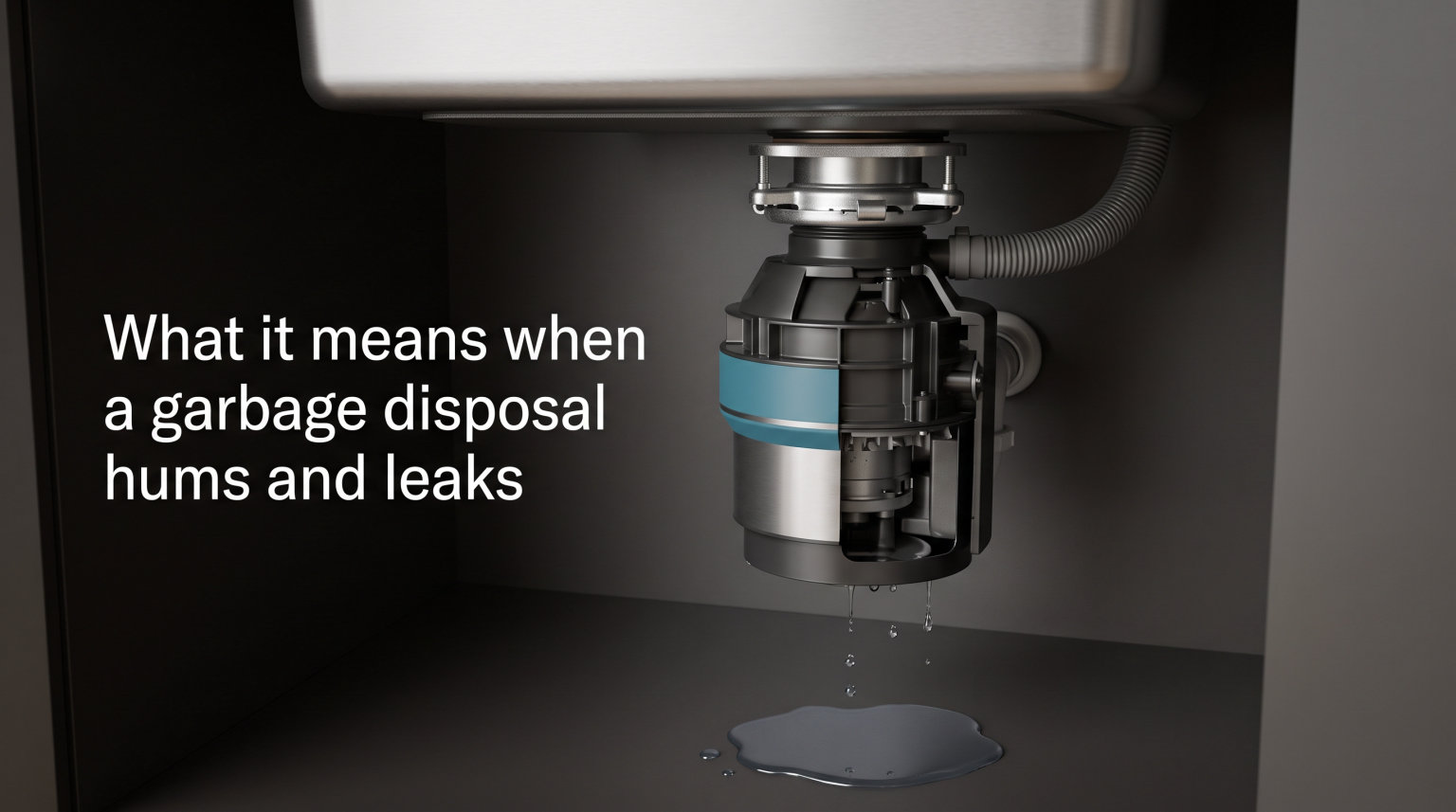
A garbage disposal that hums but does not grind is telling you that the motor is receiving power but the impellers cannot spin. When that same unit is also leaking water, you are looking at two separate problems that may or may not be connected. A jammed flywheel explains the humming, while a worn gasket, loose connection, or cracked housing explains the leak. I have walked dozens of homeowners through this exact diagnosis, and the good news is that most humming disposals can be fixed in under ten minutes with a hex key.
The keyword here is “garbage disposal humming and leaking,” and if you searched it, you probably flipped the switch expecting that familiar grinding sound and got a buzzing hum instead. Then you noticed water dripping under the sink. In this guide, I will break down exactly what each symptom means, how to fix the humming yourself, when a leak means it is time to replace the whole unit, and how to tell the difference between a disposal problem and a drain problem.
One critical safety note before we start. Stop running a humming disposal immediately. Every plumber and forum contributor I have consulted agrees on this point. Running a jammed disposal can overheat the motor, burn out the start winding, and turn a simple jam fix into a full replacement.
Table of Contents
What It Means When a Garbage Disposal Hums?
A humming garbage disposal means the motor has power but the grinding mechanism cannot turn. Inside the unit, a small electric motor spins a flywheel fitted with swivel impellers (the metal lugs that do the actual grinding). When something blocks that flywheel, the motor stays energized and vibrates against the obstruction, producing that telltale buzzing or humming sound.
Think of it like pressing the gas pedal in a car with the parking brake on. The engine revs, but the wheels do not move. In a disposal, the electricity flows, the motor tries to spin, and the hum is the sound of that mechanical resistance.
This is actually a good sign in one respect. If the disposal hums, the unit is not dead. Power is reaching the motor, the circuit is intact, and the electrical connections are fine. The problem is mechanical, not electrical. The fix usually involves clearing whatever is jamming the impellers or freeing a stuck flywheel.
The danger is in ignoring that hum. Within 30 to 60 seconds of continuous humming, the motor starts to overheat. Most modern disposals have a built-in thermal overload switch that shuts the motor down before it burns out. But if you keep resetting and re-running a jammed disposal, you will eventually cook the motor winding. Once that happens, the unit is done.
Why Your Garbage Disposal Is Humming?
A humming disposal is almost always caused by one of four things: a jammed flywheel, a foreign object stuck in the grinding chamber, a failed start switch, or a burned-out motor. Let me walk through each one.
Jammed Blades or Impellers
The most common cause of humming is a jammed flywheel. Food scraps, especially fibrous or starchy items, can wrap around the impellers and lock them in place. When the motor tries to spin, it hits that wall of resistance and hums. This is the easiest problem to fix and the one I see in about 70 percent of cases.
Foreign Objects in the Chamber
Silverware is the classic culprit. A spoon or bottle cap dropped into the disposal wedges between the impeller and the grinding ring, and the motor cannot push past it. Bone fragments, fruit pits, and small pieces of plastic do the same thing. These objects need to be physically removed before the disposal will run again.
Failed Start Switch or Capacitor
This is where things get more serious. Garbage disposal motors use a start winding and a run winding. The start winding gives the motor the initial torque to get spinning, then switches off once the flywheel reaches speed. If the start switch fails, the motor energizes the run winding but never gets that initial kick. You hear a hum, the blades never spin, and manually turning the flywheel with a hex key does not help because the electrical problem remains.
Burned-Out Motor
If the disposal has been humming for a while and you kept running it, the motor winding may be burned out. This is the worst-case scenario. As one experienced forum contributor put it plainly: “Either the switch or the winding is bad. The starting circuit is either burned out or a switch is stuck. Replace the disposer.” There is no DIY fix for a burned-out motor. The unit needs to be replaced.
A key diagnostic tip from appliance repair forums: if you can turn the flywheel freely with a hex wrench or broomstick but the disposal still only hums when you switch it on, the motor or start switch is the problem. The mechanical side is fine, but the electrical side has failed.
Why Your Garbage Disposal Is Leaking
Where your garbage disposal is leaking tells you almost everything about why it is leaking and whether it can be repaired. Leaks come from three main locations: the top, the side, and the bottom. Each one has a different cause and a different fix.
Leaking From the Top (Sink Flange)
A leak at the top, where the disposal meets the sink, comes from the sink flange connection. The plumber’s putty or rubber gasket that seals this joint can dry out, crack, or loosen over years of vibration. This is one of the most repairable leaks. You can reseat the flange with fresh plumber’s putty or tighten the mounting assembly from underneath. It is a 20-minute job that does not require replacing the disposal.
Leaking From the Side (Dishwasher Connection or Drain Pipe)
Most disposals connect to a dishwasher through a side port and to the drain through a lateral discharge tube. Leaks here are usually from loose hose clamps, cracked rubber gaskets, or a deteriorated slip-nut washer. These are also repairable. Tighten the clamps, replace the gaskets, and check that the discharge tube is seated properly. The disposal itself is fine.
Leaking From the Bottom (Internal Seal Failure)
This is the one that matters. A leak from the bottom of the disposal means the internal shaft seal has failed and water is passing through the motor housing. Every plumber and experienced DIYer I have consulted says the same thing. As one Reddit user put it bluntly: “If the water is leaking out of the bottom of a garbage disposal, it is done. They are not repairable. Get a new one.”
That community consensus is correct. The internal seals on a garbage disposal are not designed to be replaced, and by the time water is dripping from the bottom of the unit, the motor bearings are likely already corroding. Running a bottom-leaking disposal risks electrical shorts and water damage to your cabinets. Replace it.
When a disposal is both humming and leaking from the bottom, you are almost certainly looking at a unit that has reached the end of its life. The seal failure let water into the motor area, which corroded the bearings or shorted the start switch, which caused the humming. The two symptoms are connected, and the answer is replacement.
How to Tell If It Is the Disposal or the Drain
Not every leak under the sink is coming from the disposal itself. One of the most useful diagnostic skills I teach homeowners is how to separate disposal leaks from drain leaks, because the fixes are completely different.
Start by drying everything under the sink with a towel. Then run water down the sink without turning on the disposal. If water appears, the leak is in the drain pipe or the sink flange, not the disposal body. Next, fill the sink a few inches and release the stopper. If water appears now, the leak is likely at the drain connection or the slip joints downstream of the disposal.
If no water appears during those tests but the disposal leaks when running, the problem is internal to the disposal. Water only escapes when the disposal is pressurized and spinning, which points to the internal seal or the discharge tube connection.
Check the dishwasher connection too. Run the dishwasher and watch the side port on the disposal. A loose clamp there can mimic a disposal body leak. Tighten it and see if the dripping stops before assuming the disposal is shot.
How to Fix a Humming Garbage Disposal (Step by Step)
If your disposal is humming but not spinning, and there is no bottom leak, you can usually fix it yourself in about ten minutes. Follow these steps in order.
Step 1: Cut the Power
This is non-negotiable. Unplug the disposal from the outlet under the sink. If it is hardwired, flip the breaker that controls the disposal at your electrical panel. Never reach into a disposal that still has power connected. I cannot stress this enough.
Step 2: Look for Obstructions
Use a flashlight to look down into the grinding chamber. If you see a spoon, cap, bone, or any object, remove it with needle-nose pliers or tongs. Never use your hands. Even with the power off, the impellers can have sharp edges.
Step 3: Use the Reset Button
On the bottom of the disposal, you will find a small red or black button. This is the overload protector. If the disposal overheated, this button popped out. Press it back in until it clicks. If it pops right back out, the unit is still overheated. Wait 10 to 15 minutes for it to cool, then try again.
Step 4: Free the Flywheel With a Hex Key
This is the fix that works most often. On the bottom center of the disposal, there is a small hex-shaped hole. Insert the hex wrench (allen wrench) that came with the disposal. If you lost it, a standard quarter-inch hex key fits most models. Rotate the wrench back and forth to free the jammed flywheel. Once it spins freely in both directions, remove the wrench, restore power, and test the disposal.
Step 5: Try the Broomstick Method
If you do not have a hex key or the hex hole is stripped, use a wooden broomstick handle inserted through the sink opening. Wedge it against the impeller fins and lever it back and forth. A popular Reddit tip puts it this way: “Use the end of a broomstick or a plunger and wedge it in the little edges and sides of the disposal.” This manually breaks the jam from the top side.
Step 6: Test With Cold Water
Once the flywheel moves freely, restore power. Turn on the cold water first, then flip the disposal switch. The water should flush the loosened debris through the unit. Let it run for 30 seconds after the grinding sound stops to clear the drain line completely.
Step 7: Check the Reset Button Again
If the disposal still only hums after clearing the jam and resetting, press the reset button one more time. If it hums and trips again immediately, you have likely burned out the motor by running it jammed for too long. At that point, replacement is the answer.
Noise Guide: Humming vs Grinding vs Rattling
Most disposal guides only address humming, but the noise your disposal makes tells you a lot about what is going wrong inside. Here is how to read the sounds.
A steady hum or buzz with no grinding means the motor is energized but the flywheel is not spinning. This is the classic jammed-blades or failed-start-switch symptom we covered above. Stop running it and clear the jam.
A loud grinding or clanking noise usually means a hard object is bouncing around the grinding chamber. This is often a spoon, coin, or bone fragment. It sounds alarming, but the fix is simple: turn off the power, fish out the object, and the disposal should run normally again.
A rattling or vibrating noise that persists when the disposal is off usually means a loose mounting or a loose drain connection. Check the mounting bolts at the sink flange and tighten the hose clamps on the discharge tube. Rattling is rarely a disposal failure.
A whining or screeching sound can mean the motor bearings are failing. This is common in older units, especially ones that have been leaking. If you hear screeching, the motor is on its way out. Plan for replacement.
A sudden loud bang followed by silence usually means something hard hit the impeller hard enough to stall the motor. This will trigger the humming scenario, so clear the jam and check for damage to the impellers.
Repair vs Replace Your Garbage Disposal
The average garbage disposal lasts 8 to 12 years, according to both plumbers and Consumer Reports data. If yours is in that range or older, replacement usually makes more sense than repair. Here is how to decide.
Replace the disposal if it is leaking from the bottom. The internal shaft seal cannot be replaced, and water inside the motor housing means corrosion has already started. No amount of tightening or sealing compound will fix it long-term. This is the universal consensus from every plumber and forum I consulted.
Replace it if the motor is burned out. If the flywheel turns freely with a hex key but the disposal still hums, the start switch or motor winding has failed. These components are not serviceable on most residential disposals. As one forum technician noted, if the disposal turns manually but still only hums electrically, “the disposal is junk. Time for replacement.”
Repair it if the leak is at the top (sink flange) or side (dishwasher or drain connections). These are gasket and clamp issues that cost a few dollars and 20 minutes to fix. The disposal motor is fine.
Repair it if the humming is caused by a simple jam. Clearing a jam with a hex key or broomstick costs nothing and takes minutes. The disposal may have years of life left in it.
Consider the age. If your disposal is under 5 years old and the problem is a jam, fix it. If it is over 10 years old and doing anything other than grinding smoothly, replace it. A new disposal runs on the order of $80 to $200 for the unit itself, and a handy homeowner can install one in about an hour.
How to Prevent Humming and Leaking?
Most disposal problems are preventable with a few habits. Here is what I recommend to every homeowner I help.
Never put fibrous foods down the disposal. Celery strings, corn husks, onion skins, and asparagus ends wrap around the impellers and cause jams. Throw these in the trash or compost instead.
Avoid starchy foods that expand and turn to paste. Potato peels, rice, pasta, and bread can clog the grinding chamber and coat the impellers. They are a leading cause of jams in disposals across every brand.
Keep grease, oil, and fat out of the disposal entirely. They solidify inside the drain lines and create blockages that no amount of grinding can fix. Pour grease into a jar, let it cool, and throw it in the trash.
Run cold water while grinding and for 15 seconds after you turn the disposal off. Cold water keeps any residual fat solid so it gets ground and flushed rather than coating the inside of the pipes. Hot water melts fat, which then re-solidifies downstream.
Grind small amounts at a time. Overloading the chamber is a fast way to jam the flywheel. Feed scraps gradually rather than shoving a whole plate of leftovers in at once.
Clean the disposal monthly to prevent buildup. Drop in a few ice cubes and a handful of coarse salt, then run the disposal with cold water. The ice knocks debris off the impellers and the salt scrubs the grinding ring. This also sharpens the impellers slightly.
Check the mounting bolts and hose clamps every six months. Tighten anything that has loosened from vibration. This prevents the slow leaks that eventually ruin cabinets and flooring.
When to Call a Professional?
Call a licensed plumber or appliance technician if any of these apply. You have cleared the jam and pressed the reset button, but the disposal still only hums. The disposal is leaking from the bottom. You smell burning plastic or see smoke when the disposal runs. The breaker trips every time you turn on the disposal. Or you are not comfortable working with electrical connections under the sink.
A plumber can diagnose whether the problem is the disposal, the wiring, or the drain in about 30 minutes. If you need a full replacement, most plumbers charge a flat rate for the job, and you will know the total before they start.
Do not try to force a fix on a disposal that is smoking, sparking, or tripping the breaker. Those symptoms point to an electrical fault that can start a fire. Shut off the breaker and call a professional immediately.
FAQs
How do you fix a garbage disposal that is just humming?
First, cut the power at the breaker. Then remove any visible obstructions with pliers. Press the reset button on the bottom of the unit. If it still hums, insert a hex key into the bottom center hole and rotate it back and forth to free the jammed flywheel. Restore power and test with cold water running.
What do you do when your garbage disposal hums but doesn’t work?
Turn it off immediately to prevent motor damage. Cut the power, check for jams, press the reset button, and use a hex key to free the flywheel. If the flywheel turns manually but the disposal still only hums, the motor start switch or winding has failed and the unit needs replacement.
Is a leaking garbage disposal repairable?
It depends on where the leak is. Leaks at the top (sink flange) or side (dishwasher or drain connections) are repairable with new gaskets or tightened clamps. A leak from the bottom means the internal shaft seal has failed, and the disposal is not repairable. You need to replace the unit.
Can a humming disposal cause damage?
Yes. Running a humming disposal for more than 30 to 60 seconds can overheat the motor and burn out the start winding. The thermal overload switch will eventually trip, but repeated resets on a jammed unit will permanently damage the motor and require full replacement.
How to tell if a garbage disposal motor is burned out?
If the flywheel turns freely with a hex key but the disposal still only hums when powered on, the motor is burned out or the start switch has failed. Other signs include a burning smell, smoke, a tripped breaker, or a reset button that pops immediately every time you press it. In all these cases, the disposal needs replacement.
Is it okay to use the disposal while it’s humming?
No. Never run a disposal that is humming but not grinding. The motor is working against resistance and will overheat within a minute. Turn the switch off immediately, cut the power, and diagnose the jam before running the unit again.
What is the average lifespan of a garbage disposal?
A garbage disposal typically lasts 8 to 12 years with proper use and maintenance. Units that process heavy use, handle inappropriate foods, or are run while jammed may fail sooner. If your disposal is over 10 years old and developing problems, replacement is usually more cost-effective than repair.
Conclusion
Understanding what it means when a garbage disposal hums and leaks comes down to two separate diagnoses. The humming tells you the motor has power but the impellers cannot spin, usually because of a jam that you can clear with a hex key in a few minutes. The leaking tells you where a seal or connection has failed, and the location of that drip determines whether you can repair it or need to replace the whole unit.
If your disposal is humming, stop running it immediately, cut the power, and work through the troubleshooting steps. If it is leaking from the bottom, start shopping for a replacement, because no repair will hold. The combination of humming and a bottom leak almost always means the unit has reached the end of its life.
Take the safety steps seriously, use the hex key method, and when in doubt, call a plumber. A disposal is a simple machine, but a jammed or failing one can cause real damage to your kitchen if you ignore the warning signs.