
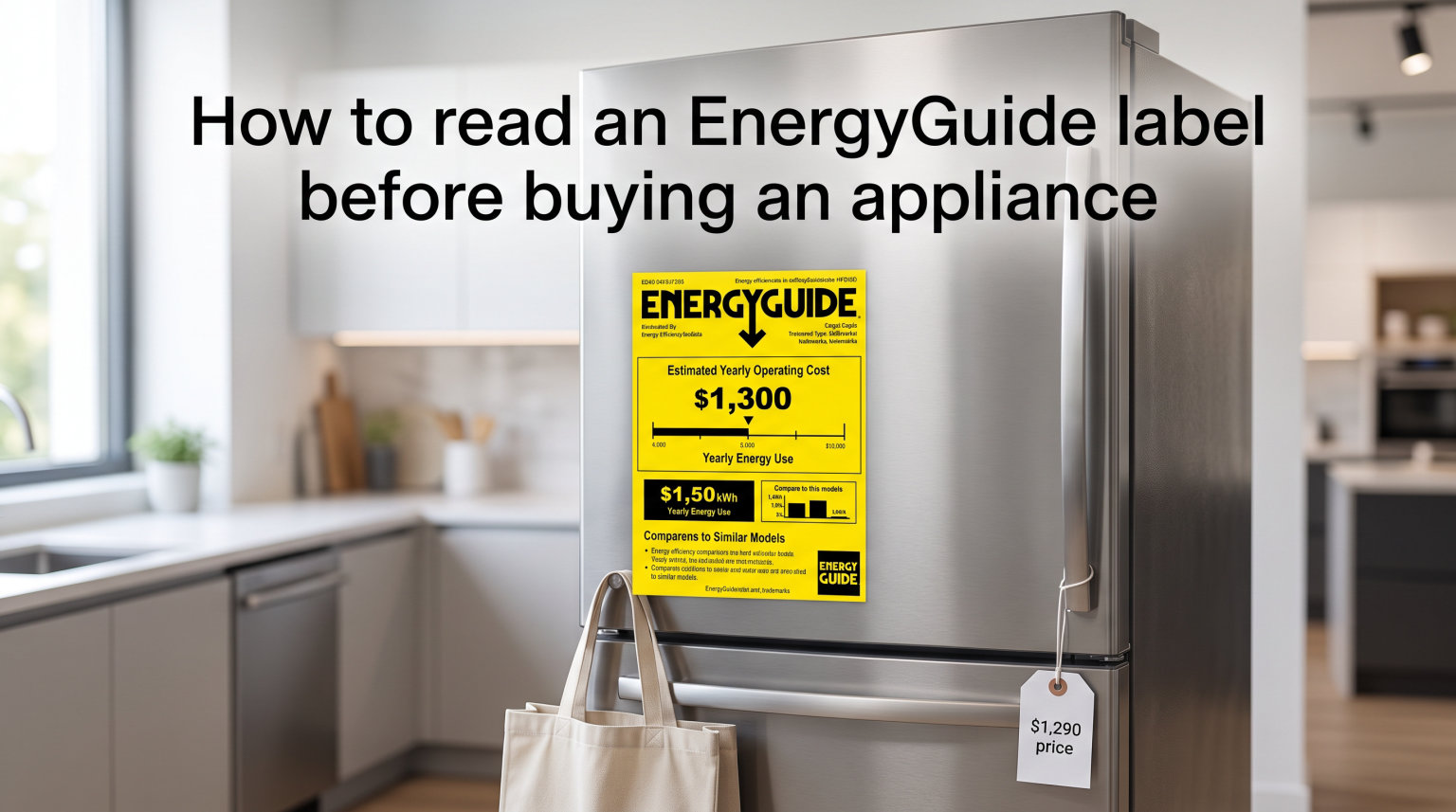
When I bought my first refrigerator, I spent 30 minutes comparing features and prices. I spent zero minutes looking at the yellow tag stuck to the front. That small mistake cost me an extra $80 a year on my electric bill. That yellow tag is the EnergyGuide label, and it is the single most useful tool for figuring out what an appliance will really cost you to own. In this guide, I will walk you through exactly how to read one, what every section means, and how to use it to compare models before you buy in 2026.
Most shoppers look at the sticker price and walk away. The EnergyGuide label tells the rest of the story, and learning to read it is one of the easiest ways to save money on utilities for the next 10 to 15 years.
Table of Contents
What Is an EnergyGuide Label and Why It Matters?
The EnergyGuide label is a yellow and black tag required by the Federal Trade Commission on most major home appliances sold in the United States. Its job is to show you how much energy the appliance uses and how much it will likely cost to run each year. The label is backed by standardized testing from the Department of Energy, so the numbers you see on one refrigerator can be compared fairly with the numbers on another.
Three things make the label powerful. First, it shows estimated yearly energy use in kWh. Second, it shows the estimated yearly operating cost based on a national average electricity rate. Third, it shows a cost range so you can see how much the model compares to the cheapest and most expensive options in the same category. Together, these three numbers let you compare models at a glance, even if they are different brands or capacities.
I now treat the label as a second price tag. The first price is what I pay the store. The second price is what I pay the utility company for the next decade.
Which Appliances Have EnergyGuide Labels
The FTC requires EnergyGuide labels on most large household appliances. You will see them on refrigerators, freezers, dishwashers, washing machines, dryers, water heaters, furnaces, central air conditioners, heat pumps, and room air conditioners. TVs also carry a similar label, and many light bulb packages show energy information in the same format.
Some products are exempt, including some very small appliances, certain commercial-grade units, and appliances that consume little energy overall. If you do not see the yellow tag on a product, you can often find the same information on the manufacturer’s website or by searching the FTC’s online database. Newer appliances may also have the label stored digitally in the product specs, especially for online-only purchases.
Knowing which products carry the label helps you know when to slow down and compare. If it has a yellow tag, the label can save you real money.
How to Read an EnergyGuide Label: Step-by-Step
Every EnergyGuide label follows the same layout, so once you learn it, you can read any of them in under a minute. Here is the breakdown I use every time I shop.
Step 1: Identify the Appliance and Capacity
The top of the label names the appliance type, the brand, and the model number. It also lists the key features used for comparison, such as capacity in cubic feet for refrigerators or cycles per year for a washer. Matching features between two models is critical. A 25-cubic-foot refrigerator cannot be compared fairly to a 19-cubic-foot model unless the label notes capacity are similar.
Step 2: Find the Estimated Yearly Energy Use
This figure is shown in kWh, or kilowatt-hours, and represents how much electricity the appliance will consume in a year under standard test conditions. Lower kWh is better. Two refrigerators that look identical on the showroom floor can differ by 200 kWh per year, which adds up over a decade.
Step 3: Check the Estimated Yearly Operating Cost
This is the dollar figure most shoppers care about. It is calculated by multiplying the yearly kWh by the national average electricity price, which the FTC updates periodically. The label also shows a cost range across similar models, so you can quickly see if the appliance you are holding is on the cheap end or the expensive end of its category.
Step 4: Look for the ENERGY STAR Logo
Many labels include the ENERGY STAR logo if the model meets the EPA’s efficiency standards. An ENERGY STAR certified appliance is typically in the top 25 percent of efficiency for its category. If the logo is missing, the model is still legal, but it has not cleared the higher efficiency bar.
Step 5: Note the Model and Serial Information
At the bottom, the label lists the model number and the manufacturer. I always snap a photo with my phone before leaving the store. It makes price matching and warranty questions later much easier.
How to Compare Appliances Using the Label?
Here is a simple example. Refrigerator A uses 450 kWh per year and costs $62 to run. Refrigerator B uses 600 kWh per year and costs $83 to run. The price difference at the store is $50. Over 12 years, Refrigerator B will cost about $252 more to operate. Even if Refrigerator A is $50 more expensive up front, it saves you $202 over its lifetime.
Always compare two models with similar features, especially capacity. A small fridge will always use less energy than a large one, so the label is most useful when comparing apples to apples. Bring a small notebook or use your phone to record the kWh and cost numbers as you walk the floor. Five minutes of note-taking can save you hundreds of dollars down the road.
EnergyGuide Label vs ENERGY STAR: What Is the Difference
The EnergyGuide label is federally required and tells you how much energy a specific model uses. ENERGY STAR is a voluntary certification from the EPA that tells you the model is highly efficient. The label is the rule, ENERGY STAR is the honor badge. If you want to save the most on utilities, look for ENERGY STAR models and then use the EnergyGuide label to compare them against each other.
Common Mistakes to Avoid When Reading EnergyGuide Labels
The biggest mistake is treating the estimated cost as a bill you will receive. The real cost depends on your local electricity rate, which can be lower or higher than the national average. If your utility charges more per kWh, multiply the yearly kWh by your own rate for a more accurate estimate.
Another common mistake is comparing models with different capacities without adjusting for size. A compact washer will always show lower energy use than a standard one, but it also washes less. Always match features before comparing numbers. Finally, do not skip the label on floor models. Sometimes the tag is partially hidden or removed, but store staff can usually reprint one from the manufacturer website.
Frequently Asked Questions
How do I read an EnergyGuide label?
Start at the top with the model and features, then read the estimated yearly energy use in kWh, followed by the estimated yearly operating cost and the cost range for similar models. Lower kWh means lower long-term cost. The ENERGY STAR logo, if present, means the model meets strict EPA efficiency standards.
What does the EnergyGuide label tell you?
It tells you the estimated yearly electricity use in kWh, the estimated yearly operating cost based on national average utility rates, and how that model compares to the cheapest and most expensive similar models. It also lists the manufacturer, model number, and key features used for comparison.
What if the EnergyGuide label is missing on the appliance?
Ask a store associate to reprint one or look up the model on the manufacturer’s website. Most major brands post the same EnergyGuide information in their product specs. You can also search the FTC’s online database for the unit.
Is higher or lower kWh better on an EnergyGuide label?
Lower kWh is better. It means the appliance uses less electricity per year, which usually translates to a lower operating cost and a smaller utility bill over the life of the product.
How accurate is the EnergyGuide estimated yearly operating cost?
It is based on national average electricity rates and standard test conditions, so your actual cost will vary based on your local utility rate, your usage habits, and where the appliance is placed. Use the kWh number with your own rate for the most accurate estimate.
Final Thoughts on Reading the EnergyGuide Label
The EnergyGuide label is one of the few honest tools in the appliance showroom. It does not care about marketing or brand loyalty. It just tells you what the appliance will cost to run. Next time you shop, give the yellow tag the same attention you give the price tag. Your future utility bills will thank you, and learning how to read an EnergyGuide label before buying an appliance is the kind of small habit that pays off for years.