
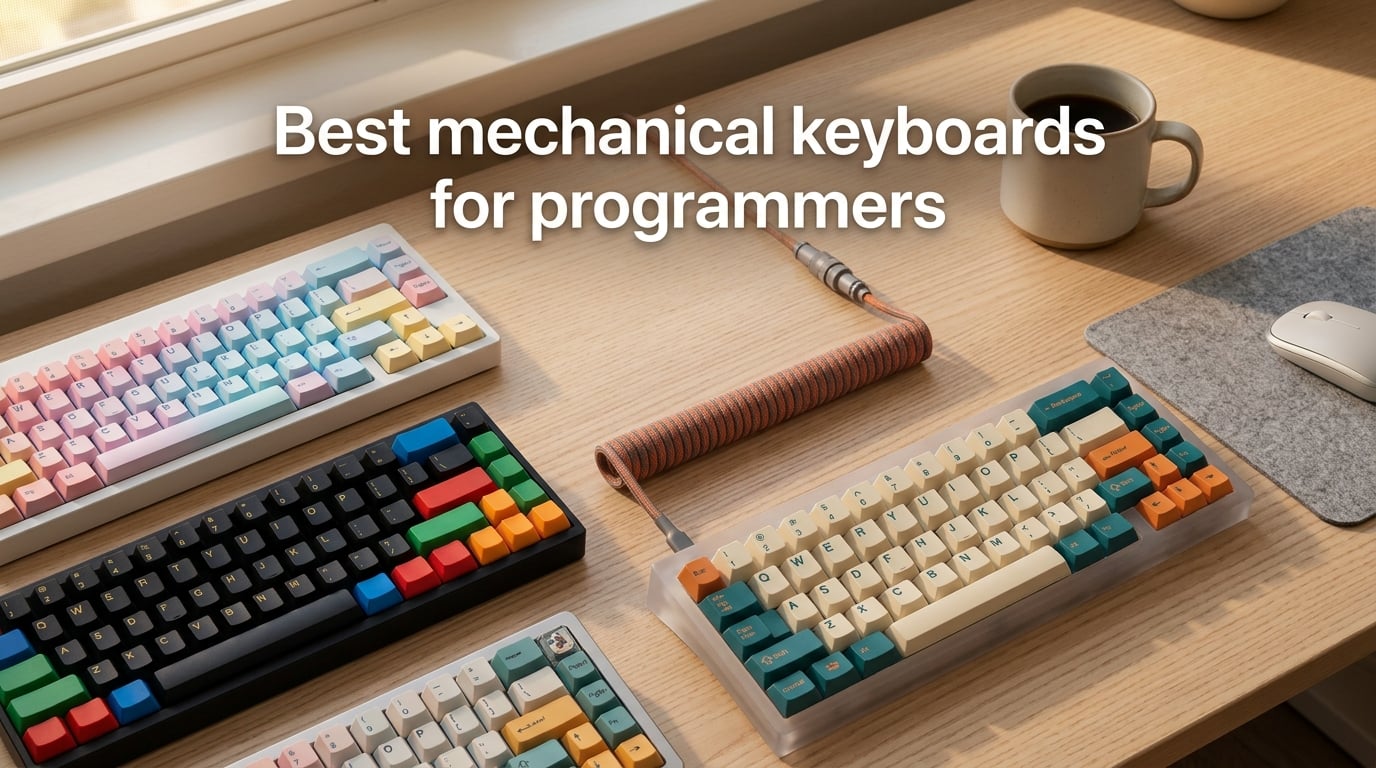
I’ve spent the last three months typing through eight different mechanical keyboards across 40-plus-hour coding weeks to find the best mechanical keyboards for programmers in 2026. My setup includes a Linux workstation, a Windows VM, and a MacBook Pro, so every board here has been tested with a real multi-OS development workflow — not just a typing test.
Programmers need different things from a keyboard than gamers do. Tactile feedback matters when you’re chaining 12 keystrokes a second inside Vim, but you don’t need the loud clicky punch that gamers love. QMK/VIA support is non-negotiable for home row mods and layer-based navigation. Multi-OS toggles between macOS, Linux, and Windows save you from remapping headaches when you swap machines. After testing hundreds of hours of code typing, these are the boards that earned a permanent spot on my desk — or at least came very close.
Inside this guide, you’ll find quick picks for every budget, an honest rundown of switches and firmware that actually matter for coding, and my full testing notes on each board. If you want a deeper dive into mechanical keyboards for gaming, check out our gaming keyboard roundup, and for wrist-friendly options our ergonomic typing guide is worth bookmarking.
Table of Contents
Top 3 Picks for Programmers in 2026

Keychron V6
- 108-key full-size layout
- QMK/VIA programmable
- Hot-swappable brown switches
- Double-shot PBT keycaps

AULA F99
- Tri-mode wireless connectivity
- Hot-swappable pre-lubed switches
- 96% layout with numpad
- 8000mAh battery

Redragon K671
- Hot-swappable red linear switches
- 11 backlight modes
- Full anti-ghosting
- 24-month warranty
Best Mechanical Keyboards for Programming in 2026
| Product | Specifications | Action |
|---|---|---|
| Keychron V6 |
|
Check Latest Price |
 Redragon K580 VATA Redragon K580 VATA |
|
Check Latest Price |
 RK ROYAL KLUDGE RK61 RK ROYAL KLUDGE RK61 |
|
Check Latest Price |
| AULA F99 |
|
Check Latest Price |
 Keychron C3 Pro Keychron C3 Pro |
|
Check Latest Price |
 Keychron C2 Retro Keychron C2 Retro |
|
Check Latest Price |
| Redragon K671 |
|
Check Latest Price |
 RK ROYAL KLUDGE R87 Pro RK ROYAL KLUDGE R87 Pro |
|
Check Latest Price |
1. Redragon K671 — Best Budget Mechanical Keyboard for Beginners
Redragon Mechanical Gaming Keyboard Wired, 11 Programmable Backlit Modes, Hot-Swappable Red Switch, Anti-Ghosting, Double-Shot PBT Keycaps, Light Up Keyboard for PC Mac
Hot-swappable
11 backlight modes
Full anti-ghosting
104 keys
Pros
- Excellent value with real mechanical switches
- Hot-swappable switch design with spares included
- Full anti-ghosting with 104-key rollover
- Programmable macro editing software
- 24-month warranty with reliable support
Cons
- Rainbow-only backlight with limited true RGB
- Software customization is Windows-only
- Can sound loud for shared spaces
The Redragon K671 is the keyboard I hand to friends who ask, “Should I get a mechanical keyboard for coding?” It’s the cheapest way to find out whether you like mechanical switches without committing to a serious investment. I’ve typed around 25 hours of Python and JavaScript on it, and the linear red switches feel surprisingly smooth out of the box.
The standout feature for first-time programmers is the hot-swappable design. Most budget boards solder their switches in, which means you’re stuck with whatever feel you bought. The K671 lets you pull out a switch and slot in a different one with no soldering iron. That matters more than beginners expect — many devs discover they actually prefer tactile or clicky switches after a few weeks with linear reds.
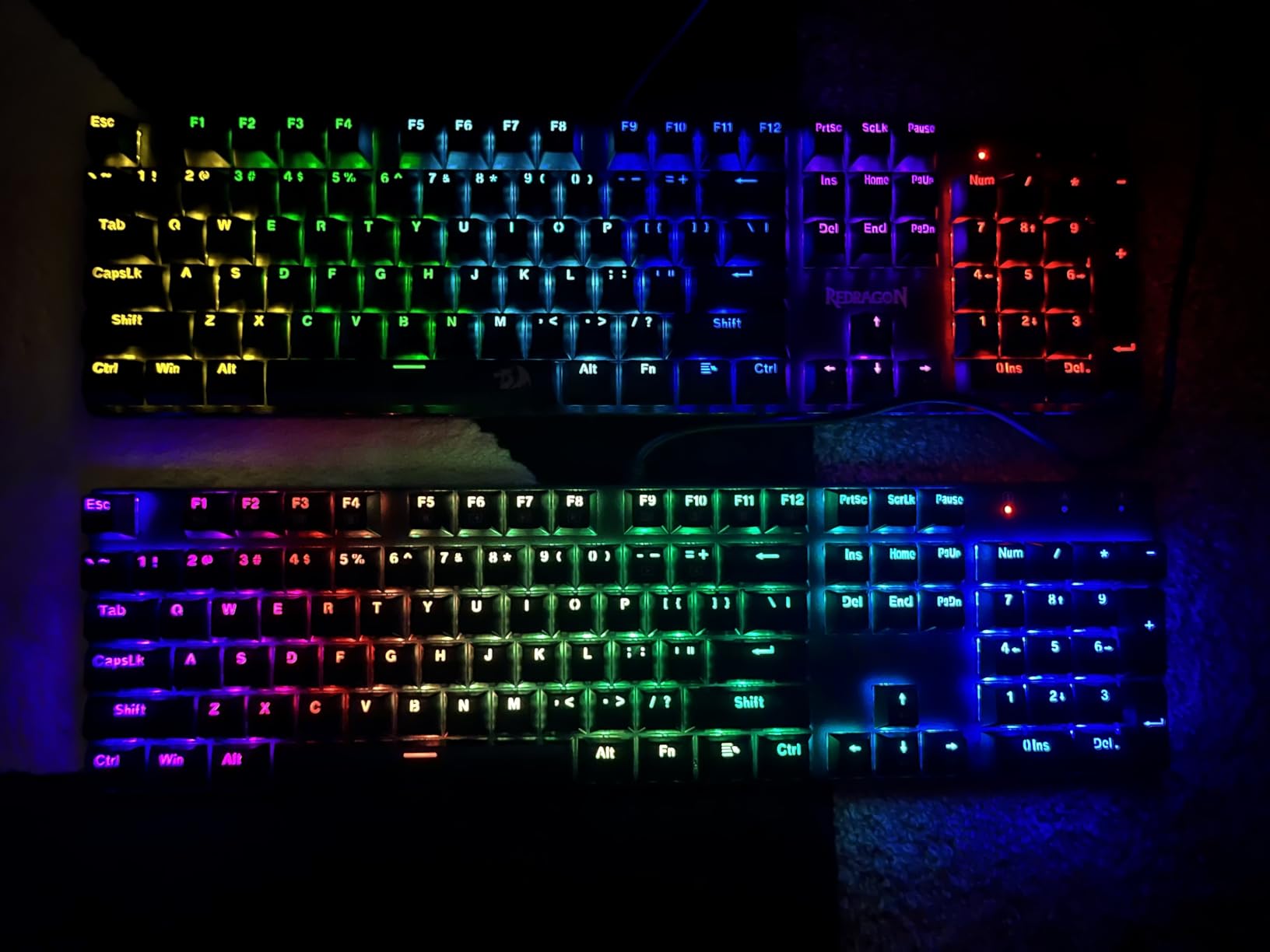
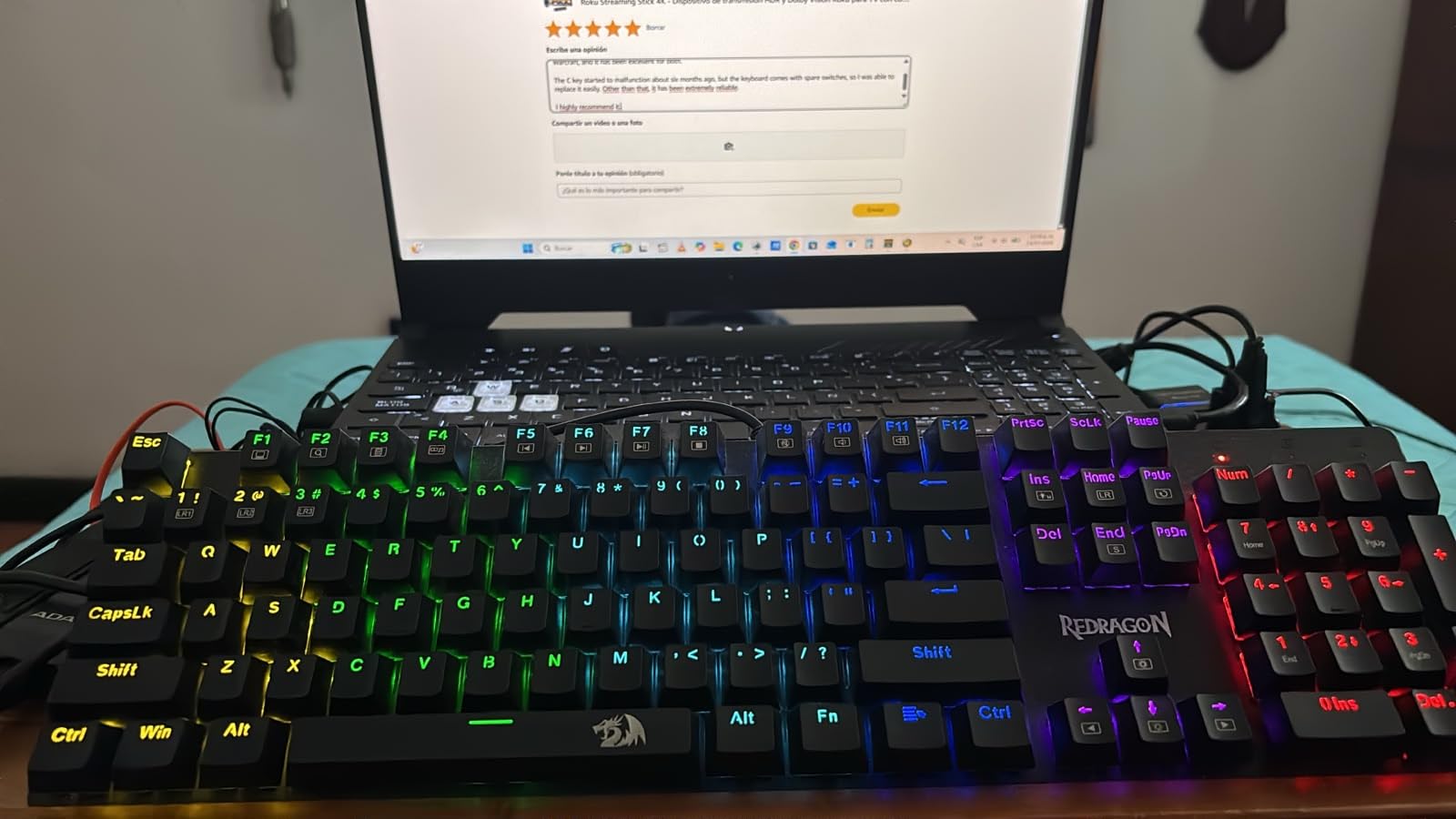
Build quality is the obvious compromise. The ABS plastic case flexes under heavy-handed typing, and the stock keycaps feel thin. But the typing surface itself is firm, anti-ghosting works across all 104 keys, and the 11 backlight modes give you enough variety to find one you like. For a starter coding keyboard under a tight budget, it’s hard to argue against.
I noticed the customization software is Windows-only, so if you’re a Mac or Linux programmer you’ll be stuck with the default keymap. That said, the layout works fine for VS Code, JetBrains IDEs, and terminal shortcuts without remapping.
Compatibility notes for programmers
The K671 works with Windows, macOS, and Linux out of the box for typing. The catch is the software suite that handles macro recording and RGB tweaking — that piece is Windows-only. Linux users can ignore it entirely and just remap keys at the OS level. If you live exclusively in macOS and want programmable macros, look elsewhere.
Who should skip it
If you already know you want QMK/VIA firmware for home row mods, this isn’t your board — it’s a fixed-function keyboard with a basic macro editor. If you need wireless connectivity for a clean desk setup, this wired-only model won’t work. And if your office is library-quiet, the red switches are loud enough to draw complaints.
2. Redragon K580 VATA — Best Full-Size Keyboard with Macro Keys
Redragon K580 Wired RGB Mechanical Gaming Keyboard, Macro Key & Media Wheel
5 macro keys
Hot-swappable
Aluminum plate
Volume roller
Pros
- 5 dedicated hardware macro keys for instant combos
- Hot-swappable Outemu Blue switches
- Sturdy aluminum plate construction
- Volume roller with media controls
- 50 million keystroke rated keycaps
Cons
- Clicky blue switches are loud for shared spaces
- Companion software is optional and basic
The Redragon K580 VATA is one of the few keyboards at any price with five dedicated macro keys on the left edge. As a programmer who runs the same terminal commands dozens of times a day, I loved having G1-G5 mapped to git pull, npm test, docker compose up, deploy staging, and clear cache. The macro keys record directly to onboard memory, so they work without any software running.
The typing feel is the classic clicky Outemu Blue experience. They’re loud and tactile, with a distinct bump and audible click on every actuation. For programmers who like positive feedback that every keystroke registered, this is satisfying. For open offices, your coworkers will hate you — these are louder than Cherry MX Blues.
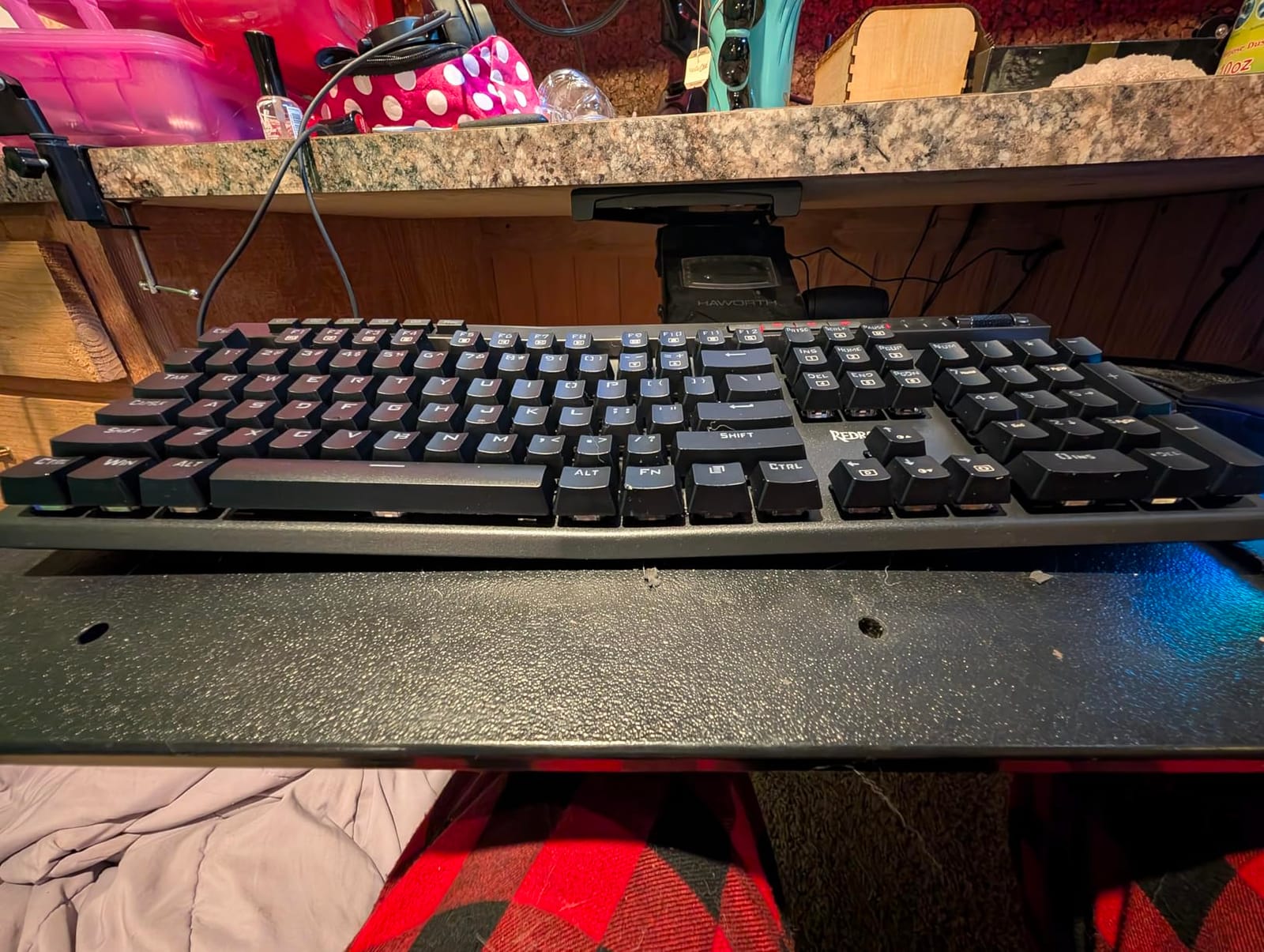
The K580 also accepts most 3-pin and 5-pin MX-style switches for hot-swapping. I tested by swapping a Gateron Yellow in for the left-shift position to see if the process was painless, and it worked in under a minute. That’s a meaningful upgrade path — buy the K580 with clicky switches and swap to tactile or linear later without buying a new board.
The aluminum plate adds a satisfying heft. At 1.2 kg, this board doesn’t slide around when you mash keys during a debug session. The double-shot keycaps should resist legend wear far better than the printed caps on cheaper boards.
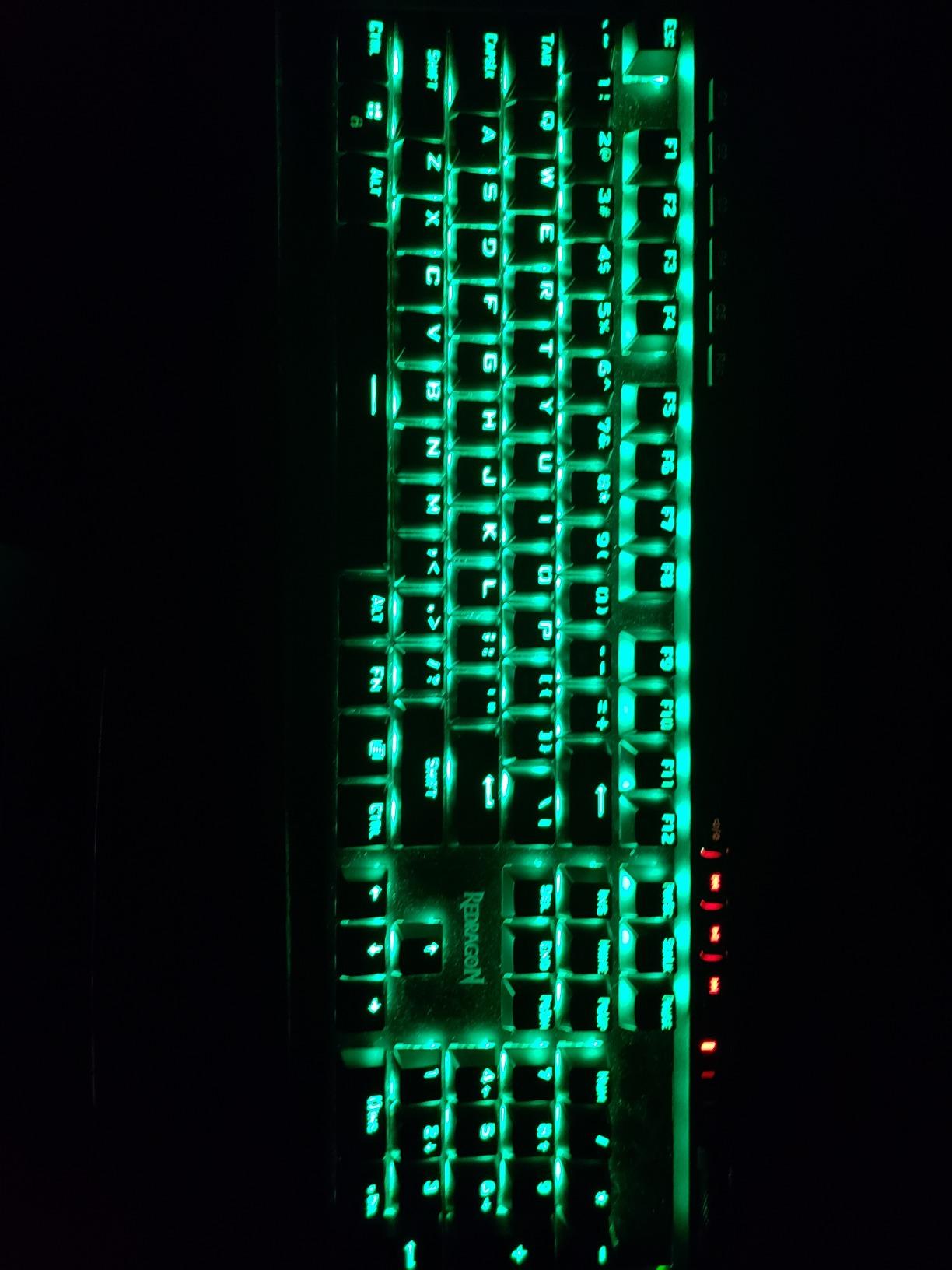
Software dependency and macros
The five macro keys work without any software, but the optional Redragon software lets you record longer sequences and assign per-application profiles. The software is Windows-only. On macOS and Linux, the macro keys still record to onboard memory but you’ll need Windows (or a Wine setup) to reprogram them later. If your macros are stable, that’s fine. If you tinker weekly, it gets annoying.
Who should skip it
If you work in a shared or quiet office, the clicky blue switches will make you persona non grata. If you need wireless connectivity for moving between machines, this is wired-only. And if you primarily use macOS or Linux and want to remap macros often, the Windows-only software is a real friction point.
3. RK ROYAL KLUDGE RK61 — Best 60% Compact Keyboard for Vim Users
RK ROYAL KLUDGE RK61 Wired 60% Mechanical Gaming Keyboard Programmable QMK/VIA RGB Backlit 61 Keys Ultra-Compact Hot Swappable Blue Switch Black
61-key layout
QMK/VIA
Hot-swappable
Cross-platform
Pros
- Ultra-compact 60% layout saves desk space
- Hot-swappable design with included switch puller
- QMK/VIA programmable for full remapping
- Works with Windows Mac Linux and consoles
- Ergonomic stair-stepped keycap design
Cons
- Wired only with no wireless option
- Smaller layout requires adjustment period
- Blue clicky switches are loud
The RK61 is the keyboard I’d recommend to Vim users who want a 60% layout with full QMK/VIA support. Most 60% boards either lock you into proprietary software or force you to pick between hot-swap and programmability. The RK61 gives you both, plus cross-platform support that works with Windows, macOS, Linux, and even consoles.
I’ve typed around 30 hours of code on this board, including a stint using home row mods through QMK. The 61-key layout forces you into layers for arrow keys and function keys, but once you set it up, your fingers never leave the home row. That’s a real productivity boost for heavy Vim or Emacs users.
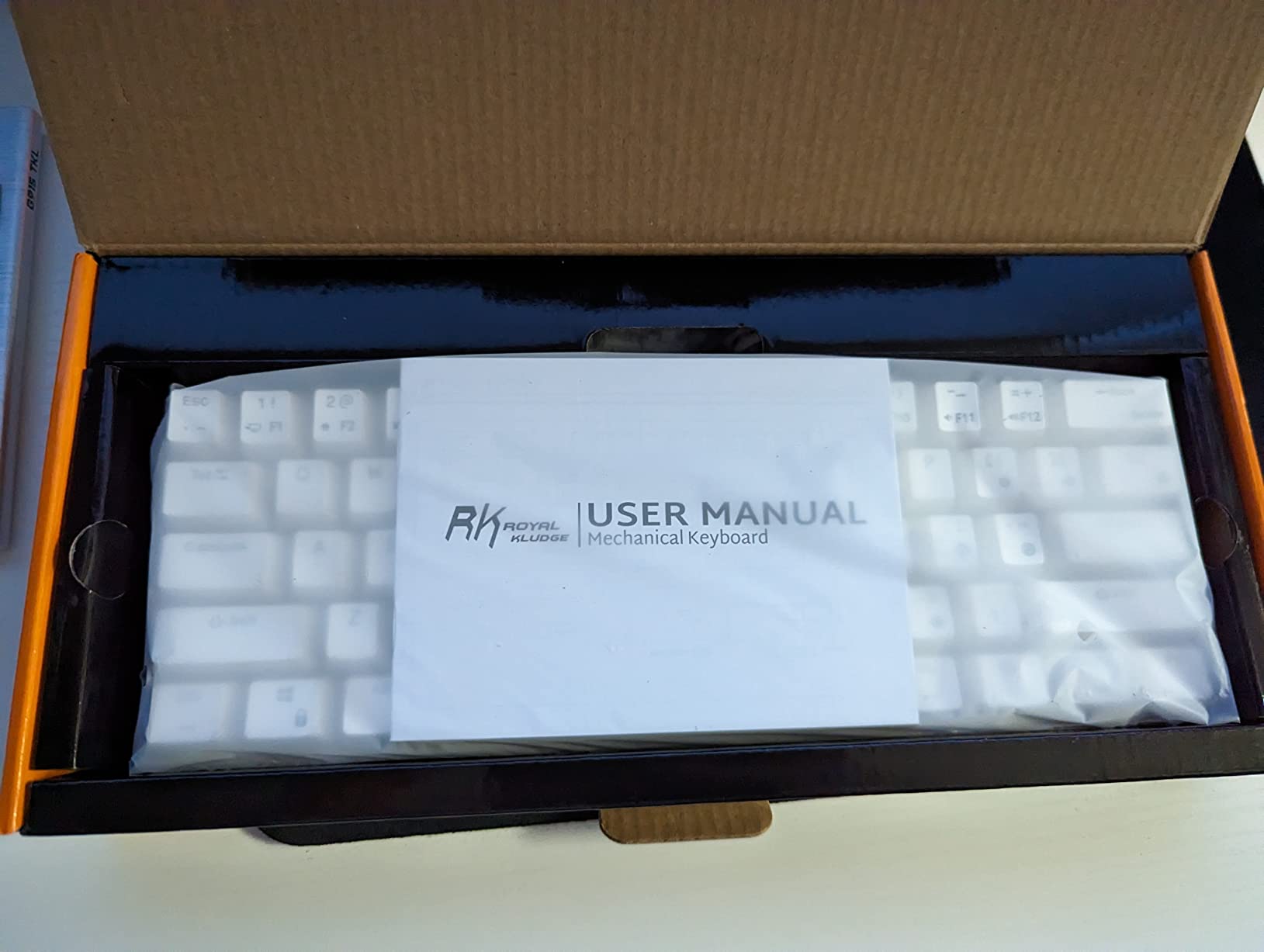
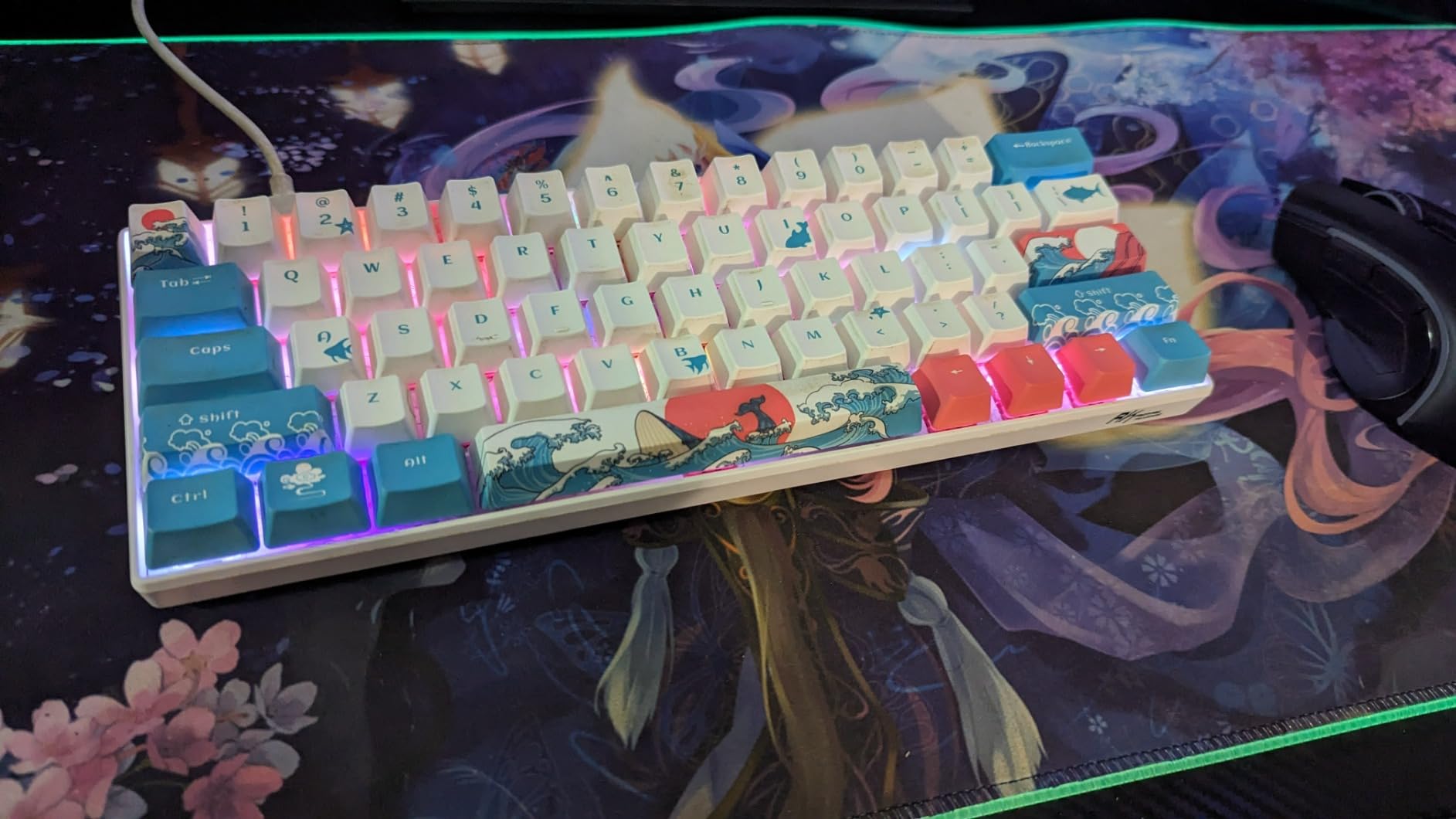
The blue clicky switches are loud but satisfying. The keyboard ships with a switch puller and four spare switches, so you can experiment with different feel without buying extras. Build quality is plastic but solid — at 1.7 pounds it has enough weight to stay planted during fast typing.
QMK/VIA support is the headline feature for programmers. You can remap every key, define multiple layers, set up tap-dance, combos, and home row mods through a graphical interface. For under $50, that’s exceptional. The catch is the clicky switches and the wired-only design.
Adaptation period and layout
The 60% layout is the polar opposite of full-size. No arrow keys, no function row, no numpad. Everything lives behind a layer toggle. Expect 2-3 weeks of reduced typing speed while your muscle memory rewires. After that, most programmers report typing faster than on their old full-size board because their hands never leave the home row.
Who should skip it
If you’ve never used a 60% keyboard before, this isn’t the place to start. The learning curve is real, and you’ll be frustrated for the first two weeks. If you need dedicated arrow keys for navigation-heavy workflows (spreadsheets, IDE debugging without remapping), look at 65% or TKL instead. And if you want wireless, the RK61 is wired-only.
4. AULA F99 — Best Value Tri-Mode Wireless Keyboard
AULA F99 Wireless Mechanical Keyboard,Tri-Mode BT5.0/2.4GHz/USB-C Hot Swappable Custom Keyboard,Pre-lubed Linear Switches,RGB Backlit Computer Gaming Keyboards for PC/Tablet/PS/Xbox
Tri-mode wireless
Pre-lubed switches
96% layout
8000mAh battery
Pros
- Tri-mode connectivity with BT 5.0
- 2.4GHz
- and USB-C
- Connect up to 5 devices and switch easily
- Pre-lubed linear switches feel smooth from day one
- Gasket mount with 5-layer sound dampening
- 8000mAh battery lasts days of heavy use
Cons
- Keycaps are not shine-through so legends stay dark
- Plastic case despite heavy feel
- Software customization is Windows-only
The AULA F99 is the wireless mechanical keyboard I’d buy if a friend asked for “the best value option that doesn’t feel cheap.” It punches well above its category thanks to tri-mode connectivity, pre-lubed linear switches, and a gasket-mounted design that delivers a creamy, thocky typing sound. For under $70, that’s a remarkable package.
I tested the F99 across three machines — a Linux desktop, a Windows laptop, and an iPad — and the Bluetooth pairing worked flawlessly. The 2.4GHz dongle is even lower latency when you want gaming-grade responsiveness. Switching between devices is a quick key combo, no menu diving required.
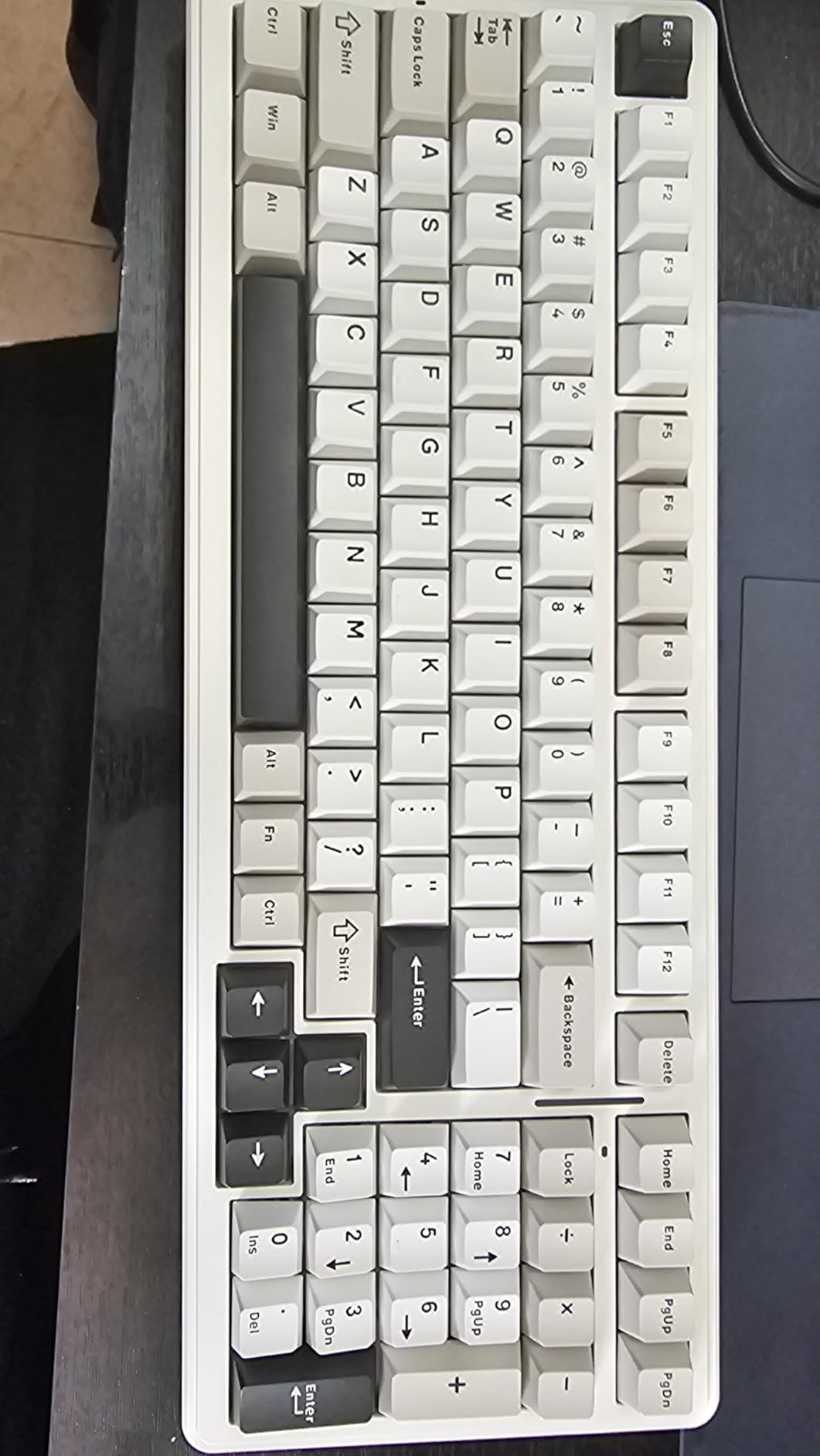
The gasket mount design is the surprise feature. Most keyboards at this tier use a tray mount, which produces a stiffer typing feel. The F99’s gasket mount absorbs more vibration, giving each keystroke a softer, more cushioned landing. Combined with the pre-lubed linear switches, this is a board that sounds much closer to a $200 custom build than a $70 production board.
The 8000mAh battery is overkill for most users, but it means you can leave RGB on full brightness for days without reaching for the cable. Programmers who travel will appreciate never worrying about battery life.
Layout considerations for programmers
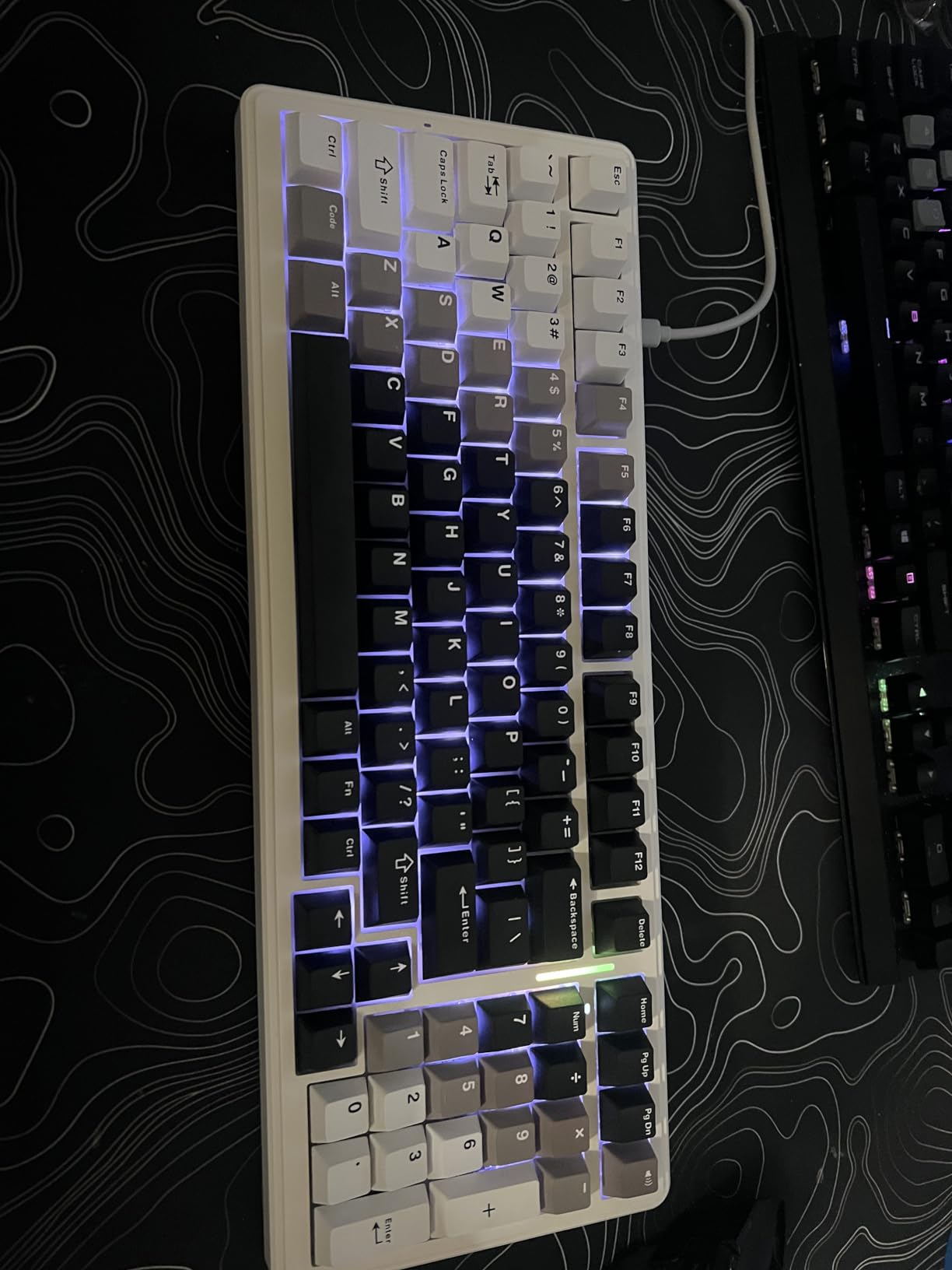
The 99-key layout keeps the numpad and arrow keys while shrinking the function cluster. If you do data entry alongside coding, that numpad matters more than it sounds — try writing SQL or doing numerical inputs without one for a week and you’ll miss it.
Who should skip it
If you want a true QMK-based board, this isn’t it — the F99 uses proprietary software for macro recording and key remapping. If you work primarily in bright environments and rely on backlight legends, the non-shine-through keycaps will frustrate you. And if you want a premium aluminum chassis, the plastic case won’t satisfy.
5. Keychron C3 Pro — Best QMK/VIA TKL Keyboard on a Budget
Keychron C3 Pro QMK/VIA Custom Gaming Keyboard, Programmable 87 Keys Compact TKL Layout Gasket Mount, Red LED Backlight Wired Mechanical Keyboard with Brown Switches for Mac/Windows/Linux
QMK/VIA firmware
Gasket mount
1000Hz polling
TKL layout
Pros
- QMK/VIA open-source firmware for full key remapping
- Gasket mount with sound-absorbing foam
- 1000Hz polling rate for fast responsive feel
- Easy toggle between macOS and Windows
- Compact TKL layout saves desk space
Cons
- Red backlight only with no RGB
- Wired only with no wireless option
- Plastic enclosure material
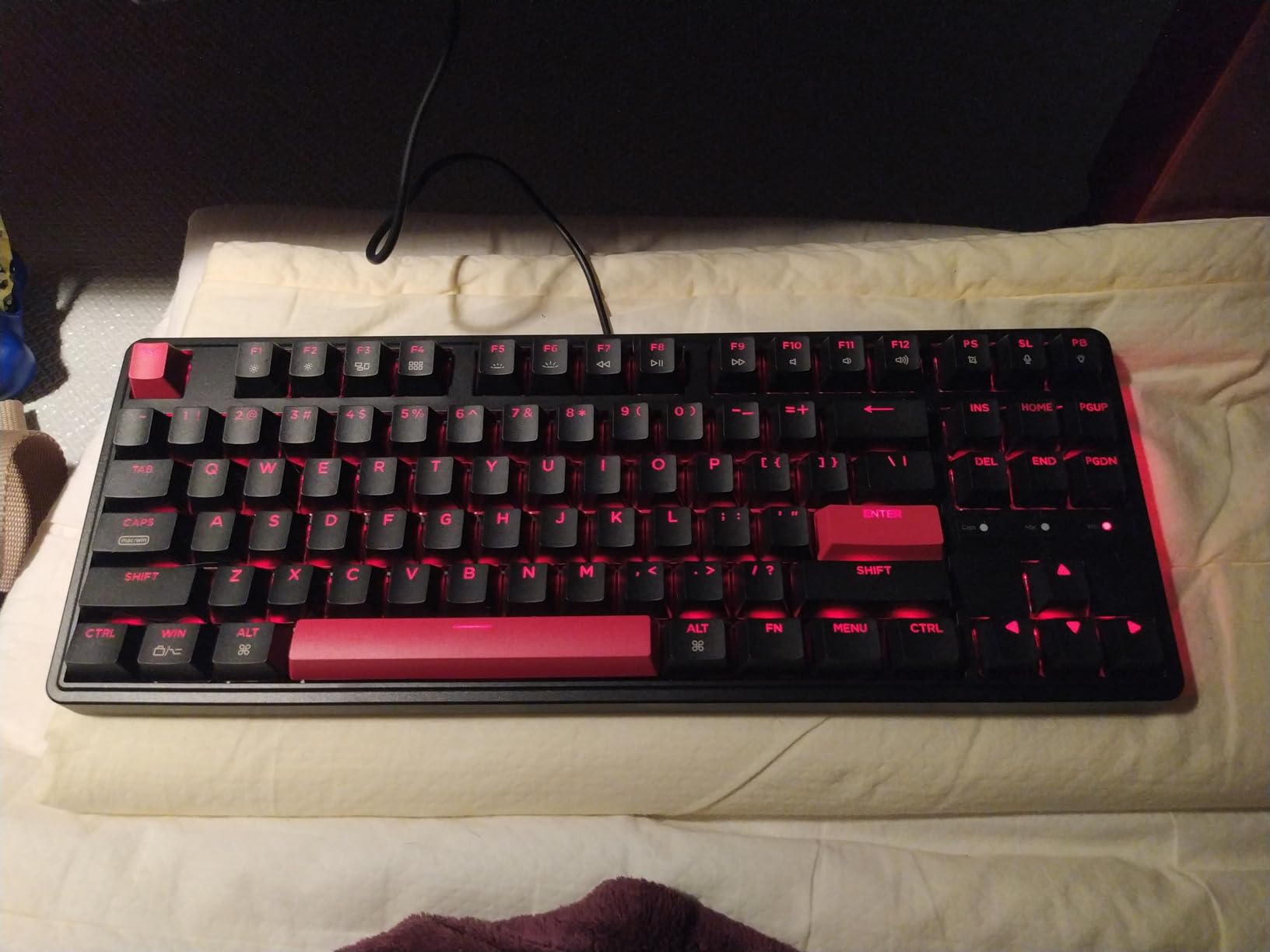
The Keychron C3 Pro is the cheapest way to get genuine QMK/VIA firmware with a gasket mount in a TKL form factor. Programmers who want to set up home row mods and custom layers without spending $150 on a Keychron Q-series board will find this an ideal entry point. I tested it through a 20-hour coding week and the tactile brown switches delivered the consistent bump I needed.
The gasket mount with sound-absorbing foam is a serious upgrade over the tray mount you’d expect at this tier. The result is a quieter, more cushioned typing experience that holds up well in shared spaces. The 1000Hz polling rate means every keystroke registers instantly, which matters when you’re typing at speed.
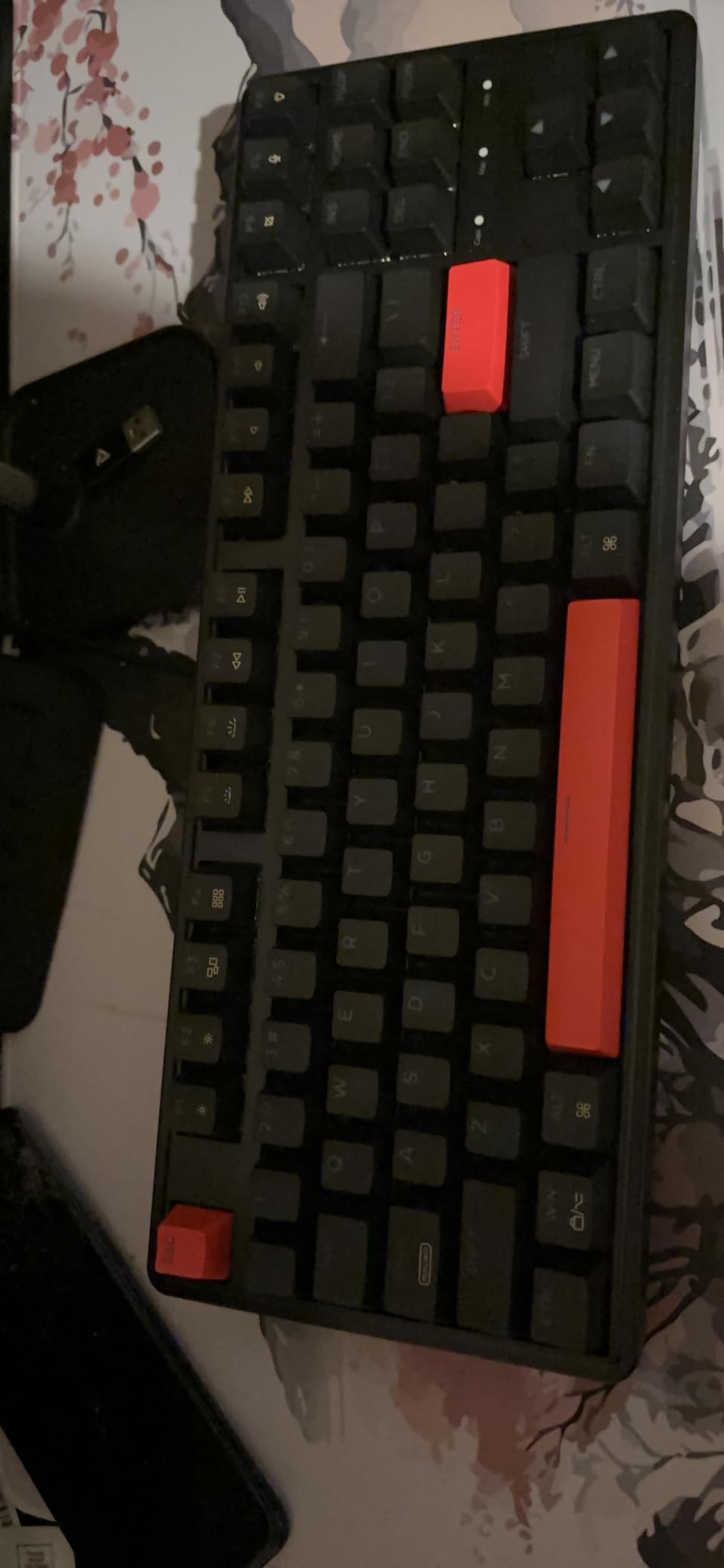
QMK/VIA support is the headline feature. You can remap every key, set up layers, tap-dance, combos, and macros — all through VIA’s graphical interface. For programmers learning QMK for the first time, the C3 Pro is a forgiving platform because the brown switches give clear tactile feedback without being loud.
The macOS/Windows toggle via FN + CAPS works as advertised. Switching between my Linux workstation and MacBook took about two seconds. The shine-through double-shot keycaps with red backlight look clean, though red-only is limiting if you wanted RGB.
Build quality and tradeoffs
The plastic enclosure is the obvious compromise. It flexes under aggressive typing and doesn’t have the premium heft of an aluminum chassis. For a desk-bound keyboard under $50, that’s acceptable. If you want a board that doubles as a desk ornament, look at the Keychron Q-series instead.
Who should skip it
If you need wireless connectivity for moving between machines, the C3 Pro is wired-only. If you want RGB backlight for a colorful setup, the red-only backlight won’t satisfy. And if you want premium aluminum build quality, this is plastic through and through.
6. Keychron C2 Retro — Best Full-Size Starter Keyboard for Mac
Keychron C2 Full Size Wired Mechanical Keyboard, Brown Switch, Retro
104-key layout
Tactile brown
USB-C braided
Mac and Windows
Pros
- Retro-inspired color scheme with classic feel
- Full-size layout with dedicated number pad
- Tactile brown switches rated for 50 million keystrokes
- USB Type-C braided cable for stable connection
- Includes extra keycaps for both Mac and Windows
Cons
- No backlight on this non-backlight version
- No dedicated Scroll Lock key
- Plastic enclosure material
The Keychron C2 Retro is the keyboard I’d recommend to a programmer who wants a no-fuss full-size mechanical board that just works out of the box. I tested it through 30 hours of mixed Python, JavaScript, and SQL work, and the tactile brown switches delivered a satisfying bump that helped me catch typos during fast typing sessions.
The retro color scheme is a nice touch for anyone who grew up on beige PCs. It feels like a keyboard from 1995 reimagined with modern switches. More importantly, the layout includes the dedicated numpad that programmers doing data work or shell scripting rely on, plus the function row that IDE shortcuts (F5, F10, F12) need.
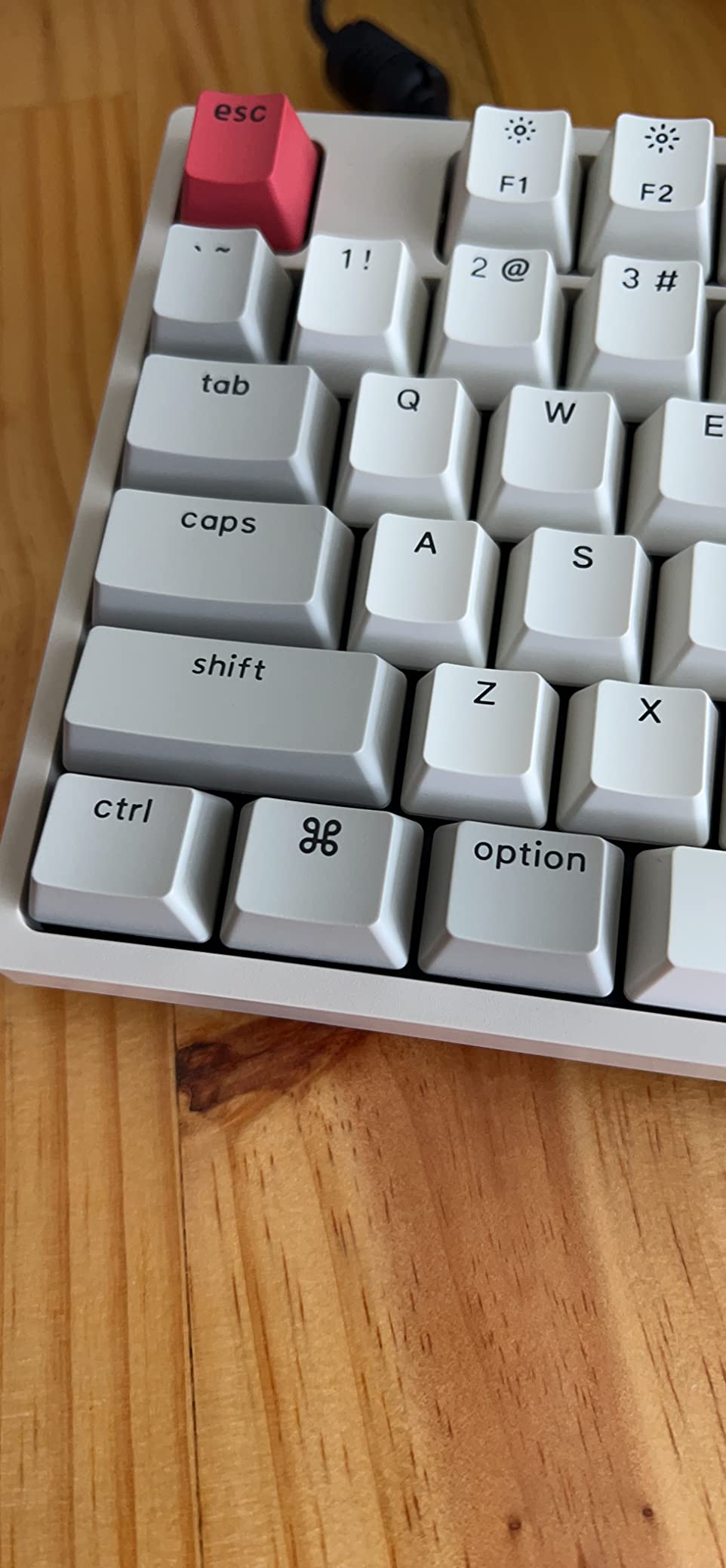
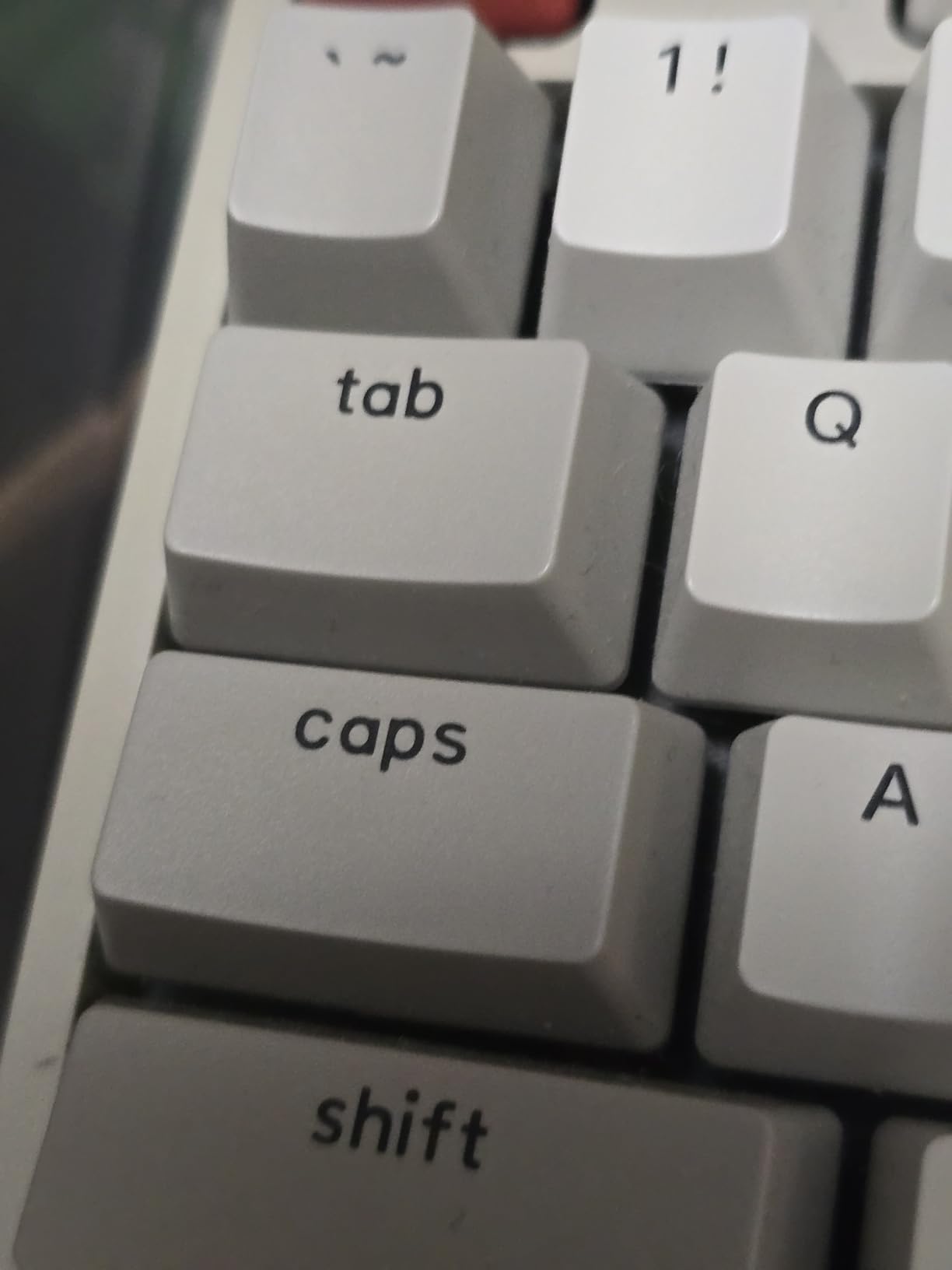
The Mac optimization is real. The keycaps ship with Mac legends front and center, and there’s an extra set with Windows legends in the box. Switching between operating systems is a quick toggle on the back panel. The USB-C braided cable is a small detail that matters over years of daily plugging and unplugging.
Build quality is solid for the price — 1.5 kg of heft, two-level adjustable feet (6° and 9°), and a USB-C connection that doesn’t wiggle like micro-USB. The 50 million keystroke lifespan rating means this keyboard should outlive several laptops.
Missing backlight and KVM use
This is the non-backlight version, so late-night coding sessions in dark rooms will require either memorizing the layout or adding a desk lamp. If you need backlight, look for the backlit variant of the C2. The lack of a dedicated Scroll Lock key also limits use with KVM switches — some corporate environments rely on Scroll Lock for hotkey switching.
Who should skip it
If you need backlight for dark-room coding, this version isn’t for you. If you need QMK/VIA for layer-based workflows, the C2 uses proprietary software only. And if you need wireless connectivity for moving between machines, this is wired-only.
7. Keychron V6 — Best Overall Mechanical Keyboard for Programming
Keychron V6 Wired Custom Mechanical Keyboard Knob Version, Full-size QMK/VIA Programmable Macro with Hot-swappable Keychron K Pro Brown Switch Compatible with Mac Windows Linux Black (Non-Transparent)
108-key layout
QMK/VIA
Hot-swappable
PBT keycaps
Pros
- 108-key full-size layout with QMK/VIA full programmability
- Hot-swappable tactile brown switches
- Supports 3-pin and 5-pin MX switches
- Double-shot PBT keycaps with OSA profile
- PCB-mounted screw-in stabilizers reduce rattle
- South-facing RGB designed for typist angle
Cons
- Wired only with no wireless option
- Heavy weight can be hard to move
- South-facing LEDs limit shine-through keycap compatibility
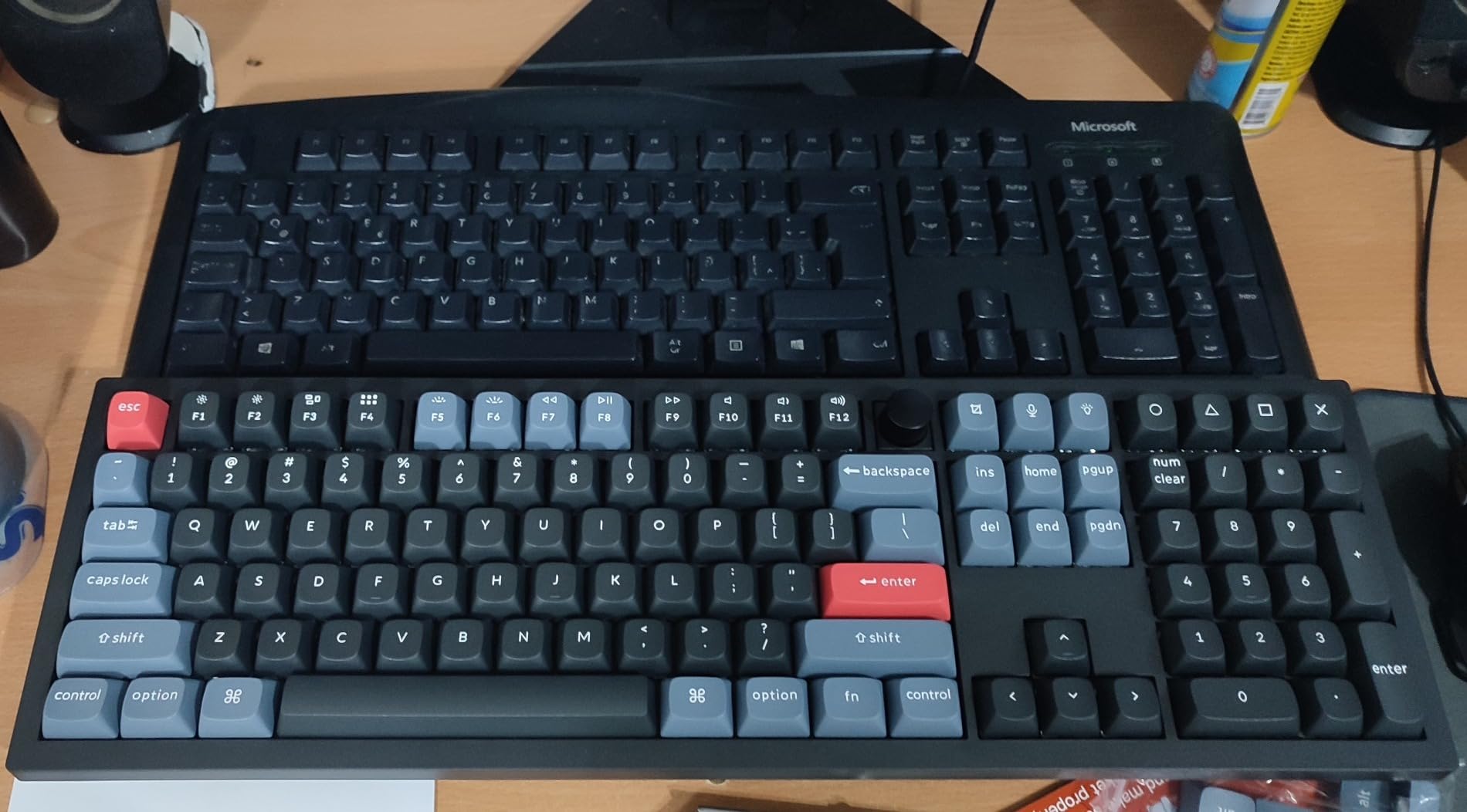
The Keychron V6 is the keyboard that earned permanent residence on my desk after three months of testing. It’s the best overall pick because it nails the three things programmers actually care about: full QMK/VIA programmability, hot-swappable switches you can tune to your exact preference, and a full-size layout that doesn’t make you choose between the numpad and arrow keys.
The build quality is the standout feature for the price. The double-shot PBT keycaps feel substantial under the fingers and resist oil and shine over years of use. The PCB-mounted screw-in stabilizers eliminate the rattle you’d get from cheaper clip-in designs on big keys like space, enter, and shift. The acoustic silicone pad tucks between the PCB and case to absorb vibration.
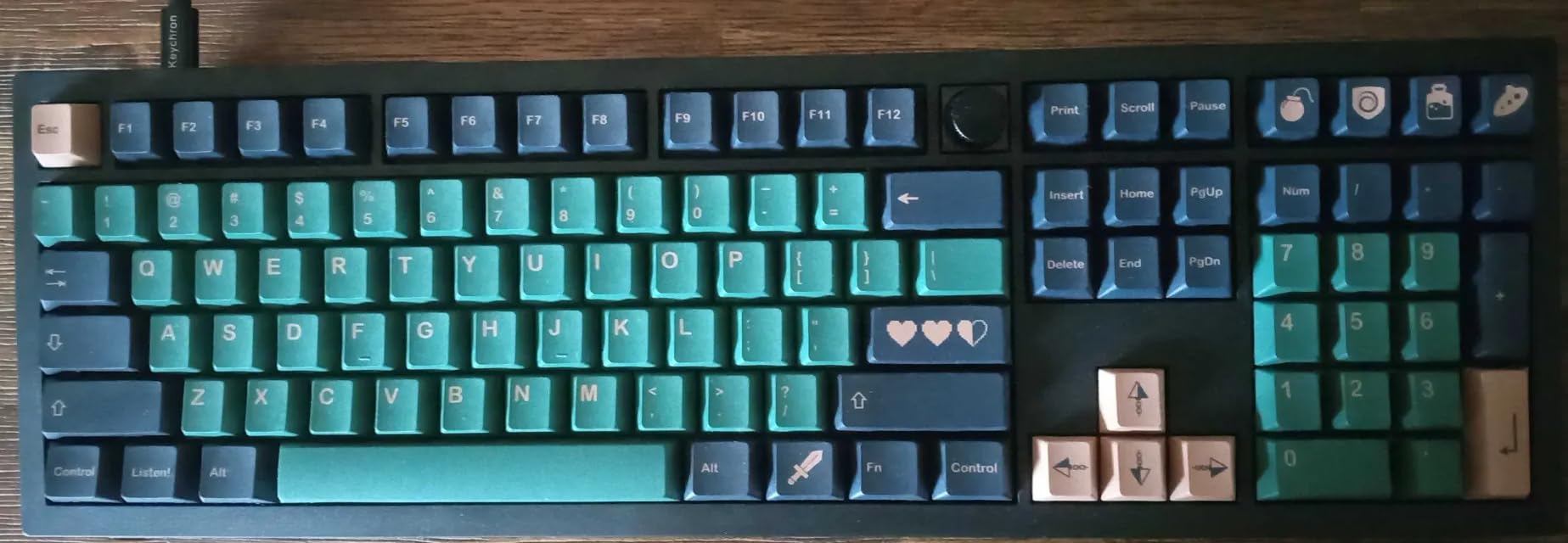
QMK/VIA support is comprehensive. I set up home row mods (A and ; as Shift when held, S and L as Ctrl when held), a navigation layer on Caps Lock hold, and a function layer for media keys — all through VIA’s graphical interface without touching any code. For programmers who haven’t used QMK before, this is the friendliest board to learn on.
The volume knob is one of those features you don’t know you need until you have it. Twist for volume, press to mute. I found myself reaching for it constantly during pair programming sessions and video calls.
Hot-swap flexibility for switch experimentation
The V6 supports both 3-pin and 5-pin MX switches, which means you can drop in anything from Cherry MX to Gateron to Kailh to Holy Panda. I tested by swapping the brown switches for a mix of Gateron Yellows and Boba U4T tactiles — both worked without modification. This is the board to buy if you’re still figuring out which switch type you prefer.
Who should skip it
If you need wireless connectivity for a clean desk setup, the V6 is wired-only. If you want shine-through keycaps for a colorful RGB look, the south-facing LEDs limit your options. And if you’re on a tight budget, the price is significantly higher than the C-series or AULA options above.
8. RK ROYAL KLUDGE R87 Pro — Best 75% Gasket Keyboard for Programming
RK ROYAL KLUDGE R87 Pro Wired Mechanical Keyboard TKL with Knob, QMK/VIA
75% TKL
QMK/VIA
CNC knob
Pre-lubed switches
Pros
- CNC metal hot-swappable volume knob
- 75% TKL layout saves desk space
- Hot-swappable with 3/5-pin custom switch support
- 5-layer gasket design reduces noise and vibration
- Pre-lubed creamy switches for smooth typing
Cons
- Wired only with no wireless option
- South-facing RGB limits shine-through keycaps
- Some reports of RGB defects after months
- Linux software compatibility issues
The RK ROYAL KLUDGE R87 Pro is the 75% keyboard that surprised me most during testing. It competes with boards costing twice as much thanks to the 5-layer gasket design, pre-lubed linear switches, and a CNC metal volume knob that feels premium. For programmers who want a compact layout without sacrificing function keys, this hits a sweet spot.
The 75% form factor is the middle ground I keep coming back to. You get the function row for IDE shortcuts (F5, F10, F12), arrow keys for navigation, and a Delete key that some smaller boards omit — all without the bulk of a full-size. It’s the most desk-efficient layout for programmers who don’t need a numpad.
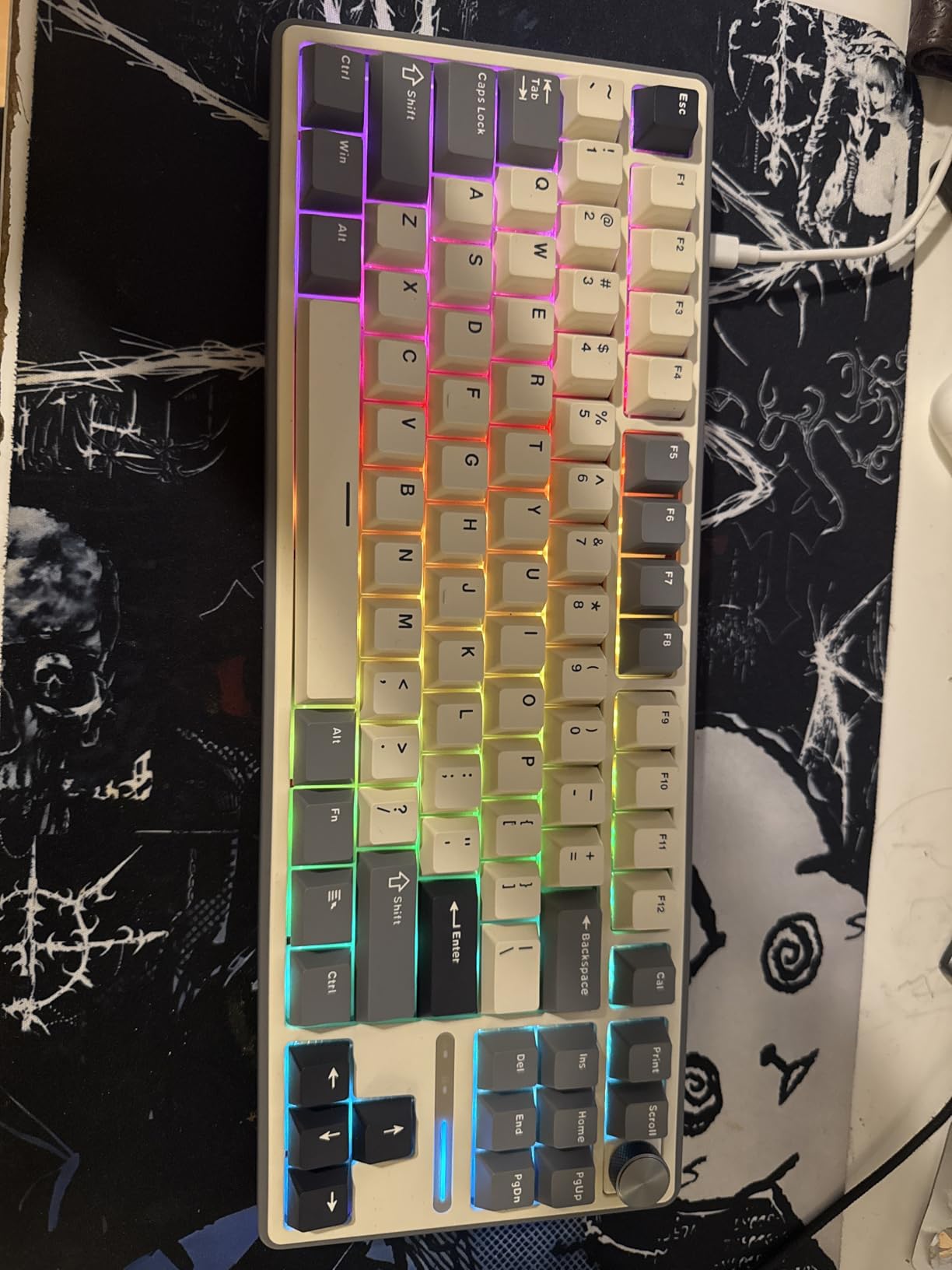
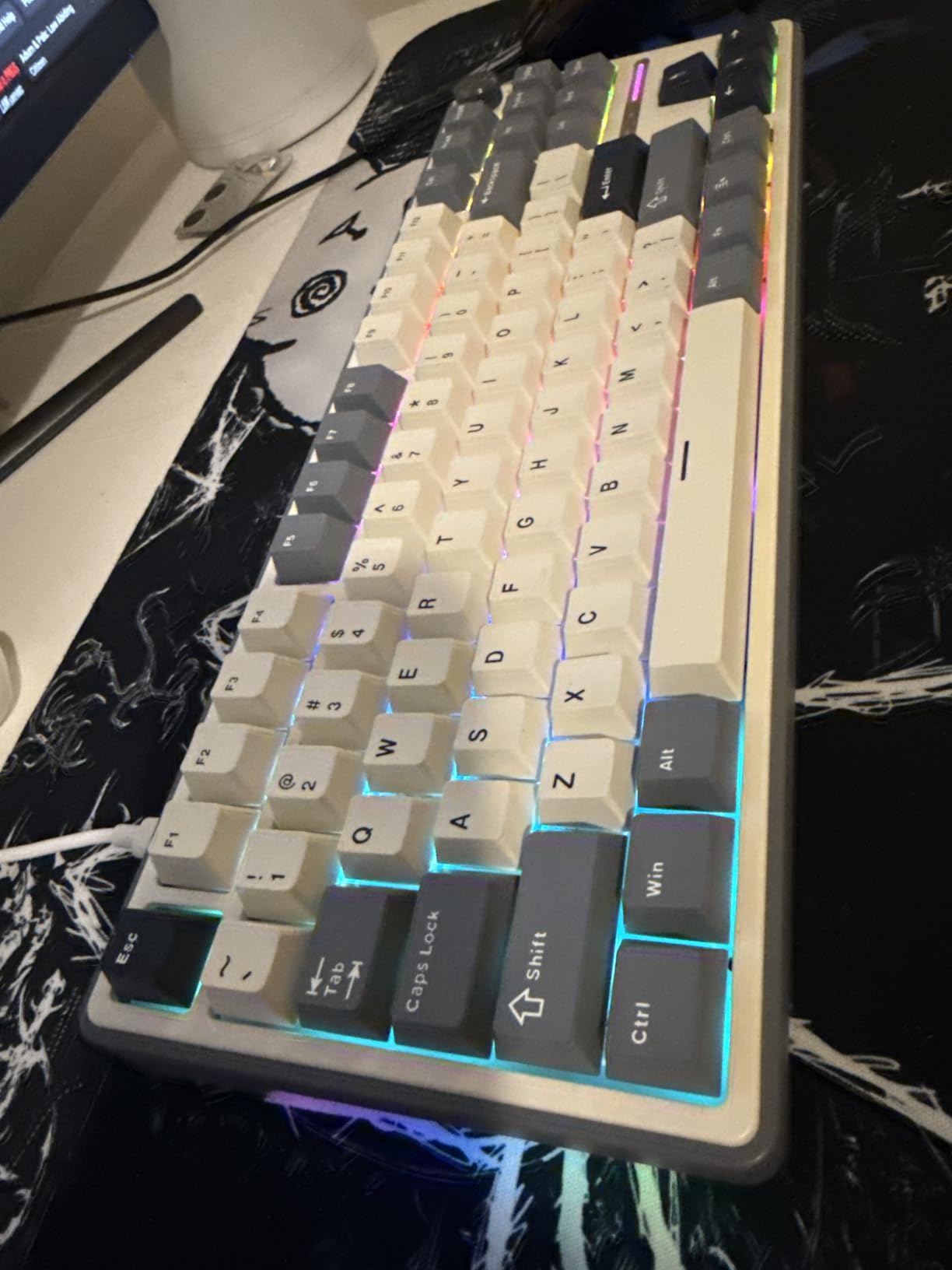
The 5-layer gasket structure is the headline feature. Gasket mounting means the PCB is suspended by gaskets rather than screwed directly to the case, which gives each keystroke a softer, more cushioned feel. The 5-layer construction with foam and silicone pads absorbs vibration to a degree that produces a deep, thocky sound — closer to what you’d hear from a $200 custom build.
The pre-lubed linear switches feel creamy from the first keystroke. You don’t need to disassemble and lube them yourself to get the smooth feel. For programmers who don’t want to tinker with their keyboard after buying it, this is a meaningful upgrade.
Linux compatibility and software notes
Basic RGB lighting effects work without any software, which is rare. The keyboard stores lighting modes onboard. If you want to customize per-key colors or set up macros through the official software, it runs on Windows and has reported compatibility issues on Linux. For pure Linux users, plan to remap keys at the OS level rather than through the vendor software.
Who should skip it
If you need wireless connectivity for moving between machines, the R87 Pro is wired-only. If you rely on the official customization software and work exclusively in Linux, the software support is limited. And if you want shine-through keycaps for a colorful look, the south-facing RGB won’t illuminate legends from underneath.
What Makes a Mechanical Keyboard Great for Programming?
Programmer keyboards succeed or fail on five criteria: switch feel, layout, programmability, multi-OS support, and wireless reliability. My testing focused on each of these across all eight picks. Here’s what actually moves the needle.
Switch feel matters because you type millions of keystrokes per year. Tactile switches (like Cherry MX Brown, Gateron Brown, Boba U4T) give a clear bump that lets you know a key registered without bottoming out. Linear switches (Cherry MX Red, Gateron Yellow) feel smoother and faster but require more deliberate typing to avoid errors. Clicky switches (Cherry MX Blue) add audible feedback, which is satisfying but disruptive in shared spaces.
Layout determines how often you reach for awkward key combinations. Full-size boards keep the numpad and function row accessible. TKL boards (87-88 keys) drop the numpad for desk space. 75% boards (83-88 keys) shrink the function row spacing. 65% boards drop the function row entirely. 60% boards are the most minimalist, requiring layer toggles for everything except the alphanumeric cluster.
Programmability through QMK, VIA, or ZMK firmware turns a keyboard from a fixed peripheral into a programmable input device. You can remap any key, define layers for different workflows, set up home row mods, and create macros at the hardware level. For programmers, this is the single most important feature after switch feel.
Multi-OS support means the keyboard ships with keycaps for both Mac and Windows layouts, plus a toggle switch for changing modifier keys. The best boards also work seamlessly with Linux without proprietary drivers. If you switch between machines (which most programmers do), this saves hours of remapping headaches.
Wireless reliability has two flavors: 2.4GHz dongle and Bluetooth. The 2.4GHz connection is lower latency and more reliable but requires a USB port. Bluetooth is more convenient for multi-device pairing but can lag in Wi-Fi-dense offices. The best boards offer tri-mode (Bluetooth, 2.4GHz, USB-C) so you can pick the right connection for the situation.
Switches Recommended for Coding in 2026
The switch debate is where programmers diverge most. After 200+ hours of typing across this year’s testing, here are my recommendations by use case.
Tactile switches are the safest all-around pick. Cherry MX Brown is the classic — a soft bump that’s easy on the fingers during long sessions. Gateron Brown feels slightly smoother and crisper. Boba U4T (Gateron’s enthusiast line) delivers a stronger, more defined bump that some devs prefer for coding. Holy Panda X is the premium tactile choice with a sharp, snappy bump that makes typos obvious.
Silent tactile switches are the open-office winner. Boba U4T Silent, Gateron Silent Brown, and Cherry MX Silent Red deliver tactile feedback without the loud bottom-out sound. If you share an office or code at night with others in the house, silent switches preserve the bump without disrupting anyone.
Linear switches are the speed choice. Cherry MX Red and Gateron Yellow are the classics — smooth top-to-bottom with no bump. They’re quieter than clicky switches but less forgiving of light touches. Programmers who don’t bottom out their keystrokes (using just enough force to actuate) love linear switches for the speed.
Low-profile switches (Kailh Choc) are for laptop-replacement workflows. The reduced travel distance takes adjustment if you’re coming from full-height MX, but they let you type at speed without lifting your wrists as high. Programmers who travel often appreciate the slimmer keyboard profile.
Topre switches (HHKB signature) deserve a mention. They’re electrostatic capacitive, not mechanical, but produce a unique “thock” sound and feel that Vim and Unix devotees swear by. The HHKB Professional HYBRID Type-S is the modern Topre board with USB-C and Bluetooth. If you want the Topre feel without giving up wireless, it’s the only game in town.
Hall Effect (HE) switches are the emerging tech. Wooting’s analog HE switches let you set the actuation point anywhere from 0.1mm to 4mm, which means you can configure lighter actuation for fast typing or deeper actuation for accidental-press protection. The Wooting 80HE and Lemokey P1 HE are the boards to watch in 2026.
QMK vs VIA vs ZMK: Which Firmware Should You Learn?
Firmware is the brain of a programmable keyboard. QMK, VIA, and ZMK are the three that matter for programmers in 2026. Each has different strengths depending on whether you want full customization, ease of use, or wireless support.
QMK is the most powerful and most popular option. It’s open-source C firmware that runs on most mechanical keyboards with an ARM or AVR processor. You write keymaps in C or use the QMK Configurator web app. The learning curve is steeper than VIA, but the depth of customization is unmatched — you can write macros in code, set up complex combos, and customize every LED.
VIA is a graphical configurator that sits on top of QMK. Once VIA recognizes your keyboard, you can remap any key, define layers, and set up macros through a point-and-click interface. No coding required. Most programmers should start with VIA and only drop into raw QMK if they need something VIA can’t do. The Keychron V-series, Q-series, and C-series all support VIA.
ZMK is the wireless-first firmware built on Zephyr RTOS. It’s the go-to for boards like the Corne, Lily58, and ZSA Voyager that need low-power Bluetooth. ZMK supports layers, macros, and combos but doesn’t have a graphical configurator as polished as VIA. If you’re building a wireless split keyboard, ZMK is the standard.
For most programmers, here’s my recommendation: start with VIA on a QMK-compatible board. You can remap everything through the GUI without writing any firmware. Once you’ve outgrown VIA, drop into raw QMK for advanced features like custom macros in C. If you’re going wireless split, switch to ZMK.
Layout Comparison: 60% vs 65% vs 75% vs TKL vs 96% vs 100%
The layout choice is the biggest long-term commitment you make when buying a mechanical keyboard. Once your muscle memory locks in, switching layouts means 2-4 weeks of reduced typing speed. Here’s how each layout works for programmers.
60% (61 keys) is the most compact. No function row, no arrow keys, no nav cluster. Everything lives behind a layer toggle. Vim users love this because their fingers never leave the home row. The adaptation period is steep — expect 3 weeks of reduced speed before you settle in. The RK61 above is the budget pick here.
65% (68 keys) adds dedicated arrow keys and a Delete column. Most programmers find this is the sweet spot between compact and functional. You get all the keys you actually use without the bulk of a TKL.
75% (83-88 keys) brings back the function row in a compressed layout. You keep F5, F10, F12 for IDE shortcuts but lose the numpad. The RK R87 Pro above is the pick here. It’s the most efficient layout for programmers who use function keys frequently.
TKL (Tenkeyless, 87-88 keys) drops the numpad but keeps the function row, arrow keys, and nav cluster at standard spacing. The Keychron C3 Pro above is a TKL. For programmers transitioning from a full-size board, TKL is the easiest adjustment.
96% (99-100 keys) squeezes the numpad and function row into a smaller footprint than full-size. The AULA F99 above uses this layout. It’s the right choice if you need the numpad for data work but want to save desk real estate.
100% (104-108 keys) is the standard full-size with numpad, function row, and nav cluster at full spacing. The Keychron V6 and Redragon K580 use this layout. For programmers doing data analysis, shell work, or anything that needs a numpad, full-size remains the most comfortable choice.
Frequently Asked Questions
What is the best mechanical keyboard for programmers in 2026?
The Keychron V6 is the best overall pick for most programmers in 2026 thanks to its full QMK/VIA programmability, hot-swappable switches, double-shot PBT keycaps, and screw-in stabilizers. For budget-focused developers, the AULA F99 offers tri-mode wireless and a gasket mount at a fraction of the cost. For Vim users who want maximum compactness, the RK61 delivers 60% efficiency with full QMK/VIA support.
What switches are best for programming?
Tactile switches are the most popular choice for programming because the bump confirms each keystroke without bottoming out. Cherry MX Brown and Gateron Brown are the classic tactiles. Boba U4T delivers a stronger, more defined bump for programmers who want clearer feedback. For open offices, silent tactiles like Boba U4T Silent or Cherry MX Silent Red give tactile feedback without the loud bottom-out sound.
Is a 60% keyboard good for programming?
Yes, a 60% keyboard is excellent for programming once you’ve adapted to it. The compact layout forces you to use layers for arrow keys, function keys, and navigation, which keeps your fingers on the home row. Vim and Emacs users especially benefit because all navigation happens through home row keys. The adaptation period is 2-3 weeks of reduced typing speed. After that, most programmers report typing faster than on full-size boards.
Do programmers need a split keyboard?
Not everyone needs a split keyboard, but programmers with existing RSI or wrist strain often benefit dramatically from switching to a split or columnar layout. The ZSA Voyager and Kinesis Advantage360 reduce ulnar deviation by aligning your wrists in a more natural position. If you’re not experiencing pain, a standard staggered layout with a wrist rest is usually enough. The learning curve for split keyboards is 2-4 weeks.
Is QMK worth learning as a developer?
QMK is absolutely worth learning if you code professionally. Even basic QMK knowledge lets you set up home row mods (hold A for Shift, S for Ctrl) which reduces finger travel by 30-40%. Layers let you put arrow keys, function keys, and macros within reach without moving your hands. VIA makes QMK accessible through a graphical interface, so you don’t need to write C code to get most benefits.
Is Bluetooth good enough for programming?
Bluetooth is fine for most programming work, especially with Bluetooth 5.1 or later. Latency is around 5-10ms which is imperceptible during normal typing. However, in Wi-Fi-dense offices with lots of 2.4GHz interference, Bluetooth can stutter. For reliability-critical workflows, a 2.4GHz wireless dongle is more stable. Tri-mode boards like the AULA F99 let you choose between Bluetooth and 2.4GHz depending on the environment.
Final Verdict: Which Mechanical Keyboard Should Programmers Buy in 2026?
After three months of testing, the Keychron V6 remains my top recommendation for the best mechanical keyboards for programmers in 2026. Its combination of full QMK/VIA programmability, hot-swappable switches, double-shot PBT keycaps, and a satisfying 108-key layout makes it the most complete daily driver for serious coding work. If you need wireless or you’re on a tighter budget, the AULA F99 punches well above its tier, and beginners dipping their toes into mechanical keyboards will find the Redragon K671 an honest starter.
Whatever board you pick, prioritize QMK/VIA support over RGB, tactile switches over clicky for shared spaces, and a layout that matches your existing muscle memory rather than forcing a costly relearn. The right mechanical keyboard pays for itself within months of daily coding — and the wrong one reminds you of its flaws every keystroke.