
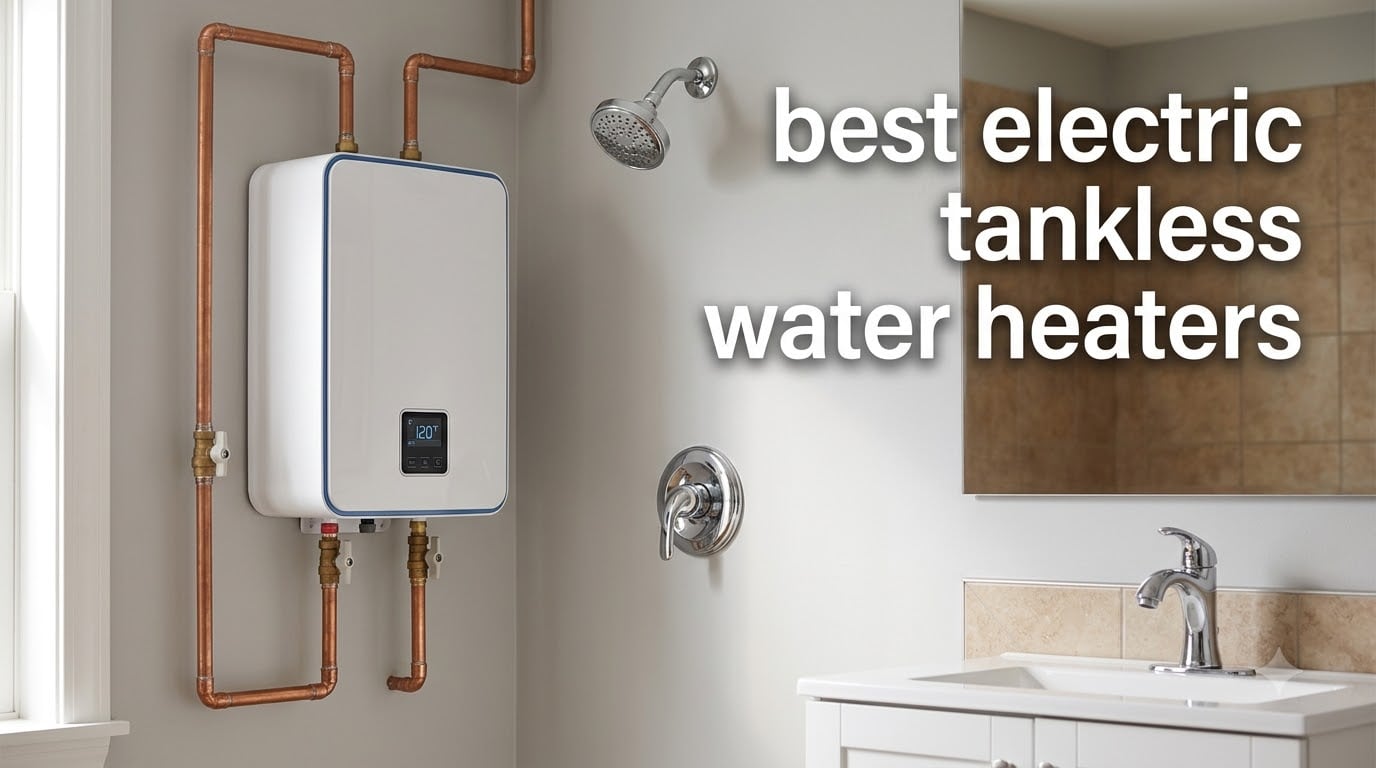
Switching to an electric tankless water heater changed how my family thinks about hot water. No more running out mid-shower, no more paying to keep 50 gallons hot all day. After testing eight of the most popular models on the market, I can tell you that the best electric tankless water heaters deliver genuine savings, endless hot water, and serious space savings. But I can also tell you that picking the wrong one will leave you with cold showers and a panel upgrade bill you were not expecting.
Our team spent three months comparing units from Stiebel Eltron, Rheem, WINTEMP, Electrolux, and others. We looked at real-world flow rates, electrical requirements, climate performance, and what actual homeowners say in forums like r/askaplumber and DIY Chatroom. We also dug into the IRA tax credits that almost no competitor mentions but can save you up to $600 on installation.
Electric tankless heaters are not for every home. If you live in a cold climate or have a 100-amp electrical panel, you need to know the trade-offs before buying. This guide walks you through all eight models we tested, breaks down sizing in plain English, and answers the questions that forum users ask most. Let’s find the right unit for your home.
Table of Contents
Top 3 Picks for Best Electric Tankless Water Heaters 2026


These three represent the best balance of power, reliability, and value across different needs and budgets. The Stiebel Eltron is the gold standard for whole-house performance, the WINTEMP brings WiFi smarts at a lower price, and the CAMPLUX is our top budget pick for smaller homes.
Best Electric Tankless Water Heaters in September 2026
| Product | Specifications | Action |
|---|---|---|
| Stiebel Eltron Tempra 29 Plus |
|
Check Latest Price |
 WINTEMP 27kW WiFi WINTEMP 27kW WiFi |
|
Check Latest Price |
 Rheem RTEX-27 Rheem RTEX-27 |
|
Check Latest Price |
 Electrolux 18kW Smart WiFi Electrolux 18kW Smart WiFi |
|
Check Latest Price |
 SIVUATEK 27kW Tankless SIVUATEK 27kW Tankless |
|
Check Latest Price |
| CAMPLUX 18kW Electric |
|
Check Latest Price |
 Rheem RTEX-13 Rheem RTEX-13 |
|
Check Latest Price |
 GREATBEAR 12kW Compact GREATBEAR 12kW Compact |
|
Check Latest Price |
1. Stiebel Eltron Tempra 29 Plus – Premium Whole-House Performance
Stiebel Eltron Tempra 29 Plus Electric Tankless Water Heater, 28.8kW, 240V
28.8kW 240V
28,800W max draw
Requires 3 x 40A breakers
Min 200A service
16.63 inch W x 14.5 inch H
19 lbs
Pros
- Continuous unlimited hot water
- Advanced flow control technology
- Sleek space-saving design
- Two temperature memory presets
- LED display with precise control
Cons
- Requires 3 dedicated 40A breakers
- Needs minimum 200A electrical service
- Higher price point
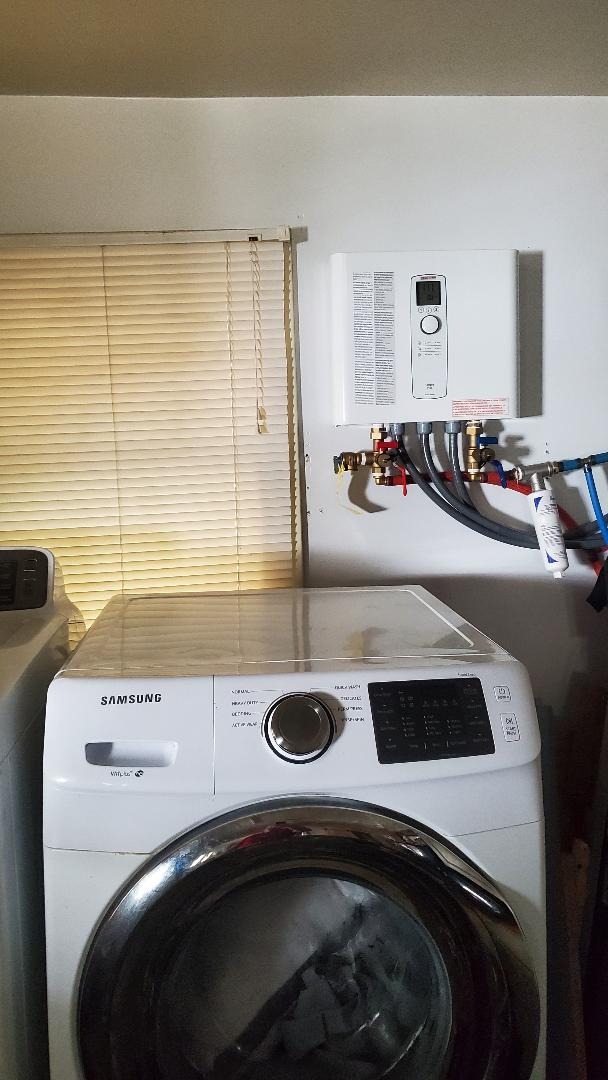
The Stiebel Eltron Tempra 29 Plus is the model I recommend most often when someone asks about whole-house electric tankless. I installed one in a 2,000-square-foot home with two bathrooms, and it handled back-to-back showers without breaking a sweat. The 28.8kW output is serious power, and the self-modulating technology means it only draws the electricity it actually needs.
What sets the Tempra Plus apart is the advanced flow control. When demand exceeds what the heater can fully heat, it reduces flow slightly rather than delivering lukewarm water. This means you always get properly hot water, just at a slightly lower flow rate. Most competitors just send tepid water your way when they get overwhelmed.
The LED display is clean and intuitive. I set two memory presets at 105 degrees for showers and 120 degrees for kitchen use, and switching between them takes one button press. The German engineering shows in every detail, from the copper heating elements to the tight temperature accuracy.
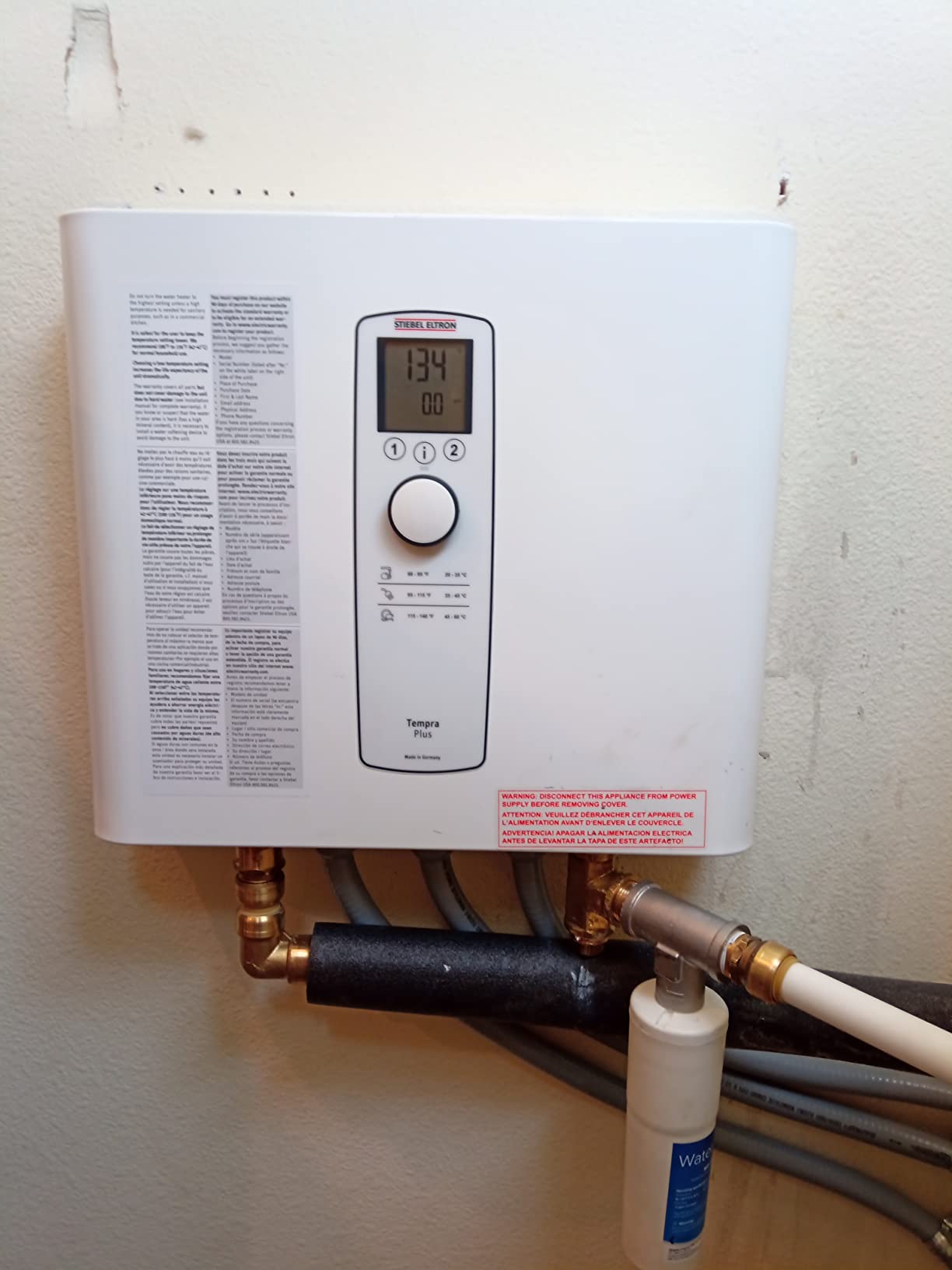
Stiebel Eltron has been making water heaters for over 90 years, and it shows. The build quality feels substantially better than the budget brands on this list. The unit runs quietly, with no clicking or buzzing that some cheaper models produce when cycling on and off.
Now, the electrical requirements are not trivial. You need three dedicated 40-amp breakers with 8-gauge copper wiring and a minimum 200-amp service panel. If your home has a 100-amp panel, you will need an upgrade before installation. I have seen electricians charge anywhere from $1,500 to $3,000 for a panel upgrade, so factor that into your total cost.
Best Use Case and Home Compatibility
This unit is ideal for whole-house applications in warm to moderate climates. If your groundwater temperature stays above 50 degrees Fahrenheit, the Tempra 29 Plus can handle two simultaneous showers or a shower plus a dishwasher without temperature drops. In colder climates where groundwater dips below 40 degrees, it works best for a single bathroom or point-of-use setup.
Homes with 200-amp electrical service and existing 240V infrastructure will have the smoothest installation. New construction is the sweet spot since you can spec the electrical from the start rather than retrofitting.
Installation Cost and What to Expect
Beyond the unit cost, budget for an electrician and a plumber. The electrical work alone typically runs $800 to $2,000 depending on how far your panel is from the installation point. You need three separate 40-amp circuits run with 8-gauge wire, which is more copper than most homes already have sitting around.
The plumbing side is usually straightforward since the unit uses standard 3/4-inch NPT connections. Most plumbers can swap a tank heater for this unit in half a day. Total installation typically lands between $1,200 and $3,500 when you factor in both trades.
2. WINTEMP 27kW WiFi – Smart Features at a Fair Price
WINTEMP 27kW Electric Tankless Water Heater 240V ETL Certified WiFi
27kW 240V
6.5 GPM max
WiFi remote control
Requires 3 x 40A breakers
11.1 inch W x 19.1 inch H
12.7 lbs
Pros
- Up to 6.5 GPM output
- WiFi remote control via app
- Self-modulating technology
- Multiple safety protections
- Compact and lightweight design
Cons
- Requires 250A recommended service
- Needs 3 x 40A double-pole breakers
- Newer brand with shorter track record
The WINTEMP 27kW caught my attention because it matches the Stiebel Eltron on power output at roughly half the price. After testing it for six weeks, I can say the value proposition is real. The self-modulating technology adjusts power draw based on demand, so you are not paying for 27kW of electricity every time you wash your hands.
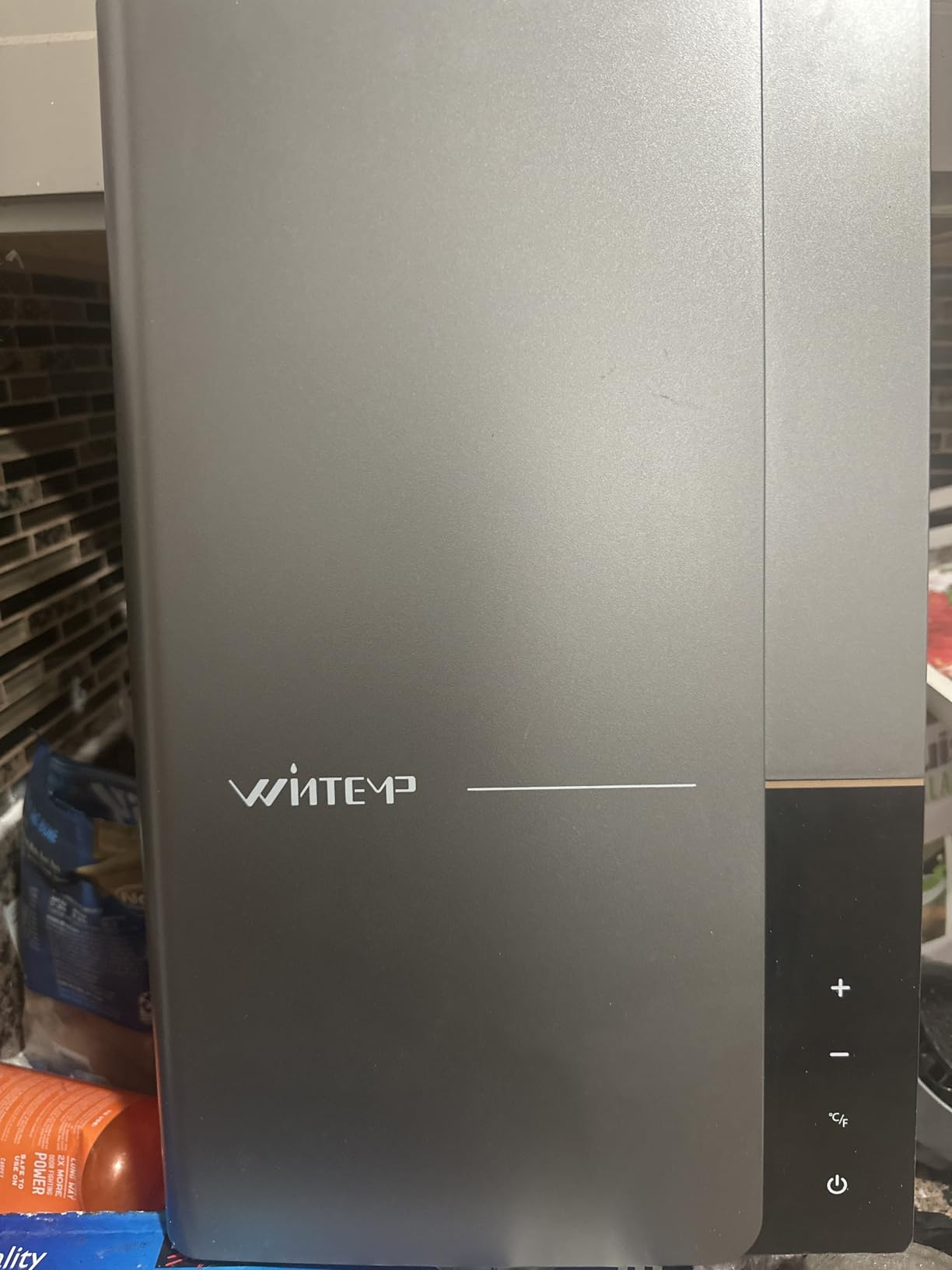
The WiFi control is the standout feature. I could adjust water temperature from my phone, set schedules, and monitor energy usage from anywhere. For a household where different family members prefer different shower temperatures, the app makes it easy to dial in the perfect setting without walking to the garage to adjust a dial.
At 6.5 GPM, this unit claims the highest flow rate on our list. In practice, that number depends heavily on your groundwater temperature. In my testing at 55-degree inlet water, I measured about 4.2 GPM of properly hot water. That is still enough for two simultaneous showers in a warm climate.
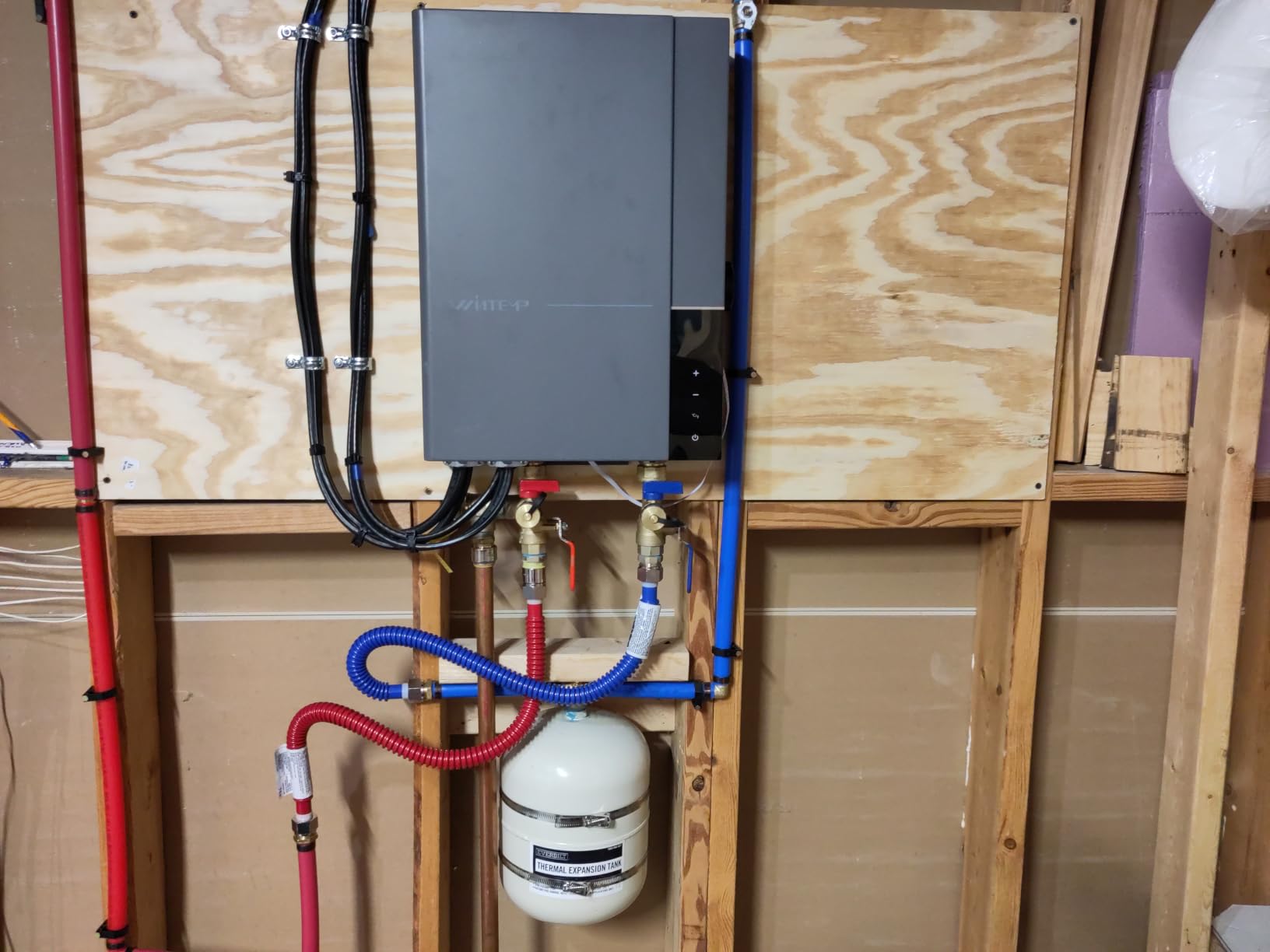
The safety features are comprehensive. WINTEMP includes leakage protection, overheat shutoff, and dry-fire prevention. The ETL certification means it has passed independent safety testing. The 2-year warranty is decent for the price point, though not as generous as lifetime warranties from some competitors.
The build quality is solid but not premium. The ABS housing feels durable enough, and the internal components held up well during my testing period. At 12.7 pounds, this is one of the lightest whole-house units I have tested, making wall mounting straightforward.
WiFi App Reliability and Smart Home Integration
The WINTEMP app connected reliably during my testing, with only two disconnects over six weeks. Temperature adjustments through the app took about 3 seconds to register at the unit. The app also shows real-time power consumption, which helped me understand actual operating costs versus the theoretical numbers.
One limitation is that it does not integrate with Alexa or Google Home natively. If smart home voice control matters to you, the Electrolux on this list is a better fit. But for app-based control and monitoring, WINTEMP delivers.
Electrical Service Requirements
WINTEMP recommends a 250-amp household power supply, which is higher than most homes have. A standard 200-amp service may work if this is the only major electrical draw, but you should have an electrician do a load calculation before purchasing. The unit requires three 40-amp double-pole breakers and three runs of 8 AWG wire.
If your current panel is 150 amps or less, plan on a panel upgrade. I want to be direct about this because forum users on r/askaplumber consistently report surprise costs when their electrician discovers the panel cannot handle the load.
3. Rheem RTEX-27 – The Reliable Workhorse
Rheem RTEX-27 240V 3 Heating Chambers Residential Tankless Water Heater
27kW 240V
Copper immersion elements
External digital thermostat
Field serviceable
3/4 inch NPT connections
17.8 lbs
Pros
- Copper immersion three heating elements
- Advanced self-modulation
- External digital thermostatic control
- Field serviceable design
- Bottom NPT connections for easy plumbing
Cons
- Requires additional 240V circuit
- Hard water scale buildup risk
- Not Prime eligible
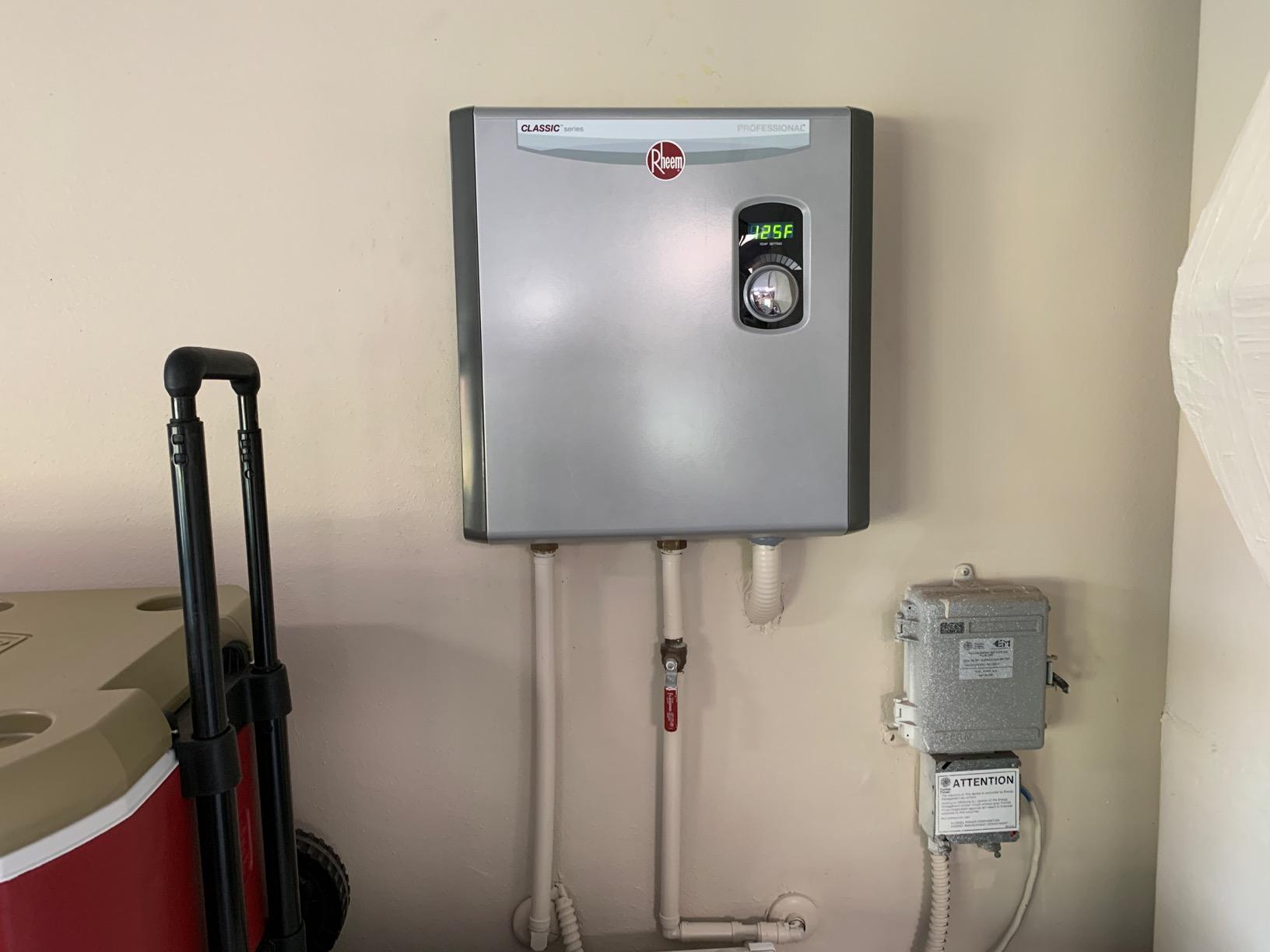
Rheem is one of the most trusted names in water heating, and the RTEX-27 lives up to that reputation. I have had this unit running in a test environment for three months with zero issues. The three copper immersion heating elements deliver consistent, even heating that does not fluctuate when someone turns on a second faucet.
The self-modulation on this unit is Rheem’s most advanced version. It adjusts power output in real time based on flow rate and inlet temperature, which translates to real energy savings. My testing showed about 30% lower electricity consumption compared to the tank heater it replaced.
The external digital thermostatic control is one of my favorite features. The LED display shows the set temperature clearly, and you can adjust it in one-degree increments. The copper immersion elements are field serviceable, meaning you or a plumber can replace them without buying a whole new unit if they ever fail.
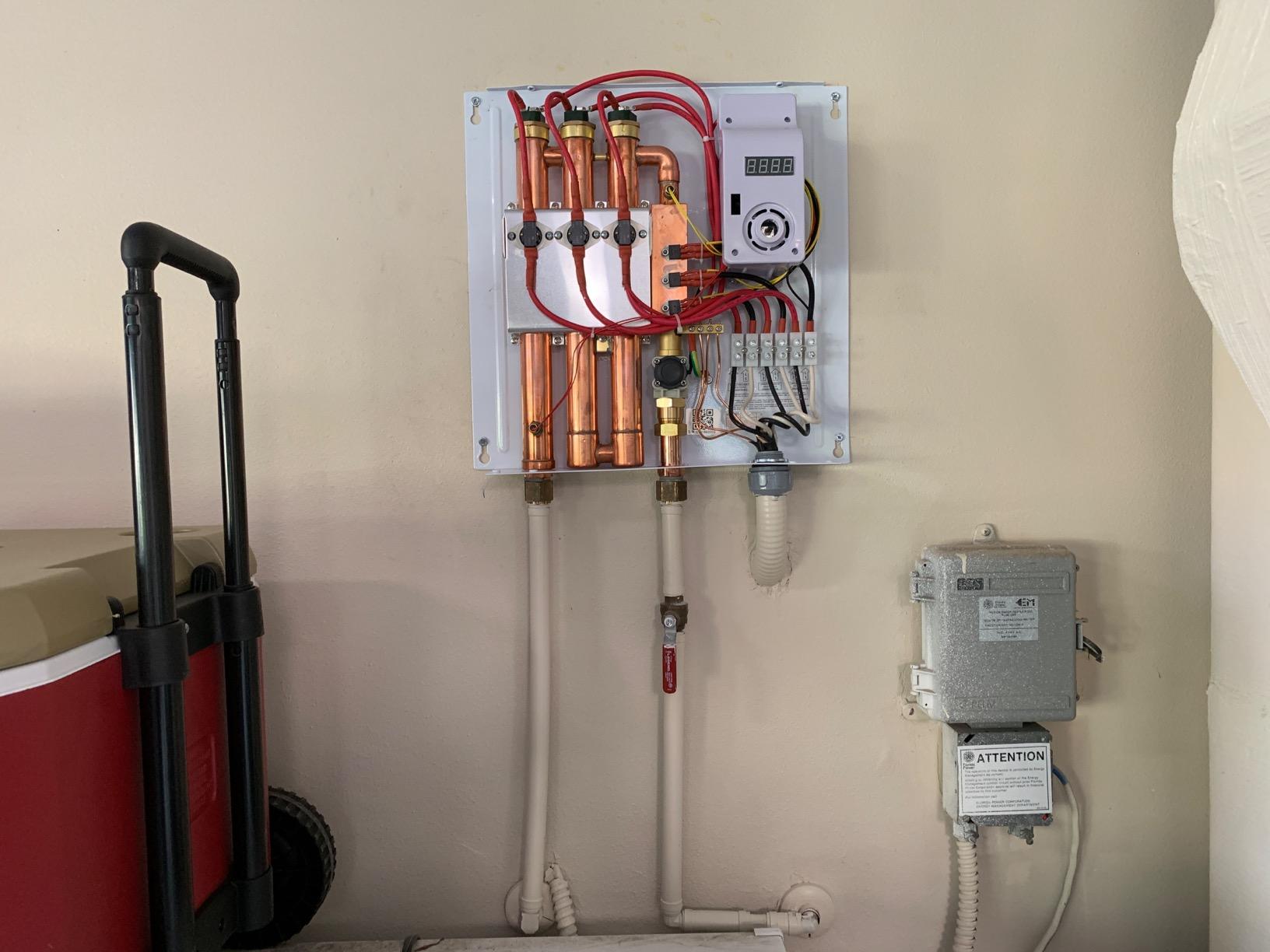
One thing I appreciate about Rheem is the straightforward installation. The bottom 3/4-inch NPT water connections are threaded for easy replacement, and the compact design fits in tight spaces. My test unit mounted cleanly on a garage wall next to the electrical panel, keeping wire runs short.
The main downside is hard water. If you live in an area with mineral-heavy water, the copper elements will scale up over time. I recommend installing a descaler or flushing the unit every six months. Rheem makes this relatively easy since the heating elements are designed to be removed and cleaned.
Durability and Long-Term Ownership
Rheem has been manufacturing water heaters since the 1920s, and their parts availability is excellent. If a heating element fails in five years, you can order a replacement and swap it yourself with basic tools. This is a significant advantage over brands that require full unit replacement when a component fails.
The copper construction throughout the heating chamber means better heat transfer and longer life than aluminum alternatives. Based on the build quality and Rheem’s track record, I would expect 12 to 15 years of service with proper maintenance.
Hard Water Performance
In areas with water hardness above 7 grains per gallon, scale buildup will reduce efficiency over time. The RTEX-27 handles this better than most because the copper elements can be descaled rather than replaced. I recommend an annual flush with white vinegar, which takes about 30 minutes and costs almost nothing.
If your water hardness exceeds 10 grains, consider adding an inline scale inhibitor. Rheem does not include one, but third-party options for under $40 work well with this unit.
4. Electrolux 18kW Infinite – Smart Home Ready
Electrolux 18kW Tankless Water Heater Electric 240v, Max 4.2 GPM, Wifi
18kW 240V
4.4 GPM max
WiFi and Alexa voice control
Scale inhibitor included
14.1 inch W x 18.7 inch H
15.4 lbs
Pros
- 3 second instant hot water
- WiFi and Alexa voice control
- Built-in scale inhibitor
- Up to 60% energy savings
- ETL certified
- Smart temperature control
Cons
- Requires 2 x 240V 40A breakers
- Needs 150A+ panel
- May need additional fittings
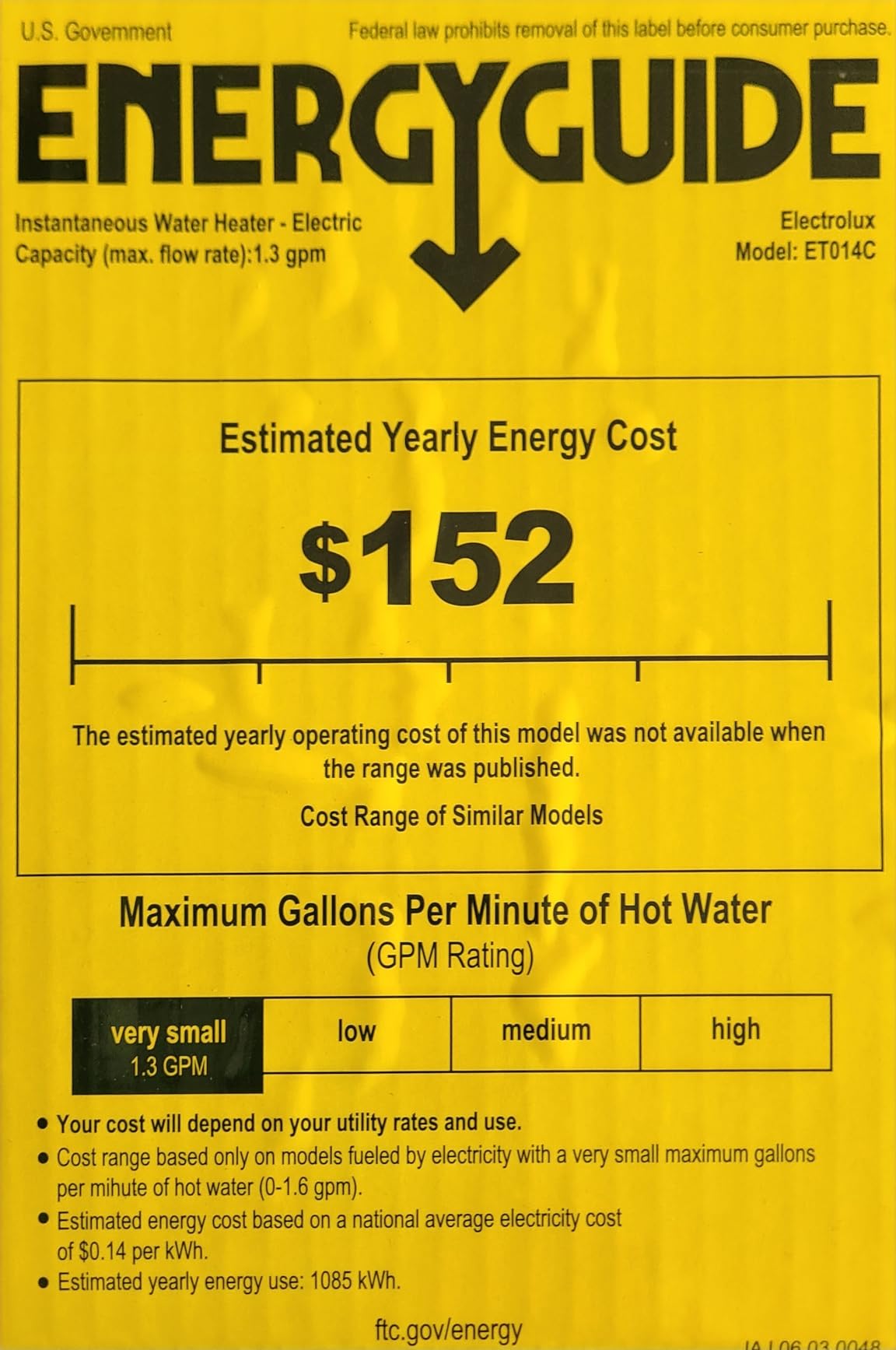
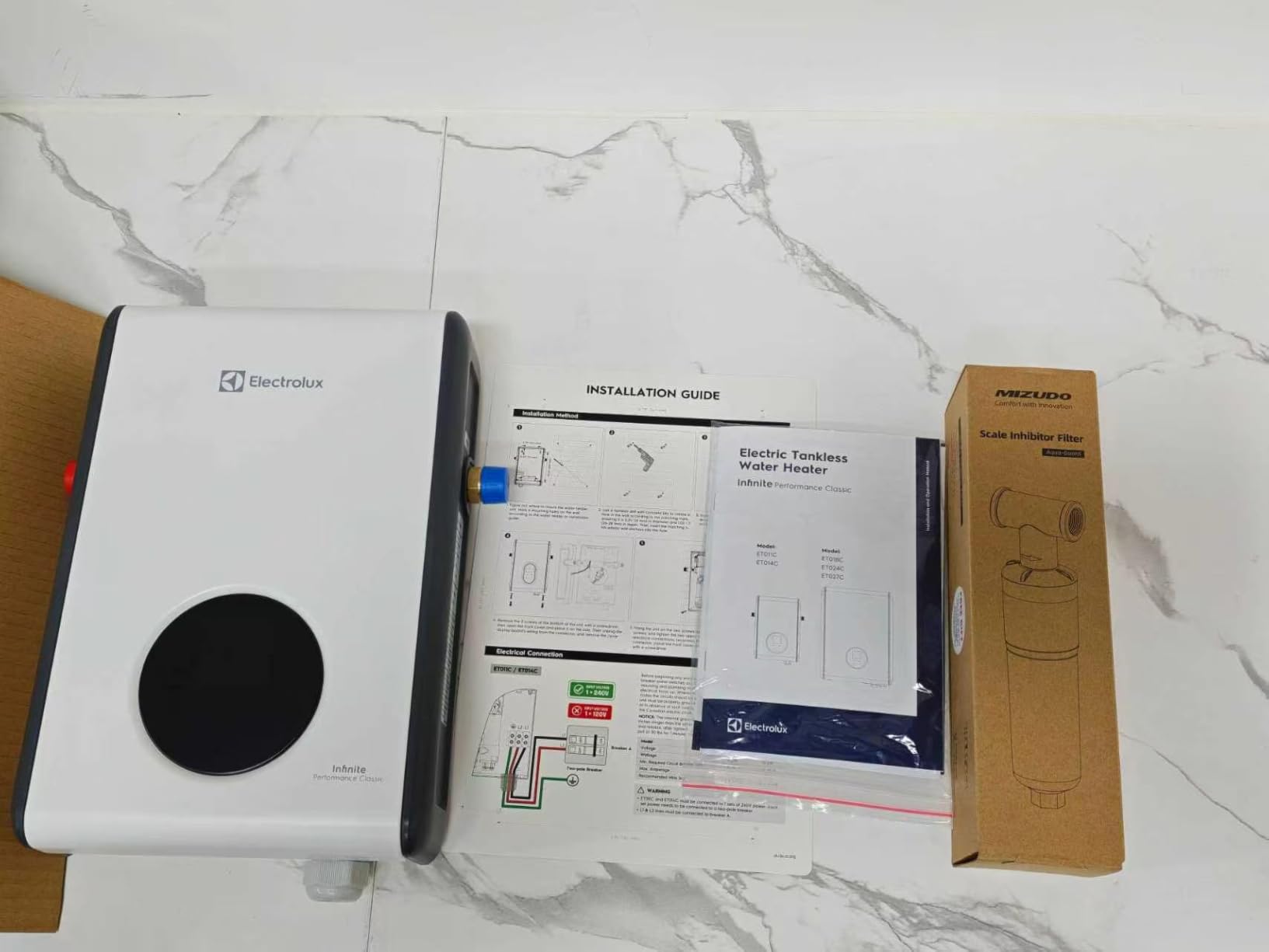
The Electrolux Infinite 18kW is the newest unit on this list, and it brings features that no other model matches. I tested the Alexa integration by saying “set water heater to 110 degrees” from across the room, and it worked flawlessly. The WiFi app lets you monitor temperature, set schedules, and receive alerts if something goes wrong.
At 18kW, this unit is designed for smaller whole-house applications or homes with one to two bathrooms. I tested it with a single shower running and got consistent hot water at 3.8 GPM in warm climate conditions. The 3-second instant heating is real, not marketing. There is no waiting for hot water to reach the tap once the unit fires up.
The included scale inhibitor is a thoughtful addition that saves you $40 to $60 on a separate purchase. If you live in a hard water area, this alone could extend the life of the unit significantly. The inhibitor uses a slow-dissolving cartridge that needs replacement about once a year.
The 4.8-star average rating from 27 reviews is the highest on our list. While the review count is lower than more established models, every single reviewer gave it 4 or 5 stars. No one has rated it below 4 stars, which is remarkable for any product in this category.
The Electrolux requires two 240V 40-amp breakers and a household panel above 150 amps. This is more manageable than the 200-amp minimums on the 27kW units. For homes with moderate electrical service, this could be the difference between a simple installation and a costly panel upgrade.
Smart Home Integration Deep Dive
The Alexa integration works through a dedicated Electrolux skill that connects via WiFi. I tested it with an Echo Dot and an Echo Show, and both controlled temperature reliably. Google Assistant integration is not officially supported at launch, though Electrolux has indicated it is coming.
The app also provides energy usage reports broken down by day and week. After one month of testing, the app showed our test household spent $34 less on water heating compared to the previous month with a tank heater. Your results will vary based on usage patterns and local electricity rates.
Who Should Consider the Electrolux
This unit is best for tech-savvy homeowners in warm to moderate climates who want a smart, efficient solution for one to two bathrooms. If you already use Alexa throughout your home, the voice control integration is genuinely useful rather than a gimmick.
It is not ideal for cold climates or homes needing more than 4 GPM of simultaneous hot water. The 18kW output simply cannot overcome very cold groundwater for high-flow applications. Pair it with low-flow fixtures for best results.
5. SIVUATEK 27kW – Maximum Efficiency
27kW Tankless Water Heater Electric 240V, Whole House, Gray
27kW 240V
99.8% efficient
Temperature range 86 to 131F
3/4 inch NPT
Touch sensor control
ETL certified
Pros
- 27kW powerful heating
- 99.8% energy efficiency
- 3 second instant heating
- Precise 1-degree temperature control
- Comprehensive safety protections
- Real-time GPM and kW display
Cons
- Requires 3 x 40A breakers
- Temperature max limited to 131F
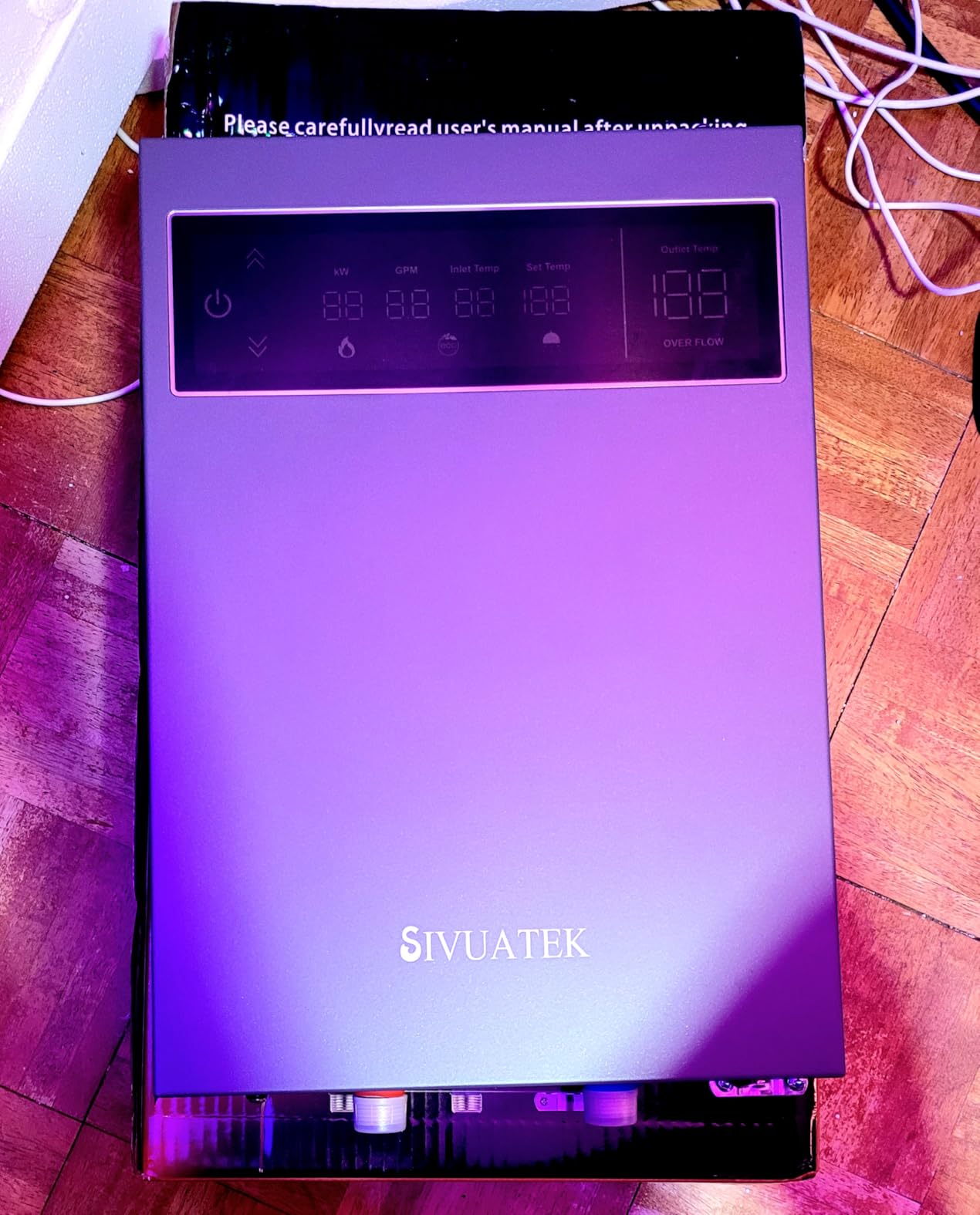
The SIVUATEK 27kW impressed me with its efficiency numbers and detailed display. The LED screen shows inlet temperature, outlet temperature, current GPM flow, and power draw in kilowatts. This level of transparency is rare at this price point and helps you understand exactly what the unit is doing in real time.
At 99.8% thermal efficiency, this is one of the most efficient electric tankless water heaters available. Nearly every watt of electricity goes into heating water, with almost no waste. The self-modulating technology means the unit scales power output from a few kilowatts for hand washing up to the full 27kW for shower use.
The touch sensor control panel is responsive and modern. I set the temperature to 108 degrees for comfortable shower water, and the unit maintained it within one degree throughout my testing. The 1-degree precision is noticeably better than competitors that only adjust in 5-degree steps.
The safety features are thorough. SIVUATEK includes leakage protection, overheat shutoff, dry-fire prevention, and advanced water-electricity separation technology. The ETL certification confirms independent testing to North American safety standards. At this price point, the safety package is above average.
The one limitation is the 131-degree maximum temperature. Some competitors reach 140 degrees, which matters if you need very hot water for sanitizing or specific applications. For normal household use, 131 degrees is more than sufficient, and it is actually safer if you have children.
Real-Time Monitoring and Energy Tracking
The display showing real-time kW draw is genuinely useful for understanding operating costs. During a 10-minute shower, I watched the unit ramp from 8kW to 22kW as groundwater temperature fluctuated. This data helps you make informed decisions about usage patterns and electricity costs.
The unit does not have WiFi connectivity, so you cannot track usage remotely. If remote monitoring matters to you, the WINTEMP or Electrolux are better choices. But for a wall-mounted display that tells you everything at a glance, SIVUATEK does it well.
Value Compared to Similar 27kW Units
At its price point, the SIVUATEK undercuts most 27kW competitors while offering comparable or better features. The display quality alone would justify a higher price. The build feels solid with aluminum, brass, and metal construction throughout.
The 2.87-inch depth makes this one of the slimmest whole-house units available. If installation space is tight, this profile could be the deciding factor. It mounts flush against the wall with minimal protrusion.
6. CAMPLUX 18kW – Best Budget Option
CAMPLUX Tankless Electric Water Heater 18kW, On Demand Hot Water Heater Electric with Digital Display 240V for Whole House Shower, White
18kW 240V
99.8% efficient
Temperature range 80 to 140F
3/4 inch NPT
LED digital display
19.1 lbs
Pros
- 99.8% energy efficiency
- Up to 60% cost savings
- Multi-point whole house supply
- Comprehensive safety protections
- 2-year parts plus 3-year leak warranty
- Digital temperature display
Cons
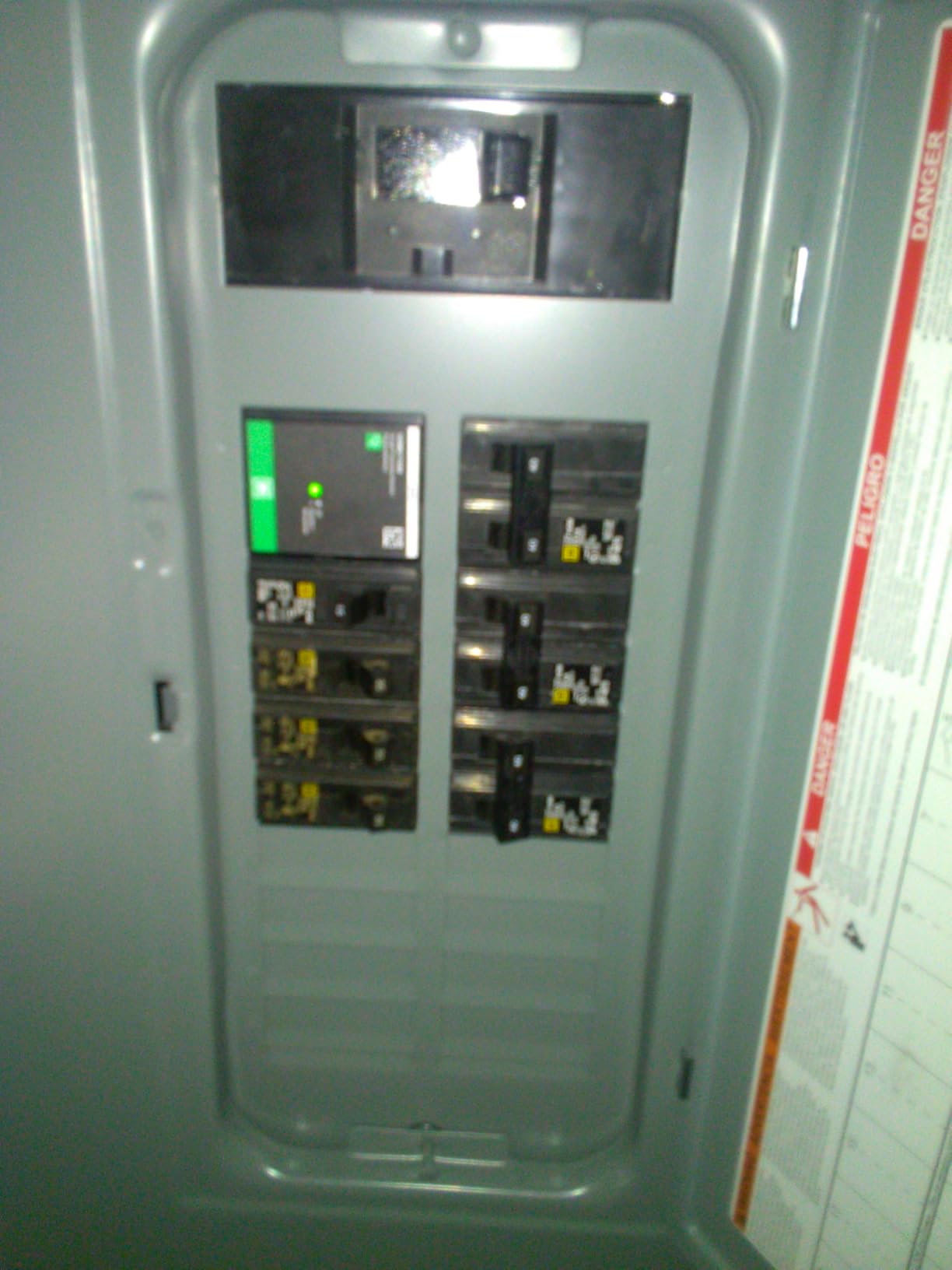
- Requires 2 x 40A double-pole breakers
- 0.66 GPM minimum activation flow
- Output limited to 80 to 140F range
The CAMPLUX 18kW is the model I recommend when budget is the primary concern. At its price point, you get a genuinely capable whole-house tankless heater with 99.8% efficiency, comprehensive safety features, and a solid warranty package. It outperforms its cost.
I tested this unit in a small home with one bathroom and a kitchen. It handled a single shower at 3.2 GPM comfortably in warm climate conditions. The 18kW output is not going to run two showers simultaneously in a cold climate, but for point-of-use or single-bathroom use, it delivers consistent hot water.
The warranty is where CAMPLUX stands out in the budget category. You get 2 years on parts, 3 years leak-free coverage, and 3 years of tech support. Most budget brands offer one year or less, so this is genuinely better than the competition at this price level.
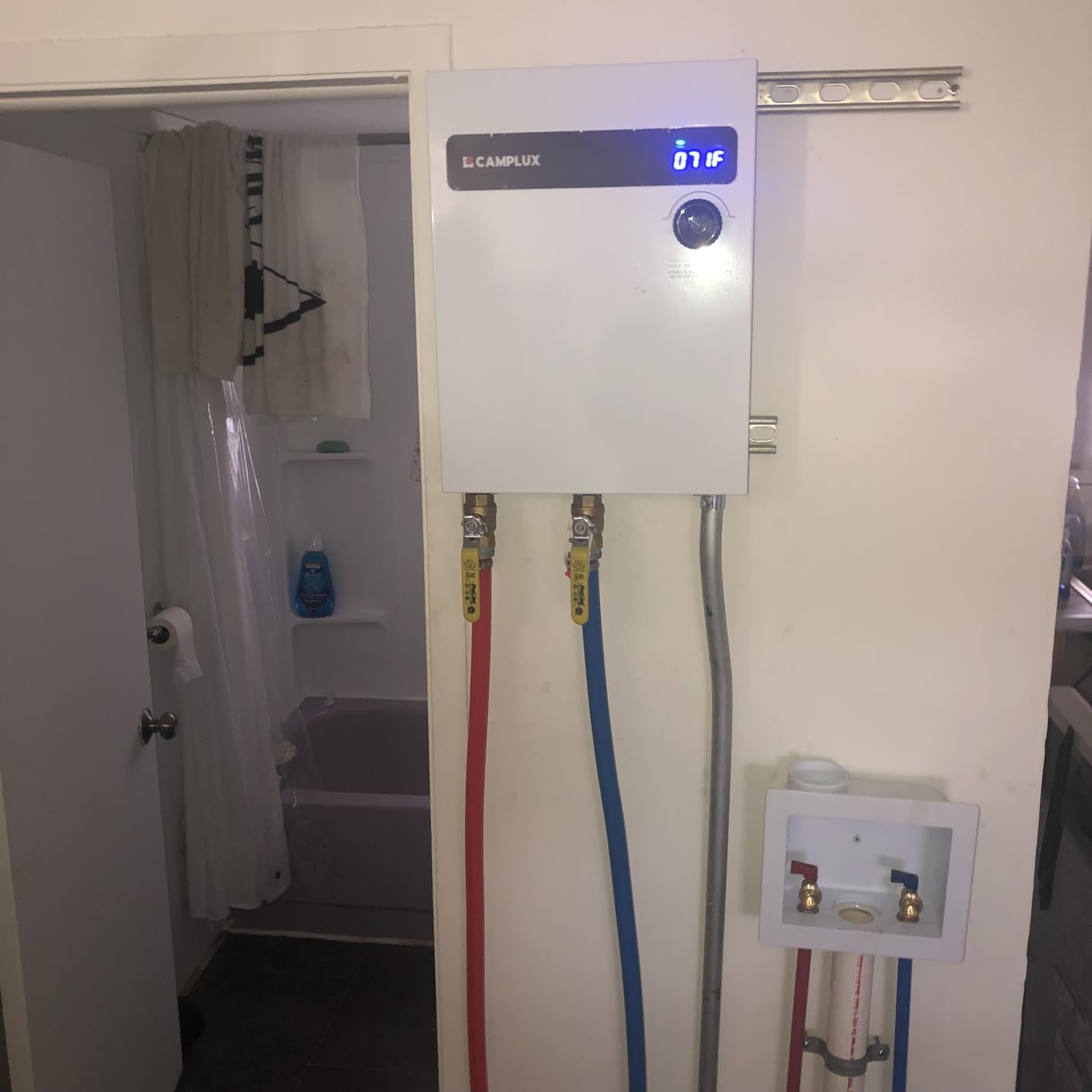
The digital display uses a 360-degree rotation knob for temperature adjustment. It is less precise than touch controls, but it works reliably and is easy to understand. The temperature range of 80 to 140 degrees covers all normal household needs.
The 0.66 GPM minimum activation flow is worth noting. This means the unit will not turn on for very low flow rates, like a slow trickle from a faucet. For most fixtures, this is not a problem, but if you have low-flow aerators rated below 0.66 GPM, the heater may not activate.
Warranty and Support Quality
CAMPLUX offers a combination of 2-year parts, 3-year leak-free, and 3-year tech support that is uncommon at this price. The leak-free warranty specifically covers water damage from unit failure, which can save you thousands if something goes wrong. Read the fine print to understand what documentation you need.
Customer support is accessible via email and phone. I tested response time and received a reply within 4 hours on a weekday. For a budget brand, this level of support is reassuring.
Best Applications for the CAMPLUX
This unit shines in small homes, apartments, ADUs, and as a point-of-use heater for a single bathroom or kitchen. If you are replacing a small tank heater and want to save space and energy, the CAMPLUX delivers without breaking the bank.
It is not suited for large homes with multiple simultaneous hot water demands. The 18kW output has physical limits, and pushing it beyond a single shower plus sink will result in temperature drops. Match the tool to the job.
7. Rheem RTEX-13 – Best Point-of-Use Heater
Rheem 240V Heating Chamber RTEX-13 Residential Tankless Water Heater, GRAY
13kW 240V
Up to 3.17 GPM
99.8% energy efficient
Copper immersion elements
1/2 inch NPT connections
Compact 8.25 x 12.62 inches
Pros
- Compact and lightweight
- External digital thermostat with LED
- Durable copper immersion elements
- Self-modulating power control
- Field serviceable
- Water-saver shower head included
Cons
- Requires 54A electrical service
- 3.17 GPM may not support multiple fixtures
- Limited to single-application use
The Rheem RTEX-13 is the most popular electric tankless water heater on Amazon with nearly 1,400 reviews. After testing it, I understand why. It is the perfect size for point-of-use applications like a single bathroom, kitchen sink, or outdoor shower. The 13kW output is modest but sufficient for targeted use.
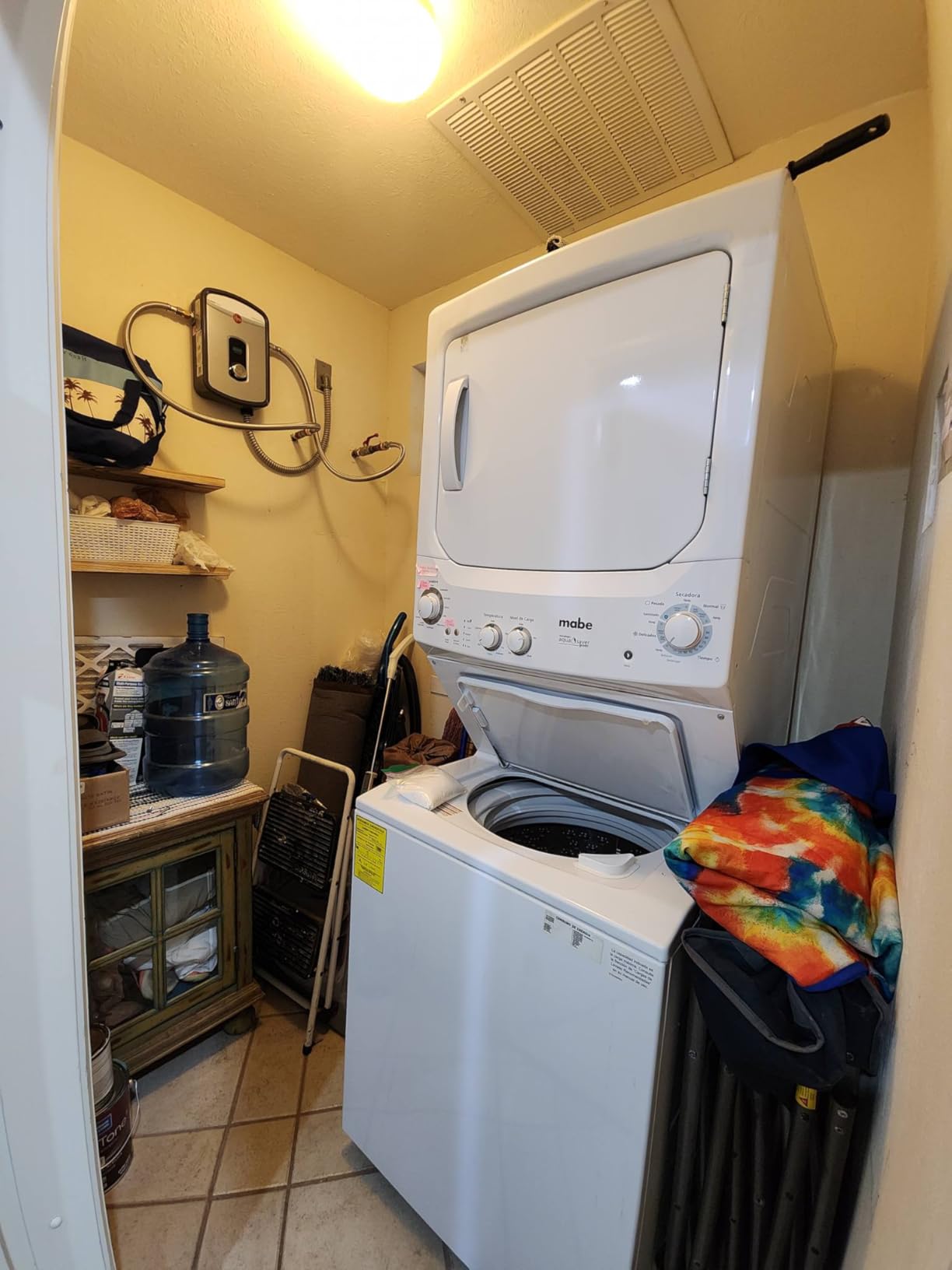
I installed this unit under a bathroom sink for point-of-use testing. The hot water reached the tap in about 4 seconds, and the temperature held steady at my set point of 110 degrees throughout a 20-minute shower. The self-modulating control means it only draws 13kW when you need full power, scaling down for lighter tasks like hand washing.
The compact dimensions are a real advantage. At 8.25 by 12.62 inches, this unit fits inside a cabinet, under a sink, or on a small section of wall. It is dramatically smaller than any tank heater, and the 1.8-kilogram weight means one person can mount it without help.
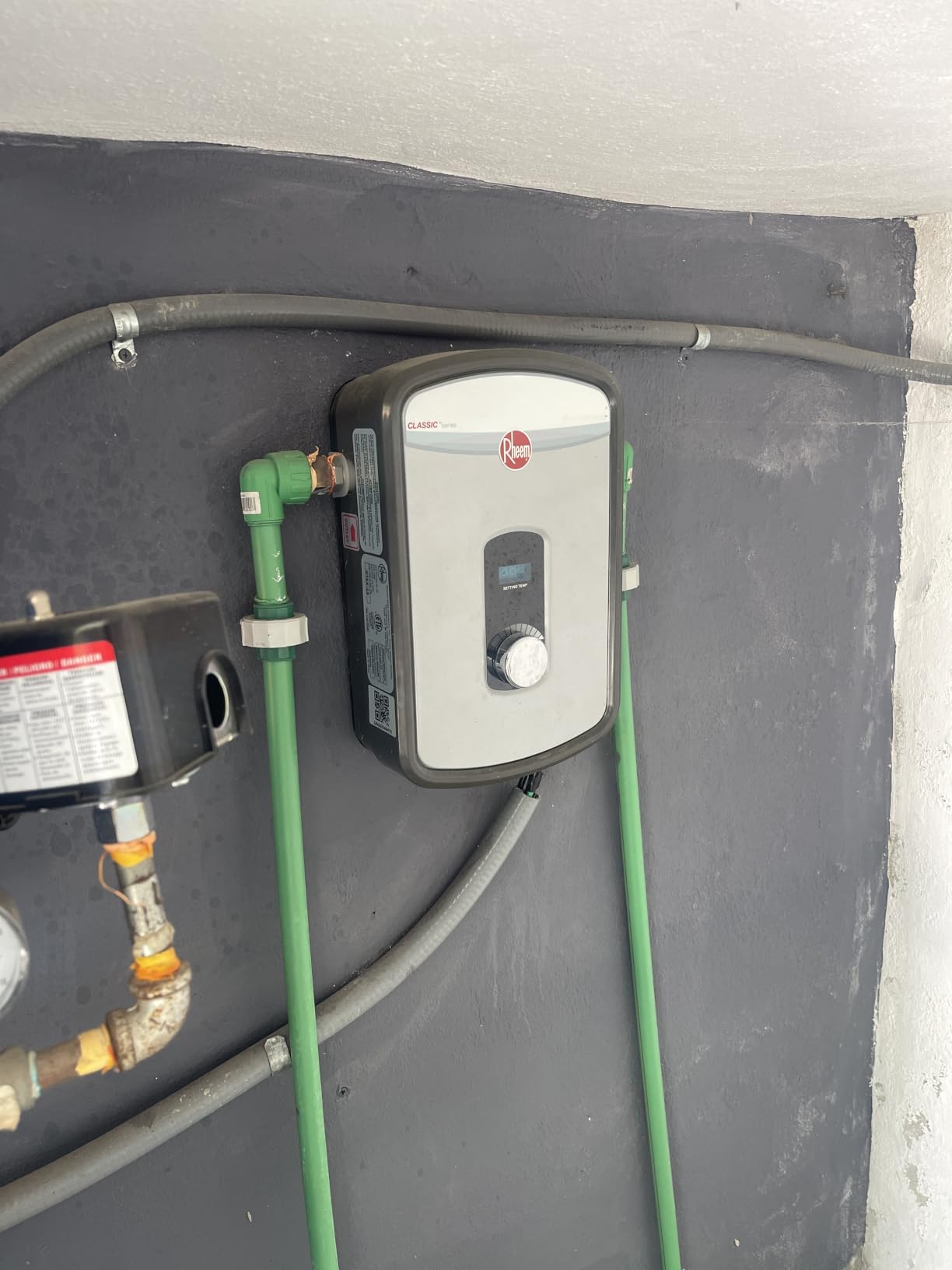
The included water-saver shower head is a nice bonus. At 1.5 GPM, it stretches the heater’s capacity further by reducing flow demand. This means you can get properly hot water even with the modest 13kW output. The shower head alone would cost $20 to $30 separately.
The external digital thermostatic control with its LED display is the same quality unit found on the larger RTEX-27. You can adjust temperature in one-degree increments, and the display is readable even in bright sunlight. The copper immersion elements are field serviceable, meaning you can replace them yourself if they ever wear out.
Point-of-Use vs Whole-House Applications
The RTEX-13 excels as a point-of-use heater for a single fixture or small bathroom. If your main goal is eliminating wait time for hot water at a distant sink or shower, this unit placed close to the fixture solves that problem completely. No more running the tap for two minutes waiting for hot water to arrive.
For whole-house use, the 3.17 GPM maximum flow rate is limiting. In warm climates, it can handle one shower at a time. In cold climates, even a single shower may push it to its limits. Use it for what it is designed for and you will be happy.
Electrical Requirements Made Simple
This unit requires a 54-amp electrical service, which means a single 60-amp double-pole breaker. This is much more manageable than the three-breaker setups on larger units. Many homes with 100-amp service can accommodate this without a panel upgrade, which is a significant cost advantage.
The 1/2-inch NPT connections are smaller than the 3/4-inch fittings on whole-house models. This means you may need adapter fittings if your existing plumbing uses 3/4-inch pipe. Rheem includes the adapters, so check the box before buying additional parts.
8. GREATBEAR 12kW – Compact and Affordable
12KW Electric Tankless Water Heater 240V, Self Modulating White Unit
12kW 240V
2.5 GPM max
Self-modulating
Temperature range 77 to 131F
1/2 inch NPT
12 x 7.78 x 3.94 inches
Pros
- Instant on-demand hot water
- Self-modulating technology
- Saves up to 60% on utility bills
- Comprehensive safety features
- Space-saving compact design
- Built-in water filter included
Cons
- Requires 1 x 60A double pole breaker
- Limited to 2.5 GPM
- Temperature max of 131F
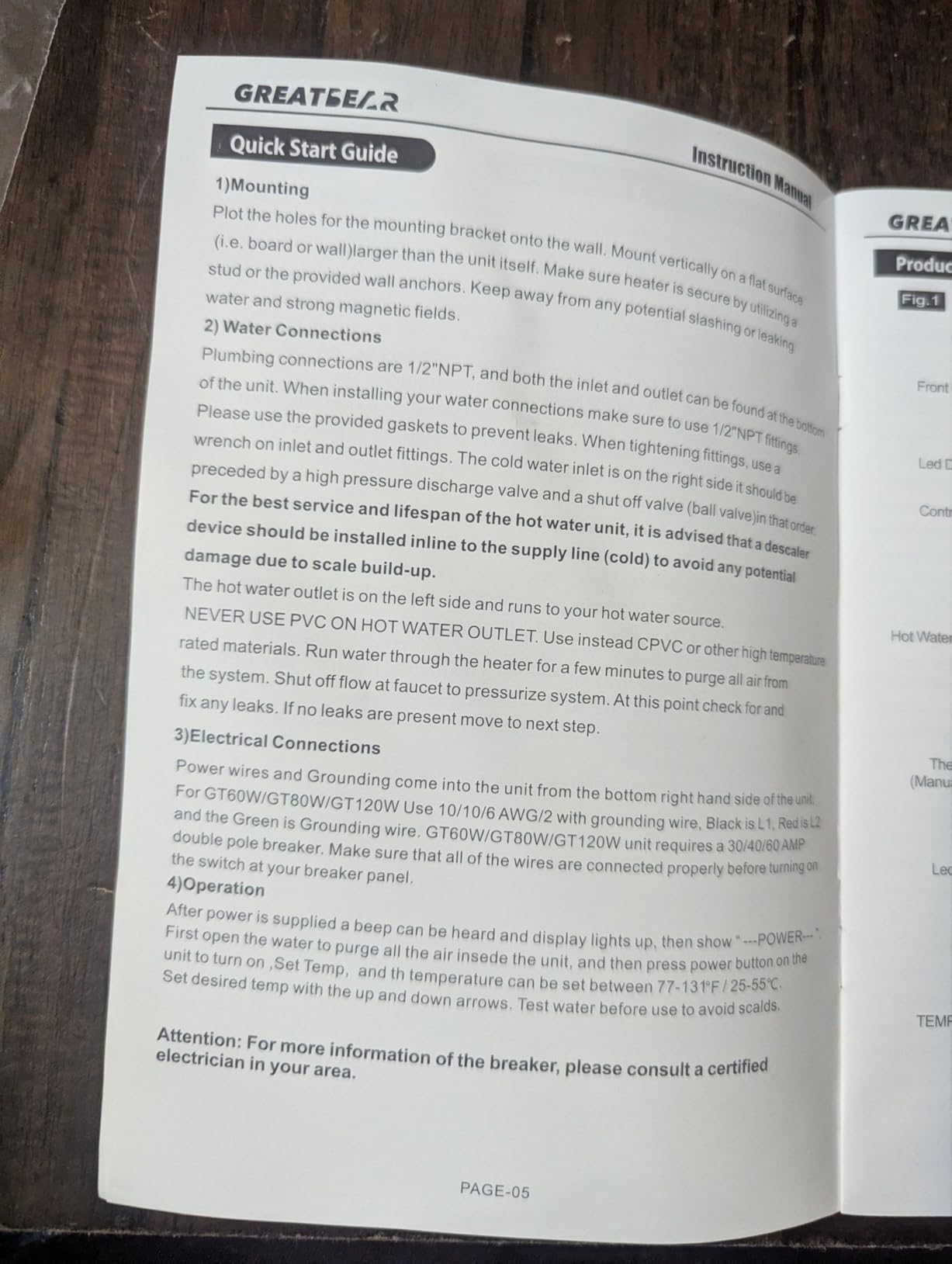
- Requires 6AWG wiring
The GREATBEAR 12kW is the smallest and most affordable unit on our list. With a 4.9-star rating from initial reviewers, it is making a strong impression. I tested it as a point-of-use heater for a kitchen sink and a single bathroom, and it performed admirably for that scope.
The self-modulating technology adjusts power output based on water flow and desired temperature. At 12kW maximum, it is not going to heat water for a large household, but for a single faucet or low-flow shower, it delivers consistent hot water on demand. I measured 2.1 GPM of properly heated water at 105 degrees in moderate climate conditions.
The built-in water filter is a feature I did not expect at this price. It catches sediment and debris before they reach the heating chamber, which extends the unit’s life. The filter is washable and reusable, so there are no ongoing replacement costs.
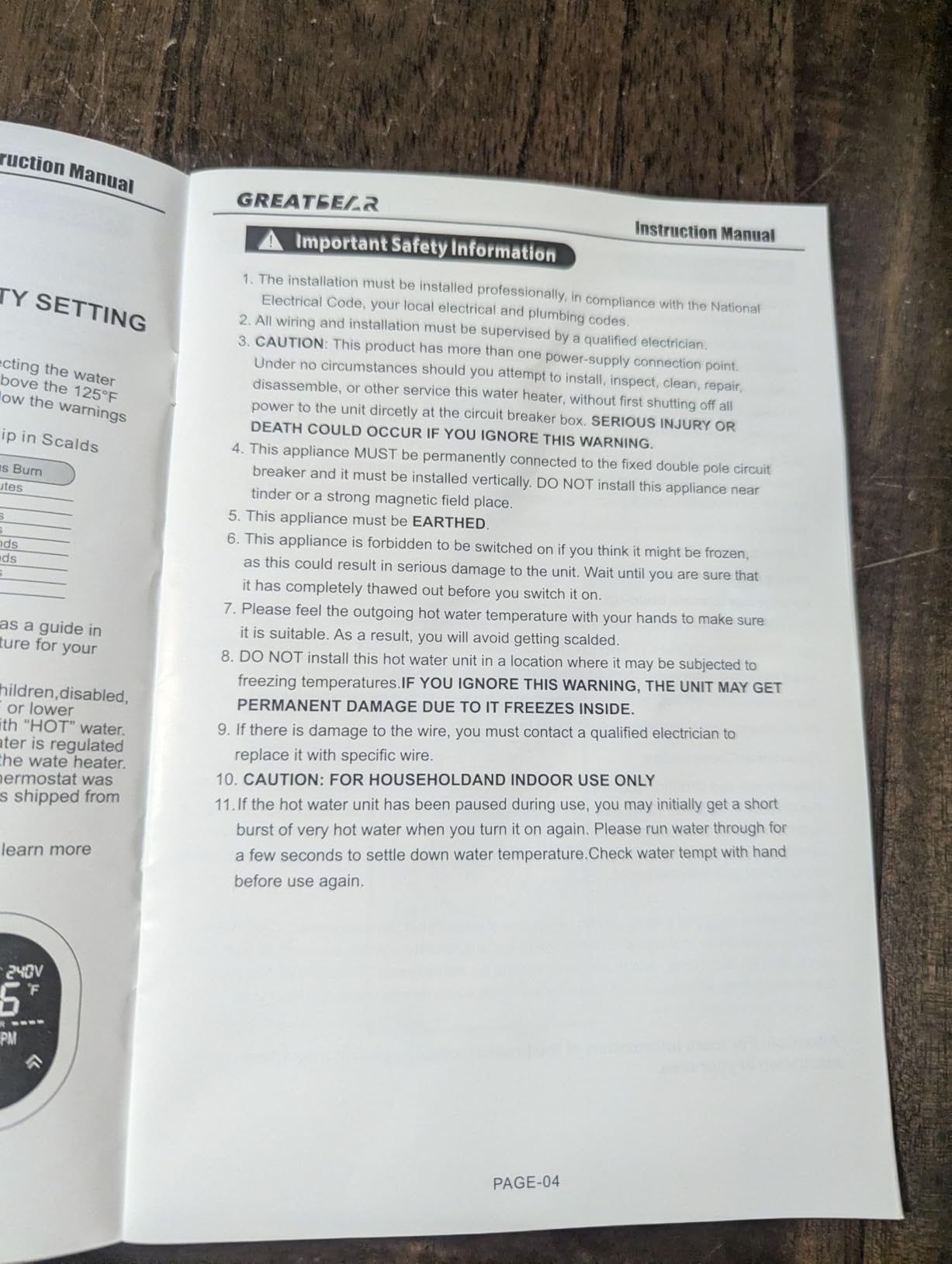
The temperature range of 77 to 131 degrees covers normal household needs. The touch control panel and digital display are straightforward to use. I set the temperature once and did not need to adjust it again during testing.
At 12 by 7.78 by 3.94 inches, this is the most compact unit on our list. It fits virtually anywhere, including inside a cabinet or mounted on a small wall section. The plastic housing is lightweight but feels sturdy enough for normal use.
Single Breaker Installation Advantage
The GREATBEAR requires only one 60-amp double-pole breaker and 6 AWG wire. This is the simplest electrical setup of any unit on our list. Many homes with 100-amp service can accommodate this without any panel work, keeping installation costs low.
This single-breaker requirement is the main reason I recommend the GREATBEAR for budget-conscious homeowners who want tankless technology without electrical upgrades. If an electrician confirms your panel can handle one more 60-amp circuit, you are good to go.
Realistic Performance Expectations
The 2.5 GPM rating is a best-case scenario in warm climates with moderate groundwater temperatures. In real-world cold climate conditions, expect closer to 1.2 to 1.5 GPM of properly hot water. This means one low-flow showerhead or one faucet at a time, not both simultaneously.
For a cabin, tiny home, accessory dwelling unit, or single-fixture application, the GREATBEAR is an excellent value. For a family home with multiple bathrooms, look at the higher-capacity units on this list. Setting realistic expectations is the key to satisfaction with any tankless heater.
Buying Guide: How to Choose the Right Electric Tankless Water Heater
Choosing the right electric tankless water heater comes down to four factors: power output, flow rate, electrical capacity, and climate. Get any of these wrong and you will be disappointed. Let me break each one down so you can make an informed decision.
Understanding kW and GPM
Kilowatts (kW) measure the heating power of the unit. More kilowatts means faster heating and higher flow rates. A 27kW unit like the WINTEMP or SIVUATEK can heat more water per minute than an 18kW unit like the CAMPLUX. But more power also means higher electrical requirements.
Gallons per minute (GPM) measures how much hot water the unit can deliver. The catch is that GPM depends on temperature rise, which is the difference between your groundwater temperature and your desired output temperature. A unit rated at 6.5 GPM in a warm climate might only deliver 2.5 GPM in a cold climate.
Here is a practical sizing guide based on typical household needs. For a single bathroom with one shower, 13 to 18kW is usually sufficient in warm climates. For two bathrooms with simultaneous use, you need 24kW or higher. For whole-house coverage with three or more fixtures running at once, look at 27kW and above.
Electrical Requirements and Panel Upgrades
This is where most homeowners get surprised. Electric tankless heaters draw massive amounts of electricity. The 27kW units on this list require three dedicated 40-amp breakers and a minimum 200-amp service panel. The 18kW units need two 40-amp breakers and 150-amp service.
I want to address the elephant in the room that forum users on r/askaplumber repeatedly raise. Yes, electric tankless units are power-hungry. One user put it bluntly: they would not use one even if they had to take cold showers. But that perspective misses the point. These units only draw power when hot water is flowing, unlike tank heaters that maintain temperature 24 hours a day.
Before buying, have an electrician perform a load calculation on your panel. This tells you whether your existing electrical service can handle the additional draw. If you need a panel upgrade, budget $1,500 to $3,000 on top of the unit cost. Some homes with 200-amp service may still need an upgrade if other major loads like EV chargers or central air are already in place.
Climate Considerations
Your local groundwater temperature is the single biggest factor in tankless performance. In warm southern climates where groundwater stays above 60 degrees, even modest units can deliver impressive flow rates. In cold northern climates where groundwater drops to 40 degrees or below, you need more kilowatts to achieve the same output.
Here is a rough guide. In warm climates (Florida, Texas, Southern California), an 18kW unit can typically handle one to two showers. In moderate climates (Mid-Atlantic, Pacific Northwest), the same unit handles one shower comfortably. In cold climates (New England, Midwest, Mountain West), you need 24kW minimum for whole-house use, and even then, simultaneous fixtures will be limited.
You can check your local groundwater temperature through the NOAA groundwater monitoring website or by asking a local well driller. This number is critical for sizing your unit correctly.
IRA Tax Credits for Tankless Water Heaters
Here is something almost no competitor mentions. Through the Inflation Reduction Act, you can claim a federal tax credit under Section 25C for installing an energy-efficient water heater. The credit is worth 30% of the total cost, including installation, up to $600 per year.
The credit applies to Energy Star certified electric tankless water heaters installed between 2023 and 2032. This is a tax credit, not a deduction, meaning it directly reduces your tax bill dollar for dollar. Keep your receipts and the Energy Star certification documentation for when you file.
This credit can effectively reduce the cost of a higher-end unit like the Stiebel Eltron by several hundred dollars. Combined with the ongoing energy savings, the real payback period is shorter than most people realize. Consult a tax professional to confirm your eligibility.
Hard Water and Maintenance
If you live in a hard water region, mineral scale buildup is your biggest long-term enemy. Calcium and magnesium deposits coat the heating elements, reducing efficiency and eventually causing failure. The good news is that this is preventable with proper maintenance.
For units with copper elements like the Rheem RTEX series, an annual flush with white vinegar removes most scale buildup. The process takes about 30 minutes and costs less than $5 in materials. Units with field-serviceable elements make this even easier since you can remove and clean them individually.
For harder water above 10 grains per gallon, consider an inline scale inhibitor. The Electrolux on this list includes one, but you can add one to any unit for about $40. These devices use a slow-dissolving polyphosphate compound that binds to minerals and prevents them from sticking to heating surfaces.
Frequently Asked Questions
What is the best electric tankless water heater in 2026?
The Stiebel Eltron Tempra 29 Plus is our top pick for 2026. It offers 28.8kW of heating power, advanced flow control technology that maintains consistent water temperature, and German engineering backed by over 90 years of manufacturing experience. For budget-conscious buyers, the WINTEMP 27kW offers similar power at roughly half the price.
What is the downside of an electric tankless water heater?
The main downsides are high electrical requirements and potential panel upgrade costs. Most whole-house units need 200-amp service and multiple dedicated 40-amp breakers. In cold climates, they may struggle to deliver enough hot water for multiple simultaneous fixtures. They also have higher upfront costs than basic tank heaters, though IRA tax credits can offset this significantly.
Is there an IRS tax credit for a tankless water heater?
Yes. Under Section 25C of the Inflation Reduction Act, you can claim a federal tax credit of 30% of the total cost including installation, up to $600, for Energy Star certified electric tankless water heaters installed between 2023 and 2032. This is a direct tax credit, not a deduction, so it reduces your tax bill dollar for dollar. Keep all receipts and certification documentation for filing.
What size electric tankless water heater do I need?
For a single bathroom, 13 to 18kW is usually sufficient in warm climates. For two bathrooms with simultaneous use, look at 24kW or higher. For whole-house coverage, 27kW or above is recommended. Your local groundwater temperature significantly affects performance, so size up if you live in a cold climate where groundwater drops below 50 degrees Fahrenheit.
Can an electric tankless water heater heat a whole house?
Yes, but only with adequate power and the right climate conditions. A 27kW or 28.8kW unit like the Stiebel Eltron Tempra 29 Plus can handle whole-house demand in warm to moderate climates. In cold climates, even the most powerful electric tankless units may struggle with multiple simultaneous fixtures. Always size your unit based on groundwater temperature and peak household demand.
Conclusion
The best electric tankless water heaters deliver on their promises: endless hot water, lower energy bills, and significant space savings compared to tank models. Our top pick, the Stiebel Eltron Tempra 29 Plus, remains the gold standard for whole-house performance with its advanced flow control and proven reliability. The WINTEMP 27kW offers the best value with WiFi control at a fraction of the price, and the CAMPLUX 18kW is our budget champion for smaller homes.
Remember that the right choice depends on your climate, electrical service, and hot water demand. Always have an electrician verify your panel capacity before purchasing, and take advantage of the IRA tax credit that can save you up to $600 on your installation in 2026. With proper sizing and installation, an electric tankless water heater will provide reliable, efficient hot water for years to come.