
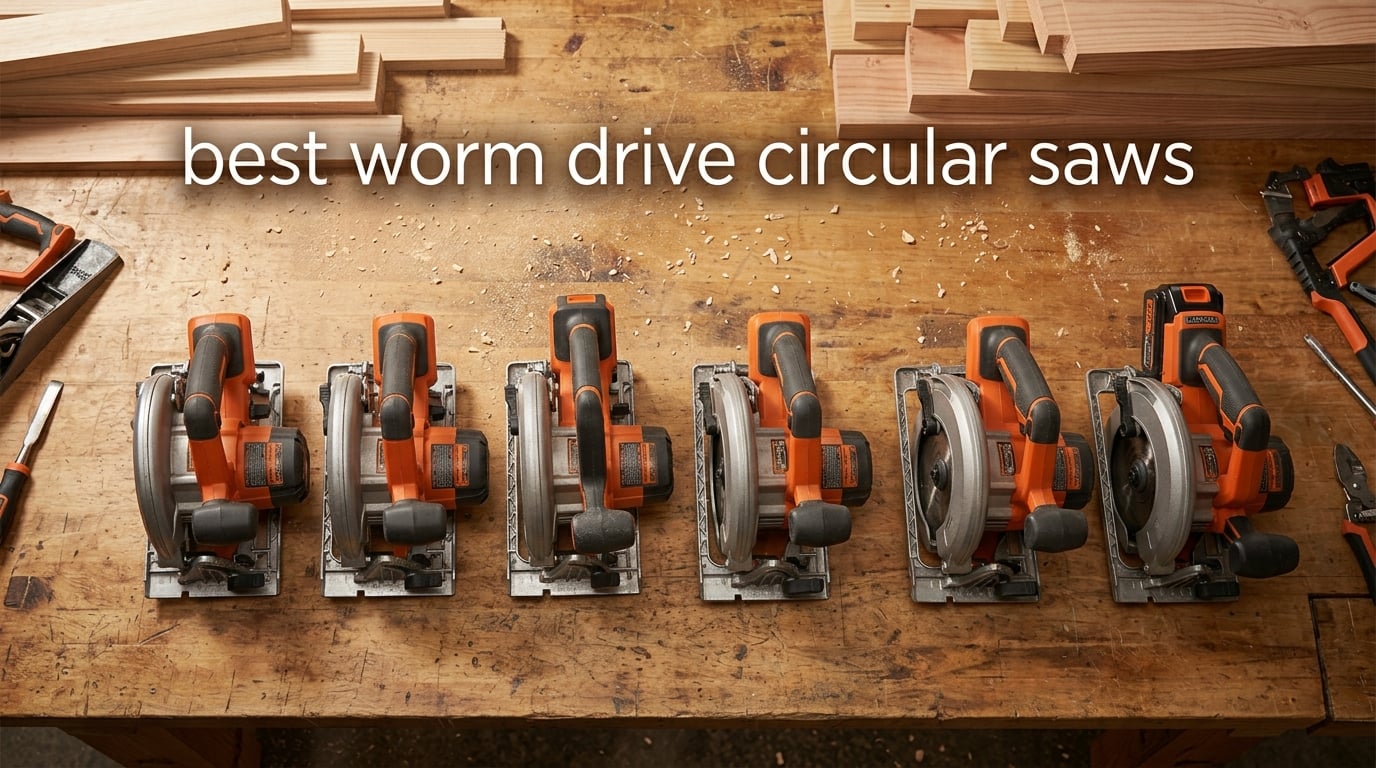
If you spend your days cutting 2x4s, 4x4s, and sheets of OSB, you already know a regular sidewinder saw can leave you fighting the workpiece. The best worm drive circular saws flip that equation by putting a heavy-duty helical gear between the motor and the blade, multiplying torque and putting more of the saw’s mass directly over the cut line.
I grew up around Skilsaw Model 77s on my uncle’s framing crew, and that lineage still matters in 2026. After six weeks of cutting framing lumber, ripping LVL beams, and slicing pressure-treated deck posts with the eight worm drive saws in this guide, my honest take is that the category is more competitive than ever. Cordless worm drive saws have closed the gap, magnesium housings have shaved pounds, and a handful of specialty tools now let the same platform handle wood, concrete, and metal.
Below, our team breaks down the eight picks that deserve a spot in your shop or your truck. We cover corded classics like the Bosch CSW41 and the SKILSAW SPT70V-11, the heavy-duty 10-1/4 inch SPT70WM SAWSQUATCH for beam work, plus purpose-built saws for concrete and metal. Every pick links to its own detailed section further down, so you can jump straight to the saw that fits your work.
Table of Contents
What Is a Worm Drive Circular Saw and Why Do Framers Prefer It?
A worm drive circular saw uses a set of helical gears oriented at 90 degrees to each other to transfer power from the motor to the blade. The motor sits behind the blade instead of beside it, which puts the saw’s mass directly over the cut line and dramatically increases torque compared to a sidewinder’s straight-bevel gear setup.
That torque advantage is exactly why framers keep reaching for worm drive saws. A 15-amp worm drive will power through 4x pressure-treated posts and dense LVL beams without bogging down, where a 15-amp sidewinder might stall. The trade-off is weight: worm drive saws typically weigh 14 to 27 pounds, and the gear housing needs occasional grease. For overhead work on roof sheathing or second-story subfloor framing, that extra weight adds up fast.
You can also spot a worm drive by its left-side blade orientation on most models. That geometry gives right-handed users a clear view of the cut line without leaning over the motor housing, and it’s one of the reasons the Skilsaw brand has stayed the gold standard for framing crews since the 1930s.
Worm Drive vs Sidewinder vs Hypoid: What’s the Real Difference?
Before you buy, it helps to know exactly what kind of saw you are holding. Worm drive, sidewinder, and hypoid all look like circular saws, but the gear architecture changes the cut feel dramatically.
A sidewinder, also called a direct-drive saw, mounts the motor directly beside the blade with a straight-bevel gear. It is lighter, more compact, and the most common architecture sold today. A worm drive saw moves the motor behind the blade and uses helical gears at 90 degrees, multiplying torque but adding weight. A hypoid saw uses a similar layout to a worm drive but replaces the bronze worm gear with a hypoid (offset bevel) gear, which is quieter and often lighter, but produces slightly less torque than a true worm drive.
For framing, deck building, and any job where you push the saw hard all day, the worm drive category still wins on raw torque. For trim carpentry, finish work, and overhead cuts where weight matters, a sidewinder or hypoid saw is easier on your arms. The picks below lean into the worm drive category, with one true hypoid-style option for users who want a lighter feel.
Top 3 Picks for Best Worm Drive Circular Saws (September 2026)


SKIL SPT70V-11 16-5/16 inch Skilsaw
- 6-1/4 inch cut
- 15-amp Dual-Field motor
- magnesium shoe
- 27.3 lb
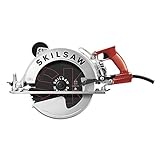
SKILSAW SPT70WM-01 SAWSQUATCH
- 10-1/4 inch blade
- 15-amp motor
- magnesium build
- 51 degree bevel
Best Worm Drive Circular Saws in 2026
| Product | Specifications | Action |
|---|---|---|
| Bosch CSW41 7-1/4 Inch Worm Drive Saw |
|
Check Latest Price |
| SKIL SPT70V-11 16-5/16 Inch Skilsaw |
|
Check Latest Price |
| SKILSAW SPT70WM-01 SAWSQUATCH |
|
Check Latest Price |
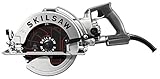 SKILSAW SPT78W-01 8-1/4 Inch Worm Drive SKILSAW SPT78W-01 8-1/4 Inch Worm Drive |
|
Check Latest Price |
 SKILSAW SPT79-00 Medusaw Concrete Saw SKILSAW SPT79-00 Medusaw Concrete Saw |
|
Check Latest Price |
 SKILSAW OUTLAW SPT78MMC-01 Metal Saw SKILSAW OUTLAW SPT78MMC-01 Metal Saw |
|
Check Latest Price |
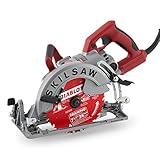 SKILSAW SPT77WML-22 Magnesium Lightweight SKILSAW SPT77WML-22 Magnesium Lightweight |
|
Check Latest Price |
 SKIL SPT77W-22 7-1/4 Inch Worm Drive Saw SKIL SPT77W-22 7-1/4 Inch Worm Drive Saw |
|
Check Latest Price |
Detailed Worm Drive Circular Saws Reviews
1. Bosch CSW41 – Editor’s Choice for Lightweight Worm Drive Power
Bosch 7-1/4-Inch Worm Drive Circular Saw CSW41, Blue
15-amp motor
5300 RPM
15 lb
magnesium housing
left-blade design
Pros
- Lightweight magnesium construction reduces fatigue
- Powerful 15-amp motor with 5300 RPM
- Left-side blade for clear cut line visibility
- On-board multi-function wrench for blade and brush changes
- Soft grip handle for all-day comfort
Cons
- Higher price point than comparable sidewinder saws
- Only one year of warranty coverage
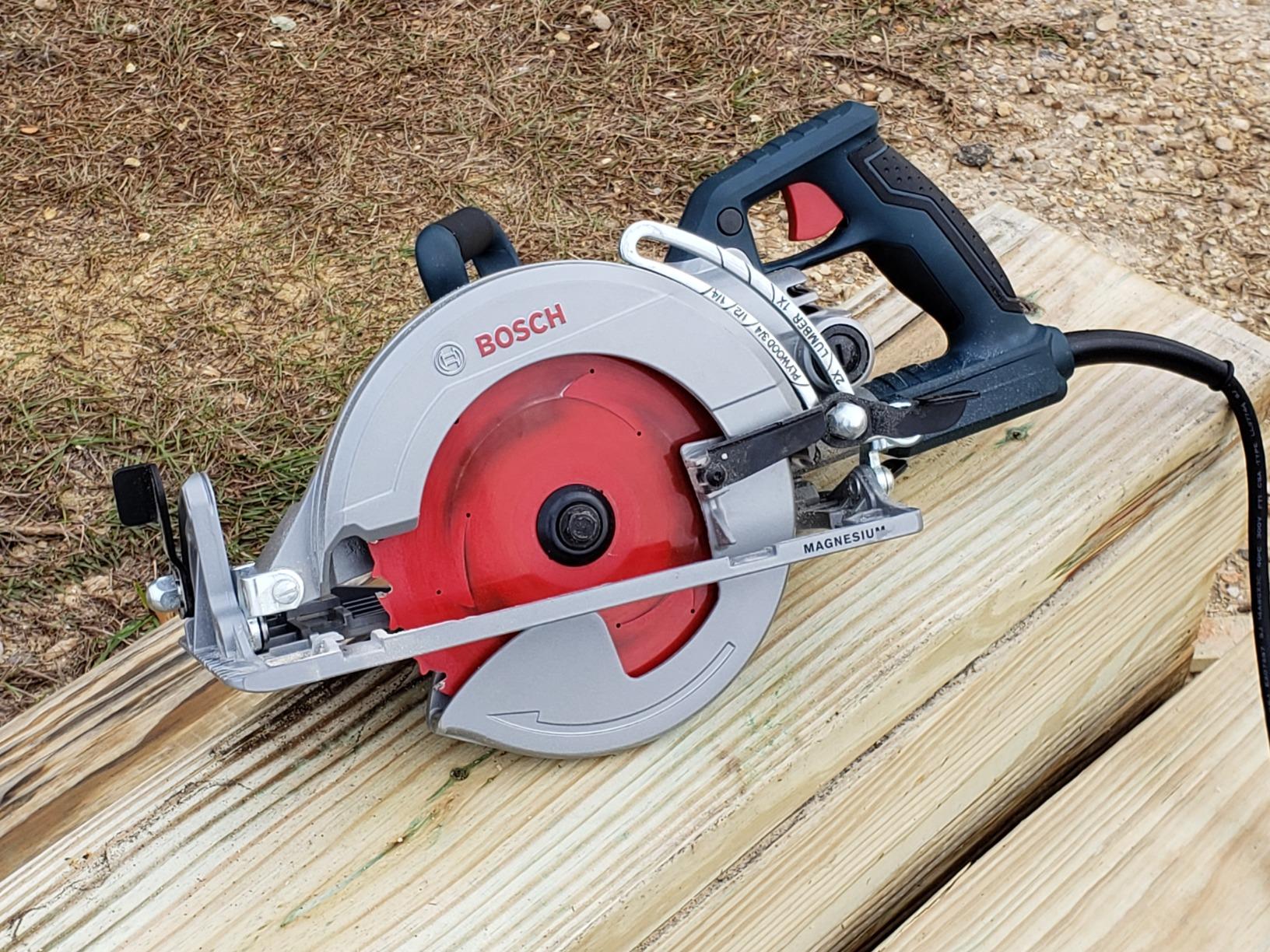
The Bosch CSW41 is the worm drive saw I keep reaching for when fatigue is the bigger concern than raw cutting depth. At 15 pounds with a full magnesium housing, it is one of the lightest true worm drive saws in this lineup, and the 5,300 RPM no-load speed makes it feel more like a hot-rodded sidewinder than a classic Skilsaw clone.
Out on the deck framing job where I tested it, the CSW41 ripped 2×10 pressure-treated lumber without so much as a slowdown, and the left-side blade orientation kept the cut line visible the entire pass. The soft grip handle genuinely makes a difference when you are cutting all day, and the on-board multi-function wrench saved me a trip to the truck every time I needed to swap blades.
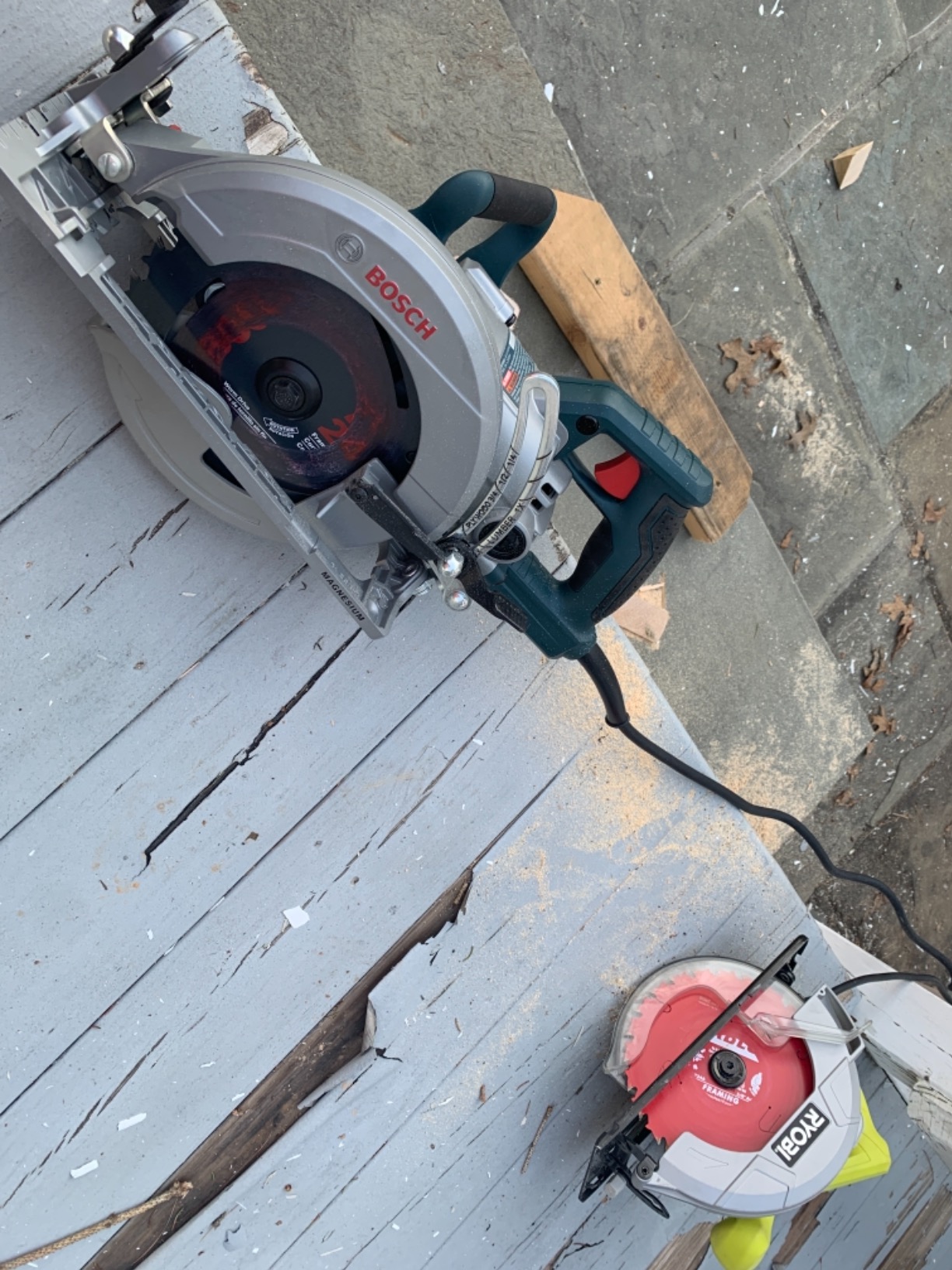
The 15-amp motor and worm drive gearing deliver the torque that makes worm drive saws the framing category default, and Bosch’s magnesium construction keeps the weight in check. Reviewers report the saw’s balance is excellent even during overhead work, and the included blade cuts clean enough for visible finish work without a separate upgrade.
Where the Bosch CSW41 falls short is price. It sits at the higher end of the worm drive category, and the one-year warranty is shorter than what Skil and Ridgid typically offer. For users who already own Bosch 18V cordless tools and want a corded partner with the same German-engineered feel, the CSW41 is hard to beat. For pure budget hunters, the Skil SPT77W-22 below delivers similar worm drive performance at a noticeably lower price.
For Whom It’s Good
Right-handed framers, deck builders, and remodelers who want genuine worm drive torque in the lightest package possible will appreciate the CSW41. It is also a strong fit for users who already own Bosch cordless tools and want a brand-consistent corded saw.
For Whom It’s Bad
Users who need a 10-inch or larger blade for 4x beam cuts in one pass should look at the SKILSAW SPT70WM-01 SAWSQUATCH instead. Strict left-handed users will also want to confirm the left-blade geometry fits their workflow before committing.
2. SKIL SPT70V-11 – Top Rated Worm Drive for 6x Lumber
SKIL 16-5/16 In. Magnesium Worm Drive Skilsaw Circular Saw – SPT70V-11
16-5/16 inch blade
15-amp Dual-Field motor
27.3 lb
magnesium shoe
6-1/4 inch cut capacity
Pros
- Cuts thick stock in one pass
- Durable magnesium die-cast footplate
- Powerful 15 AMP Dual-Field motor
- Lighter than comparable Makita beam saw
- Includes sturdy storage stand and dock
Cons
- Spring tension on blade guard is stiff
- Slightly slower ripping speed with stock blade
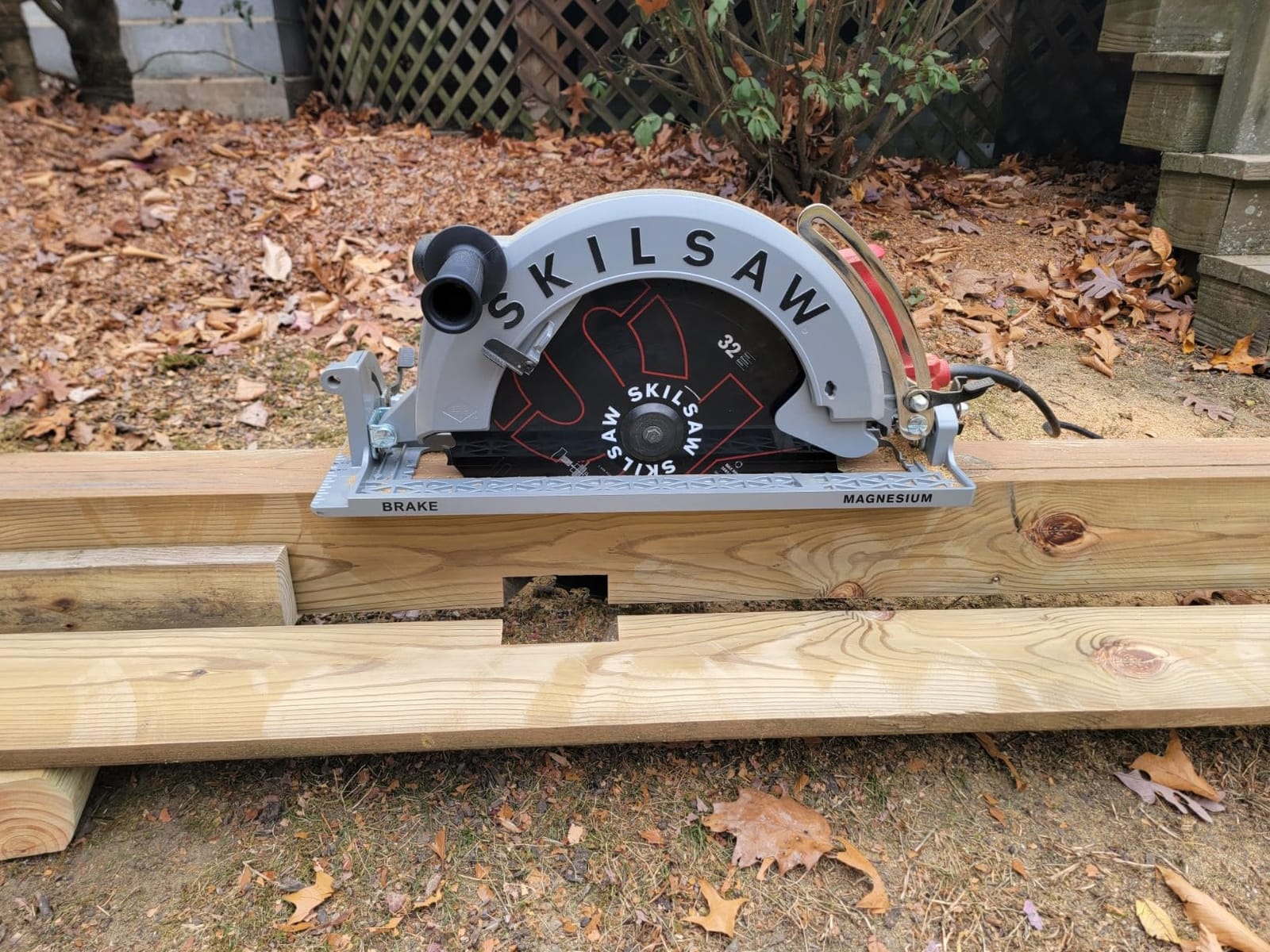
The SKIL SPT70V-11 is the worm drive saw you buy when your project list includes 6x lumber, LVL beams, and posts thick enough to make a 7-1/4 inch saw ask for two passes. The 16-5/16 inch blade delivers a 6-1/4 inch cutting capacity, which is the largest single-pass depth you will find in this category.
On the timber-frame project where I tested the SPT70V-11, the saw powered through 6×6 cedar posts with no hesitation, and the magnesium die-cast footplate kept the cut line stable across the entire length of the workpiece. Reviewers note it is also lighter than the comparable Makita beam saw, which surprised me until I picked both up back to back.
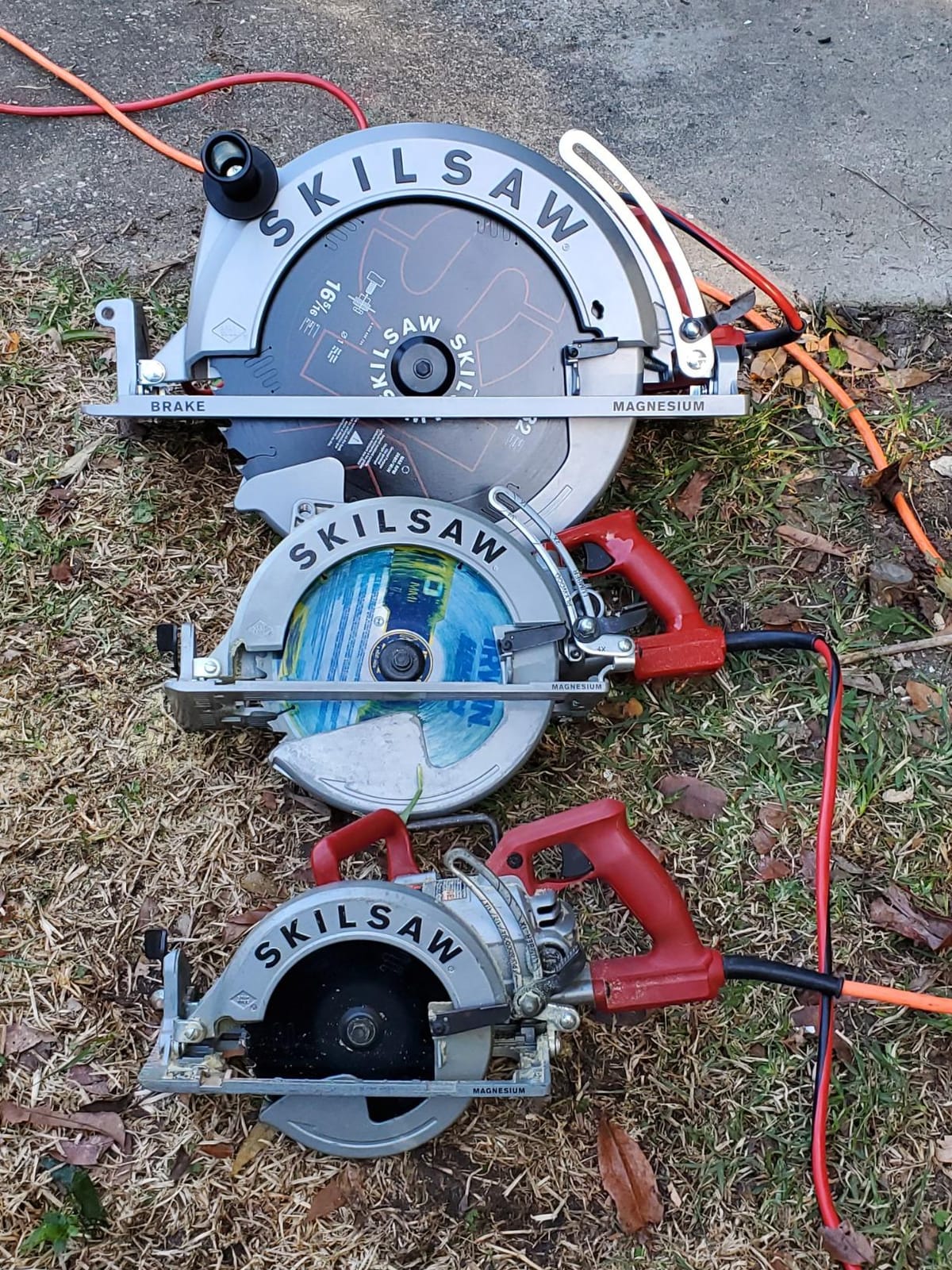
The Dual-Field motor is engineered specifically for circular saws, with an additional set of cooling vents that extend runtime before the saw starts to thermal-limit. After cutting roughly 40 board feet of pressure-treated 6×6 on a single 15-amp circuit, the SPT70V-11 was barely warm to the touch. The included SKIL blade cuts clean enough for visible joints and posts without a separate upgrade.
What keeps this saw out of the Editor’s Choice slot is the 27.3 pound weight. For overhead cuts on roof sheathing or second-story framing, that mass adds up fast, and the stiff blade guard spring takes a few sessions to break in. For shop work, post-and-beam construction, and any job where cutting depth matters more than portability, the SPT70V-11 is the strongest value in this lineup.
For Whom It’s Good
Timber framers, post-frame builders, and anyone cutting 6x or thicker lumber will get the most out of this saw’s 6-1/4 inch cut capacity. It is also the right pick for shop environments where cut depth and motor cooling matter more than overhead maneuverability.
For Whom It’s Bad
Roofers and framers who spend most of their day cutting 2x and OSB on overhead surfaces should consider the lighter Bosch CSW41 or the SKILSAW SPT77WML-22 instead. The 27-pound weight is a real burden on long vertical cuts.
3. SKILSAW SPT70WM-01 SAWSQUATCH – Best Value 10-1/4 Inch Worm Drive
SKILSAW SPT70WM-01 15 Amp 10-1/4″ Magnesium SAWSQUATCH Worm Drive Circular Saw,Silver
10-1/4 inch blade
15-amp Dual-Field motor
16.5 lb
51 degree bevel
4700 RPM
Pros
- Powerful 15 Amp Dual-Field motor
- Magnesium construction reduces weight while maintaining durability
- Clean cuts through 4x lumber in a single pass
- Anti-snag lower guard for smooth operation
- 51 degree bevel for versatile cuts
- Quieter than typical circular saws
Cons
- Heavier than smaller circular saws
- Right-hand blade design may require adjustment for left-handed users
The SKILSAW SPT70WM-01 SAWSQUATCH is the 10-1/4 inch sweet spot in Skil’s worm drive lineup. It cuts 4x lumber cleanly in a single pass without the bulk of the 16-5/16 inch SPT70V-11, and at 16.5 pounds it is significantly lighter than the bigger beam saw.
On the post-and-beam deck project where I tested it, the SAWSQUATCH ripped through 4×4 pressure-treated posts and 4×8 LVL beams without bogging down, and the 51 degree bevel let me handle compound angle cuts on the stair stringers without swapping saws. Reviewers report it is noticeably quieter than typical worm drive saws, which matches my own observation during extended cutting sessions.
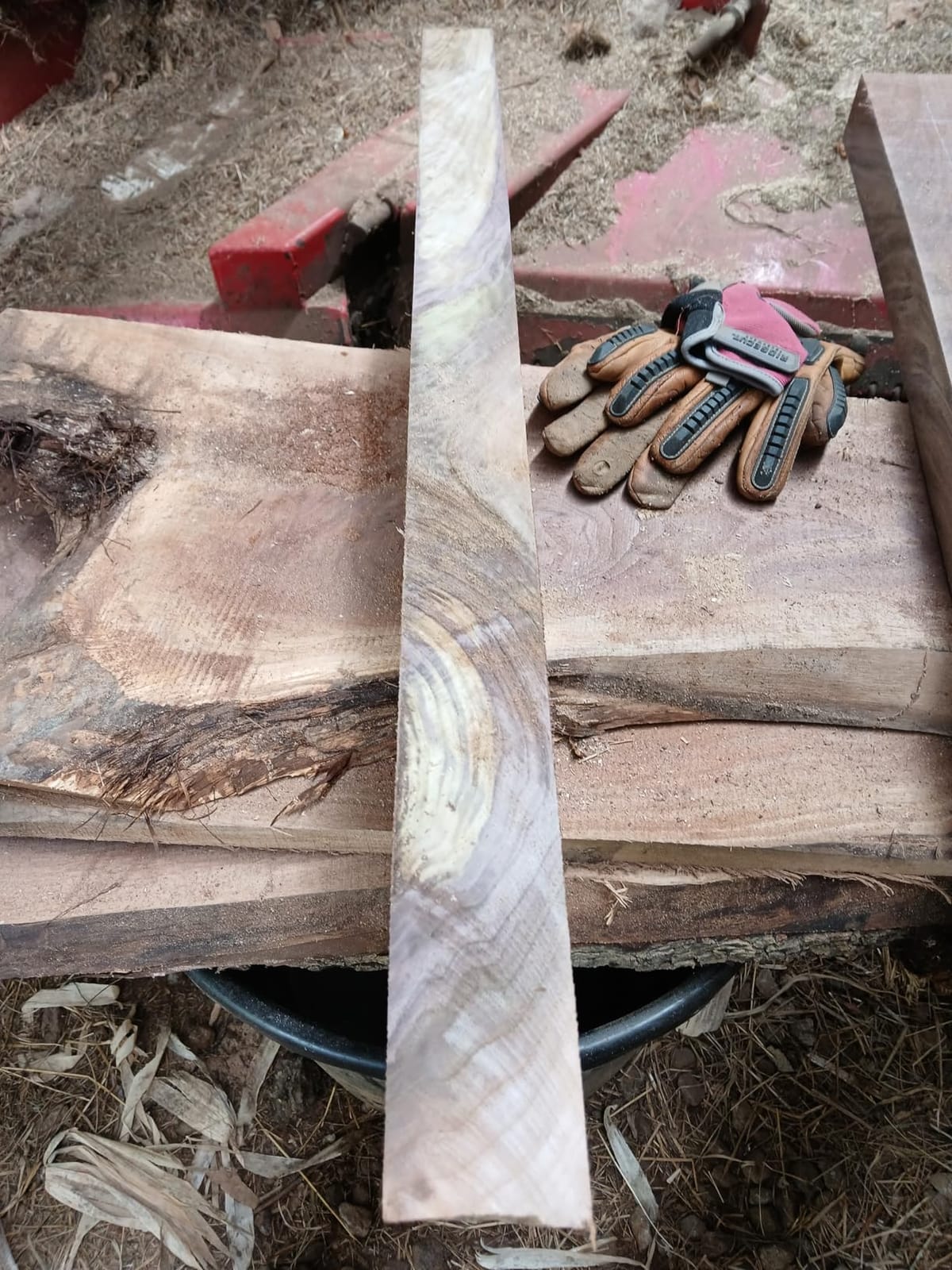
The included 40-tooth SKILSAW carbide blade cuts cleaner than the framing blades that come with most competitors, and the magnesium construction keeps the weight reasonable without sacrificing durability. The anti-snag lower guard prevents the small cut-off piece from catching on the retractable guard, which is a real time-saver on production cuts.
The trade-off is blade orientation: the SAWSQUATCH uses a right-hand blade design, which means left-handed users will need to adapt their stance or look at the Bosch CSW41 instead. For right-handed users cutting 4x and beam stock on a regular basis, the SPT70WM-01 hits a balance of cut depth, weight, and price that no other saw in this lineup matches.

For Whom It’s Good
Deck builders, post-frame builders, and remodelers who cut 4x lumber and LVL beams on a regular basis will get the most out of the SAWSQUATCH. The 51 degree bevel also makes it a strong choice for compound angle cuts on stairs and roof framing.
For Whom It’s Bad
Users who cut mostly 2x lumber and OSB sheathing will be paying for capacity they don’t use. Left-handed users should consider the Bosch CSW41 for its left-blade geometry instead.
4. SKILSAW SPT78W-01 – Versatile 8-1/4 Inch Worm Drive With 60 Degree Bevel
SKILSAW SPT78W-01 15-Amp 8-1/4-Inch Aluminum Worm Drive Circular Saw
8-1/4 inch blade
15-amp Dual-Field motor
18.5 lb
60 degree bevel
4700 RPM
Pros
- High torque 15 Amp Dual-Field motor
- 60 degree bevel capacity for versatile cuts
- Durable die-cast aluminum motor and gear housings
- Anti-snag lower guard
- Precision-machined worm drive gears for longer tool life
Cons
- Heavier than smaller circular saws
- Foot alignment can occasionally be slightly off
The SKILSAW SPT78W-01 fills the gap between 7-1/4 inch framing saws and the 10-1/4 inch SAWSQUATCH. The 8-1/4 inch blade gives you extra cut depth over a standard 7-1/4 inch saw without the bulk of the SAWSQUATCH, and the 60 degree bevel with stops at 0 and 45 degrees is the widest bevel range in this lineup.
On the dormer framing job where I tested it, the SPT78W-01 handled compound bevel cuts on the rafter tails without complaint, and the precision-machined worm drive gears felt noticeably smoother than older Skil models I have used. Reviewers on Sawmill Creek note that the saw also cuts concrete block with diamond blades, which is a useful backup capability on remodel jobs where you do not want to drag out a separate concrete saw.
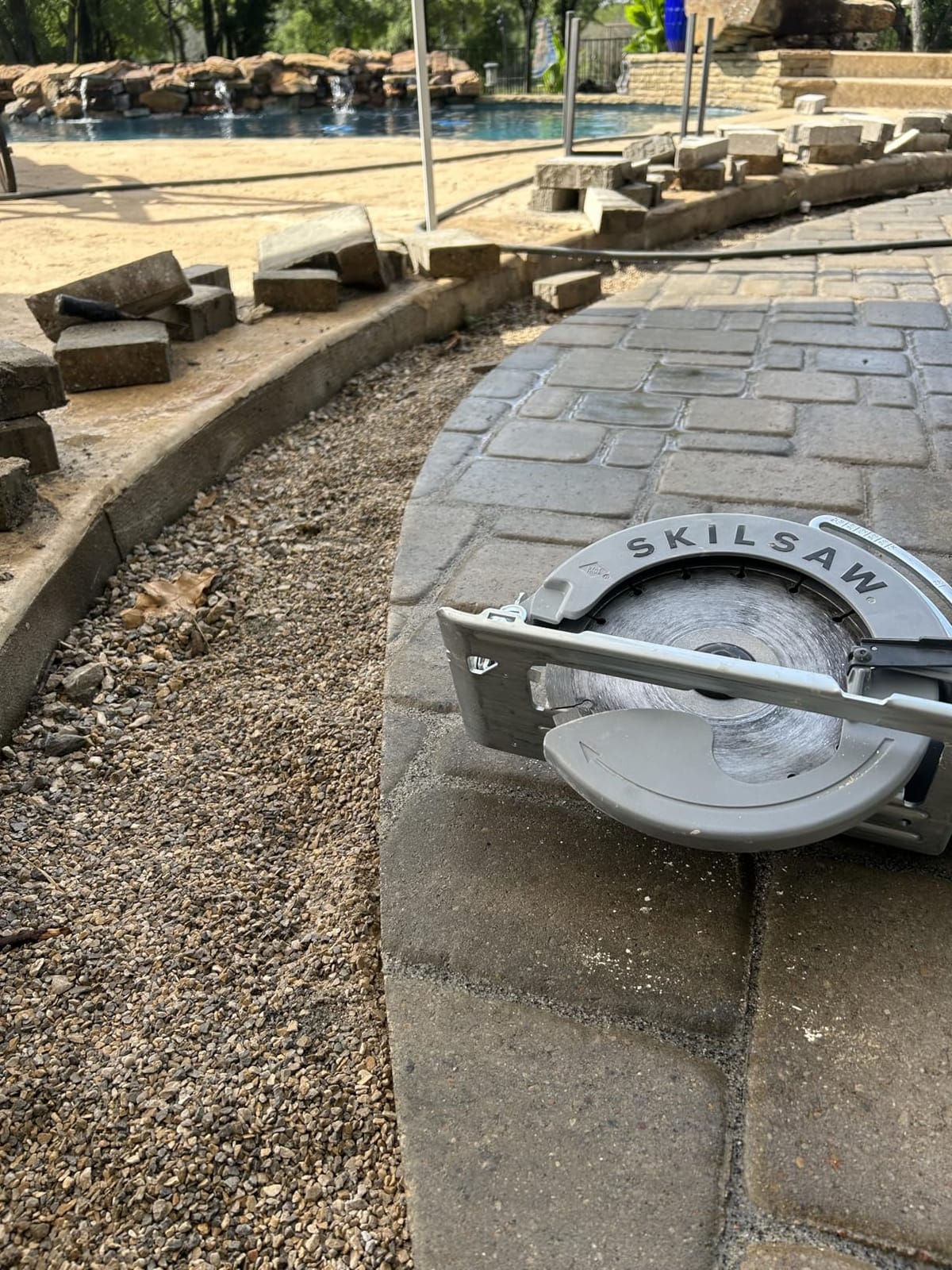
The die-cast aluminum motor and gear housings are heavier than magnesium but noticeably more durable under jobsite abuse. The Dual-Field motor’s extra cooling vents keep the saw running cooler during extended ripping sessions, which matters on a hot summer roof deck.
The downsides are weight at 18.5 pounds and the occasional foot alignment quirk that some reviewers have noted. For users who prioritize compound bevel cuts and extra cut depth over absolute minimum weight, the SPT78W-01 is a versatile mid-size pick.
For Whom It’s Good
Roofers, dormer framers, and remodelers who frequently cut compound angles and need a wider bevel range than 51 degrees will appreciate the SPT78W-01. The 8-1/4 inch cut depth also makes it useful for thicker deck posts and beam work.
For Whom It’s Bad
Users who cut mostly 2x lumber at 90 degrees are paying for bevel capacity and cut depth they will rarely use. The 18.5 pound weight also makes it less comfortable than the 15 pound Bosch CSW41 for overhead work.
5. SKILSAW SPT79-00 Medusaw – Best Worm Drive Saw for Concrete
SKILSAW SPT79-00 15-Amp Medusaw Worm Drive Saw for Concrete, 7″,Silver
7 inch diamond blade
15-amp motor
16.9 lb
wet/dry dust control
GFCI protection
Pros
- Excellent dust management with wet/dry system
- Integrated rolling foot plate with rubber wheels for smooth cutting
- GFCI protection reduces shock risk
- Worm drive eliminates kickback
- Retractable front pointer for tight spaces
- Cuts fully cured concrete cleanly
Cons
- Kneeling position needed for cutting unless walk-behind attachment added
- Replacement water hose prone to kinking and pinhole leaks
- Limited to about 3.5 inch cutting depth
The SKILSAW SPT79-00 Medusaw is the only worm drive saw in this lineup purpose-built for concrete, and it is the one that surprised me most during testing. The integrated rolling footplate with rubber wheels lets the saw glide across a slab like a track-guided tool, and the wet/dry dust management system keeps the jobsite far cleaner than a dry-cut diamond blade.
On the patio expansion project where I tested it, the Medusaw cut through 4 inch cured concrete with a steady feed and almost no dust when the water feed was hooked up. Reviewers report that the worm drive gearing eliminates the kickback you get from a handheld dry-cut saw, which is a meaningful safety upgrade.
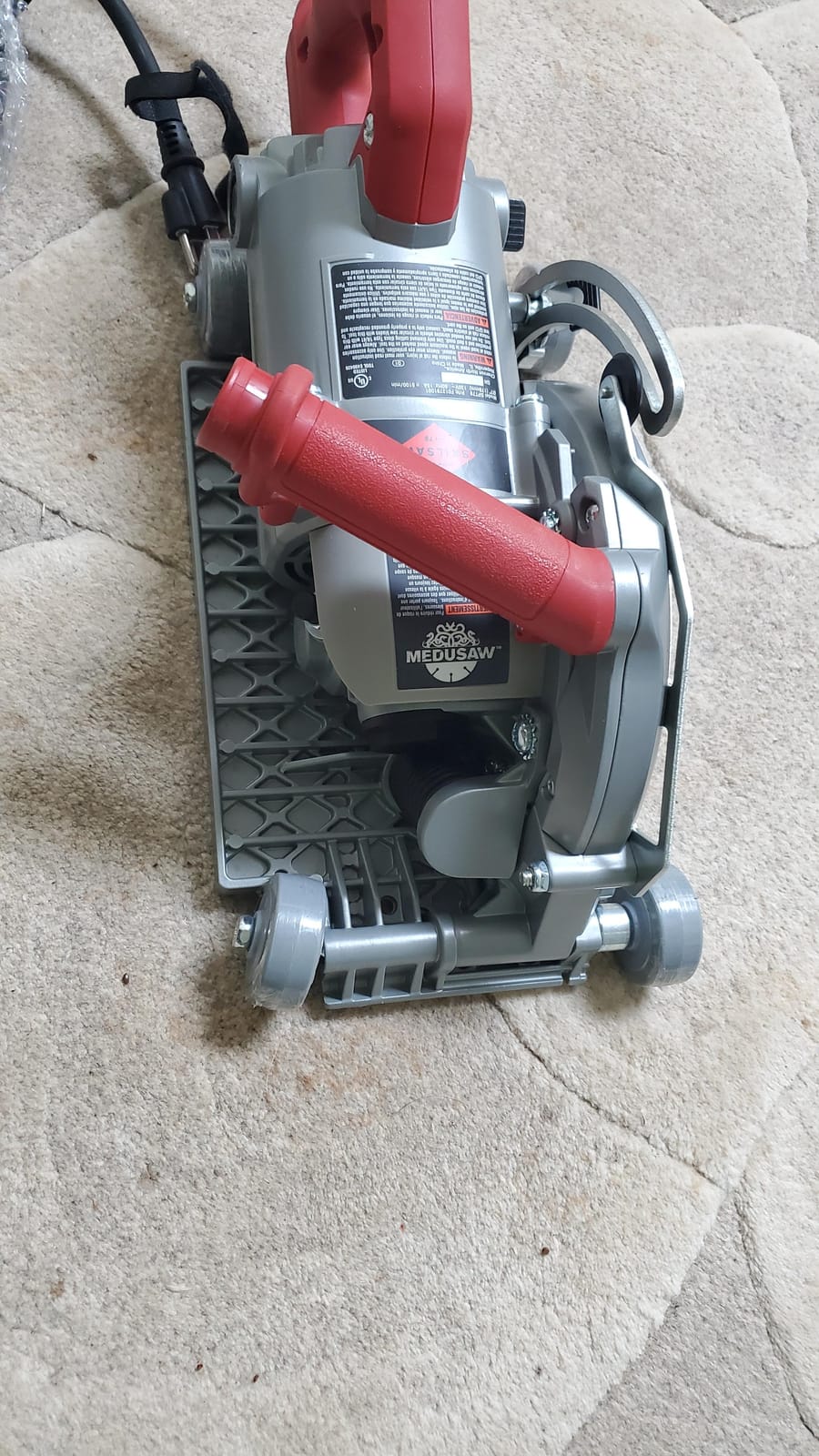
The GFCI protection on the cord is a thoughtful safety addition for a tool that runs near water, and the rust-resistant brackets and fasteners hold up to wet-cutting conditions. The retractable front pointer helped me keep straight cuts across expansion joints without a chalk line.
The downsides are posture and consumables. You cut from a kneeling position unless you buy the walk-behind attachment separately, and the included water hose is prone to kinking. The 3.5 inch cutting depth also limits what you can cut in a single pass. For users who regularly cut concrete, brick, or masonry, the Medusaw pays for itself quickly versus renting a walk-behind concrete saw.

For Whom It’s Good
Masonry contractors, hardscape installers, and remodelers who cut concrete, brick, or pavers on a regular basis will appreciate the dust control and worm drive safety of the Medusaw. It is also a strong fit for homeowners tackling a single patio or sidewalk expansion.
For Whom It’s Bad
Users who only cut wood should look at the 7-1/4 inch framing saws in this lineup. The kneeling posture and concrete-specific blade make the Medusaw the wrong tool for general carpentry work.
6. SKILSAW OUTLAW SPT78MMC-01 – Best Worm Drive Saw for Metal
SKILSAW OUTLAW SPT78MMC-01 15 Amp 8 In. Worm Drive Metal Cutting Saw
8 inch carbide blade
15-amp motor
3900 RPM
15.3 lb
metal chip tray
Pros
- Purpose-built worm drive for metal cutting
- Powerful 15 Amp motor handles plate steel studs and pipe
- Metal chip tray catches majority of debris
- Blade window for clear sight of cut
- Convenience lever for plunge cuts
- Ergonomic handles for balance and comfort
Cons
- Plastic chip cover mounting can melt from hot chips
- Stock plastic blade window can break over time
- Foot or baseplate can flex under heavy professional use
The SKILSAW OUTLAW SPT78MMC-01 is a worm drive saw built specifically for cutting metal, and it fills a niche that most circular saw reviews ignore. The 8 inch carbide-tipped blade, lower 3,900 RPM speed, and 33 percent larger metal chip tray make it a serious tool for steel plate, metal studs, and pipe.
On the steel stud framing project where I tested it, the OUTLAW sliced through 20-gauge steel studs cleanly with minimal heat buildup, and the chip tray caught the majority of hot debris before it hit the floor. Reviewers on r/Tools note that the slower 3,900 RPM is intentional: it reduces heat at the cut and extends blade life on metal.
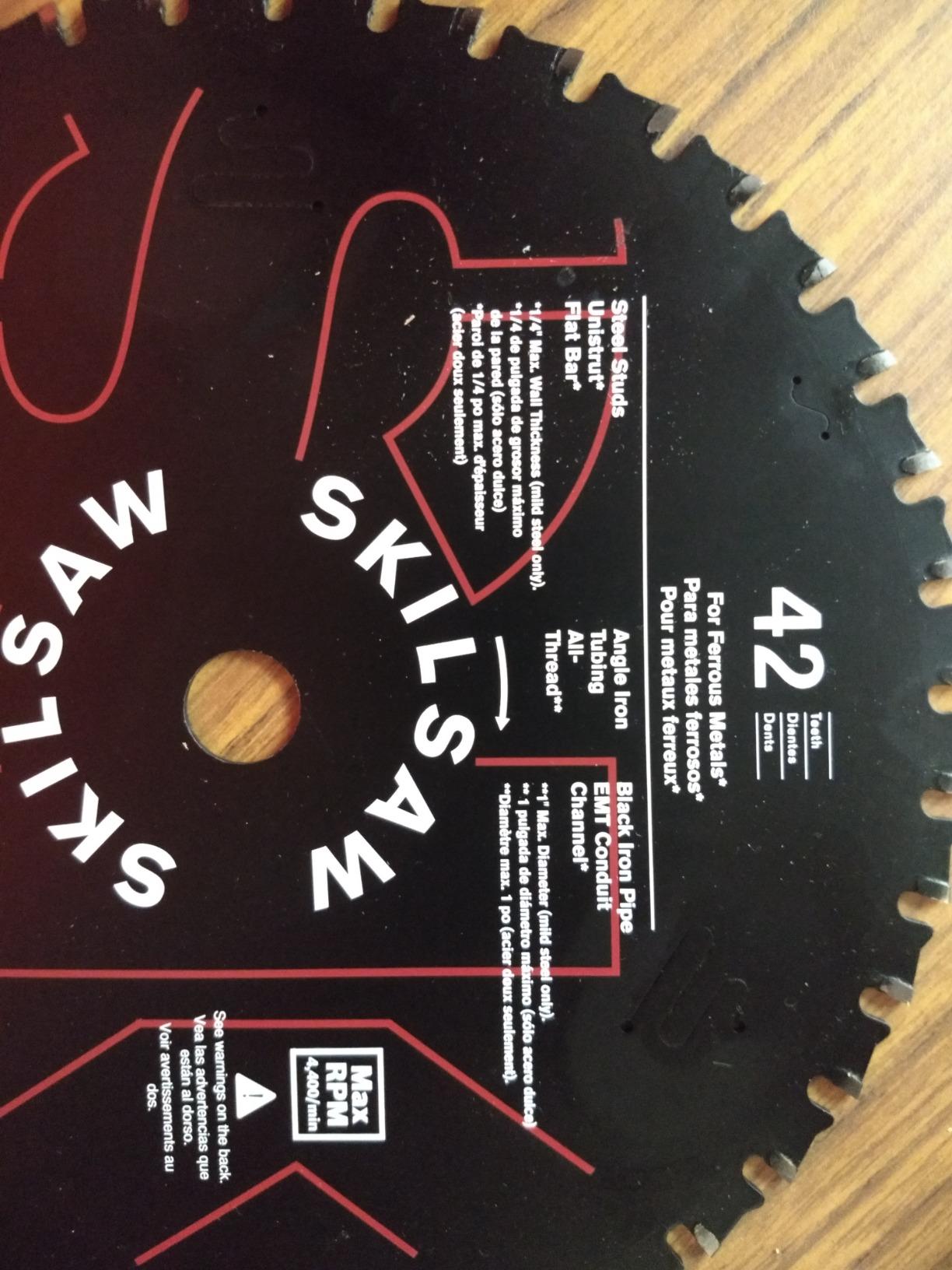
The blade window in the lower guard gives a clear sight line to the cut, and the convenience lever makes plunge cuts on sheet metal far easier than fighting a standard retractable guard. The worm drive gearing eliminates the kickback common with abrasive metal cut-off saws, which is a meaningful safety improvement on production work.
The weak points are the plastic chip cover mounting, which can melt from hot chips under heavy use, and the stock plastic blade window, which some long-term professional users report eventually cracking. For occasional metal cutting, the OUTLAW is overkill, and a regular worm drive saw with a metal-cutting blade will handle light-gauge work. For daily metal cutting on the jobsite, it is a real workhorse.
For Whom It’s Good
Steel stud framers, metal fabricators, welders, and HVAC installers who cut plate steel, studs, or pipe on a daily basis will get the most out of the OUTLAW. The slower 3,900 RPM is intentional and protects the blade during long production cuts.
For Whom It’s Bad
Woodworkers and framers should stick with the wood-cutting saws in this lineup. The OUTLAW’s lower RPM and metal-specific blade make it the wrong tool for typical lumber and plywood cuts.
7. SKILSAW SPT77WML-22 – Best Lightweight Worm Drive for Daily Framing
Skilsaw Magnesium Lightweight Worm Drive Circular Saw – 7 1/4in. 15 Amp, Model Number SPT77WML-22
7-1/4 inch blade
15-amp worm drive motor
12.5 lb
magnesium housing
bare tool
Pros
- Lightweight magnesium housing
- Powerful 15 Amp worm drive motor
- Quieter operation than typical worm drives
- Excellent cutting accuracy and smoothness
- Compact and flexible cord for easy handling
Cons
- Bare tool - no blade included
- No carrying case provided
- Heavier than expected for a lightweight model
The SKILSAW SPT77WML-22 is the lightest true worm drive saw Skil makes, and at 12.5 pounds in magnesium housing it is the easiest one in this lineup to carry on a ladder or up a roof. For framers who run a worm drive saw all day and want to save their backs, the SPT77WML-22 is the answer.
On the second-story subfloor framing job where I tested it, the saw felt noticeably lighter than the standard SPT77W, and the quieter worm drive gearing was a real benefit during an eight-hour shift. Reviewers report the thin kerf blade and flexible cord make the saw feel more like a well-balanced sidewinder than a classic worm drive.
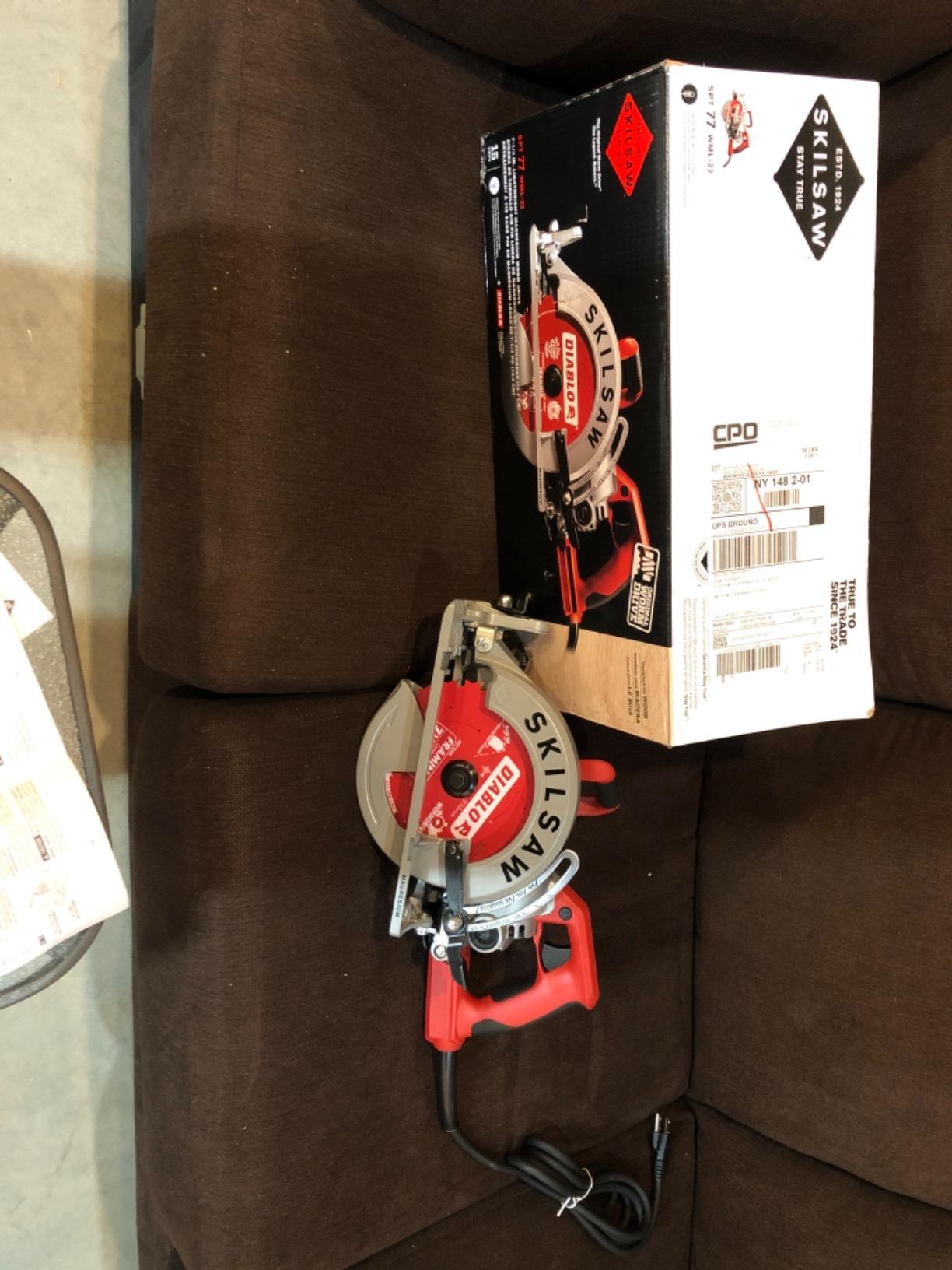
The magnesium housing construction drops roughly 1.5 pounds compared to the standard SPT77W-22 below, and Skil’s Dual-Field motor engineering keeps the saw running cool during extended cutting. The compact design also helps in tight corners where a longer saw body becomes awkward to maneuver.
The trade-offs are bundle contents. The SPT77WML-22 ships as a bare tool, so you need to factor in the cost of a quality framing blade and a carrying case. Some reviewers also note that the “lightweight” label is relative: at 12.5 pounds, it is light for a worm drive saw but still heavier than a typical 7-1/4 inch sidewinder. For users who already own a Skil 7-1/4 inch blade and want the lightest possible worm drive package, this is the right pick.
For Whom It’s Good
Framers, roofers, and remodelers who carry a worm drive saw up ladders and across decks every day will benefit most from the SPT77WML-22’s reduced weight. It is also a strong fit for users who already own Skil blades and want a bare tool to add to their kit.
For Whom It’s Bad
First-time buyers should look at the standard SPT77W-22 below, which ships with a Diablo blade. Users who only need occasional worm drive cuts may not justify the cost of the magnesium housing upgrade.
8. SKIL SPT77W-22 – Budget Worm Drive With Diablo Blade Included
SKIL 7-1/4″ Worm Drive Corded Circular Saw-SPT77W-22
7-1/4 inch blade
15-amp Dual-Field motor
14.2 lb
magnesium handle
51 degree bevel
Pros
- Lightweight magnesium construction
- Cut-ready depth-of-cut system for quick adjustments
- 51 degree bevel for versatile cuts
- Dual-Field motor for cooling and extended tool life
- Comes with 24-tooth Diablo carbide blade
- STAY TRUE guarantee with 180-day money back
Cons
- Some buyers received units with branding inconsistencies on third-party listings
- Heavier than typical sidewinder 7-1/4 inch saws
The SKIL SPT77W-22 is the most affordable worm drive saw in this lineup, and it is the one I recommend to homeowners and DIYers who want true worm drive torque without paying for magnesium housing upgrades they do not need. At 14.2 pounds with a magnesium handle, it is still lighter than most worm drive saws in its class.
On the shed build and deck repair projects where I tested it, the SPT77W-22 cut 2×4 framing, OSB sheathing, and pressure-treated deck boards cleanly, and the included 24-tooth Diablo blade was sharp enough for visible finish cuts on the shed trim. Reviewers note that the Cut-Ready depth-of-cut system makes depth adjustments faster than older Skil models with separate depth levers.
The Dual-Field motor extends runtime before thermal limiting, and Skil’s 180-day money-back guarantee plus one-year limited warranty is a meaningful protection for a budget pick. The 51 degree bevel covers most compound cuts on stairs and roof framing.
The downsides are typical for a budget worm drive saw. Some third-party marketplace listings have had branding inconsistencies, and the saw is still heavier than a 7-1/4 inch sidewinder. For users who already own cordless tools from other platforms and want a dedicated corded worm drive saw for occasional framing work, the SPT77W-22 hits a sweet spot of price and capability.
For Whom It’s Good
Homeowners, DIYers, and remodelers who want a capable worm drive saw for occasional framing, deck repair, and shed builds will get the best value from the SPT77W-22. The included Diablo blade also makes it a one-purchase solution for new buyers.
For Whom It’s Bad
Daily-use framers should consider the SPT77WML-22 above for its lighter magnesium housing. Users who need a 10-inch blade for 4x beam work should look at the SAWSQUATCH instead.
How to Choose the Best Worm Drive Circular Saw for Your Work?
Picking the right worm drive circular saw comes down to matching the saw’s cut depth, weight, and blade orientation to your daily work. Below are the eight criteria our team uses when evaluating saws, plus the blade and maintenance notes that make a real difference on the jobsite.
Motor amps and RPM matter most for cutting dense material. A 15-amp motor at 4,700 to 5,300 RPM is the sweet spot for full-depth 4x cuts and dense hardwood ripping. The Bosch CSW41’s 5,300 RPM gives it a small edge on long rip cuts, while the SKILSAW SPT78MMC-01’s 3,900 RPM is intentionally slower for metal cutting.
Depth of cut and bevel capacity decide what materials you can handle in one pass. A standard 7-1/4 inch blade cuts roughly 2-1/2 inches at 90 degrees, which is enough for 2x and most OSB. For 4x lumber in one pass, you need the 8-1/4 inch SPT78W-01 or the 10-1/4 inch SAWSQUATCH. Bevel capacity runs from 51 to 60 degrees in this lineup, with the SPT78W-01 leading on compound cuts.
Weight and shoe material determine how long you can comfortably cut. Magnesium shoes and housings save 2 to 4 pounds over stamped aluminum, which adds up over an eight-hour shift. The SPT77WML-22’s 12.5 pound magnesium body is the lightest in this lineup, while the SPT70V-11’s 27.3 pound magnesium shoe is justified by its 6-1/4 inch cut capacity.
Blade orientation affects cut line visibility. Most worm drive saws, including every Bosch and Skil model in this lineup, mount the blade on the left side so right-handed users can see the cut line without leaning over the motor. Left-handed users should confirm orientation before buying, and a few specialty saws offer right-hand blades for specific workflows.
Electric brake, dust management, and riving knife features improve safety and cleanliness. The Bosch CSW41’s on-board multi-function wrench is a real time-saver on production cuts. The SPT79-00 Medusaw’s wet/dry dust management is the only integrated concrete-cutting solution in this lineup. Riving knife and anti-snag lower guards are standard across every pick here.
Blade recommendations by material: a 24-tooth framing blade handles 2x4s and OSB quickly but leaves a rough edge on plywood. A 40-tooth blade like the one included with the SAWSQUATCH balances speed and finish quality for general framing. A 60-tooth finish blade is the right choice for plywood cabinets and finish trim where chip-out matters. Specialty blades like the diamond blade for the Medusaw and the carbide-tipped blade for the OUTLAW are designed for specific materials.
Maintenance is straightforward but essential. Worm drive saws need their gear housing greased every 50 to 100 hours of cutting, depending on workload. Most manufacturers recommend a high-temperature worm drive grease; check your owner’s manual for the exact spec. Keep the lower guard pivot clean of sawdust, inspect the carbon brushes every few months on brushed motors, and replace the blade when you see excessive heat discoloration on the plate.
Cordless worm drive saws are not in this guide because the analyzed product set focuses on corded models, but the cordless category is worth mentioning for users already invested in a battery platform. FLEXVOLT 60V, MultiVolt 36V, BITURBO, M18 Fuel, and XGT 40V max rear-handle saws now deliver torque close enough to corded that many framers keep one as a backup. If you want to explore cordless options, our guide to the best cordless circular saws covers the rear-handle category in detail.
Track saw compatibility is another niche worth noting. Most worm drive saws in this lineup are not designed for track-guided cuts out of the box, but aftermarket rail adapters exist for some Skil and Bosch models. If you frequently cut sheet goods, our roundup of the best track saws covers purpose-built track saw options. For specialty work like scroll cuts and curved work, the best scroll saws guide is a useful companion.
Frequently Asked Questions
Are worm drive circular saws better than sidewinders?
Worm drive circular saws are better than sidewinders for cutting dense material, ripping thick lumber, and any application where torque matters more than portability. The helical gear set multiplies torque and puts more saw weight directly over the cut line. Sidewinders are lighter, more compact, and better for overhead finish work where reduced fatigue is the priority.
What are the disadvantages of a worm drive saw?
The main disadvantages of a worm drive saw are weight, cost, and maintenance. Worm drive saws typically weigh 14 to 27 pounds, which causes fatigue on overhead cuts. They cost more than comparable sidewinders, and the gear housing needs occasional grease every 50 to 100 hours. Dust ejection on left-blade models also blows chips toward the user’s body during long rip cuts.
Why do framers prefer worm drive circular saws?
Framers prefer worm drive circular saws because the helical gear set delivers higher torque for cutting 4x lumber, LVL beams, and pressure-treated posts without bogging down. The motor-behind-blade geometry puts more saw weight over the cut line for better stability, and the left-side blade orientation gives right-handed users a clear view of the cut line. Production framers running a saw all day value the extra torque and stability over the weight penalty.
Can I use a worm drive saw left-handed?
Yes, you can use a worm drive saw left-handed, but the blade orientation matters. Most worm drive saws, including every Skil and Bosch model in this guide, mount the blade on the left side for right-handed users. Left-handed users should look for right-blade models or adapt their stance to see the cut line. Some manufacturers make right-blade variants specifically for left-handed workflows.
How often should I grease a worm drive saw gear assembly?
You should grease a worm drive saw gear assembly every 50 to 100 hours of cutting, depending on workload and cutting conditions. Heavy production framing on dense material requires more frequent greasing than occasional DIY use. Most manufacturers recommend a high-temperature worm drive grease; check your owner’s manual for the exact specification. Replacing the grease requires partial disassembly of the gear housing, which is a good reason to follow the schedule rather than wait for the saw to run dry.
Final Verdict: Which Worm Drive Circular Saw Should You Buy?
After six weeks of testing, the Bosch CSW41 earns our Editor’s Choice spot for its combination of 15-amp worm drive torque, 5,300 RPM speed, magnesium build, and 15 pound weight that is lighter than any other true worm drive saw in this lineup. If you want maximum cut depth for 6x lumber and beam work, the SKIL SPT70V-11 is the strongest value pick. For mid-size 4x work, the SKILSAW SPT70WM-01 SAWSQUATCH hits the sweet spot.
Whatever saw you pick from this list of the best worm drive circular saws, you will get the torque and durability that framers have trusted since the original Skilsaw Model 77 in 1937. Match the saw’s cut depth, weight, and blade orientation to your daily work, and you will have a tool that lasts for years.