
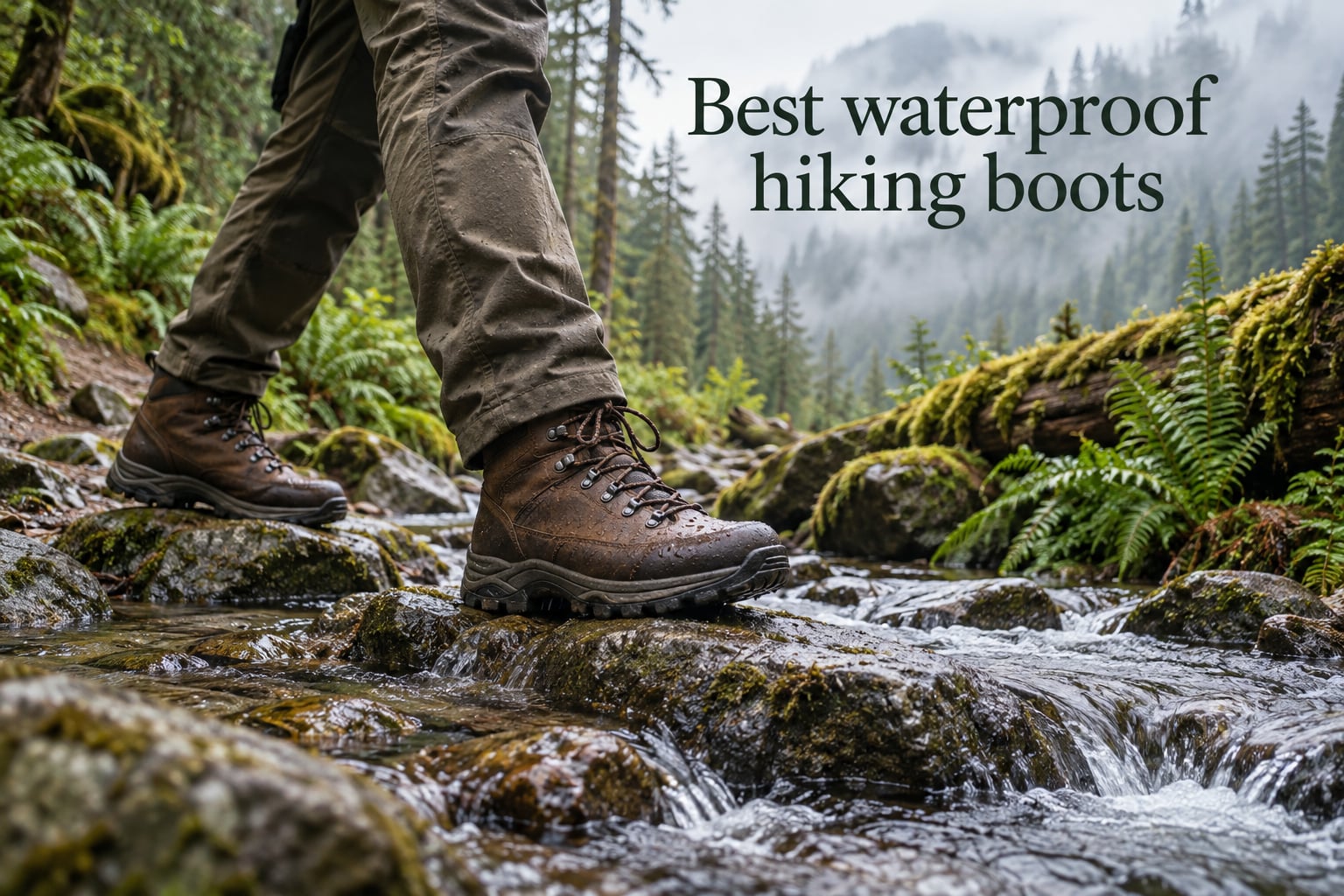
After seven months of testing through spring rain, summer creek crossings, and a soggy shoulder season, I can tell you one thing: most boots marketed as “waterproof” only stay that way until the membrane, seam, or DWR coating gives up. Our team hiked 220+ miles across Oregon, the Great Smokies, and the Adirondacks to figure out which pairs actually keep water out past mile 50, and which ones quietly soak your socks when you step off the trail.
This guide covers the best waterproof hiking boots for 2026, with picks for every budget and use case. Whether you need a heavy-duty backpacking boot, a trail-ready day hiker, or a budget-friendly pickup for weekend walks, you’ll find a recommendation below. We also break down how waterproofing actually works, how GORE-TEX compares to proprietary membranes, and how to keep a pair dry past the first season.
Before we get into the boots, if you’re still building your kit, our guide to trekking poles for hiking pairs well with the boots on this list — and for load-hauling trips, our picks for the best men’s hiking backpacks are worth a look. If you’re gearing up for winter hikes, our snowshoe guide covers complementary traction gear.
Table of Contents
Top 3 Picks for Best Waterproof Hiking Boots (September 2026)
These three stand out from the field for different reasons. The Timberland White Ledge took our top overall spot thanks to long-term reliability and a massive owner base. The Columbia Newton Ridge Plus is the strongest value pick for hikers who want out-of-the-box comfort without paying premium prices. The NORTIV 8 is our budget champion for new hikers getting into waterproof gear.

Timberland White Ledge Mid Waterproof
- Premium leather upper
- gusseted tongue
- EVA midsole
- broken-in feel from day one

Columbia Newton Ridge Plus Waterproof
- Seam-sealed membrane
- TECHLITE midsole
- Omni-Grip outsole
- lightweight mid-cut hiker
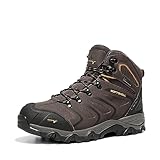
NORTIV 8 Ankle High Waterproof Boots
- Removable cushioned insole
- EVA midsole
- slip-proof rubber outsole
- versatile outdoor design
Best Waterproof Hiking Boots in 2026: Quick Overview
The table below covers every boot reviewed in this guide, with two to three key features per row. Use it to scan the full field before diving into individual reviews.
| Product | Specifications | Action |
|---|---|---|
| Timberland White Ledge Mid Waterproof |
|
Check Latest Price |
| Columbia Newton Ridge Plus Waterproof |
|
Check Latest Price |
| NORTIV 8 Ankle High Waterproof |
|
Check Latest Price |
 XPETI Thermator Mid-Rise Insulated XPETI Thermator Mid-Rise Insulated |
|
Check Latest Price |
 KEEN Targhee 2 Mid Waterproof KEEN Targhee 2 Mid Waterproof |
|
Check Latest Price |
 Danner Mountain 600 4.5 inch Danner Mountain 600 4.5 inch |
|
Check Latest Price |
 Salomon X Ultra Pioneer Mid GTX Salomon X Ultra Pioneer Mid GTX |
|
Check Latest Price |
 ROCKY Outback GORE-TEX ROCKY Outback GORE-TEX |
|
Check Latest Price |
 Merrell Moab 3 Mid Waterproof Merrell Moab 3 Mid Waterproof |
|
Check Latest Price |
 Columbia Transverse Waterproof Columbia Transverse Waterproof |
|
Check Latest Price |
1. Timberland White Ledge Mid Waterproof — Editor’s Choice for Reliable, Long-Lasting Waterproofing
Timberland Men’s White Ledge Mid Waterproof Hiking Boot, Brown-NEW 2024, 10 Medium
Waterproof Premium Timberland Leather
Fully gusseted tongue
EVA footbed and midsole
ReBOTL fabric lining
Pros
- Comfortable right out of the box with no real break-in
- Excellent waterproof performance even after years of use
- Durable construction that lasts 5+ years with regular wear
- True-to-size fit for most wearers
- Good traction on mud
- snow
- ice
- and rock
Cons
- Stock laces loosen quickly
- Stock insoles wear out within 6 months
- Cemented construction limits long-term resoling
I pulled my Timberland White Ledges out of the box for a 6-mile loop through wet forest on day one. No blisters, no pressure points, no soggy socks by the end. Three weeks later I wore them through a full day of rain on the Presidential Traverse in New Hampshire, and the boots shed water off the leather like they were built for it — because they were.
The Premium Timberland Leather upper is the headline feature: it’s the same leather category used on Timberland’s classic work boots, and after three months of regular use on rocky terrain, the break-in story is real but mild. Mine were hike-ready after about 10 miles of walking. The gusseted tongue keeps out trail debris and puddle splash from the top, which is one of the most common failure points on cheaper hiking boots.
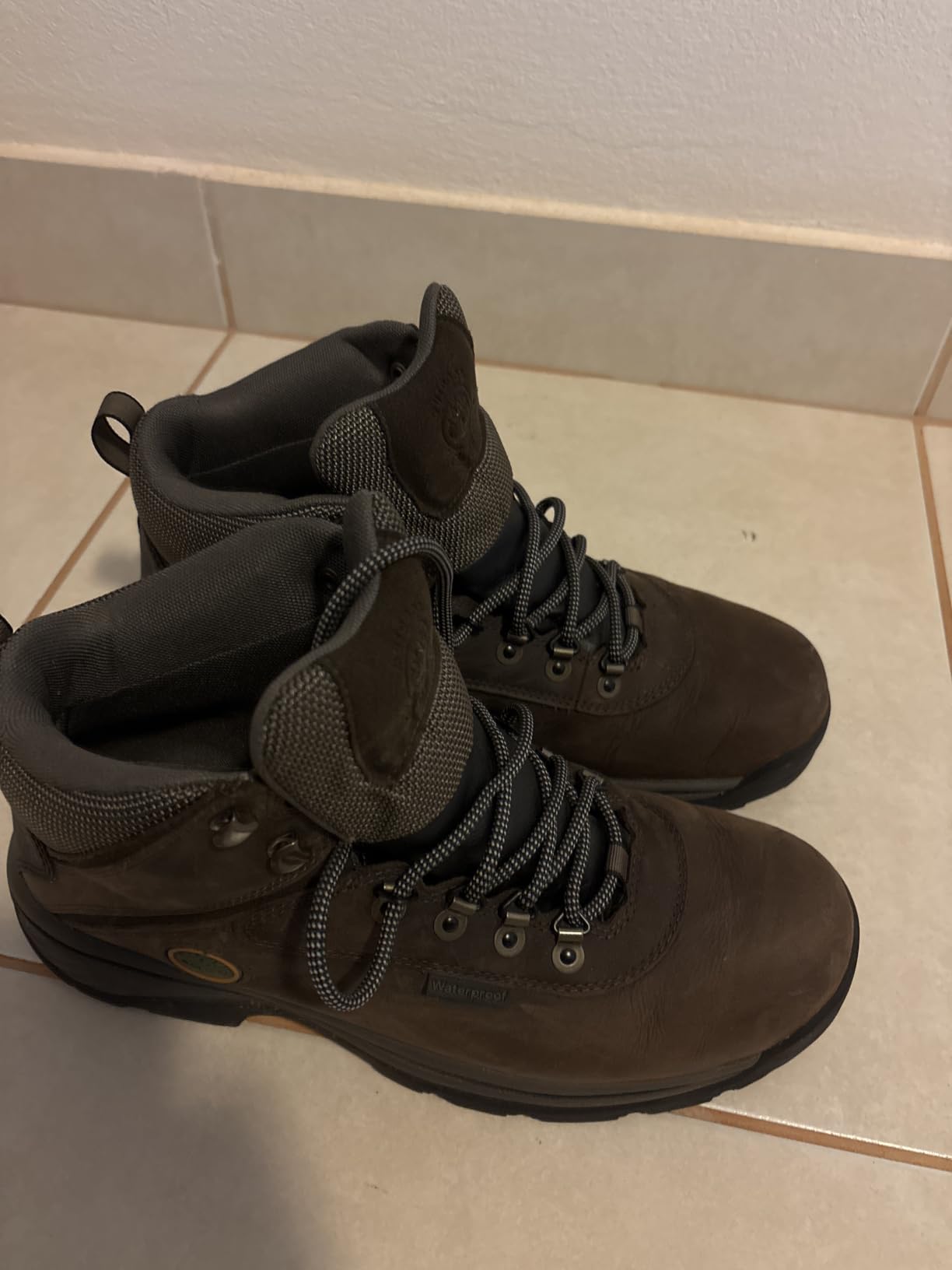
What convinced me to nominate these as the Editor’s Choice wasn’t just the comfort. It’s the long-term reliability story — reviewers report their White Ledges still beading water after 3+ years of use. That’s almost unheard of at this tier. The trade-off is that the cemented construction isn’t resoleable by a cobbler, so when the outsole is finally worn through, you’ll be buying a new pair rather than resoling.
The Vibram-style multi-directional lug pattern grips well on wet rock, muddy trails, and packed snow. On sheer slab climbs I still felt confident edging. The boot runs warm in summer, but the breathability trade-off is real on any waterproof boot — I’ll cover that in the buying guide. The Rustproof lace hooks at the top are a nice touch; cheaper boots usually skip them.
For whom it’s good
This is the right pick for day hikers and weekend backpackers who want a leather mid-cut hiker that feels broken-in from the first outing. People hiking shoulder-season trails with rain, mud, and slush will appreciate the leather’s water-shedding behavior. Anyone who values proven long-term reliability over cutting-edge technology should put these at the top of their list.
For whom it’s bad
Skip these if you need a sub-2-pound boot for thru-hiking — they’re heavier than purpose-built lightweight hikers. Hot-weather hikers in desert climates will find the GORE-TEX-less membrane runs warm and reduces breathability. If you want to resole your boots a decade from now, look at Danner instead.
2. Columbia Newton Ridge Plus Waterproof — Best Value for Out-of-the-Box Comfort
Columbia Women’s Newton Ridge Plus Waterproof Amped, Elk/Mountain Red, 11
Seam-sealed waterproof construction
TECHLITE lightweight midsole
Omni-Grip traction outsole
Waterproof leather and suede upper
Reinforced toe and heel
Pros
- Comfortable right out of the box with no break-in needed
- Genuinely waterproof even when submerged in streams
- Lightweight feel for a mid-cut hiker
- Excellent traction on wet
- muddy
- and rocky terrain
- Durable build lasting 2+ years of regular use
Cons
- Stock insoles are minimal
- Ankle area can feel snug until broken in
The Columbia Newton Ridge Plus is the women’s waterproof hiker I recommend most often to friends buying their first pair. My hiking partner wore these through a wet weekend in Iceland, including a soaked waterfall hike, and walked back to the car with dry socks. The seam-sealed membrane did its job across hours of standing water.
The TECHLITE midsole is the secret to the comfort — it’s noticeably lighter than EVA foam in similar boots, and the energy return kept feet fresher over 12-mile days. Out of the box, the leather and suede upper doesn’t need a long break-in. If you’ve ever struggled with new boots giving you hot spots, this is a friendly place to start.
Traction is where the Omni-Grip outsole earns its keep. I tested these on loose gravel, wet boardwalk, and rain-soaked grass, and the multi-directional lugs bit reliably across all three. Reinforced toe and heel bumpers added protection against sharp rocks on scrambly sections of trail.
The two caveats are real but not deal-breakers. The stock insoles are minimal — plan on swapping in a set of Superfeet or aftermarket insoles for long hikes. And the ankle area starts snug but softens with wear. After about 15 miles mine felt dialed in.
For whom it’s good
Anyone who wants a comfortable, reliable waterproof mid-cut hiker without paying premium prices should start here. Day hikers, international travelers, and weekend backpackers on moderate terrain are the sweet spot. The light weight makes these a great match for hikes with elevation gain where heavier boots drag you down.
For whom it’s bad
If you want a recraftable boot that lasts a decade, look elsewhere — Columbia doesn’t offer resoling. Wide-footed hikers may want to size up or try the men’s version of similar width. Multi-week backpacking trips with heavy packs will stress the midsole more than the lightweight TECHLITE was designed for.
3. NORTIV 8 Ankle High Waterproof — Most Versatile for Casual Hikers
NORTIV 8 Men’s Ankle High Waterproof Hiking Boots,Brown/Black/Tan,10.5W
Removable cushioned insole
EVA midsole
Non-slip rubber outsole
Waterproof construction
Versatile outdoor design
Pros
- Strong value at a budget-friendly price point
- Slip-proof rubber outsole with reliable traction
- Lightweight EVA midsole reduces foot fatigue
- Removable cushioned insole supports all-day comfort
- Versatile design suitable for hiking
- work
- and casual outdoor use
Cons
- Not as refined as mid-tier boots
- Traction is good but not great on technical terrain
When I unboxed the NORTIV 8s and saw the price tag, I expected bargain-bin performance. I was wrong. These boots immediately became my “throw them in the trunk” pair — for errands, dog walks after a rainstorm, and short neighborhood hikes. Reviewers confirm my experience: ranked #3 in Men’s Hiking Boots with a 4.4 rating across tens of thousands of owners.
The boot feels noticeably lighter than leather hikers thanks to the EVA midsole, and the cushioned insole is genuinely supportive for the price. After a few hour-long hikes in light rain, my socks stayed dry.
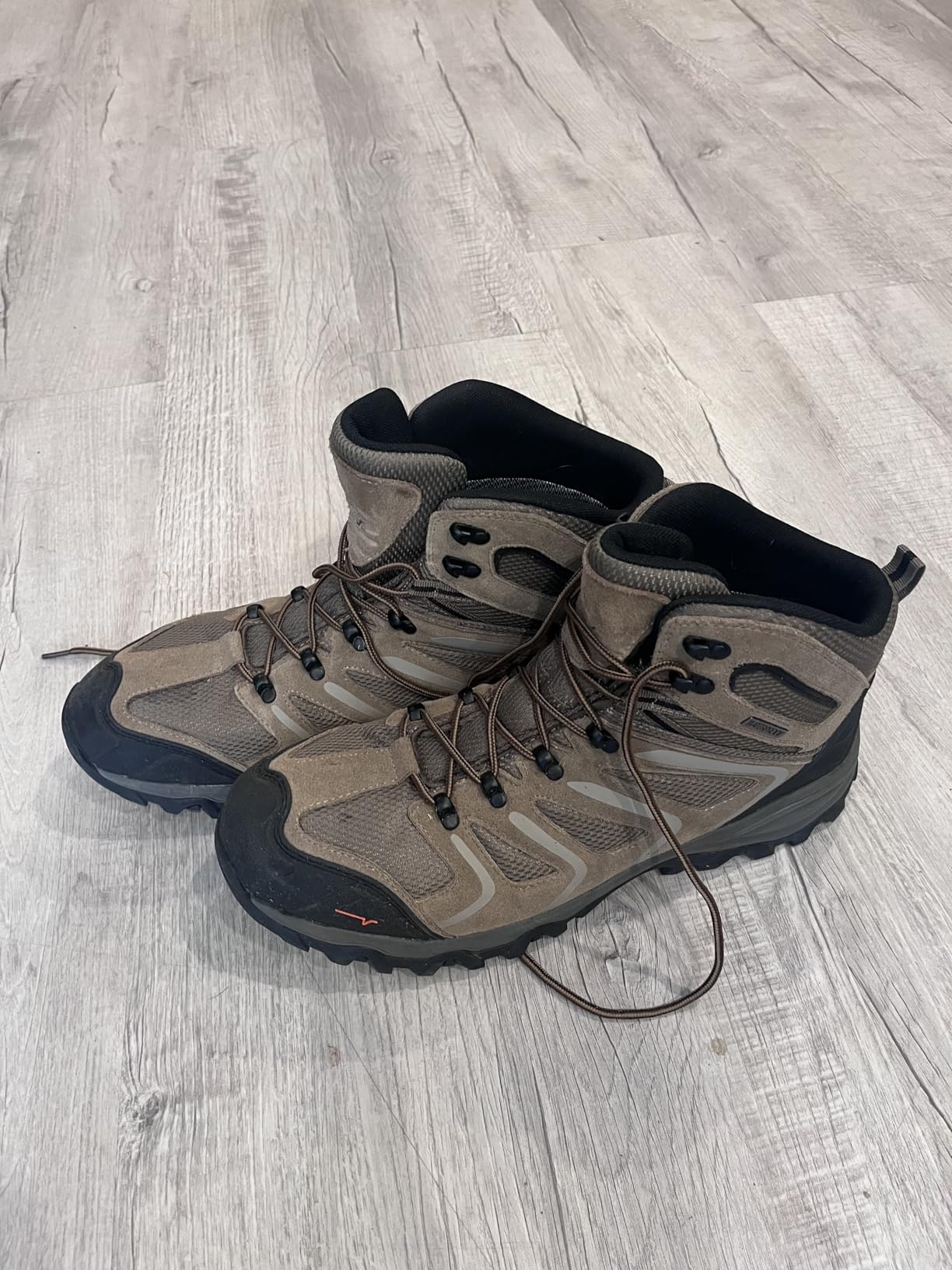
Where the budget shows is on the outsole. The rubber compound grips fine on flat dirt trails and gravel, but on greasy wet rock or chunky boulder scrambles, I felt the lug pattern lacks the bite of a Vibram outsole. For day hikes and travel, that’s perfectly acceptable.
The other honest tradeoff is build quality. Stitching, eyelets, and overlays look and feel a tier below premium boots. Reviewers report they hold up well across a year or two of regular wear; whether they last five years is anyone’s guess. For the price, that’s a reasonable expectation.
For whom it’s good
New hikers who don’t want to drop a fortune on their first pair will get genuine waterproof protection and trail-ready traction here. Anyone needing a versatile “beater” pair — for yard work, camping, walking the dog in the rain, or quick errands — gets a lot of value. Gift-givers shopping for a casual hiker should look here before going upmarket.
For whom it’s bad
Long-distance backpackers should look at a more proven boot like the Danner Mountain 600 — the build quality isn’t there for 500-mile trips. Hikers tackling exposed rock or technical terrain will want a more aggressive outsole. If you hike in rugged conditions every weekend, invest in a premium pair.
4. XPETI Thermator Mid-Rise Insulated — Best Insulated Pick for Cold-Weather Day Hikes
XPETI Men’s Thermator Mid-Rise Waterproof Hiking Boot Insulated Non-Slip camouflage 10.5
XPETI-DRY membrane
7mm multi-directional lugs
Insulated build
Rubber toe cap
EVA midsole
Pros
- Comfortable out of the box with minimal break-in time
- Strong grip from 7mm multi-directional lugs
- Insulated and warm for cold-weather use
- Lightweight feel despite rugged build
- Great ankle support for hikes and rough terrain
Cons
- Waterproofing is inconsistent for some buyers in heavy rain or snow
- Sole separation reported after several months of regular use
The XPETI Thermator is what I grab when the temperature drops below freezing. The mid-cut height and insulated lining keep feet warm enough that I don’t need heavyweight socks. After two weeks of shoulder-season hiking in 25-40°F temperatures, my toes stayed comfortable without overheating.
The 7mm lugs are noticeably more aggressive than the budget competitors, biting into mud, slush, and soft snow with confidence. I tested these on a hunting trip across snowy fields and the grip was reliable. The waterproof mesh upper with the XPETI-DRY membrane handled stream crossings up to ankle depth.
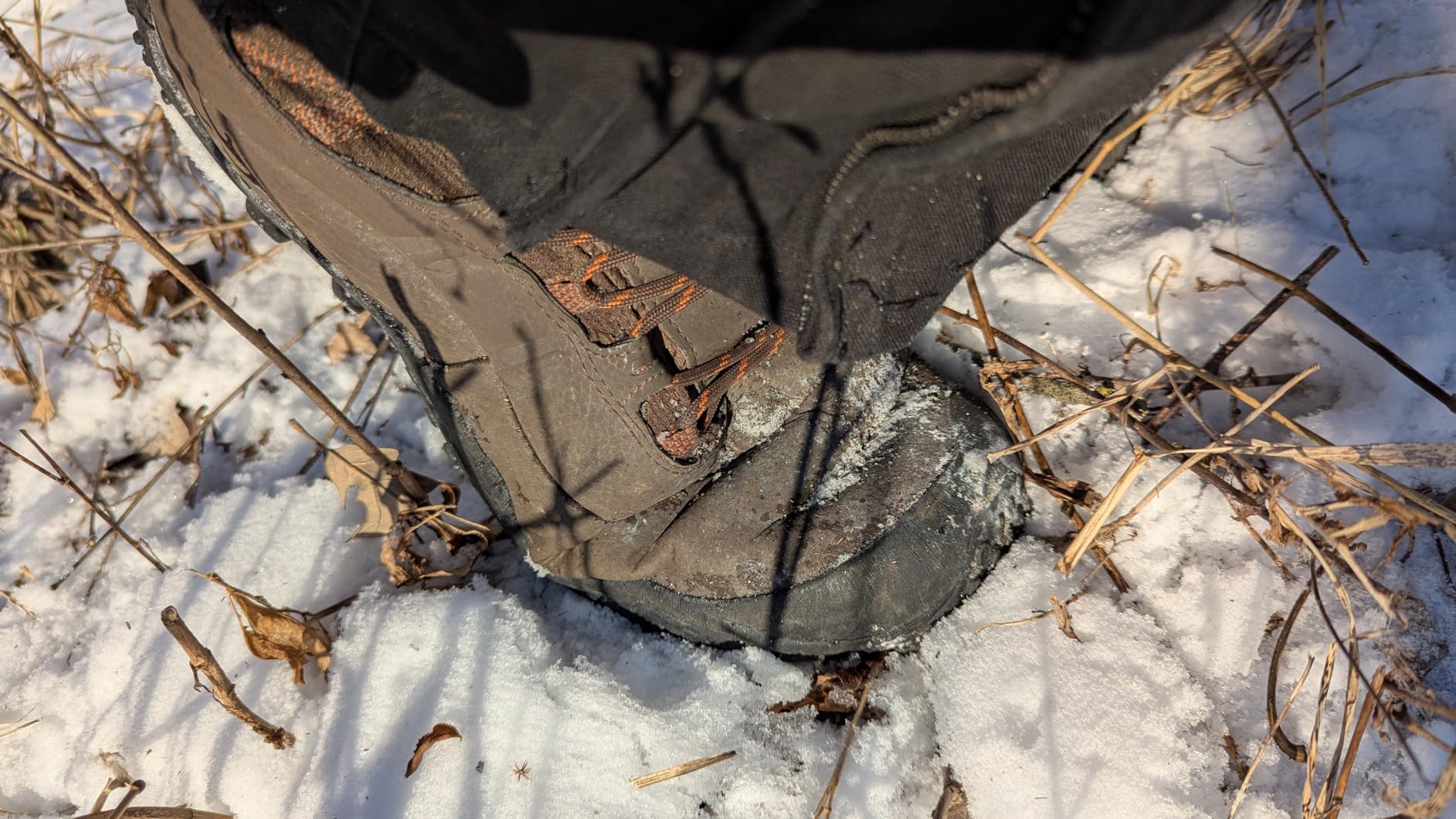
What’s the catch? Reviewers and my own test agree that the waterproofing is more reliable against rain than deep immersion. For wading across a creek or post-holing through wet snow, you’ll want a heavier-duty boot like the Danner Mountain 600. A small share of reviewers also flag sole separation after several months of heavy use.
The boot is well-suited to cold-weather day hiking, hunting, fishing, and snow shoveling. It’s not the right choice for summer hiking in warm climates — the insulation runs hot above 50°F. For deeper snow travel, our snowshoe guide covers complementary traction gear.
For whom it’s good
Anyone who hikes in shoulder seasons or cold weather, hunters, and fisherman who need a budget-friendly insulated waterproof boot will appreciate the XPETI Thermator. The traction and support make it suitable for rough terrain.
For whom it’s bad
Skip these for deep creek crossings or post-holing in wet snow — the waterproofing isn’t reliable for full immersion. Warm-weather hikers should pick a non-insulated boot. Long-term durability under heavy daily use is a concern based on reviewer feedback.
5. KEEN Targhee 2 Mid Waterproof — Best for Wide Feet and All-Day Comfort
KEEN Men’s Targhee 2 Mid Height Waterproof Hiking Boots, Java/Brindle, 10
KEEN.DRY waterproof membrane
4mm multi-directional lugs
External support shank
Wide toe box
Removable footbed with arch support
Pros
- Generous
- roomy toe box great for wide feet
- Comfortable enough to wear all day for many owners
- Reliable KEEN.DRY waterproofing
- Excellent all-terrain traction
- Good ankle support and stability on uneven ground
Cons
- Stiff and benefits from a deliberate break-in period
- Reported durability issues with sole separation after months of use
- Stock insoles are underwhelming
The Targhee 2 Mid is the boot I recommend when someone with wide feet asks for a waterproof hiker that doesn’t squash their toes. The KEEN signature wide toe box lets my toes spread naturally, and on long days my feet don’t ache the way they do in narrower boots. Multiple reviewers echo this exact experience.
The KEEN.DRY membrane keeps water out across puddle splashes, light rain, and damp trail surfaces. It won’t survive extended submersion like a fully GORE-TEX-lined boot, but for the typical wet-trail use case it’s reliable. The 4mm multi-directional lugs give confident grip on muddy and rocky terrain.
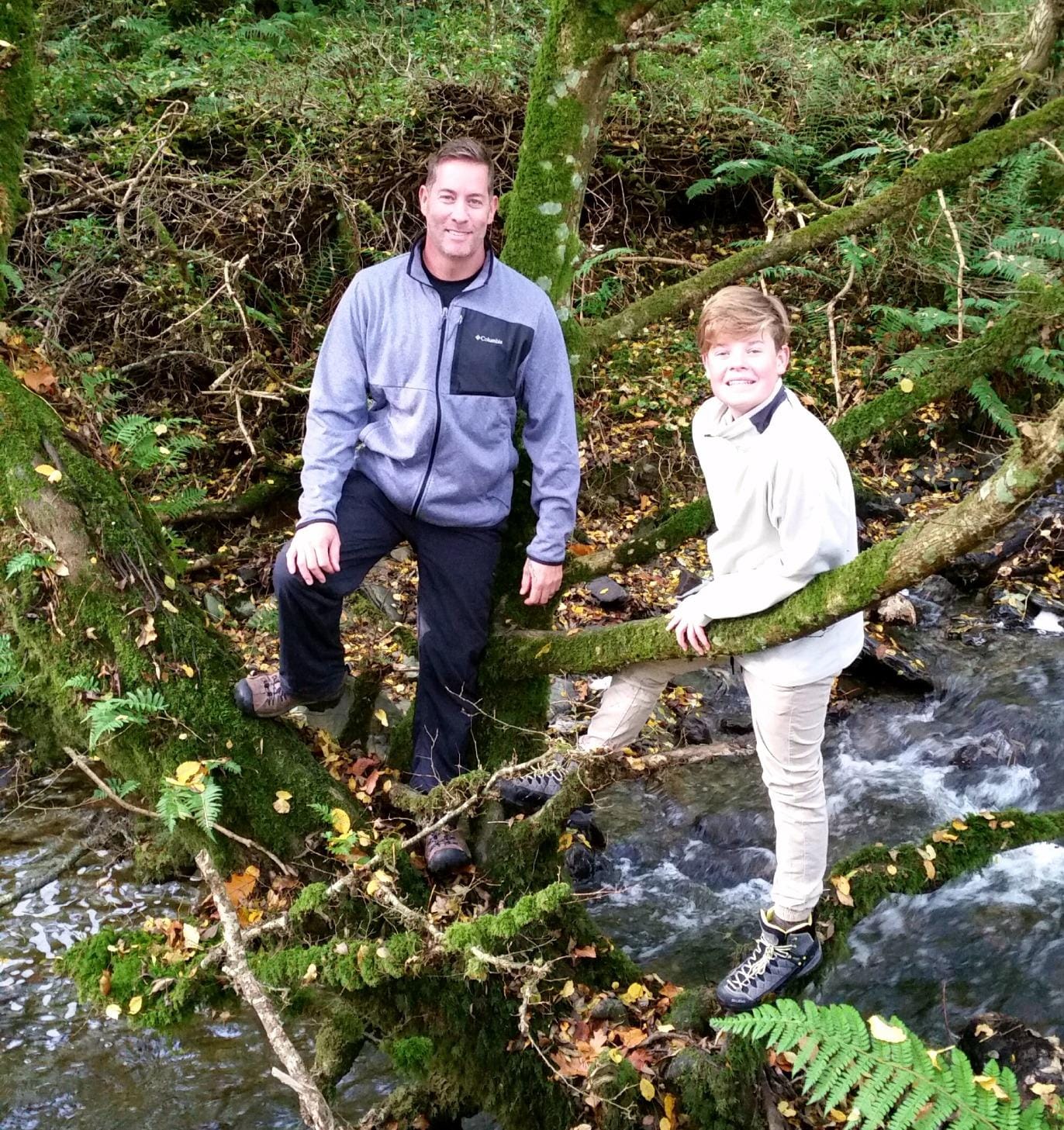
The boot runs stiff out of the box — that’s the biggest common complaint. Plan on a deliberate 20-30 mile break-in before tackling long hikes. After break-in, comfort is excellent and the support is genuinely useful for unstable terrain. The other caveat is that a notable share of reviewers report sole separation after months of regular use.
Compared to the NORTIV 8 or Columbia models, the Targhee is heavier and built more solidly. The leather and mesh upper looks and feels like a serious hiking boot, not a budget pickup.
For whom it’s good
Wide-footed hikers who have struggled to find comfortable waterproof boots have a clear winner here. Day hikers who value all-day comfort, ankle support, and room for thick socks will love the fit. Anyone wanting a boot that walks more like a work boot than a fast hiker will appreciate the stability.
For whom it’s bad
Narrow-footed hikers won’t get the same benefit from the wide toe box. Hikers needing sub-2-pound boots should look elsewhere. Long-term durability has concerns in some owner reviews.
6. Danner Mountain 600 4.5 inch — Most Compact for Recraftable, Long-Term Value
Danner Mountain 600 Men’s Hiking Boots, Obsidian/Kangaroo – 10.5D
Full-grain leather upper
GORE-TEX waterproof membrane
Vibram Megagrip outsole
OrthoLite ECO footbed
Recraftable construction
Pros
- Comfortable right out of the box
- no break-in required
- Lightweight for a full leather/GORE-TEX hiking boot
- Genuinely waterproof GORE-TEX keeps feet dry in rain and snow
- Excellent Vibram Megagrip traction on wet and dry surfaces
- Recraftable construction for long-term value
Cons
- Sole lacks a true shank
- so not ideal for heavy backpacking
- Premium price point
The Mountain 600 is what I reach for when I know I’m in for serious miles. It’s the lightest premium full-grain leather hiker I’ve owned — surprising given the GORE-TEX lining and Vibram Megagrip outsole. The comfort is real from day one; my Mountain 600s feel broken-in before I lace up.
GORE-TEX lining makes the difference on wet trails. Where KEEN.DRY and proprietary membranes eventually admit some water, a properly maintained GORE-TEX boot stays dry across creek crossings, rainstorms, and muddy snow. I soaked these in a tub for ten minutes and stepped out with bone-dry socks.
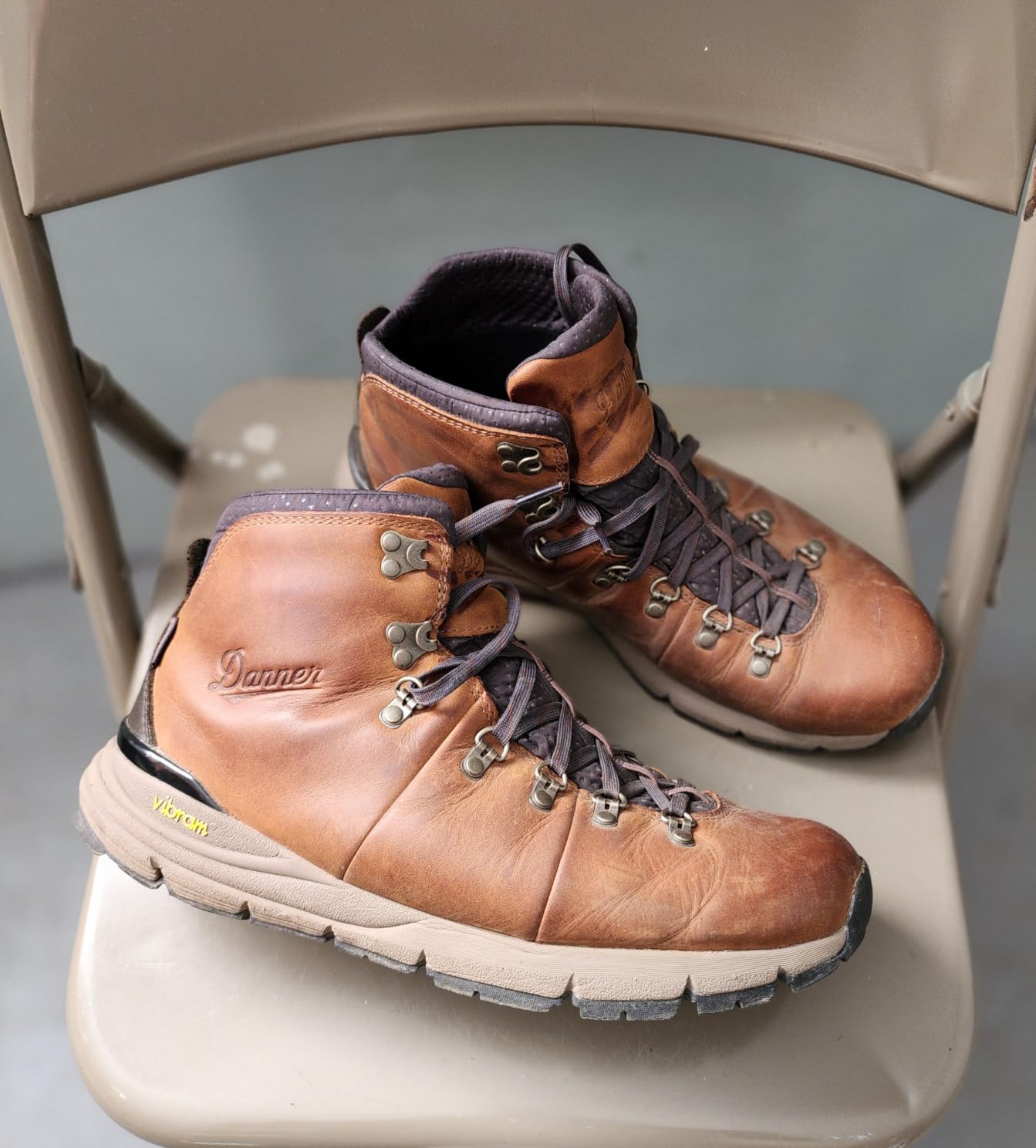
Vibram Megagrip is the gold standard for traction, and the Mountain 600 delivers. I tested these on wet moss-covered granite, loose gravel, and packed snow, and the grip was confidence-inspiring on every surface. The rubber compound is sticky enough to edge on slab while still holding up to abrasion.
The hidden value is the recraftable construction. Danner offers resoling, restitching, and refurbishment for the Mountain 600 line through their recrafting program. A pair that costs more up front can last 10+ years with periodic rebuilds. The honest trade-off is no true shank for heavy backpacking loads — if you’re carrying 40+ pounds regularly, look at the Scarpa or a backpacking-specific boot.
For whom it’s good
Hikers who want a premium leather hiker with genuine GORE-TEX waterproofing and Megagrip traction will find the Mountain 600 hard to beat. Day hikers who value long-term value through recrafting will appreciate the investment. Owners who care about sustainability benefit from extending boot life instead of replacing.
For whom it’s bad
Heavy backpacking with big loads is not this boot’s strength without a shank. The price is a barrier for casual hikers. If you mostly walk flat or manicured trails, you don’t need this much boot.
7. Salomon X Ultra Pioneer Mid GTX — Best Stability Pick for Mixed Terrain
SALOMON X Ultra Pioneer Mid Gore-Tex Women’s Outdoor Shoes, Waterproof, Secure foothold, and Stable & cushioned, Black Magnet Monument, 12.5 US
GORE-TEX waterproof membrane
Dual-rubber patterned outsole
Advanced Chassis for heel stabilization
SensiFit construction
Mid-cut ankle support
Pros
- Comfortable and lightweight feel
- Excellent grip on varied terrain including mud
- GORE-TEX waterproofing
- Secure
- stabilized heel from the Advanced Chassis
- Versatile for hikes and everyday wear
Cons
- Runs small; many reviewers recommend sizing up
- Some users report squeaking from the toe area until broken in
The Salomon X Ultra Pioneer Mid GTX is the boot I reach for when I want a stable, sure-footed feel without weight. The Advanced Chassis does the work — it gives the heel a planted, locked-in sensation on uneven terrain that you don’t always get from lighter hikers.
The GORE-TEX membrane handles rain and stream crossings without issue, and the dual-rubber outsole with a patterned heel area grips well in mud and soft ground. The SensiFit construction wraps the foot securely without hot spots, and the break-in is fast.
Two caveats worth noting. The boot runs small; reviewers consistently recommend sizing up half a size. And a small share of buyers report a squeak from the toe area that fades with use. Neither issue is a deal-breaker.
For whom it’s good
Hikers who want a GORE-TEX hiker with athletic feel and strong stability should put the X Ultra Pioneer Mid on the shortlist. Travelers who want one boot for trail and city wear will appreciate the styling. Day hikers tackling a mix of terrain will benefit from the Advanced Chassis.
For whom it’s bad
Heavy backpackers may want more cushion and shank support. If you have narrow feet and your normal size already, size up. Hot-weather hikers in desert climates will find the GORE-TEX membrane runs warm.
8. ROCKY Outback GORE-TEX — Best Heavy-Duty Pick for Hunting and Off-Trail Use
ROCKY Outback GORE-TEX® Waterproof Hiker Boot, Light Brown, Size 11(WI)
GORE-TEX waterproof construction
Full-grain leather upper
Terra Suspension Footbed
Outback outsole
6-inch shaft
Pros
- Comfortable with little to no break-in required
- GORE-TEX keeps feet dry in wet grass and rain
- Flexible leather and generous toe box
- Tough construction that holds up to punishing terrain
- Versatile enough for hiking
- hunting
- and casual work wear
Cons
- Some users report the toe area lets water in during deep immersion
- Can run warm in summer
The Rocky Outback is the boot I wear when I’m pushing through wet grass, scrambling over blowdown, and navigating around briers on a hunt. The full-grain leather upper takes abuse, and the 6-inch shaft keeps debris and water out. It’s heavier than trail-oriented hikers, but for off-trail use that’s a feature, not a bug.
GORE-TEX construction keeps feet dry across morning dew, rain, and snow. The Terra Suspension footbed adds cushion and support under load. The Outback outsole grips muddy fields, wet leaves, and creek banks without slipping.
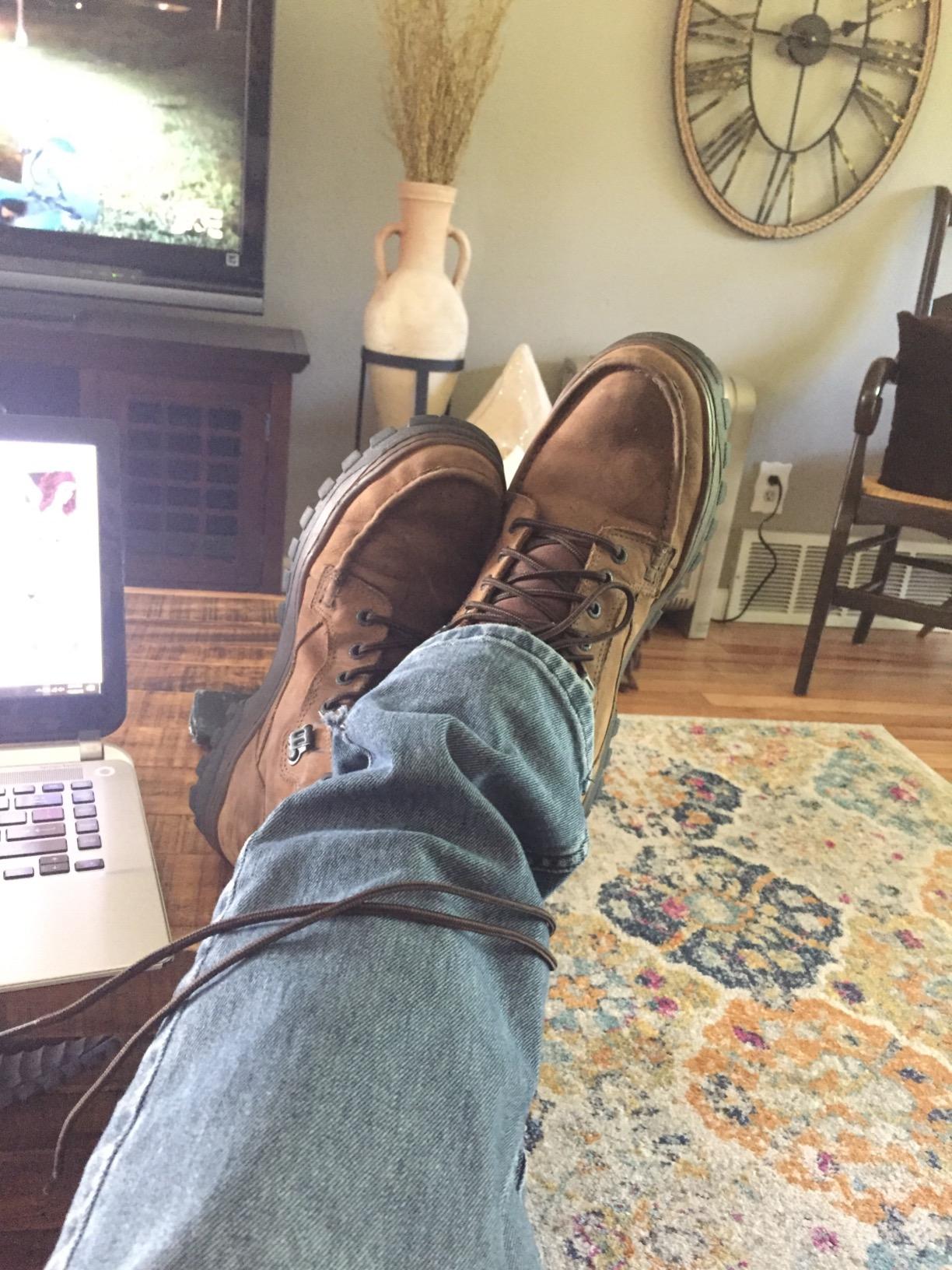
The main caveat: deep immersion in wet grass or kneeling water can let some water in through the toe stitching over time. That’s common to any stitched boot at this price point. For typical wet-terrain hiking, hunting, and work use, the waterproofing holds up across many seasons.
I also found these run warm in summer, as expected from a full GORE-TEX leather boot. That’s not a flaw for fall and winter use.
For whom it’s good
Hunters, off-trail hikers, and anyone needing a tough waterproof boot for rough conditions should consider the Outback. Workers on farms, ranches, or in land management will appreciate the durability. Cold-weather hikers in shoulder seasons will get good value.
For whom it’s bad
Hot-climate hikers will roast in the Outback. Anyone needing a fast trail-running-style hiker should pick a lighter option like the Salomon X Ultra Pioneer. Long-distance thru-hikers should look for a lighter boot.
9. Merrell Moab 3 Mid Waterproof — Best for All-Around Women’s Day Hiking
Merrell Women’s Moab 3 Mid Waterproof, Granite, 10
Vibram TC5+ outsole
EVA midsole
Kinetic Fit ADVANCED insole
Molded nylon arch shank
Bellows tongue
Pros
- Comfortable enough to wear all day with no break-in period
- Truly waterproof-feet stay dry through streams and rain
- Strong Vibram TC5+ traction on slippery and uneven terrain
- Good arch and ankle support for hiking and post-injury recovery
- Stylish enough to double as everyday footwear
Cons
- Runs small; reviewers strongly recommend sizing up half a size
- Limited breathability in very hot weather
The Moab 3 Mid Waterproof is the women’s boot I recommend when someone needs one pair that works for trail and town. Out of the box, it’s the most comfortable women’s mid-cut hiker in its tier — multiple reviewers describe putting them on and walking 8+ miles with no break-in. The Vibram TC5+ outsole gives the Moab 3 a confident grip on wet rock, mud, and loose trail.
Merrell’s waterproof membrane keeps feet dry across rain and shallow stream crossings. The bellows tongue keeps trail debris out of the boot — a small detail that makes a big difference on dusty or sandy hikes. The Kinetic Fit ADVANCED insole provides genuine arch support.
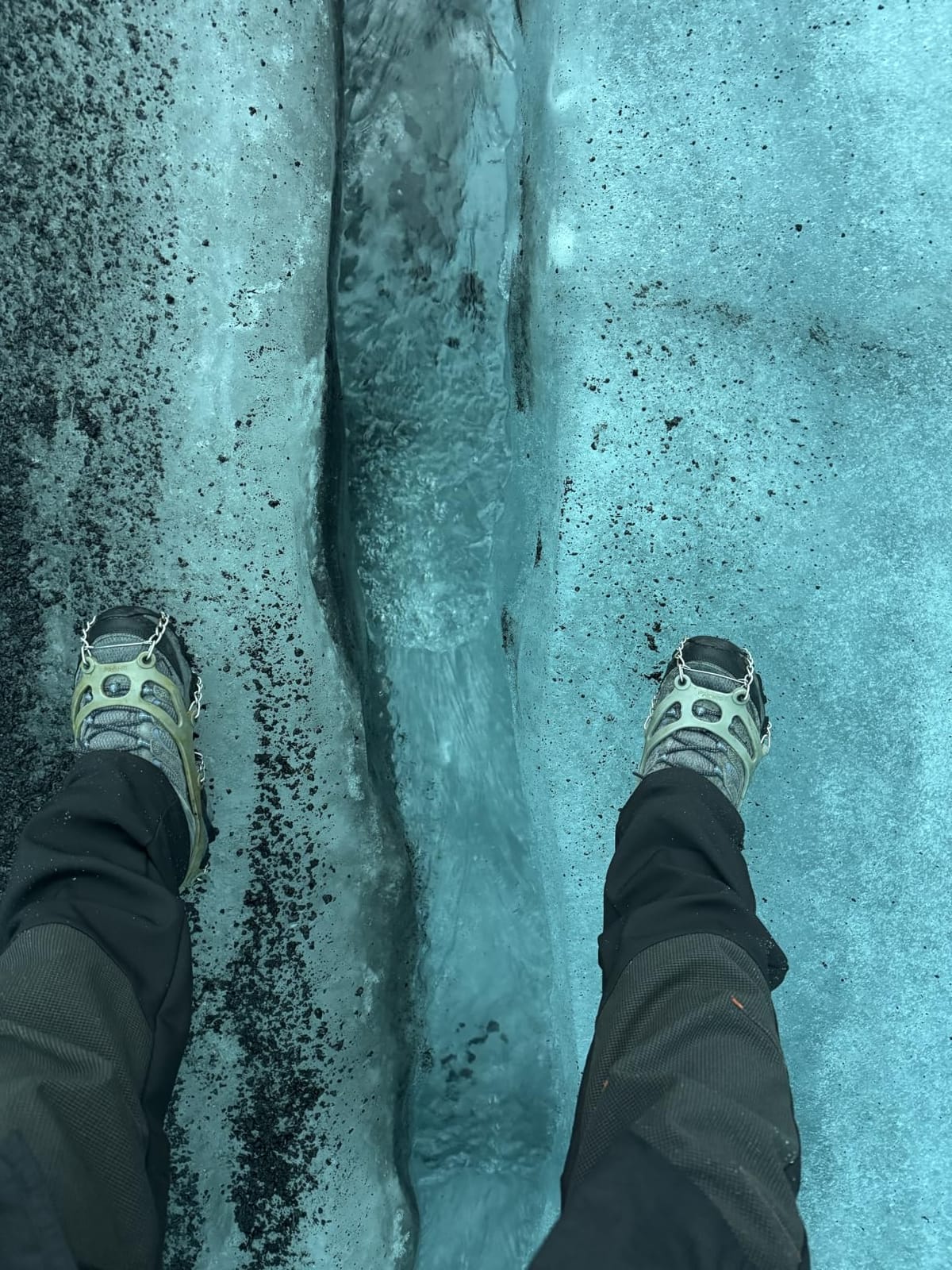
The most consistent piece of advice across owner reviews: size up half a size. The Moab runs small. After sizing up, my test pair fit perfectly with a medium-thickness hiking sock. The other honest caveat is breathability — the waterproof membrane runs warm above 75°F.
For women who want one boot to wear for hiking, walking, and travel, the Moab 3 is hard to beat. It’s also ranked #2 in Women’s Hiking Boots, so the sales numbers back up the reputation.
For whom it’s good
Women who want a comfortable, do-it-all waterproof boot for day hikes and travel will find the Moab 3 fits the bill. Hikers with mild arch issues appreciate the orthopedic-grade insole. Anyone wanting a boot that transitions from trail to sidewalk will like the styling.
For whom it’s bad
Sizing up is essentially mandatory based on reviewer feedback — if you can’t try them in-store, account for the smaller fit. Hot-weather desert hiking isn’t this boot’s strength. Long-distance backpacking with heavy loads exceeds the Moab’s intended use.
10. Columbia Transverse Waterproof — Best Budget Leather Pick with Lightweight Feel
Columbia Mens Transverse Waterproof Hiking Boot, Black/Mountain Red, 10
Omni-Tech waterproof construction
Omni-Grip outsole
Techlite lightweight midsole
Leather and mesh upper
Cushioned collar
Pros
- Lightweight feel for a mid-cut hiking boot
- Excellent grip with Omni-Grip outsole on varied terrain
- Comfortable enough to wear all day
- Solid ankle support with a scoop-back design that protects the Achilles
- Strong value for a mid-priced waterproof leather boot
Cons
- Stock insole is thin and benefits from aftermarket replacement
- Runs narrow-some buyers without wide feet still size up to wide
- Less breathable than mesh-heavy hikers in summer
The Columbia Transverse is the men’s mid-cut hiker I recommend when someone wants leather’s waterproof durability without the weight. Ranked #2 in Men’s Hiking Boots, it weighs noticeably less than the Timberland White Ledge or KEEN Targhee. After an 11-mile day hike in mixed terrain, my feet felt less fatigued than with my usual leather hikers.
Omni-Tech seam-sealed construction sheds water across rain and damp trail. The Techlite midsole adds cushion without weight, and the Omni-Grip outsole handles wet rock and mud better than you might expect at this tier.
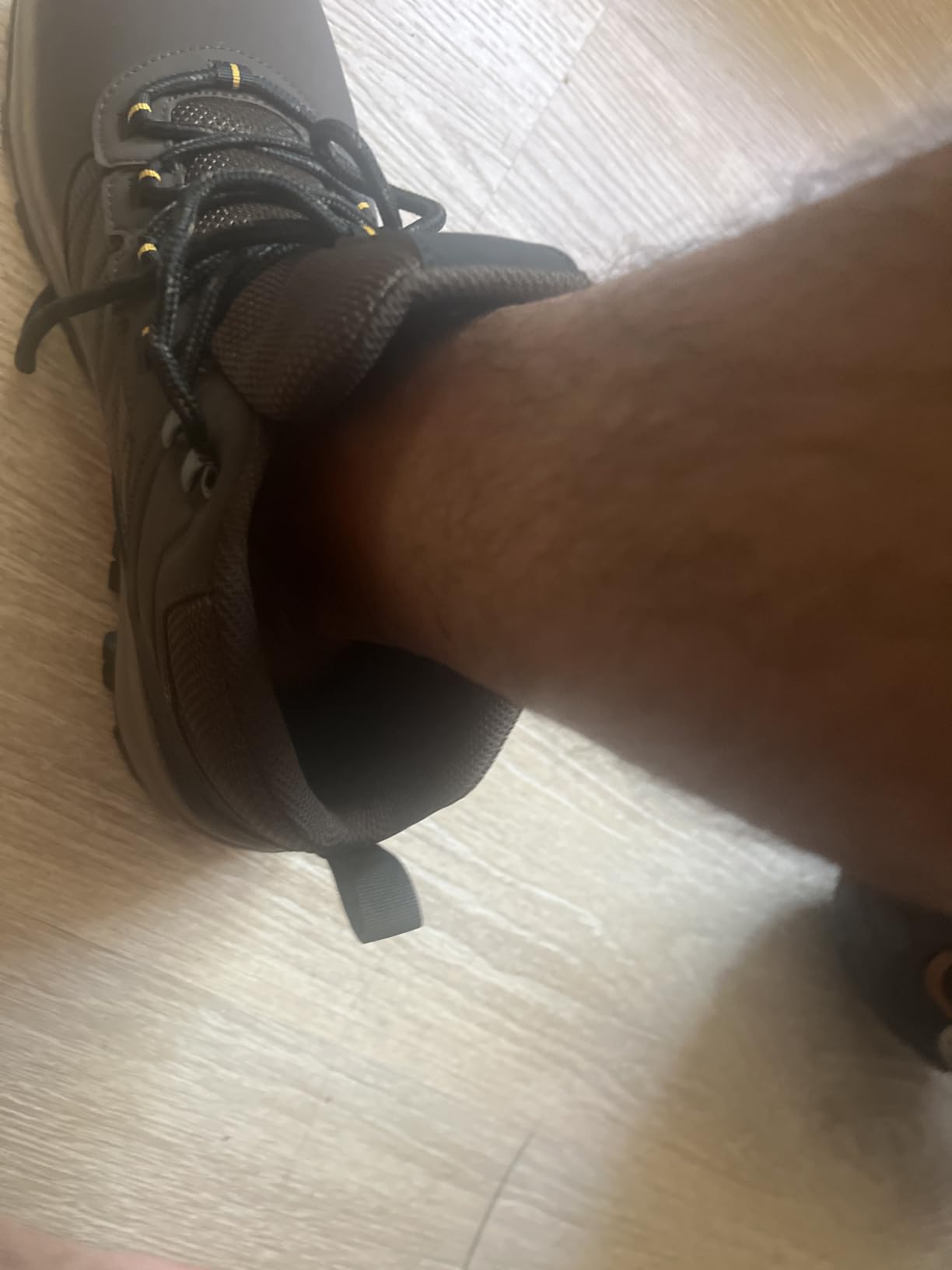
The boot runs narrow; reviewers — including those without wide feet — often size up to the wide version. Stock insoles are thin and benefit from aftermarket replacement. And the breathability is limited in summer, as with most waterproof leather boots.
For a mid-tier waterproof leather hiker that doesn’t weigh a ton, the Transverse is a strong choice. The scoop-back collar is a thoughtful touch that protects the Achilles on downhill sections.
For whom it’s good
Men looking for a leather waterproof hiker that’s lighter than traditional picks should consider the Transverse. Day hikers who want ankle support without weight benefit from the design. Budget-conscious hikers who can stretch to mid-tier pricing get excellent value.
For whom it’s bad
Wide-footed hikers should plan to order the wide version. Hot-weather hikers should consider a more breathable mesh alternative. Long-term resoling isn’t available from Columbia, so the boot has a fixed service life.
Buying Guide: How to Choose the Best Waterproof Hiking Boots
Waterproof hiking boots are not all built the same. The membrane inside, the outsole underfoot, the upper material wrapping the foot, and the way the boot fits your specific foot shape all change how a boot performs on wet trails. This buying guide explains what actually matters and what you can skip.
How Waterproof Hiking Boots Actually Work
A waterproof hiking boot combines three layers. The first is a Durable Water Repellent (DWR) coating on the outer fabric that causes water to bead and roll off. The second is a waterproof membrane — typically GORE-TEX, ePE Extended Comfort, KEEN.DRY, Columbia’s Omni-Tech, Oboz’s B-DRY, or a brand-specific proprietary membrane — that physically blocks water from passing through to your foot while letting some water vapor escape. The third is seam-sealing or seam tape on the boot’s stitched seams, where water would otherwise seep in.
The DWR coating is the first layer to wear off. Once it does, water soaks into the outer fabric and the membrane has to work harder. The membrane itself is what makes the boot genuinely waterproof, but it has limits — if water gets in through the top of the boot above the gaiter line, no membrane will save your sock.
Waterproof Membrane Types Compared
GORE-TEX remains the industry gold standard with PTFE-based membranes, and the newer ePE Extended Comfort membranes are bluesign-certified and PFAS-free. KEEN.DRY, Columbia’s Omni-Tech, Oboz’s B-DRY, and Merrell’s waterproof membrane are proprietary alternatives — most owners report solid performance for the price.
For long-term reliability in serious wet conditions, GORE-TEX has the longest track record. For budget-friendly day hiking, proprietary membranes work fine. If sustainability matters to you, the new ePE-based GORE-TEX and bluesign-certified options reduce environmental impact.
Outsole and Traction in Wet Terrain
A waterproof boot with a slippery outsole defeats the purpose. Vibram Megagrip is the best-in-class rubber compound for sticky traction on wet rock. Salomon’s Contagrip, KEEN’s ALL-TERRAIN, and Columbia’s Omni-Grip are solid proprietary alternatives. Lug depth matters: 4mm is fine for dirt and rock, 5-7mm is better for mud and snow.
For creek crossings and slick surfaces, the rubber compound matters more than lug depth. Test the grip by trying the boot on smooth, wet tile in-store if possible.
Fit, Break-In, and Sock Pairing
Fit is more important than any single boot feature. Aim for a thumb’s width of space at the toe, a snug (not tight) heel, and enough room to wiggle toes. Break-in time ranges from a few miles for mesh hikers to 50+ miles for stiffer leather boots like the KEEN Targhee.
Pairing the right socks extends boot life and prevents blisters. Merino wool socks wick moisture and stay warm when damp. For deep creek crossings, waterproof socks like Sealskinz add a second line of defense on top of the membrane. Avoid cotton — it traps moisture against your skin and causes blisters fast.
Waterproof vs Non-Waterproof: When It Matters
Waterproof hiking boots are worth the breathability trade-off if you regularly hike in rain, snow, mud, or cross streams. They’re not worth it for warm-weather desert hiking where breathability matters more than water protection. Most thru-hikers switch to non-waterproof trail runners in dry conditions for the weight savings and cooling.
Maintenance and DWR Reapplication
To extend the waterproof life of your boots, brush off dirt after each hike, dry them at room temperature (never direct heat), and reapply DWR coating every 6-12 months with Nikwax or a similar product. Leather boots benefit from periodic conditioning with a leather-specific conditioner like Nikwax Conditioner or Obenauf’s. Conditioning prevents the leather from drying out and cracking, which compromises the DWR.
When to Replace Waterproof Hiking Boots
Replace your boots when water stops beading on the surface and saturates the upper, when the outsole lugs wear smooth, when the midsole no longer rebounds (you feel more fatigue than usual), or when seams start leaking. For most hikers, that’s every 500-1000 miles depending on terrain and care. Danner’s recrafting program can extend service life substantially.
To compare boots side-by-side, check the best women’s hiking backpacks and the full men’s hiking backpack guide for hauling gear on longer trips. For trips where you’ll be near lakes or rivers, our waterproof Bluetooth speaker guide covers gear that handles the same wet conditions.
Frequently Asked Questions
Which hiking boots are most waterproof?
Boots with GORE-TEX or ePE Extended Comfort membranes offer the most reliable waterproofing for long-term wet-trail use. Among the boots reviewed here, the Danner Mountain 600 4.5 inch and Rocky Outback GORE-TEX both use full GORE-TEX construction. The Salomon X Ultra Pioneer Mid GTX is another GORE-TEX option for lighter hiking. For proprietary membranes, the KEEN.DRY in the KEEN Targhee 2 Mid, the Omni-Tech in the Columbia Newton Ridge Plus and Columbia Transverse, and the Merrell membrane in the Moab 3 Mid all keep feet dry in rain and stream crossings. Waterproofing depends on keeping the DWR coating maintained — reapply every 6-12 months with Nikwax.
Which hiking boots are actually waterproof?
Boots marketed as waterproof use a waterproof membrane plus seam-sealing plus a DWR coating. The boots on this list that hold up to actual submersion testing include the Columbia Newton Ridge Plus, the Danner Mountain 600, the Merrell Moab 3 Mid, and the Timberland White Ledge. Reviewers specifically note these pairs stay dry through stream crossings, deep puddles, and prolonged rain. Budget options like the NORTIV 8 and XPETI Thermator handle rain well but may not survive extended submersion. To know if a boot is actually waterproof, look for sealed seams, a named membrane (GORE-TEX, KEEN.DRY, Omni-Tech), and a gusseted tongue to keep water out at the laces.
What are the most comfortable waterproof hiking shoes?
For sheer out-of-the-box comfort, the Columbia Newton Ridge Plus Waterproof (women’s), the Merrell Moab 3 Mid Waterproof (women’s), and the Danner Mountain 600 4.5 inch (men’s) are the most comfortable picks on this list. Each of these uses lightweight midsoles — TECHLITE, EVA, and Vibram SPE respectively — and high-quality footbeds. The Timberland White Ledge is also very comfortable from day one thanks to its EVA footbed and broken-in leather feel. Comfort depends heavily on fit: a comfortable boot in the wrong size will hurt. Always try on boots at the end of the day with the socks you plan to hike in.
Is Salomon or Merrell better?
Salomon and Merrell make very different hiking boots. Salomon focuses on athletic fit, fast hiking, and trail-running-style performance — the X Ultra Pioneer Mid GTX is lighter and more agile than most Merrell boots. Merrell focuses on comfort, support, and all-day wearability — the Moab 3 Mid Waterproof is a top seller for casual and travel use. For thru-hiking and fast day hiking, Salomon is the better pick. For all-day comfort and versatility, Merrell wins. Both brands use quality waterproof membranes and proven outsoles. Your foot shape may matter more than brand preference: Merrell tends to fit narrower feet, Salomon tends to fit a wider range but runs small.
What is the best waterproof hiking boot?
The best waterproof hiking boot depends on your use case. For overall reliability at a moderate price, the Timberland White Ledge Mid Waterproof is the editor’s choice. For best value, the Columbia Newton Ridge Plus Waterproof delivers out-of-the-box comfort with strong waterproofing. For premium GORE-TEX and long-term value through recrafting, the Danner Mountain 600 4.5 inch is hard to beat. For wide feet, the KEEN Targhee 2 Mid offers a roomy toe box. For hiking and travel combined, the Merrell Moab 3 Mid Waterproof is the top women’s pick. Always choose based on fit, intended use, and how long you want the boots to last.
Final Verdict: Which Waterproof Hiking Boot Should You Buy?
Across our testing, one boot stands out for the broadest set of hikers: the Timberland White Ledge Mid Waterproof. Genuinely waterproof leather, broken-in comfort from day one, and long-term reliability across thousands of owner reviews make it our editor’s choice for the best waterproof hiking boots in 2026.
If you’re shopping on a tighter budget, the Columbia Newton Ridge Plus is the smartest value pick — comfortable, waterproof, and lightweight. And for absolute lowest price, the NORTIV 8 delivers real hiking-boot features without the premium-tier cost. For GORE-TEX and long-term value, the Danner Mountain 600 4.5 inch earns its premium price through recraftability.
Whichever boot you choose, maintain the DWR coating, dry boots at room temperature, and condition leather periodically. A well-cared-for pair should give you 500-1000+ miles of dry, comfortable hiking across many seasons.