
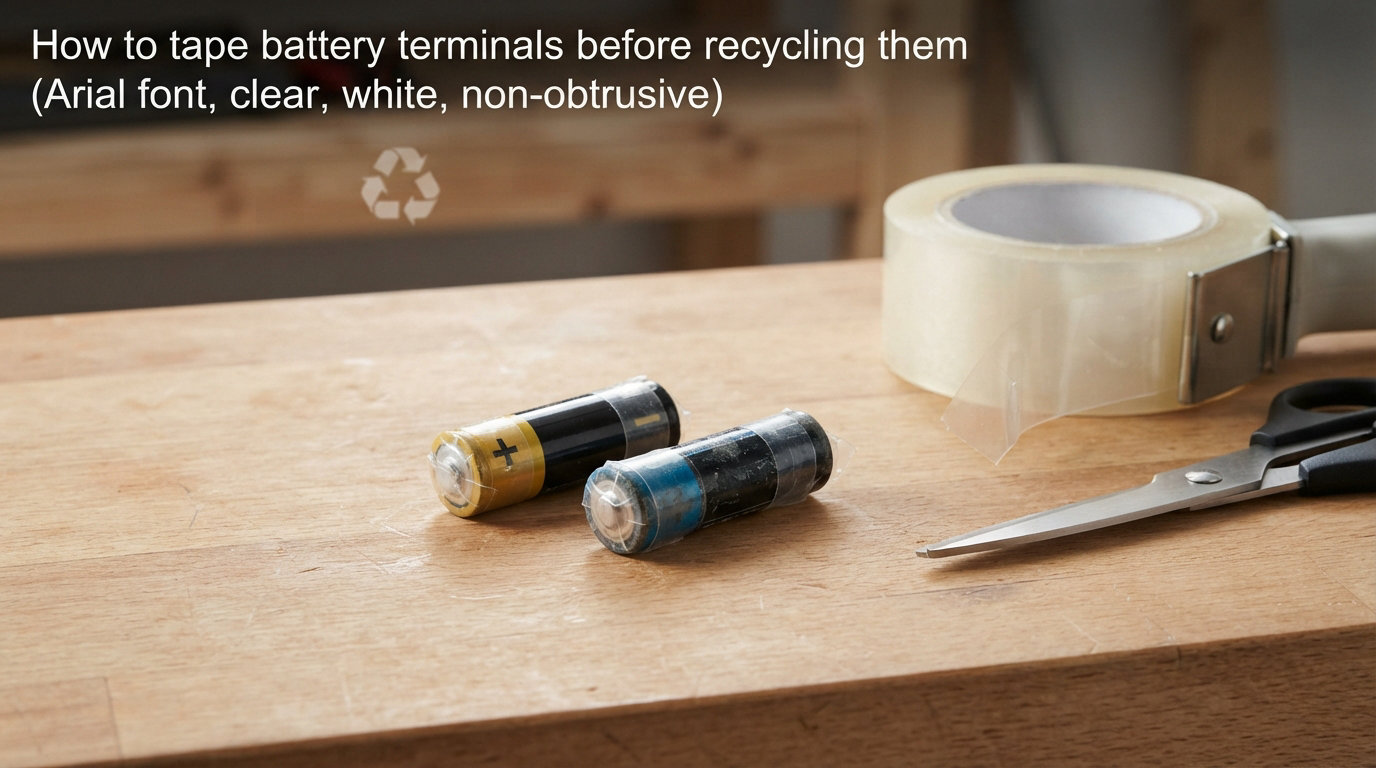
Tossing old batteries straight into a recycling bin without covering the terminals is one of the most common mistakes people make at home. A single loose 9-volt or lithium-ion cell can short circuit against another battery or a piece of metal, spark a fire, and destroy an entire recycling facility. Learning how to tape battery terminals before recycling them takes less than a minute per battery and can prevent serious damage.
In this guide, I will walk you through exactly which batteries need taping, what kind of tape works best, and the step-by-step process I use to prepare used batteries for safe recycling. By the end, you will know how to handle everything from button cells to 9-volt batteries with confidence.
Whether you have a handful of dead AA batteries or a drawer full of old laptop and vape batteries, this information matters. Recycling centers and waste haulers increasingly require terminal protection, and in some areas it is mandatory by 2026.
Table of Contents
Why You Need to Tape Battery Terminals Before Recycling?
Taping battery terminals prevents short circuits, and short circuits are the leading cause of battery fires in recycling trucks and processing plants. When the positive and negative ends of a battery come into contact with metal objects, other batteries, or conductive materials, the battery can rapidly discharge and overheat. That heat buildup can ignite a fire within seconds.
Lithium-ion batteries are especially dangerous because they carry a large amount of energy in a compact package. Even a battery that reads dead on a meter can hold enough residual charge to spark. Fire departments across the country reported a sharp increase in lithium battery fires in 2026, and many of those incidents started in household recycling or garbage bins.
The risk is not theoretical. I have seen reports of garbage trucks catching fire mid-route because a loose battery shorted against a soda can. Recycling facilities have been forced to shut down for days after a single battery ignited a pile of sorted materials. The simple act of placing tape over the terminals breaks the circuit and eliminates the danger.
Battery recyclers also require terminal protection because their sorting machines use magnets, conveyors, and metal detectors. Exposed terminals can trigger false readings or cause batteries to stick together during processing. Taping the ends keeps everything flowing smoothly and safely through the system.
Which Batteries Need Terminal Taping
Not every battery needs taping, but the ones that do can cause the most damage. As a general rule, any battery with a lithium chemistry, exposed terminals, or a voltage above 1.5 volts per cell should have its terminals covered before recycling.
Here is a breakdown of which batteries require terminal protection and which ones generally do not:
Lithium-ion batteries: Always tape. These power laptops, phones, vapes, power tools, and electric toothbrushes. They hold significant residual energy even when they appear dead.
Single-use lithium batteries: Always tape. These include AA and AAA lithium batteries, often marketed as long-lasting or high-performance cells.
9-volt batteries: Always tape. The positive and negative terminals are located side by side on the same end, making them extremely easy to short circuit against a coin, key, or piece of foil.
Button cell and coin cell batteries: Always tape. Found in watches, hearing aids, key fobs, and greeting cards, these small batteries are a serious ingestion hazard for children and can short circuit when stacked.
Rechargeable NiMH and Ni-Cd batteries: Tape recommended. These include AA and AAA rechargeables used in cameras and gaming controllers.
Sealed lead-acid batteries: Tape terminals or place in a plastic bag. These power UPS backup units and some emergency lighting.
Standard alkaline AA and AAA batteries: Generally do not require taping in most areas. However, some local recycling programs still request it. Check your local guidelines.
When in doubt, tape. The cost of a few inches of clear tape is negligible compared to the damage a battery fire can cause. I always err on the side of caution and tape anything I am uncertain about.
What Type of Tape to Use for Battery Terminals
Clear packing tape is the best all-around choice for taping battery terminals. It is non-conductive, strong enough to stay in place, and transparent enough that recycling workers can still see the battery type and chemistry label underneath. Wayne State University’s safety office specifically recommends clear tape so that waste disposal companies can identify the battery chemistry during sorting.
Here are the tape options ranked by suitability:
Clear packing tape (top choice): Non-conductive, transparent, widely available, and strong. Recyclers can identify the battery type through it.
Clear Scotch tape (good alternative): Works well for small button cells and coin batteries. Less durable than packing tape but perfectly non-conductive.
Electrical tape (acceptable): Non-conductive and designed for electrical use, but it is opaque and hides the battery label. Use it only if clear tape is unavailable.
Duct tape (not recommended): While non-conductive, the adhesive can leave residue and the opacity hides battery identification marks.
Masking tape (avoid): It can dry out, peel off during transport, and may not provide reliable insulation. Competitors and safety experts consistently warn against it.
The transparency of clear tape is not just a convenience. Recycling facilities sort batteries by chemistry because different types require different processing methods. If the label is covered with opaque tape, workers may have to peel it off manually, which slows down operations and increases handling risk.
I keep a roll of clear packing tape in the same drawer where I store dead batteries. That way, I can tape each battery the moment I remove it from a device rather than waiting until recycling day.
How to Tape Battery Terminals Before Recycling Them
Taping a battery terminal is simple, but doing it correctly ensures the tape stays in place and fully covers the contact points. Follow these steps to tape battery terminals before recycling them safely and effectively.
Step 1: Identify the terminals. On most cylindrical batteries like AA and AAA, the positive terminal is the raised button at the top and the negative terminal is the flat end at the bottom. On a 9-volt battery, both terminals are on the same end. On button cells, one side is positive and the other is negative.
Step 2: Cut a piece of clear tape. Tear off a strip of clear packing tape or Scotch tape about 2 to 3 inches long. You want enough tape to fully cover the terminal and wrap slightly around the body of the battery for a secure hold.
Step 3: Cover the positive terminal first. Place the tape squarely over the positive end, pressing down firmly to eliminate air bubbles. Make sure the entire metal contact surface is covered with no gaps.
Step 4: Cover the negative terminal. Repeat the process on the opposite end. For cylindrical batteries, the flat negative end is just as capable of completing a circuit as the positive end, so both need coverage.
Step 5: Press and smooth the tape. Run your thumb firmly around the edges of the tape to ensure it adheres completely. A loose edge can catch on other objects during transport and peel off, leaving the terminal exposed.
Step 6: Store the battery safely. Place the taped battery in a non-conductive container, such as a plastic bin or the original packaging. Keep it away from heat sources and metal objects until you can take it to a recycling drop-off point.
Step 7: Verify before dropping off. Before placing batteries in a recycling bin or taking them to a collection point, do a quick visual check. Every terminal should be fully covered, and no metal should be visible at the contact points.
How to Tape Different Battery Types?
Different battery shapes require slightly different taping techniques. Here is how I handle the most common types.
9-volt batteries: Both terminals sit side by side on the top end. Place a single piece of clear tape across the entire top, covering both the positive and negative posts completely. The terminals are recessed, so press the tape firmly into the cavity to ensure full contact coverage. Never cap a 9-volt terminal with just the cap from a new battery, because those caps fall off easily during transport.
Button cell and coin cell batteries: These are small and round, with the entire top surface serving as one terminal and the bottom as the other. The most effective method is to wrap a single piece of tape around the entire edge so it covers both sides. Some recyclers recommend placing multiple button cells side by side and taping across them all at once, but never stack them on top of each other before taping. Stacking creates exactly the kind of contact that can cause a short circuit.
AA and AAA lithium batteries: Tape the positive button end and the flat negative end separately, just as you would with any cylindrical battery. Even though single-use lithium AA batteries look identical to alkaline ones, they carry more energy and absolutely require terminal protection.
Laptop and power tool battery packs: These contain multiple lithium-ion cells wired together inside a plastic housing. Tape over any exposed metal contact points on the connector. If the plastic casing is cracked, swollen, or damaged, place the entire pack inside a clear plastic bag and take it to a specialized electronics recycler immediately. Do not attempt to open the pack.
Rechargeable battery packs with wire leads: Tape the exposed metal ends of the wires individually. If the connector has multiple pins, cover the entire connector surface with a single piece of tape.
Common Mistakes to Avoid When Taping Batteries
Even well-meaning people make errors when preparing batteries for recycling. Here are the most common mistakes I see and how to avoid them.
Taping batteries together: Never wrap tape around two or more batteries as a group. This presses their terminals against each other and can create the exact short circuit you are trying to prevent. Always tape each battery individually.
Using masking tape: Masking tape dries out and peels off over time, especially in warm storage conditions. It may provide temporary coverage but can fail before the battery reaches a recycler.
Covering the entire battery label: Opaque tape that hides the chemistry label makes sorting difficult for recycling facilities. Stick with clear tape whenever possible so workers can identify the battery type.
Over-taping: Wrapping a battery in layer after layer of tape is unnecessary and wasteful. A single layer that fully covers the terminals is sufficient.
Forgetting damaged batteries: Swollen, leaking, or cracked batteries need special handling. Place them in a sealed plastic bag and contact a hazardous waste facility rather than taping and tossing them into a standard recycling bin.
Tossing alkaline and lithium batteries together: Mixing battery chemistries in the same container increases the risk of a reaction. Keep lithium batteries separate from alkaline ones whenever possible.
Safe Storage Tips Before Recycling
Most households accumulate batteries over months before making a trip to a recycling center. Storing them safely during that time is just as important as taping them correctly.
Keep taped batteries in a cool, dry place away from direct sunlight and heat sources. A plastic container with a lid works well, and I prefer one with individual compartments so batteries do not jostle against each other. Avoid metal containers, which can conduct electricity if a terminal becomes exposed.
Store lithium-ion batteries at roughly 40 to 50 percent charge if possible. Fully charged cells carry more energy and present a greater fire risk during storage. Never store batteries in a pile or loose in a bag where they can shift and make contact.
If you are storing batteries for an extended period, check on them every few weeks. Look for signs of swelling, leakage, or tape that has come loose. Replace any tape that has peeled and re-bag any damaged batteries.
FAQs
Should you tape battery terminals before disposal?
Yes. Taping battery terminals before disposal prevents short circuits that can cause fires in recycling trucks, processing facilities, and storage containers. Most recycling programs require terminal protection for lithium-ion, 9-volt, and button cell batteries.
What kind of tape is best for battery terminals?
Clear packing tape is the best choice because it is non-conductive, stays securely in place, and remains transparent so recycling workers can identify the battery chemistry. Clear Scotch tape works well for small button cells, while electrical tape is acceptable if clear tape is unavailable.
Can I throw batteries in the trash if I tape them?
Taping batteries does not make them safe for the regular trash. Taped batteries should still go to a designated recycling drop-off point or collection program. In many states, it is illegal to dispose of rechargeable and lithium batteries in household garbage.
Should you tape battery terminals together?
No, never tape two batteries together as a pair or group. Doing so presses their terminals against each other and can create a short circuit. Always tape each battery individually, covering the terminals on one battery at a time.
How do you tape a battery terminal step by step?
First identify the positive and negative terminals. Cut a 2 to 3 inch piece of clear tape. Place the tape over the positive terminal, press firmly to remove air bubbles, then repeat on the negative terminal. Smooth the edges so the tape adheres completely, then store the battery in a non-conductive container until recycling.
Conclusion
Knowing how to tape battery terminals before recycling them is a small habit that prevents serious fires, protects recycling workers, and keeps hazardous materials out of landfills. Clear packing tape, a few seconds per battery, and a safe storage container are all you need to do it right.
Remember the essentials: tape each battery individually, use clear tape so the chemistry label stays visible, cover both terminals completely, and never tape two batteries together. When in doubt about whether a battery needs taping, tape it anyway.
Your next step is to gather your used batteries, grab a roll of clear packing tape, and work through them one at a time. Then find a local recycling drop-off using resources like Call2Recycle or Earth911 to ensure your batteries reach the right facility for proper processing.