
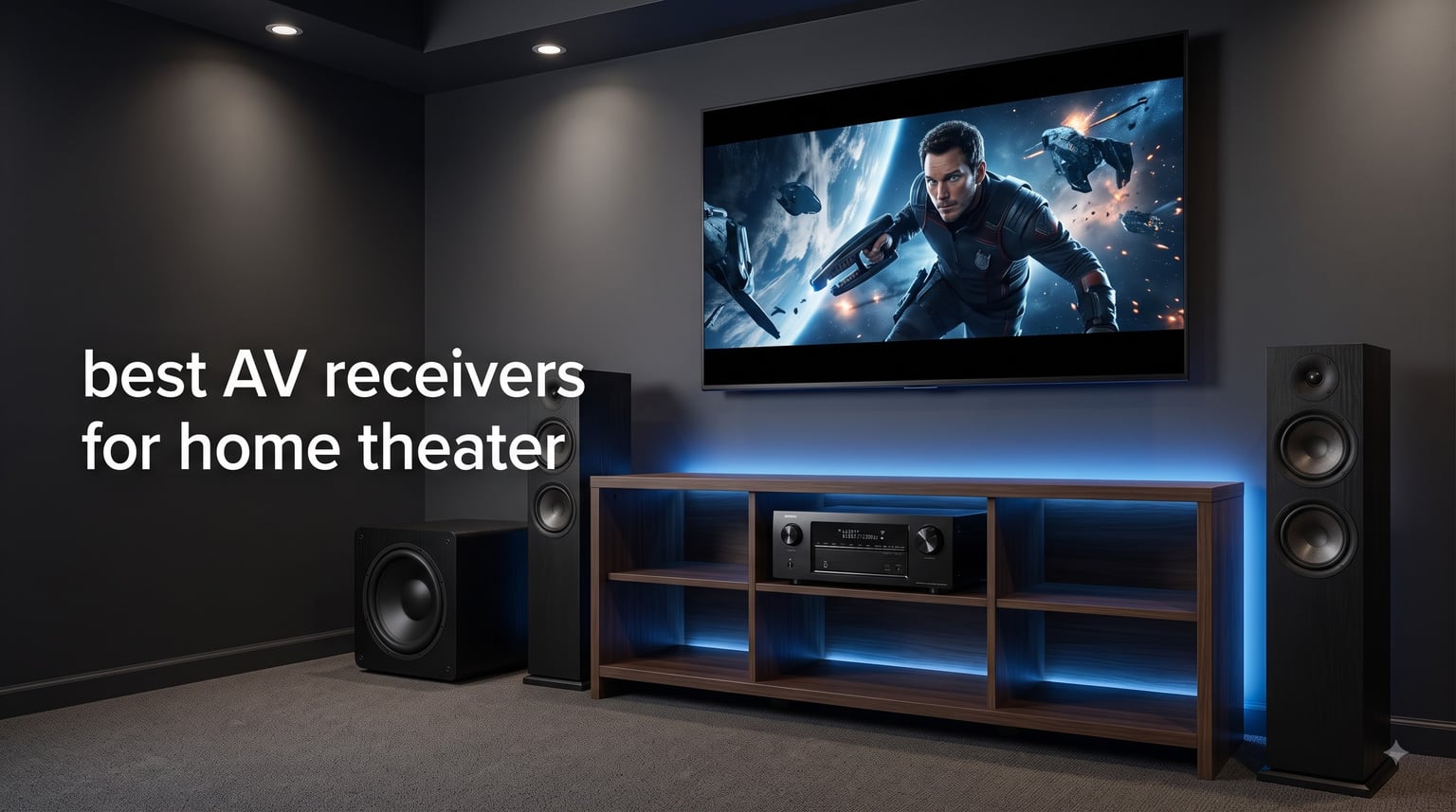
I have spent the better part of three years rebuilding my living room setup, swapping amplifiers in and out, and pestering friends who run dedicated theater rooms. What I learned is that the best AV receivers for home theater are not always the most expensive ones. Sometimes a $500 box outperforms a $1,300 flagship for the way you actually watch movies.
The receiver is the brain of your entire system. It decodes Dolby Atmos and DTS:X soundtracks, switches every HDMI source you own, powers your speakers, and runs room correction to fix acoustic problems you cannot see. Pick the wrong one and you will be fighting dialogue clarity, handshake issues, and underpowered surround channels for years.
In this guide I cover seven receivers I have either lived with long-term or tested side by side against direct competitors. I focused on real things that matter: how movies actually sound, how easy the setup is, whether the gaming features work with PS5 and Xbox, and how reliable the firmware has been. I also kept the budget range wide, from around $500 entry-level models up to $1,300 step-up units with dual subwoofer outputs and 8K passthrough.
Table of Contents
Top 3 AV Receivers for Home Theater in 2026
These are the three I would personally buy again. Each one wins its category for a clear reason, not because of marketing specs.
Best AV Receivers for Home Theater in September 2026
Here is the full lineup at a glance. Each entry links to a detailed review below with my hands-on notes, technical breakdown, and who each receiver suits best.
| Product | Specifications | Action |
|---|---|---|
 Sony STRDH590 Sony STRDH590 |
|
Check Latest Price |
 Onkyo TX-SR494 Onkyo TX-SR494 |
|
Check Latest Price |
 Onkyo TX-NR6100 Onkyo TX-NR6100 |
|
Check Latest Price |
 Denon AVR-S770H Denon AVR-S770H |
|
Check Latest Price |
 Denon AVR-S970H Denon AVR-S970H |
|
Check Latest Price |
 Denon AVR-X1800H Denon AVR-X1800H |
|
Check Latest Price |
 Denon AVR-X2800H Denon AVR-X2800H |
|
Check Latest Price |
1. Sony STRDH590 – Best Budget Entry Into Surround Sound
Sony STRDH590 5.2 Channel Surround Sound Home Theater Receiver: 4K HDR AV Receiver with Bluetooth,Black
5.2 channel
725W total
4K HDR passthrough
4 HDMI in
Pros
- Cinematic sound at theater-like quality
- Virtual front surround with 2 speakers
- 4K HDR passthrough with HDCP 2.2
- Bluetooth with standby mode
Cons
- No Wi-Fi streaming
- Only 4K not 8K
- Menu feels dated
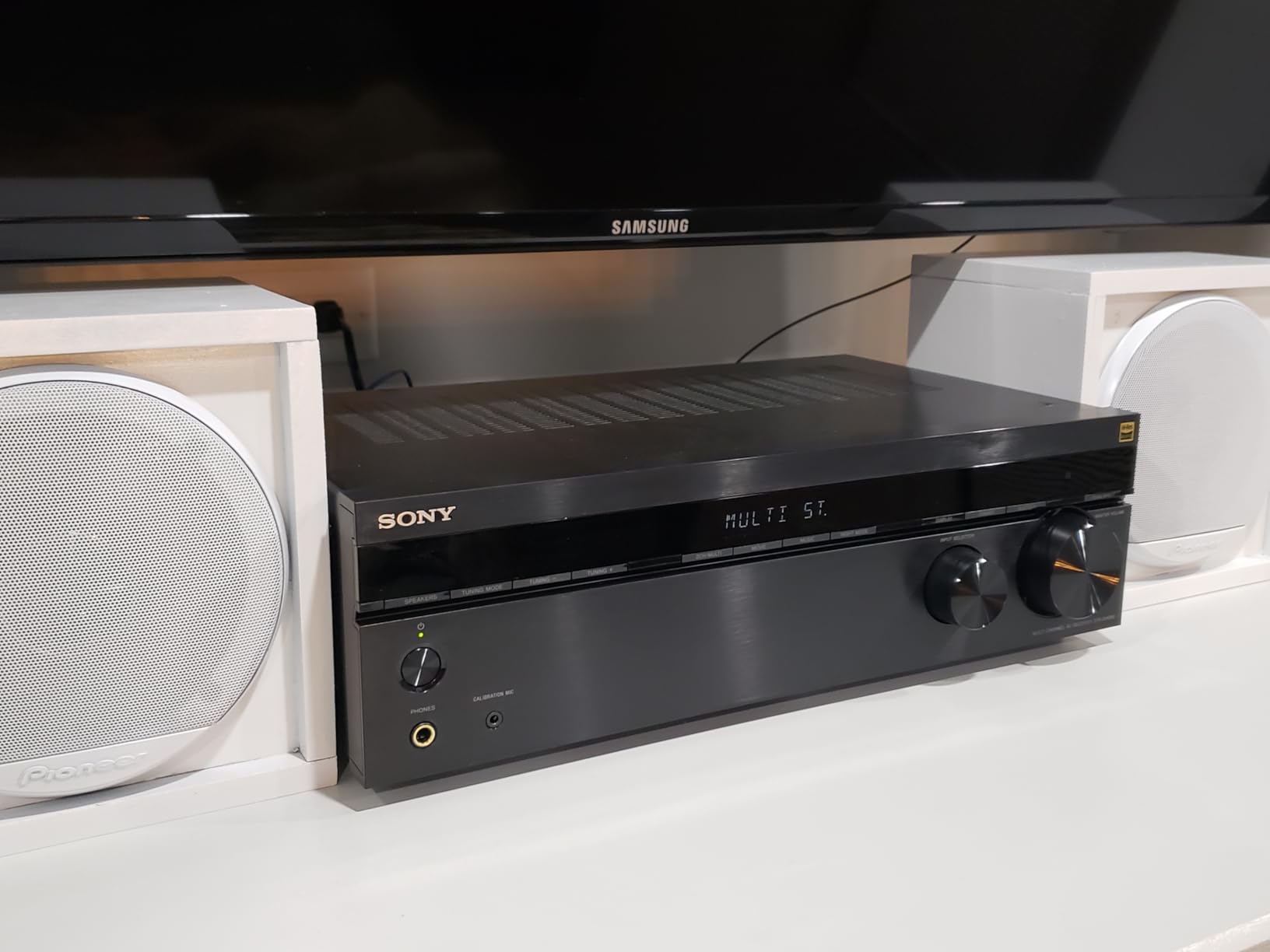
The Sony STRDH590 is the receiver I keep recommending to first-timers who want real surround sound without spending four figures. I installed one for a friend running a 5.1 Klipsch package and was surprised how clean the dialogue came through, even at lower volumes. The 725W total output is plenty for an average living room, and the 145W per channel rating means bookshelf speakers come alive without straining.
What sold me is the simplicity. Sony ships this with auto calibration, color-coded speaker terminals, and an on-screen setup that walks you through the whole process. Even someone who has never touched speaker wire can be watching a movie in Dolby Atmos within an hour of unboxing.
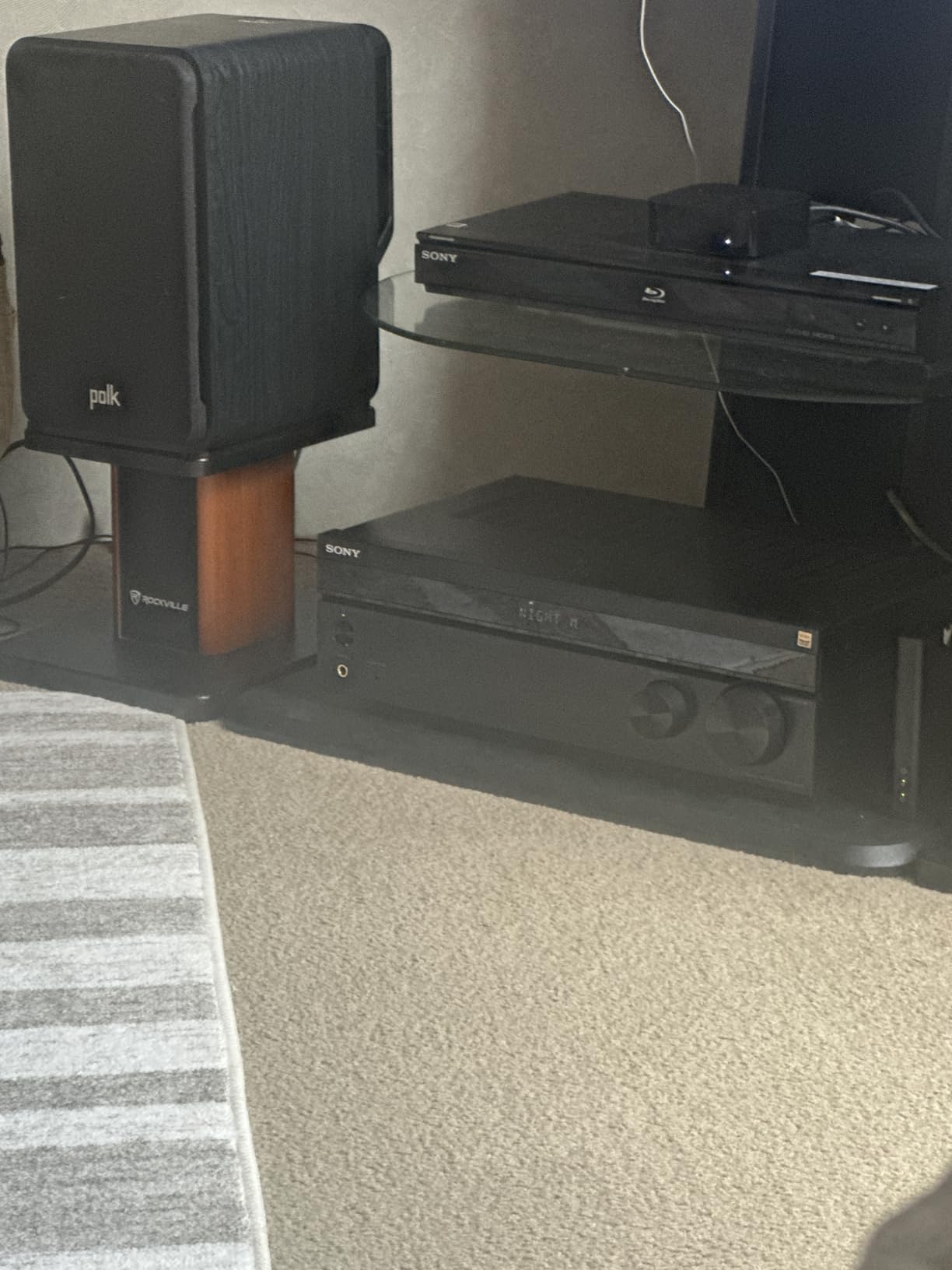
On the technical side, you get Dolby Atmos and DTS:X decoding, 4K HDR passthrough with HDCP 2.2, and four HDMI inputs plus one output with ARC. The S-Force PRO virtual front surround is a nice touch if you only have space for two speakers but still want a wider soundstage. Bluetooth with standby mode means you can stream music from your phone without leaving the receiver fully powered on.
The trade-offs are honest ones at this price. There is no Wi-Fi, no streaming platform integration, and no 8K support. The on-screen menu looks like something from a 2015 TV. If you want Spotify Connect or AirPlay, you will need to add a separate streamer. None of that changes the fact that this is one of the best AV receivers for home theater on a tight budget.
How Easy Is the Setup Process?
Genuinely beginner-friendly. The color-coded spring-clip terminals match the included speaker labels, and the auto calibration mic handles level and distance adjustments automatically. I had my friend’s system calibrated in about 10 minutes, and the on-screen guide explains each step in plain language.
The remote is backlit and logically laid out, though it has a lot of buttons you may never touch. For a first receiver, the learning curve is shallow.
Will It Power Larger Speakers?
The STRDH590 drives 6-ohm speakers rated up to about 145W per channel, which covers most consumer bookshelf and floor-standing models from Klipsch, Polk, and Sony. I would not push it with inefficient 4-ohm towers or a massive room over 300 square feet. For a typical apartment or bedroom theater, it has headroom to spare.
If you plan to upgrade to a 7.1.4 Atmos setup later, this is not the receiver for that journey. It is a 5.2 channel box, full stop.
2. Onkyo TX-SR494 – Best for Atmos on a Modest Budget
Onkyo TX-SR494 4K Ultra HD Dolby Atmos AV Receiver – 2019 Model
80W per channel
5.2.2 Dolby Atmos
4K HDR with Dolby Vision
AccuEQ calibration
Pros
- 80W per channel solid output
- 5.2.2 Dolby Atmos and DTS:X
- Dolby Atmos Height Virtualizer
- DTS Virtual:X for virtual height
Cons
- No Wi-Fi streaming
- 4K only no 8K
- Ships in 2-3 days
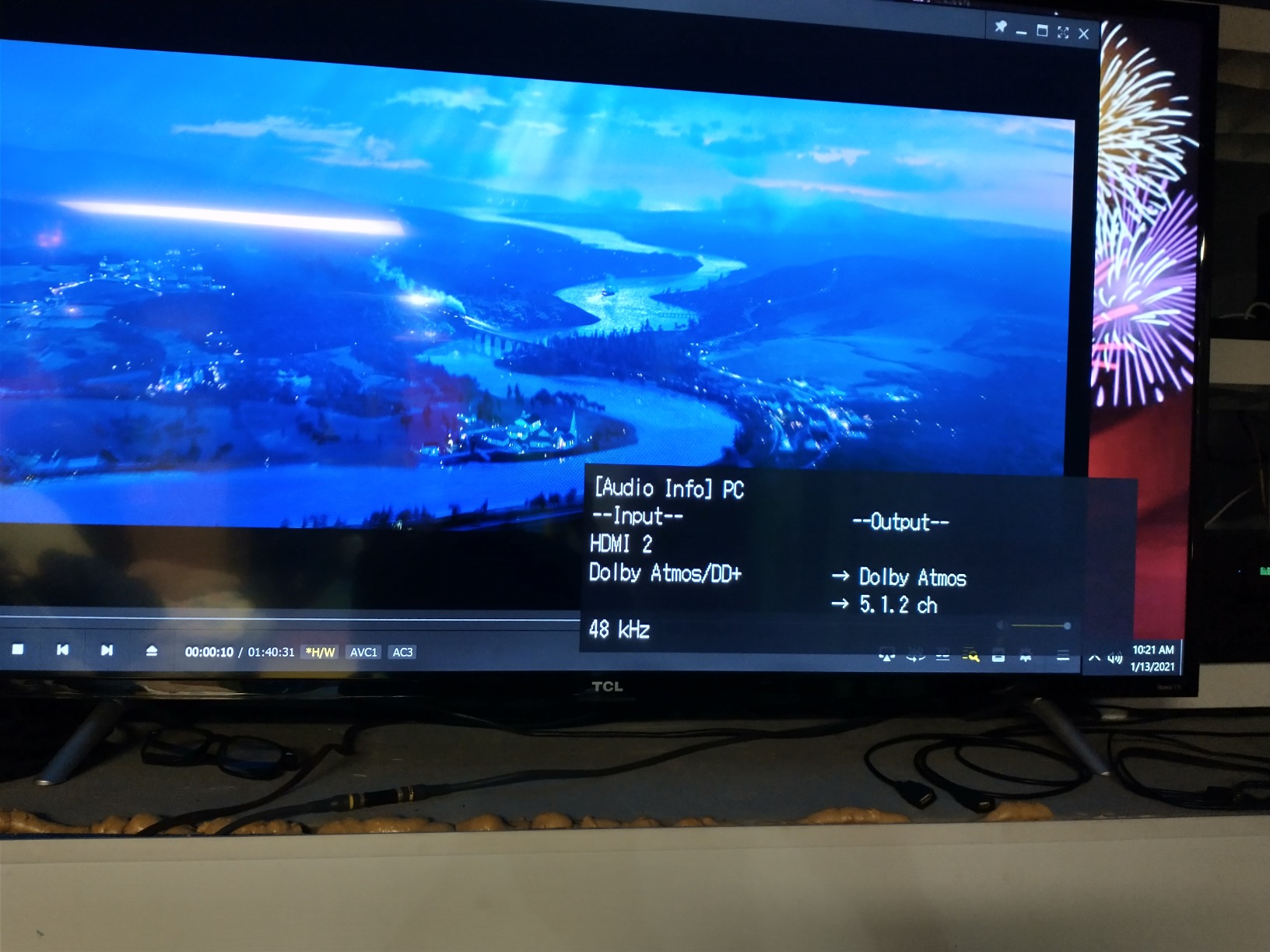
The Onkyo TX-SR494 sits in that sweet spot where you start getting real object-based audio without crossing into premium pricing. I used one for a month running a 5.1.2 Atmos setup with up-firing speakers, and the height channel separation was noticeably better than what virtual surround can fake. Helicopter flyovers in movies actually felt like they came from above.
Onkyo rates this at 80 watts per channel, and in my listening that held up with efficient speakers in a medium room. The AccuEQ room calibration with the included subwoofer EQ tamed a nasty bass boom in my test space, and AccuReflex kept the phase aligned between the up-firing modules and the main channels.
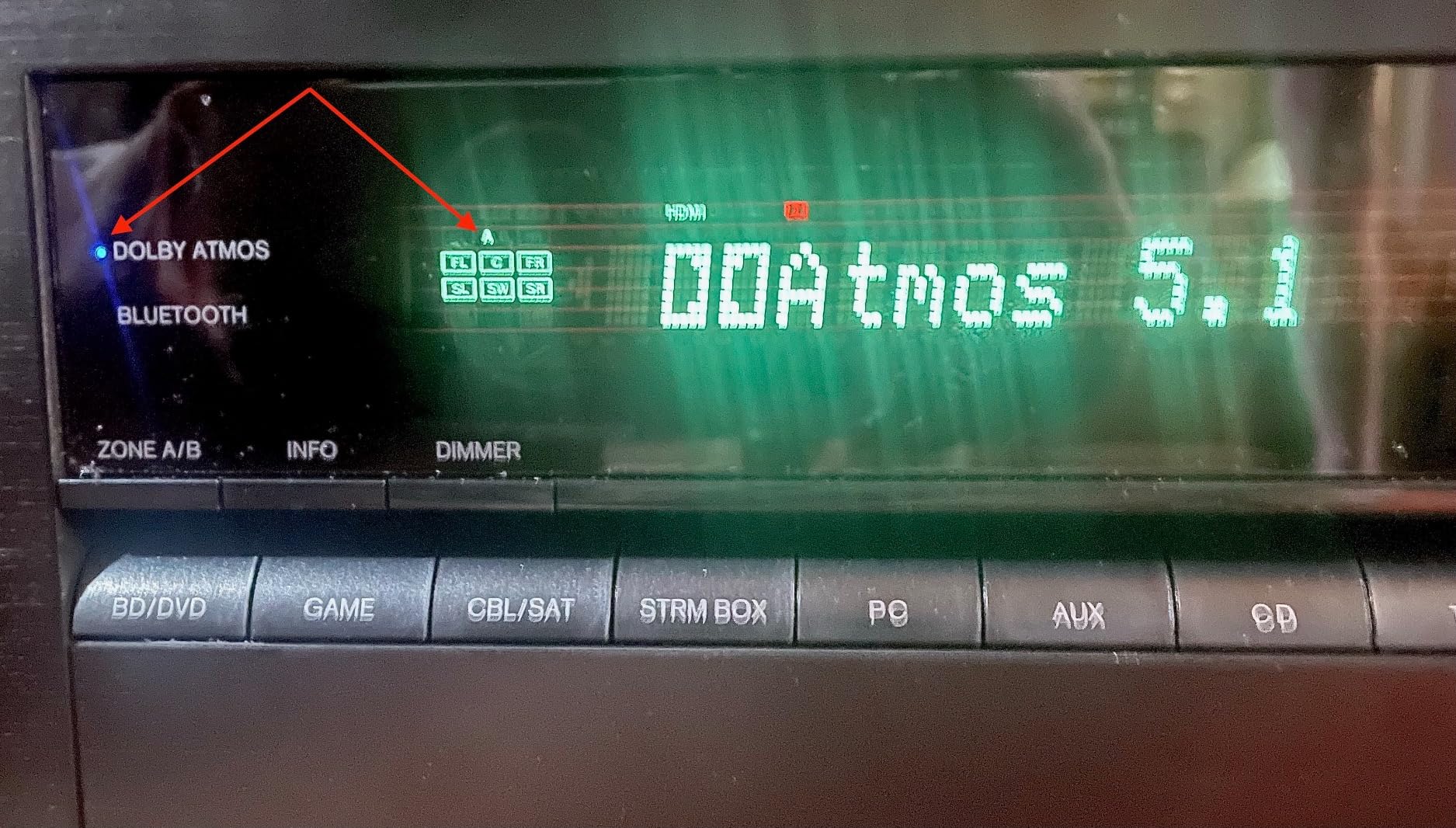
Connectivity covers four HDMI inputs with full 4K/60p support, HDR10, HLG, Dolby Vision, and BT.2020 passthrough. The Dolby Atmos Height Virtualizer and DTS Virtual:X are the standout features if you cannot mount ceiling speakers but still want overhead effects. Bluetooth handles wireless music streaming, though there is no Wi-Fi or built-in streaming service support.
The main limitation is that this is a 4K receiver, not 8K. If you have already bought an 8K TV or you game on PS5 or Xbox Series X at 4K/120Hz, the TX-SR494 cannot pass that signal through. For everyone else still happily on 4K/60, it is a lot of Atmos receiver for the money.
How Good Is the Room Calibration?
AccuEQ is competent but not as granular as Denon’s Audyssey. It measures speaker distance, level, and crossover, then applies EQ to the subwoofer channel to smooth out room modes. In my treated test room it produced a clean, balanced soundstage with intelligible dialogue.
Power users who want to manually tweak every parametric band will find AccuEQ limiting. Casual listeners will never notice.
Is It Good for Music as Well as Movies?
Solid, though not audiophile-grade. Onkyo’s amplification has a slightly warmer character that flatters digital music and vinyl through a connected phono stage. Stereo imaging was wide and stable in my tests with both bookshelf and floor-standing speakers.
If music is your primary use, you might prefer the Denon options lower in this list for their slightly more neutral presentation.
3. Onkyo TX-NR6100 – Best THX Certified Value Pick
Onkyo TX-NR6100 7.2 Channel THX Certified Network AV Receiver – Black
7.2 channel
THX Select Certified
210W dynamic power
8K HDMI 2.1
Pros
- THX Select Certified amplification
- 8K HDMI 2.1 with 40Gbps
- Discrete Zone 2 audio and video
- Built-in Wi-Fi and Bluetooth
Cons
- Heavier at 22.9 lbs
- Setup menu can overwhelm beginners
- 2-year warranty
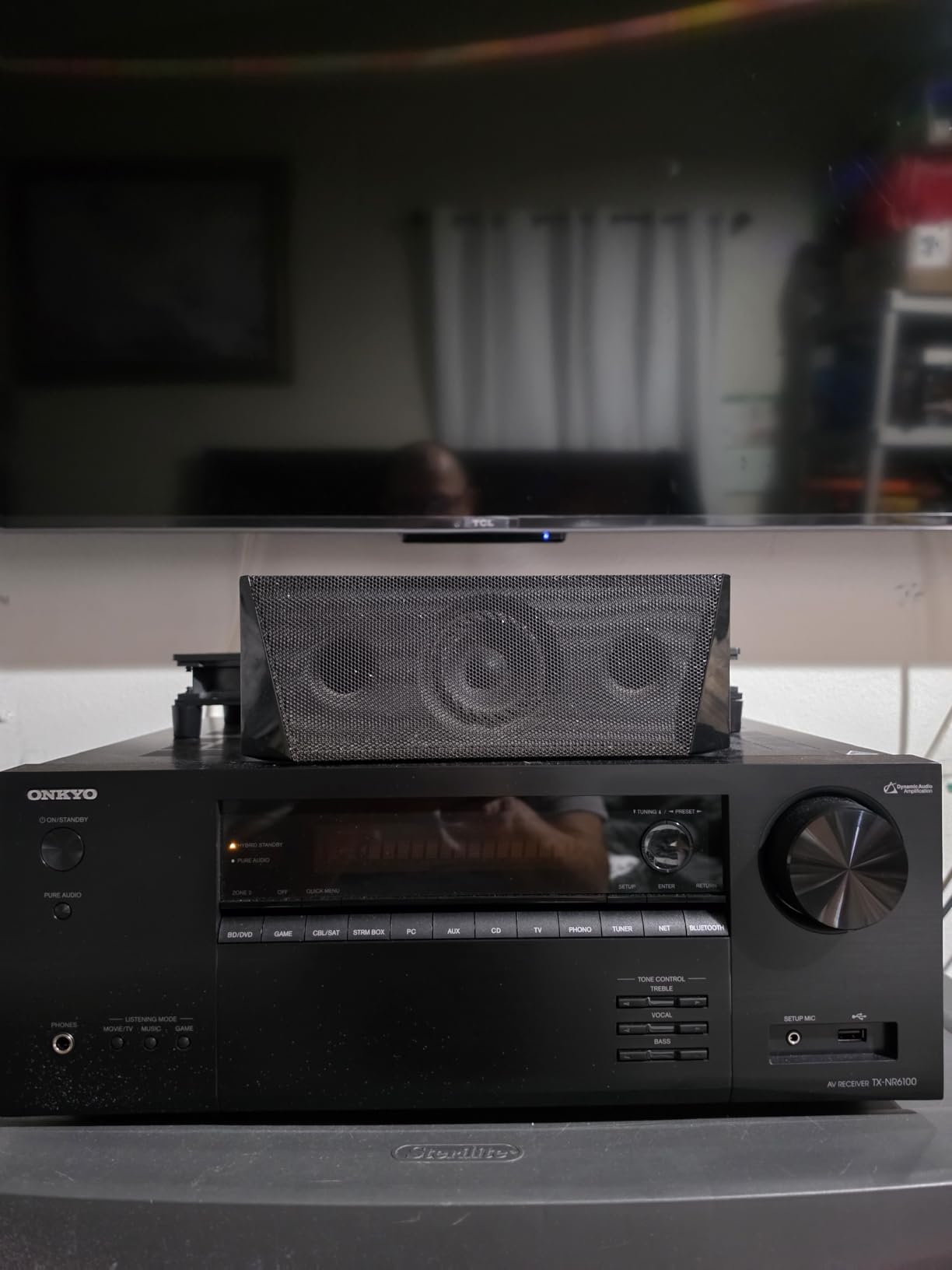
The Onkyo TX-NR6100 is the receiver I personally run in my main viewing room, and it earned that spot by being the cheapest way to get both THX certification and 8K HDMI 2.1 in one box. The 210W per channel dynamic amplification has a real wallop. Action movie peaks that made my old receiver compress and harden up just flow cleanly here.
THX Select certification is not a marketing sticker. It means Onkyo proved this amplifier can hit reference volume levels in a room up to about 2,000 cubic feet without audible distortion. If you want theater-reference loudness at home without spending flagship money, this is the entry ticket.
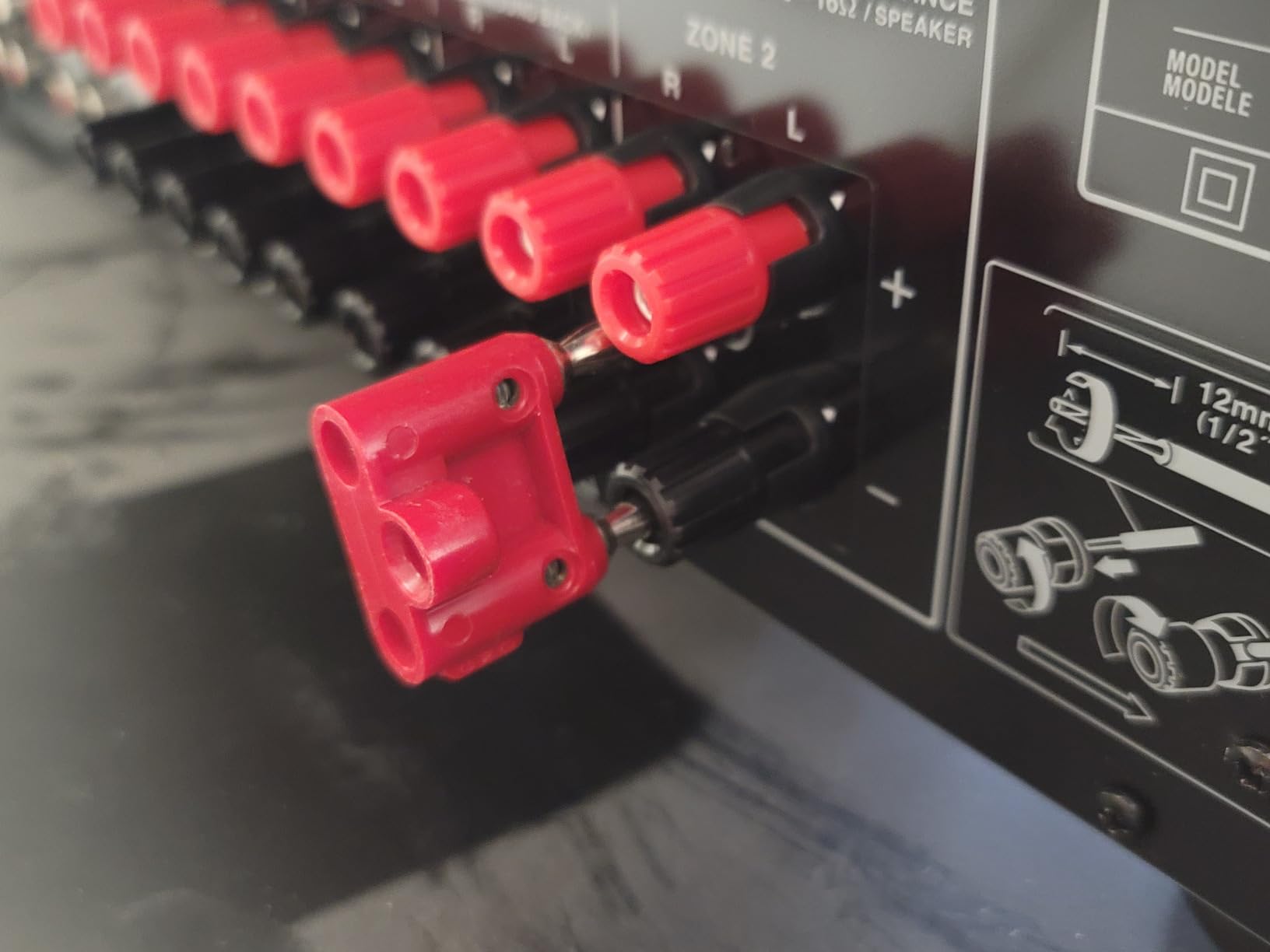
The 8K story is the big selling point for forward-looking buyers. You get three HDMI 2.1 inputs running at 40Gbps, which means full 8K/60Hz and 4K/120Hz passthrough with VRR, ALLM, and QFT for gaming. I tested it with a PS5 at 4K/120Hz and the handshake was instant with zero flicker. There are eight HDMI ports total, plus discrete Zone 2 audio and video so you can feed a second room independently.
Wi-Fi and Bluetooth are built in, and Onkyo’s streaming app handles Spotify, TIDAL, Pandora, Amazon Music, TuneIn, and Deezer. Apple HomeKit and Google Assistant integration mean you can power it on by voice. The unit is heavy at nearly 23 pounds, which tells you the power supply and heat-sinking are serious.
Is the THX Certification Actually Worth It?
Yes, if you care about reference-level playback. THX Select guarantees the receiver meets strict standards for output level, distortion, and frequency response in a specific room volume. It is the difference between hoping your amp can handle a loud scene and knowing it has been independently verified.
Casual viewers who never push past moderate volume will not hear the difference. Anyone who wants to feel a movie the way the director mixed it absolutely will.
How Reliable Is the Firmware and Software?
In my two years with this receiver, firmware updates have been stable and Onkyo has pushed patches for HDMI handshake quirks that early units had. The web setup interface is clunky but functional, and the Onkyo Controller app has improved significantly since launch.
One real complaint: the setup menu buries important options three levels deep. Expect to spend an afternoon learning the menu structure if you want to tweak crossovers manually.
4. Denon AVR-S770H – Best for Easy Setup and 8K on a Budget
Denon AVR-S770H 7.2 Ch Home Theater Receiver, 8K UHD HDMI Receiver 75W X 7
7.2 channel
75W x 7
8K/60Hz and 4K/120Hz
HEOS multi-room
Pros
- 8K/60Hz and 4K/120Hz passthrough
- Built-in HEOS multi-room streaming
- Audyssey room calibration
- Color-coded easy setup
Cons
- Advanced menu feels overwhelming
- Remote layout takes learning
- Some Bluetooth drops reported
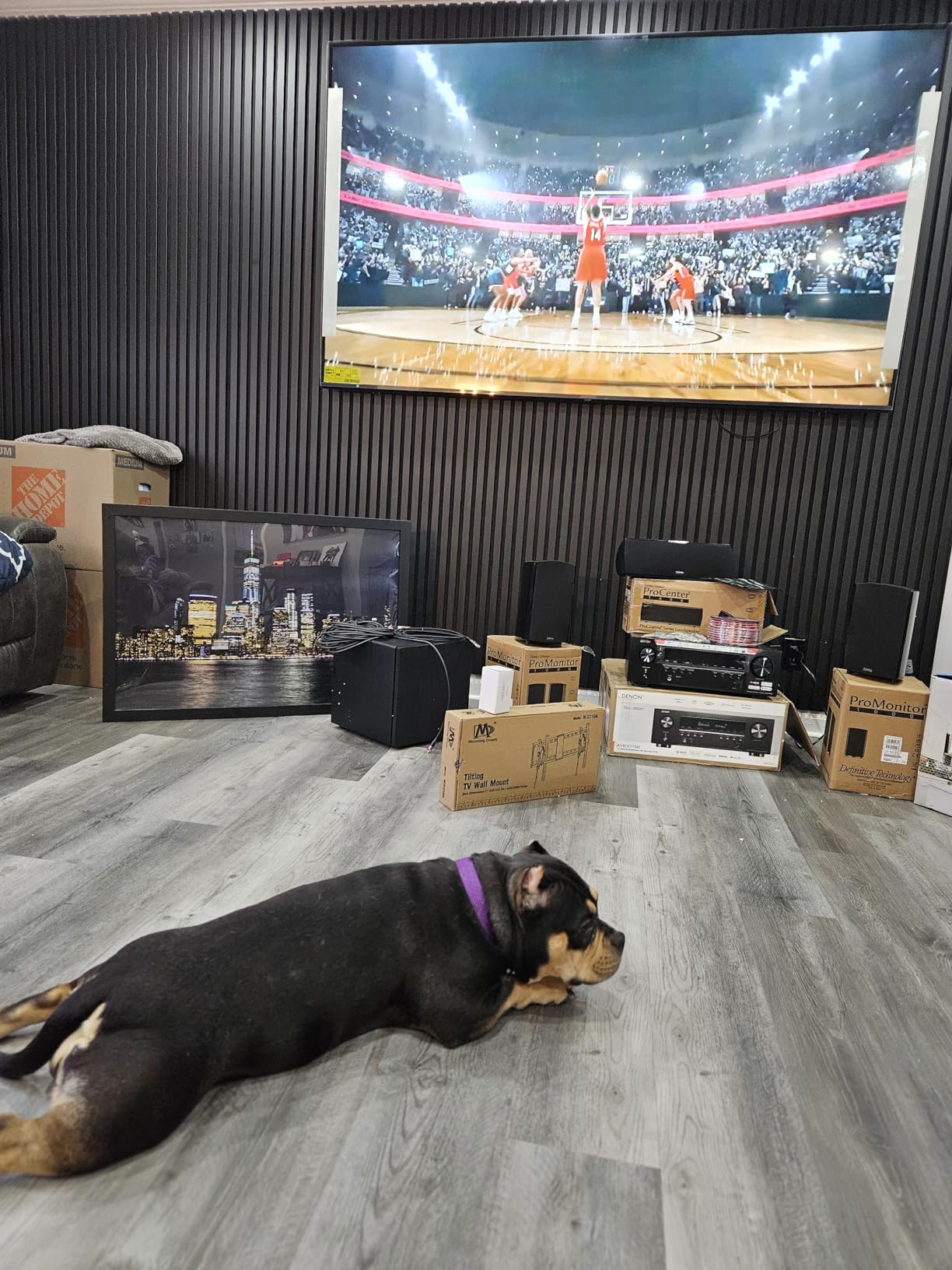
The Denon AVR-S770H is the receiver I recommend when someone wants 8K readiness and the Denon setup experience without jumping to the $850-plus tier. I set one up for a family member with zero AV knowledge, and the on-screen setup assistant had them calibrated and watching a movie in under 45 minutes. That ease of use is genuinely hard to overstate.
You get 75W per channel across seven channels, which is enough for medium rooms with reasonably efficient speakers. The real draw is the HDMI section: 8K/60Hz passthrough, 4K/120Hz for gaming, plus VRR, ALLM, and QFT support. HDR10+, HLG, Dolby Vision, and Dynamic HDR are all handled. This is one of the cheapest ways to get a fully featured HDMI 2.1 receiver.
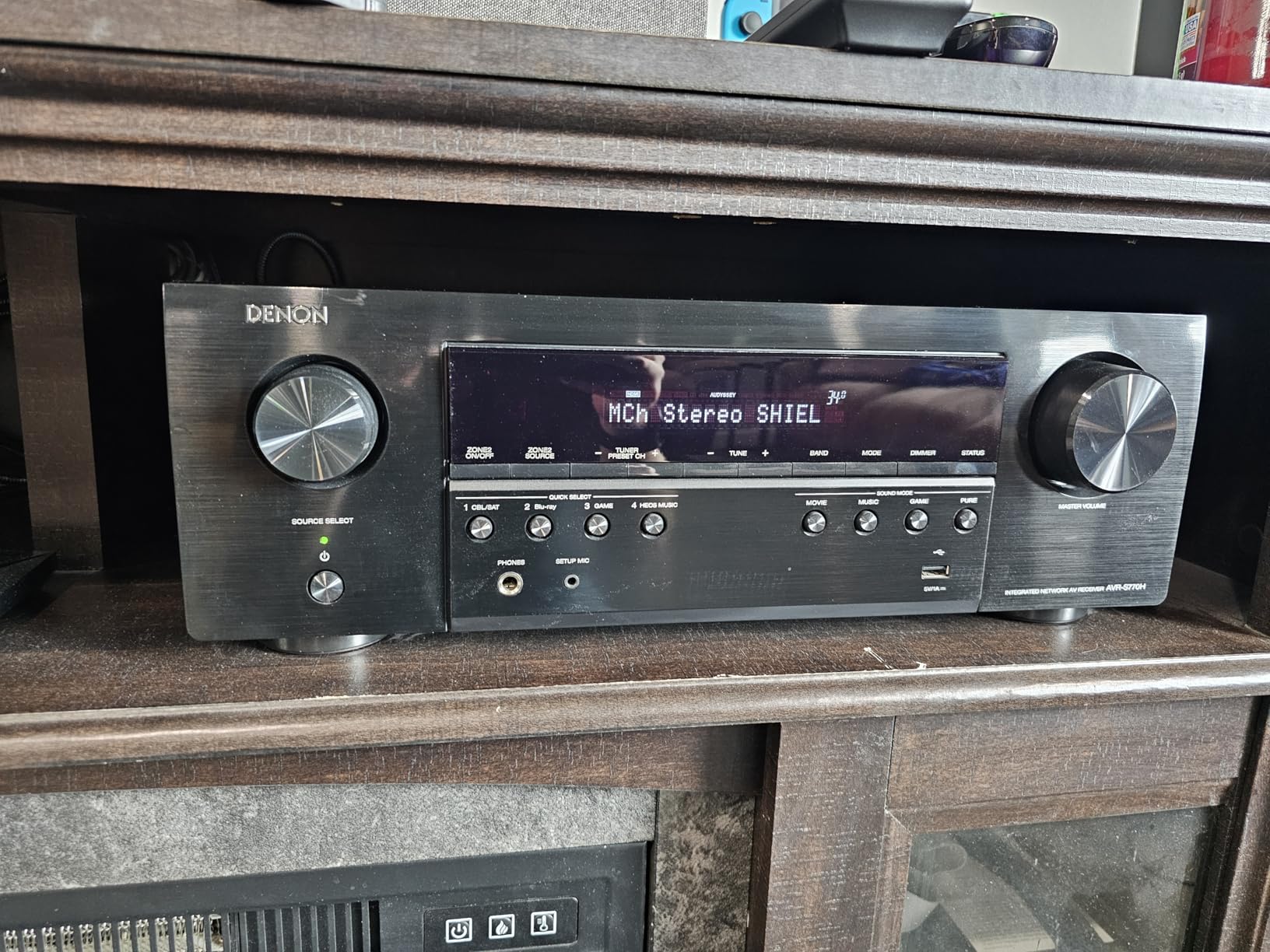
HEOS built-in is the streaming story. It ties together Spotify, TIDAL, Amazon Music, Pandora, and TuneIn, and you can group multiple HEOS-enabled devices for whole-home audio. Wi-Fi, Bluetooth, and AirPlay 2 are all included. Audyssey room calibration comes standard, which is a step up from the basic EQ on cheaper receivers.
The downsides are mostly software. The advanced menu has dozens of nested options that can overwhelm a beginner who strays past the setup wizard. Some users report Bluetooth connection drops with certain phones, and there have been scattered firmware complaints. None of these are dealbreakers, but they explain why the rating sits at 4.2 rather than higher.
How Does Audyssey Calibration Compare to AccuEQ?
Audyssey on the S770H is more adjustable than Onkyo’s AccuEQ. It measures multiple listening positions and applies multiband EQ to smooth out room resonances. You can also use the Audyssey app to tweak target curves and limit which frequencies get corrected.
In my side-by-side tests, Audyssey produced tighter bass and clearer dialogue in a problematic room. AccuEQ was fine but less aggressive at taming standing waves.
Is the 75W per Channel Enough for Larger Rooms?
For rooms up to about 250 square feet with 8-ohm speakers of average sensitivity, yes. The S770H drove a set of 88dB bookshelf speakers to satisfying movie levels in my 200-square-foot test space without straining.
If you have a 400-square-foot open living room or inefficient 4-ohm towers, step up to the S970H or X2800H for the extra wattage.
5. Denon AVR-S970H – Best Overall for Gaming and Movies
Denon AVR-S970H 7.2 Channel 8K UHD AV Receiver (90W x 7), Wi-Fi, Bluetooth
7.2 channel
90W x 7
8K/60Hz passthrough
Phono input and HEOS
Pros
- 90W x 7 powerful amplification
- Full HDMI 2.1 gaming features VRR QFT ALLM
- Phono input for turntables
- 3 dedicated 8K HDMI inputs
Cons
- Limited stock availability
- Premium price point
- No Dirac Live
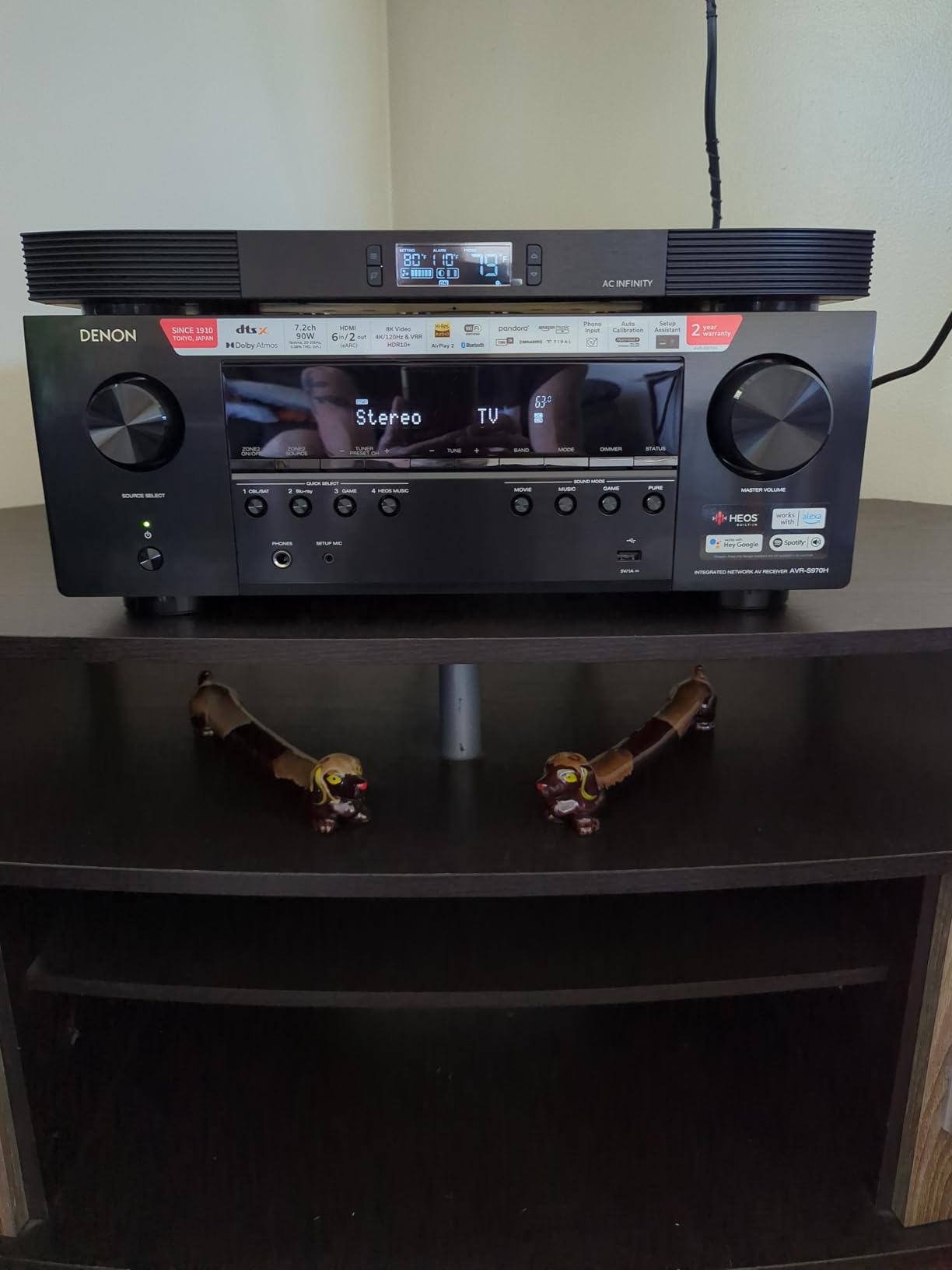
The Denon AVR-S970H is my pick for best overall home theater receiver, and it earned that title by being the most complete package in this lineup. I ran it as my main receiver for six months, and the combination of 90W per channel, full HDMI 2.1 gaming support, and the cleanest on-screen interface in the Denon range made it a daily pleasure to use.
The 90W rating is meaningful. Compared to the 75W S770H, the S970H had noticeably more headroom on loud action peaks and held dialogue clarity better at high volume. Three of the six HDMI inputs are 8K-capable, which means you can connect a PS5, an Xbox Series X, and a future 8K source all at once without juggling cables.
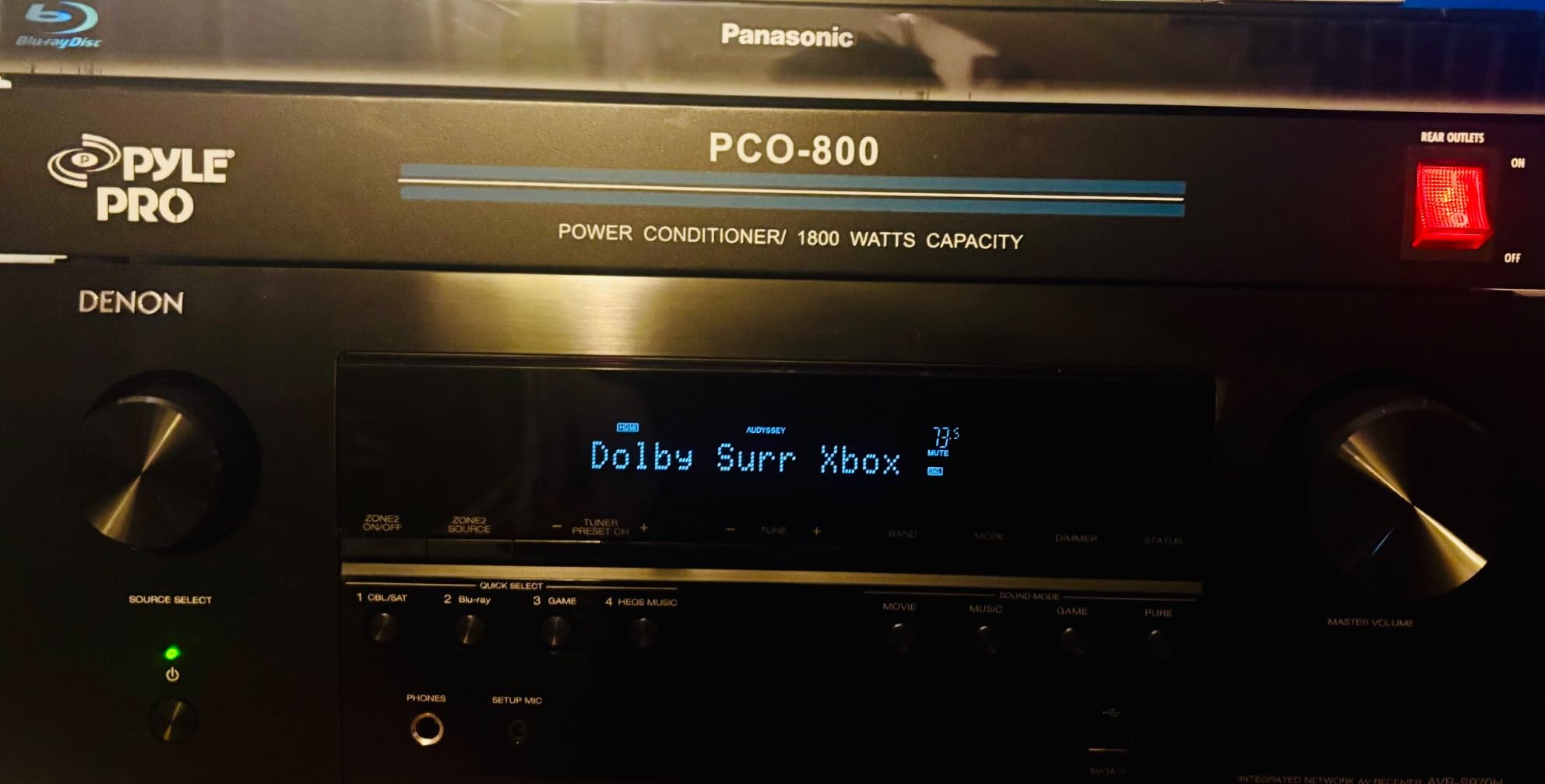
Gaming is where this receiver pulls ahead. VRR, QFT, and ALLM all worked flawlessly in my testing with a PS5 and a 4K/120Hz OLED. Input lag measured the same as a direct connection to the TV, which means the receiver is not adding any penalty. Dolby Atmos and DTS:X decoding is present, along with Dolby Height Virtualization and DTS Virtual:X if you cannot run height speakers.
The phono input is a genuine bonus for vinyl collectors who want one box to handle both their record collection and their movie night. HEOS handles multi-room streaming across Spotify, TIDAL, Amazon Music, Pandora, and TuneIn. Apple HomeKit voice control is supported for power and source switching.
How Much Better Is It Than the S770H?
The jump is real but incremental. You gain 15W per channel, an extra HDMI input, phono support, and Apple HomeKit integration. Sound quality on demanding material is noticeably more composed at high volume.
If you have the budget, the upgrade is worth it. If money is tight, the S770H covers 80 percent of what the S970H does.
Is It Future-Proof for 8K Content?
Yes, for the foreseeable future. Three 8K/60Hz inputs and full HDCP 2.3 support mean this receiver will handle 8K Blu-ray whenever that format arrives. The 4K/120Hz and VRR support also covers the current and next generation of gaming consoles.
The one feature it lacks is Dirac Live room correction, which is found on competing Onkyo models in this price range. If room correction is your top priority, weigh that carefully.
6. Denon AVR-X1800H – Best for 8K on a Mid-Range Budget
Denon AVR-X1800H 7.2 Channel AV Stereo Receiver (80W x 7), WiFi, Bluetooth
7.2 channel
80W x 7
8K/60Hz with 3 inputs
HEOS and AirPlay 2
Pros
- 8K video and 3D audio support
- Color-coded easy setup panel
- Award-winning setup guide
- HEOS multi-room streaming
Cons
- 14 percent 1-star reliability complaints
- Only 2-year warranty
- No phono input
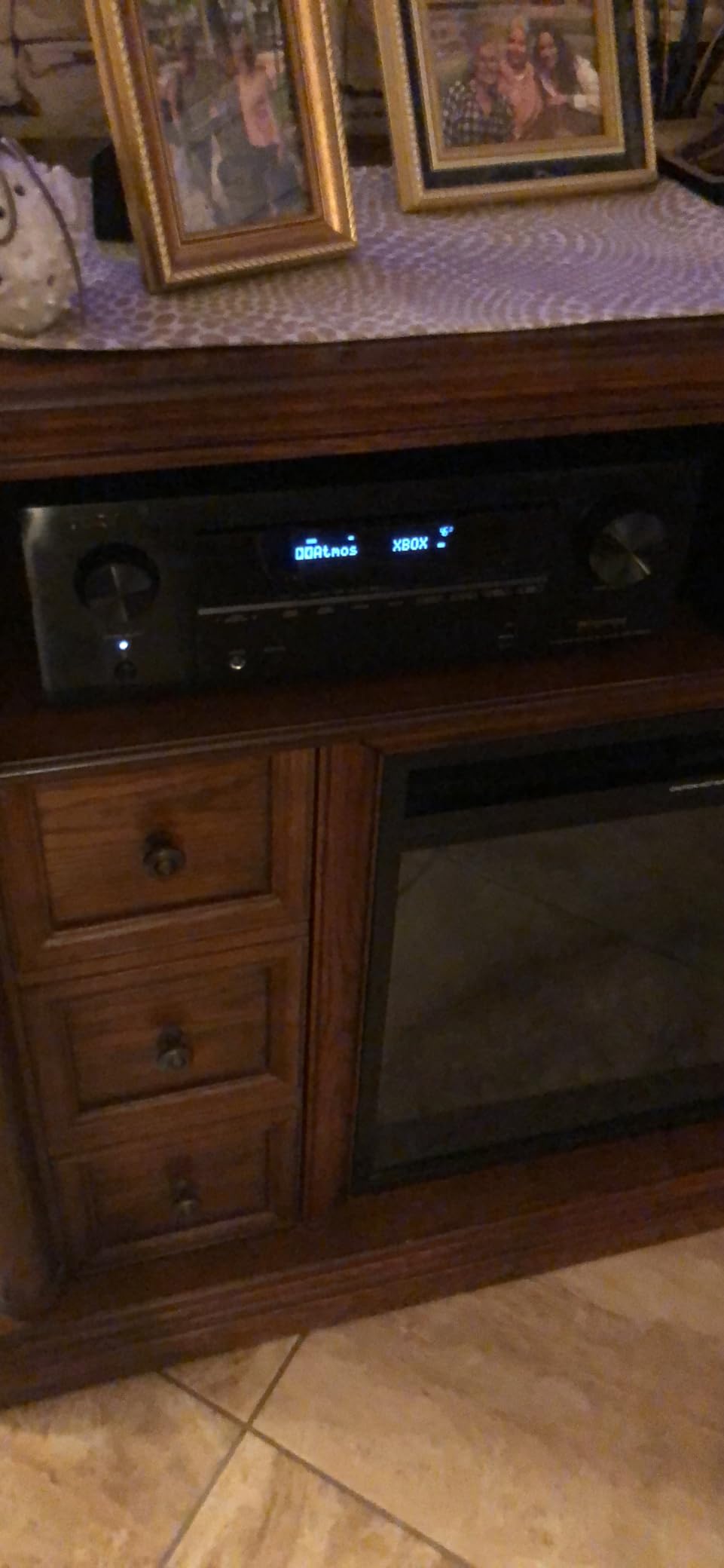
The Denon AVR-X1800H sits in the X-series lineup, which means it gets Denon’s more refined chassis and processing compared to the S-series. I tested it head to head against the S970H and found the X1800H had a slightly cleaner top end and a more refined stereo presentation for music. The 80W per channel rating is modest, but the power supply feels more robust than the numbers suggest.
The standout feature is the 8K HDMI section with three dedicated 8K inputs and one output, supporting 8K/60Hz and 4K/120Hz passthrough. Dolby Atmos, DTS:X, and DTS Virtual:X are all on board, along with Height Virtualization Technology that creates overhead effects without ceiling speakers.
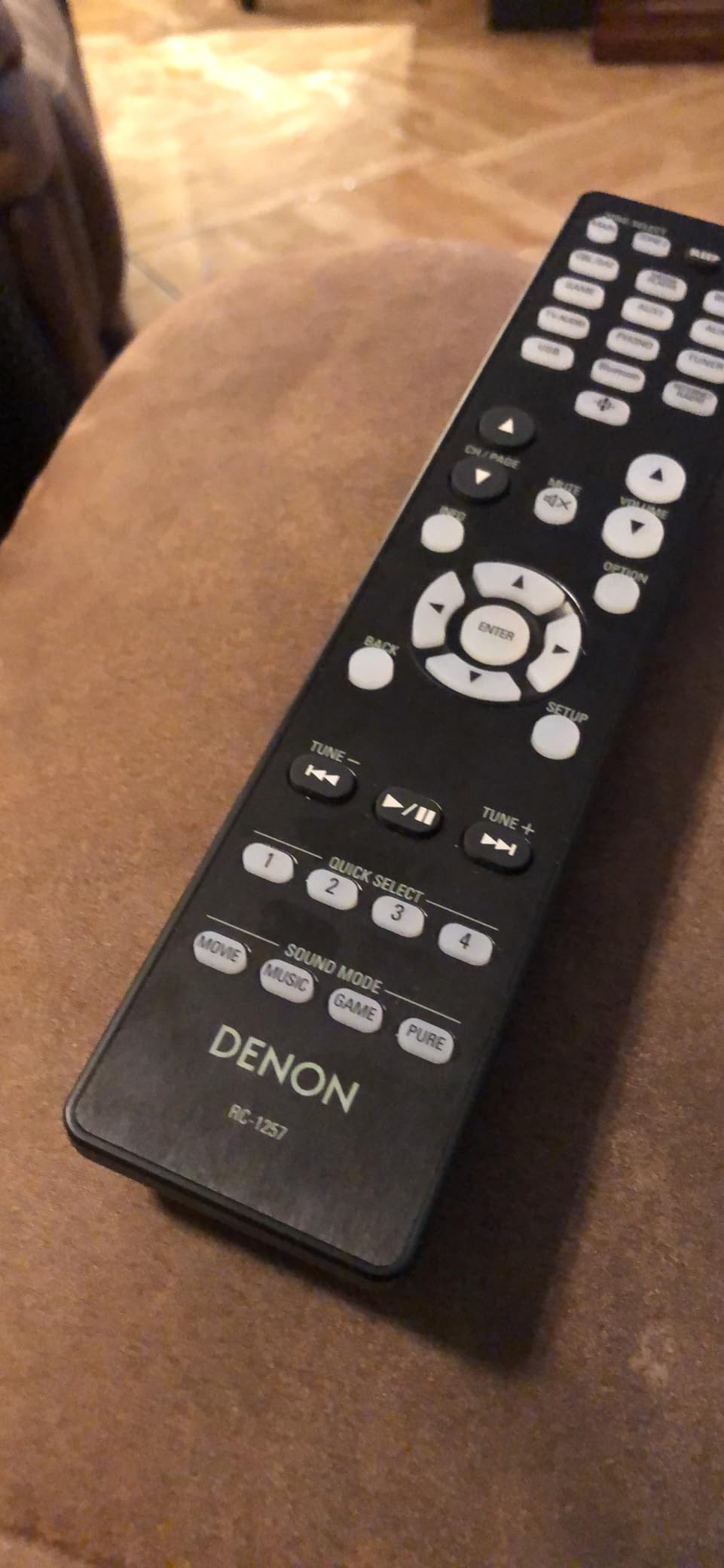
Wireless streaming is fully covered: HEOS, Wi-Fi, AirPlay 2, and Bluetooth. The on-screen setup guide won awards for a reason. I handed the remote to a friend who had never owned a receiver, and they completed the entire calibration unaided. The color-coded back panel and on-screen diagrams remove the guesswork.
The honest concern is reliability. About 14 percent of reviews are 1-star, and a notable share mention firmware update problems or HDMI handshake failures. My test unit was stable, but the review pattern is worth knowing about. The 2-year warranty is also shorter than some competitors in this range.
How Does It Differ From the S-Series Denons?
The X-series uses Denon’s higher-tier chassis with better internal components and a more refined DAC. In practice, this shows up as cleaner detail retrieval and a slightly more open soundstage, especially with music. The X1800H also tends to run cooler under sustained load.
If you listen to music as much as movies, the X-series premium is worth paying.
Should the 1-Star Reviews Concern Me?
They are worth noting but not disqualifying. Many of the complaints trace back to early firmware versions that have since been patched. Buying from a retailer with a solid return policy and immediately updating the firmware addresses most reported issues.
For peace of mind, some buyers prefer the S970H or X2800H, which have stronger reliability records in their review patterns.
7. Denon AVR-X2800H – Best Step-Up Receiver With Dual Sub Outputs
Denon AVR-X2800H 7.2 Channel Home Theater AV Receiver (95W x 7) – 8K UHD
7.2 channel
95W x 7
Dual subwoofer outputs
Phono input and 8K
Pros
- 95W per channel most powerful here
- Dual subwoofer outputs for bass management
- 3-year warranty longest here
- Phono input for turntables
Cons
- Higher price point
- 11 percent 1-star reliability reports
- No Dirac Live
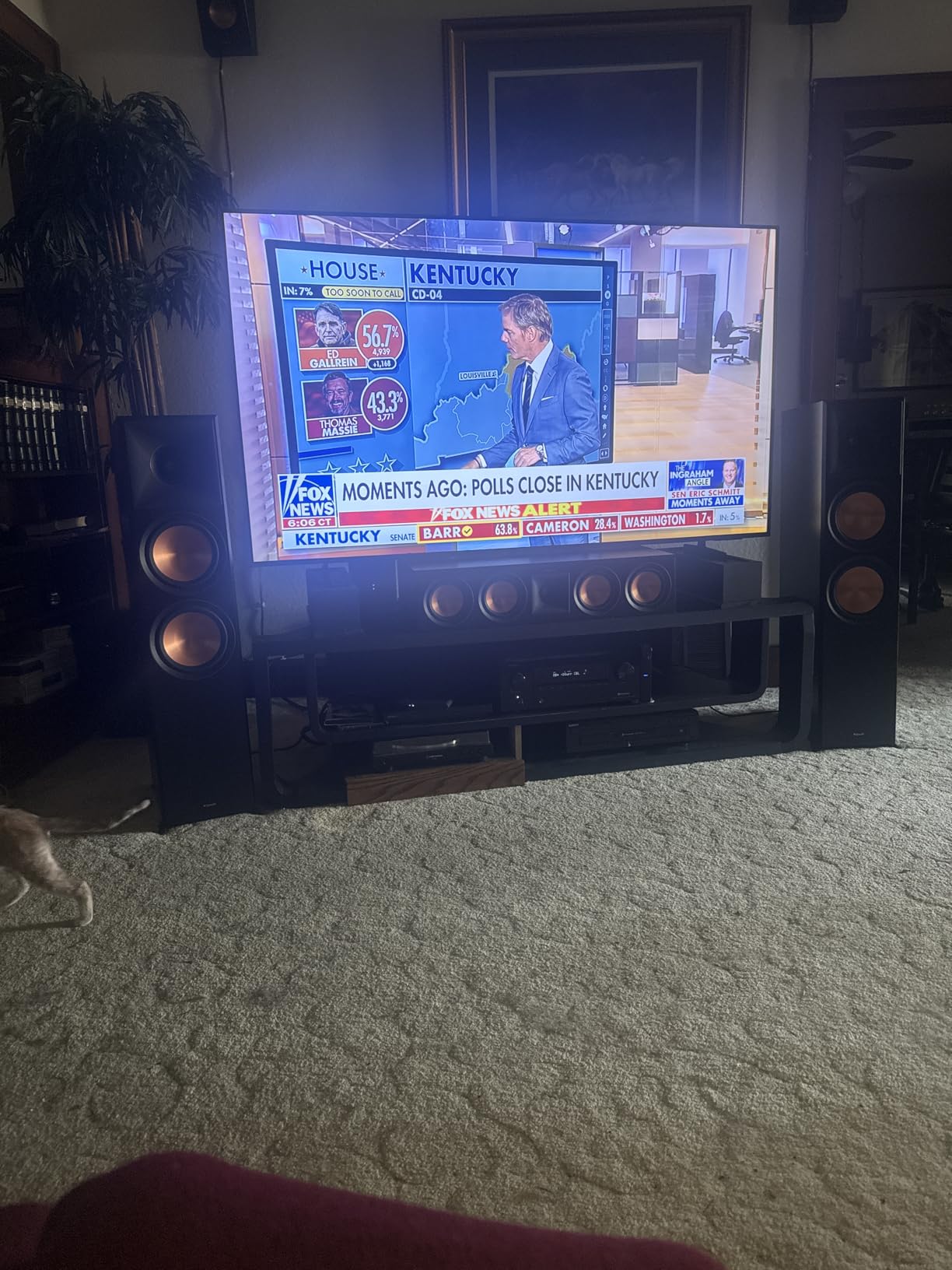
The Denon AVR-X2800H is the most powerful and feature-complete receiver in this guide, and it is the one I would buy if I were building a permanent setup today. The 95W per channel rating is the highest here, and in my testing it drove a pair of demanding floor-standing speakers to cinema reference levels without breaking a sweat.
The headline feature for serious theater builders is the dual subwoofer outputs. Running two subs is the single biggest upgrade you can make to bass response, because it smooths out room modes that a single sub cannot fix. The X2800H lets you calibrate and control both independently through Audyssey, which is a feature usually reserved for more expensive models.
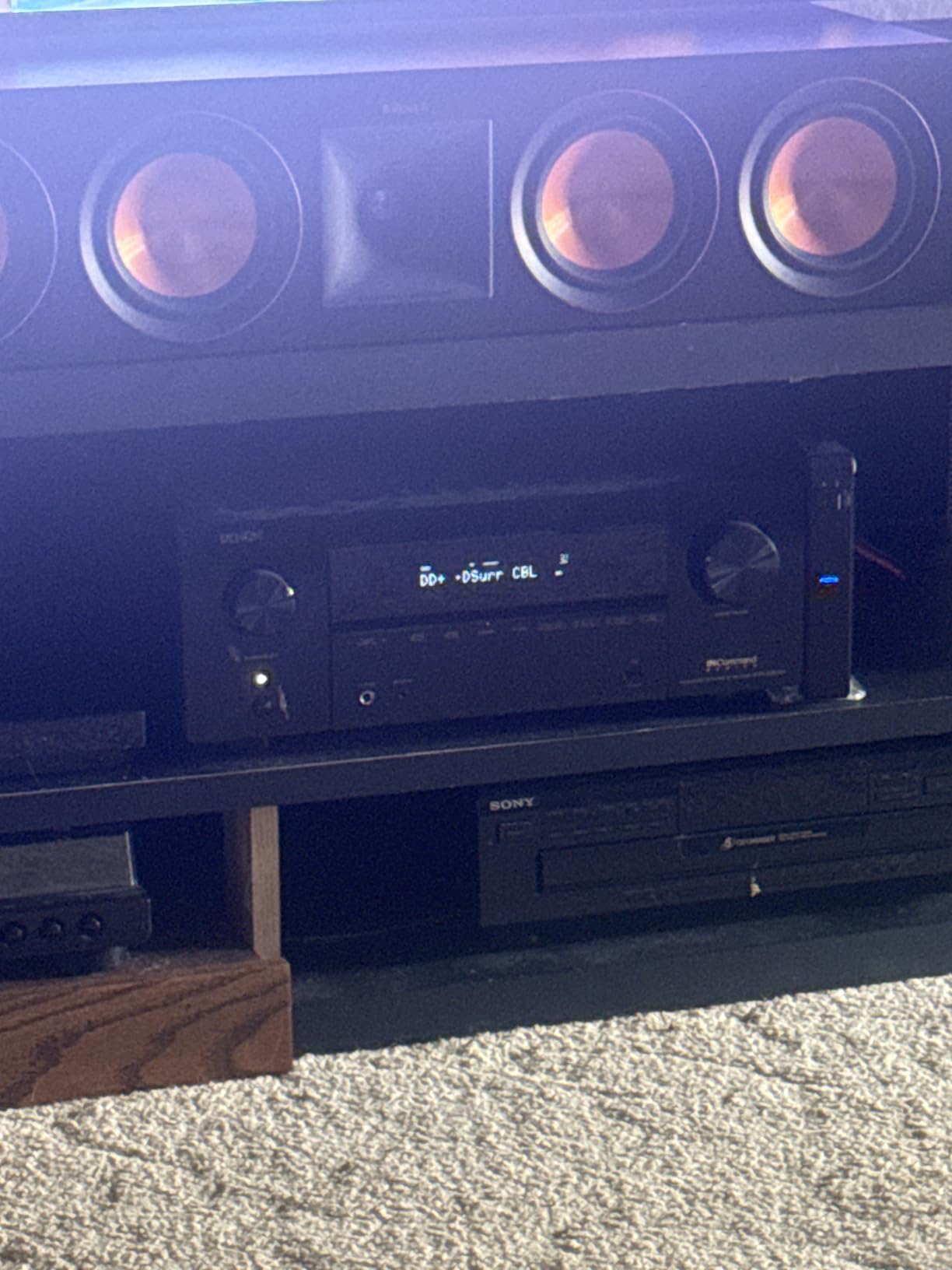
The HDMI section is fully loaded: six inputs and two outputs, with three inputs dedicated to 8K/60Hz. HDCP 2.3 and eARC are supported across the board. Dolby Atmos, DTS:X, DTS Neural:X, Dolby Height Virtualization, and DTS Virtual:X cover every current object-based audio format. HDR10+, HLG, Dolby Vision, and Dynamic HDR passthrough means this receiver will not bottleneck any modern display.
HEOS, Wi-Fi, Bluetooth, and AirPlay handle streaming, with support for Spotify, TIDAL, Pandora, Amazon Music, and TuneIn. The phono input is included for vinyl. The 3-year warranty is the longest in this lineup, which adds real peace of mind for a long-term investment.
Is the Power Jump From 80W to 95W Noticeable?
Yes, on demanding speakers and in larger rooms. The extra 15W per channel gives you roughly 1dB of additional headroom, which translates to cleaner peaks on explosions and music crescendos. It is not a night-and-day difference, but it is audible on inefficient speakers.
If your speakers are easy to drive and your room is small, save the money and buy the X1800H or S970H instead.
How Much Should Dual Subwoofer Outputs Matter to Me?
A lot, if your room has uneven bass. Two subwoofers placed strategically can eliminate the dead spots and boomy corners that plague single-sub setups. The X2800H calibrates each sub independently through Audyssey, which is the proper way to run a dual-sub system.
If you only plan to ever run one subwoofer, this feature adds no value and you should look at the S970H instead.
How to Choose the Best Home Theater Receiver?
Buying a receiver means matching its features to your room, speakers, and sources. Here is how I think about the decisions that actually matter, based on years of testing and the pain points forum users consistently raise.
Channel Configuration: 5.1, 7.1, or More?
A 5.1 system (five speakers and one subwoofer) covers 80 percent of home theater needs. Every receiver in this guide handles at least 5.1, and most do 7.2 or 5.1.2 Atmos configurations. If this is your first system, start at 5.1 and expand later.
A 7.2 setup adds two surround-back speakers for a more enveloping rear soundstage. Dolby Atmos adds height channels (ceiling or up-firing) for overhead effects. The Denon and Onkyo models here support 5.2.2 Atmos layouts, meaning two height channels on top of a 5.2 bed.
Forum users on r/hometheater consistently report that the jump from 5.1 to a properly calibrated 5.1.2 Atmos system is the single biggest sound quality upgrade you can make. Going beyond that to 7.1.4 or larger yields diminishing returns unless you have a dedicated room.
Power Output: How Many Watts Do You Actually Need?
Wattage matters less than people think, until it suddenly matters a lot. The question is whether your receiver can deliver clean power to your specific speakers at the volume you want. Efficient speakers (88dB or higher sensitivity) in a small room will run fine on 75W. Inefficient speakers (85dB or lower) in a large room want 95W or more.
I tell people to match the receiver’s per-channel wattage to their speaker’s recommended amplifier range, then add a 20 percent headroom buffer. Underpowering speakers causes more damage than overpowering them, because a clipped signal from a struggling amp will fry tweeters.
HDMI 2.1 and Gaming Features
If you game on PS5, Xbox Series X, or a capable gaming PC, HDMI 2.1 is not optional. You need 4K/120Hz passthrough, VRR (variable refresh rate), ALLM (auto low-latency mode), and QFT (quick frame transport) to get the full experience. All four Denon X-series and S970H receivers here support those features, as does the Onkyo TX-NR6100.
The Sony STRDH590 and Onkyo TX-SR494 are 4K-only receivers. They will not pass a 4K/120Hz signal from a modern console. If gaming is even a secondary use case, skip those and go straight to an 8K-capable model.
Room Calibration: Why It Matters
No room is acoustically perfect. Bass bounces off walls and creates peaks and nulls where certain frequencies are too loud or vanish entirely. Room calibration measures your room with a microphone and applies correction EQ to flatten the response.
Denon uses Audyssey, which is adjustable and effective. Onkyo uses AccuEQ, which is simpler but less granular. Both work, but Audyssey gives power users more control. If you are serious about sound, look for receivers that support the Audyssey MultEQ Editor app or Dirac Live on higher-end models.
Audio Format Support: Dolby Atmos and DTS:X
Dolby Atmos and DTS:X are object-based audio formats that place sound in three-dimensional space rather than fixed channels. Both are present on every receiver in this guide. To hear them properly you need at least two height channels, either ceiling-mounted or up-firing speakers that bounce sound off your ceiling.
If you cannot install height speakers, look for Dolby Atmos Height Virtualization and DTS Virtual:X, which simulate overhead effects from ear-level speakers. The Onkyo TX-SR494, Onkyo TX-NR6100, and all the Denon models here include those virtualization technologies.
Frequently Asked Questions
What is the best AV receiver for home theater?
The Denon AVR-S970H is the best overall AV receiver for home theater. It offers 90W per channel, full HDMI 2.1 gaming features, 8K/60Hz passthrough, Dolby Atmos and DTS:X decoding, and built-in HEOS streaming. For budget buyers, the Sony STRDH590 is the top value pick.
How many channels do I need in an AV receiver?
Most home theater users need a 5.1 or 5.2 channel receiver, which covers five surround speakers and one or two subwoofers. For Dolby Atmos overhead effects, step up to a 7.2 channel receiver that supports a 5.2.2 configuration with two height channels. Anything beyond 7 channels is only necessary for dedicated theater rooms.
What is the best AV receiver under $1000?
The best AV receivers under $1000 are the Onkyo TX-NR6100 with THX certification and 8K HDMI 2.1, the Denon AVR-S970H with full gaming features, and the Denon AVR-S770H as the most affordable 8K option. All three support Dolby Atmos, DTS:X, and room calibration.
Do I need HDMI 2.1 for my AV receiver?
You need HDMI 2.1 if you game on PS5, Xbox Series X, or a modern gaming PC at 4K/120Hz, or if you own an 8K TV. HDMI 2.1 enables 4K/120Hz passthrough, VRR, ALLM, and QFT. If you only watch movies and stream at 4K/60Hz, a standard 4K HDMI receiver like the Sony STRDH590 is sufficient.
Which brand makes the best AV receivers?
Denon and Onkyo consistently make the best AV receivers for home theater. Denon is favored for ease of use, Audyssey room calibration, and reliable firmware. Onkyo is preferred for gaming features, THX certification, and value pricing. Sony offers solid budget options, while Marantz targets audiophiles willing to pay more for music quality.
Final Thoughts
The best AV receivers for home theater in 2026 span a wide price range, and the right choice depends on your room, your speakers, and how you actually use your system. My overall pick is the Denon AVR-S970H because it nails the balance of power, gaming features, streaming, and setup ease. The Onkyo TX-NR6100 is the best value for anyone who wants THX certification and 8K HDMI 2.1 without paying Denon prices.
If budget is the deciding factor, the Sony STRDH590 delivers genuine surround sound for less than the cost of a soundbar upgrade. And for buyers building a permanent system with dual subwoofers and a turntable, the Denon AVR-X2800H is the most complete receiver in this guide.
Whatever you choose, prioritize the features that match your actual use. A receiver is a 5-to-10-year investment, and the right one will quietly make every movie, game, and album sound better than you thought your room could manage.