
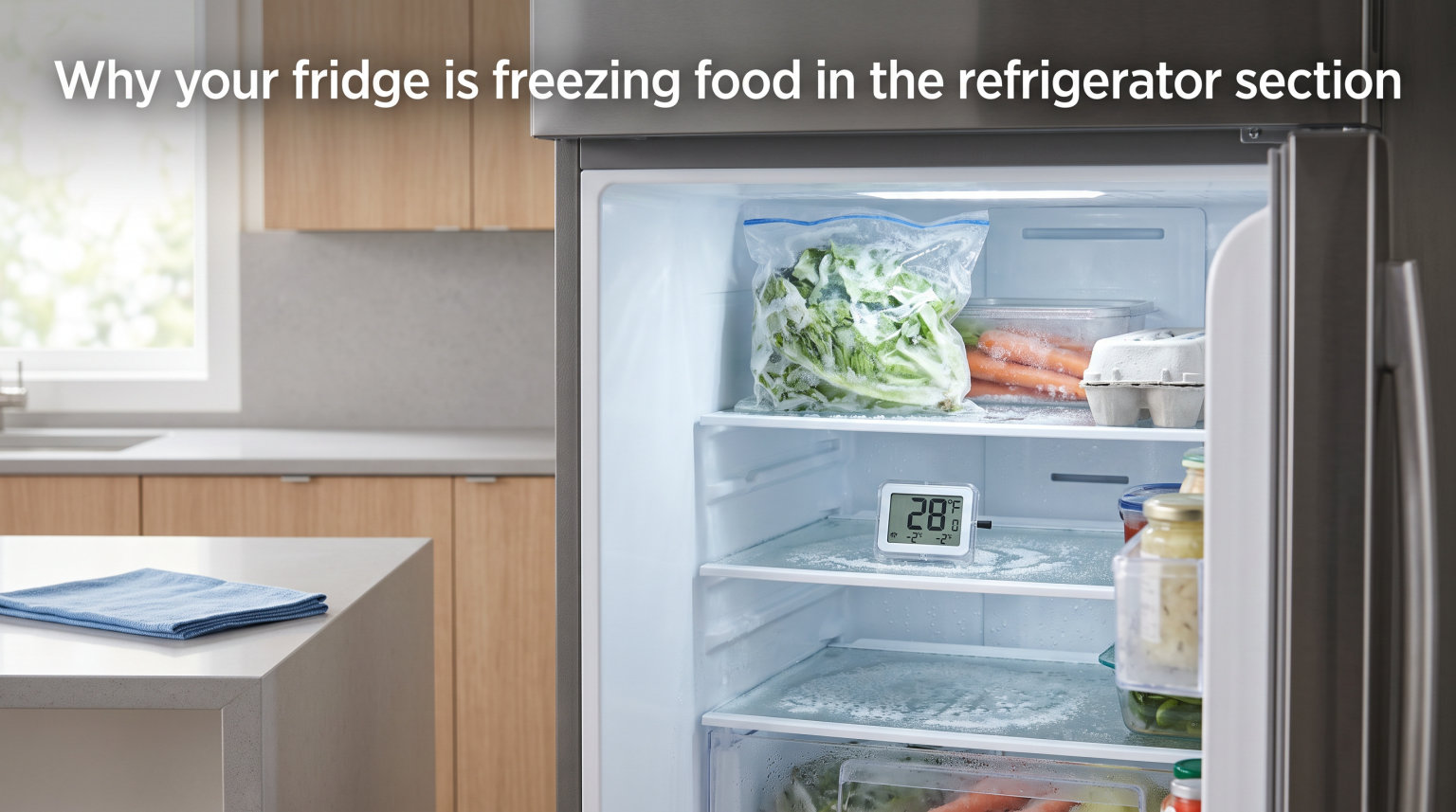
You open your refrigerator expecting fresh, crisp produce and cold milk. Instead you find a frozen bag of lettuce, frost on the cheese, and ice crystals forming in your yogurt. This is one of the most frustrating kitchen problems a homeowner can face, and we hear about it constantly from readers. The good news is that fridge freezing food in the refrigerator section is almost always fixable without replacing the whole appliance.
In our research and conversations with homeowners, we found that food freezing in the fresh food compartment comes down to a handful of common culprits. Incorrect temperature settings, blocked air vents, a worn door gasket, a faulty sensor, or an overactive ice maker are responsible in roughly 9 out of 10 cases. Below we walk through each cause and the exact steps you can take to bring your fridge back to a safe 35 to 38 degrees Fahrenheit.
This guide covers the seven most common reasons your refrigerator is freezing food, how to diagnose which one applies to your unit, and the fixes that actually work. We also include a step-by-step troubleshooting sequence, prevention tips, and a clear signal for when it is time to call a professional.
Table of Contents
How Refrigerators Actually Cool Your Food?
Most people do not realize that the freezer and refrigerator sections share one cooling system. A single evaporator coil, located behind the freezer wall, produces the cold air for both compartments. A small fan and a motorized damper push a measured amount of that cold air through vents into the fresh food side.
When this air balance is off, cold air pools in the refrigerator section instead of circulating evenly. That is exactly why you may notice food freezing at the top of the fridge (closest to the vent) or against the back wall. Understanding this connection is the key to diagnosing the problem quickly.
Temperature Settings Set Too Low
The single most common reason for fridge freezing food is a temperature dial set too low. Many homeowners assume that turning the dial higher means colder, but on most refrigerators the numbering is the opposite of what you would expect. Setting it to the highest number actually makes the unit work harder to push more cold air into the fresh food section.
The ideal refrigerator temperature is between 35 and 38 degrees Fahrenheit. Anything below 34 risks freezing produce, eggs, and liquids. Start by adjusting your dial to the middle position, then wait 24 hours and check the actual temperature with an appliance thermometer placed in a glass of water on the middle shelf.
If your model uses a digital control panel, make sure the refrigerator and freezer are not accidentally swapped or set to a quick-cool mode that overrides normal operation. Some units also have a power cool or party mode button that drops temperatures aggressively and stays on for hours.
Blocked Air Vents Preventing Proper Circulation
Every refrigerator has at least one air vent, usually located at the top back or along an interior side wall. Cold air flows through this vent into the fresh food compartment. When the vent is blocked by food packages, deli containers, or a sheet of ice buildup, the air has nowhere to go and it pools directly behind the blockage, freezing whatever sits there.
Pull everything away from the back wall and check that at least two inches of clearance sits in front of every vent. Pay special attention to tall items like cereal boxes, milk jugs, and pitchers that tend to migrate toward the rear shelf. Rearranging so nothing touches the back wall often resolves the issue within 12 hours.
Leaky Door Gaskets Letting Cold Air Escape
The rubber door gasket creates the airtight seal that lets your refrigerator hold a steady temperature. When the gasket is cracked, warped, dirty, or no longer sticky, cold air leaks out constantly. The compressor then runs longer and harder to compensate, which overcools the interior and freezes the food closest to the evaporator vent.
You can test your door gasket in 60 seconds with the paper test. Close the door on a dollar bill so half is inside and half is outside. If you can pull the bill out without any resistance, the seal is failing along that edge. Repeat this test on all four sides and the top.
Clean the gasket first with warm water and a small amount of baking soda. If the seal is still loose after cleaning, order a replacement gasket by your model number. Most gaskets cost between 25 and 60 dollars and take about 20 minutes to install.
Faulty Temperature Sensor or Thermistor
Inside the fresh food compartment sits a small thermistor that reads the air temperature and tells the control board when to shut off the cold air supply. When this sensor fails, it usually reads warmer than reality. The control board then keeps pumping cold air because it thinks the fridge is not cool enough yet. The result is a refrigerator section that drops well below freezing.
The thermistor is typically a small plastic-covered probe clipped to the wall or ceiling of the fresh food side. You can test it with a multimeter by reading its resistance at room temperature and comparing to the spec in your model’s service sheet. A reading that is wildly off (open circuit or shorted) confirms a bad sensor. Replacement parts cost around 20 to 40 dollars.
If you are not comfortable using a multimeter, an indirect test still works. Turn the temperature dial up by one full number. If the fridge continues to overcool after 24 hours, the sensor or control board is likely the culprit.
Ice Maker Overcooling the Refrigerator
An ice maker that is turned on but not connected to a water supply will continuously cycle the compressor trying to fill a tray that never fills. This extra run time pushes more cold air into the fresh food section. Reddit users in r/appliancerepair frequently report that simply switching off the ice maker solved their freezing problem overnight.
If you do not use ice or rarely need it, turn off the ice maker using the control panel or the bail arm inside the freezer. Wait 48 hours and check whether the refrigerator temperature stabilizes. Many Whirlpool, GE, and Frigidaire owners report an immediate fix from this single change.
Dirty Condenser Coils Causing Overcooling
Condenser coils sit on the back or underneath the refrigerator and release the heat pulled out of your food. When these coils are caked with dust, pet hair, or kitchen grease, the system runs inefficiently. The compressor cycles more often and stays on longer, dumping excess cold air into the fresh food section.
Unplug the refrigerator and pull it away from the wall. Use a coil brush or vacuum crevice tool to remove buildup from the coils. For under-mount coils, remove the front kick plate and brush them from below. Do this every 12 months to keep temperatures steady and extend the life of your compressor.
Control Panel Glitches and Demo Mode
Some digital refrigerators ship with a showroom or demo mode that cycles the cooling system for display purposes. If your unit was recently moved, a power surge may have triggered this mode by accident. Demo mode keeps the lights and display working but disrupts normal cooling cycles.
Check your owner’s manual for the specific button combination to exit demo mode. On many KitchenAid and Maytag models you press and hold the freezer temperature and refrigerator temperature buttons for five seconds. A small “d” or “OF” symbol on the display usually indicates demo mode is active.
Why Vegetables Freeze in the Crisper Drawer?
Crisper drawers are the coldest spot in many refrigerators because cold air sinks and collects at the bottom. Produce with high water content like lettuce, cucumbers, and berries freezes first. Some crisper drawers have a humidity slider that lets you open or close a small vent. Closing the slider keeps moisture in but also traps cold air against the produce.
Set your crisper humidity to the low or vented position and avoid storing delicate produce directly under the air vent. Wrapping leafy greens in a dry paper towel before placing them in a produce bag also reduces ice crystal formation on the leaves.
Step-by-Step Troubleshooting to Fix a Fridge Freezing Food
Follow these steps in order. Most readers solve the problem within the first three checks.
Adjust the temperature dial to the middle position and wait 24 hours.
Move food away from the back wall and clear all air vents.
Test the door gasket with the paper bill method on every side.
Turn off the ice maker and wait 48 hours.
Clean the condenser coils with a brush and vacuum.
Check for demo mode on the control panel.
Test the thermistor with a multimeter and replace if faulty.
If none of these steps work, the issue is likely a failing control board or a stuck damper motor. Both parts require professional diagnosis.
Tips to Prevent Food From Freezing in the Fridge
Place delicate produce and dairy on the front half of the middle shelf, away from the back wall and vents. Store liquids in the door bins where temperatures swing less. Keep your fridge about 75 percent full so cold air has items to cool, but never overpack it.
Use an appliance thermometer year-round to catch temperature drift early. Check the door gasket every six months, especially in homes with frequent opening or curious pets. Schedule a coil cleaning once a year, and always give your fridge at least two inches of clearance on all sides for proper airflow.
When to Call a Professional Repair Technician
Call a licensed appliance technician if your troubleshooting points to a control board, damper motor, sealed system leak, or compressor issue. These repairs involve sealed refrigerant lines or high-voltage electronics that are unsafe for DIY work.
According to real repair invoices shared by homeowners, expect to pay 150 to 350 dollars for a control board replacement, 200 to 400 dollars for a thermistor and damper repair combined, and 400 to 600 dollars for a compressor service. If your refrigerator is more than 12 years old and the quoted repair exceeds half the cost of a new unit, replacement is usually the smarter financial move.
FAQs
How to prevent food from freezing in the fridge?
Keep refrigerator temperature between 35 and 38 degrees Fahrenheit, leave at least two inches of clearance in front of all air vents, store delicate produce on the front half of the middle shelf, and check the door gasket every six months. An appliance thermometer placed in a glass of water catches temperature drift before it freezes your food.
How to fix a fridge that freezes everything?
Start by adjusting the temperature dial to the middle setting, then move food away from the back wall and clear the air vents. Test the door gasket with a paper bill, turn off the ice maker, and clean the condenser coils. If the fridge still overcools after 48 hours, the thermistor or control board likely needs professional replacement.
Is food still good if it freezes in the fridge?
Most dairy, eggs, and cooked leftovers remain safe to eat after a brief freeze, though texture changes are common. Fresh produce like lettuce, cucumbers, and berries becomes soggy once thawed. Discard any food that smells off, shows large ice crystals, or has been frozen and thawed multiple times.
What are the signs of a failing fridge?
Watch for frost buildup on the back wall, inconsistent temperatures between shelves, a constantly running compressor, water pooling under the unit, unusual clicking sounds, and food freezing despite correct settings. Any combination of these symptoms means the appliance needs professional attention before it fails completely.
Final Thoughts on Fridge Freezing Food
A refrigerator freezing food in the fresh food section almost always comes back to one of seven causes: incorrect temperature settings, blocked vents, a leaky gasket, a bad thermistor, an active ice maker, dirty coils, or a control board glitch. Work through the troubleshooting steps in order, and most readers solve the problem in under a week without spending a dollar.
If you are still dealing with fridge freezing food after trying every step above, contact a licensed appliance repair technician for a sealed system diagnosis. A small repair today is almost always cheaper than replacing the whole refrigerator tomorrow.