
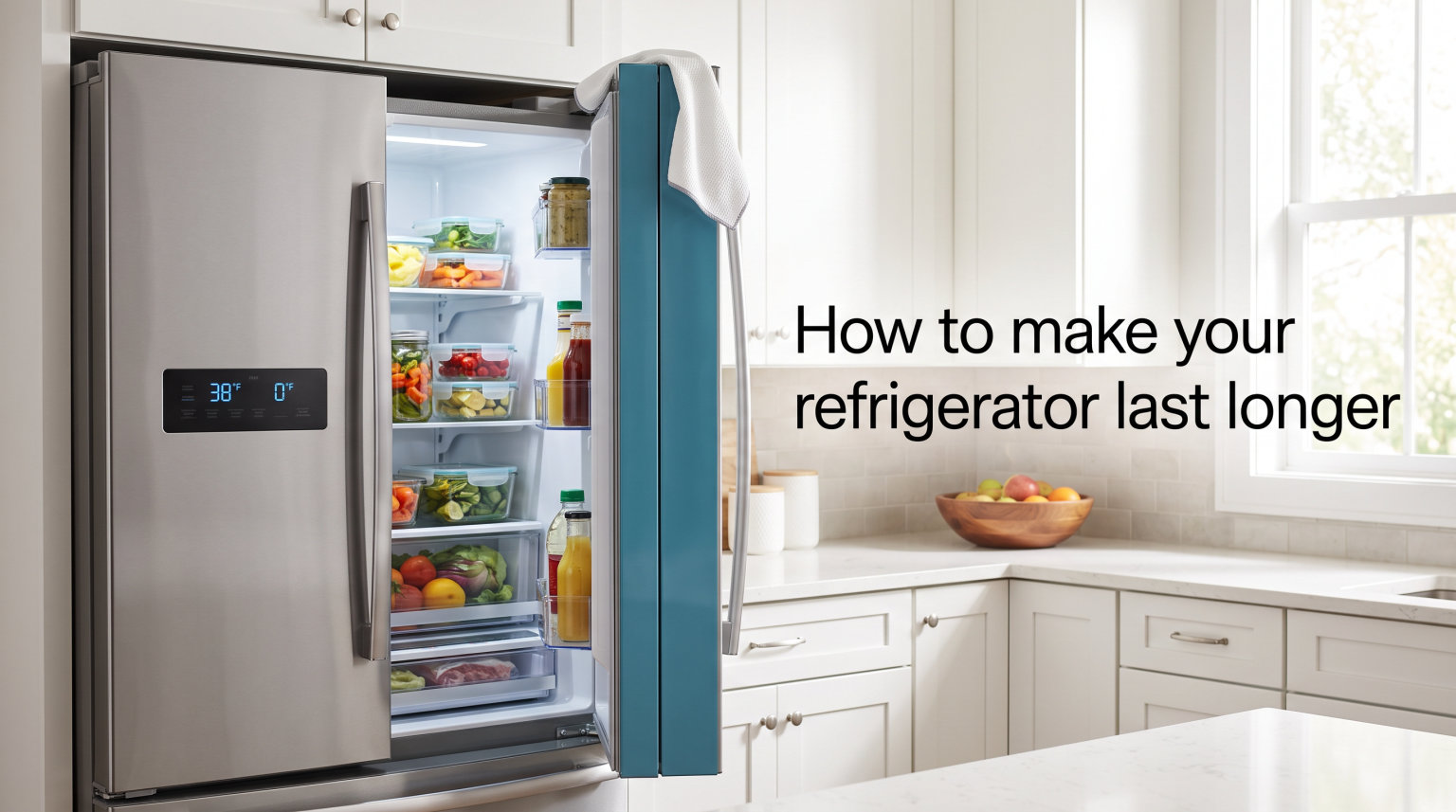
A refrigerator is one of the most expensive appliances in your kitchen, and replacing one can cost anywhere from $700 to $3,000 or more. The good news is that a few simple maintenance habits can add years to its working life. Most refrigerators last between 10 and 17 years, but many fail far sooner simply because nobody cleaned the coils or checked the door seals.
I have spent years researching appliance longevity, talking to repair technicians, and digging through community discussions on forums like r/Appliances and r/BuyItForLife. What I found is that the people who get 15 or more years out of their fridge are not lucky. They follow a small set of consistent maintenance steps.
In this guide, I will walk you through exactly how to make your refrigerator last longer using proven maintenance techniques. You will learn how to clean condenser coils, maintain door gaskets, set the right temperature, and recognize the warning signs that tell you when repair or replacement makes more sense. I will also cover power outage protection, a seasonal maintenance checklist, and answers to the most common questions homeowners ask.
Table of Contents
How to Make Your Refrigerator Last Longer?
Learning how to make your refrigerator last longer comes down to eight core maintenance habits. None of them require special tools or technical expertise. Each one reduces strain on the compressor, the part that does the heavy lifting and costs the most to replace when it fails.
According to Consumer Reports, roughly 37 percent of refrigerators experience a breakdown within the first several years of ownership. Most of those failures trace back to preventable issues like dirty coils, worn door seals, or blocked airflow. Follow these steps and you will dramatically cut your odds of an early breakdown.
1. Clean the Condenser Coils Every 6 to 12 Months
Condenser coils release the heat that your refrigerator pulls out of the interior. When dust and pet hair build up on those coils, the compressor has to work much harder and runs longer to achieve the same cooling effect. That extra strain shortens compressor life and drives up your energy bill at the same time.
Plan to clean the coils every 6 to 12 months, or more often if you have shedding pets. Here is how to do it:
Unplug the refrigerator or shut off the circuit breaker.
Locate the coils. On most models they sit behind a toe grille at the bottom front or on the back of the unit.
Use a coil cleaning brush, which is a long-handled stiff bristle brush designed for this exact job.
Vacuum up the loosened dust with a hose attachment.
Plug the fridge back in and confirm it is running normally.
This single task takes about 15 minutes and is the most effective thing you can do to extend refrigerator lifespan. Repair technicians consistently point to dirty coils as the number one cause of premature compressor failure.
2. Inspect and Maintain Door Seals and Gaskets
Door gaskets are the rubber seals that run around the edge of your refrigerator and freezer doors. They create an airtight barrier that keeps cold air inside and warm air out. When seals weaken, crack, or tear, cold air leaks out continuously and the compressor never gets a break.
Test your seals with the dollar bill method. Close the refrigerator door on a dollar bill so that half of it hangs outside. Pull the bill straight out. You should feel consistent resistance. If the bill slides out easily, the seal is weak in that spot. Repeat this test all the way around the door.
If you find weak spots, first try cleaning the gasket with warm soapy water. Sticky residue and food buildup can prevent a good seal. If cleaning does not fix the problem, the gasket needs replacement. Replacement seals are inexpensive, typically $30 to $60, and many homeowners can install them without a service call.
3. Set the Right Temperature: 37F Fridge and 0F Freezer
The ideal refrigerator temperature is 37 degrees Fahrenheit, and the ideal freezer temperature is 0 degrees Fahrenheit. Running the fridge colder than necessary forces the compressor to cycle more frequently, which adds wear without improving food safety. Running it too warm risks food spoilage.
Use a standalone appliance thermometer to verify the actual temperature inside your fridge. The built-in dial settings are often inaccurate and do not reflect the true internal temperature. Place the thermometer in the center of the middle shelf and check it after 24 hours.
If the reading is off by more than two degrees from your target, adjust the dial slightly and recheck the next day. Small adjustments are better than large ones. This process helps you find the exact setting that keeps food safe without overworking the compressor.
4. Keep Your Fridge Properly Stocked Without Overfilling
A refrigerator that is roughly two-thirds full runs more efficiently than one that is empty. Food and beverages act as thermal mass, meaning they absorb and hold cold temperature. When you open the door, a well-stocked fridge loses less cold air because the contents help maintain the internal temperature.
If your fridge tends to run empty, fill the open space with water bottles or gallon jugs. This trick is widely recommended in community forums and gives you the same thermal mass benefit without wasting food. The containers just sit there quietly holding cold.
At the same time, avoid overfilling the refrigerator. Every item needs at least an inch of clearance from the walls and vents so that cold air can circulate freely. When you block the internal air vents with tall containers or crowded shelves, the fridge develops warm spots and the compressor works overtime trying to compensate.
5. Keep the Top and Sides Clear for Proper Airflow
Your refrigerator needs breathing room on all sides to dissipate heat. When you pile cereal boxes, small appliances, or storage containers on top of the fridge, you trap heat that the unit is trying to release. That trapped heat forces the compressor to run longer cycles.
Keep at least one inch of clearance on the sides and top of the refrigerator. If your unit has condenser coils on the back, leave two to three inches between the fridge and the wall. Rearrange your kitchen layout if needed to give the appliance the space it requires.
This is an easy fix that costs nothing but prevents unnecessary heat buildup. Many people use the top of the fridge as extra storage without realizing the damage it causes over time.
6. Replace the Water Filter Every 6 Months
If your refrigerator has a built-in water dispenser or ice maker, it almost certainly has an internal water filter. That filter removes chlorine, sediment, and other contaminants from your water supply. Over time the filter clogs, which reduces water pressure and can strain the dispenser pump.
Replace the water filter every 6 months or after filtering approximately 200 to 300 gallons, whichever comes first. Check your refrigerator manual for the exact filter model your unit uses. Most modern fridges have a twist-and-pull or push-button filter compartment that makes replacement a two-minute job.
An old filter does more than reduce water quality. It can also allow mineral buildup in the water lines and ice maker mechanism, which leads to clogs and dispenser failures that are expensive to repair.
7. Clean the Ice and Water Dispenser Regularly
The ice and water dispenser is one of the most failure-prone components on modern refrigerators. Mineral deposits, mold, and old ice can clog the mechanism and cause it to stop working entirely. Forum discussions on r/Appliances repeatedly identify ice maker failures as one of the most common repair issues homeowners face.
Empty the ice bin completely once a month and wash it with warm soapy water. Wipe down the dispenser nozzle with a damp cloth and a mild cleaning solution. If you notice slow water flow from the dispenser, the nozzle may have mineral buildup that needs clearing.
If your ice maker is switched off for an extended period, such as during a vacation, empty the bin before you leave. Stale ice absorbs odors and can clump together, which jams the dispenser when you start using it again.
8. Defrost Your Freezer on a Schedule
If you own a manual defrost or partial automatic defrost freezer, frost buildup is your enemy. When frost accumulates to more than a quarter inch thick, it acts as insulation that prevents the freezer from cooling efficiently. The compressor runs longer and works harder to maintain the target temperature.
For manual defrost models, plan to defrost when frost reaches that quarter-inch threshold. Transfer your frozen food to a cooler, unplug the unit, and let the ice melt naturally. Never use a knife or sharp tool to chip away frost, as you can puncture a refrigerant line and cause a costly leak.
Most modern frost-free refrigerators handle defrosting automatically through a built-in heater cycle. Even so, check periodically for excessive frost, which can indicate a problem with the defrost timer, heater, or thermostat. Catching that issue early prevents a total breakdown.
Signs Your Refrigerator Needs Repair or Replacement
Even with perfect maintenance, every refrigerator eventually reaches the end of its service life. Knowing the warning signs helps you decide whether a repair is worth the cost or whether replacement is the smarter financial choice. Catching problems early can save you hundreds of dollars and prevent food spoilage.
Watch for these indicators that something is wrong:
The refrigerator runs constantly and never seems to reach the set temperature.
You hear loud banging, grinding, or squealing noises from the compressor area.
Frost builds up rapidly in the freezer despite normal defrost cycles.
Food spoils faster than it should even at the correct temperature setting.
The back or sides of the unit feel excessively hot to the touch.
Your energy bill jumps without any other explanation.
As a general rule, if your refrigerator is under 8 years old, repairs are usually worthwhile. Between 8 and 12 years, the decision depends on the cost of the repair compared to the value of the appliance. A compressor replacement, which can run $400 to $700, often makes sense on a fridge under 10 years old but is rarely worth it on one over 12 years.
If your refrigerator is more than 15 years old and needs a major repair, replacement is almost always the better choice. Newer models are significantly more energy efficient, which helps offset the purchase price over time. Community reports on forums like r/BuyItForLife confirm that older simple refrigerators without ice makers and water dispensers tend to last the longest, sometimes reaching 19 years or more.
How to Protect Your Refrigerator During a Power Outage?
Power outages are a real threat to your refrigerator and the food inside it. A full freezer holds its temperature for approximately 48 hours during an outage if you keep the door closed. A half-full freezer lasts about 24 hours. The refrigerator compartment keeps food cold for roughly 4 hours with the door shut.
The single most important rule during an outage is to keep the doors closed. Every time you open the refrigerator, cold air escapes and warm air rushes in. Resist the urge to check on your food repeatedly. If you need something, plan ahead and grab everything in one quick trip.
If you expect a prolonged outage lasting more than a day, add dry ice or bags of regular ice to the freezer compartment. A fifty-pound block of dry ice can keep a full freezer frozen for two additional days. Place it on a piece of cardboard on top of the food, and never touch dry ice with bare skin.
Seasonal Refrigerator Maintenance Checklist
Staying on top of refrigerator maintenance is easier when you break it into a schedule. Use this seasonal checklist to keep your appliance running efficiently year-round.
Monthly tasks:
Wipe down door gaskets with warm soapy water and inspect for cracks.
Empty and wash the ice bin.
Check the internal temperature with an appliance thermometer.
Discard expired food to prevent odors and improve airflow.
Every 6 months:
Clean the condenser coils with a coil brush and vacuum.
Replace the water filter.
Deep clean the interior shelves, drawers, and door bins.
Perform the dollar bill test on all door seals.
Annually:
Move the refrigerator and clean underneath and behind it.
Check that the unit is level using a bubble level.
Inspect the water supply line for kinks, cracks, or leaks.
Vacuum the front grille and rear components.
FAQs
What is the common lifespan of a refrigerator?
Most refrigerators last between 10 and 17 years, with an average lifespan of about 12 to 14 years. Simple top-freezer models without ice makers and water dispensers tend to last the longest. Regular maintenance, including coil cleaning and seal inspection, can push a refrigerator toward the higher end of that range.
How to make a fridge last longer during a power outage?
Keep the refrigerator and freezer doors closed as much as possible. A full freezer stays cold for about 48 hours, while the fridge compartment holds temperature for roughly 4 hours. For longer outages, add dry ice or bags of regular ice to the freezer, and avoid opening the door to check on food until power is restored.
How can you extend a refrigerator’s life?
Clean the condenser coils every 6 to 12 months, maintain door seals with the dollar bill test, set the temperature to 37 degrees Fahrenheit for the fridge and 0 degrees for the freezer, keep the unit properly stocked for thermal mass, and ensure adequate clearance on all sides for heat dissipation. Replace the water filter every 6 months if your model has a dispenser.
How long can a refrigerator sit without being used?
A refrigerator can sit unused for several months if you prepare it properly. Unplug it, clean and dry the interior completely to prevent mold, and prop the doors open slightly to allow air circulation. If you plan to store it for longer than a few months, clean the coils and inspect the seals before plugging it back in.
Conclusion
Knowing how to make your refrigerator last longer is not complicated, but it does require consistency. The eight habits I covered, from cleaning condenser coils twice a year to checking door seals with the dollar bill test, are the same practices that repair technicians and long-term appliance owners swear by.
Start with the highest-impact task: clean your condenser coils if you have not done it in the past year. Then work through the seasonal checklist to build maintenance into your routine. These small time investments, roughly 30 minutes every few months, can add three to five years to your refrigerator’s working life.
Your refrigerator works hard every single day to keep your food safe. A little attention goes a long way toward keeping it running efficiently and avoiding the thousands of dollars that come with an unexpected replacement. Bookmark this guide, set a calendar reminder for coil cleaning, and your fridge will thank you with years of reliable service.