
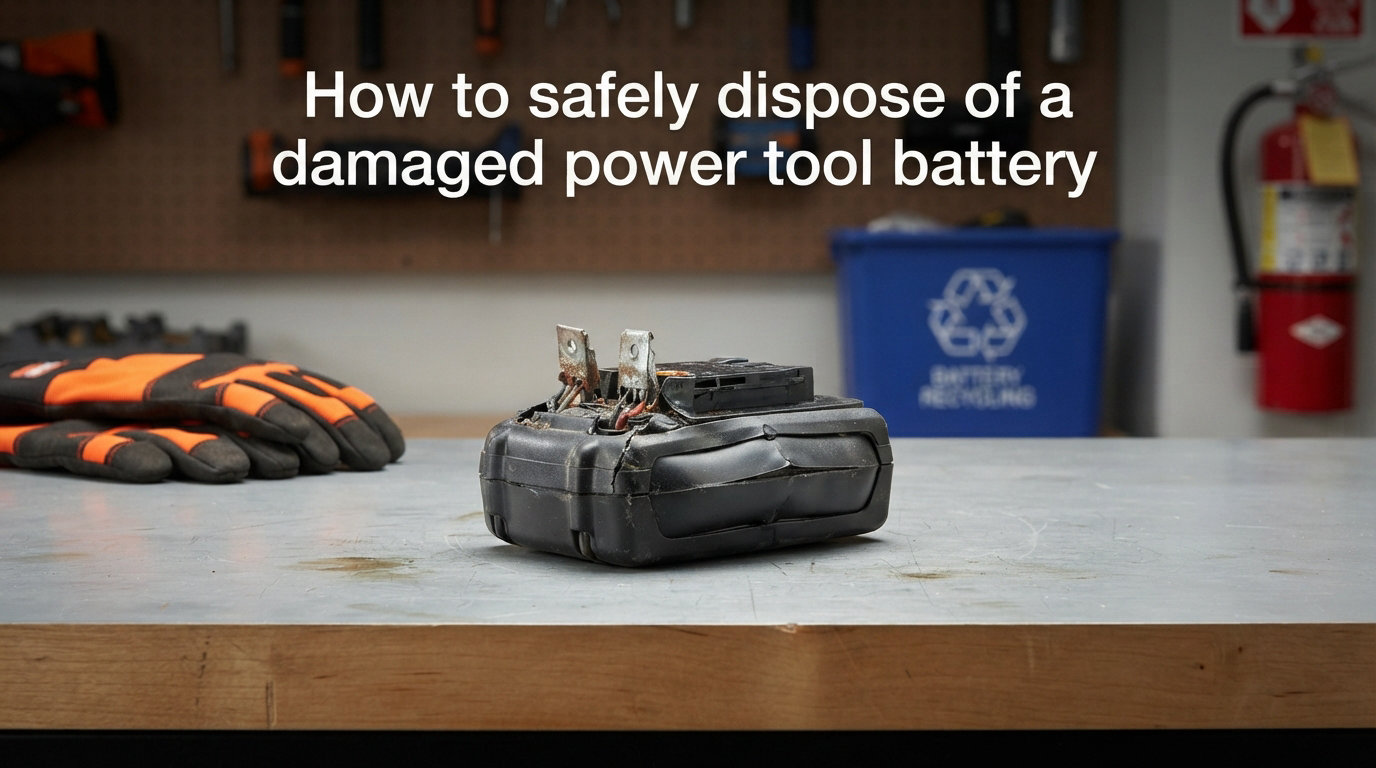
Damaged power tool batteries are dangerous if tossed in the trash. Lithium-ion cells can swell, leak, or burst into flames inside a garbage truck, transfer station, or recycling facility. Our team has researched the EPA, Call2Recycle, and fire department guidance to put together this complete guide on how to safely dispose of a damaged power tool battery in 2026.
Whether you have a swollen DeWalt pack, a leaking Milwaukee battery, or a Makita slide that will not hold a charge, the process below applies. You will learn how to spot damage, store the battery safely until you can move it, and find the right drop-off site close to home.
Table of Contents
What Makes a Power Tool Battery ‘Damaged’?
A damaged power tool battery shows physical or chemical warning signs that make it unsafe for normal use. The most common chemistry inside cordless drills, saws, and impact drivers is lithium-ion, sometimes labeled Li-ion. These cells pack a lot of energy into a small space, and that energy can release suddenly if the battery is dropped, punctured, overheated, or short-circuited.
Manufacturers consider a battery damaged when its outer casing is cracked, when one or more cells have swollen, when it leaks fluid, or when it has been exposed to fire or water. A battery that simply will not hold a charge after years of use is usually considered dead, not damaged, but you should still recycle it instead of trashing it.
The real danger with damaged lithium-ion batteries is thermal runaway. That is a chemical chain reaction where one overheating cell heats the next, which heats the next, and the whole pack can reach over 1,000 degrees Fahrenheit in seconds. This is why a single damaged battery in a garbage truck has started multi-alarm fires in cities across the country.
Signs Your Power Tool Battery Is Damaged
Before you learn how to safely dispose of a damaged power tool battery, you need to know if yours qualifies as damaged. I always check for these five warning signs before handling any pack I am unsure about.
Swelling or puffing: The case looks bloated, the seams are split, or the battery no longer slides into the tool cleanly. A swollen lithium-ion battery is unstable and can rupture if squeezed.
Leaking fluid: You see a white, crusty residue or wet liquid around the terminals or vents. The electrolyte inside is corrosive and flammable.
Overheating: The battery feels hot to the touch even after sitting idle, or it gets unusually hot during charging. Normal warm operation is fine. Hot enough to be uncomfortable is not.
Strange smells: A sweet, chemical, or metallic odor coming from the battery is a sign of venting gases. Move it to a safe area right away.
Physical damage: Cracks, dents, exposed cells, broken battery terminal tape, or burn marks. If the pack was dropped from a roof or run over by a vehicle, treat it as damaged even if it still works.
You might also notice the battery will not charge, dies in seconds, or trips the charger error light. These are signs of a dead or failed battery rather than a damaged one, but the disposal process is the same and you should not throw either in your regular trash.
Why You Cannot Throw Damaged Batteries in the Garbage
Throwing a damaged lithium-ion battery in your home trash can, your recycling bin, or your curbside bin is unsafe and in many states illegal. The Environmental Protection Agency is explicit on this point. Lithium-ion batteries should not go in household garbage or recycling bins because they can spark and ignite other materials.
Garbage trucks compact waste at high pressure. That pressure can crush a swollen cell, pierce the casing, and trigger thermal runaway. Once a battery ignites inside a truck or transfer station, the fire is hard to extinguish with water. Lithium fires burn hotter and longer than ordinary trash fires, and they can reignite hours after they appear to be out.
Beyond the fire risk, the heavy metals and electrolytes inside lithium-ion batteries can leach into soil and groundwater if they end up in a landfill. Cobalt, lithium, nickel, and copper are all recoverable through proper recycling. Tossing them in the trash wastes those resources and adds pollution to the waste stream.
Several states, including California, New York, and New Jersey, classify damaged lithium-ion batteries as universal waste and require special handling. Fines for improper disposal can reach several hundred dollars for individuals and thousands for businesses. Treating your damaged battery as hazardous waste from the start keeps you safe and on the right side of the law.
How to Safely Dispose of a Damaged Power Tool Battery: Step-by-Step
Here is the exact process I follow when I need to dispose of a damaged power tool battery. The full sequence takes about 15 minutes and works for DeWalt, Milwaukee, Makita, Bosch, Ryobi, and any other major brand.
Move the battery to a safe, non-flammable surface. Carry the damaged battery outside or to a concrete floor. Keep it away from anything flammable like wood, paper, gasoline, or other batteries. Do not place it on carpet or a wooden workbench.
Put on nitrile gloves and safety glasses. Damaged batteries can leak corrosive electrolyte. Gloves protect your skin, and glasses protect your eyes if the pack vents suddenly.
Inspect the battery terminals. Look for exposed metal contacts on the top or sides of the pack. These are the points that can spark and cause a fire if they touch metal objects or other batteries.
Tape the terminals with non-conductive tape. Use clear packing tape, electrical tape, or even duct tape. Cover both the positive and negative terminals completely. This is the same step the EPA and Call2Recycle both require for any rechargeable battery.
Seal the battery in a plastic bag or non-conductive container. A heavy-duty zip-top bag or a small plastic bucket works well. If the battery is leaking or swollen, place it in a bucket of sand or kitty litter to absorb any fluid and prevent air exposure.
Take the battery to a certified drop-off location. Bring it to a Home Depot, Lowe’s, Batteries Plus, or a Call2Recycle partner site. Call ahead if the battery is severely damaged so staff can prepare a safe drop zone.
Tell the staff the battery is damaged. Do not drop it silently into a collection bin. Let the attendant know so they can isolate it from other batteries and handle it as a hazardous item.
For severely damaged batteries that are too hot to touch, actively smoking, or on fire, do not transport them yourself. Call your local fire department’s non-emergency line for guidance. If the battery is actively on fire, evacuate the area and call 911.
Where to Take Your Damaged Power Tool Battery?
The good news is that free and convenient drop-off options exist in most U.S. cities. Here are the four most reliable places to bring a damaged power tool battery.
Home Depot and Lowe’s Battery Recycling
Yes, Home Depot takes old power tool batteries. The home improvement chain has free Call2Recycle drop-off bins near the customer service desk of every U.S. store. Most locations accept cordless tool batteries up to about 11 pounds per cell, which covers nearly every consumer pack on the market.
Lowe’s also runs a battery recycling program with Call2Recycle. You can drop off rechargeable batteries from cordless power tools, laptops, and phones at any participating store. The bins are designed for normal end-of-life batteries. For damaged packs, hand the battery directly to an associate instead of dropping it in the bin.
Call2Recycle Drop-Off Network
Call2Recycle operates the largest consumer battery recycling program in North America with more than 14,000 drop-off locations. Enter your zip code on the Call2Recycle locator to find the closest site. Many hardware stores, auto parts retailers, and municipal facilities participate.
Call2Recycle accepts lithium-ion, nickel-cadmium, nickel-metal hydride, and small sealed lead-acid batteries. Damaged batteries are accepted at most partner sites, though some sites have size or condition limits. The program is free for consumers and is funded by battery manufacturers.
Local Household Hazardous Waste Facilities
Most counties run a household hazardous waste facility that accepts damaged batteries for free or a small fee. These facilities are staffed with trained technicians who know how to handle damaged lithium-ion packs. Search your county’s website for hazardous waste collection days or a permanent drop-off site.
Municipal Household Hazardous Waste programs are usually the best option for batteries that are leaking, smoking, or visibly unstable. The technicians can isolate the pack in a fire-safe container and ship it through certified hazardous waste channels.
Earth911 Recycling Locator
Earth911 is a free online recycling database that covers more than 350,000 locations across the United States. Type in your zip code and the search term “battery” to see all nearby options. The results include retail drop-off, municipal collection, and mail-in recycling programs.
Temporary Storage Before Disposal
Sometimes you cannot get to a drop-off site right away. I have held a damaged battery for two weeks before finding a convenient location, and the safe storage method is important. Store the battery in a cool, dry place away from direct sunlight, heat sources, and flammable materials.
A sealed metal container or a ceramic pot with a lid works better than a plastic bin because plastic can melt if the battery ignites. A bucket of sand or kitty litter provides additional thermal protection. Keep the battery at room temperature. Never store it in a hot garage, a freezing shed, or near a heater.
Do not stack other batteries on top of or against a damaged pack. Keep them separated so terminals cannot touch. I store each damaged battery in its own zip-top bag with the terminals taped, then place the bag inside a metal toolbox. This gives me three layers of protection until I can drop it off.
Check the stored battery every few days. If it starts swelling further, gets hot, or begins to smell, take it outside immediately and contact your local fire department’s non-emergency line for pickup guidance.
Mail-In Recycling and Brand Programs
If no drop-off location is convenient, several mail-in recycling programs accept lithium-ion batteries by mail. Call2Recycle offers a battery mail-back program for a small fee. The battery ships in a certified UN-rated container with prepaid shipping labels.
DeWalt Battery Recycling
DeWalt does not run a direct consumer mail-back program, but the brand works with Call2Recycle. Drop your DeWalt battery at any Call2Recycle site and the recycler will handle the rest. The same applies for most cordless tool brands.
Milwaukee Battery Recycling
Milwaukee Tool partners with Call2Recycle as well. Milwaukee batteries from the M12 and M18 systems are accepted at any Home Depot or Lowe’s Call2Recycle bin. For severely damaged packs, contact Milwaukee customer service directly to ask about hazardous waste pickup options.
Makita Battery Recycling
Makita also participates in Call2Recycle. Makita slide-style batteries, stick batteries, and pod-style batteries are all accepted at Call2Recycle drop-off sites. The brand recommends taping terminals before drop-off, which is the same safety step we covered above.
Several third-party mail-in recyclers also accept lithium-ion batteries. Companies like Battery Recyclers of America and Big Green Box will ship you a certified container, you fill it with your batteries, and you send it back. Expect to pay between $20 and $50 for the kit, which covers shipping and certified processing.
Frequently Asked Questions
Does Home Depot take old power tool batteries?
Yes. Home Depot accepts old power tool batteries at every U.S. store through its partnership with Call2Recycle. Look for the blue Call2Recycle drop-off bin near the customer service desk. For damaged batteries, hand the pack directly to an associate instead of dropping it in the bin.
Does Lowe’s recycle power tool batteries?
Yes. Lowe’s runs a similar Call2Recycle program at all U.S. locations. You can drop off rechargeable batteries from cordless power tools, laptops, and phones at no charge. Store staff can point you to the nearest collection bin.
What happens when you put a lithium battery in a garbage can?
The battery can be crushed by the garbage truck compactor, which can pierce the cell casing and trigger thermal runaway. This causes fires that burn extremely hot, are hard to extinguish, and can reignite hours later. Lithium batteries in regular trash also violate EPA guidance and state universal waste laws in many states.
How to safely dispose of a damaged lithium battery?
Move the battery to a non-flammable surface, put on gloves and safety glasses, tape the terminals with non-conductive tape, seal the pack in a plastic bag or sand-filled bucket, and drop it off at a Call2Recycle site, Home Depot, Lowe’s, or your local household hazardous waste facility. Do not transport the battery if it is hot, smoking, or on fire. Call 911 instead.
Final Thoughts
Learning how to safely dispose of a damaged power tool battery protects you, your family, your local waste workers, and the environment. The process is simple: identify the damage, isolate the battery, tape the terminals, and drop it off at a certified recycler. Most households can complete the task in under 30 minutes using a free drop-off site within driving distance.
If you have a damaged battery sitting on your workbench right now, take 15 minutes today to bag it, tape the terminals, and put it in a metal container. Then plan a drop-off trip this week. Call2Recycle, Home Depot, and Lowe’s make it easy to do the right thing in 2026.