
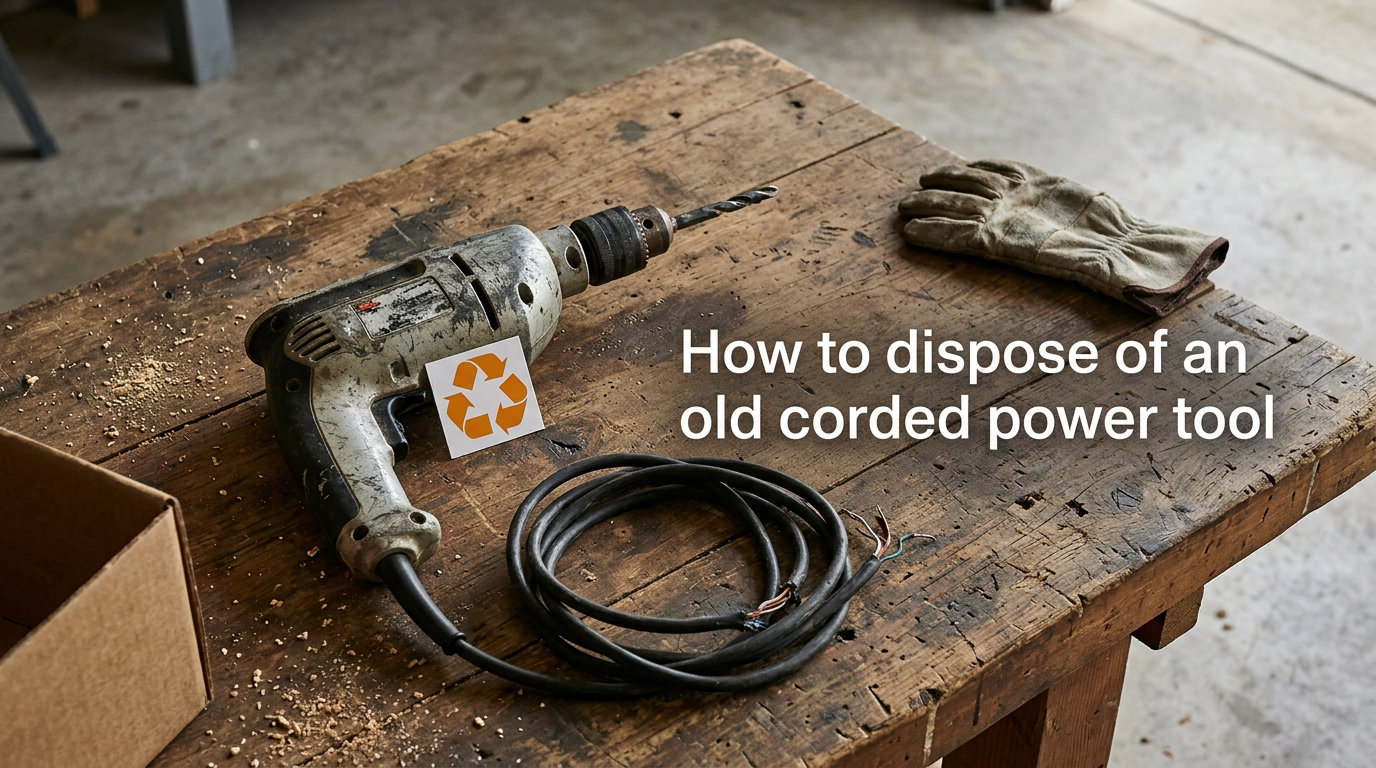
If you have an old corded power tool sitting in your garage, workshop, or basement, you’re not alone. Millions of Americans deal with dead drills, broken circular saws, and worn-out sanders every year, and most of them don’t know where to start. Knowing how to dispose of an old corded power tool the right way matters because these tools contain copper, aluminum, and steel that can be recovered, plus a few components that should never end up in a landfill.
In this guide, I’ll walk you through the exact process I use when clearing out retired tools from my own workshop. You’ll learn how to prep the tool safely, which of the four disposal options fits your situation, and how to find local resources fast. By the end, you’ll have a clear plan instead of another pile of dust-covered equipment in the corner.
Table of Contents
Why Proper Disposal of an Old Corded Power Tool Matters?
Proper disposal keeps valuable metals out of landfills and stops small e-waste hazards from leaking into the soil. Power tools are not junk, even when they stop working. They are containers of recoverable materials that recycling facilities can turn back into useful products.
The Environmental Cost of Improper Disposal
When a corded power tool ends up in the trash, the metal housings, copper windings, and circuit boards get buried with regular household waste. Some of those components can leach heavy metals and chemicals over time. The EPA estimates that e-waste makes up roughly 2% of municipal solid waste but contributes 70% of the toxic load in landfills. Old power tools are part of that stream.
Beyond the contamination risk, you are also throwing away finite resources. A single electric drill can contain about half a pound of copper wire, a pound of steel, and several ounces of aluminum. Multiply that by the millions of tools discarded each year, and the cumulative loss is staggering. Proper disposal captures that value instead of burying it.
What Is Inside a Corded Power Tool?
A corded power tool contains a mix of metals, plastics, and small electronic components that make it valuable to recyclers. Knowing what is inside helps you decide whether to scrap, donate, or recycle your tool.
Recoverable Materials at a Glance
Most corded drills, saws, sanders, and grinders share a similar internal layout. The motor housing is usually cast aluminum or high-impact plastic. Inside the motor you will find copper windings around a steel or laminated iron core. The switch mechanism contains small electrical contacts, and the power cord has stranded copper wrapped in rubber or PVC insulation.
Higher-end tools may include printed circuit boards for speed control, soft-start modules, or brushless motor controllers. Even budget tools typically contain a small capacitor on the motor circuit. That capacitor is the component most people overlook, and it can hold a residual charge that you should discharge before disposal. I will cover that step below.
How to Prepare a Corded Power Tool for Disposal
Preparing a corded power tool before disposal keeps you safe and ensures the recycling facility accepts the unit. Power tools are not difficult to prep, but skipping the safety steps can lead to electric shock or fumbled components that actually lose value.
Step 1: Disconnect and Inspect the Tool
Unplug the tool from the wall outlet before you do anything else. Lay it on a clean, dry work surface and look over the housing for cracks, exposed wiring, or signs of overheating. If the cord is damaged at the strain relief, that is also a good thing to note for the recycler because some facilities require the cord to be cut off before drop-off.
Step 2: Remove the Power Cord Safely
Most corded power tools have the power cord entering the housing through a rubber grommet. You can cut the cord near the housing with heavy-duty wire cutters, leaving about 6 inches attached. This makes the tool safer to handle and gives the recycler a clean separation point for the copper inside.
Some recycling centers prefer you leave the cord intact. A quick phone call or a look at their drop-off checklist will tell you which approach they want. When in doubt, I leave the cord attached and let the facility do its own breakdown.
Step 3: Discharge the Motor Capacitor
Many corded power tools contain a small motor capacitor that can store an electrical charge even after the tool is unplugged. To discharge it, use an insulated screwdriver with a grounded lead to bridge the two capacitor terminals. You will hear a small pop or see a tiny spark, and the capacitor will be safe to handle.
If you are not comfortable with this step, skip it and let the recycler handle it. They have the tools and training to discharge capacitors quickly. The point is to know that the capacitor is there, because it is the single most common surprise for people disposing of corded tools for the first time.
Four Disposal Options for Your Old Corded Power Tool
There are four practical ways to dispose of an old corded power tool, and the right choice depends on whether the tool still works, its brand, and whether you want cash back. Below is the decision tree I use, which I have not seen covered this clearly on competing sites.
Option 1: Recycle at an E-Waste or Scrap Metal Facility
E-waste recyclers and scrap metal yards are the most reliable option for dead or broken corded tools. Both will accept the mixed metals and pay you a small amount based on the weight of recoverable copper and steel. A typical dead drill will fetch around 40 to 80 cents at a scrap yard, but you will also get the satisfaction of knowing the materials get reused.
To find a recycler, search the EPA’s e-waste directory or Earth911 for power tool recycling near me. Most metropolitan areas have at least one licensed facility within a 30-minute drive. Rural areas may have a municipal collection event once or twice a year, and those are perfect for batch disposal of multiple tools.
Option 2: Donate Working Tools to Charity
If the tool still works, donation is the highest-value option. Habitat for Humanity ReStores accept power tools in working condition, as do many local thrift stores, vocational schools, and maker spaces. One Reddit user in r/Tools mentioned donating six retired drills to a local ReStore and receiving a tax receipt that exceeded the original sale price.
Before donating, clean the tool, replace the brushes if accessible, and test it on a scrap piece of wood. Donors who hand over a working tool that performs well get more value, and the receiving organization spends less time on repairs. Tools that fail on first use often end up in the trash anyway.
Option 3: Use a Manufacturer or Retailer Trade-In Program
Major brands like DeWalt, Milwaukee, and Bosch have run trade-in promotions in cooperation with retailers. Home Depot also has a recycling program for power tool batteries, and Best Buy accepts e-waste including tools in many states. During these promotions, you can sometimes trade a non-working tool for a discount on a new one.
Trade-in programs are not always active, so check the retailer’s website before driving to the store. The Home Depot recycling program, for example, focuses on rechargeable batteries rather than the tools themselves, but the staff can often point you to the nearest e-waste partner. Asking takes 30 seconds and can save you a wasted trip.
Option 4: Sell for Parts or Scrap
Some specialty corded tools have parts that are worth more than their weight in scrap. Brushes, switches, chucks, and motor assemblies can be listed individually on eBay or in tools-specific Facebook groups. A used DeWalt drill chuck, for instance, often sells for $8 to $15, while its melt value is closer to a dollar.
If you have a drawer full of old power tools, batch selling on the local marketplace is faster than listing each one. Take a clear photo of the full pile, list the brands, and offer a discount for bulk pickup. That approach clears space, generates a little cash, and avoids the recycler entirely.
How to Find Local Power Tool Recycling Near You?
Finding a local recycling option is the step that trips most people up, but the tools to find one are free and take under a minute to use. Here are the three resources I rely on in 2026 when I need to point someone in the right direction.
Use the EPA and Earth911 Locators
The EPA’s website has a search-by-zip-code tool that lists e-waste recyclers in your area. Earth911 does the same thing with a cleaner interface and a more frequently updated database. Both are free, and both let you filter for power tools specifically. Plug in your zip code, call the first three results, and pick whichever accepts drop-offs without an appointment.
Check Retailers Like Home Depot and Best Buy
Home Depot accepts rechargeable batteries at most stores, and many Best Buy locations accept e-waste including small power tools. The selection varies by state because e-waste laws differ across the country. Call ahead to confirm that your nearest store accepts tools before loading the car.
Call Municipal Collection Events
Most cities run household hazardous waste and e-waste collection days two to four times a year. These events are free, and the staff will unload your vehicle for you. Local government websites list the schedule, and many accept walk-ins from residents of nearby towns. A small city of 40,000 people will typically have at least one event per quarter.
Common Mistakes to Avoid When Disposing of Corded Power Tools
Most disposal mistakes come from acting too quickly or assuming the tool is simpler than it actually is. A few minutes of caution saves you from fines, injuries, or a rejected drop-off.
Don’t Throw Them in the Trash
Even if your local garbage service accepts bulky items, power tools are e-waste and should not be put in the curbside bin. Several states have laws against it, and you can be fined if caught. The recycling chain only works when the tool enters the right stream, and your trash can is the wrong stream.
Don’t Skip the Capacitor Discharge
The capacitor inside a corded tool is small but capable of delivering a painful shock. If you decide to disassemble the tool for parts, always discharge the capacitor first. If you are dropping the tool off intact, the recycler will handle it, but you should still know that the component exists.
Don’t Strip Valuable Parts Before Donation
If your tool still works, do not pull the chuck, brushes, or switch for resale before donating it. A working tool is worth far more to a charity than its parts. Strip it first, and the charity will likely refuse it because the tool is no longer functional. Only part out a tool that is genuinely dead.
Frequently Asked Questions
How do I dispose of corded power tools?
Unplug the tool, discharge the capacitor if you are disassembling it, and then take it to a local e-waste recycler, scrap metal yard, or municipal collection event. If the tool still works, donate it to a Habitat for Humanity ReStore, thrift store, or vocational school. Many retailers also run trade-in programs that accept older corded tools in exchange for discounts on new models.
What do I do with old power tools?
Start by testing whether the tool still works. Working tools should be donated to a charity, sold on the marketplace, or traded in for a discount on a new one. Broken tools should be taken to a local e-waste recycler or scrap metal yard so the copper, aluminum, and steel can be recovered. Do not throw corded power tools in the regular trash because they contain e-waste components that should not enter the landfill stream.
How can you get rid of old tools?
You can get rid of old tools by donating them, recycling them, selling them for parts, or using a manufacturer trade-in program. Donation works best for tools that still function. Recycling is the right path for broken or unwanted units. Selling for parts makes sense for specialty tools with valuable components. Trade-in programs offer discounts on new tools when promotions are active. Pick the option that matches the tool’s condition and your local resources.
Does Home Depot take old power tool batteries?
Yes, Home Depot accepts rechargeable tool batteries at most store locations through its battery recycling program. The program covers lithium-ion, nickel-cadmium, and nickel-metal hydride batteries from cordless tools. It does not typically accept the corded tools themselves, but the staff can direct you to a local e-waste partner that does. Call your local store before bringing in batteries to confirm acceptance.
How to get rid of tools you no longer need?
To get rid of tools you no longer need, first decide whether they still work. Working tools can be donated, sold, or traded in. Broken tools should be taken to a recycler or scrap yard. For batch disposal, municipal collection events are the easiest option because they accept multiple items in one trip. Online marketplaces also work for tools with parts that hold value to hobbyists and repair shops.
Final Thoughts
Learning how to dispose of an old corded power tool is less about the tool and more about sending the right materials to the right place. Pick the disposal path that matches the tool’s condition, prep it safely, and use the local resources available to you. Once you have the system down, clearing out the next batch of old tools takes an afternoon instead of a year of procrastination.
Start with one tool today. Unplug it, inspect it, and decide whether to donate, recycle, or sell it. After the first one, the rest will be much easier, and your garage will thank you for it.