
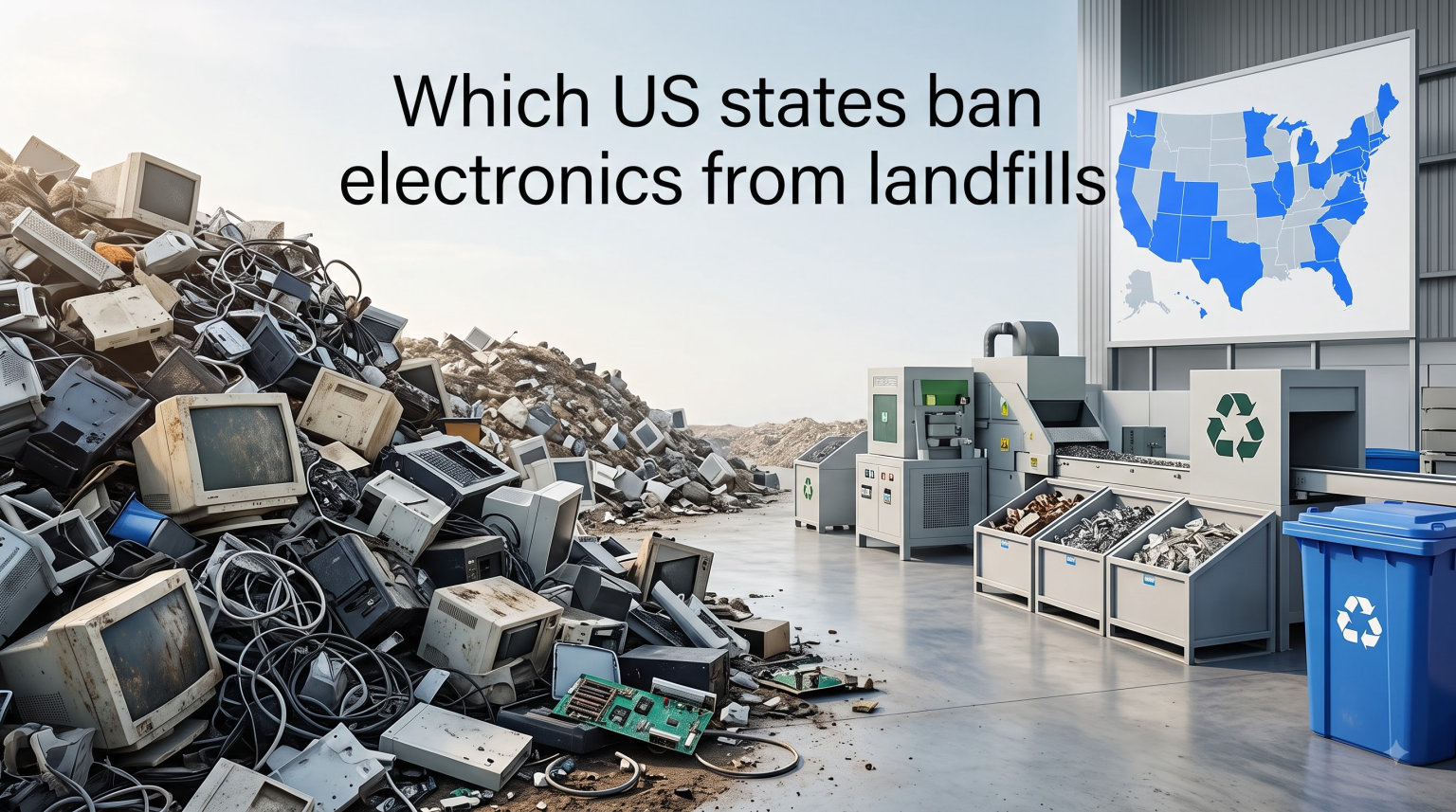
There are currently 23 states and the District of Columbia that have an express landfill or disposal ban on electronic devices. I dug into the latest 2026 data from state environmental agencies, federal tracking programs, and industry reporting to give you the most accurate picture possible.
Across the country, more than 25 states have passed some form of e-waste recycling law, but only those 23 states plus DC have outright banned electronics from landfills. I will walk you through which states made the list, why these laws exist in the first place, what electronics are covered, what penalties you could face, and how to properly dispose of your old gadgets.
By the end of this guide, you will know exactly where your state stands, what devices fall under the ban, which 2026 legislative changes are reshaping the landscape, and where to recycle your electronics safely and legally.
Table of Contents
Why Are Electronics Banned from Landfills?
Electronics are banned from landfills because they contain toxic heavy metals and hazardous chemicals that can leach into soil and groundwater. Lead, mercury, cadmium, and lithium are common in circuit boards, batteries, and display screens across nearly every category of consumer electronics.
When I started researching e-waste a few years ago, I was shocked by how many hazardous substances sit inside a single laptop. Older CRT monitors contain several pounds of lead each. Lithium-ion batteries can spark fires in collection trucks and landfill compaction equipment. Even small amounts of mercury from LCD backlights add up across millions of discarded devices entering the waste stream every year.
The Environmental Risks of E-Waste in Landfills
When electronics break down in landfills, the heavy metals inside do not just disappear. They leach into the surrounding soil and eventually reach the water table. Groundwater contamination from lead, mercury, and cadmium has been documented at municipal landfill sites across the US, particularly in older facilities without modern liner systems.
Beyond groundwater contamination, batteries pose a separate and increasingly dangerous risk. Lithium-ion cells can ignite under pressure, and the EPA has reported more than 200 fires at waste facilities caused by batteries in a single recent year. Landfill operators across the country have begun flagging electronics as a leading cause of facility fires, which can shut down operations for days and put workers at risk.
The sheer volume of e-waste is staggering. The UN estimates that more than 60 million metric tons of electronic waste are generated globally each year. The United States contributes roughly 6.9 million tons of that total, and only about 15 to 20 percent gets properly recycled. The rest ends up in landfills, incinerators, or shipped overseas with varying degrees of regulatory oversight.
The Health Case for Banning E-Waste from Trash
The health impacts extend well beyond environmental contamination. Communities near landfills report higher rates of respiratory illness, and workers at informal recycling operations abroad face direct exposure to neurotoxins during dismantling and smelting. Children are particularly vulnerable to lead exposure, which is why lead-acid batteries and CRT glass are classified as hazardous waste at the federal level under RCRA.
I have seen the science converge on a clear conclusion over the past decade: keeping electronics out of landfills is one of the easier environmental wins available to state governments. The materials inside are valuable, recyclable, and genuinely dangerous when mishandled. Landfill bans exist because voluntary recycling alone has not produced the diversion rates needed to address the problem.
Complete List: US States That Ban Electronics from Landfills
Twenty-three states plus the District of Columbia currently prohibit the disposal of certain electronic devices in landfills. Below is the full breakdown organized by region so you can find your state quickly and confirm the rules that apply to you.
Northeast States with Electronics Bans
The Northeast has the highest concentration of disposal bans in the country. Eight of the nine northeastern states have full electronics bans in place.
- Connecticut
- Maine
- Massachusetts
- New Hampshire
- New York
- Pennsylvania
- Rhode Island
- Vermont
Midwest States with Electronics Bans
Midwest adoption has been steady, with several states adopting bans over the past two decades.
- Illinois
- Indiana
- Michigan
- Minnesota
- Wisconsin
South and Mid-Atlantic States with Electronics Bans
The South has been slower to adopt landfill bans, but several states have moved forward in recent years as recycling infrastructure expanded.
- Maryland
- North Carolina
- Virginia
- West Virginia
West Coast and Mountain States with Electronics Bans
The West Coast leads the country in electronics recycling infrastructure, with three of the four Pacific states operating disposal bans.
- California
- Oregon
- Washington
Together with the District of Columbia, that brings the total to 23 states plus DC. The remaining 27 states have either voluntary recycling programs, manufacturer-run take-back programs, or no statewide e-waste rules at all.
States with Recycling Laws But No Landfill Ban
Some states require manufacturers to run recycling programs without banning landfill disposal outright. These include Florida, Texas, and several others. In these states, electronics can technically still go in the trash, though most residents and businesses use take-back programs or municipal collection events instead.
I want to be clear about this distinction because I see it confuse readers all the time. A state may have an e-waste recycling law without having a landfill ban. The 23-state count refers specifically to disposal bans, not the broader category of recycling legislation. Some sources cite higher numbers when they include any state with e-waste laws of any kind.
Historical Timeline of State Disposal Bans
Massachusetts enacted the first electronics disposal ban in 2000, setting off a wave of similar legislation across the country. California followed in 2003. Maine, New York, and several other northeastern states passed their bans in the mid-2000s. Indiana, Michigan, and other Midwestern states adopted bans between 2009 and 2012. More recent additions include West Virginia and North Carolina, both of which passed bans in the late 2010s.
The pace of new disposal bans has slowed since 2020, but state legislatures have shifted focus toward expanding EPR programs and right-to-repair laws. Those changes are arguably more significant than the original disposal bans because they shift end-of-life costs from taxpayers and municipalities to manufacturers. Expect the trend toward EPR to continue shaping the e-waste policy landscape through 2026 and beyond.
What Electronics Are Covered by These Bans?
Most state bans cover what regulators call Covered Electronic Devices, or CEDs. These typically include televisions, computer monitors, desktop and laptop computers, tablets, and printers. Some states expand the list to include peripherals, small appliances, and mobile devices, though the exact scope varies.
Commonly Covered Devices
The most frequently regulated electronics across state laws include the following categories.
- Televisions (including CRT, LCD, plasma, and OLED)
- Computer monitors and laptops
- Desktop computers and central processing units
- Tablets and e-readers
- Printers, scanners, and multifunction devices
Devices That Vary by State
Coverage gets less consistent outside the core list. Some states include video game consoles, DVD players, and cable equipment. A growing number include smartphones and mobile devices, though many still exempt them. A few states have begun covering networking equipment like routers and modems.
Battery coverage is its own complicated area. Universal waste rules at the federal level handle most rechargeable and lead-acid batteries through separate regulations. State-level electronics bans often reference these federal rules without explicitly listing batteries. If you are unsure whether a specific battery is covered, check both your state’s electronics rules and your state’s universal waste rules.
I find that the biggest practical confusion comes from devices like radios, small kitchen appliances, and power tools. These typically fall outside electronics disposal bans and instead may be covered under separate appliance recycling programs. Power tools with rechargeable batteries often have specific manufacturer take-back options.
Items Most States Still Allow in the Trash
Several electronics are generally exempt from disposal bans regardless of state. Small kitchen appliances like toasters and coffee makers are usually allowed in regular trash. Smoke detectors, light bulbs, and most small consumer electronics fall under separate hazardous waste rules rather than electronics disposal bans.
The cleanest rule of thumb I can offer: if the device has a circuit board and a screen, it is almost certainly covered by your state’s ban. If it does not have a screen, double-check before throwing it out, especially if the device contains a battery or other potentially hazardous components.
Why Some Devices Are Excluded
You may wonder why some devices are not on the list. The answer usually comes down to cost-effectiveness and existing infrastructure. Devices with small amounts of hazardous material may be cheaper to manage through general solid waste systems than to require separate recycling. Regulatory agencies also face practical limits on how many device categories they can realistically track and enforce, so most laws focus on the highest-volume, highest-toxicity items first.
2026 Legislative Updates: New E-Waste Laws Taking Effect
Seven states have enacted major new e-waste, battery, and right-to-repair laws taking effect in 2026. These changes significantly expand electronics recycling requirements and shift more responsibility from taxpayers and municipalities to manufacturers through extended producer responsibility frameworks.
Colorado’s Electronics and Right-to-Reform Laws
Colorado enacted new electronics extended producer responsibility rules and a right-to-repair law. Manufacturers must now fund collection and recycling programs for covered devices. Consumers gain expanded rights to repair their own devices or use independent repair shops without manufacturer restrictions on parts or software locks.
Oregon’s Expanded EPR Program
Oregon expanded its existing EPR program for electronics. The state added new device categories and tightened reporting requirements for manufacturers. Oregon was already a leader in this space, and the 2026 update pushes it further. The expanded program also increases funding for rural collection sites, addressing one of the most common complaints from residents in less populated areas.
Illinois Establishes Battery EPR
Illinois created a new extended producer responsibility program specifically for batteries. While the electronics ban already covers devices, this new program adds dedicated funding and infrastructure for battery recycling across the state. Single-use and rechargeable batteries from household products are now covered under the new framework.
Washington’s Right-to-Repair Law
Washington adopted a right-to-repair law focused on consumer electronics. The law requires manufacturers to make parts and repair information available for a defined period after product launch. It is designed to extend device lifespans and reduce e-waste generation at the source, rather than focusing solely on end-of-life recycling.
Vermont Expands Battery EPR
Vermont expanded its existing battery EPR program to cover more battery chemistries and increase collection targets. Vermont has long been at the forefront of EPR policy, and the 2026 update continues that pattern. The new rules also add reporting requirements for retailers that sell covered battery products.
New York Organics Diversion Mandate
New York’s new organics diversion mandate does not directly affect electronics, but it represents a broader waste reduction push. The state is also tracking landfill emissions data, which may inform future electronics policy. New York already has one of the strictest electronics disposal bans in the country, and additional EPR-style programs are reportedly under consideration.
Nevada’s New Recycling Laws
Nevada joined the growing list of states updating e-waste and recycling rules. The changes include new reporting requirements for manufacturers and expanded obligations for retailers that sell covered electronics. Nevada’s update signals that even states without full disposal bans are moving toward stronger EPR frameworks.
Looking at all these 2026 updates together, the trend is unmistakable. States are moving from voluntary recycling toward mandatory extended producer responsibility, where manufacturers pay for the end-of-life management of their products. This shift is reshaping how the electronics industry approaches product design, take-back logistics, and recycling infrastructure funding.
Penalties and Enforcement: What Happens If You Violate the Ban?
Penalties for violating electronics disposal bans vary widely by state, but most states treat improper disposal as a violation of solid waste rules rather than a criminal offense. Fines typically range from $100 to $25,000 per violation depending on the state, the device type, and whether the violator is an individual or a business.
Fines for Households vs. Businesses
Enforcement tends to focus on businesses, haulers, and recycling facilities rather than individual households. A resident who puts an old TV on the curb with regular trash is unlikely to face a fine in most states. A commercial hauler who knowingly mixes electronics with regular waste in a dumpster faces much higher exposure and potential license issues.
Common Penalty Ranges
Most state agencies structure their penalties as civil fines with escalating amounts for repeat violations. Initial violations often result in warnings or small fines in the $100 to $500 range. Subsequent violations can trigger larger penalties, permit issues, or even referral for criminal prosecution in extreme cases involving hazardous materials or large commercial volumes.
I have seen enforcement actions focus on the waste hauler side of the equation. If your trash collection company accepts electronics and disposes of them in a landfill, both the hauler and the disposal facility can face penalties. Some states have also pursued actions against retailers that fail to participate in take-back programs as required.
Real-World Enforcement Examples
California’s Department of Toxic Substances Control has issued multiple fines for improper e-waste handling, often in the range of $10,000 to $50,000 per violation. New York has pursued enforcement actions against retailers and manufacturers for noncompliance with state recycling requirements. Massachusetts has issued penalties to haulers caught mixing electronics with regular waste loads.
The practical takeaway: while most households will not be personally fined, the disposal chain is monitored. The strongest enforcement happens at the business and hauler level, but knowing your state’s rules helps you avoid contributing to violations further up the chain. Always ask your hauler or recycler how devices are handled if you are unsure.
How to Properly Dispose of Electronics: A Step-by-Step Guide
Properly disposing of electronics takes a bit more effort than tossing them in the trash, but it is straightforward once you know the steps. Follow this process to make sure your old devices are recycled responsibly and legally.
Step 1: Identify Your State’s Rules
Check whether your state has a disposal ban and which devices are covered. Your state environmental agency website is the most reliable source. Most agencies maintain a dedicated e-waste or electronics recycling page with current rules, lists of covered devices, and links to certified recyclers in your area.
Step 2: Back Up and Wipe Your Data
Before recycling any device that stores personal data, back up what you need and perform a factory reset. For computers, consider using a data destruction tool that meets Department of Defense standards. For smartphones, enable remote wipe features before disposal. Remove any external storage like SD cards and SIM cards separately.
Step 3: Find a Certified Recycler
Look for recyclers certified under the Responsible Recycling (R2) or e-Stewards standards. These certifications require proper data destruction, environmentally sound processing, and downstream accountability for where materials end up. Avoid uncertified recyclers, especially those advertising free pickup without clear documentation of where the devices are processed.
Step 4: Use Municipal or Retailer Programs
Many cities and counties run e-waste collection events or permanent drop-off locations. Major retailers including Best Buy and Staples accept a wide range of electronics for recycling, often free of charge for household quantities. Some manufacturers also operate mail-back programs for their own products.
Step 5: For Banned Items, Never Use Regular Trash
If your device is covered by your state’s ban, never put it in your household trash or recycling bin. Even if your local hauler says electronics are okay, the state law takes precedence. Use a certified recycler, municipal program, or retailer take-back option instead. Mixing banned electronics with regular waste can create liability for your hauler and put you at legal risk.
Forum users on Reddit have shared experiences driving 30 minutes or more to reach a certified recycler in rural areas. If you face this challenge, manufacturer take-back programs and mail-back options can help bridge the gap. Several nonprofits also operate mail-in recycling programs for hard-to-recycle items like old laptops and printers.
Step 6: Get Documentation
Ask your recycler for a certificate of destruction or recycling. This documentation matters for business disposal and can be useful proof for any future audit. For households, the documentation is mostly optional, but it provides peace of mind that your device was handled properly.
Tip: Save Receipts for Business Disposal
If you are disposing of electronics for a business, keep documentation of where each device went. State agencies can request this information during audits, and proper records protect you in case of an enforcement action. Include serial numbers, dates, and recycler certifications in your records.
Warning: Avoid Export Scams
Be cautious of recyclers who export electronics overseas without proper certification. Unregulated exports can end up in informal processing sites with poor environmental and labor protections. Stick with R2 or e-Stewards certified facilities, and ask where your devices will actually be processed before handing them over.
Frequently Asked Questions
Which US state has the most landfills?
Texas has historically had the most landfills of any US state, with several hundred active municipal solid waste facilities. However, Texas does not currently have an express electronics landfill ban, though it does operate voluntary e-waste recycling programs.
Why are electronic devices not able to be put in the landfill?
Electronic devices cannot go in landfills because they contain toxic heavy metals like lead, mercury, cadmium, and lithium that can leach into soil and groundwater. They also pose fire risks when batteries are crushed under compaction equipment. Recycling recovers valuable materials and prevents environmental contamination.
Can you get in trouble for throwing away a TV?
Yes, in the 23 states plus DC with electronics disposal bans, throwing away a TV in regular trash can result in fines. While enforcement typically targets haulers and businesses rather than individual households, the legal risk exists for everyone in the disposal chain. Penalties range from warnings for first-time household violations to thousands of dollars in fines for commercial offenders.
What electronics should never be thrown away?
Televisions, computer monitors, laptops, desktops, tablets, printers, and most devices with screens should never go in regular trash in states with disposal bans. Batteries, especially lithium-ion and lead-acid types, are also banned from landfills under federal universal waste rules. Small appliances without screens are usually allowed in regular trash unless your state has separate rules.
Is it illegal to throw away electronics in Texas?
No, Texas does not currently have an electronics landfill ban. Texas operates voluntary e-waste recycling programs through the state and partnerships with retailers and manufacturers. Residents can still throw electronics in the trash legally in Texas, though recycling is strongly encouraged and widely available.
Is it illegal to throw away electronics in Indiana?
Yes, Indiana has had an electronics disposal ban in effect since 2010. The state prohibits certain electronic devices from being disposed of in landfills and requires recycling through certified programs. Covered devices include televisions, computers, monitors, printers, and several other common electronics.
Conclusion: The Future of E-Waste Disposal in America
Twenty-three states plus the District of Columbia currently ban electronics from landfills, with seven more states enacting major new e-waste and right-to-repair laws in 2026. The trend is clear: states are moving toward mandatory extended producer responsibility and putting more accountability on manufacturers rather than taxpayers.
If you live in one of the 23 states with a ban, take a few minutes to identify your nearest certified recycler before your next device upgrade. If your state does not have a ban yet, recycling through a retailer program or municipal collection event is still the responsible choice and often the easiest option.
For businesses, the message is even clearer. Build documentation into your disposal process, partner with R2 or e-Stewards certified recyclers, and stay ahead of state-level EPR rules that are reshaping the industry. The states that ban electronics from landfills in 2026 are setting the template for the rest of the country, and additional states are likely to adopt similar frameworks in the coming years.