
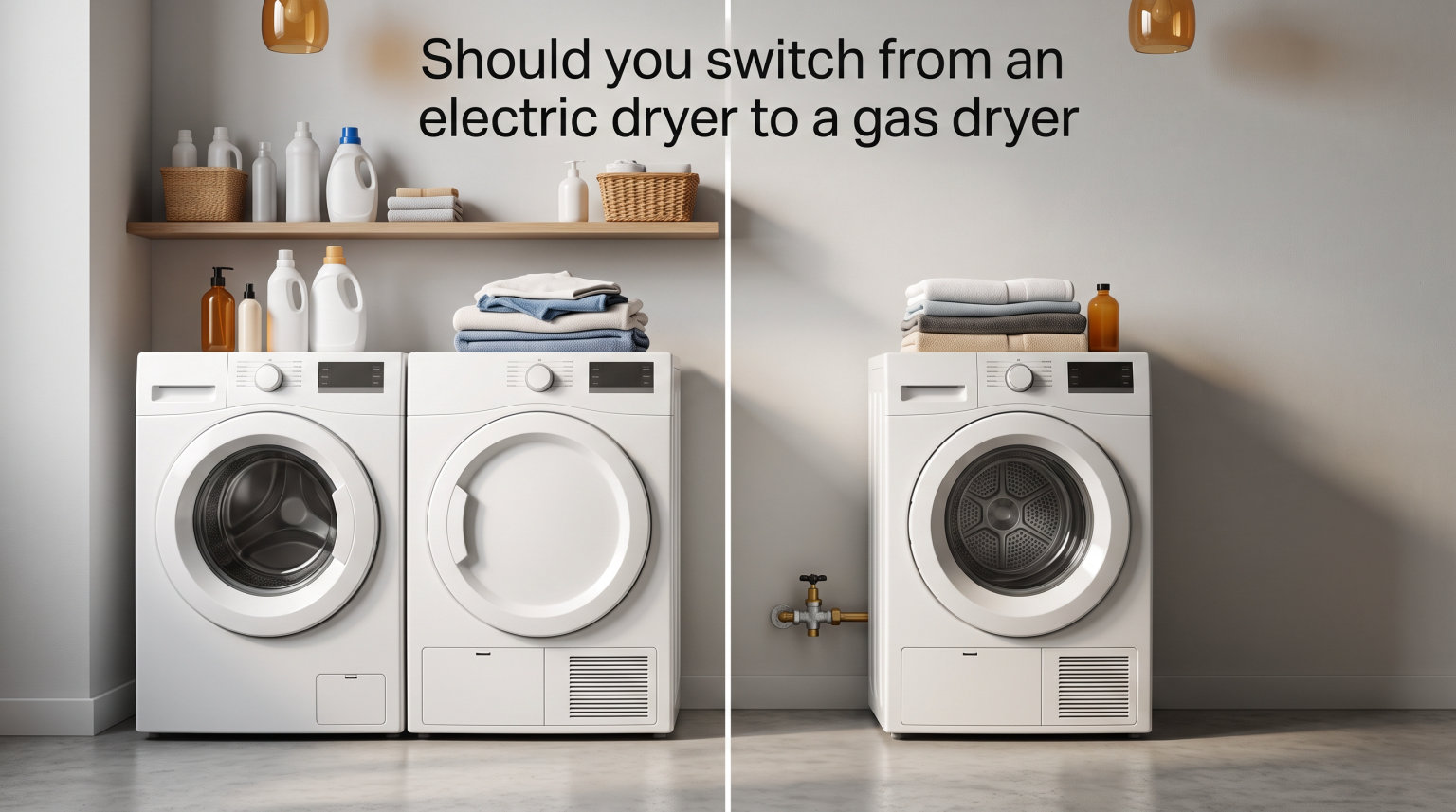
Switching from an electric dryer to a gas dryer is one of those home upgrades that sounds simple until you actually run the numbers. I spent the last few weeks comparing utility rates, reading through hundreds of forum threads, and walking through real installation scenarios to put this guide together. The short answer: it depends almost entirely on your laundry room setup, your local utility rates, and how long you plan to stay in the home.
By the end of this article, you’ll know exactly how each dryer works, what it costs to run, what installation actually involves, and whether switching makes financial sense for your situation. I’ll also cover the heat pump dryer alternative that most competitors ignore but is gaining serious traction in 2026.
Table of Contents
How an Electric Dryer Actually Works?
An electric dryer uses a heating element to warm air, then a blower fan pushes that hot air through the tumbling drum. The heating element is a coiled wire that glows red when current passes through it, and it sits behind the drum where air can flow over it.
Electric dryers need a dedicated 240-volt circuit, which is why you’ll see a large NEMA 14-30 outlet (the big three-prong or four-prong plug) in most laundry rooms. The dryer pulls around 5,000 to 6,000 watts during operation, which is why you can’t just plug one into a standard household outlet.
Because the only heat source is the element, electric dryers tend to dry clothes more slowly. A typical load takes 50 to 75 minutes, depending on the fabric and how much moisture the moisture sensors detect. The simpler design does have an advantage: fewer parts to break, which means repairs are usually cheaper and faster.
Why Electric Dryers Power Most U.S. Homes
About 80% of American homes have electric dryers, mostly because the electrical infrastructure is already in place. If your home was built without a gas line running to the laundry area, switching means more than just buying a new appliance.
Electric dryers also work in apartments, condos, and rental properties where gas line installation isn’t an option. For renters, the choice is already made for them.
How a Gas Dryer Actually Works
A gas dryer uses a burner to create a flame, and that flame heats the air before it enters the drum. The ignition system is the part most people never see: a glow bar igniter heats up, a gas valve opens, and the flame lights.
Gas dryers typically run on natural gas or propane, with a BTU rating between 18,000 and 22,000 for most residential models. The gas burner heats the air faster than an electric heating element can, which is why gas dryers usually finish a load in 30 to 45 minutes.
The rest of the gas dryer is similar to an electric one: a drum, a blower fan, moisture sensors, and a lint filter. The key difference is the heat source. You still need a 120-volt outlet (a standard NEMA 5-15 plug) to power the controls, lights, and motor, but the heavy lifting is done by gas.
Why Gas Dryers Are Common in Some Regions
In regions where natural gas is cheap and infrastructure is widespread, gas dryers are the default. The Northeast, parts of the Midwest, and California have higher gas dryer penetration because the gas lines are already there from furnaces and water heaters.
Reddit users in the r/Appliances subreddit repeatedly mention that gas dryers cut their drying time roughly in half compared to electric models. That time savings alone is a real quality-of-life upgrade for families doing multiple loads per week.
Comparing Operating Costs Side by Side
Operating costs are where the gas dryer story gets interesting. Based on average U.S. utility rates in 2026, a gas dryer costs about $0.15 to $0.35 less per load than an electric dryer. Do three to four loads per week, and that’s roughly $25 to $60 per year in savings.
The math works like this: an electric dryer uses around 4 kWh per load, which costs about $0.55 at the national average electricity rate. A gas dryer uses about 22,000 BTU of gas (around $0.25) plus a small amount of electricity for the motor and controls. The savings show up most clearly in regions where natural gas is cheap and electricity is expensive.
Forum users on Reddit have posted real numbers that line up with these estimates. One homeowner in Pennsylvania reported saving about $180 per year after switching, while a user in California (where electricity rates are higher) saw almost no difference. Regional cost variation is the single biggest factor, and it’s why generic online calculators can’t give you a definitive answer.
The Five-Year Break-Even Calculation
Most experts recommend a 5-year minimum time horizon to justify the switch. If gas line installation costs $1,500 and you save $40 per year, the break-even point is 37 years. That’s not a good investment.
But if you already have a gas line (because you have a gas furnace or water heater), the installation cost drops to a few hundred dollars for the dryer hookup alone. In that case, switching pays for itself within two to three years and then saves you money for the remaining life of the dryer.
What Installation Actually Requires for Each Type
Installing an electric dryer is straightforward: plug it into the 240-volt outlet, attach the vent hose, and you’re done. Most homeowners can handle this themselves, though dryers are heavy and a two-person job is safer.
Installing a gas dryer requires more steps. You need a gas line with a shutoff valve within about 6 feet of the dryer, a 120-volt electrical outlet for the controls, and proper venting to the outside. The gas connection itself should be made with a flexible stainless steel connector, not the old corrugated brass types that are now code violations.
If you don’t have a gas line in your laundry area, the cost to run one ranges from $300 to $2,000 depending on the distance from your existing gas meter and the complexity of routing the pipe through walls. Forum users have quoted prices as high as $1,800 for a single line run, which is why the break-even math is so important.
Plug Differences You Should Know
The electrical plugs are completely different. Electric dryers use a NEMA 14-30 (four-prong, 240V) or NEMA 10-30 (three-prong, 240V) plug. Gas dryers use a standard NEMA 5-15 (three-prong, 120V) plug, the same as your phone charger.
You absolutely cannot use an adapter to convert between these. The NEMA 14-30 carries 240V, and the NEMA 5-15 only handles 120V. Even if you could physically connect them, the dryer would be destroyed or create a fire hazard.
Pros and Cons of Each Dryer Type
Here’s the honest breakdown based on what homeowners and technicians actually report.
Gas Dryer Advantages
Gas dryers heat up faster, which means shorter dry times. They cost less to operate per load in most regions. They produce less heat in the laundry room because more energy goes into the drum rather than the exhaust. Clothes often come out with fewer wrinkles because the higher temperature and shorter cycle time reduces fabric stress.
Gas Dryer Drawbacks
Gas dryers cost more upfront. Installation is more complex and often requires a licensed plumber or gas technician. They have more components that can fail, including the igniter, gas valve, and flame sensor. There’s a small but real carbon monoxide risk if the burner malfunctions. Repairs tend to cost more because parts are pricier and the work is more involved.
Electric Dryer Advantages
Electric dryers are cheaper to buy. Installation is simple and safe. They have fewer parts that can fail, which means lower repair costs over the dryer’s life. They work in any home with a 240V outlet, regardless of gas availability.
Electric Dryer Drawbacks
Electric dryers use more energy per load. They take longer to dry clothes. They generate more ambient heat in the laundry room, which can be uncomfortable in summer. Operating costs are higher in most regions where gas is available.
Safety Considerations You Shouldn’t Ignore
Carbon monoxide is the headline concern with gas dryers. A properly installed and maintained gas dryer vents combustion gases outside, but a cracked heat exchanger or blocked vent can leak CO into your home. This is why every gas dryer installation should include a working carbon monoxide detector nearby.
Annual maintenance checks by a qualified technician can catch problems before they become dangerous. The cost is usually $75 to $150 and includes inspecting the gas line, testing the igniter, and checking the vent for blockages.
Electric dryers have their own safety considerations. The 240V circuit is genuinely dangerous, and any wiring issues should be handled by a licensed electrician. Lint buildup is also a fire hazard for both types, which is why cleaning the lint filter after every load and the vent duct once a year is essential.
Decision Framework: When Switching Actually Makes Sense
Use this framework to decide whether to switch from an electric dryer to a gas dryer in your situation.
Switch to Gas If:
You already have a gas line in or near your laundry room. You do five or more loads of laundry per week. Your local natural gas rate is meaningfully lower than your electricity rate. You plan to stay in the home for at least 5 years. You want faster drying times and lower per-load costs.
Stay with Electric If:
No gas line exists in your home or running one would cost more than $1,000. You’re renting and don’t control utility hookups. You live in a region where electricity is cheaper than gas (parts of the Pacific Northwest, for example). You move frequently and don’t want to deal with installation logistics.
Consider a Heat Pump Dryer If:
You want the lowest operating cost possible. You don’t have venting access to the outside. You have solar panels and want to maximize self-consumption. You prioritize energy efficiency over upfront cost.
The Heat Pump Dryer Alternative Worth Considering
Heat pump dryers are the third option most competitors overlook. They work like a refrigerator in reverse: instead of pumping heat out of a fridge, they pump heat into the drum. They use roughly 50% less energy than a standard electric dryer and don’t need to vent to the outside.
The catch is the upfront cost. Heat pump dryers run $1,200 to $1,800, which is more than a gas or electric dryer. The cycles are also longer, often 90 minutes to 2 hours for a full load. But if you have solar panels, the heat pump dryer essentially runs on free energy, which no gas dryer can match.
Forum discussions on Reddit and Houzz show growing interest in heat pump technology, especially among homeowners who have already gone solar or are planning to. For them, the operating cost question flips entirely: the lowest-cost dryer is the one that uses the electricity you’re already generating.
Real User Experiences From the Switch
Forum users report mixed experiences, and those realities matter more than manufacturer claims. One common theme: gas dryers dry clothes faster, but the noise level is higher because of the burner assembly.
Several homeowners mention LED lights flickering when the gas dryer ignites. This happens because the dryer’s motor draws a brief surge of current at startup. It’s not dangerous, but it’s noticeable in homes with sensitive electronics.
On the maintenance side, gas dryer owners report needing service every 2 to 3 years for igniter or gas valve replacements. Electric dryer owners report fewer service calls but note that heating elements can fail after 10+ years and are expensive to replace.
Frequently Asked Questions
Does anyone use gas dryers anymore?
Yes, millions of American households still use gas dryers. They remain popular in regions with cheap natural gas and existing gas line infrastructure, particularly in the Northeast, Midwest, and parts of California. The share of homes with gas dryers has stayed relatively stable over the past decade, even as electric and heat pump options have grown.
What are the downsides of a gas dryer?
The main downsides are higher upfront cost, more complex installation requiring a gas line, more components that can fail over time, and a small carbon monoxide risk if the unit is poorly maintained. Repairs also tend to cost more because gas appliance parts are pricier and the work often requires a licensed technician.
Can you switch from electric to gas dryer?
You can switch, but only if you have a gas line available in your laundry area. If no gas line exists, installation can cost anywhere from $300 to $2,000 depending on how far the line needs to run. Once the gas line is in place, the actual dryer swap is straightforward and typically takes under an hour.
What lasts longer, a gas or electric dryer?
Both types typically last 10 to 13 years with proper maintenance. Gas dryers have more components that can fail, but electric dryers experience heavier wear on the heating element. Real-world longevity depends more on usage patterns, maintenance habits, and ventilation quality than on the fuel type itself.
Should I switch my gas dryer to electric?
Switching makes sense if your gas line is being removed, you have cheap solar electricity, or you’re in a region where gas prices have risen above electricity rates. The reverse switch (gas to electric) usually costs less than gas to electric because you already have the 240V outlet installed.
How much does it cost to switch a gas dryer to electric?
If you already have a 240V outlet, the cost is just the price of the new dryer. If you need a new 240V circuit installed, expect to pay $200 to $500 for an electrician to run the wire and install the proper breaker and outlet.
What is the most common problem with gas dryers?
The most common problem is a failed igniter, which prevents the burner from lighting. Symptoms include the drum turning but no heat. The fix typically costs $100 to $200 in parts and labor. Other common issues include gas valve failures and clogged vent ducts that cause overheating.
Final Verdict: Should You Switch from an Electric Dryer to a Gas Dryer?
If you already have a gas line in your laundry area, switching from an electric dryer to a gas dryer is a smart move. You’ll save on operating costs, cut drying time roughly in half, and reduce the ambient heat in your laundry room. The upfront cost is higher, but the payback period is usually 2 to 3 years.
If you don’t have a gas line, the math rarely works out. The installation cost can easily exceed $1,500, and the long payback period makes the switch hard to justify unless you plan to stay in the home for 15+ years. In that case, a heat pump dryer deserves a serious look, especially if you have solar panels or want the lowest operating costs possible.
The real question to switch from an electric dryer to a gas dryer isn’t whether gas is “better” in some abstract sense. It’s whether your specific home, utility rates, and long-term plans make the switch a financially sound decision. Run the numbers, check your breaker panel and gas meter, and decide based on your situation rather than marketing claims.