
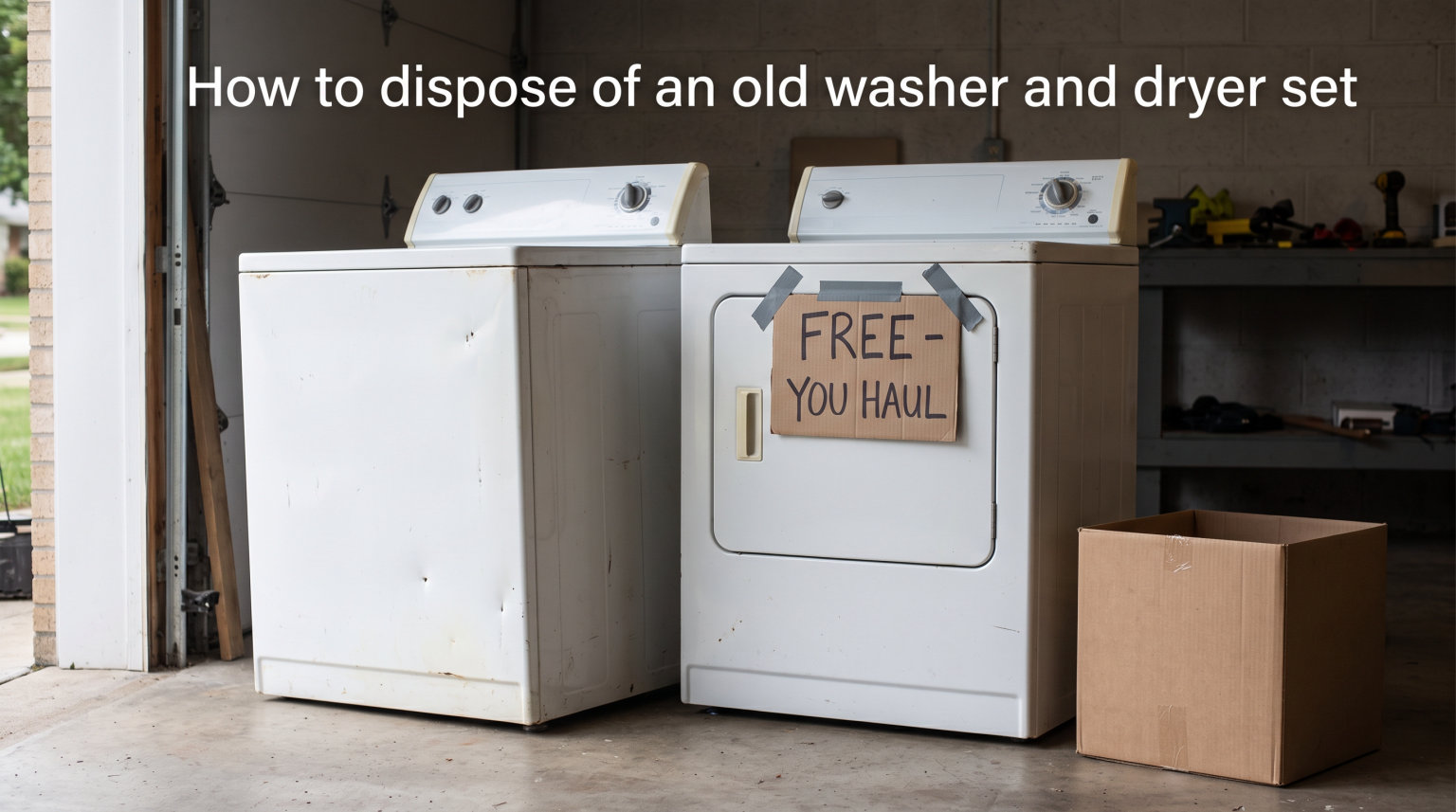
So you just upgraded your laundry setup, and now that old washer and dryer are sitting there taking up space. You need to figure out how to dispose of an old washer and dryer set without paying a fortune or breaking local rules. I have been through this exact process multiple times, and the good news is you have more options than you might think.
In this guide, I walk you through seven proven methods to get rid of old laundry appliances. Some are completely free, a few might even put cash in your pocket, and others are worth the cost when you just want the units gone by tomorrow. I also cover how to safely disconnect everything before removal, because skipping that step is how people end up with flooded laundry rooms or gas leaks.
Before you drag that old washer to the curb, there is something you should know. Many cities issue fines for leaving large appliances on the curb without scheduling a pickup, and improper disposal can release harmful materials into the environment.
I break down the right way to handle this so you stay compliant, save money, and feel good about where your old machines end up.
Table of Contents
Quick Overview: Your Disposal Options
You have seven solid options when you need to dispose of an old washer and dryer set. Here is a quick summary before I go into detail on each one.
Sell them: List on Facebook Marketplace or Craigslist. Best for working units. Could earn you $50 to $300.
Donate them: Charities like Salvation Army or Habitat for Humanity will pick up working appliances for free.
Recycle at a local center: Drop off at a recycling facility. Some pay scrap metal value of $5 to $15 per unit.
Use manufacturer or retailer take-back: When buying new, many retailers haul away the old set for free or a small fee.
Schedule municipal bulk pickup: Your city or waste management company may offer free or low-cost curbside collection.
Hire a junk removal service: Companies like 1-800-GOT-JUNK handle everything. Costs $100 to $250.
Rent a dumpster: Best for full home renovations where you are disposing of multiple items. Runs $300 to $500.
How to Dispose of an Old Washer and Dryer Set: Method-by-Method Guide
Let me walk you through each disposal method in detail so you can pick the one that fits your situation, budget, and timeline.
1. Sell Them (Best for Working Units)
If your old washer and dryer still work, selling is your best bet. Used laundry appliances sell fast on local marketplaces because people always need affordable replacements.
Start by listing on Facebook Marketplace, Craigslist, or OfferUp. Clean the appliances inside and out first. Take clear photos from multiple angles, including the inside of the drum and the control panel.
For pricing, a working front-load set from the last five years typically sells for $150 to $400. Top-load sets usually go for $75 to $250. If you want a quick sale, price slightly below similar listings in your area.
I have sold two sets this way, and both were gone within 48 hours. Be upfront about the age and any issues, and offer to help load it into a truck if you can. That often seals the deal faster.
2. Donate Them (Free Pickup for Working Units)
Donating is a great option if your appliances work but you do not want to deal with selling. Several national charities offer free pickup right from your home.
The Salvation Army, Goodwill, and Habitat for Humanity ReStore all accept working washers and dryers. Habitat ReStore is particularly good because they resell affordable appliances to families who need them. You can usually schedule a pickup online within a week or two.
Call ahead to confirm the charity accepts appliances and ask about their age limits. Most organizations will not take units older than 10 years or units that need repairs. Have the model number and approximate age ready when you call.
You can also try local organizations like women’s shelters, homeless outreach programs, or community churches. Smaller groups often have families in immediate need of working appliances.
3. Recycle at a Local Center
When your washer or dryer has stopped working and repair is not worth it, recycling is the responsible choice. Metal recycling centers break down appliances and recover the steel, copper, and aluminum inside.
Search for appliance recycling options near you or check your county website for a list of certified facilities. Most recycling centers accept washers and dryers free of charge.
Some even pay you for the scrap metal value, which Reddit users report runs around $5 to $15 per unit depending on current metal prices. I recommend calling the facility before driving out to confirm they accept appliances and ask about any drop-off fees.
If you cannot transport the appliances yourself, some recycling centers offer pickup service for a fee. This usually runs $25 to $75 depending on your distance from the facility.
4. Use Manufacturer or Retailer Take-Back Programs
If you are buying a new washer and dryer set, the easiest disposal method is often built right into your purchase. Most major appliance retailers offer haul-away service when they deliver your new units.
Home Depot, Lowe’s, and Best Buy all offer old appliance removal with new deliveries. The fee ranges from free to around $30 per unit depending on the promotion and your location. Some sales associates will waive the fee if you ask during checkout.
Manufacturer take-back programs are another option. Brands like LG, Whirlpool, Bosch, and GE participate in recycling partnerships. Check the manufacturer’s website or call their customer service line to see if they offer a mail-back or pickup recycling program for your specific model.
Reddit users in r/homeowners frequently mention that retailer haul-away is the most stress-free option. The delivery team disconnects and removes the old units, so you never have to touch a wrench.
5. Schedule Curbside or Municipal Bulk Pickup
Your city or waste management provider may offer bulk appliance pickup as part of your regular service. This is one of the most affordable ways to dispose of an old washer and dryer set.
Call your city’s sanitation department or check their website for bulk pickup schedules. Many cities offer free bulk pickup days once or twice a month. Others charge a small fee of $15 to $50 per item for off-schedule pickup.
When you schedule the pickup, ask about preparation requirements. Some cities require you to remove doors from appliances for safety. Others require you to tape the power cord to the back of the machine.
One important warning: do not just set the appliances on the curb without scheduling. Many municipalities issue fines ranging from $50 to $500 for illegal dumping of large items. I have seen this happen to neighbors, and the fines are not worth the shortcut.
6. Hire a Junk Removal Service
When you want zero hassle and the appliances gone fast, a junk removal service is the answer. These companies handle everything from disconnection to hauling and disposal.
Companies like 1-800-GOT-JUNK, LoadUp, and Junk King specialize in large item removal. You book online or by phone, and they typically arrive within 24 to 72 hours. They do all the heavy lifting and clean up afterward.
The cost for removing a washer and dryer set usually falls between $100 and $250. The price depends on your location, how many stairs are involved, and whether the units need to be disconnected first.
Get a quote upfront so there are no surprises. This option is ideal for landlords, property managers, or anyone dealing with a rental turnover. Forum users on r/askTO frequently recommend junk removal services for tenant situations where time matters more than cost.
7. Rent a Dumpster
If you are doing a full laundry room renovation and need to dispose of more than just the appliances, renting a dumpster makes sense. You can throw in the old washer and dryer along with cabinets, flooring, drywall, and construction debris.
Most residential dumpster rentals run $300 to $500 for a 10 to 15 yard container over a one-week rental period. The dumpster gets dropped in your driveway, and the company hauls it away when you are done.
One question I get a lot: can a washing machine go in a dumpster? In most areas, yes, but rules vary by dumpster company and local regulations.
Some companies prohibit appliances with refrigerants, though washers and dryers typically do not contain Freon. Always check with the rental company before loading appliances into the dumpster.
Dumpster rental is overkill if you are only getting rid of the washer and dryer. But if you have a larger project, it becomes the most cost-effective option by spreading the cost across all your disposal needs.
How to Safely Disconnect Your Washer and Dryer?
Before you use any disposal method, you need to disconnect the appliances safely. This is the step people skip, and it causes water damage, electrical shocks, and gas leaks.
Safety Checklist Before You Start
Gather your tools first. You will need an adjustable wrench, a bucket, towels, pliers, and possibly a screwdriver set.
Turn off the water supply valves behind the washing machine.
Unplug all appliances from the wall outlet.
For gas dryers, shut off the gas supply valve completely.
Have towels and a bucket ready for water spills.
Never work on a gas appliance if you smell gas. Call a professional immediately.
Washing Machine Disconnection Steps
Step 1: Turn off both hot and cold water supply valves behind the machine.
Step 2: Unplug the power cord from the wall.
Step 3: Place a bucket under the water hose connections and disconnect both hoses from the wall. Water will spill out, so have towels ready.
Step 4: Disconnect the drain hose from the wall pipe or laundry sink. Tip the machine slightly to drain any remaining water from the internal hose.
Step 5: Carefully slide the machine away from the wall. Washers are heavy and awkward, so use an appliance dolly or get a second person to help.
Electric Dryer Disconnection Steps
Electric dryers are straightforward. Unplug the unit from the 240-volt outlet, disconnect the vent duct from the back, and slide it out.
If your dryer uses a hardwired connection instead of a plug, you should hire an electrician to disconnect it safely. Do not attempt to cut or splice a 240-volt line yourself.
Gas Dryer Disconnection Warning
Gas dryers require extra caution. If you are not comfortable working with gas lines, hire a professional. A gas leak is a serious safety hazard.
Step 1: Shut off the gas supply valve completely. The valve is usually behind or beside the dryer.
Step 2: Unplug the electrical cord, since gas dryers still use electricity for the drum motor and controls.
Step 3: Use an adjustable wrench to disconnect the gas line from the dryer. Watch for the smell of gas.
Step 4: Cap the gas line where it connects to the wall. You can buy a gas line cap at any hardware store.
Step 5: If you smell gas at any point, leave the house and call your gas company immediately. Do not use lighters, matches, or electrical switches.
Disposal Method Cost Comparison
Here is how each method stacks up on cost, effort, and speed. Use this to choose based on what matters most to you.
Sell: Free to list. Low effort if unit works. Payout of $50 to $400. Takes 1 to 7 days.
Donate: Free pickup. Low effort. No payout but possible tax deduction receipt. Takes 1 to 2 weeks for scheduling.
Recycle locally: Free to $25 drop-off fee. Medium effort for transport. Possible $5 to $15 scrap payout. Same-day if you have a truck.
Retailer take-back: Free to $30 per unit with new delivery. Zero effort since the delivery team handles it. Happens on delivery day.
Municipal pickup: Free to $50. Low effort. Takes 1 to 4 weeks depending on the bulk pickup schedule.
Junk removal service: $100 to $250. Zero effort on your part. Usually done within 1 to 3 days.
Dumpster rental: $300 to $500. High effort but handles multiple items. One-week rental period.
For most people, the sweet spot is selling working units, using retailer haul-away when buying new, or calling a junk removal service when speed matters.
Environmental Impact: Why Recycling Matters
Washers and dryers contain significant amounts of recyclable metal. A single washing machine contains roughly 60 to 70 pounds of steel, along with copper wiring and aluminum components. When these end up in landfills, that material is wasted.
Recycling these appliances also prevents harmful materials from leaching into soil and groundwater. Older machines may contain components that should not be landfilled, and proper recycling handles them the right way.
Many manufacturers now design appliances with recyclability in mind, but the responsibility still falls on the consumer to choose a disposal method that keeps materials in circulation. When you recycle or donate instead of trashing your old set, you reduce demand for newly mined metals and extend the useful life of existing materials.
FAQs
How to get rid of old washer and dryer for free?
The best free options are donating to a charity like Salvation Army or Habitat for Humanity ReStore (they offer free pickup), using your city’s municipal bulk pickup service, or listing them as free items on Facebook Marketplace or Craigslist. Many people post working units as free scrap metal and they get picked up within hours.
How do I get rid of my washing machine for free?
You can get rid of a washing machine for free by scheduling a free charity pickup, contacting your municipal waste department about bulk collection days, or dropping it off at a local recycling center that accepts appliances at no charge. If you are buying a replacement, ask the retailer about free haul-away with delivery.
Can a washing machine go in a dumpster?
In most areas yes, you can put a washing machine in a rented dumpster. However, rules vary by dumpster company and local regulations. Always confirm with the rental company before loading appliances. Dryers are generally accepted as well, but neither contains Freon, which makes them easier to dispose of than refrigerators or freezers.
What do I do with an old washer and dryer?
Start by determining if they still work. Working units can be sold, donated, or given away. Non-working units should be recycled at a local metal recycling center or taken through a junk removal service. If you are buying replacements, the retailer can often haul away the old set during delivery.
Wrapping Up
Figuring out how to dispose of an old washer and dryer set does not have to be stressful. If your units still work, sell or donate them first.
If they are broken, recycle them at a local center or let your new appliance retailer haul them away during delivery. And if you just want them gone today, a junk removal service is worth every penny.
Always disconnect your appliances safely before any removal, and check your local rules before putting anything on the curb. Pick the method that matches your budget and timeline, and you will have that laundry room cleared out in no time.