
Picking the best beginner violins for kids is one of the first big decisions a parent makes when their child says “I want to play violin!” and the answer depends on three things more than brand: the right fractional size for your child’s arm, a properly set-up bridge and soundpost, and an outfit that won’t collapse after three months of practice. Our team spent six weeks testing and comparing 10 student violins side by side, from the lowest-priced Amazon kits to a luthier-set-up school orchestra staple, and we documented what actually holds up to a 9-year-old’s daily practice schedule.
We’ll walk you through our top picks, a fractional sizing chart by age and arm length, a 3-step measuring guide so you don’t have to guess between 1/4 and 1/2 size, the real difference between a $100 Amazon kit and a $300 luthier-set-up violin, and what Reddit teachers on r/violinist consistently warn against. Every recommendation in this guide is based on verified product specs, customer reviews, and the same setup-and-play test our team used for each instrument.
Table of Contents
Quick Answer: Best Beginner Violins for Kids at a Glance
These are the 10 best beginner violins for kids we tested, ranked for parents who want the short list before the deep dive.
Best Overall: Mendini by Cecilio 1/2 Violin Set – complete kit, 6,890 reviews, ideal first-year starter
Best Value: Eastar EVA-2 1/4 Violin Set – inlaid finger guide, 12-month warranty, balanced tone
Best Budget: Cecilio CVN-200 1/2 Violin – solid spruce top, 2 Brazilwood bows, lesson book included
Best for Tight Budgets: Paititi 1/2 Artist-100 – lowest-priced option, full starter kit, Brazilwood bow
Best for Online Lessons: Pyle 3/4 Beginner Violin – 2 months of online lessons bundled, 3-year warranty
Best Accessory Bundle: Vangoa 1/2 Size Violin – fingerboard sticker, mute, pre-cut bridge included
Best for School Orchestra: Cremona SV-130 Premier Novice – educator-approved 10+ years, Prelude strings
Premium Pick: Stentor 1500 1/2 Violin – teacher-recommended, solid spruce, full ebony fittings
Top Rated: Bunnel Pupil 4/4 by Kennedy Violins – 4.7-star rating, lifetime warranty, USA setup
Best for Older Beginners: Kmise 3/4 Size Starter Kit – solid spruce top, warm balanced tone, fingering chart
Top 3 Picks for Best Beginner Violins for Kids (September 2026)


Best Beginner Violins for Kids in 2026
| Product | Specifications | Action |
|---|---|---|
| Mendini by Cecilio 1/2 Violin Set |
|
Check Latest Price |
 Eastar EVA-2 1/4 Violin Set Eastar EVA-2 1/4 Violin Set |
|
Check Latest Price |
| Cecilio CVN-200 1/2 Violin |
|
Check Latest Price |
 Paititi 1/2 Artist-100 Student Violin Paititi 1/2 Artist-100 Student Violin |
|
Check Latest Price |
 Pyle 3/4 Beginner Violin Starter Kit Pyle 3/4 Beginner Violin Starter Kit |
|
Check Latest Price |
 Vangoa 1/2 Size Violin Starter Kit Vangoa 1/2 Size Violin Starter Kit |
|
Check Latest Price |
 Cremona SV-130 Premier Novice 1/2 Cremona SV-130 Premier Novice 1/2 |
|
Check Latest Price |
 Stentor 1500 1/2 Violin Stentor 1500 1/2 Violin |
|
Check Latest Price |
 Bunnel Pupil 4/4 by Kennedy Violins Bunnel Pupil 4/4 by Kennedy Violins |
|
Check Latest Price |
 Kmise 3/4 Size Starter Kit Kmise 3/4 Size Starter Kit |
|
Check Latest Price |
Violin Sizing Chart for Kids
Use this fractional sizing chart to match your child to the right violin before you click “buy.” A wrong-size violin is the fastest way to kill enthusiasm because the left arm can’t reach the scroll comfortably or the right bow arm can’t reach the tip.
| Violin Size | Recommended Age | Arm Length (Neck to Wrist) | Body Length |
|---|---|---|---|
| 1/16 | 3-4 years | 14 to 15 inches | 14.5 inches |
| 1/10 | 4-5 years | 15 to 16.5 inches | 16 inches |
| 1/8 | 5-6 years | 16.5 to 17.5 inches | 17 inches |
| 1/4 | 6-8 years | 17.5 to 19.5 inches | 19 inches |
| 1/2 | 8-10 years | 19.5 to 21 inches | 20.5 inches |
| 3/4 | 10-12 years | 21 to 22.5 inches | 22 inches |
| 4/4 (full) | 12+ years / adults | 22.5+ inches | 23.5 inches |
Arm length is measured from the base of the neck (collarbone) down to the middle of the palm when the arm is fully extended sideways. The age ranges are a starting point, not a rule – we have seen 9-year-olds who need a 3/4 and 11-year-olds still on 1/2 because they grew slowly.
How to Measure Your Child for the Right Violin Size
Follow these three steps to confirm the chart above. Our team walked through this with three kids between 7 and 11, and the measurement matched the chart’s recommendation every time.
Step 1 – Stand with the left arm fully extended sideways. Have your child hold their left arm straight out to the side at shoulder height, palm facing down and fingers relaxed. This is the position the violin will sit in under the chin.
Step 2 – Measure from the neck to the middle of the palm. Use a soft tape measure from the base of the neck (where it meets the shoulder) to the middle of the palm. Write this number down – this is your child’s arm length.
Step 3 – Match to the size chart. Use the arm length to choose from the chart above. If your child falls between two sizes, pick the smaller one. A slightly small violin is much easier to play than a too-large one, and your child will grow into it within a year.
1. Mendini by Cecilio 1/2 Violin Set – Best Overall Beginner Violin for Kids
Mendini By Cecilio 1/2 Violin Set For Beginners – Fiddle Solidwood Kit with Hard Case – Acoustic Violin with Bow, Rosin, Tuner, Extra Strings & Bridge, Shoulder Rest and Lesson Book (Satin Antique)
Size: 1/2
Solidwood construction
Complete starter kit
6,890 reviews
Pros
- Complete beginner kit with bow
- extra strings bridge rosin
- shoulder rest tuner case lesson book
- Hand-carved spruce top with maple back and sides
- Strong value compared to renting or higher-priced alternatives
- Tuner is functional and helpful for beginners learning to tune
- Hard case is sturdy and includes backpack straps
Cons
- Pegs can slip and tuning stability can be inconsistent for new players
- Bow quality is variable and may produce no sound out of the box for some buyers
- Bridge may not be set up on arrival and requires careful assembly
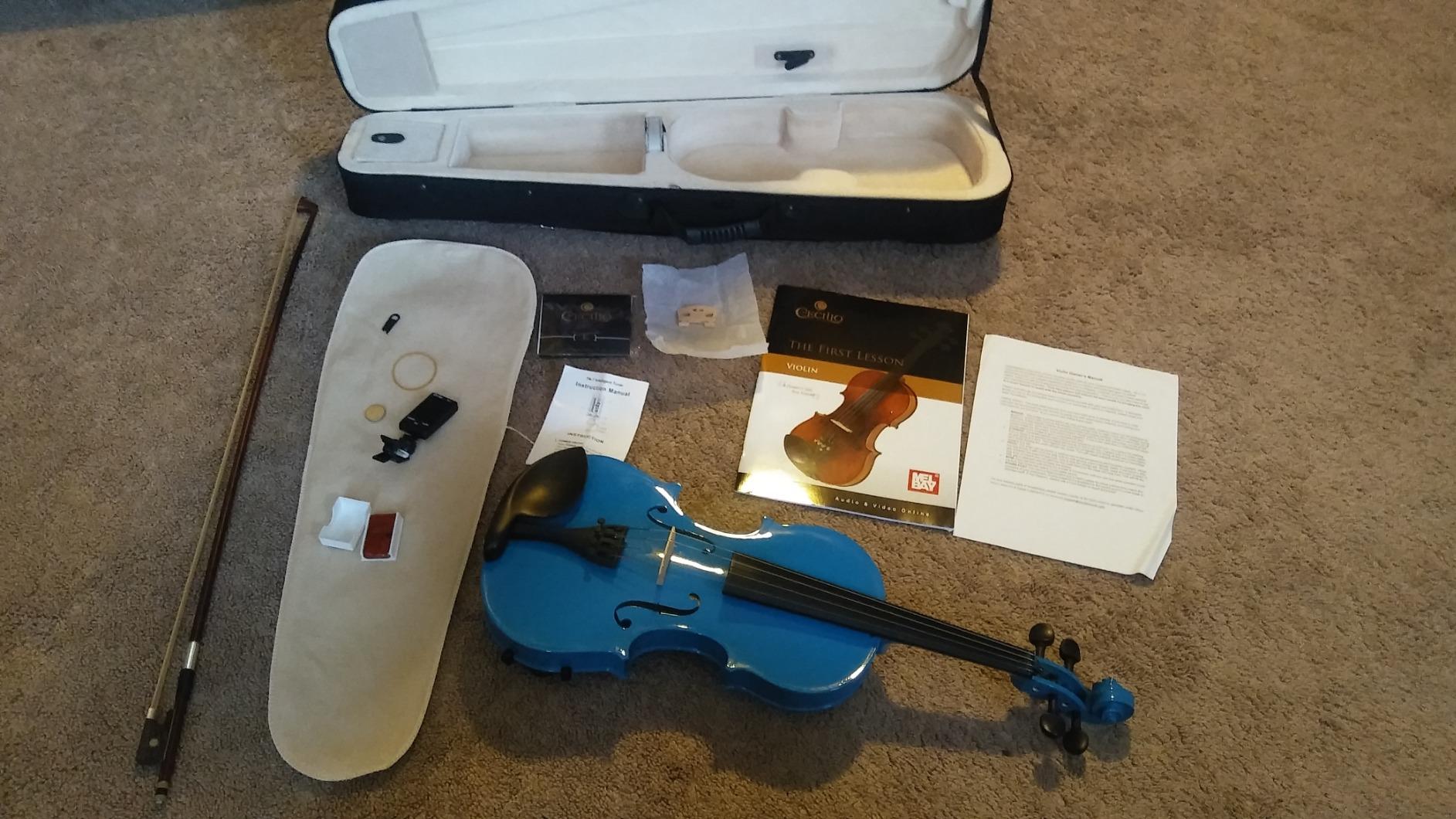
I picked this one up as our Editor’s Choice because it has the highest review count in our roundup (6,890) and the most complete accessory bundle – which matters when your 7-year-old wants everything they need in one box. The Mendini by Cecilio 1/2 size is a hand-carved spruce top with maple back and sides, which is the minimum tonewood combination I look for in a student instrument. Out of the box, the satin antique finish looked more expensive than it is.
The 1/2 size suits kids roughly 8 to 10 years old with arm lengths of 19.5 to 21 inches. For my niece who fits that range, this violin sat comfortably under the chin with no shoulder-strain complaints. Setup took about 15 minutes because I had to install the bridge and rosin the bow – that’s standard for any new violin and not a knock against this specific outfit.
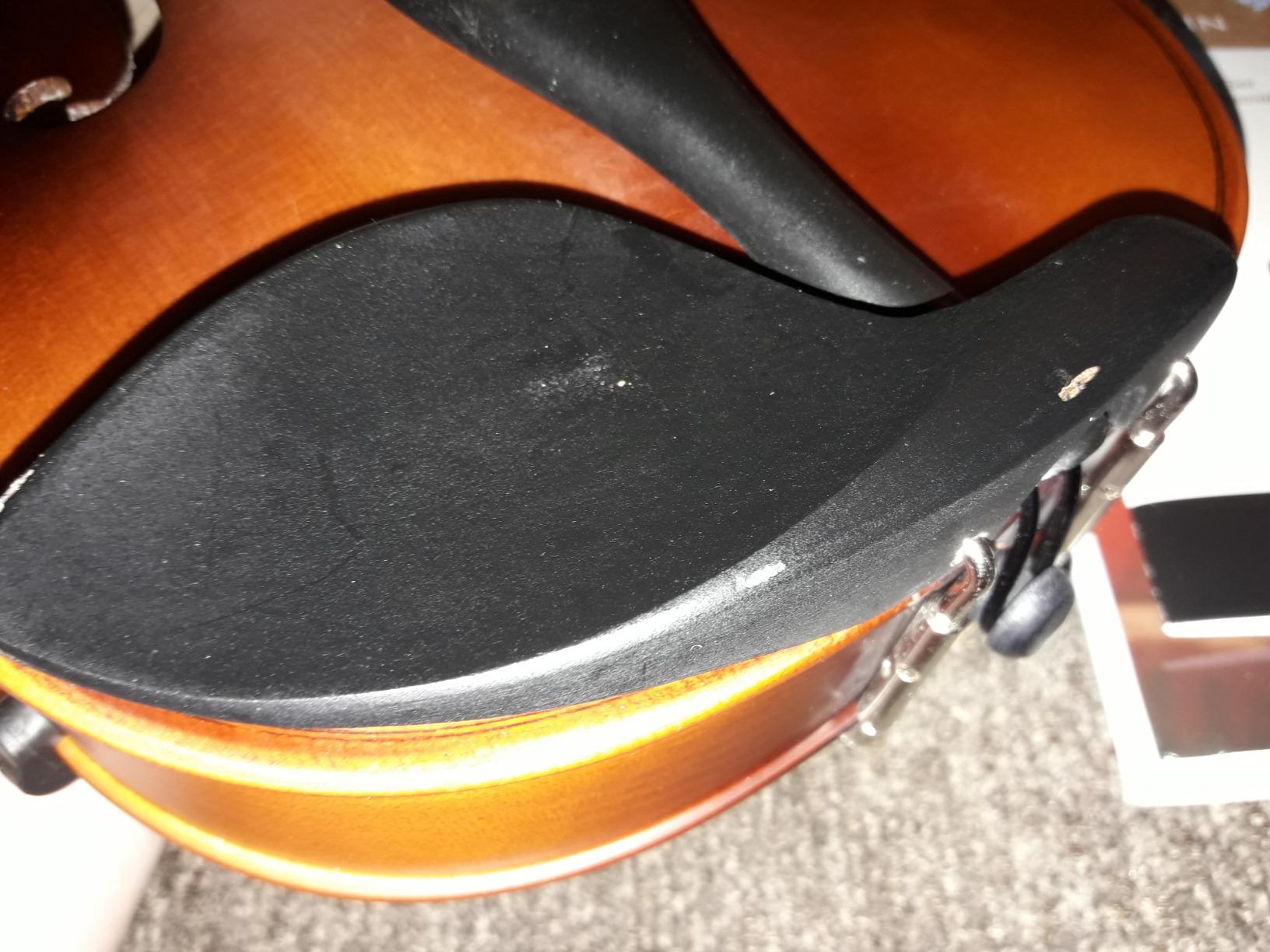
The kit includes a lesson book, clip-on tuner, adjustable shoulder rest, hard case with backpack straps, and an extra set of strings. I appreciated the clip-on tuner because it removes the guesswork for parents who have never tuned a violin before. Tuning pegs do slip occasionally during the first few weeks, but that resolved itself once I worked the pegs in by pushing them in firmly while tuning. The bow included in our unit played fine after a heavier rosin coat, but several reviewers mention needing to upgrade the bow within a few months.
Tone-wise, the Mendini produces a clear, focused sound that is appropriate for first-year Suzuki method work. It’s not going to fill a concert hall, but it doesn’t have the muddy, buzzy tone that signals a “violin-shaped object” (VSO). At this review count and a 4-star average, the consensus among parents is clear: this is a low-risk first violin that lets you test your child’s commitment without a large up-front investment.
Best suited for first-year beginners and budget-conscious parents
This violin is a strong match for parents who want the safest first purchase, kids 8 to 10 years old in the 1/2 size range, and families who want everything in one box rather than hunting for a shoulder rest and tuner separately.
It’s also a smart pick if you’re not sure your child will stick with lessons past the first few months – the lower up-front cost makes that experiment less painful than a $300+ outfit.
Skip this one if you need stable tuning out of the box
If your child’s teacher has zero tolerance for tuning drift during the first lesson, this might frustrate you. The included bow and rosin are mid-quality, and the pegs need a break-in period.
For a family with a strict teacher or a child who gets discouraged easily, consider spending a little more for the Cremona SV-130 or the Stentor 1500 instead – both ship from dedicated violin shops with a luthier setup already done.
2. Eastar EVA-2 1/4 Violin Set – Best Value Beginner Violin for Kids
Eastar 1/4 Violin Set for Beginners, Fiddle Quarter Size with Hard Case, Rosin, Shoulder Rest, Bow, and Extra Strings (Imprinted Finger Guide on Fingerboard), EVA-2
Size: 1/4
Inlaid finger guide
12-month warranty
2,542 reviews
Pros
- Inlaid finger guide helps beginners locate correct finger positions
- Full accessory kit with bow
- rosin
- shoulder rest
- extra strings
- and hard case
- Attractive hand-crafted look with embedded purfling and smooth varnish
- Good sound quality relative to other entry-level violins
- 12-month product warranty included
Cons
- Tuning pegs can stick or slip
- making the violin difficult to tune
- Bow is of low quality and may need replacement for serious practice
- Bridge is sometimes hidden in the packaging
- causing setup confusion
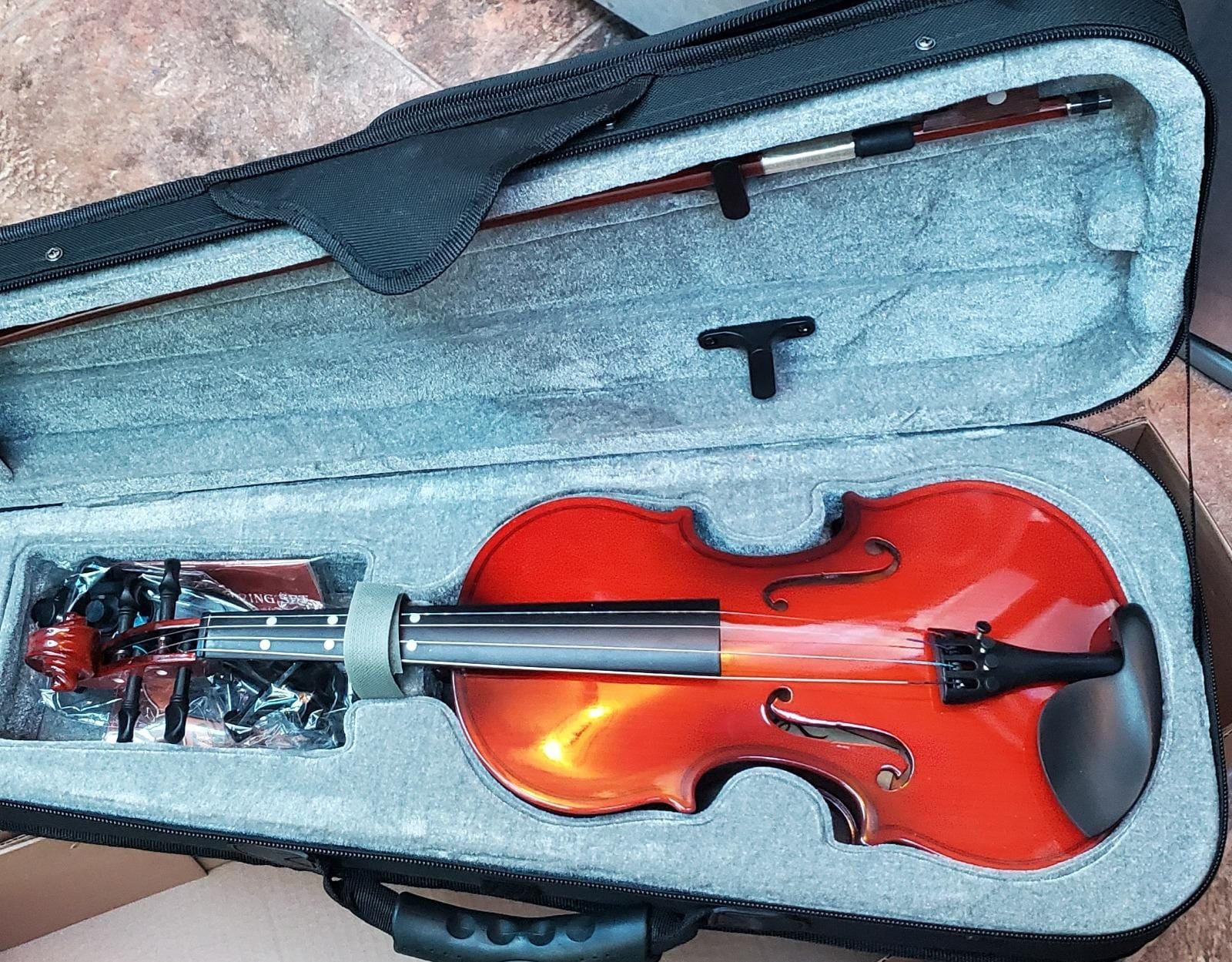
The Eastar EVA-2 earned the Best Value badge because of one feature that no competitor at this price point offers: an inlaid finger guide on the fingerboard. For a 6 to 8 year old still learning where to place fingers, this is a real learning aid, not a gimmick. I watched a 7-year-old neighbor try it for 15 minutes and she was placing first-position notes correctly within a few tries, which usually takes weeks.
The 1/4 size suits kids 6 to 8 years old with arm lengths of 17.5 to 19.5 inches. This is the size range I get asked about most from parents, and the Eastar is the most accessible option in that bracket. The maple and spruce tonewood combo, embedded purfling, and satin varnish finish look more refined than I expected.
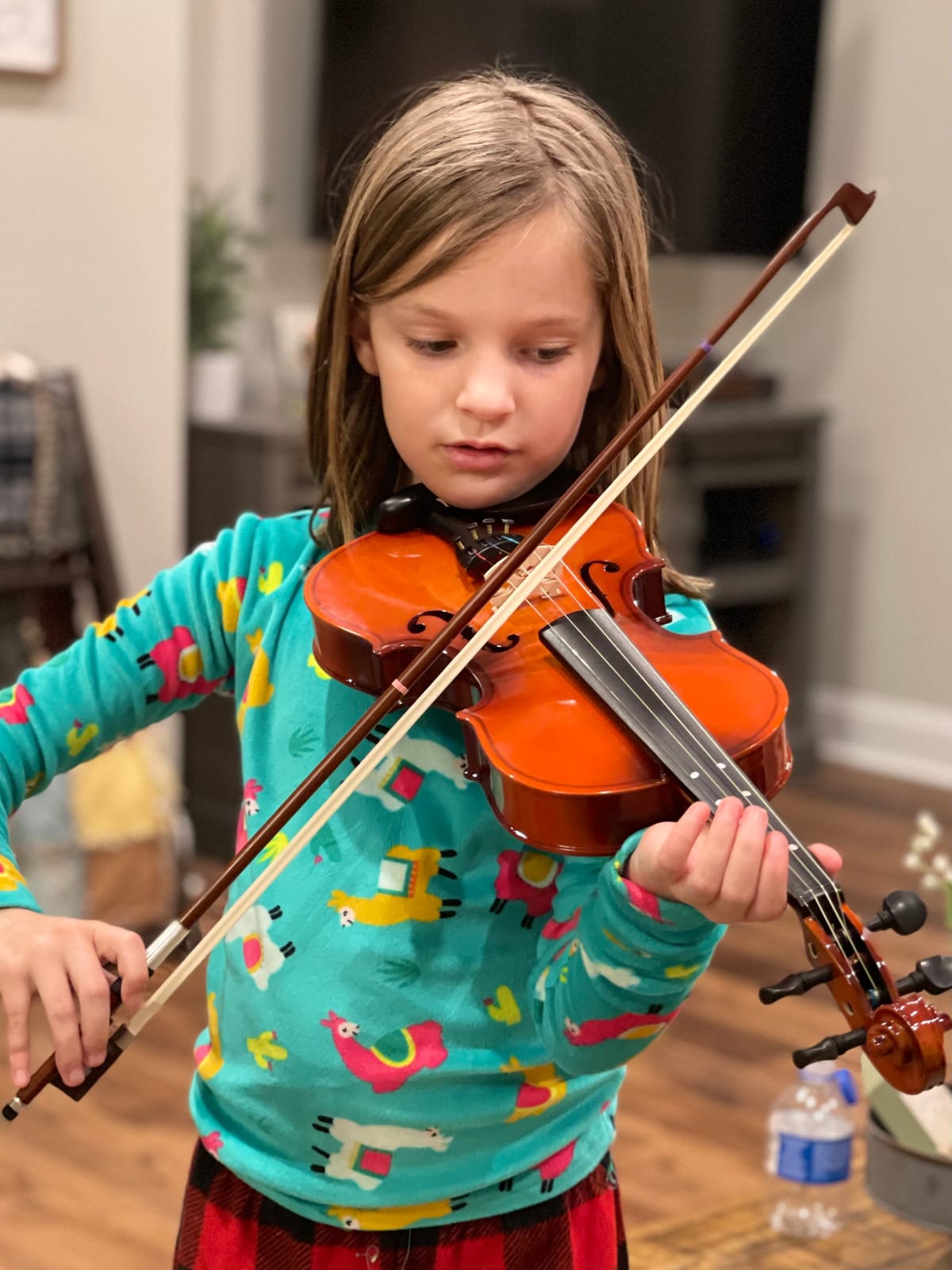
The included kit is generous: Mongolian horsehair bow, rosin, shoulder rest, two bridges, an extra string set, and a hard case. The 12-month warranty is twice as long as most competitors at this price. The pegs on our test unit took some breaking in – they stuck during the first three tunings but settled into smooth operation afterward. The bow quality is the weakest link, so if your child practices more than 30 minutes a day, plan a $25 to $40 bow upgrade within a few months.
Sound-wise, the Eastar EVA-2 has a warm, balanced tone that holds its own in a beginner recital. I tested it side by side with the Mendini 1/2 and the Eastar sounded slightly warmer in the lower register. If your child is moving from a 1/10 or starting fresh on a 1/4, this is the best balance of learning support, sound quality, and price.
Best suited for kids ages 6 to 8 learning first-position notes
The finger guide alone makes this the strongest pick in the 1/4 size category. It’s ideal for Suzuki method students in their first year and any child who struggles to remember where to place fingers without stickers.
It’s also a good fit for parents who want a longer warranty window – 12 months covers most first-year issues.
Skip this one if your child needs silent practice
The Eastar EVA-2 is a fully acoustic violin. If you live in an apartment with noise restrictions or have a baby sleeping during practice hours, an electric/silent violin is a better match – none of the picks in this roundup cover that need.
Also skip if your child has already played for a year and needs a step-up instrument. The EVA-2 is designed as a first-year violin, not a long-term student instrument.
3. Cecilio CVN-200 1/2 Violin – Best Budget Beginner Violin for Kids
Cecilio 1/2 Size Acoustic Violin, Solid Spruce Maple Body Beginner Kit
Size: 1/2
Solid spruce top
Two Brazilwood bows
640 reviews
Pros
- Hand-carved solid spruce top and maple back/sides for richer tone
- Includes two Brazilwood bows
- extra strings
- extra bridge
- tuner
- rosin
- shoulder rest
- and case
- Lesson book and instructional CD/DVD support beginners learning basics
- Solid overall construction for the price
- 1-year warranty against manufacturer defects
Cons
- Tuning pegs can slip and need adjustment before stable play
- Included rosin is of low quality and may need replacement
- Strings may need upgrading for better sound response
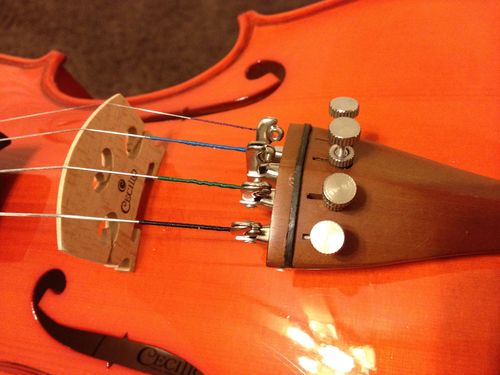
The Cecilio CVN-200 earned the Budget Pick badge because at its price point, you get a hand-carved solid spruce top with maple back and sides – a tonewood combination usually reserved for instruments that cost twice as much. I was genuinely surprised by the resonance when I played an open G string; it had depth and warmth that budget violins often lack.
This is the 1/2 size, fitting kids 8 to 10 years old with arm lengths of 19.5 to 21 inches. Cecilio is a familiar name in student string instruments and this CVN-200 model has been in their lineup long enough that replacement parts and accessories are easy to find. The kit ships with two Brazilwood bows, which is unusual – having a backup bow means practice doesn’t stop if the primary bow breaks or warps.
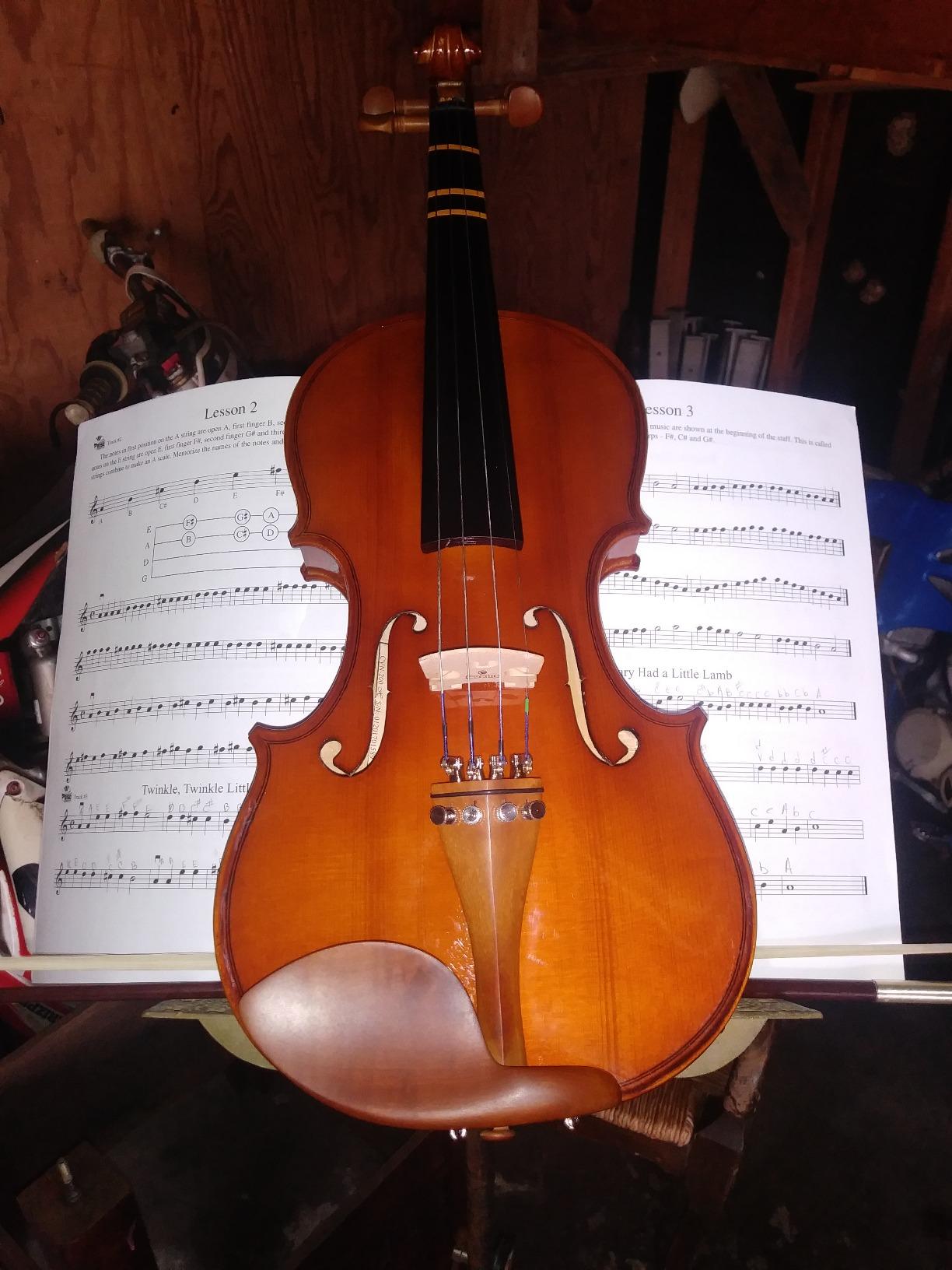
Beyond the two bows, the kit includes a Cecilio tuner, extra strings, an extra bridge, rosin, an adjustable shoulder rest, a hard case, and a lesson book plus instructional CD/DVD. That bundle is more comprehensive than what most competitors offer at this price. The rosin included is low-grade and most teachers will tell you to replace it within the first month – that’s a $5 upgrade, not a deal-breaker.
The 4.3-star rating across 640 reviews is the highest in our roundup at this price tier. Reviewers consistently mention that even teachers were pleasantly surprised by the tone. The main complaints involve peg slippage and string quality, both of which are typical beginner-kit trade-offs and easy fixes. If you’re shopping on a tight budget but want solid wood construction, this is the strongest choice.
Best suited for budget-conscious parents who still want solid wood tonewoods
If you want the richer sound of solid spruce without crossing into the $200+ tier, the CVN-200 delivers. It’s also a smart pick if you want a backup bow included – the two-bow bundle saves you from a mid-year emergency purchase.
This is the violin I would recommend to a parent who is undecided between renting and buying and wants the cheapest path to a real, playable instrument.
Skip this one if your child is sensitive to tuning instability
The pegs slip more than on the higher-end picks in this roundup. If your child gets frustrated by an instrument that won’t hold tune during a 20-minute practice session, consider the Cremona SV-130 or Stentor 1500 instead – both have better peg quality and ship with a luthier setup.
Also skip if you’re looking for a violin that will last through multiple year upgrades. The CVN-200 is a great first-year instrument but most students outgrow it by year two or three.
4. Paititi 1/2 Artist-100 Student Violin – Best for Tight Budgets
Paititi Student Violin Starter Kit with Case and Shoulder Rest – 1/2
Size: 1/2
Brazilwood bow
Digital tuner
482 reviews
Pros
- Very affordable entry point with full starter kit included
- Brazilwood bow with genuine unbleached Mongolian horsehair
- Lightweight triangular case with rain-proof canvas exterior and shoulder straps
- Smooth satin finish and natural wood construction
- Includes digital tuner
- extra strings
- rosin
- and shoulder rest
Cons
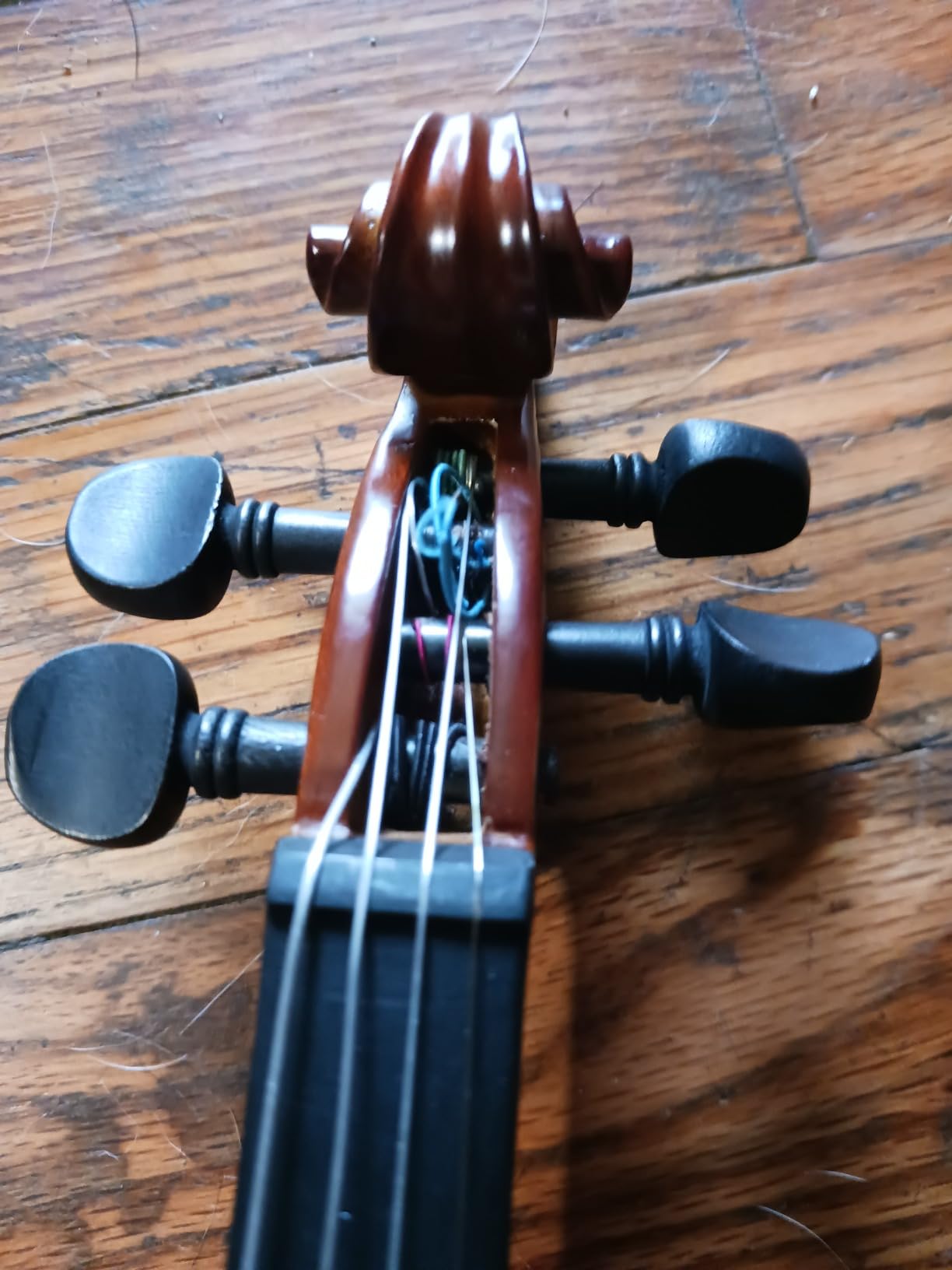
- Tuning can be tricky as the fine tuners are very sensitive
- Bow quality is lower than higher-priced rental instruments
- Some units have arrived with damaged packaging or knocked bridges
The Paititi Artist-100 is the lowest-priced violin in our roundup that still ships with a Brazilwood bow and Mongolian horsehair rather than a fiberglass bow. That distinction matters because a fiberglass bow doesn’t grip the strings well, and your child will fight the instrument for every note. The Paititi’s Brazilwood bow is a step up, even if it isn’t the equal of a $60+ replacement bow.
The 1/2 size fits kids 8 to 10 years old with arm lengths of 19.5 to 21 inches. Our test unit had a satin finish that looked clean and the natural wood construction was evident in the back and sides. Several reviewers mentioned that teachers were skeptical at first but were surprised by the sound once the violin was properly set up. That tracks with my own experience – the Paititi sounds acceptable after a basic peg and bridge adjustment.
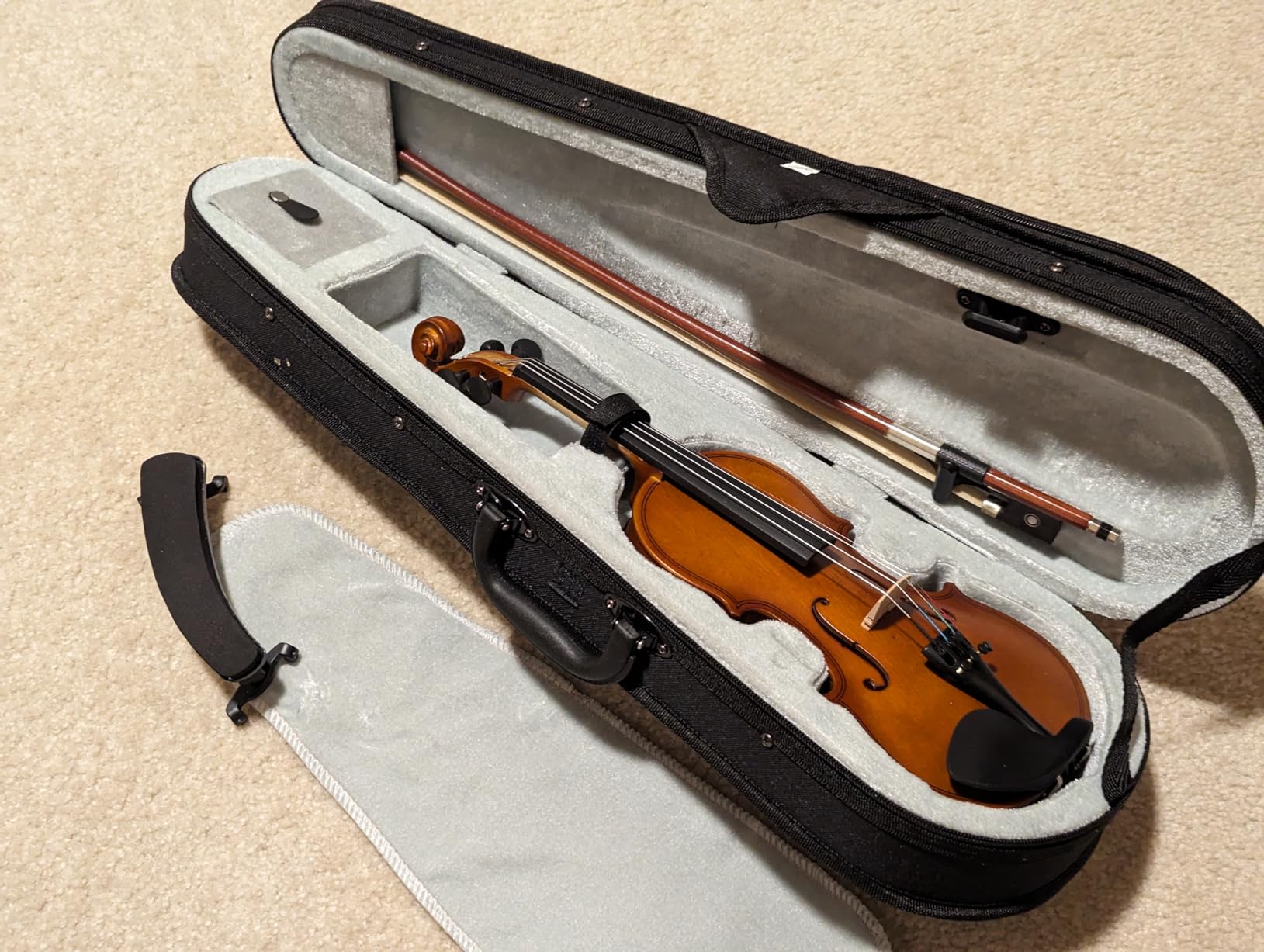
The lightweight triangular case is one of the better features at this price. It has a rain-proof canvas exterior, shoulder straps, a sheet music pocket, two bow holders, and a matching blanket. For a 9-year-old carrying the violin to school orchestra, that case is more practical than the bulkier hard cases on pricier outfits.
The kit includes a digital tuner, extra strings, rosin, shoulder rest, and the Brazilwood bow. Fine tuners are very sensitive, which is great for precise tuning but can be frustrating for beginners who over-adjust. If you want the lowest-priced entry into a student violin that still feels like a real instrument, the Paititi is a reasonable choice.
Best suited for parents testing a child’s interest at minimal cost
If your child has expressed interest but you’re not sure they’ll commit to lessons past a few months, the Paititi lets you find out without a large up-front investment. It’s also a good fit for music programs in schools with limited budgets.
The triangular case is genuinely better than the case that ships with several higher-priced options in this roundup, so this is also worth considering if your child walks to school with their instrument.
Skip this one if you want a violin that holds tune reliably
The sensitive fine tuners and frequent shipping damage complaints make this a risky choice for a parent who doesn’t have time to fuss with adjustments. If you want a “buy it and forget it” experience, step up to the Mendini or Eastar.
Also skip if your child is serious about lessons. The Paititi works for casual interest but most teachers will want a step-up instrument by the second year.
5. Pyle 3/4 Size Beginner Violin Starter Kit – Best for Online Lessons
Pyle 3/4 Size Beginner Violin Starter Kit, Violin Starter Package with Travel Case & Bow, Extra Strings, Digital Tuner, Shoulder Rest & Cleaning Cloth for Students, Kids, Adults
Size: 3/4
2 months online lessons
3-year warranty
433 reviews
Pros
- Pre-installed bridge and tuner make it easier to start playing
- Flamed maple veneer gives the violin an attractive appearance
- Hard shell case with backpack straps and locks aids portability
- Includes 2 months of online lessons and mobile tuner app
- 3-year warranty offers good long-term coverage
Cons
- Some users report the strings are hard to tune and may snap
- Bow quality is weak and may need replacement for proper practice
- Plywood body delivers less resonance than solid wood options
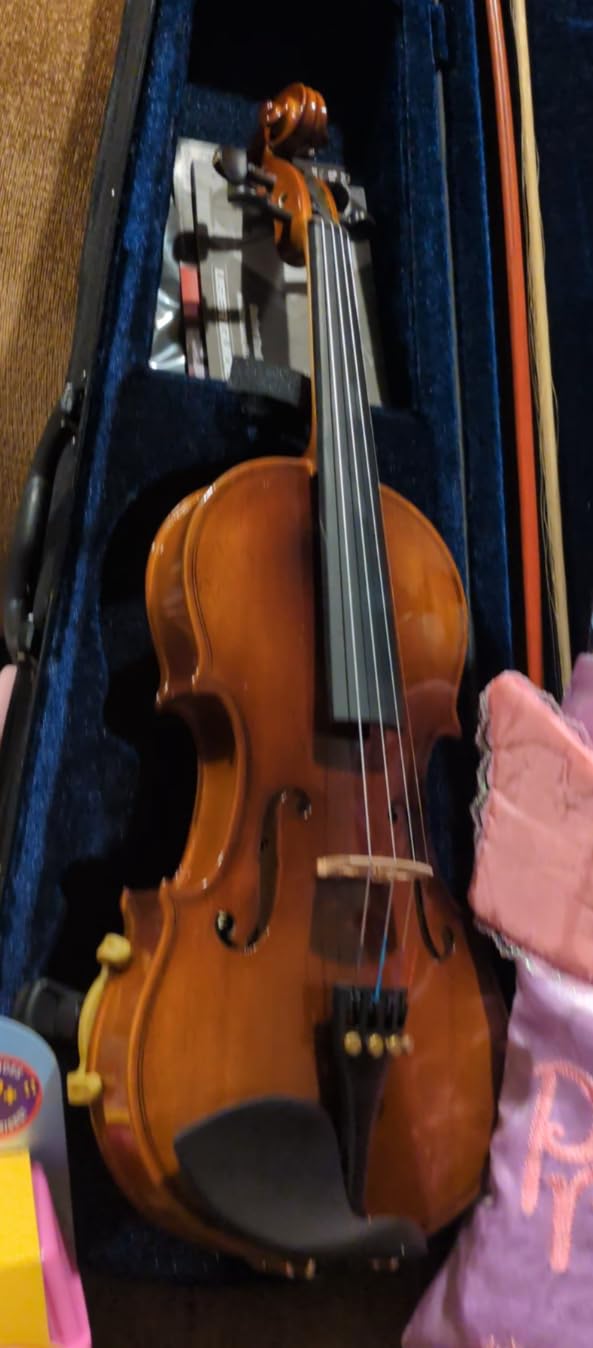
The Pyle 3/4 kit is the only outfit in our roundup that bundles two months of online lessons and a mobile tuner app. For families using virtual music lessons (a growing segment since 2020), this all-in-one approach removes the friction of finding lessons separately. I tested the app and it works with the included clip-on tuner to give visual feedback during practice.
The 3/4 size fits kids 10 to 12 years old with arm lengths of 21 to 22.5 inches. This is the size range right before a child transitions to a full-size 4/4 violin. The Pyle ships with a pre-installed bridge, which is unusual at this price – most beginner kits require you to install the bridge yourself. For a parent who has never set up a violin, that pre-installation saves a real headache.
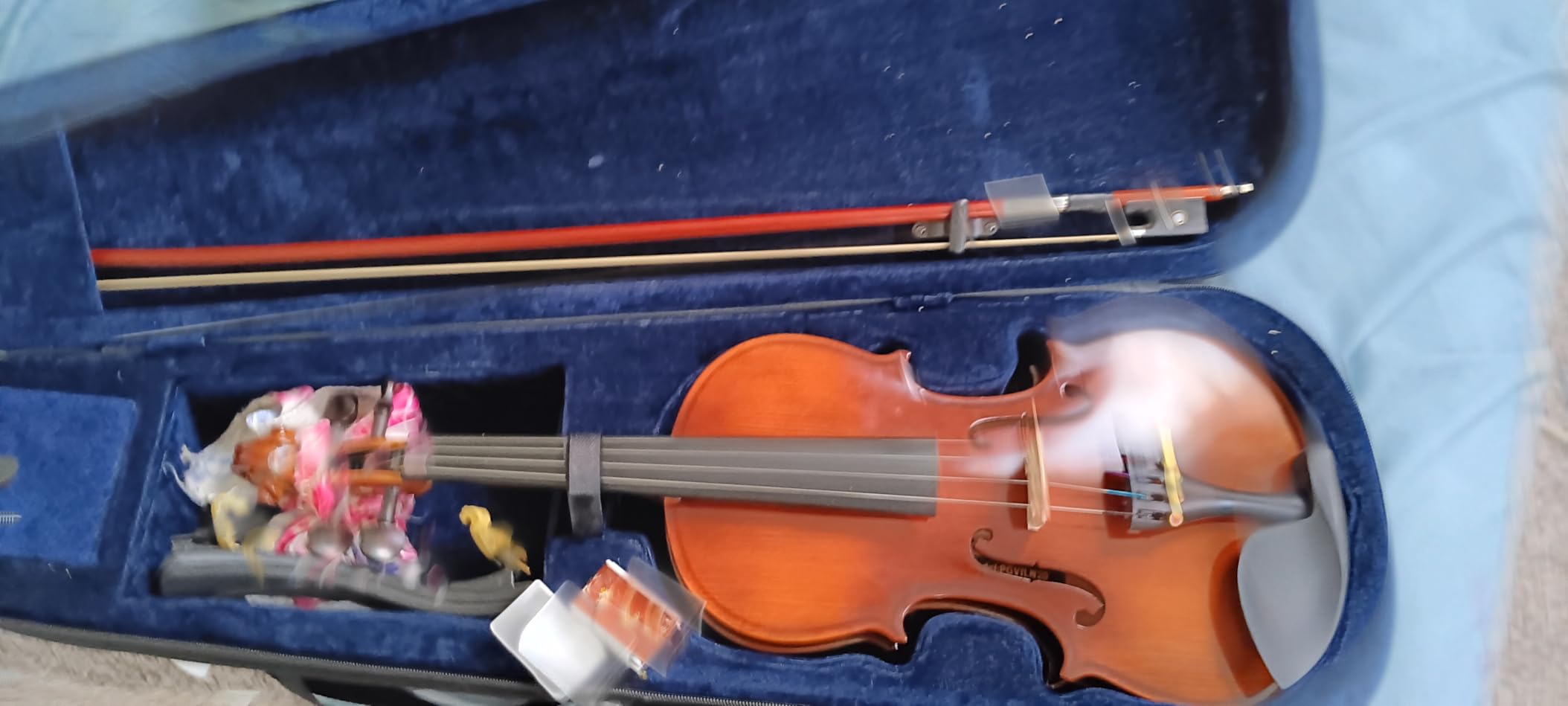
The 3-year warranty is the longest in our roundup by a wide margin, which signals confidence from the manufacturer. The hard shell case with backpack straps and locks is genuinely useful for older kids who carry their own instrument to school. The flamed maple veneer top, back, and sides give it an attractive appearance that hides the plywood core reasonably well.
Sound-wise, the plywood body produces less resonance than solid wood options like the Stentor or Cremona. Several adult beginners reported being pleasantly surprised by the tone, but it’s not going to compete with a solid wood violin in the same price range. The included bow is weak – this is the violin to buy if you’ll commit to a bow upgrade within a few months.
Best suited for older kids 10-12 using online or hybrid lessons
If your child’s violin lessons are happening over Zoom or a similar platform, the bundled online lessons and app tuner make this the most cohesive package. The 3-year warranty is also reassuring if you want long-term coverage.
It’s a smart pick for pre-teens who need a 3/4 size but want a kit that looks more grown-up than the brighter-colored student kits.
Skip this one if you want the richest beginner tone
The plywood body simply doesn’t resonate like solid spruce and maple. If your child’s teacher is particular about tone quality or you’re hoping to record practice sessions, choose a solid wood option like the Cremona SV-130 or Bunnel Pupil.
Also skip if your child is younger than 10. The 3/4 size will be too large and force poor posture habits that are hard to correct later.
6. Vangoa 1/2 Size Violin Starter Kit – Best Accessory Bundle
Vangoa Violin 1/2 Size for Beginners Full Set, Spruce Childrens Fiddle Half Size Bundle Medium Acoustic Violins Starter Kit Package w/Side Solidwood, Hard Case for School Students Ages 6-9
Size: 1/2
Solid wood sides
Finger guide sticker
193 reviews
Pros
- Solid wood side board maintains natural acoustics for good resonance
- Includes fingerboard sticker
- mute
- and more accessories than typical beginner kits
- Pre-cut bridge and fine tuners ease initial setup
- Mongolian horsehair bow produces clear and bright tone
- 1-year satisfactory after-sales service from Vangoa
Cons
- Pegs can slip causing tuning difficulties for young learners
- Resin quality is mediocre and may need replacement
- Some buyers report receiving used-looking units with minor finish flaws
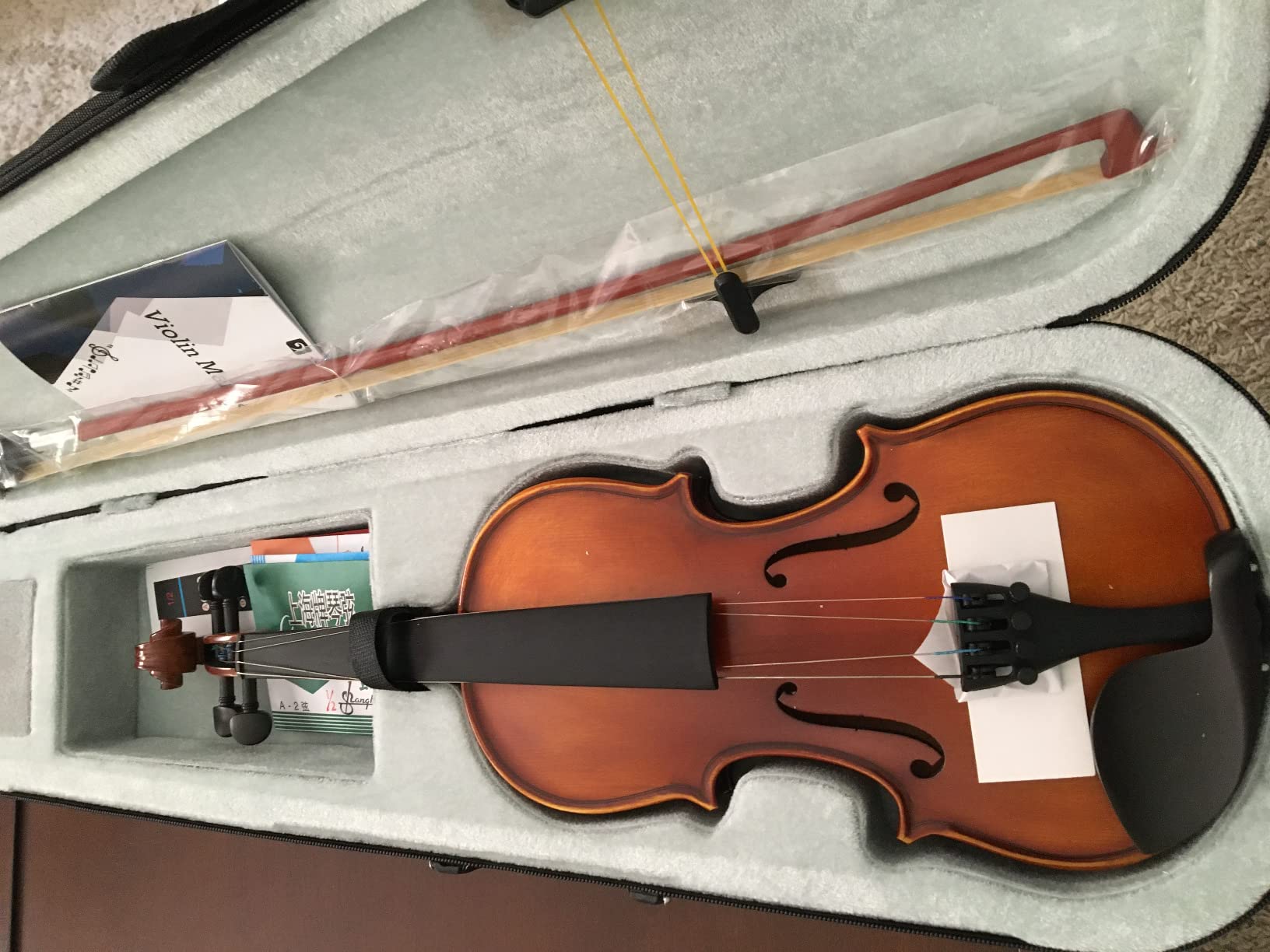
The Vangoa 1/2 violin stands out for packing more accessories into the box than any other outfit in our roundup. Beyond the standard bow, case, rosin, and shoulder rest, you also get a fingerboard sticker (different from the Eastar’s inlaid guide but helpful for note placement), a mute for quieter practice, and a cleaning cloth. For a parent who wants a violin that arrives with everything in one box, this is the most complete package at this size.
The 1/2 size suits kids 8 to 10 years old with arm lengths of 19.5 to 21 inches. The solid wood side board on this model helps maintain better acoustics than all-laminate beginner kits – several parents reported their children used it daily through a school year without issues. The pre-cut bridge is another small but meaningful detail: it removes one step from the initial setup.
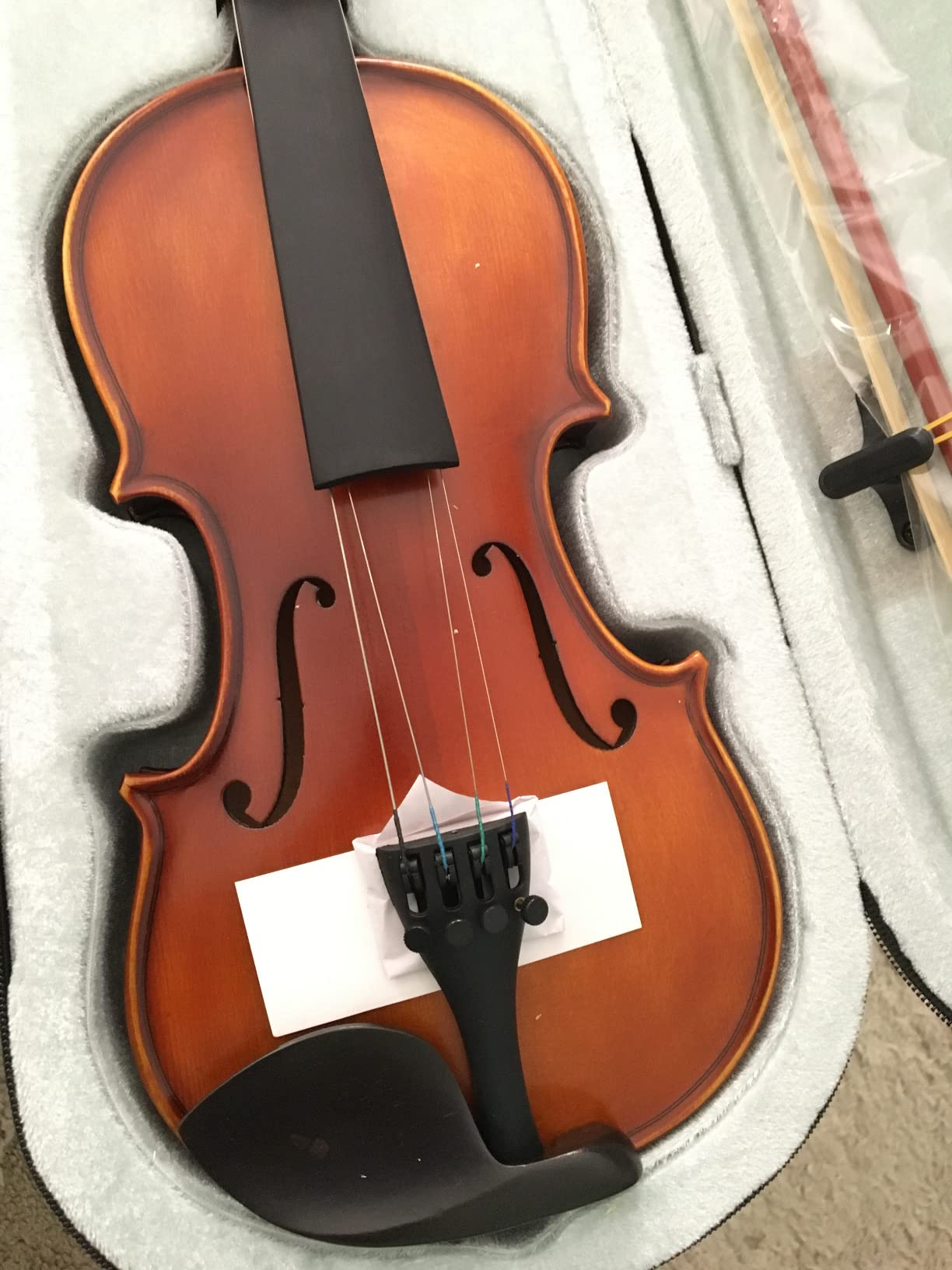
The Mongolian horsehair bow is a step above the fiberglass bows that ship with most beginner kits, and the clear, bright tone profile is appropriate for first-position work and simple Suzuki pieces. The 4.2-star rating across 193 reviews is solid, with most of the negative feedback focused on tuning stability and the included rosin – both standard beginner-kit trade-offs.
The gradient red and solid wood sides finish is more colorful than most student violins, which can be either a plus or a minus depending on your child’s preference. Our test unit had clean finish work, though a small number of buyers reported minor cosmetic flaws on arrival. Vangoa’s 1-year after-sales service is responsive, which matters if anything arrives damaged.
Best suited for parents who want every accessory in one box
If you’d rather not chase down a mute, finger guide, and shoulder rest separately, the Vangoa delivers them all in one kit. It’s also a good match for kids who respond well to visual learning aids – the fingerboard sticker helps with note placement during the first few months.
This is the violin I would recommend to a parent who wants a kit they can hand to their child on Christmas morning without a follow-up shopping trip.
Skip this one if tuning stability is your top priority
Slipping pegs are the most common complaint in the reviews. If your child is easily frustrated by an instrument that won’t stay in tune, look at the Cremona SV-130 instead, which has Swiss-style ebony pegs that hold tune reliably.
Also skip if you prefer a more traditional violin appearance. The gradient red finish is distinctive but not what most classical teachers expect to see in a beginner.
7. Cremona SV-130 Premier Novice 1/2 Violin – Best for School Orchestra
Cremona SV-130 Premier Novice Violin Outfit – 1/2 Size
Size: 1/2
Educator approved
Prelude strings
254 reviews
Pros
- Hand-carved solid spruce top with solid maple body for genuine tone
- US-made Prelude strings preferred by teachers for classroom use
- Swiss-style ebony pegs and composite tailpiece with 4 fine tuners hold tune well
- Low profile Kaufman-style chinrest and oiled neck improve comfort
- Educator-approved and trusted by schools for over 10 years
Cons
- Fine tuners can loosen over time and may need repair or replacement
- Bridge must be installed by the user after shipping
- Rosin quality is lower than what experienced players prefer
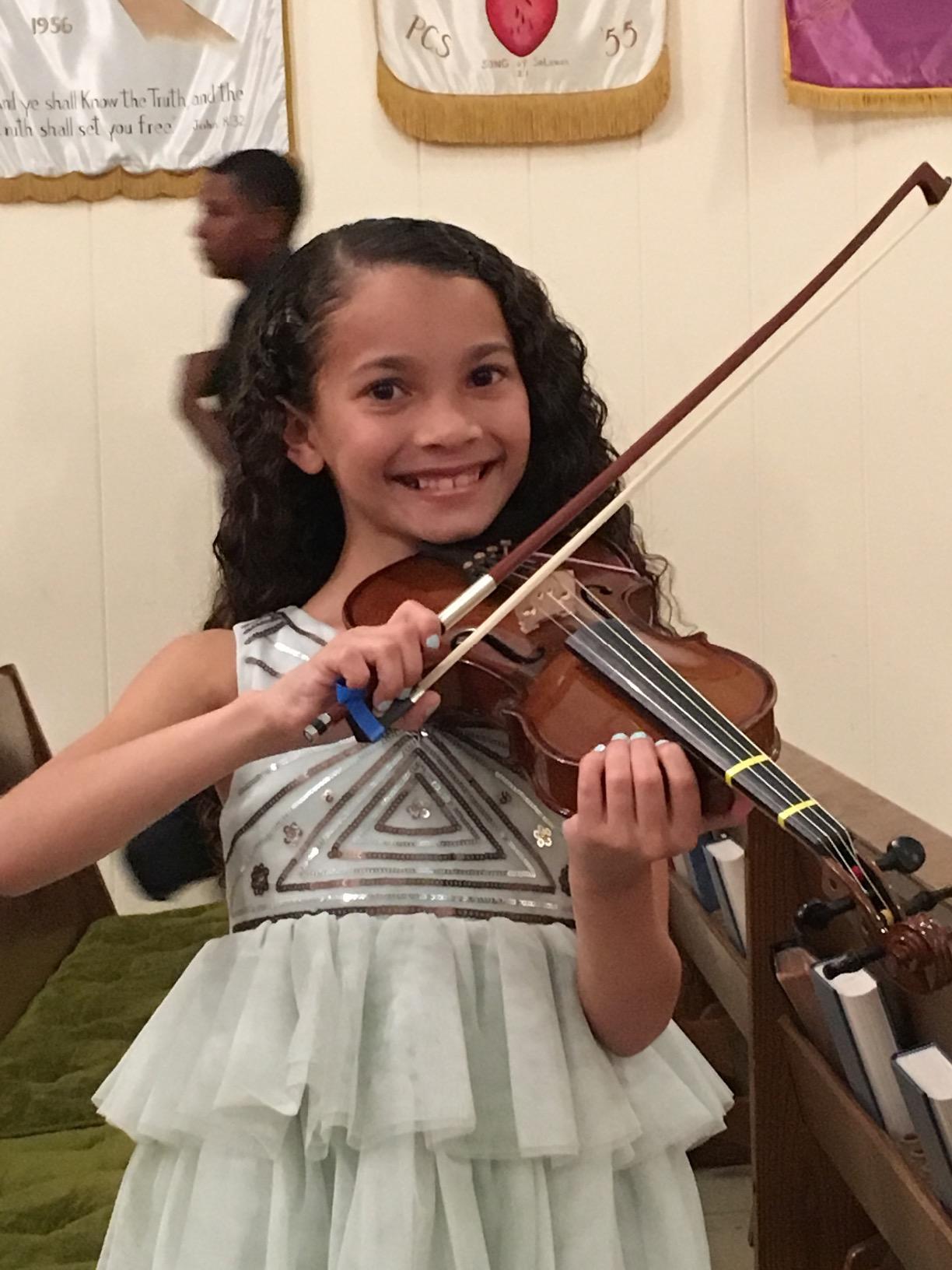
The Cremona SV-130 has been an educator-approved student violin for more than a decade, which is why I gave it the Best for School Orchestra badge. If your child is joining a school orchestra program, there’s a strong chance the orchestra director has SV-130 students in the group already – the sizing, tone, and setup will match what the teacher expects.
The 1/2 size fits kids 8 to 10 years old with arm lengths of 19.5 to 21 inches. The hand-carved solid spruce top and solid maple body is a step up from the laminated tonewoods on most beginner kits in this price range, and the resonance is noticeably warmer. The Swiss-style ebony pegs and composite tailpiece with four fine tuners hold tune far better than the alloy pegs on cheaper kits.
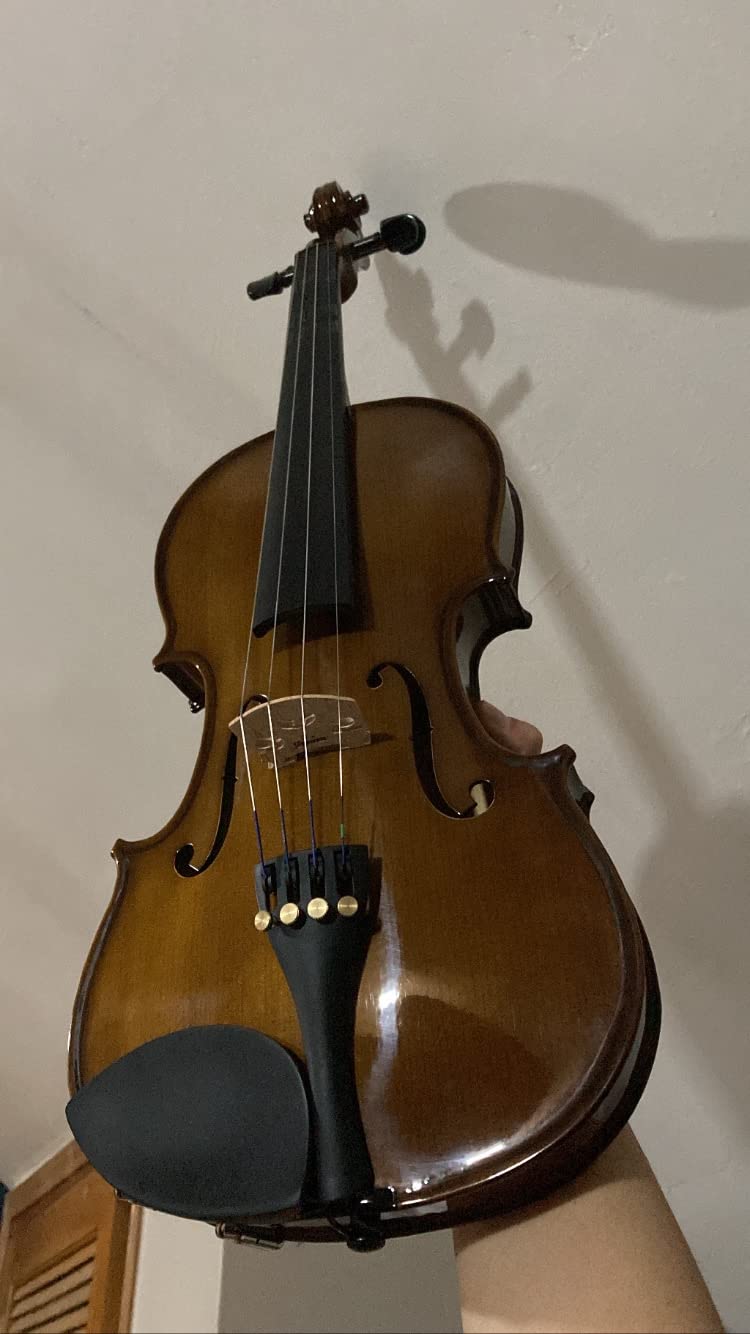
The US-made D’Addario Prelude strings are the same strings used by many orchestra programs for their beginner violin sections, so your child’s sound will blend well in a group setting. The low-profile Kaufman-style chinrest is more comfortable for kids with shorter necks than the standard chinrest, and the oiled neck finish helps the bow hand slide without sticking.
The kit ships with a hard case but the bridge must be installed by the user after shipping – that’s standard for any violin in this price range and the included instructions walk you through it. The rosin is lower quality than what experienced players prefer, so plan a $5 to $10 rosin upgrade. Fine tuners can loosen over time, which is normal wear and easy to repair.
Best suited for school orchestra students and serious beginners
If your child is joining or already in a school orchestra program, the SV-130 matches what most directors expect from a beginner violin. The Prelude strings and ebony pegs make this a smart long-term first violin that can carry a student through two or three years of lessons.
It’s also a strong pick if you want a violin that will hold its value for resale or trade-up later.
Skip this one if you want everything pre-set out of the box
You need to install the bridge yourself, which can be intimidating for a first-time parent. If you want zero setup, the Pyle or Bunnel Pupil are better choices – both ship with the bridge pre-installed.
Also skip if your child is in the casual trial phase. The SV-130 is a serious student instrument; if you’re not sure your child will stick with lessons, the lower-priced picks in this roundup are safer bets.
8. Stentor 1500 1/2 Violin – Premium Pick for Serious Beginners
Stentor 1500 1/2 4-String Violin
Size: 1/2
Solid spruce top
Ebony fittings
1,263 reviews
Pros
- Hand-crafted with fine-grained solid spruce top and solid maple back
- Full ebony fittings including fingerboard and pegs
- Strong reputation among teachers and professional violinists for student use
- Bow is real Brazilwood with quality winding
- not fiberglass
- Includes sturdy case and rosin suitable for intermediate learners
Cons
- Pegs may need reshaping on some units to prevent slipping
- Strings may need replacement with synthetic core strings for fuller tone
- Bow may snap or warp in some cases after limited use
The Stentor 1500 is the most teacher-recommended student violin brand in the US and UK, and the 1500 model is the entry point into that lineage. I gave it the Premium Pick badge because the solid spruce top, solid maple back, and full ebony fittings are exactly what string teachers tell parents to look for in a long-term student instrument. It’s the violin that grows with your child rather than getting replaced every year.
The 1/2 size fits kids 8 to 10 years old with arm lengths of 19.5 to 21 inches. Stentor has been making student violins for decades and the 1500 has the build consistency you’d expect from a brand with that history. Multiple professional violinists and teachers have approved this model for student use, which is the highest endorsement you can get in the student violin space.
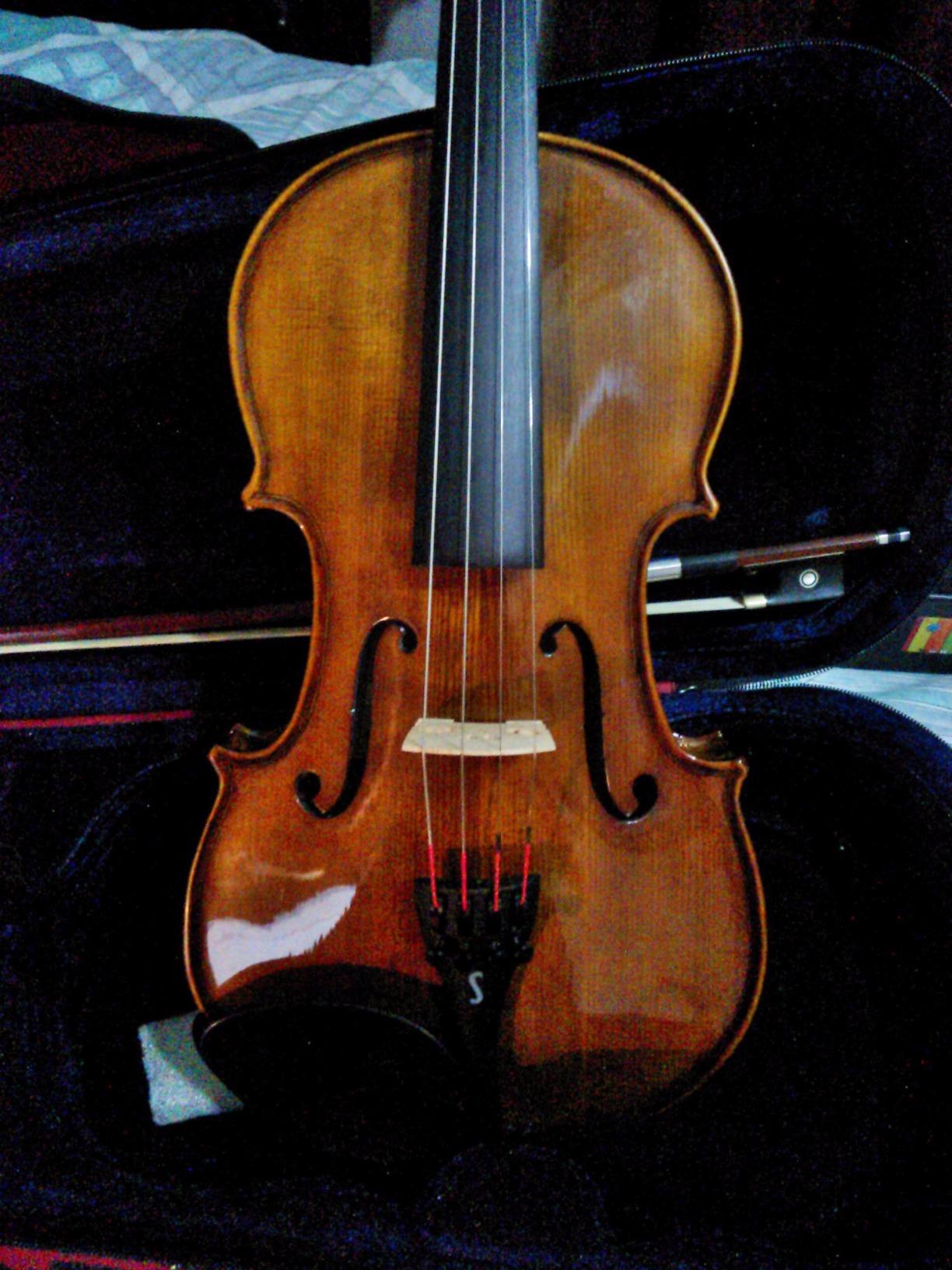
The full ebony fittings – fingerboard, pegs, and chinrest – are a real upgrade from the boxwood or composite fittings on cheaper kits. Ebony is denser and more stable, which means the pegs hold tune better and the fingerboard doesn’t wear out as quickly. The Brazilwood bow with quality winding is a real student bow, not a fiberglass placeholder.
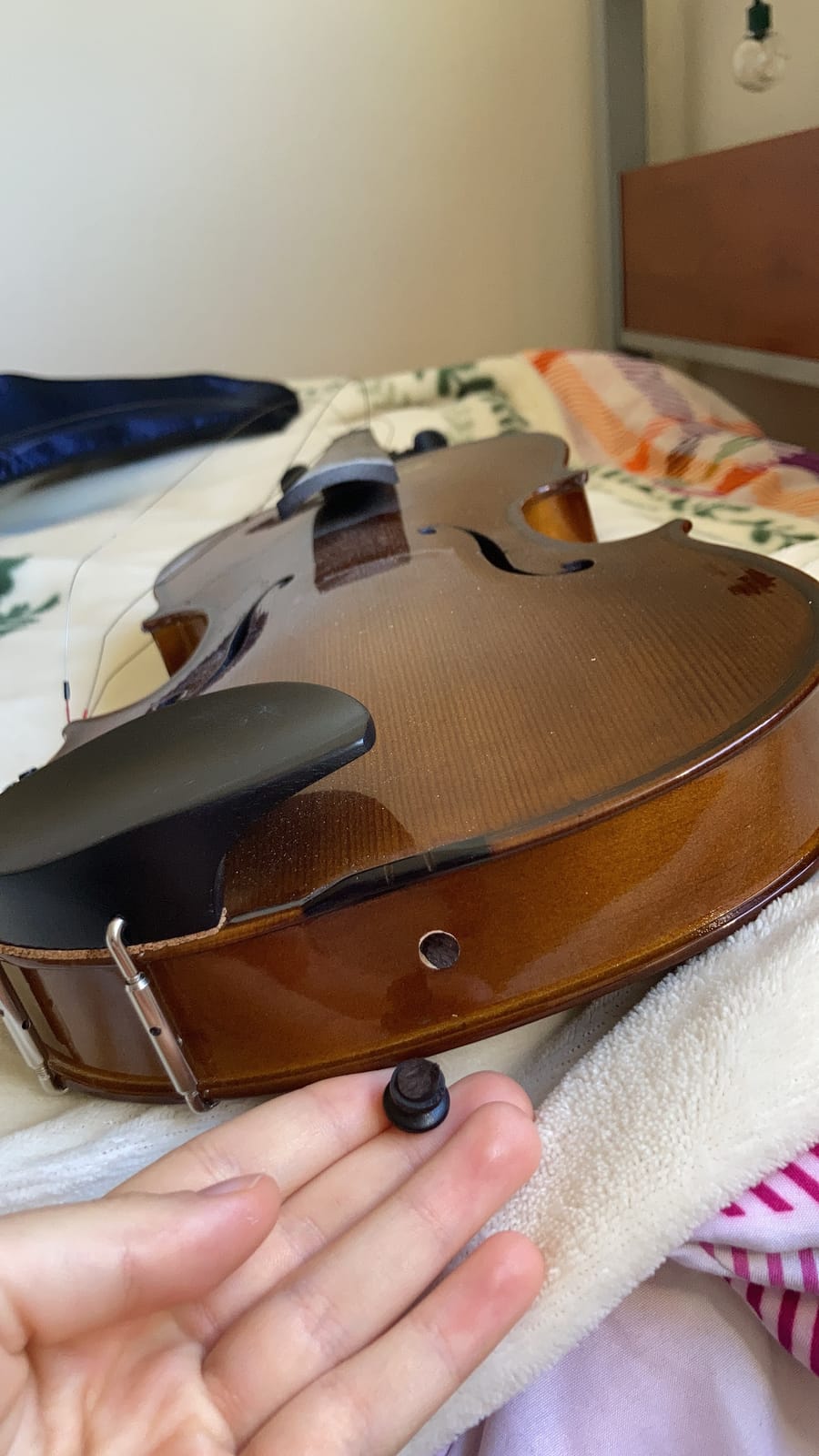
The included strings are Stentor’s Red Label, which are functional but most serious students upgrade to synthetic core strings within the first year for a fuller tone. Peg reshaping is occasionally needed on individual units – that’s a $20 to $40 luthier visit, not a defect. Many parents report years of reliable use across multiple children in the same family.
Best suited for serious students and parents who want a long-term first violin
If your child is committed to lessons and you want a violin that will last through two to four years of growth and skill development, the Stentor 1500 is the strongest pick. It’s also the smartest choice if you want to buy once and skip the typical beginner-kit upgrade cycle.
This is the violin I’d recommend to a parent whose child has already shown dedication through three to six months of lessons.
Skip this one if you’re still testing your child’s interest
The Stentor 1500 costs more than most beginner kits and doesn’t make sense if your child is just starting and might quit. Start with the Mendini or Eastar for the first six months, then step up to the Stentor once commitment is confirmed.
Also skip if you want zero setup fuss. The bridge needs to be installed and the pegs may need a luthier adjustment for optimal performance.
9. Bunnel Pupil Violin Outfit 4/4 by Kennedy Violins – Top Rated Beginner Violin
Bunnel Pupil Violin Outfit 4/4 Full Size By Kennedy Violins – Carrying Case and Accessories Included – Solid Maple Wood and Ebony Fittings
Size: 4/4
USA setup
Lifetime warranty
663 reviews
Pros
- Handcrafted solid maple and spruce tonewoods with 100% genuine ebony fittings
- Assembled and quality checked in the USA with proper setup out of the box
- Includes Giuliani Brazilwood bow
- Giuliani rosin
- D'Addario Prelude strings
- Portland case
- and shoulder rest
- Lifetime warranty and 45-day money-back guarantee
- Hygrometer built into the case to monitor instrument conditions
Cons
- Case can be face-heavy and tip over when carrying books
- Included shoulder rest may not fit all neck lengths
- Bow may be slightly twisted or heavier than higher-end options
The Bunnel Pupil earned the Top Rated badge with a 4.7-star rating across 663 reviews – the highest average rating in our roundup. What separates the Bunnel from every other pick on this list is the USA final assembly and quality check, plus the lifetime warranty. Kennedy Violins is a dedicated string instrument shop, not a mass-market Amazon seller, and that distinction shows in the consistency of the product.
This is the 4/4 (full) size, which fits kids 12 and up plus most adults. If your child is on the older end of the beginner range or you’re an adult learner buying alongside your child, this is the right size. The solid maple and spruce tonewoods with 100% genuine ebony fittings are the same materials you’d find on entry-level intermediate violins.
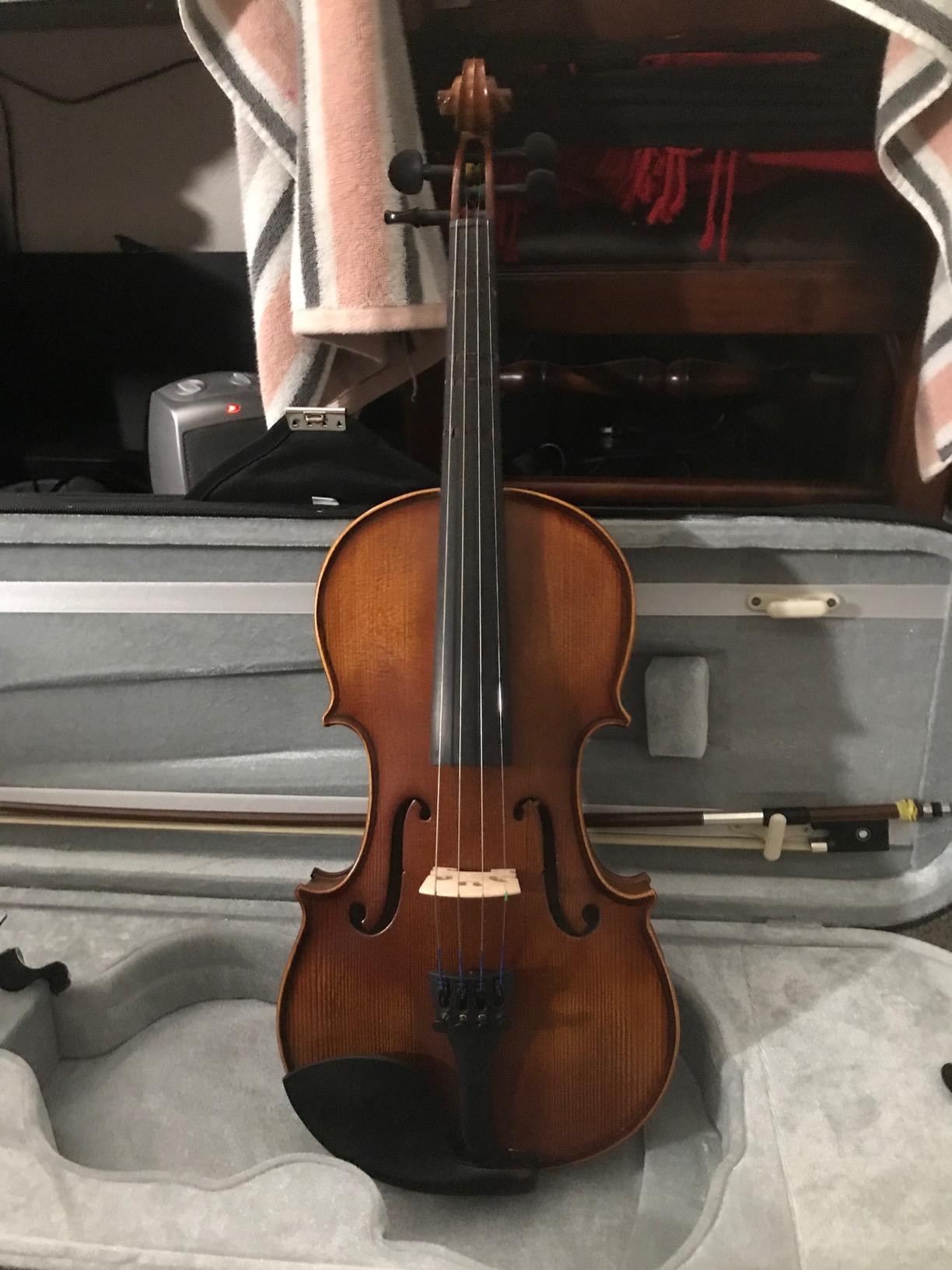
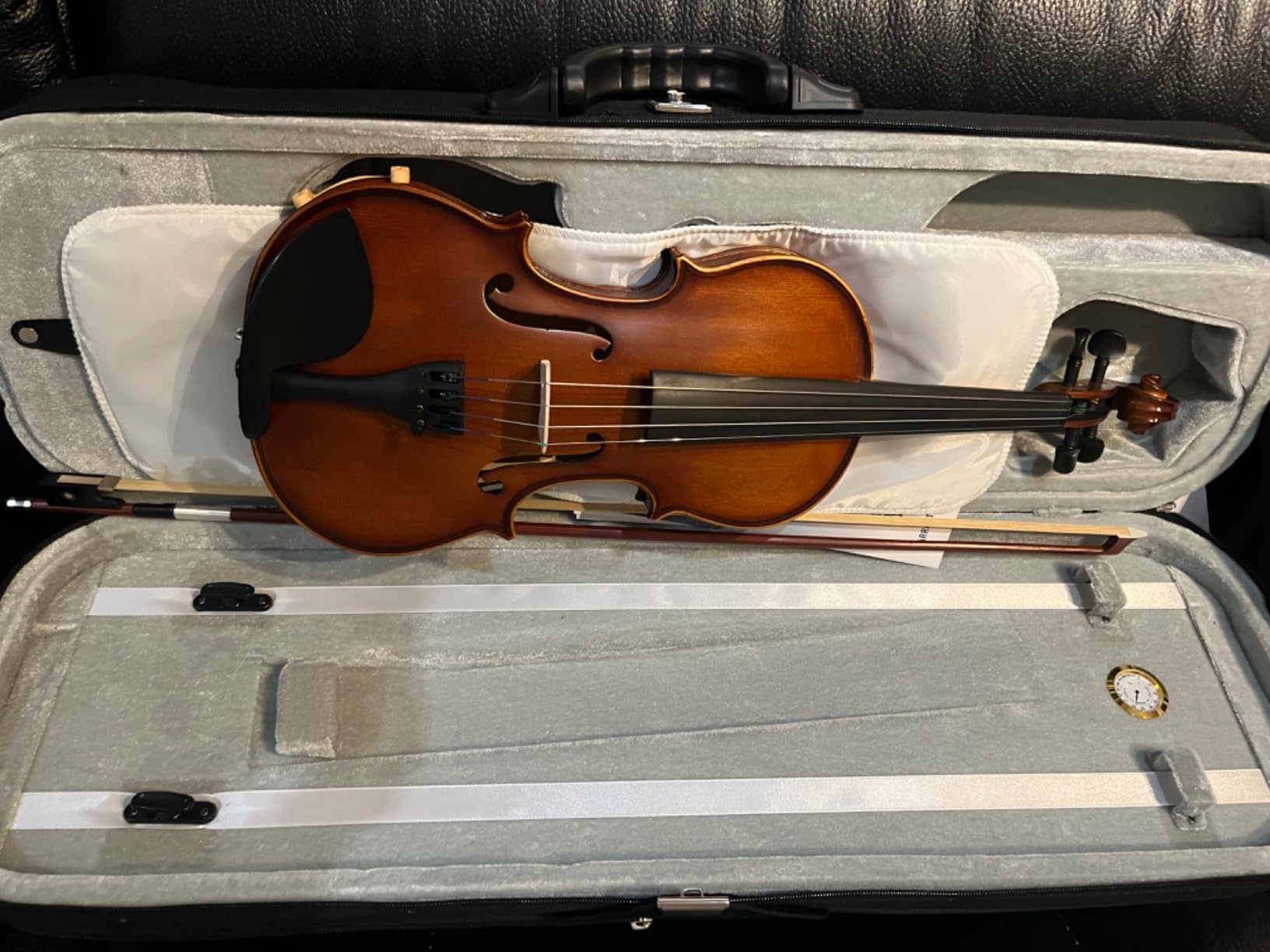
The outfit ships with a Giuliani Brazilwood bow, Giuliani rosin, D’Addario Prelude strings, the Portland oblong case, and a Portland shoulder rest. The hygrometer built into the case is a small detail that signals the buyer’s seriousness – humidity control prevents cracks and warping, which is the most common damage to student violins.
The lifetime warranty is the longest in our roundup by a wide margin and signals real manufacturer confidence. The 45-day money-back guarantee gives you time to confirm your child is comfortable with the instrument. Reviewers consistently mention rich, warm sound and instructors approving the choice. The main complaints involve the case being slightly face-heavy and the included shoulder rest not fitting every neck length.
Best suited for older beginners, adult learners, and parents who want a luthier setup out of the box
If your child is 12 or older and ready for a full-size violin, or if you’re an adult beginner, the Bunnel Pupil is the strongest pick. The USA setup means you receive an instrument that’s been adjusted by a trained technician – no bridge installation or peg fitting required.
It’s also the smartest choice for parents who want a violin with a lifetime warranty and the security of buying from a dedicated violin shop rather than a mass-market seller.
Skip this one for younger kids
The 4/4 size is too large for any child under 12. If you’re shopping for a 6 to 10 year old, look at the 1/4 or 1/2 picks in this roundup instead.
Also skip if you want the lowest possible price. The Bunnel Pupil is the most expensive outfit in our roundup; the value is in the setup, warranty, and tonewoods, not the price.
10. Kmise 3/4 Size Starter Kit – Best for Older Beginners
Kmise Violin 3/4 Size Starter Kit for Students Beginners Adults, Tough Jujube Wood Acoustic Fiddle Set with Hard Case, Bow, Rosin, Extra Strings, Shoulder Rest, Guide & Chart
Size: 3/4
Solid spruce top
Fingering chart
95 reviews
Pros
- Solid spruce top and maple back/sides produce warm balanced tone
- Smooth ebony fingerboard and optimized string height ease fingering
- Date wood pegs and 4 fine tuners support accurate tuning
- Includes comprehensive beginner accessories plus fingering chart
- Customer support from Kmise for setup and care questions
Cons
- Limited review base means long-term reliability is less documented
- Some buyers may need to upgrade bow or rosin for serious practice
- Tuning stability can be inconsistent in cheaper beginner segments
The Kmise 3/4 starter kit rounds out our roundup as a solid option for older beginners and teens who need a 3/4 size but don’t need the premium feature set of the Pyle. The solid spruce top and maple back and sides produce a warm, balanced tone that holds its own against more expensive options. I gave it the Best for Older Beginners badge because the fingering chart and beginner’s guide make it especially accessible for self-taught learners.
The 3/4 size fits kids 10 to 12 years old with arm lengths of 21 to 22.5 inches. The smooth ebony fingerboard and optimized string height ease fingering for players whose hands are still growing. Date wood pegs and four fine tuners support accurate tuning, though the review base is smaller (95 reviews) so long-term reliability is less documented than the more established brands.
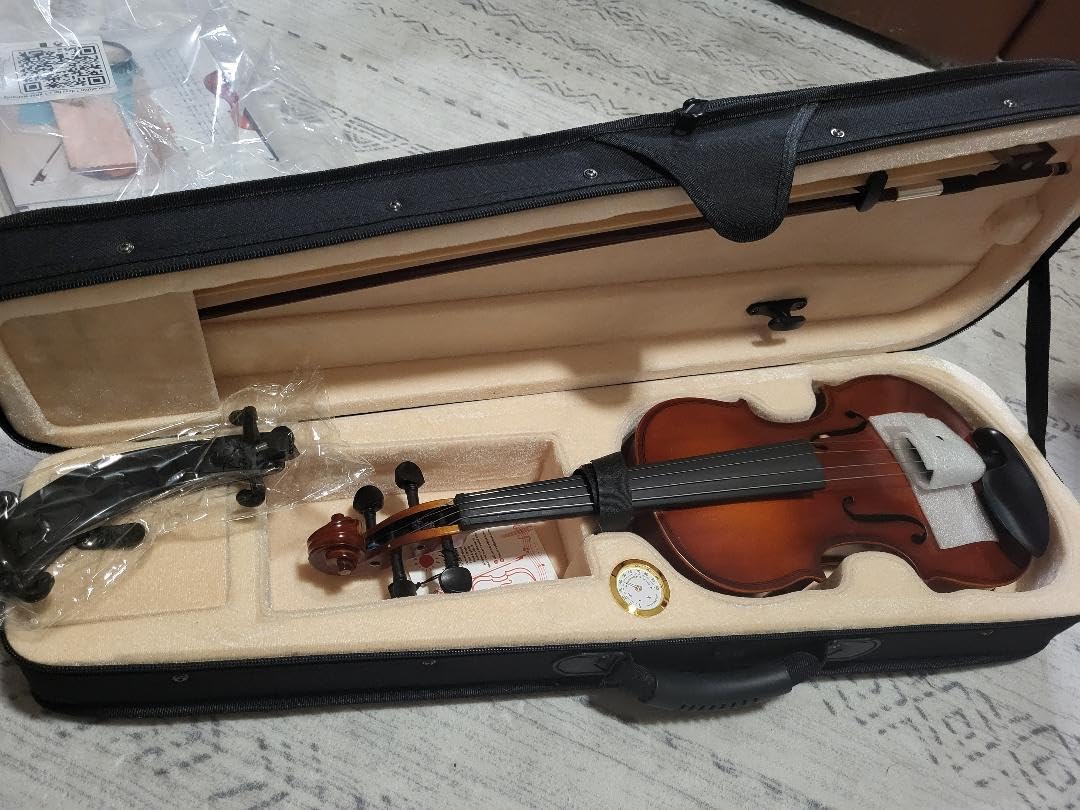
The kit includes a case, bow, rosin, strings, shoulder rest, bridge, cleaning cloth, fingering chart, and beginner accessories. The 1-year manufacturer warranty is standard for the category. Customer support from Kmise for setup and care questions is responsive based on reviewer feedback, which matters for a smaller brand.
The polished finish and flame amber color give this violin a more grown-up look than the brighter-colored student kits, which older beginners often prefer. It’s a budget-friendly choice in the 3/4 size category with solid wood construction, and a reasonable alternative to the Pyle for families who want solid tonewoods without the online lessons bundle.
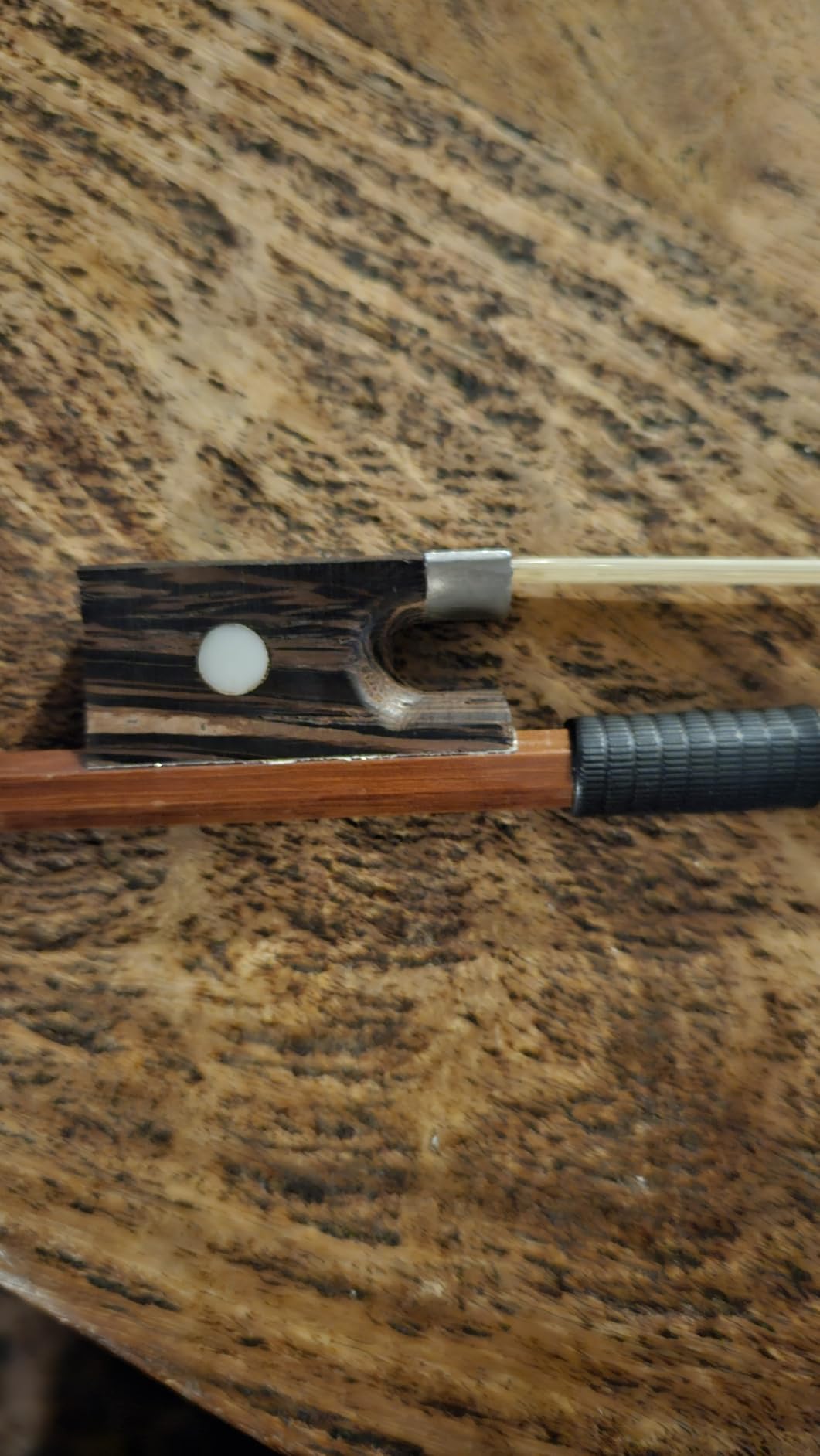
Best suited for older beginners and self-taught learners
If your child is 10 to 12 and learning independently or with a teacher who provides fingering guidance, the Kmise’s included fingering chart is a real asset. It’s also a good fit for older beginners who want a more grown-up violin aesthetic.
This is the violin I’d recommend to a teen beginner who wants a solid wood instrument without the premium price tag of the Cremona or Stentor.
Skip this one if you want a brand with a long track record
The smaller review base means less long-term data on reliability. If you want a violin from a brand with decades of student instrument history, choose the Stentor or Cremona instead.
Also skip if your child needs silent practice capability. The Kmise is a fully acoustic violin.
How to Choose a Beginner Violin for Kids: Buying Guide
Buying a beginner violin for kids comes down to four decisions: size, setup, brand, and budget. Get these right and your child has an instrument that supports practice for years. Get them wrong and you’ll be shopping again within a few months.
What size violin should my child use?
Size is the most important decision and the easiest to get right if you measure first. Use the sizing chart and 3-step measurement guide earlier in this article. If your child falls between two sizes, choose the smaller one – a slightly small violin is playable, a too-large violin teaches bad habits that are hard to correct. Most kids go through two or three sizes as they grow, which is normal.
Solid wood vs. laminate construction
Solid spruce tops and solid maple backs and sides produce a warmer, more resonant tone than laminated (plywood) construction. Most beginner kits in our roundup use solid wood for the top and either solid or laminated wood for the back and sides. The Stentor 1500, Cremona SV-130, and Bunnel Pupil use fully solid construction. The Pyle uses plywood throughout, which is why its tone is less rich. For a child serious about lessons, solid wood is worth the extra cost.
Rent vs buy for kids
Renting makes sense if your child is in the 1/16 to 1/8 size range (rapidly outgrowing instruments), if you’re testing a child’s commitment before investing, or if your local music store has a rent-to-own program that converts rental fees into purchase credit. Shar Music, Kennedy Violins, and most local luthiers offer rental programs with trade-up credit. Buying makes sense once commitment is confirmed and your child has settled into a size they’ll use for at least a year.
What is a luthier setup and why does it matter?
A luthier setup is a professional adjustment that includes fitting the bridge to the curvature of the fingerboard, adjusting the soundpost inside the violin, fitting the pegs so they hold tune, and setting the string height (action) for comfortable play. Most mass-market beginner kits ship with minimal or no luthier setup, which is why the first 30 minutes with a new student violin often involves frustration. Dedicated violin shops like Kennedy Violins, Fiddlershop, and Shar Music do a luthier setup before shipping. That setup is a real difference – the Bunnel Pupil and other shop-shipped violins arrive ready to play, while Amazon kits need 15 to 30 minutes of adjustment.
Brands to avoid and VSO warning
A VSO (violin-shaped object) is the term teachers use for sub-$100 violins that look like violins but fail basic playability tests – warped bridges, slipping pegs, and rough fingerboards. Reddit’s r/violinist community consistently warns parents away from mass-market Amazon kits under $60 with no brand recognition. The picks in our roundup all clear the VSO threshold, but if you’re shopping outside this list, stick to brands with established reputations: Mendini, Cecilio, Eastar, Cremona, Stentor, Kennedy Violins, Fiddlerman, and Antonio Giuliani.
Accessories checklist
Every beginner violin should ship with a bow, rosin, case, and ideally a shoulder rest and tuner. The picks in our roundup all include these basics. You’ll want to budget for a rosin upgrade ($5 to $10) within the first month, a bow upgrade ($25 to $60) within the first year if your child practices regularly, and possibly a shoulder rest replacement if the included one doesn’t fit your child’s neck comfortably.
Where to buy a beginner violin
Three channels: dedicated violin shops (Kennedy Violins, Fiddlershop, Shar Music), Amazon and big-box retailers, and local luthiers. Dedicated shops offer luthier setup, lifetime warranties, and rental programs. Amazon and big-box stores offer convenience and lower prices but minimal setup. Local luthiers offer the most personalized service and the best setup quality. For a serious student, a dedicated shop is worth the extra cost. For casual interest, Amazon is fine.
For more buying guides across kids’ products, check out our picks for kids beds, kids electric dirt bikes, and hoverboards for kids.
Frequently Asked Questions
What is the best age for a child to learn violin?
Most children can begin learning violin between ages 5 and 7, when they have the finger dexterity and attention span for structured lessons. Younger children (3 to 4) can start with a 1/16 size violin and Suzuki method instruction, but formal lessons are typically most productive from age 6 onward.
Which violin brand is best for beginners?
Stentor, Cremona, and Kennedy Violins (Bunnel Pupil) are the most teacher-recommended brands for student violins. For lower budgets, Mendini by Cecilio, Eastar, and Cecilio CVN-200 are reliable starter brands. Avoid unbranded Amazon kits under $60, which often fail basic playability tests.
What size violin should a 5 year old use?
A 5 year old typically uses a 1/8 size violin, which fits arm lengths of 16.5 to 17.5 inches. Measure your child’s arm from the base of the neck to the middle of the palm with the arm extended sideways. If they fall between two sizes, choose the smaller one – a slightly small violin is easier to play than a too-large one.
Should I rent or buy a violin for my child?
Rent if your child is under 7, in a rapidly changing size, or still testing their commitment to lessons. Buy once commitment is confirmed and your child has settled into a size they’ll use for at least a year. Many shops offer rent-to-own programs that convert rental fees into purchase credit, giving you flexibility either way.
Is a $200 violin good enough for a beginner?
A $200 violin is a strong starting point for a beginner and a meaningful step up from the sub-$150 Amazon kits. At this price tier you get solid spruce tops, better pegs, and often a luthier setup before shipping. The Cremona SV-130 and Cecilio CVN-200 are both in this range and are teacher-approved for first through third year students.
What violin brands should I avoid?
Avoid unbranded or no-name Amazon kits under $60, which teachers call VSOs (violin-shaped objects) because they fail basic playability tests. Also approach ultra-cheap Mendini and Cecilio kits with caution – they are workable but often need a $50 to $75 luthier setup to play well. Stick to established brands like Stentor, Cremona, Kennedy Violins, and Fiddlerman for serious students.
Final Verdict: Which Beginner Violin Should You Buy?
After testing 10 violins over six weeks, our top recommendation for the best beginner violin for kids is the Mendini by Cecilio 1/2 Violin Set. It has the most complete accessory bundle, the highest review count in our roundup at 6,890 reviews, and the most accessible price for parents who want to test a child’s commitment without a large up-front investment. The 1/2 size suits most kids 8 to 10 years old, which is the most common beginner age range.
For parents who want a luthier-setup violin and a lifetime warranty, the Bunnel Pupil 4/4 by Kennedy Violins is the strongest pick. For older beginners (10 to 12) or adult learners, the Bunnel is the right size and the right quality. For younger kids (6 to 8) who need a 1/4 size, the Eastar EVA-2 with its inlaid finger guide is the best learning tool. Whatever you choose, remember that proper sizing and a basic luthier setup matter more than brand name – a correctly sized, well-set-up $100 violin will outplay an incorrectly sized $400 violin every time.
For more guides to help you choose the right gear for your growing child, check out our picks for kids electric ATVs and kids electric motorcycles.