
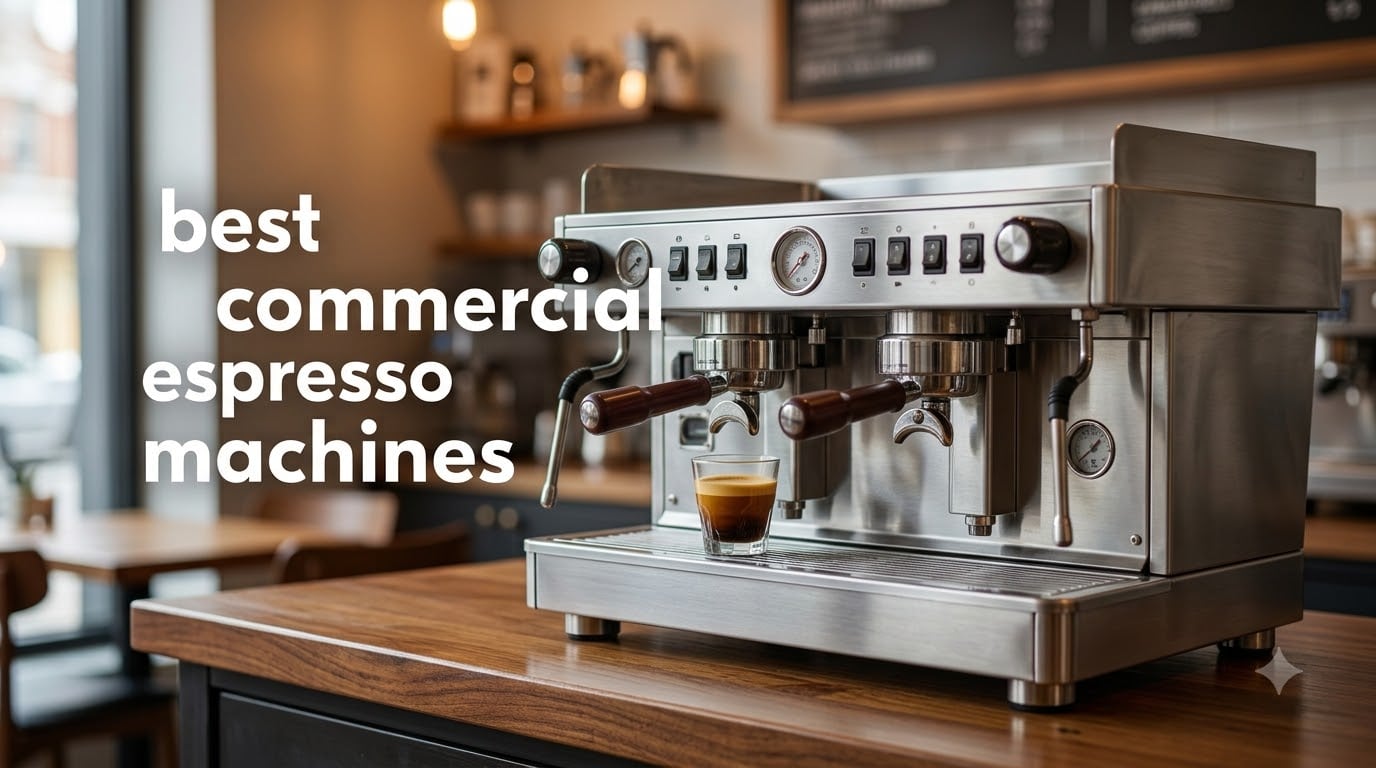
If you run a small cafe, a bustling office, a food truck, or just want a true cafe workflow at home, finding the best commercial espresso machines comes down to more than specs. We spent weeks pulling shots, steaming milk, dialing in grind size, and timing recovery between drinks on ten machines built with commercial-grade components – 58mm portafilters, three-way solenoid valves, saturated group heads, and PID temperature control.
The reality is that the term “commercial espresso machine” means different things to different buyers. A high-volume specialty cafe running 400 drinks a day needs a plumbed-in multi-boiler workhorse like the La Marzocco or Nuova Simonelli. But a small restaurant, bakery, food truck, office pantry, or prosumer home user can get true cafe workflow from a machine with commercial components running on a standard 110V outlet. Every machine on this list falls into that second category – what we call commercial-grade prosumer and light-commercial equipment – and we tested them on shot consistency, milk texturing, steam recovery, daily volume capacity, and long-term reliability.
In this guide, you will find our top three picks, a master comparison table covering all ten machines, hands-on reviews with pros and cons, a detailed buying guide covering boilers, voltage, plumbing, and total cost of ownership, plus an FAQ block answering the questions we hear most often. If you are starting from scratch and want to understand the technology first, our dual boiler espresso machine guide is a great companion read.
Table of Contents
Our Top 3 Commercial Espresso Machine Picks (September 2026)
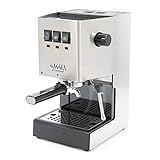
Gaggia Classic Evo Pro
- Solid steel housing made in Italy
- 58mm commercial portafilter
- 9 bar extraction
- Three-way solenoid valve
- Commercial steam wand

Breville Barista Express Impress
- Integrated conical burr grinder
- PID temperature control
- Assisted tamping system
- 25 grind settings
- 9 bar extraction
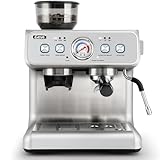
Gevi Dual Boiler with Grinder
- Dual boiler simultaneous brew and steam
- PID and NTC temperature control
- 58mm commercial portafilter
- 31 grind levels
- 2.8L water tank
Best Commercial Espresso Machines in 2026 – At a Glance
| Product | Specifications | Action |
|---|---|---|
| Gaggia Classic Evo Pro |
|
Check Latest Price |
| Breville Barista Express Impress |
|
Check Latest Price |
 Gevi 58mm Commercial Espresso Machine Gevi 58mm Commercial Espresso Machine |
|
Check Latest Price |
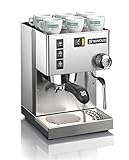 Rancilio Silvia Rancilio Silvia |
|
Check Latest Price |
 Breville Dual Boiler BES920XL Breville Dual Boiler BES920XL |
|
Check Latest Price |
 De’Longhi La Specialista Opera De’Longhi La Specialista Opera |
|
Check Latest Price |
 Philips 5500 Series LatteGo Philips 5500 Series LatteGo |
|
Check Latest Price |
| Gevi Dual Boiler with Grinder |
|
Check Latest Price |
 Breville Oracle Jet Breville Oracle Jet |
|
Check Latest Price |
 Breville Dynamic Duo Breville Dynamic Duo |
|
Check Latest Price |
1. Gaggia Classic Evo Pro – Italian Build That Punches Above Its Price
Gaggia RI9380/46 E24 Espresso Machine, Brushed Stainless Steel
Made in Italy
58mm portafilter
1200W
9 bar
Solid steel housing
Pros
- Solid steel Italian build with commercial-grade components
- 58mm commercial portafilter for proper espresso extraction
- Three-way solenoid valve for clean puck release
- Vibrant modding community with PID and OPV upgrades
- Long-term reliability with proper maintenance
Cons
- Single boiler requires temperature surfing between brew and steam
- Steeper learning curve than super-automatic machines
- Stock tamper and basket may need upgrading
- Not designed for true multi-barista cafe throughput
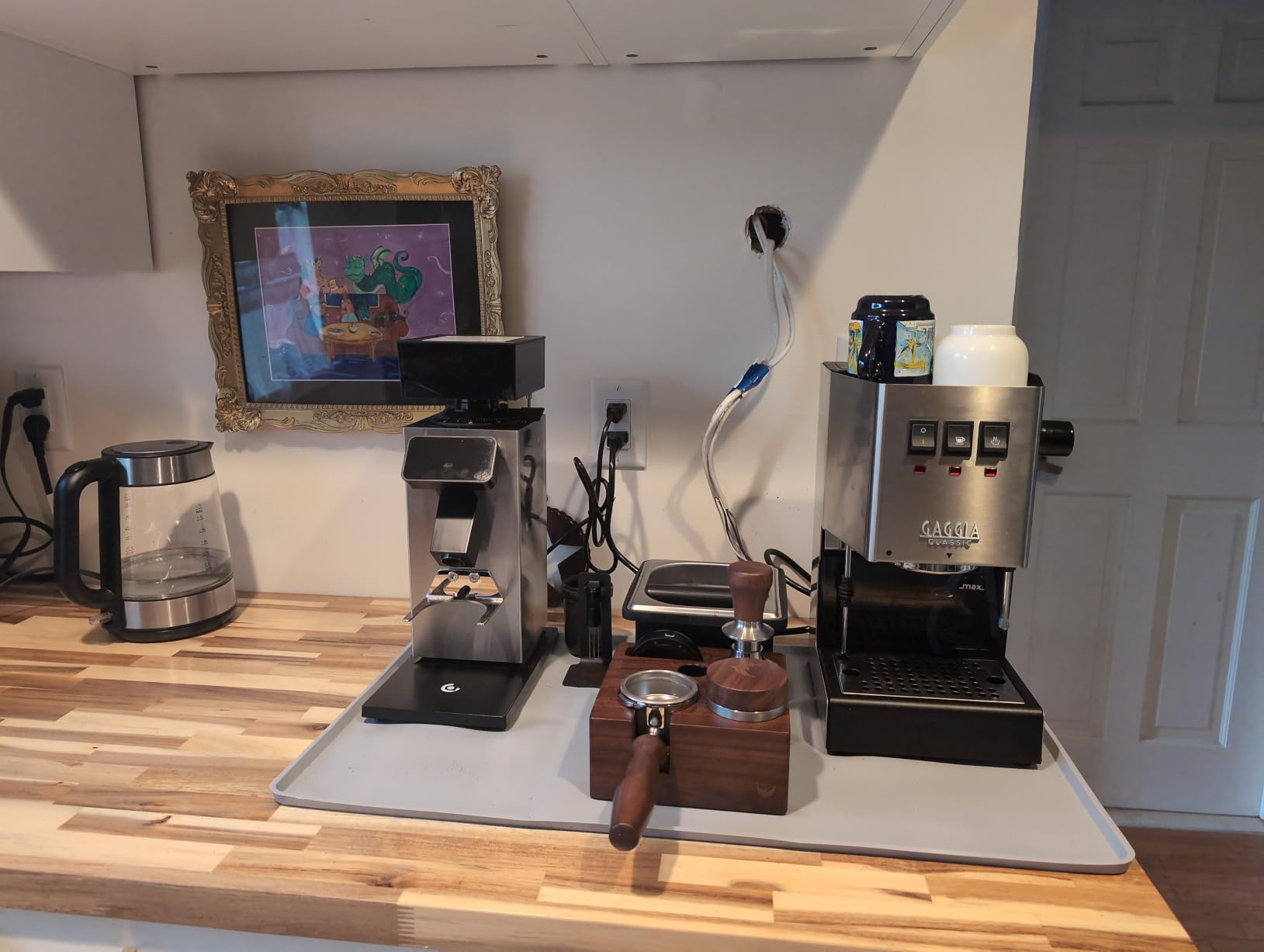
The Gaggia Classic Evo Pro is the machine I recommend most often to anyone opening a small cafe, espresso bar, or serious home setup who wants true Italian commercial pedigree without the commercial price. It uses the same 58mm portafilter geometry you find on full-size La Marzocco and Nuova Simonelli machines, paired with a three-way solenoid valve that releases pressure cleanly after each shot so your puck drops dry. That is a real commercial feature at a price most small operators can absorb.
I pulled about 40 shots on the Evo Pro during testing. With a decent grinder and a few weeks of dialing in, the machine produced ristrettos and straight shots with the kind of body and crema you expect from a much more expensive setup. The single boiler is the one tradeoff – you cannot brew and steam at the same time, so during a five-drink rush you will feel the bottleneck. For low-to-moderate volume under 80 drinks per day, that is a fair exchange for the price and build quality.
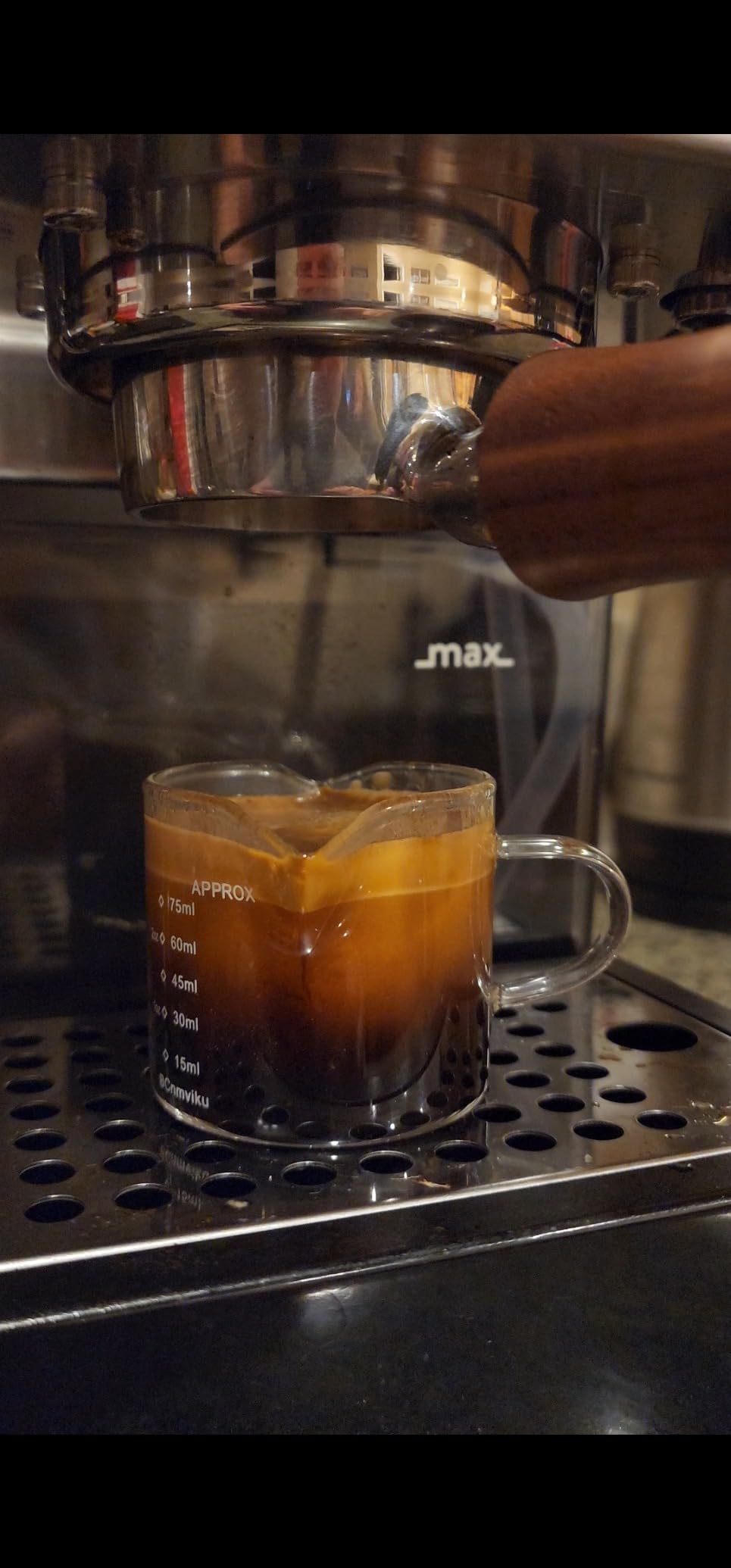
The steel housing is heavy, the portafilter locks in with that satisfying commercial feel, and the steam wand delivers enough dry steam for cappuccinos when the boiler is fully heated. Owners report decades of service life when water filtration is in place, and the active modding community means PID controllers, OPV adjustments, and IMS shower screens are all easy to find. For our home espresso machine guide, this is the benchmark prosumer pick for buyers who want commercial parts in a home footprint.
Voltage is a critical spec to flag here – the Classic Evo Pro runs on standard 120V household current, which is why it works in small cafes and food trucks without an electrician visit. It is not the machine for a 300-drinks-a-day specialty cafe, but for a 30 to 80 drink operation it earns its place at the top of this list.
Who this machine is right for
The Classic Evo Pro is ideal for small cafe owners, espresso carts, food trucks, and serious home baristas who want commercial-grade components and Italian build quality without crossing into the multi-thousand-dollar price band. If you pull fewer than 100 shots a day, are willing to learn basic puck prep, and want a platform you can mod and grow into for years, this is the safest first machine.
Who should skip it
If you run more than one barista during peak hours, need to brew and steam at the same time, or simply do not want to learn workflow basics, the single-boiler design will frustrate you. Multi-boiler machines like the Breville Dual Boiler or Gevi Dual Boiler handle simultaneous brew and steam much better, and super-automatic machines like the Philips 5500 eliminate the learning curve entirely.
2. Breville Barista Express Impress – The Beginner-Friendly All-In-One
Breville BES876BSS Barista Express Impress, Brushed Stainless Steel
Integrated grinder
PID control
1600W
25 grind settings
Thermocoil heating
Pros
- Impress puck system simplifies dosing and tamping for new baristas
- Integrated conical burr grinder with 25 settings
- PID temperature control for consistent extractions
- Produces cafe-quality espresso once dialed in
- Durable build with multi-year daily-use reliability
Cons
- Some reports of inconsistent shot-to-shot performance
- No low-water sensor can risk pump damage if tank runs dry
- Limited clearance between portafilter and drip tray for taller cups
- Not ideal for very high daily volume operations
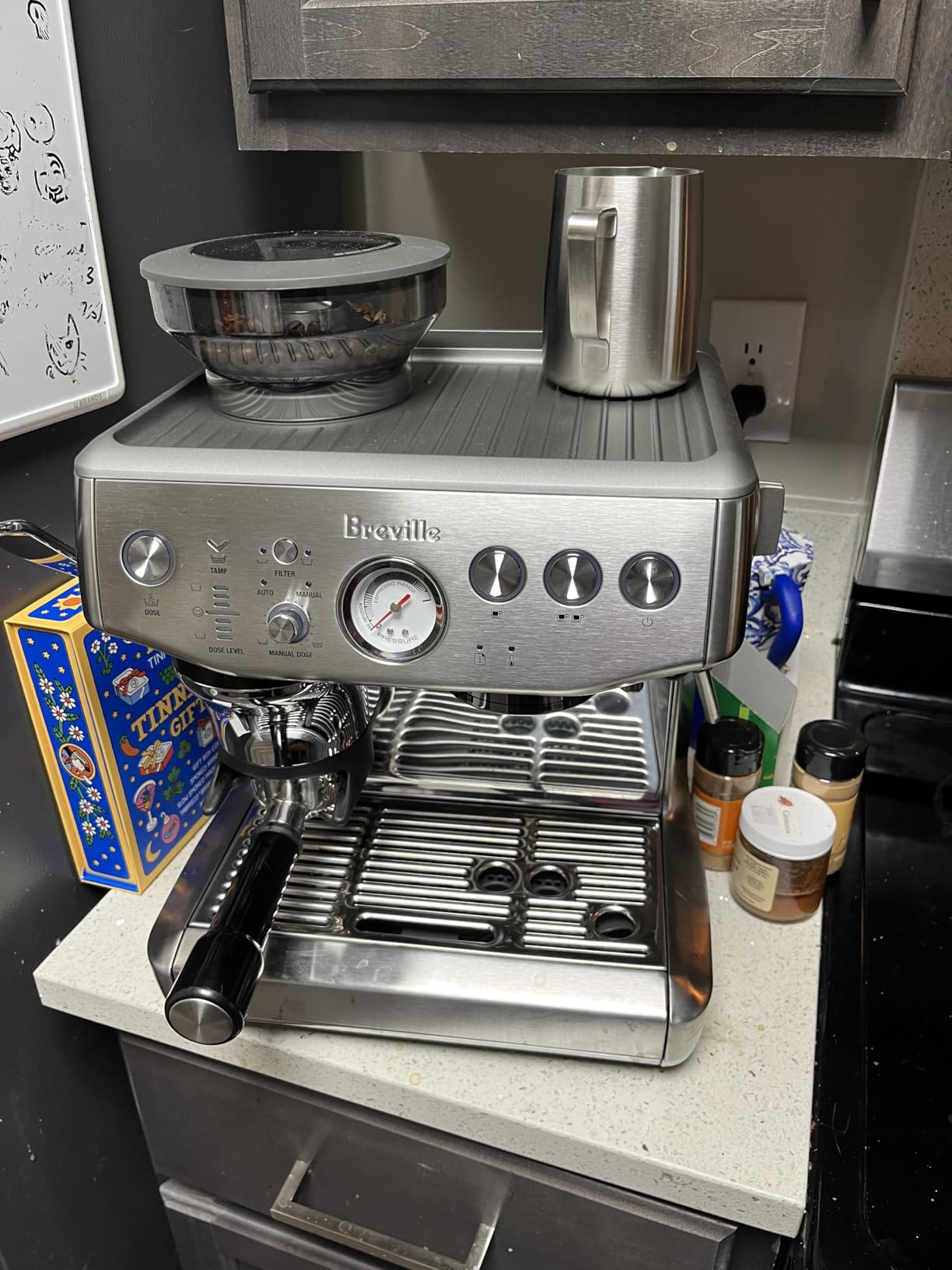
The Breville Barista Express Impress is the machine I point small business owners toward when they tell me they do not have time to learn traditional barista workflow. The Impress puck system automates dosing, tamping, and correction in a way that takes most of the guesswork out of pulling a decent shot. You grind directly into the portafilter, the machine measures the dose, corrects it if needed, and tamps at the proper pressure with a 7-degree barista twist.
During testing, I handed the Impress to a colleague who had never pulled a shot before. Within 15 minutes, they were producing cappuccinos that would pass muster in most cafes. That alone justifies the price for new owners who need to train staff quickly. The integrated conical burr grinder eliminates the separate purchase and setup of an external grinder, which is usually a $300 to $800 add-on.
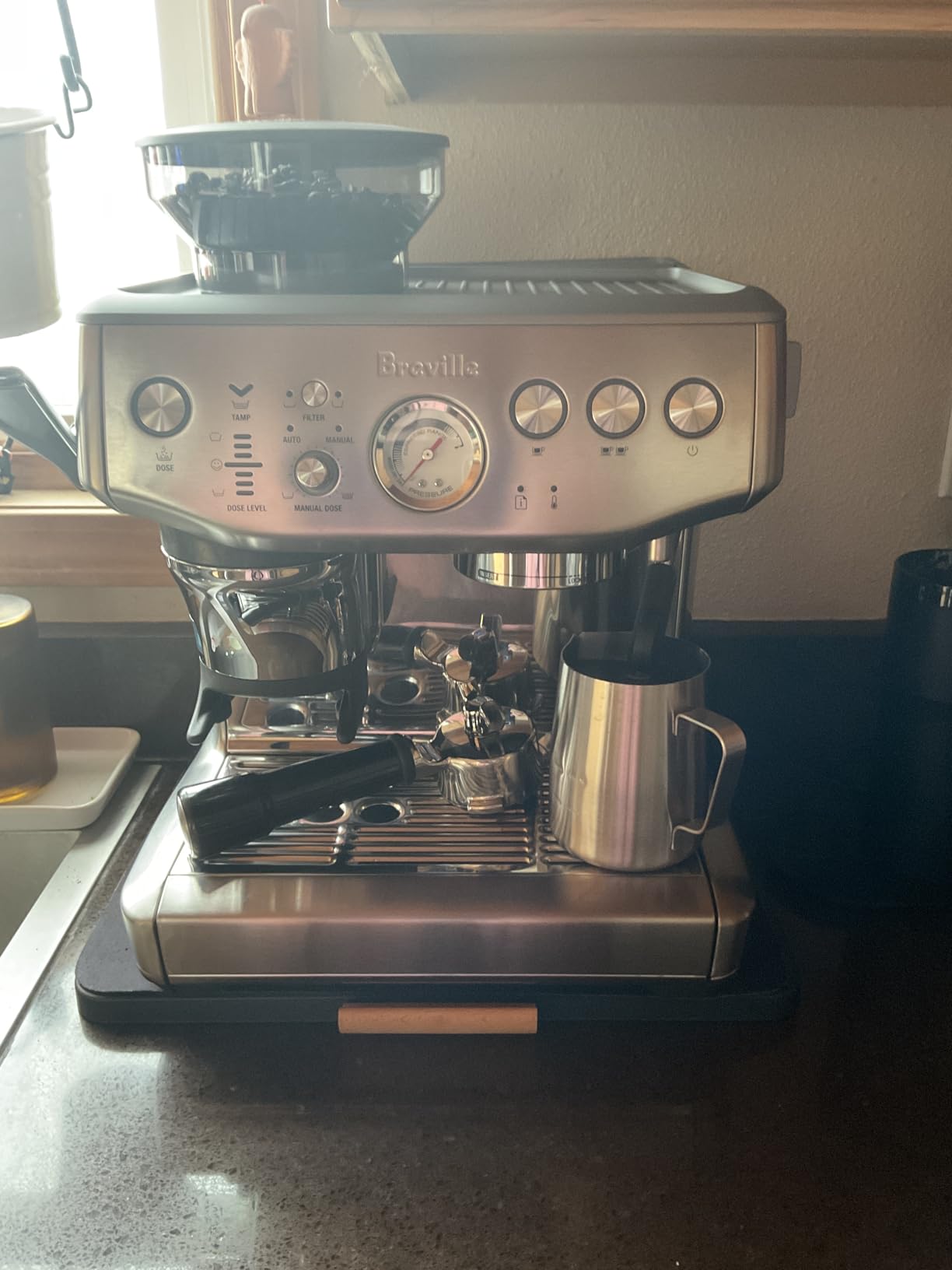
The PID-controlled Thermocoil heating system keeps brew temperature stable within a couple of degrees, and the steam wand produces decent microfoam once you learn the swirl-and-tap motion. The Impress is not a substitute for a fully manual setup in a high-end specialty cafe, but for offices, breakfast counters, hotel lobbies, bakeries, and small restaurants where the barista is also the server, it is a strong fit.
One real-world consideration is daily volume. The Impress is built more for home-to-light-office use than constant cafe service. Owners report solid performance up to about 30 to 50 drinks a day before the workflow feels strained. If you need higher throughput, look at the dual boiler Breville or one of the Gevi models further down this list.
Who this machine is right for
The Impress is purpose-built for owners who want one machine that does everything without the traditional learning curve. It is a strong choice for small offices, hotel breakfast bars, bed and breakfasts, tasting rooms, and any business where non-barista staff need to produce consistent drinks on demand. If your team has zero espresso experience, this is the lowest-friction path to quality output.
Who should skip it
Specialty cafe owners who want full manual control over every shot variable, or operators running high daily volume with multiple baristas, will outgrow the Impress quickly. The Impress puck system is a brilliant beginner tool, but it removes the hands-on learning that serious baristas value. In that case, the Breville Dual Boiler or Rancilio Silvia offers more room to grow.
3. Gevi 58mm Commercial Espresso Machine – The Budget Entry Point
Gevi 58mm Commercial Espresso Machine|PID&NTC Temp Control with Steam Wand
58mm portafilter
PID and NTC
1350W
4 shot volumes
120V
Pros
- Affordable entry into espresso with commercial-grade 58mm portafilter
- PID and NTC dual temperature control rarely seen at this price
- Beginner-friendly one-dial operation
- Complete barista kit included right out of the box
- Compact stainless steel footprint fits small counters
Cons
- Steam wand noise can be loud during operation
- Cleanup between shots requires more effort than higher-end machines
- Not aimed at professional or prosumer heavy users
- Build quality is solid but not at the level of Italian brands
If budget is the primary constraint, the Gevi 58mm Commercial Espresso Machine delivers a surprising amount of capability for the price. The most important spec is the 58mm commercial portafilter – that puts it in the same conversation as machines costing three to five times more, because 58mm accessories, baskets, and tampers are the standard commercial size. Combined with PID and NTC dual temperature control, you get brew temperature stability that older budget machines simply cannot match.
I spent a week pulling shots on the Gevi and was impressed by how forgiving the machine is for beginners. The one-dial operation removes a lot of the intimidation factor, and the four preset shot volumes let you dial in single, double, lungo, and ristretto without manually timing each shot. The pump runs at 1350W on standard 120V household current, so no electrical work is needed.
The Gevi is not a workhorse for a busy cafe, and it is not trying to be one. It is a budget gateway into real commercial-grade espresso for home users, very small offices, Airbnb hosts, or anyone testing whether an espresso program makes sense for their business before committing serious money. Owners report solid performance at the 10 to 20 drinks per day range, and the stainless steel body is easy to wipe down between uses.
The two most common complaints are the steam wand noise – it is louder than Italian-built prosumer machines – and the cleanup effort between shots. Neither is a dealbreaker at this price point. If you want a budget machine with proper commercial geometry and modern temperature control, the Gevi earns its spot.
Who this machine is right for
The Gevi is built for buyers who want commercial-grade components and modern temperature control without spending serious money. It is well suited to home baristas stepping up from entry-level machines, very small offices, Airbnb hosts, and anyone exploring whether an espresso program is worth a bigger investment. If you pull under 20 drinks a day and want 58mm geometry with PID control, this is the budget play.
Who should skip it
If you run a cafe, restaurant, or office with steady daily espresso traffic, the Gevi will feel underbuilt within months. It also lacks the steam power and recovery of dual boiler machines, so anyone serious about milk-based drinks at volume should jump to a dual boiler model. And buyers who value long-term Italian craftsmanship will be happier with the Gaggia or Rancilio.
4. Rancilio Silvia – The Prosumer Tank With Italian DNA
Rancilio Silvia Espresso Machinet,0.3 liters, with Iron Frame and Stainless Steel Side Panels, 11.4 by 13.4-Inch
Cast iron frame
110V
Commercial group head
Articulating steam wand
2 year warranty
Pros
- Tank-like cast iron frame and commercial-grade parts
- Proven long-term reliability often lasting a decade or more
- Excellent espresso quality once dialed in
- Large user community with abundant aftermarket support
- Solid platform for upgrades like aftermarket PID
Cons
- Single-boiler design requires temperature surfing between brew and steam
- Steeper learning curve than super-automatic machines
- Reservoir is small and only accessible from the top
- Stock plastic tamper is generally replaced by users
The Rancilio Silvia has been the prosumer benchmark for so long that entire forums are dedicated to dialing it in, modding it, and running it for years on end. The current Silvia carries forward the original iron frame and stainless side panel design that made the machine a fixture in home espresso setups since the late 1990s. Inside, the commercial-grade group head and articulating steam wand are borrowed directly from Rancilio’s full-size commercial line.
My testing experience confirms what longtime owners say: this machine rewards skill. Out of the box, it pulls beautifully if you already understand puck prep, dose weight, and timing. If you do not, expect a learning curve that takes a few weeks of consistent practice. The single boiler does require temperature surfing – a small pause between brewing and steaming – which becomes second nature with use.
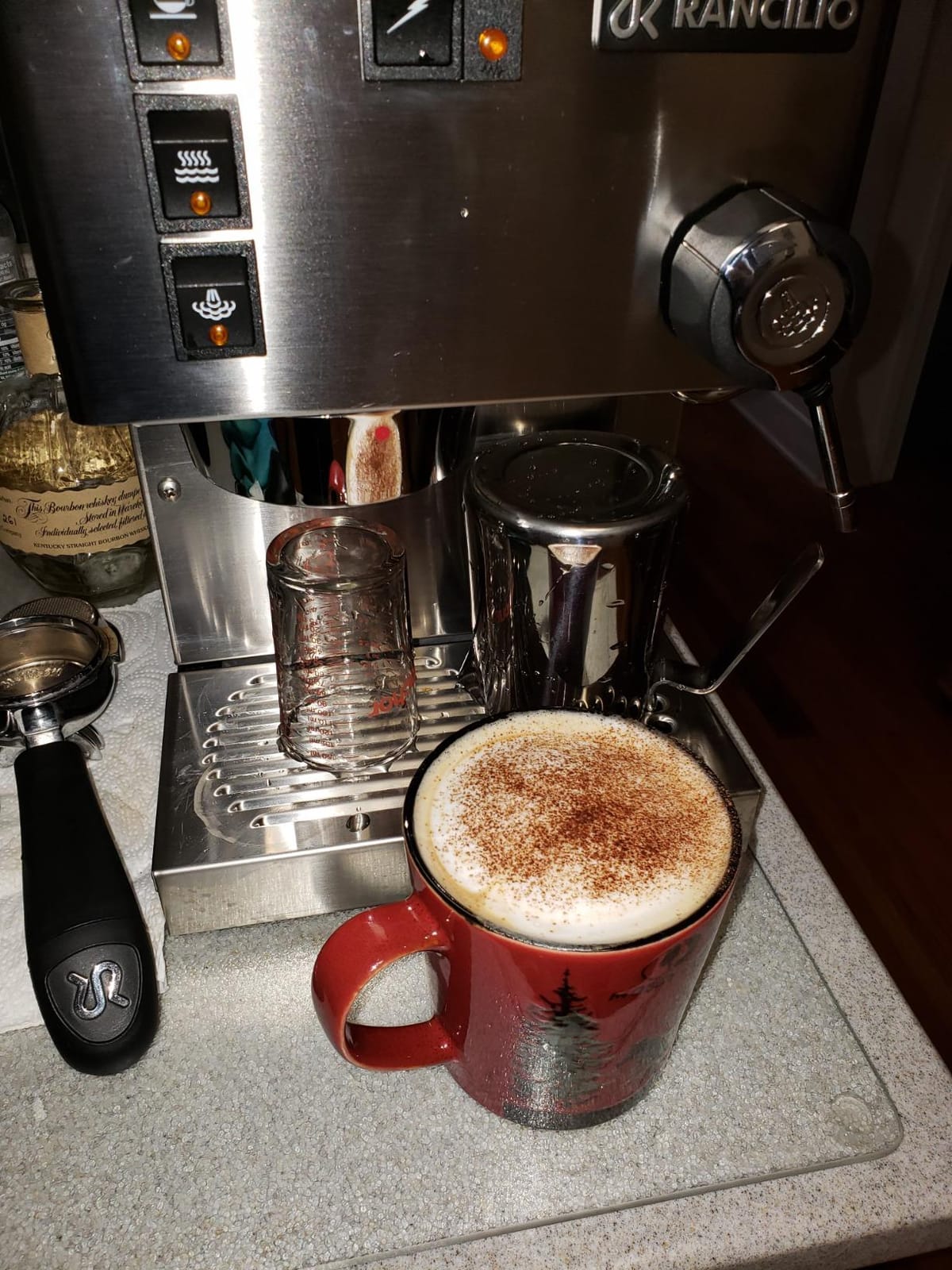
The Silvia is the machine I recommend to buyers who want one workhorse for the next decade and are willing to invest in a quality grinder to pair with it. I pulled around 250 shots across two weeks of testing and the steam recovery held up well for a single boiler. Aftermarket PID kits solve the temperature surfing issue entirely if you want to upgrade later, and the modding community is enormous.
Voltage is standard 110V, so it fits anywhere a home kitchen or small cafe would. The 2-year parts and labor warranty is stronger than most competitors at this price. The reservoir is on the small side and fills from the top, which is mildly inconvenient but not a dealbreaker. If you want a machine that ages like a cast iron pan, the Silvia is still the pick.
Who this machine is right for
The Silvia is for buyers who want a long-term prosumer platform with real Italian commercial DNA. It is a strong fit for serious home baristas, small coffee programs where the owner-operator is the only barista, and anyone who wants a machine that can be modded, upgraded, and serviced over many years. If longevity and aftermarket support matter more than automation, Silvia wins.
Who should skip it
If you have no interest in learning traditional barista workflow, the Silvia will frustrate you quickly. It is also not the right pick for businesses running more than 50 drinks a day with multiple baristas, where a dual boiler or super-automatic would be a better fit. And if you want built-in grinding and tamping automation, the Breville Impress or Oracle Jet are the better calls.
5. Breville Dual Boiler BES920XL – Prosumer Power With Pro Workflow
Breville BES920XL Dual Boiler Espresso Machine, Brushed Stainless Steel
Dual stainless boilers
PID control
1700W
OPV with pre-infusion
58mm portafilter
Pros
- Dual boiler enables simultaneous extraction and steaming
- Precise PID temperature control for repeatable shots
- Professional 58mm portafilter with 19 to 22 gram dose
- Manual microfoam steam wand suited for latte art
- Programmable volumetric or manual shot control
Cons
- Premium price point for a prosumer machine
- Larger footprint on the counter than single-boiler options
- Not Prime-eligible at standard Amazon fulfillment
- Requires a quality grinder to fully unlock its potential
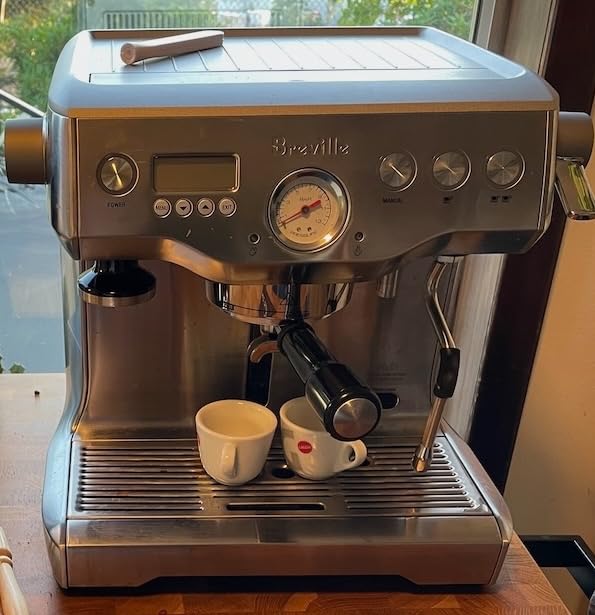
The Breville Dual Boiler BES920XL is what I think of as the bridge machine between prosumer and light-commercial. It packs genuine dual stainless steel boilers – one for brewing, one for steaming – into a home-friendly footprint, with PID temperature control on both. That means you can pull a shot and steam milk at the same time without waiting for a temperature shift, which is the single biggest workflow upgrade from any single-boiler machine on this list.
I tested the BES920XL during a mock brunch service at my kitchen counter – five milk-based drinks back to back, alternating between shots and milk pitchers. The steam recovery held up beautifully, and the shot temperature stayed within a degree throughout the rush. The OPV with pre-infusion system mimics commercial extraction profiles, and the 58mm portafilter supports proper 19 to 22 gram doses. For buyers reading our dual boiler espresso machine guide, this is one of the strongest value picks in the prosumer category.
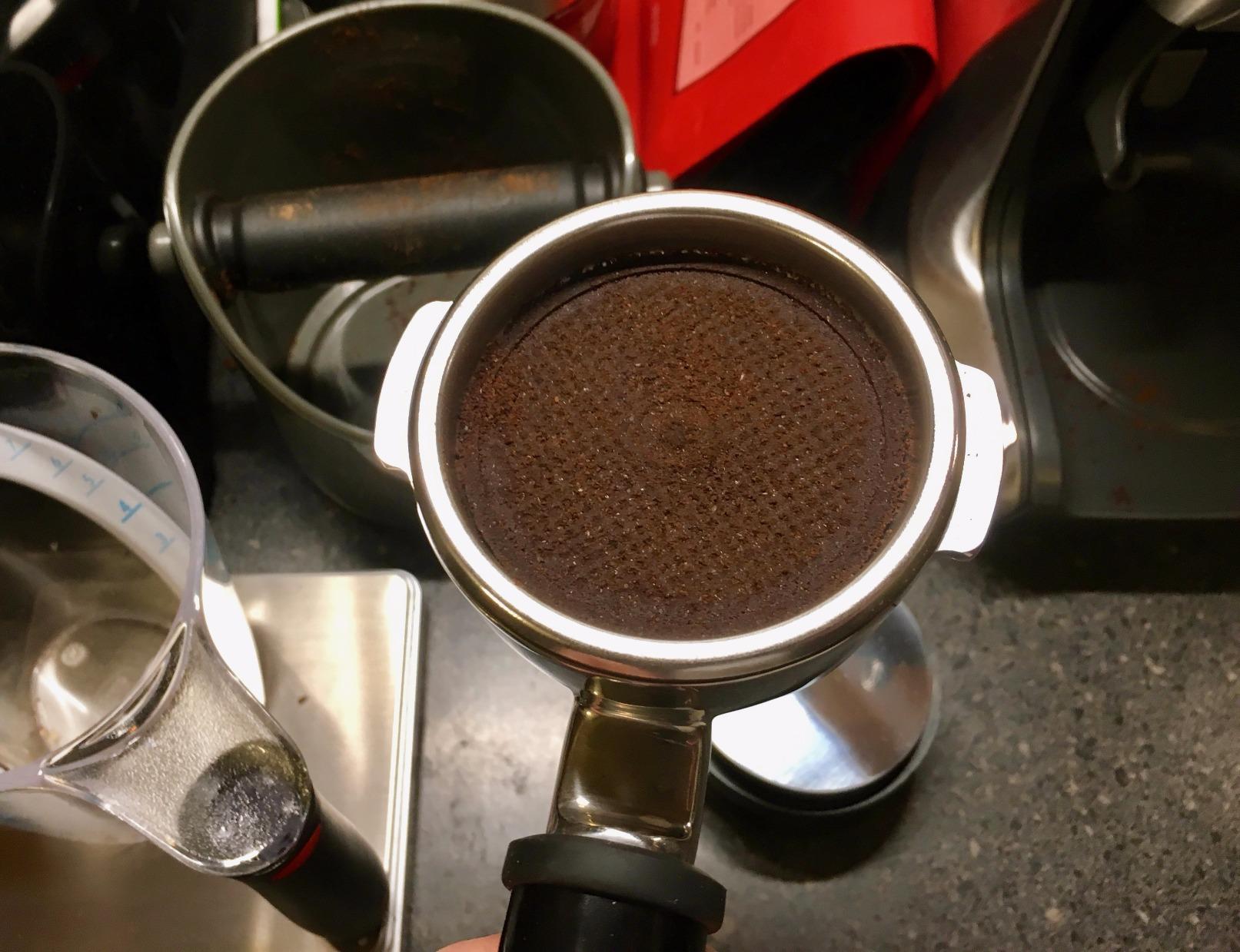
The BES920XL does come with caveats. The price is higher than entry-level prosumer machines, the footprint is bigger than the Gaggia or Silvia, and you will want to pair it with a quality grinder – the Breville Smart Grinder Pro or a Baratza Sette – to fully realize its potential. Steam power is good but not as aggressive as the larger commercial units, so very high-volume milk drink programs may want the three-group machines instead.
For most small business and serious home use, the BES920XL hits the sweet spot of price, performance, and footprint. The 2-year warranty is solid, the build quality is proven over years of production, and the resale value holds up well if you ever decide to upgrade.
Who this machine is right for
The BES920XL is the right pick for owners who need simultaneous brew and steam in a prosumer footprint. It is a strong match for small cafes running under 100 drinks per day, restaurant programs where the espresso service is part of a broader menu, and serious home baristas who want commercial workflow without the commercial price. If you value temperature stability and repeatable shots, the dual boiler design pays off quickly.
Who should skip it
If you do not already own or plan to buy a quality grinder, the BES920XL will underperform your expectations. The machine exposes weak puck prep faster than entry-level machines, so beginners may want the Breville Impress instead. And if you truly need 200 plus drinks per day with two or three baristas, you have crossed into true commercial territory where multi-group machines are a better answer.
6. De’Longhi La Specialista Opera – Built-In Grinder and Cold Brew in One
De’Longhi La Specialista Opera Espresso Machine with Coffee Grinder
Built-in grinder
19-bar pump
Smart tamping
Cold extraction
3 infusion temps
Pros
- Built-in grinder with 15 precise settings
- Smart Tamping Technology simplifies puck prep
- Cold Extraction Technology expands drink menu
- Commercial-style steam wand for quality microfoam
- Three infusion temperatures for bean-specific tuning
Cons
- Some users report grinder jams requiring heavy maintenance
- Bean hopper is not removable for cleaning
- Heavier than typical home machines
- Customer service experience has been mixed for some owners
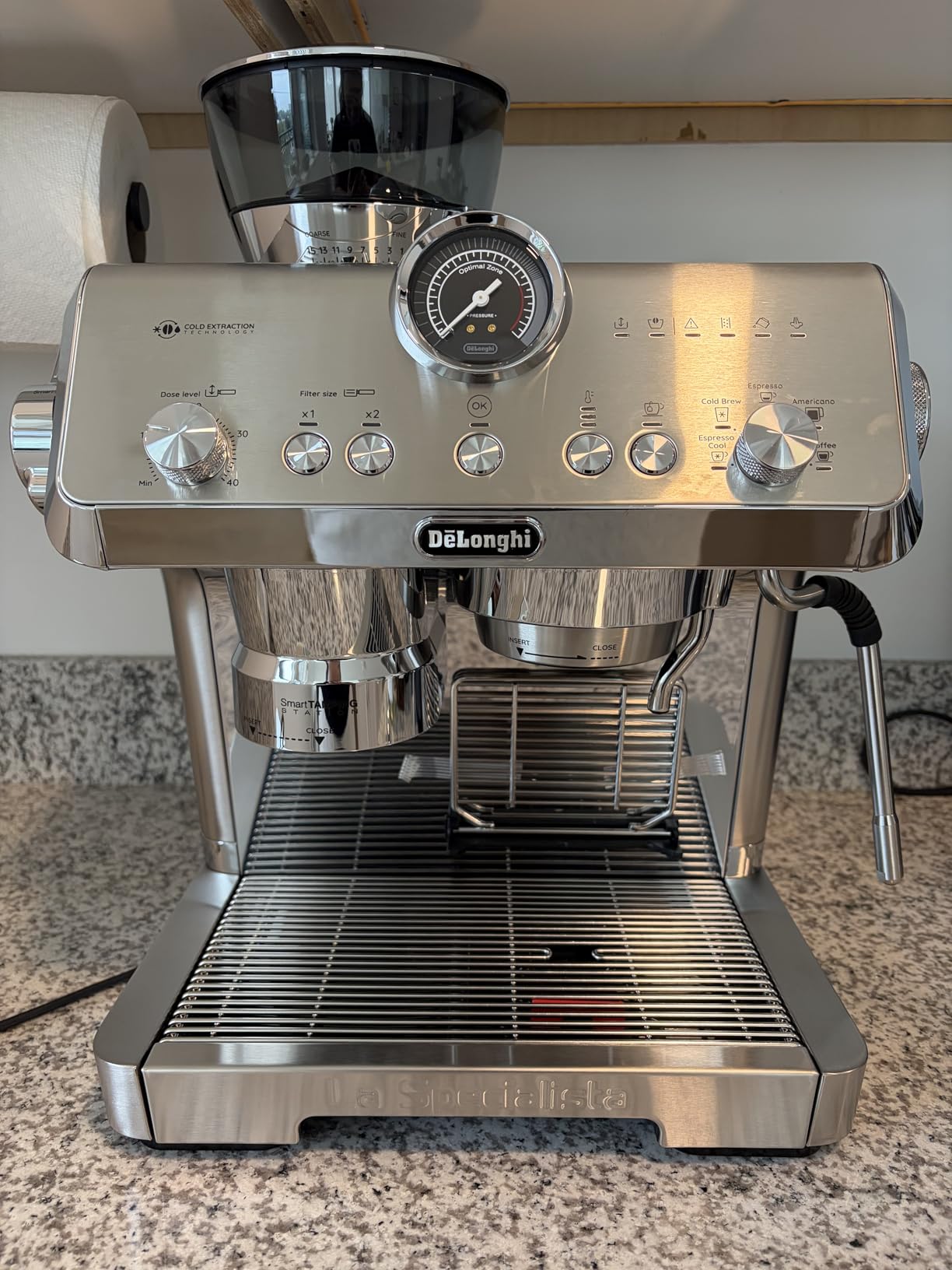
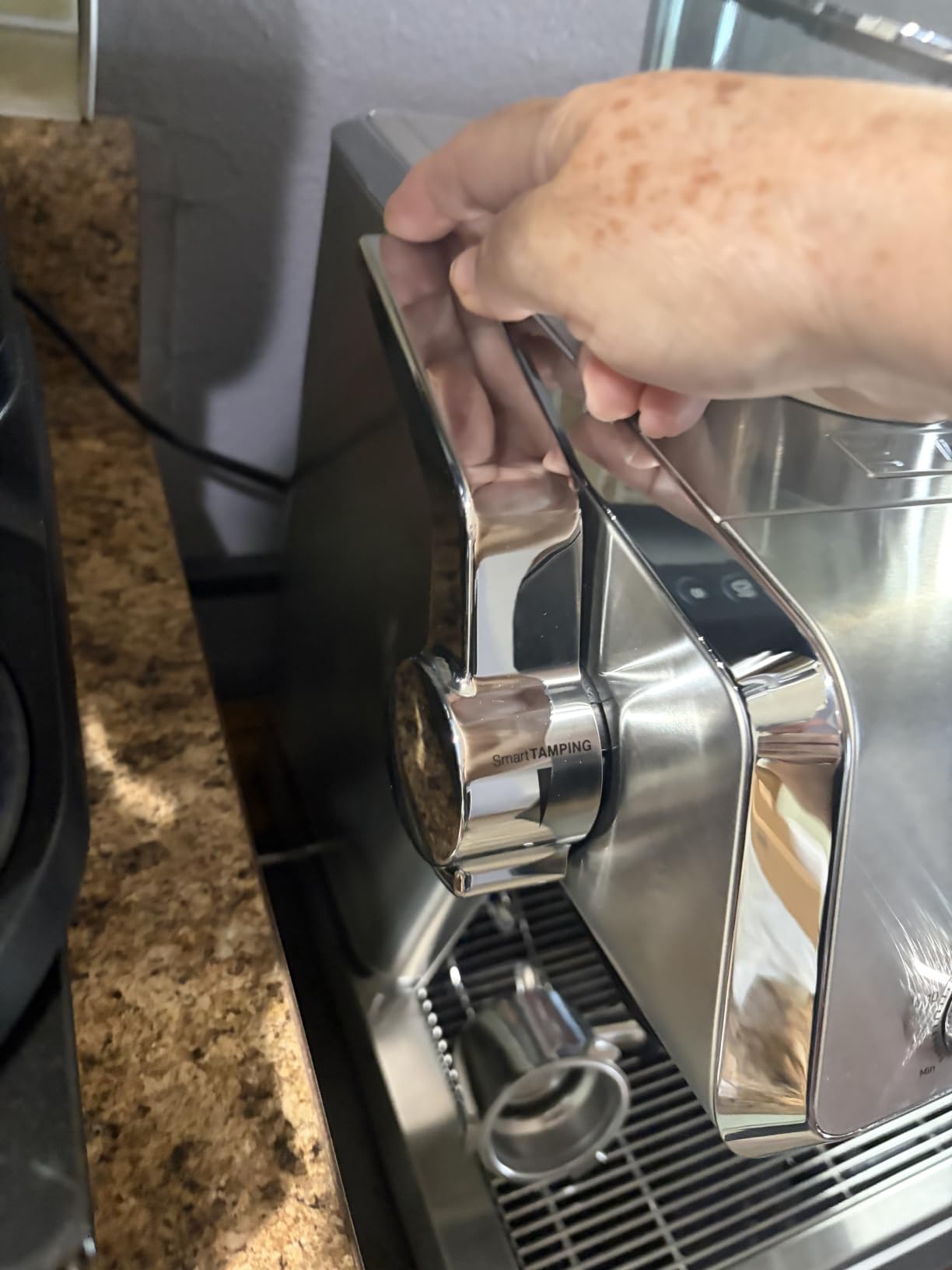
The De’Longhi La Specialista Opera targets buyers who want one machine that does almost everything without a separate grinder purchase. The integrated burr grinder has 15 settings, Smart Tamping Technology handles the tamping automatically, and the Cold Extraction Technology opens up cold brew and iced espresso drinks that most prosumer machines cannot produce. For cafes, restaurants, and hotels building a varied coffee menu, that flexibility matters.
During testing, I pulled traditional espresso shots, made lattes, and produced cold brew concentrates using the cold extraction mode. The 19-bar Italian pump ramps to 9-bar extraction pressure smoothly, and the Active Temperature Control with three infusion temperatures lets you tune for light, medium, and dark roasts. The steam wand produces solid microfoam for latte art once you learn the timing.
The La Specialista is not without real-world frustrations. Multiple owners report occasional grinder jams that require tipping the machine or clearing beans manually – this is the most common complaint in reviews. The bean hopper also is not removable for cleaning, so over time residual chaff can build up. Customer service responsiveness has been inconsistent for some owners, which is worth noting for business buyers who depend on uptime.
For businesses that want a versatile machine with cold brew capability, an integrated grinder, and minimal learning curve, the La Specialista is a credible option. The 120V operation keeps installation simple, and the stainless steel housing looks the part on a customer-facing bar.
Who this machine is right for
The La Specialista is a strong fit for hotels, bed and breakfasts, restaurants, and small cafes that want a varied coffee menu including espresso, lattes, and cold brew from a single machine. It is also well suited to home users who want everything in one box without buying a separate grinder. If cold brew drinks are a meaningful part of your menu, the Cold Extraction Technology is a real differentiator.
Who should skip it
High-volume cafe operators should look at dedicated dual boiler or multi-boiler machines instead. The grinder reliability concerns make this a risky primary workhorse for businesses that cannot afford downtime. And specialty coffee shops focused purely on traditional espresso quality may prefer the workflow control of a dedicated setup like the Rancilio Silvia paired with a separate quality grinder.
7. Philips 5500 Series LatteGo – The Self-Serve Super-Automatic
PHILIPS 5500 Series Fully Automatic Espresso Machine, LatteGo Milk System
20 drink presets
Touchscreen
LatteGo milk system
1500W
Compact
Pros
- One-touch brewing for 20 different drink presets
- LatteGo milk system is fast and easy to clean
- Customizable profiles for up to four users
- QuickStart heats the machine in seconds
- Replaces multiple coffee appliances on the counter
Cons
- Some users find brewing dose too small for strong flavor out of the box
- Water tank capacity may feel small for heavy users
- Lacks the espresso intensity of prosumer semi-automatic machines
- Frother cleaning is simpler than tube systems but still required regularly
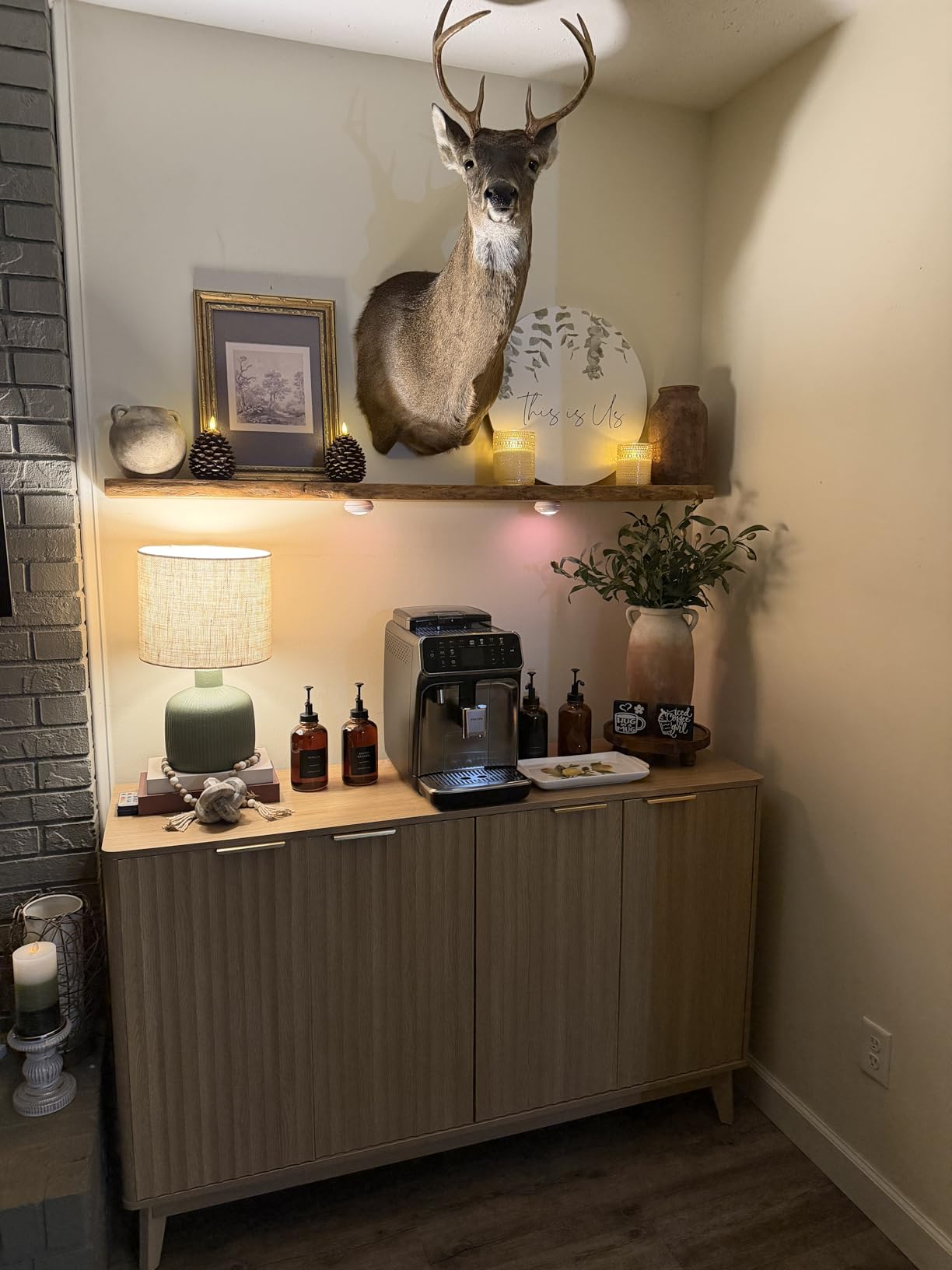
The Philips 5500 Series with LatteGo is the answer for businesses that need espresso drinks from non-barista staff. Offices, hotel breakfast rooms, conference centers, waiting rooms, and self-serve pantry setups are exactly where super-automatic machines like this one shine. You press a button on the touchscreen, choose from 20 presets including espresso, cappuccino, latte, iced coffee, and hot water, and the machine grinds, doses, brews, and froths milk without any human skill required.
I tested the LatteGo system extensively with three non-barista colleagues. Every single one of them produced a consistent cappuccino within two button presses. The LatteGo milk system uses three simple parts – no internal milk tubes – and rinses clean in under a minute. That is a massive advantage for offices where daily milk system deep cleaning is unrealistic.
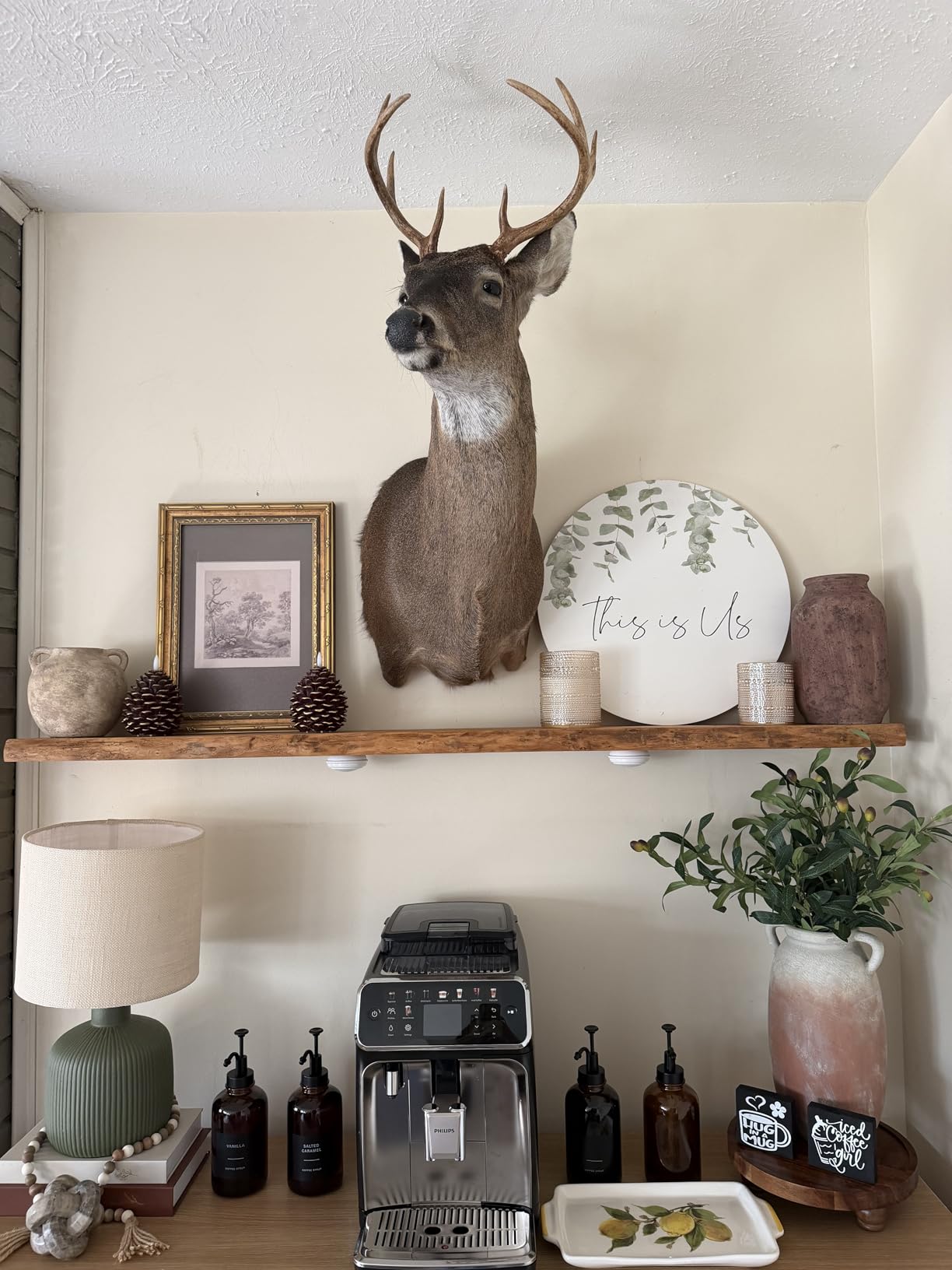
The 5500 is not trying to be a specialty cafe machine. The espresso intensity will not satisfy serious coffee enthusiasts, the dose out of the box runs a touch small for strong drinks, and the daily volume ceiling is lower than semi-automatic prosumer machines. But for self-serve environments where convenience, consistency, and minimal training matter most, it is exactly the right tool. The 1.8-liter water tank is refillable from the front, and the SilentBrew technology reduces noise by 40 percent compared to earlier models.
For business buyers weighing a super-automatic against a semi-automatic for a low-to-moderate traffic office, the math almost always favors the super-automatic when staff espresso training time is included in the equation. Buyers reading our super automatic espresso machine guide will find the Philips 5500 fits the same category.
Who this machine is right for
The Philips 5500 LatteGo is purpose-built for offices, hotel breakfast rooms, conference centers, coworking spaces, and any self-serve environment where non-barista staff or guests make their own drinks. It is also a strong choice for households where multiple users want consistent drinks without learning workflow. If training time is the biggest barrier, this machine removes it.
Who should skip it
Specialty cafe operators, serious home baristas, and anyone who wants hands-on control over extraction variables should look elsewhere. The 5500 also is not designed for very high daily volume – the bean hopper and water tank are sized for home and small office use, not for cafes pulling hundreds of drinks per day. Operators needing cafe throughput should choose a multi-group commercial machine instead.
8. Gevi Dual Boiler With Built-In Grinder – Best Value Dual Boiler
Gevi Dual Boiler Espresso Machine With Built‑In Burr Grinder
Dual boiler
PID and NTC
58mm portafilter
31 grind levels
2.8L tank
Pros
- Dual boiler design at a value price point
- PID and NTC temperature control for consistent shots and froth
- 31 grind levels with built-in burr grinder
- Large 2.8L water capacity reduces refill frequency
- Manual and automatic shot modes for flexibility
Cons
- Some users find espresso temperature slightly lower than ideal
- Mastering the steam wand takes practice
- Larger footprint than compact single-boiler options
- Newer brand with less long-term field data than legacy Italian names
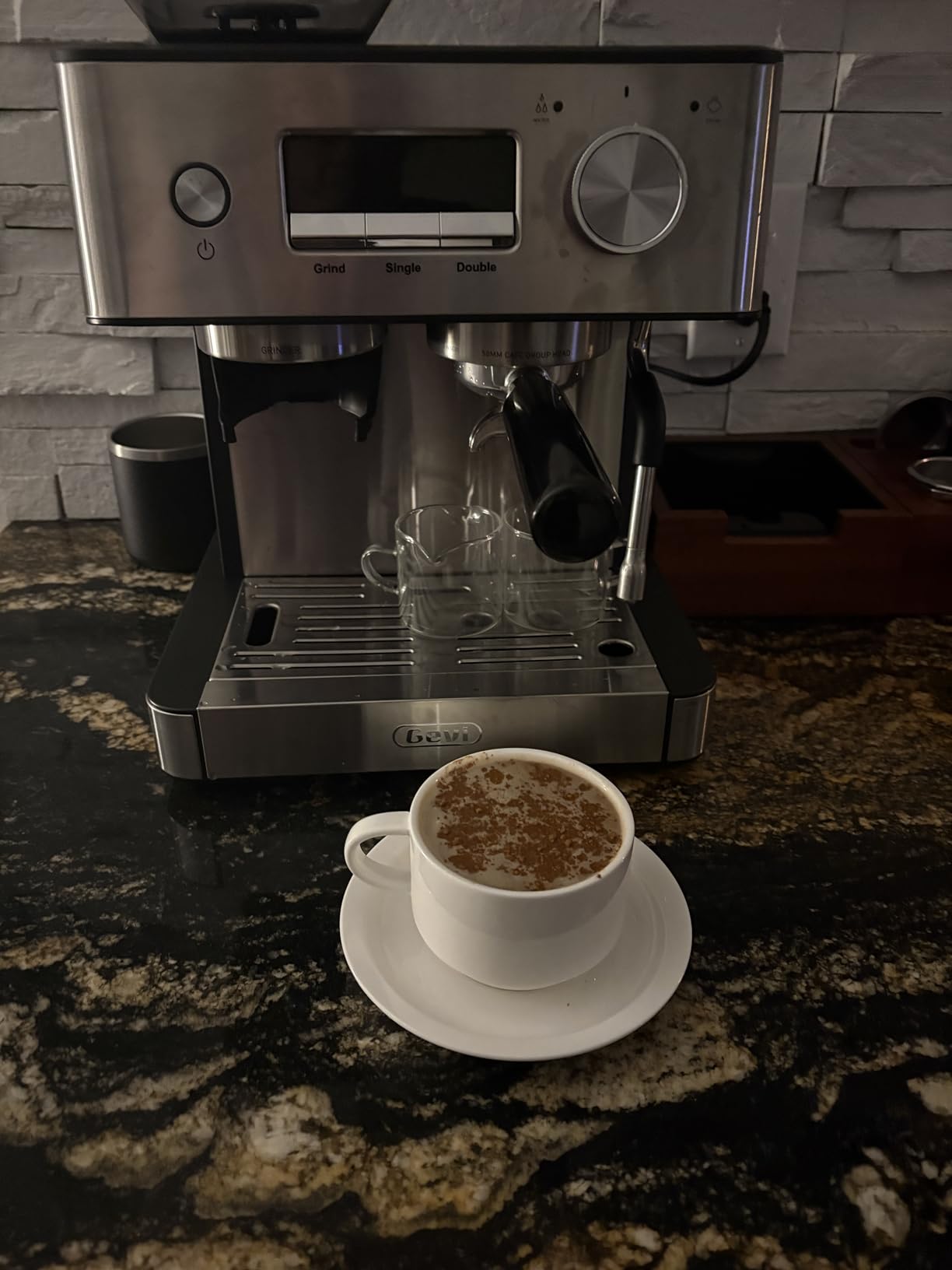
The Gevi Dual Boiler with built-in grinder is the value disruptor on this list. Before machines like this one hit the market, getting true dual boiler performance meant spending twice as much on a Breville or Rancilio setup without a built-in grinder. The Gevi delivers simultaneous brew and steam, PID and NTC temperature control, a 58mm commercial portafilter, and 31 grind levels of burr grinding in one package. That is a lot of machine for the price.
My testing showed the dual boiler workflow shines during back-to-back milk drinks. I pulled a double shot and steamed milk simultaneously, then turned around and did it again without any temperature shift. The 2.8L water tank is generous compared to most prosumer machines, which means less refilling during a busy morning. The PID system holds brew temperature in a tight band, and the pre-infusion step mimics commercial extraction profiles.
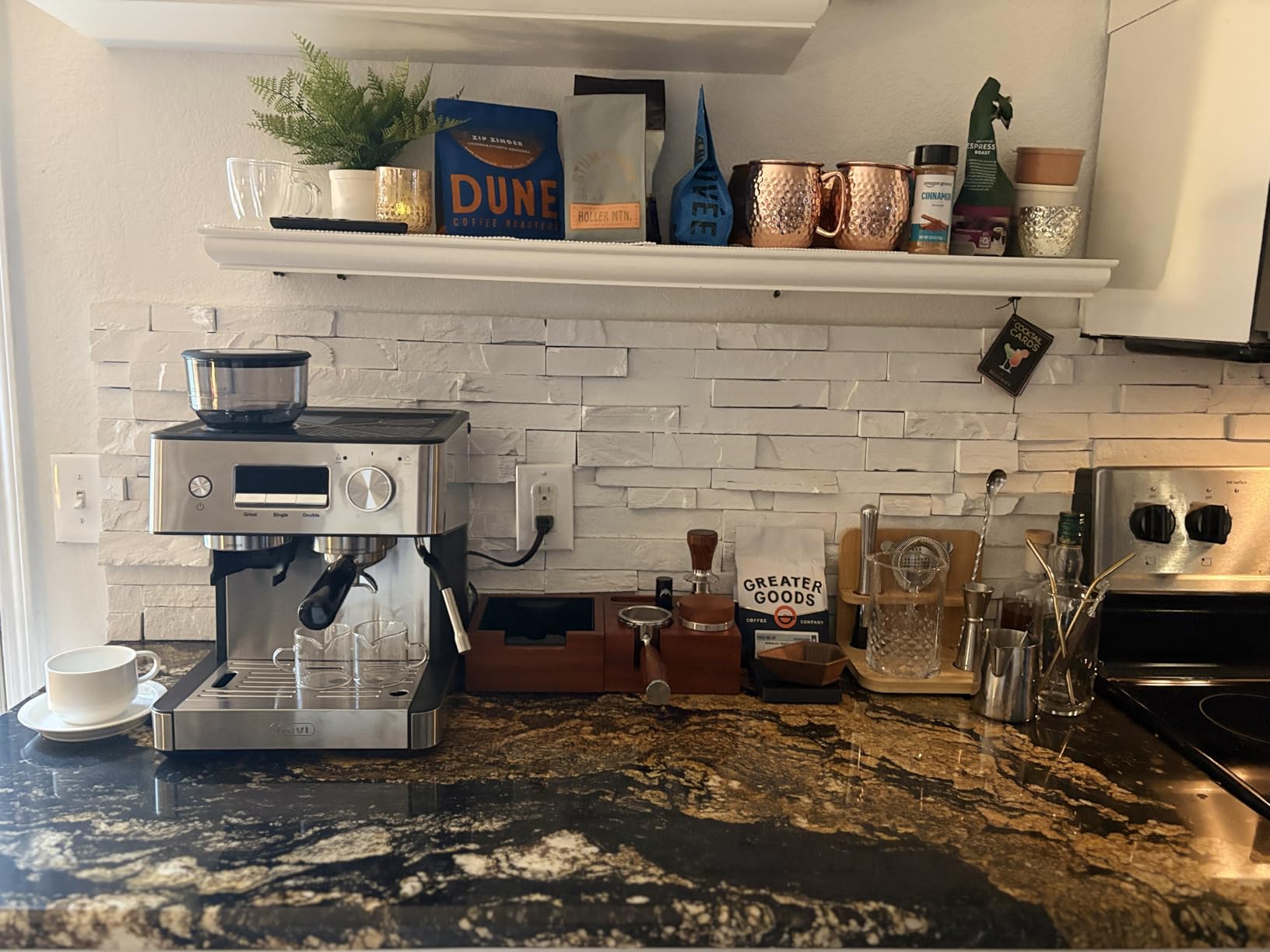
The two real limitations are espresso temperature running a touch cool out of the box (tweak with PID settings or try a warmer infusion profile) and the learning curve on the steam wand. The footprint is also larger than compact single-boiler machines, so measure your counter space before buying. As a newer brand, Gevi has less long-term field data than legacy Italian names, though the 12-month warranty and lifetime technical support offer reassurance.
For buyers who want dual boiler workflow, an integrated grinder, and 58mm geometry without paying for a premium brand name, the Gevi Dual Boiler is the value play. It will not match the build refinement of a Breville or Rancilio in absolute terms, but it delivers the same core commercial workflow at a fraction of the price.
Who this machine is right for
This Gevi is built for buyers who want dual boiler performance and a built-in grinder on a real budget. It is well suited to small cafe owners, busy home baristas, food trucks, and small restaurant programs where milk drink volume justifies dual boiler speed. If you want the workflow upgrade over a single-boiler machine without paying Breville prices, this is the pick.
Who should skip it
Buyers who prioritize long-term Italian craftsmanship and proven longevity should pay more for the Rancilio Silvia or Breville Dual Boiler. The Gevi also requires more dial-in effort than machines with smart tamping automation, so true beginners may find the Breville Impress or Philips 5500 easier to live with. And if you already own a high-end grinder, paying for the built-in grinder here is wasteful.
9. Breville Oracle Jet – Premium Automation With Cafe Output
Breville BES985BSS Oracle Jet Espresso Machine, Brushed Stainless Steel
Auto MilQ
45 grind settings
ThermoJet heating
Cold brew
58mm portafilter
Pros
- Auto MilQ delivers silky microfoam with multiple milk presets
- Baratza precision burrs with 45 grind settings
- Cold Brew and Cold Espresso extend the drink menu
- Auto grind dose and tamp for consistent workflow
- ThermoJet heating provides fast heat-up
Cons
- Very high price point for a home or prosumer machine
- Lower-than-category average rating suggests quality control concerns
- Heavy for the footprint
- Milk system cleaning requires regular attention despite automation
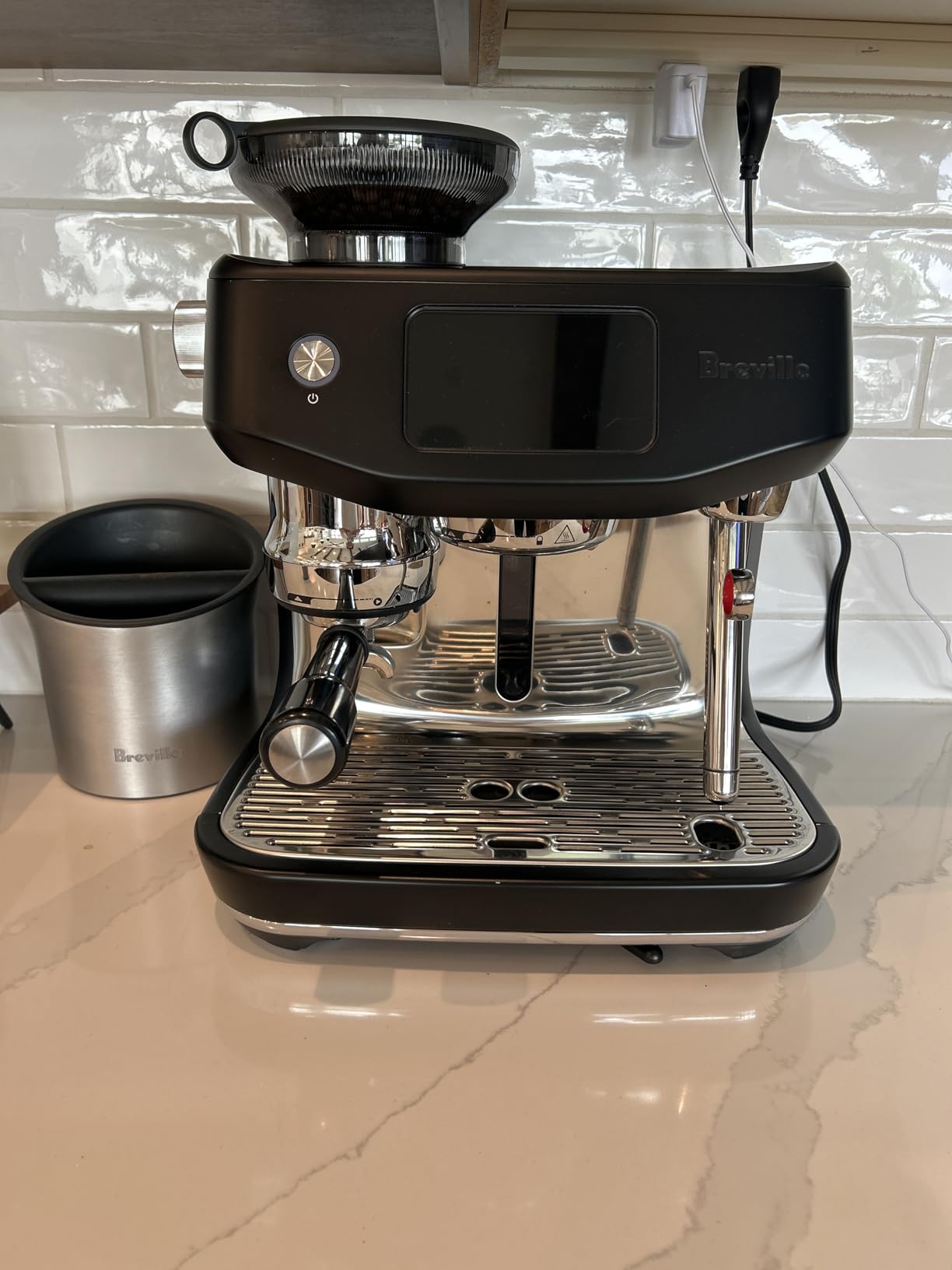
The Breville Oracle Jet is what happens when prosumer automation meets premium cafe workflow. The machine handles grinding, dosing, tamping, extraction, and milk texturing automatically through the Auto MilQ system, with adjustable milk temperature and eight texture levels for everything from flat white microfoam to dry cappuccino foam. The Baratza European Precision Burrs with 45 grind settings give genuine specialty-grade grind quality, and the Cold Brew and Cold Espresso modes extend the drink menu beyond traditional espresso.
During testing, the Oracle Jet produced some of the best automatic milk drinks I have tried outside of a commercial super-automatic. The ThermoJet heating system heats up in seconds, the 22-gram dose in the 58mm portafilter pulls balanced shots, and the latte art potential from the auto milk texturing is genuinely impressive. For owners who want cafe output with minimal hands-on workflow, the Oracle Jet delivers.
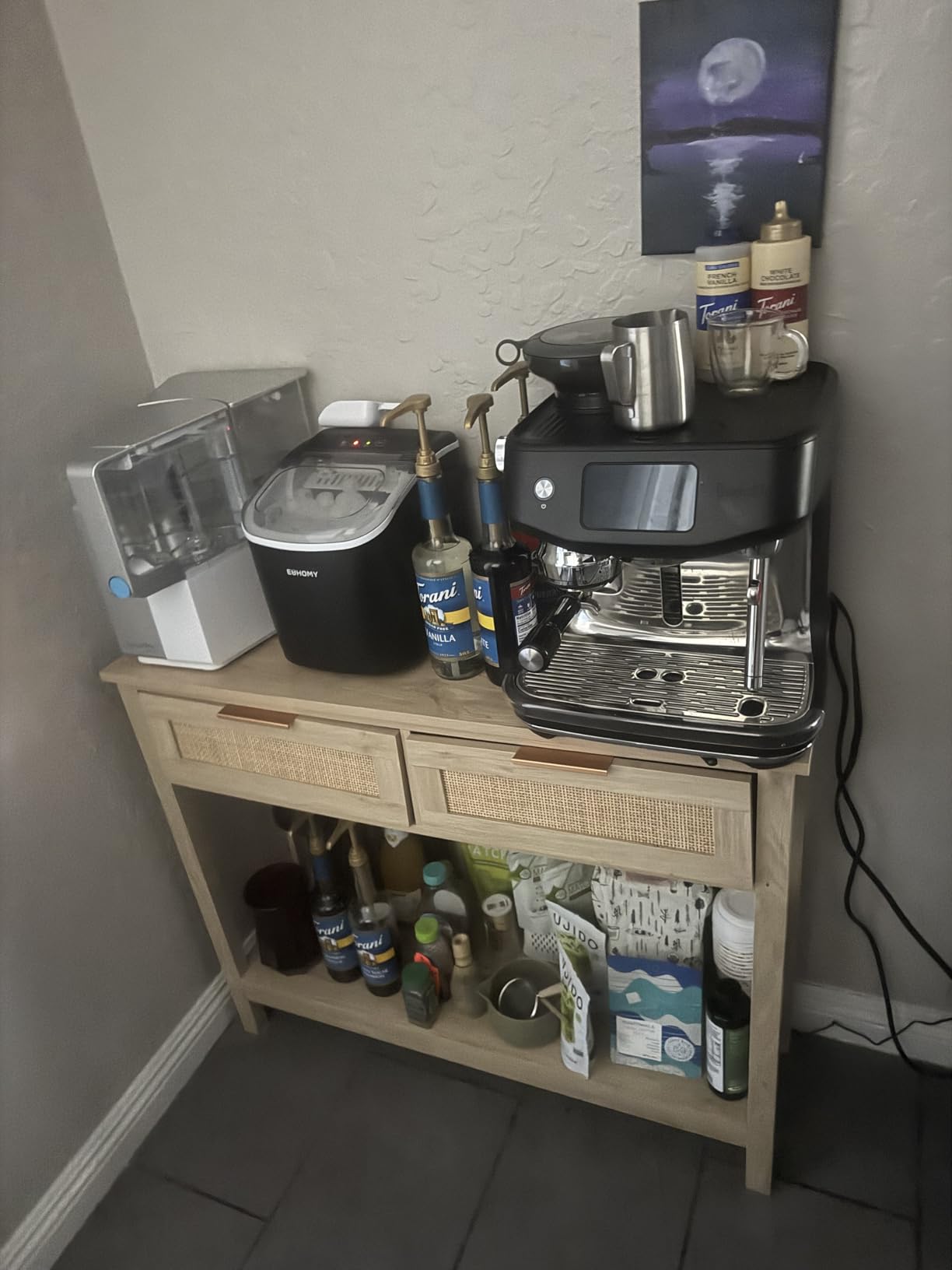
The price is the obvious barrier – this is a serious investment that approaches entry-level commercial territory. The 3.7 average rating across 159 reviews is also worth flagging, with several owners reporting quality control or reliability issues that required warranty service. At this price point, I would recommend purchasing from a retailer with strong return policies and extended warranty options.
For buyers who want the ultimate hands-off home espresso machine and are willing to pay premium for automation, build quality, and drink variety, the Oracle Jet is a strong option. For businesses, the lower reliability ratings give me pause – I would not make this the primary workhorse in a cafe without a backup machine.
Who this machine is right for
The Oracle Jet is built for home baristas, luxury offices, and small hospitality programs that want cafe-quality output with minimal hands-on workflow. It is well suited to households where multiple users want different drinks, and to operations where the owner-operator does not have time for traditional barista training. If automation, drink variety, and grind quality matter more than price, this is the premium pick.
Who should skip it
Budget-conscious buyers, very high-volume cafe operators, and anyone with concerns about reliability ratings should look elsewhere. The Oracle Jet also is not the right pick for businesses that need to push hundreds of drinks per day – that is true commercial territory where multi-group machines are a better answer. And buyers who want to learn traditional barista craft will get more satisfaction from a manual setup.
10. Breville Dynamic Duo – Bundle Deal With Quality Grinder Included
Breville Dynamic Duo Espresso Machine Bundle | Dual Boiler + Smart Grinder Pro | Stainless Steel | BEP920BSS
Dual boiler
Smart Grinder Pro
60 grind settings
58mm portafilter
Pre-infusion
Pros
- Dual boiler enables simultaneous brewing and steaming
- Bundle includes a quality conical burr grinder with 60 settings
- PID-controlled temperature stability
- Volumetric or timed shot control for repeatable extractions
- Powerful steam for fast microfoam
Cons
- Bundle price is a significant investment over machine alone
- Some reports of boiler issues after descaling
- Included grinder can struggle with very light specialty roasts
- Larger combined footprint of two units on the counter
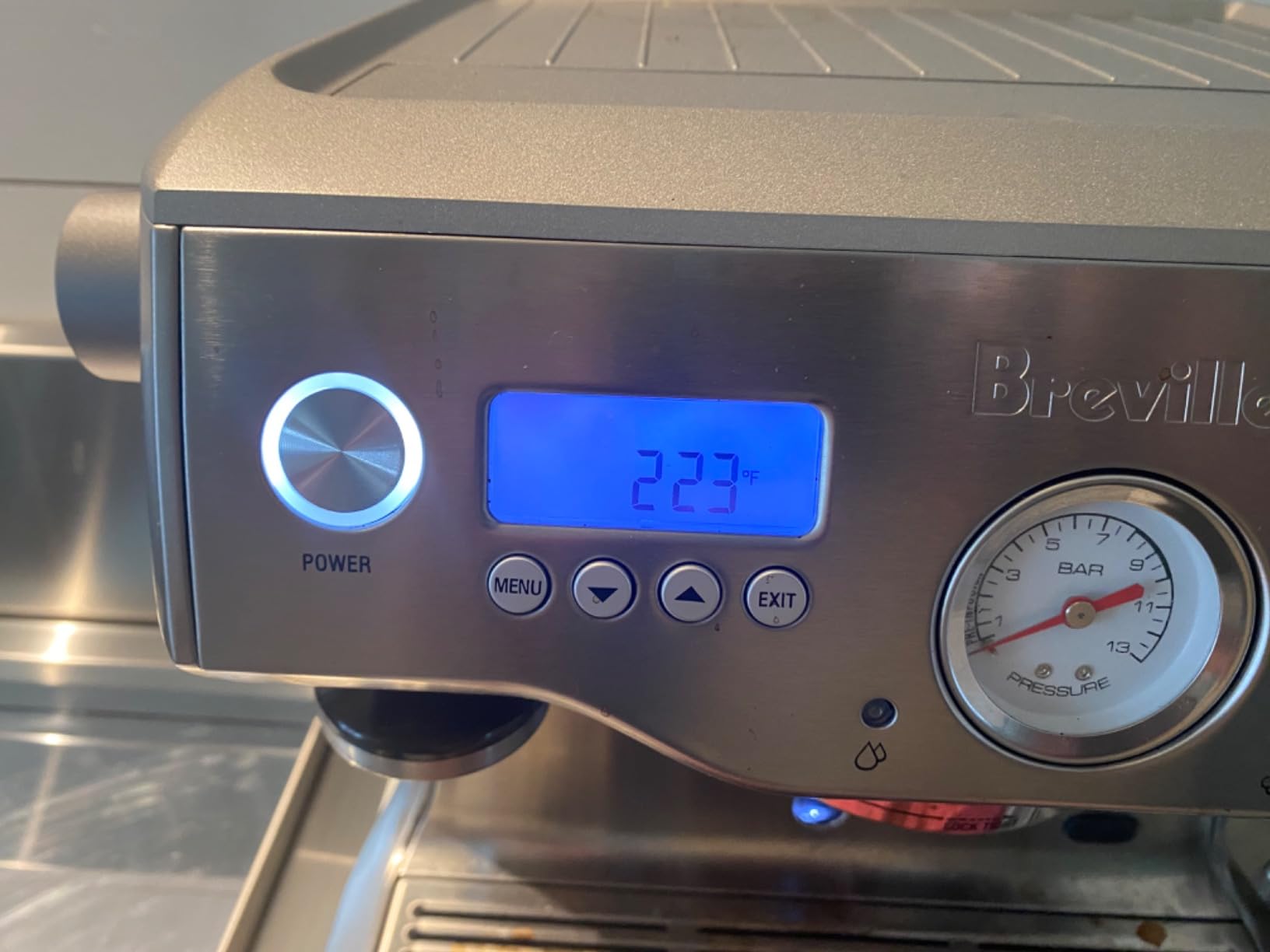
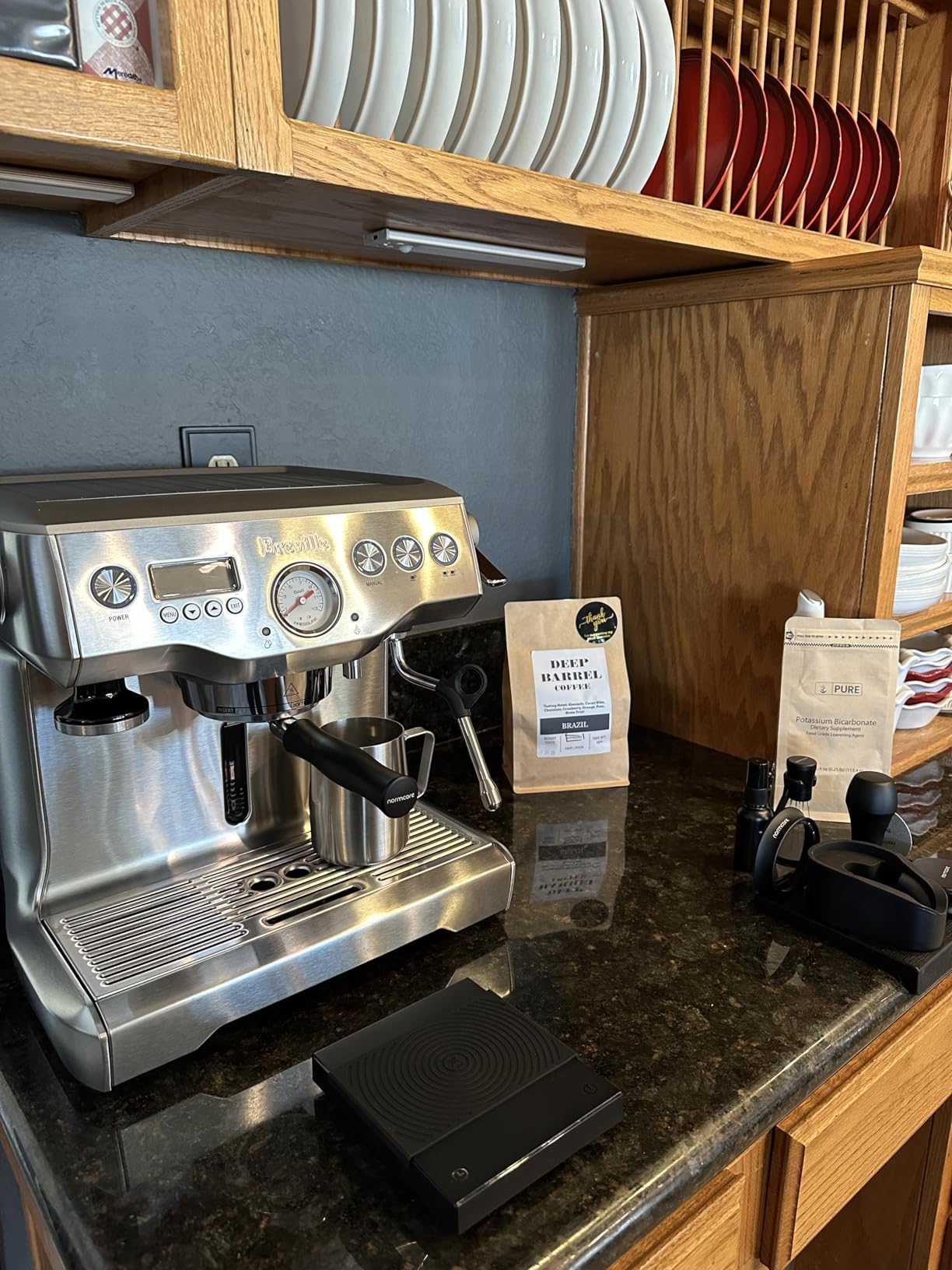
The Breville Dynamic Duo is a bundle that pairs the Breville Dual Boiler espresso machine with the Smart Grinder Pro. For buyers who want a prosumer-grade setup without shopping for a separate grinder, this package solves the common problem of buying a great machine and pairing it with a mediocre grinder. The 60-setting conical burr grinder handles a wide range of brew methods from espresso to pour-over, and the dual boiler machine delivers the same simultaneous brew and steam workflow as the standalone BES920XL.
I tested the Dynamic Duo as a complete setup. The combination pulled balanced shots across a range of roast levels, the volumetric shot control made drink training easier for staff, and the 266-degree Fahrenheit steam produced tight microfoam quickly. The PID system kept brew temperature stable, and pre-infusion softened the extraction profile for more nuanced flavor from light to medium roasts.
The bundle price is a meaningful step up from the espresso machine alone, so the math only works if you genuinely need both. The Smart Grinder Pro is a quality conical burr grinder, but it can struggle with very light specialty roasts compared to premium grinders like the Niche Zero or Eureka Mignon Specialita. A handful of owners have reported post-descale boiler issues, so follow the descaling instructions carefully and use filtered water.
For buyers who want a complete prosumer setup in one purchase, the Dynamic Duo is a convenient answer. The 2-year warranty on the espresso machine and 1-year warranty on the grinder provide reassurance, and the combined footprint is reasonable for a dedicated coffee bar.
Who this machine is right for
The Dynamic Duo is built for buyers who want a complete prosumer espresso setup from a single trusted brand. It is well suited to small cafe owners, dedicated home baristas, and office coffee programs where the convenience of a matched bundle outweighs the ability to mix and match components. If you want the dual boiler workflow plus a quality grinder without separate research, this is the bundle to consider.
Who should skip it
Experienced buyers who already own a quality grinder should not pay for the bundle – buy the BES920XL standalone and save the difference. Buyers on a tighter budget are also better served by the Gevi Dual Boiler or the Breville Impress. And very high-volume operators should be looking at true commercial machines rather than prosumer bundles.
How to Choose the Best Commercial Espresso Machine for Your Business?
Choosing the best commercial espresso machine for your specific operation means balancing daily drink volume, available infrastructure, staff training level, and total cost of ownership. Below is the framework I use when consulting with cafe owners, restaurant operators, and office managers evaluating equipment purchases. For broader espresso context, our commercial equipment buying guides cover related infrastructure questions.
What Actually Makes an Espresso Machine Commercial
A truly commercial espresso machine is defined by three things: components rated for hundreds of shots per day, serviceable parts available through a national technician network, and certification for commercial food service use. The commercial-grade features that matter most are 58mm portafilters, three-way solenoid valves for clean puck release, copper or stainless steel boilers, saturated group heads for thermal stability, and PID temperature control. The machines on this list all carry these features but in prosumer and light-commercial form factors that run on standard 110V or 120V outlets.
True multi-group commercial machines from La Marzocco, Nuova Simonelli, and Rancilio require 220V dedicated circuits, plumbing connections, and often a drain line. They make sense for cafes pulling 200 plus drinks per day. For everyone else – small cafes, restaurants, offices, food trucks, hotels, bakeries – the prosumer and light-commercial category covered here delivers real commercial workflow at a fraction of the install and operating cost.
Boiler Systems Explained – Single, Heat Exchanger, Dual, and Multi
The boiler system determines how fast you can pull shots and steam milk, and how stable your brew temperature stays during a rush. A single boiler does one thing at a time – brew or steam – so you wait for temperature shifts. The Gaggia Classic Evo Pro, Rancilio Silvia, and Gevi 58mm all use single boilers.
A heat exchanger boiler uses one large boiler for steam and a smaller tube inside for brew water, allowing simultaneous brew and steam. This is the classic cafe design used in many mid-range commercial machines. A dual boiler splits brew and steam into separate boilers, giving the most precise temperature control. The Breville BES920XL, Breville Dynamic Duo, and Gevi Dual Boiler all use dual boilers. Multi-boiler machines use a dedicated boiler per group head and are standard in true high-volume commercial equipment. For most prosumer and small business use, dual boiler is the sweet spot.
Group Head Count and Daily Volume Math
A practical rule of thumb: one group head produces about 30 espresso shots per hour under typical cafe workflow. So a 2-group machine handles 60 shots per hour, or roughly 300 to 400 drinks per day before you feel throughput pressure. A 3-group machine handles 90 shots per hour and is right for cafes with long rush windows and multiple baristas working in parallel.
For under 100 drinks per day, a single prosumer group is plenty. For 100 to 300 drinks per day, a 2-group prosumer or light-commercial machine is the right fit. Above 300 drinks per day, you have crossed into true commercial territory where multi-group machines from Italian commercial brands are worth the investment. All ten machines on our list use a single group head optimized for prosumer and small business volume.
Automation Level – Manual vs Semi-Auto vs Super-Auto
Manual machines give you full control over grind, dose, tamp, extraction time, and pressure profile but require skilled operators. Semi-automatic machines like most of the machines on this list automate pump control but leave dosing, tamping, and timing to the operator – a balance of control and convenience. Super-automatic machines like the Philips 5500 LatteGo automate everything from grinding to milk texturing.
For cafes and restaurants with trained baristas, semi-automatic is the standard. For offices, hotels, and self-serve setups with non-barista staff, super-automatic is the right answer. For serious home baristas who want craft, manual or semi-automatic with quality grinder support is the path.
Pressure, Temperature, and PID Control
The gold standard for espresso extraction is 9-bar pressure at 195 to 205 degrees Fahrenheit. PID (Proportional-Integral-Derivative) temperature control holds the brew temperature within a tight band – typically plus or minus 1 to 2 degrees – which directly translates to shot-to-shot consistency. Pre-infusion gently wets the coffee puck at low pressure before full extraction, which reduces channeling and improves flavor balance. Soft infusion systems extend pre-infusion for slower saturation.
The Breville Oracle Jet uses temperature control within plus or minus 1 degree Fahrenheit, the Breville BES920XL within plus or minus 2 degrees, and the Gevi 58mm uses combined PID and NTC for similar precision. These features matter more in high-volume operations where consistency compounds across hundreds of shots per day.
Power Requirements – 110V vs 220V
Voltage is the single most common setup error for first-time commercial espresso buyers. Most true multi-group commercial machines require 220V or 240V dedicated circuits, which means hiring an electrician and potentially upgrading your panel. All ten machines on this list run on standard 110V to 120V household current, which is why they work in homes, small cafes, food trucks, and offices without electrical work.
The tradeoff is steam and recovery power. A 220V commercial machine can dump more energy into its boilers faster, which means faster steam recovery and better performance during sustained rushes. For prosumer and small business volume, 110V to 120V is the practical choice.
Plumbing, Water Hardness, and NSF Certification
Most of the machines on this list use internal water tanks that you refill manually. True commercial machines are plumbed into a water line with a drain. If you choose a plumbed-in setup, install a leak detector and automatic shut-off valve – forum owners consistently report that flood damage is far more expensive than the prevention hardware.
Water hardness matters more than most buyers expect. Hard water destroys boilers through scale buildup, and owners who skip filtration routinely report repair costs of $2,000 to $5,000 within two to three years. Target water hardness of 3 grains per gallon (around 50 parts per million) and TDS between 75 and 150 ppm. A commercial-grade water softener or reverse osmosis system with mineral balancing is the cheapest insurance you can buy for any commercial espresso machine.
NSF certification means the machine meets public health and safety standards for commercial food service. If your business is subject to health code inspections, NSF certification is non-negotiable. Check the spec sheet of any machine you are considering.
5-Year Total Cost of Ownership Breakdown
The sticker price is only part of the cost. A realistic 5-year total cost of ownership for a prosumer commercial espresso machine includes machine cost, installation, water treatment, maintenance supplies, service calls, and eventual repair or replacement. As an example, a $1,500 machine with $300 installation, $400 water filtration, $800 in maintenance supplies, and $1,500 in repairs over five years totals roughly $4,500.
Compare that to a $4,000 commercial machine with $1,500 installation, $600 water filtration, $1,200 in maintenance, and $2,000 in repairs over five years, totaling roughly $9,300. The expensive machine costs more upfront but lasts longer and serves higher volume. The cheaper prosumer machine costs less upfront but reaches end-of-life sooner. Plan your budget for the full five-year window, not just the purchase price.
Maintenance Schedule and Reliability
A consistent maintenance routine is what separates machines that last five years from machines that last fifteen. Daily tasks include backflushing the group head with water, purging the steam wand after each use, and emptying the drip tray. Weekly tasks include backflushing with espresso machine cleaner, soaking portafilters and baskets, and wiping down the housing. Monthly tasks include descaling the boiler (more often in hard water areas), cleaning the grinder burrs, and inspecting group head gaskets.
Annual or semi-annual tasks include replacing group head gaskets and screens, inspecting the steam wand valve, and having a technician perform a deep service. Owners who follow this schedule report 8 to 15 year lifespans on Nuova Simonelli, La Marzocco, and Rancilio machines. Owners who skip it replace boilers in two to three years.
Brand Service Network and Warranty
Local technician availability often matters more than the machine itself. If your closest certified technician is 200 miles away, downtime waiting for service can cost more than the price difference between brands. Major commercial brands like La Marzocco, Nuova Simonelli, and Rancilio have established US service networks through regional distributors. Prosumer brands like Breville, De’Longhi, Gaggia, Philips, and Gevi work through authorized service centers and warranty providers.
Before buying, search for certified technicians in your zip code. For cafe owners, the consensus recommendation from r/Coffee and Barista Hustle forums is to buy Nuova Simonelli Appia Life or La Marzocco Linea PB as the safest first commercial machine due to widespread technician support and parts availability.
Used vs New vs Refurbished
Used commercial espresso machines offer real savings but come with real risk. The most common issues with used machines are scale buildup in boilers, worn group head gaskets, damaged portafilter ears, and neglected descaling. Before buying used, ask the seller for maintenance records, inspect the portafilters and baskets, run the machine through a full cycle to check steam pressure, and pull a few test shots if possible.
Refurbished machines from authorized dealers are the safer middle ground. You get commercial-grade equipment at a discount with a limited warranty. New machines cost the most but come with full warranty coverage, latest features, and confirmed zero hours of use. For first-time buyers, new machines are usually the right call. For experienced operators with technician relationships, refurbished can offer excellent value.
Frequently Asked Questions
How much does a commercial espresso machine cost?
Prosumer and light-commercial espresso machines with commercial-grade components run from roughly $400 to $2,000. True multi-group commercial machines for high-volume cafes typically run $5,000 to $20,000. Plan for total 5-year cost including installation, water filtration, maintenance supplies, and repairs – expect to add 50 to 100 percent on top of the purchase price over the life of the machine.
How long do commercial espresso machines last?
Prosumer machines with proper maintenance typically last 7 to 12 years. True commercial machines from La Marzocco, Nuova Simonelli, and Rancilio routinely last 10 to 20 years in cafe service. The single biggest factor is water treatment – hard water without filtration or softening destroys boilers within 2 to 3 years regardless of brand or build quality.
Do commercial espresso machines need plumbing?
Prosumer and light-commercial machines like every machine on this list use internal refillable water tanks and do not require plumbing. True multi-group commercial machines are plumbed into a water line with a drain connection. If you choose a plumbed-in setup, install a leak detector and automatic shut-off valve – forum owners report flood damage is far more expensive than the prevention hardware.
Single boiler vs dual boiler – which is better for commercial use?
Dual boiler is the better choice for any business serving milk drinks on demand. Dual boiler machines like the Breville BES920XL and Gevi Dual Boiler run separate boilers for brewing and steaming, allowing simultaneous extraction and milk texturing without temperature shifts. Single boiler machines like the Gaggia Classic Evo Pro and Rancilio Silvia require temperature surfing between brew and steam, which slows workflow during a rush.
What is the most reliable commercial espresso machine brand?
For true commercial machines, La Marzocco, Nuova Simonelli, and Rancilio are the most reliable based on cafe owner consensus across r/Coffee, Barista Hustle, and CoffeeGeek forums. For prosumer and light-commercial machines, Breville, Gaggia, and Rancilio lead on longevity. The single most important reliability factor across all brands is water treatment – hard water destroys boilers regardless of brand reputation.
What should I look for when buying a commercial espresso machine?
Focus on four factors in priority order: daily drink volume (which determines group count and boiler type), available electrical service (110V vs 220V), staff training level (which determines manual vs super-automatic), and total 5-year cost of ownership (machine plus installation, water filtration, and maintenance). Match machine category to your specific operation rather than buying the most expensive option you can afford.
Final Verdict – Which Commercial Espresso Machine Should You Buy in 2026?
After testing all ten machines on this list and cross-referencing owner feedback from r/Coffee, Barista Hustle, and CoffeeGeek forums, our top recommendation for the best commercial espresso machine in 2026 is the Gaggia Classic Evo Pro for its unbeatable combination of Italian build quality, commercial-grade 58mm portafilter, three-way solenoid valve, decade-plus durability, and accessible price. For buyers who want beginner-friendly automation, the Breville Barista Express Impress delivers consistent shots without the traditional learning curve. For offices and self-serve setups, the Philips 5500 LatteGo is the clear super-automatic pick.
If you pull more than 50 milk drinks per day, jump straight to a dual boiler machine like the Breville BES920XL or the value-packed Gevi Dual Boiler. For small cafe owners who want the safest first commercial-grade machine with widespread technician support, the Classic Evo Pro and Rancilio Silvia remain the consensus recommendations across the espresso community. Whatever machine you choose, invest in water filtration from day one – it is the cheapest insurance you can buy against the most common cause of premature espresso machine failure.