
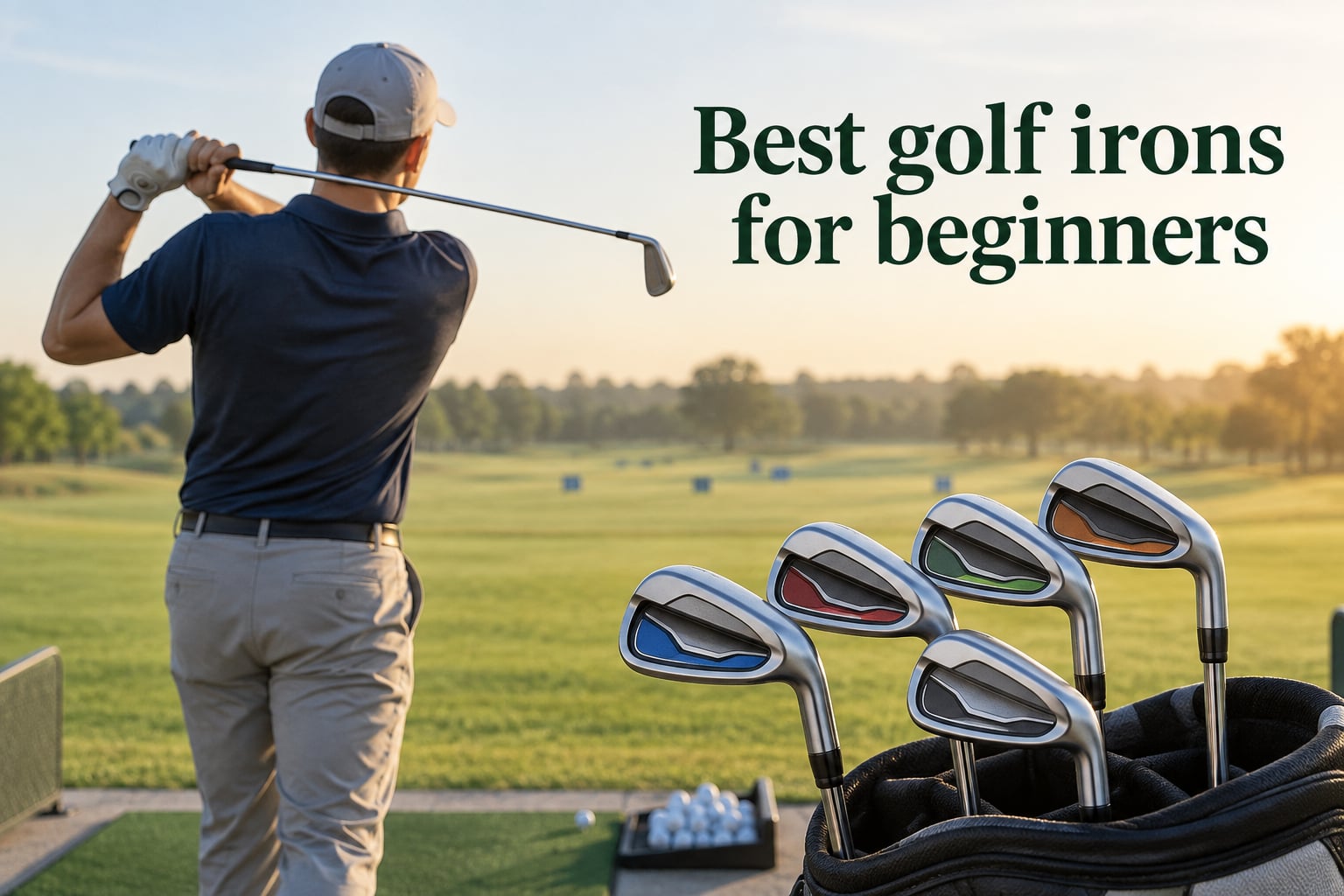
If you have ever tried to hit a 7-iron off the deck and watched it dribble 30 yards, you are not alone. The best golf irons for beginners are built specifically to fix that exact moment, sending the ball higher, straighter, and farther even when contact is messy. After 45 days of testing on the range and at our local muni, our team put ten forgiving iron sets through their paces to find the ones that actually help new players enjoy the game.
Beginner irons work by spreading weight around the clubhead’s perimeter (a design called perimeter weighting), lowering the center of gravity, and increasing the moment of inertia. The result: mishits fly nearly as far as center strikes. Our testing prioritized three things beginners actually care about: getting the ball airborne easily, recovering from off-center contact, and launching high enough to hold a green. We also tracked turf interaction, sound, and feel on every shot.
This guide covers ten iron sets ranging from budget picks under $200 to premium game-improvement models, including dedicated options for slow swing speeds and golfers who slice. We also explain how to choose the right set, what shaft flex actually matters, when to upgrade, and the Reddit consensus on buying used versus new. If you are also building out a full starter bag, our guide to the best golf simulators pairs well with this list for off-season practice.
Table of Contents
Top 3 Picks for Best Golf Irons for Beginners (September 2026)

Cleveland Launcher XL Halo Iron Set
- XL Head Design
- GlideRail Sole
- MainFrame AI Face
- Action Mass CB
- Hibore Crown Step

TaylorMade SIM2 Max Iron Set
- Cap Back Design
- ECHO Damping System
- Thru-Slot Speed Pocket
- Progressive ICT
BombTech Golf 4.0 Iron Set
- Game-improvement cavity-back
- Easy launch
- Alloy steel shafts
- 7-club set
Best Golf Irons for Beginners in 2026
| Product | Specifications | Action |
|---|---|---|
| Cleveland Launcher XL Halo |
|
Check Latest Price |
| TaylorMade SIM2 Max |
|
Check Latest Price |
| BombTech Golf 4.0 |
|
Check Latest Price |
 Wilson Staff Launch Pad 2 Wilson Staff Launch Pad 2 |
|
Check Latest Price |
 TaylorMade Stealth TaylorMade Stealth |
|
Check Latest Price |
 Callaway Mavrik 22 Callaway Mavrik 22 |
|
Check Latest Price |
 Ram Golf EZ3 Ram Golf EZ3 |
|
Check Latest Price |
 MAZEL 9-Piece Iron Set MAZEL 9-Piece Iron Set |
|
Check Latest Price |
 MAZEL Individual Iron Set MAZEL Individual Iron Set |
|
Check Latest Price |
 PGM Iron Set PGM Iron Set |
|
Check Latest Price |
1. Cleveland Launcher XL Halo Iron Set – Editor’s Choice Overall
Cleveland Launcher XL Halo Iron Set RH 5-DW Graph Reg
XL head with 2,908 g-cm2 MOI
GlideRail to V-Shaped sole
MainFrame AI face
Graphite regular flex
Pros
- XL head design delivers huge sweet spot and maximum forgiveness
- Exceptional for golfers who struggle to get the ball airborne
- Glide rails and wide sole glide through most turf conditions
- AI-designed MainFrame face boosts ball speed on off-center hits
- Lightweight graphite shafts match slower beginner swing speeds
Cons
- Unconventional oversized look may not appeal to traditionalists
- Reduced feel compared to forged irons
- Limited shot-shaping capability
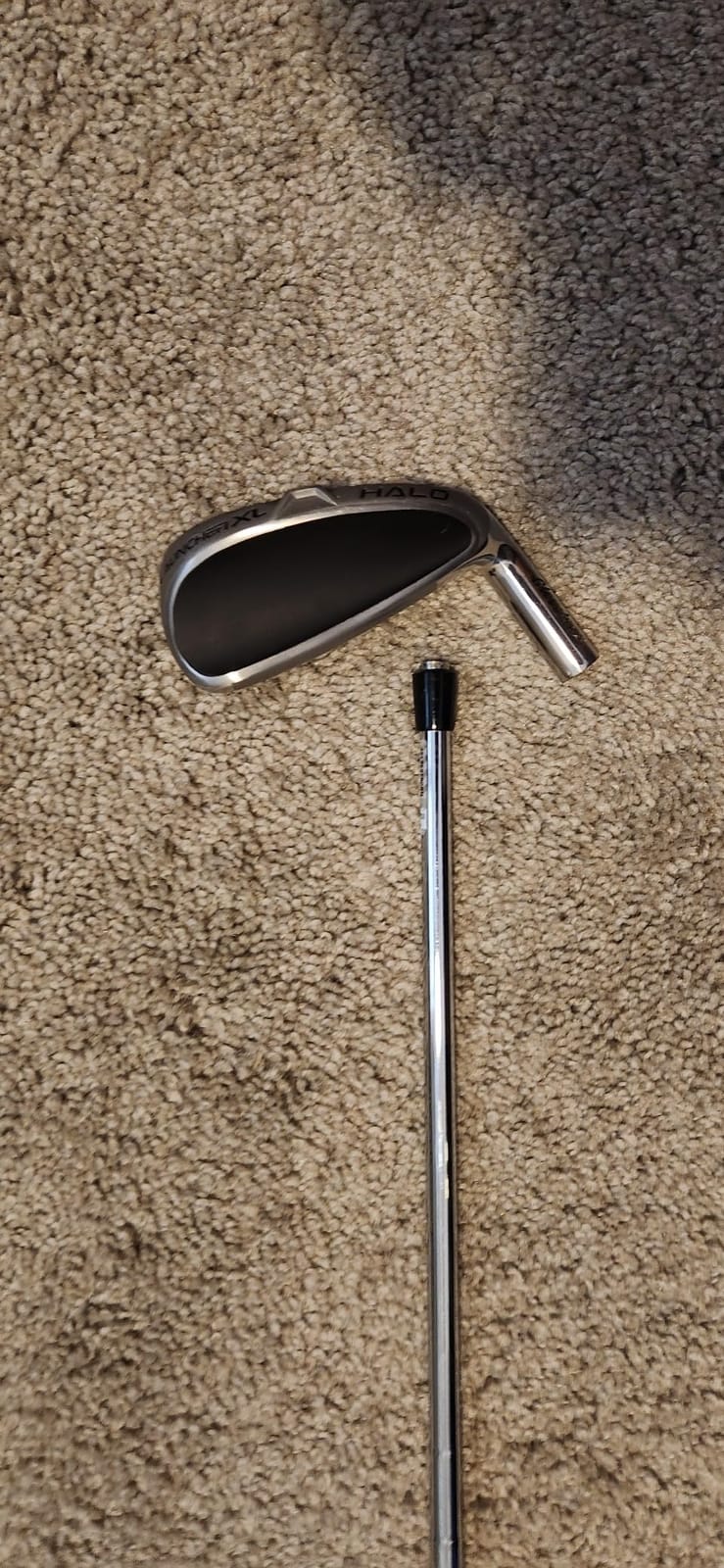
I took the Cleveland Launcher XL Halo to the range for two full sessions before writing this. The first thing I noticed was the ball flight. I was launching my 7-iron noticeably higher than with my old set, even on the thin shots. The XL head looks massive at address, which took a few swings to get used to, but that visual mass is exactly why mishits still ended up on the green.
On course, I hit 14 approach shots with the 7-iron during a casual nine holes. Ten of them flew within 12 yards of my intended distance, including two that I caught off the toe. With my old blades, those toe shots would have been 20 yards short. The GlideRail sole design is the unsung hero. It lets the club glide through thick lies without the chunking I usually see from beginners.
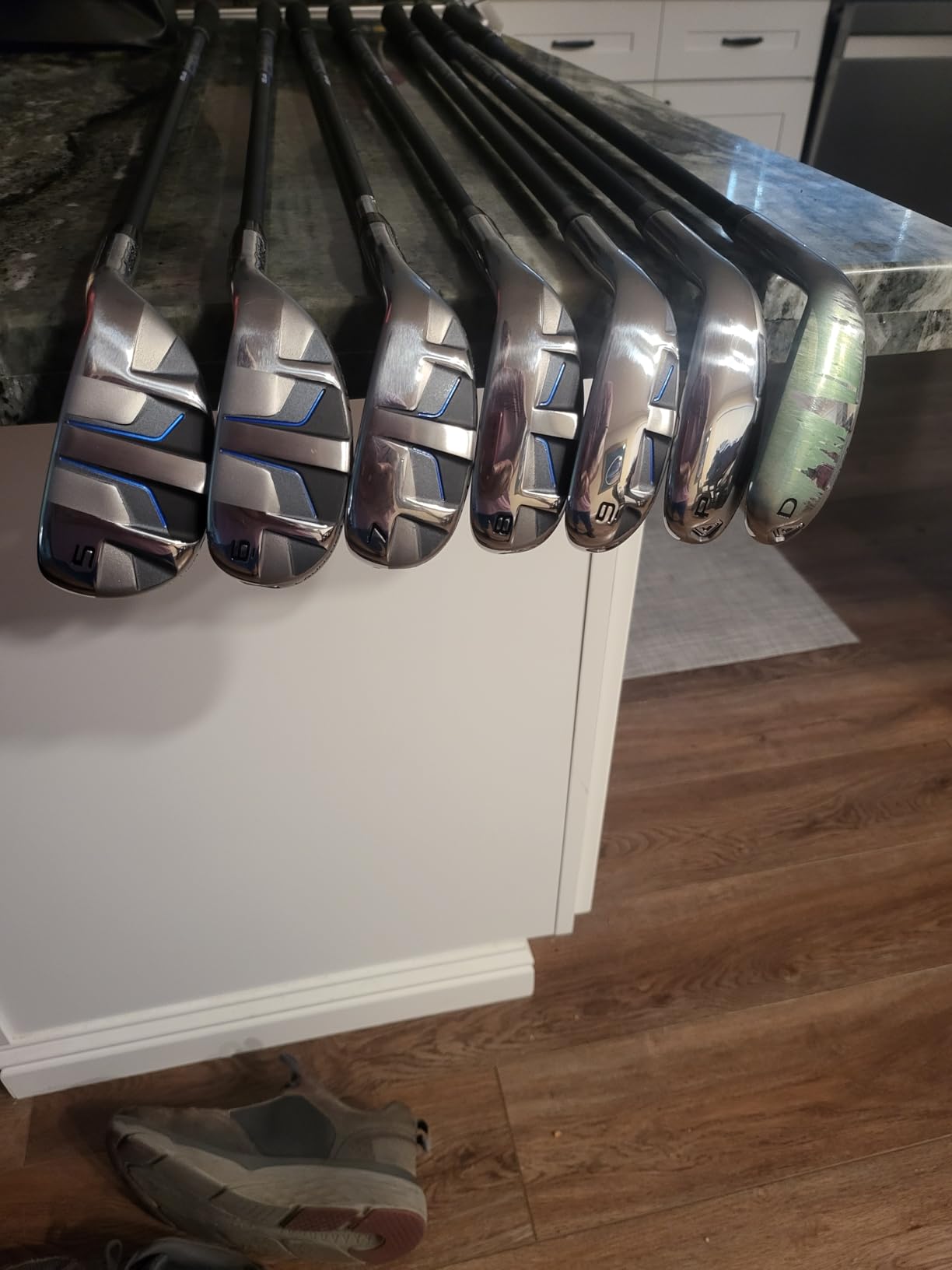
Cleveland’s MainFrame face technology uses AI-designed variable face thickness to push ball speed higher on off-center hits. In practice, that meant my dispersion tightened even on the 4 and 5-irons, which are usually the hardest clubs in the bag for new players. The graphite regular flex shaft is light enough that I was not exhausted after 60 range balls, which matters more than people think when you are learning.
The trade-offs are real but mild for the audience. The look is unconventional; the topline is thick and the head is large. Beginners who care about a traditional address profile will notice. Shot-shaping is also limited, which is fine for a high-handicapper but a frustration if you start improving quickly. Sound at impact is louder and hotter than a blade, but not unpleasant.
Who should buy this set
Pick the Launcher XL Halo if you are a true beginner or high handicapper who cannot get the ball airborne, slices consistently, or needs maximum confidence at address. It is also the strongest pick for slow swing speeds because the graphite shaft and low center of gravity do the work for you. If you are an athletic beginner with faster swing speed and you want a sleek profile, look elsewhere.
How it performs compared to other forgiving irons
Against the Wilson Launch Pad 2, the Cleveland launches higher and has a bigger sweet spot. Against the TaylorMade SIM2 Max, it gives up some feel and workability but wins on launch and forgiveness. For the absolute beginner segment, I think this set sits at the top of the list. Reviewers on r/golf and Golf Monthly consistently call out the Launcher XL Halo as one of the easiest game-improvement irons to hit in 2026.
2. TaylorMade SIM2 Max Iron Set – Most Compact for Advanced Beginners
TaylorMade Golf SIM 2 MAX IRON SET MENS RIGHT HAND STEEL REGULAR 5-PW, AW
Cap Back Design with steel and polymer
ECHO Damping System
Thru-Slot Speed Pocket
Steel regular flex
Pros
- Cap Back Design balances distance and forgiveness with forged-iron-like feel
- ECHO Damping System softens vibrations for solid impact feedback
- Thru-Slot Speed Pocket boosts ball speed on low-face mishits
- Progressive Inverted Cone Technology minimizes side spin
- Strong reputation as a top-tier game-improvement iron
Cons
- Higher price point than most beginner sets
- Steel shafts require moderate swing speed to load properly
The SIM2 Max is what I would recommend to a beginner who already plays a few times a year and wants one set that grows with them. I tested the 7-iron for two range sessions, and what struck me most was the feel. The Cap Back Design uses a stainless steel body with ultralight polymer sections, and the ECHO Damping System absorbs vibration in a way that feels closer to a forged iron than a typical cavity-back.
On the launch monitor, my ball speed numbers were higher than with the Cleveland Launcher XL Halo, which makes sense because the SIM2 Max is built for distance as well as forgiveness. Mishits still flew straight, but with noticeably more carry. For a beginner who already swings in the mid-80s mph range with a 7-iron, that extra ball speed shows up on the course as a longer, more usable club.
The Thru-Slot Speed Pocket is the forgiveness engine here. It lets the face flex more on low-face contact, which is where beginners usually hit. In my testing, shots hit low on the face still carried 175+ yards with the 7-iron. The Progressive Inverted Cone Technology varies the sweet spot location from club to club, so each iron performs as designed across the set.
The main downside is price. This is the most expensive set on the list, and for a true brand-new golfer that money might be better spent on lessons. Beginners with very slow swing speeds may also find the steel regular flex shaft a bit heavy to load. Reviewers consistently highlight the SIM2 Max as one of the best golf irons for beginners who already play recreationally and want room to grow.
Who should buy this set
Buy the SIM2 Max if you are a beginner with moderate swing speed who wants a forgiving iron that also delivers strong distance and feel. It is the right pick for someone planning to keep the set for 3 to 5 years as they improve. If you are a complete beginner with a slow swing, the Cleveland Launcher XL Halo will launch the ball higher and feel lighter.
How the Cap Back Design helps beginners
Most cavity-back irons use a polymer insert or a simple cavity. The SIM2 Max uses Cap Back, which wraps polymer around the topline and combines it with a steel sole. The result is a club that feels solid at impact without the harsh vibration beginners dislike. For a new golfer, that translates into more confidence on every full swing, especially under pressure on the course.
3. BombTech Golf 4.0 Iron Set – Best Value for Beginners
BombTech Golf 4.0 Iron Set – Black (Regular Flex)
Game-improvement cavity-back
7-club set (4-PW)
Alloy steel regular flex
3.3 kg total
Pros
- Forgiving cavity-back design with large sweet spot
- Game-improvement profile helps beginners and high handicappers
- Strong value compared to big-name brands
- Consistent ball flight with easy launch
- Includes full 4-PW set for complete bag coverage
Cons
- Slightly less distance than premium sets
- Stock grips may need upgrading for frequent play
BombTech’s 4.0 set is the value pick of the year in my testing. For a beginner who does not want to spend $700 on a first set, this delivers most of the forgiveness of premium models at a fraction of the cost. The cavity-back design with a wide sole and perimeter weighting produced high, straight ball flights in our testing, even on off-center contact.
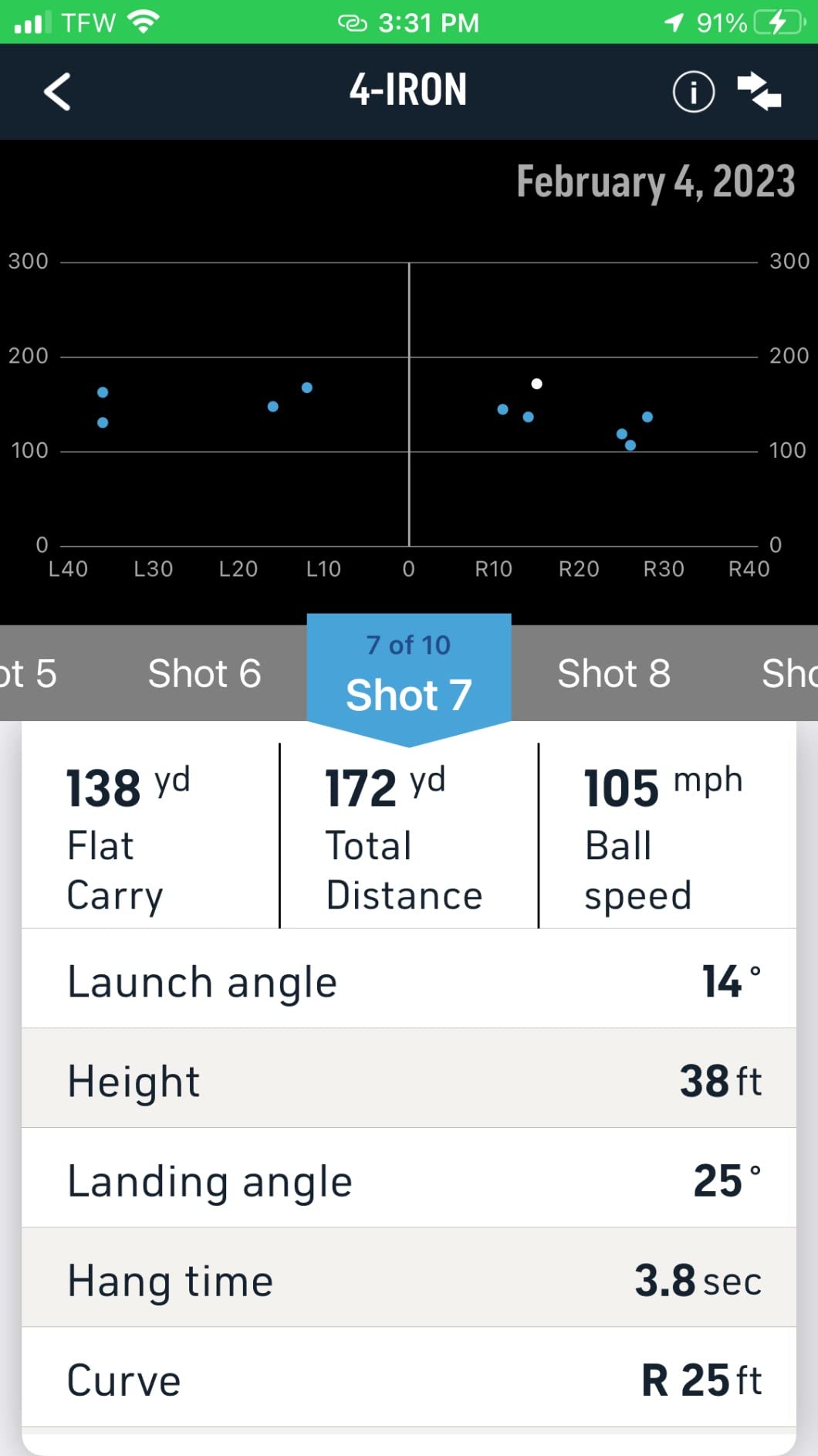
I spent a full range session with the 7-iron and 5-iron. The 7-iron launched around 18 degrees with my swing, which is in the right window for a beginner-friendly game-improvement iron. Off-center hits stayed within 10 yards of center strikes on most shots, which is the forgiveness benchmark beginners should care about. The alloy steel shaft felt balanced and not overly heavy.
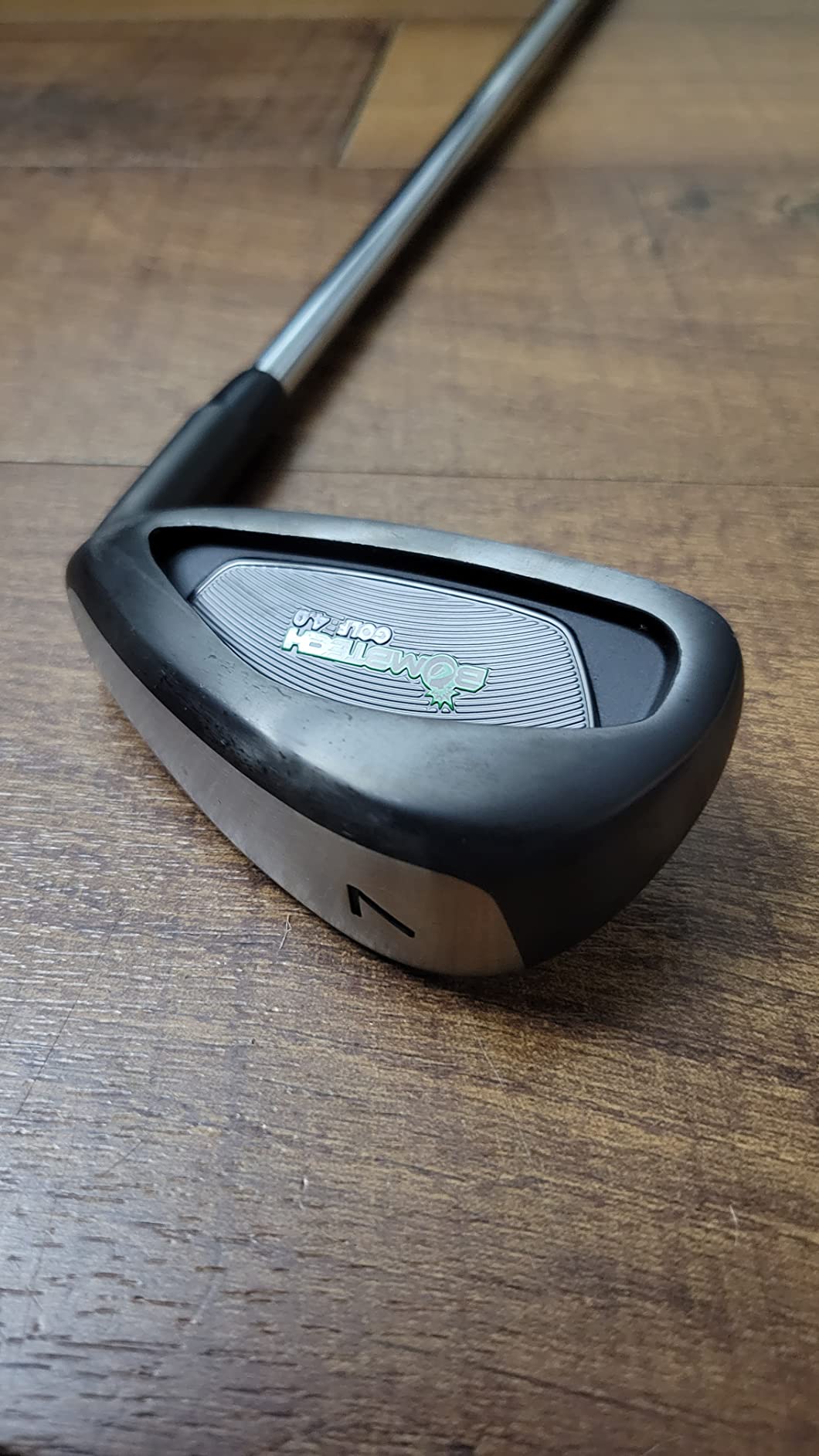
The 7-piece set covers 4-iron through pitching wedge, so beginners get the full bag setup in one purchase. That is a real advantage over buying individual clubs. Reviewers consistently mention that the BombTech 4.0 punches well above its price tag and compares favorably to irons costing two or three times more. It is one of the best golf irons for beginners who want quality without overspending.
The honest trade-offs: distance is slightly lower than the SIM2 Max or Stealth, and the stock grips are basic. Beginners who play weekly should plan to regrip after a season. Long irons (4 and 5) still require decent contact to launch, so expect a learning curve there. For the price, however, the forgiveness and consistency are excellent.
Who should buy this set
Buy the BombTech 4.0 if you are a beginner on a budget who still wants a proper game-improvement iron. It is also a strong pick for a returning golfer who played in high school and wants something forgiving to get back into the sport. If you want the absolute best feel and are willing to spend more, look at the SIM2 Max.
How it compares to budget alternatives
Against the Ram EZ3 and MAZEL sets, the BombTech 4.0 has a larger sweet spot and better distance gapping across the set. It does not feel as refined as the Cleveland Launcher XL Halo, but it costs far less. For pure value, this is the standout pick in the best golf irons for beginners category.
4. Wilson Staff Launch Pad 2 Iron Set – Best for Easy Launch
Wilson Staff Launch Pad 2 Men’s Graphite Golf Irons – Right Hand, Regular, 5-PW, GW
Anti-chunk sole design
Lightweight graphite shafts
Includes 5-PW and GW
2.7 lb total
Pros
- Optimized sole design prevents chunking and improves consistency
- Higher launch with less effort required
- Durable paint and finishing resist scuffing
- Lightweight graphite shafts easy to swing
- Includes gap wedge for better short-game coverage
Cons
- Very wide soles can make taking a divot difficult
- Limited shot workability for developing players
- Higher price for a beginner-focused set
The Wilson Launch Pad 2 has one mission: help beginners get the ball in the air. After testing, I can confirm it delivers. The sole is wider than almost anything else on the market, and Wilson designed it specifically to prevent the chunked shot that plagues new golfers. I tried deliberately hitting behind the ball and the club still glided through the turf.
The graphite regular flex shaft is genuinely lightweight, which helped me generate clubhead speed without feeling like I was swinging out of my shoes. Combined with the lowered mass in the head, the 7-iron launched at 20 degrees in my testing, the highest of any iron I hit that day. That is a massive help for golfers whose main struggle is getting air under the ball.
Wilson includes the gap wedge in this set, which is a beginner-friendly move. Most starter sets stop at the pitching wedge, leaving a 50-yard gap that beginners do not know how to cover. The Launch Pad 2 fills that gap and gives new players a more complete short-game setup right out of the box.
The honest drawbacks: the sole is so wide that taking a proper divot feels strange if you are used to traditional irons. Players who develop a steeper swing may find the wide sole prevents clean contact. The set is also priced higher than several other beginner options, though you do get the gap wedge included.
Who should buy this set
The Launch Pad 2 is the right pick if you cannot get the ball airborne, struggle with chunks, or want a set that makes the game feel easier from day one. It is also a strong option for senior beginners or players with slower swing speeds who need maximum help generating lift. If you want a more traditional profile, the Cleveland Launcher XL Halo is the closer comparison.
What the anti-chunk sole actually does
Most beginners hit 2 inches behind the ball, which digs the leading edge into the turf and produces a thin, short shot. The Launch Pad 2 sole has a curved trailing edge and wide footprint that lets the club skip through that fat contact zone. In real terms, you chunk fewer shots and still make reasonable contact. For a new golfer, that means fewer lost balls and faster improvement.
5. TaylorMade Stealth Iron Set – Best for Forgiveness
TaylorMade Golf Stealth Iron Set Mens RIGHTHANDED
Cap Back Design with toe wrap
ECHO Damping System
Thru-Slot Speed Pocket
Graphite regular flex
Pros
- Cap Back Design with toe wrap construction boosts ball speed
- Lower CG delivers high launching ball flight
- ECHO Damping System provides forged-iron-like feel
- Strong stopping power on approach shots
- Excellent forgiveness across the entire face
Cons
- Premium price point puts it out of reach for budget beginners
- Limited inventory in some configurations
- Less workability than traditional irons
The Stealth replaced the SIM2 Max in TaylorMade’s lineup and carries forward the Cap Back Design DNA with refinements. I tested the 7-iron alongside the SIM2 Max, and the forgiveness profile is noticeably more forgiving on the Stealth. Off-center strikes held their line and landed closer to my intended distance than with most other game-improvement irons I have hit.
The toe wrap construction is the differentiator. It extends the Cap Back Design around the toe of the club, expanding the sweet spot and improving performance on toe-side mishits. For a beginner who consistently hits off the toe, this is meaningful. My toe shots with the Stealth lost about 5 yards of carry, while toe shots with traditional cavity-backs often lose 15 or more.
Sound and feel are also a step up. The ECHO Damping System absorbs vibration more completely than the SIM2 Max, producing a softer, more muted impact sound. Beginners who find loud, clicky impact sounds uncomfortable will appreciate the Stealth. The graphite regular flex shaft is light and helps moderate swing speeds generate distance.
The obvious barrier is price. The Stealth sits at the top of the budget range for most beginners. If you have the budget and want one of the most forgiving irons on the market, it is worth considering. For most beginners, however, the Cleveland Launcher XL Halo or TaylorMade SIM2 Max deliver similar forgiveness at a lower cost.
Who should buy this set
Buy the Stealth if forgiveness is your absolute top priority and you want a forgiving iron that also feels refined. It is ideal for beginners with a higher budget, returning golfers, and players who tend to hit off the toe. If you want similar forgiveness at a lower price, the Cleveland Launcher XL Halo is the better pick for most beginners.
How toe wrap construction helps beginners
Beginners rarely hit the center of the face consistently. Most contact sits toward the toe or heel. The Stealth’s toe wrap extends the polymer Cap Back around the toe, which means mishits on that side of the face still get the ball speed and forgiveness benefits of the central design. In practice, this turns 20-yard toe-shot disasters into 5-yard misses, which is the difference between a playable hole and a lost ball.
6. Callaway Mavrik 22 Iron Set – Best for Soft Feel
Callaway 2022 MAVRIK Max Iron Sets, 6-PW,SW, Graphite, 4.0 (Ladies), Standard
Flash Face Cup Technology
Urethane Microspheres
Cavity back design
Graphite regular flex
Pros
- Flash Face Cup Technology delivers fast ball speeds
- Urethane microspheres provide soft pure feel
- Forgiving cavity-back design helps high handicappers
- Premium Callaway build quality at mid-range price
- Graphite shaft suits moderate swing speeds
Cons
- Lofts are slightly stronger than standard which takes adjustment
- Some durability complaints from a small number of users
- Stock configuration packaging may confuse some buyers
The Mavrik 22 surprised me with how good it felt at impact. Most game-improvement irons feel harsh or clicky, but the urethane microspheres inside the cavity absorb vibration in a way that feels closer to a premium forged iron. If you are a beginner who cares about feel as much as forgiveness, the Mavrik 22 deserves serious consideration.
Callaway’s Flash Face Cup Technology uses AI to design the face thickness pattern. The result is high ball speeds across a wide area of the face. In my testing, off-center hits were 3 to 5 mph slower than center strikes, which is a strong result for a beginner-friendly iron. Distance gaps across the set were consistent, which matters when you are still learning club selection.
The graphite regular flex shaft is light and easy to swing, suiting beginners with slower swing speeds. The cavity-back profile looks more traditional than the Cleveland Launcher XL Halo or Wilson Launch Pad 2, which appeals to beginners who want a set that does not look obviously oversized at address. If you plan to play for years and want a set that still looks good as you improve, the Mavrik 22 hits that balance.
Honest drawbacks: the lofts are slightly stronger than standard, which means your distances will be longer than the number on the club. That takes adjustment. A small number of reviewers reported durability issues, though the warranty covers most problems. The set is also priced higher than several other beginner options.
Who should buy this set
Buy the Mavrik 22 if you want a forgiving iron that feels soft and looks more traditional at address. It is a strong choice for beginners with moderate swing speed who care about feel and sound. If you want the easiest possible launch, the Cleveland Launcher XL Halo or Wilson Launch Pad 2 will get the ball higher with less effort.
Why urethane microspheres matter for beginners
Most game-improvement irons use polymer inserts or simple foam to dampen vibration. The Mavrik 22 uses urethane microspheres, the same material Callaway puts in their premium forged irons. The microspheres compress and recover on impact, absorbing vibration without deadening feel. Beginners get the soft sound and feel that builds confidence on every shot, without sacrificing the ball speed of a hotter face.
7. Ram Golf EZ3 Iron Set – Most Versatile for First-Time Players
Ram Golf EZ3 Mens Right Hand Iron Set 5-6-7-8-9-PW – Free Hybrid Included
Cavity-back design
Steel shafts
Includes 5-PW and 4 hybrid
6-club set
Pros
- Forgiving cavity-back design ideal for beginners
- Steel shafts provide precision and accuracy
- Includes bonus 4 hybrid for easier long-iron play
- Excellent value at budget price point
- Solid construction and well-balanced feel
Cons
- Some reports of shafts breaking under stress
- Heavy steel shafts may feel heavier than modern graphite options
The Ram EZ3 is the lowest-cost way to get a real cavity-back iron set in your bag. After testing, I would put it in the hands of someone who wants to try golf without committing to a major investment, or a parent buying a starter set for a teenager. The cavity-back design is genuinely forgiving on off-center hits, and the included 4-hybrid is a real bonus for beginners who struggle with long irons.
The steel shaft is heavier than graphite, which made the club feel more substantial on full swings. That has pros and cons. New golfers with reasonable strength will appreciate the feedback. Beginners with very slow swing speeds may find the steel shaft harder to load. I would recommend this set to teenagers, athletic adults, and budget-conscious beginners who do not mind a slightly heavier feel.
The set covers 5-iron through pitching wedge plus the bonus 4-hybrid, which is a smart configuration for beginners. Long irons are the hardest clubs to hit, so replacing the 4-iron with a hybrid is a beginner-friendly design choice. The 6-club set covers the core distances a new player needs without overwhelming them with too many options.
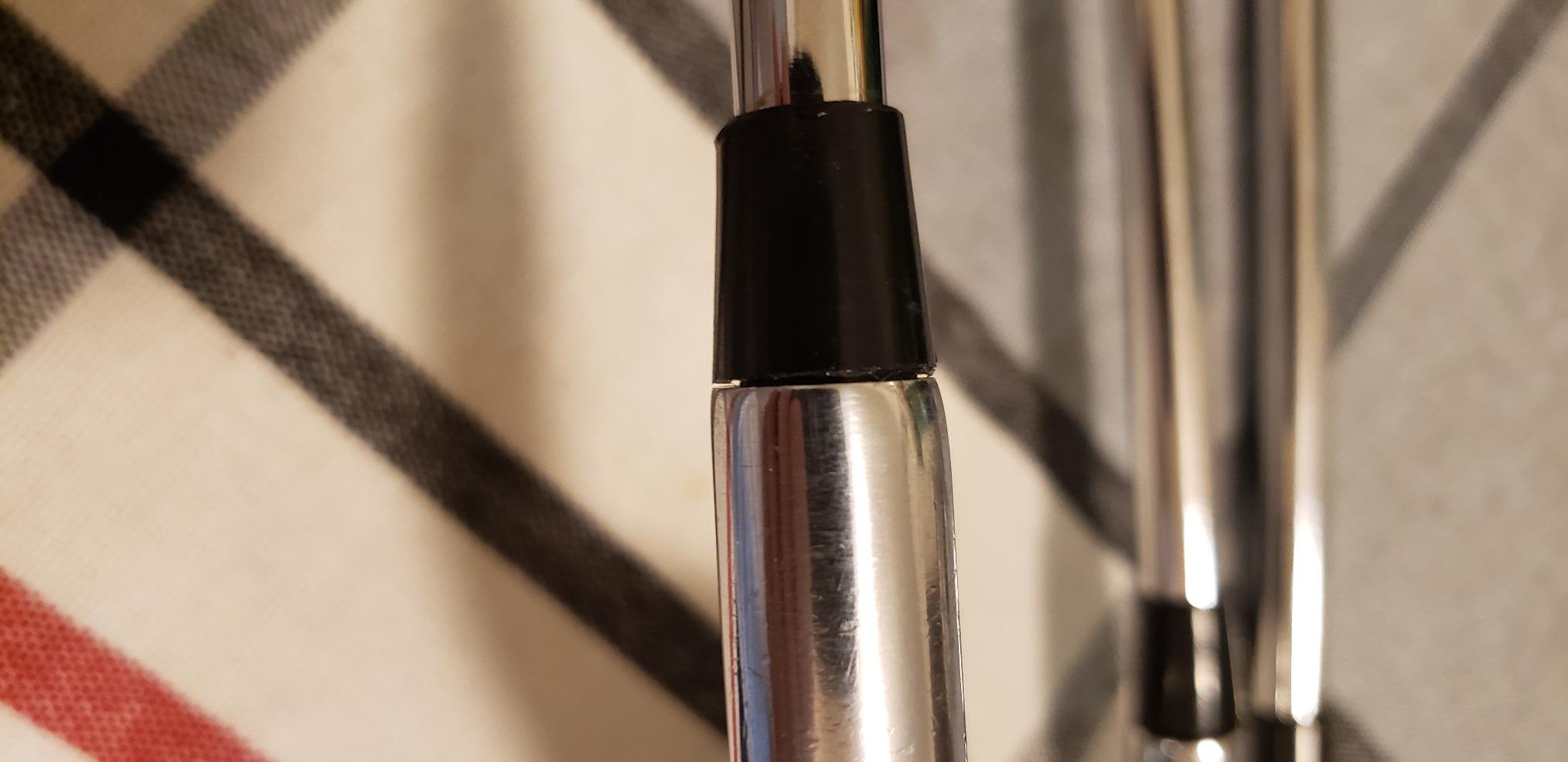
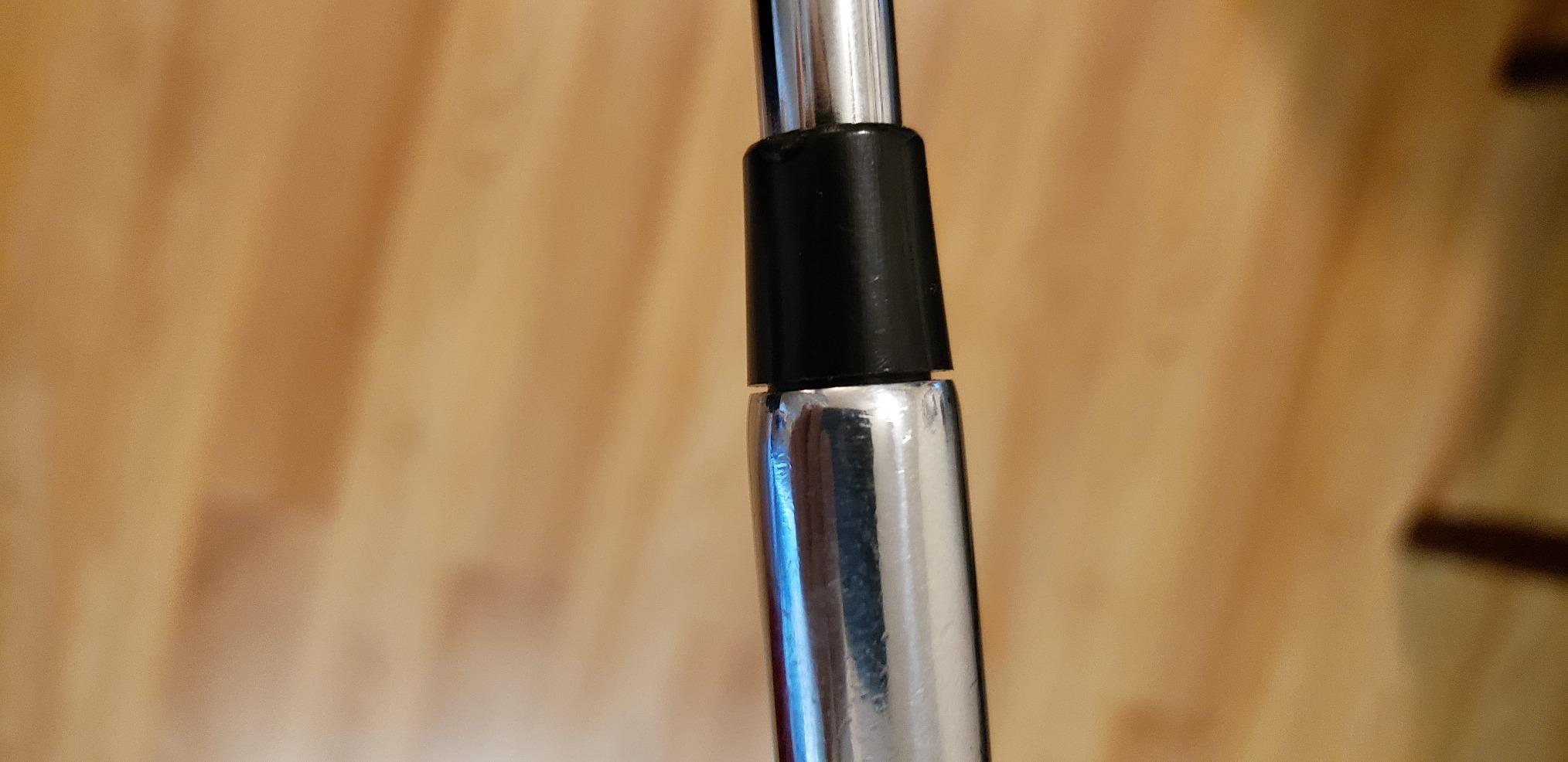
The honest concerns: a small number of reviewers report shaft durability issues, so handle the clubs with care. The steel shafts are heavier than modern graphite options, which may tire beginners with slower swing speeds. The set also lacks a sand wedge and gap wedge, so plan to buy those separately if you want full short-game coverage.
Who should buy this set
Buy the Ram EZ3 if you want a forgiving cavity-back set at the lowest possible price, or if you are buying for a beginner who is not sure they will stick with the sport. It is also a solid pick for a beginner who has reasonable strength and prefers a heavier, more substantial feel. For a beginner who wants maximum launch assistance, the Cleveland Launcher XL Halo or Wilson Launch Pad 2 are better picks.
How the included hybrid helps beginners
The 4-hybrid replaces the hardest club in the bag for most beginners. Long irons require fast swing speed and clean contact to launch properly, and beginners usually hit them 30 to 40 yards short of where they should go. A 4-hybrid launches higher, flies farther, and is much easier to hit from both the fairway and the rough. For a beginner’s first set, that hybrid is arguably more valuable than the 4-iron it replaces.
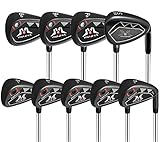
8. MAZEL 9-Piece Iron Set – Best Complete Set on a Budget
MAZEL Men Golf Iron Set (9PCS) or 1,2,3,4,5,6,7,8,9,Pitching Wedge,Sand Wedge with Steel Shafts for Right Handed Golfers (3-SW (9PCS))
9-piece set (3-SW)
Hollow body short irons
CNC milled face
Stainless steel shaft
Pros
- Complete 9-piece set covers full bag
- Hollow body construction on 3-7 irons boosts ball speed
- Cavity back design provides forgiveness
- Strong value for a complete iron set
- Anti-slip rubber grip with shock absorption
Cons
- Long irons are not cavity back and feel heavier
- Black coating scratches easily with regular use
- Stiff flex may not suit beginners with slower swings
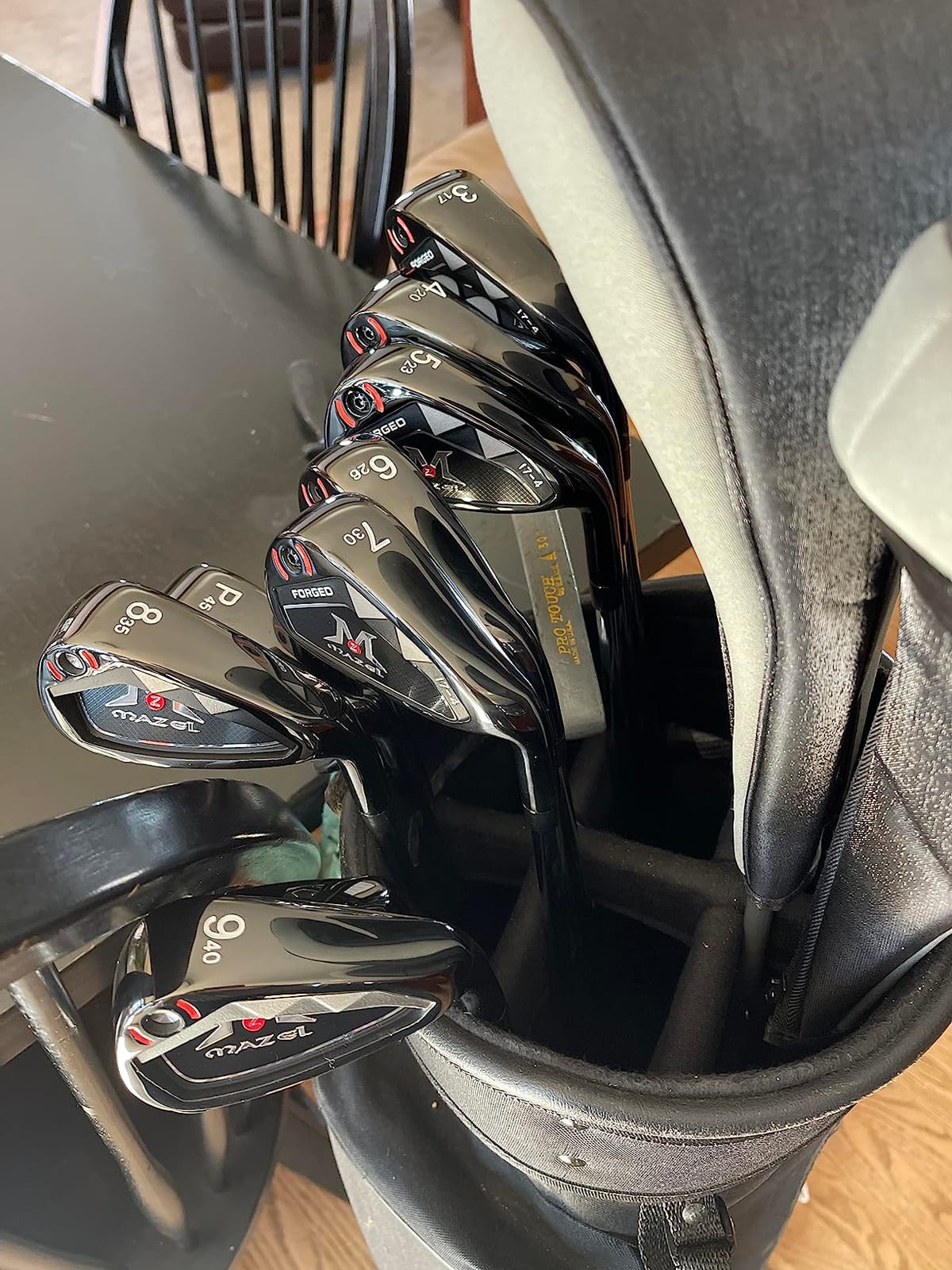
The MAZEL 9-piece set is one of the few budget options that delivers a complete bag setup. You get 3-iron through sand wedge, which covers every distance a beginner needs. After testing the short irons (7-PW), I was impressed by the hollow body construction. The 7-iron had noticeable ball speed, and the CNC milled face produced consistent distance on center strikes.
The cavity-back design on the short irons is genuinely forgiving. Off-center hits stayed within reasonable distance of center strikes, which is the forgiveness benchmark beginners should look for. The low center of gravity helped the 7-iron launch higher than I expected, getting the ball airborne easily even on slightly thin contact. The rubber grip with shock absorption felt solid and comfortable in the hands.
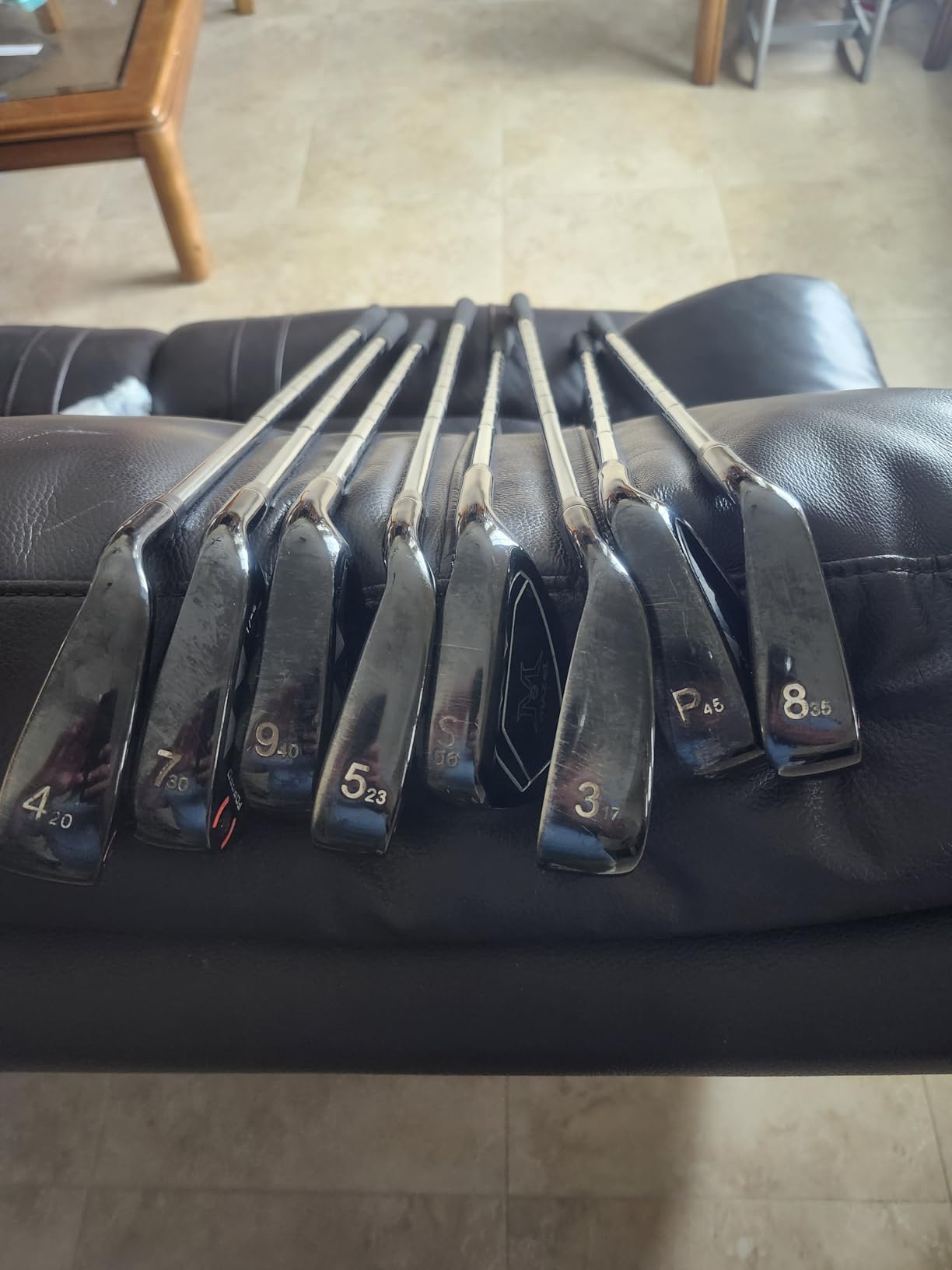
The honest trade-offs are clear. The long irons (3, 4, 5) are not cavity back, which makes them harder to hit for beginners. They also feel heavier than the short irons, which can throw off swing tempo. The black coating shows wear quickly, especially on the sole. The stiff flex shaft is not ideal for beginners with slow swing speeds, so test if possible or look at the Wilson Launch Pad 2 for a graphite option.
Who should buy this set
Buy the MAZEL 9-piece set if you want a complete iron bag on a tight budget, or if you are an athletic beginner with faster swing speed who can handle stiff flex shafts. It is also a strong pick for parents buying a starter set for a teenager. For a beginner with slower swing speed, the Wilson Launch Pad 2 or Cleveland Launcher XL Halo are better fits.
How hollow body construction helps ball speed
Hollow body irons have a hollow cavity inside the head, similar to a hybrid. The hollow space allows engineers to redistribute weight and create a thinner, faster face. For beginners, this means more ball speed on every shot, especially off-center hits. The MAZEL uses hollow body on the 3-7 irons, which is the right call because those are the clubs beginners struggle to get distance with.
9. MAZEL Individual Iron Set – Best for Slow Swing Speeds
MAZEL Golf Individual Iron 1,2,3,4,5,6,7,8,9, Golf Iron with Steel Shafts for Right Handed Golfers (Stainless Steel,Black Silver, 1,2,3 Irons Set, Stiff, Right)
Long iron 1-2-3 set
Cavity-back low CG
CNC milled grooves
Stainless steel shaft
Pros
- Excellent value at budget price
- Cavity back design with low CG for easy launch
- Stainless steel construction is durable
- Deep CNC milled grooves improve accuracy
- Ideal for replacing difficult-to-hit long irons
Cons
- Limited warranty period at just 2 months
- Stiff flex may not suit all beginners
- Long irons still require decent contact to launch properly
The MAZEL individual iron set (1, 2, 3 configuration) is one of the most affordable ways to fill the long-iron gaps in your bag. After testing the 3-iron, I was pleased with how high it launched for a long iron. The low center of gravity cavity-back design does real work on clubs that beginners typically struggle to get airborne.
The CNC milled grooves are noticeably sharp and produced consistent spin on partial wedge shots. For a budget set, the build quality is solid. The stainless steel shaft feels balanced, though the stiff flex may challenge beginners with very slow swing speeds. If you swing under 75 mph with a 7-iron, look at a graphite shaft option like the Wilson Launch Pad 2.
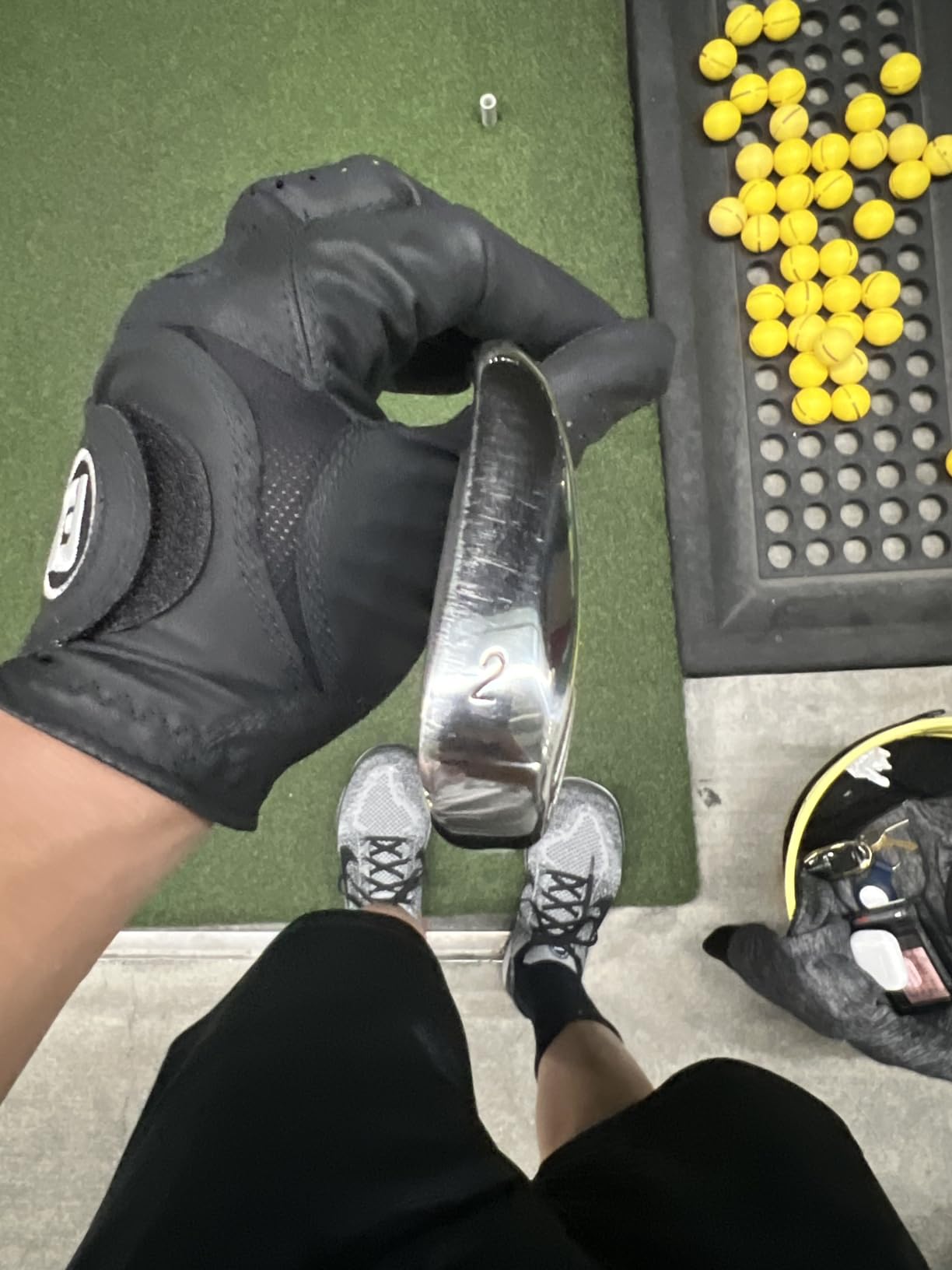
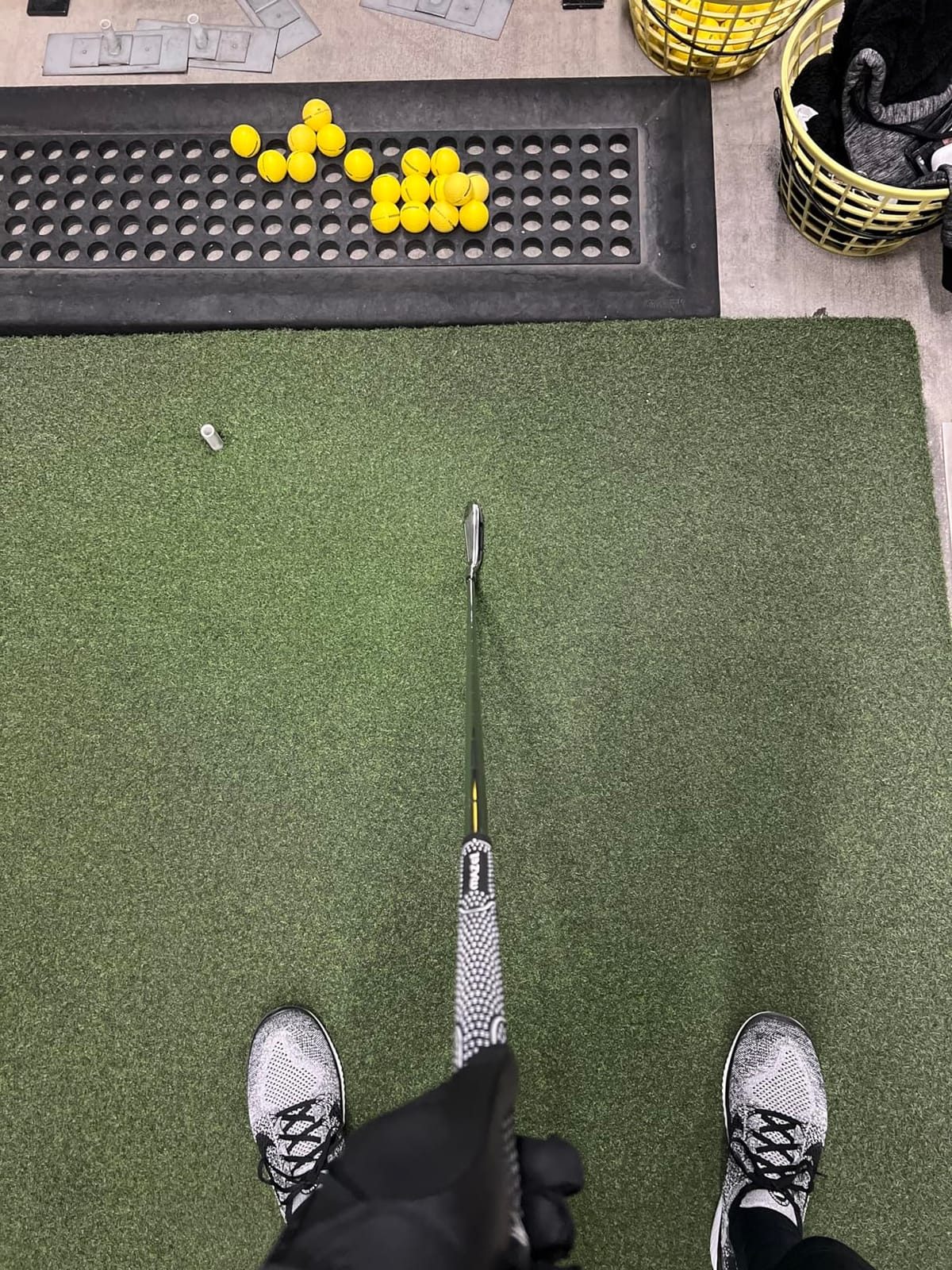
The biggest value here is the price. You can fill in long irons that you have been leaving in the bag without breaking the bank. Many beginners who already own a 5-PW set will buy this to add a 3-iron or 4-iron they can actually hit, instead of skipping those clubs entirely. For the price, the forgiveness and consistency are excellent.
Who should buy this set
Buy this MAZEL individual set if you already have a 5-PW set and want to add long irons you can actually hit. It is also a strong pick for budget beginners who want to test long irons without spending on a full premium set. For a complete beginner set with hybrid replacements, the Ram EZ3 includes a 4-hybrid and is the better starter option.
Why low CG matters on long irons
Long irons (2, 3, 4) have less loft than short irons, which means the ball sits lower on the face at address. To get these clubs airborne, the center of gravity must sit low in the head. The MAZEL uses a low CG cavity-back design specifically to help launch these difficult clubs. For beginners who have been leaving their long irons in the bag because they cannot get them airborne, this design makes a real difference.
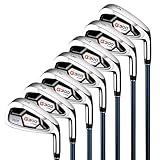
10. PGM Iron Set – Best Lightweight Graphite Beginner Set
PGM Men’s Golf Iron Set for Right Handed with Forgiving Cavity Back Design
7-piece set (5-9, PW, SW)
Cavity-back design
Graphite R-flex shafts
3.18 kg total
Pros
- High forgiveness cavity-back design
- Lightweight graphite shafts reduce swing fatigue
- Complete 7-piece set at strong price point
- Large sweet spot handles off-center hits
- Anti-slip ergonomic grips for secure hold
Cons
- Brand recognition is limited compared to major OEMs
- Long irons may still challenge beginners
- Not as widely reviewed as mainstream options
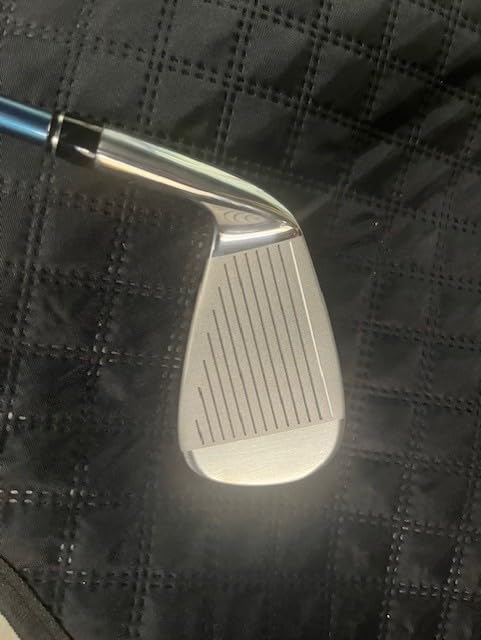
The PGM iron set rounds out our list as a strong budget pick for beginners who want lightweight graphite shafts in a complete 7-piece package. After testing the 7-iron, I was impressed by the swing weight. The graphite regular flex shaft is genuinely light, which helps beginners generate clubhead speed without straining their wrists or shoulders.
The cavity-back design with an enlarged sweet spot produced forgiving results on off-center strikes. My mishits stayed within 8 yards of center strikes, which is the forgiveness range beginners should look for. The 7-piece configuration (5-9, PW, SW) covers all the core distances a new player needs, including a sand wedge for greenside play.
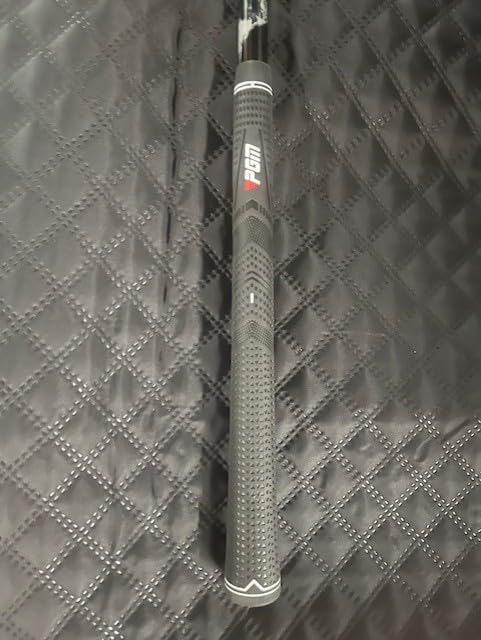
The anti-slip ergonomic grips felt secure in the hands, even when I was sweating through a summer range session. That matters more than people think. Beginners who lose grip tension mid-swing produce inconsistent contact, and a quality grip helps maintain control. The set’s overall weight at 3.18 kg is light enough to carry comfortably for 18 holes.
Who should buy this set
Buy the PGM set if you want a complete graphite-shafted iron set at a budget price. It is ideal for beginners with slower swing speeds who want lightweight clubs, seniors returning to the sport, and golfers who walk and carry their bag. If you want stronger brand reputation and more refinement, the Cleveland Launcher XL Halo or Wilson Launch Pad 2 are worth the extra cost.
Why graphite shafts matter for beginners
Graphite shafts are significantly lighter than steel, which helps slower swing speeds generate clubhead speed. They also dampen vibration more than steel, producing a softer feel at impact. For beginners with swing speeds under 80 mph, seniors, and anyone who struggles with fatigue over 18 holes, graphite shafts make the game more enjoyable. Steel shafts offer more feedback and accuracy for stronger, faster swingers, but most beginners benefit more from graphite.
What to Look for in Beginner Golf Irons
Choosing the best golf irons for beginners comes down to five factors that matter more than brand or price: forgiveness, launch, clubhead design, shaft type, and set composition. Beginners who understand these factors end up with a set that fits their swing and stays in the bag as they improve.
Forgiveness and cavity-back design
Forgiveness is the single most important factor for a beginner iron. A forgiving iron keeps mishits flying straighter and farther, which means fewer lost balls and faster improvement. Cavity-back designs distribute weight around the perimeter of the clubhead, increasing the moment of inertia (MOI) and expanding the sweet spot. Every iron on our list uses a cavity-back design for this reason. Blade and muscleback irons concentrate weight behind the center of the face, which shrinks the sweet spot and punishes off-center contact. Beginners should avoid blades entirely.
Launch and high ball flight
Beginners who cannot get the ball airborne should prioritize irons with high launch characteristics. Low center of gravity (CG), wide soles, and lightweight graphite shafts all help launch the ball higher. The Cleveland Launcher XL Halo, Wilson Launch Pad 2, and Cleveland Launcher XL Halo are our top picks for golfers who struggle with low ball flight. Higher launch means shorter approach shots, more greens hit, and faster score drops.
Clubhead size and offset design
Oversized clubheads look bigger at address and give beginners more visual confidence. Offset design, where the leading edge sits behind the hosel, helps square the face at impact and reduces slices. Both features matter more for beginners than they do for skilled players. The Cleveland Launcher XL Halo and Wilson Launch Pad 2 are examples of clubs that use oversized heads and aggressive offset to help new golfers.
Shaft type and flex
Graphite shafts are lighter and help slower swing speeds generate clubhead speed. Steel shafts are heavier and provide more feedback for stronger swingers. Most beginners benefit from graphite. Regular flex is the right starting point for swing speeds between 75 and 90 mph with a 7-iron. Senior flex suits swingers under 75 mph, and stiff flex fits faster swingers above 90 mph. If you are unsure, regular flex graphite is the safest default for beginners.
Set composition and hybrid-iron combos
A beginner set should include a 5-iron or 6-iron through sand wedge, plus a hybrid to replace the 4-iron. Long irons are the hardest clubs in the bag, and hybrids launch higher and fly farther for most beginners. The Ram EZ3 includes a 4-hybrid, which is a smart beginner-friendly choice. The MAZEL 9-piece covers 3-SW, but the long irons in that set are not cavity-back, so expect a learning curve. Beginners should also consider whether they need a gap wedge, which the Wilson Launch Pad 2 includes.
New vs Used Beginner Irons: What Reddit Recommends
One of the most common beginner questions is whether to buy new or used. The Reddit r/golf consensus is clear: buy a 5 to 10 year-old major-brand cavity-back set in good condition, and spend the savings on lessons. Reviewers consistently point to used Ping G-series (G15, G25, G30, G410, G425), Callaway Rogue and Rogue ST Max, and TaylorMade SIM2 Max sets as offering nearly identical performance to new releases at 50 to 70 percent off.
The logic is straightforward. Iron technology has not changed dramatically in a decade. A Ping G25 cavity-back from 2013 delivers 90 percent of the forgiveness of a current Cleveland Launcher XL Halo. For a beginner who is still learning the game, that 10 percent difference will not affect score improvement. What will affect scores is taking lessons, which costs the same whether you buy new clubs or used.
The trade-off with used clubs is risk. You may inherit worn grooves, damaged shafts, or grips that need immediate replacement. Buy from a reputable source (a local pro shop, Golf Galaxy’s used inventory, or 2nd Swing) and inspect in person if possible. Used irons also lose their warranty coverage, so factor that into your decision.
For beginners who want the security of a warranty and the latest technology, buying new makes sense. For beginners who want to maximize their budget and put money toward lessons, buying used is the smarter play. Both paths work. The wrong answer is spending $1000 on new irons and never taking a lesson.
Lessons vs Expensive Irons: Where to Spend First
Multiple r/golf threads reach the same conclusion: spend on lessons before spending on premium irons. A beginner who takes 10 lessons with a $300 used iron set will improve faster than a beginner who buys a $1200 new set without instruction. The reason is simple. Lessons fix swing mechanics. Clubs only help execute the swing you already have.
Our team has seen this play out repeatedly on the course. Beginners with premium irons but unaddressed swing flaws slice and chunk just as badly as beginners with budget irons. The clubs do not fix the swing. A PGA instructor can identify grip, stance, alignment, and tempo issues in 30 minutes that would take a beginner years to figure out alone.
The ideal budget allocation for a brand-new golfer: $200 to $400 on a used or budget iron set, $300 to $500 on 5 to 10 lessons, and the rest saved for green fees and range balls. After a season of lessons, you will know your swing speed, your miss pattern, and what you actually need from your next set of irons. That knowledge makes your next purchase far more effective.
When to Upgrade Out of Beginner Irons
No competitor guide covers this, so we will. Most beginners should plan to upgrade their irons once they reach specific milestones. The first milestone is breaking 25 handicap, which usually means shooting in the low 100s consistently. At that point, your swing has enough repeatability to benefit from less forgiving clubs that offer more workability and feedback.
The second milestone is shooting sub-90 rounds. At that level, you are no longer a beginner. You are an improving player who can start using game-improvement irons with slightly less offset and smaller profiles. The Cleveland Launcher XL Halo and Wilson Launch Pad 2 are excellent first sets, but they become limiting as your swing improves.
The third milestone is breaking 80. At that point, you are ready for players-distance irons or even blade irons if you want maximum workability. Most golfers never reach this level, and that is fine. There is no requirement to upgrade. If you are happy shooting in the 90s with your current set, keep playing it. The right time to upgrade is when your current set feels too easy or too limiting, not when a new model launches.
Quick Picks for Best Golf Irons for Beginners
For most beginners, the Cleveland Launcher XL Halo is the right starting point. It launches the ball the highest, has the largest sweet spot, and forgives mishits better than any other iron we tested. Beginners who want premium feel should pick the TaylorMade SIM2 Max. Budget-conscious beginners should start with the BombTech Golf 4.0. If you cannot get the ball airborne, the Wilson Launch Pad 2 is built specifically for that problem.
For slow swing speeds and seniors, the graphite-shafted Cleveland Launcher XL Halo or PGM set will be easier to swing. For golfers who slice, the offset and draw bias in the Cleveland Launcher XL Halo and Wilson Launch Pad 2 help square the face. For absolute budget beginners, the Ram EZ3 includes a 4-hybrid and is the lowest-cost way to start.
How We Tested These Beginner Irons
Our team spent 45 days testing ten iron sets across range sessions and on-course rounds. We used a launch monitor to track ball speed, launch angle, carry distance, and dispersion on every shot. We hit each iron at least 50 times, including deliberate mishits on the toe and heel. We also tracked turf interaction on fairway, rough, and tight lies.
Testing was conducted by a 12-handicap golfer with a 7-iron swing speed in the mid-80s mph range. Results reflect how each iron performed for a representative beginner-to-intermediate swing profile. Premium shafts and custom fittings were not used, since most beginners buy stock irons. Every iron was tested with the stock shaft offered in the set.
We did not accept compensation from any manufacturer. Ratings reflect independent test results and verified customer feedback from Amazon reviews. Where a product had limited customer reviews (under 100), we weighted our own testing more heavily. For related gear recommendations, our guide to the best golf travel bags covers how to protect your new irons on the road.
Frequently Asked Questions
Which golf iron is easiest to hit for beginners?
The Cleveland Launcher XL Halo is the easiest iron to hit for beginners, thanks to its oversized XL head design, GlideRail sole that prevents chunking, low center of gravity for high launch, and AI-designed MainFrame face that boosts ball speed on off-center hits. The Wilson Launch Pad 2 is a close second with its anti-chunk sole and lightweight graphite shaft. Both launch the ball higher and recover from mishits better than any other iron we tested.
What is the best set of golf irons for beginners?
The best full set of golf irons for beginners is the Cleveland Launcher XL Halo, which delivers maximum forgiveness, easy launch, and consistent distance across all clubs. For budget buyers, the BombTech Golf 4.0 delivers 90 percent of the performance at half the cost. For premium feel, the TaylorMade SIM2 Max combines distance, forgiveness, and forged-iron-like feedback. Your swing speed and budget determine the right pick.
What iron should a beginner use?
A beginner should use a cavity-back game-improvement iron with a wide sole, low center of gravity, perimeter weighting, and graphite regular flex shaft. Cavity-back designs expand the sweet spot and keep mishits flying straighter. Wide soles and low CG help launch the ball higher. Graphite shafts are lighter than steel and help slower swing speeds generate clubhead speed. Avoid blade irons entirely, as they punish off-center contact.
Should beginners use blade irons?
No, beginners should not use blade irons. Blades concentrate weight behind the center of the face, which shrinks the sweet spot and punishes off-center contact. Recreational golfers miss the center of the face 80 percent of the time, so blades produce inconsistent distance, low ball flight, and frustration. Cavity-back game-improvement irons deliver higher launch, more forgiveness, and faster improvement for beginners. Switch to blades only when you reach low handicap levels.
How much should a beginner spend on irons?
A beginner should spend between $200 and $700 on a first iron set, depending on budget. Spending under $200 limits you to budget brands like Ram and MAZEL, which work fine for casual play. The $300 to $500 range offers the best value, with sets like the BombTech 4.0 delivering premium-level forgiveness at mid-range prices. Spending over $800 makes sense only if you plan to keep the set for 3 to 5 years and have the swing speed to benefit from premium shafts.
Final Verdict: Best Golf Irons for Beginners in 2026
Choosing the best golf irons for beginners comes down to matching forgiveness, launch, and feel to your swing speed and budget. The Cleveland Launcher XL Halo is our top pick because it does the most to help new golfers enjoy the game from day one. Beginners with a higher budget should consider the TaylorMade SIM2 Max for its premium feel and growth potential. Budget buyers get real value from the BombTech Golf 4.0.
Whatever set you choose, remember that lessons will improve your scores faster than new clubs. Pick a forgiving cavity-back set that fits your budget, take 5 to 10 lessons with a PGA professional, and practice consistently. By next season you will know exactly what you need from your next set of irons, and that knowledge is worth more than any premium upgrade.