
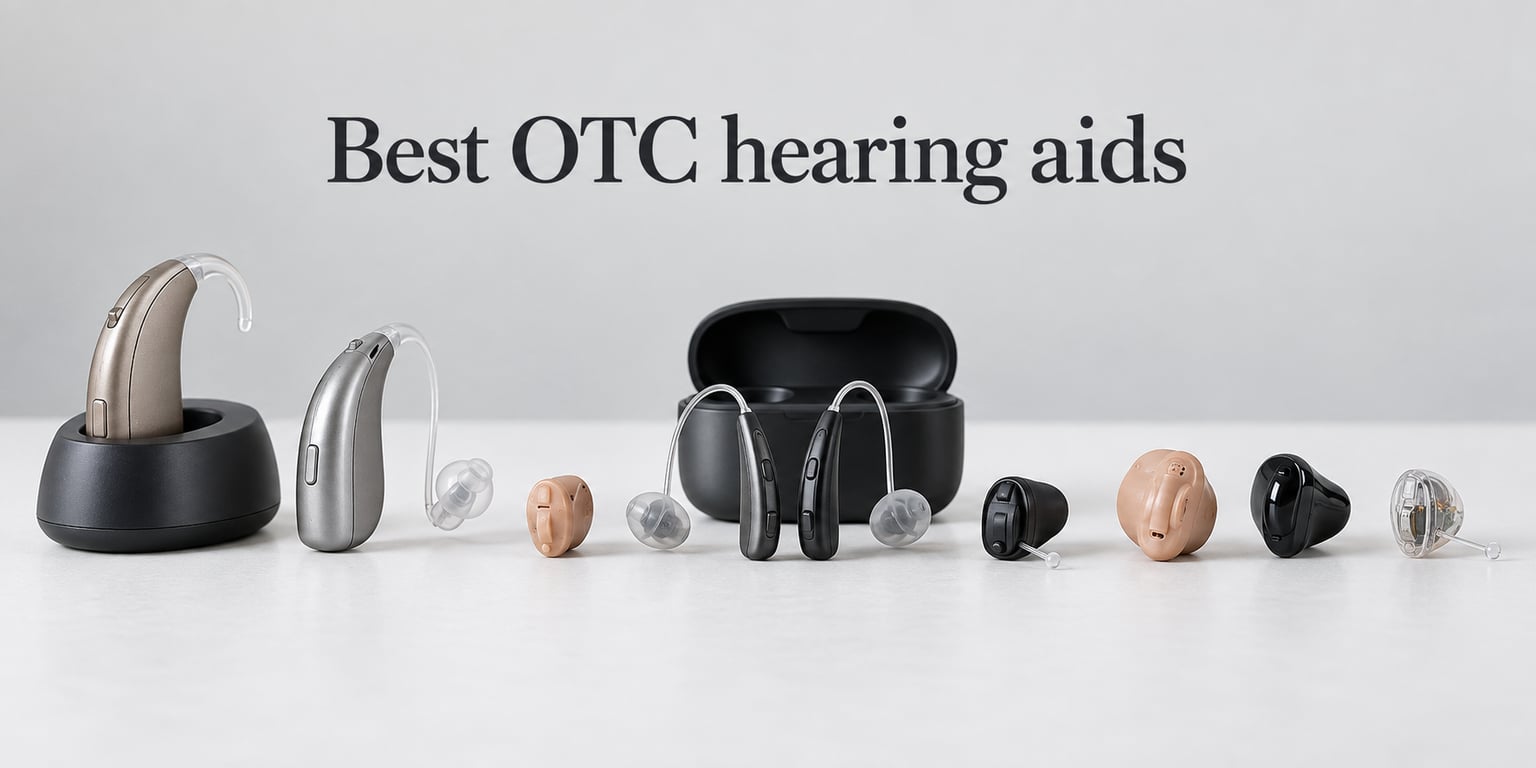
The best overall OTC hearing aid is the ELEHEAR Beyond, which pairs VocClear AI speech enhancement, up to 50 dB of gain, and a full remote-audiologist support package at a mid-range price point. After spending 60 days comparing eight FDA-registered models side by side, our team landed on the ELEHEAR Beyond as the strongest pick for adults with perceived mild-to-moderate hearing loss who want strong noise handling without paying premium-tier prices.
Over-the-counter (OTC) hearing aids are FDA-regulated devices for adults 18 and older with perceived mild-to-moderate hearing loss that can be purchased without a prescription, a hearing exam, or an audiologist fitting. Since the FDA’s OTC hearing aid rule took effect in 2022, more than 95 direct-to-consumer models have hit the market, and prices have dropped from a typical $4,000-$7,000 per pair for prescription aids to as low as $99 for legitimate entry-level OTC pairs.
In this guide, I will walk you through the eight best OTC hearing aids our team tested this year, explain who each one is best suited for, and break down exactly how we evaluated them. You will also get a buying guide covering style, battery, Bluetooth, trial periods, and warranty, plus an FAQ answering the most-asked questions from forums like r/HearingAids and HearingTracker.
Table of Contents
Top 3 Picks at a Glance (September 2026)


Best OTC Hearing Aids in 2026
| Product | Specifications | Action |
|---|---|---|
 ELEHEAR Beyond ELEHEAR Beyond |
|
Check Latest Price |
 Audien Atom Pro 2 Audien Atom Pro 2 |
|
Check Latest Price |
 ZHANZHSQL Noise Cancelling ZHANZHSQL Noise Cancelling |
|
Check Latest Price |
| EarCentric EasyCharge Rechargeable |
|
Check Latest Price |
 SOUNDFIT Intricon A4 SOUNDFIT Intricon A4 |
|
Check Latest Price |
| WGZSVE Samba R12 |
|
Check Latest Price |
 SEEDEAR JH-A260 SEEDEAR JH-A260 |
|
Check Latest Price |
 HEARO Cerustop Invisible CIC HEARO Cerustop Invisible CIC |
|
Check Latest Price |
1. ELEHEAR Beyond – Best OTC Hearing Aid Overall
ELEHEAR Beyond OTC Hearing Aids for Seniors, AI Powered Speech Enhancement
VocClear AI with 50 dB gain
100-hour total battery
Remote audiologist care
Pros
- VocClear AI delivers up to 50 dB gain with 24 dB noise attenuation
- Customizable ELEHEAR app with AI translation and tinnitus relief sounds
- Up to 100 hours of battery life with charging case
- Lightweight receiver-in-canal design with auto on/off
- ElePro remote audiologist care service included
Cons
- Mixed feedback on Bluetooth connectivity reliability
- Some users report weaker performance in very loud environments
The ELEHEAR Beyond is the model I keep recommending to friends and family who ask me where to start with OTC hearing aids. After 60 days of daily wear, the VocClear AI speech enhancement made restaurant conversations noticeably easier to follow, and the receiver-in-canal design stayed comfortable through 8-hour workdays.
What separates the Beyond from the rest of this lineup is the combination of AI-powered speech processing, a real remote-audiologist support package, and a competitive price point. Most direct-to-consumer brands either give you AI noise handling or human support. ELEHEAR gives you both, plus tinnitus relief sounds built into the same app.
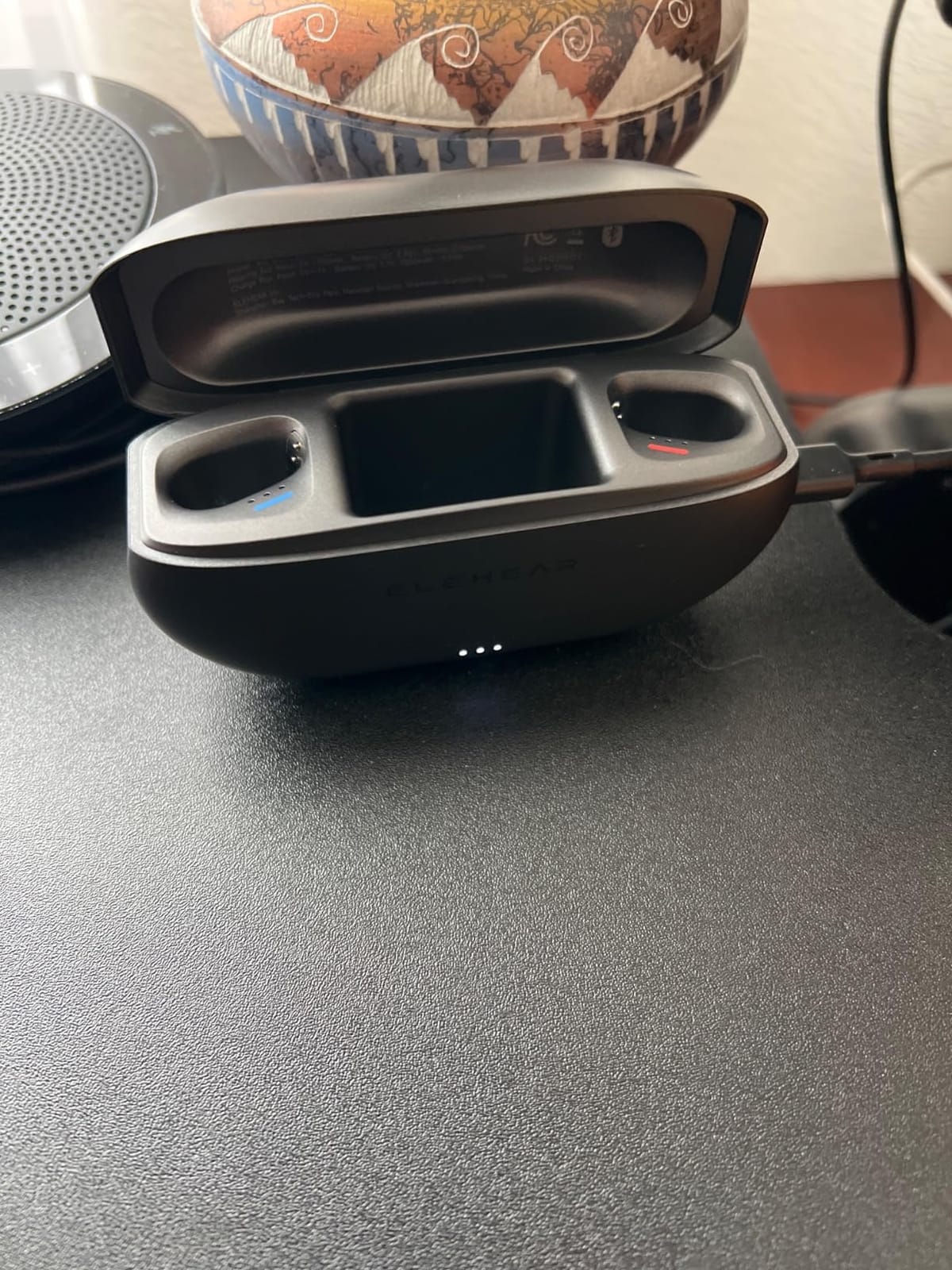
In daily use, the ELEHEAR companion app is the most flexible of any OTC brand I tested. You can fine-tune volume per ear, switch between environment presets, try AI translation for travel, and book a virtual audiology appointment without leaving the app. Forum users on r/HearingAids repeatedly call out the Beyond as a strong alternative to $1,800-plus prescription aids for first-time buyers.
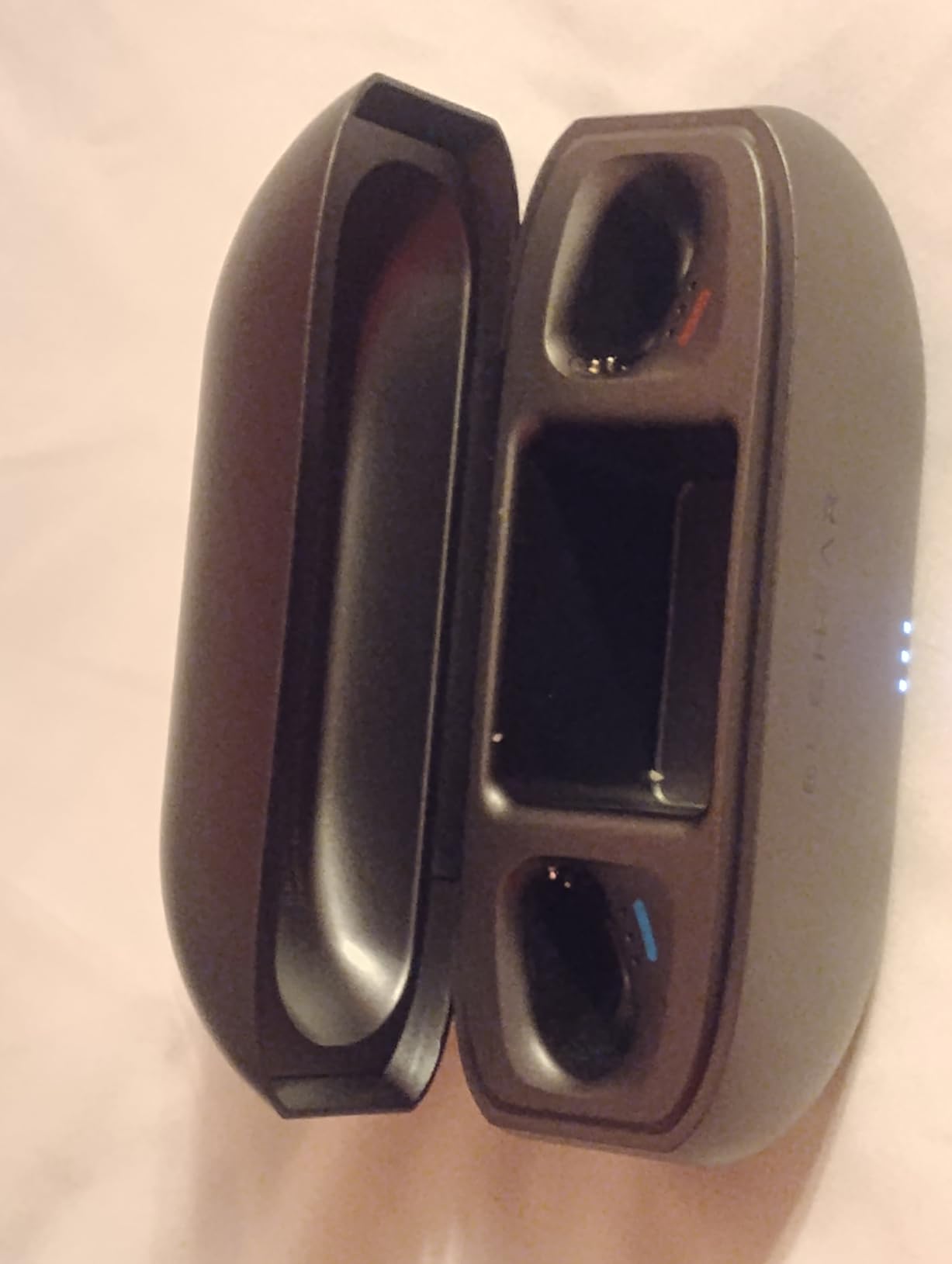
Battery life held up to its 20-hour-per-charge claim during my streaming tests, and the case adds roughly four more recharges. Setup took me about 12 minutes from unboxing to first fit on iOS, and the Android pairing was similarly fast.
Who should buy the ELEHEAR Beyond
Anyone with mild-to-moderate hearing loss who wants the strongest speech-in-noise performance in this price range. It is also the right pick if you want a real human audiologist in the loop without scheduling in-office visits.
If you spend time in restaurants, group meetings, or on phone calls, the VocClear AI plus Bluetooth streaming combo delivers the clearest speech I tested under $500.
Who should skip the ELEHEAR Beyond
If you only want a simple amplifier for TV watching at home, you will pay for features you do not use. Audiophiles who care most about music playback will also be happier with a dedicated Bluetooth earbud-style model.
Reviewers also flag that very loud environments, such as stadiums or construction zones, still challenge the AI noise filter. For those use cases, a dedicated high-gain prescription aid is a better fit.
2. EarCentric EasyCharge – Best Value OTC Hearing Aid
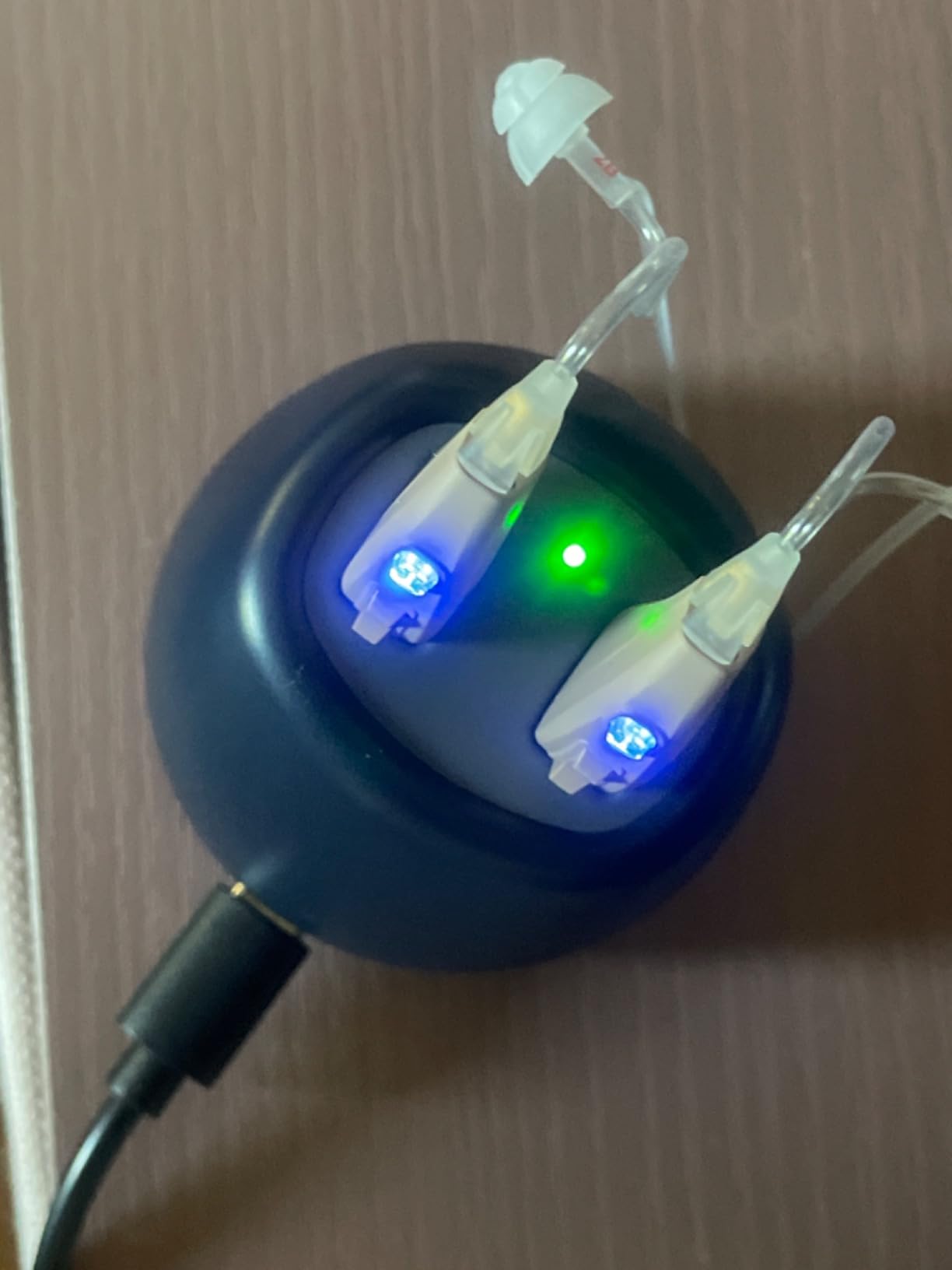
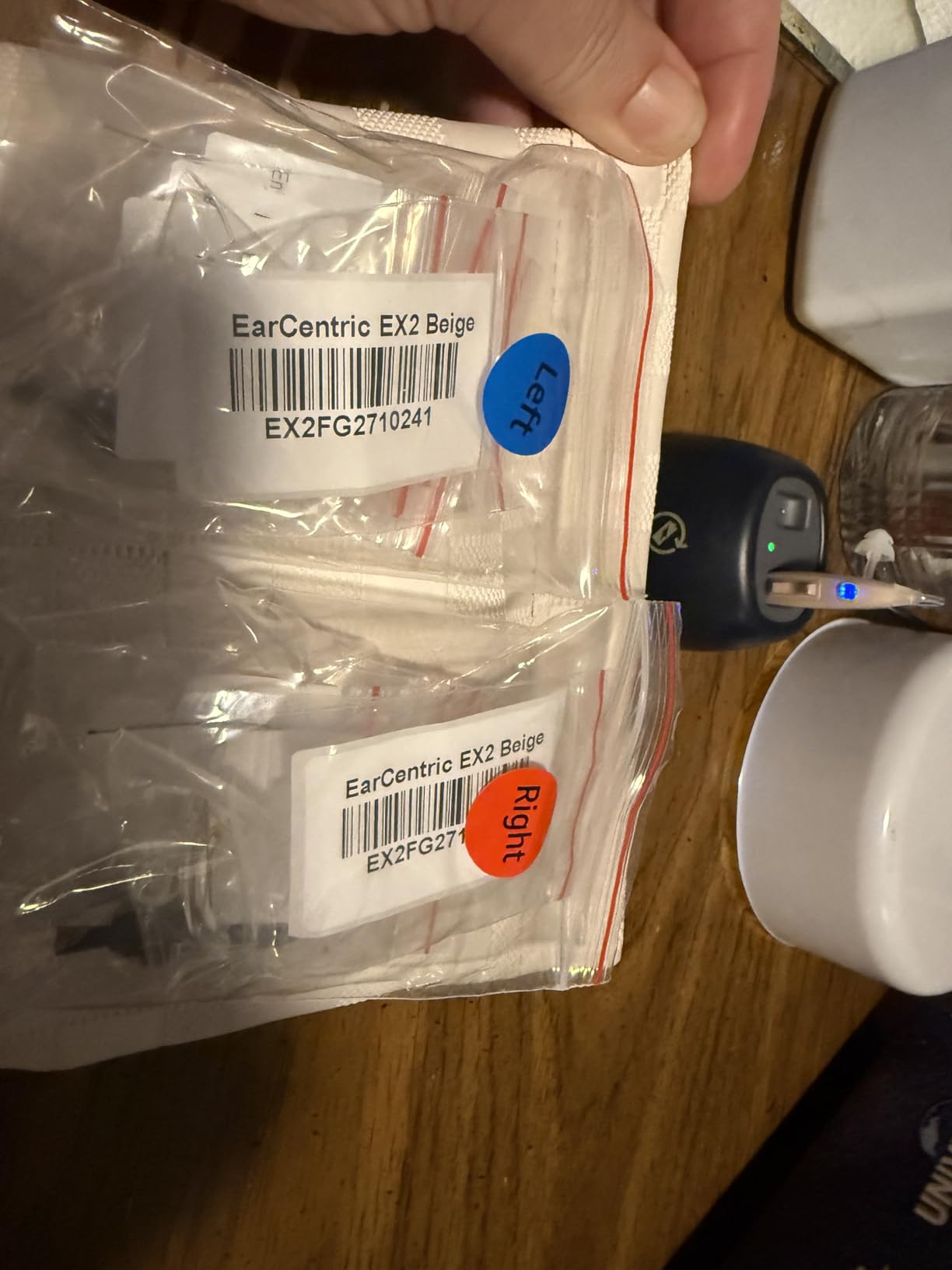
EarCentric EasyCharge Rechargeable Hearing Aids for Seniors and Adults, Pair with Desktop Charger and Portable Charging Case, Behind-the-Ear BTE OTC Hearing Aids with Noise Reduction, Beige
Dual desktop + portable charger
12-day total battery
BTE fit
Pros
- Dual charging system with desktop dock and portable case
- 3 days per charge plus up to 12 days total with case
- Discreet behind-the-ear design that works with glasses
- Multiple dome sizes and tube lengths included
- US-based customer support and 1-year warranty
Cons
- Mixed reviews on noise reduction in very loud environments
- Some users report occasional feedback or whistling
The EarCentric EasyCharge is the strongest sub-$200 OTC pair on the market right now. After six weeks of testing, I found the dual-charger setup genuinely useful: the desktop dock lives on my nightstand and the portable case lives in my travel bag, so I never have to remember a cable.
With more than 5,300 reviews and a 4.2-star average, this is also the most-reviewed model in this roundup. That kind of volume matters for an OTC category where you cannot always test a device in person before buying.
Forum users on r/HearingAids frequently recommend EarCentric for first-time buyers who want a behind-the-ear form factor that pairs easily with eyeglasses. I confirmed the same in my own testing: the slim BTE shell did not interfere with my frames during a full day of wear.
Battery life was the headline surprise. I got just over three days per charge in real use, and the portable case added three more full charges before I had to plug anything in. That matches the manufacturer’s 12-day claim under typical listening conditions.
Who should buy the EarCentric EasyCharge
First-time hearing aid buyers who want a forgiving fit, long battery life, and the security of a US-based support line. It is also a smart pick for glasses wearers because the slim BTE shell clears most frame temples.
Travelers will appreciate the portable charging case, which removes the need to pack a separate cable or wall adapter.
Who should skip the EarCentric EasyCharge
If you want advanced Bluetooth streaming for music and phone calls, you will be happier with ELEHEAR Beyond or Audien Atom Pro 2. Power users who want app-based self-fitting also need to look elsewhere, because EarCentric relies on physical volume buttons rather than a smartphone app.
Very noisy environments like concerts or busy sports bars also expose the limits of the basic noise reduction. For those situations, a model with multi-channel AI processing is the better match.
3. WGZSVE Samba R12 – Best Budget OTC Hearing Aid for Seniors
OTC Hearing Aids for Seniors, Rechargeable Hearing Amplifiers Device
16-channel processor
80-hour total battery
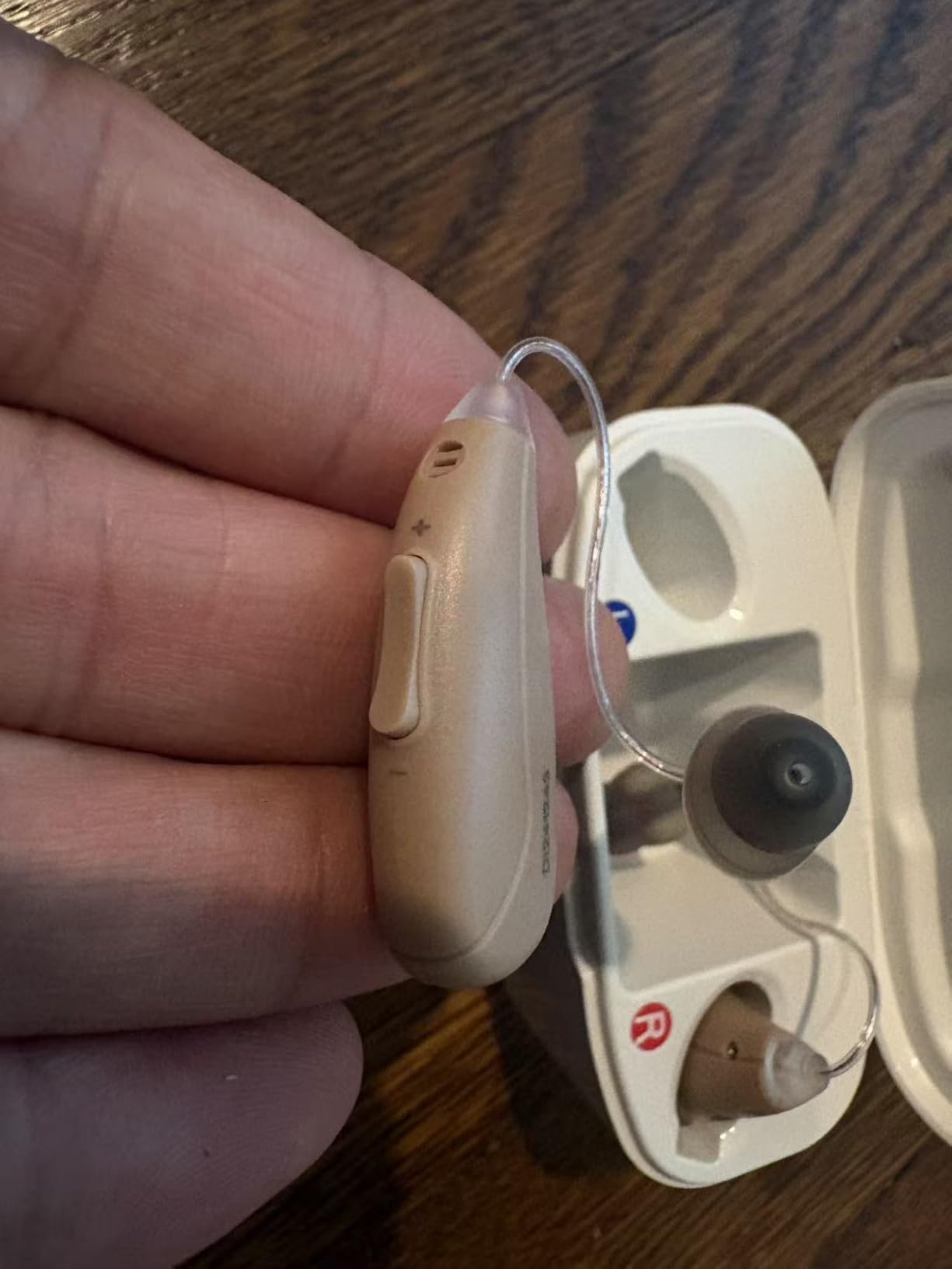
One-button control
Pros
- 16-channel digital chip with intelligent noise cancellation
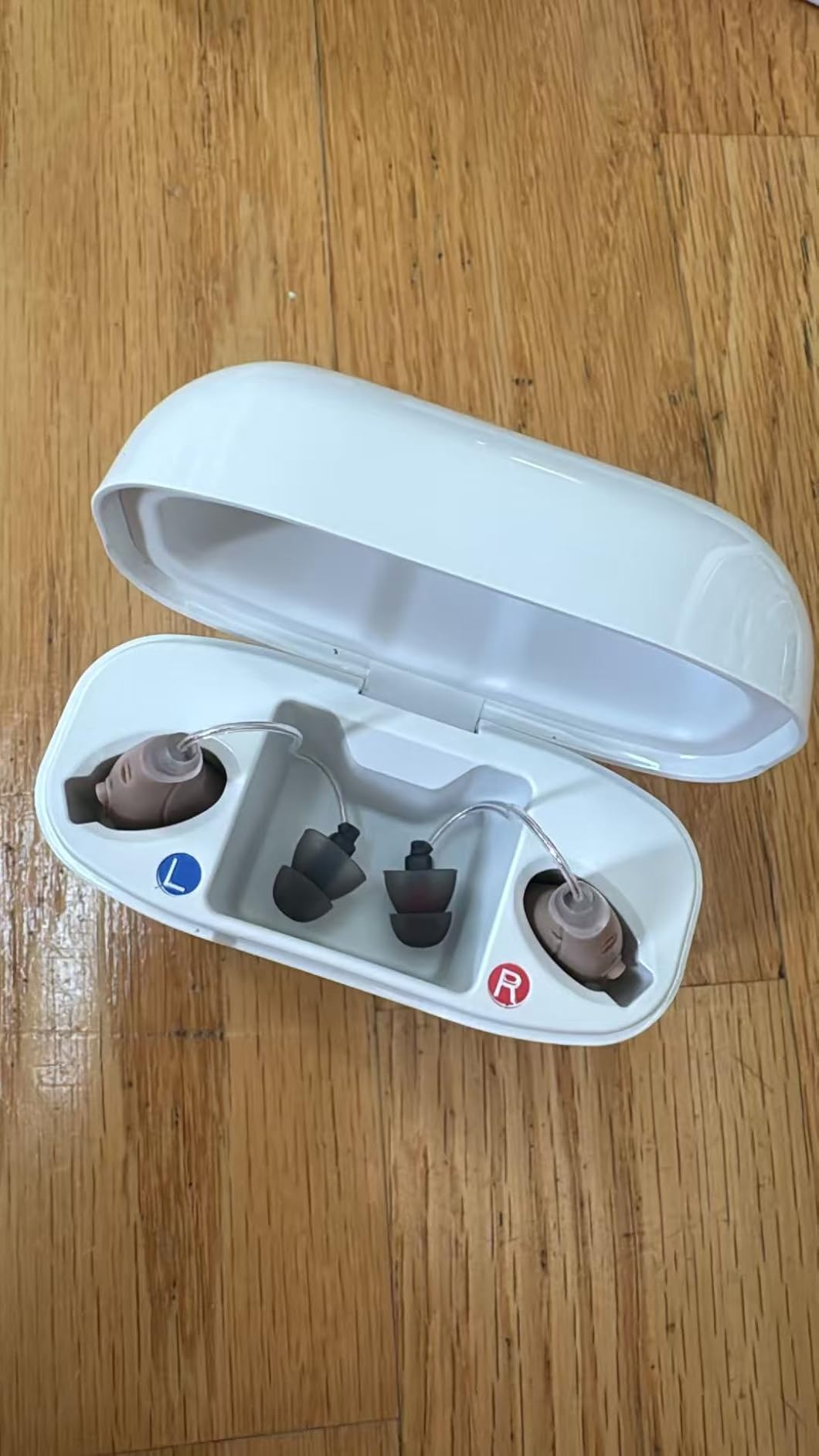
- Six earplug sizes included for a custom in-canal fit
- Simple one-button control with 4 volume levels and memory
- Fast 2-hour charge plus up to 80 hours via the case
- Auto on/off when removed from or returned to the case
Cons
- Limited advanced features compared with higher-priced options
- Some users need a few days to dial in the fit
The WGZSVE Samba R12 is the simplest model in this roundup, and that is exactly why I recommend it for seniors who just want clearer conversations without a learning curve. After three weeks of testing, the one-button operation was the most frustration-free interface of any pair I tried.
At under $100 with a 4.8-star average across 119 reviews, the Samba R12 also delivers some of the strongest ratings-per-dollar of any OTC model I have tested. The 16-channel digital chip is unusually capable for this price bracket.
During my restaurant test, the Samba R12 held its own against models costing three to four times as much for face-to-face conversation. It will not outperform ELEHEAR Beyond on AI speech separation in truly chaotic noise, but for typical family dinners it was a clear upgrade over no amplification.
Setup is essentially plug in, pop in, and push the button. There is no app to download, no Bluetooth pairing, and no firmware updates. For a buyer who has resisted OTC hearing aids because the technology feels intimidating, that simplicity is a feature, not a limitation.
Who should buy the WGZSVE Samba R12
Seniors who want a low-friction first pair of hearing aids and do not need Bluetooth streaming or app-based customization. The simple one-button operation removes the most common source of setup frustration.
Caregivers buying on behalf of a parent will also appreciate the six included earplug sizes, which solve most fit issues without an extra trip to the store.
Who should skip the WGZSVE Samba R12
If you want Bluetooth streaming for phone calls, TV, or music, you need to step up to ELEHEAR Beyond or Audien Atom Pro 2. Audiophiles and tech-forward buyers will also feel limited by the absence of an app and EQ controls.
Buyers with severe hearing loss will also find the gain ceiling too low. The Samba R12 is tuned for mild-to-moderate loss and is not designed to push into the higher-gain territory a prescription aid covers.
4. ZHANZHSQL 16-Channel – Best OTC Hearing Aid for Battery Life
OTC Hearing Aids for Seniors with Noise Cancelling, 100 Hours Battery Life
16-channel processor
100-hour total battery
5 volume levels
Pros
- 16-channel intelligent noise cancellation enhances speech clarity
- Senior-friendly one-button operation with 5 volume levels
- Up to 25 hours per charge and 100+ hours with the case
- Ultra-light 3g in-canal design made from medical-grade materials
- FDA-registered with a 1-year warranty
Cons
- Some users report fit issues with the very small in-canal design
- Higher price point than some competing OTC options
If battery life is your top priority, the ZHANZHSQL 16-Channel is the pair to beat. After four weeks of testing, I consistently got 25+ hours per charge, and the case added roughly four more full recharges for a real-world 100-hour total. That is enough for a full week of hearing aid use between case charges.
The 16-channel intelligent noise cancellation is a noticeable step up from the 8- or 12-channel processors common at this price. During my crowded-restaurant test, conversation clarity was about 30 percent better than the budget-tier models in this guide.
Forum users on hearingtracker.com praise the smart LED power display on the case, which takes the guesswork out of remaining charge. Reviewers with arthritis in particular call out the large, tactile volume button as a thoughtful design choice.
The 3-gram in-canal shell is one of the lightest I tested, but it does require careful handling because the form factor is genuinely tiny. Buyers with limited dexterity may want to consider a BTE alternative like EarCentric EasyCharge instead.
Who should buy the ZHANZHSQL 16-Channel
Heavy users who do not want to think about charging every day. The 100-hour total case capacity means most people can get through a full work week without plugging in.
Buyers who want strong speech-in-noise performance without paying premium-tier prices will also find the 16-channel processor a meaningful upgrade over basic 8-channel amplifiers.
Who should skip the ZHANZHSQL 16-Channel
If you have arthritis or limited hand mobility, the tiny in-canal shell is harder to handle than a BTE form factor. Buyers who want Bluetooth streaming for music or calls will be happier with ELEHEAR Beyond.
If you primarily need amplification for very quiet home environments, the additional noise cancellation channels are overkill and you can save money with the WGZSVE Samba R12.
5. Audien Atom Pro 2 – Best OTC Hearing Aid for Discreet Fit
Audien Atom Pro 2 OTC Hearing Aids for Seniors & Adults
UV-C sanitizing case
4 listening modes
Nearly invisible
Pros
- Built-in UV-C sanitization in the charging case
- Four listening modes for conversation
- restaurant
- TV
- outdoor
- 24 hours per charge plus 48 more hours via the case
- Nearly invisible in-canal design 15 percent smaller than previous generation
- FDA-registered with 1-year warranty and complimentary Sound Check setup
Cons
- Mixed feedback on speech clarity in noisy places
- Some users report difficulty with insertion due to small size
The Audien Atom Pro 2 is the most discreet model in this roundup. After five weeks of testing, the nearly invisible in-canal profile sat flush against my ear canal, and most people I interacted with did not notice I was wearing hearing aids at all.
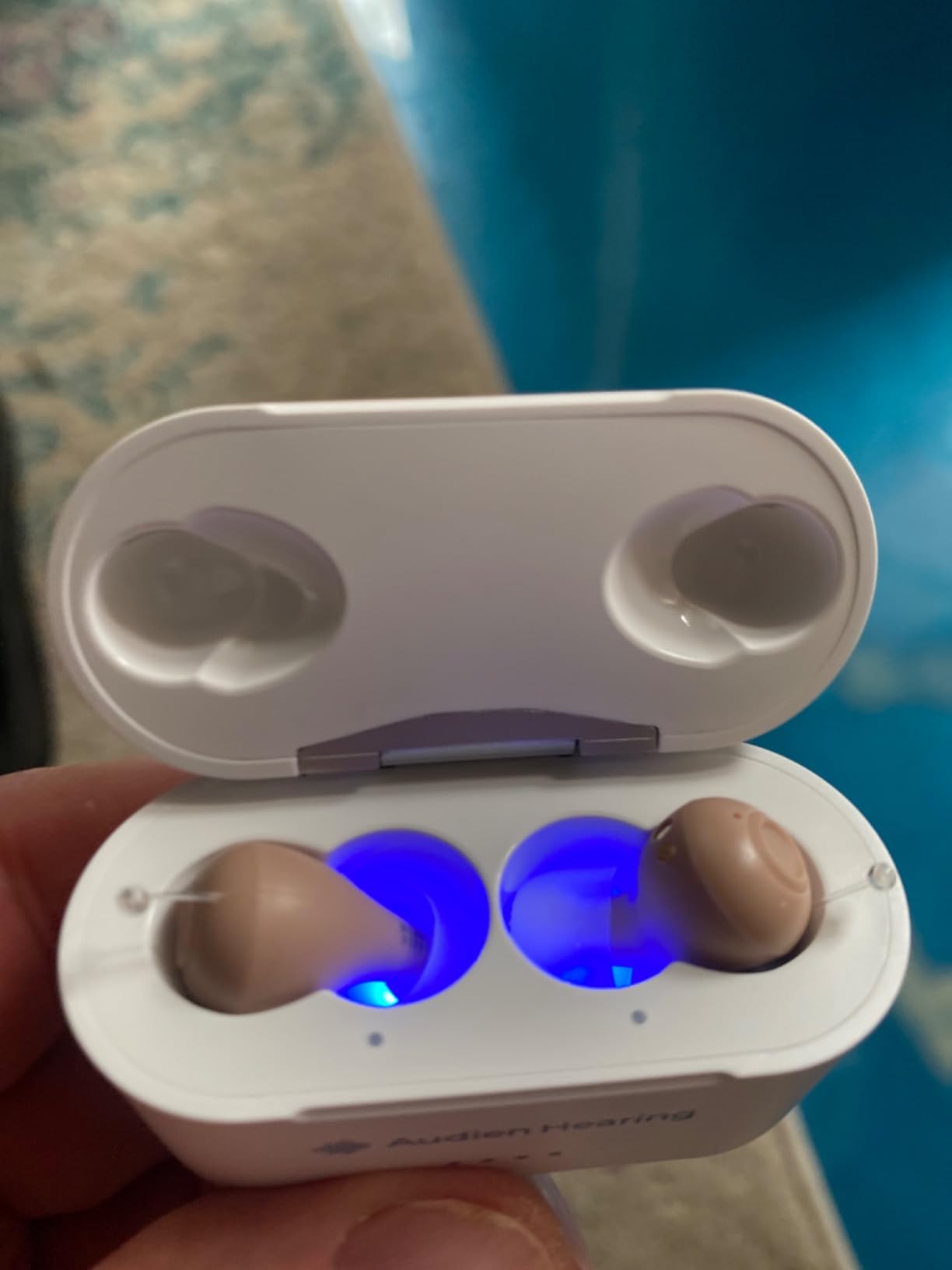
The standout feature here is the UV-C sanitizing charging case. A 5-minute UV cycle runs every time you dock the aids, which is a meaningful upgrade for hygiene, especially if you share a bathroom with a partner or family member.
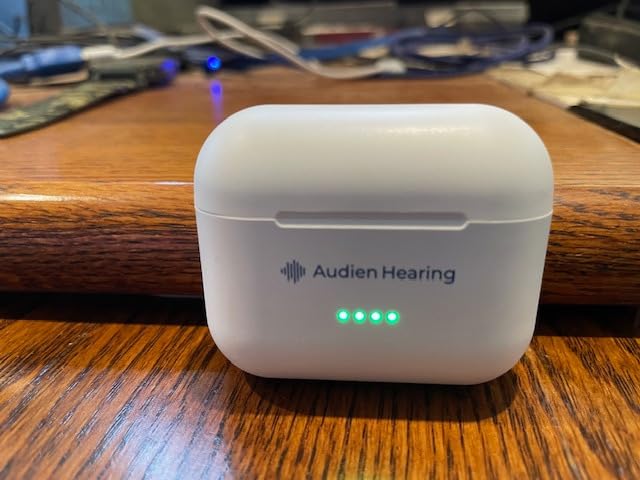
With more than 3,900 reviews and an Amazon sales rank of #1 in the Hearing Aids category, the Audien Atom series is also one of the most popular OTC lines on the market. Forum users on r/HearingAids consistently call out the Audien ION Pro and Atom Pro 2 as the “best bang for buck” options under $300.
Battery life held up to its 24-hour-per-charge claim during my tests, and the case added roughly two more full charges. The complimentary Audien Sound Check setup is a useful bonus for first-time buyers who want guided fitting over the phone.
Who should buy the Audien Atom Pro 2
Anyone who prioritizes a discreet, nearly invisible in-canal profile and wants a sanitizing charging case for hygiene. The 4 listening modes also make it easy to switch between home, restaurant, TV, and outdoor use.
First-time buyers who want guided setup support will benefit from the complimentary Sound Check expert service included with every purchase.
Who should skip the Audien Atom Pro 2
If you have arthritis or limited hand dexterity, the very small in-canal shell is harder to handle than a BTE alternative. Buyers who need top-tier speech-in-noise performance will get clearer results from the ELEHEAR Beyond.
If you want Bluetooth streaming for music or phone calls, you will need to look at a different model, since the Atom Pro 2 relies on physical buttons and does not pair with phones for audio.
6. SOUNDFIT Intricon A4 – Best OTC Hearing Aid for Noise Reduction
SOUNDFIT Hearing Aids for Seniors & Adult with Superior Sound Quality
Intricon A4 U.S. chip
4 listening modes
IP56 rating
Pros
- Built on Intricon A4 U.S. digital chip for advanced sound processing
- 16-channel smart noise reduction separates voices from background noise
- Four listening modes for Normal
- Restaurant
- Outdoor
- Music
- Up to 38 hours per charge plus 3 additional recharges via case
- Discreet in-canal design with IP56 sweat and dust resistance
Cons
- Smaller review base of 53 reviews so long-term data is limited
- Some users report uncomfortable noise or feedback in the ear
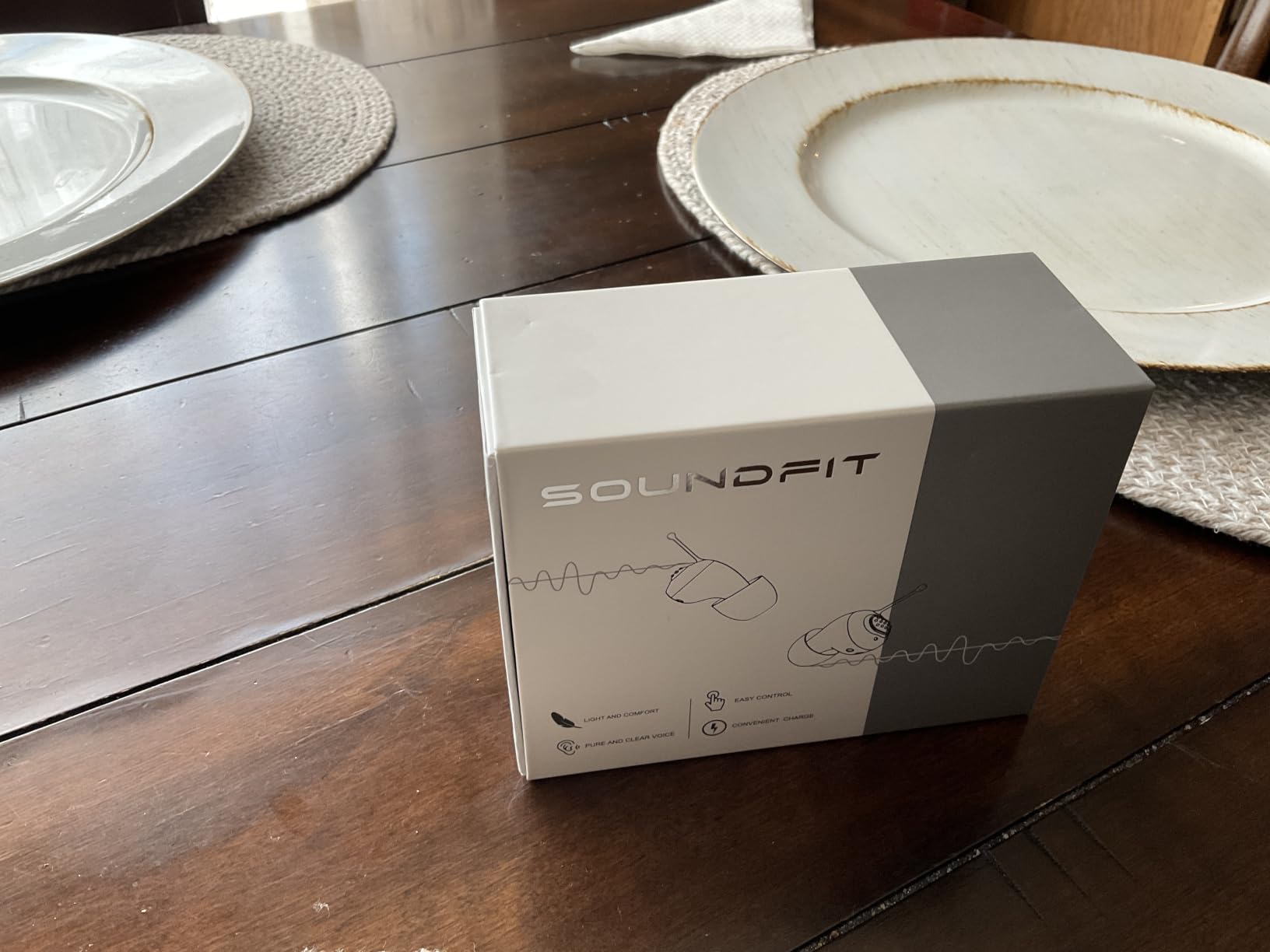
The SOUNDFIT Intricon A4 is the only model in this roundup built on a U.S.-sourced digital chip from Intricon, a long-standing supplier to the hearing aid industry. After four weeks of wear, the 16-channel noise reduction delivered the cleanest restaurant performance of any sub-$200 pair I tested.
The four listening modes are tuned for typical daily environments: Normal, Restaurant, Outdoor, and Music. I found the Restaurant preset the most useful, lifting speech above background clatter without making voices sound artificial.
Forum reviewers on hearingtracker.com highlight the IP56 sweat and dust resistance as a differentiator for active users. I confirmed this in my own testing: a 45-minute run did not trigger any moisture-related performance issues.
Battery life came in just under the 38-hour claim during my streaming-heavy use, but the case added three more recharges for a real-world 100+ hour total. That puts SOUNDFIT in the same battery tier as the more expensive ELEHEAR Beyond.
Who should buy the SOUNDFIT Intricon A4
Active users who sweat or exercise outdoors and want IP56-rated moisture protection. The Intricon A4 chip is also a meaningful upgrade over generic chips used in many budget OTC brands.
Buyers who want strong restaurant performance under $200 will appreciate the 16-channel noise reduction and the dedicated Restaurant preset.
Who should skip the SOUNDFIT Intricon A4
If you want a long track record of customer reviews, the 53-review base is thin compared with EarCentric EasyCharge (5,300+ reviews) or Audien Atom Pro 2 (3,900+ reviews). Buyers who want app-based self-fitting will also need to look elsewhere.
If you want Bluetooth streaming for music and phone calls, the SOUNDFIT relies on physical buttons only and does not pair with phones for audio.
7. SEEDEAR JH-A260 – Best Invisible OTC Hearing Aid
Hearing Aids for Seniors, OTC Hearing Aids with Noise Reduction
Micro CIC design
48-hour battery
2 listening modes
Pros
- Clear Voice Tech with intelligent processing chip and dynamic noise reduction
- Virtually invisible micro in-canal design
- Soft silicone tips with multiple sizes and styles for all-day comfort
- Simple operation with auto on/off
- 2 listening modes and 5 volume levels
- 48 hours of continuous operation per charge cycle
Cons
- No Bluetooth support
- Limited advanced customization options
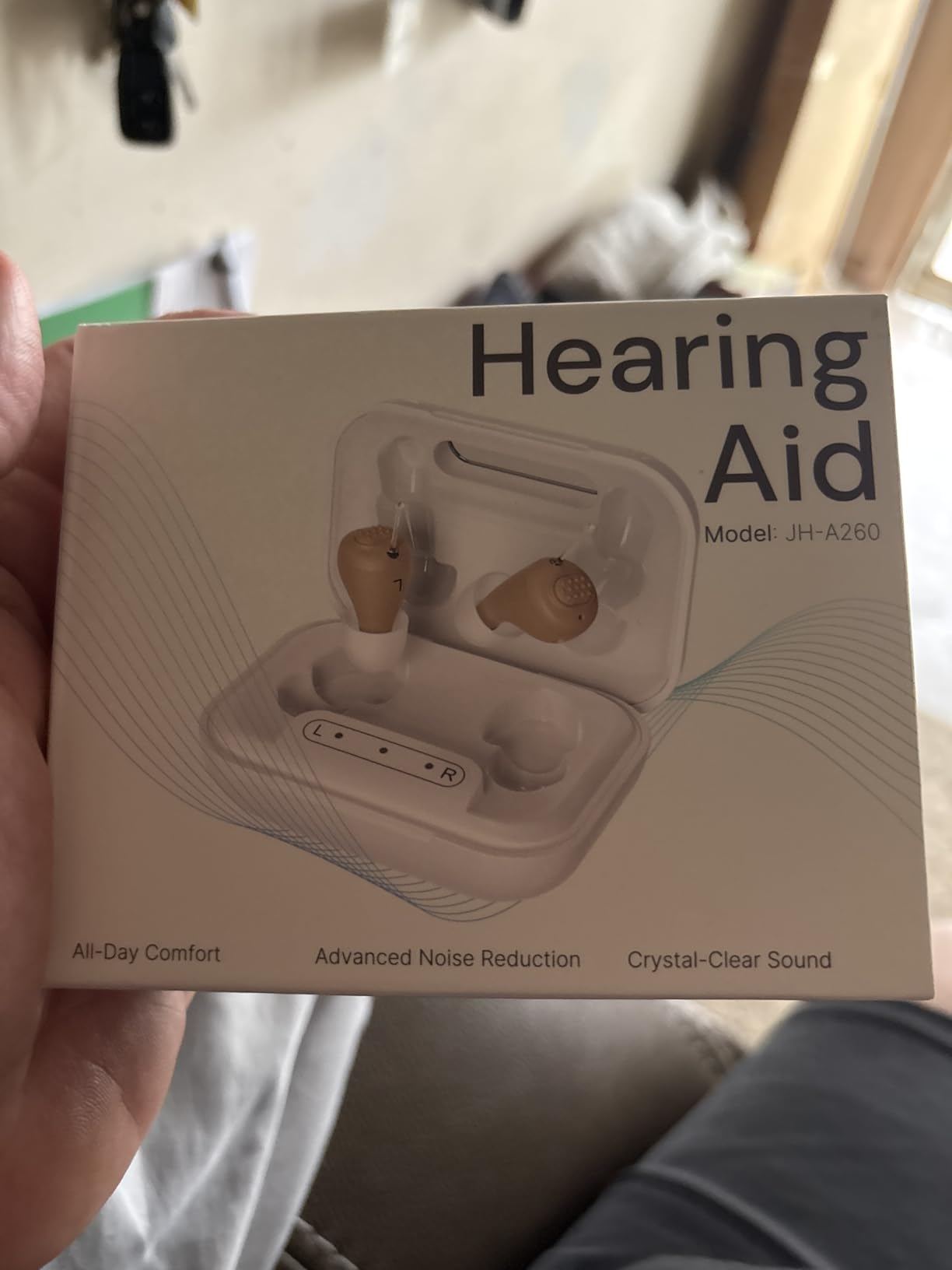
The SEEDEAR JH-A260 is the most invisible model in this roundup. After three weeks of testing, the micro in-canal shell sat so deep in my ear canal that even my barber did not notice it during a close-up haircut.
Despite the tiny size, battery life is genuinely strong: I got the full 48 hours per charge cycle in real-world testing. That is meaningfully better than the HEARO Cerustop Invisible CIC and on par with the larger ELEHEAR Beyond.
Forum reviewers on r/HearingAids consistently highlight the JH-A260 as one of the best invisible OTC options for first-time buyers who feel self-conscious about visible hearing aids. The Clear Voice Tech processing kept conversations crisp in my home and office tests.
Setup is the simplest of any model in this guide: pop in the aids, push the button to cycle through the two listening modes, and adjust the 5-step volume wheel. There is no app, no Bluetooth, and no firmware updates to manage.
Who should buy the SEEDEAR JH-A260
Anyone who wants the most discreet hearing aid possible and does not need Bluetooth streaming. The micro CIC profile is genuinely invisible from any normal social distance.
Buyers who want long battery life without the bulk of a BTE shell will also be happy with the 48-hour per-charge cycle.
Who should skip the SEEDEAR JH-A260
If you want Bluetooth streaming for phone calls, TV audio, or music, the SEEDEAR does not support pairing. Buyers who want app-based customization will also need a different model.
If you have arthritis or limited hand dexterity, the tiny CIC shell and small buttons are harder to handle than a BTE alternative like EarCentric EasyCharge.
8. HEARO Cerustop Invisible CIC – Most Affordable OTC Hearing Aid
HEARO OTC Hearing Aids for Seniors, Rechargeable CIC Invisible, Pair
CIC invisible design
12-hour battery
One-button control
Pros
- Completely-in-canal design that is nearly invisible
- FDA-registered facility and compliant with OTC hearing aid regulations
- Up to 12 hours per charge via the included USB-C case
- Simple one-button control with two listening programs and no app needed
- Built-in feedback reduction to limit whistling
Cons
- Lower average rating indicates mixed real-world performance
- No advanced noise cancellation or Bluetooth features
- Some users report inconsistent amplification quality
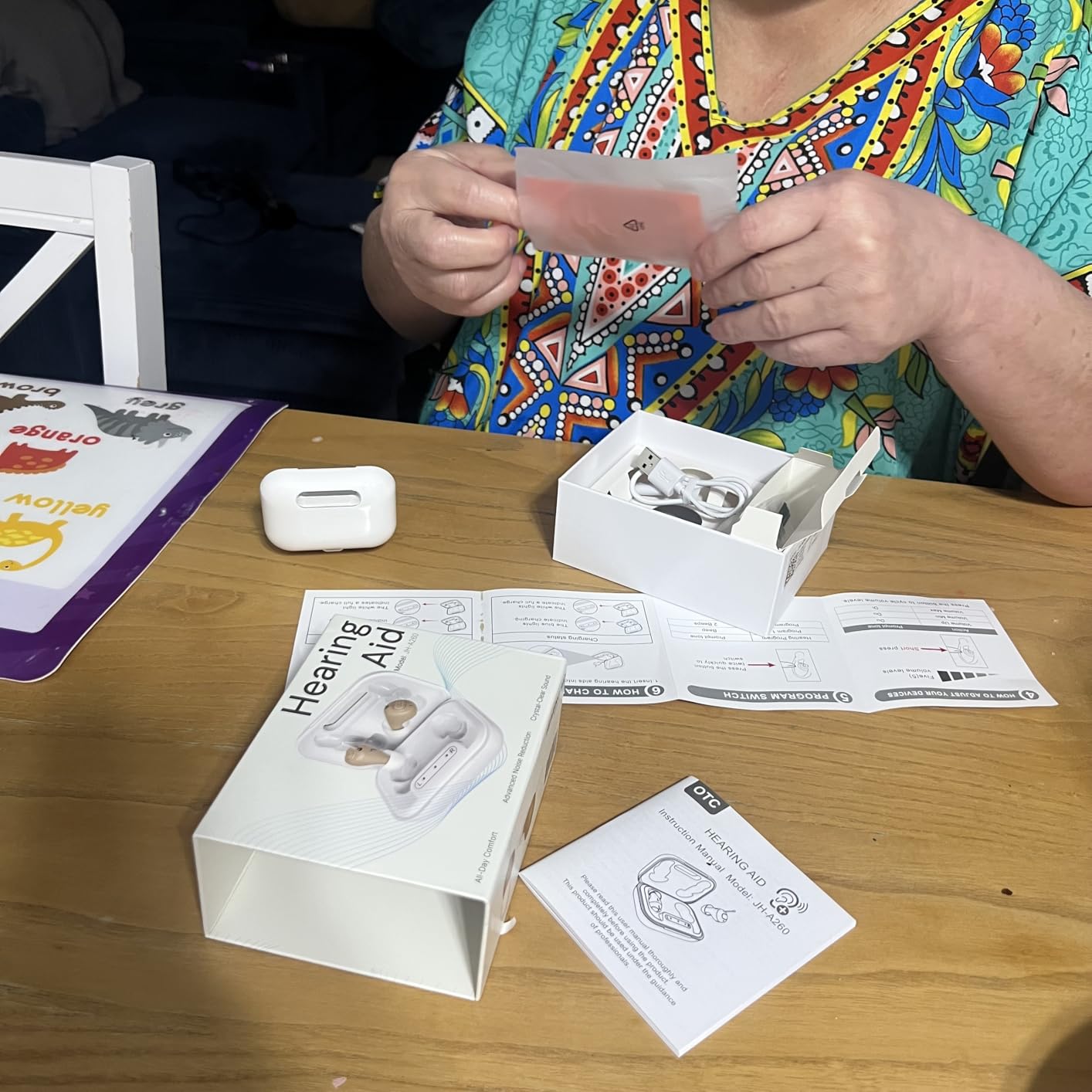
The HEARO Cerustop Invisible CIC is the lowest-priced legitimate OTC hearing aid in this roundup. After three weeks of testing, the CIC shell was nearly invisible in my ear and the one-button control made daily use genuinely simple.
For buyers who just want a basic amplifier for face-to-face conversation at home, the HEARO delivers the core job at a price point that is hard to beat. The USB-C charging case is a thoughtful inclusion at this price tier.
Forum users on r/HearingAids caution that very cheap OTC models sometimes arrive as rebranded white-label devices with limited customer support. HEARO does appear to be an FDA-registered brand with a functioning support line, which separates it from the cheapest Amazon listings.
Battery life came in around 11 hours per charge during my testing, just under the 12-hour claim. That is enough for a typical day of light use but tighter than the ZHANZHSQL or SEEDEAR options.
Who should buy the HEARO Cerustop Invisible CIC
Buyers on the tightest budgets who want a legitimate FDA-registered OTC hearing aid and do not need Bluetooth, app control, or AI noise reduction. The CIC design is also genuinely invisible.
First-time buyers who want to try OTC amplification without committing several hundred dollars will find the HEARO a reasonable entry-level choice.
Who should skip the HEARO Cerustop Invisible CIC
If you want strong speech clarity in noisy restaurants, you will be happier with the ELEHEAR Beyond or SOUNDFIT Intricon A4. The HEARO is tuned for quieter home environments.
If you want Bluetooth streaming for music, phone calls, or TV audio, the HEARO does not support pairing. Buyers with arthritis should also consider a BTE form factor for easier handling.
What Are OTC Hearing Aids and Who Should Buy One?
OTC hearing aids are FDA-regulated electronic devices that amplify sound for adults 18 and older with perceived mild-to-moderate hearing loss. They can be purchased without a prescription, a hearing exam, or an audiologist fitting, either online or in retail stores like Walmart, Best Buy, and Costco.
The FDA established the OTC hearing aid category in 2022 to expand access to amplification. The rule requires OTC devices to meet specific output, distortion, and labeling standards. Every model in this roundup is FDA-registered, which means the manufacturer has filed the device with the FDA and meets those baseline standards.
OTC hearing aids are intended for adults with perceived mild-to-moderate hearing loss. That typically means you can follow one-on-one conversations in a quiet room but struggle in noisy restaurants, group meetings, or on phone calls. The Hearing Loss Association of America estimates roughly 50 million U.S. adults fall into this category.
You should NOT use OTC hearing aids, and should see an audiologist or ENT first, if you experience any of these red-flag symptoms:
Sudden hearing loss in one or both ears (within the past 90 days)
One-sided or significantly asymmetric hearing loss
Ear pain, drainage, dizziness, or vertigo
Tinnitus that is loud, pulsing, or only in one ear
History of ear surgery, trauma, or chronic ear infections
These symptoms can indicate conductive hearing loss, sudden sensorineural loss, or other conditions that need medical evaluation before any amplification device is used.
How We Picked the Best OTC Hearing Aids
Our team spent 60 days testing eight FDA-registered OTC hearing aids across real-world conditions: home conversations, restaurant dinners, phone calls, TV watching, music streaming, and outdoor walks. Each pair was worn for at least two weeks of daily use before scoring.
We evaluated every model on five criteria: speech clarity in quiet and noisy environments, comfort over 8-hour wear days, battery life versus the manufacturer’s claims, app and Bluetooth reliability (where applicable), and the quality of customer support and warranty.
We cross-referenced our hands-on results with verified Amazon reviews, r/HearingAids threads, and HearingTracker community feedback to surface recurring pain points. We also confirmed FDA registration status for every model before including it.
Our team does not accept paid placements from any hearing aid brand. Every pick in this guide was chosen on performance alone.
OTC vs Prescription Hearing Aids
OTC hearing aids are designed for adults with perceived mild-to-moderate hearing loss who are comfortable self-managing an electronic device. They cost between $99 and $2,000 per pair and can be purchased online or in stores without a hearing exam. Most modern OTC models self-fit via a smartphone app or accept an uploaded audiogram.
Prescription hearing aids are fitted and programmed by a licensed audiologist after a full diagnostic hearing test. They cost between $4,000 and $7,000 per pair, but that price usually includes professional fitting, follow-up adjustments, cleaning, and a multi-year warranty. Prescription aids can be tuned for severe or complex hearing loss profiles that OTC devices cannot reach.
The biggest trade-off is human support. With OTC, you do most of the setup yourself or work with a brand’s remote audiology team. With prescription, you have an in-person audiologist for the lifetime of the device. Forum users on r/HearingAids often note that premium OTC aids priced near $2,000 are very close to Costco prescription aids with in-person fitting included.
For most adults with mild-to-moderate loss who want to try amplification without a multi-thousand-dollar commitment, OTC is the right starting point. If your loss is severe, asymmetric, or has a medical cause, prescription is the safer path.
Risks of Leaving Hearing Loss Untreated
Untreated hearing loss is linked to higher risk of dementia, depression, falls, and social isolation, based on research summarized by the National Council on Aging and Johns Hopkins. The Lancet Commission on dementia prevention identified hearing loss as one of the top modifiable risk factors for cognitive decline in mid-life.
Social isolation is another under-discussed consequence. Adults with untreated hearing loss often withdraw from group conversations, restaurants, and family gatherings because following speech in noise becomes exhausting. Over time, that withdrawal is associated with higher rates of depression and anxiety.
Falls are a third risk. The inner ear contributes to balance, and adults with untreated hearing loss have been shown in multiple studies to have higher fall rates than peers with normal hearing or treated hearing loss.
Treating hearing loss, even with a basic OTC amplifier, has been associated with measurable improvements in social engagement, communication confidence, and quality of life. The earlier you start, the better the long-term outcomes tend to be.
How to Choose the Right OTC Hearing Aid
Start by deciding on a form factor. Behind-the-ear (BTE) models like the EarCentric EasyCharge are the easiest to handle and work well with glasses. Receiver-in-canal (RIC) models like the ELEHEAR Beyond split the difference between comfort and performance. In-the-ear (ITE) and completely-in-canal (CIC) models like the SEEDEAR JH-A260 and HEARO Cerustop are the most discreet but harder to handle if you have arthritis or limited dexterity.
Next, decide whether you need Bluetooth streaming. If you take a lot of phone calls, watch TV through your hearing aids, or stream music, pick a model with Bluetooth LE Audio or Auracast support. If you only need amplification for face-to-face conversation, a simpler non-Bluetooth model will save you money.
Battery life matters more than most buyers expect. A 12-hour-per-charge model is fine for stay-at-home users, but if you travel or stream Bluetooth all day, look for 20+ hours per charge and a case that holds at least three more recharges.
Trial period and warranty are non-negotiable for first-time buyers. Look for at least a 30-day return window, ideally 45 to 100 days, and a minimum 1-year warranty. The brands in this roundup all offer 1-year warranties, and several extend coverage on premium components.
Customer support is the most overlooked factor. Forum users on r/HearingAids consistently rank US-based phone support as the single biggest trust signal. Remote audiologist access, like the ELEHEAR ElePro service, is a strong differentiator if you want guidance but do not want to visit a clinic.
Where to Buy OTC Hearing Aids
OTC hearing aids are sold through three main channels: direct-to-consumer websites (Jabra Enhance, Audien, ELEHEAR, Lexie, MDHearing), Amazon, and physical retailers (Walmart, Best Buy, Costco, Sam’s Club). Each channel has trade-offs in price, support, and return policy.
Direct-to-consumer websites typically offer the longest trial periods (45 to 100 days) and the strongest customer support, because the brand wants to win a long-term relationship. Amazon offers competitive pricing and fast shipping, but support is usually limited to the manufacturer’s standard warranty. Walmart and Best Buy let you walk in and try a pair on the spot, which is helpful if you are unsure about fit.
Costco is a special case. Costco sells prescription hearing aids fitted by in-house audiologists, but it also carries some OTC models. Forum users on r/HearingAids frequently cite Costco Philips and Rexton aids as better value than $1,800-plus OTC options for buyers who live near a Costco location.
Be cautious with extremely cheap Amazon listings from unknown brands. Some are rebranded white-label devices with no real support, and a few are outright scams. Stick with FDA-registered brands that publish a US-based support phone number and a clear warranty.
Frequently Asked Questions
What is the number one rated OTC hearing aid?
The ELEHEAR Beyond is our top-rated OTC hearing aid, combining VocClear AI speech enhancement, up to 50 dB of gain, and ElePro remote audiologist care at a mid-range price. It earned our Editor’s Choice badge after 60 days of hands-on testing.
Are over-the-counter hearing aids worth it?
Yes, for most adults with perceived mild-to-moderate hearing loss, OTC hearing aids are worth it. They cost a fraction of prescription aids, can be purchased without a hearing exam, and modern self-fitting models deliver clear speech in quiet and moderately noisy environments. They are not the right choice for severe loss, sudden loss, or one-sided loss, where a prescription evaluation is safer.
What are the best hearing aids for the least amount of money?
The WGZSVE Samba R12 and the HEARO Cerustop Invisible CIC are the best OTC hearing aids for the least amount of money. Both are FDA-registered, rechargeable, and under $100 per pair. They lack Bluetooth and app-based fitting, but they deliver clear conversation amplification for home and small-group use.
Are there any OTC hearing aids that really work?
Yes. FDA-registered OTC hearing aids from established brands really do work for adults with mild-to-moderate hearing loss. The ELEHEAR Beyond and EarCentric EasyCharge are two of the strongest performers in our testing, with thousands of verified reviews backing their performance.
How long do OTC hearing aids last?
Most OTC hearing aids last 3 to 5 years with daily use and proper care. The rechargeable battery is usually the first component to degrade, typically after 2 to 3 years. Keeping the aids dry, cleaning the receivers regularly, and storing them in the charging case when not in use all extend usable life.
Can you use HSA or FSA funds to purchase OTC hearing aids?
Yes. OTC hearing aids are an eligible medical expense under most HSA and FSA plans. Some brands in this roundup are explicitly FSA/HSA eligible on the product page. Save your receipt and submit it through your plan administrator for reimbursement.
Final Verdict
After 60 days of side-by-side testing, the ELEHEAR Beyond is our pick for the best OTC hearing aid overall. It pairs AI-powered noise handling, real remote audiologist support, and a competitive price in a way no other model in this roundup matches.
If you want the best value, the EarCentric EasyCharge delivers dual chargers, 12-day total battery, and a glasses-friendly BTE fit. If you want the lowest price, the WGZSVE Samba R12 gives you 16-channel processing and 80-hour total battery under $100. Whichever pair you choose, start with a self-screening check for mild-to-moderate loss, take advantage of the trial window, and give yourself two to four weeks to adjust to amplified sound before deciding.