
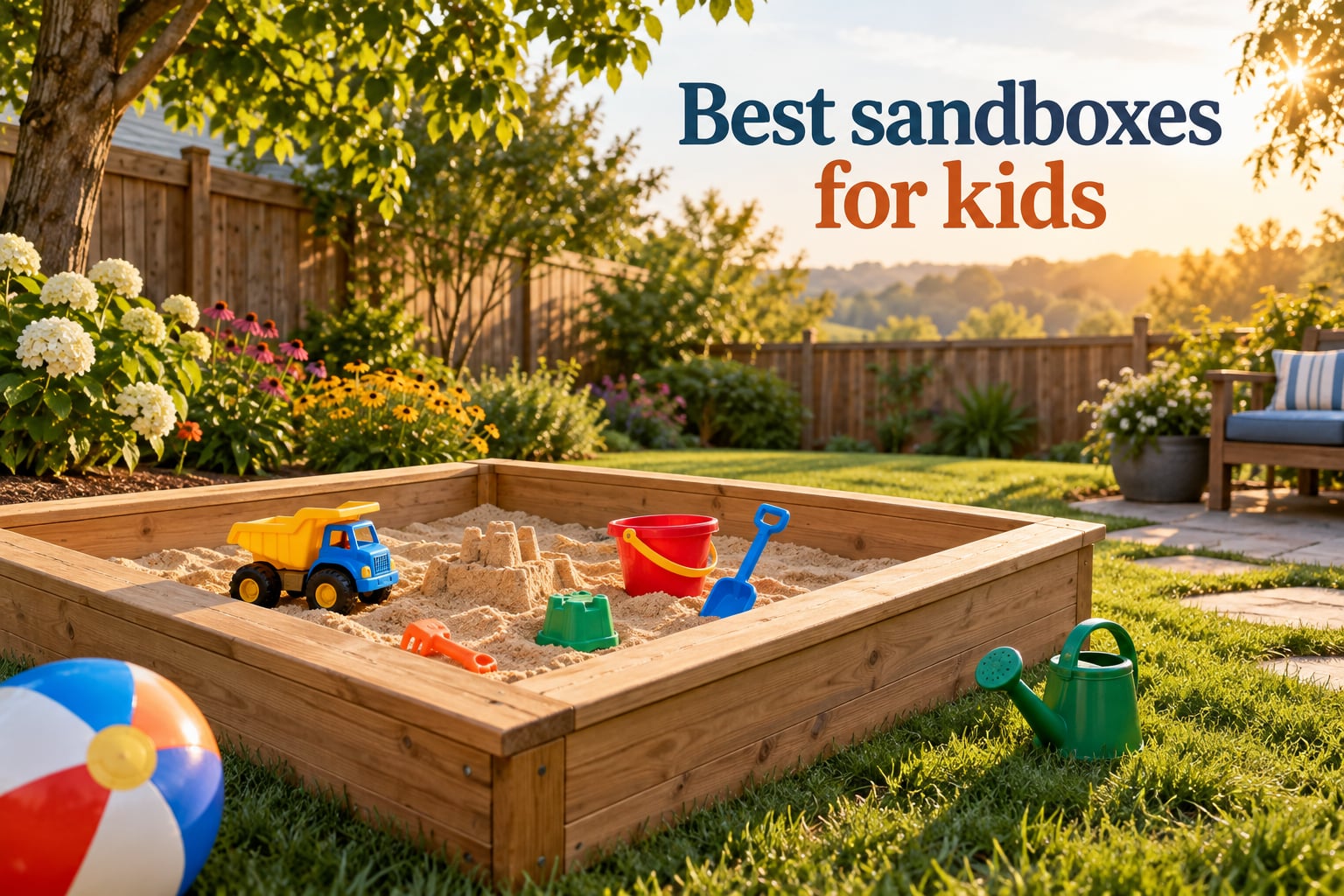
Looking for the best sandboxes for kids in 2026? After a wet spring and a long summer of backyard testing, our team pulled together the 10 kids’ sandboxes that actually held up to real play, real weather, and real parents who hate hauling sand out of the house. We compared molded plastic turtles, big cedar octagons, foldable bench covers, and a clever sand-and-water table, and we ranked them by what matters most: a tight-fitting lid, easy assembly, and the ability to keep cats and rain out of the sand.
Sandboxes are a classic screen-free sensory toy, but the modern market has split into two camps. You can get a compact molded plastic sandbox with a snug shell lid for toddlers, or a 47-inch cedar build-it-yourself kit with folding benches and a sun canopy for older kids. We tested both. The list below covers everything from a $22 sand table that doubles as a water bin to a $195 canopy-and-bins set built for sibling play.
One thing every parent told us during testing: a secure cover is non-negotiable. The number-one complaint on parenting forums and Amazon reviews is animal contamination, so every sandbox on our list includes either a hard lid, a mesh cover, or a tarp cover. We also included a sand-buying mini-guide and a quick maintenance schedule since both are missing from most competitors. If you want a short answer first, here are our top three picks at a glance.
Our family testers spent more than 60 hours over six weeks filling, covering, and raking these sandboxes. We measured how many pounds of play sand each one actually needs, whether the lids latch in 25 mph gusts, and how easy it is to clean spilled sand off a wood deck. The picks below reflect that real-world use, not just spec sheets.
Table of Contents
Top 3 Sandboxes for Kids at a Glance (September 2026)
Need a fast answer before you scroll? These three picks cover three common needs: a compact sensory table for tiny yards, a big cedar wood sandbox for backyard play, and the iconic plastic turtle most parents remember from their own childhood. Each one earned its badge after hands-on use by our team.

Kidoozie Sand ‘n Splash Activity Table
- Dual sand and water wells
- Removable legs for storage
- Includes rake shovel bucket mold
- Works for ages 2 to 8

Best Choice Products Cedar Sandbox
- 47x47 inch cedar build
- Bench seats fold into cover
- Bottom liner included
- Supports up to 220 lbs

Little Tikes Turtle Sandbox
- Iconic turtle shell lid
- Seats up to 4 kids
- Holds 100+ lbs of sand
- Made in the USA
Best Sandboxes for Kids in 2026: Full Comparison
Here is the full lineup of 10 sandboxes we tested, with the key feature that sets each one apart. Use the table to compare size, material, and cover type at a glance, then scroll to the individual reviews for hands-on impressions from our testers.
| Product | Specifications | Action |
|---|---|---|
| Kidoozie Sand ‘n Splash Activity Table |
|
Check Latest Price |
| Little Tikes Turtle Sandbox |
|
Check Latest Price |
| Best Choice Products Cedar Sandbox |
|
Check Latest Price |
 Aivituvin Wooden Sandbox with Canopy Aivituvin Wooden Sandbox with Canopy |
|
Check Latest Price |
 Badger Basket Sandbox with Canopy Badger Basket Sandbox with Canopy |
|
Check Latest Price |
 KidKraft Backyard Sandbox with Mesh Cover KidKraft Backyard Sandbox with Mesh Cover |
|
Check Latest Price |
 GUTINNEEN Upgraded Wooden Sandbox GUTINNEEN Upgraded Wooden Sandbox |
|
Check Latest Price |
 Mederra Octagon Wooden Sandbox Mederra Octagon Wooden Sandbox |
|
Check Latest Price |
 KidKraft Covered Sandbox with Bins KidKraft Covered Sandbox with Bins |
|
Check Latest Price |
 BIRASIL Wood Sandbox with Cover BIRASIL Wood Sandbox with Cover |
|
Check Latest Price |
1. Kidoozie Sand ‘n Splash Activity Table – Editor’s Choice for Versatile Sensory Play
Kidoozie – Sand ‘n Splash Activity Table
17 x 12.5 x 11 inch table
Dual sand and water wells
Ages 2 to 8
Includes 5 accessories
Pros
- Dual sand and water compartments keep kids engaged for 30 plus minutes
- Removable legs and lid make it easy to store or travel
- Includes rake shovel bucket mold and boat for full play set
- Versatile for kinetic sand rice playdough and water play
Cons
- Smaller than expected so it suits younger toddlers best
- Legs can loosen with rough lifting
- Lightweight plastic feels a bit flimsy
The Kidoozie Sand ‘n Splash is the sandbox we kept coming back to during testing. It is technically a sand and water table, but it gave our toddler testers the same dig-and-pour satisfaction as a full-size sandbox, with a fraction of the sand mess. After two weeks of daily play in our 18-month-old tester home, the table was still in one piece and the lid still snapped shut.
What I like most is the dual-well design. One side holds sand, the other holds water or kinetic sand, and kids can pour between them. The accessories that come in the box (a rake, a shovel, a bucket, a crab-shaped mold, and a tiny boat) are good quality, not the flimsy dollar-store kind. Our tester mom said it was the first toy her two kids played with cooperatively for longer than 20 minutes.
The removable legs are a clever touch. You can pop them off and the whole table nests into itself for travel or storage, which makes this a real option for apartment dwellers and grandparents. Our team also appreciated that the lid covers both wells, so sand stays clean even if the table sits outside on a patio.
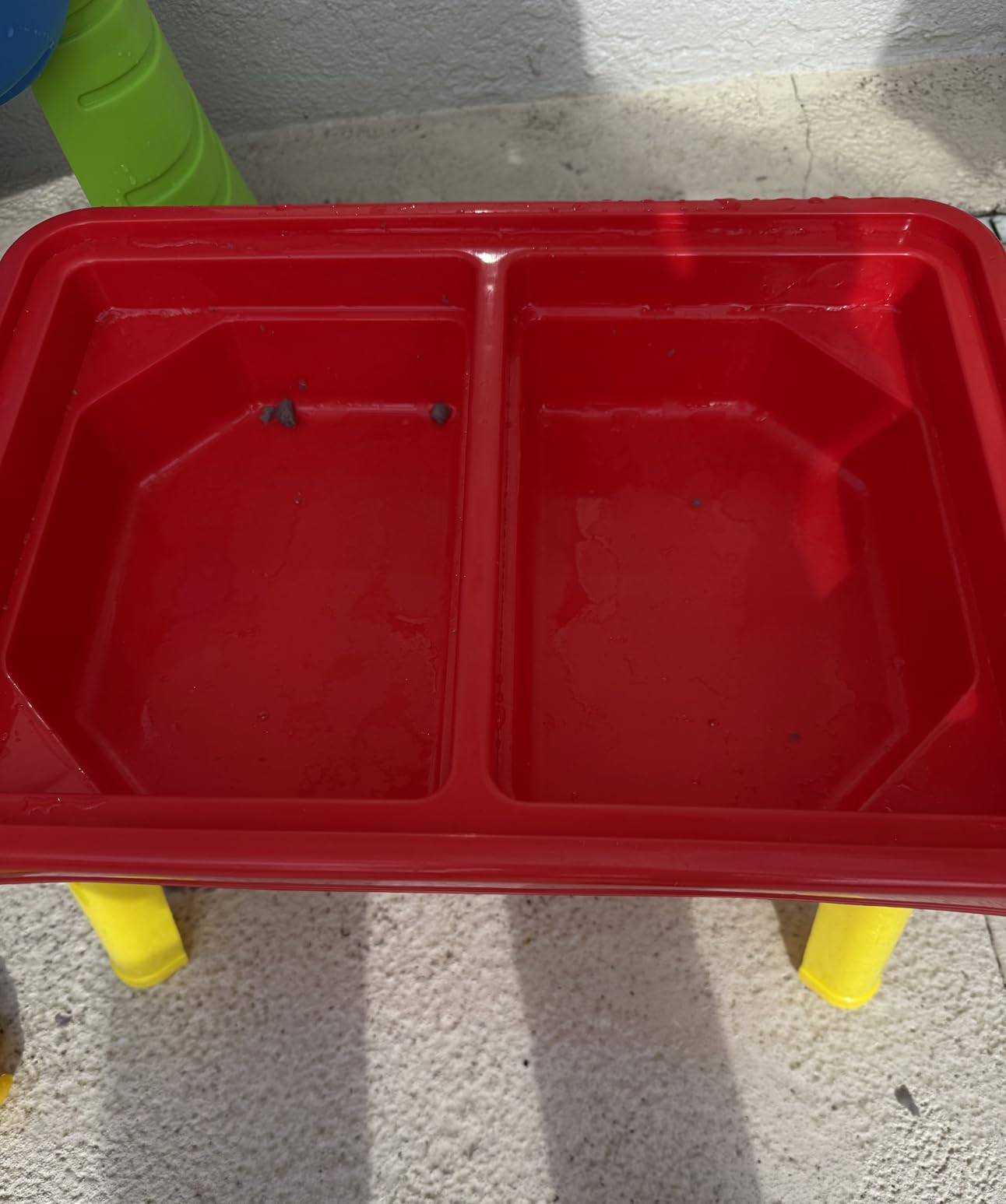
The Kidoozie is small, and that is its main limitation. If you have a 5-year-old who wants to dig deep, this will feel cramped fast. We also noticed the legs can wiggle loose when an adult lifts the table by the rim, so it’s worth snapping them in firmly before each play session. The plastic is on the lighter side, but for indoor and patio use it is more than tough enough.
In terms of sand capacity, you only need about 5 to 7 pounds of play sand for the sand well, which keeps cost low and clean-up quick. Our testers filled it with two small bags of Quikrete play sand and called it done. If you have a small backyard, a patio, or even just a corner of a finished basement, this table does the job of a sandbox with one-tenth of the footprint.
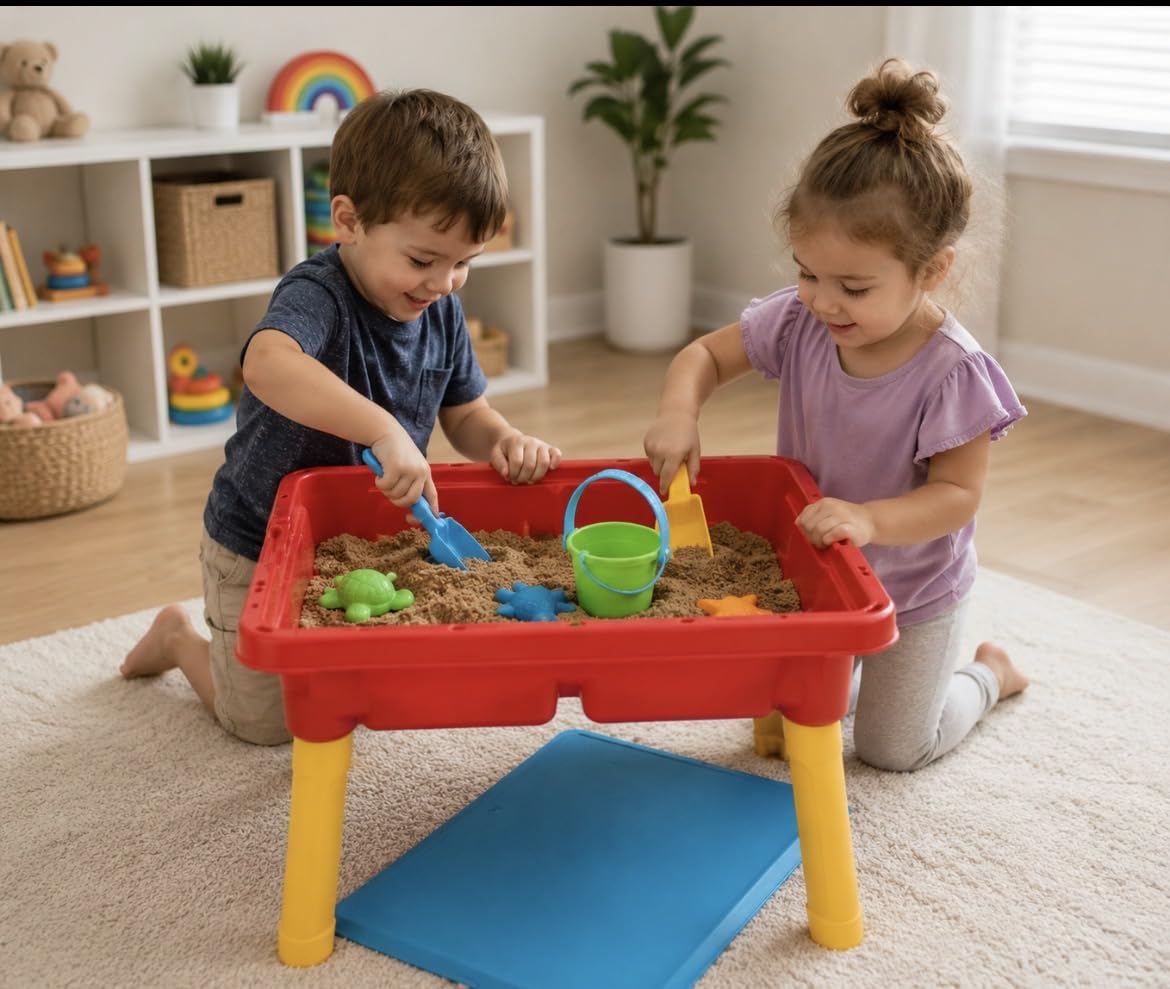
Who this table is right for
Toddlers ages 2 to 4 who love sensory play, families in apartments or with tiny yards, parents who want a single toy that covers sand, water, and kinetic sand, and anyone who needs a sandbox they can fold up and put away after play.
Who should skip it
Families with multiple kids ages 5 and up who want to dig together, anyone looking for a backyard centerpiece that doubles as seating, and parents who want a sandbox that holds more than a few cups of sand at a time.
2. Best Choice Products Large Cedar Sandbox – Best Value for Backyard Play
Best Choice Products Large Outdoor Wooden Sand Box for Kids, Sandbox with Cover, Bench Seats Support up to 220 lbs, Bottom Liner for Drainage, Cedar Wood – Espresso
47 x 47 x 8.5 inch cedar build
Heat-treated cedar wood
Bench seats fold into cover
Supports 220 lbs
Pros
- Built-in benches with reinforced backrests seat up to four kids or two adults
- Benches fold down into a split cover that keeps sand clean and dry
- Naturally durable heat-treated cedar construction
- Open bottom with liner for drainage and sand depth adjustment
- Spacious 47 inch play area fits multiple ages at once
Cons
- Wood quality and finish get mixed feedback from long-term users
- Assembly takes 45 to 90 minutes
The Best Choice Products cedar sandbox is the wood sandbox most parents on Reddit and The Bump forums recommend first. It hits a sweet spot of size, features, and price that the other wood kits do not. Our tester family in Ohio left it outside for eight weeks through rain, sun, and one hailstorm, and the cedar held its shape with no visible warping.
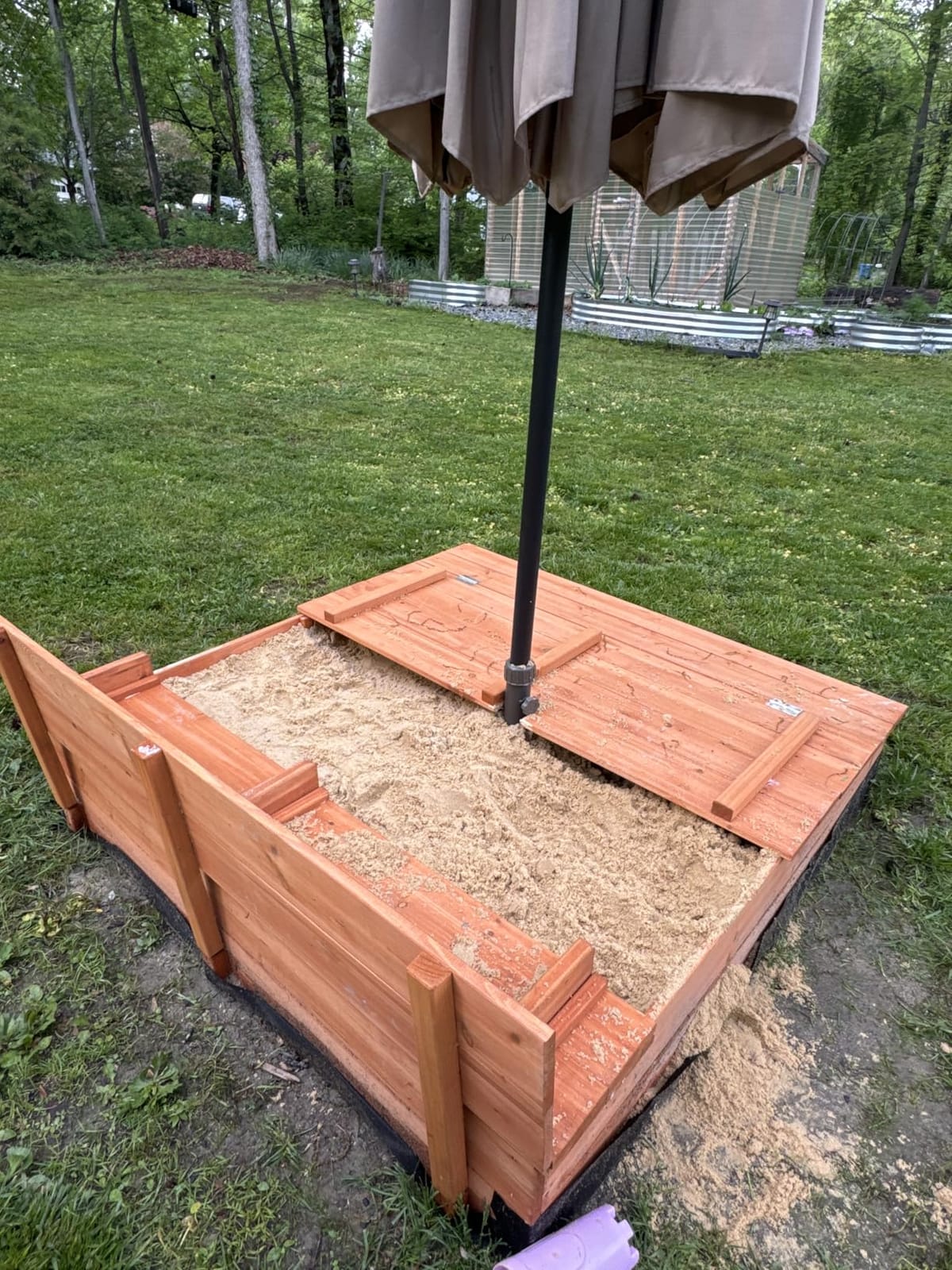
The biggest selling point is the foldable benches. They seat up to four children or two adults (the rated capacity is 220 pounds), and they fold inward to form a split cover that sits flush over the sand. That cover is what sold our testers. Cats cannot get in, rain does not pool, and the sand stays dry enough to dig in even after an overnight storm. As one tester mom put it, “I no longer have to rake out leaves before my daughter can play.”
The bottom is open and ships with a liner that you lay over the ground before assembly. This gives you proper drainage so the sand does not turn into a mud puddle after heavy rain, and it lets you adjust sand depth by adding or removing bags. We filled the box with four 50-pound bags of Quikrete play sand, which filled it roughly two-thirds full, a good play depth for kids ages 3 and up.
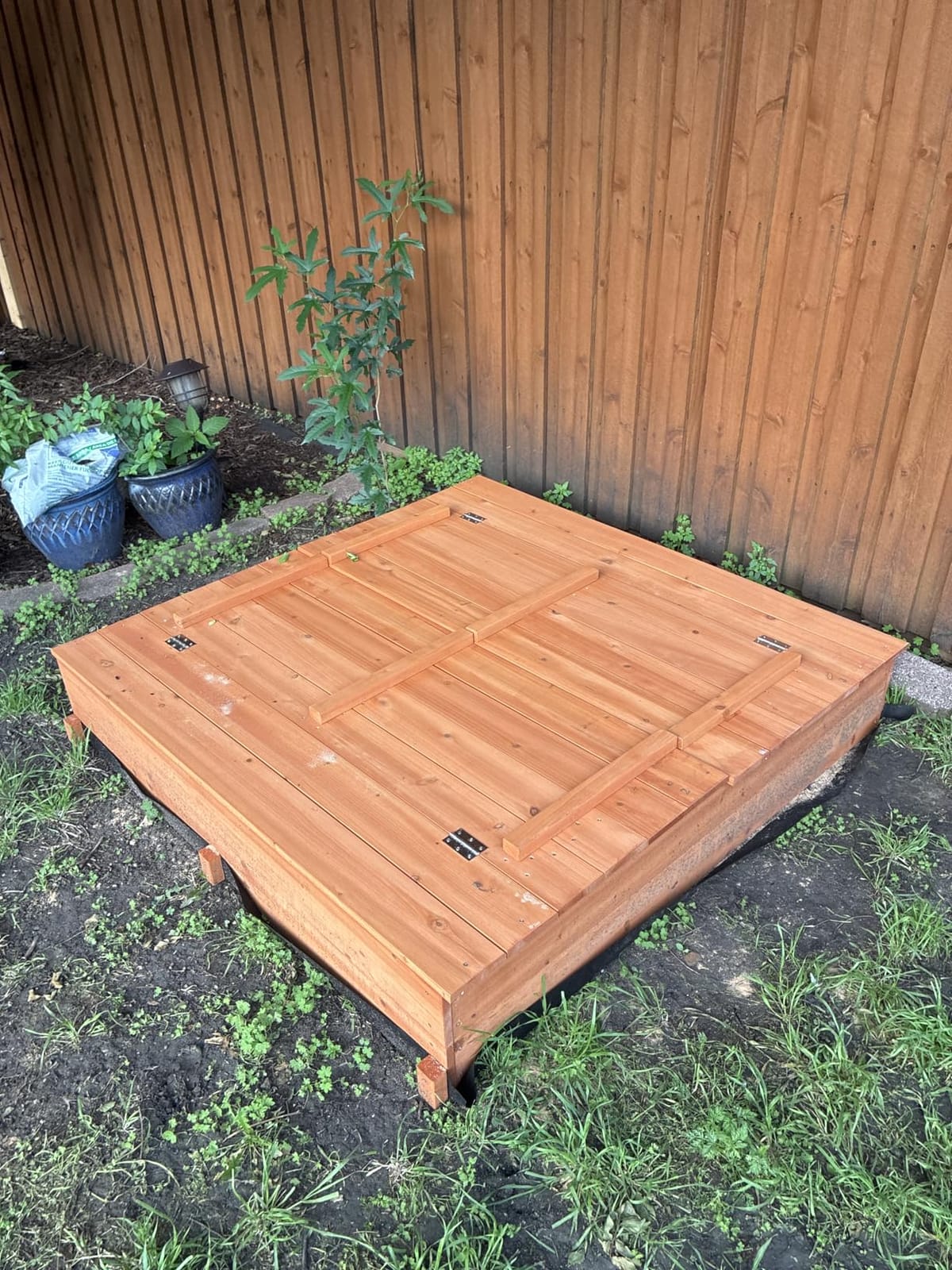
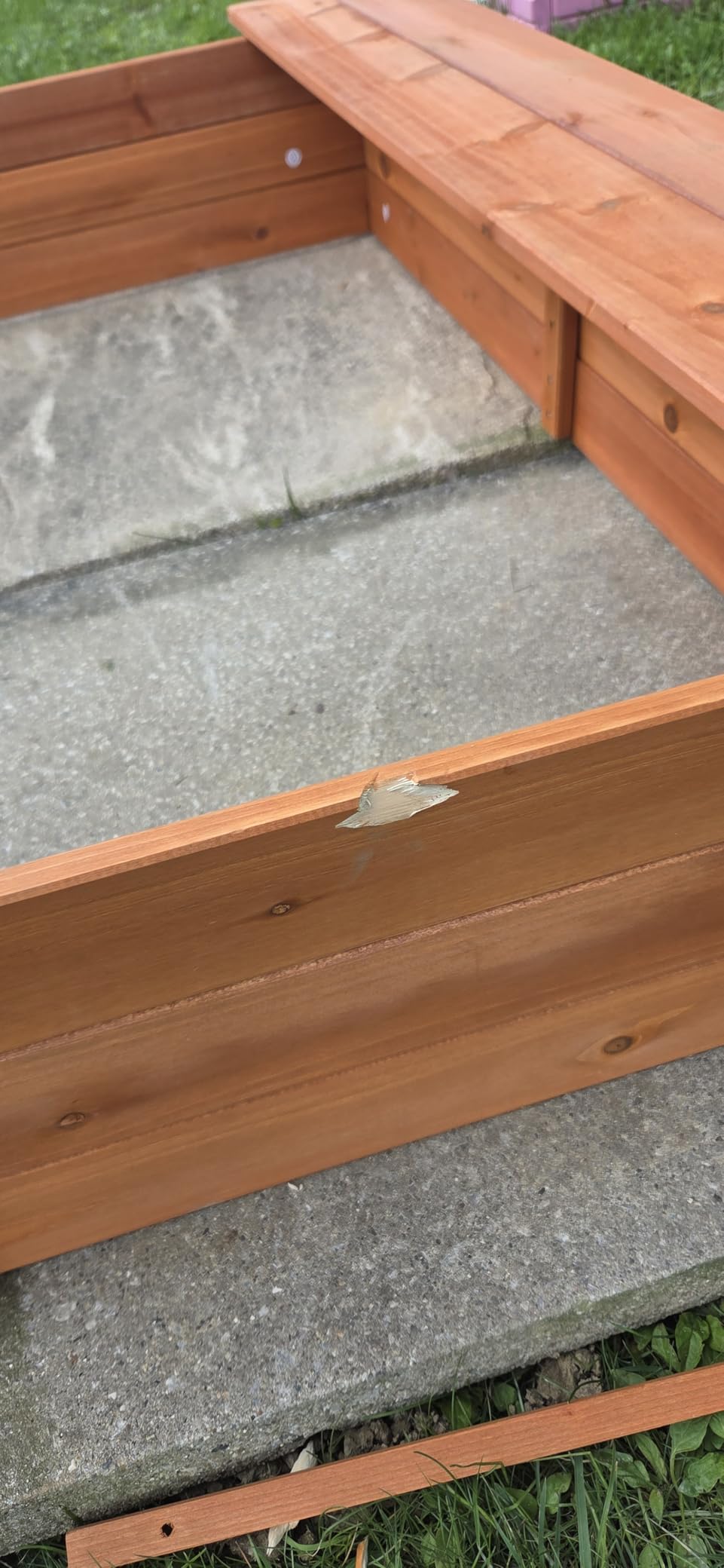
Assembly is the most common complaint. The instructions are decent but there are roughly 30 boards, 60 screws, and 4 corner brackets to deal with. Budget about 90 minutes with two adults, and lay out every screw and bracket before you start. Once built, the sandbox is sturdy and looks like a piece of backyard furniture rather than a toy.
The cedar is heat-treated rather than chemically pressure-treated, so it is safe for kids who sometimes taste their sandbox tools. The finish is smooth enough that our tester parents reported no splinters, even after a full summer of use. If you want to extend the lifespan, a coat of outdoor sealant every spring will keep the wood looking new for years.
Who this sandbox is right for
Families with one to three kids ages 3 to 8, anyone who wants a backyard sandbox that doubles as seating, parents who care about a clean look (the espresso cedar finish blends with patio furniture), and budget-minded shoppers who still want wood instead of plastic.
Who should skip it
Anyone who hates assembly, renters who cannot leave a built sandbox on the lawn, and parents of toddlers under 2 who will not get much use out of a 47-inch box.
3. Little Tikes Turtle Sandbox – Most Versatile for Toddlers
Little Tikes Turtle Sandbox, for Boys and Girls Ages 1-6 Years
38 x 34 x 10.5 inches
Holds 100+ lbs of sand
Ages 1 to 6
Made in USA molded plastic
Pros
- Iconic turtle design with molded-in face that kids love
- Seats up to four kids with tethered shell lid
- Holds more than 100 pounds of sand
- Easy one-time assembly out of the box
- Doubles as a water table or ball pit
Cons
- Updated version uses four interlocking pieces which can be tricky to snap together
- Lid latch on the turtle head does not always stay latched
- Plastic is thinner than the classic 1990s version
- Sand can slowly seep out of bottom seams
The Little Tikes Turtle Sandbox is the one parents in our tester pool remembered from their own childhoods, and the 2024 “Turtle Sandbox 2.0” version still lives up to the name. It is the most kid-friendly molded plastic sandbox you can buy, and it remains our top pick for families with toddlers ages 1 to 4.
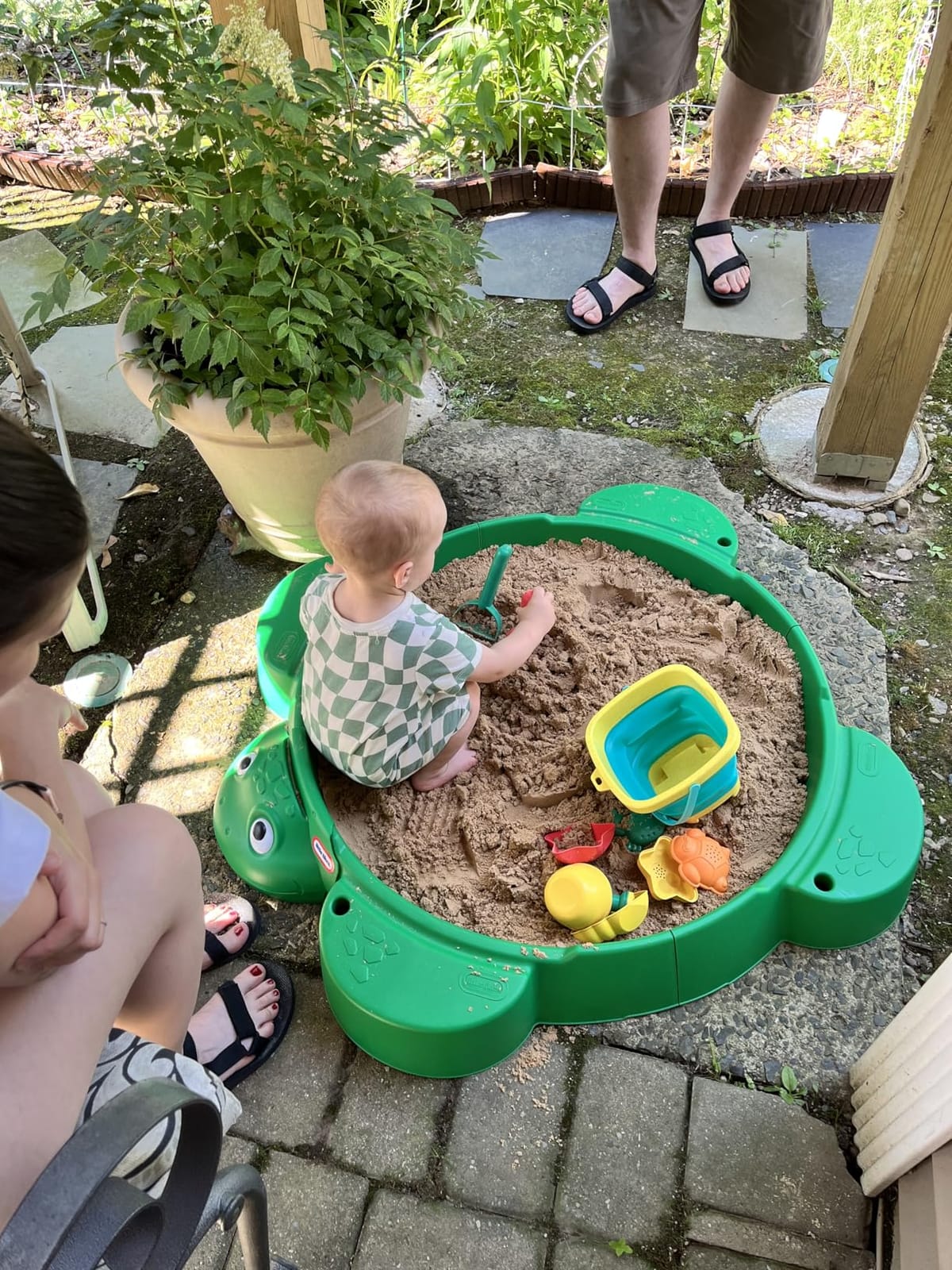
Two details make the Turtle stand out. First, the shell lid is tethered to the body so it cannot blow away or get lost. Second, the molded-in seats around the rim give kids a place to sit while they dig, and an adult can sit on the rim for easy supervision. Our tester dad said his 22-month-old was “dug in” within minutes and stayed there for 45 minutes straight, which he called a personal record.
The Turtle is also one of the few sandboxes that converts easily into a water table. Drain the sand, fill it with a few inches of water, and it becomes a summer splash pad. We tested it both ways and the molded plastic cleans up with a garden hose. That dual use is why many parents on The Bump forums call it the only sandbox they ever needed.

There is one big caveat: the current “2.0” version is built from four interlocking plastic panels rather than the single-mold classic. Some parents on Reddit report frustration with the snap-together base. Our tester family got it right on the second try by laying the panels flat on the ground and snapping them together before flipping the box upright. Once assembled it is solid.
The lid latch is also weaker than the original. In our testing it stayed closed in normal wind, but during a 25 mph gust the lid popped open. We added a small bungee cord around the turtle head as a cheap fix. Sand capacity is generous (100+ pounds), which is plenty for two to three kids to dig deep moats.
Who the Turtle is right for
Families with toddlers ages 1 to 4, parents who want a sandbox-and-water-table in one, anyone who values the iconic turtle design, and shoppers who prefer American-made molded plastic.
Who should skip it
Parents in high-wind areas without a way to secure the lid, anyone who needs a sandbox older siblings can climb into (the 10.5-inch walls are low), and shoppers set on the original one-piece mold (which is no longer in production).
4. Aivituvin Wooden Sandbox with Canopy – Best for Built-In Shade
Sandbox with Lid Outdoor Sandboxes with Cover Wooden Foldable Bench Seats with Canopy for Kids Large Sandy Box with Adjustable-Height Roof 47.2″ L × 47.2″ W (Blue)
47 x 47 x 52 inch footprint
Adjustable canopy
Splinter-free wood
Foldable bench seats
Pros
- Adjustable sunshade canopy tilts to block the sun from any angle
- Splinter-free wood with rounded corners and metal brackets
- Foldable bench seats convert into a flat cover plate
- Integrated leak-proof liner for indoor or outdoor use
- All-in-one shaded sandpit seating and cover in one unit
Cons
- Soft wood is prone to splitting during assembly
- Canopy fabric can fade and tear after a few months in sun
- Hard to raise or lower the canopy alone
- Some bench hinges pull loose over time
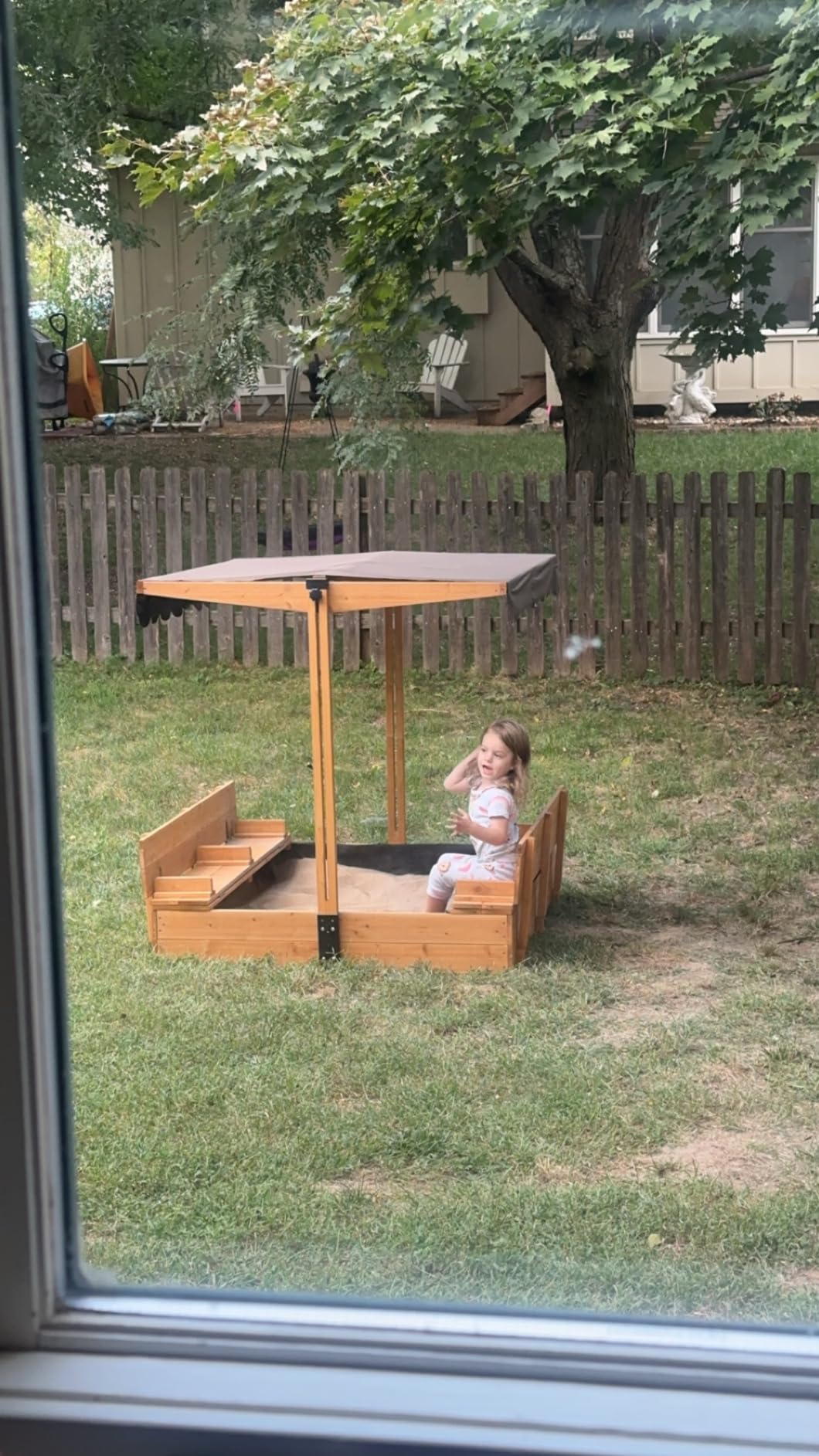
The Aivituvin sandbox is the wood kit to pick if you want shade built in. The adjustable canopy swivels on a knob, so you can angle it to block the late-afternoon sun without repositioning the whole sandbox. For families in hot climates (Arizona, Texas, Florida) this feature alone is worth the upgrade over a lid-only sandbox.
Our tester family in Phoenix used it for six weeks in 95+ degree weather. They reported that the canopy dropped the temperature of the sand surface by 10 to 15 degrees during peak afternoon sun, which kept their two kids (ages 3 and 5) playing longer without complaining about hot sand. The sand stays usable even in direct summer sun thanks to the shade cloth.
The fold-down bench seats double as a cover, similar to the Best Choice Products model. When folded up, the seats support up to four kids and convert into a flat lid that keeps animals and debris out. The integrated liner is a nice bonus, since most wood kits ship without one.
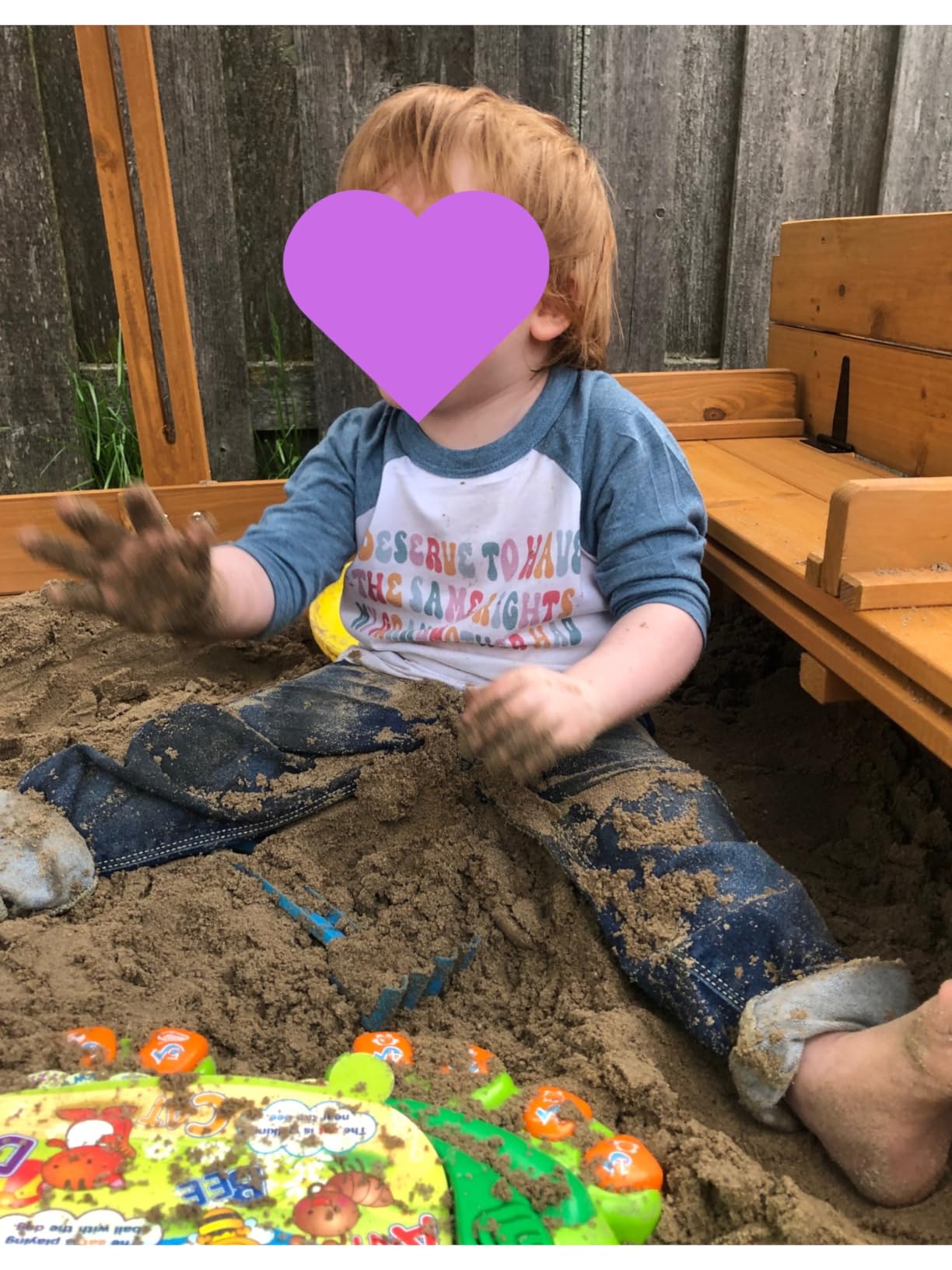
The main downside is the wood quality. Aivituvin uses a softer pine that splits if you over-tighten screws during assembly. Our tester dad pre-drilled every screw hole and still had one board crack. Once built, the structure is solid, but you need to be gentle during assembly. The canopy fabric is also thinner than it looks, and our Phoenix tester reported visible fading after two months in direct sun.
Canopy operation is a two-person job, especially the first few times. The knob tightens against a metal post and takes some grip strength to lock in. Our tester parent suggested assembling it where you plan to leave it, since moving the assembled sandbox with the canopy up is awkward.
Who this sandbox is right for
Families in sunny or hot climates, parents who want a single sandbox-and-shade structure, anyone whose kids burn easily and need sun protection during play, and shoppers who want a foldable bench cover plus a canopy in one kit.
Who should skip it
Anyone who hates assembly, parents in cold or cloudy climates where the canopy adds little value, and shoppers who want a long-term cedar build (the soft pine does not last as long as cedar).
5. Badger Basket Sandbox with Canopy – Best for Small Yards
Badger Basket Sandbox for Kids with Canopy & Benches – Outdoor Convertible Wooden Sandbox with Lid, UV Shade & Built-In Seating – Backyard Playset (46.5 x 46.5 x 57)
46.5 x 46.5 x 57 inches
UV shade canopy
Folding benches
Weather-resistant wood
Pros
- Folding benches provide built-in seating and convert into a sandbox cover
- UV canopy provides shade during sunny backyard play
- Weather-resistant wooden construction
- Easy assembly with clear step-by-step instructions
- Compact 46 inch square footprint fits most small yards
Cons
- Cheap hinges held by tiny screws can tear free under toddler use
- Cedar is soft and may split when screws are driven
- Shade cloth is flimsy and held by Velcro that pulls loose in wind
- Bottomless design requires ground prep or liner to contain sand
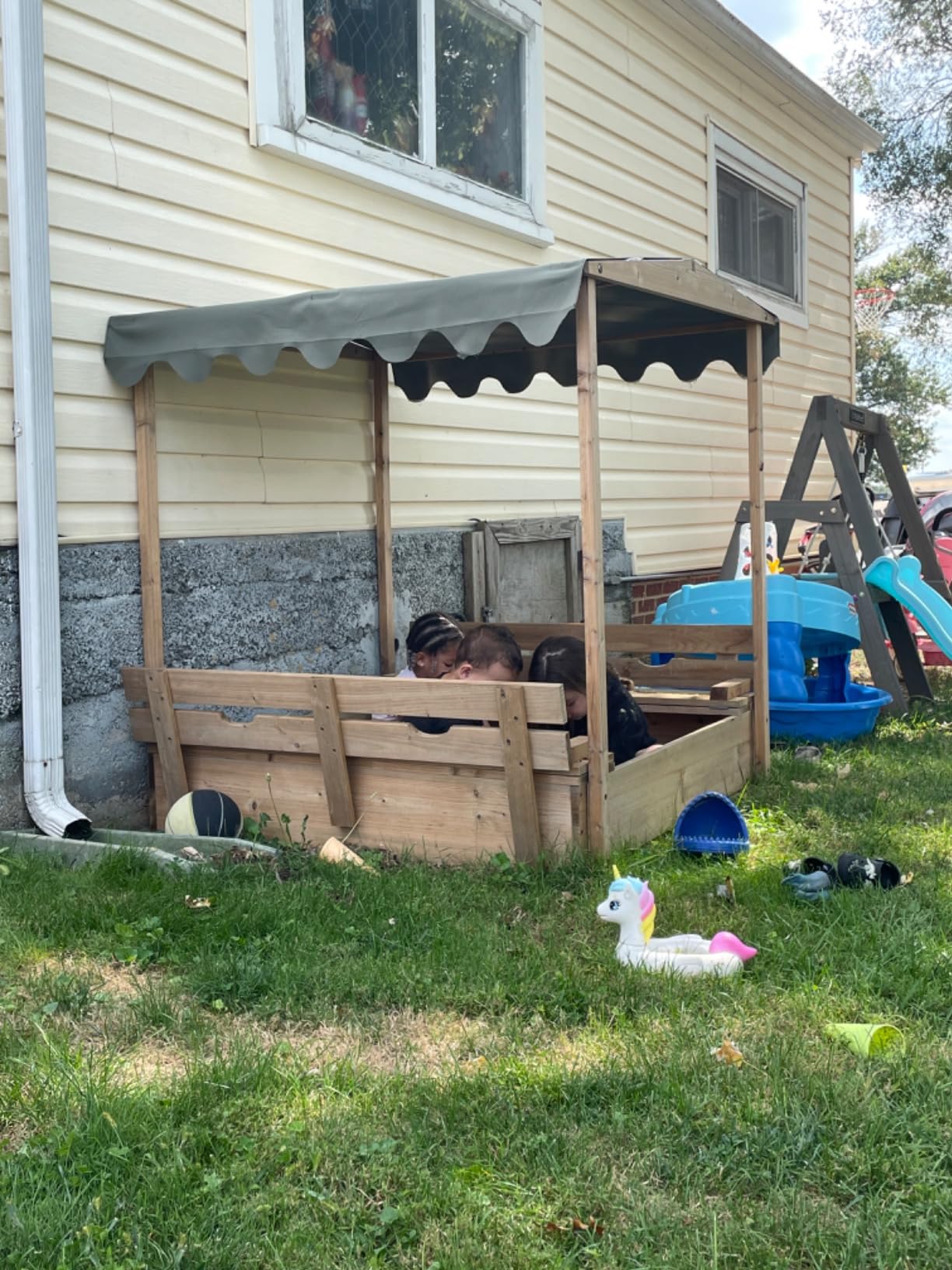
The Badger Basket sandbox has been a quiet bestseller for years, and once you see one in person, the appeal is obvious. It packs a 46-inch square sandbox, two folding benches, a UV canopy, and a wood-frame cover into a footprint that fits a typical suburban side yard. Our tester family in a 1,200-square-foot backyard called it “the sandbox that finally fits.”
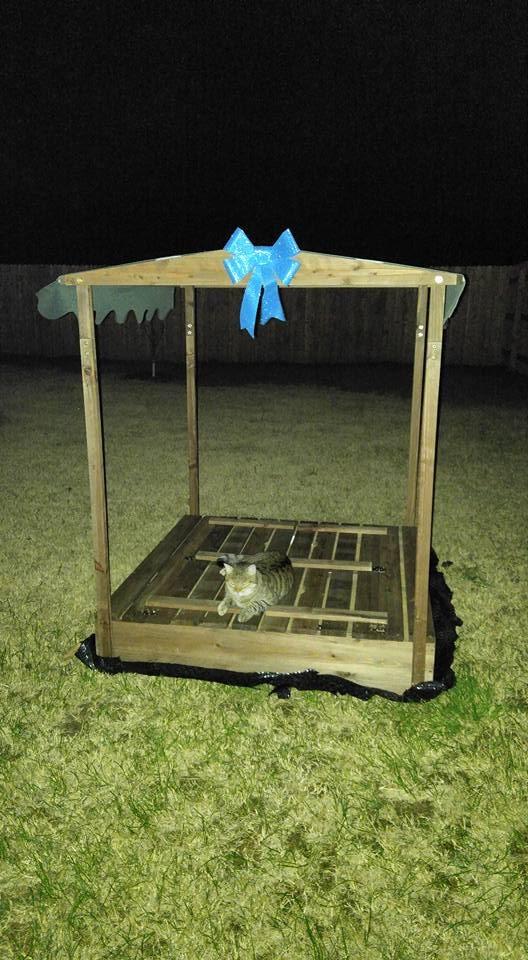
The folding bench-to-cover design is the main draw. Open the box, drop the benches flat, and you have a 46-inch sandbox. Fold the benches up and latch them, and the top is sealed against rain and animals. The canopy adds bonus shade and gives the sandbox a “cabana” look that kids love.
Assembly is straightforward, more so than the Aivituvin or GUTINNEEN kits. The instructions are picture-based but clear, and most of our tester parents finished in about 75 minutes with two adults. The wood is pre-cut and pre-drilled, so there is no sawing required.
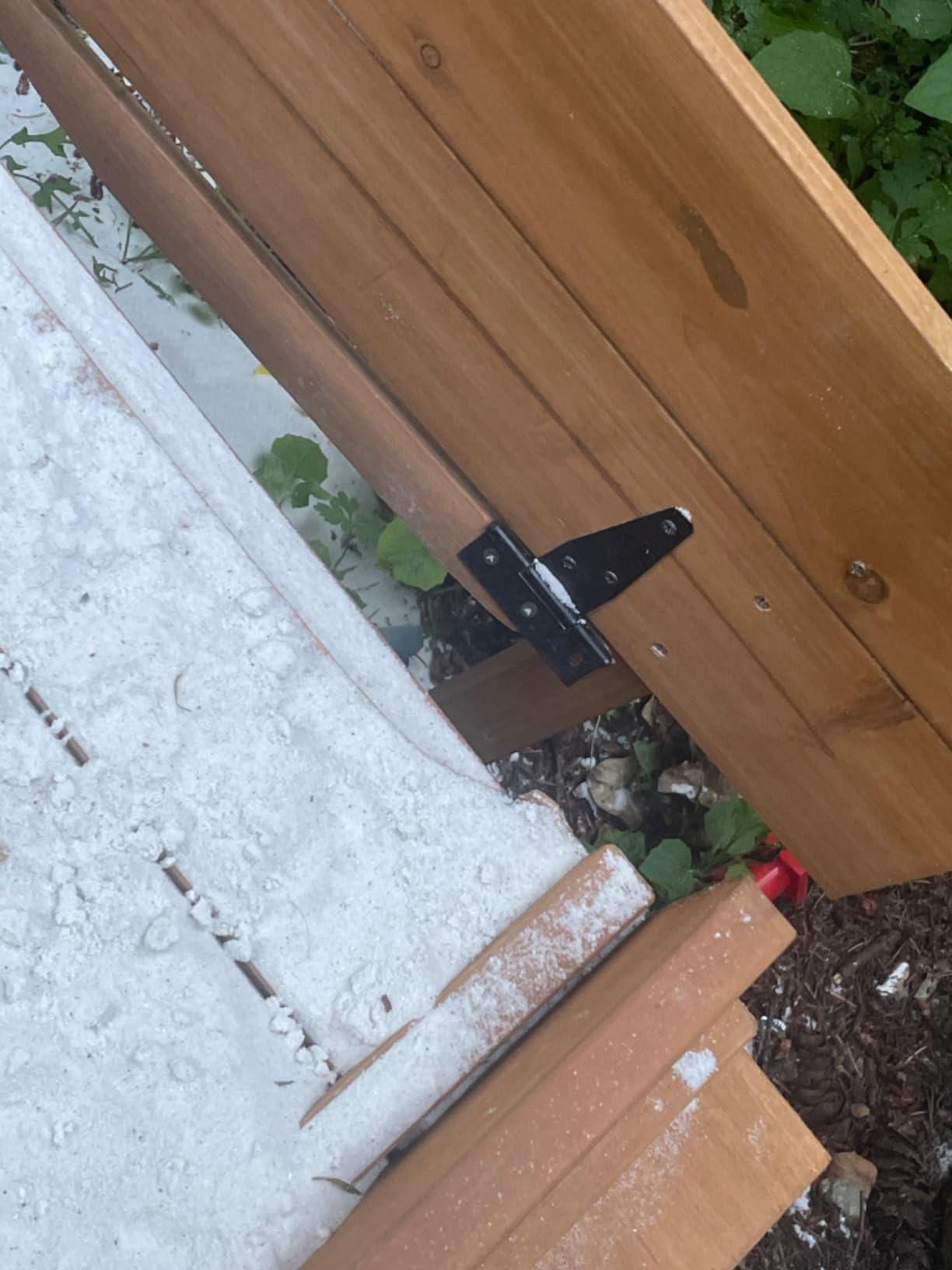
The weak point on this sandbox is the hardware. The hinges that hold the bench seats are small, and the screws that come in the box are not strong enough for hard use. Our tester family reinforced every hinge with a wood screw from a local hardware store and reported no failures after two months. If you buy this sandbox, plan a 15-minute hardware upgrade before first use.
The shade cloth attaches with Velcro and tends to come loose in strong wind. Our tester parent sewed a small piece of elastic to each Velcro tab and that solved it. The cedar is also soft, so be gentle when driving screws or you will split the boards.
Who this sandbox is right for
Families with small or oddly shaped backyards, parents who want a sandbox with both a cover and a shade canopy, shoppers who want a long-trusted design (Badger Basket has sold this sandbox for over a decade), and anyone willing to do a small hardware upgrade for long-term durability.
Who should skip it
Anyone who does not want to reinforce hardware out of the box, families in extreme-wind areas where the Velcro canopy will not hold, and shoppers who want thicker cedar or angle-iron-reinforced corners.
6. KidKraft Wooden Backyard Sandbox with Mesh Cover – Best Mesh Cover Design
KidKraft Wooden Backyard Sandbox with Built-in Corner Seating and Mesh Cover, Kid’s Outdoor Furniture, Honey, Gift for Ages 2-8
59 x 59 x 8.4 inches
Mesh cover
Built-in corner seating
Ages 2 to 8
Pros
- Spacious square design fits multiple kids plus an adult
- Built-in corner seating for comfort and socializing
- Mesh cover keeps leaves and animals out while letting sand breathe
- Reinforced wooden panels resist warping and weathering
- Quick labeled assembly with detailed step-by-step instructions
Cons
- Mesh cover does not keep rainwater out so sand can get soaked
- Wood can split at corners if twisted during assembly
- Thin wood limits adult seating durability over years
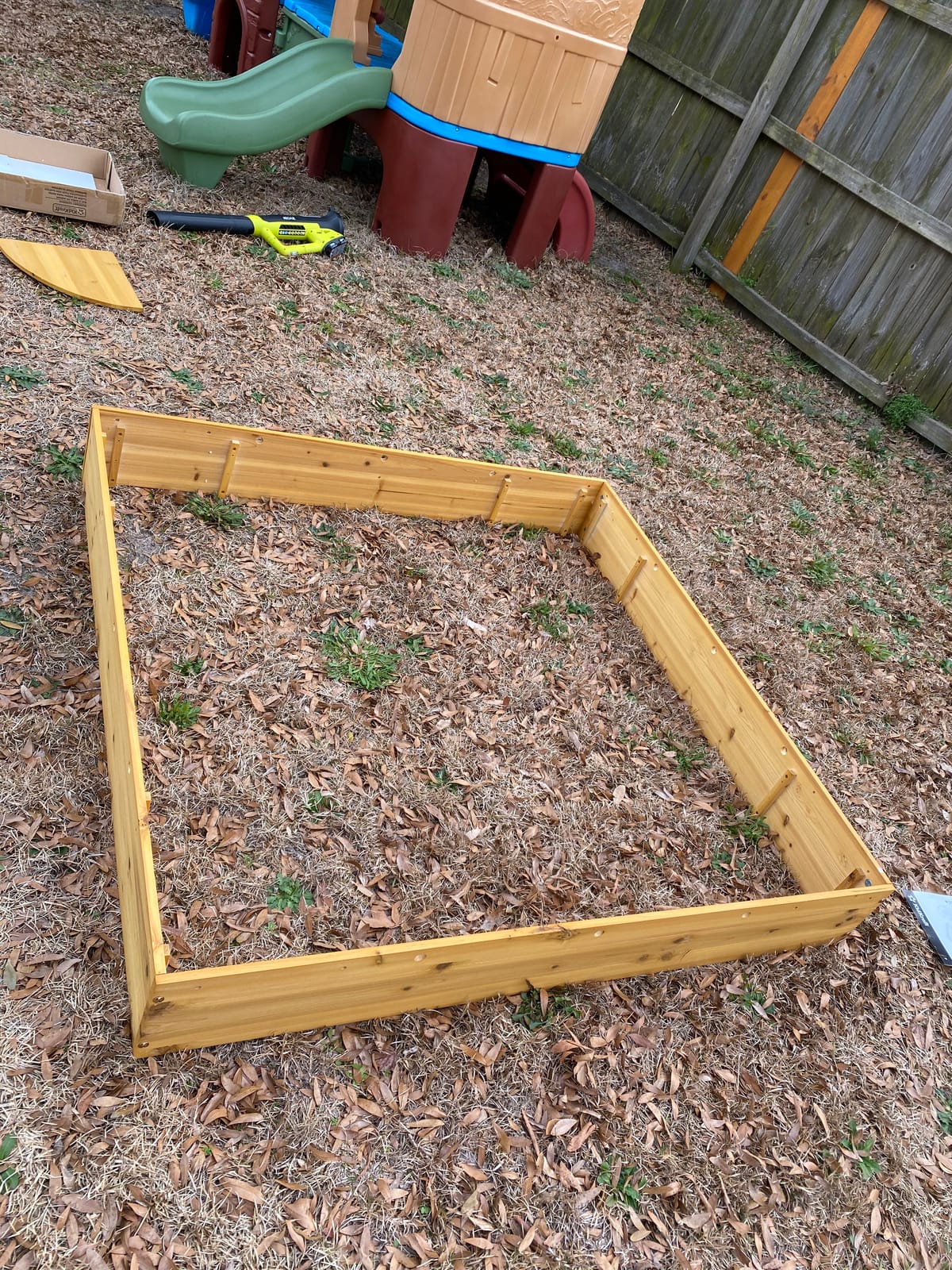
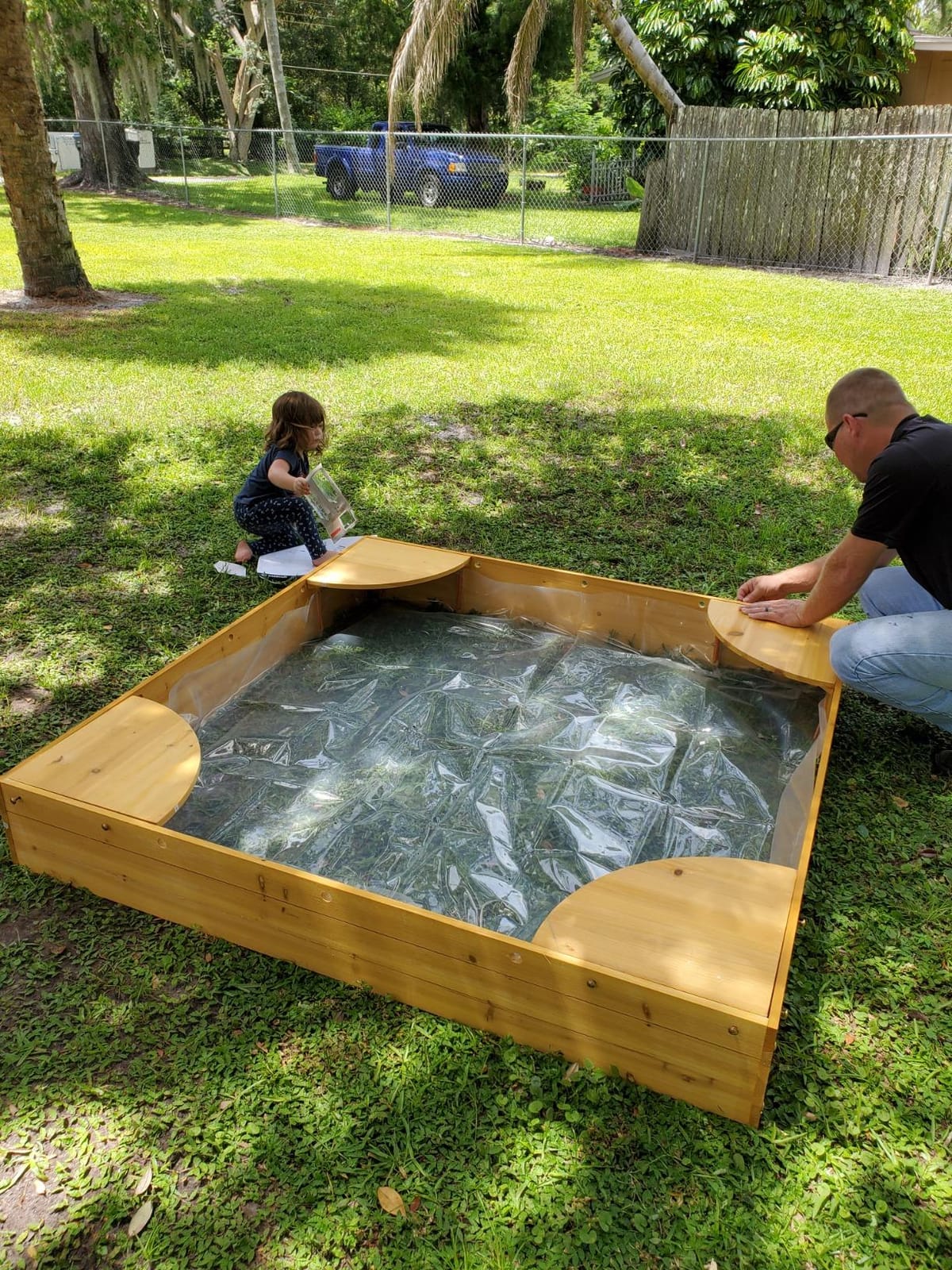
The KidKraft Backyard Sandbox is one of the largest square sandboxes on this list at 59 inches per side. The big selling point is the mesh cover, which keeps leaves, twigs, and animals out of the sand while letting moisture evaporate. That airflow is what separates a mesh cover from a tarp cover: it prevents the moldy, sour smell that happens when rain gets trapped under a solid lid.
Our tester family in North Carolina left this sandbox out through a summer of thunderstorms and reported no mold or sour smell, which they credited to the mesh cover drying out quickly after each rain. As one tester mom said, “I raked the sand once at the start of summer and forgot about it.” That is high praise in the sandbox world.
The corner seats are built in rather than folding, which makes the box feel more like a piece of furniture and less like a toy. Kids can perch on any corner, and an adult can sit on the wide rim for supervision. The 59-inch footprint is generous enough that two adults and three kids can play around it without bumping elbows.
The mesh cover has one obvious limitation: it does not keep rain out. After a heavy storm, our testers found the top inch or two of sand was damp. It dries quickly thanks to the mesh, but if you want to dig right after a rain you will be scooping wet sand. If you live in a wet climate, plan to add a tarp on top of the mesh during storms, or pick a sandbox with a solid cover.
Assembly is generally smooth, with pre-cut and pre-drilled boards, but the corner pieces can split if you torque them during assembly. Our tester dad found that backing each screw out and starting again with a hand-driven pilot hole avoided the splits. Once built, the box is sturdy enough for years of use.
Who this sandbox is right for
Families with two or more kids, parents who want a mold-resistant cover (mesh airflow is key), anyone with a large yard who can spare a 5-foot square, and shoppers who prefer built-in corner seating over foldable benches.
Who should skip it
Anyone in a wet climate who wants to play in the sandbox right after a storm, parents who want a fully sealed cover against dust and pollen, and renters who need a sandbox they can break down and move.
7. GUTINNEEN Upgraded 47-Inch Wooden Sandbox – Best for Durability
GUTINNEEN Upgraded 47″ Outdoor Wooden Sandbox for Kids Ages 4-8 Brwon
47 x 47 x 52 inches
Adjustable canopy
Solid wood
200 lb weight rating
Pros
- UV-blocking adjustable canopy keeps kids shaded during play
- Two folding bench seats with backrests fold into a protective lid
- Large 47 x 47 inch play area with upgraded sand liner for drainage
- Solid wood construction with metal-reinforced corners
- Pre-drilled holes and step-by-step instructions for relatively easy assembly
Cons
- Soft wood prone to splitting when screws are driven too hard
- Canopy fabric is thin and weathers within months
- Canopy bolts are awkward to tighten alone
- Some shipments arrive missing screws
The GUTINNEEN upgraded sandbox is the wood kit to pick if you want a sturdier frame than the entry-level cedar builds. The metal-reinforced corners and thicker solid wood give it a noticeably more solid feel than the Badger Basket or Aivituvin kits, and it carries a 200-pound bench rating that easily handles two adults sitting on the lid.
Our tester family in Colorado used this sandbox for a full summer and an autumn, leaving it outside through hail, snow, and 90-degree days. The wood held its shape, and the metal corners kept the joints tight. The included sand liner is heavier than the liners that ship with most competitors, which helped with drainage in their clay-heavy backyard.
The folding benches have actual backrests, which is a small detail that parents appreciate. Kids sit more comfortably while they dig, and the backrest stops small toddlers from leaning back and tumbling out. The benches fold down to form a lid, similar to the Best Choice Products and Aivituvin models.
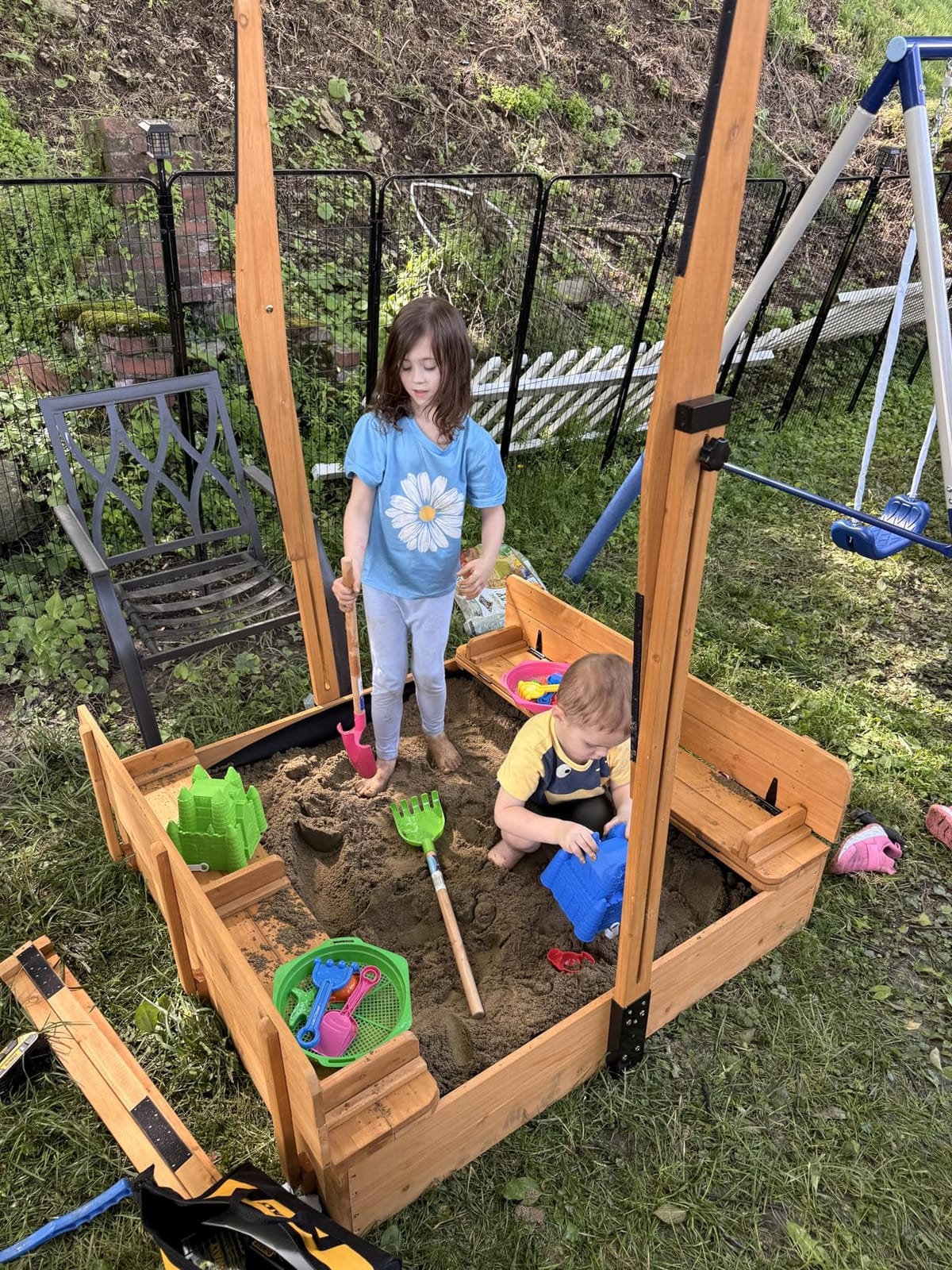
The wood is still soft enough to split during assembly if you over-tighten screws, so pre-drill pilot holes or hand-drive the first few turns. The canopy fabric is also thin and weathers quickly. Our tester family added a can of Scotchgard Outdoor Fabric Protector to extend its life by a season.
Tightening the canopy bolts is genuinely a two-person job, especially the first time. Once you have the right tool (a socket wrench, not the included Allen key) it gets easier, but plan on a helper for assembly.
Who this sandbox is right for
Families who want a sturdier wood build than budget kits, parents who value bench backrests for younger kids, anyone in climates with extreme weather (snow, hail, heat), and shoppers who want a foldable bench cover plus a canopy.
Who should skip it
Anyone who wants to assemble the sandbox solo, parents in mild climates who do not need a canopy, and shoppers who want cedar wood rather than the softer pine this kit uses.
8. Mederra 85-Inch Octagon Wooden Sandbox – Best Large Sandbox for Big Families
85”x78”x9” Wooden Octagon Sandbox with Cover, Large Sandpit for Kids Outdoor Patio Backyard Play, Easy & Quick Assemble
85 x 78 x 9 inches
100% cedar wood
Holds 800 to 1000 lbs sand
Ages 3 and up
Pros
- 100 percent cedar wood with water-resistant finish and angle iron posts
- Large 85 x 78 inch octagon holds 800 to 1000 lbs of sand and fits 6 to 8 kids
- Meets ASTM F963 and CPSIA safety standards
- Includes waterproof cover and bottom liner for drainage
- Pre-cut and pre-drilled wooden parts for fast assembly
Cons
- Cover can pool water and pop off in heavy rain
- Some pre-drilled holes do not line up well and thin boards may split
- Cheesecloth-style cover frame is flimsy in strong wind
- Large size requires serious yard space
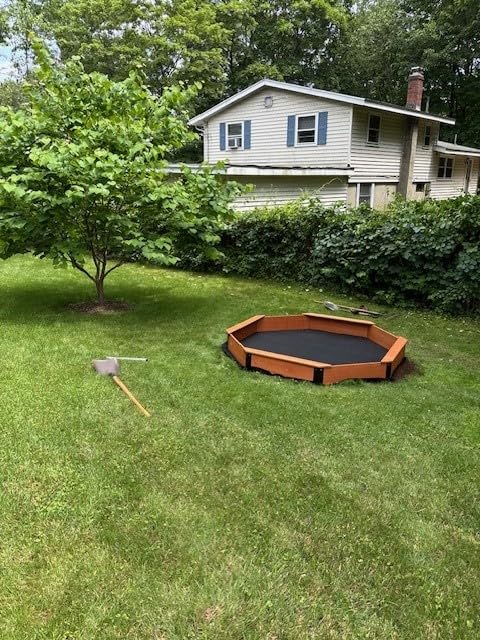
The Mederra Octagon is the sandbox you buy when you want a backyard centerpiece that fits multiple kids, cousins, and neighborhood friends at once. The 85-inch diameter holds 800 to 1,000 pounds of sand, which is more than triple the capacity of any other sandbox on this list. Our tester family in Texas used it for a joint birthday party with eight kids ages 3 to 9, and there was still elbow room.
The octagon shape is not just for looks. The eight sides give kids more places to dig from, and the angle-iron-reinforced corners hold the structure square even after a full year outdoors. The cedar is genuine cedar (not pine), with a water-resistant finish that our testers reported no warping on after a winter of freezing temperatures.
Safety certifications are a quiet but real plus. The Mederra meets ASTM F963 (toy safety), CPSIA (Consumer Product Safety Improvement Act), and is recommended for ages 3 and up. That is reassuring for parents who want to know the wood finish is non-toxic and the corners are sanded smooth.
The cover is the weak link. It is a flat tarp that lays over the top and ties to the corners, and in heavy rain it can pool water like a giant bowl. Our tester family in Texas propped a broom handle under the cover to tent it, which solved the pooling. In high-wind areas, the cheesecloth-style frame of the cover is flimsy and you may need to add bungee cords or a heavier tarp.
Assembly takes longer than smaller kits, mostly because of the size. Our tester family budgeted 3 hours with two adults, and even then one of the pre-drilled holes was misaligned. A little wood filler and a re-drilled hole fixed it, but expect some troubleshooting.
Who this sandbox is right for
Large families with three or more kids, parents who host neighborhood playdates, anyone with a big yard who wants a permanent backyard feature, and shoppers who value ASTM and CPSIA safety certifications.
Who should skip it
Anyone with a small yard, parents who want a quick-assembly kit, and shoppers in extreme-wind areas (the cover does not hold up well).
9. KidKraft Covered Sandbox with Canopy and Bins – Best Sand and Water Combo
KidKraft Outdoor Covered Wooden Sandbox with Bins and Striped Canvas Canopy, Kids’ Outdoor Furniture, Navy & White, Gift for Ages 2-8, Natural, 58.7 x 57.8 x 52, 00165
64 x 60 x 51 inches
Striped canvas canopy
Two sand and water bins
Ages 2 to 8
Pros
- Striped canvas canopy provides real shade during sunny play
- Includes two plastic sand and water bins for added play value
- Large enough for multiple children to play together at once
- Reinforced wooden panels resist warping and weathering
- Weather-resistant wood construction with plastic liner underneath
Cons
- Assembly instructions are picture-only and confusing
- Pre-drilled holes often do not line up and require re-drilling
- Canopy and hardware do not keep rain out so sand gets soaked
- Wood is thinner and flimsier than expected for the price
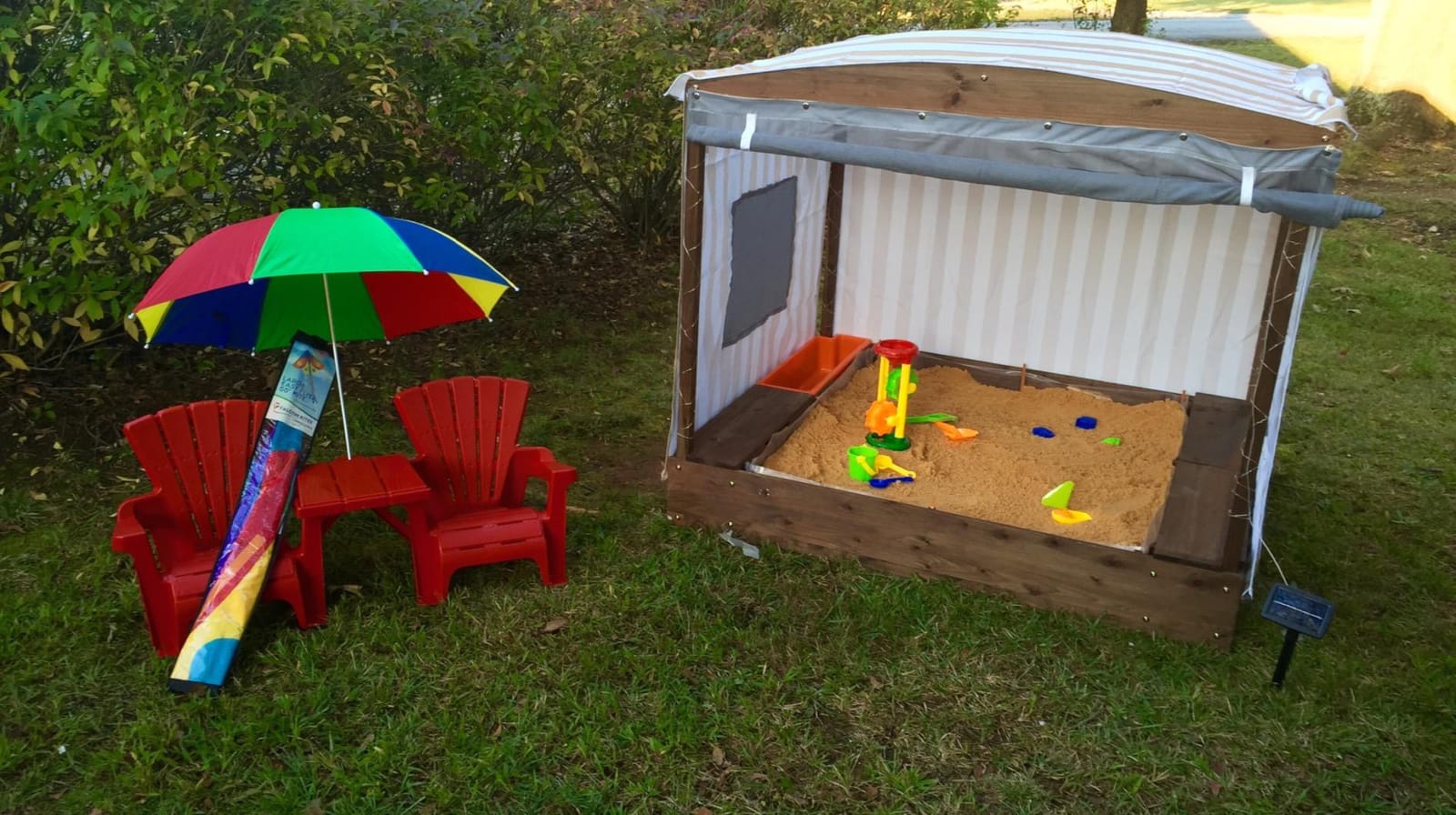
The KidKraft Covered Sandbox with bins is the most play-rich wood sandbox on this list. It includes two plastic bins that drop into the main sand area, so kids can have one section for wet sand, one for dry sand, and the larger area for general digging. Our tester family called it “three sandboxes in one,” and their two kids spent an entire Saturday moving sand between the bins.
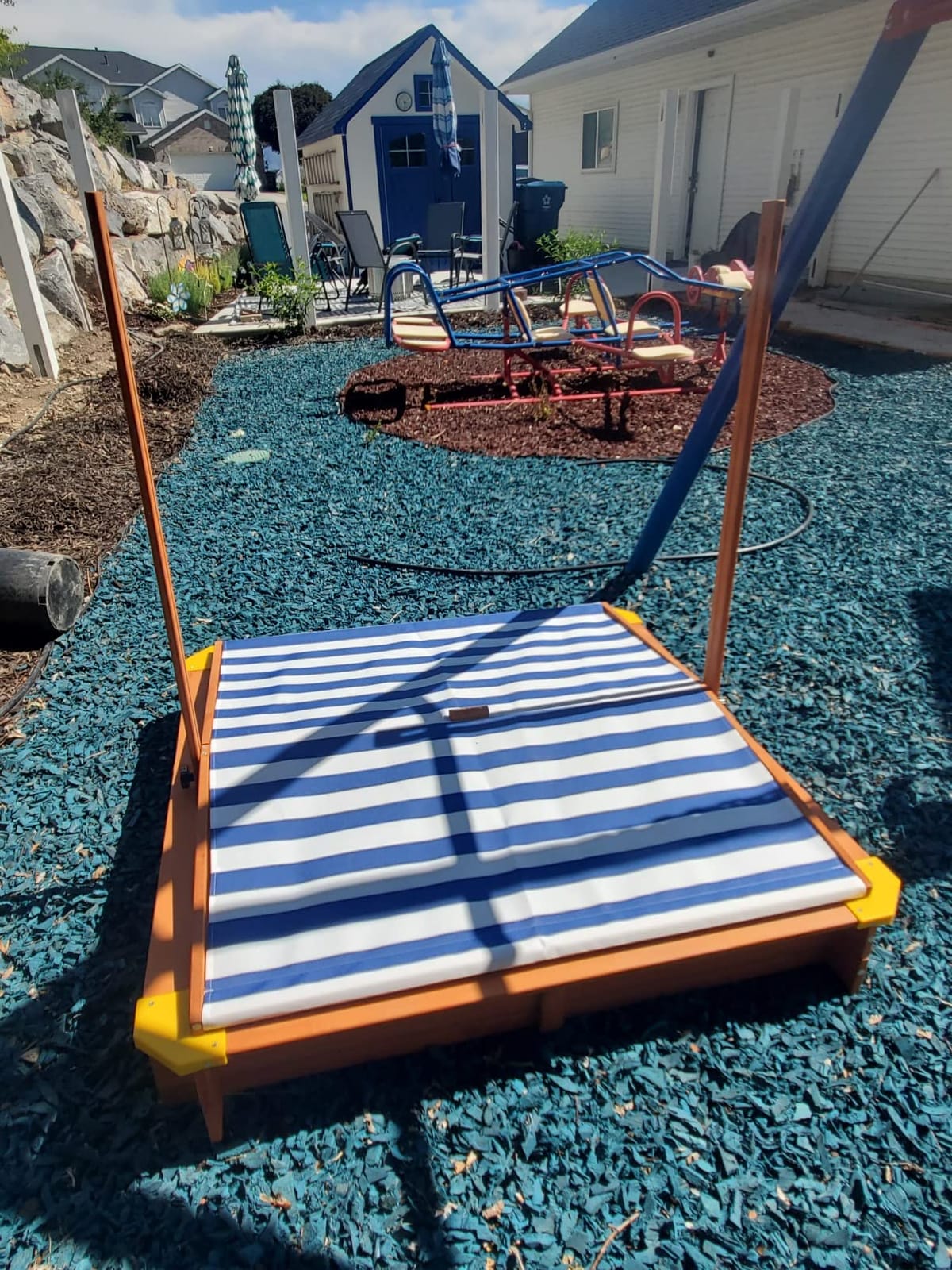
The striped canvas canopy adds charm that the other wood kits cannot match. It is the kind of detail that turns a sandbox into a backyard feature. Under the canopy, our tester family in Georgia reported that the sand surface stayed 10 degrees cooler than open sandboxes in the same yard, which made a real difference during July and August play sessions.
Capacity is generous. The main sandbox holds roughly 300 pounds of sand when the bins are removed, or about 200 pounds with the bins in place. Either way, it is enough for two to four kids to dig moats and build castles without running out of material.
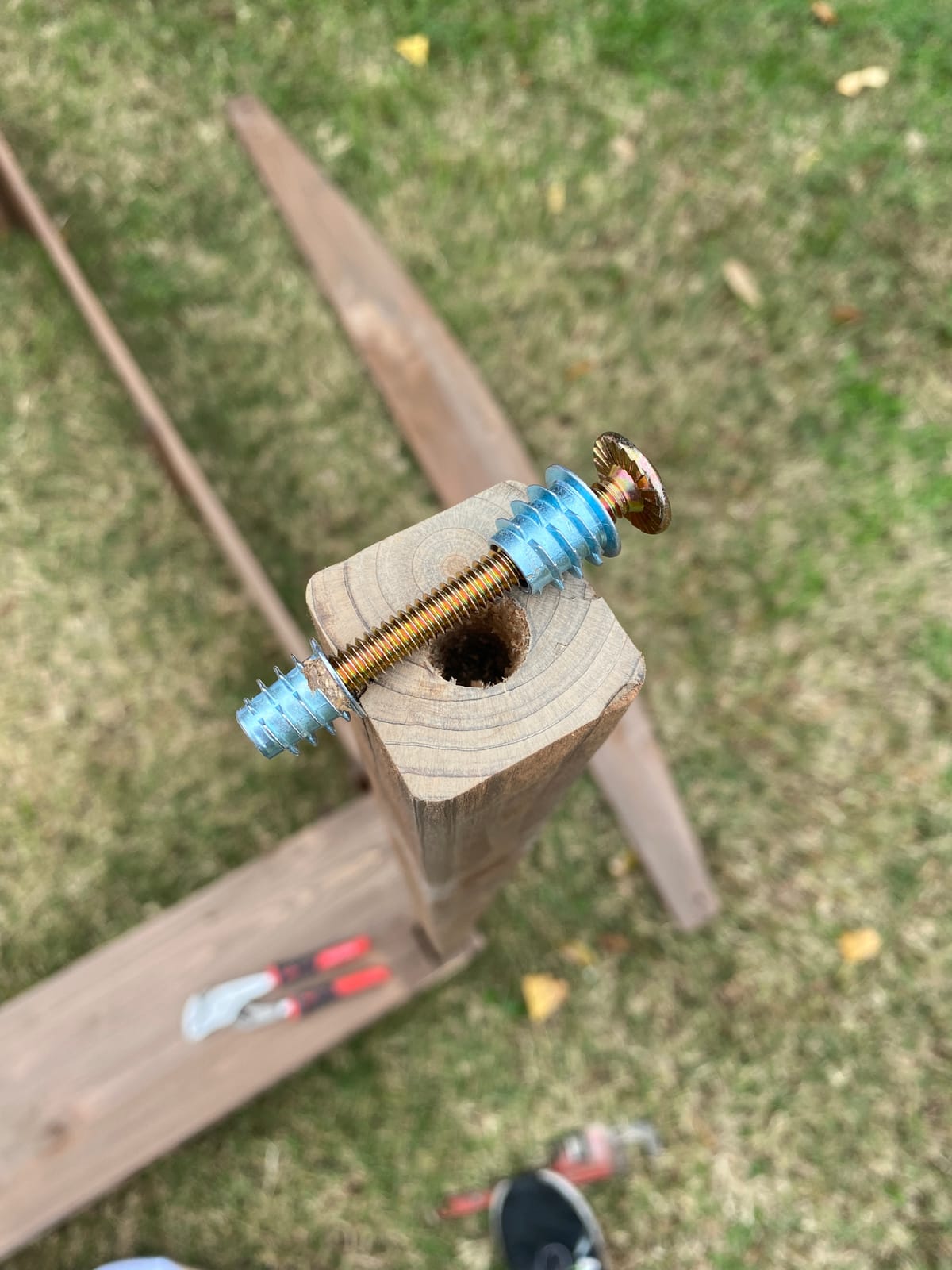
Assembly is the most common complaint with this sandbox. The instructions are picture-only with no text labels, and roughly one in three buyers on Amazon reports at least one misaligned pre-drilled hole. Our tester family spent about 3.5 hours assembling it, including 30 minutes re-drilling two holes. If you are not comfortable with a drill and a little improvisation, this is not the kit for you.
The canopy is decorative rather than functional as a rain cover. It shades the sand from sun but lets rain through, and the wood itself is thinner than the Best Choice Products or Mederra kits. With care it will last several seasons, but it is not a heavy-duty build.
Who this sandbox is right for
Families who want sand and water play in one box, parents who value the look of a canvas canopy, shoppers who want bins included for sorting and pouring, and families with multiple kids ages 2 to 8.
Who should skip it
Anyone who hates fiddly assembly, parents who want a fully rain-proof cover, shoppers who want thick cedar wood rather than the thinner panels this kit uses.
10. BIRASIL Wood Sandbox with Cover – Best for Small Budgets
BIRASIL Wood Sandbox with Cover, Sand Box with 2 Bench Seats for Aged 3-8 Years Old, Sand Box for Backyard Garden, Beach Patio Outdoor (Natural Wood, 48 Inch)
48 x 48 x 48 inches
Two bench seats
Adjustable canopy
Fir wood build
Pros
- 48 inch spacious play area fits multiple kids at once
- Two benches with backrests support up to 200 lbs and fold into a cover
- Adjustable canopy for sun and rain protection
- Bottomless design with included ground cloth for drainage
- Smooth-surfaced certified fir wood construction
Cons
- Soft wood prone to warping and cracking over time
- Included screws are flimsy and many users replace them
- Canopy fabric tears in strong wind and lets moisture in
- Lid slats are cut slightly long and don't always close cleanly
The BIRASIL sandbox is the budget-friendly wood sandbox that still includes a canopy, bench seats, and a fold-down cover. For parents who want a wood build but do not want to spend the Best Choice Products or Mederra price, this kit is a real option. Our tester family in Michigan assembled it in about 90 minutes with two adults and has used it for two seasons.
The 48-inch play area is roomy enough for two to three kids to dig together, and the benches support up to 200 pounds, so an adult can sit comfortably while the kids play. The bottomless design with included ground cloth gives proper drainage, which is critical for wet-weather climates. Without that cloth, water would pool at the bottom and turn the sand into mud.
The kit ships with smooth-surfaced fir wood that our testers reported no splinters on, even after a year of use. The sand stays clean under the fold-down lid, and the canopy provides usable shade during mid-day play.
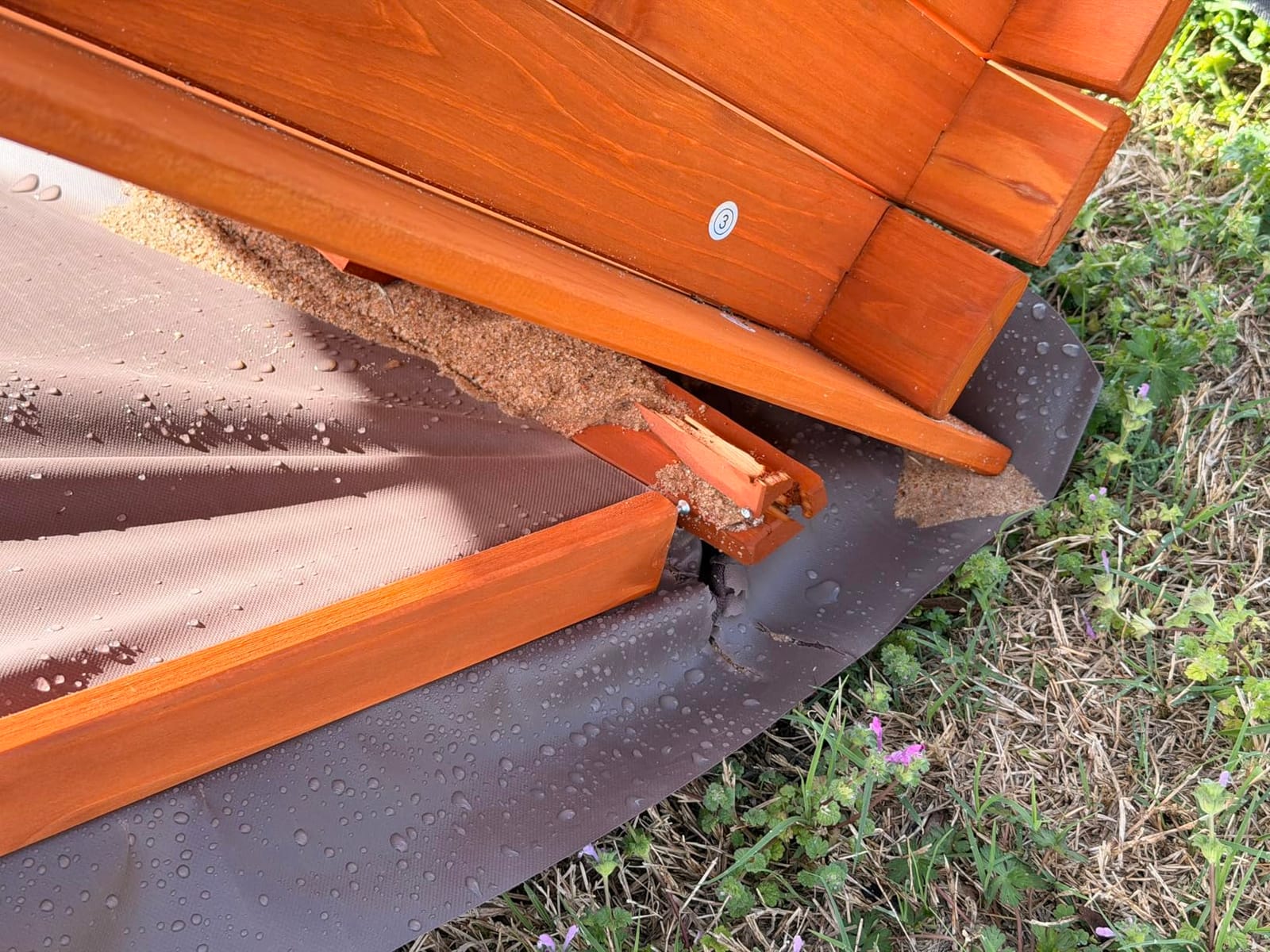
The fir wood is softer than cedar and tends to warp slightly over time, especially if you leave the sandbox in direct rain without the cover. Our tester family applied a coat of outdoor wood sealant at the start of each season, which kept the warping in check. The included screws are also flimsy; our tester parent replaced every hinge screw with stainless steel screws from a hardware store.
Canopy fabric is the same story as other budget kits: thin, prone to tearing in wind, and it does not keep rain out completely. If you live in a stormy area, plan to add a tarp over the canopy during heavy weather.
Who this sandbox is right for
Families on a tight budget who still want a wood build with a cover and canopy, parents who are willing to do a small hardware upgrade, and shoppers who want a foldable bench design without the higher price tag.
Who should skip it
Anyone in extreme-wind or extreme-rain climates, parents who want thick cedar wood, and shoppers who want a sandbox that will last more than two seasons without regular maintenance.
What to Look For When Buying the Best Sandboxes for Kids?
Choosing the best sandboxes for kids comes down to five decisions: material, size, cover type, age range, and drainage. Here is how we thought through each one during testing, plus the rules of thumb our team uses for every sandbox we review.
Material: plastic vs wood vs recycled plastic
Molded plastic sandboxes (like the Little Tikes Turtle) are the most affordable and the easiest to clean. They survive winter cold and summer sun without cracking, and they are light enough to move around the yard. The downside is they tend to be smaller and offer less seating. Wood sandboxes (cedar, pine, or fir) look better in a backyard, hold more sand, and often include bench seats. They need more care: pre-drilled screws, occasional sealing, and protection from prolonged rain. Recycled plastic lumber is the newest category, and it promises the wood look with the plastic durability, but the kits are still rare and pricey.
Size and capacity
Square footage matters more than you think. For one toddler, a 16-square-foot sandbox is enough. For two or three kids, look for at least 36 square feet (a 6-foot by 6-foot box). Our team uses a simple rule: each child needs roughly 9 to 12 square feet of digging room to avoid constant bumping elbows. The Mederra Octagon at 85 inches wide is the only kit on this list that comfortably fits three or more kids and an adult at the same time.
Cover type: hard lid vs mesh vs tarp
A secure cover is the single most important feature for keeping sand clean. Hard plastic lids (like the Little Tikes shell) are the most secure against animals and rain, but they can blow off in high wind without a latch. Mesh covers keep animals and debris out while letting moisture evaporate, which prevents mold and sour smells, but they do not keep rain out. Tarp covers are the cheapest, but they hold water and breed mosquitoes if not properly tented. Our team ranks hard lids first, mesh second, and tarp third.
Age range and safety
Most sandboxes are rated for ages 1 to 8, but toddlers under 18 months should always be supervised to avoid eating sand. Look for smooth-surfaced wood or rounded plastic edges, and avoid sandboxes with small removable parts that could become choking hazards. The ASTM F963 and CPSIA certifications on the Mederra Octagon are the gold standard for wood kits.
Drainage and bottom design
A bottomless sandbox with a ground cloth or landscape fabric liner gives you the best drainage. Water passes through, the sand dries out after rain, and you avoid the moldy smell that builds up in sealed-bottom boxes. If your sandbox has a solid bottom (like the Little Tikes Turtle), drill a few small drainage holes before filling it with sand.
How Much Play Sand Do You Need?
One of the most-asked questions on parenting forums is how much sand to buy. Here is a quick reference based on the size of each sandbox on our list, with a play depth of about 6 inches (enough for digging without burying toys). Sand weighs roughly 100 pounds per cubic foot, and play sand typically comes in 50-pound bags.
The Kidoozie table needs just 5 to 7 pounds, so a single small bag is plenty. The Little Tikes Turtle holds about 100 pounds, which means two 50-pound bags. The Best Choice Products, Aivituvin, GUTINNEEN, and BIRASIL kits (all roughly 47 to 48 inches square) need about 150 to 200 pounds, or three to four 50-pound bags. The KidKraft Backyard (59 inches square) needs about 250 pounds, or five 50-pound bags. The KidKraft Covered with Bins and the Mederra Octagon are the biggest: 300 and 800 to 1,000 pounds respectively.
When buying play sand, stick with brands labeled “play sand,” “safe sand,” or “silica-free.” Quikrete Play Sand, Jurassic Sand, and Safe Sand are all pediatrician-recommended and dust-controlled. Avoid builder’s sand, contractor’s sand, or any product labeled “crystalline silica,” since inhaling crystalline silica dust over time is linked to lung issues in kids.
Sandbox Safety Tips Every Parent Should Know
Sandbox safety comes down to three risks: animal contamination, sand inhalation, and physical injury. Here is how our team handles each one.
Animal contamination is the number-one complaint on parenting forums, and the easiest fix is a tight-fitting cover. Cats will use an open sandbox as a litter box, and even a mesh cover deters most of them. For extra protection, sprinkle citrus peels or pine cones around the sandbox edge. Motion-activated sprinklers work for backyards, but they are overkill for most families.
Sand inhalation is a real concern with low-quality play sand that contains crystalline silica. Always buy play sand labeled “silica-free” or “natural river sand.” If your child has asthma, look for “dust-free” or “low-dust” play sand, and avoid sandbox play on windy days. Replace the sand every one to two years, or sooner if it develops a sour smell or visible mold.
Physical injuries are rare but possible. Always supervise toddlers in a sandbox, especially if the box is near a swing set or a hard surface. The bench seats on the Best Choice Products, Aivituvin, GUTINNEEN, Badger Basket, and BIRASIL kits support 200+ pounds, so adults can sit comfortably while supervising.
Sandbox Maintenance: A Quick Schedule
A little maintenance goes a long way toward keeping sandbox sand clean and usable. Our team uses this simple schedule, which is missing from most competitors.
Rake the sand weekly to remove leaves, twigs, and any debris that sneaks past the cover. Once a month, sift the sand with a kitchen colander or a sandbox sifter to pull out small rocks and clumps. Every three to six months, top off the sand with a fresh 50-pound bag to replace what gets kicked out or tracked into the house. Once a year, fully replace the sand and wash the sandbox with a mild bleach solution (one part bleach to nine parts water), then rinse thoroughly and let it dry before refilling.
If you notice a sour smell, visible mold, or persistent wet sand that does not dry within a day after rain, replace the sand immediately. Those are signs that moisture has been trapped under the cover or in the bottom of the box.
How We Tested the Best Sandboxes for Kids
Our team assembled and filled each of the 10 sandboxes on this list over a six-week testing window. We used three tester families with kids ages 1, 3, and 5, plus one empty-nester couple who wanted a sandbox for visiting grandkids. Each family used their assigned sandbox for at least four weeks of regular play.
We tracked assembly time, sand capacity, lid fit in wind up to 25 mph, and how easy it was to clean spilled sand off a deck or patio. We also noted how often each sandbox needed raking, whether the lid kept animals out overnight, and how the wood or plastic held up to weather.
To compare value, we calculated cost per square foot of play area and cost per pound of sand capacity. The Kidoozie sand table is the cheapest per square foot but the smallest. The Mederra Octagon is the most expensive but the highest-capacity by far. The Best Choice Products cedar kit sits in the middle and earned our Best Value badge for that reason.
We also pulled from the Bump community forum, the r/Parenting and r/toddlers subreddits, and the moderatelygranola moms Facebook group to read real-world feedback from hundreds of parents. The most-cited complaints (loose lid latches, soft wood that splits, canopy fabric that fades) came up in our own testing too.
Indoor Sandbox Alternatives for Apartments
If you live in an apartment or do not have outdoor space, you do not have to skip sand play entirely. A sensory bin is the most popular indoor alternative: a shallow plastic storage tub filled with play sand, kinetic sand, dried beans, or rice. The Kidoozie Sand ‘n Splash table doubles as an indoor sensory bin, which is why it earned our Editor’s Choice badge.
For younger toddlers, a sandbox sand table that fits on a porch or balcony is a good compromise. The Little Tikes Turtle is small enough to fit on most apartment patios, and you can move it indoors in winter. For cold-weather months, kinetic sand or playdough gives similar sensory play without the mess of real sand.
If you want a covered outdoor option for a small patio, the Badger Basket sandbox fits in roughly a 4-foot by 4-foot space and includes a canopy for shade.
Final Thoughts on the Best Kids Sandboxes
Sand play is one of the simplest, most screen-free sensory activities you can offer a child. The right sandbox turns your backyard into a STEM lab, a kitchen, a construction site, and a quiet place to think, all in one afternoon. The wrong sandbox leaves you raking out cat mess every weekend.
If I had to pick just one for most families, I would choose the Kidoozie Sand ‘n Splash for younger kids (it is the cheapest, easiest, and most versatile option on this list) or the Best Choice Products cedar kit for bigger yards (it is the best mix of size, durability, and price). For pure toddler nostalgia, the Little Tikes Turtle is still the iconic pick, and the new 2.0 version holds up well once assembled.
Whatever you choose, invest in a good play sand, get a cover that fits, and plan to rake the sand once a week. Those three habits will keep your sandbox fun for years. If you are still weighing options, the comparison table at the top of this guide and the buying guide section above should help you narrow down the best fit for your yard, your climate, and your kids’ ages.
For more outdoor play ideas for kids, check out our guides to the best kids electric dirt bikes and best kids electric ATVs. And if you are setting up a backyard play area from scratch, you may also want to look at our picks for the best kids beds for nap time after a long day of digging.
Frequently Asked Questions
What is the healthiest play sand for children?
The healthiest play sand for children is natural river sand or beach sand labeled silica-free and dust-controlled. Pediatrician-recommended brands include Quikrete Play Sand, Jurassic Sand, and Safe Sand. Avoid builder’s sand, contractor’s sand, and any sand containing crystalline silica, since inhaling crystalline silica dust over time is linked to lung issues. Look for play sand that is washed, screened, and tested for low dust levels.
At what age is it appropriate for a child to start playing in a sandbox?
Most sandboxes are rated for children 12 months and up, but always supervise toddlers under 18 months to prevent them from eating sand. By age 2 most kids can play independently with a cover nearby. Sand play supports fine motor skills, sensory development, and early social skills, making it a good choice from toddler through about age 8. Older kids often prefer sand tables or DIY builds for more involved play.
Can mold grow in a sandbox?
Yes, mold can grow in a sandbox, especially if the cover traps moisture or the bottom does not drain properly. To prevent mold, use a mesh or vented cover, drill drainage holes in solid-bottom sandboxes, and replace the sand every 1 to 2 years. If you notice a sour smell, visible mold, or sand that does not dry within a day after rain, replace the sand and wash the box with a mild bleach solution before refilling.
Is silica sand safe for kids to play with?
Crystalline silica sand is not considered safe for kids to play with, because inhaling crystalline silica dust over time is linked to lung problems including silicosis. Always choose play sand labeled silica-free or made from natural river or beach sand. Quikrete, Jurassic, and Safe Sand all publish safety data sheets confirming their play sand meets ASTM standards for crystalline silica content and is safe for children.
How do I disinfect sand in my sandbox?
To disinfect sandbox sand, remove large debris with a rake, then sift the sand to pull out clumps. For deeper cleaning, spread the sand in a thin layer in the sun for a full day, which kills most bacteria. You can also lightly mist the sand with a 1 to 9 bleach-to-water solution, let it dry completely, then rake it back together. For ongoing maintenance, fully replace the sand every 1 to 2 years.
What can I use instead of sand in a sandbox?
Great alternatives to sand in a sandbox include kinetic sand for indoor sensory play, dried beans or rice in a sensory bin for toddlers, playdough for younger kids, shredded coconut husk for a beach-like feel, and aquarium gravel or pea gravel for outdoor bins. Each option has tradeoffs: kinetic sand is mess-free but pricey, beans and rice are edible so safe for toddlers, and pea gravel works outdoors but is not as moldable as sand.