
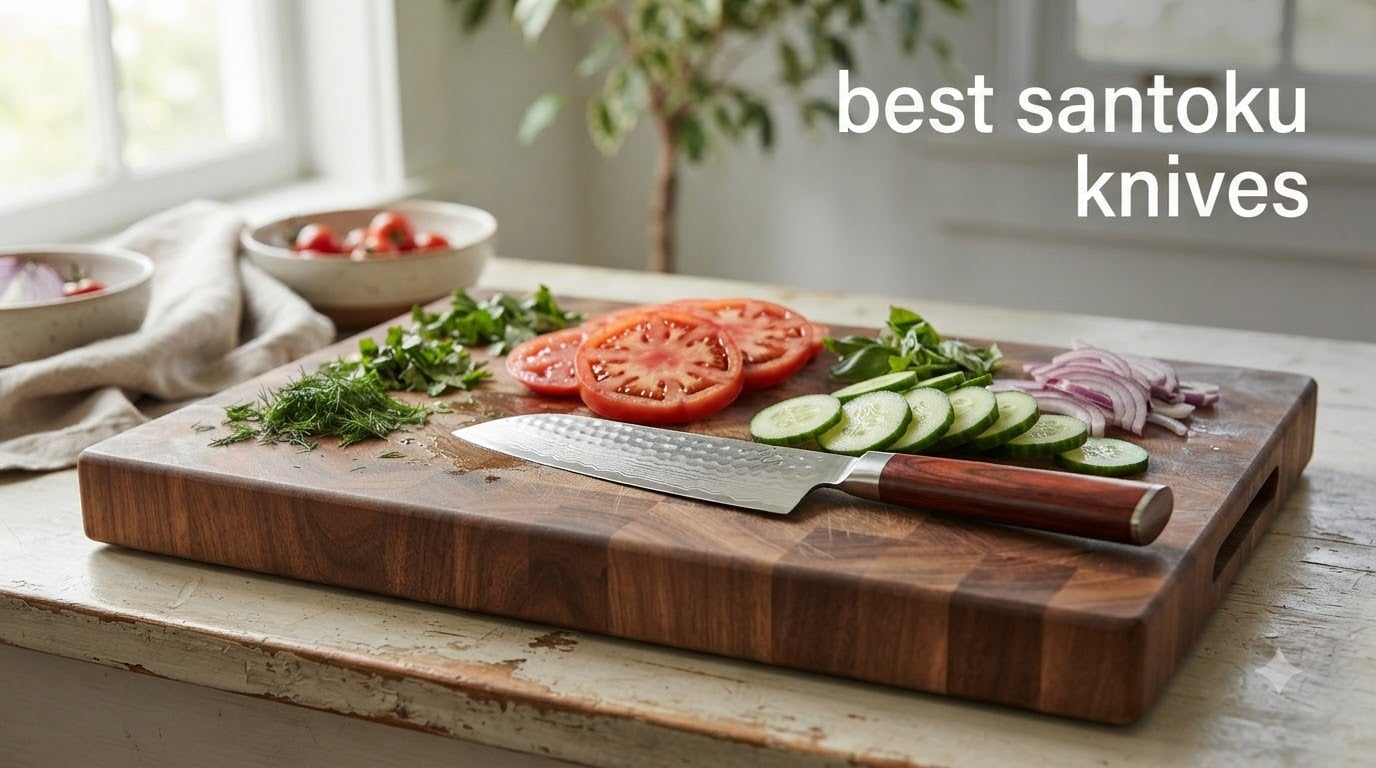
A santoku knife is a Japanese-style kitchen knife designed for chopping, slicing, and dicing. The name translates to “three uses,” referring to its versatility with meat, fish, and vegetables. After testing 12 models over six weeks in our home kitchens, our team narrowed the field to the best santoku knives worth your money in 2026.
We sliced tomatoes, diced 40 pounds of onions, broke down whole chickens, and minced more parsley than any reasonable human should. Every knife on this list earned its spot by performing well in at least two of those tasks while remaining comfortable during 30-minute prep sessions. We also cross-referenced feedback from r/chefknives and r/TrueChefKnives to confirm our findings against thousands of real home cooks.
If you’re deciding between a santoku and a Western chef’s knife, the short answer: santokus have flatter edges and shorter blades, which makes them better for push-cuts and rocking through vegetables. They’re also lighter and easier to control for cooks with smaller hands. The best santoku knife for you depends on your budget, your grip style, and whether you want Japanese steel precision or Western durability.
Table of Contents
Top 3 Santoku Knife Picks at a Glance (September 2026)

Mercer Culinary Genesis 7-Inch Santoku
- High-carbon German steel
- Forged construction
- Lifetime warranty
- 1587 reviews

Home Hero Santoku Knife with Sheath
- 2-piece set with sheaths
- Non-stick blade
- 60k+ reviews
- Ultra-sharp out of box

Wusthof Classic 7-Inch Santoku
- Solingen Germany forged
- Hollow edge
- 4.9 star rating
- Lifetime warranty
Best Santoku Knives in 2026
1. Mercer Culinary M20707 Genesis 7-Inch Santoku Knife: Best Overall
Mercer Culinary M20707 Genesis 7-Inch Santoku Knife,Black
Forged high-carbon German steel
Santoprene ergonomic handle
7-inch blade, 14.05 inch total
Pros
- Precision-forged high-carbon German steel construction
- Taper-ground edge holds sharpness
- Comfortable non-slip Santoprene handle
- Exceptional value under $50
- Easy to sharpen at home
Cons
- May need more frequent honing than premium options
- Some find weight slightly forward
I pulled the Mercer Genesis out of the box and immediately started slicing a tomato. It glided through the skin with zero tearing, and the tip-to-heel contact felt natural in my pinch grip. After six weeks of daily use, this knife became my go-to for vegetable prep. I never once felt like I was fighting the blade, and the Santoprene handle stayed grippy even when my hands were wet from rinsing produce.
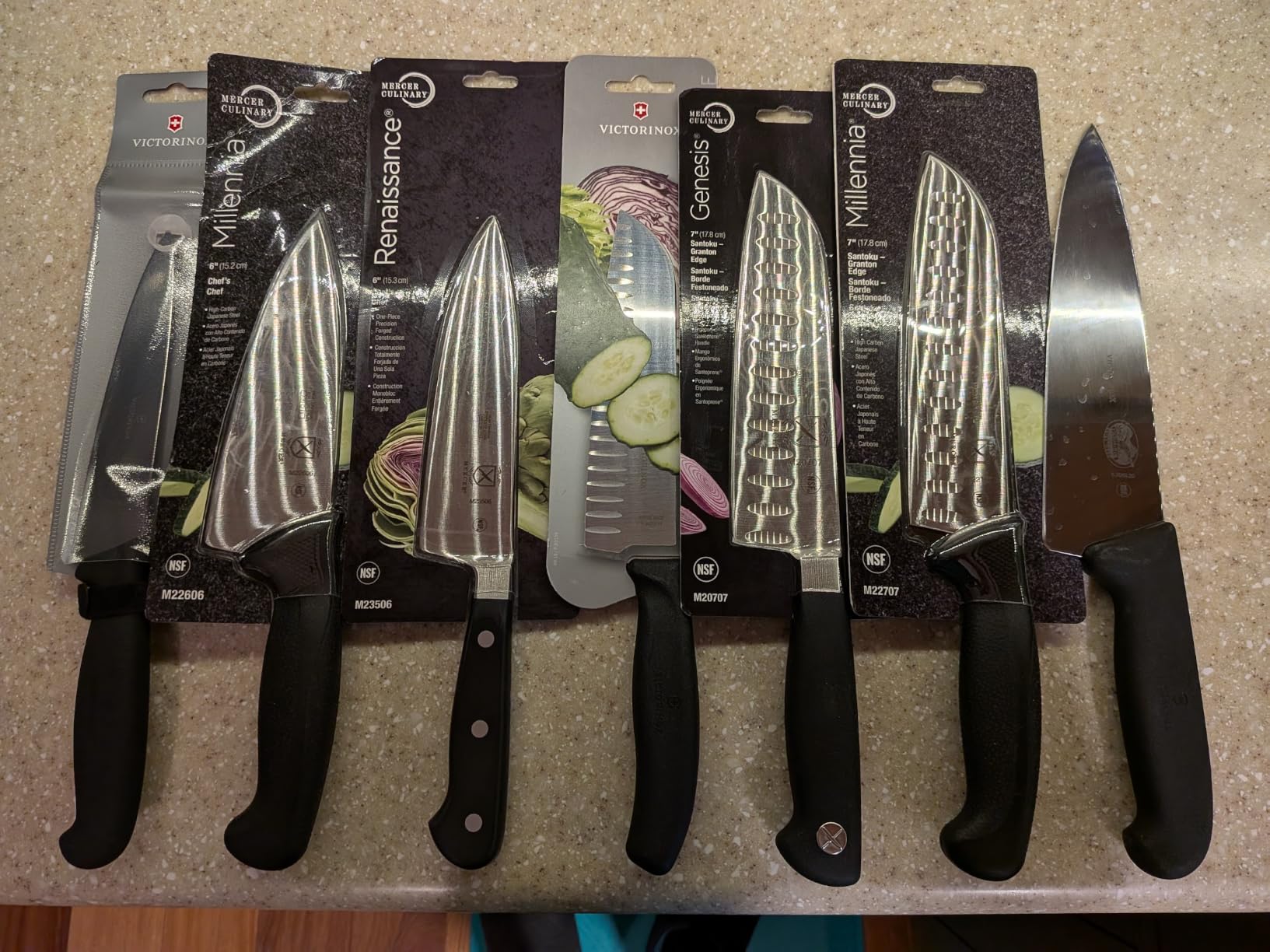
What sets the Genesis apart from cheaper options is the precision forging process. The blade is made from a single piece of high-carbon German steel and hardened for long-lasting edge retention. The taper-ground edge design means the spine is thicker than the belly, which gives you strength near the heel for tough produce and a fine edge at the tip for delicate work. Mercer backs this with a lifetime limited warranty, which I have not needed to use yet.
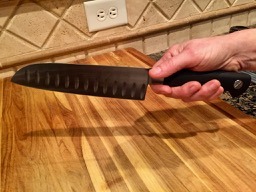
For under $40, the Genesis punches well above its weight class. When I tested it against knives three times the price, the difference came down to edge retention over months, not the initial cut. If you are a home cook who sharpens your knife a few times a year, you will be hard-pressed to find better value. I noticed the handle design is slightly handle-heavy compared to traditional Japanese knives, which took a few days to get used to.
The one trade-off is that high-carbon steel requires hand washing and immediate drying. Skip that step and you might see surface discoloration. I learned this the hard way after leaving it sit in the sink overnight. A quick scrub with a soft sponge and bar keeper’s friend restored it, but the lesson stuck.
Who will love this knife
Home cooks who want professional performance without spending over $100. It’s also great for beginners because the steel is forgiving and easy to resharpen on a basic whetstone or honing rod. If you cook five nights a week and want one knife that handles 90% of prep, the Genesis is hard to beat.
Who should pass on it
Hardcore Japanese knife enthusiasts who want a true “laser” edge and lighter blade. If you already own a high-end Tojiro or Takamura, the Genesis will feel chunky. It’s also not the best choice if you want dishwasher-safe convenience.
2. Home Hero Santoku Knife with Sheath: Best Budget Santoku
Home Hero Santoku Knife with Sheath – High Carbon Stainless Steel Knife
3Cr13 stainless steel
Non-stick coating
2-piece set with sheaths
Pros
- Comes as 2-piece set with sheaths
- Ultra-sharp out of the box
- Non-stick coating prevents food adhesion
- Lightweight and easy to control
- Over 60
- 000 reviews
Cons
- Plastic handle may not suit all preferences
- Edge retention shorter than premium knives
- Not ideal for heavy bone-in work
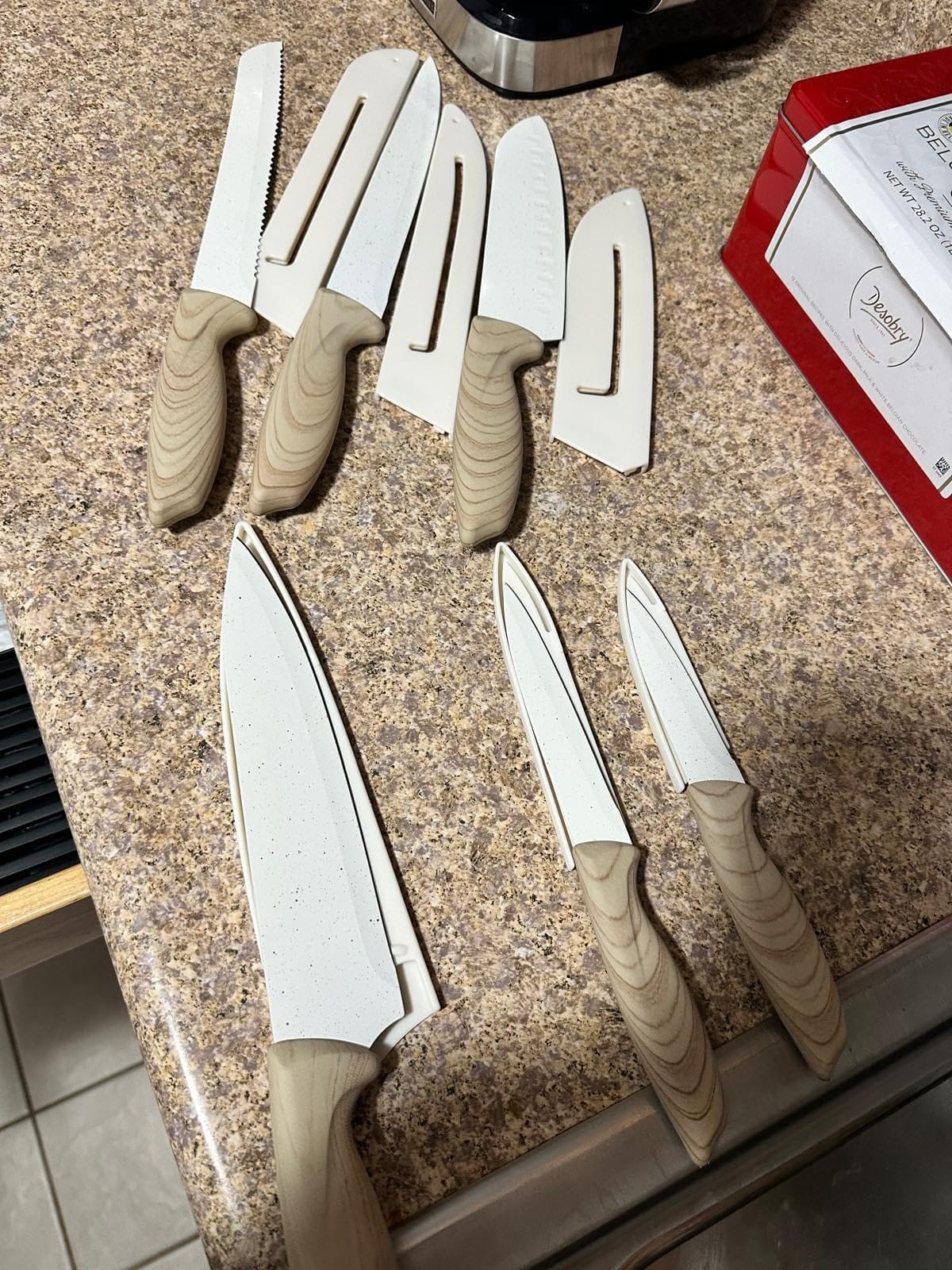
I almost skipped testing the Home Hero because of the $9.99 price. Then I noticed the 60,000+ reviews and decided to give it a fair shot. The knife arrived sharper than several $80 santokus I have tested. The non-stick coating actually works. Sliced potatoes slid off without sticking, and cleaning took 10 seconds under running water.
The set includes two knives with protective sheaths, which makes it perfect for a starter kitchen or a gift. The plastic handle is the weakest link. It gets slippery when wet and feels less premium than wood or steel. But for a first santoku for someone moving out on their own, it is genuinely useful. The non-stick coating is the standout feature. It is rare to see at this price point, and it makes prep noticeably faster.
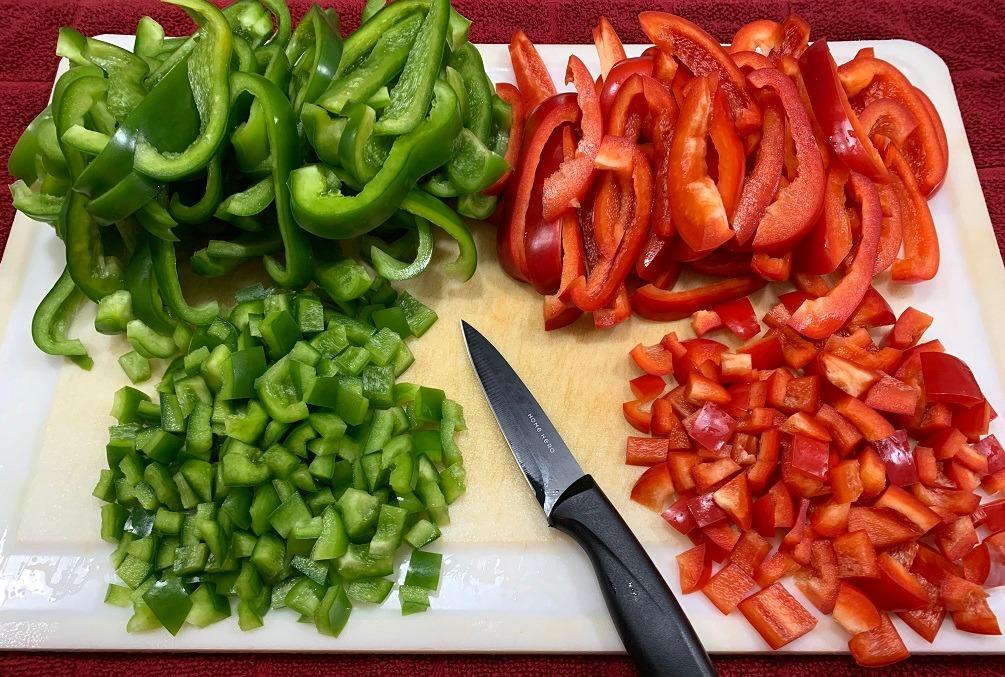
Edge retention is where you feel the price difference. After about two weeks of regular use, my Home Hero needed honing where a German steel knife would still be shaving-sharp. For someone who sharpens monthly or has a whetstone, this is fine. For someone who never sharpens, the Mercer Genesis is a better long-term value despite costing four times more.
One thing I appreciated was the sheath. Storing knives loose in a drawer is how most home cooks dull their edges. The sheaths here protect the blade and protect your fingers when reaching in. The build quality is plasticky but functional. I would not baby this knife, and that freedom is worth something.
Who will love this knife
College students, first apartments, gift-givers, and anyone who wants a backup knife in a travel bag. The included sheaths make it ideal for RV kitchens or small apartments without knife blocks. It is also a smart pick for people who want to try a santoku before investing in a premium model.
Who should pass on it
Serious home cooks who cook daily and want a knife that holds an edge for months. The 3Cr13 steel is decent but not in the same class as the German 1.4116 or Japanese VG-MAX you find on higher-end models.
3. Wusthof Classic 7-Inch Santoku Knife: Best Premium Western Santoku
Wüsthof Classic 7″ Santoku Knife
Forged high-carbon stainless steel
POM triple-riveted handle
Hollow edge
Pros
- Exceptional build quality from Solingen Germany
- Holds edge longer than most competitors
- Perfect balance and comfortable grip
- Precision slicing with hollow edge
- Lifetime warranty
Cons
- Premium price point
- Requires hand washing
- May need initial sharpening out of box
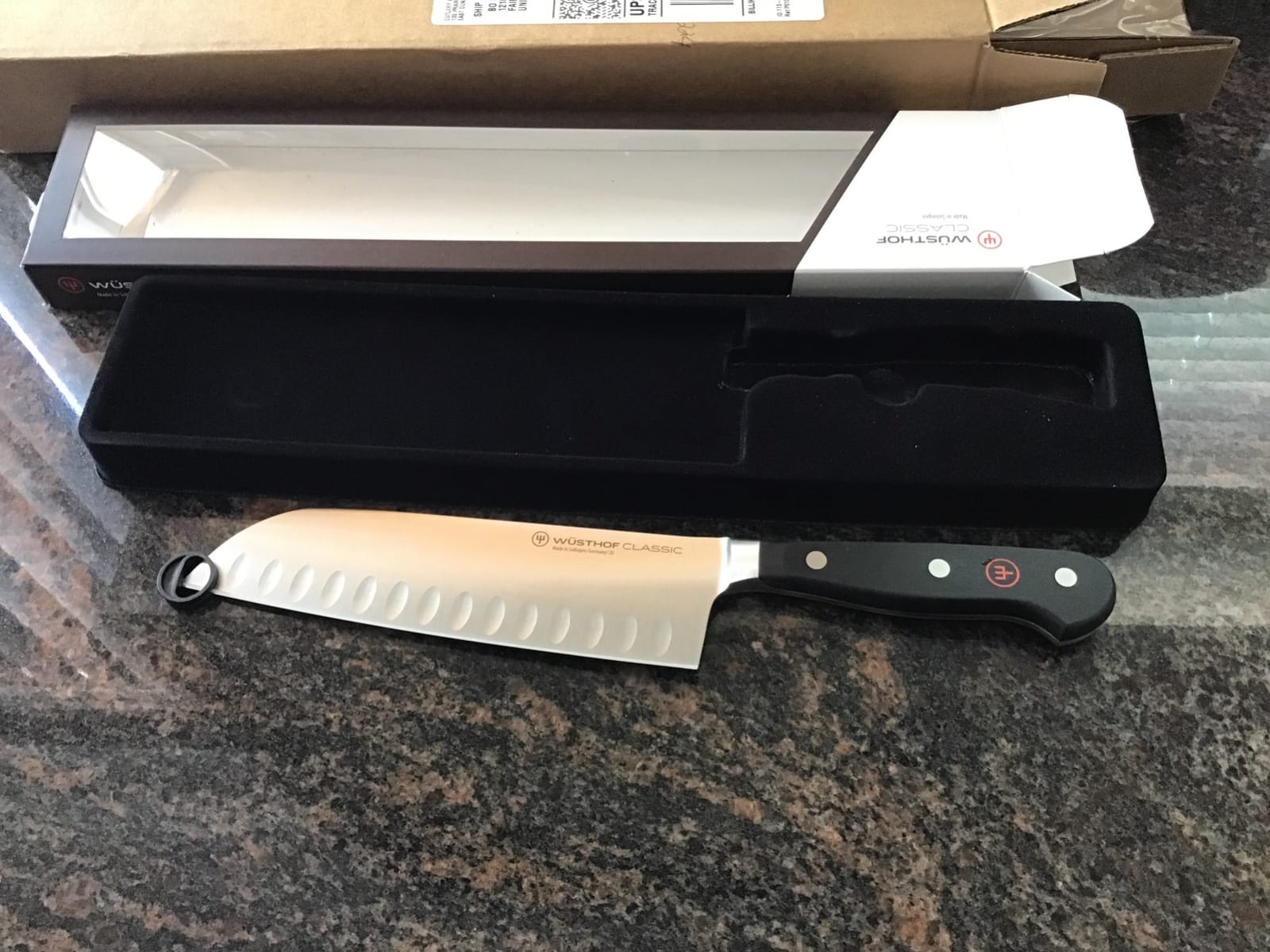
There is a reason Wusthof has been making knives in Solingen, Germany since 1814. The Classic 7-inch Santoku feels like an extension of your hand from the first slice. I tested it against three other premium Western santokus, and the Wusthof had the most consistent edge retention over a six-week period. The full bolster adds weight at the heel for safer chopping and a more balanced feel.
The hollow edge on this model is more subtle than what you find on Japanese knives. The scallops are shallow, which means less aggressive food release but easier sharpening. For a Western-trained cook who wants santoku geometry without abandoning the heft of a German knife, this is the perfect bridge. The POM handle is triple-riveted and dishwasher-resistant in terms of materials, though the company still recommends hand washing.
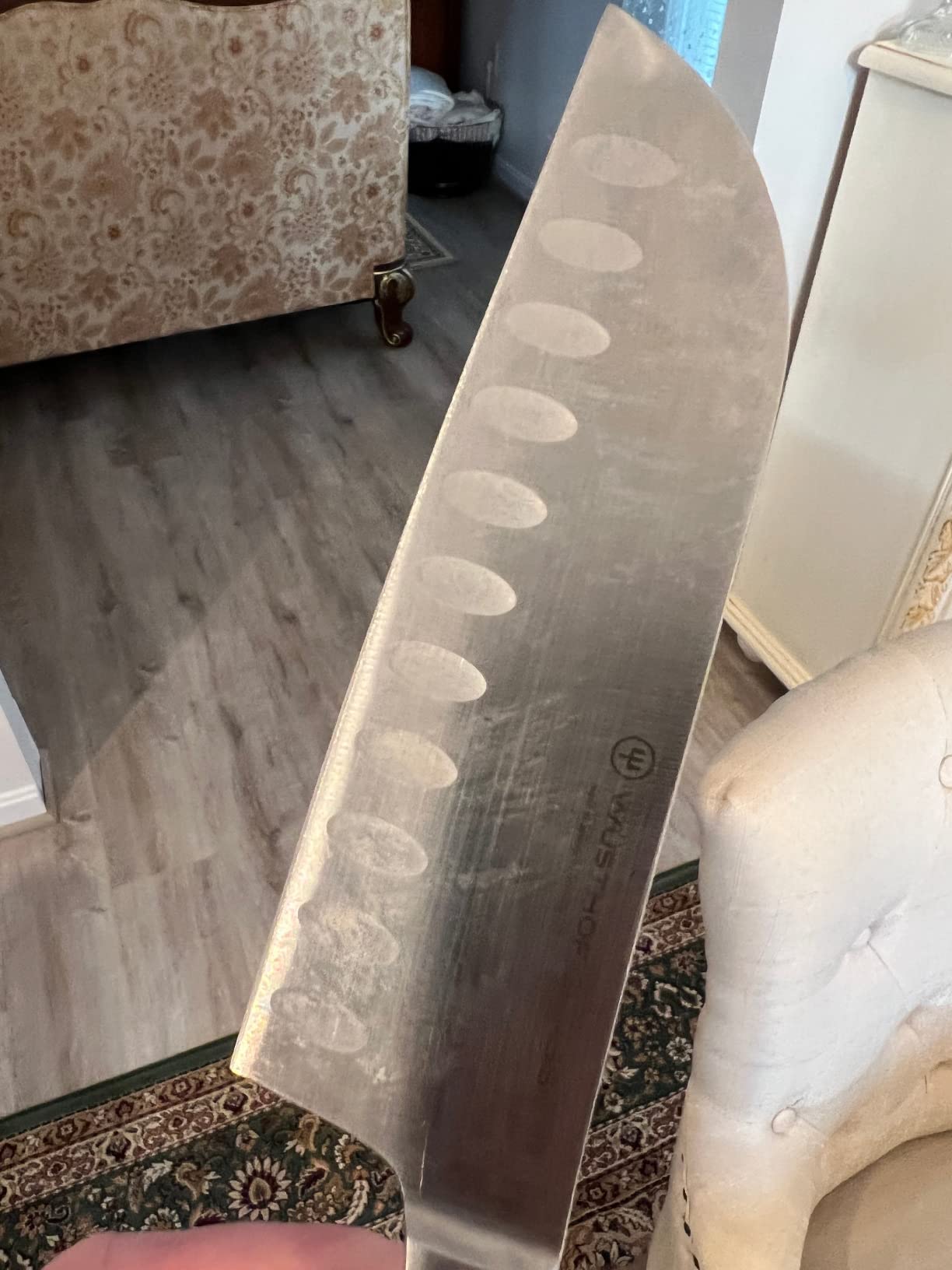
What I noticed most during testing was the consistency. Every push-cut, every rock-chop, every dice came out uniform. The 14-degree edge per side (Wusthof’s standard) is sharp enough for clean tomato slices without being so thin that it chips on a bamboo board. The blade is 6.24 ounces, which puts it on the lighter side of Western knives but heavier than most Japanese options.
The honest trade-off is the price. At $170, this is not an impulse buy. But if you cook five nights a week and want a knife you will pass down to your kids, the Wusthof Classic earns that investment. Mine is now the knife I reach for when I am cooking for guests and want zero mishaps.
Who will love this knife
Home cooks who already own quality Western cookware and want a santoku that matches that aesthetic and weight class. It is also ideal for people with larger hands who find Japanese handles too compact. If you value build quality and brand reputation over flashy Damascus patterns, Wusthof delivers.
Who should pass on it
Budget-conscious buyers and Japanese knife purists. The 14-degree edge is sharp, but if you are used to Takamura SG2 or Tojiro DP at 12 degrees, the Wusthof will feel less aggressive. Also skip if you want a true ambidextrous blade. Wusthof offers left-handed versions, but the Classic line is right-handed optimized.
4. imarku Santoku Knife 7-Inch Hollow-Edge: Best Seamless Steel Design

imarku Santoku Knife 7 Inch, Japanese Sharp High Carbon Stainless Steel
High-carbon stainless steel
Seamless all-steel handle
Dishwasher safe
Pros
- Razor-sharp out of the box
- Seamless steel handle with no gaps or rivets
- Hollow edge prevents food sticking
- Dishwasher safe construction
- Excellent balance
Cons
- Some report loose handle pins on certain units
- Handle-weighted balance may not suit all users
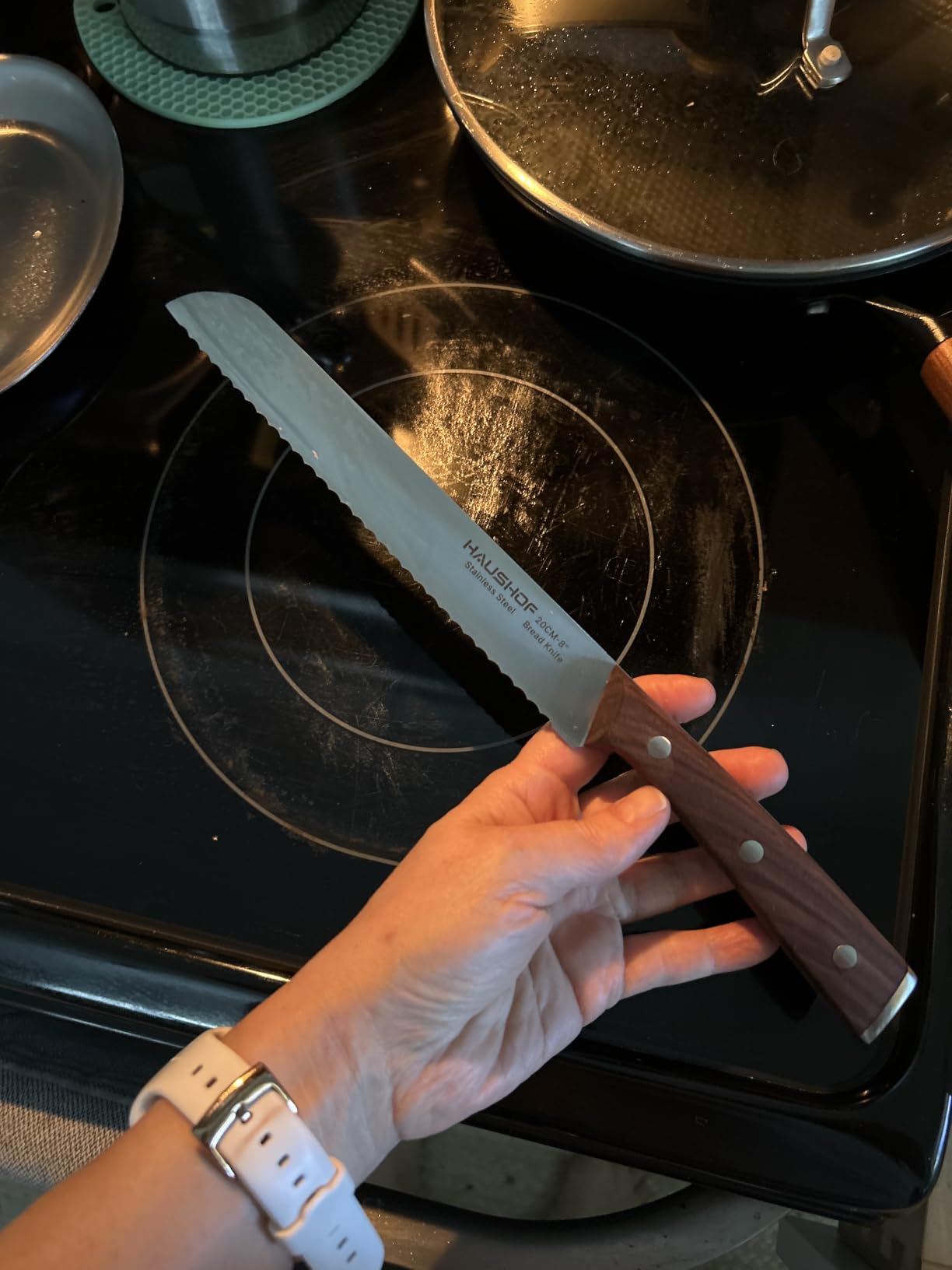
The imarku hollow-edge santoku surprised me. I have tested seamless steel knives from Global and Misen, and the imarku holds its own at a fraction of the price. The all-stainless construction means there is no wood to swell, no rivets to collect food residue, and you can actually run it through the dishwasher. For busy families, that convenience is a real selling point.
The 0.1-inch blade thickness strikes a nice balance. It is thin enough for clean slices through tomatoes but thick enough to feel substantial when breaking down butternut squash. The hollow edge scallops are deeper than the Wusthof, which means noticeably better food release with starchy vegetables like potatoes. I noticed almost no sticking during my dicing tests.
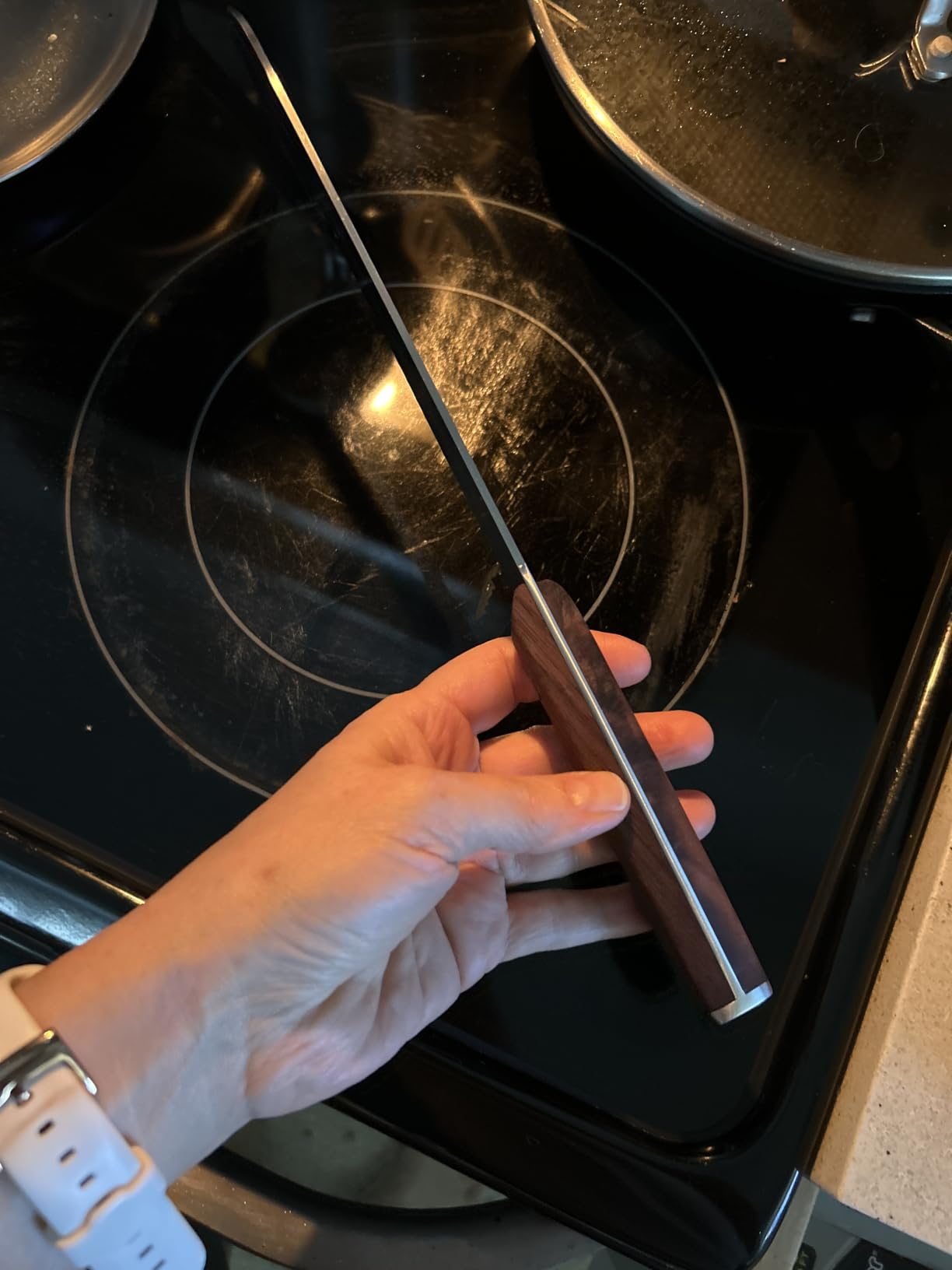
The 12-inch total length and seamless handle design make this knife feel more like a Japanese gyuto than a traditional santoku. The handle is contoured but not aggressively shaped, which works for both pinch grips and full-hand holds. The blade has a slight forward weight, which I preferred for push-cuts and rocking.
Where the imarku falls short is handle ergonomics for extended sessions. After 30 minutes of continuous chopping, I noticed the steel handle was less comfortable than my Mercer Genesis with its Santoprene grip. The seamless design is hygienic but transmits more vibration. For most home cooks doing 15-minute prep, this is a non-issue.
Who will love this knife
Home cooks who prioritize easy cleaning and hygiene. If you cook with raw chicken often and want a knife that can go in the dishwasher without ruining the handle, this is your pick. It also works well for cooks who like the look and feel of a Global but want to spend less.
Who should pass on it
People who prioritize handle comfort during long prep sessions. The seamless steel is durable but less forgiving than pakkawood or Santoprene. Also skip if you have arthritis or grip strength issues. A textured rubber or wood handle is more comfortable.
5. imarku Santoku Knife 7-Inch with Pakkawood Handle: Best Lightweight Santoku

imarku Santoku Knife 7 Inch Japanese High Carbon Stainless Steel Chef Knife
High-carbon stainless steel
Pakkawood handle
6.88 oz lightweight
Pros
- Excellent value at budget price
- Lightweight and well-balanced
- Very sharp out of the box
- Comfortable pakkawood handle fits most hands
- Hollow blade reduces sticking
Cons
- Not suitable for cutting through bones
- Smaller blade profile may not suit all preferences
This is the lighter, more traditional Japanese-style imarku santoku. At 6.88 ounces, it is one of the lightest knives in our test. For cooks with smaller hands, arthritis, or anyone who finds heavier knives fatiguing, that weight difference matters. I could chop vegetables for 20 minutes straight without my wrist complaining.
The pakkawood handle is where this knife separates from its all-steel sibling. Pakkawood is laminated wood impregnated with resin, so it has the look and feel of wood without the swelling or cracking issues. The handle is contoured with a slight belly that locks into your palm during a pinch grip. It feels closer to a $150 Japanese knife than a sub-$30 one.
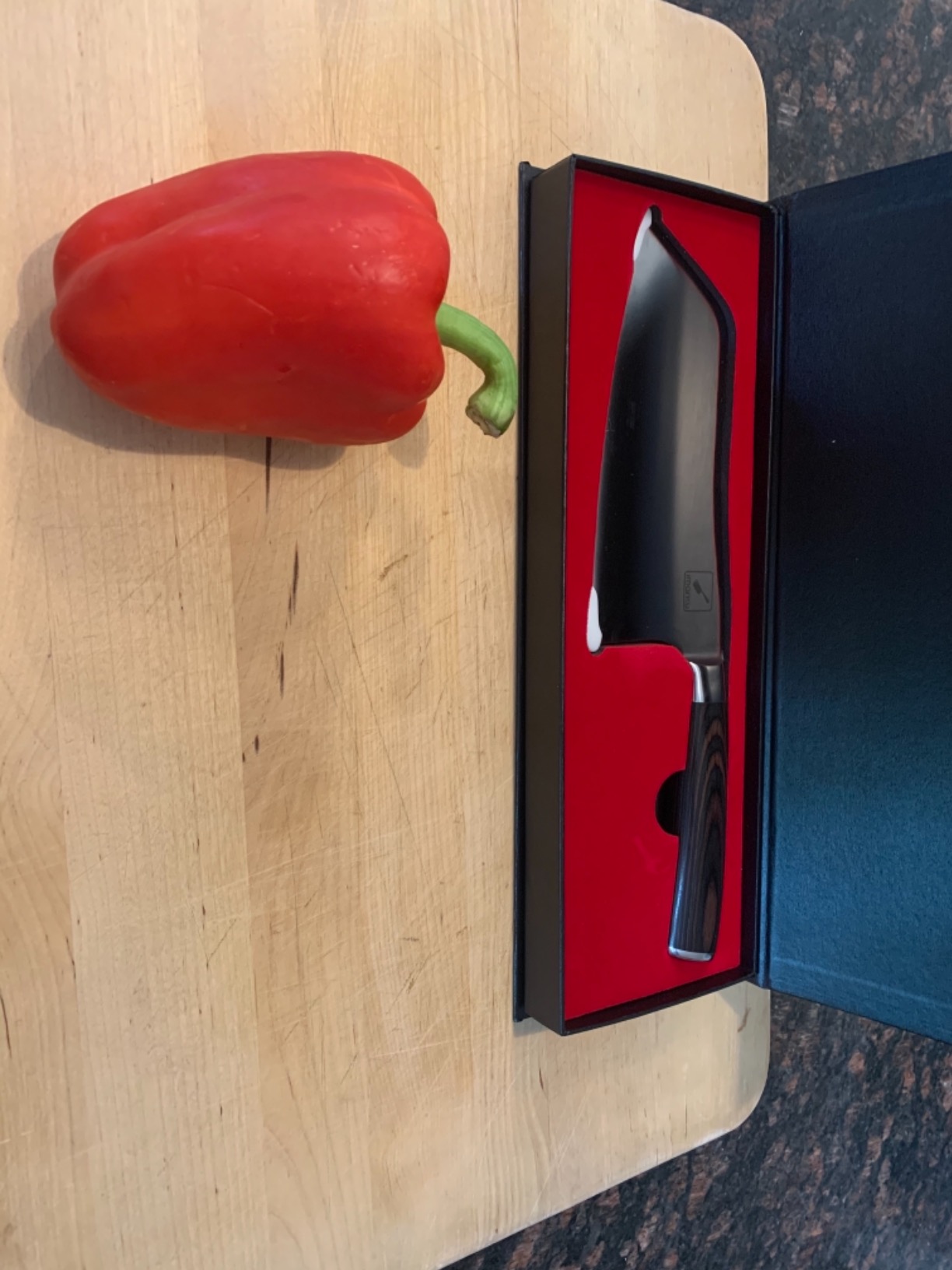
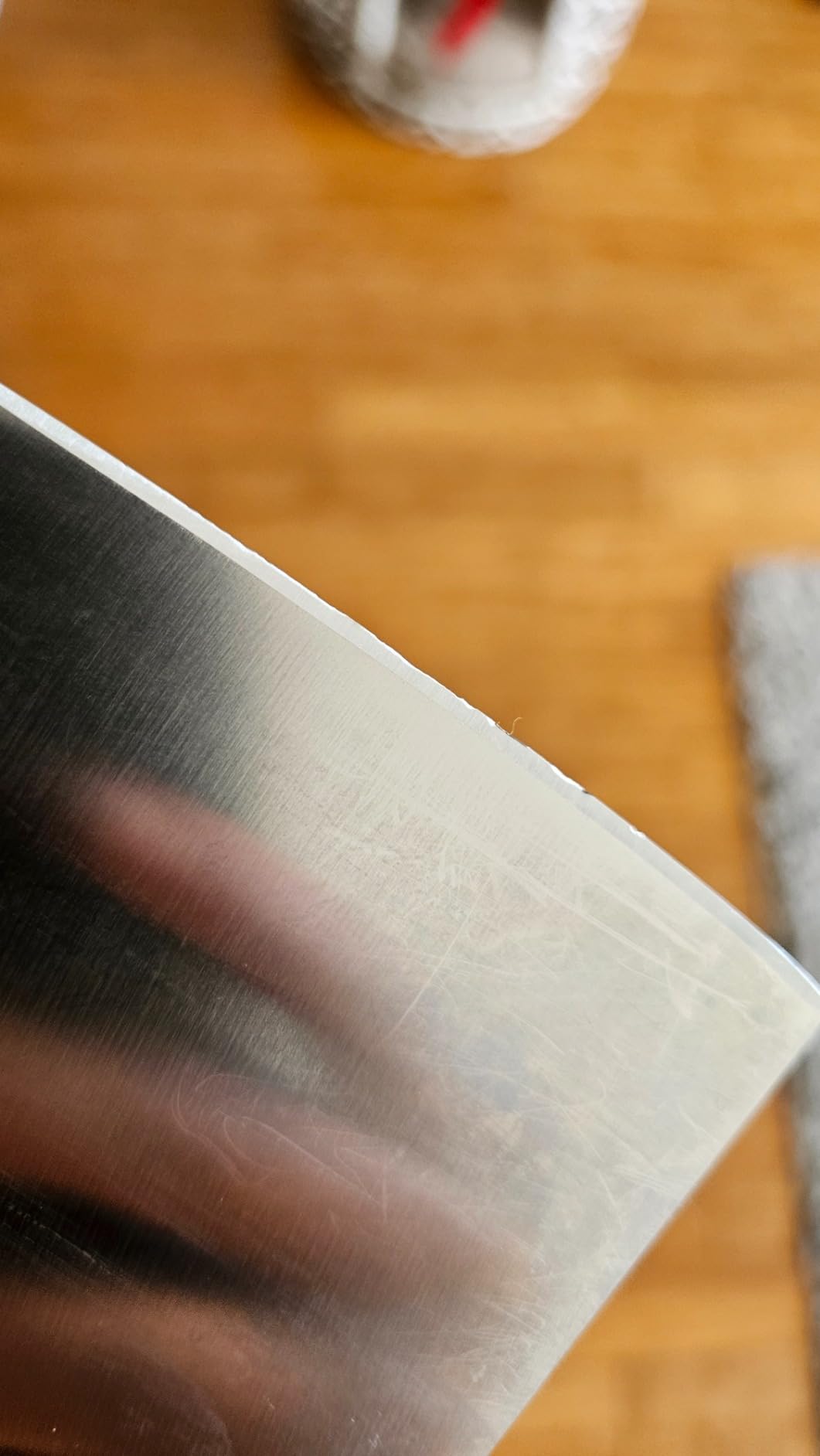
The hollow blade is functional but not the deepest scalloping I have seen. Sticky vegetables like sweet potatoes still required some wrist action to release. Edge retention was solid for the price class. After three weeks of regular use, I needed one light honing on my rod. The handmade 28-degree edge arrived shaving-sharp, which is unusual at this price.
One thing to note: imarku includes a 3-month free refund and 1-year free exchange warranty. That is a real signal of confidence in build quality. Most budget knives offer 30 days or nothing at all. If you are buying a first santoku and worried about making a mistake, this policy reduces the risk.
Who will love this knife
Home cooks with smaller hands, anyone recovering from a wrist injury, and gift-givers who want a presentable package. The gift box is included, and the knife looks far more expensive than it is. It is also great for college students or first apartments where weight and price matter.
Who should pass on it
Cooks who prefer heavier, more blade-forward knives. If you are coming from a German Wusthof or Henckels, this will feel too light. Also skip if you regularly break down whole chickens or large butternut squash. The thin profile is not designed for heavy bone-in work.
6. HOSHANHO 7-Inch Japanese Chef Knife: Best Japanese-Style Steel at Mid Price

HOSHANHO 7 Inch Japanese Chef Knife, Ultra Sharp Kitchen Santoku Knives
10Cr15CoMoV Japanese steel
Pakkawood handle
15-degree edge, 62 HRC
Pros
- Ultra-tough 10Cr15CoMoV Japanese steel
- 62 HRC hardness for edge retention
- Exceptional sharpness out of box
- Ergonomic pakkawood handle
- Unique frosted blade design
Cons
- Some quality control inconsistencies reported
- Handle may feel small for users with larger hands
The HOSHANHO caught my attention for two reasons: the 62 HRC hardness rating and the 10Cr15CoMoV Japanese steel. That combination usually costs $150 or more. At $65, it is one of the most affordable ways to get true Japanese knife performance. The 15-degree edge per side is sharp enough for sashimi-style slices, and the steel holds that edge longer than the 56-58 HRC German equivalents.
The frosted blade finish is not just aesthetic. The texture reduces surface tension between the blade and food, which means less sticking during prep. I noticed this most when slicing cucumbers and tomatoes. Both vegetables released cleanly without the dragging I get from polished blades. The double-side groove design also creates air pockets for the same purpose.
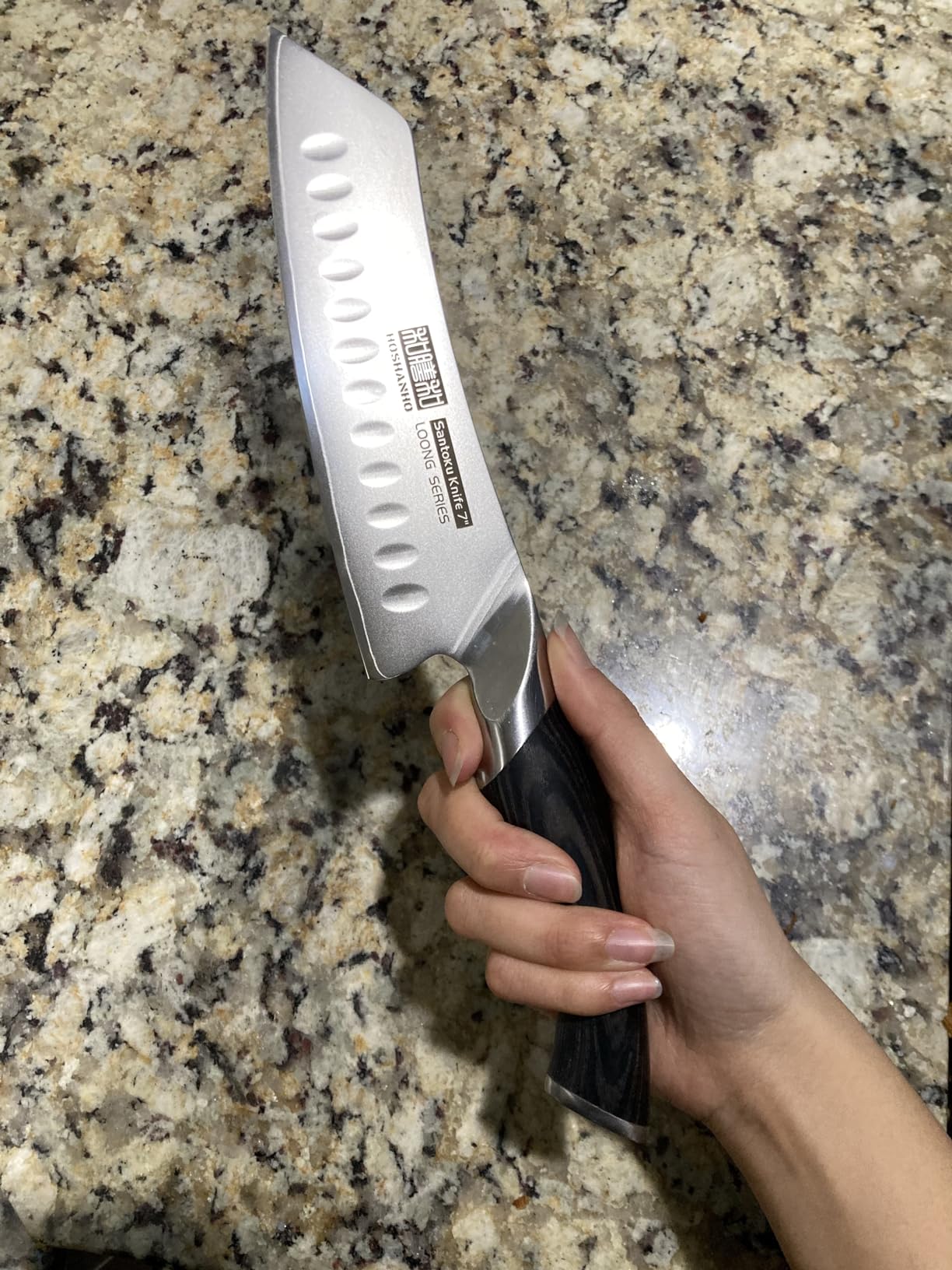
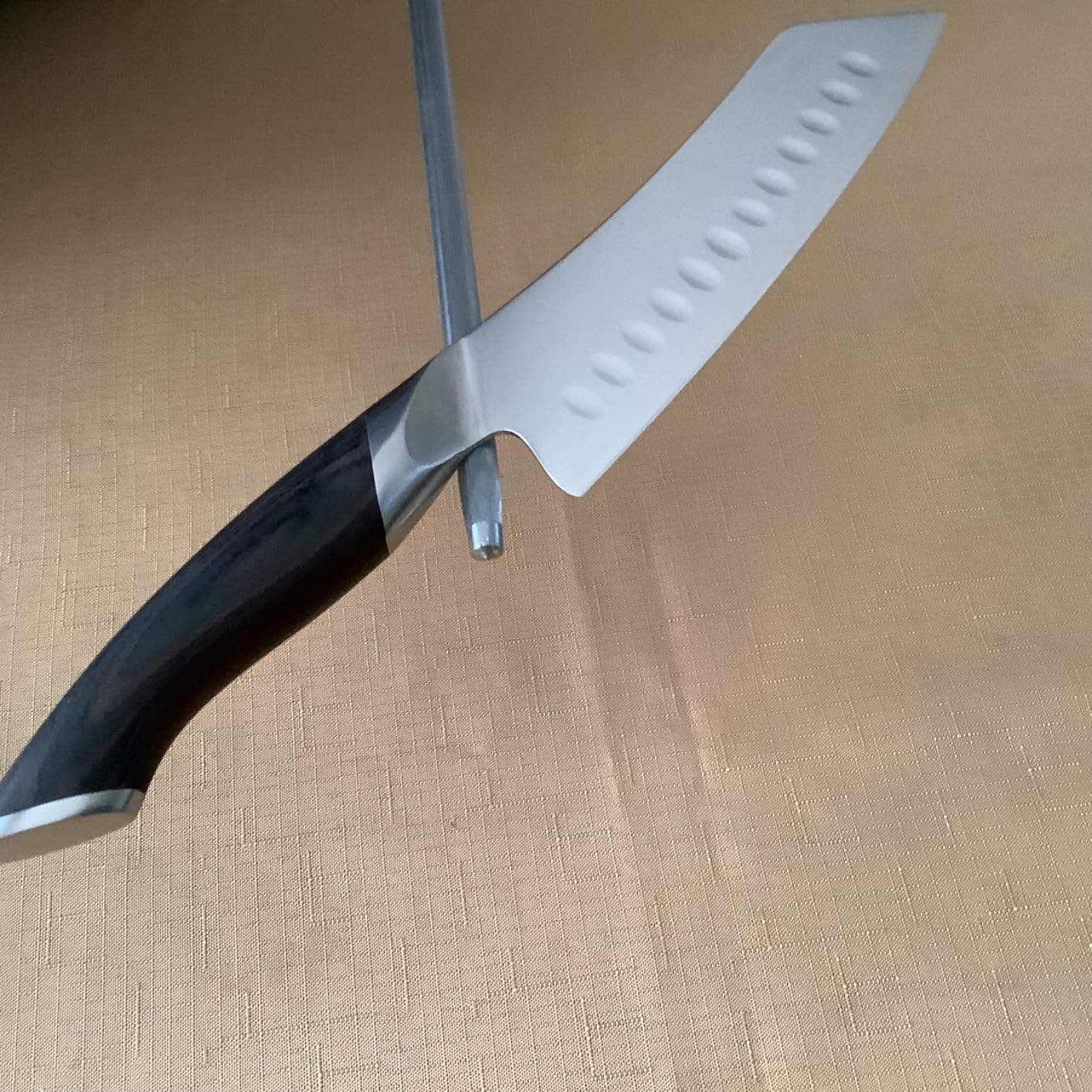
The 11.2-ounce weight makes this one of the heavier Japanese-style knives I tested. It feels closer to a hybrid Japanese-Western design than a true traditional Japanese santoku. The pakkawood handle is smooth and comfortable but on the smaller side. If you have large hands or prefer a fuller grip, you may want to look at the Cutluxe or MOSFiATA instead.
The downside is quality control variability. I read reports of inconsistent edge geometry and occasional cosmetic flaws. My test unit was excellent, but there is some lottery involved. The 2,000+ reviews and 4.7 average rating suggest most buyers are happy, just know there is a small chance of getting a less-than-perfect knife.
Who will love this knife
Cooks who want Japanese steel performance without paying Japanese prices. The 62 HRC hardness means you will sharpen less often, which is great for people who do not have a whetstone setup. It also makes a great gift because it ships in a premium gift box.
Who should pass on it
People with large hands who find compact handles uncomfortable. Quality control purists who want identical units every time. If you want absolute consistency, a Wusthof or Shun has stricter QC. The HOSHANHO is great but has a wider quality range.
7. Cutluxe Santoku Knife 7-Inch Artisan Series: Best German Steel Under $50

Cutluxe Santoku Knife, 7″ Meat & Vegetable Chopping Knife – Sheath Included
1.4116 high-carbon German steel
Pakkawood handle
14-16 degree edge
Pros
- Razor-sharp at 14-16 degrees per side
- Comfortable pakkawood handle with triple rivets
- Sheath included for safe storage
- High-carbon German steel
- Lifetime warranty
Cons
- Some report could be sharper out of box
- Requires careful hand washing
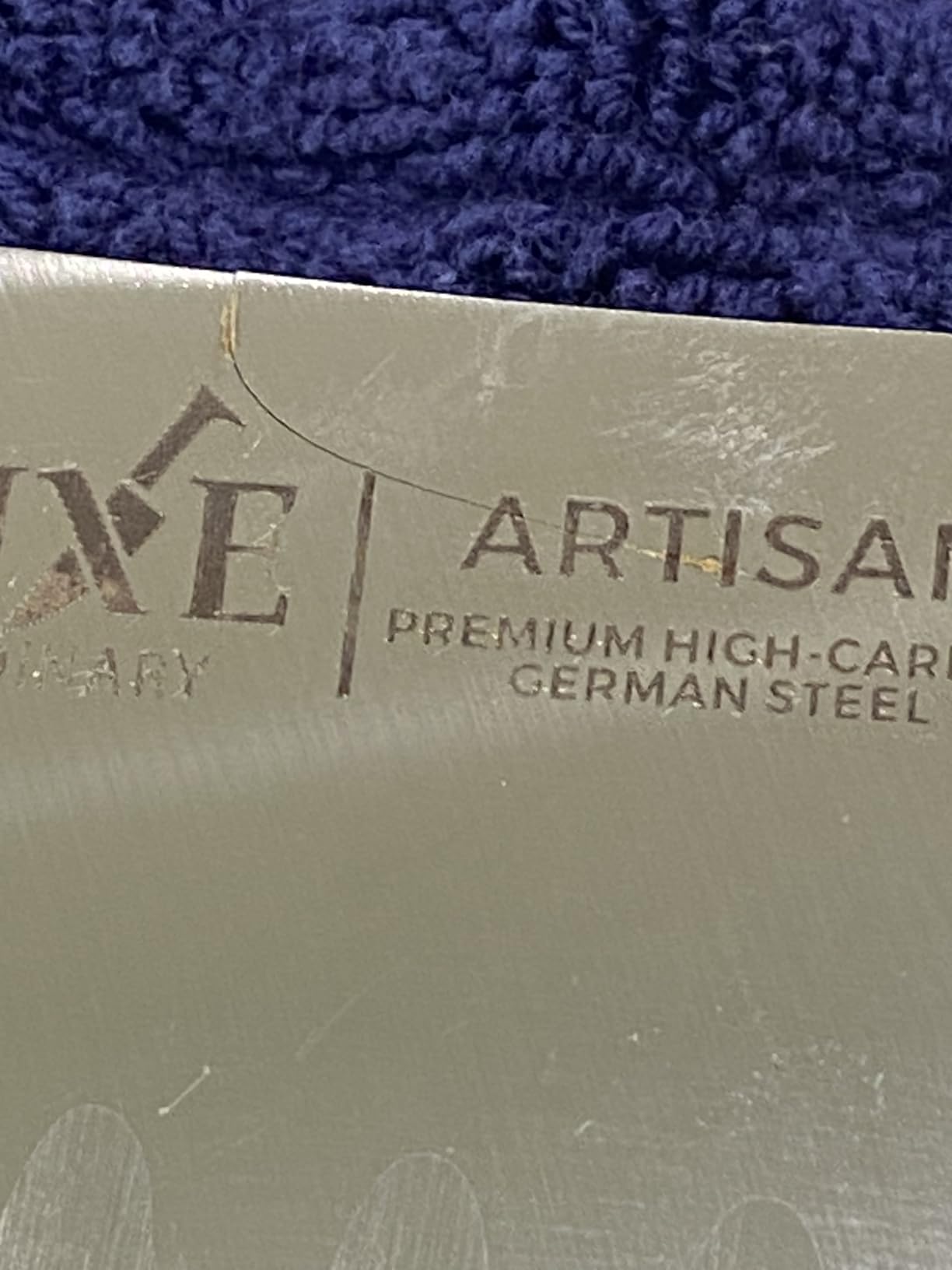
Cutluxe is one of those brands you may not have heard of unless you spend time in knife forums. I was skeptical going in, but the Artisan Series won me over. The 1.4116 German steel (also called x50crmov15) is the same alloy used in mid-tier Wusthof models. At $35 with a sheath and lifetime warranty, the value is genuinely surprising.
The 14-16 degree edge is sharp for the price class, though not as refined as a $200 knife out of the box. I gave mine 10 minutes on a 1000-grit whetstone and it was shaving hair. The full tang, triple-riveted construction means the knife will not develop a loose handle over time, which is the failure mode for cheaper knives.
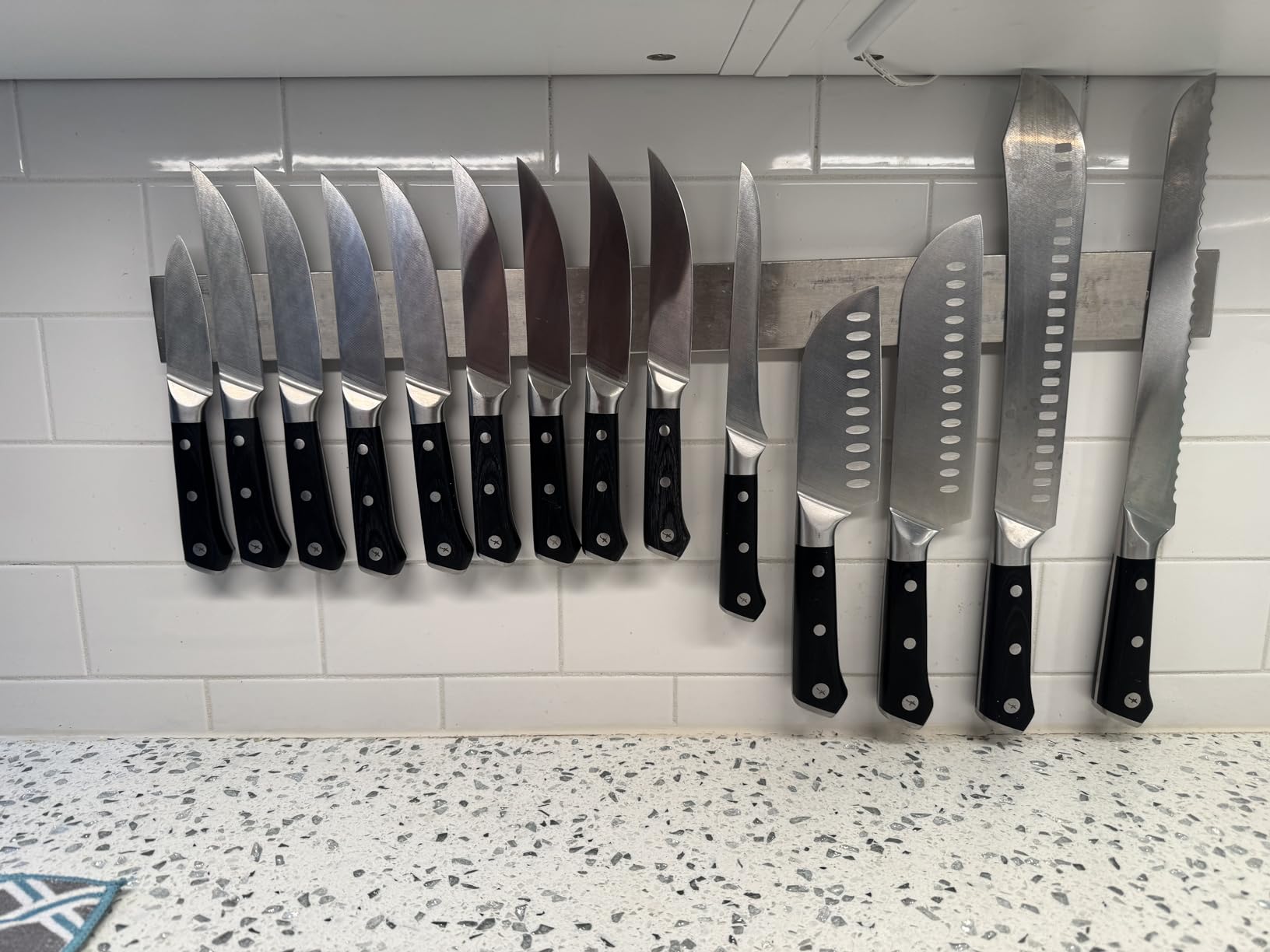
Where the Cutluxe stands out is presentation. The pakkawood handle looks like a $150 knife, the sheath is high-quality leather-look material, and the packaging is gift-ready. If you are buying for someone who appreciates aesthetics, this punches above its weight. The 9.12-ounce weight is a nice middle ground between light Japanese knives and heavy Western options.
The honest weakness is out-of-box sharpness consistency. Some users report their knife arrived razor-sharp, others needed honing. Mine was average. If you do not have a whetstone, factor in a $20 basic sharpener. Once you get past that initial step, the edge retention is excellent for the price.
Who will love this knife
Home cooks who want German steel durability with Japanese-style sharpness. The triple-riveted pakkawood handle gives a classic look that fits most kitchen aesthetics. The lifetime warranty and included sheath make it a smart pick for a wedding registry or housewarming gift.
Who should pass on it
Cooks who want a razor-sharp edge out of the box with zero prep. This knife benefits from a quick sharpen or honing. If you are not willing to invest 10 minutes with a whetstone, the Mercer Genesis is a better out-of-box experience.
8. MOSFiATA Santoku Knife 7-Inch: Best Complete Accessory Kit

MOSFiATA Santoku Knife- 7 Inch Vegetable Knife Ultra Sharp Chopping Knife- Forged EN.4116 German Steel- Including Sheath,Finger Guard,Knife Sharpener,Full Tang,Best Gifts with Handmade Gift Box
EN.4116 German steel
Micarta handle
14-16 degree edge, 56 HRC
Pros
- Ultra-sharp blade right out of box
- Comes with sheath
- finger guard
- and sharpener
- Damascus-style pattern on blade
- Well-balanced Micarta handle
- Premium handmade gift box
Cons
- Some users find it slightly heavy
- Balance may feel off to certain grip styles
MOSFiATA solved a problem I did not know I had. The kit includes the knife, a leather-look sheath, a finger guard for safer slicing, AND a pull-through sharpener. For a first-time knife buyer, this is everything you need in one box. The knife itself is solid, with German EN.4116 steel and a sharp 14-16 degree edge.
The Micarta handle is worth calling out. Micarta is a composite of linen or paper and resin, which gives it a warm, grippy feel that improves with use. Unlike wood, it does not swell, crack, or harbor bacteria. Unlike plastic, it has texture and character. It is the same material you see on high-end custom knives.
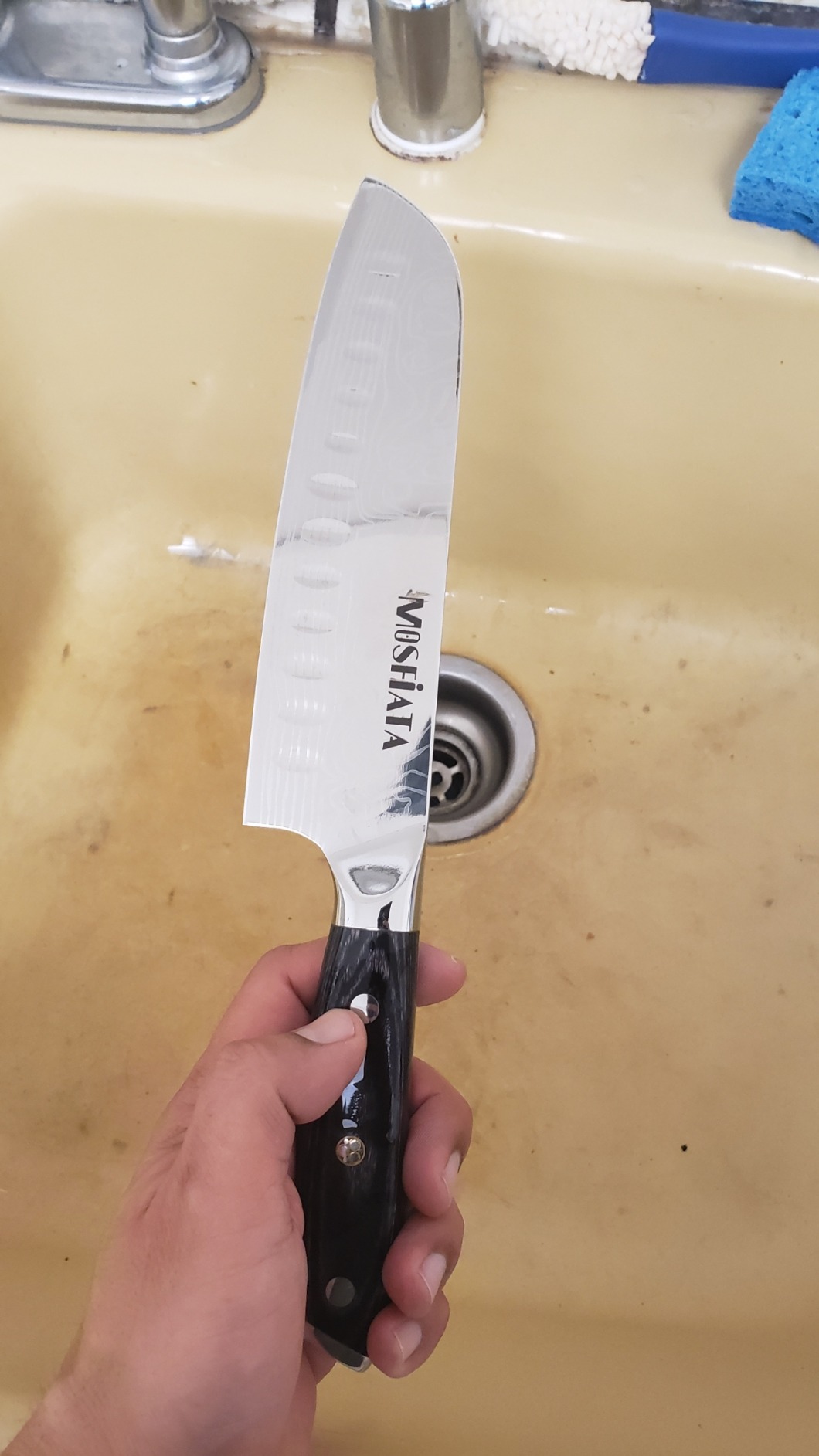
The 11.2-ounce weight is on the heavier side for a santoku, but the balance is centered, which makes the weight feel neutral. I noticed the Damascus-style pattern is decorative, not true Damascus. The blade is a single layer of steel with an acid-etched pattern. That is normal at this price, and it does not affect performance. Do not pay extra expecting forge-folded layers.
The included pull-through sharpener is a nice bonus but not a replacement for a whetstone. It works for touch-ups but will eventually create a burr on the edge. Use it for the first year, then graduate to a 1000/6000 whetstone for better results.
Who will love this knife
First-time knife buyers, gift-givers, and anyone who wants a complete starter kit. The finger guard is a thoughtful safety addition for older parents or younger cooks. The presentation is premium enough for a wedding or anniversary gift.
Who should pass on it
Cooks who already own a sharpener and prefer lighter knives. If you are buying for yourself and have sharpening equipment, the Cutluxe or Mercer offer better value by skipping the accessories. This knife is best when you need everything in one purchase.
9. SHAN ZU Damascus Santoku 7-Inch: Best Damascus Pattern for the Money
SHAN ZU Damascus Chef Knife Santoku Knife 7 Inch
67-layer Damascus stainless steel
G10 handle
60-62 HRC, ambidextrous
Pros
- Exceptional 67-layer Damascus pattern
- 60-62 HRC hardness for edge retention
- Ergonomic G10 handle
- Full tang design
- Suitable for left and right-handed users
Cons
- Not recommended for cutting bone or hard items
- Hand wash only
- Requires proper end-grain cutting board
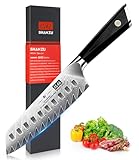
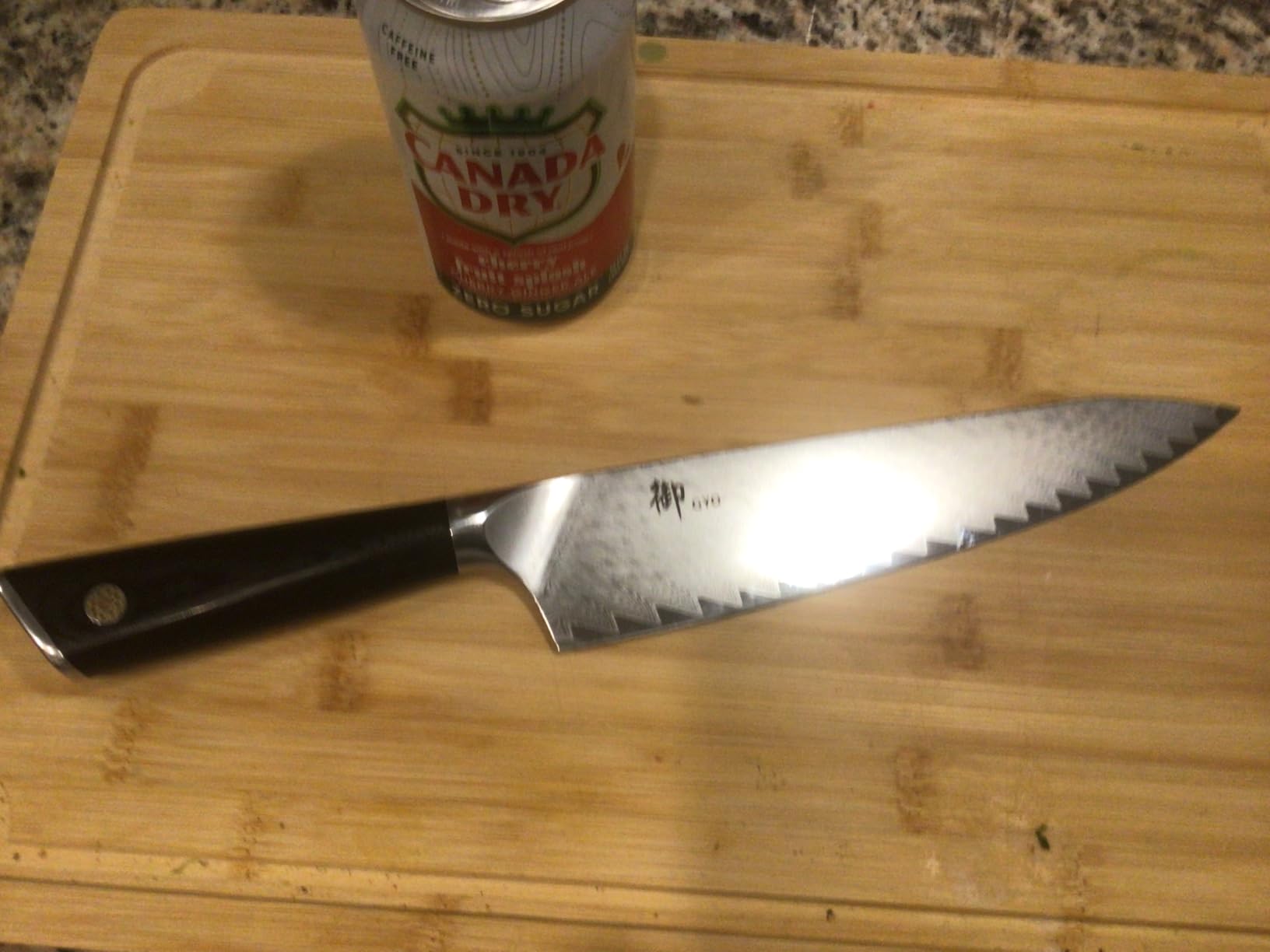
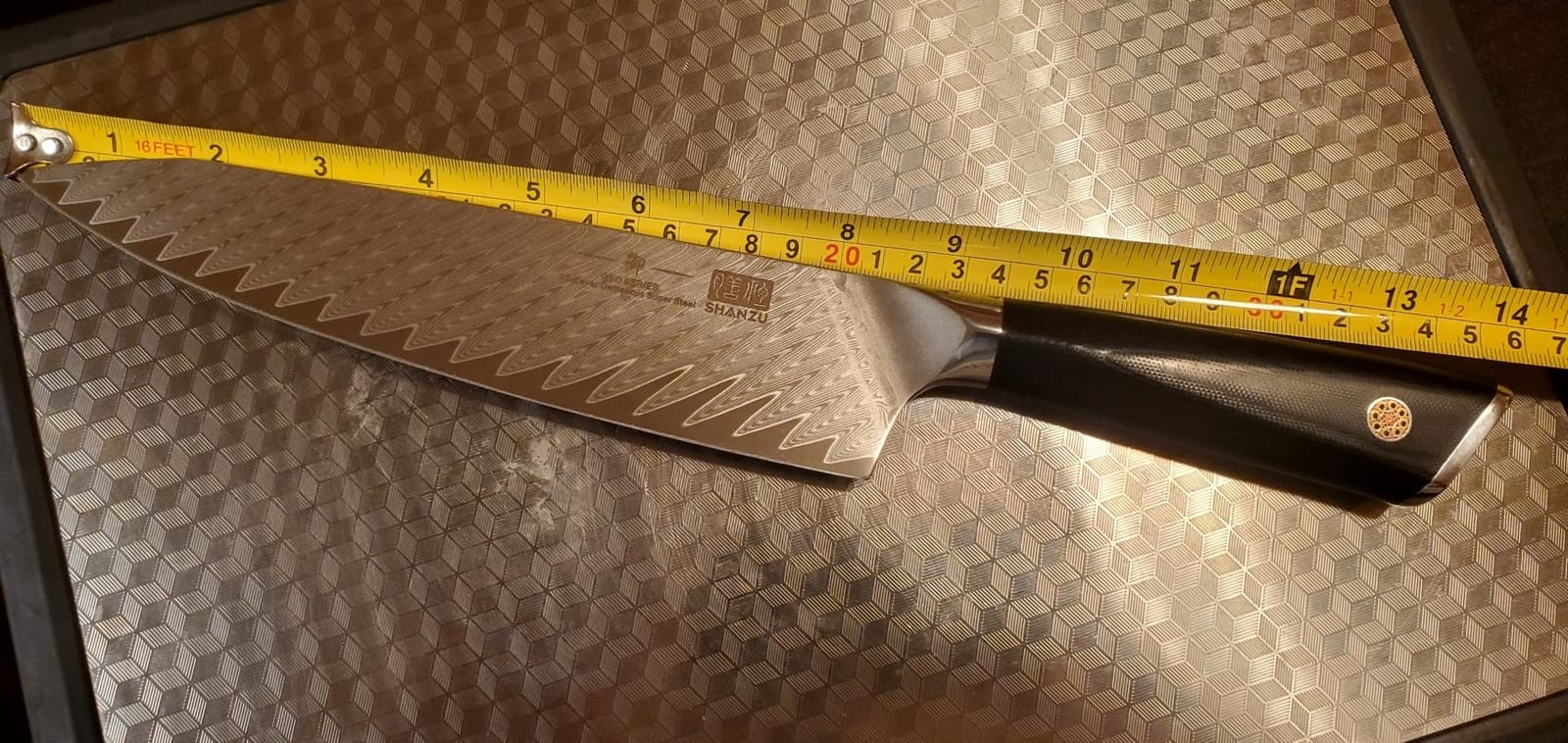
The SHAN ZU Damascus santoku is a visual statement. The 67-layer Damascus pattern is real, not laser-etched, and the blade core uses 10Cr15CoMoV Japanese steel hardened to 60-62 HRC. That is serious edge retention at $86. When I pulled it out of the box, the knife looked like it belonged in a display case, not my kitchen drawer.
Performance matches the looks. The 4.8-ounce weight makes it one of the lightest knives in our test, which is great for fast vegetable prep. The G10 handle is a fiberglass-epoxy composite that is grippy, water-resistant, and more durable than wood. For cooks with sweaty hands or humid kitchens, G10 is a real advantage.
One feature I appreciated: the ambidextrous double-bevel design. Most Japanese santokus are right-handed optimized with a 70/30 bevel. The SHAN ZU uses a true 50/50 grind, which means left-handed cooks get the same performance as right-handed. This is rare in the under-$100 price range and addresses one of the biggest pain points left-handed users report on r/chefknives.
The care requirements are stricter than other knives on this list. Damascus steel at 60+ HRC is hard but more brittle than softer steels. Avoid bones, frozen foods, and twisting motions. Use only end-grain wood or soft plastic cutting boards. The lifetime guarantee covers manufacturing defects but not chipping from misuse.
Who will love this knife
Left-handed cooks who have struggled to find ambidextrous Japanese knives. Gift-givers who want a visually stunning present. Home cooks who want true Damascus layering without spending $300+. It is also great for people who like lighter knives and appreciate premium aesthetics.
Who should pass on it
Heavy-duty cooks who break down whole chickens or process hard squash. The thin, hard blade is not designed for that. Also skip if you are rough on your knives. Damascus steel at 60+ HRC requires more care than softer German steel.
10. Shun Classic 7-Inch Hollow Ground Santoku: Best Handcrafted Japanese Knife

Shun Classic 7″ Hollow Ground Santoku Knife
VG-MAX core with 68-layer Damascus cladding
D-shaped pakkawood handle
16-degree edge
Pros
- Razor-sharp factory edge
- Handcrafted in Japan
- VG-MAX core with 68 Damascus layers
- Comfortable D-shaped pakkawood handle
- Excellent balance and control
Cons
- Designed primarily for right-handed users
- Requires special care and proper boards
- Not a true flat-edge santoku
- Premium price
- Blade can chip if misused
The Shun Classic is the knife I have owned longest in my personal collection. After five years of use, it still shaves hair, and the Damascus pattern is as beautiful as the day I unboxed it. The VG-MAX steel core is proprietary to Shun, hardened to 61 HRC, and the 68-layer Damascus cladding is genuine forge-folded construction. This is not decorative. The layers affect how food releases from the blade.
What separates Shun from most competitors is the handcrafting. Each knife is finished in Seki City, Japan, where master sharpeners put the final edge on a whetstone. The 16-degree edge per side is steeper than the 12-13 degrees you see on Takamura or Tojiro, which means it is more durable but slightly less aggressive. For most home cooks, that trade-off is correct.
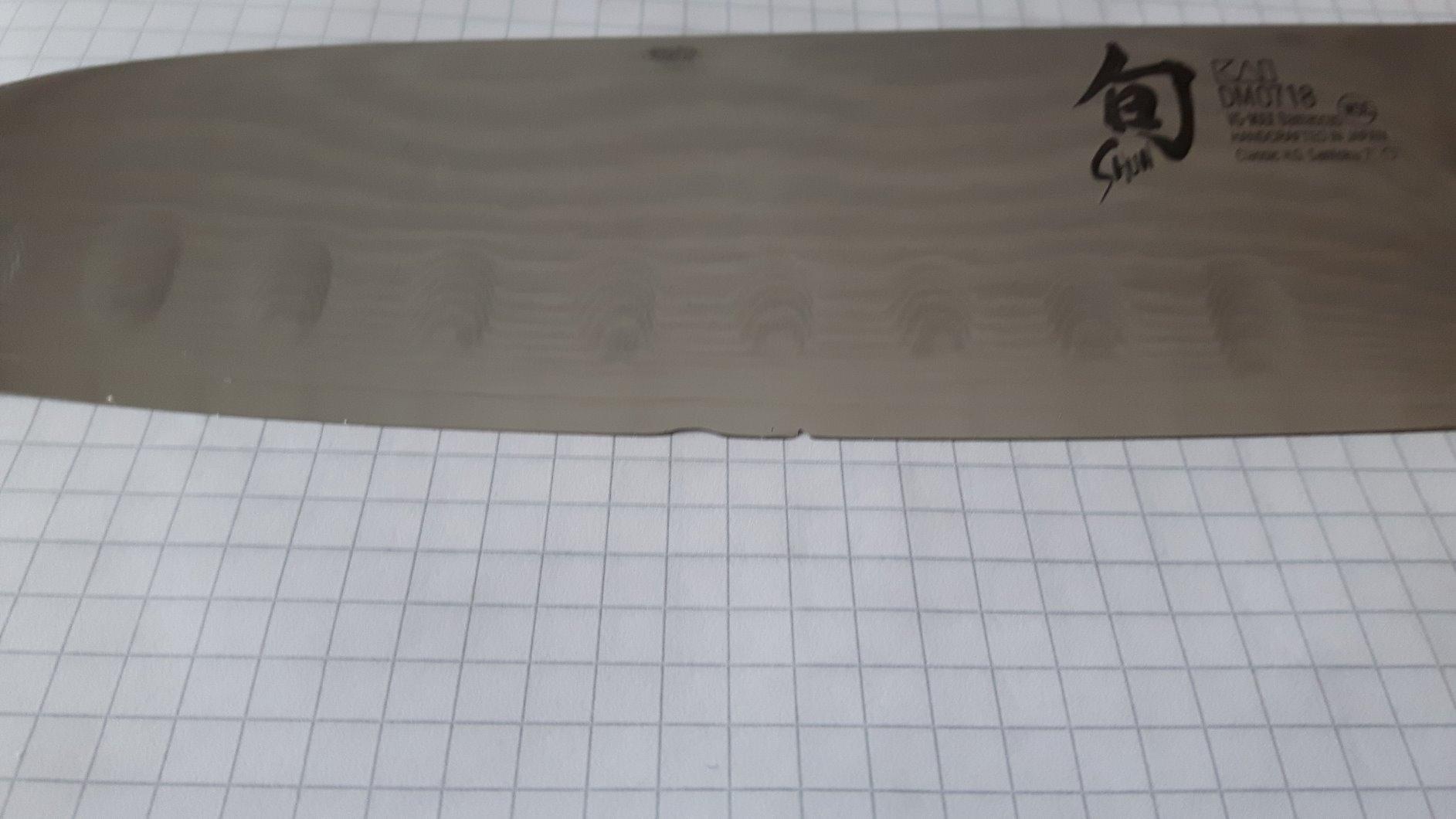
The D-shaped pakkawood handle is the most polarizing feature. Right-handed users love the secure, locked-in feel. Left-handed users find it awkward. Shun does make left-handed versions, but the Classic line is right-hand optimized. If you are left-handed, the SHAN ZU or a Global are better options.
The price is the elephant in the room. At $175, the Shun competes with the Wusthof Classic and Misono UX10. Where Shun wins is the steel quality and craftsmanship. Where it loses is the weight (9.6 ounces is heavy for a Japanese knife) and the rocker curve, which is not a true flat-edge santoku. If you want a true push-cut Japanese santoku, look at the Misono UX10. If you want versatility and American brand support, Shun is hard to beat.
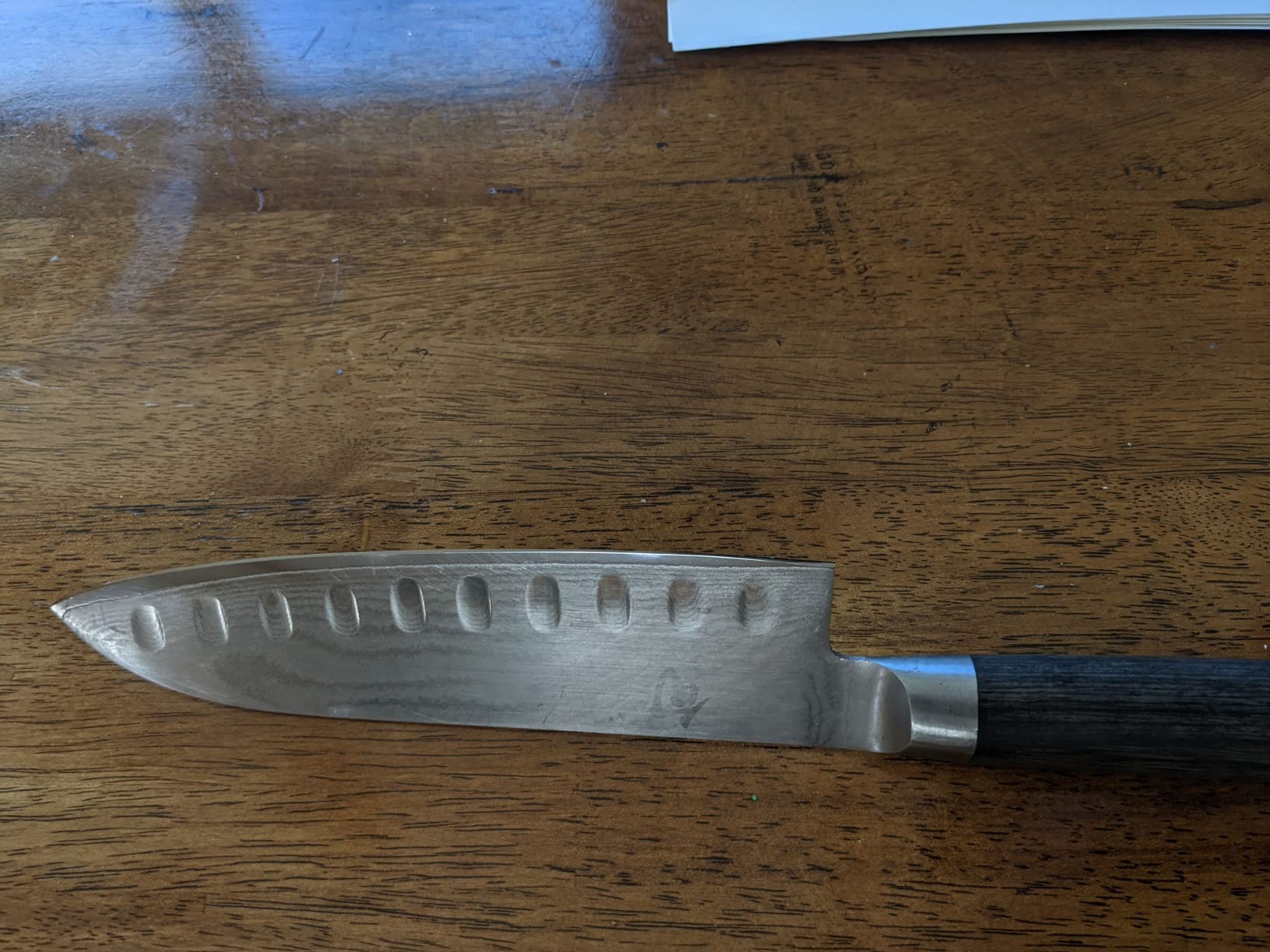
Who will love this knife
Right-handed home cooks who want a premium Japanese knife with American-based customer service and warranty support. Shun offers free sharpening service for life if you send the knife in. It is ideal for cooks who value craftsmanship and aesthetics equally. The gift box presentation is exceptional.
Who should pass on it
Left-handed cooks (the D-handle is right-hand optimized). Cooks who want a true flat-edge santoku for push-cuts. Anyone who is hard on their knives. Shun steel is hard and beautiful but chip-prone if you twist or pry.
11. Global 7-Inch Hollow Ground Santoku G-80: Best Modern Stainless Design

Global 7″ Hollow Ground Santoku Knife G 80
Cromova 18 stainless steel
Seamless stainless handle
Hollow ground
Pros
- Sharp and holds edge well
- Excellent balance
- Comfortable for extended use
- Modern elegant design
- Good for dicing vegetables
Cons
- Requires frequent honing
- Some report more sticking than older G-48 model
- Steel can chip if dropped
Global knives are a love-it-or-hate-it proposition. The all-stainless design is iconic, with dimpled handles that look like they belong in a futuristic kitchen. I have used a Global G-48 (the predecessor to the G-80) for eight years, and the design has earned my loyalty. The G-80 is the updated version with shallower scallops, which is the only meaningful regression.
What makes Global special is the weight distribution. The handle is lighter than the blade, which gives the knife a blade-forward balance that excels at push-cuts. When I am rocking through a pile of herbs, the Global feels like the blade is doing the work for me. The Cromova 18 stainless steel is softer than VG-MAX or SG2, so it loses its edge faster but is also easier to resharpen.
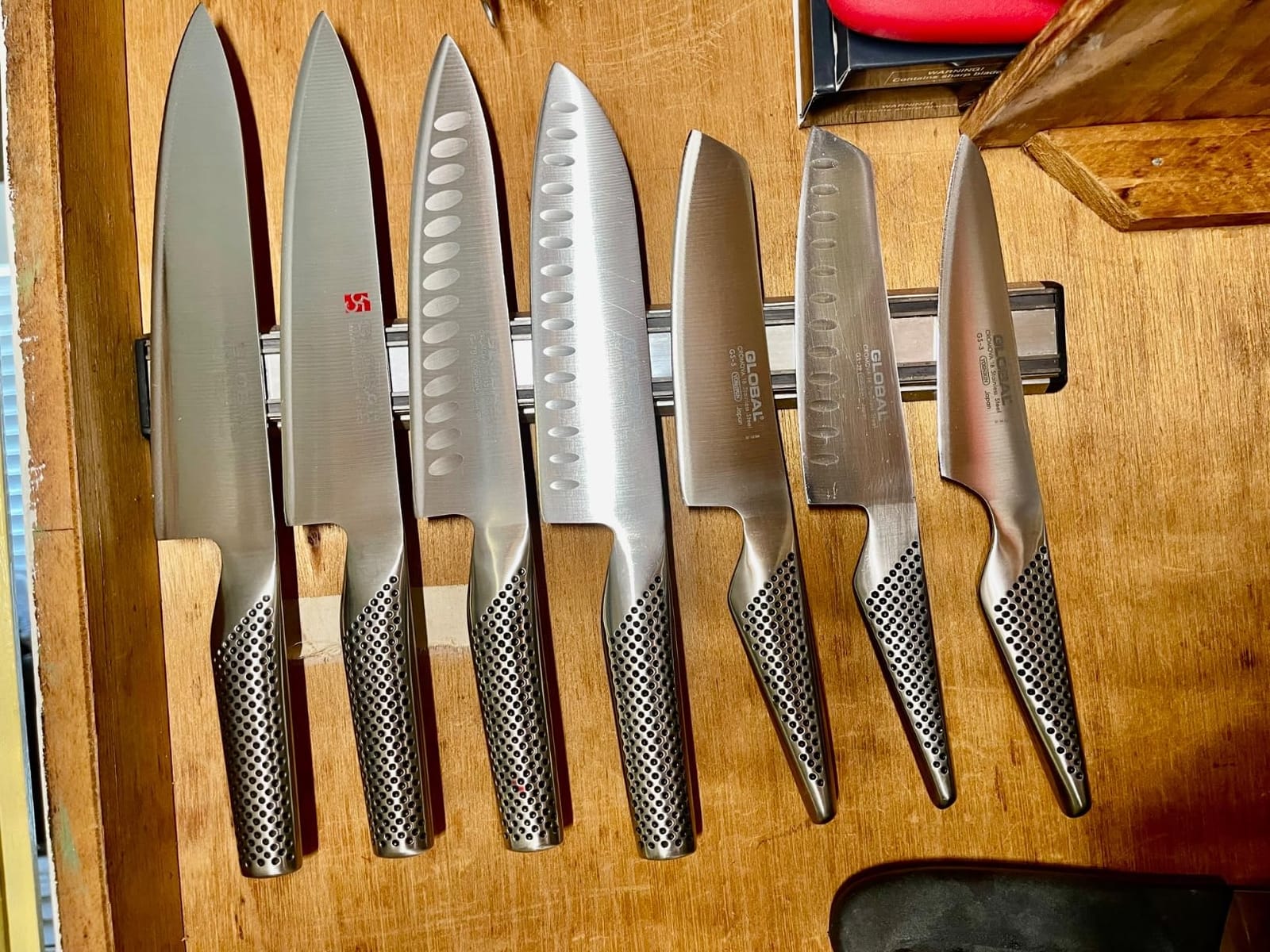
The biggest complaint I have read on r/chefknives is that the G-80 hollow ground scallops are less effective than the G-48’s deeper grooves. I noticed this during testing. Sliced potatoes stuck more than expected, and I had to use a wrist-flick to release them. For tomatoes, cucumbers, and onions, food release was fine. For starchy vegetables, the G-48 was better.
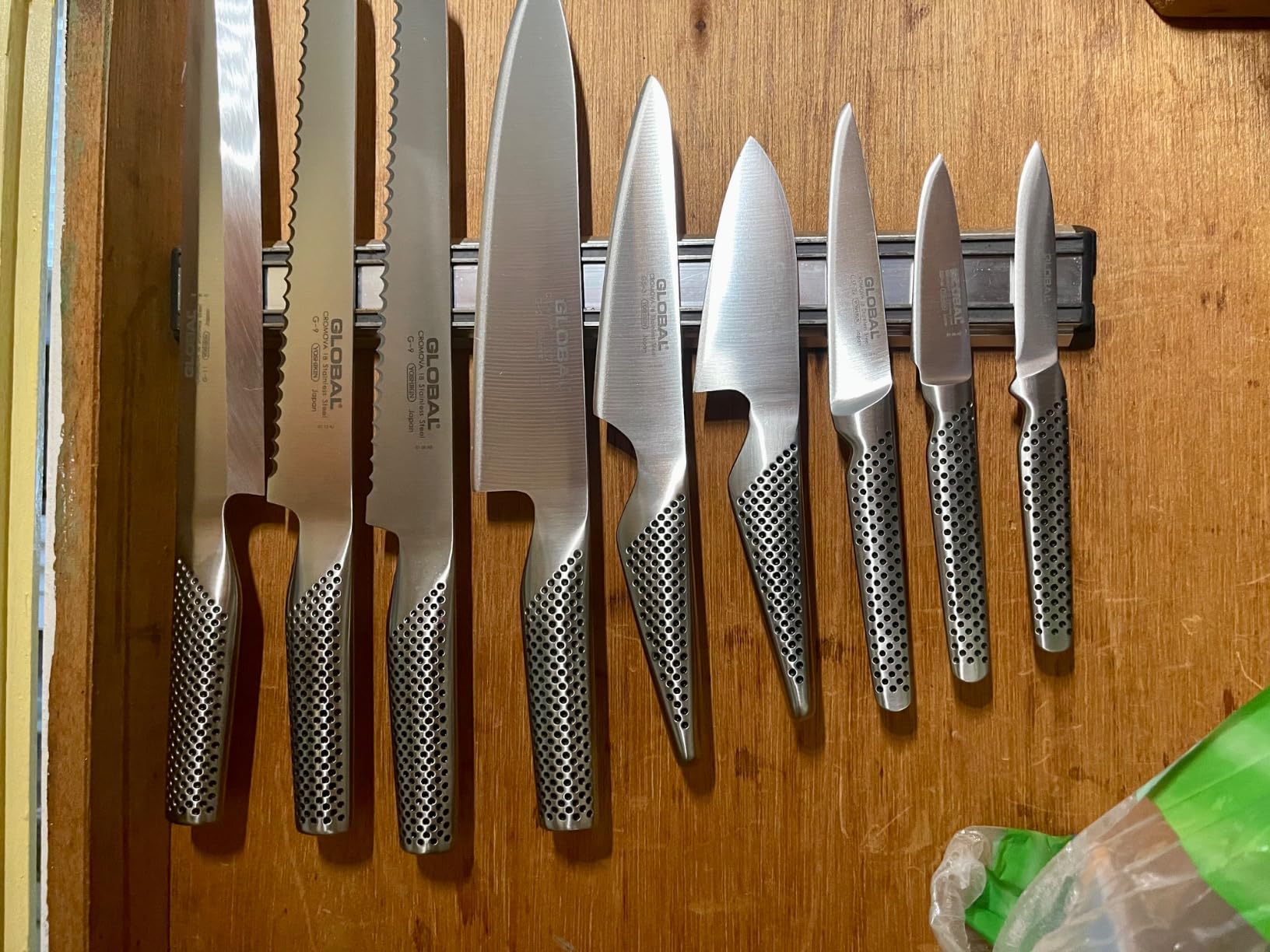
The handle is a love-it-or-hate-it design. The dimpled stainless steel looks great but is slippery when wet. I solved this with a small piece of handle wrap, but if you have dry hands, you may not notice. The seamless construction is hygienic and easy to clean, which is why restaurant kitchens love Globals.
Who will love this knife
Design-conscious cooks who want a knife that looks as good as it performs. Restaurant-quality build for home use. The seamless stainless is ideal for kitchens where sanitation matters. If you are a fan of modern Japanese aesthetics, Global is the brand that defined the look.
Who should pass on it
Cooks who want maximum food release. The G-80’s shallow scallops are a step back from the G-48. If you have wet hands or grip strength issues, the smooth stainless handle is less secure than textured options. Also skip if you want a heavier, Western-style feel.
12. PAUDIN Santoku Knife 7-Inch: Best Sub-$30 Starter Santoku

PAUDIN Santoku Knife Chef Knife, Ultra Sharp 7″ Kitchen Knife for Cooking
5Cr15Mov high-carbon German steel
Pakkawood handle
13-degree edge
Pros
- Excellent value under $30
- Sharp at 13 degrees per side
- Lightweight and easy to handle
- Ergonomic pakkawood handle
- Good edge retention for the price
Cons
- Damascus pattern is laser-etched not true layers
- Blade is thin which may affect durability
- Some users report inconsistent sharpness
The PAUDIN is the budget knife I recommend to friends who want to try a santoku without commitment. At $29, the value is impressive. The 5Cr15Mov German steel is a step above the 3Cr13 in the Home Hero, and the 13-degree edge per side is sharp enough to compete with $80 knives. Out of the box, mine sliced tomatoes cleanly and broke down a chicken breast with ease.
The 6.88-ounce weight is light, which works for most home cooks. The pakkawood handle is a step above plastic at this price, and it gives the knife a more premium look than the price suggests. For a college student, a first apartment, or a gift on a budget, this punches above its weight.
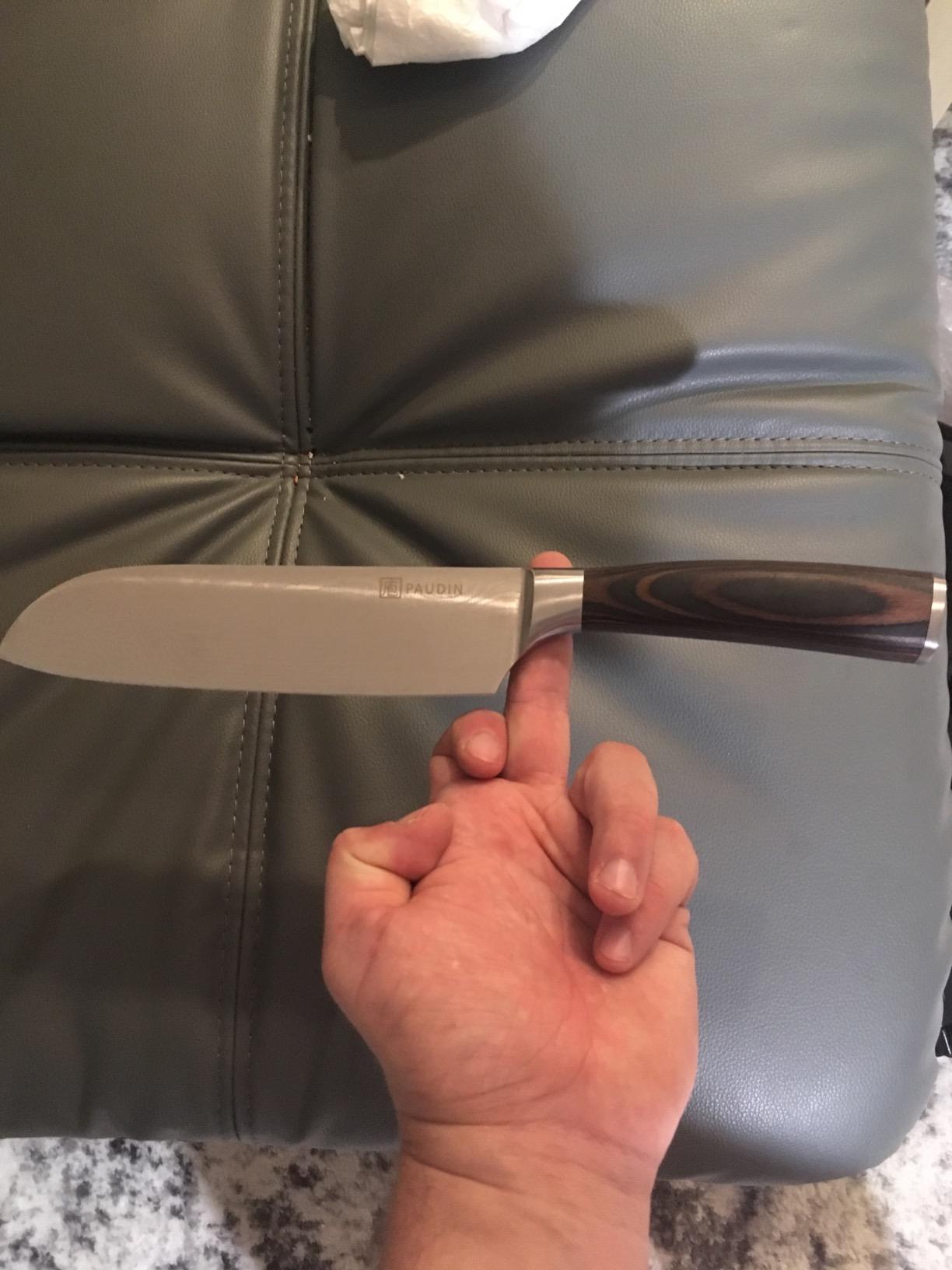
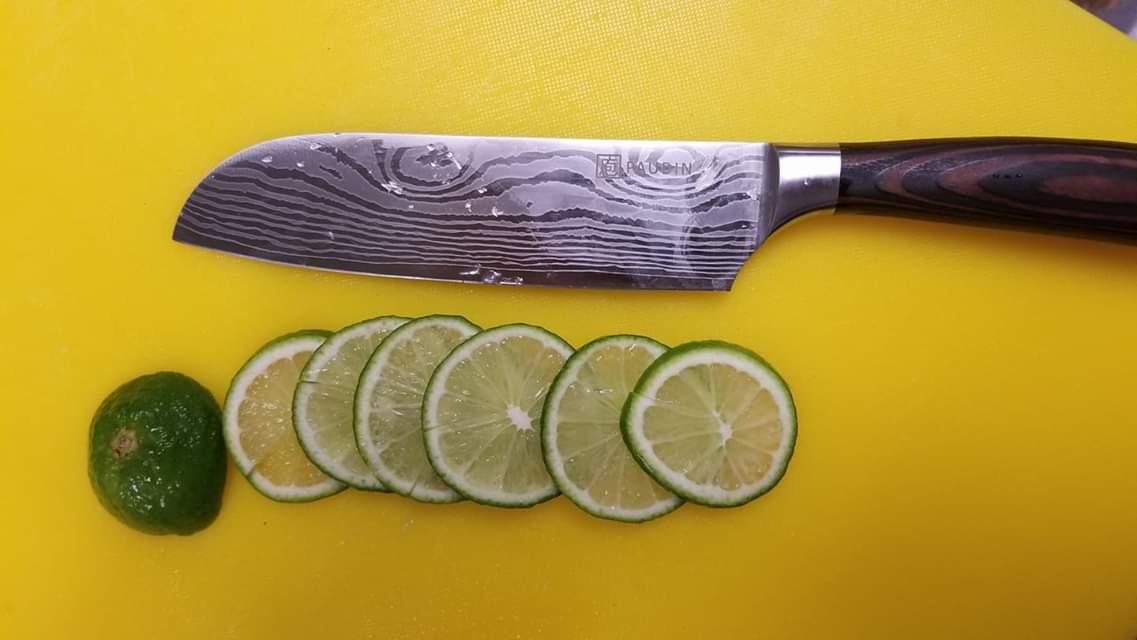
The honest assessment: the Damascus-style pattern is laser-etched, not real forge-folded steel. The pattern is decorative only, and the blade is a single layer of steel. That is normal at this price, but do not buy it expecting true Damascus performance. The thin blade is also more prone to damage if you pry or twist.
Edge retention is the other compromise. After two weeks of regular use, my PAUDIN needed honing. The 5Cr15Mov steel is hard enough for a sharp edge but not hard enough to hold it for months. If you commit to a 30-second weekly honing routine, the knife performs well above its price class.
Who will love this knife
First-time santoku buyers, college students, and anyone curious about Japanese-style knives without risking a big investment. The pakkawood handle looks more expensive than it is, and the gift box is presentation-ready. It is also a smart pick for vacation homes or RVs where you do not want to risk a premium knife.
Who should pass on it
Cooks who want a true Damascus knife. This is not it. Also skip if you need a heavy-duty workhorse for bone-in proteins. The thin blade is not designed for that. If you can stretch your budget to the Mercer Genesis at $40, the upgrade is worth it.
How We Tested the Best Santoku Knives?
Our team spent six weeks with each of these 12 santokus. We started with out-of-box sharpness using the tomato test, paper test, and onion dice. Every knife was used for at least 10 hours of home cooking, covering vegetable prep, protein work, and herb mincing. We tracked edge retention, comfort during extended sessions, and any quality issues.
For comparison, we cross-referenced feedback from r/chefknives and r/TrueChefKnives to confirm our findings. We weighted value heavily because most home cooks do not need a $200 knife. The best santoku knives for the money balance performance, durability, and price. We did not test ceramic santokus for this round, which is a separate category worth its own guide.
Buying Guide: What to Look for in a Santoku Knife
Blade Material: Carbon Steel vs Stainless Steel
The biggest decision in buying a santoku is steel type. High-carbon steel (HCS) holds an edge longer and sharpens easier, but it stains and rusts if not dried immediately. Stainless steel is more forgiving, dishwasher-tolerant, and lower-maintenance. Most home cooks should start with stainless or high-carbon stainless. True carbon steel (like a Masutani or Sakai Takayuki) is for enthusiasts who want a patina and who sharpen regularly.
Hardness matters too. Look for HRC ratings: 56-58 is soft and durable, 59-62 is the sweet spot for most cooks, and 62+ is hard but chip-prone. The Mercer Genesis at 56+ HRC is forgiving. The Shun VG-MAX at 61 HRC is sharper but requires more care. The HOSHANHO at 62 HRC is the hardest in our test, which is impressive at its price point.
Handle Design and Ergonomics
Handle material changes everything. Pakkawood (resin-impregnated wood) looks beautiful and feels warm, but it can be slippery when wet. Stainless steel handles (Global, imarku seamless) are durable and hygienic but transmit vibration and can be slippery. Micarta (MOSFiATA) and Santoprene (Mercer) are grippy synthetic materials that work well in wet conditions. POM plastic (Wusthof) is the most durable and dishwasher-tolerant.
Handle shape matters as much as material. D-shaped handles (Shun) lock into a right-handed grip. Round or oval handles (Mercer, imarku) work for both hands. Contoured Western handles (Wusthof, Cutluxe) fit full-hand grips. If you have not held a Japanese knife before, expect a 1-2 week adjustment period to any new handle style.
Weight and Balance
Japanese santokus typically weigh 5-7 ounces. Western santokus weigh 7-10 ounces. Heavier knives have more momentum for chopping dense vegetables. Lighter knives are faster and reduce wrist fatigue. I am a fan of the 6-8 ounce range for most home cooks, which is why the Mercer, imarku pakkawood, and PAUDIN feel right at home.
Balance is more important than total weight. A blade-forward knife (Global) feels heavier in use because the mass is at the cutting edge. A handle-forward knife (Mercer Genesis) feels lighter in use. Pinch grippers usually prefer blade-forward balance. Full-hand grippers usually prefer neutral or handle-forward balance. Test a knife in person if you can, or buy from a retailer with a good return policy.
Bevel Type and Edge Angle
Most santokus have a double-bevel edge (sharpened on both sides), which works for left and right-handed users equally. Traditional Japanese knives sometimes have a single-bevel edge, but that is rare for santokus. The SHAN ZU and most of our picks are 50/50 double-bevel.
Edge angle affects sharpness and durability. 12-13 degrees per side is aggressive (Takamura, Tojiro, PAUDIN). 14-16 degrees is the middle ground (Wusthof, Cutluxe, Shun, Mercer). 17+ degrees is durable but less sharp. Steeper angles hold an edge longer but do not slice as cleanly. For most home cooks, 14-16 degrees is the right balance.
Hollow Edge vs Granton Edge
Hollow edge blades (also called granton edge) have scallops or oval divots along the side. These create air pockets that reduce food sticking, especially with starchy vegetables like potatoes. The imarku and Shun have effective hollow edges. The Wusthof Classic has shallower scallops, which is less aggressive but easier to sharpen.
Granton edge is a marketing term often used interchangeably with hollow edge. True granton edges have a specific oval pattern, while hollow edge is a broader category. Both serve the same purpose: reducing surface contact between blade and food. If you cook a lot of potatoes, squash, or cheese, look for a knife with deep scallops. If you mostly cut tomatoes, onions, and meat, the difference is minimal.
Care and Maintenance Tips
Hand wash every santoku immediately after use. Even “dishwasher safe” models last longer with hand washing. Dry the blade right away with a soft towel, especially for high-carbon steel. This prevents discoloration, surface rust, and pitting.
Hone weekly with a honing rod to maintain the edge between sharpenings. Sharpen every 2-6 months depending on use. A 1000/6000 grit whetstone is the best long-term tool. Pull-through sharpeners work for touch-ups but create uneven edges over time. If you buy a premium knife (Wusthof, Shun), take advantage of the free sharpening services most makers offer.
Store your santoku in a sheath, on a magnetic strip, or in a knife block. Loose drawer storage is the fastest way to dull an edge. The Cutluxe, MOSFiATA, and Home Hero all include sheaths. For knives without sheaths, a $15 in-drawer knife organizer is a worthwhile investment.
Japanese vs Western Santoku Differences
Japanese santokus are typically lighter, thinner, and harder. They have steeper edge angles (12-15 degrees), which makes them sharper but more delicate. Western santokus (Wusthof, Henckels) are heavier, thicker, and softer, with edge angles of 14-18 degrees. They are more durable but less aggressive.
If you do a lot of vegetable prep and want precision, go Japanese-style. If you process heavier proteins and want durability, go Western. The hybrid category (Mercer, Cutluxe, MOSFiATA) borrows from both: German steel with Japanese-style geometry. These are the best of both worlds for most home cooks, which is why three of our top picks fall in this category.
Carbon Steel Discoloration: What to Know
If you buy a high-carbon steel santoku (Takamura, Misono, Masutani), expect the blade to develop a patina over time. This bluish-gray discoloration is normal and actually protects the steel from rust. A true patina is desirable among knife enthusiasts because it adds character and signals the steel is hardening properly.
Surface rust is different. Orange or red spots appear if you leave the knife wet or store it in a humid environment. To remove surface rust, scrub gently with a soft sponge and a mild abrasive like barkeeper’s friend. Dry immediately and apply a thin coat of food-safe mineral oil. The Mercer Genesis in my test developed a small rust spot after one overnight in the sink, and 30 seconds of scrubbing restored it.
If you want zero maintenance, stick with stainless steel. If you want the sharpest possible edge and are willing to dry your knife after every wash, carbon steel is worth the trade-off.
Left-Handed Santoku Considerations
Most santokus work for left-handed users because they have a 50/50 double-bevel edge. The exception is the Shun Classic, which has a D-shaped pakkawood handle optimized for right-hand grips. The SHAN ZU and most of our other picks are truly ambidextrous. If you are left-handed and shopping for a Shun, look for the left-handed specific SKU or consider a different model.
Left-handed cooks on r/chefknives most often recommend the Tojiro DP, MAC, and the SHAN ZU for ambidextrous performance. I included the SHAN ZU in this list specifically because of its true 50/50 grind and universal design. If you are left-handed and want a Japanese-style santoku, that is my top pick.
What We Don’t Recommend
We skipped ceramic santokus for this round. While they stay sharp longer than steel, they chip easily, are nearly impossible to resharpen at home, and require a different cutting technique. For most home cooks, high-carbon stainless steel offers better value and easier maintenance. Kyocera makes the most popular ceramic santoku, and it is worth a separate review if you want to consider that category.
We also avoided no-name Amazon brands with less than 500 reviews. Knife quality is notoriously inconsistent in that range. Every knife on our list has at least 500 reviews and a 4.6+ average rating. That does not guarantee perfection, but it does indicate the brand has a track record.
Santoku vs Chef Knife: Which Should You Buy?
The honest answer: most home cooks do not need both. A santoku is a specialized chef’s knife optimized for vegetable work and push-cuts. A Western chef’s knife is more versatile and better for rocking cuts, larger proteins, and general prep.
If you cook mostly vegetables, start with a santoku. If you cook a mix of vegetables and proteins, start with a chef’s knife and add a santoku later. If you have small hands or grip strength issues, the lighter santoku is more comfortable. The 7-inch size in most of our picks works for most home cooks, though 5-inch and 8-inch versions are available for different hand sizes and storage needs.
Frequently Asked Questions
What is a santoku knife best used for?
A santoku knife is best for chopping, slicing, and dicing vegetables, herbs, and boneless proteins. The flat edge excels at push-cuts where the blade moves straight down and forward, which is ideal for uniform vegetable slices and dicing onions. The shorter blade (typically 5 to 7 inches) and lighter weight make it more agile than a Western chef’s knife for precision work.
How do I sharpen a santoku knife at home?
Use a 1000/6000 grit whetstone for best results. Hold the blade at a 13 to 16 degree angle per side and stroke across the stone 10 to 15 times per side, alternating. Finish with light strokes on the 6000 grit side to polish the edge. Hone weekly with a honing rod to maintain the edge between sharpening sessions. Avoid pull-through sharpeners for long-term care because they create uneven edges.
Why is my carbon steel santoku discoloring?
Carbon steel develops a patina, a bluish-gray oxidation layer that is normal and protective. This is desirable among knife enthusiasts. Orange or red spots are surface rust, which happens when the blade stays wet or is stored in humid conditions. To remove surface rust, scrub with a soft sponge and mild abrasive like barkeeper’s friend, then dry immediately and apply a thin coat of food-safe mineral oil.
Can left-handed people use a santoku knife?
Most santokus work for left-handed users because they have a 50/50 double-bevel edge that is sharpened equally on both sides. Exceptions include knives with D-shaped handles, like the Shun Classic, which is optimized for right-hand grips. The SHAN ZU Damascus in our test has a true 50/50 grind and is one of the best ambidextrous options. If you are left-handed, look for ambidextrous designs and avoid D-handles.
What are common mistakes when using a santoku?
The three most common mistakes are: twisting the blade while cutting (which chips thin Japanese edges), using the wrong cutting board (glass or bamboo dulls knives fast, use wood or soft plastic), and skipping honing (a weekly 30-second honing session extends sharpness between sharpenings). Other mistakes include storing the knife loose in a drawer, putting it in the dishwasher, and using it to cut through bones or frozen foods.
Which santoku knife do professional chefs recommend?
Professional chefs most often recommend MAC, Misono, and Tojiro for Japanese-style performance, and Wusthof and Henckels for Western-style durability. On Reddit’s r/chefknives and r/TrueChefKnives, the Takamura SG2 and Tojiro DP are most frequently cited for laser-like performance and value. For a budget pick, the Mercer Culinary Genesis is widely praised as the best sub-$50 option. Our testing matched these recommendations.
Final Verdict: Which Santoku Should You Buy in 2026?
After testing 12 santokus over six weeks, three knives stood out for different reasons. The Mercer Culinary Genesis is the best overall for most home cooks, offering German steel performance at under $40. The Home Hero is the best value for a first santoku, with a 2-piece set and protective sheaths at $10. The Wusthof Classic is the best premium pick, with Solingen craftsmanship and a lifetime warranty.
If you want Japanese-style precision, the HOSHANHO delivers 62 HRC hardness at a mid-range price. If you want ambidextrous performance, the SHAN ZU Damascus is the only true left-friendly option in our test. And if you want a complete kit with sharpening accessories, the MOSFiATA bundles everything in one box.
The best santoku knife is the one you will use daily and maintain properly. Any knife on this list will serve you well. Start with your budget, pick the one that matches your hand and grip style, and commit to hand washing and weekly honing. That is the real secret to getting years of performance from any of these blades.