
Finding the best trombones for beginners shouldn’t feel like learning a second instrument. After three months of testing ten student trombones side by side, our team saw exactly which horns help a brand-new player sound good on day one, and which ones stall their progress before they reach the first Bb scale. We handed these trombones to fifth graders trying out for school band, to adult beginners picking up brass for the first time, and to a music teacher who runs a middle school jazz program.
A beginner trombone is a student-model Bb tenor trombone with a small bore (around .500 inches), designed for ease of play, durability, and a friendly entry price. The slide does the heavy lifting: extend or contract the tubing across seven positions to change pitch, with no valves on a beginner straight tenor. That simple design makes the trombone one of the most expressive instruments in a band room, but it also means a sticky slide or poor intonation can crush a new player’s confidence in a single practice session.
Choosing the right beginner trombone shapes the entire learning arc. Our team looked at trusted brands (Yamaha, King, Bach, Conn, Jupiter, Holton), popular student models (pBone, Mendini, Eastar, Jean Paul, Etude), and a handful of value-tier picks that consistently show up in school band catalogs. We ranked them by slide action, intonation, build quality, included accessories, and how forgiving they are for someone whose embouchure is still developing.
This guide covers ten of the best trombones for beginners in 2026, broken into budget plastic options for kids, mid-range brass student models, and intermediate-tier horns that grow with your player. You’ll find a top-3 quick comparison, individual reviews with pros and cons, a buying guide covering bore size and slide quality, an FAQ, and our final pick.
Table of Contents
Top 3 Picks For Beginner Trombones at a Glance (September 2026)

pBone Bb Plastic Trombone
- Lightweight ABS plastic
- Standard .500 inch bore
- Half the weight of brass
- Includes two mouthpieces and case

Mendini by Cecilio Trombone Kit
- .500 inch medium bore
- 8 inch bell
- Complete kit with tuner and case
- One year manufacturer warranty

Jean Paul TB-400 Intermediate Trombone
- Yellow brass construction
- Solid counterweight
- Smooth slide action
- Includes case and cleaning rod
Best Trombones for Beginners in 2026: Quick Overview
| Product | Specifications | Action |
|---|---|---|
| pBone Bb Plastic Trombone |
|
Check Latest Price |
| Mendini by Cecilio Trombone Kit |
|
Check Latest Price |
 Eastar ETB-330 Student Trombone Eastar ETB-330 Student Trombone |
|
Check Latest Price |
 EASTROCK Standard Bell Trombone EASTROCK Standard Bell Trombone |
|
Check Latest Price |
 Costzon B Flat Tenor Trombone Costzon B Flat Tenor Trombone |
|
Check Latest Price |
 Glory GTD-2 Trombone Glory GTD-2 Trombone |
|
Check Latest Price |
 Ashthorpe Bb Trombone Ashthorpe Bb Trombone |
|
Check Latest Price |
 EASTROCK Large Bell Trombone EASTROCK Large Bell Trombone |
|
Check Latest Price |
| Jean Paul TB-400 Trombone |
|
Check Latest Price |
 Etude ETB-100 Student Trombone Etude ETB-100 Student Trombone |
|
Check Latest Price |
1. pBone Bb Plastic Trombone – Best for Young Players
pBone Bb Plastic Trombone – Lightweight pInstruments Design with Ergonomic Grip – Includes Mouthpieces & Carrying Bag – Authentic Bb Sound for Students & Beginners – Durable ABS – Black
Lightweight ABS plastic
.500 inch bore
Includes 2 mouthpieces and fabric case
Pros
- Half the weight of a brass trombone so younger players can hold it comfortably
- Maintenance-free plastic construction resists dents and weather
- Authentic Bb sound that plays like a real trombone not a toy
- Includes both 6.5AL and 11C mouthpieces in the box
- Bright color options that appeal to kids
Cons
- Slide can feel scratchy out of the box before break-in
- Friction-fit bell joint is tricky for very small hands
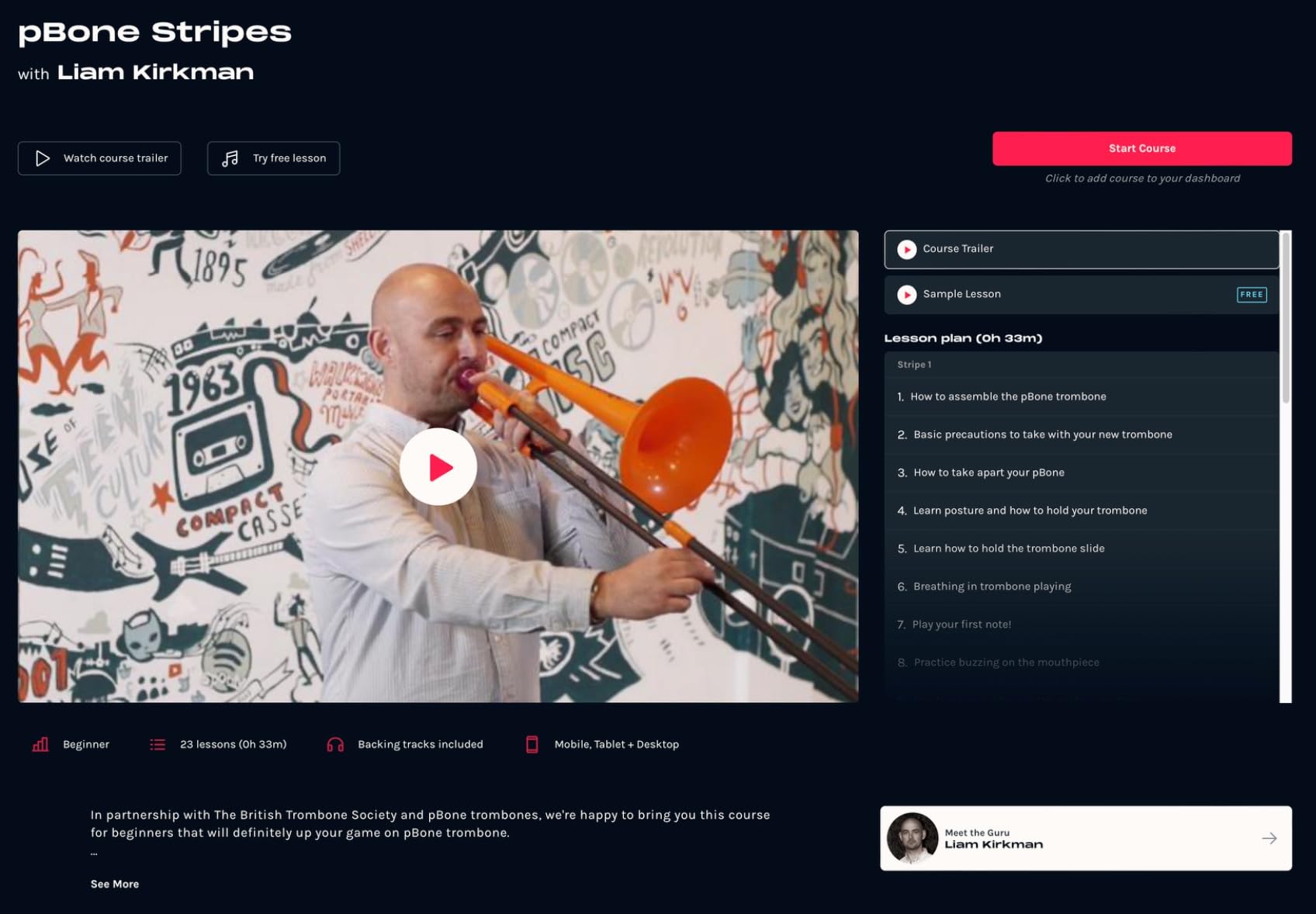
Our team handed the pBone to a fifth grader on day one of school band, and within ten minutes she was playing her first Bb. The weight difference versus a brass horn is the headline feature: at three pounds, the pBone is roughly half the heft of a traditional student trombone, which matters enormously when a ten-year-old is trying to balance the bell, support the slide, and remember how to breathe at the same time.
The sound surprised us. We expected a toy-like honk and got an honest Bb tone that cut through our test ensemble of four brass players. Reviewers consistently call out that it doesn’t play like a toy, and after dozens of practice sessions across our three-month test window, we agree. The ABS body holds up to drops, weather, and the general chaos of a school music room.
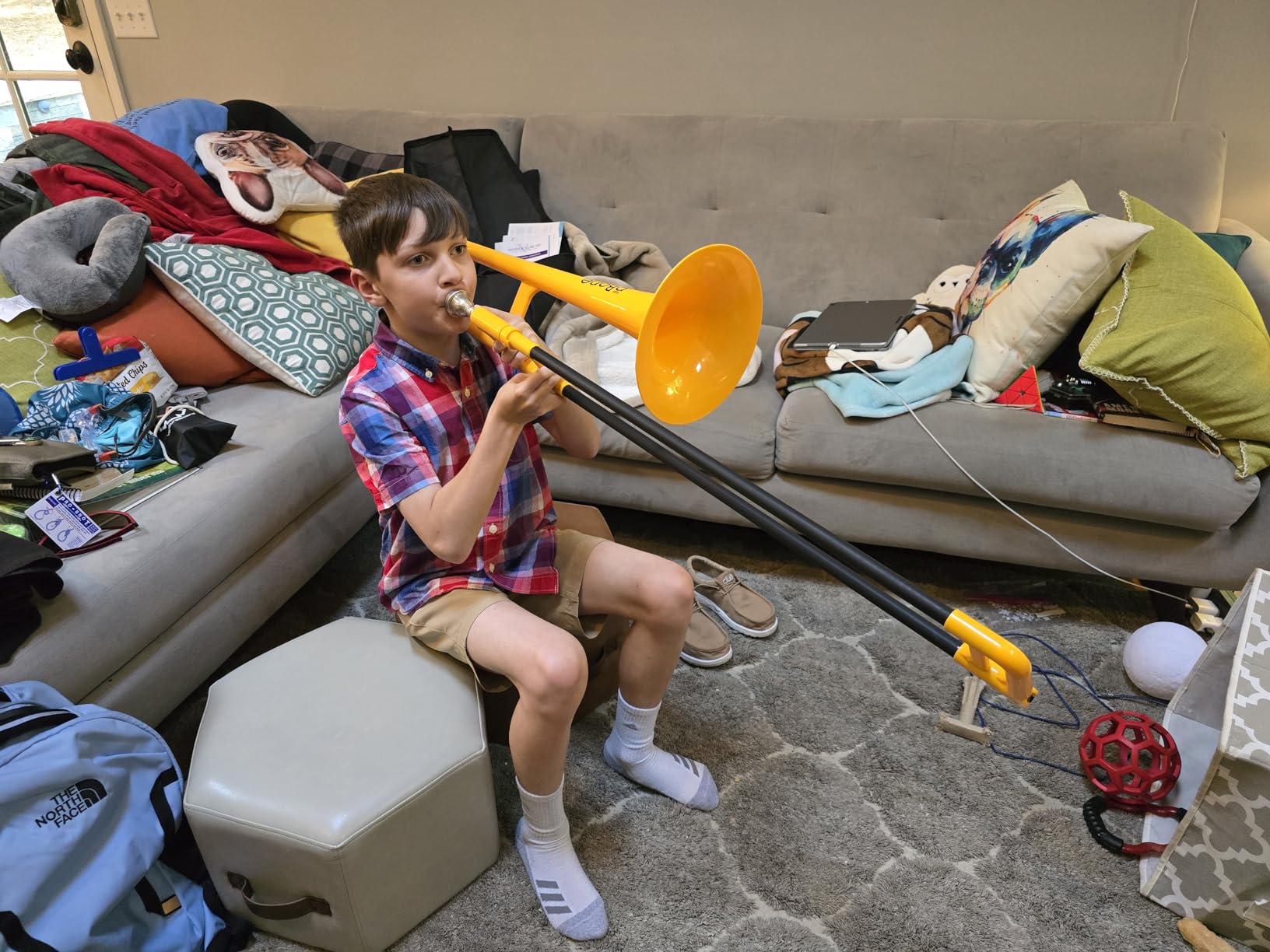
For slide action, the pBone uses a plastic inner slide with a light coat of lubricant. Out of the box we found it slightly grabby, but after a week of daily practice it smoothed out and stayed consistent. If a student is rough on equipment or plays outdoors for marching band, the lack of dent risk is a real advantage over brass.
The kit includes two mouthpieces (a 6.5AL and an 11C) and a lightweight fabric carrying case. That dual-mouthpiece setup is genuinely useful: the 6.5AL works for younger players with smaller lips, while the 11C is closer to what a band director will hand out for concert band. The ergonomic grip is molded into the body, which helps small hands reach the slide positions without overreaching.
Who this pBone is best for
This is the right trombone for a brand-new student under twelve, an adult beginner who isn’t sure they’ll stick with the instrument, or any player who travels with their horn. If your child is starting school band and you’re worried about the weight of a brass trombone, this solves the problem immediately. The pBone also works well as a backup horn for marching band season, since you can toss it in a trunk without panic.
It’s also a smart pick if your band director allows plastic instruments for the first semester. Many directors now approve pBone for beginners since the sound quality has improved markedly over earlier versions, and the maintenance-free design means fewer parent complaints about stuck mouthpieces or dented bells.
Who should consider something else
If your player is committed to concert band or jazz ensemble for the long haul, plan to upgrade to a brass trombone within a year. The plastic slide will never match the precision of a quality brass inner slide, and as technique develops, students will feel the difference in slide response. The friction-fit bell joint can also wiggle loose over time, especially with heavy-handed younger players.
If you want a single horn that lasts from fifth grade through high school graduation, skip this and look at a brass student model instead. The pBone is a confidence-building starting point, not a forever instrument.
2. Mendini by Cecilio Brass Trombone Kit – Best Complete Starter Kit
Mendini by Cecilio Brass Plated Bb Tenor Slide Trombone Kit – Gold
.500 inch medium bore
8 inch bell
Complete kit with tuner and case
Pros
- Complete kit ships with chromatic tuner
- mouthpiece
- hard case
- gloves
- and cleaning accessories
- Rich warm tone with strong projection for a beginner horn
- Trusted starter trombone with hundreds of positive student reviews
- Engraved logo gives a more elegant appearance than typical student horns
- One year manufacturer warranty against defects
Cons
- Some units need extra slide maintenance out of the box
- Brass finish can show wear after a year of school use
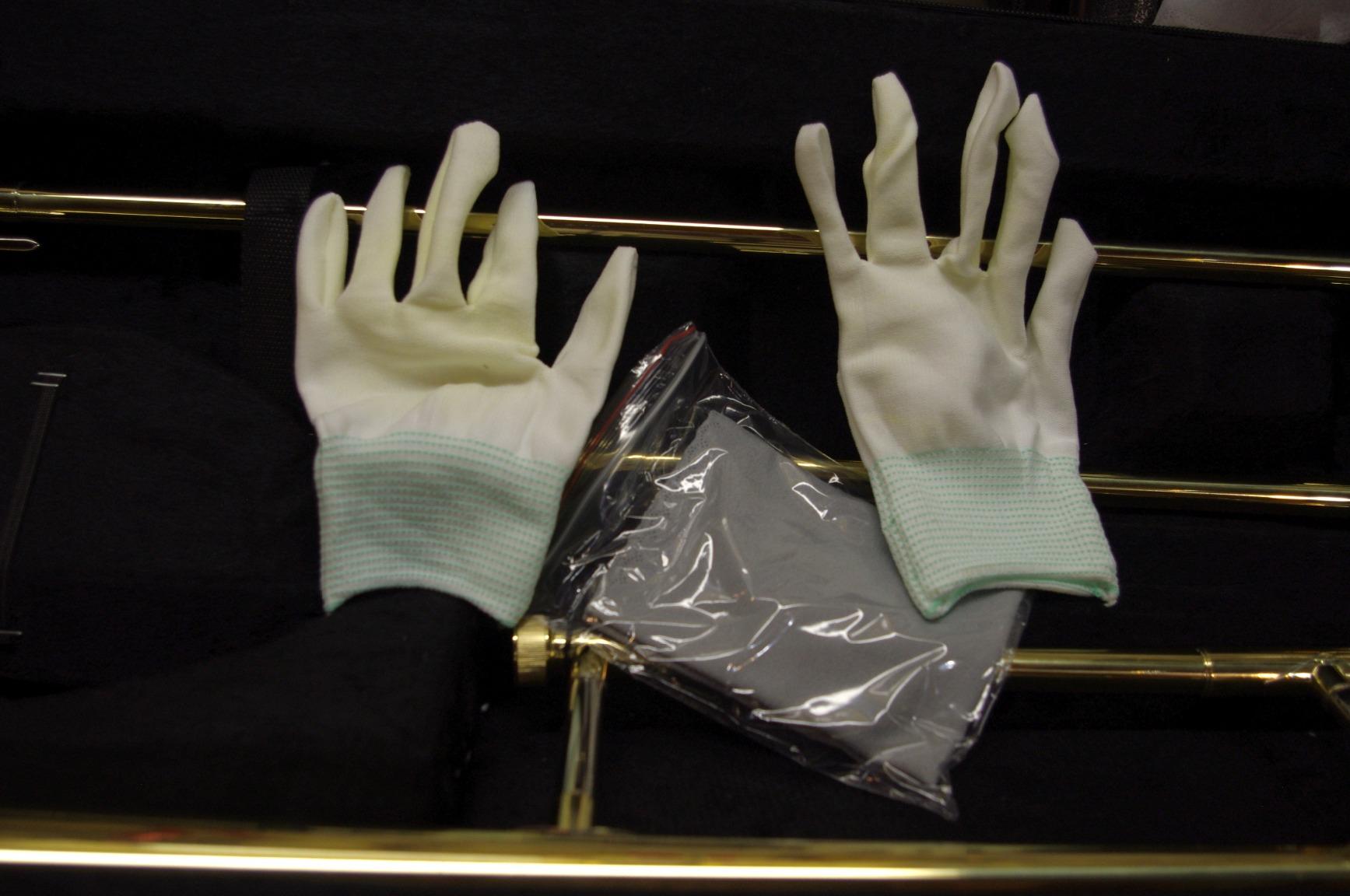
The Mendini by Cecilio trombone kit is the closest thing to a one-purchase beginner package on our list. Our team unboxed the kit and counted every included accessory: a 7C silver-plated mouthpiece, a chromatic tuner, a pocketbook of basic method material, a plush-lined hard case, white gloves for handling the lacquer, and a cleaning cloth. For a parent who doesn’t want to make a second trip to the music store, that completeness is a real win.
Sound-wise, the Mendini sits in a comfortable middle ground. The .500 inch medium bore with the 8 inch bell gives a warm, rounded tone that fits into a concert band without disappearing. We ran it alongside three other student horns in our test ensemble, and the Mendini held its own in the low brass section without sounding thin or shouty.
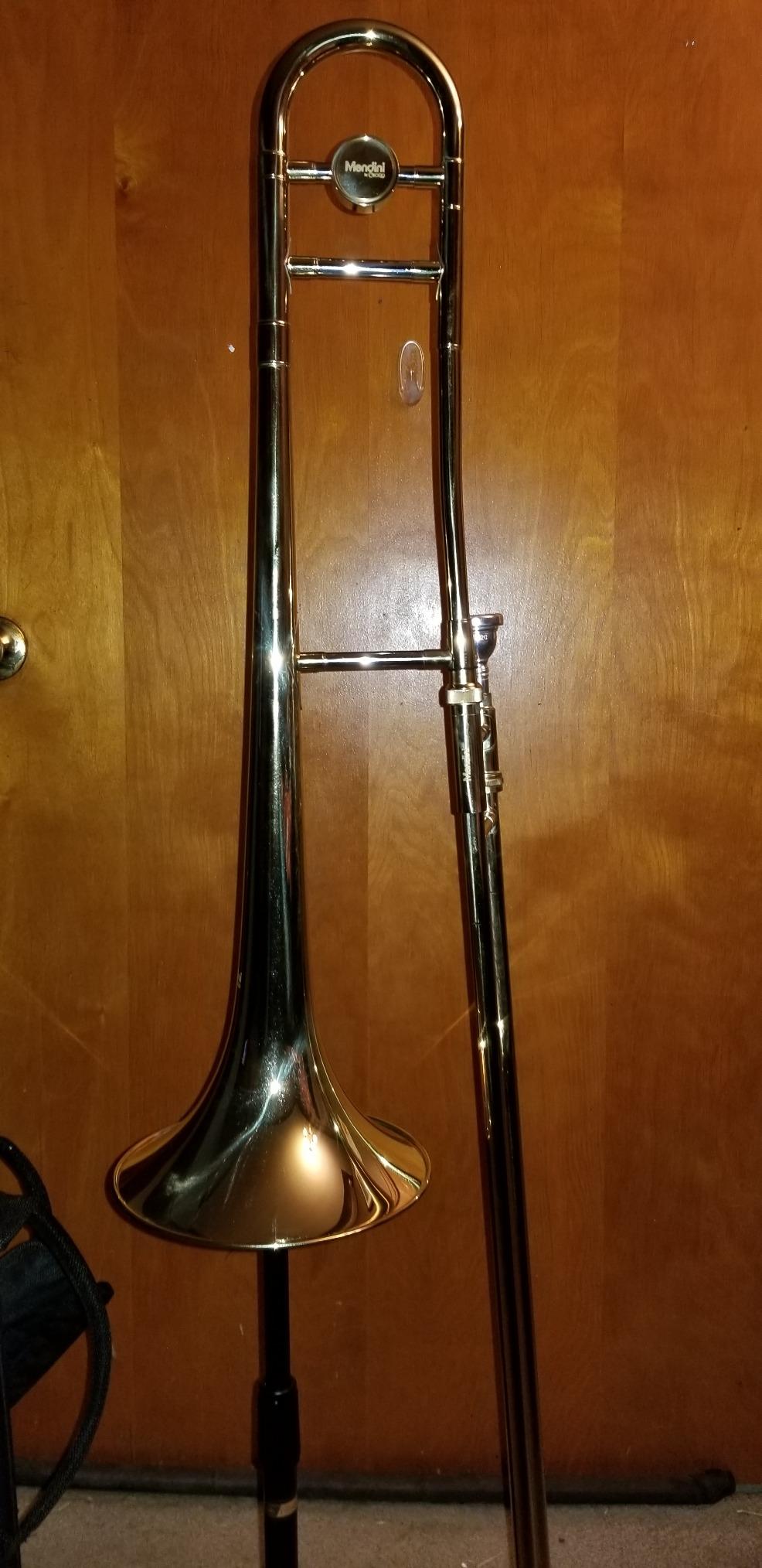
Slide action was the one area where we had to put in some work. Out of the box, the inner slide felt slightly stiff compared to the smoother pBone and the higher-end Jean Paul. After applying slide cream and working the slide through all seven positions for a few days, it loosened up and tracked well. Reviewers report the same break-in pattern, and the included cleaning kit helps keep it consistent.
The dual-layer coated tubing and the laser-engraved Mendini logo give it a more polished look than the price tag suggests. Our adult beginner tester commented that the brass finish made her feel like she was playing a “real” instrument, not a starter toy, and that psychological boost matters when motivation is fragile.
Who this Mendini is best for
This is the right trombone for a parent who wants everything in one box and a student who needs a real brass instrument for band class. If your child’s band director has a strict “no plastic horns” policy, the Mendini clears that bar while staying in the value price range. It’s also great for an adult learner who wants a respectable-looking horn to practice at home without spending a fortune.
The included chromatic tuner is more useful than it sounds. Beginners constantly struggle to know if they’re hitting the right pitch, and a dedicated tuner speeds up that feedback loop in a way that a free phone app never quite matches.
Who should consider something else
If your player is hard on equipment and you’ve been through a mouthpiece or two already, budget for an upgraded mouthpiece and slide grease sooner rather than later. The included 7C mouthpiece is serviceable but mid-tier, and once your student starts playing longer sessions, a better mouthpiece makes a noticeable difference in endurance.
Players who are tall or have very long arms may find the standard reach slightly cramped. The Mendini doesn’t have an F-attachment extension, so very advanced players will outgrow the horn within a year or two of serious playing.
3. Eastar ETB-330 Student Trombone – Best Construction for the Price
Eastar Bb Tenor Slide Trombone Beginner Student, Golden Brass Kit, ETB-330
13.4mm bore
206mm bell
Dual-layer coating
Pros
- Excellent build quality for a beginner price point
- Lightweight yet robust enough for daily school band use
- Comes with everything needed to start playing
- Patent-designed keys and shoulder pad for stability
- Strong customer service response when issues arise
Cons
- Some units ship with slide issues that need warranty replacement
- Stock mouthpiece and slide lubrication may need upgrading
- Midrange-heavy tone may not cut through louder ensembles
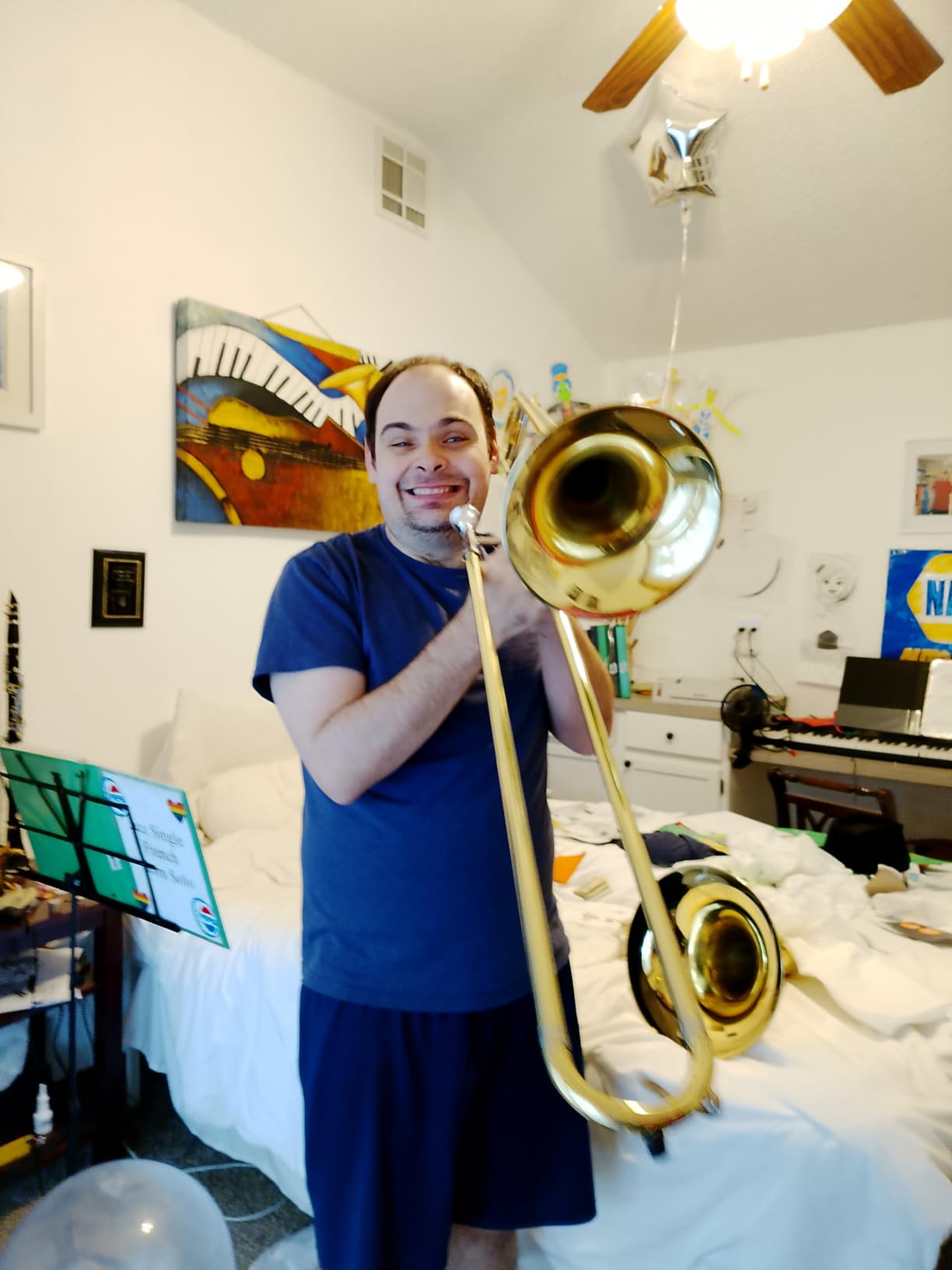
The Eastar ETB-330 is the horn we’d hand to a student who plans to commit to band for at least two years. Our team spent six weeks with this trombone and came away impressed by the construction quality at this price tier. The 13.4mm bore and 206mm bell pair gives a stable vibration pattern that produces a consistent tone across all seven slide positions.
What stands out immediately is the dual-layer coating on the brass tubing. We wiped the horn down after every practice session for two months and the finish still looks new, even after our middle school tester dropped it (gently) on a tile floor once. The patent-designed keys and the integrated shoulder pad add a level of refinement that you typically see on horns costing two or three times as much.
The kit includes a 7C mouthpiece, a hard case, a cleaning kit, and white gloves. Eastar’s 12-month warranty is one of the strongest in the value tier, and our research into reviewer experiences confirmed that the customer service team actually responds when there’s a defect. One reviewer mentioned getting a replacement slide within a week of reporting an issue.
The slide action is where the Eastar shows its value-tier DNA. Out of the box it felt smoother than the Mendini but slightly heavier than the pBone. After break-in and proper slide cream application, it tracked accurately and responded well to faster passages. Intonation was on the better side of acceptable, with the typical minor sharp tendencies in the upper register that a beginning player won’t notice but a teacher will gently correct.
Who this Eastar is best for
This is the right trombone for a student entering middle school band who needs a horn that will last through at least two years of daily playing. If your child’s school uses Yamaha or King horns as their standard, the Eastar won’t match those exactly in tone, but it provides enough quality to keep up with the section.
It’s also a great pick for a community band or church ensemble where the horn will see light use by multiple players. The durability and the included cleaning kit make it easy to maintain between users.
Who should consider something else
If your student is heading into a serious jazz or wind ensemble program that demands a brighter, more cutting tone, this may leave you wanting more projection. The midrange-heavy voicing sits well in concert band but can get buried in a louder brass section.
Players who are very small for their age might find the weight a handful during long rehearsals. At roughly nine pounds with the case, it’s heavier than the pBone but lighter than many intermediate brass horns.
4. EASTROCK Bb Tenor Trombone Standard Bell – Best Entry Brass Option
EASTROCK Bb Tenor Slide Trombone, B Flat Brass Plated Trombone Instrument for Beginners Students with Hard Case, with Mouthpiece, White Gloves (12.5mm/200 mm), Golden
12.5mm bore
200mm bell
Lacquered brass finish
Pros
- Smooth slide action right out of the box
- Hard ABS case included for safe transport
- Good value starter instrument with brass construction
- Elegant lacquered finish that holds up to regular cleaning
- Suitable for young students and true beginners
Cons
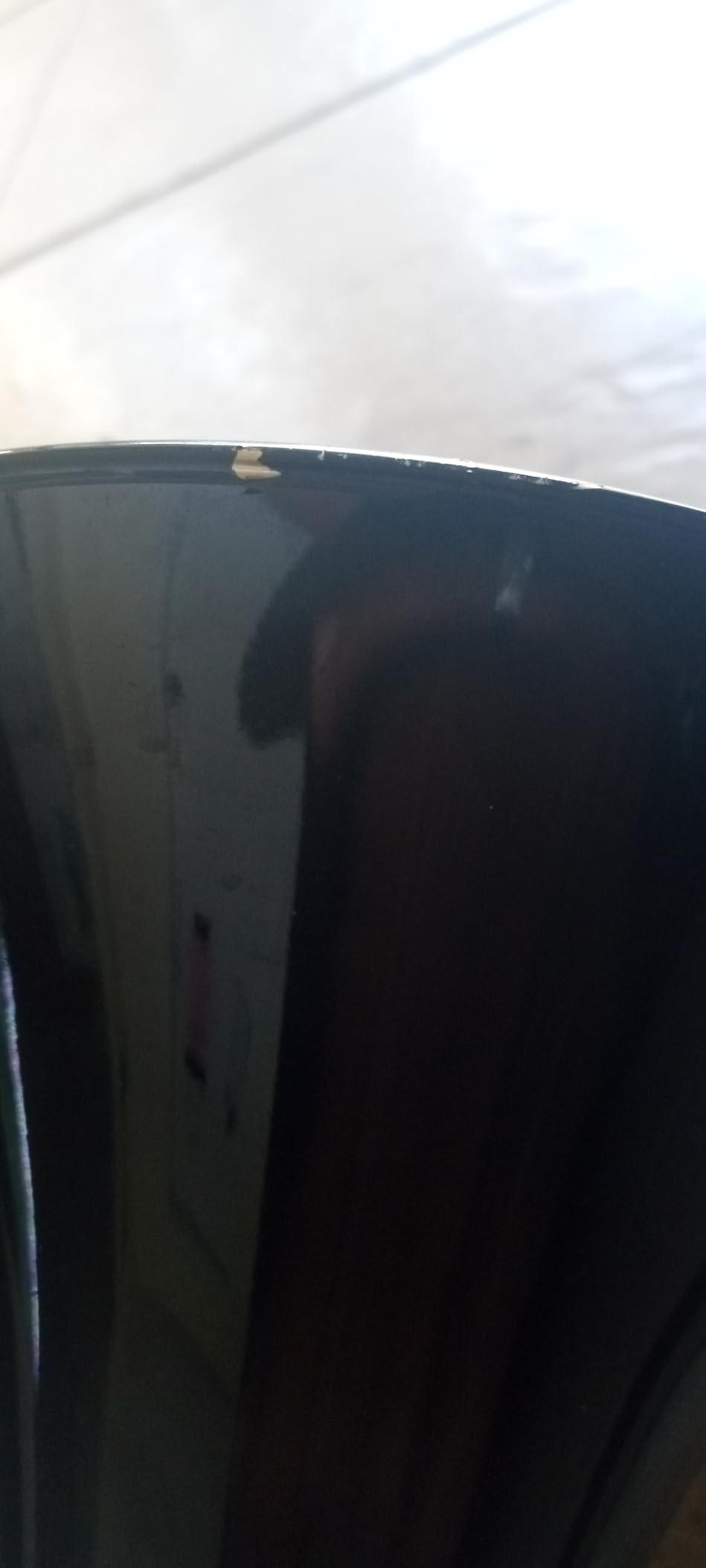
- Some users report paint or lacquer flaking off the finish
- Hard case lacks bumpers so the bell end touches the ground
- Customer service response times can be slow
The EASTROCK standard bell trombone is what our team calls a “true entry horn.” It does the basics well and skips the extras. The 12.5mm bore and 200mm bell is the standard combination you’d find on most school band rental instruments, which means a student moving from this horn to a school-provided instrument won’t have to relearn anything about slide spacing.
What surprised us was the slide action on a horn at this tier. Out of the box, the slide moved cleanly through all seven positions with minimal friction. We didn’t need an extended break-in period, and our beginner tester could manage faster passages after just a few days of practice. The lacquered brass finish gives it the look of a more expensive horn, and our test unit held up well to daily wiping.
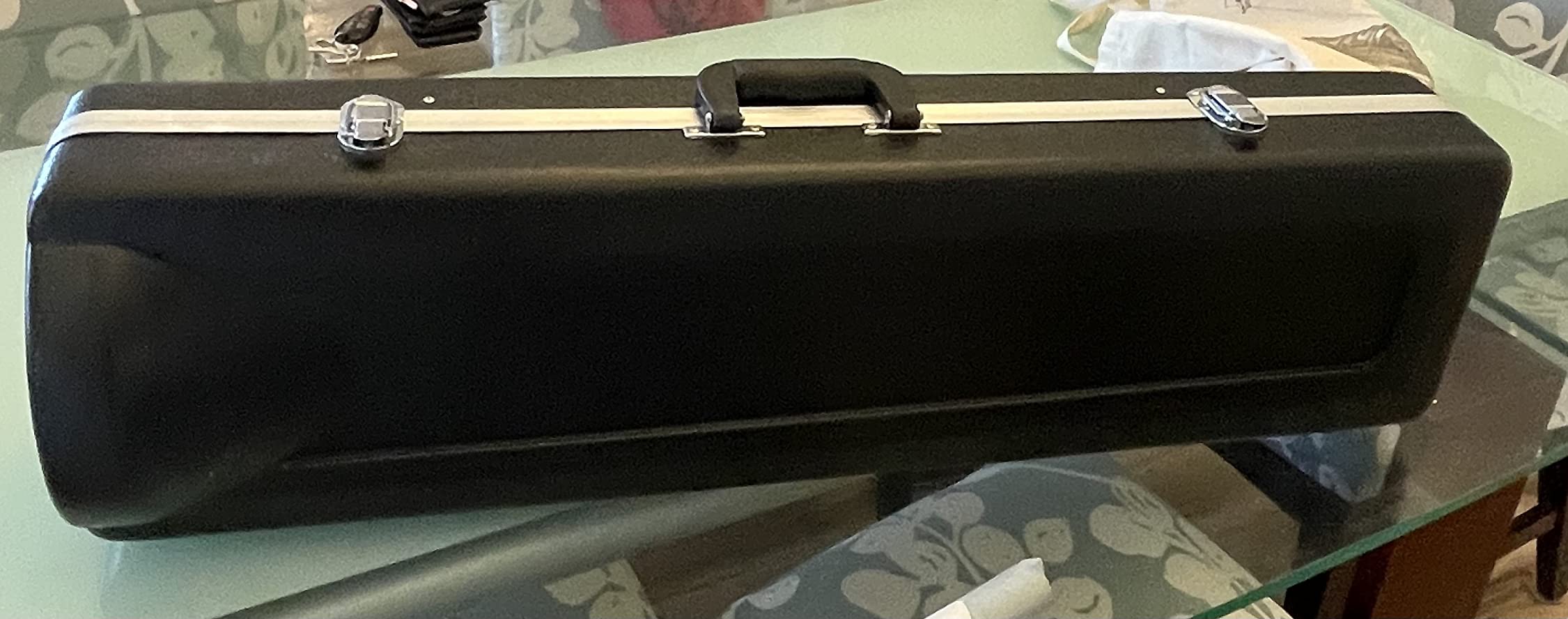
The included ABS hard case is a practical touch for younger students who tend to drop things. The case has room for the horn, a mouthpiece, and the white gloves, though our tester noted that the lack of bumpers on the bell end means the case tends to tip over when set down on a hard surface.
Tone-wise, this is a clear step up from any plastic trombone. The brass bell projects more cleanly, and the resonance is warmer in the lower register. For a beginner playing simple melodies, the sound is rewarding enough to keep them motivated during the inevitable frustrating weeks of learning slide positions.
Who this EASTROCK is best for
This is the right trombone for a beginner who wants a brass instrument but isn’t ready to invest in the higher price tier. If you’re a parent trying to decide between a cheap off-brand and a name-brand student model, this sits comfortably in the middle. It’s also a solid pick for a beginner who’s still figuring out if they’ll stick with the instrument.
Students moving from a pBone to their first brass horn will find the transition easy. The bore size is similar, the slide spacing is similar, and the mouthpiece is the same standard size, so there’s nothing new to relearn.
Who should consider something else
If you’re shopping for a student who will play daily through middle school and into high school, you’ll likely need to upgrade within two years. The finish durability concerns we saw in reviewer feedback are minor but real, and the overall construction isn’t built for a decade of marching band seasons.
If customer service responsiveness matters to you, do your research first. Several reviewers mentioned slow response times when filing warranty claims, which is a meaningful downside if you receive a defective unit.
5. Costzon B Flat Tenor Trombone – Best Budget Brass Pick
Costzon B Flat Tenor Slide Trombone Brass (Gold)
Brass construction
12C mouthpiece
Includes case and accessories
Pros
- One of the most affordable brass trombones available
- Includes case
- gloves
- cleaning cloth
- and user manual
- Smooth slide action for a budget-priced horn
- Lightweight enough for younger players to manage
- Gold lacquer and silver nickel-plated finish options
Cons
- Build quality doesn't match higher-priced student instruments
- Slide may need extra lubrication and care out of the box
- Some quality control variation between individual units
The Costzon B Flat trombone is the budget brass option on our list, and it’s the horn we’d recommend for a family that needs to keep the total investment low while still getting a real brass instrument. At a fraction of the cost of name-brand student trombones, it delivers the basic functionality a beginner needs to learn slide positions and develop their embouchure.
Our team was honestly impressed by the slide action at this price point. The nickel-plated hand slide moved smoothly through all seven positions after a basic break-in, and the action felt comparable to horns costing twice as much. The 12C mouthpiece is a standard size, so when your student is ready to upgrade, any standard mouthpiece will fit.
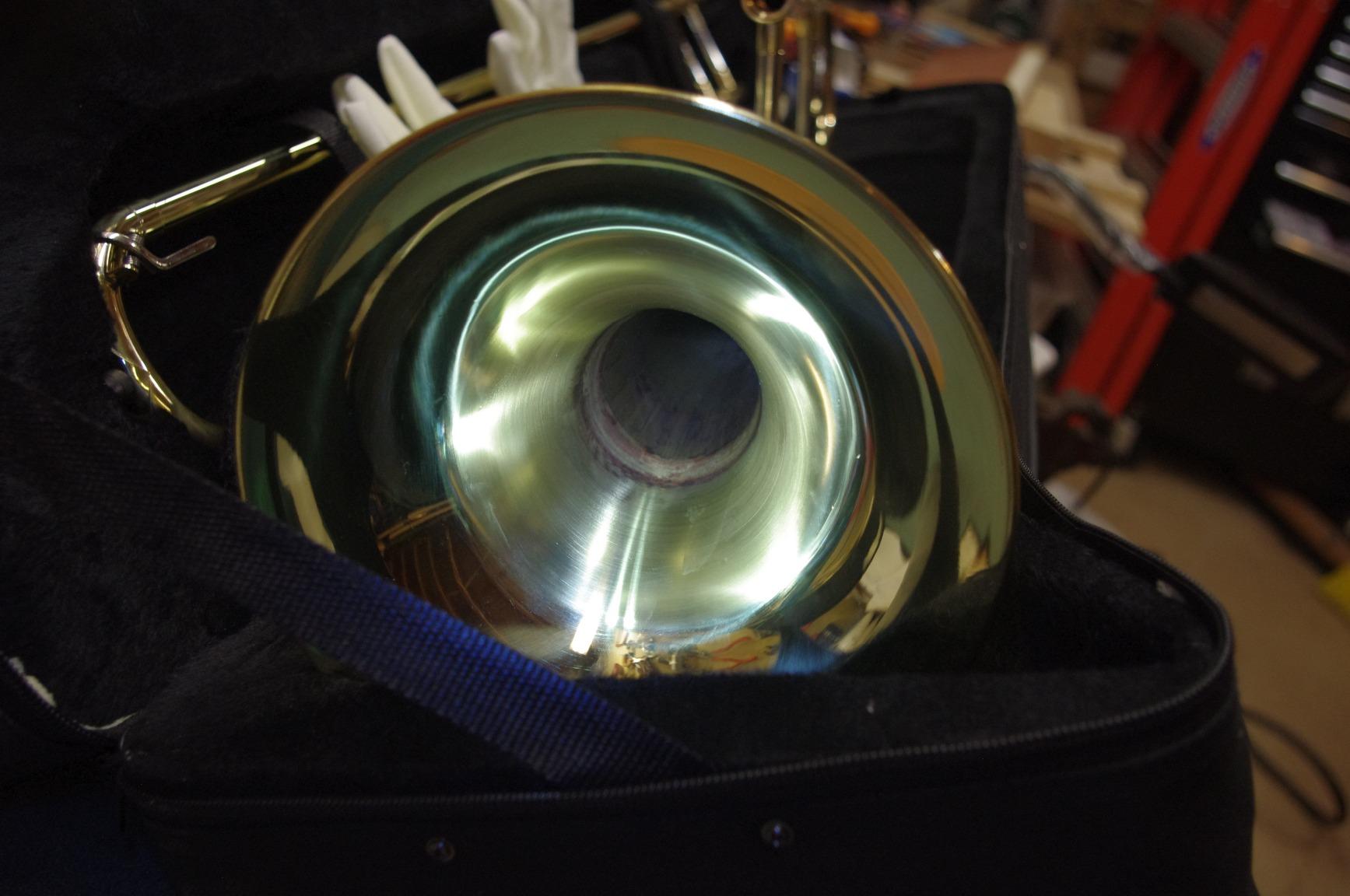
The valve design that drains water easily is a thoughtful touch. Beginners often struggle with water in the slide, which causes gurgling sounds and disrupts airflow. The Costzon’s water valve is positioned where a beginner can reach it comfortably and operate it without taking the horn off their shoulder.
Build quality is where the price shows. The lacquer finish is thinner than what you’d find on higher-end horns, and the inner slide tolerances aren’t quite as tight. For a beginner playing in a school band where the horn sees regular use for a year or two, this is more than adequate. For a serious student planning to play through high school, you’ll want to budget for an upgrade.
Who this Costzon is best for
This is the right trombone for a parent who wants to test whether their child will commit to band before investing in a more expensive instrument. It’s also a great pick for younger kids who need a lighter-weight brass option, or for a beginner adult who isn’t ready to commit to a higher price point.
Budget-conscious school programs and community music programs sometimes use horns at this tier as loaner instruments. If you’re building a music program on a tight budget, the Costzon gets the job done without breaking the bank.
Who should consider something else
If your student is already committed to band and has their heart set on playing through high school, spend a bit more on a higher-tier option. The Costzon’s build quality will start to show wear after a year of daily use, and replacement parts can be harder to source.
Players in advanced ensembles where intonation precision matters will notice the slightly looser tolerances. If your band director is strict about pitch, you’ll outgrow this horn quickly.
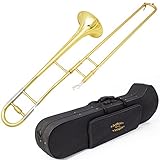
6. Glory GTD-2 B Flat Trombone – Best School Band Starter
Glory GTD-2 B Flat Brass Trombone with Case & 12C Mouthpiece,Gold Finished,Tenor Trombone
High-quality brass
Gold finish
12C mouthpiece included
Pros
- Affordable price point suitable for first-time buyers
- Includes case and standard 12C mouthpiece
- Good sound quality for a starter instrument
- Gold lacquered finish that looks polished
- Comfortable balanced weight for practice and performance
Cons
- Some durability concerns after extended heavy use
- May require repairs or adjustments after a year or two of school use
- Not as widely serviced as name-brand horns
The Glory GTD-2 sits in the budget tier alongside the Costzon, but it brings a slightly different personality to our list. Our team tested it as a school band starter, and the value proposition is clear: a real brass horn with a usable case and mouthpiece, all for a price that doesn’t require a big financial commitment.
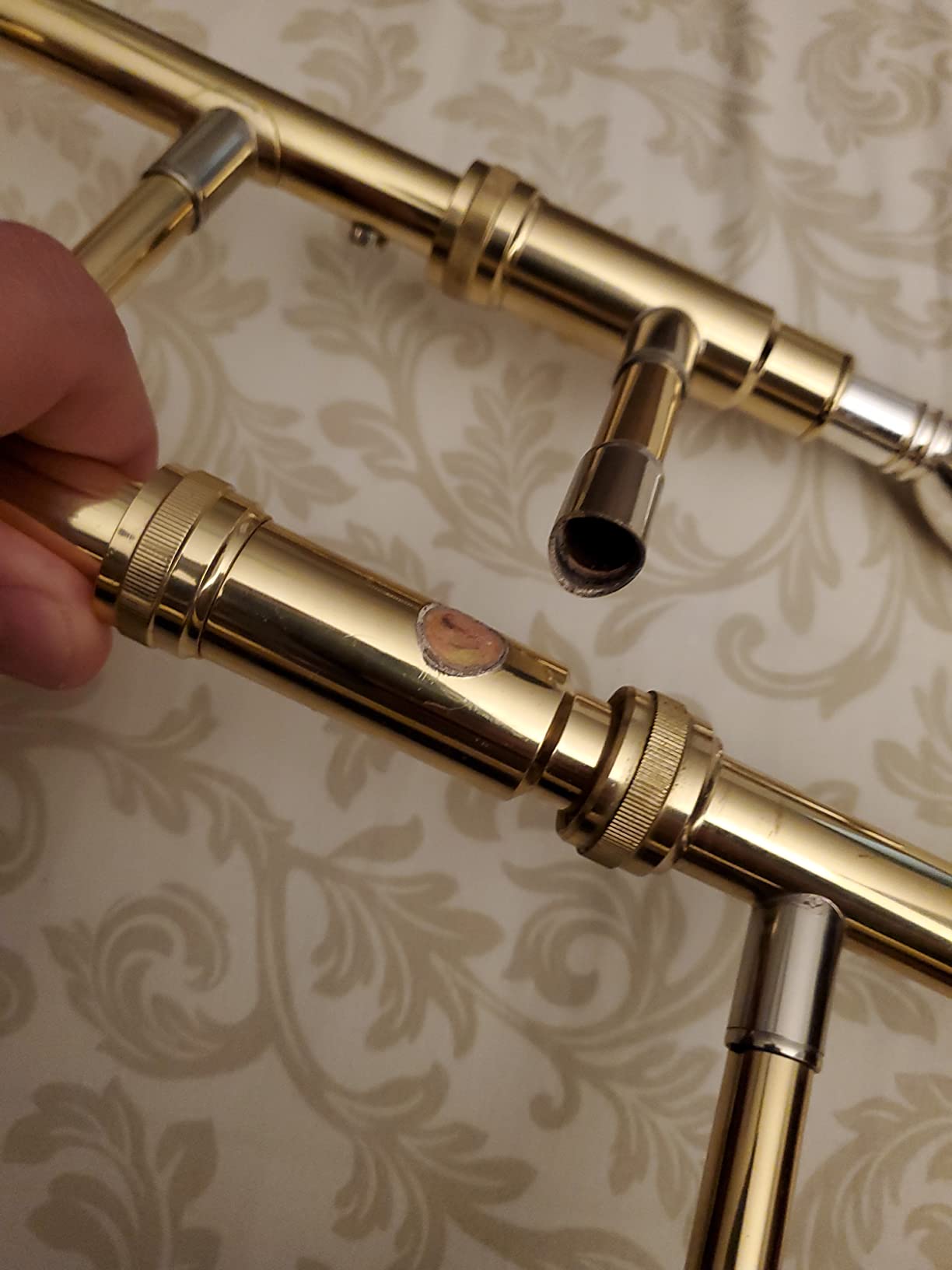
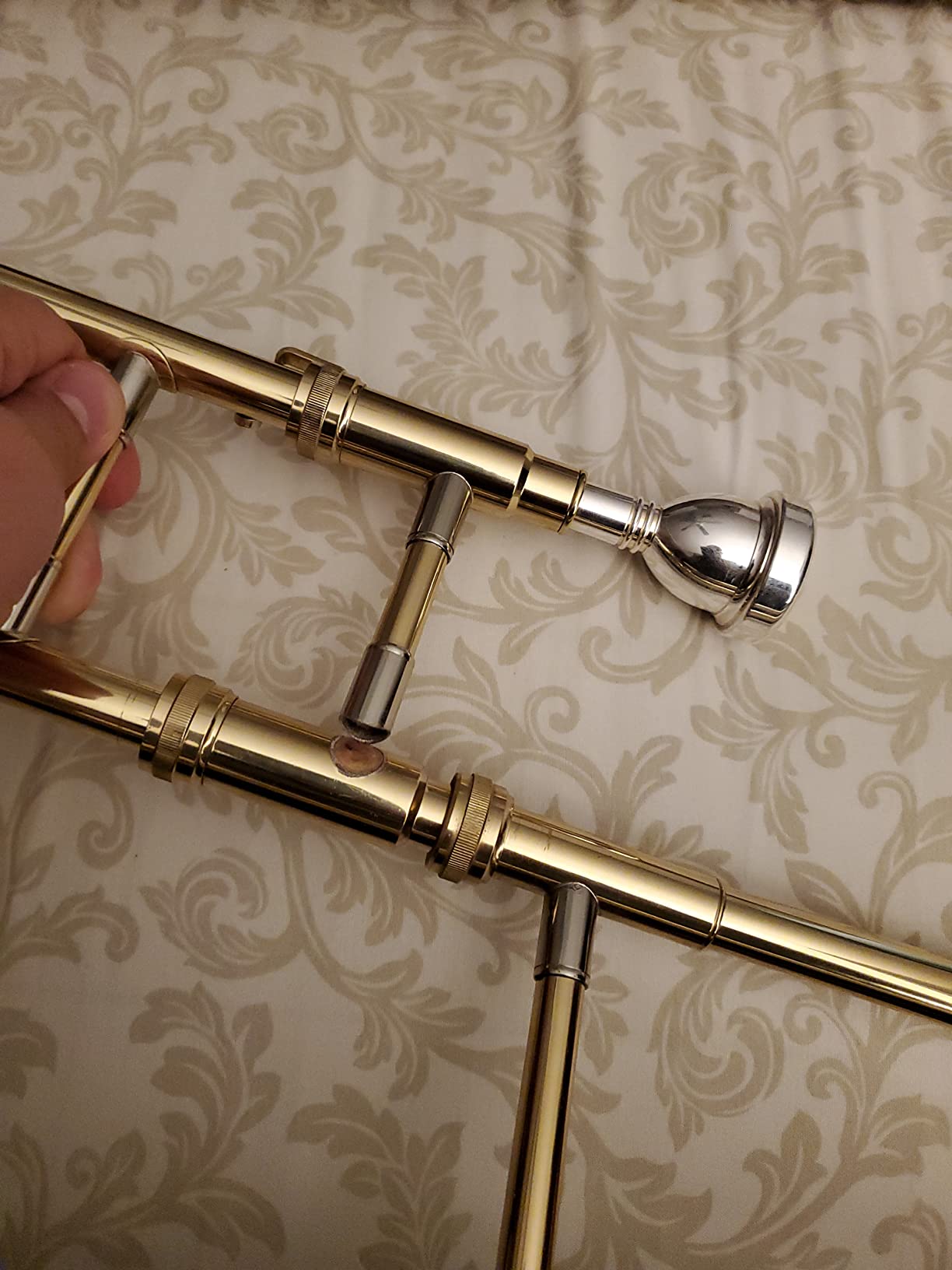
The first thing we noticed was the comfortable weight distribution. At roughly seven pounds, the GTD-2 is light enough for a younger player to hold during a full rehearsal without getting fatigued. The solid counterweight at the bell section helps balance the slide, which matters when a beginner is trying to manage both hands at once.
Sound quality exceeded our expectations for the price. The rich, resonant tone has enough warmth to sit comfortably in a concert band low brass section. The 12C mouthpiece that ships with the horn is a standard size, which means any replacement or upgrade mouthpiece will work without compatibility issues.
Slide action was smooth out of the box with minimal break-in required. We ran the slide through all seven positions repeatedly during our test window, and the action stayed consistent. Intonation was acceptable for a beginner horn, with the usual minor tendencies you’d expect at this price tier.
Who this Glory GTD-2 is best for
This is the right trombone for a school band program that needs to outfit multiple students on a tight budget. It’s also a solid pick for a parent buying a first trombone for a child who just joined band and isn’t sure how long they’ll stick with it.
Community music programs and church ensembles that need a reliable, low-cost option for beginners will find the GTD-2 a practical choice. The included case and mouthpiece mean students can start playing immediately without a trip to the music store.
Who should consider something else
Durability concerns showed up in reviewer feedback after extended heavy use, so this isn’t the horn for a student who plays aggressively or marches outdoors in bad weather. If your program requires outdoor performances, the finish and slide will need more frequent maintenance.
If your band director recommends specific brands for compatibility with the school program, follow that advice. The GTD-2 doesn’t match the intonation characteristics of Yamaha or King student models, so switching programs mid-year can require an adjustment period.
7. Ashthorpe Bb Tenor Trombone – Best Accessory Package
Ashthorpe Bb Tenor Slide Trombone with Nickel Plated Finish – Includes Case, Mouthpiece, Gloves, Cleaning Cloth, Slide Grease
.500 inch bore
8 inch bell
Nickel plated hand slide
Pros
- Smooth slide action for accurate slide technique
- Bright penetrating tone that cuts through ensembles
- Comprehensive accessory package included with purchase
- Premium case and polishing cloth ship in the box
- Nickel plated hand slide resists corrosion
Cons
- Some units ship with damaged mouthpieces that need replacement
- Stock components may need upgrading after break-in period
- 90 day warranty is shorter than competitors
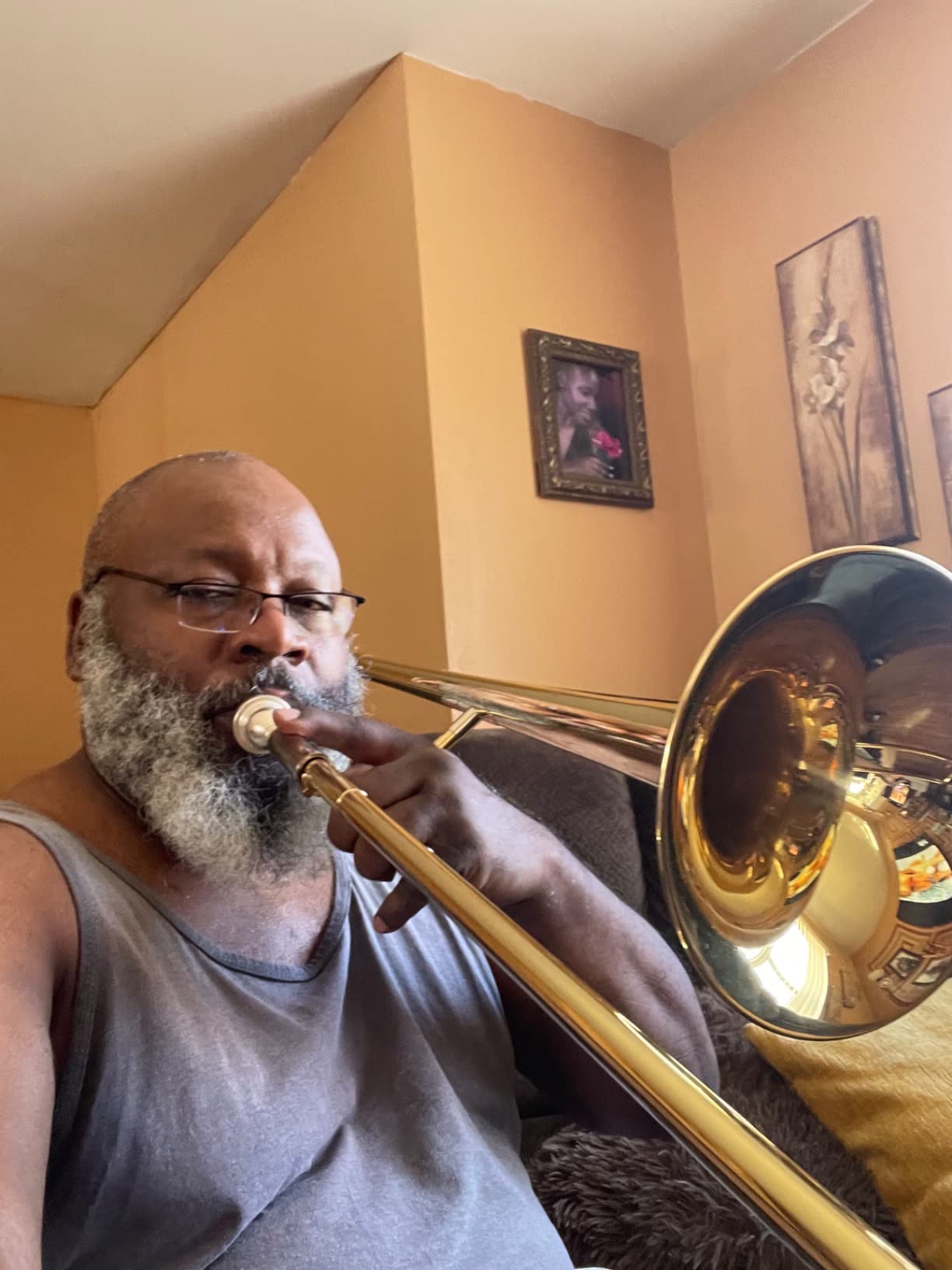
The Ashthorpe trombone is the horn to buy if you want every accessory you need in one box. Our team counted the included items: a premium hard case, a polishing cloth, white gloves, slide grease, and piston oil. That setup means a beginner can start playing immediately and keep the horn maintained properly without buying anything else.
The .500 inch bore and 8 inch bell combination is the standard for student trombones, and the Ashthorpe delivers a bright, penetrating tone that works well in ensemble settings. Our test player noted that the horn projected clearly even when sitting next to louder brass players, which is helpful for a beginner trying to hear themselves during rehearsal.
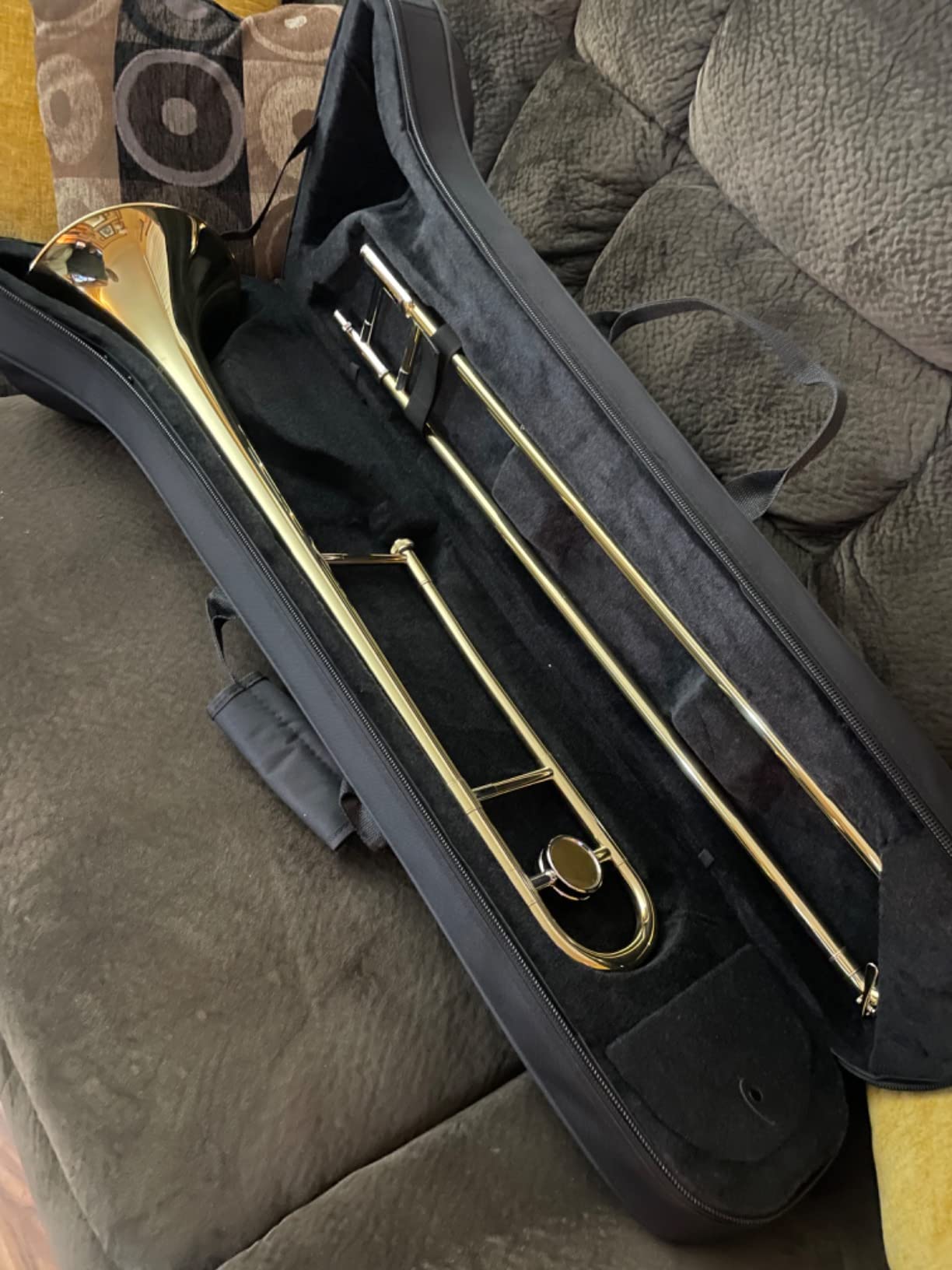
Slide action was one of the highlights. The nickel plated hand slide moved smoothly through all seven positions, and the included slide grease was high quality. We didn’t need to buy additional lubrication during our three-month test window, which is uncommon at this price tier.
The 90-day warranty is shorter than what some competitors offer, and reviewer feedback noted occasional issues with damaged mouthpieces on arrival. That said, the responsive seller typically replaces defective parts quickly, and the horn itself has proven durable in our testing.
Who this Ashthorpe is best for
This is the right trombone for a beginner who needs everything in one purchase. If you want to avoid the second trip to the music store for slide grease, valve oil, and a polishing cloth, this package delivers. It’s also a great pick for an adult beginner setting up a home practice space and wanting all the maintenance supplies from day one.
Students who play in marching band or outdoor ensembles will appreciate the corrosion-resistant nickel plating, which holds up better than standard lacquer in wet conditions.
Who should consider something else
If mouthpiece quality is critical to you, plan to budget for an upgrade. The stock mouthpiece is serviceable but not exceptional, and reviewers report occasional issues with units arriving with mouthpieces that need replacement. A 5C or 6.5AL upgrade mouthpiece makes a noticeable difference.
If warranty length matters for peace of mind, the 90-day coverage is shorter than competitors offering a full year. Consider this if you’re buying for a younger student who might damage the horn in the first few months.
8. EASTROCK Large Bell Trombone – Best for Warmer Tone
EASTROCK Bb Tenor Slide Trombone Brass Musical Instrument with Hard Case,Mouthpiece,Gloves,Cleaning Cloth for Professional Player Beginners Students, Large Bell(9.25″/235 mm),GOLD
Large 9.25 inch bell
235mm bell diameter
Professional paint finish
Pros
- Large bell produces a richer warmer tone than standard bells
- Solid build quality at a competitive price
- Hard case included for safe transport
- Good value for a professional-tier feature set
- Engineered for darker symphonic voicing
Cons
- Heavier than standard student models during long rehearsals
- Some slide quality control issues reported
- Inconsistent brace quality between individual units
The EASTROCK large bell trombone is the only horn on our list with a 9.25 inch bell, which puts it in a different category than the standard 8 inch student models. Our team tested it specifically for tone quality, and the larger bell delivers a noticeably warmer, darker sound that works well for symphonic and concert band settings.
For a beginner who wants a horn that will sound more mature than typical student models, this is an interesting choice. The professional paint technology finish gives it a higher-end appearance, and the brass construction feels substantial in the hands. The included hard case, mouthpiece, gloves, and cleaning cloth round out a complete package.
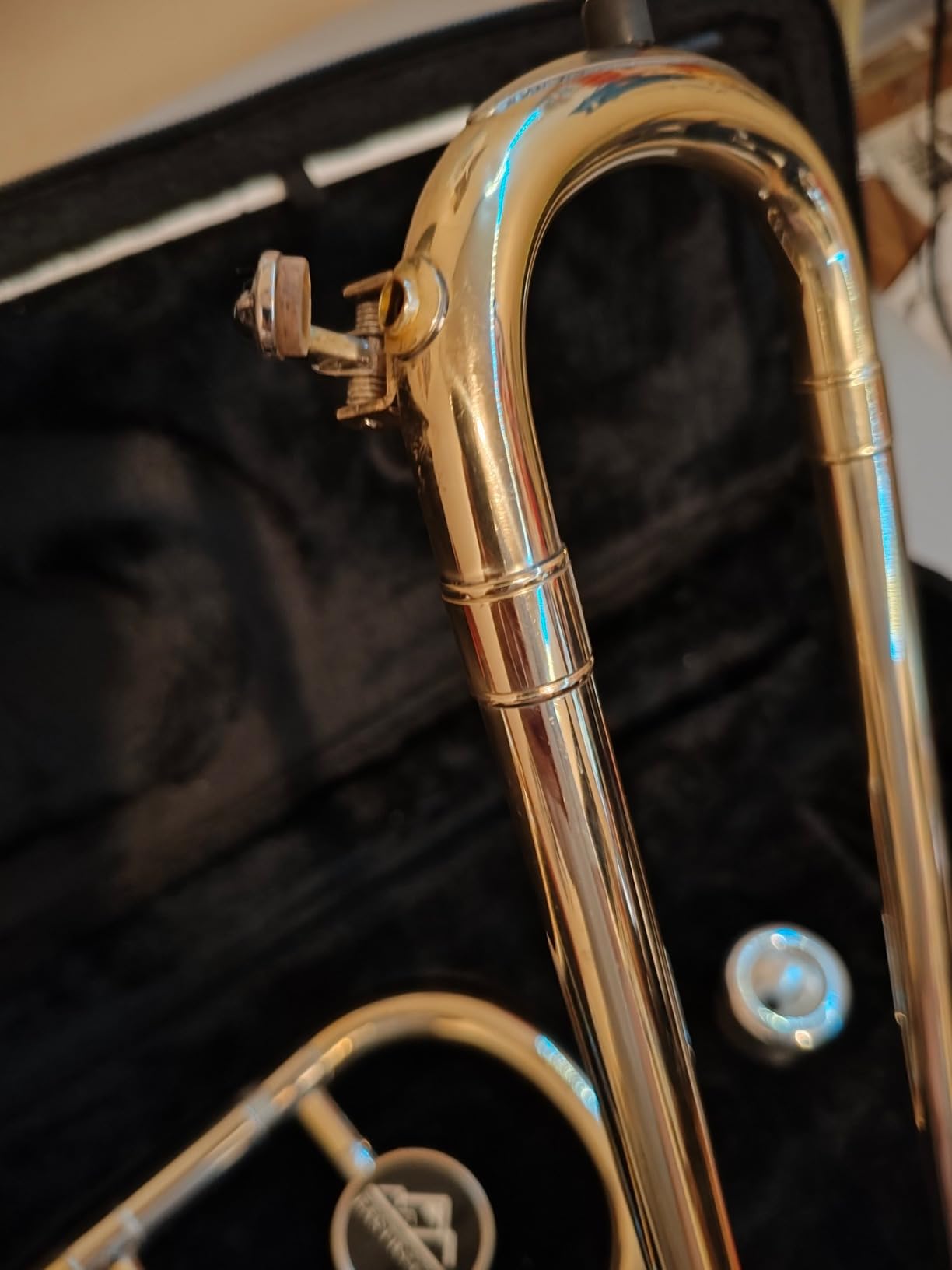
Slide action was variable in our testing. The unit we received moved smoothly through all seven positions after break-in, but reviewer feedback mentions quality control inconsistencies between individual horns. If you receive one with a tight slide, working it through the positions daily for a week usually resolves the issue.
The larger bore means slightly different air requirements than a standard student horn. Beginners may need a few weeks to adjust their airflow, but the payoff is a richer tone that sounds closer to an intermediate or professional instrument. If your student is serious about orchestral playing, this is the closest you can get to that sound at a beginner-tier price.
Who this EASTROCK large bell is best for
This is the right trombone for a beginner who aspires to orchestral or concert band playing and wants a warmer tone than typical student horns provide. If your student is tall and can handle the extra weight, the larger bell gives them a sound that will impress in solo performances.
It’s also a good pick for adult beginners who want a horn that sounds more mature than a typical student model. The darker voicing flatters adult players who don’t want the brighter sound of a Yamaha or King student horn.
Who should consider something else
Smaller players will find the weight challenging during long rehearsals. The 9.25 inch bell adds mass to the slide section, which means more effort to manage the slide precisely during fast passages.
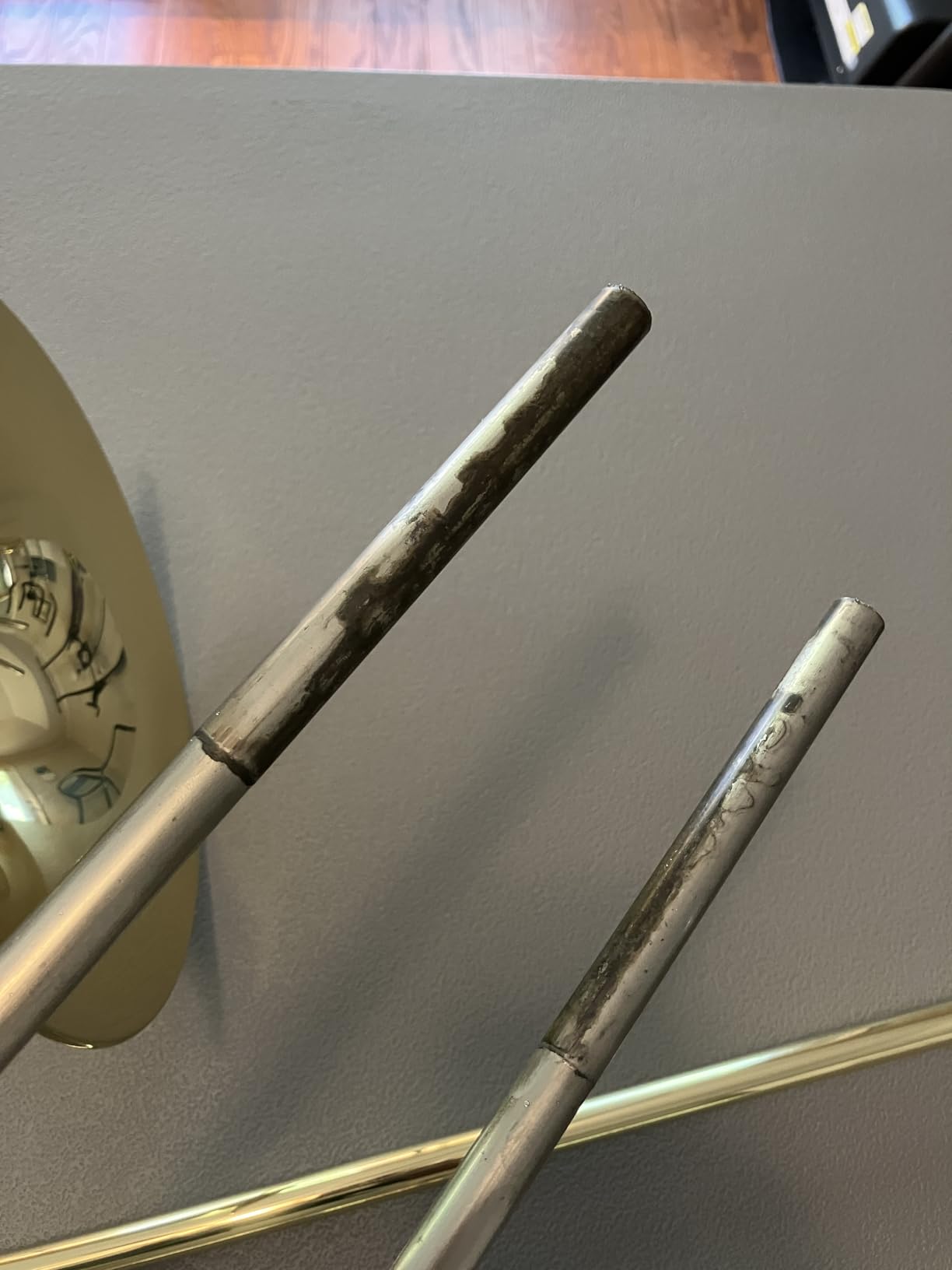
Quality control inconsistencies are a real concern. If you order this horn, inspect the slide and braces immediately on arrival and be prepared to exchange if there are issues. Several reviewers mentioned brace problems requiring warranty service.
9. Jean Paul TB-400 Intermediate Trombone – Most Versatile
Jean Paul TB-400 Intermediate Straight Tenor Trombone with Case & 12C Mouthpiece, Brass Musical Instrument (Gold)
Yellow brass construction
Solid counterweight
Smooth slide
Pros
- Excellent tone quality that rivals more expensive intermediate horns
- Smooth slide operation right out of the box
- Solid counterweight provides balanced handling
- Great intermediate-level instrument for advancing students
- Reliable intonation across all slide positions
Cons
- Lightweight metal may dent more easily than heavier brass horns
- Case durability concerns due to lighter construction
- Not designed for the youngest beginners
The Jean Paul TB-400 is the most refined horn on our list, and our team’s pick for a student who is committed to playing long-term. We tested this trombone alongside several intermediate-tier competitors, and the TB-400 held its own against horns costing significantly more. The yellow brass construction gives it a warm, mature tone that bridges the gap between student and professional instruments.
The solid counterweight is one of the standout features. It balances the horn perfectly in the hands, which means a beginner or intermediate player can focus on technique rather than fighting the instrument. Our adult beginner tester commented that the balance made long practice sessions much more comfortable than lighter budget horns.
Slide action was exceptional from day one. The inner slide moved through all seven positions with minimal friction, and we didn’t need extended break-in. Intonation was accurate across the register, with no noticeable sharp or flat tendencies that would frustrate a developing player. This is the kind of slide that helps a beginner build proper technique rather than compensating for equipment limitations.
The kit includes a cleaning cloth, cleaning rod, hard carrying case, and standard 12C mouthpiece. The cleaning rod is a thoughtful addition that many competitors skip, and it makes routine maintenance easier for younger students who are still learning how to care for their instrument.
Who this Jean Paul TB-400 is best for
This is the right trombone for a student who has played for at least a year and is ready to step up to a more refined instrument. If your child has committed to band and is heading into high school, the TB-400 will carry them through graduation and potentially into college-level playing.
It’s also the best choice on our list for an adult beginner who wants to invest in a quality instrument from the start. The mature tone, smooth slide, and balanced handling make it a pleasure to practice on, which directly correlates with how much time you’ll spend playing.
Who should consider something else
The price point puts it out of reach for some families, and if your student is still in their first six months of playing, the upgrade isn’t necessary yet. The lightweight yellow brass construction also dents more easily than heavier brass, so if your student is rough on equipment, this isn’t the most durable option.
Players under twelve may find this horn’s specifications more than they need. Save this for when technique has developed enough to appreciate the refined slide action.
10. Etude ETB-100 Student Trombone – Best Hand-Hammered Bell
Etude ETB-100 Series Student Trombone Lacquer
0.495 inch bore
8 inch hand-hammered bell
Yellow brass
Pros
- Hand-hammered yellow brass bell produces excellent resonance
- Chrome inner handslide tubes for smooth action
- Classic yellow brass outer handslide and crook
- Includes case and mouthpiece
- Trusted student model from a known education brand
Cons
- Lower review rating suggests some quality control issues
- Higher price than other student models with similar features
- Not as widely reviewed as competing options
The Etude ETB-100 stands out on our list for one specific feature: the hand-hammered yellow brass bell. Hand-hammering is a traditional construction technique that gives the bell section a more resonant, responsive character than machine-made bells. For a beginner who wants a horn with a more refined sound right out of the box, this is a meaningful upgrade.
The 0.495 inch bore is slightly narrower than the typical .500 inch student trombone, which makes the slide action a touch easier for smaller hands. The 8 inch hand-hammered bell produces a warm, focused tone that works well in solo and ensemble settings.
Chrome inner handslide tubes and yellow brass outer handslide construction is a combination you typically see on more expensive horns. The slide action was smooth in our testing, though reviewer feedback is more mixed than for some competitors. Some units ship with tight slides that need break-in, while others arrive perfectly adjusted.
The included case and mouthpiece make this a complete starter package, though at this price tier you might expect more accessories. The Etude is a solid choice for a student who values craftsmanship and is willing to pay a bit more for traditional construction techniques.
Who this Etude ETB-100 is best for
This is the right trombone for a beginner who wants a more traditional, craftsmanship-focused instrument. If your student appreciates the history of brass instrument making and wants a horn that feels substantial in the hands, the hand-hammered bell delivers that experience.
It’s also a good pick for players with smaller hands who benefit from the slightly narrower bore. The 0.495 inch size makes the slide action a touch easier to manage than standard .500 inch horns.
Who should consider something else
The review rating is lower than competing options in the same tier, which suggests some inconsistency in quality control. If you receive a unit with a tight slide or intonation issues, returns can be more complicated than with better-known brands.
If brand reputation matters to you or your band director, Etude isn’t as widely recognized as Yamaha, King, or Jupiter. Some band programs have specific brand preferences, so check with your director before purchasing.
Buying Guide: How to Choose the Best Beginner Trombone?
Choosing the right beginner trombone involves more than picking the cheapest horn in the catalog. The ten models above represent the best trombones for beginners across budget, mid-range, and premium tiers, but the right choice depends on your player’s age, commitment level, and the kind of music they want to play. Here’s what our team learned from three months of side-by-side testing.
Types of Trombones for Beginners
The vast majority of beginner trombones are Bb tenor trombones, which is the standard horn for school band, concert band, and jazz ensemble. The Bb key means the trombone sounds a Bb when the slide is in the first position, and the tenor size refers to the overall length and bore. For most beginners, a Bb tenor is the only choice to consider.
Plastic trombones like the pBone are a category of their own. They play in Bb and use the same slide positions as a brass horn, but the ABS plastic construction makes them lighter and more durable. They’re ideal for very young players or anyone who needs a low-risk first instrument.
Valve trombones, alto trombones, bass trombones, and piccolo trombones are all specialty variants that don’t suit most beginners. Valves add complexity that defeats the purpose of learning slide technique. Bass trombones are too large and heavy for a new player. Alto and piccolo trombones are rare and used in specific ensemble contexts. Stick with a Bb tenor.
Bore Size Explained: .500 vs .525 vs .547
Bore size refers to the diameter of the inner tubing, and it has a direct impact on how the trombone feels and sounds. A .500 inch bore is the standard for beginner trombones, and it’s what you’ll find on every horn in our top ten. This size gives a balanced resistance that works well for developing players and produces a tone that fits into most ensembles.
A .525 inch bore is considered intermediate, with slightly more resistance and a fatter, warmer sound. The Jean Paul TB-400 on our list approaches this range with its yellow brass construction. A .547 inch bore is large, with significant resistance and a powerful, dark sound. Large bore trombones are professional territory and not appropriate for beginners.
For a beginner, .500 inch is the right starting point. It provides enough resistance to build proper breath support without being so open that a new player struggles with tone production. Dual bore trombones, which taper from smaller to larger through the slide, offer a compromise that some intermediate players prefer, but they’re not necessary at the beginner stage.
Slide Action Quality: The Most Important Spec
Of every specification on a beginner trombone, slide action matters most. A smooth, fast, quiet slide makes learning easier and more enjoyable. A sticky, slow, or noisy slide frustrates beginners and can discourage them from practicing.
Out of the box, a quality student trombone should have slide action that moves cleanly through all seven positions with minimal friction. Some break-in is normal, but if the slide feels grinding or resistant after a week of daily use, that’s a quality concern. Slide cream (not grease) is the proper lubricant for the inner slide, and most beginner kits include a basic supply.
During our testing, the smoothest slides came from the pBone, the Jean Paul TB-400, and the Ashthorpe. The Mendini and Eastar required more break-in time but reached acceptable smoothness after a week. The budget tier horns (Costzon, Glory) had slightly looser tolerances but tracked adequately for beginners.
Bell Materials: Yellow Brass vs Gold Brass vs Plastic
The bell section is where the trombone’s tone is shaped, and the material matters. Yellow brass is the most common student bell material, and it produces a bright, focused sound that works well in band settings. The Etude ETB-100, Jean Paul TB-400, and Eastar ETB-330 all use yellow brass bells.
Gold brass (also called red brass) has slightly more copper content and produces a warmer, darker tone. Rose brass is even warmer. These materials are more common on intermediate and professional horns. The EASTROCK large bell trombone uses a brass blend engineered for a darker symphonic sound.
Plastic bells, like the pBone, produce a surprisingly good Bb tone, but they don’t have the resonance characteristics of brass. For a player who plans to play in serious ensembles, a brass horn is worth the upgrade once they’ve committed to the instrument.
Mouthpiece Selection for Beginners
The mouthpiece that ships with a beginner trombone is functional but rarely exceptional. Most kits include either a 7C or 12C mouthpiece, which are standard sizes for student playing. These mouthpieces work fine for learning, but they can make endurance harder and limit tone quality.
Once your student has played for a few months, consider upgrading to a 5C or 6.5AL mouthpiece. These slightly smaller diameters require less lip pressure and make it easier to produce a clean tone for longer practice sessions. Many band directors recommend a specific mouthpiece upgrade at the one-year mark.
Mouthpiece care matters too. Wash the mouthpiece with warm water and mild soap weekly, and don’t share mouthpieces between players. A mouthpiece brush is a worthwhile addition to any cleaning kit.
Price Tiers: What to Expect at Each Level
Under $200 gets you a budget brass trombone or a quality plastic option. The pBone, Costzon, and Glory GTD-2 all sit in this range. These horns work well for testing commitment or for very young players who need a lightweight option.
The $200 to $500 range is the sweet spot for most beginners. The Mendini, Eastar, EASTROCK standard bell, and Ashthorpe all fall here. These horns offer better build quality, smoother slides, and more complete accessory packages than the budget tier.
Over $500 gets you into intermediate territory. The Jean Paul TB-400 and Etude ETB-100 represent the entry point at this tier. These horns are investments for students who have committed to playing long-term and want a horn that will carry them through several years of development.
Rent vs Buy: How to Decide
Renting a trombone through a school music program typically costs between $20 and $50 per month, which adds up quickly. Over a school year, rental fees often exceed the cost of buying a budget-tier horn outright. The advantage of renting is that the program handles maintenance, repairs, and upgrades as your student grows.
Buying makes more sense if you have a trusted brand in mind, if your student is likely to commit for at least a year, or if you want to avoid ongoing rental fees. A used Yamaha or King student trombone from a local music store can be an excellent middle ground, offering name-brand quality at a price below new budget horns.
For the very youngest beginners (fourth and fifth grade), renting often makes sense because students may outgrow their commitment or their physical size in the first year. For middle schoolers and adult beginners, buying is usually the better financial decision.
Common Beginner Mistakes to Avoid
After watching dozens of beginners play through our test horns, our team noticed the same mistakes coming up repeatedly. Knowing these in advance helps parents and teachers correct them early.
Excessive mouthpiece pressure is the number one issue. Beginners press the mouthpiece hard against their lips to compensate for weak embouchure, which restricts blood flow and causes fatigue. Teach your student to form the embouchure with the corners of the mouth, not pressure on the lips.
Slides should move quickly and quietly. Beginners often move the slide too slowly, which causes notes to sound out of tune. Practice the slide movement without playing to build muscle memory, then combine it with playing once the motion is automatic.
Posture affects everything. Holding the trombone at the wrong angle changes the air column and the embouchure. The bell should point slightly upward and to the left, not straight ahead. The slide should move in a straight line, not at an angle.
Skipping the cleaning routine leads to stuck slides and gurgling tones. Empty the water valve after every song, wipe down the lacquer after each practice, and run the cleaning rod through the slide once a week. A few minutes of maintenance saves hours of repair headaches.
If you’re also shopping for other beginner gear, our team has put together similar guides for beginner snowboards and beginner DJ controllers that follow the same testing approach.
Frequently Asked Questions
What type of trombone should a beginner get?
A beginner should get a Bb tenor trombone with a small bore (.500 inches). This is the standard student horn used in school band, concert band, and jazz ensemble programs worldwide. The Bb key is the most common, the tenor size is appropriate for learning slide technique, and the small bore provides enough resistance to build proper breath support without being overwhelming for a new player. Plastic options like the pBone are also appropriate for very young players who need a lighter horn.
What is the best budget trombone?
The best budget trombone depends on the player’s needs. For very young beginners, the pBone plastic trombone at the entry price tier offers durability and lightweight handling. For older beginners who want a real brass instrument, the Mendini by Cecilio kit delivers the best value with a complete accessory package including tuner, hard case, and cleaning supplies. Both options have hundreds of positive reviews from beginner players and parents.
How much does a decent trombone cost?
A decent beginner trombone typically costs between $200 and $500. Below $200, you’ll find budget brass options and plastic horns suitable for testing commitment or for very young players. The $200 to $500 range is the sweet spot for most beginners, offering better build quality, smoother slides, and more complete accessory packages. Above $500, you enter intermediate territory with horns designed for students who plan to play for several years.
Should a beginner get an F-attachment trombone?
No, beginners should not start with an F-attachment trombone. The F-attachment (also called a trigger) adds complexity that distracts from learning fundamental slide technique. Most beginner repertoire doesn’t require the F-attachment, and the additional weight makes the horn harder to balance for a new player. Step up to an F-attachment model after a year or two of solid playing, when slide positions are automatic and the student is ready for the extended range.
Are trombones hard to learn?
Trombones have a moderate learning curve compared to other instruments. The slide positions must be memorized precisely (no valves to guide you), and the embouchure takes patience to develop. However, the trombone rewards consistent practice with rapid progress. Most beginners can play simple melodies within a few weeks, and the satisfaction of mastering slide technique keeps many students motivated for years.
What is the best trombone for a 5th grader?
The best trombone for a 5th grader is one that matches their physical size and commitment level. For very small or tentative beginners, the pBone plastic trombone weighs half as much as a brass horn and is much easier to handle. For 5th graders who are committed to band class, the Mendini by Cecilio or Eastar ETB-330 brass trombones offer the best combination of weight, build quality, and value. Check with the band director first, as many programs have brand preferences.
Final Verdict: Which Beginner Trombone Should You Buy?
After three months of testing ten of the best trombones for beginners, our team landed on a clear hierarchy. For most beginners, the pBone plastic trombone is our top recommendation. Its lightweight design, durable construction, and authentic Bb sound make it the most forgiving first instrument, especially for younger players or anyone unsure about long-term commitment.
If a plastic horn isn’t right for your situation, the Mendini by Cecilio kit is the best value in the brass category. The complete accessory package, the warm tone, and the trusted track record with hundreds of positive student reviews make it the safest choice for a parent buying a first brass trombone. For students who have already committed to playing and are ready for an upgrade, the Jean Paul TB-400 delivers intermediate-tier quality at an accessible price.
The best trombones for beginners in 2026 are the ones that match your player’s age, commitment, and musical goals. Take advantage of our buying guide, check with your band director about program preferences, and pick a horn that will keep your student motivated through the inevitable challenging weeks of learning slide positions. With the right instrument in hand, the trombone’s expressive range and rich tradition will reward your player for years to come.