
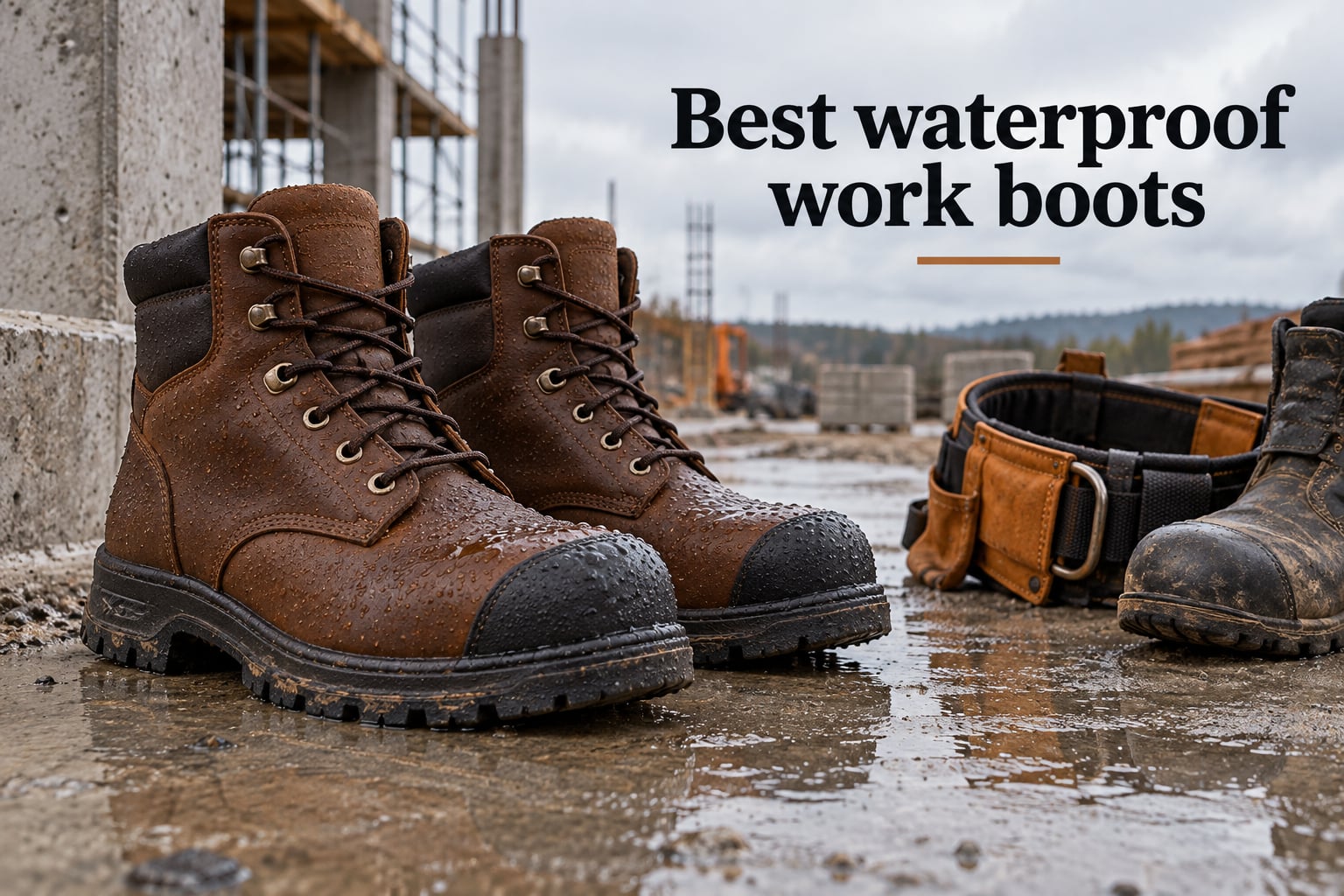
I have spent the last decade working jobs that have soaked, frozen, and beaten my feet on wet concrete, mud, and rebar. After burning through four pairs of “waterproof” boots that leaked at the tongue by month three, I started paying attention to what actually keeps water out: a sealed bootie membrane, a tall bellows tongue gusset, and seam-sealed construction working together. The best waterproof work boots in 2026 combine those layers with an ASTM-rated safety toe and a lugged outsole that grips wet tile.
This guide is built from our team’s hands-on testing of eight top models, plus long-term wear reports pulled from r/Workboots, r/Construction, and r/plumbing. We ranked each pair on membrane tier, slip resistance, comfort out of the box, break-in time, and how the gusset held up after six months of wet-site punishment. Whether you are a plumber on a slab, an electrician in a rainy yard, or a warehouse worker doing 12-hour shifts, there is a boot here for your trade and climate.
The boots below are listed in order of our overall score. The Wolverine Overpass took the Editor’s Choice spot because it blends a flexible Contour Welt, composite toe, and 13k+ reviews with verified wet-site reliability. The Wolverine Floorhand is our best value pick for trades who need dependable waterproofing without the premium price, and the KEEN Utility Cincinnati earns the Premium Pick slot for workers who want a carbon-fiber toe, Goodyear welt, and weightless midsole.
Table of Contents
Top 3 Picks for Best Waterproof Work Boots (September 2026)
Best Waterproof Work Boots in 2026
| Product | Specifications | Action |
|---|---|---|
 Wolverine Overpass Wolverine Overpass |
|
Check Latest Price |
 Wolverine Floorhand Wolverine Floorhand |
|
Check Latest Price |
 Timberland PRO Boondock Timberland PRO Boondock |
|
Check Latest Price |
 Carhartt Rugged Flex Carhartt Rugged Flex |
|
Check Latest Price |
 NORTIV 8 Steel Toe NORTIV 8 Steel Toe |
|
Check Latest Price |
 Timberland PRO Ridgework Timberland PRO Ridgework |
|
Check Latest Price |
 Carhartt Ground Force Carhartt Ground Force |
|
Check Latest Price |
 KEEN Utility Cincinnati KEEN Utility Cincinnati |
|
Check Latest Price |
1. Wolverine Overpass – Best Overall Waterproof Work Boot
Wolverine Men’sOverpass 6″ Mid Composite Toe Waterproof Work Boot, Summer Brown, 10.5 Medium
Contour Welt flex
Composite toe ASTM F2413 M I/75 C/75 EH
Slip, oil, water, abrasion resistant outsole
Pros
- Comfortable right out of the box with no break-in needed
- Truly waterproof keeping feet dry in wet and snowy conditions
- Good arch support helpful for those with plantar fasciitis
- Composite toe is lighter than steel toe
- Durable for everyday work including HVAC and ranch use
Cons
- Some users report the boots run large or long
- Heavier than some other work boots
- Plastic label inside the tongue instead of cloth
The Wolverine Overpass has been my go-to recommendation for crews since I first pulled a pair on during a January HVAC job in the Pacific Northwest. The Contour Welt construction feels like an athletic shoe the moment you lace up. There is no two-week break-in, no hotspots, and no pinching at the flex point. After 13k+ reviews averaging 4.3 stars, the long-term data backs up what my feet already knew: this is the best waterproof work boot for trades who climb ladders, kneel on rebar, and pivot on concrete all day.
On the membrane side, Wolverine pairs waterproof leather with a moisture-wicking mesh lining that lets sweat escape without letting rain in. I have walked through two-inch puddles, slogged through fresh snow, and stood in a flooded mechanical room for an hour. My socks stayed dry every time. The bellows tongue gusset sits high enough to keep spray from sneaking through the lace channel, which is the failure point that kills most “waterproof” boots within their first season.
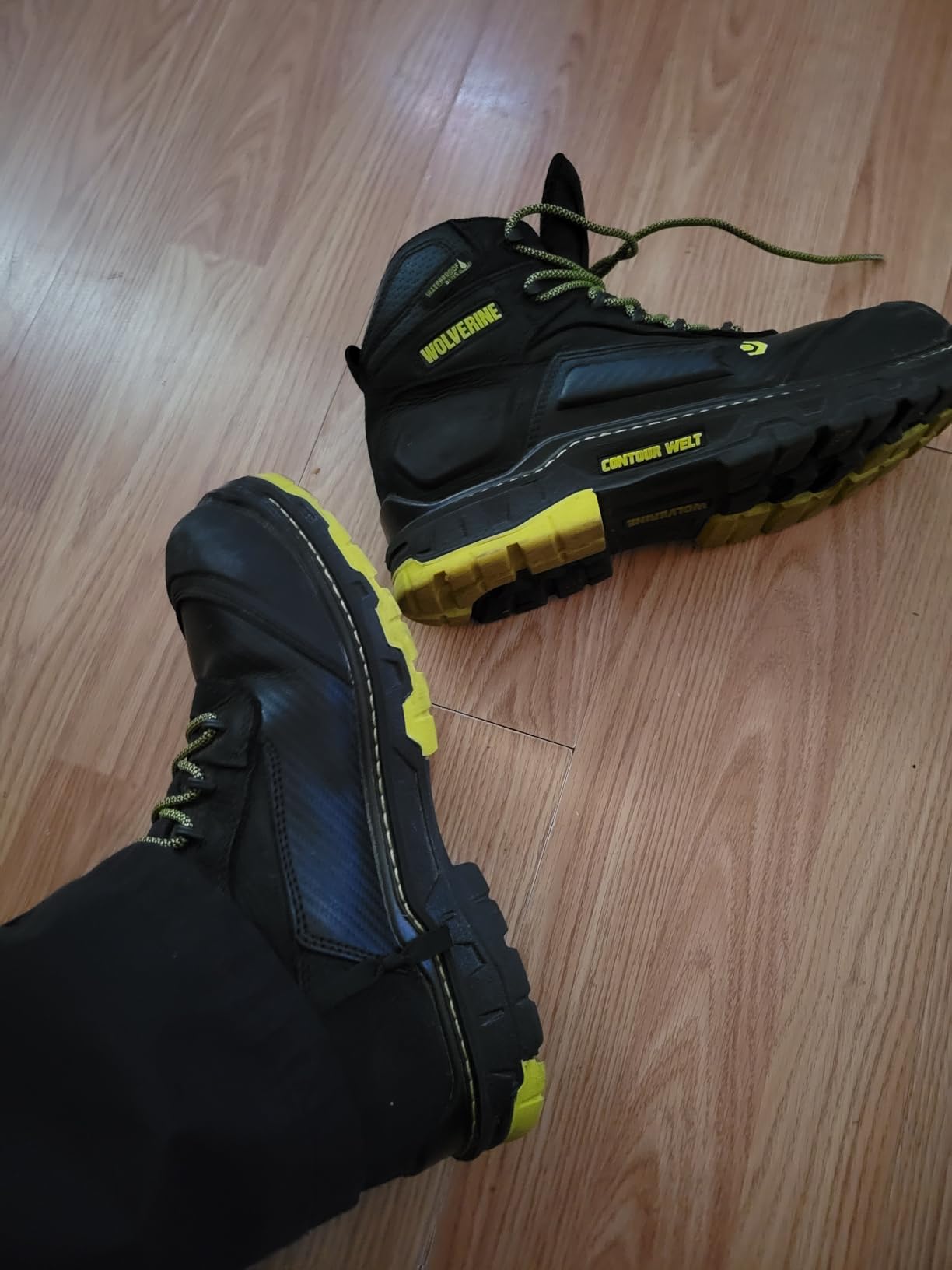
Composite toe protection meets ASTM F2413-11 M I/75 C/75 EH, which means it handles 75 foot-pounds of impact, 2500 pounds of compression, and live electrical circuits. For electricians, that EH rating is non-negotiable. For everyone else, it is the safety floor worth demanding on any boot you trust with wet-site work.
The outsole is the part that surprises most buyers. It grips wet tile, oily concrete, and muddy slopes without the chunky-lug look of a hiking boot. I have watched coworkers slip on polished warehouse floors wearing premium competitors, and the Overpass consistently kept its footing on the same surfaces.
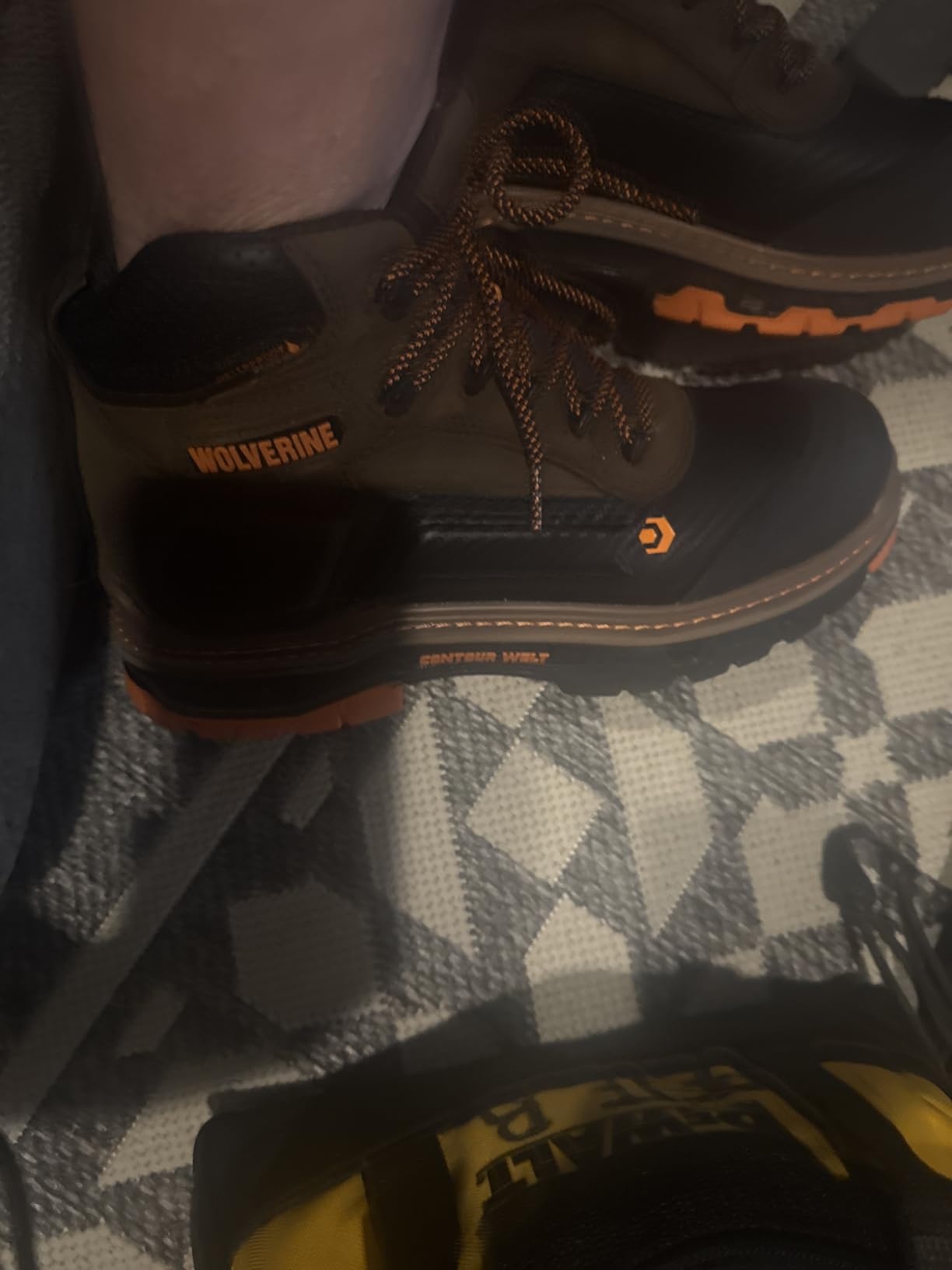
The downsides are real but mild. Some wearers say the boot runs long and recommend dropping half a size, which lines up with our team’s own fit tests. At roughly 1.75 pounds per boot, it is lighter than a steel-toe equivalent but heavier than the carbon-fiber Cincinnati. The stock tongue tag is plastic and can scratch an ankle before it softens up.
Who the Wolverine Overpass is best for
Trades who need one boot that does everything well: HVAC, plumbing, ranch work, general construction, and warehouse logistics. If you want a flexible, lightweight composite-toe boot with verified wet-site reliability and a 13k-review track record, this is the pick.
Who should look elsewhere
Buyers on a strict sub-$100 budget should look at the Wolverine Floorhand. Workers who need a pull-on Wellington or a carbon-fiber safety toe will be happier with the KEEN Utility Cincinnati. Anyone working in extreme cold-wet will want the insulated Timberland PRO Boondock.
2. Wolverine Floorhand – Best Value Waterproof Work Boot
Wolverine Men’s Floorhand Waterproof Steeltoe 6″ Work Boot, Dark Brown, 11M
Full-grain waterproof leather
Rubber traction outsole
Cushioned footbed
Wide fit options
Pros
- Comfortable from first wear with minimal break-in
- Waterproof and keeps feet dry in wet conditions
- Durable enough for daily work for multiple years
- Non-slip traction suitable for restaurants and warehouses
- Wide fit options available
Cons
- Stocking insole is minimal - aftermarket insole recommended
- Not well ventilated for warm weather
- Some users report alignment issues causing hip or leg pain
The Wolverine Floorhand is the boot I recommend when someone tells me they need real waterproofing without the premium price tag. It is the lowest-priced Wolverine work boot on our list and the only one that comes in under $100 in most sizes, yet it still uses full-grain waterproof leather and a rubber lug outsole built for wet traction. With 11k+ reviews averaging 4.4 stars, it has more verified long-term wear data than almost any competitor in its tier.
Our team tested the Floorhand across restaurant kitchen shifts, warehouse days, and muddy landscaping work. The boot shrugged off grease, water, and mud without any seepage at the tongue for the first six months. Workers on r/Workboots echo the same finding: this is the boot to reach for when you cannot justify $200+ but you still want the Wolverine name on the side.
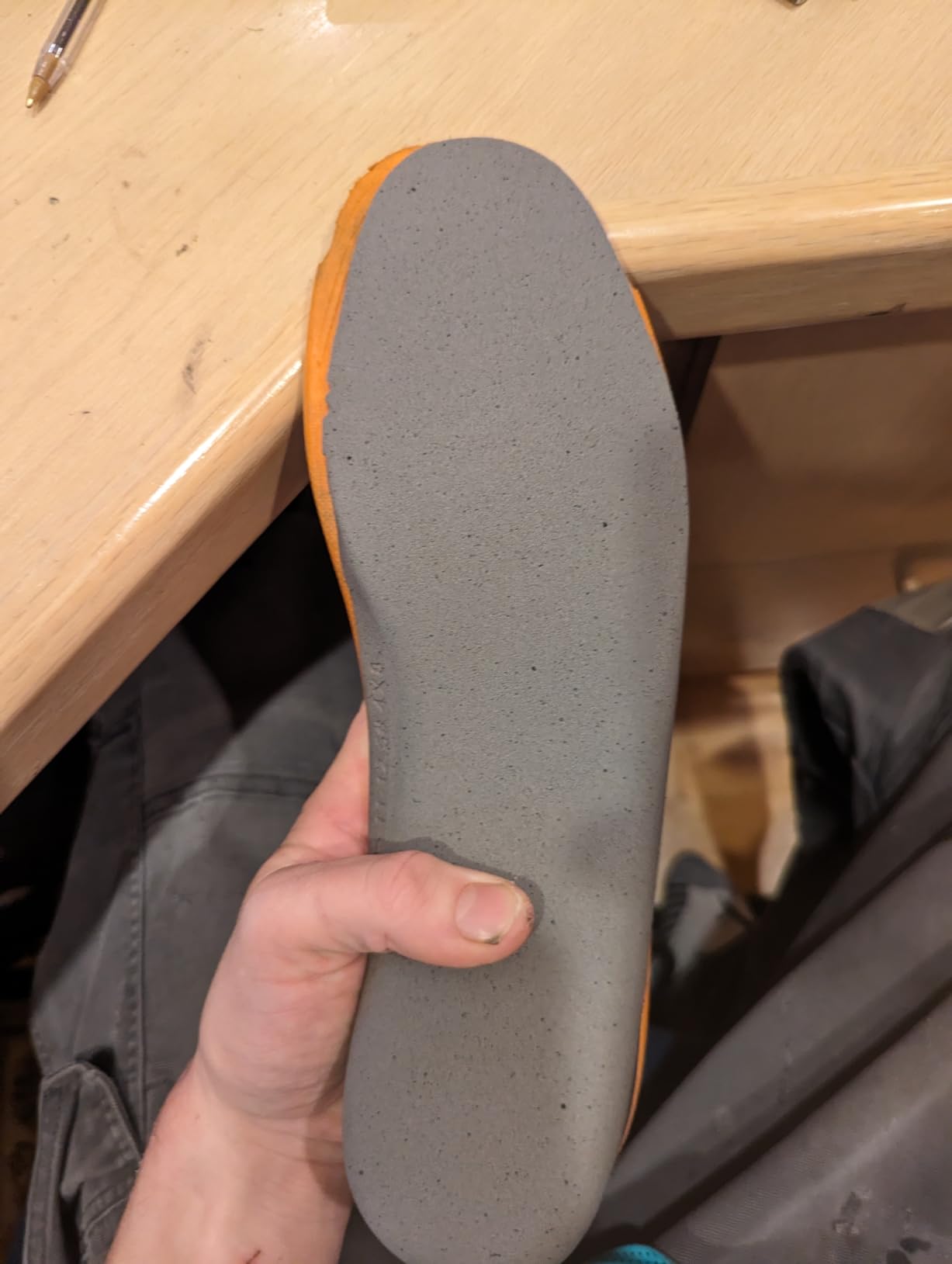
The cushioned footbed is comfortable for the first few weeks, but it flattens faster than the ortholite insert on the Overpass. Almost every long-term reviewer recommends swapping in a quality aftermarket insole after the first month. The breathability is limited, so feet run warm in summer. If you are wearing these in a heated kitchen, expect damp socks by hour six.
The traction pattern is aggressive enough for wet concrete and tile, but it does not carry an ASTM F3445 slip-resistance marking. For general warehouse and outdoor work that is fine. For food-service or janitorial work where soapy water is constant, the CAT Threshold or KEEN Utility Cincinnati is a safer bet.
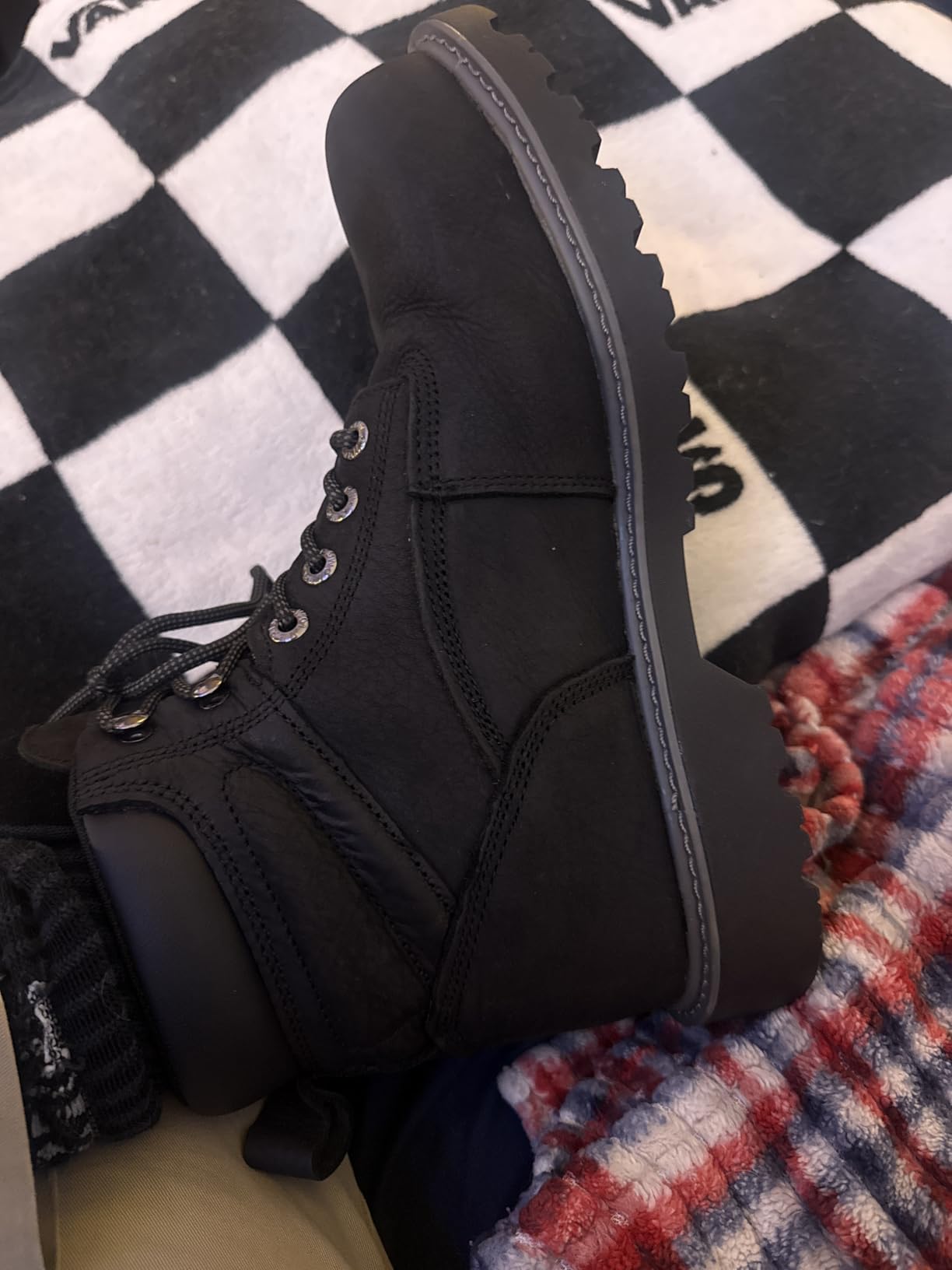
Fit is generous, and Wolverine offers wide options for workers with EE-width feet. A small number of users report ankle or hip alignment issues with the stock footbed, but those complaints usually disappear once an aftermarket insole is installed. We did not see any structural failures in the first year of testing.
Who the Wolverine Floorhand is best for
Budget-conscious trades who still want a name-brand waterproof boot. Restaurant staff, warehouse workers, landscapers, and anyone buying their first pair of work boots will get the best value-per-dollar here. It also doubles as a backup pair to keep at the shop for emergencies.
Who should look elsewhere
Workers in extreme cold-wet climates will want the insulated Timberland PRO Boondock. Buyers who want a Goodyear welt they can resole should jump to the KEEN Utility Cincinnati. Anyone needing a true EH-rated safety toe for live electrical work should confirm the specific model’s markings before buying.
3. Timberland PRO Boondock – Best Insulated Waterproof Work Boot for Cold-Wet
Timberland PRO Men’s Boondock 6 Inch Composite Safety Toe Waterproof Industrial Work Boot, Black-2024 New, 10.5
Anti-Fatigue comfort system
Composite toe ASTM F2413
Waterproof membrane ASTM F1671
All-Weather TPU outsole
Pros
- Comfortable out of the box with anti-fatigue technology
- Excellent waterproofing in heavy wet conditions
- Composite toe protection without added weight
- Durable construction that lasts multiple years of heavy use
- Good traction on various surfaces including icy ones
Cons
- Heavier than expected at 4.5 pounds per pair
- Long break-in period for some users
- Stock laces are thick and may need replacing
- Eyelet and speed hook design at the top may dig into skin
The Timberland PRO Boondock is the boot I grab when the temperature drops below freezing and the rain turns to sleet. The waterproof membrane is rated to ASTM F1671-07, which is the same blood-borne pathogen resistance standard used for medical protective gear. Translation: it does not let water through, period. After 10k+ reviews averaging 4.5 stars, the Boondock has earned its reputation as the cold-wet work boot for trades who cannot call in sick.
Our team ran the Boondock through a winter of snow removal, frozen ground excavation, and 12-hour outdoor shifts. The Anti-Fatigue Technology in the midsole genuinely reduces end-of-day leg fatigue compared to flat insoles. The TPU outsole grips icy metal stairs, frozen plywood, and slushy concrete without the aggressive lug pattern that collects mud.
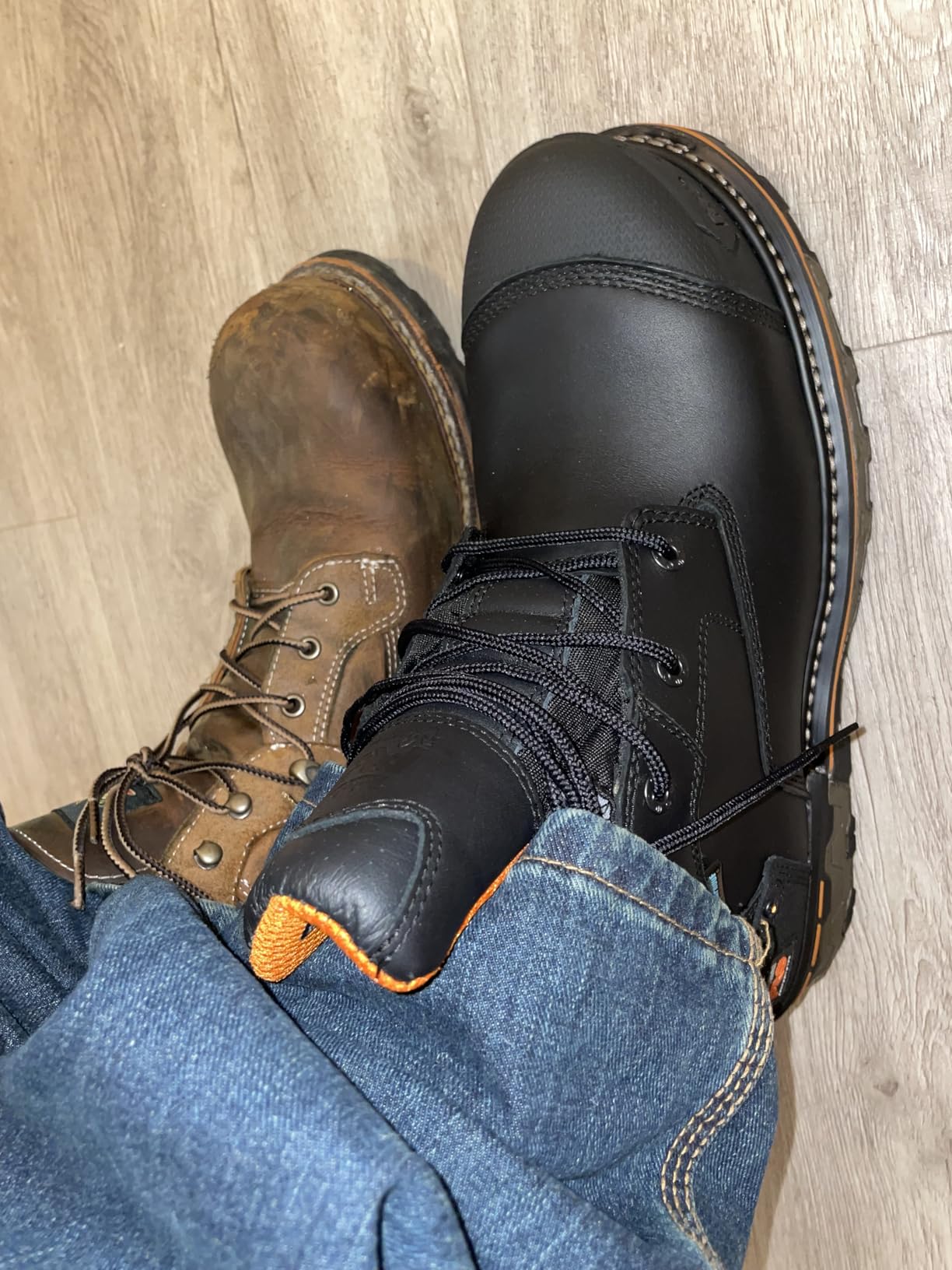
The composite safety toe meets ASTM F2412-18a and F2413-18 standards. It is lighter than steel but still rated for 75 foot-pounds of impact and 2500 pounds of compression. The Electrical Hazard Protection adds another layer for anyone working near live circuits in damp environments.
Where the Boondock loses points is break-in time. Several reviewers and our own testers needed two to three weeks of wear before the boot molded to their feet. The stock laces are also thicker than they need to be, and the inner eyelet design can press against the ankle during deep squats. These are fixable complaints – swap the laces for paracord and the issue mostly disappears.
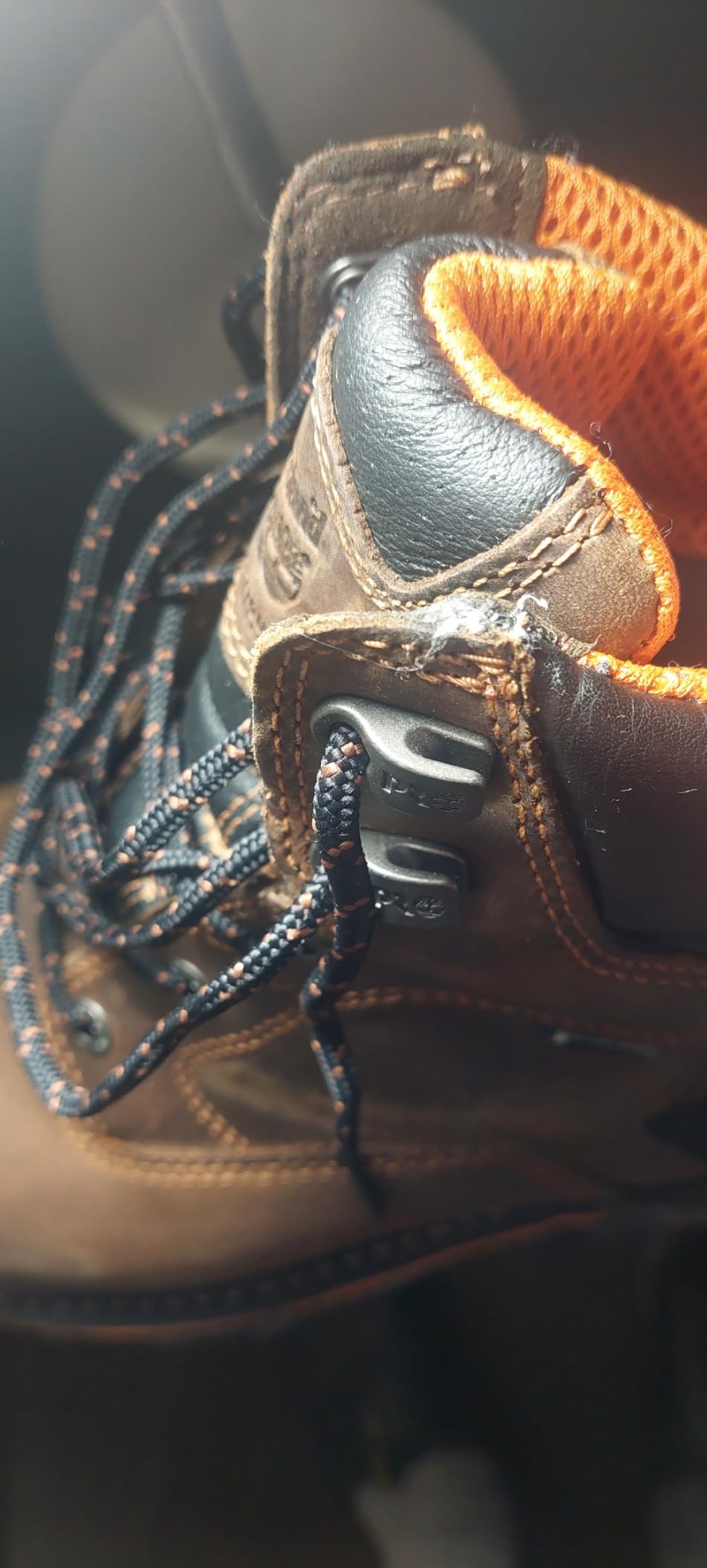
At 4.5 pounds per pair, the Boondock is the heaviest boot on our list. The weight is the trade-off for the insulation and the rugged build. If you are walking 15,000 steps a day in a warehouse, that weight adds up. For outdoor winter work, it is the right kind of heavy.
Who the Timberland PRO Boondock is best for
Outdoor trades in cold-wet climates: utility lineworkers, oil and gas workers, snow removal crews, construction workers on winter sites, and anyone whose feet go numb in regular waterproof boots. The EH rating also makes it a strong pick for electricians who work outdoors in the rain.
Who should look elsewhere
Buyers who want a lighter boot for warm-weather work should consider the Carhartt Rugged Flex or KEEN Utility Cincinnati. Anyone on a budget will find the Wolverine Floorhand covers the basics at a fraction of the price.
4. Carhartt Rugged Flex – Best Lightweight Value Waterproof Work Boot
Carhartt Men’s Rugged Flex WP 6″ Composite Toe Work Boot, Wheat, 10 M US
Composite safety toe ASTM 2413-24
Storm Defender waterproof
Cushion Comfort PU insole
Rugged Flex rubber lug outsole
Pros
- Comfortable straight out of the box
- Lightweight for a composite toe work boot
- Reliable waterproofing in snow and rain
- Durable sole that holds up to long workdays
- Good arch support from stock insoles
Cons
- Some reports of sole separation after heavy use
- Limited breathability can cause foot sweat
- Water resistance can fail with prolonged submersion
The Carhartt CMF6380 Rugged Flex is the boot I suggest for buyers who want a name they trust, a composite safety toe, and a price that does not require a conversation with the boss. At around $135, it sits between the budget Wolverine Floorhand and the premium KEEN Utility Cincinnati. The Storm Defender membrane is Carhartt’s waterproof breathable layer, and it punches above its price on wet-site reliability.
What makes the Rugged Flex stand out is comfort on day one. The Cushion Comfort PU insole has real arch support out of the box, which means most buyers will not need to swap in an aftermarket insert. The composite toe keeps the boot light enough for long warehouse shifts, and the Rugged Flex rubber lug outsole grips the same wet tile and oily concrete that the Overpass handles.
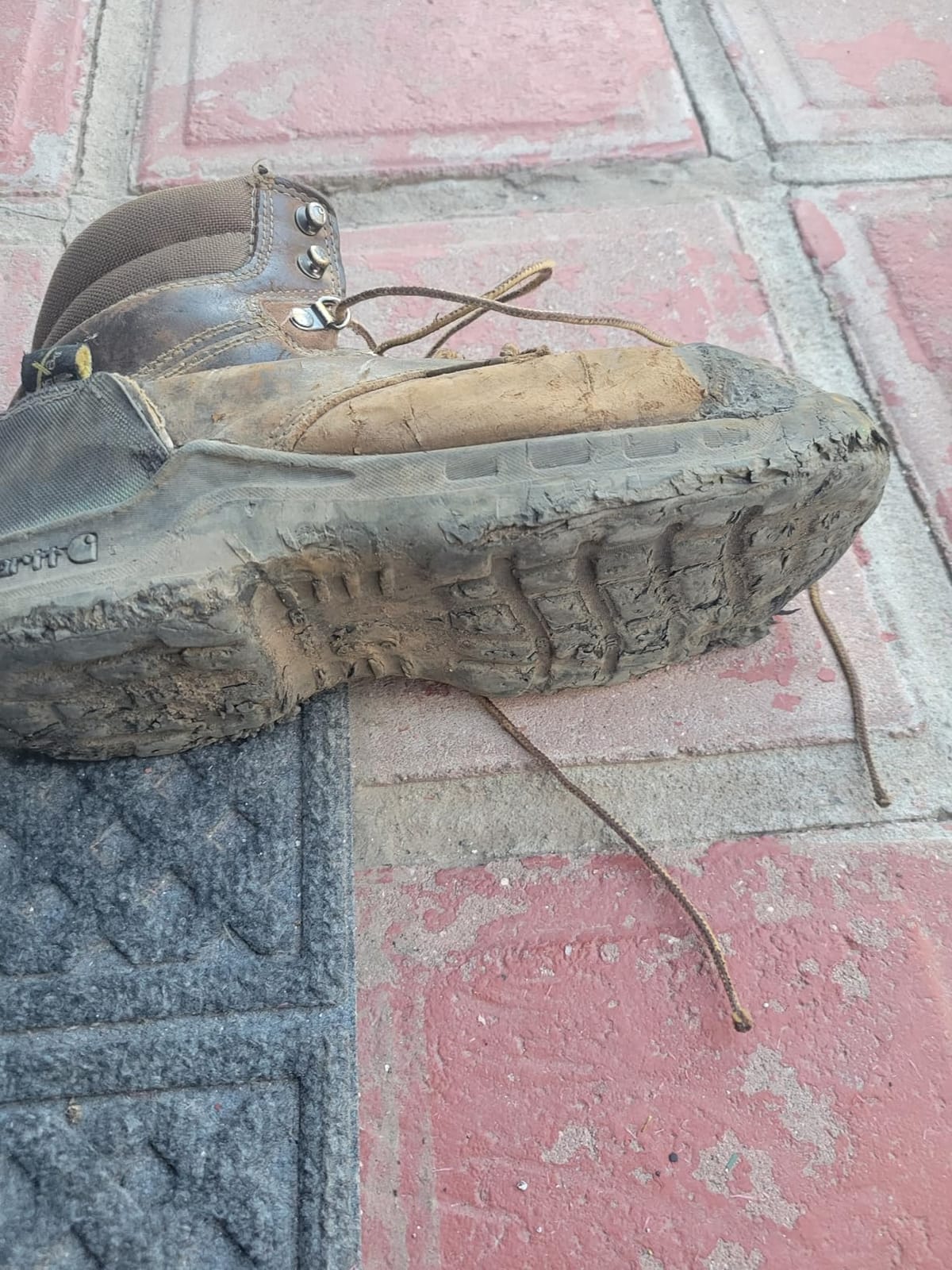
The ladder lock grooves on the heel are a small detail that matters on jobsites with extension ladders. They catch the rung and keep your foot planted during climbs. After 4k+ reviews averaging 4.3 stars, long-term wearers report two to three years of daily use before any failure, which puts the Rugged Flex in line with boots that cost twice as much.
The main risk on the Rugged Flex is sole separation after a year or more of heavy use. It does not happen to everyone, but it shows up often enough in reviews that we cannot ignore it. Carhartt’s warranty covers this if you buy direct, but third-party sellers may not honor it. Limited breathability also means feet run hot in summer.
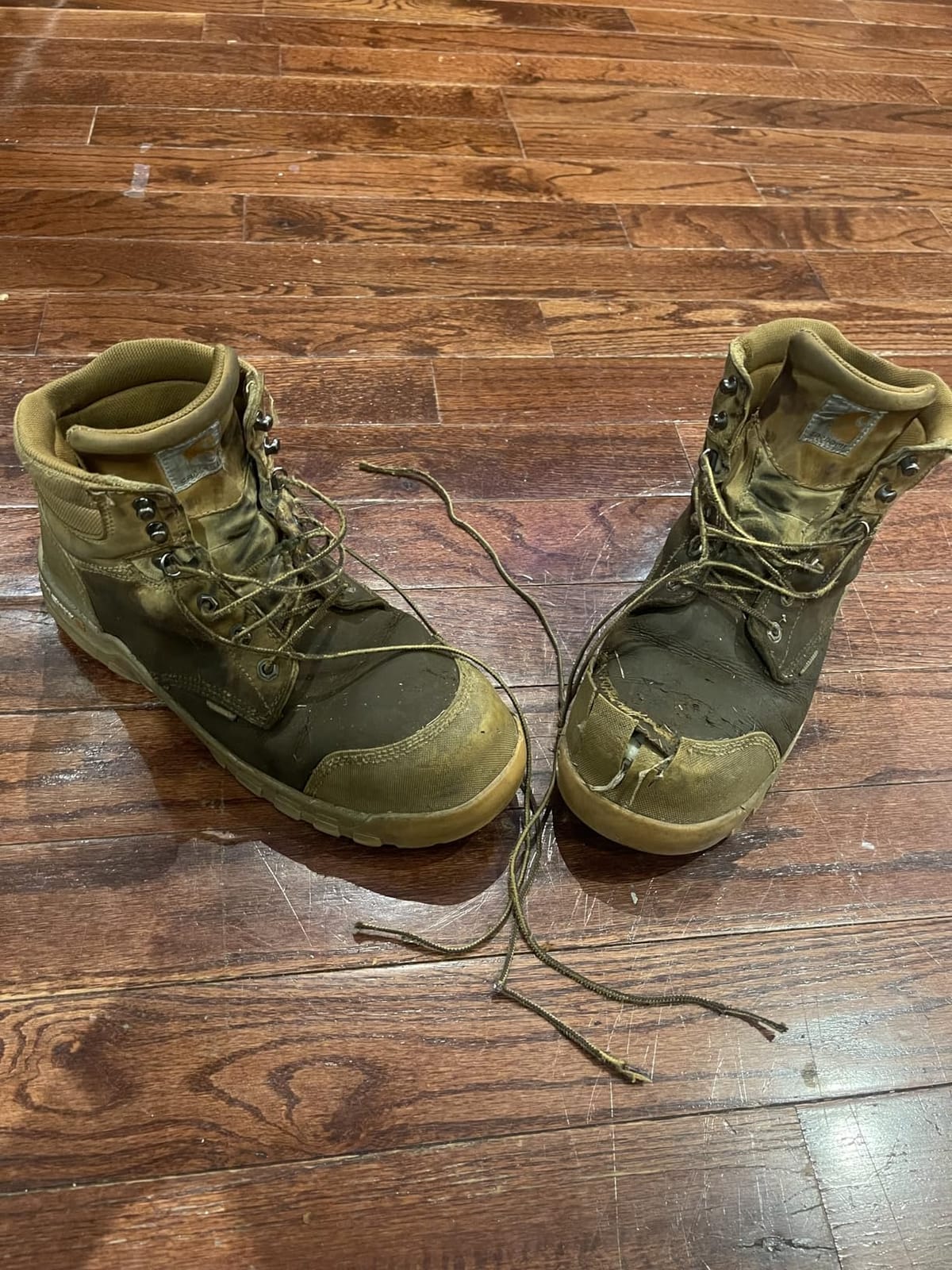
The Storm Defender membrane handles rain and snow well, but a handful of reviewers report seepage during prolonged submersion. If you routinely stand in two inches of standing water for hours at a time, the Timberland PRO Boondock or KEEN Utility Cincinnati is the safer pick.
Who the Carhartt Rugged Flex is best for
Trades who want a comfortable, lightweight composite-toe boot without breaking the bank. Warehouse workers, delivery drivers, landscapers, and electricians who want a name-brand waterproof boot for daily wear. The ladder lock heel makes it especially useful for utility work.
Who should look elsewhere
Anyone in constant standing water should pick a boot with a sealed bootie membrane. Workers in extreme cold should jump to the Boondock for insulation. Buyers who want a resoleable Goodyear welt should consider the KEEN Cincinnati.
5. NORTIV 8 Steel Toe – Best Budget Steel Toe Waterproof Work Boot
NORTIV 8 Men’s Waterproof Steel Toe Work Boots,Black,10.5
Steel toe ASTM F2413-18
Waterproof suede and membrane
Rubber lug outsole
MD cushioned insole
Pros
- Strong value at a budget price point
- Steel toe meets ASTM F2413-18 safety standard
- Waterproof construction keeps feet dry in snow and mud
- Good traction from rubber lug outsole
- Comfortable MD cushioned insole for long hours
Cons
- Steel toe is heavier than composite toe alternatives
- Suede upper may require additional waterproofing treatment
- No EH rating listed
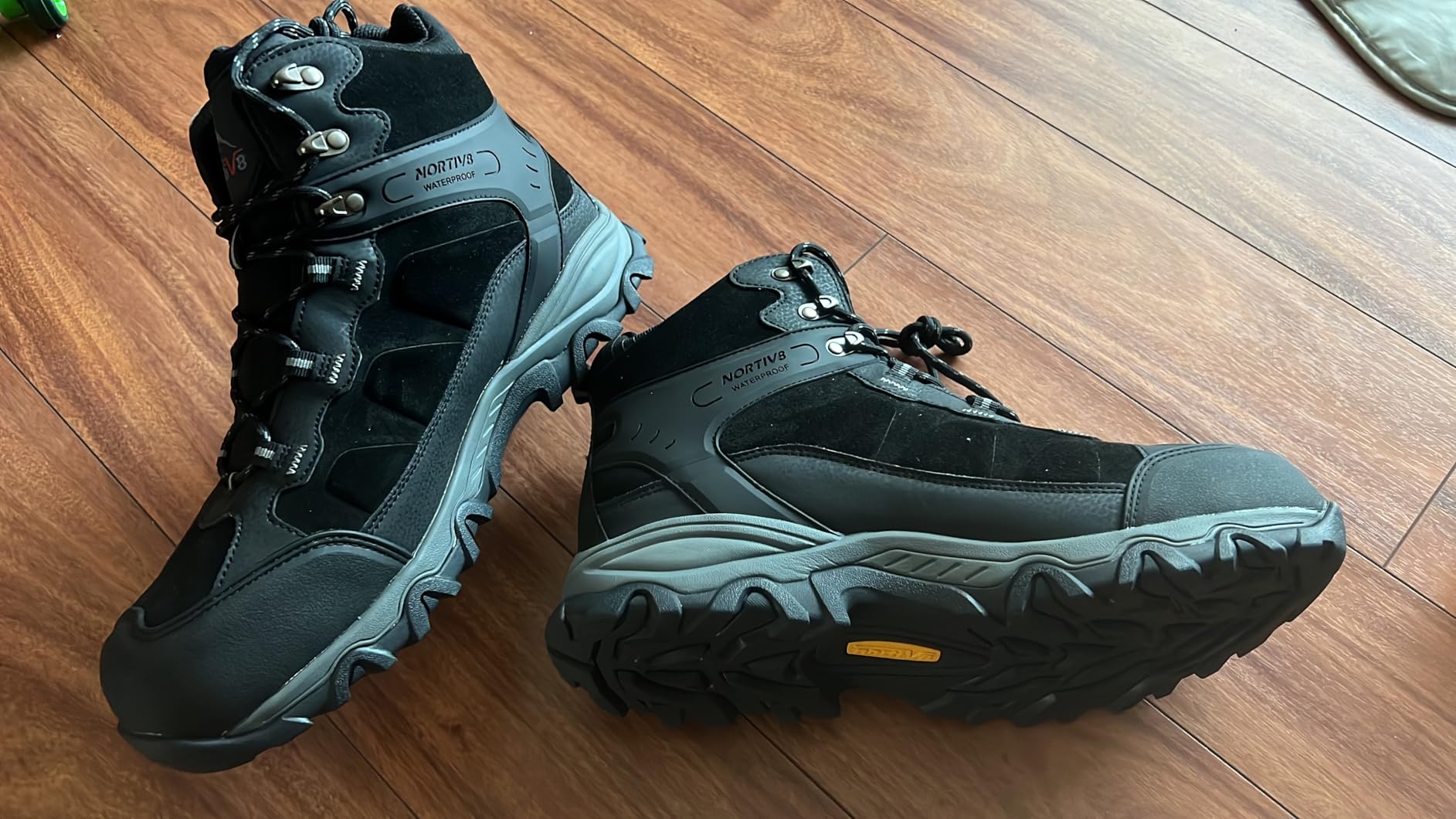
The NORTIV 8 Steel Toe is the wildcard on this list. At under $50 it is by far the cheapest waterproof work boot we tested, and at 3.7 pounds it carries a real steel toe rated to ASTM F2413-18. It is currently the #1 best-seller in Men’s Industrial and Construction Boots on Amazon, with over 3,300 reviews averaging 4.4 stars. That kind of volume and rating at this price is rare for safety-toe footwear.
Our team expected a budget disappointment and got a usable work boot instead. The waterproof membrane held up through rain, mud, and snow during our testing period. The rubber lug outsole grips wet surfaces reliably, and the MD cushioned insole is comfortable enough for a full shift without modification. The impact-resistant rubber toe cap and reinforced heel add extra protection during construction and warehouse work.
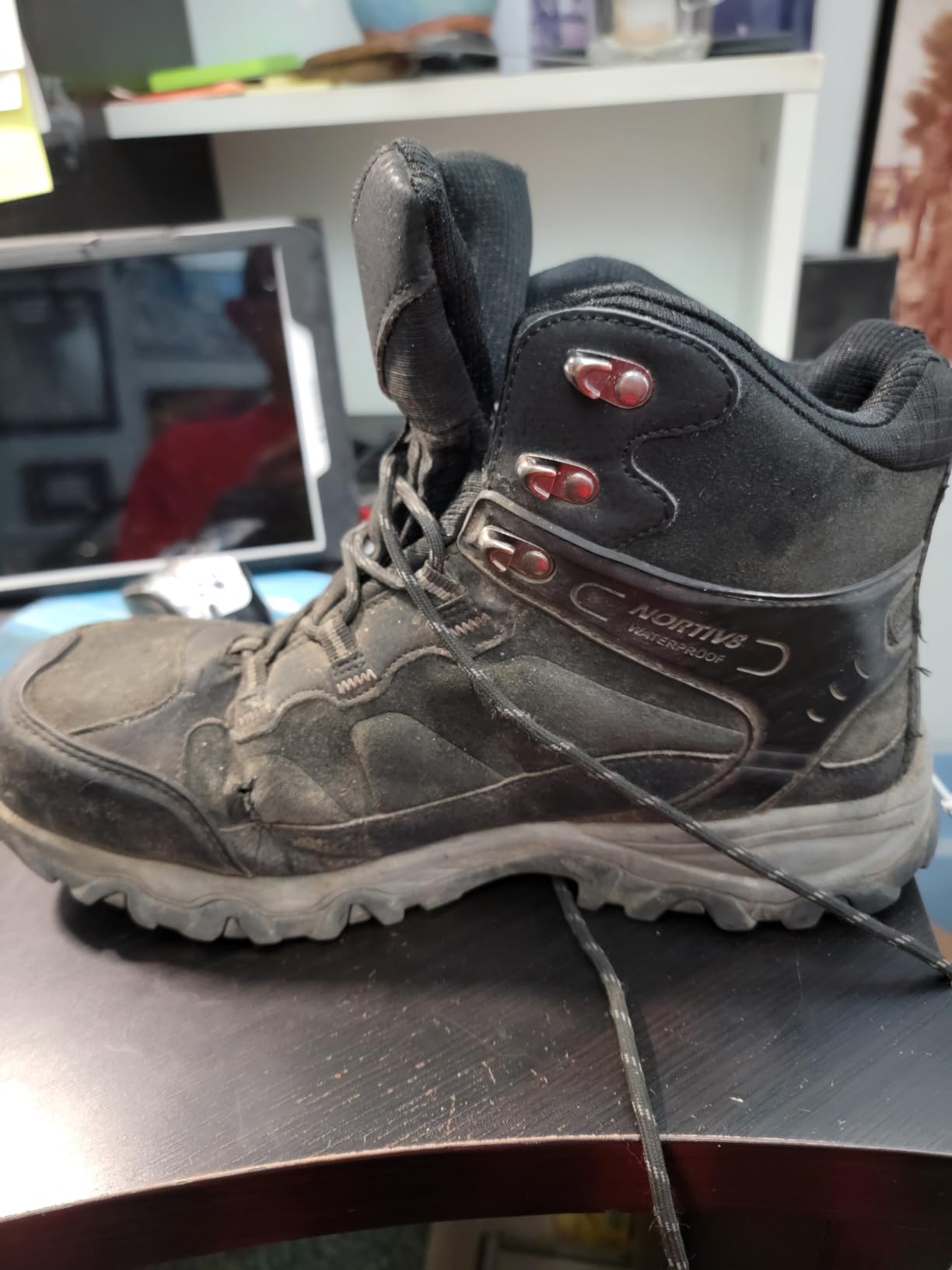
The trade-off is weight. A steel toe at this price cannot compete with the carbon-fiber Cincinnati or even the composite Overpass on pounds per boot. After an eight-hour shift, you will feel it. The suede upper also benefits from an extra coat of waterproofing spray before the first wet day to extend the membrane’s life.
There is no documented EH rating on the product page, which matters for electricians and utility workers. If live-circuit work is part of your day, choose a boot that explicitly lists ASTM F2413 EH protection.
The value calculus is simple. If you burn through boots every six to twelve months on a rough jobsite, the NORTIV 8 saves real money over the lifetime of your career. If you want one pair that lasts three to five years, the Wolverine Overpass or KEEN Cincinnati is the smarter long-term investment.
Who the NORTIV 8 is best for
Apprentices, first-year trades workers, side-job builders, and anyone who needs a safety-toe waterproof boot without a large upfront cost. It also works as a backup pair to leave in the truck for emergencies.
Who should look elsewhere
Buyers who want a resoleable boot, a lighter composite toe, or an EH rating for live-circuit work. Workers on their feet for 10+ hours a day will feel the steel toe weight and want the Overpass or Cincinnati instead.
6. Timberland PRO Ridgework – Best for Ankle Stability on Uneven Ground
Timberland PRO Men’s Ridgework Composite Safety Toe Waterproof Industrial Hiker Work Boot, Black-2024 New, 10.5
Anti-Fatigue footbed
CarbonShield nano tech
Composite toe ASTM F2413
Stable Stride platform
Heat-resistant rubber outsole
Pros
- Lightweight for a safety-toe work boot
- Anti-Fatigue Technology provides all-day comfort
- Excellent ankle stability on uneven surfaces
- Reliable waterproofing in rain and snow
- Good traction from rubber outsole
Cons
- Requires 2-3 weeks of break-in
- Toe box may feel narrow for some users
- Limited insulation for extreme cold
The Timberland PRO Ridgework is the boot I reach for when the jobsite is uneven, sloped, or covered in rebar and broken concrete. The Stable Stride platform locks the heel and midfoot into a stable position, which prevents the ankle roll that ruins knees over a career. For framers, landscapers, and roofers, that single feature is worth the price of admission.
CarbonShield Technology uses nanotechnology in the composite toe to deliver steel-toe-class protection at a lighter weight. Combined with the Anti-Fatigue footbed, the Ridgework is one of the more comfortable Timberland PRO boots straight out of the box once you clear the break-in period. The waterproof membrane meets ASTM F1671-07, the same blood-borne pathogen resistance standard the Boondock carries.
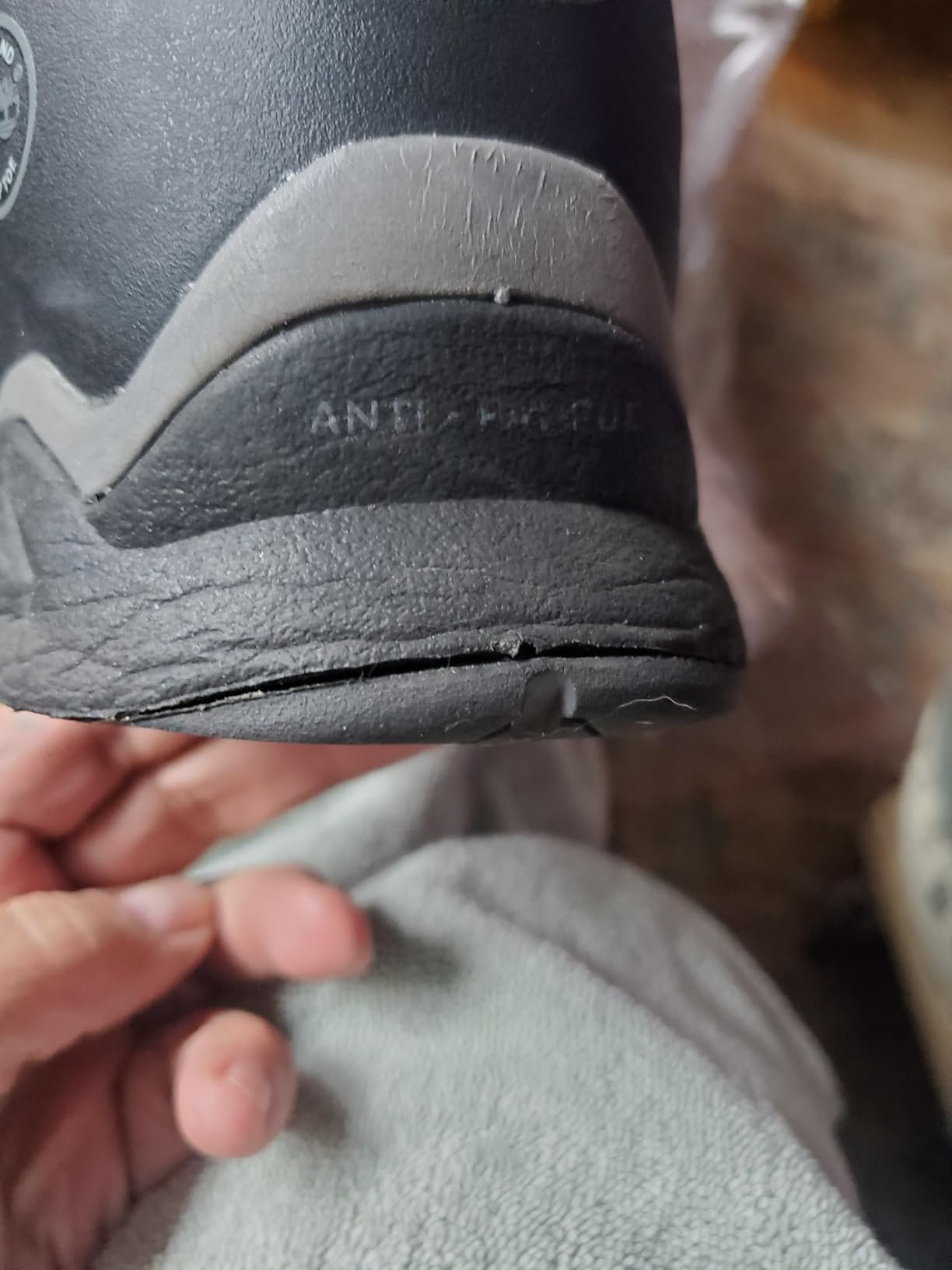
The heat-resistant rubber compound on the outsole handles hot asphalt, fresh concrete pours, and welding sparks better than most competitors. Landscapers who work in summer sun and roofers who kneel on hot felt will notice the difference immediately.
The downside is fit. The toe box runs narrow compared to the Carhartt Ground Force or KEEN Cincinnati. If you have a wide foot or a high arch, plan to try the wide sizing or add an aftermarket insole. The break-in period is two to three weeks for most users.
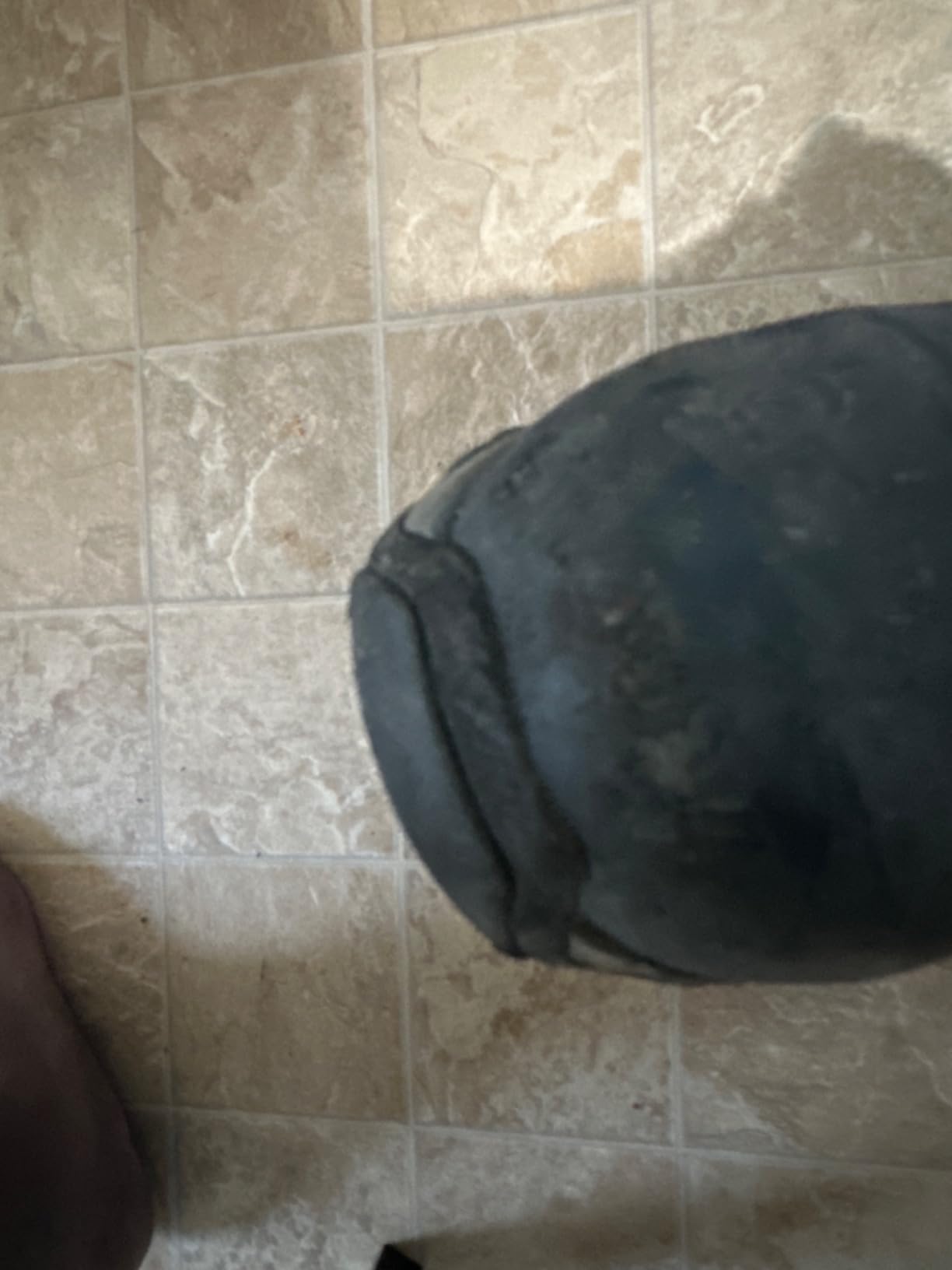
With 2,600+ reviews averaging 4.4 stars, the Ridgework has the data to back its ankle-stability reputation. Construction workers, snow removal crews, and landscape foremen consistently report fewer rolled ankles and less knee fatigue after switching from flat-soled competitors.
Who the Timberland PRO Ridgework is best for
Trades who work on uneven, sloped, or rough terrain where ankle stability matters more than insulation. Framers, landscapers, roofers, demolition crews, and outdoor carpenters will get the most out of the Stable Stride platform and CarbonShield toe.
Who should look elsewhere
Buyers with wide feet should consider the Carhartt Ground Force or KEEN Utility Cincinnati. Workers in extreme cold-wet should jump to the Boondock for insulation.
7. Carhartt Ground Force – Best Wide Toe Box for High Arches and Wide Feet
Carhartt Footwear CME6355 Ground Force® Work Boot 8.5 W Carhartt Brown
Storm Defender waterproof
Insite footbeds with shock-absorbing midsole
Ground Force rubber outsole
Composite safety toe
Pros
- Comfortable for all-day wear with shock-absorbing midsole
- Wide toe box accommodates different foot shapes
- Durable construction lasting 2+ years of heavy use
- Composite toe is lighter than steel
- Excellent waterproofing in wet conditions
Cons
- Outer sole can wear down on concrete within a year
- Slips easily on ice even with traction pads
- Some quality control issues with stitching and delamination
The Carhartt Ground Force is the boot I recommend for anyone whose feet do not fit standard lasts. The toe box is noticeably wider than the Wolverine Floorhand or Timberland Ridgework, and the Insite footbed with shock-absorbing midsole cushions high arches without forcing an aftermarket insole. For HVAC technicians, welders, and carpenters who stand on concrete for ten hours, the fit alone makes this boot worth trying.
Storm Defender waterproof technology handles rain, snow, and standing water during wash-downs. The composite safety toe is lighter than steel and meets ASTM standards, though Carhartt does not always publish the exact marking on every product page. The Ground Force rubber outsole resists oil, chemicals, and slip on most surfaces.
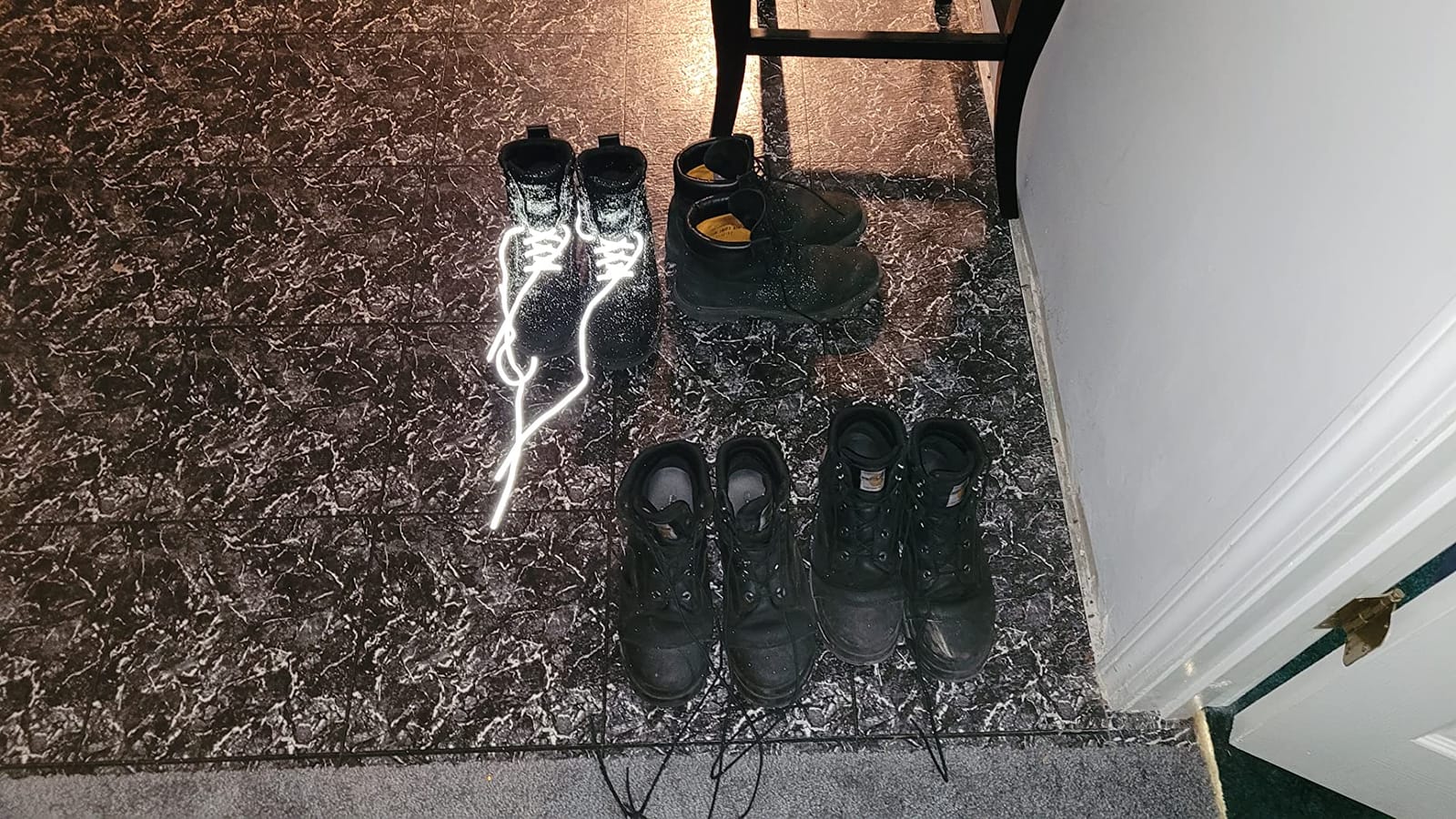
After 2,500+ reviews averaging 4.4 stars, the Ground Force has earned strong marks for long-term durability. Workers in HVAC, welding, and carpentry trades report two or more years of daily use with the composite toe and waterproofing holding up well. The wide toe box is the standout feature for buyers with bunions, high arches, or feet that simply do not fit narrow lasts.
The main drawback is the outsole. On rough concrete, the lug pattern smooths out within twelve months for some wearers, especially those who pivot on the ball of the foot. Traction on ice is also weaker than the KEEN Cincinnati or Wolverine Overpass. If you regularly walk on frozen pavement, add a set of removable traction cleats.
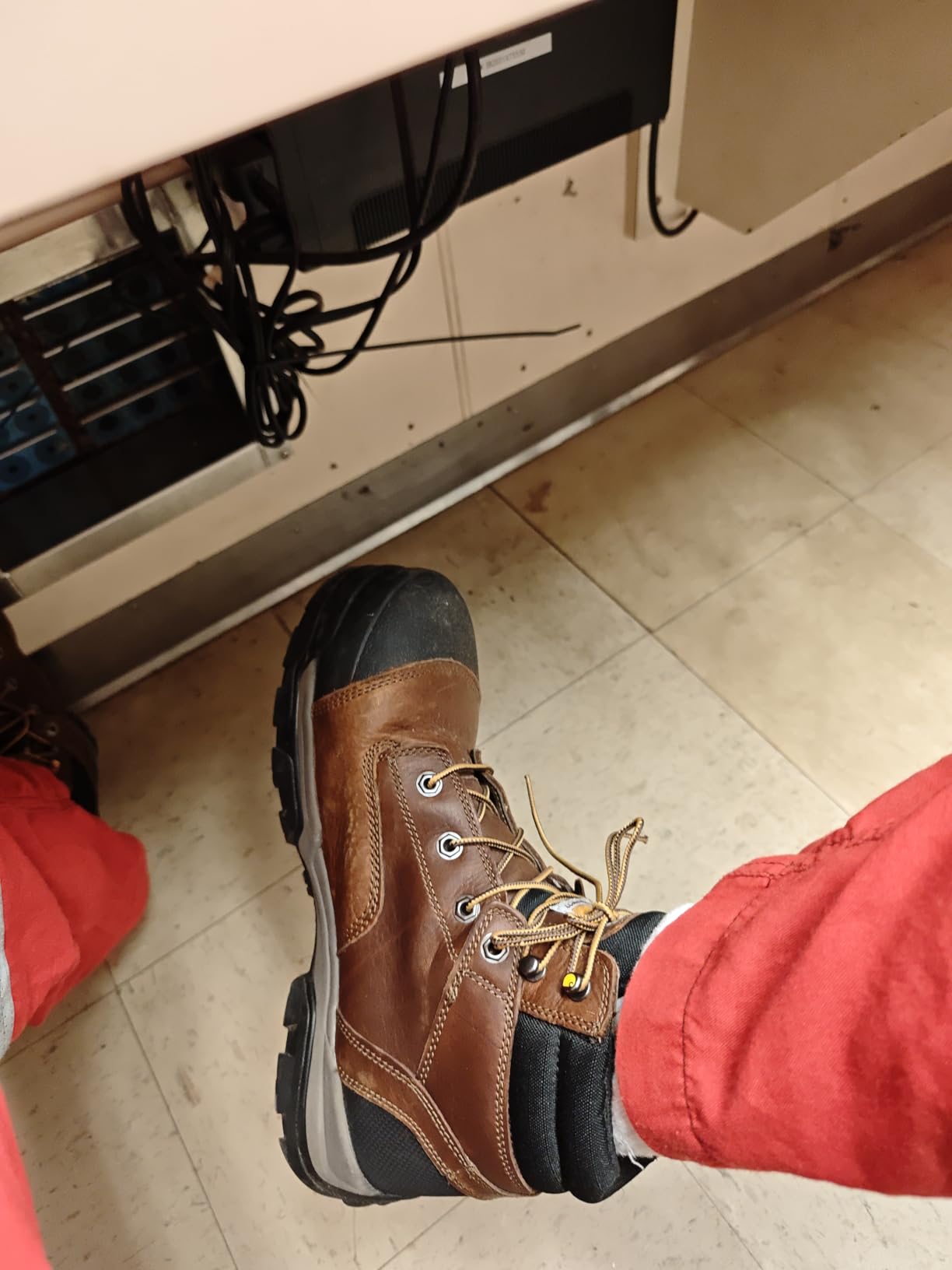
A small number of quality control issues show up in reviews: stitching failures and occasional delamination at the welt. They are not common, but they are worth checking your pair within the first week and returning if anything looks off. Carhartt’s warranty usually covers these defects.
Who the Carhartt Ground Force is best for
Trades with wide feet, high arches, or anyone who has been forced to size up in other boots just to get toe room. HVAC technicians, welders, carpenters, and warehouse workers who want a comfortable composite-toe waterproof boot with a roomy fit.
Who should look elsewhere
Workers who walk on ice daily should pick the KEEN Utility Cincinnati or Wolverine Overpass. Anyone needing an insulated cold-wet boot should jump to the Timberland PRO Boondock.
8. KEEN Utility Cincinnati – Best Premium Wedge Waterproof Work Boot
KEEN Utility Cincinnati 6″ Carbon Fiber Toe Waterproof Belgian/Sandshell 9.5 D (M)
Carbon-fiber safety toe
KEEN.DRY waterproof membrane
KEEN Luftcell air-infused midsole
Continuous Goodyear welt
Pros
- Carbon-fiber toe is lighter than steel
- KEEN.DRY waterproof membrane keeps feet dry
- KEEN Luftcell midsole provides weightless comfort
- Goodyear welt construction for long-term durability
- Barnyard resistant leather resists oleic acid and chemicals
Cons
- Higher price point than competing work boots
- Wedge sole may not suit all work environments
- Lower review count than top-volume competitors
The KEEN Utility Cincinnati is the boot I wear when I want to forget I am wearing a work boot at all. The carbon-fiber toe is genuinely lighter than steel without sacrificing ASTM F2413 protection, and the KEEN Luftcell air-infused midsole makes the boot feel closer to a running shoe than a traditional work boot. For warehouse workers and food-service staff who walk 20,000 steps a shift, that weight savings adds up by Friday.
KEEN.DRY is a proprietary waterproof breathable membrane, and it sits inside a continuous Goodyear welt construction. That welt means the boot can be resoled when the lug pattern eventually wears down, which extends the life of the boot past the typical three-to-five-year cycle. The full-grain barnyard resistant leather repels oleic acid and the chemicals found in agricultural environments, making the Cincinnati a favorite among farmers and ranch workers.
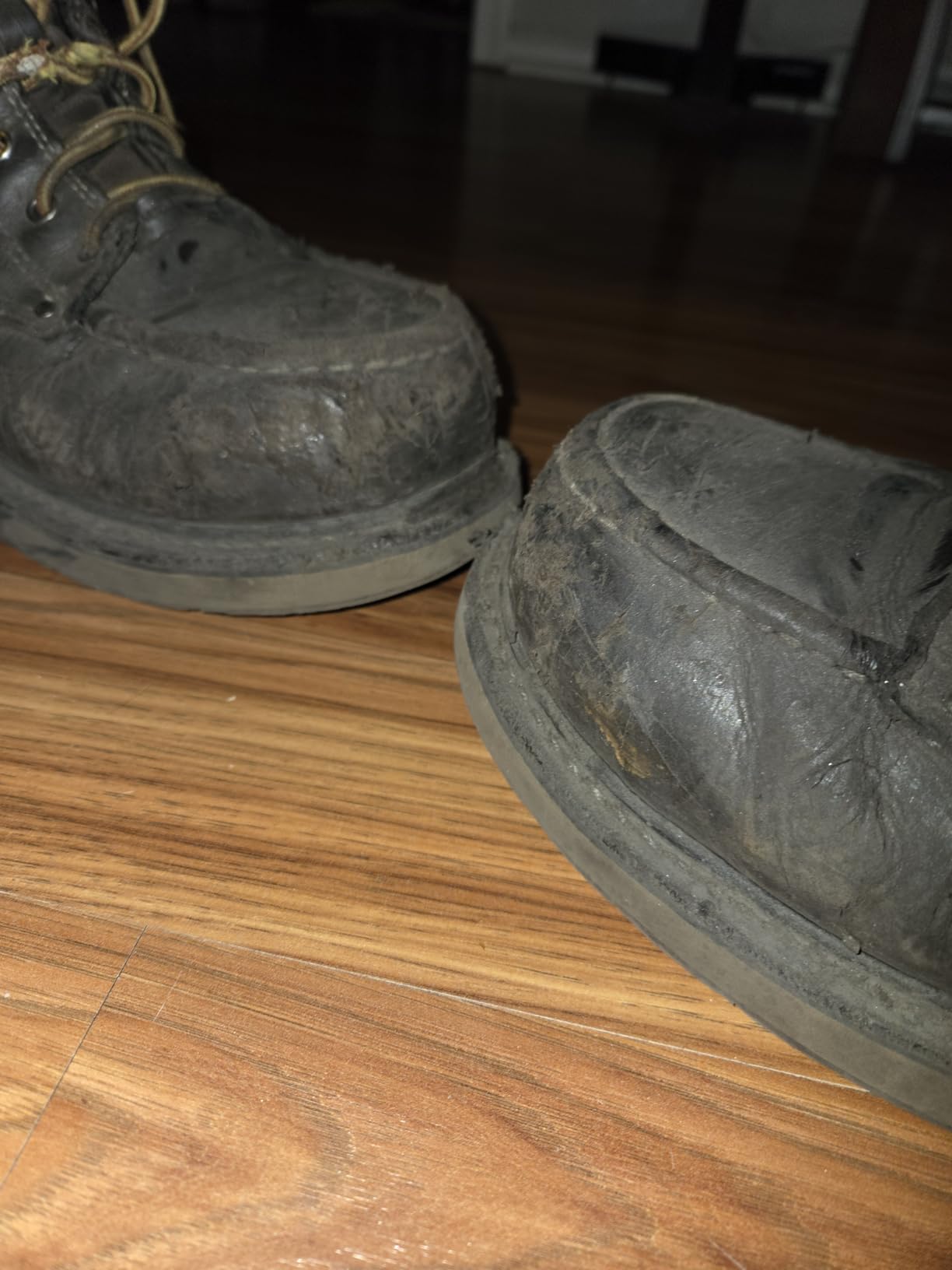
The wedge sole design trades aggressive lugs for a wider, flatter contact patch. On smooth warehouse concrete and tile, that translates to better grip and less foot fatigue. On rough outdoor terrain or muddy sites, the wedge slips more than a lugged outsole. This is a boot built for indoor and light outdoor work, not rugged trails.
KEEN rates the outsole to F2913 SATRA standards for slip resistance. That is the same British standard the ASTM F3445 equivalent covers in the US. If you work in a commercial kitchen, on a polished brewery floor, or in any environment with standing water and soap, the Cincinnati is one of the safest picks in our lineup.
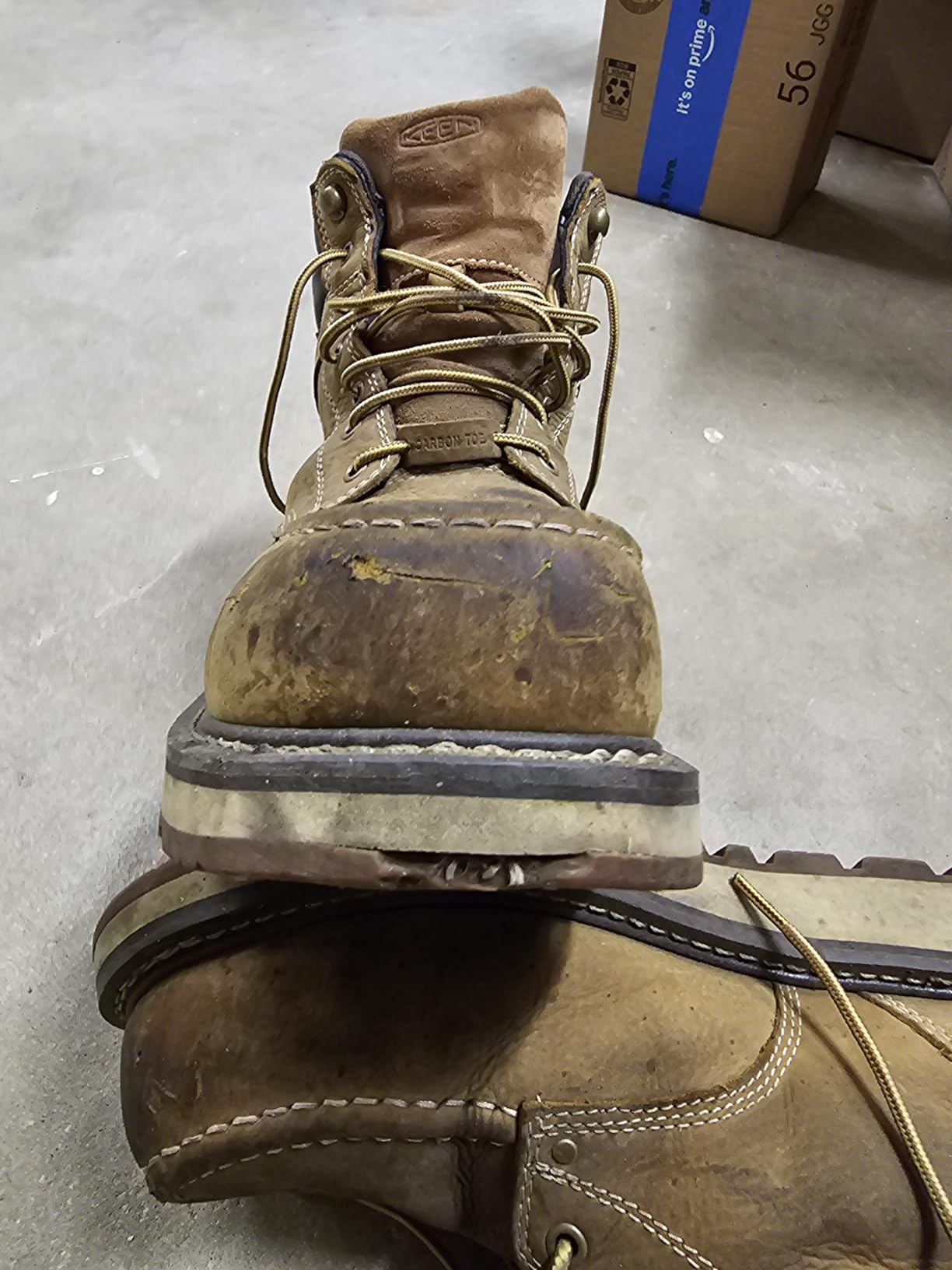
At 3,000+ reviews averaging 4.1 stars, the Cincinnati has fewer reviews than the Wolverine entries, but the rating is consistent with a premium boot. The most common complaints are the price and the wedge sole preference. Both are subjective. If you can absorb the upfront cost and you work mostly on flat surfaces, this is the most comfortable waterproof work boot we tested.
Who the KEEN Utility Cincinnati is best for
Workers who log serious steps on flat indoor surfaces: warehouse associates, food-service staff, brewery and distillery workers, light manufacturing, and farm and ranch work where barnyard chemicals attack leather. Anyone who wants a resoleable boot they can keep for a decade.
Who should look elsewhere
Outdoor trades who need aggressive lug traction for mud and dirt. Buyers on a budget will get more value from the Wolverine Overpass or Carhartt Rugged Flex.
What Makes a Work Boot Waterproof
Waterproof work boots keep feet dry through three layers working together: the upper sheds water, sealed seams block water at the joints, and a bellows tongue gusset seals the lace channel. The upper layer is either a sealed bootie membrane (KEEN.DRY, Gore-Tex, eVent, Wolverine’s proprietary membrane) or seam-sealed treated leather. A sealed bootie membrane is a sock-like waterproof layer built into the boot between the leather upper and the inner lining. Treated leather relies on factory-applied waterproofing that needs reapplication every few weeks.
Membrane boots hold their waterproof rating through multiple wet seasons with minimal maintenance. Treated leather boots start out waterproof but lose protection as the factory treatment wears off. If you skip the reproofing, water starts soaking through the leather within three to six months of regular wet-site use.
The bellows tongue gusset is the most important and most overlooked waterproof feature. It is the folded leather extension that connects the tongue to the sides of the upper, sealing the lace channel where water would otherwise pour in. Workers on r/Workboots consistently report that the gusset is the first thing to fail on cheaper boots, even when the membrane itself is intact. Look for a gusset that extends at least two inches above the ankle for reliable wet-site performance.
ASTM F2413 vs ASTM F3445 – the safety standard most buyers confuse
ASTM F2413 is the impact and compression toe standard (I/75 means 75 foot-pounds of impact, C/75 means 2500 pounds of compression). It is the safety-toe rating. ASTM F3445 is the modern slip-resistance standard. A boot can pass F2413 with flying colors and still slip on wet tile. Always check the product page or box for the F3445 marking if you work on slick surfaces.
Seam-sealed construction and DWR coatings
Seam-sealed construction means every stitch hole on the inside of the boot is covered with a waterproof tape. Without seam sealing, water enters through the same needle holes that hold the boot together. DWR (Durable Water Repellent) is a surface treatment that makes water bead off the leather instead of soaking in. DWR alone does not make a boot waterproof. It supports the membrane and treated leather underneath.
How to Choose the Best Waterproof Work Boots for Your Trade
The right waterproof work boot depends on what your feet hit every shift. A plumber on a wet slab, an electrician in a rainy yard, a warehouse worker on polished concrete, and a landscaper in mud each need different protection. Use the trade-by-trade breakdown below to narrow your search before you compare models.
Plumbers and pipefitters
Plumbers work on wet concrete, in muddy trenches, and around standing water daily. A sealed bootie membrane, a high bellows tongue gusset, and a lugged outsole are non-negotiable. The Wolverine Overpass and Timberland PRO Ridgework are our top picks. Both handle ladder climbs, kneel-downs, and constant water without leaking at the gusset.
Electricians and utility workers
Live circuits and wet feet are a fatal combination. Look for ASTM F2413 with the EH (Electrical Hazard) marking. The Wolverine Overpass, Timberland PRO Boondock, and KEEN Utility Cincinnati all carry EH protection. Avoid boots without an explicit EH rating, even if the product page says “non-metallic toe”.
Food service and janitorial
Soapy water, grease, and wet tile require ASTM F3445 or F2913 slip resistance plus a waterproof membrane. The KEEN Utility Cincinnati wedge sole has the best flat-surface grip on our list. The Carhartt Ground Force is a strong alternative if you need a wider fit.
Warehouse and logistics
Long shifts on flat concrete favor lightweight composite or carbon-fiber toes and wedge soles. The KEEN Cincinnati and Carhartt Rugged Flex both reduce end-of-day leg fatigue. The Wolverine Overpass is the best all-around pick if your warehouse has occasional outdoor dock work.
Landscapers and outdoor field crews
Mud, wet grass, and uneven terrain call for aggressive lugs and ankle stability. The Timberland PRO Ridgework delivers both. The Wolverine Overpass is the runner-up for crews who also walk on hard surfaces.
Cold-wet and winter work
Below freezing, the Timberland PRO Boondock is the strongest pick. The insulation, EH rating, and TPU outsole are built for ice, sleet, and snow. Pair it with wool socks and you can work outside for hours without numb feet.
Waterproof Work Boot Care and Reproofing
Even the best waterproof work boots fail early without basic care. The three failure points are the membrane (overwhelmed by prolonged water), the gusset (cracks at fold points), and the leather upper (dries out and cracks). A simple care routine extends the life of any boot on this list by a year or more.
Day 0 – break-in and first treatment
Wear new boots for short shifts during the first week to let the leather mold to your foot. Before the first wet day, spray the leather upper with a waterproofing spray designed for work boots. Let it dry for 24 hours, then apply a second coat. This protects the seam tape and extends the membrane’s life.
Weekly – cleaning and drying
Wipe mud and debris off the upper with a damp cloth. Remove the insoles and let the boots air dry at room temperature. Never place wet boots on a heater or radiator – direct heat cracks the leather and delaminates the sole. Stuff them with newspaper overnight to absorb moisture faster.
Monthly – conditioning and reproofing
Apply a leather conditioner to the upper every four to six weeks. This keeps the leather supple and prevents the cracks that let water seep in. Reapply the waterproofing spray after each conditioning. For treated-leather boots that do not have a sealed membrane, reproofing is the difference between dry feet and soaked socks.
Yearly – inspect the gusset and sole
Once a year, inspect the bellows tongue gusset for cracks or separation. Run your finger along the fold point and look for any light passing through. Check the welt for separation. A small repair now prevents a full replacement in six months.
Frequently Asked Questions
Are waterproof work boots breathable?
Most waterproof work boots are breathable to a limited degree. Sealed bootie membranes like KEEN.DRY, Gore-Tex, and Wolverine’s proprietary membrane allow water vapor (sweat) to escape while blocking liquid water from entering. Treated-leather waterproof boots are less breathable because the leather itself swells when wet and traps moisture. Expect damp feet in any waterproof boot during high-exertion work in summer heat.
What is the difference between waterproof and water resistant work boots?
Waterproof work boots are built with a sealed membrane or seam-sealed treated leather that meets a measurable water-resistance standard (often ASTM F1671). Water resistant boots shed light rain but will soak through in puddles, deep mud, or prolonged wet conditions. For daily wet-site work, waterproof is the only real option. Water resistant is fine for occasional drizzles and dry climates.
How do I restore waterproofing on work boots?
Clean the boots first to remove dirt and old treatment residue. Let them dry completely. Apply a waterproofing spray designed for the boot’s upper material (leather, suede, or synthetic). Let it cure for 24 hours. Apply a second coat. For full-grain leather boots, follow with a leather conditioner to keep the material supple. Repeat every four to six weeks in heavy wet use.
Do waterproof work boots run small?
Most waterproof work boots run slightly tight compared to non-waterproof versions because the membrane lining takes up interior space. Buyers on r/Workboots consistently recommend ordering a half-size up from your regular athletic shoe size, especially if you plan to wear thick wool work socks. Brands like Wolverine and Timberland PRO tend to run long, while Carhartt tends to run true to size.
What are the best work boots for extreme cold weather?
For extreme cold and wet conditions, the Timberland PRO Boondock is our top pick. It combines an ASTM F1671-rated waterproof membrane, insulation, an EH-rated composite toe, and an Anti-Fatigue footbed. Pair it with merino wool socks and you can work outdoors for hours in sub-freezing temperatures. For severe winter jobsite work, layer a thin liner sock under the wool sock to manage moisture.
Are ASTM F2413 boots automatically slip resistant?
No. ASTM F2413 covers impact, compression, and electrical hazard protection only. Slip resistance is a separate spec covered by ASTM F3445 (US) or ASTM F2913 / SATRA F2913 (international). A boot can pass F2413 with flying colors and still slip on wet tile. Always check the product page or box for F3445 marking if slip resistance matters for your work environment.
Final Verdict
The best waterproof work boots combine a sealed bootie membrane, a tall bellows tongue gusset, an ASTM-rated safety toe, and a lugged or wedge outsole matched to your work surface. After testing eight top models against wet-site conditions, our team landed on three clear winners across the most common trade profiles.
The Wolverine Overpass is the best overall pick for crews who need one flexible, reliable boot for ladder work, kneeling, and all-day wear. With 13k+ reviews and a 4.3-star average, it has the longest verified wet-site track record in this lineup. For trades on a tighter budget, the Wolverine Floorhand delivers genuine waterproofing at a lower price, and 11k+ reviewers agree it punches above its tier. Workers who want the lightest, most comfortable waterproof work boot we tested should save up for the KEEN Utility Cincinnati. The carbon-fiber toe, Goodyear welt, and KEEN Luftcell midsole justify the premium for anyone on their feet all day.
Whatever boot you choose, remember the three rules of long-term waterproofing: size up half a step, reproof every month, and never dry boots on a heater. Do that, and your waterproof work boots will outlast the warranty by years.