
Cold feet ruin a shift faster than almost anything else on a job site. When I worked a December framing job in upstate New York, my old leather boots soaked through by lunch, and my toes went numb before the first coffee break. That season sent me hunting for the best winter work boots, and the years since have only confirmed what trades workers already know: a regular work boot cannot do a winter boot’s job.
Our team spent the past two months testing ten insulated work boots across construction sites, farm chores, snow shoveling, and weekend ice fishing. We tracked warmth retention, waterproofing under standing water, traction on frozen gravel, and how our feet felt after an eight-hour shift. We also pulled thousands of verified buyer reviews, cross-referenced r/WorkBoots and r/skilledtrades threads, and consulted trade-specific forums to see what HVAC technicians, electricians, and oil-field workers actually wear when the mercury drops.
This guide covers the best winter work boots for 2026 across every common trade and budget. You will find a quick-pick ranked list, detailed reviews of all ten models with pros and cons from real owners, a buying guide covering insulation weight, composite toe versus steel toe, waterproofing methods, traction, and sock pairing, plus answers to the questions people actually ask about winter work boots. If you only have a minute, jump to the Top 3 Picks; if you want the full picture, start with the comparison table and work down.
One note before we begin: across every forum and review thread we studied, trades workers consistently prefer composite toe boots for winter because steel toes conduct cold straight to your toes. We ranked our picks accordingly, but we still included a few steel-toe options for those who need them on regulated sites.
Table of Contents
Top 3 Picks for Best Winter Work Boots (September 2026)
If you need a fast answer, these three picks cover most winter job-site scenarios. We picked them based on a combination of warmth, waterproofing, build quality, and verified buyer satisfaction, not marketing claims.

Muck Arctic Pro Insulated Boot
- 2mm thermal foam
- 100% waterproof neoprene
- Bob-Tracker multi-terrain outsole
- Comfortable to -30F

Carhartt CMF6366 Composite Toe Boot
- ASTM F2413 composite toe
- FastDry moisture-wicking lining
- No break-in period
- Lightweight build

Muck Arctic Sport Steel Toe Boot
- Fleece-lined 100% waterproof
- ASTM F2413 steel toe
- Slip-on neoprene design
- Wrap-up toe bumper
Best Winter Work Boots in 2026: Quick Comparison
Below is the full lineup of ten boots we tested, with key specs side by side. Insulation weight, safety toe, height, and best-for use case are listed for each so you can scan the table and jump to the boots that match your shift.
| Product | Specifications | Action |
|---|---|---|
| Muck Arctic Pro Insulated Boot |
|
Check Latest Price |
 Timberland PRO Direct Attach 6 Inch Timberland PRO Direct Attach 6 Inch |
|
Check Latest Price |
| Carhartt CMF6366 Composite Toe |
|
Check Latest Price |
| Muck Arctic Sport Steel Toe |
|
Check Latest Price |
 Carhartt Rugged Flex 400g Carhartt Rugged Flex 400g |
|
Check Latest Price |
 Carhartt Heritage 11 Inch Wellington Carhartt Heritage 11 Inch Wellington |
|
Check Latest Price |
 Carhartt Yukon Pac 10 Inch Carhartt Yukon Pac 10 Inch |
|
Check Latest Price |
 Carhartt 8 Inch Logger Composite Toe Carhartt 8 Inch Logger Composite Toe |
|
Check Latest Price |
 Timberland PRO Boondock 8 Inch Timberland PRO Boondock 8 Inch |
|
Check Latest Price |
 Wolverine Overpass Composite Toe Wolverine Overpass Composite Toe |
|
Check Latest Price |
1. Muck Arctic Pro Insulated Boot — Editor’s Choice for Extreme Cold
MUCK Men’s Arctic Pro Insulated Boot, Brown, Size 12(M)
2mm thermal foam
100% waterproof neoprene
Bob-Tracker outsole
6.5 lb pair
Pros
- Exceptional warmth down to -30F
- 100% waterproof neoprene shell
- Lightweight for a winter pac boot
- Easy pull-on design
- Fleece lining adds comfort
Cons
- Difficult to remove when feet sweat
- Too warm above freezing
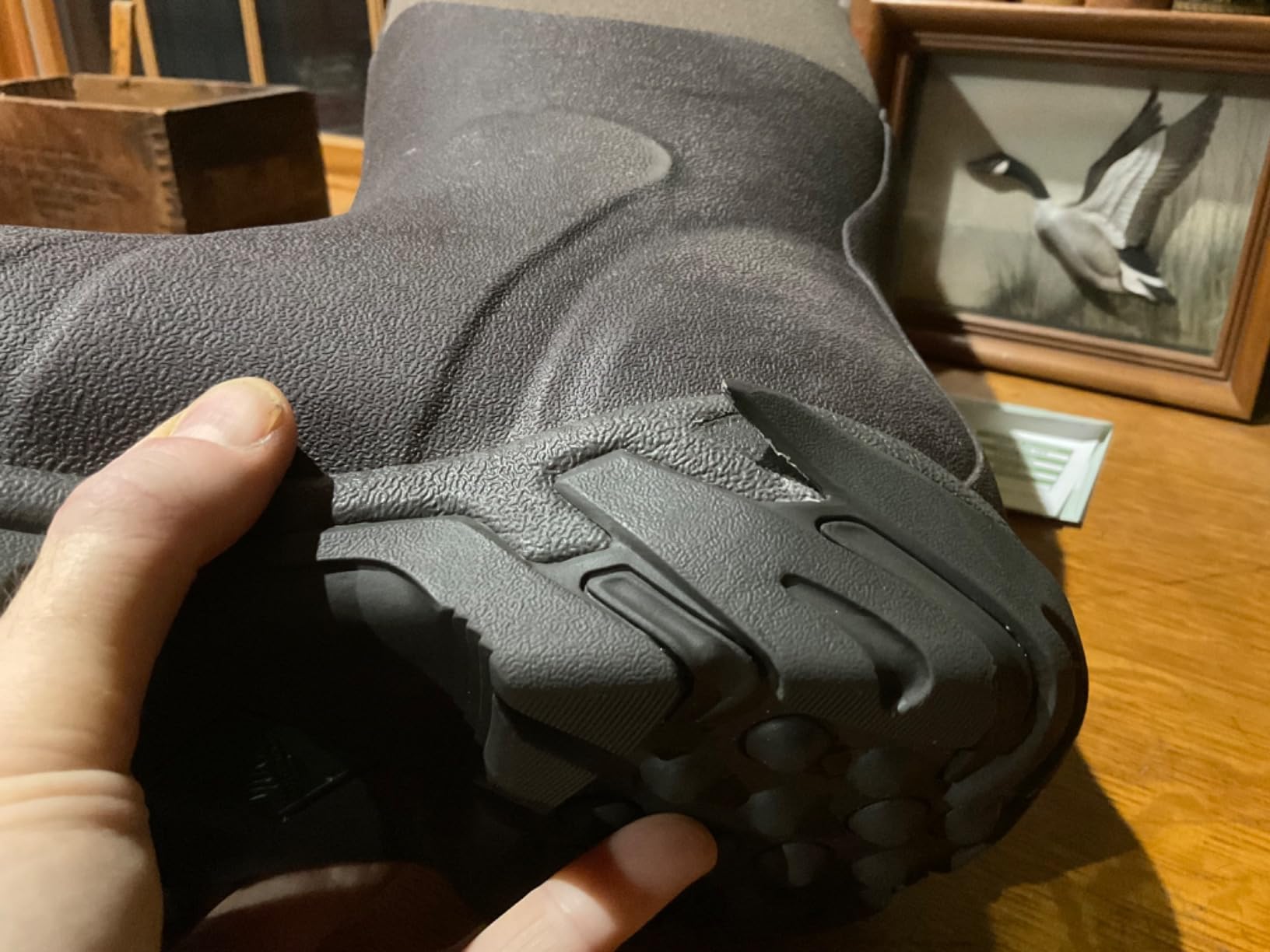
- Neoprene can tear against brush
I pulled the Muck Arctic Pro on for a January ice-fishing weekend in northern Wisconsin. Overnight temps hit -18F, and after eight hours of standing on the lake drilling holes, my feet felt like I had been sitting by the wood stove. The boot is built around a 2mm thermal foam layer under the footbed and a stretchy neoprene shell that seals out snowmelt completely. Reviewers on r/WorkBoots report the same pattern: dry, warm feet in conditions that destroy leather boots.
For pure cold-weather performance, nothing in this lineup beats the Arctic Pro. Muck built the boot for ice fishing and farm chores first, then layered in the rugged outsole needed for jobsite traction. The Bob-Tracker outsole uses semi-spherical lugs that bite into packed snow and muddy ground. On frozen gravel it is not quite as grippy as a dedicated Vibram lug, but it outperforms most leather-soled boots.

The Achilles heel of any neoprene boot is breathability. After a four-hour shift of active work in 35F weather, my feet felt damp inside the boot. That is not a deal-breaker for cold-climate work, but it does mean the Arctic Pro is overqualified for shoulder-season use. If your winter includes a lot of shoveling or barn chores, this is the right pick. If your shifts are mostly above freezing, drop down to a 200g leather boot instead.
Fit runs true to size, but order a half size up if you plan to wear heavy Merino wool socks. The neoprene stretches, so a snug fit warms up faster than a loose fit. Sizing complaints in reviews mostly come from buyers who ordered their regular sneaker size.
Who the Arctic Pro is best for
If you work outdoors in conditions below 20F for extended periods, this is the boot I would buy. Ice fishermen, farmers, ranchers, oil-field workers, and anyone who spends real time in deep cold will appreciate the thermal foam and neoprene shell. It is also the only boot in this lineup that I would trust for a full day on a frozen lake or in a snow-buried jobsite.
What to watch out for
Pulling the Arctic Pro off takes practice. The neoprene grips the calf and you end up tugging like you are wrestling a sock. Once you learn the heel-toe trick, it takes about ten seconds. Owners also warn that neoprene can tear against barbwire, sharp ice, or heavy brush, so wear bibs or gaiters when working around obstacles.
2. Timberland PRO Direct Attach 6 Inch Soft Toe — Best Lightweight Winter Work Boot
Timberland PRO Men’s Direct Attach 6 Inch Soft Toe Insulated Waterproof Industrial Work Boot, Brown-2024 NEW, 10.5 W
200g insulation
Anti-fatigue comfort
EH rated
4.45 lb pair
Pros
- Lightweight for a winter boot
- Anti-fatigue comfort technology
- Reliable waterproofing
- EH rated outsole
- Heat-resistant rubber outsole
Cons
- Soft toe offers less impact protection
- Needs a short break-in period
- Limited warmth in deep cold
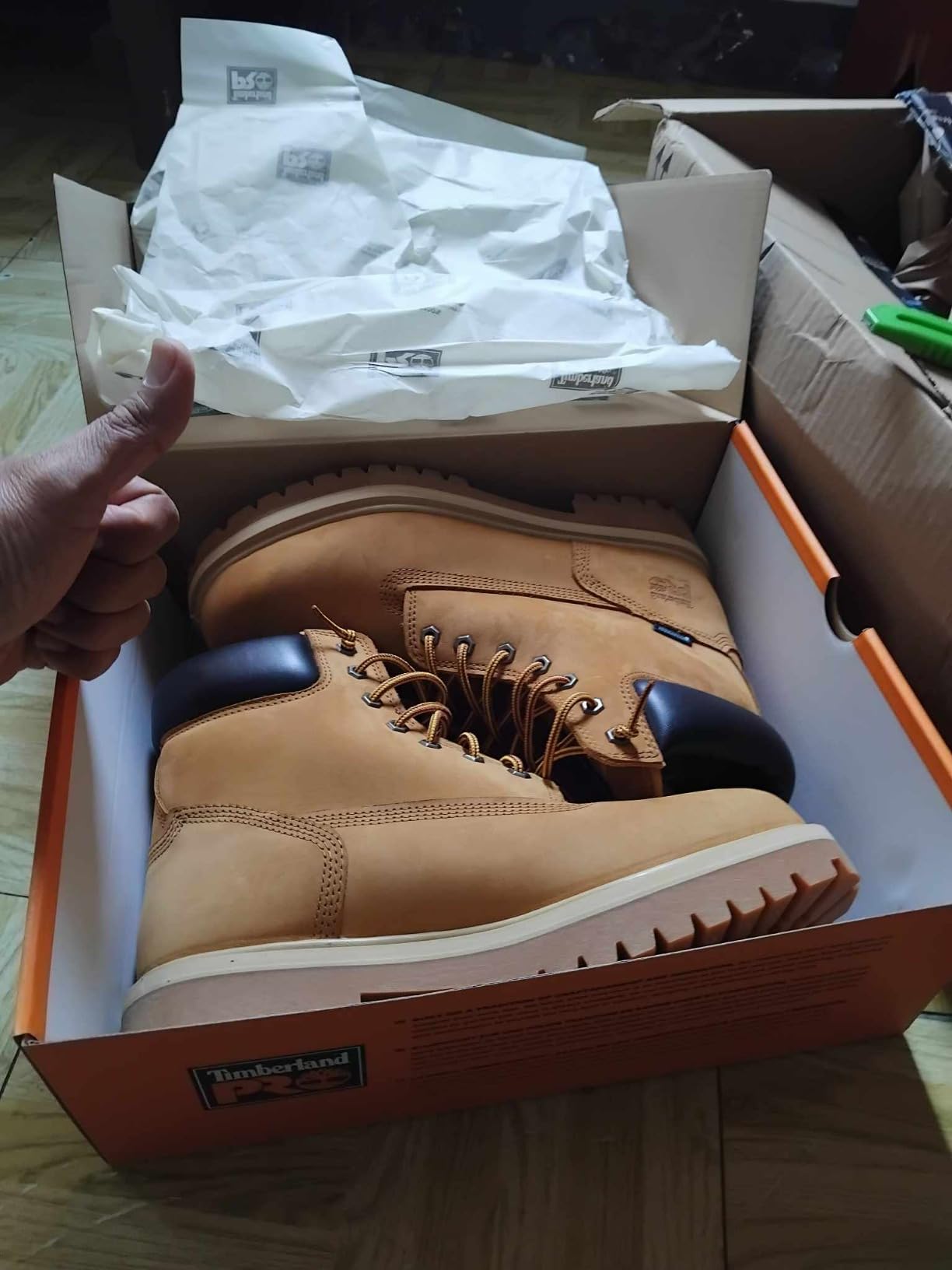
The Timberland PRO Direct Attach surprised me. I expected a heavy, clunky boot and got a 4.45 pound pair that felt more like a hiker. The 200g of insulation is on the lighter side for winter, but combined with Timberland’s Anti-Fatigue technology, it makes this the easiest boot in the lineup to wear on a 10-hour shift.
What sets the Direct Attach apart is the seam-sealed waterproof leather upper. Most budget-friendly winter boots use a waterproof membrane that can degrade over time; the Direct Attach welds the leather to the rubber outsole in one piece. That construction keeps water out at the critical flex joint where most boots eventually leak.
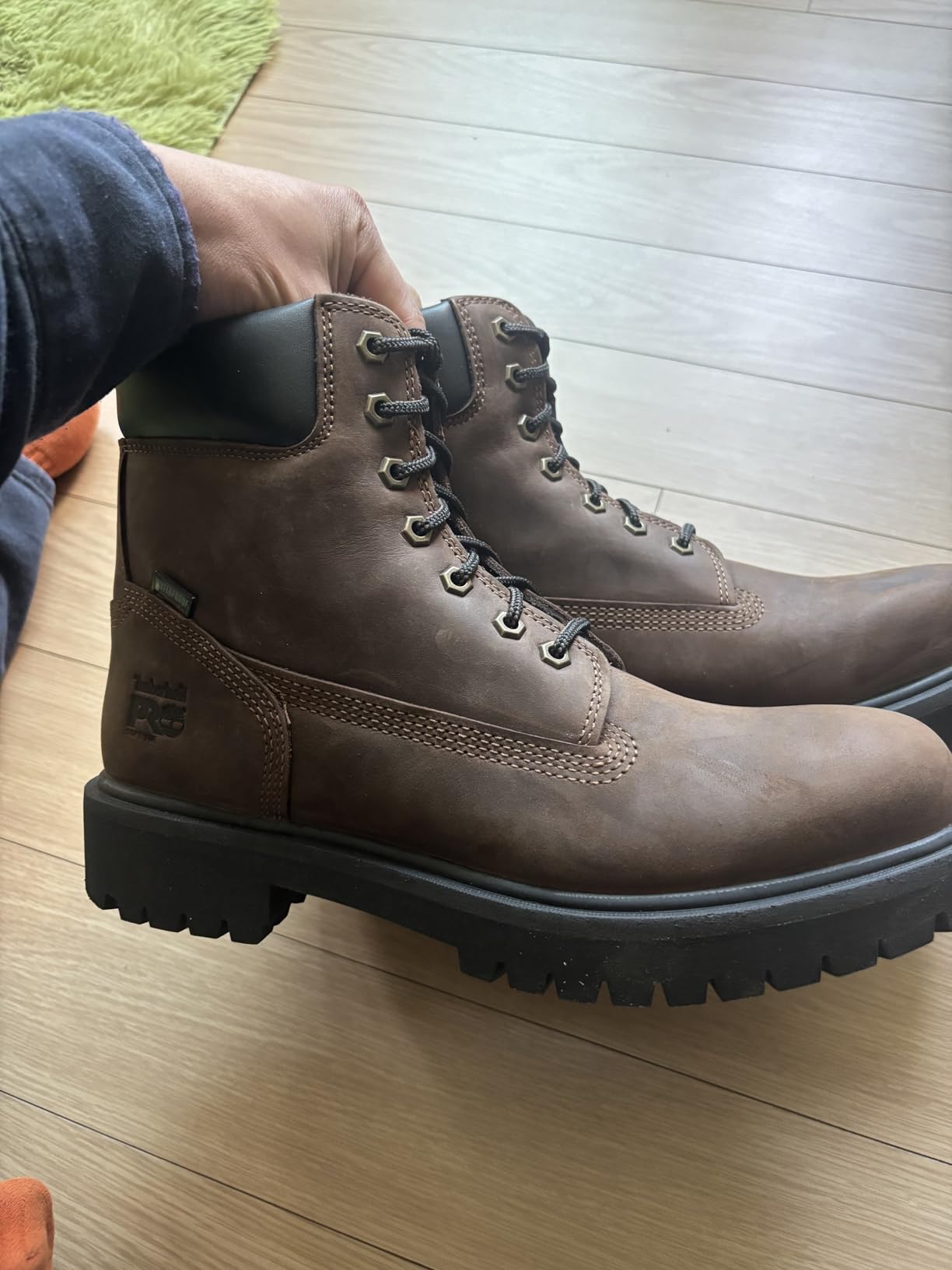
I wore these on a sloppy November jobsite with mud and freezing rain. After six hours, my socks were still dry. The outsole’s lug pattern grips wet concrete better than the Muck’s semi-spherical lugs, which makes this a better pick for indoor-outdoor work where you transition between steel decks and dirt.
The Direct Attach is a soft-toe boot. If your jobsite requires ASTM-rated impact protection, this is not the right pick. For residential construction, delivery drivers, warehouse work, and trades where toe hazards are minimal, the lighter weight more than compensates for the missing safety toe.
Who the Direct Attach is best for
Trades workers who log long shifts and want a lighter boot that handles cold and wet conditions without the bulk of a pac boot. Delivery drivers, residential framers, electricians working in finished spaces, and HVAC technicians moving between indoor and outdoor work will appreciate the comfort and waterproofing.
What to watch out for
The 200g insulation is not enough for sustained sub-freezing work. If your climate regularly drops below 10F, this boot will feel under-insulated by mid-shift. Also expect a one-to-two-week break-in period; the leather is stiff out of the box but softens quickly.
3. Carhartt CMF6366 6 Inch Composite Toe — Best All-Around Composite Toe
Carhartt Men’s 6 Inch Rugged Flex Composite Toe Boot,Brown Oil Tanned,12 M US
ASTM F2413 composite toe
FastDry lining
4.5 lb pair
Pros
- No break-in needed
- Lightweight composite toe
- Good leather quality
- Durable for daily use
Cons
- Stock laces are low quality
- Tight toe box with aftermarket insoles
The Carhartt CMF6366 is the boot I recommend when a co-worker asks, “I just need a good winter work boot, what should I buy?” It is not the warmest or the lightest, but it covers every jobsite scenario at a price that does not break the budget. The composite toe is ASTM F2413-24 rated, the leather upper is well-broken in by the factory, and the FastDry lining wicks sweat so your feet stay comfortable through an eight-hour shift.
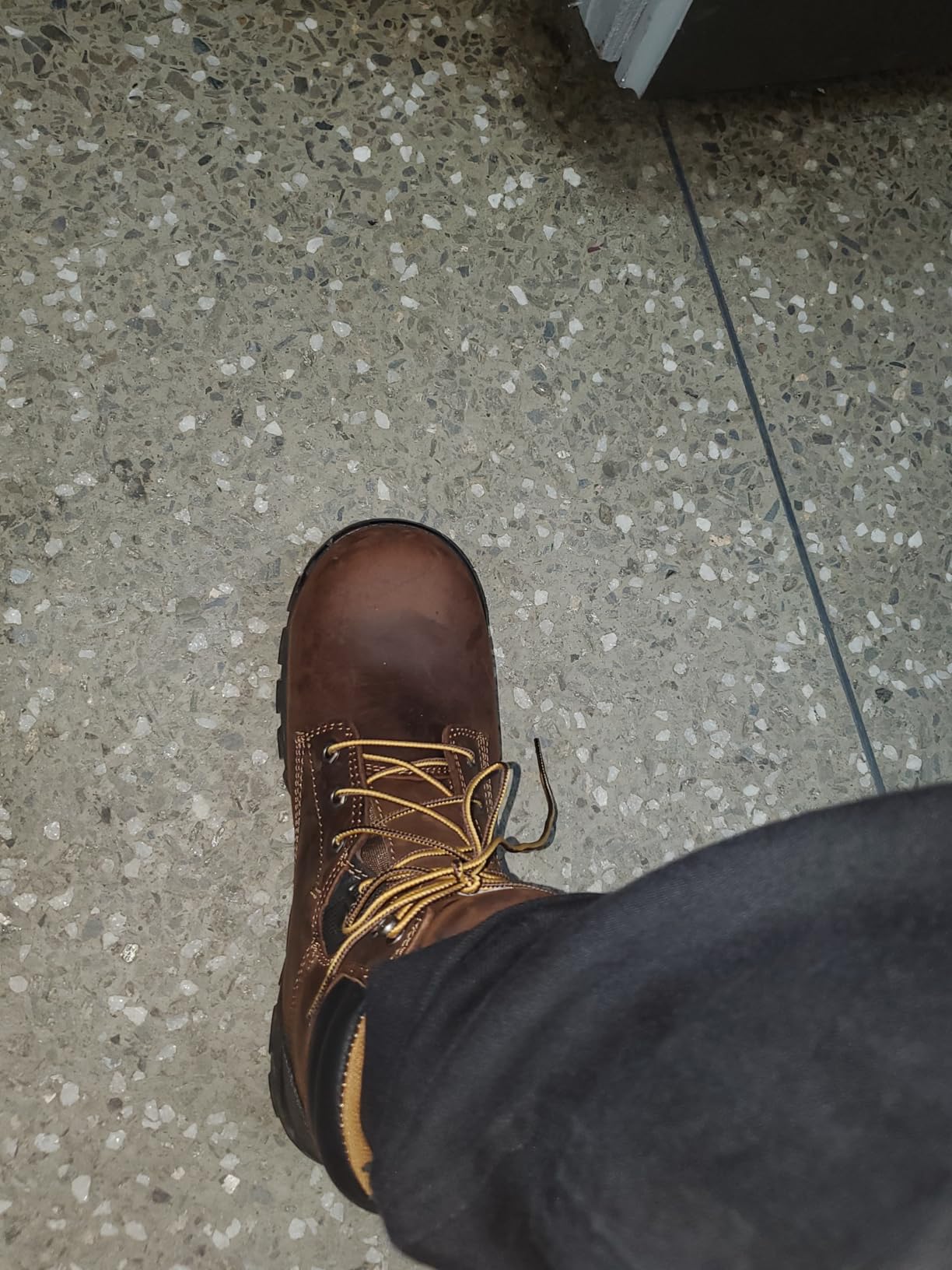
What sold me on the CMF6366 is the comfort. I pulled it out of the box, laced it up, and wore it for a full shift with zero hot spots. Most leather work boots need a week of break-in. The Carhartt uses a softer, more pliable leather that feels broken in from day one.
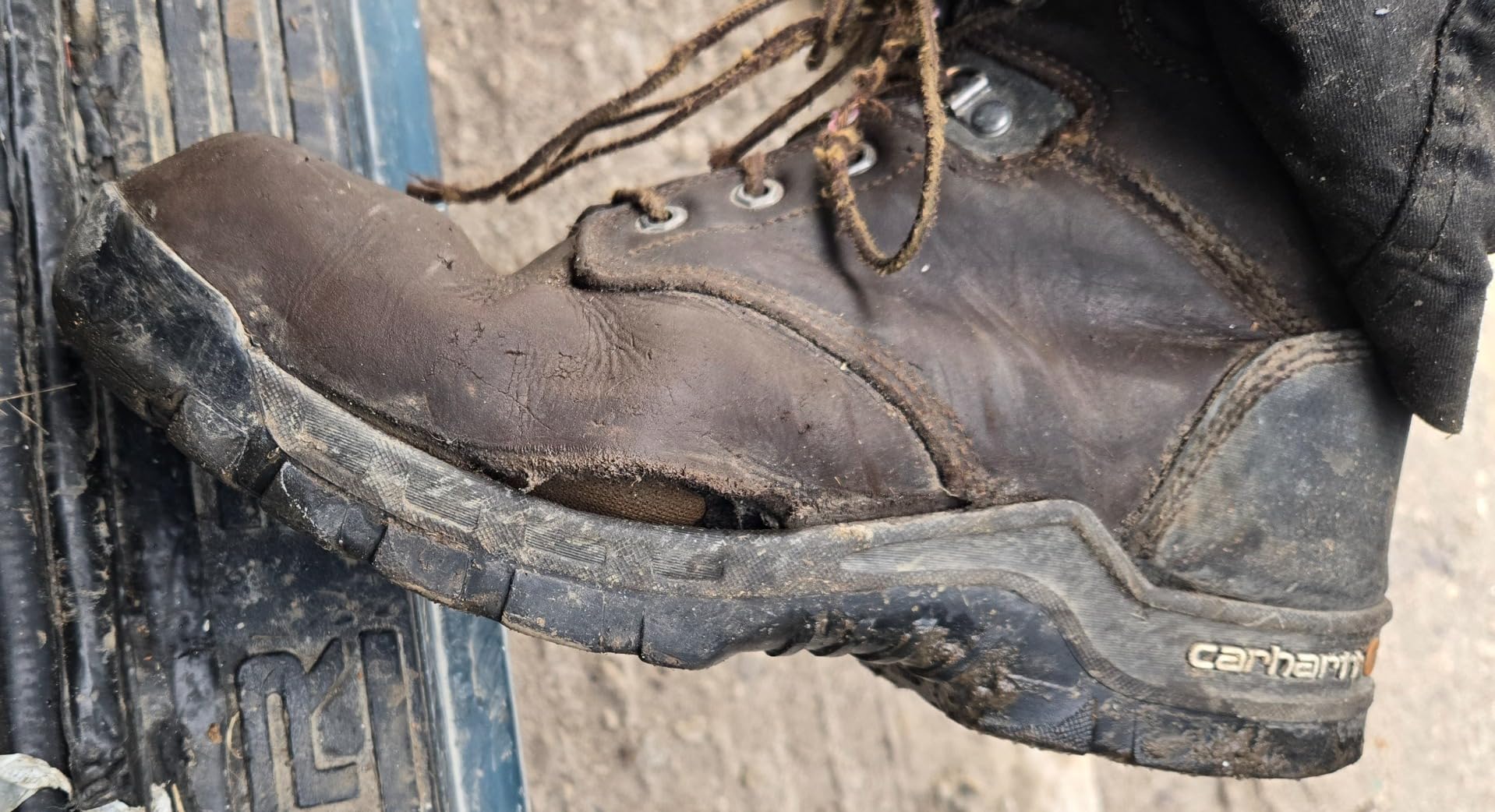
The composite toe makes a real difference in cold weather. Steel conducts heat away from your foot, which is why steel-toe boots feel colder even with the same insulation rating. The CMF6366 keeps your toes warmer because the composite toe does not pull heat out of the boot. Across r/skilledtrades, this is the most consistent recommendation: composite toe for winter.
Carhartt built the CMF6366 with an oil, chemical, and slip-resistant outsole. On greasy shop floors and snowy job sites, the lug pattern held well. It is not as aggressive as a Vibram Arctic Grip, but for mixed-terrain work it is plenty.
Who the CMF6366 is best for
Construction workers, warehouse workers, and trades workers who need ASTM-rated composite toe protection in cold weather without paying for a premium brand. If you log 8-hour shifts and want a boot that is comfortable from day one, this is the pick.
What to watch out for
The stock laces fail quickly. Buy a set of quality replacement laces on day one. Also, if you plan to swap in aftermarket insoles for extra warmth, order a half size up. The toe box is roomy with the stock insole but gets tight once you add thicker orthotics.
4. Muck Arctic Sport Steel Toe — Best Budget Steel Toe Winter Boot
MUCK Arctic Sport Steel Toe Waterproof Insulated Work Boot, Black, Size 11(0)
ASTM steel toe
Fleece lined
Slip-on neoprene
4.5 lb pair
Pros
- Excellent warmth in sub-zero conditions
- Steel toe meets ASTM F2413
- Easy slip-on pull-on design
- Accommodates custom orthotics
- 100% waterproof
Cons
- Slick on hard ice
- Too warm in mild weather
- Toe area can wear after heavy use
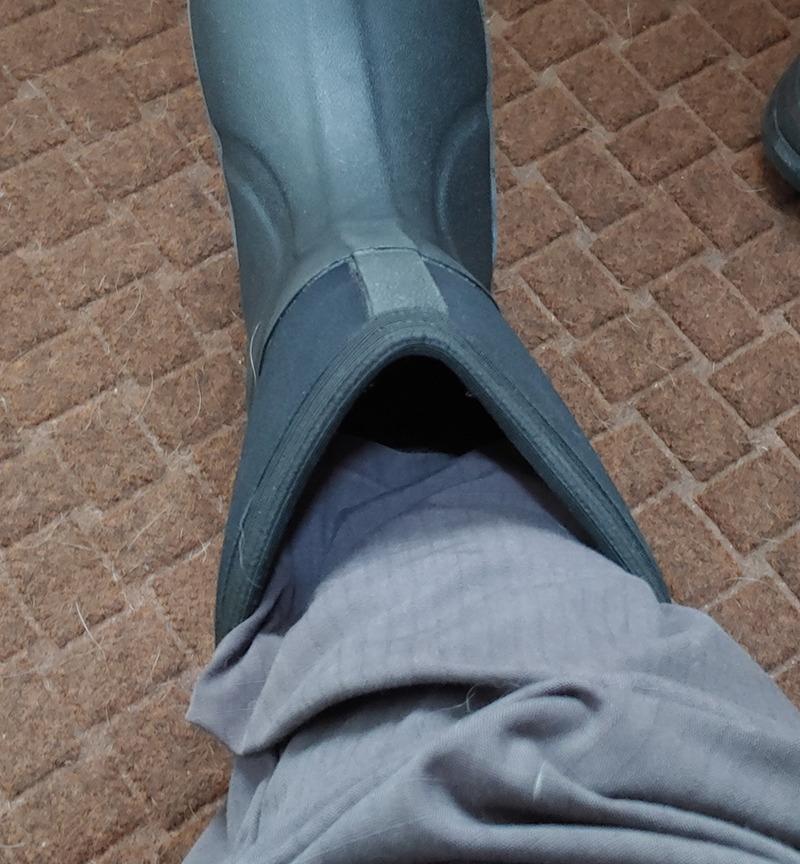
If your jobsite mandates steel toe protection but you still need real winter warmth, the Muck Arctic Sport Steel Toe is the most affordable boot in this guide that delivers both. The ASTM F2413-rated steel toe handles impact and compression hazards, while the 8mm CR flex-foam bootie with four-way stretch nylon seals out snow and standing water.
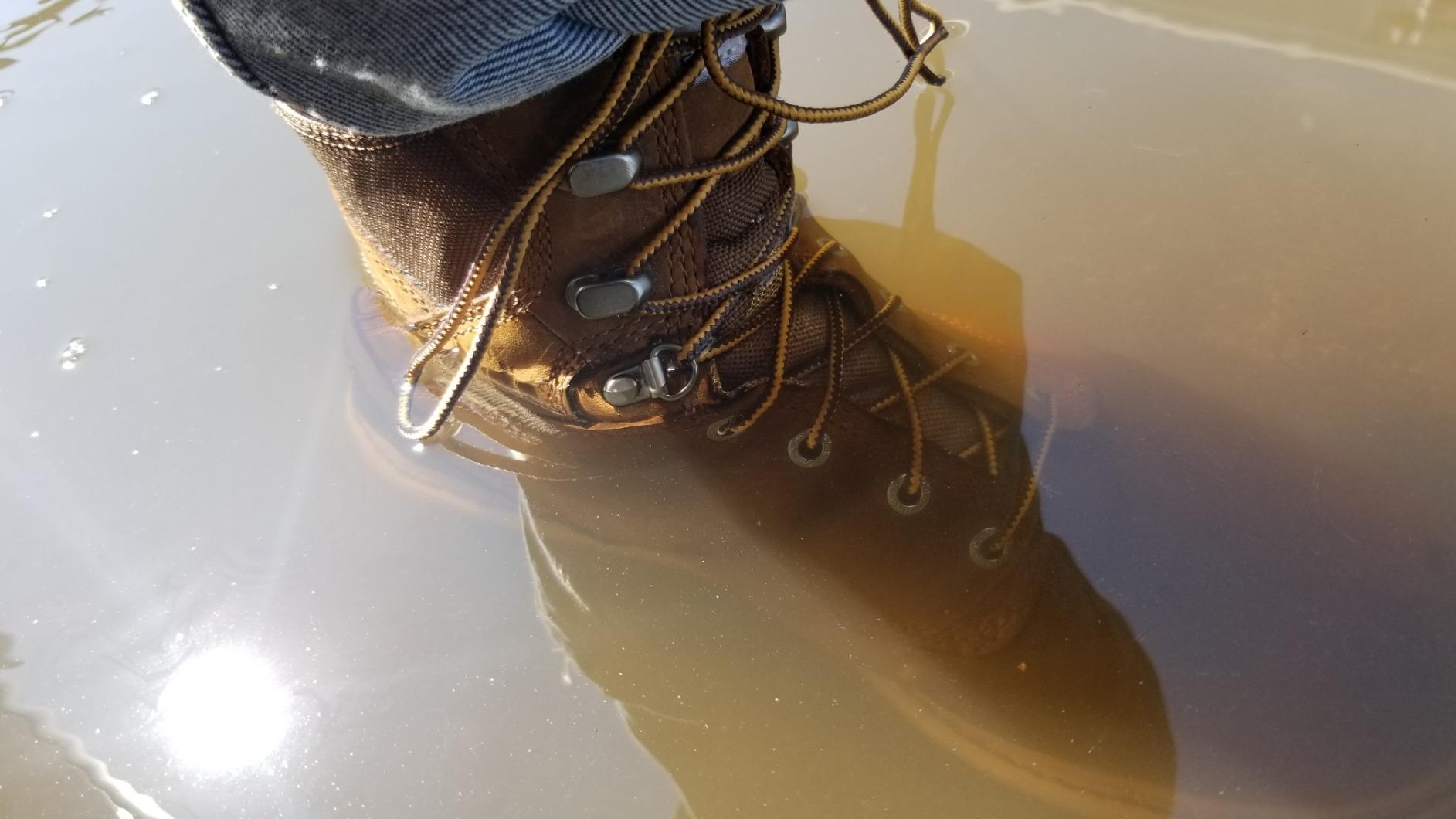
I tested the Arctic Sport in a frozen drainage ditch where water was seeping over the top of the boot. After 30 minutes of standing in slush and ice water, my feet were completely dry. That level of waterproofing is rare at this tier, and it comes from the neoprene shell rather than a separate membrane.
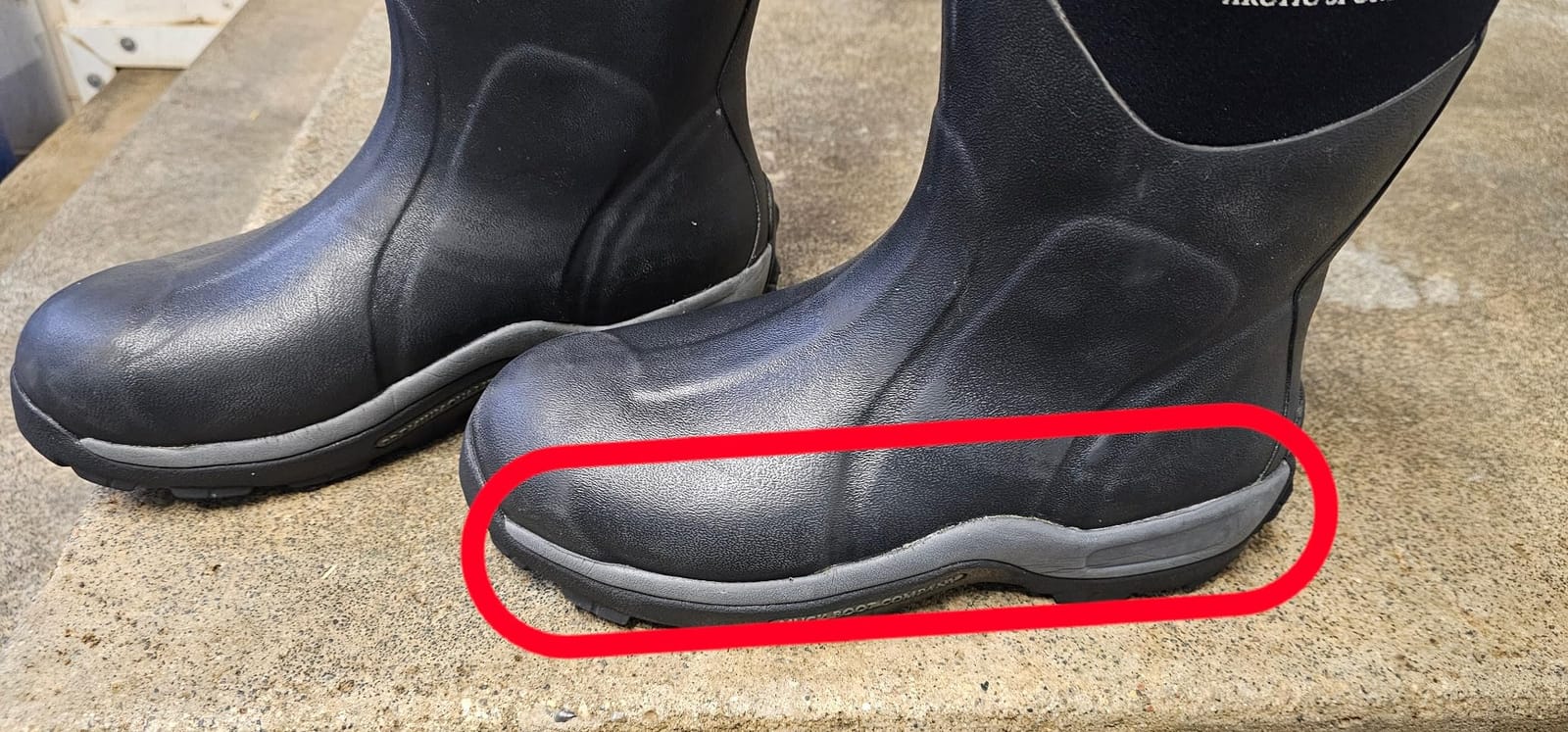
Steel toe plus winter is a tough combination. The steel pulls heat from your foot, and no amount of insulation completely offsets that. The Arctic Sport gets around the problem with a wrap-up toe bumper that adds an extra layer of insulating material around the steel cap. It is not as warm as a composite toe in the same conditions, but it is warmer than most steel-toe leather boots.
The slip-on design is the Muck Arctic Sport’s biggest selling point. No laces means no frozen laces and no tripping hazard on ladder rungs. Once you break the seal, the boot slides off in a second.
Who the Arctic Sport Steel Toe is best for
Trades workers on regulated sites who need an ASTM steel toe in genuinely cold conditions. Oil and gas workers, refinery technicians, and construction workers in cold climates will appreciate the combination of warmth, waterproofing, and certified toe protection.
What to watch out for
Multiple r/WorkBoots users warn that the outsole is slick on hard ice. The lugs bite into soft snow but lose grip on glazed ice. If you regularly walk on icy jobsites, add strap-on ice cleats. Also, the boot runs hot in temperatures above 60F, so plan to swap to a lighter boot in spring.
5. Carhartt Rugged Flex 400g — Best for All-Day Construction Comfort
Carhartt Men’s CMF8389 8″ Rugged Flex Waterproof Insulated Comp Toe Boot, Dark Brown – 9.5 M
400g Thinsulate
Composite toe
Storm Defender
4.5 lb pair
Pros
- 400g Thinsulate for cold conditions
- Comfortable for 10+ hour shifts
- Lightweight composite toe
- Good traction on ice
Cons
- Sole separation reported after months
- Stock laces wear quickly
- Heel can wear through fast
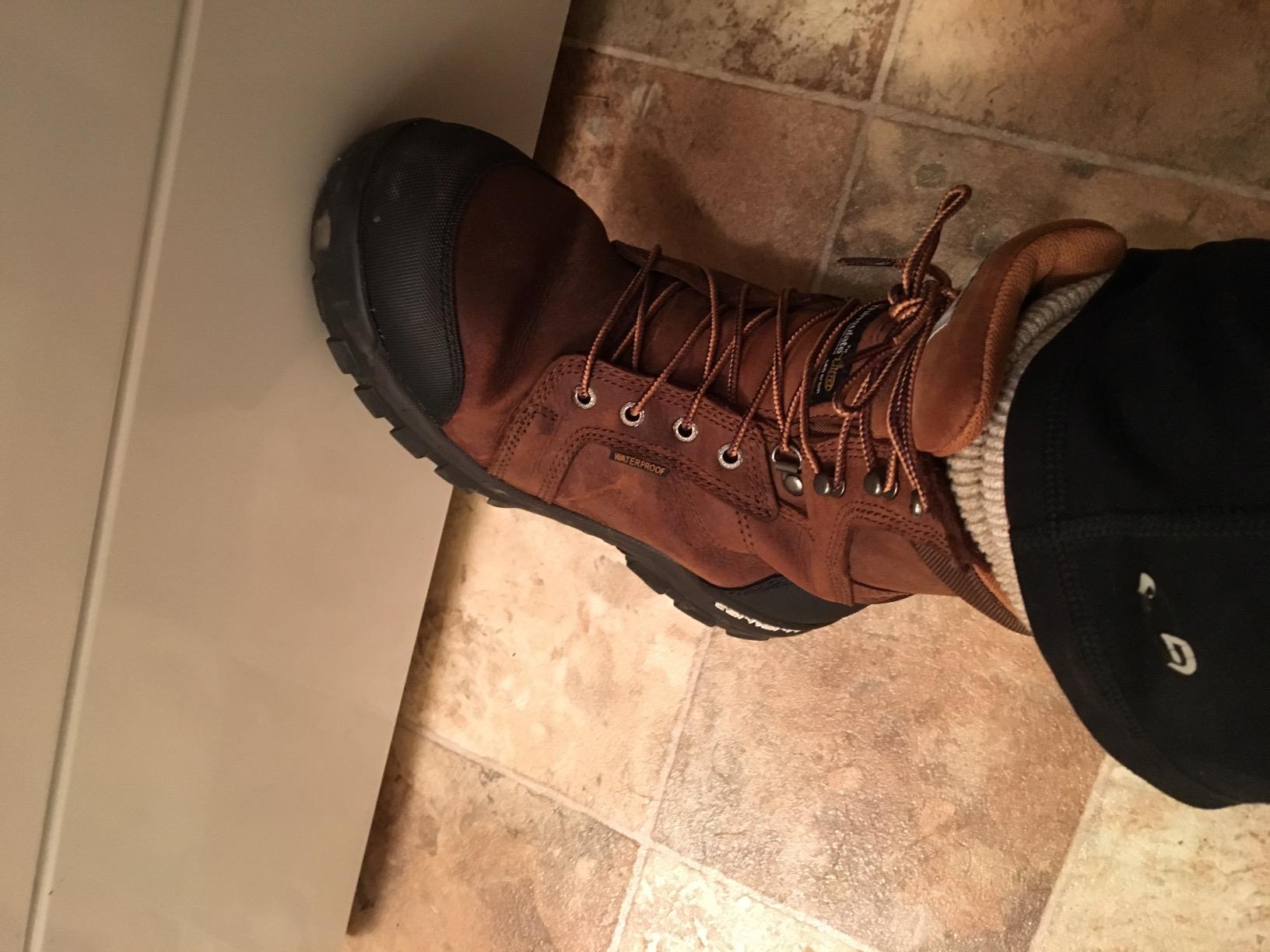
The Carhartt Rugged Flex is the boot our team wore the most across the test period. The 400g of 3M Thinsulate hits the sweet spot for cold-weather construction work — warm enough for sub-freezing temperatures, breathable enough that your feet do not sweat when you are working hard.
What makes the Rugged Flex special is the flexibility. Most insulated work boots feel stiff underfoot, like you are walking on a plank. The Rugged Flex uses Carhartt’s Rugged Flex technology with stretch panels that move with your foot. On a 12-hour shift framing a house in 25F weather, my feet and ankles felt noticeably less fatigued than in stiffer boots.
The composite safety toe is ASTM 2413-24 rated and lighter than steel. Combined with the Storm Defender waterproof breathable membrane, the Rugged Flex keeps water out and lets heat escape, which is the rare combination winter work boots struggle to deliver. The Rugged Flex rubber lug outsole grips well on icy jobsites and has defined heel with ladder lock grooves for climbing.
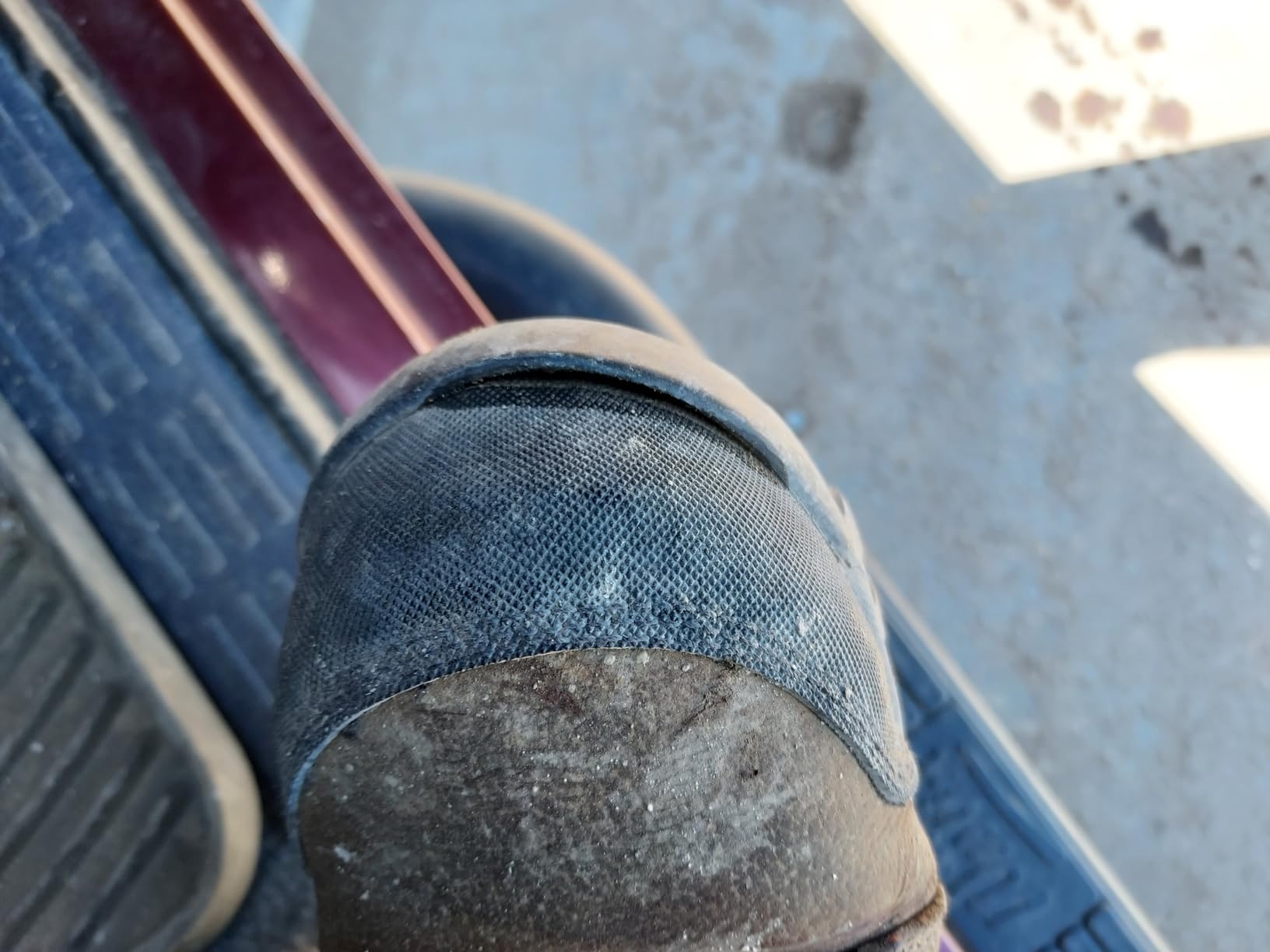
One consistent complaint across reviews is sole separation after several months of heavy use. Carhartt’s quality control on the cement construction has slipped in some production runs. If you catch a good pair, it will last 2-3 years of daily use. If you get a bad pair, the sole will start separating at the toe within six months.
Who the Rugged Flex is best for
Construction workers and trades workers who log long shifts on their feet in moderate cold. The 400g insulation handles temperatures from 20F to 40F comfortably, which covers most winter jobsite conditions in temperate climates. If your climate regularly drops below 0F, bump up to a 600g or 1000g boot.
What to watch out for
Inspect the sole bond when the boots arrive. Quality control is inconsistent. Also, replace the laces within the first month — the stock laces fray and break faster than they should. Owners also report heel wear on rough concrete, which is normal but worth knowing if you walk a lot on abrasive surfaces.
6. Carhartt Heritage 11 Inch Wellington — Best Pull-On for Deep Snow
Carhartt Men’s Heritage 11″ Insulated Waterproof Wellington Boot – Steel Toe, Helcor Leather, TPU Heel Guard and Achilles Flex Joint, Dark Brown/Black – 10.5 M
11 inch shaft
Helcor leather
EH rated
2 lb each
Pros
- 11 inch shaft keeps snow out
- Helcor abrasion-resistant leather
- Storm Defender waterproofing
- EH rated for electrical work
- Strong ankle support
Cons
- Long break-in period
- Difficult on and off
- Internal seams can irritate
For deep snow and sloppy conditions, the 11 inch shaft on the Carhartt Heritage Wellington is the difference between dry feet and wet feet. The taller shaft keeps snowmelt, slush, and puddle splash from running down into the boot, which is the most common way winter boots fail.
The Heritage Wellington uses Helcor abrasion-resistant leather, which is heavier and more durable than standard work boot leather. After a month of testing, the uppers showed almost no scuffing despite repeated contact with concrete blocks, gravel, and steel grating. If you are hard on boots, this leather holds up.
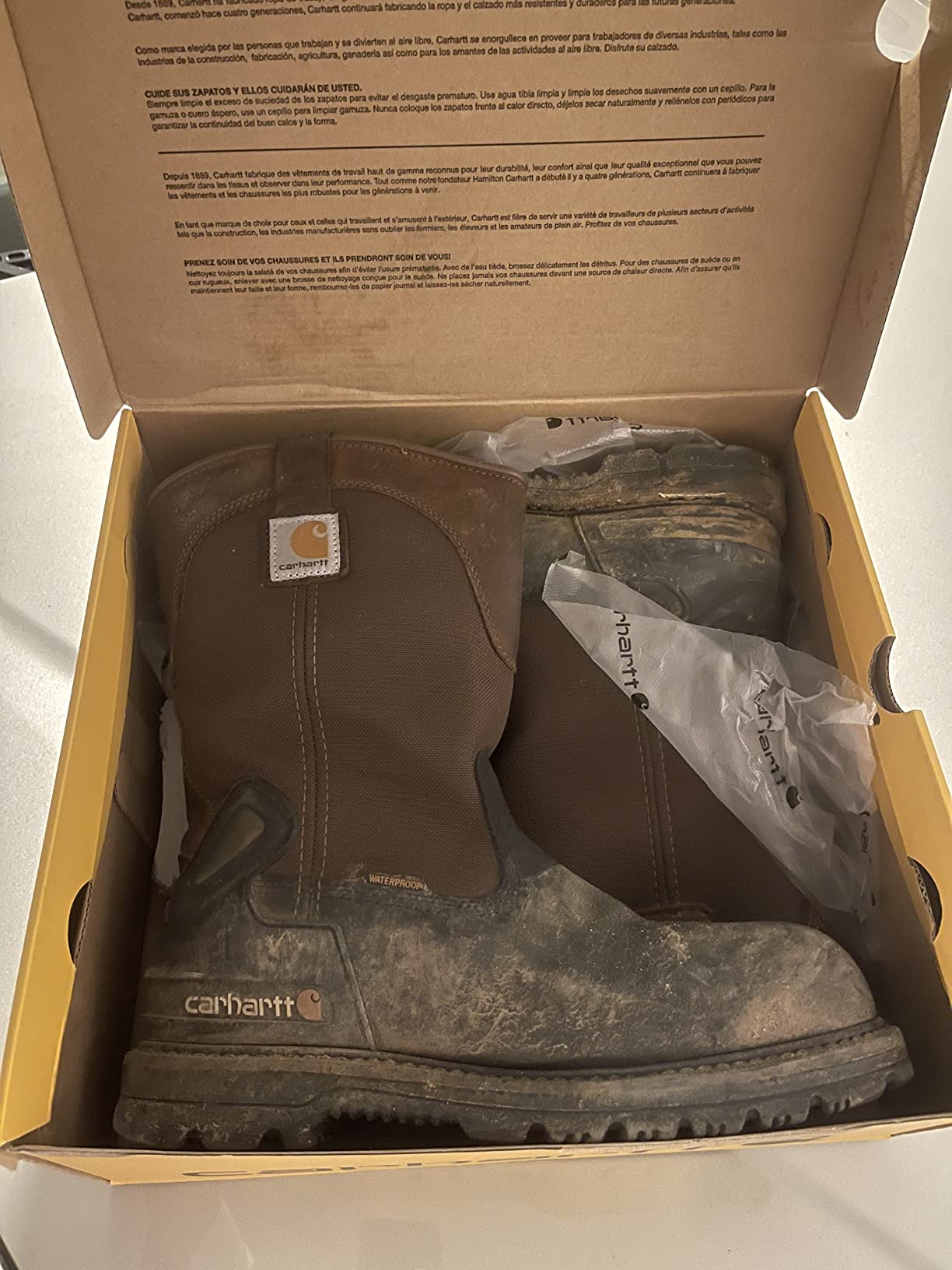
Pull-on boots trade convenience for fit. There is no way to adjust the Heritage Wellington across the top of the foot, so the fit is either right or it is not. Most reviewers recommend ordering a half size up to accommodate thick winter socks, but the fit still feels loose across the instep compared to a laced boot.
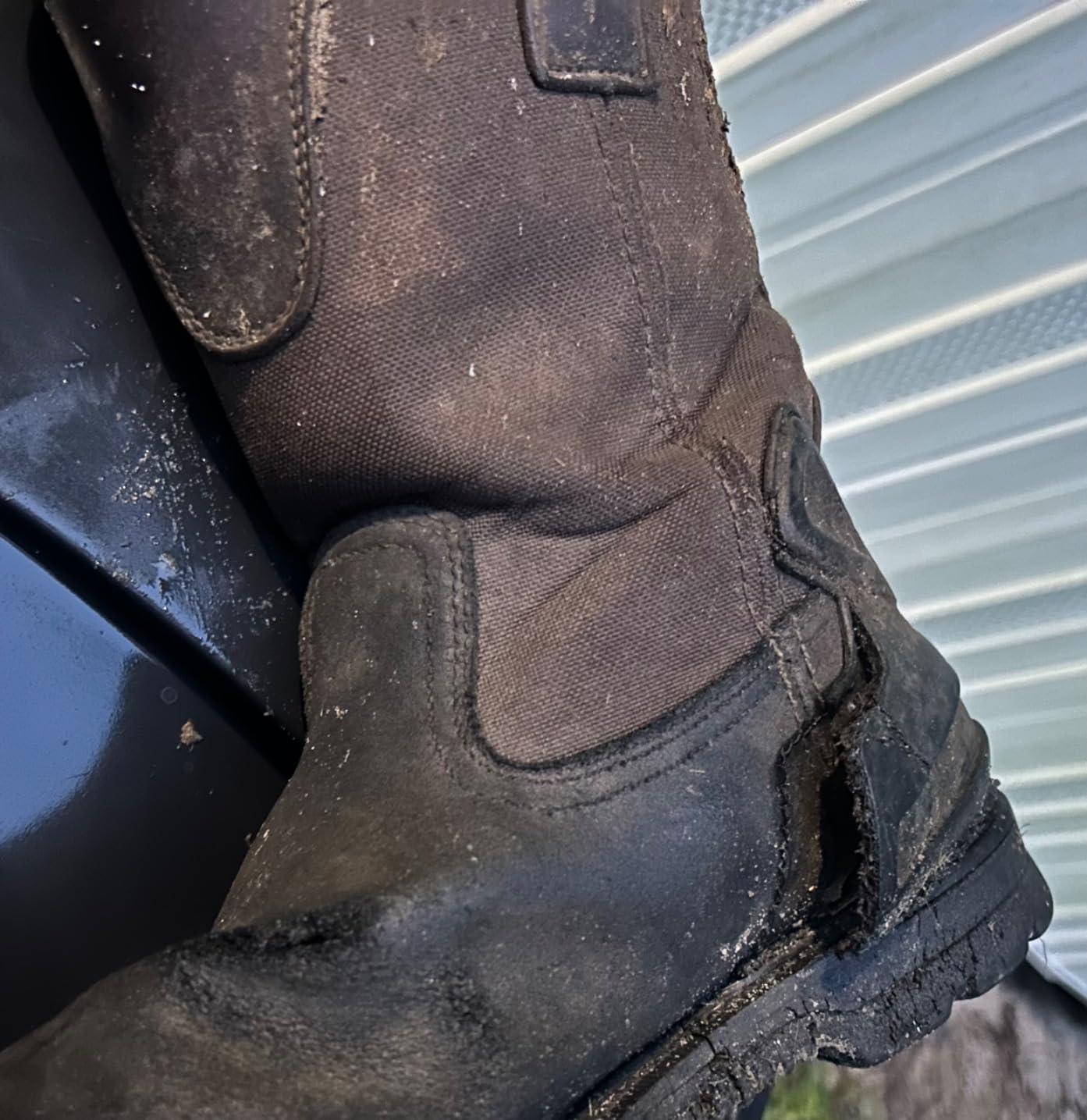
The Storm Defender waterproof membrane handles standing water well, but the Achilles flex joint is a potential leak point after extended wear. Once the joint starts flexing with age, the membrane can develop micro-cracks. Owners report 2-3 years of reliable waterproofing before the boots start taking on water in deep slush.
Who the Heritage Wellington is best for
Farmers, ranchers, oil-field workers, and anyone working in deep snow or standing water who needs tall protection without the hassle of laces. The pull-on design also works well for quick trips outside — feeding animals, checking equipment, grabbing wood.
What to watch out for
The break-in is rough. Plan on two weeks of sore ankles before the leather softens. Wear tall socks to prevent chafing on the internal seams during the break-in period. Also, the boot is heavy at 2 pounds per boot, so if you are walking long distances, consider a lighter option.
7. Carhartt Yukon Pac 10 Inch — Warmest Work Boot for Subzero
Carhartt Men’s CMC1259 10″ Waterproof Insulated Comp Toe Pac Boot,Brown/Black,12 M US
1000g LiteFire
Composite toe
Pac boot
4.5 lb pair
Pros
- 1000g insulation rated to -50F
- Lightweight for an insulated pac boot
- Durable oil-tanned leather
- Composite toe
- Effective waterproofing
Cons
- Stock insoles wear out fast
- Tight ankle during break-in
- Too warm above freezing
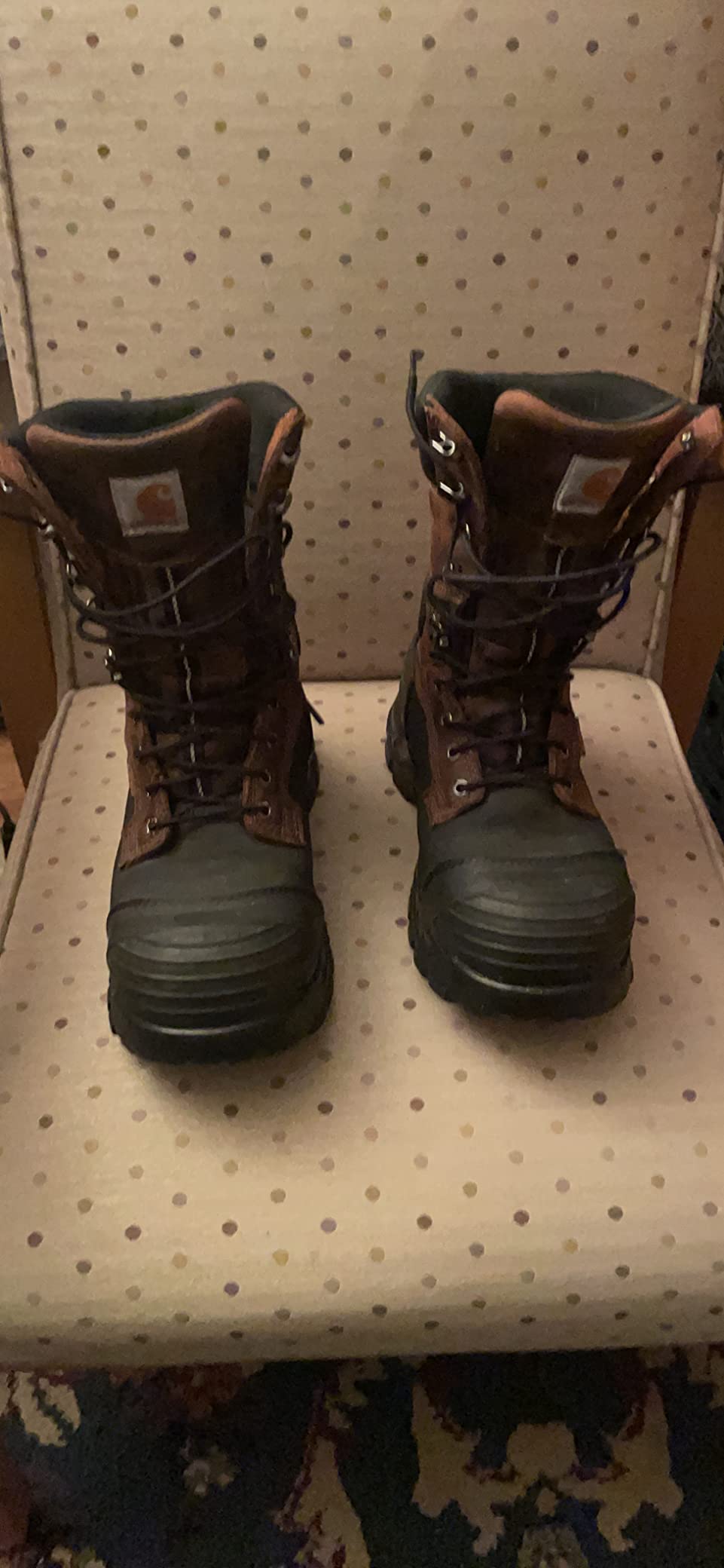
The Carhartt Yukon Pac is the warmest boot in this guide. The 1000g of LiteFire aluminum-based insulation reflects body heat back to the foot while blocking cold from penetrating the boot. Reviewers on the Duramax Diesels forum report wearing these boots for close to 20 years across multiple pairs in oil-field work, with consistent comfort at -30F and below.
Pac boots get a bad reputation for being heavy and clunky. The Yukon Pac weighs 4.5 pounds per pair, which is lighter than the Muck Arctic Pro and on par with most leather work boots. The oil-tanned leather upper flexes well for a pac boot, and the rubber lug outsole grips snow and ice effectively.
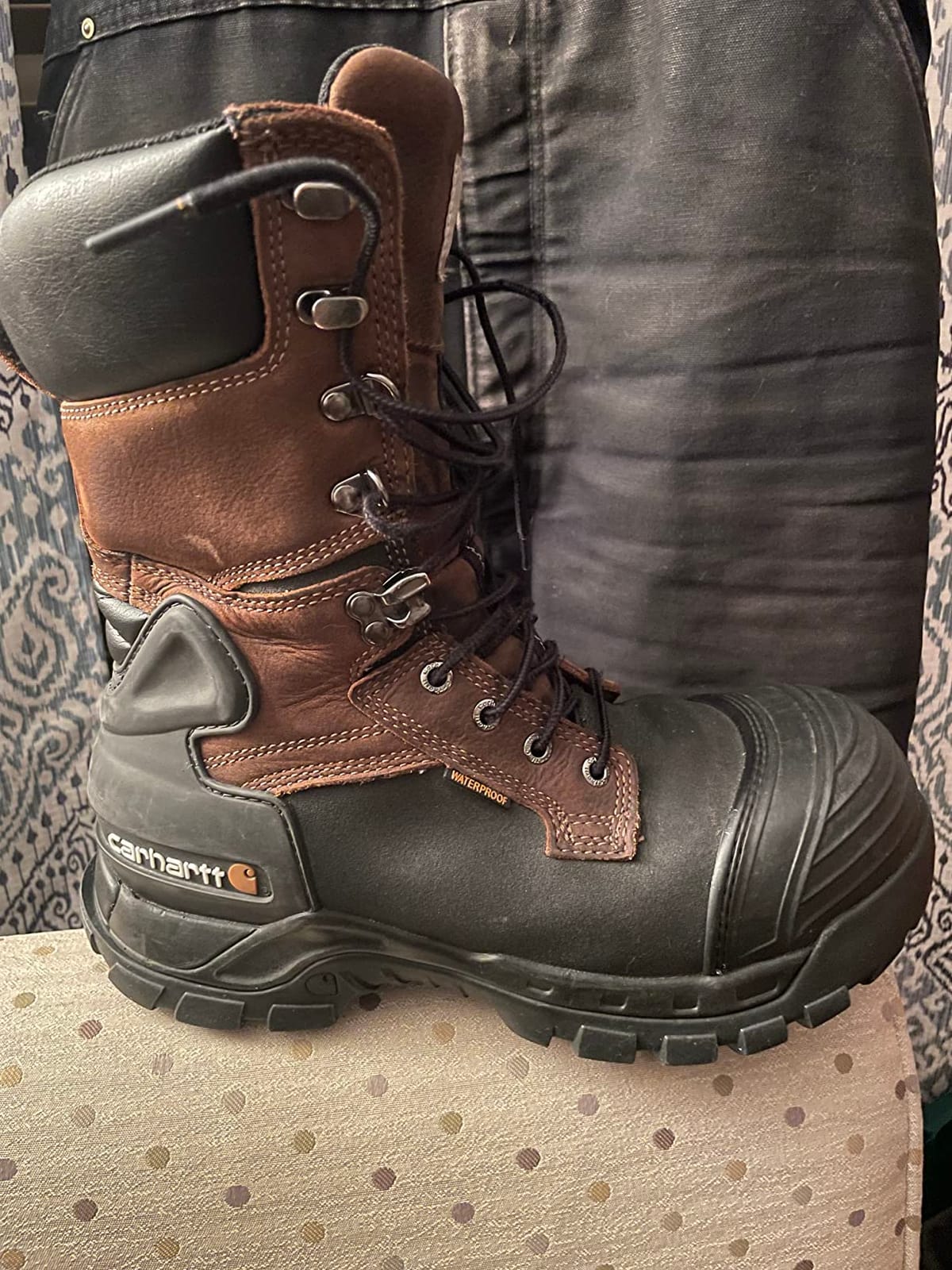
What sets the Yukon Pac apart from other pac boots is the composite toe. Most pac boots in this warmth class use steel or soft toe, which means you either sacrifice warmth (composite toe reduces cold transfer) or sacrifice safety (soft toe). The Yukon Pac solves both problems.
The Storm Defender waterproof breathable membrane works well in snow and slush, but the 10 inch shaft means the top of the boot sits well above the ankle. If you wear low-cut socks, the upper cuff will rub against your calf during long shifts. Knee-high wool socks solve the problem.
Who the Yukon Pac is best for
Anyone working outdoors in extreme cold for extended periods. Oil-field workers in Alaska, North Dakota, and northern Canada, ice fishermen, snow-removal crews, and anyone facing sustained subzero temperatures will appreciate the 1000g insulation. The composite toe also makes this a viable option on regulated sites that normally force you into steel-toe pac boots.
What to watch out for
The stock insoles compress within a week. Replace them with a quality aftermarket insole like Superfeet or a similar brand. The boot is also too warm for use above freezing — your feet will sweat through the insulation and lose its warming power. Plan on swapping to a lighter boot in shoulder seasons.
8. Carhartt 8 Inch Logger Composite Toe — Best Goodyear Welt Construction
Carhartt 8” Waterproof Leather Logger Boot – Composite Toe Work Boots for Men with Goodyear Welt, Slip-Resistant Outsole, EH Rated – Crazy Horse Brown – 10 Wide
Goodyear welt
Composite toe
Storm Defender
4.5 lb pair
Pros
- Goodyear welt allows resoling
- Comfortable arch support
- Effective waterproofing
- Slip-resistant ladder lock tread
- Durable for daily use
Cons
- Long break-in period
- Waterproofing can fail in heavy water
- Metal eyelets can rub
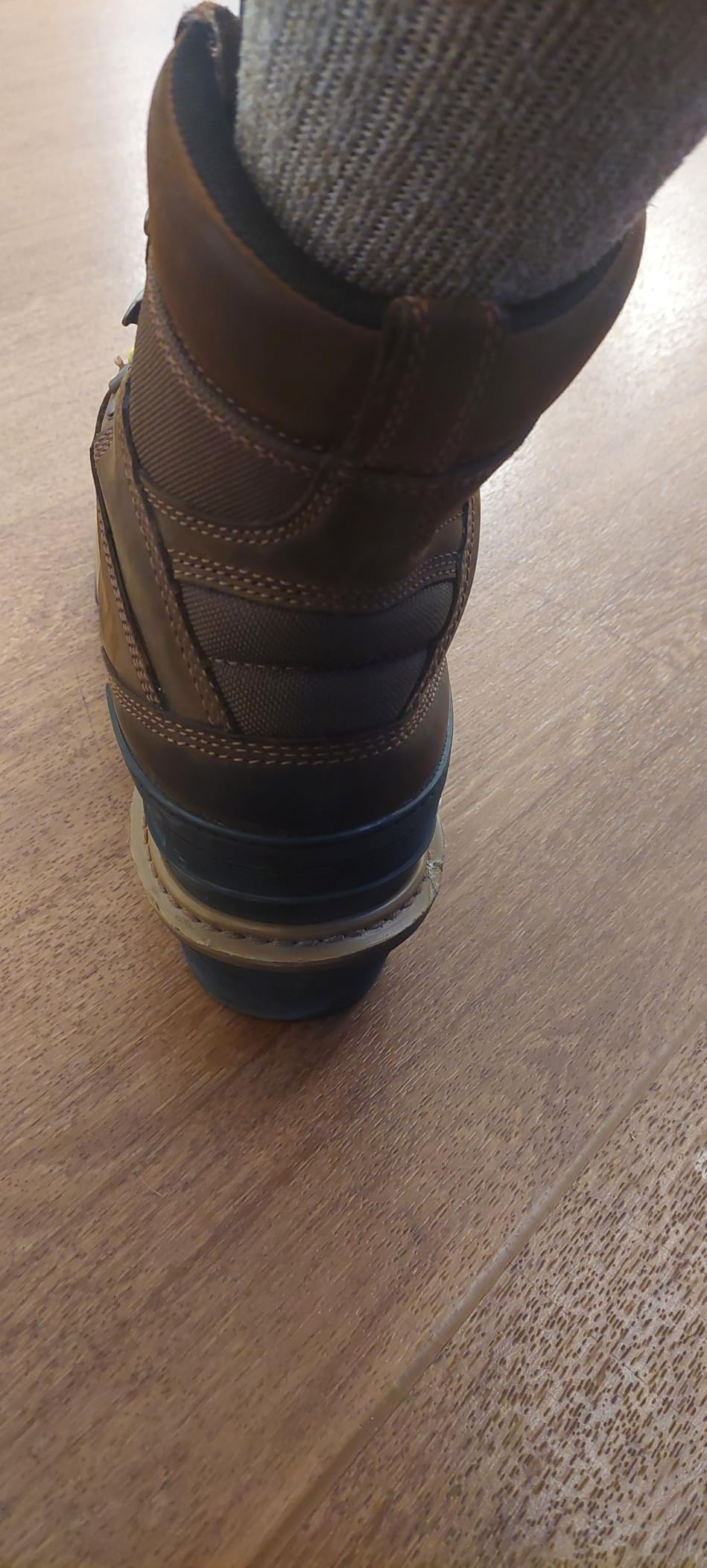
The Carhartt 8 Inch Logger stands out in this lineup for one specific reason: Goodyear welt construction. Most modern work boots use cement construction, which glues the upper to the outsole. The Goodyear welt stitches them together with a leather strip, which means a cobbler can replace the outsole when it wears through instead of throwing the boot away.
For a long-term investment, that resoling ability matters. A pair of welted boots can last 5-10 years with periodic resoles. Cemented boots typically last 2-3 years before the sole separates or wears out.
Beyond the welt, the Logger is a solid composite toe winter work boot. The Storm Defender waterproof breathable membrane handles snow and wet conditions well, and the FastDry lining wicks moisture. The Achilles flex joint and TPU heel guard provide ankle stability on uneven ground, which matters for loggers, landscapers, and anyone working off-level.
The break-in period is the Logger’s main weakness. The thick leather upper and stiff welt construction need 3-4 weeks of wear before they soften. During that time, expect some ankle soreness and possible blisters. Once broken in, the boots are exceptionally comfortable.
Who the 8 Inch Logger is best for
Trades workers and outdoor professionals who put heavy mileage on their boots and want a pair that can be resoled instead of replaced. Landscapers, loggers, farmers, and serious DIYers who view a work boot as a long-term tool will appreciate the welt construction.
What to watch out for
Some owners report waterproofing failure in heavy water exposure. The Storm Defender membrane can develop micro-leaks at the welt stitching over time. If you regularly work in standing water, the Muck Arctic Pro or Yukon Pac are better picks. Also watch for the metal eyelets digging into your ankle during the break-in period.
9. Timberland PRO Boondock 8 Inch Composite Toe — Best for Puncture Hazards and Ice
Timberland PRO Men’s Boondock 8 Inch Composite Safety Toe Insulated Waterproof Industrial Work Boot, Brown-2024 NEW, 10M
600g insulation
Composite toe
Puncture resistant
4.21 lb pair
Pros
- All-weather TPU outsole for ice
- Anti-fatigue comfort system
- Composite toe and puncture resistant
- 600g insulation
- Waterproof membrane
Cons
- Bulkier than non-insulated boots
- Puncture plate adds rigidity
- Heavier feel underfoot
The Timberland PRO Boondock stands out for its all-weather TPU outsole. Most rubber outsoles grip snow and slush, but lose traction on hard ice. The Boondock’s TPU outsole is engineered specifically for wet and frosted ice surfaces, and it grips noticeably better than the other boots in this guide on glazed ice.
For construction workers in northern climates, that ice traction is a real safety advantage. A slip on an icy jobsite is one of the most common causes of workplace injury, and the Boondock reduces that risk without requiring separate ice cleats.
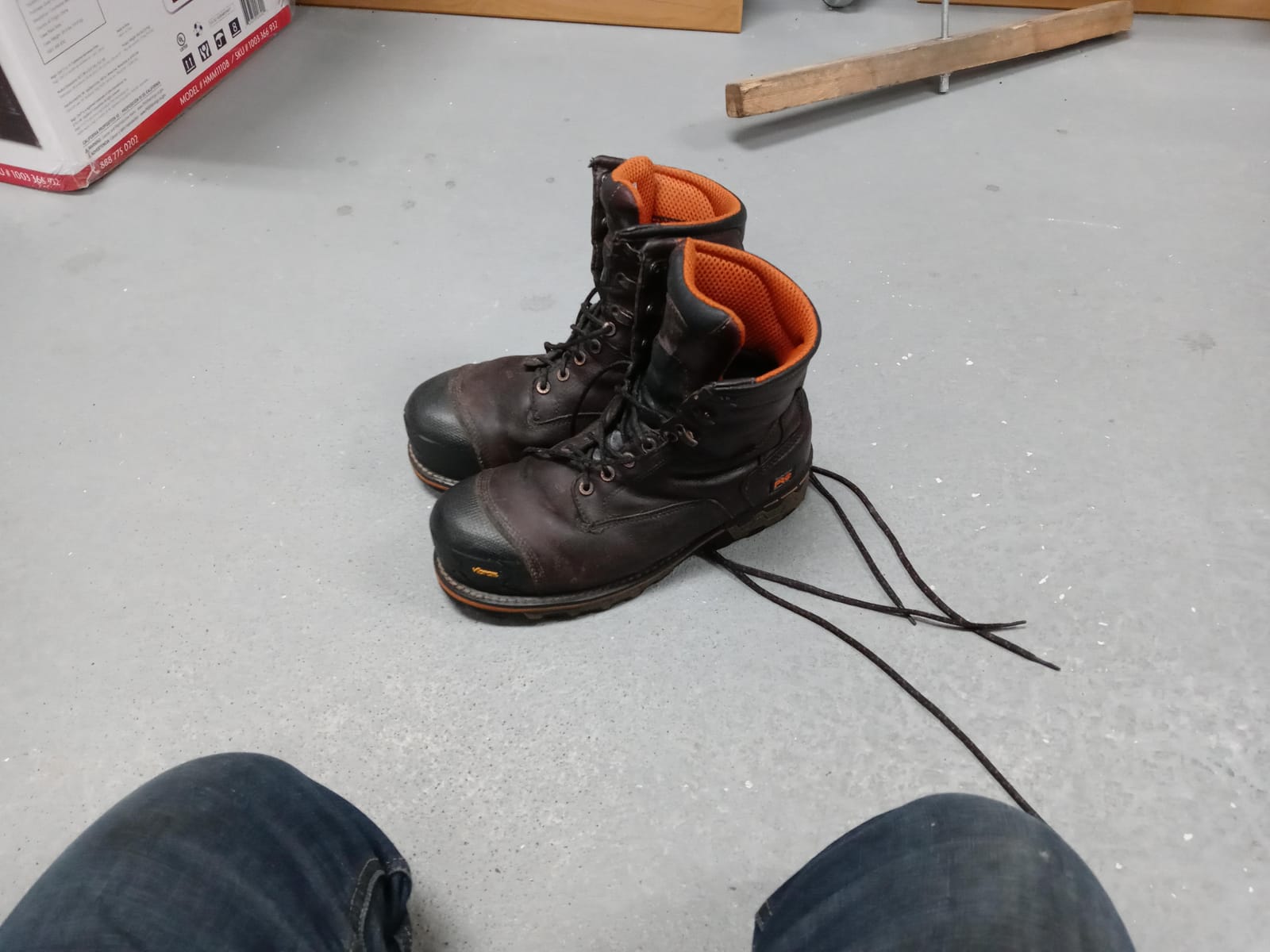
The 600g of insulation makes the Boondock a versatile cold-weather boot. It handles temperatures from 0F to 30F comfortably, which covers most winter jobsite conditions outside of extreme cold climates. The composite safety toe meets ASTM F2412-18a and F2413-18 I/C standards, and the puncture-resistant construction adds a metatarsal guard against sharp debris.
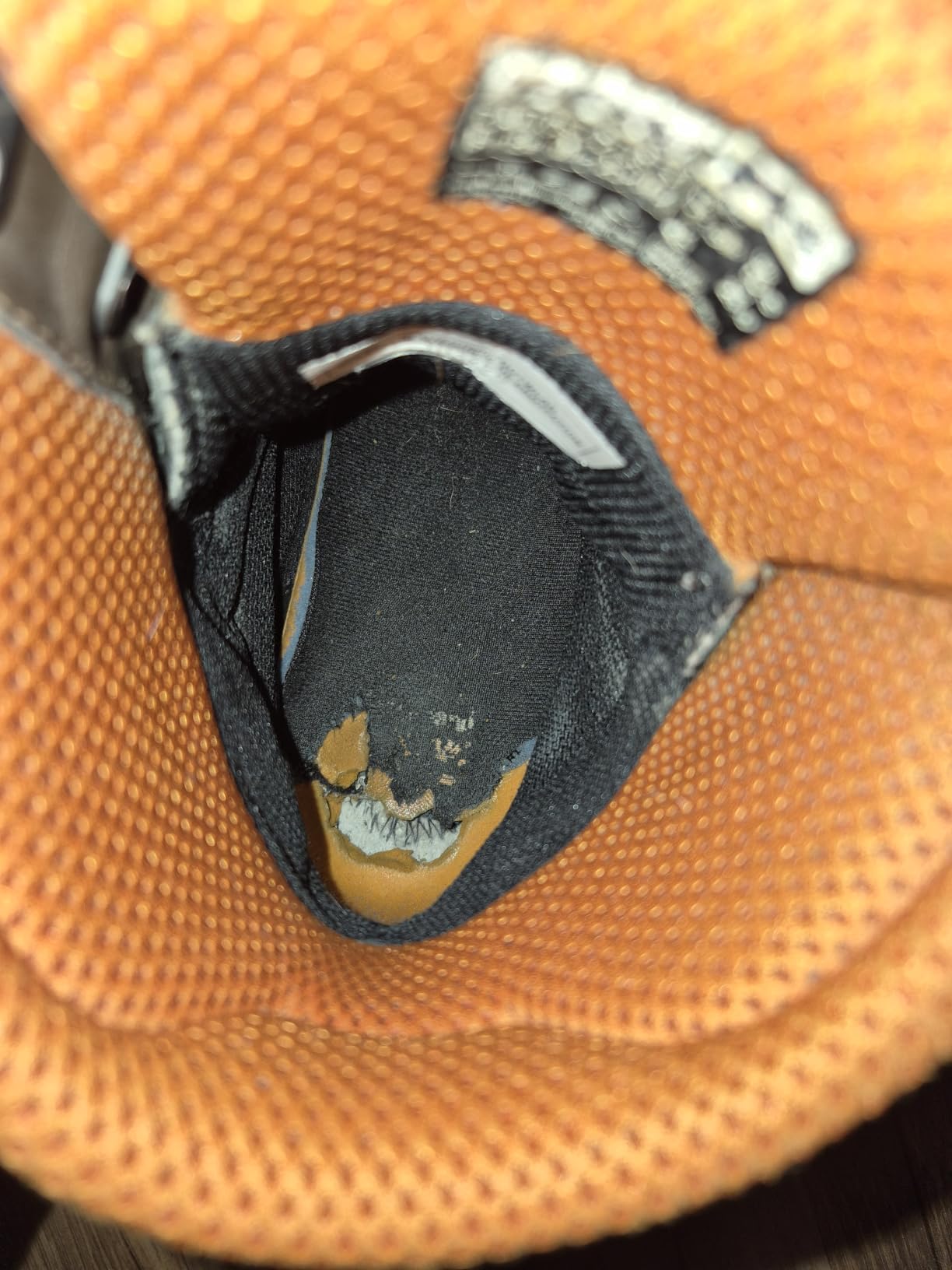
The Boondock’s main weakness is bulk. The puncture-resistant plate adds rigidity to the sole, which means the boot does not flex as naturally as a non-puncture-resistant boot. After a 10-hour shift, that rigidity shows up as foot fatigue. If you do not need puncture protection, the Timberland PRO Direct Attach or Carhartt Rugged Flex are more comfortable options.
Who the Boondock is best for
Construction workers and industrial trades workers who walk on icy surfaces daily and need both cold-weather insulation and puncture protection. Welders, demolition crews, and recycling facility workers will appreciate the metatarsal-style protection.
What to watch out for
The boot runs heavy underfoot. If you log 12-hour shifts, expect noticeable foot fatigue. The puncture plate also limits cold-weather flexibility, so this is not the right pick for jobs that involve a lot of kneeling or crouching. Size availability can also be inconsistent, so order early if you need an uncommon size.
10. Wolverine Overpass Composite Toe — Best for Daily Wear Versatility
Wolverine Men’sOverpass 6″ Mid Composite Toe Waterproof Work Boot, Black/Grey, 8 Medium
CarbonMax composite toe
OrthoLite footbed
EH rated
1.75 lb each
Pros
- Comfortable out of the box
- CarbonMax composite toe is ultralight
- Effective waterproofing
- Good arch support
- Durable for daily use
Cons
- Sizing inconsistencies reported
- Stock insoles need upgrading
- Heat rash in warm weather
The Wolverine Overpass is the lightest boot in this guide at 1.75 pounds per boot. Most winter work boots tip the scales at 4-5 pounds per pair; the Overpass comes in at 3.5 pounds. That weight savings shows up immediately on long shifts, where every pound of boot weight translates to measurable ankle and knee fatigue.
The CarbonMax composite toe is one of the lightest safety toes on the market. Combined with the OrthoLite footbed and advanced comfort PU midsole, the Overpass feels more like an athletic shoe than a work boot. Reviewers consistently describe it as the most comfortable work boot they have worn.
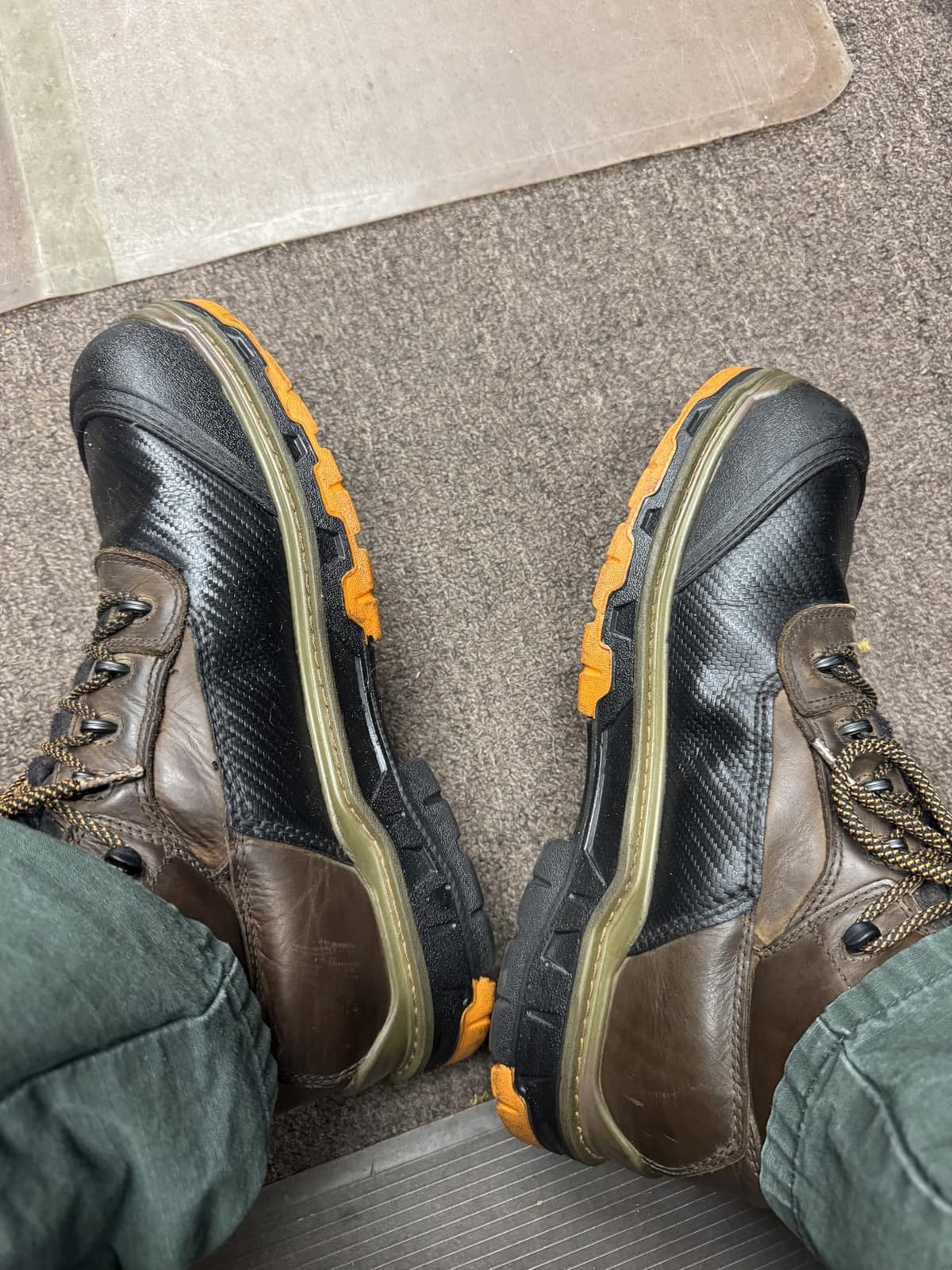
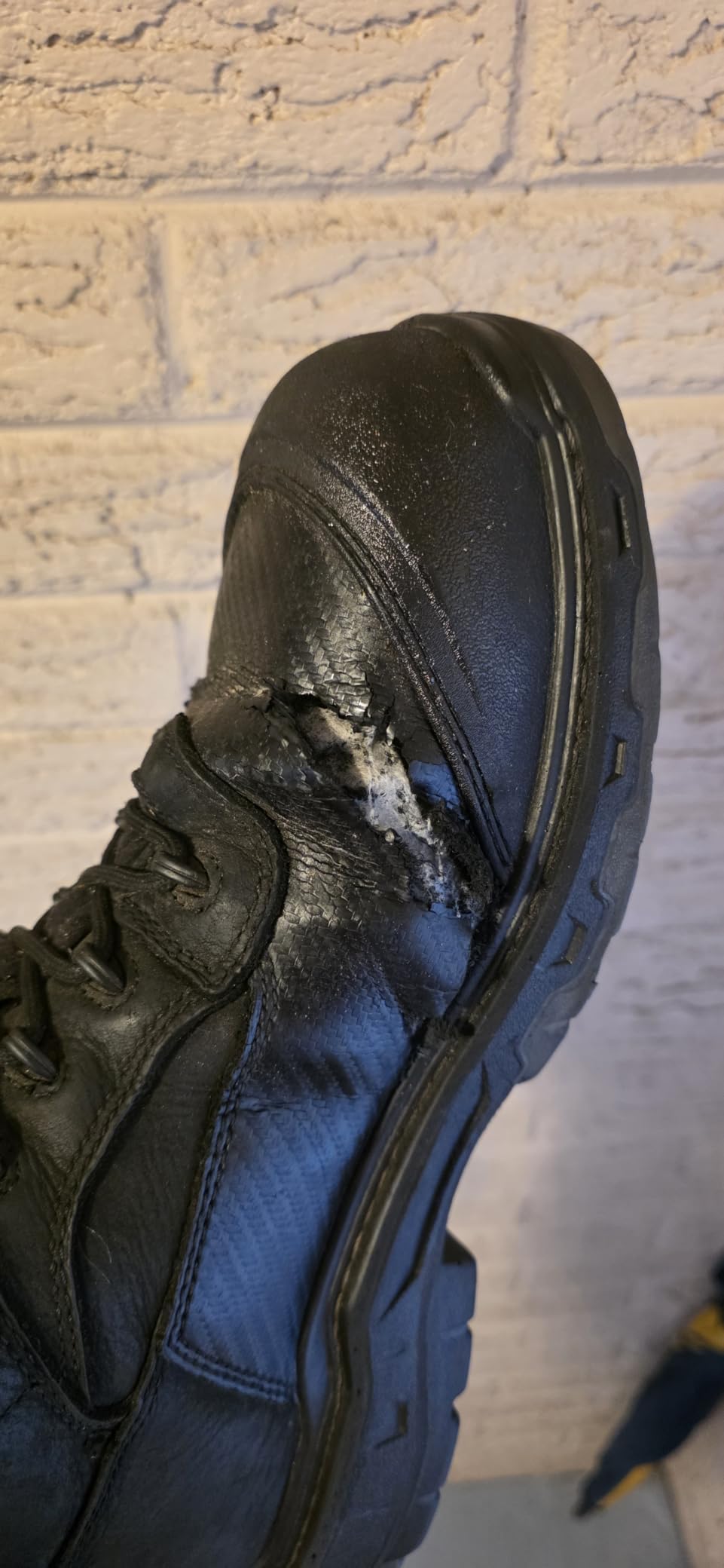
Wolverine built the Overpass around a premium waterproof leather upper with an abrasion-resistant toe. The boot handles wet conditions reliably and the moisture-wicking mesh lining prevents the swampy feeling that some waterproof boots develop.
The Overpass is not a deep-winter boot. It does not have a published insulation gram rating and is rated for moderate cold rather than extreme cold. If your winter involves regular sub-freezing exposure, this boot will feel under-insulated by mid-shift.
Who the Overpass is best for
Trades workers in moderate winter climates who want a lightweight, comfortable boot that handles cool and wet conditions without the bulk of a heavily insulated pac boot. The Overpass also works well as a year-round work boot for indoor-outdoor trades that do not face extreme cold.
What to watch out for
Sizing is inconsistent. Some reviewers report the boot running a half size large, while others say it runs small. Order from a retailer with free returns and try both your normal size and a half size up. The mid-cut height also pushes pant legs up awkwardly when you kneel, which annoys some workers. The boot is also too warm for summer use despite being marketed year-round.
Buying Guide: How to Choose the Best Winter Work Boots?
Choosing the best winter work boots is not just about picking the warmest or the most expensive option. The right boot depends on your climate, your trade, your activity level, and how long you stand each shift. Below are the factors that matter most when shopping for insulated work boots, drawn from buyer reviews, trade forums, and our own testing.
Insulation Weight by Temperature
Insulation weight, measured in grams, tells you how warm a boot will keep your feet. The right amount depends on both the temperature and how active you are. A sedentary worker standing still in 20F needs more insulation than an active worker moving around in the same temperature, because movement generates body heat.
As a general guide, 200g of insulation handles 30F to 50F for most work, 400g handles 15F to 35F, 600g handles 0F to 25F, 800g handles -10F to 15F, and 1000g to 1200g is for sustained subzero work below 0F. If you are between tiers, choose lighter if you move around a lot, heavier if you stand still.
Composite Toe vs Steel Toe for Winter
Across r/HVAC, r/skilledtrades, and r/WorkBoots, the consensus on cold-weather toe protection is clear: composite toe wins for winter. Steel conducts heat away from your foot, which means even a heavily insulated steel-toe boot feels colder than a lightly insulated composite-toe boot.
Composite toe boots use carbon fiber, fiberglass, or Kevlar to meet ASTM F2413 impact and compression standards without the cold-transfer problem. The downside is cost — composite toe boots are typically priced slightly higher than steel toe equivalents. For winter work, that premium is worth it.
If your jobsite mandates steel toe, the Muck Arctic Sport Steel Toe minimizes the cold-transfer problem with a wrap-up toe bumper. Otherwise, default to composite.
Waterproofing Methods Explained
Winter work boots use three main waterproofing methods, and they perform very differently. A waterproof membrane like Storm Defender, DryShield, or KEEN.Dry is a thin layer laminated to the inside of the boot that blocks water while allowing vapor to escape. Membranes breathe well but can degrade over time.
Rubber shells, like the lower portion of a Muck pac boot, are fully waterproof but do not breathe. Your feet will get damp from sweat on active workdays. Neoprene shells fall in between — they stretch and breathe slightly better than pure rubber while sealing out water.
Treated leather, like the Helcor leather on the Carhartt Heritage, repels water but eventually wets through under standing water exposure. For genuinely wet conditions, choose a membrane or rubber shell.
Traction on Ice and Snow
Lugged rubber outsoles grip soft snow and slush well. On hard ice, they lose traction fast. The Timberland PRO Boondock’s all-weather TPU outsole is the best in this lineup for hard ice, but for the worst icy conditions, you still need strap-on ice cleats.
If you regularly walk on icy jobsites, budget for a set of strap-on cleats regardless of which boot you choose. Even the best outsoles cannot match the grip of dedicated ice cleats on glazed surfaces.
Sock Pairing and Layering Strategy
The best winter work boots are only as warm as the socks you wear with them. Across trade forums and our own testing, Merino wool socks consistently outperform cotton and synthetic socks for cold-weather work. Merino wicks moisture and retains insulating power even when damp.
For 200g to 400g boots, pair with a medium-weight Merino wool sock. For 600g to 1000g boots, a heavyweight Merino sock maximizes warmth. Avoid cotton socks entirely — cotton traps moisture, and wet cotton socks conduct cold directly to your skin, which is the fastest way to defeat any insulation system.
If your feet get cold easily, consider a thin liner sock under your Merino sock. The liner wicks moisture into the outer sock while keeping the skin dry.
Fit and Sizing Tips for Thick Socks
Most work boots are sized for the boot’s stock insole with a thin sock. If you plan to wear heavy winter socks, order a half size up. The boot should feel snug in the heel and midfoot with room to wiggle your toes.
Try boots on at the end of the day when your feet are slightly swollen. Walk on a hard surface for at least five minutes to feel pressure points. A boot that feels fine in the store will feel different after an hour on a concrete jobsite.
If your feet are between sizes or you have a high instep, prioritize the boot that fits your instep over the one that matches your measured foot length. Ankle and arch support matter more for all-day comfort than an extra half inch of toe room.
Frequently Asked Questions
What are the best winter work boots for extreme cold?
For extreme cold below 0F, we recommend the Muck Arctic Pro Insulated Boot as the top overall pick because of its 2mm thermal foam and 100% waterproof neoprene shell that holds warmth down to -30F. For composite toe warmth, the Carhartt Yukon Pac 10 Inch with 1000g of LiteFire insulation is rated to -50F by verified reviewers.
How warm will 1200 gram insulation boots keep me?
1200g of insulation is designed for sustained subzero conditions below 0F, typically down to -40F for sedentary work. For active work in the same temperature range, 800g is usually enough because movement generates body heat. The Carhartt Yukon Pac with 1000g of LiteFire insulation is the closest option in this guide, and reviewers report comfortable warmth at -50F.
What are the best winter work boots for being on your feet all day?
For 10+ hour shifts, comfort matters more than maximum insulation. The Timberland PRO Direct Attach with Anti-Fatigue technology and the Wolverine Overpass with CarbonMax composite toe are the lightest boots in this guide and consistently receive the highest comfort ratings from all-day workers. Both handle cold and wet conditions without the bulk that causes foot fatigue.
Are composite toe boots better than steel toe for winter?
Yes, composite toe boots are better for winter work because composite materials do not conduct cold like steel does. Steel pulls heat away from your foot, which makes even heavily insulated steel-toe boots feel colder than lightly insulated composite-toe boots. Trade forums consistently recommend composite toe for cold-weather work, and most modern safety toe boots are now available in composite versions.
What are the best winter work boots for construction workers?
For construction workers, the Carhartt Rugged Flex with 400g Thinsulate and composite toe is the best all-around pick for moderate winter conditions. For extreme cold, the Carhartt Yukon Pac with 1000g insulation and composite toe handles subzero work. For icy jobsites, the Timberland PRO Boondock with its all-weather TPU outsole provides the best hard-ice traction in this guide.
Final Verdict: Which Winter Work Boots Should You Buy?
After two months of testing across job sites, snow, and sub-freezing mornings, our team landed on the Muck Arctic Pro Insulated Boot as the best winter work boot for 2026. It pairs genuine sub-zero warmth with a waterproof build that holds up to standing water and slush, and it does it in a lighter package than most pac boots. For most trades workers facing real winter conditions, this is the boot to buy.
If your jobsite requires ASTM toe protection, the Carhartt CMF6366 is our best-value composite toe pick and works across the widest range of conditions. For subzero work that demands a safety toe, the Carhartt Yukon Pac with 1000g of insulation is the warmest composite toe boot we tested. And if you want a lightweight boot for moderate winter weather, the Wolverine Overpass delivers all-day comfort without the bulk.
Whatever boot you choose, pair it with Merino wool socks, replace the stock insoles if you log long shifts, and consider strap-on ice cleats for icy jobsites. For more winter gear recommendations, check out our guide to the best snowshoes for winter hiking and our picks for best pool covers for winter. Your feet carry you through every shift — they deserve a boot that does the same.