
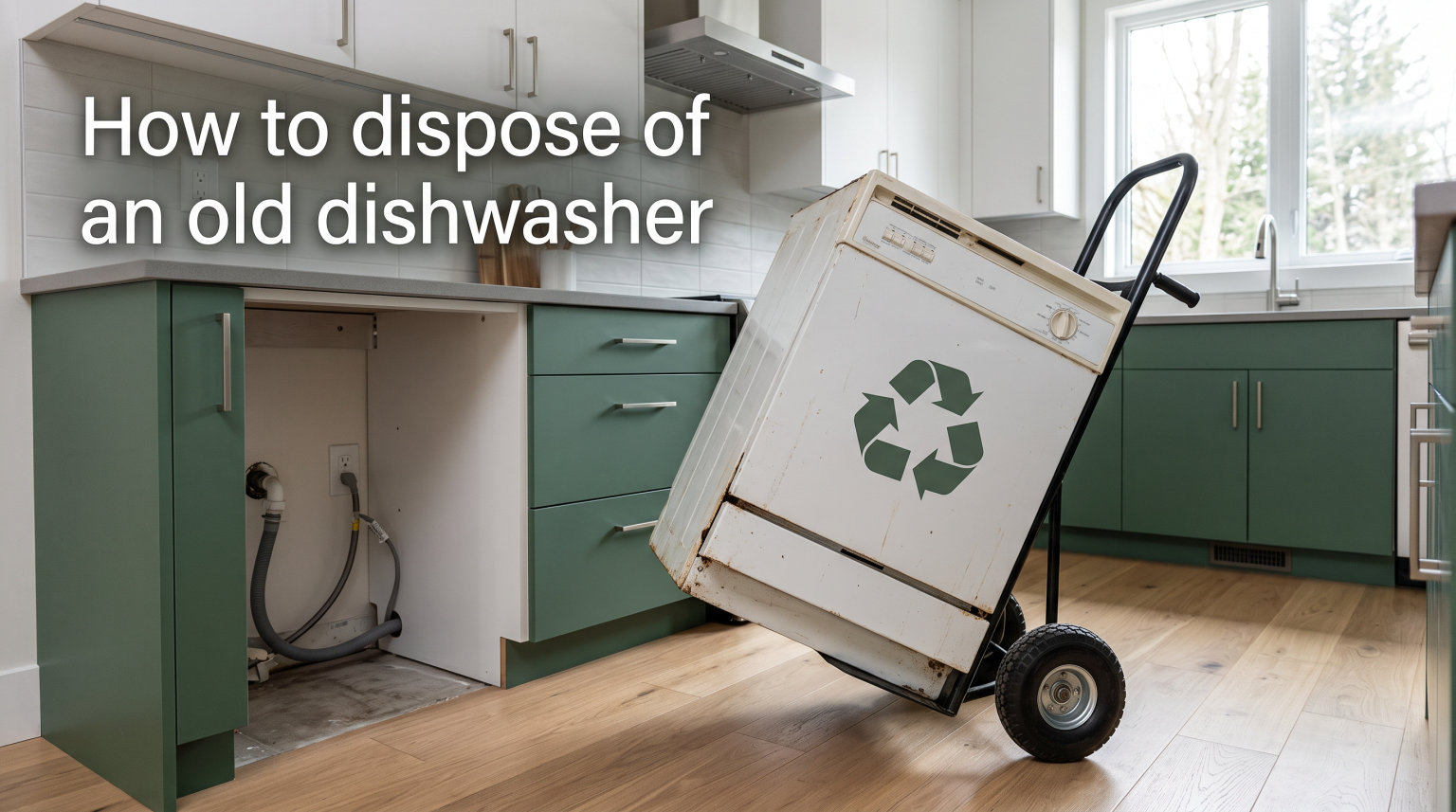
Replacing an old dishwasher is exciting, but figuring out how to dispose of the old one is where most homeowners get stuck. The appliance weighs 50 to 100 pounds, contains electrical and plumbing connections, and cannot simply go out with the regular trash. I have helped dozens of friends and family members deal with this exact problem, and I have seen what works and what causes headaches.
The good news is that there are five reliable ways to dispose of an old dishwasher, and several of them are completely free. Whether your unit still works, is broken beyond repair, or sits somewhere in between, this guide will walk you through every option. You will learn the safe way to disconnect the appliance, where to take it, and how to avoid common mistakes like damaging your floors or getting fined by your waste hauler.
I tested these methods across three home renovations and compiled feedback from real users on Reddit and home improvement forums. By the end of this article, you will have a clear plan tailored to your situation, your budget, and your timeline.
Disposing of a dishwasher the right way also protects the environment. According to the Environmental Protection Agency, large appliances account for a significant share of steel, copper, and aluminum waste that ends up in landfills each year. Taking 30 minutes to choose the right disposal method keeps hundreds of pounds of metal out of the ground and puts valuable materials back into the manufacturing supply chain. This guide shows you exactly how to do that.
Table of Contents
How to Dispose of an Old Dishwasher: 5 Proven Methods
There are five practical ways to dispose of an old dishwasher: hire a junk removal service, drop it at a recycling center, use a retailer’s haul-away program, donate it, or sell it for scrap metal. Each method fits a different situation depending on the appliance’s condition, your budget, and how quickly you need it gone.
If the dishwasher still runs, donating or selling it usually makes the most sense. If it is broken, recycling or scrap pickup becomes your best bet. Professional removal is the easiest but costs the most, while recycling and curbside scrap pickup are typically free.
Below is a quick comparison to help you decide before diving into the full guide.
- Professional removal: $60 to $150, same-day service, no heavy lifting required
- Recycling center: Usually free, requires you to transport the unit yourself
- Retailer haul-away: Often free with new purchase, scheduled in advance
- Donation: Free if unit still works, pickup sometimes available
- Scrap metal pickup: Free plus possible payment, leave at curb
Step 1: Assess Your Dishwasher’s Condition
Before choosing a disposal method, you need to honestly evaluate whether the dishwasher still works. A functioning unit has resale or donation value, while a broken one should head straight to recycling or scrap. I have seen people scrap perfectly good dishwashers simply because they did not know their options.
Run a quick test cycle with a normal load. Listen for unusual grinding or humming. Check whether the water heats properly and the dishes come out clean. If the unit completes a cycle without leaks, error codes, or incomplete drying, it likely still has years of life left.
Age also matters. Dishwashers typically last 10 to 15 years. If yours is under 10 years old and the issue is a minor repair like a worn door seal or clogged spray arm, fixing it might be smarter than disposing. A replacement part often costs $20 to $50, far less than new appliance installation.
Working Dishwasher Checklist
- Completes a full cycle without stopping
- No visible leaks under the unit
- Heating element functions (dishes are hot after cycle)
- No persistent error codes on the display
- Interior racks and components are intact
- Control panel buttons respond normally
- Door latches securely without sagging
If your dishwasher passes these checks, prioritize donation or sale over recycling. Charities and buyers want working units only.
Step 2: Prepare Your Dishwasher for Safe Removal
Before you can move the dishwasher, you must disconnect it from power, water, and the drain line. This step takes 15 to 30 minutes and prevents electrical shock, water damage, and costly plumbing mistakes. I always recommend photographing each connection before disconnecting so you have a reference if you ever install a replacement.
Disconnect the Power Supply
The first rule with any appliance disconnection is to cut the power. Locate your home’s circuit breaker panel and switch off the breaker labeled for the dishwasher. Some units are hardwired into a junction box behind the machine, while others plug into a standard outlet under the sink.
If your dishwasher plugs into an outlet, simply unplug it once the breaker is off. If it is hardwired, you will need to remove the junction box cover, disconnect the wire nuts, and separate the wires. Wrap the disconnected ends with electrical tape for safety. Never work on wiring without confirming the breaker is off using a non-contact voltage tester.
Shut Off the Water Supply Valve
Most dishwashers connect to a hot water supply line under the kitchen sink. Look for a small valve on the pipe running to the dishwasher, usually a saddle valve or a dedicated shut-off. Turn the handle clockwise until it stops to cut water flow.
Once the valve is closed, run the dishwasher briefly to release pressure in the line. Expect a small amount of water to drain out when you disconnect the supply hose. Keep a towel and a small bucket ready.
Disconnect the Drain Line
The drain hose typically connects to the sink drain or garbage disposal. Loosen the hose clamp with a screwdriver or pliers, then gently pull the hose free. Some water will spill out, so position your bucket beneath the connection point first.
Inspect the drain hose for clogs or kinks before disposal. A clogged hose is normal and does not affect the value of a working dishwasher, but it is a good idea to clear it if you plan to donate or sell the unit.
Detach Mounting Brackets and Slide Out
Dishwashers are usually anchored to the underside of the countertop with two metal brackets. Open the dishwasher door and look for screws at the top edge where the unit meets the counter. Remove these screws with a screwdriver or drill.
With the brackets removed, the dishwasher should slide forward a few inches. Protect your flooring by placing old towels or a piece of plywood in front of the unit. Pull the appliance out carefully, keeping it upright if possible. Tilting too far can dislodge residual water and damage internal components.
Common Mistakes to Avoid
Skipping the breaker is the single biggest mistake homeowners make. Even if you think the dishwasher is unplugged, residual current can shock you when handling wires. Always verify with a tester.
Forgetting to drain residual water leads to puddles on the floor and ruined subflooring. Tilt the unit slightly over a bucket before sliding it out to remove any remaining water in the sump.
Dragging the dishwasher without protecting the floor scratches hardwood and tears vinyl. A folded moving blanket or old towels under the front feet prevents costly damage that costs more than the disposal itself.
Method 1: Hire a Professional Removal Service
Professional junk removal is the easiest way to dispose of an old dishwasher, especially if you cannot move it yourself. Companies like 1-800-GOT-JUNK, LoadUp, and local haulers will send a two-person team to your home, disconnect the unit if needed, and haul it away the same day. Pricing typically runs $60 to $150 depending on your location and how many other items you add.
The main advantage is convenience. You do not lift anything, do not need a truck, and do not have to find a recycling center. Most reputable services sort the appliance for recycling and donate usable parts where possible.
The downside is cost. If budget is your primary concern, skip ahead to the free options below. Professional removal makes the most sense when you are disposing of multiple bulky items during a renovation or moving day.
When choosing a service, look for companies that publish their recycling rate. The best junk haulers divert 60 percent or more of collected materials from landfills. They should also carry insurance in case of accidental property damage during removal.
Method 2: Take It to a Local Recycling Center
Most municipal recycling centers accept old appliances including dishwashers. The metal, plastic, and electronic components are sorted and processed rather than ending up in a landfill. This option is usually free and supports your local circular economy.
Search for “appliance recycling near me” or visit Earth911.com, which maintains a database of recycling drop-off locations across the United States. Enter your zip code and the material category, and the site returns a list of nearby centers with hours and contact information. Many scrap metal recyclers also accept dishwashers, sometimes paying you a few dollars for the metal content.
Before you load the dishwasher into a truck, call the facility to confirm they accept the unit and ask about any preparation requirements. Some centers want you to remove doors or drain residual water in advance. A quick call saves you a wasted trip.
Some recycling centers also host periodic appliance collection events. These events make disposal especially easy because volunteers unload your vehicle and handle the heavy lifting. Check your city or county website for upcoming events in your area.
Method 3: Use a Retailer Haul-Away Program
Major appliance retailers often remove your old dishwasher for free when you purchase a new one from them. Best Buy, Home Depot, Lowe’s, and local appliance stores commonly offer this service. The haul-away is scheduled at the same time as your new unit delivery, so the timing is automatic.
This method is ideal if you are already replacing the dishwasher. You skip the trip to the recycling center, the store handles the disposal, and the installer usually disconnects both the old and new units for you. Ask the retailer at checkout whether haul-away is included or requires a small fee, typically $20 to $40.
Even if you are not replacing the unit, some retailers sell haul-away as a standalone service. Check your local store’s website or call to confirm availability in your area.
When scheduling delivery, confirm that haul-away applies to your specific appliance type. Some programs exclude built-in dishwashers or limit customers to one removed unit per delivery. Reading the fine print avoids surprises on installation day.
Method 4: Donate Your Working Dishwasher
If your dishwasher still works, donating it is the most environmentally friendly option. Charities like Habitat for Humanity ReStores, Goodwill, and the Salvation Army accept working appliances and either resell them at low prices or install them in homes that need them. Donations are usually tax-deductible, so save your receipt.
Habitat for Humanity ReStores are particularly popular because they often offer free pickup for large appliances. Visit habitat.org and enter your zip code to find your nearest ReStore. Schedule a pickup, and a volunteer team will come to your home to collect the dishwasher at no charge.
Make sure the unit is clean and functional before donation. Charities cannot accept appliances that leak, fail mid-cycle, or show significant rust. Remove any personal items and wipe down the exterior. A quick test cycle before pickup confirms everything works.
Other donation options include local women’s shelters, refugee resettlement agencies, and community kitchens. These organizations often need reliable appliances and appreciate donations directly. A quick search of “appliance donation near me” plus your city name usually surfaces several local options.
Method 5: Sell It for Scrap Metal
Even broken dishwashers have value as scrap metal. A typical unit contains 50 to 80 pounds of steel, plus smaller amounts of copper from the wiring and motor. Scrap yards typically pay $0.05 to $0.10 per pound for steel, meaning you might earn $3 to $8 for the metal alone. Copper components can add a few more dollars.
Curbside scrap pickup is a particularly clever option. Metal recyclers regularly drive through neighborhoods looking for large appliances left at the curb. In my experience and based on countless Reddit reports, a dishwasher placed at the curb with a “FREE” sign disappears within 24 hours. This requires zero effort on your part and earns you a clean driveway.
If you want guaranteed payment, drop the unit at a local scrap yard yourself. Bring a form of ID, and the yard will weigh the appliance and pay you in cash or check. Some yards even offer pickup for large quantities of metal, though this is usually reserved for businesses.
Always call ahead before visiting a scrap yard. Prices fluctuate daily based on metal markets, and policies on appliances vary. Some yards only accept appliances during certain hours or require you to remove specific components before weighing.
Disposal Methods Compared: Cost, Time, and Effort
Choosing the right disposal method depends on how much time you have, how much effort you want to spend, and whether you are willing to pay. The table below summarizes each option to help you decide quickly.
- Professional removal: $60 to $150 cost, same-day time, zero effort from you
- Recycling center: Free, 1 to 3 days scheduling, moderate effort (you transport it)
- Retailer haul-away: Free to $40, scheduled with new delivery, zero effort
- Donation pickup: Free, 3 to 14 days scheduling, low effort (volunteers lift)
- Curbside scrap pickup: Free plus possible payment, 24 to 48 hours, minimal effort
- Scrap yard drop-off: Free plus payment, same day, high effort (you transport it)
For most homeowners reading this guide, my recommendation is to first check if the dishwasher still works. If it does, donate it or sell it. If it does not, leave it at the curb for scrap pickup or drop it at a recycling center. Reserve professional removal for situations involving multiple appliances or physical limitations that prevent you from moving the unit yourself.
If speed matters most and money is not an issue, professional removal is unmatched. Same-day service means the dishwasher is gone within hours. If saving money is the priority, recycling centers and scrap metal options are nearly always free. Donations take longer to schedule but deliver the strongest environmental and community impact.
Environmental Benefits of Responsible Dishwasher Disposal
Proper dishwasher disposal matters because these appliances contain materials that should never reach a landfill. The steel shell, copper wiring, and aluminum components are all recyclable and can be melted down for reuse. Recycling one dishwasher recovers enough steel to manufacture several new products, conserving raw ore and reducing mining impact.
Older dishwashers may also contain small amounts of mercury in control switches or other components regulated under environmental law. Dumping these in regular trash can leak contaminants into soil and groundwater. Recycling centers and professional removal services are equipped to handle these materials safely.
Beyond materials, recycling reduces greenhouse gas emissions associated with manufacturing new metal from raw ore. The Environmental Protection Agency estimates that recycling steel saves 60 percent of the energy needed to produce it from virgin materials. Choosing recycling over landfill disposal is one small but meaningful way to reduce your household’s environmental footprint.
Donating a working dishwasher has an even greater environmental impact because it avoids manufacturing a replacement unit entirely. Manufacturing a new dishwasher generates roughly 200 to 300 pounds of carbon dioxide emissions. By extending the life of an existing appliance through donation, you eliminate that entire manufacturing footprint and help a family in need at the same time.
Frequently Asked Questions
How do I get rid of my dishwasher?
The five most common ways to get rid of a dishwasher are hiring a professional removal service, dropping it at a local recycling center, scheduling a retailer haul-away with your new purchase, donating it to a charity like Habitat for Humanity, or leaving it at the curb for scrap metal pickup. Your best option depends on whether the unit still works, your budget, and how quickly you need it gone. Working dishwashers are best donated or sold, while broken units should go to recycling or scrap. Most municipalities also offer bulky item pickup several times per year, though scheduling usually requires advance notice.
How to get rid of a dishwasher for free?
You can get rid of a dishwasher for free through several methods: donation pickup from Habitat for Humanity ReStores, curbside scrap metal collection (leave it at the curb with a FREE sign), retailer haul-away programs when buying a replacement, and many municipal recycling centers that accept appliances at no charge. Each option requires different levels of effort but none of them cost money. Free disposal typically requires you to disconnect and transport the unit yourself, while paid services handle all the heavy lifting for $60 to $150.
Can you throw away an old dishwasher in a dumpster?
Most regular dumpsters cannot accept large appliances because they exceed size restrictions and can damage the dumpster. Waste management companies also typically refuse dishwashers during bulk pickup unless you schedule a specific appliance collection. Instead, use a recycling center, scrap yard, or appliance-specific removal service. If you rent a construction dumpster for a renovation, confirm with the rental company that appliances are allowed before placing the dishwasher inside. Some municipalities also prohibit appliances in regular trash and may issue fines for improper disposal.
Are dishwashers worth anything in scrap?
Yes, dishwashers contain 50 to 80 pounds of steel plus smaller amounts of copper and aluminum, which scrap yards purchase by weight. Expect to earn $3 to $10 for a typical unit, with higher payouts if you separate the copper motor windings. Many scrap recyclers also pick up appliances left at the curb for free, so leaving your old dishwasher outside with a FREE sign is the easiest way to recover a small amount of its value. Scrap prices fluctuate based on metal markets, so check current rates with your local yard before visiting.
Final Thoughts on Dishwasher Disposal
Knowing how to dispose of an old dishwasher turns a stressful task into a straightforward project. Start by assessing whether the unit still works. Working dishwashers should be donated or sold, while broken ones are best recycled or scrapped. Always disconnect power, water, and the drain line before moving the appliance, and protect your floors during the slide-out process.
For most homeowners in 2026, the easiest free option is leaving the dishwasher at the curb for scrap pickup. If you prefer someone else to handle it, retailer haul-away during a replacement purchase is convenient and often free. Either way, you now have a complete plan to dispose of your old dishwasher responsibly.