
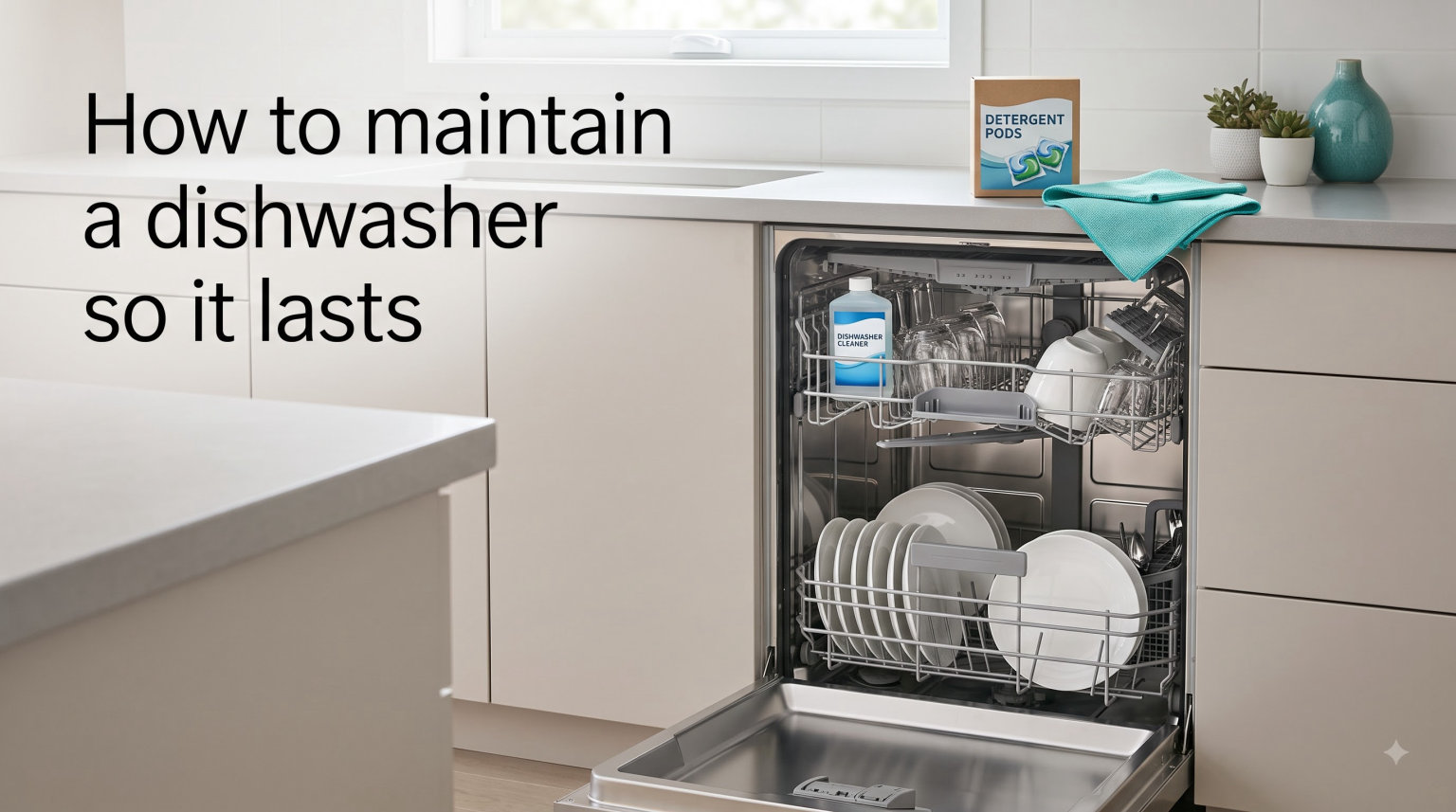
A typical dishwasher lasts 9 to 12 years, yet most homeowners replace theirs in 6 to 8 years simply because they skip basic upkeep. I have spent years testing, cleaning, and talking with appliance technicians about what actually keeps these machines running, and the truth is surprisingly simple. A few small habits, done consistently, can add 4 or more years to the life of your unit and keep your dishes spotless the entire time.
If you want to learn how to maintain a dishwasher so it lasts, this guide walks through every task you need, from filter cleaning to descaling, plus the common mistakes that quietly destroy these appliances. I built this around the questions real homeowners ask in forums, the advice appliance technicians trust, and the routine I personally follow at home.
You will find clear daily, weekly, and monthly schedules here, along with signs that your machine already needs attention. Whether you just installed a new unit or you are trying to rescue an older one, the steps below will help you protect your investment and avoid an unnecessary replacement bill.
Table of Contents
How a Dishwasher Actually Works?
Understanding what happens inside your dishwasher makes every maintenance task make sense. The machine does not fill up like a bathtub. Instead, it uses a small amount of water that a circulation pump pushes through rotating spray arms at high pressure, blasting food off your dishes.
That water is heated by an internal heating element, usually to between 120 and 155 degrees Fahrenheit, which melts grease and activates your detergent. After the wash cycle, the dirty water drains through a hose, and fresh water rinses the dishes. A final heated drying cycle evaporates the remaining moisture.
At the bottom of the tub, a filter catches the food particles so they do not get sprayed back onto your plates. This filter is the single most important part to clean, because when it clogs, the entire cleaning chain breaks down. Food recirculates, spray arms lose pressure, and odors build up fast.
The door seal, or gasket, keeps water inside the tub during every cycle. If grime collects on it, the seal cracks and leaks. The spray arms have tiny nozzles that can plug with mineral deposits or food bits, which is why they need regular checking too.
When you understand that each component depends on the others, maintenance stops feeling like a chore and starts feeling like protecting a system. Clean any one part and the whole machine runs better.
How Long Do Dishwashers Last?
Most dishwashers last between 9 and 12 years with regular use, according to appliance industry data and technician estimates I have reviewed. That range assumes you run the machine several times a week and perform basic upkeep like filter cleaning.
Without maintenance, that same machine might only make it 6 to 8 years. I have seen plenty of forum posts from homeowners whose dishwashers started performing poorly after just one year, almost always because the filter was never cleaned or the wrong detergent was used.
Higher-end models from brands known for longevity can reach 12 to 15 years when cared for properly. Budget models tend to land closer to the 7 to 9 year mark, though good habits still push them past their expected lifespan.
Hard water is the biggest outside factor that shortens a dishwasher’s life. Mineral buildup coats the heating element, clogs spray arm nozzles, and leaves cloudy film on glassware. If you live in a hard water area, descaling becomes essential rather than optional.
The good news is that the steps in this guide apply to every brand and model. Whether you own a Bosch, a Whirlpool, a KitchenAid, or a budget unit, the maintenance principles are identical because the internal components work the same way.
How to Maintain a Dishwasher So It Lasts
Learning how to maintain a dishwasher so it lasts comes down to five core tasks, each targeting a specific part of the machine. Follow these in order and your dishwasher will clean better, smell fresh, and run for years longer than average.
Clean the Filter Regularly
The filter sits at the bottom of the tub, usually under the lower spray arm, and it traps food particles before they recirculate onto your dishes. Most manufacturers recommend cleaning it once a week if you run the dishwasher daily, or at minimum once a month.
To clean it, twist the filter counterclockwise and lift it straight out. You will usually find two pieces, a fine mesh cylinder and a coarser outer screen. Separate them and rinse both under warm running water.
Use a soft brush, like an old toothbrush, to scrub away greasy film and stuck food from the mesh. Avoid stiff bristles that could tear the fine screen. Check the base of the tub where the filter sits and wipe away any sludge that collected underneath.
Reassemble the filter, drop it back into place, and twist clockwise until it locks. A clean filter restores water flow immediately, which is why this single task fixes most cleaning complaints.
If you have never cleaned your filter, do not be alarmed by what you find. It is normal to see a buildup of grease and food, and removing it will make a dramatic difference in how your machine performs.
Wipe Down the Door Seal
The rubber gasket that runs around the edge of the dishwasher door keeps water inside during every wash cycle. Over time, food residue, soap scum, and grease collect in its folds, which can cause the rubber to crack and the door to leak.
Wipe the seal every two weeks using a damp microfiber cloth and a small amount of mild dish soap. Pay close attention to the bottom of the gasket where debris settles, since gravity pulls everything downward.
Run your finger along the folds to feel for trapped food particles. For stubborn grime, use a soft toothbrush dipped in soapy water, then wipe the entire seal dry with a clean cloth.
Do not use bleach or abrasive scrubbers on the gasket. Both can degrade the rubber and lead to premature cracking, which turns a cheap cleaning task into an expensive repair.
While you are at the door, wipe the inside of the door panel and the area where the detergent dispenser sits. Detergent residue builds up there and can eventually block the dispenser from opening properly mid-cycle.
Clear the Spray Arms
The spray arms are the long plastic bars with small nozzles that spin and blast water across your dishes. When those nozzles clog with food or mineral deposits, water pressure drops and dishes come out dirty.
Most spray arms snap off easily. Pull the lower arm straight up to release it, and twist or unclip the upper arm depending on your model. Hold each arm under running water and use a toothpick to clear debris from every nozzle.
Look closely at the nozzles for white or gray crust, which signals hard water buildup. Soak a clogged arm in warm vinegar for 20 minutes to dissolve the minerals, then rinse and reattach it.
Spin each arm by hand after reattaching it to make sure nothing blocks the rotation. A spray arm that cannot spin freely will leave entire sections of your load unwashed.
Check the spray arms every month, or sooner if you notice dishes in certain rack positions coming out dirty. That pattern is the clearest sign of a blocked nozzle.
Descale for Hard Water
Hard water leaves calcium and magnesium deposits inside your dishwasher that coat the heating element, clog nozzles, and leave a cloudy film on glasses. If you see white residue on the tub walls or spots on your dishes, it is time to descale.
Descale your dishwasher every three to six months if you live in a hard water area. Homes with water softeners can stretch this to once a year. The process dissolves mineral buildup that no amount of soap can remove.
Use a dedicated dishwasher cleaner that contains citric acid or limescale remover, which is formulated to be safe on internal parts. Place the tablet or liquid in the detergent dispenser and run the hottest cycle with an empty machine.
You can also use white vinegar as a gentler alternative. Pour two cups of vinegar into a bowl placed on the bottom rack and run a hot cycle. Never put vinegar in the dispenser itself, since acid can damage rubber seals over time in concentrated doses.
After descaling, the tub will look noticeably cleaner and your next few wash cycles will perform better. Make this a regular habit if you live in a hard water region, since mineral buildup is the leading cause of premature dishwasher failure in those areas.
Run a Monthly Deep Clean
Even with regular filter cleaning and seal wiping, grease and soap scum slowly coat the interior walls, heating element, and hidden crevices of your dishwasher. A monthly deep clean removes that buildup before it affects performance.
Start by removing both racks and the bottom spray arm so you can access the entire tub. Wipe the interior walls and the base with a damp cloth and mild dish soap, focusing on corners where grime collects.
Next, run an empty hot cycle with a dishwasher cleaning tablet in the dispenser. These tablets are designed to break down grease, limescale, and odors in one pass. If you prefer a DIY approach, sprinkle a cup of baking soda across the bottom of the tub and run a short hot cycle.
For stubborn smells, follow the baking soda cycle with a vinegar cycle the next day. The combination cuts through grease and neutralizes odors better than either ingredient alone.
Leave the door slightly open after every deep clean so the interior can air dry completely. Trapped moisture is the number one cause of musty dishwasher odors, and a few inches of airflow prevents mold from taking hold in the seals and filter housing.
Daily, Weekly, and Monthly Maintenance Schedule
The most common reason maintenance slips is that people do not have a simple routine. Here is the schedule I follow at home, broken down by frequency so nothing gets forgotten.
Daily tasks take seconds. Scrape food off plates into the trash before loading, leave the door cracked open after a cycle so moisture escapes, and run the dishwasher only when it is full to avoid wasting water and wearing out components early.
Weekly tasks take about five minutes. Remove and rinse the filter under warm water, wipe down the door seal with a damp cloth, and check the bottom of the tub for stray food particles that slipped past the filter.
Monthly tasks take about twenty minutes and are your deep clean. Remove the spray arms and clear the nozzles, wipe the interior walls, and run an empty cycle with a dishwasher cleaning tablet or baking soda and vinegar.
Every three to six months, descale the machine if you have hard water. Once a year, inspect the drain hose connection and the water supply line for cracks or leaks, since a slow leak behind the machine causes hidden water damage.
I keep a small card taped inside the cabinet above my dishwasher with this schedule. It sounds simple, but a visible reminder is the difference between maintaining your machine and forgetting about it until something breaks.
Common Dishwasher Mistakes That Shorten Its Life
Most premature dishwasher failures come from habits that seem harmless but cause real damage over time. Here are the mistakes I see most often in forums and hear about from appliance technicians.
Pre-rinsing dishes is the biggest one. Modern dishwasher detergents contain enzymes that need food residue to activate, so scraping plates clean actually makes the detergent less effective and can leave a film. Scrape off solid food, but leave the grease and residue for the machine to handle.
Overloading the racks blocks the spray arms from reaching every dish. When plates are packed too tightly, water cannot circulate and food stays trapped. Load with space between items so water reaches every surface.
Using the wrong detergent causes problems too. Hand dish soap creates too many suds and can flood the machine, while bargain detergents often leave residue that builds up over time. Use only detergent specifically formulated for automatic dishwashers, and store it in a dry place since moisture degrades it.
Many homeowners reach for bleach when their dishwasher smells, but bleach damages stainless steel interiors and degrades rubber seals. If you have a stainless steel tub, never use bleach. For plastic tubs, use it sparingly and only for severe mold issues.
Ignoring the filter is the most universal mistake. Forum users frequently admit they clean the filter only every now and then, which is exactly why their machines stop cleaning well after a few months. A clogged filter forces the pump to work harder and shortens the life of the motor.
Blocking the spray arm with a tall item or an overturned bowl is another silent killer. When the arm cannot rotate, water pressure builds unevenly and strains the circulation pump. Spin the arms by hand before closing the door to catch this quickly.
Signs Your Dishwasher Needs Maintenance
Your dishwasher tells you when it needs attention, but the warning signs are easy to miss if you do not know what to look for. Watch for these indicators before they turn into costly repairs.
A bad smell coming from the dishwasher almost always means the filter needs cleaning or food is trapped somewhere in the tub. If cleaning the filter does not solve it, check under the lower spray arm and the drain area for hidden debris.
Cloudy spots on glasses signal hard water buildup, which means it is time to descale. The film will not rinse off because it is mineral scale baked onto the surface during the heated dry cycle.
Food particles left on dishes after a full cycle point to a clogged spray arm or an overstuffed filter. Clean both before assuming the detergent is to blame.
Standing water at the bottom of the tub after a cycle indicates a partial drain blockage, often caused by food collecting in the drain hose or filter housing. Address this immediately, since standing water leads to odors and mold growth.
Unusual noises during the cycle, like grinding or humming, can mean a hard object is stuck in the spray arm or the circulation pump is straining. A loud machine that used to run quietly deserves a closer look before the next load.
Dishes that used to come out perfectly but now arrive only partially clean usually mean the spray arms are blocked or the filter is overdue for a rinse. These two fixes solve the majority of cleaning complaints.
Loading and Detergent Best Practices
How you load and what you put in your dishwasher matters as much as any cleaning routine. The right habits protect the spray arms, improve cleaning, and reduce wear on every internal component.
Face dirty surfaces toward the center of the machine where the spray arms deliver the most pressure. Plates go on the bottom rack angled downward, while bowls and cups belong on the top rack angled to catch water without trapping it.
Keep tall items away from the spray arms. A large cutting board or baking sheet placed in the wrong spot can block the arm from spinning, which leaves half the load unwashed and strains the pump motor.
Load plastics only on the top rack. The heating element at the bottom gets hot enough to warp or melt plastic containers, which is a common and expensive mistake.
Choose a quality automatic dishwasher detergent, whether pods, liquid, or powder. Pods offer convenience and pre-measured doses, while powders let you adjust the amount for heavily soiled loads. Store all detergent in a cool, dry place.
Use rinse aid in every cycle. Rinse aid helps water sheet off dishes instead of forming droplets, which prevents spots and speeds up drying. Most machines have a refillable dispenser that needs topping off every few weeks.
If you live in a hard water area, consider adding dishwasher salt to a water softener compartment if your machine has one. The salt exchanges calcium ions for sodium, which prevents scale from forming in the first place and extends the life of your heating element significantly.
FAQ
How many years do dishwashers usually last?
Most dishwashers last 9 to 12 years with regular use and basic maintenance. Without upkeep like filter cleaning and descaling, that drops to 6 to 8 years. Higher-end models can reach 12 to 15 years when cared for properly, especially in homes with soft water.
How can I make my dishwasher last longer?
Clean the filter weekly, wipe the door seal every two weeks, clear the spray arms monthly, descale every three to six months for hard water, and run a monthly deep clean with a cleaning tablet or baking soda and vinegar. Avoid pre-rinsing, overloading, and using the wrong detergent.
What’s the best thing to run through your dishwasher to clean it?
Run an empty hot cycle with a dedicated dishwasher cleaning tablet placed in the dispenser. For a DIY option, place a bowl of two cups of white vinegar on the bottom rack and run a hot cycle, or sprinkle a cup of baking soda across the tub floor and run a short cycle. Never put vinegar directly in the detergent dispenser.
What is proper maintenance for a dishwasher?
Proper dishwasher maintenance includes scraping plates without pre-rinsing, cleaning the filter weekly, wiping the door gasket every two weeks, clearing spray arm nozzles monthly, running a deep clean monthly with a cleaning tablet, descaling every three to six months in hard water areas, and leaving the door cracked open after each cycle to let the tub dry.
Keep Your Dishwasher Running for Years
Knowing how to maintain a dishwasher so it lasts comes down to consistency rather than effort. Clean the filter weekly, wipe the door seal, clear the spray arms, descale when hard water strikes, and run a monthly deep clean. These five habits protect every internal component from the damage that causes premature failure.
Avoid the mistakes that quietly shorten a machine’s life, like pre-rinsing, overloading, and reaching for bleach. Use quality detergent, add rinse aid, and leave the door cracked open so moisture escapes after every cycle.
Start with the filter if you have not cleaned it recently, since that single task fixes most cleaning and odor complaints. From there, build the routine into your week the same way I did, and your dishwasher will reward you with cleaner dishes and years of extra service.