
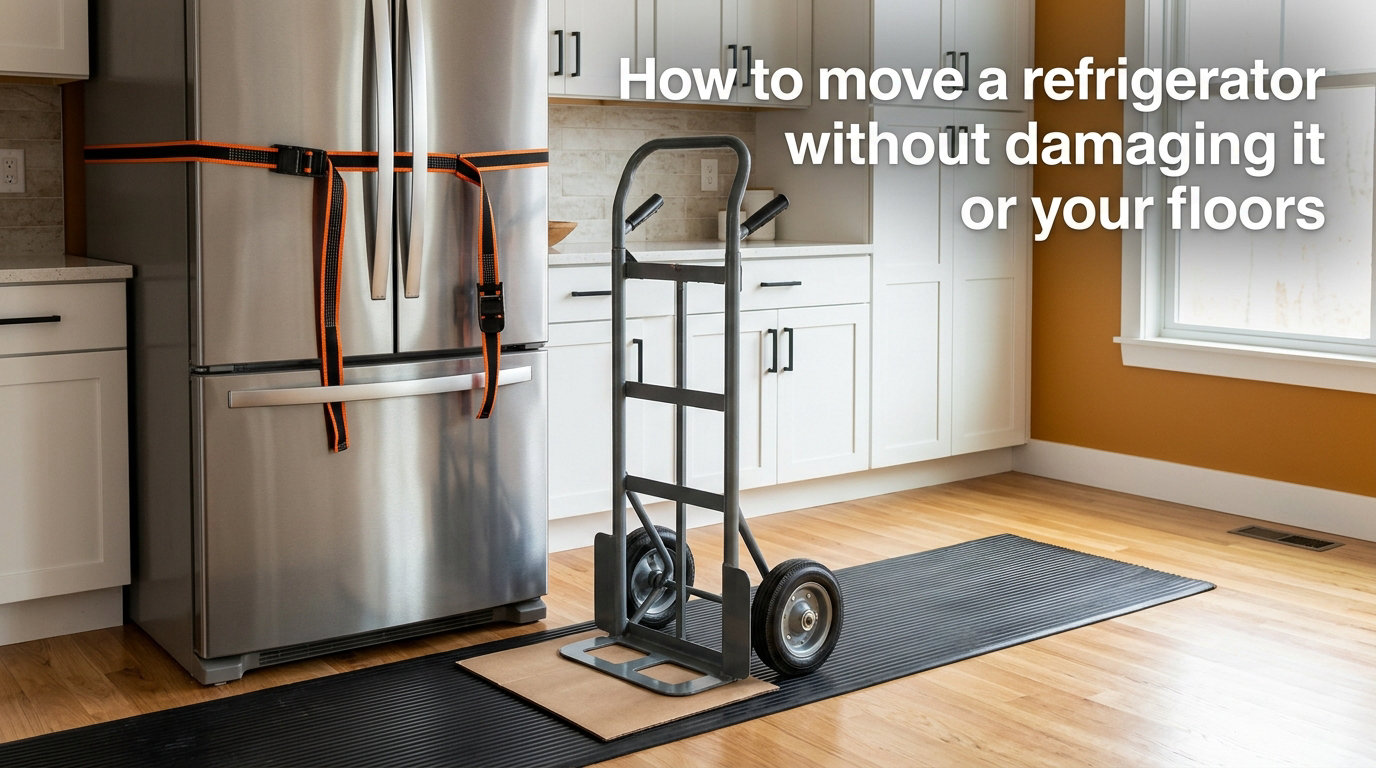
Moving a refrigerator is one of those household tasks that sounds straightforward until you are standing in front of a 300-pound appliance wondering how to get it across your kitchen without ruining anything. I have helped friends, family, and neighbors move fridges more times than I can count, and I have seen what happens when people skip the prep work and just start pulling.
The good news is that with the right tools and a clear plan, you can move a refrigerator without damaging it or your floors. Most residential refrigerators weigh between 200 and 400 pounds, so technique matters just as much as raw strength. A single bad drag across hardwood can leave a gouge that costs hundreds of dollars to refinish.
In this guide, I will walk you through exactly how to move a refrigerator without damaging it or your floors. We will cover the tools you need, a step-by-step process for each stage, floor-specific protection methods, solo moving techniques, and the common mistakes that lead to scratched floors and broken compressors.
Table of Contents
Tools and Materials You’ll Need
The tools below cover both basic moves, like pulling the fridge out to clean behind it, and full relocations to a new home. You do not need everything on this list for every situation, but having the right gear makes the job dramatically easier and safer.
Essential moving tools:
Appliance dolly or furniture dolly with a ratchet strap
Furniture sliders or felt pads (at least 4)
Moving blankets (at least 2 to 3)
Packing tape or bungee cords
Floor protection material (see options below)
Floor protection options:
1/4-inch plywood sheets (best for hardwood floors)
Builder Board or heavy-duty cardboard (good for tile and vinyl)
Carpet Shield film (for carpeted areas)
Hard surface film or Neo Shield (for finished floors)
For disconnection:
Adjustable wrench (for the water supply line)
Bucket or towel (for catching residual water)
Zip-top bags (for screws, brackets, and fittings)
The appliance dolly is the single most important item on this list. Across communities like r/Appliances and r/DIY on Reddit, users consistently confirm that an appliance hand truck with a ratchet strap is worth the rental cost even for a one-time move. You can usually rent one for around $20 to $30 from Home Depot, U-Haul, or a local hardware store.
If you are doing a short move across the same room, furniture sliders may be all you need. They cost under $15 and let you glide the fridge across a protected floor without lifting.
How to Move a Refrigerator Without Damaging It or Your Floors
Moving a refrigerator safely comes down to six clear steps. Follow them in order and you will avoid the most common problems that lead to scratched floors, damaged walls, and broken appliances.
Step 1: Measure and Plan Your Route
Before you touch the fridge, measure the appliance width and depth, your doorways, and any hallways it needs to pass through. A standard French door refrigerator is about 35 to 36 inches wide, while most interior door frames are 30 to 32 inches wide. If the fridge will not fit through a doorway with the doors attached, you may need to remove the doors first.
Walk your planned route and check for tight corners, stairs, low ceilings, and uneven transitions between rooms. Clear all obstacles, loose rugs, pet bowls, and small furniture out of the path.
Step 2: Empty the Refrigerator Completely
Remove all food, shelves, drawers, and removable components from the fridge and freezer. A fully stocked refrigerator can weigh 80 to 100 pounds more than an empty one, which makes a huge difference when you are maneuvering through doorways.
Store perishable items in a cooler with ice packs. Take out glass shelves and wrap them individually in moving blankets or towels. Loose shelves sliding around inside the fridge during transport are one of the most common sources of damage.
Step 3: Disconnect Power and Water
Unplug the refrigerator from the wall outlet. If your fridge has a water dispenser or ice maker, locate and shut off the water supply valve, then disconnect the water line using an adjustable wrench.
Place a bucket and towel under the water connection to catch any residual water that drains out. Keep the fittings, washers, and any brackets in a zip-top bag and tape it to the back of the fridge so nothing gets lost.
Let the freezer defrost for at least an hour if there is significant ice buildup. Melting ice during transport creates a mess and can damage flooring.
Step 4: Protect Your Floors Before Moving
This is the step where most floor damage happens. Lay down your floor protection material along the entire path before you start moving the refrigerator. For hardwood floors, use 1/4-inch plywood panels or hardboard sheets. For tile and vinyl, heavy cardboard or Builder Board distributes weight effectively.
If you are only pulling the fridge out a few feet to clean behind it, place furniture sliders under each corner. This is the fastest method and protects the floor without requiring sheets of plywood.
Step 5: Secure the Doors and Wrap the Fridge
Tie the refrigerator doors shut using bungee cords or packing tape so they cannot swing open during the move. Wrap the corners and edges in moving blankets and secure them with tape or straps.
If you are transporting the fridge in a truck or van, wrap the entire unit in moving blankets. The vibration and shifting during transport can dent the exterior if it is left unprotected.
Step 6: Move the Refrigerator Using a Dolly
Slide the appliance dolly under the side of the refrigerator, never the front or back. The dolly should sit flush against one side with the lip under the base. Tighten the ratchet strap around the middle of the fridge to hold it firmly in place.
Tilt the dolly back slightly, no more than 45 degrees from vertical, and wheel the refrigerator along your protected path. Keep the fridge upright at all times. If you encounter a threshold or small step, use a ramp or have a second person lift while you guide.
Never drag the refrigerator across the floor by pulling on the doors or handles. This damages both the hinges and the floor beneath.
Floor Protection Methods for Every Floor Type
Different floor types need different protection strategies. Using the wrong method for your surface is how people end up with permanent damage. Here is what works best for each common flooring material.
Hardwood Floors
Hardwood is the most vulnerable surface when moving a refrigerator. The combination of heavy weight and small contact points on the fridge feet can gouge and scratch even finished wood in seconds.
Use 1/4-inch plywood panels along the entire path from start to finish. This method comes straight from real homeowner experience shared on Reddit, where users in r/HomeImprovement recommend sliding the fridge directly onto plywood panels placed in front of the appliance.
For extra protection, place felt furniture pads under the fridge feet before moving. These pads are cheap, available at any hardware store, and prevent metal feet from contacting the wood surface.
Tile Floors
Tile is more durable than hardwood but still vulnerable to cracks if the fridge drops suddenly or slides unevenly. Grout lines can chip under concentrated weight, and glazed tile can scratch if grit gets trapped underneath.
Use heavy cardboard, Builder Board, or hardboard sheets to distribute weight across a wider area. Avoid sliding the fridge directly on tile, because grit and debris caught under the feet can act like sandpaper against the glaze.
Vinyl and Linoleum Floors
Vinyl is softer than tile and can tear, dent, or develop permanent impressions under heavy appliances. This is the surface most likely to suffer permanent, visible damage from a refrigerator move.
Use hardboard or plywood for the full path. Furniture sliders work well for short moves, but be aware that leaving heavy sliders in one spot on softer vinyl can create indentations over time. Move the fridge to its final position and remove the sliders promptly.
Carpet
Carpet is surprisingly forgiving compared to hard surfaces, but the fridge can catch on carpet fibers or leave permanent indentations in the padding underneath.
Use Carpet Shield film or a sheet of hardboard over the carpet to create a smooth surface. For plush carpets, lay down plywood panels so the dolly wheels do not sink into the pile and create resistance.
How to Move a Refrigerator By Yourself
Sometimes you do not have a second person available to help. Moving a fridge solo is absolutely possible, but you need the right tools and a careful approach. Never attempt to dead-lift a refrigerator by yourself.
The easiest solo method is using furniture sliders. Tilt the fridge slightly forward and slide a slider under each rear foot, then repeat the process for the front feet. Once all four corners are resting on sliders, you can push or pull the refrigerator across a protected floor with relatively little effort.
Appliance rollers are another excellent option for one-person moves. These are low-profile wheeled platforms that you slide under each side of the fridge. They lift the appliance about 2 inches off the ground, making it easy to roll into position without any lifting.
If you are moving the fridge to clean behind it, tilt it forward just enough to slide a piece of cardboard or hardboard underneath the back feet. Then pull the fridge forward onto the protective surface. This takes the job from intimidating to manageable.
Can You Lay a Refrigerator on Its Side?
You should avoid laying a refrigerator on its side whenever possible. The safest way to transport any fridge is in its fully upright position. However, sometimes you have no choice due to vehicle height constraints.
When a refrigerator is tilted or laid flat, the compressor oil inside can flow into the cooling lines. If you plug the fridge back in before that oil settles back into the compressor, you risk permanently damaging the compressor and ruining the appliance.
If you absolutely must lay the fridge down, follow these rules. Keep the compressor side facing up. For top-freezer and bottom-freezer models, lay the fridge on the side opposite the door hinges. For French door models, lay it on the right side when possible. Compact mini-fridges tolerate more tilting but should still be kept upright.
After moving a refrigerator that was tilted or laid flat, wait at least 24 hours before plugging it in. This gives the compressor oil time to drain back to its proper position. This 24-hour recovery window is widely confirmed by appliance technicians and Reddit users who have shared their experiences with side-lying transport.
Common Mistakes to Avoid When Moving a Refrigerator
Most refrigerator moving disasters come from the same handful of mistakes. Here is a table comparing common errors with what you should do instead.
| Common Mistake | What to Do Instead |
|---|---|
| Skipping floor protection entirely | Always lay down plywood, cardboard, or hardboard along the full path |
| Dragging the fridge across the floor | Use sliders, rollers, or a dolly to lift or glide the appliance |
| Forgetting to disconnect the water line | Shut off the supply valve and disconnect before moving |
| Not securing the doors | Tie doors shut with bungee cords or packing tape |
| Plugging in immediately after a tilted move | Wait 24 hours for compressor oil to settle |
| Tilting more than 45 degrees | Keep the fridge as close to vertical as possible at all times |
A few additional tips worth noting. Measure your doorways before you start, not after you realize the fridge does not fit. Remove glass shelves before moving, because broken glass inside the fridge is dangerous and messy. And always have a plan for where the fridge is going before you start moving it.
How to Clean Behind Your Refrigerator
Moving a refrigerator to clean behind it is one of the most common reasons people look up this topic. Dust and debris that accumulate behind and under the fridge can reduce cooling efficiency and even create a fire hazard.
Pull the fridge out far enough to access the back, using furniture sliders or a dolly with floor protection underneath. Vacuum the condenser coils at the back or bottom of the fridge using a brush attachment. Dust buildup on these coils forces the compressor to work harder and shortens its lifespan.
Wipe down the floor and wall behind the fridge with a damp cloth. Let the area dry completely before pushing the fridge back into position. This is also the perfect time to replace the water filter and check for any leaks in the water supply line.
FAQs
How do you move a heavy fridge without scratching the floor?
To move a heavy fridge without scratching the floor, lay down 1/4-inch plywood panels or hardboard along the entire path before moving. Place furniture sliders under each corner of the fridge and use an appliance dolly with a ratchet strap for longer moves. Never drag the fridge directly across any floor surface.
How to protect floors when moving a refrigerator?
Protect your floors by covering the full moving path with plywood for hardwood, heavy cardboard or Builder Board for tile and vinyl, and Carpet Shield film for carpeted areas. Felt furniture pads under the fridge feet add an extra layer of protection during short-distance moves.
What is the safest way to move a fridge?
The safest way to move a fridge is to empty it completely, disconnect the power and water, secure the doors, load it onto an appliance dolly with a ratchet strap, and keep it upright throughout the entire move. Avoid tilting more than 45 degrees and never lay the fridge flat unless absolutely necessary.
What can I use to lift my refrigerator off the floor?
You can lift a refrigerator using furniture sliders, appliance rollers, or an appliance dolly. For a one-person move, tilt the fridge slightly and slide a furniture slider under each foot. Appliance rollers are wheeled platforms that lift the fridge about 2 inches off the ground for easy rolling. Never try to dead-lift a refrigerator by hand.
How long should you wait to plug in a refrigerator after moving it?
If the refrigerator was kept fully upright during the move, you can plug it in after about 1 hour. If the fridge was tilted or laid on its side, wait at least 24 hours before plugging it in. This gives the compressor oil time to drain back into its proper position and prevents permanent compressor damage.
Can you move a refrigerator without a dolly?
Yes, you can move a refrigerator without a dolly by using furniture sliders or a combination of plywood sheets and blankets. Place sliders under each corner and push or pull the fridge across a protected floor. For very short distances, tilting the fridge onto a moving blanket and dragging the blanket works, but always protect the floor underneath.
Conclusion
Learning how to move a refrigerator without damaging it or your floors comes down to preparation and the right tools. Empty the fridge, disconnect the power and water, protect your floors with the right material for your surface type, and use an appliance dolly or furniture sliders to do the heavy lifting. Keep the fridge upright, never drag it, and wait 24 hours before plugging it back in if it was tilted during the move.
Whether you are relocating to a new home, rearranging your kitchen, or just pulling the fridge out to clean behind it, following these steps will protect both your floors and your appliance. Take your time, measure your path, and do not skip the floor protection step.