
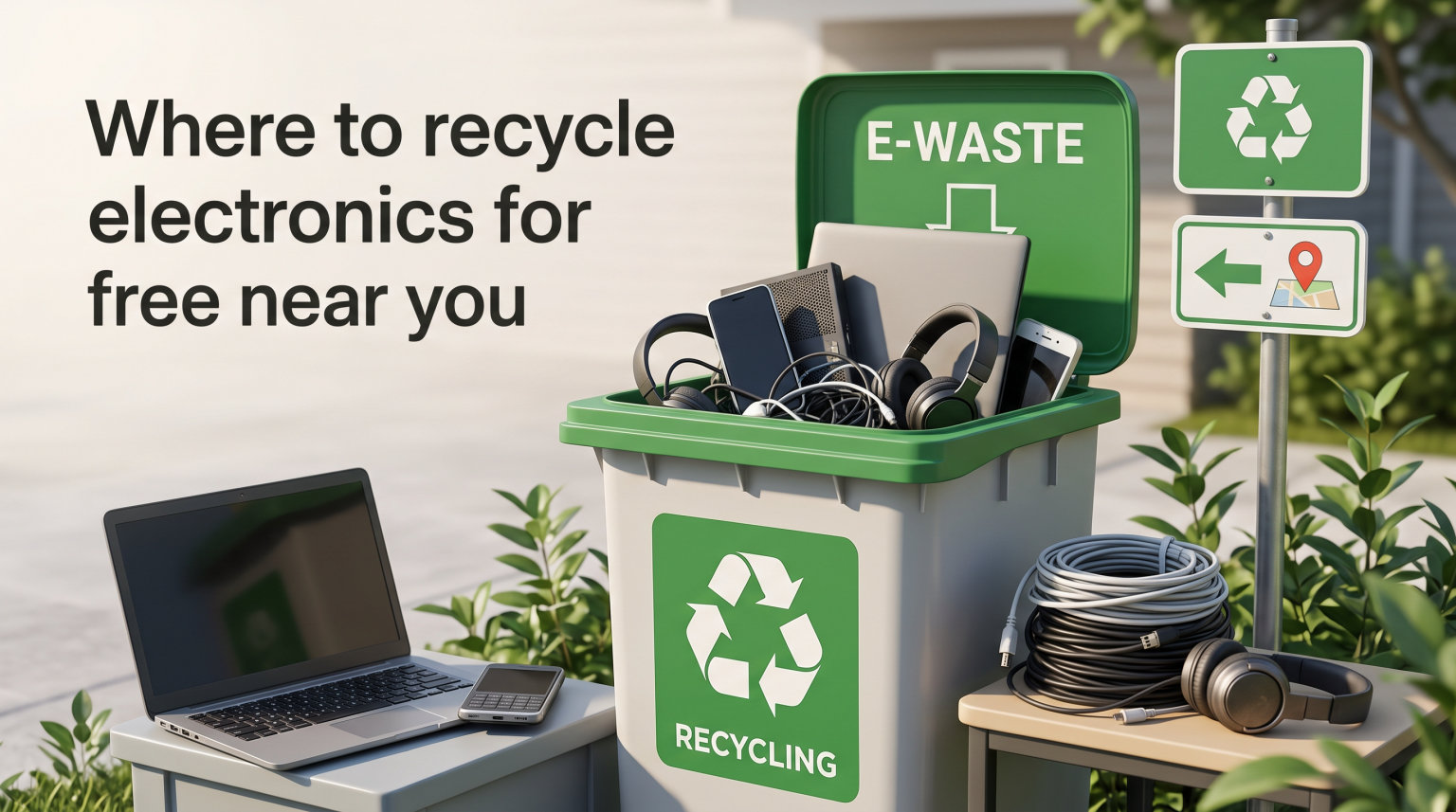
I keep a drawer in my office full of dead electronics. Old phones, a laptop with a cracked screen, two routers, a tangle of cables, and a microwave that finally gave up last winter. Every few months I clean it out and ask the same question: where can I recycle electronics for free near me, without driving across town?
You’re probably asking the same thing. The good news is that in 2026, there are more free options than ever. The not-so-good news is that “free” usually has conditions, and what counts as free changes from one retailer to the next. After testing nine national programs and calling three county recycling facilities, I put together this guide to help you skip the trial and error.
Here’s what you’ll learn: which major retailers actually accept electronics for free, where to find local drop-off sites, how to wipe your data safely, and what to do with items that nobody seems to want. I’ve organized everything by category so you can jump to the section that fits your situation.
Table of Contents
What Counts as E-Waste and Why Recycling Electronics for Free Matters
E-waste is any electronic device that’s reached the end of its useful life. That includes obvious things like old TVs and laptops, but also smaller items most people forget: keyboards, mice, cables, printers, gaming consoles, and even smoke detectors.
Why does it matter? A single circuit board can contain lead, mercury, cadmium, and brominated flame retardants. When these devices end up in landfills, those toxins leach into groundwater. The EPA estimates that for every million cell phones recycled, we can recover 35,274 pounds of copper, 772 pounds of silver, 75 pounds of gold, and 33 pounds of palladium.
The United Nations reported that 62 million metric tons of e-waste was generated globally in 2026, and only 22% was recycled properly. That gap is why free recycling programs exist. Retailers and municipalities want your old electronics because they recover valuable materials instead of letting them rot.
Here’s the uncomfortable truth: tossing an old laptop in the trash is illegal in 25 states. Even in states without a landfill ban, you’d be wasting materials worth real money. Recycling electronics for free solves both problems at once.
Types of Electronics You Can Recycle for Free
Most free programs accept a wide range of devices. Here’s what I typically see accepted at no charge:
Cell phones and smartphones
Laptops, desktops, and tablets
Computer monitors (LCD and LED)
Keyboards, mice, and cables
Printers and scanners
Small appliances (toasters, blenders, hair dryers)
Audio equipment (speakers, receivers, CD players)
Gaming consoles and accessories
Rechargeable batteries (often with limits)
DVD and Blu-ray players
CRT televisions and tube monitors are the exception. These older, heavier screens contain more lead and almost every program charges a fee for them. The same goes for large appliances like refrigerators and washing machines, which usually require a paid pickup service.
Major Retailer Recycling Programs That Accept Electronics for Free
National retailers are the easiest entry point for most people. Locations are widespread, hours are predictable, and the process is simple. I tested each of these in the last six months by bringing in different items.
Best Buy
Best Buy has recycled more than 2 billion pounds of electronics since 2009, and it remains the most accessible option nationwide. Every store accepts:
Cell phones, tablets, and e-readers
Laptops, desktops, and computer accessories
TVs and monitors up to 32 inches (free in most states)
Audio equipment, gaming consoles, and DVDs
Small appliances and vacuum cleaners
Rechargeable batteries, cables, and ink cartridges
Larger TVs, projectors, and tube-style CRTs sometimes carry a fee, usually starting around $25. Best Buy also offers a trade-in program where you can get gift cards for working devices. When I brought in a cracked iPhone screen, the associate didn’t even blink. It took about four minutes.
One limitation: Best Buy does not accept certain items like microwaves, large appliances, or medical devices. Always check your local store’s page before loading up your car.
Staples
Staples offers free recycling for most small electronics, including printers, laptops, tablets, and phones. The program is straightforward: walk in, hand over the item, and you’re done. I dropped off an old inkjet printer and a dead router with no questions.
Staples also has a ReCycle Fee program for items that cost money to recycle, like TVs and large appliances. Fees are posted at the register and usually start at $10.
Office Depot and OfficeMax
Office Depot’s Tech Recycling Service is free for basic items like cables, keyboards, mice, and small electronics. They charge a fee for anything with a screen, including laptops, monitors, and TVs. The fee structure varies by location, so call ahead.
If you have a business account, Office Depot offers larger-volume pickup services. That’s a good option if you’re clearing out a home office with multiple monitors and towers.
Home Improvement Store Options for Electronics Recycling
Home improvement stores are a mixed bag. They recycle construction materials, batteries, and light bulbs, but their electronics programs are often less generous than Best Buy’s.
Home Depot
Home Depot does not run a national free electronics recycling program. They partner with regional recyclers for drop-off events, but you can’t walk into most stores and expect to hand over a laptop.
The exception is rechargeable batteries. Every Home Depot accepts used rechargeable batteries through a Call2Recycle partnership. Drop-off bins are usually near the customer service desk.
For CFL bulbs and paint, Home Depot runs free year-round programs. For electronics, you’ll need to check if your store hosts a specific e-waste event.
Lowe’s
Lowe’s operates similarly to Home Depot. They accept rechargeable batteries and CFL bulbs for free, but electronics recycling depends on local partnerships.
Some Lowe’s stores partner with organizations like Retriev Technologies to accept old batteries and bulbs. A few locations have permanent e-waste drop-off bins, but that’s the exception, not the rule.
My advice: call your local store before making the trip. I drove 20 minutes to a Lowe’s once and learned they only accepted batteries, not computers.
How to Find Local Recycling Centers Near You?
When retailer drop-offs don’t work, your local government is the next stop. Municipal programs often accept items that retailers reject, and they’re free for residents.
Earth911 Search Tool
Earth911.com is the most reliable database for finding nearby recycling centers. Enter your ZIP code, select “electronics,” and you’ll get a list of nearby drop-off sites with hours, accepted items, and contact information.
I tested this with three ZIP codes in different states and got accurate results every time. The database includes retailers, municipal facilities, and nonprofit organizations.
State E-Waste Programs
Twenty-five states have e-waste landfill bans, and most of them run state-level recycling programs. California, New York, Washington, and Massachusetts have especially strong programs funded by manufacturer fees.
For example, New York City’s Department of Sanitation runs free e-waste drop-off events every weekend in different boroughs. The schedule is posted on their website each month. California’s program has over 800 certified collection sites statewide.
Household Hazardous Waste Facilities
Most counties operate Household Hazardous Waste (HHW) facilities where residents can drop off electronics, batteries, paint, and chemicals for free. These facilities usually require proof of residency, like a driver’s license or utility bill.
Acceptable items vary by county, but HHW facilities are often the best option for TVs, monitors, and large appliances that retailers charge fees for. I’ve used my county’s facility twice and never waited more than 10 minutes.
Manufacturer Take-Back Programs You Can Trust
Most major electronics manufacturers operate free recycling programs for their own products. These are sometimes the best option because the manufacturer knows exactly how to handle the device.
Apple Trade In
Apple accepts iPhones, iPads, Macs, and other Apple devices for free recycling. You can trade in working devices for credit or get free recycling for non-working devices. Apple also accepts non-Apple products at its stores, though you’ll need to ship them through Apple’s recycling partner.
Samsung Recycling Direct
Samsung offers free mail-in recycling for smartphones, tablets, and wearables from any brand. Print a prepaid shipping label, pack your device, and drop it off at UPS. The program is fully funded by Samsung, so there’s no charge.
Dell, HP, and Lenovo
All three laptop manufacturers run free take-back programs. Dell’s program accepts any brand of computer, not just Dell. HP and Lenovo offer prepaid shipping labels for laptops, desktops, and accessories.
These programs are particularly good for business equipment. If you’re clearing out a corporate office, manufacturer programs often handle bulk pickups at no cost.
Nonprofit and Charity Recycling Options
If you’d rather your old electronics get a second life than be shredded, nonprofit organizations are your best bet. They refurbish working devices and donate them to schools, low-income families, and community programs.
Free Geek
Free Geek operates in Portland, Oregon, and several other cities. They accept computers, laptops, monitors, and peripherals, then refurbish what they can and recycle the rest. Donations are free, and they offer pickup services for large loads.
Free Geek also runs a “Build a Computer” program where volunteers learn to assemble and refurbish computers. You can drop off donations Wednesday through Saturday, 11 AM to 4 PM.
Goodwill
Many Goodwill locations partner with Dell’s Reconnect program to accept computers, monitors, and peripherals. Drop-offs are free, and working devices are sold in Goodwill stores to fund job training programs.
Not every Goodwill accepts electronics, so call ahead. The stores I’ve visited in the Midwest and on the East Coast have all participated, but the program isn’t universal.
Local Schools and Community Organizations
Computer refurbishing programs at community colleges, libraries, and homeless shelters often accept donated electronics. These programs typically need laptops, tablets, and smartphones for clients who can’t afford new devices.
Search “computer donation [your city]” or check with your local United Way. I found three community refurbishing programs in my area just by asking my neighborhood Facebook group.
How to Prepare Electronics for Recycling?
Before you drop off any device, take 15 minutes to prepare it. This protects your data and makes the process smoother for everyone.
Protect Your Personal Data First
This is the step most people skip, and it’s the most important. Even factory resets don’t always erase everything.
Back up photos, contacts, and documents to cloud storage or an external drive
Sign out of iCloud, Google, Microsoft, and any other account
Enable “Find My iPhone” or “Find My Device” and remove the device
Use your manufacturer’s data wipe tool (Apple’s Disk Utility, Windows’ Reset, or a DBAN drive wipe for extra security)
Remove SIM cards and SD cards from phones and cameras
For business computers, consider using a certified data destruction service. Some recycling centers offer this for free, and it provides a certificate of destruction for compliance.
Remove Accessories and Sort Your Items
Sort your electronics by category before loading up your car. Cables, batteries, and small accessories usually go in their own bins. Larger items like laptops and monitors are processed separately.
Remove obvious accessories, like laptop chargers, but don’t worry about removing screws or stickers. Recyclers are used to handling devices in any condition.
Bring a reusable bag or box. Most centers will hand you a receipt, and you’ll want to keep small items like cables contained. I’ve learned this the hard way after dropping a tangle of chargers in a parking lot.
What to Do With Items That Have Fees
Some items cost money to recycle because they’re harder to process. Here’s where to take them:
CRT TVs and tube monitors: County HHW facilities usually waive fees for residents
Large appliances (fridges, washers): Utility companies often offer free pickup with rebates
Refrigerant-containing devices (AC units, freezers): Specialized hazardous waste handlers
Smoke detectors and carbon monoxide alarms: Manufacturer mail-in programs
Before paying a fee, check Earth911 for a free alternative. You might find a nonprofit or municipal event that takes those items at no cost.
Special Items That Need Different Recycling Approaches
Some electronics don’t fit into standard recycling categories. These require specialized handling.
Microwaves
Microwaves contain capacitors that can hold an electrical charge even when unplugged. Best Buy and most municipal programs accept them, but home improvement stores generally don’t. Remove the glass tray and recycle it separately with regular glass if your municipality accepts it.
Batteries
Single-use alkaline batteries (AA, AAA, C, D) are generally safe to throw in the trash in most states. Rechargeable batteries (lithium-ion, nickel-cadmium, nickel-metal hydride) need to be recycled at Call2Recycle drop-off bins in stores like Home Depot, Lowe’s, and Best Buy. Tape the terminals with electrical tape before dropping them off.
Light Bulbs
CFL and fluorescent bulbs contain small amounts of mercury. Home Depot and Lowe’s accept them for free. LEDs are generally safe to recycle with regular electronics, but some programs require them to be separated.
Cables and Chargers
Copper inside cables is valuable, so most recycling centers accept them. Best Buy has dedicated bins for cables and chargers. You can also mail them to companies like CableCycle for free.
FAQs
Does Best Buy still recycle electronics for free?
Yes. Best Buy recycles most electronics for free at all U.S. store locations, including cell phones, laptops, tablets, small appliances, cables, and rechargeable batteries. TVs and monitors larger than 32 inches may carry a fee, and tube-style CRT TVs typically cost $25 or more to recycle.
Does Home Depot take electronic recycling?
Home Depot does not run a national free electronics recycling program. Most stores accept rechargeable batteries and CFL bulbs for free, but laptops, TVs, and other electronics require a regional drop-off event or a Call2Recycle partner location. Call your local store before making a trip.
Where can I recycle electronics in Richmond, VA?
Richmond residents can recycle electronics for free at Best Buy, Staples, and most HHW collection events. The City of Richmond also hosts quarterly e-waste drop-off events at the East Richmond Road Refuse Collection Center. Check the Department of Public Works website for the upcoming schedule.
Does Walmart take broken TVs for recycling?
Walmart does not accept broken TVs for recycling in most locations. The Walmart electronics trade-in program only works for working devices. For broken TVs, take them to Best Buy (with a fee for screens over 32 inches), a county HHW facility, or a certified e-waste recycler.
Is electronics recycling really free?
Most retailers and municipal programs accept small electronics for free, including cell phones, laptops, tablets, cables, and batteries. However, large items like tube TVs, CRT monitors, and oversized appliances often carry fees because they require special handling. Always confirm the fee schedule before you drop off large items.
What electronics cannot be recycled?
Almost all electronics can be recycled, but some items require special handling: tube TVs with CRTs, large appliances with refrigerants, and certain medical devices. Smoke detectors and carbon monoxide alarms have manufacturer-specific mail-in programs. Check Earth911 or your local county website for items that need specialized disposal.
Final Thoughts on Where to Recycle Electronics for Free Near You
You have more options than you probably realized. Best Buy alone handles most electronics for free, and your county’s HHW facility is a backup for the items retailers reject. Manufacturer take-back programs add a third option, and nonprofits like Free Geek help your old devices find a second life.
Start by wiping your data, sorting your items, and making a list of what you have. Then pick the closest option that fits your situation. The whole process takes an afternoon, and you’ll keep several pounds of toxic materials out of the landfill. That’s a trade I’d take any day.