
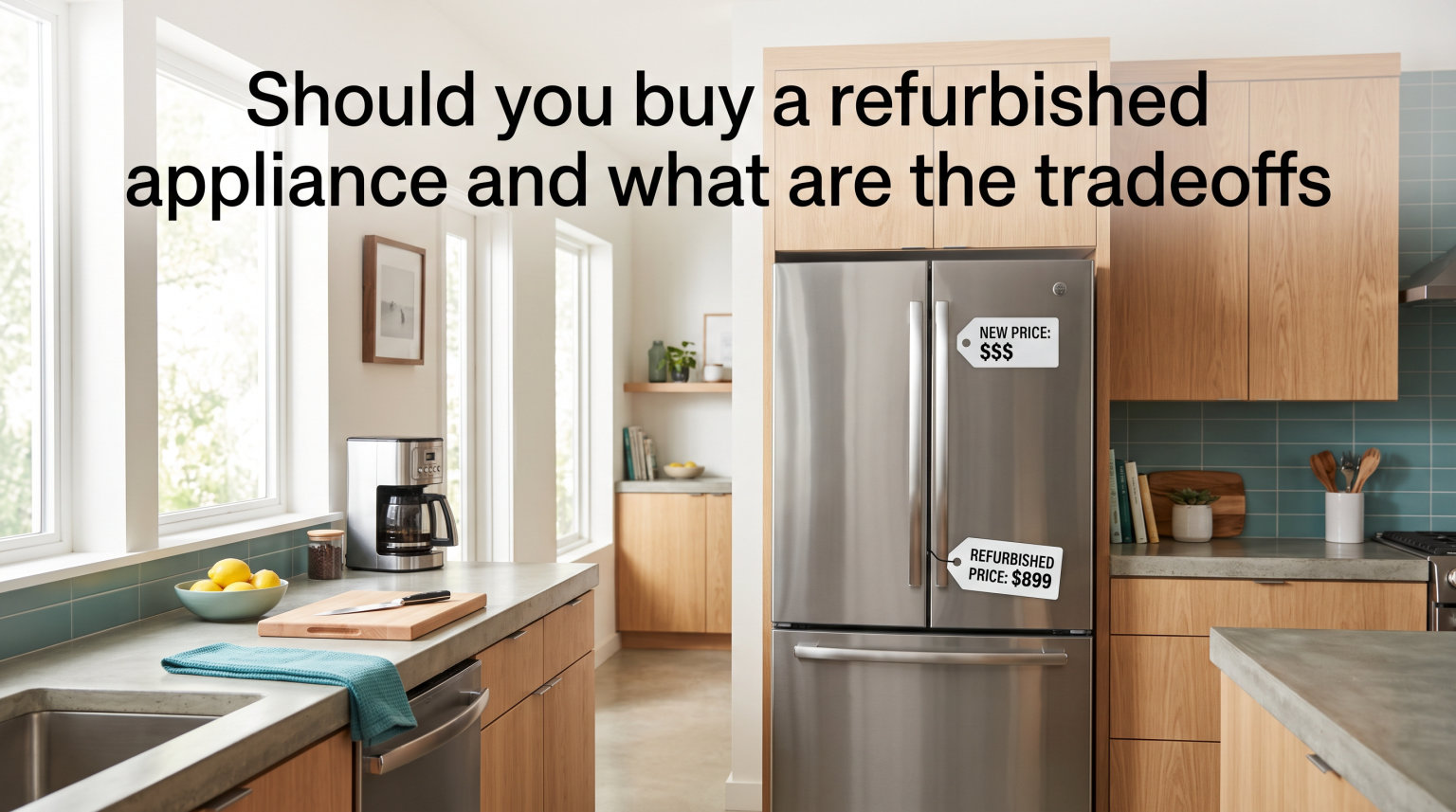
Yes, you should buy a refurbished appliance if you can verify it’s been professionally inspected, comes with a real warranty, and you buy from a reputable seller. The math usually works: a certified refurbished unit can save you 30% to 50% off the new price, and most go through the same testing a manufacturer would do. The tradeoffs are real though, shorter warranties, no guarantee of cosmetic perfection, and a higher chance of an early failure compared to a brand-new unit. Our team walked through this exact decision for a friend last month, comparing three certified refurbished refrigerators against their new counterparts. The savings were real. So were the gotchas.
If you want to skip the deep dive and just need a verdict: certified refurbished from the original manufacturer is usually worth it for washers, dryers, and dishwashers under 5 years old. Scratch-and-dent or third-party refurbished is riskier. Avoid refurbished refrigerators with unknown compressor history, and avoid any refurbisher who won’t show you the warranty terms in writing. Everything below explains the reasoning.
Table of Contents
What Does “Refurbished” Actually Mean?
Refurbished means the appliance was previously owned, returned, or used as a display model, then professionally inspected, repaired if needed, cleaned, and tested before being resold. A truly refurbished unit is not the same as a used appliance sold “as-is.”
The confusion comes from sellers using the word loosely. Here’s how the main categories break down.
Certified Refurbished vs Factory Refurbished vs Seller Refurbished vs Used
Certified refurbished units are restored by the original manufacturer or an authorized service center. They usually come with a manufacturer-backed warranty, new or refurbished OEM parts, and a documented testing process. Factory refurbished is the same idea, sometimes just a different name for the same program.
Seller refurbished means a third party (not the manufacturer) restored the appliance. Quality here varies wildly. Some sellers do excellent work. Others swap a broken part, wipe the exterior, and call it refurbished.
Used simply means pre-owned. No repairs, no testing, no warranty. The seller might say it “works great,” but you have no written assurance.
Scratch and dent is a separate category: brand-new units with cosmetic damage (a dented door, a scratched side) sold at a discount. These have never been used, but they’re often sold with shorter warranties and limited return policies. Scratch and dent appliances sit in their own category because the unit itself is new, only the packaging or exterior is imperfect.
The Real Tradeoffs of Buying Refurbished Appliances
Buying a refurbished appliance is a tradeoff between upfront cost and long-term certainty. Here’s the honest breakdown on both sides.
The savings side: what you gain
The headline benefit is price. Certified refurbished appliances from major retailers typically run 30% to 50% below the new retail price. On a $1,200 refrigerator, that’s $360 to $600 back in your pocket. On higher-end brands like Sub-Zero or Wolf, the dollar savings can climb into four figures.
You’re also buying something that’s already “broken in.” Many new appliances have early-life failures in the first 30 days, the kind of defects that slip through factory quality control. A unit that’s been running for weeks under load has cleared that hurdle. The seller has had a chance to catch any obvious problems before relisting it.
There’s an environmental angle too. Manufacturing a single refrigerator generates roughly 300 pounds of CO2. Buying refurbished keeps an appliance out of the waste stream and reduces demand for new production. For eco-conscious buyers, this is a real, measurable benefit that goes beyond personal savings.
The risk side: what you give up
Warranty is the biggest gap. A new appliance might come with a 1-year full warranty plus 5 to 10 years of coverage on sealed components like compressors. A refurbished unit often has 90 days, sometimes a year, rarely more. That difference matters most if a hidden defect shows up in month 8.
You also lose visibility into the unit’s history. Was it a return because the buyer didn’t like the color, or because the compressor was failing? Did it sit in a warehouse for two years? Even good refurbishers may not know the full story. They can test current function, but they can’t undo years of hard use.
Cosmetic condition is a minor issue but worth noting. Most refurbished units have some visible wear, even if minor. If you want a showroom kitchen, refurbished probably isn’t for you. Minor scuffs, small dents, and slight discoloration are normal on most refurbished stock.
The biggest risk is the unknown electronic control boards. On the forums I read while researching this piece, multiple users reported control board failures on refurbished washers and dishwashers 6 to 18 months after purchase. These repairs can run $300 to $500, often wiping out the original savings. This is the single failure mode that hurts most.
What Is the 50/50 Rule for Appliances?
The 50/50 rule for appliances is a quick decision shortcut: if the cost to repair an appliance is more than 50% of the cost to replace it, and the appliance is more than 50% through its expected lifespan, replace it instead of repairing it.
It comes up frequently in PAA (People Also Ask) boxes but no major article actually explains it. Here’s the framework in plain terms.
Take a 10-year-old refrigerator. Its expected lifespan is maybe 12 to 15 years, so it’s about 70% through its life. The compressor fails, and the repair quote is $700. A comparable new refrigerator would cost $1,400. The repair is exactly 50% of replacement, but the unit is more than halfway through its expected life. Most appliance techs would tell you to replace.
The rule isn’t gospel. It’s a starting point for the decision. But it’s especially useful when you’re weighing whether to invest in a refurbished appliance, because the same logic applies to whether you’ll get enough life out of it before another failure. Apply it both to the repair-versus-replace decision and to whether the refurb itself is worth the discount.
Where to Buy Refurbished Appliances Safely
The seller matters more than the unit itself. A great deal from a sketchy refurbisher is a bad deal. Here’s how the main channels stack up.
Manufacturer outlets and “Renewed” programs
Most major brands, including LG, Samsung, GE, Whirlpool, and Bosch, run certified refurbished outlets through their own websites or authorized partners. These are usually the safest option because the warranty is honored by the same company that built the unit. The testing process is also stricter, since the brand reputation is on the line.
Big-box retailers with open-box programs
Home Depot, Lowe’s, Best Buy, and similar chains sell floor models, customer returns, and damaged-box units as “open-box” or “certified refurbished.” These usually come with the original manufacturer’s warranty intact, sometimes shortened. Read the fine print. Open-box units are sometimes barely used at all, which makes them a sweet spot for shoppers willing to look past minor packaging damage.
Independent refurbishers
Local independent shops can offer excellent value, especially for higher-end brands like Sub-Zero, Wolf, or Miele, where new prices are steep. The risk is variability. Always ask for written warranty terms, references, and proof of testing before paying. A trustworthy local refurbisher is one of the best sources in the market; an untrustworthy one is one of the worst.
Where to avoid
Skip generic marketplace sellers with no track record. Skip any refurbisher who can’t or won’t explain their testing process. And skip Facebook Marketplace or Craigslist unless you’re comfortable buying used with zero warranty, which is a different category altogether. If the seller can’t tell you what was repaired and what was tested, the savings aren’t real.
Which Appliances Are Safest to Buy Refurbished?
Not all appliances are equally safe buys on the refurbished market. Here’s how I rank them based on reliability data and forum reports.
Lower risk: washers, dryers, dishwashers
These are mechanical, with relatively simple control systems and easily replaceable parts. A well-refurbished washer from a known brand should give you 7 to 10 more years of service. They’re the sweet spot of the refurbished market. Most forum success stories I came across involved one of these three categories.
Moderate risk: ovens, ranges, microwaves
Most oven problems are heating elements or control boards, both of which are accessible to replace. A certified refurbished oven from a major brand is generally a safe bet if the warranty is solid. Over-the-range microwaves are slightly more complex because of the ventilation integration, so prefer countertop units if going refurbished.
Higher risk: refrigerators, especially French door and smart models
Refrigerator compressors are expensive to replace, often $500 to $900 including labor. Smart fridges add layers of electronics that can fail independently. If you’re buying a refurbished refrigerator, insist on a multi-year warranty and stick to manufacturer-certified channels only. The complexity of sealed-system work means a cheap refurbisher can do real damage.
Questions to Ask Before Buying a Refurbished Appliance
Before you hand over a credit card, get clear answers to these questions. If the seller dodges any of them, walk away.
Who refurbished this unit, and what does their testing process look like?
What warranty is included, and who backs it (manufacturer or third party)?
How long is the warranty, and what specifically does it cover?
What parts were replaced during refurbishment? Ask for specifics.
What is the return policy if the unit fails within 30 days?
How old is the original unit? (Manufacturing date, not sale date.)
Are replacement parts still available for this model?
Can I see the unit running before I take it home, or get a video of the test cycle?
Warning Signs to Walk Away
Some red flags should make you close the tab and keep shopping.
No written warranty, only verbal promises
Seller refuses to share who did the refurbishment
Original manufacturing date is more than 5 years old
Replacement parts have been discontinued for that model
Price seems too good to be true compared to other certified options
Seller has no reviews, no return policy, or no physical address
Photos show mismatched parts, scratched badges, or worn labels
If you see any combination of two or more of these, the savings aren’t worth the risk.
Frequently Asked Questions
Is it worth buying refurbished appliances?
Yes, in most cases, certified refurbished appliances from the original manufacturer are worth buying. You can save 30% to 50% off the new price, the units have already cleared early-life failure risk, and you get a documented warranty. The savings are usually large enough to justify the shorter warranty and minor cosmetic wear. The main exception is when buying from third-party refurbishers with weak or unclear warranty terms.
What is the 50 50 rule for appliances?
The 50/50 rule says replace an appliance instead of repairing it when the repair cost is more than 50% of the replacement cost and the appliance is more than 50% through its expected lifespan. It’s a quick decision framework to avoid pouring money into a unit that’s near the end of its useful life. The rule works especially well for washers, dryers, and refrigerators with 10 to 15 year expected lifespans.
What are the risks of buying refurbished products?
The main risks of buying refurbished products are shorter warranties (often 90 days instead of one year), unknown prior use history, potential early failure of electronic components, limited return windows, cosmetic imperfections, and difficulty sourcing replacement parts for older models. The biggest financial risk is a control board failure on a smart appliance, which can cost $300 to $500 to repair and may wipe out your original savings.
Is it safe to buy refurbished appliances?
Yes, buying refurbished appliances is safe if you stick to certified programs run by the original manufacturer or authorized service centers. These units go through professional testing, parts replacement when needed, and come with documented warranties. Buying from unknown third-party sellers or private individuals is riskier because quality and testing standards vary widely. Always verify the warranty terms in writing before purchasing.
Which appliances are safest to buy refurbished?
Washers, dryers, and dishwashers are the safest appliances to buy refurbished because they have relatively simple mechanical systems and easily replaceable parts. Ovens and ranges are also reasonable choices. Refrigerators are higher risk because compressor replacement is expensive, especially on French door and smart models. For any refrigerator purchase, insist on a manufacturer-certified refurbisher with a multi-year warranty.
How long do refurbished appliances usually last?
A well-refurbished appliance from a reputable seller typically lasts 7 to 12 years, similar to a new unit of the same model. The exact lifespan depends on the appliance type, how heavily it was used before refurbishment, and the quality of any replacement parts. Washers and dryers usually last 10 to 15 years. Refrigerators with new compressors can last another 12 to 18 years. Always ask the seller for the expected remaining lifespan of the specific unit.
Should You Buy a Refurbished Appliance? The Final Verdict
Should you buy a refurbished appliance? Yes, when the unit is certified by the manufacturer, the warranty is real, and the savings beat the risk. Skip it when the seller is vague about testing, the warranty is thin, or the appliance is older than 5 years. For most shoppers, that means washers, dryers, and dishwashers are great refurbished buys, and refrigerators need extra caution. Use the checklist above, ask the eight questions, and you’ll avoid almost all the bad outcomes people post about online.