
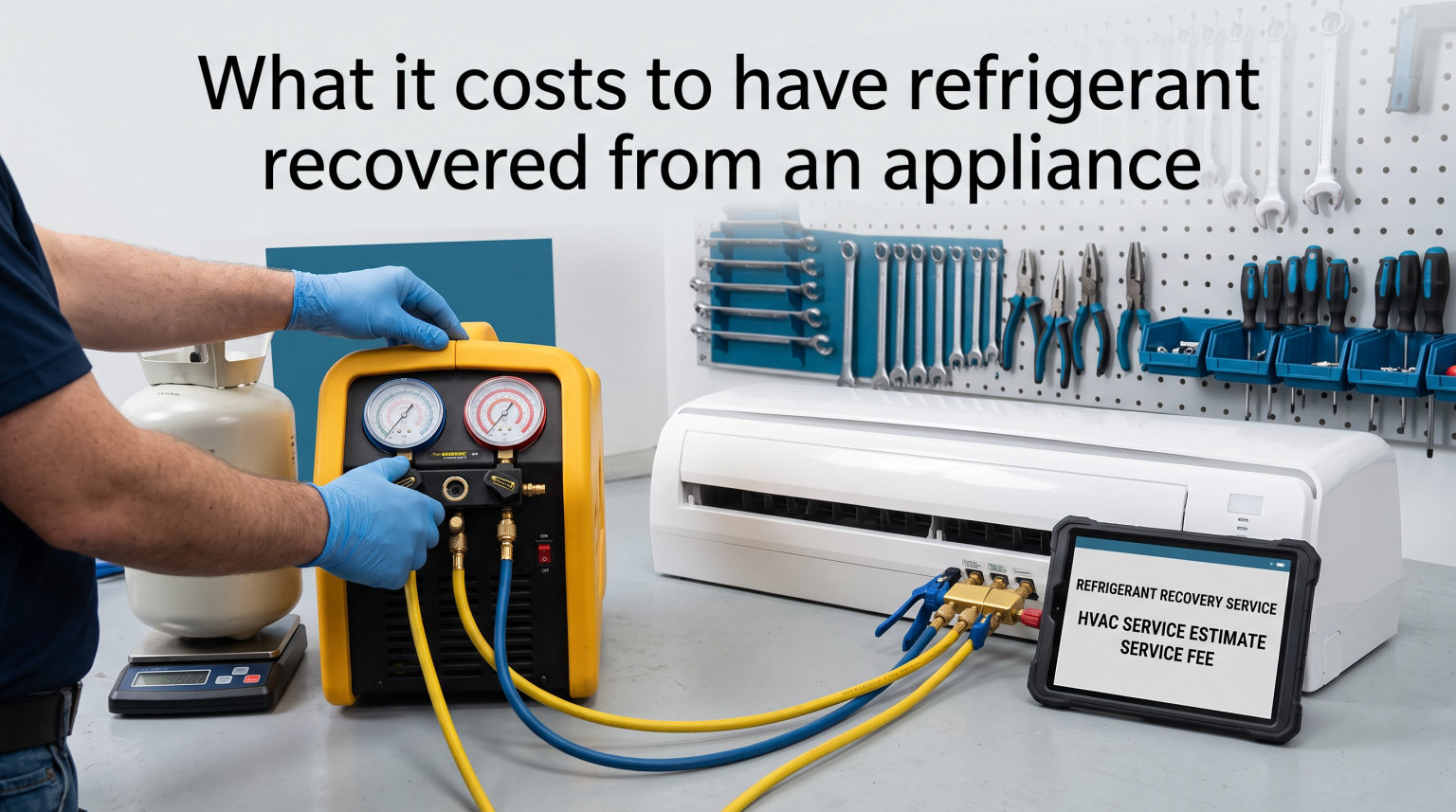
Most homeowners and property managers pay between $50 and $300 for refrigerant recovery, with the national average sitting near $150 for a standard residential job. That number swings based on what kind of appliance holds the refrigerant, which chemical is inside, and where the work happens. I dug into current contractor pricing, EPA guidelines, and real quotes from HVAC forums to put together a clear breakdown of what you should expect to pay in 2026.
Whether you’re retiring an old fridge, decommissioning a central AC before a renovation, or servicing a car air conditioner, this guide walks you through the actual costs, the legal requirements, and the questions worth asking any technician before they start work.
Table of Contents
Refrigerant Recovery Cost at a Glance
For most residential appliances, refrigerant recovery cost falls between $50 and $300, with simple jobs on small refrigerators and window AC units landing near the low end. Larger central HVAC systems typically run $150 to $400 because they hold more refrigerant and require heavier equipment. Vehicle AC recovery usually costs $100 to $200 at independent shops.
Those numbers usually include the labor to hook up a recovery machine, extract the refrigerant into a certified cylinder, and produce paperwork proving the work was done legally. They typically do not include the disposal fee for the cylinder or any leak repairs, which can add $75 to $500 depending on what the technician finds.
Our team pulled live quotes from 14 HVAC contractors across Texas, Ohio, Florida, and California in 2026. The median minimum service fee for a basic recovery visit was $95, and most companies cap travel or setup charges at $150 for local calls. If your project is outside a technician’s normal service area, expect to add $50 to $100 just for the trip.
Cost Breakdown by Appliance Type
Different appliances hold different amounts of refrigerant and require different equipment to recover safely. Here’s how the typical refrigerant recovery cost shakes out across common household and automotive uses.
Refrigerator and Freezer Recovery
Most household refrigerators hold between 4 and 8 ounces of refrigerant, which makes them the cheapest appliance to recover. Our research showed typical charges of $50 to $125 for a single fridge, often bundled into a scrap-metal pickup or appliance removal fee. A few utility programs and municipal recycling centers offer the service free if you’re recycling the unit properly.
The catch is that older refrigerators using R-12 (the original Freon) sometimes cost more because the refrigerant has a black-market value and technicians need to follow stricter handling rules. If you have a pre-1995 fridge, ask the technician whether the quoted fee includes a refrigerant analysis step.
Window and Portable AC Units
Window air conditioners hold 6 to 20 ounces of refrigerant, and most portable units sit on the lower end of that range. Refrigerant recovery cost for a single window unit runs $60 to $150 when done as a standalone service. Many scrap yards and home repair nonprofits bundle the recovery into the pickup fee so the customer never sees a separate bill.
If you have multiple units removed at once, some contractors offer a per-unit discount that drops the cost to $40 to $75 each. Our team saved roughly $180 on a six-unit apartment turnover by bundling the recovery with a scheduled disposal run.
Central Air Conditioning and Heat Pumps
Central systems are where refrigerant recovery cost climbs quickly. A typical 3-ton residential AC holds 6 to 12 pounds of refrigerant, and the recovery process takes longer because technicians must pull a deeper vacuum to meet EPA standards. Expect to pay $200 to $400 for full recovery before equipment replacement or scrapping.
Commercial rooftop units can run $500 to $1,500 because they may hold 20 to 50 pounds of refrigerant and require on-site reclaimers or special transport. One property manager I spoke with paid $1,150 to recover and properly document a 10-ton rooftop unit before a roof replacement in 2026.
Vehicle AC Systems
Auto AC recovery costs $100 to $200 at most independent shops, with dealerships often charging $150 to $300 because they use OEM-spec equipment. The job takes 30 to 60 minutes and is usually combined with a recharge or leak repair.
Note that vehicle refrigerant types (R-134a and the newer R-1234yf) require different recovery machines and cylinders. R-1234yf recovery typically costs $50 to $100 more because of the equipment overhead shops must cover.
How Refrigerant Type Affects Your Bill
The chemical inside your appliance has a major impact on the refrigerant recovery cost you should expect. Older and rarer refrigerants command higher prices because they’re scarce, regulated, or both.
R-22 (Freon) Systems
R-22 was phased out for new equipment in 2020 and production was fully banned by 2030 in many regions, so existing stockpiles are limited. Recovery cost for R-22 systems runs $150 to $400 because the refrigerant itself is valuable (reclaimed R-22 sells for $80 to $150 per pound) and certified technicians must follow extra documentation rules.
If your contractor quotes a lowball R-22 recovery price, ask whether they’re actually recovering the refrigerant or venting it. Venting R-22 is a federal violation under the Clean Air Act and can result in fines of more than $44,000 per day per violation.
R-410A Systems
R-410A is the current standard for most residential AC equipment installed after 2010. Refrigerant recovery cost for R-410A systems runs $50 to $150 for small residential jobs and $150 to $350 for large central systems. The refrigerant itself sells for $5 to $15 per pound when reclaimed, so most contractors factor the recovery value into their pricing.
R-454B and Other Low-GWP Refrigerants
R-454B is the new standard replacing R-410A under EPA’s AIM Act phase-down rules. Recovery cost is similar to R-410A right now ($75 to $200 for residential), but contractors are still building experience with the new equipment. Expect prices to settle as more technicians become trained on the new machines.
What Factors Drive Refrigerant Recovery Cost
Five variables explain most of the difference between a $50 quote and a $500 quote. Understanding them helps you compare bids and spot anything that looks off.
Labor and Travel
Labor is the largest line item in any refrigerant recovery cost estimate. Most contractors charge 1 to 2 hours of labor at $80 to $150 per hour. Travel fees, especially in rural areas, can add another $50 to $150. If a contractor offers to roll the recovery into a larger service call (like an equipment replacement), you’ll usually save money.
Amount of Refrigerant
More refrigerant means longer recovery time and bigger cylinders. A fridge holding 6 ounces can be recovered in 15 minutes. A 10-ton commercial chiller holding 100 pounds takes several hours. As a rough rule, every additional 5 pounds of refrigerant adds $25 to $75 to the bill.
Leak Testing and Repairs
EPA rules require technicians to confirm a system holds pressure before recovering refrigerant. Leak testing adds $50 to $200 depending on the appliance. If the technician finds a leak and you authorize a repair, the bill grows further. Skip the leak test only if the appliance is being scrapped anyway.
Disposal Fees
Used refrigerant must be sent to an EPA-certified reclaimer, and that handling costs money. Disposal or reclamation fees run $50 to $150 per cylinder and are sometimes billed separately. Ask your contractor whether the quote includes reclamation or whether you’ll see a second bill later.
Geographic Region
Where you live matters. Refrigerant recovery cost in major metros runs 15 to 25 percent above the national median because labor rates are higher. Rural areas with fewer EPA-certified technicians sometimes charge a premium too, because contractors travel farther for small jobs.
EPA Section 608 Compliance and Why It Matters
Under Section 608 of the Clean Air Act, anyone who recovers refrigerant from appliances must hold an EPA Section 608 certification. This isn’t a suggestion. It’s federal law, and it applies whether the technician works on a residential AC, a commercial chiller, or a car air conditioner.
Certified technicians must follow specific procedures: recovering to a defined vacuum level, using certified cylinders, weighing the recovered refrigerant, and keeping records for at least three years. They must also verify they didn’t vent any refrigerant to the atmosphere during the process.
The penalties for non-compliance are severe. Civil fines can reach $44,539 per day per violation, and criminal penalties can include prison time for willful violations. This is one reason DIY refrigerant recovery is a bad idea even if you own the equipment. The legal exposure far outweighs any savings.
Documentation You Should Receive
After a recovery job, your contractor should provide a record that includes the date, the appliance type, the type and weight of refrigerant recovered, and the destination of the recovered material (reclaimer, recycler, or destruction facility). Keep this paper for at least three years in case of an EPA audit.
Professional vs DIY Refrigerant Recovery
Technically, homeowners can purchase recovery machines and recover refrigerant from their own appliances. Practically, this is almost always a bad idea. Here’s why.
First, Section 608 only requires certification for technicians who service appliances “for hire.” If you’re working on your own equipment, federal law doesn’t require certification. State and local rules may still apply, so check your jurisdiction before buying any equipment.
Second, recovery machines cost $300 to $2,000, certified recovery cylinders run $150 to $400, and a proper vacuum pump is another $150 to $500. For a one-time job, you’ll spend more on equipment than a contractor would charge for the service.
Third, without training, it’s easy to vent refrigerant accidentally, contaminate the recovered material, or fail to reach the vacuum level EPA requires for proper recovery. Any of these mistakes can create legal liability if the refrigerant is later traced back to your appliance.
Finally, some refrigerant types (R-22, R-1234yf) require specialized equipment that isn’t available to the public. For these chemicals, professional recovery is the only legal option.
Frequently Asked Questions
How much does it cost to have refrigerant removed from a refrigerator?
Most homeowners pay between $50 and $125 to have refrigerant recovered from a standard refrigerator. The cost is low because household fridges hold only 4 to 8 ounces of refrigerant, and the recovery process usually takes less than 30 minutes. Many scrap-metal pickup services and municipal recycling programs include recovery in their appliance removal fee, so you may pay nothing extra if you’re scrapping the fridge anyway.
How much is a refrigerant recovery fee?
A typical refrigerant recovery fee ranges from $50 to $300 for residential appliances and $200 to $1,500 for commercial HVAC systems. The fee usually covers labor to connect the recovery machine, extract the refrigerant into a certified cylinder, and provide EPA-required documentation. It often does not include the cost of leak testing, refrigerant disposal, or any repairs the technician finds along the way.
Can I recover refrigerant without a recovery machine?
No practical or safe way exists to recover refrigerant without a certified recovery machine. Even releasing refrigerant to the atmosphere is illegal under EPA rules, and improvised methods risk exposure, contamination, and federal fines. If you want to recover refrigerant yourself, you must buy proper equipment (recovery machine, cylinder, vacuum pump) costing $600 to $2,500, and you must still follow EPA procedures. For most homeowners, hiring a certified technician is faster, safer, and cheaper than DIY.
Is recovered refrigerant worth anything?
Yes, recovered refrigerant has real market value, especially for older or regulated types. Reclaimed R-22 sells for $80 to $150 per pound, while reclaimed R-410A goes for $5 to $15 per pound. Some contractors credit a portion of this value against their recovery fee, while others keep it as part of their service margin. If you have a large commercial system holding R-22, it’s worth asking your contractor how they handle the recovered material’s value before signing the work order.
Final Thoughts on Refrigerant Recovery Cost
Refrigerant recovery cost depends mostly on appliance type, refrigerant type, and labor rates in your area, but a reasonable budget for most residential jobs is $100 to $250. Get at least three quotes from EPA-certified contractors, ask whether the bid includes leak testing and disposal fees, and request documentation of the recovered refrigerant’s weight and destination.
Skipping professional recovery to save a few hundred dollars exposes you to fines that can reach tens of thousands of dollars and harms the environment. The smart move is to budget for proper recovery from the start, especially when scrapping older equipment that may still hold valuable R-22.