
If you have a second refrigerator humming away in your garage, basement, or spare room, you could be leaving real money on the table. Across the U.S., utility companies pay homeowners anywhere from $50 to $150 to pick up and recycle that old fridge. Our team has researched dozens of programs, and this guide walks you through exactly how to find a utility rebate for recycling a second refrigerator in your area, claim it, and avoid common mistakes that get pickups rejected.
Inside, you’ll find a step-by-step process, a list of major utility programs by state, eligibility rules, and what to do if no local program exists. We’ve also pulled in real experiences from homeowners who used these programs so you know what to expect.
Table of Contents
Why Utility Companies Pay You to Recycle an Old Refrigerator?
Utility companies offer appliance recycling programs because old refrigerators are energy hogs. A fridge built before 2001 can use three times more electricity than a modern ENERGY STAR model. That wasted power strains the grid during summer peak hours, so utilities will pay you $50 to $150 to take that spare fridge off your hands and out of circulation.
I think of it as a win on three fronts. You get cash back, your monthly electric bill drops, and the refrigerant and metals inside the unit get processed responsibly instead of leaking into the atmosphere.
How to Find a Utility Rebate for Recycling a Second Refrigerator
Finding a utility rebate for recycling a second refrigerator takes six clear steps. Each one is simple, and most homeowners complete the whole process in under 30 days from first search to check in hand.
Step 1: Identify Your Utility Provider
Your first task is to confirm which electric utility serves your home. Look at a recent bill or the paperwork from when you moved in. If your account is through a city-owned utility, a co-op, or a competitive energy supplier, the program lineup may be different than what’s listed online for investor-owned utilities.
Step 2: Search Their Website or Call Directly
Type “[your utility name] appliance recycling” or “refrigerator pickup program” into Google. Most large utilities have a dedicated page. If you can’t find one, call the customer service number on your bill and ask about refrigerator or freezer recycling rebates. Phone calls often surface programs that aren’t heavily advertised online.
Step 3: Confirm Eligibility
Before scheduling, double-check that you meet the requirements. Most programs require you to be an active residential electric customer, the unit must be in working order, and it usually has to fall within a specific size range (commonly 10 to 30 cubic feet). I’ll cover the full eligibility checklist below.
Step 4: Schedule Your Free Pickup
Once you’re eligible, schedule pickup through the utility’s online portal or by phone. Most programs let you pick a window of a few days. Lead times run from a few days to a few weeks depending on your region.
Step 5: Prepare the Refrigerator for Pickup
This is where many people stumble. The crew will reject the unit if it’s full of food, behind a locked door, or has stairs with no easy access. Empty it out, defrost freezers if applicable, and make sure the path from the kitchen to the truck is clear. I learned this the hard way from a friend who had his pickup canceled because the fridge was still stocked with last year’s venison.
Step 6: Get Your Rebate Check or Bill Credit
After pickup, the recycling partner reports the collection to your utility. Most rebates arrive within 6 to 8 weeks, either as a prepaid card, a check in the mail, or a credit on your utility bill. Some programs send the rebate faster, but 2 months is a common timeframe based on what homeowners report.
Eligibility Requirements Most Programs Share
Most utility appliance recycling programs share the same baseline rules. Knowing these in advance saves you time and protects you from scheduling a pickup that gets rejected on arrival.
Active residential electric customer. You typically need to be the account holder of record. Some programs extend to landlords for rental units, but commercial accounts are usually excluded.
Working refrigerator or freezer. The unit must cool and run. Programs reject non-functional units because they’re harder to recycle responsibly.
Size between 10 and 30 cubic feet. Mini-fridges and walk-in coolers fall outside the range. Measure your unit inside before scheduling.
One or two appliances per calendar year. Most programs cap you at two pickups per address per year. New Hampshire’s NHSaves program, for example, sets a two-appliance limit.
Accessible pickup location. The crew needs clear access to the unit on the ground floor or with a working elevator. Some programs won’t go up stairs.
Doors removed or removed at pickup. In several states, including Massachusetts, state law requires doors to be removed before recycling to prevent children from getting trapped inside discarded units.
Rebate Amounts by Major Utility Programs
Rebate amounts vary significantly by utility and region. Here’s a quick snapshot of what major programs pay right now, based on program pages that were live at publication. Always confirm the current amount before scheduling, since incentive levels change.
Consumers Energy (Michigan): $50 per fridge or freezer, plus a $15 rebate for small appliances.
PSEG (New Jersey): $100 rebate for each qualifying refrigerator or freezer with free pickup.
NHSaves (New Hampshire): $150 rebate as of April 1, 2026, for units picked up through December 31, 2026, up from the previous $75.
National Grid (Massachusetts): $75 rebate for residential electric customers recycling an old working fridge or freezer.
Mass Save (Massachusetts): $75 rebate plus no-cost pickup, with a $30 add-on for dehumidifiers.
FirstEnergy Pennsylvania: $50 rebate for active electric customers recycling a working refrigerator or room AC unit.
AEP Ohio: $50 rebate, with periodic promotional doubles that raise it to $100 during certain months.
Anaheim Public Utilities (California): $50 rebate for spare refrigerators or freezers.
Efficiency Smart: $75 rebate covering refrigerators, freezers, dehumidifiers, and window AC units.
Across these programs, the average rebate sits around $75, and the highest publicly listed incentive right now is $150 from NHSaves. If your utility offers a mid-tier rebate, you can still come out ahead once you factor in the energy savings from removing a second fridge.
What Happens During Refrigerator Pickup
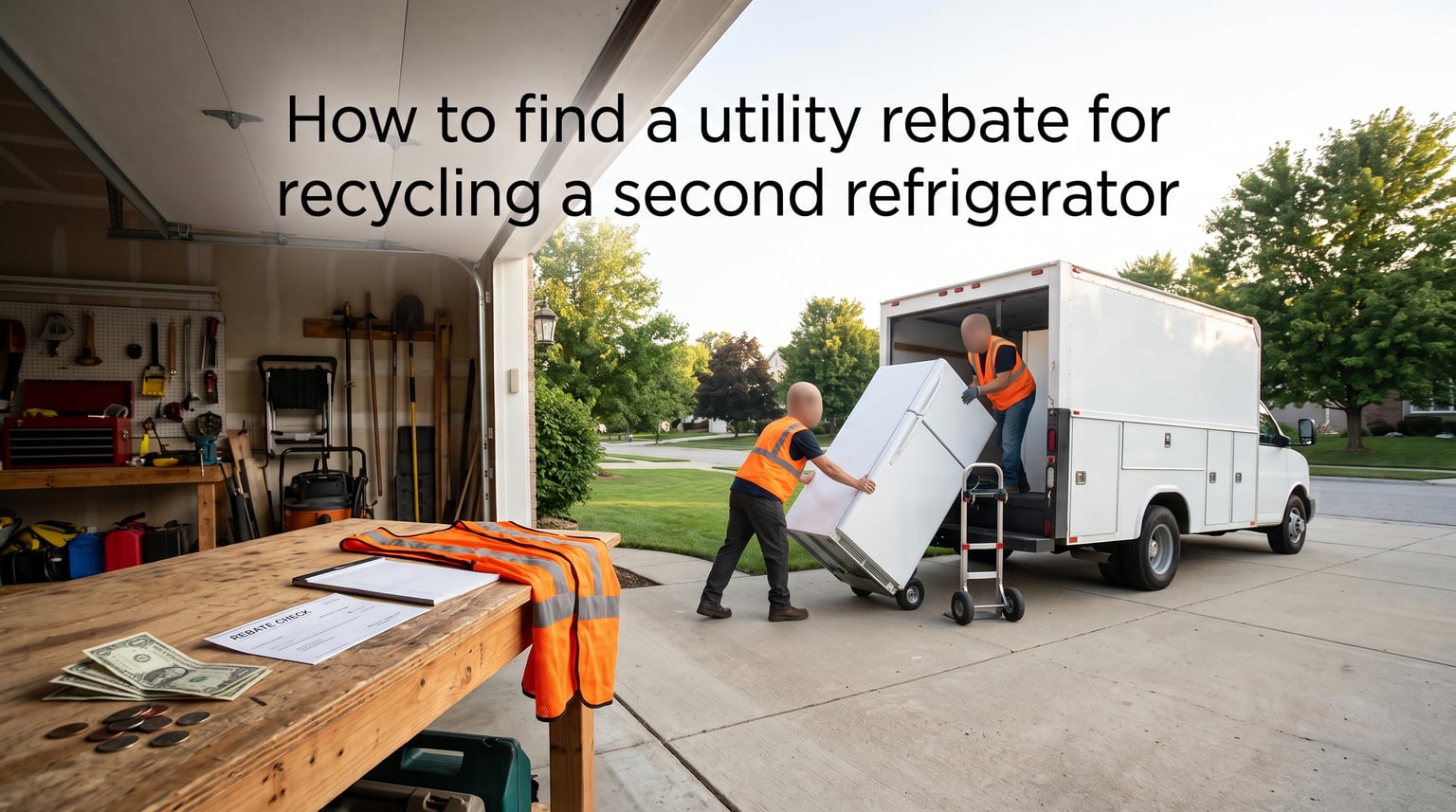
Pickup day is straightforward once you’re prepared. A two-person crew typically arrives in a box truck during your scheduled window. They confirm the unit is what you described, scan a barcode or tag attached to the door, and haul it away. The whole process takes about 10 to 15 minutes per appliance.
One Mass Save user described the team as “nice and quick,” and a DTE customer who used the program twice called it “very easy and straightforward.” Another PPL Electric customer reported leaving a side-by-side fridge on the porch without even plugging it in, and still received a $50 credit statement.
You don’t need to be home for some programs if you leave the unit in an accessible outdoor location. Other programs require an adult to be present to sign the pickup confirmation. Check your utility’s specific rules so the appointment doesn’t get rescheduled.
What to Do If No Local Utility Program Exists?
Not every utility offers a recycling rebate, and rural co-op customers sometimes run into this gap. If your search comes up empty, you still have several options for getting rid of an old fridge responsibly and sometimes for free.
Scrap metal recyclers. Many local scrap yards will pick up a working or non-working fridge for free because the steel and copper inside have scrap value. Some even pay you a small amount per unit.
Retailer haul-away. Home Depot and Lowe’s both offer old appliance removal, but most stores charge around $50 for the service. Confirm the fee before booking, so you’re not surprised at the door.
Habitat for Humanity ReStores. Some ReStores accept working appliances and may pick up for free if the unit is in sellable condition.
Municipal hazardous waste programs. Many cities run free drop-off days for large appliances through their solid waste department. Check your city or county website for schedules.
Manufacturer take-back programs. Brands like Whirlpool and GE occasionally run trade-in events that include free pickup and a rebate of their own.
None of these alternatives match the convenience of a utility program, but they will keep your old fridge out of a landfill and out of the hands of fly-by-night “free pickup” services that may dump the unit illegally.
Tips for Maximizing Your Utility Rebate
Getting the most out of your program is mostly about preparation. Here’s what our team recommends based on the most common reasons pickups get rejected or rebates get delayed.
Empty the unit completely. Food, drinks, and ice trays all need to come out. The crew will not clean a fridge for you.
Defrost the freezer in advance. Plugged-in freezers can build up ice that creates a water hazard during transport.
Measure the unit inside. Measure height, width, and depth from the inside walls to confirm it falls within the 10 to 30 cubic foot range.
Remove the doors if your state requires it. Massachusetts law requires doors off before recycling. Other states are catching up, so check local rules.
Be flexible on timing. Peak season (late spring and early summer) books up fast. Mid-fall appointments often go through quickly.
Keep your account in good standing. Past-due bills can disqualify you from some programs, so bring your account current before scheduling.
Watch for promotional bumps. Some utilities run seasonal promotions that double the rebate. AEP Ohio has run $100 promos in past summers.
Confirm the rebate form. Some programs pay as a check, others as a bill credit. If you need cash to offset a new appliance purchase, request a check or prepaid card.
Frequently Asked Questions
How to get rid of an old refrigerator for free?
Your utility company likely offers free pickup if you have an active residential electric account. Call the number on your bill or search your utility’s website for the appliance recycling program. If no program exists, a local scrap metal recycler will often haul it away for free.
What is the rebate for a refrigerator in New Jersey?
PSEG offers a $100 rebate for each qualifying refrigerator or freezer in New Jersey, with free pickup and responsible disposal. Other New Jersey utilities run similar programs with rebate amounts ranging from $50 to $100.
Are fridges free to recycle?
Yes, recycling a fridge is free through most utility appliance recycling programs. You pay nothing for pickup, and many programs also pay you a rebate of $50 to $150 for the unit.
Can you get money for recycling a refrigerator?
Yes. Utility rebates for recycling a working refrigerator typically range from $50 to $150, depending on your provider. Some programs pay more during promotional periods, and scrap metal recyclers may also pay a small amount for the metals inside the unit.
Does Home Depot take old refrigerators for free?
No, Home Depot typically charges around $50 to haul away an old refrigerator when delivering a new appliance. The fee is added at checkout and is not waived for recycling purposes.
Do second homes qualify for energy rebates?
Most utility appliance recycling programs require an active residential electric account in your name at the service address. A second home can qualify if your account is active there and the unit is in working order. Vacation rentals and commercial accounts are usually excluded.
Find Your Utility Rebate and Recycle That Second Refrigerator
Finding a utility rebate for recycling a second refrigerator is one of the easiest wins in home energy savings. In a single afternoon, you can identify your utility, schedule a free pickup, and pocket $50 to $150. From there, your electric bill drops and that garage or basement space finally opens up.
Start by searching your utility’s website today, or call the number on your latest bill. Have your account number, the unit’s measurements, and your schedule ready. Within about 6 to 8 weeks, you’ll have a rebate check or bill credit to show for it. For more practical guides on saving money and reducing waste at home, bookmark Collectons and check back for new tips each month.