
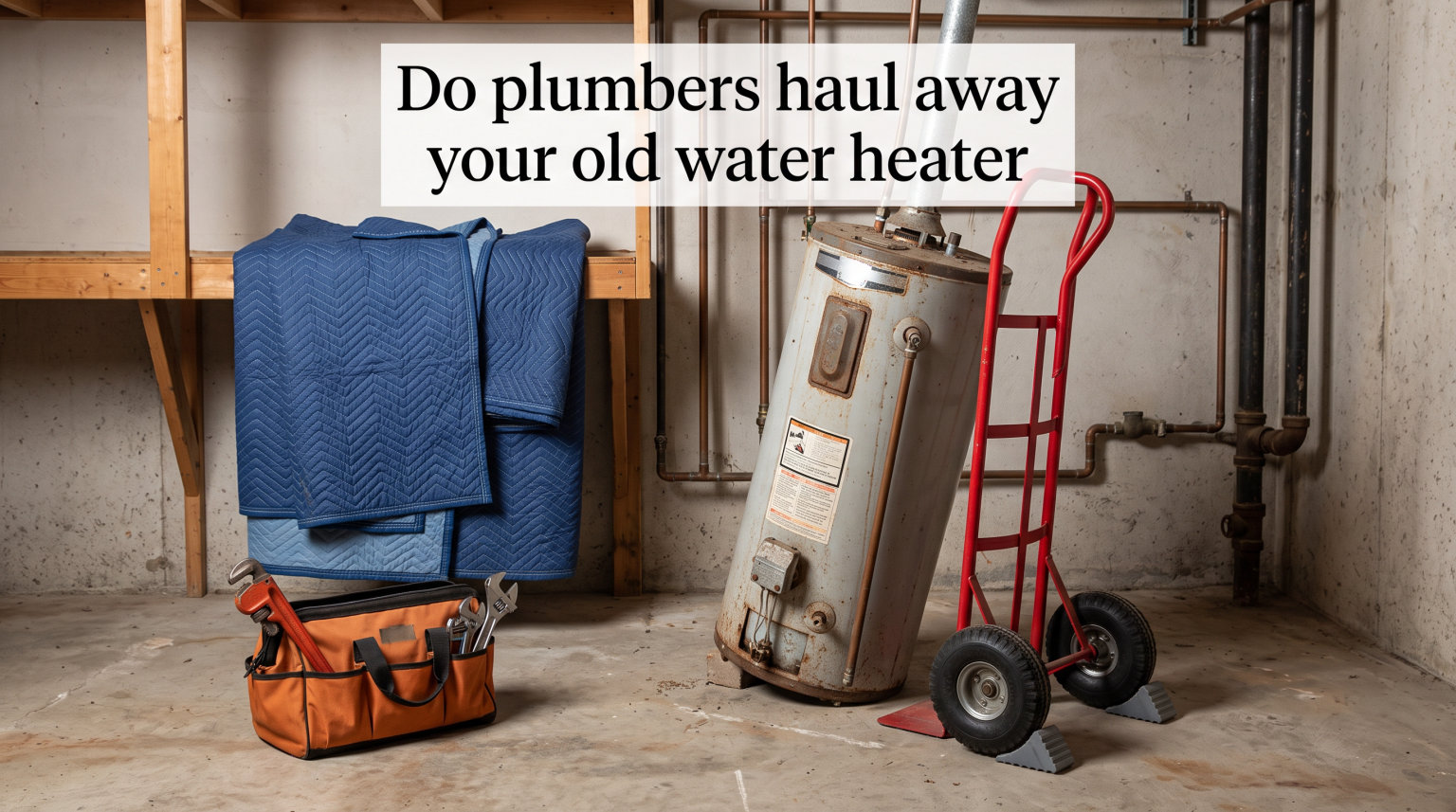
Most plumbers do not automatically haul away your old water heater. When you hire a plumber to replace a unit, they typically disconnect the old tank and install the new one, but they leave the old unit sitting where it was, and you are responsible for getting rid of it.
I have helped dozens of homeowners in 2026 deal with this exact situation, and the confusion is always the same. People assume the old tank is part of the service, then spend the next week wondering what to do with a 400-pound metal drum in their garage. This article gives you a straight answer, then walks through every option so you can plan ahead.
Table of Contents
Quick Answer: Do Plumbers Haul Away Old Water Heaters?
Plumbers do not always haul away your old water heater. Some include haul-away in their installation price, but most treat it as a separate service or send you to a retailer that handles it. The safe move is to ask your plumber before booking, because the default is usually no.
When haul-away is included, the plumber loads the old unit into their truck at the end of the job. When it is not included, you can ask them to add it for a fee, schedule a scrap metal pickup, or arrange a bulk waste pickup through your city.
Across the U.S., most homeowner replacement jobs in 2026 follow this same pattern. The plumber focuses on the install, the homeowner handles the disposal, and the old unit ends up as scrap metal, curbside bulk waste, or a paid junk removal pickup.
What Plumbers Actually Do During a Replacement
Plumbers focus on the skilled work: shutting off the gas line or electrical circuit, draining the tank, disconnecting plumbing lines, and installing the new unit.
Most plumbers do not want to deal with disposal logistics. They already have a full truck, a tight schedule, and a crew that needs to move on to the next job. Hauling away a used water heater is a separate chore that requires a place to drop it, and most plumbers are not set up for that.
Think of it as two different jobs sharing one visit. The first job is technical: cutting off fuel, draining water, and wiring up the new unit. The second job is physical: lifting a 100-plus-pound empty tank up basement stairs or through a utility room and into a truck. Plumbers are paid for the first, and the second is treated as an add-on or left for someone else.
Disconnection vs. Disposal
Disconnection is technical work, and disposal is logistics. Plumbers are trained and licensed for the first part. The second part is basically junk hauling, which is a different business.
Here is what a typical plumber handles without any extra request:
- Shut off the fuel source and water supply
- Drain the tank using the drain valve at the bottom
- Disconnect water lines, gas lines, or electrical wiring
- Move the old unit a short distance out of the install area
Everything past that point, including loading the tank into a truck and dropping it at a recycling center, is where the gray area starts.
A licensed plumber is also not the right professional for some of these tasks in every state. Disconnecting a gas line or working near electrical junction boxes may require permits, inspections, or licensed gas fitters. Disposal, however, has no such rules, which is why plumbers tend to stay out of it.
When Plumbers Do Haul Away Your Old Water Heater
Plumbers haul away old water heaters when you specifically request it and pay the extra fee, or when their service package includes it.
A plumber may remove your old unit if you are buying a new one from the same company that employs them, or if you hire a full-service plumbing outfit that operates like a retailer. Companies such as Home Depot, Lowe’s, and many local plumbing contractors bundle haul-away into the installation price for new water heaters.
Plumbers who advertise as “turnkey” usually mean they disconnect, install, and remove in one visit. This is more common with newer companies that try to match the convenience of big-box retailers. Independent contractors who work on smaller margins often skip the haul-away because they have no recycling partner.
How to Ask Your Plumber About Haul-Away
Ask the plumber three questions before booking: Is haul-away included in your quote? Is there a separate fee if it is not? Where do you take the old unit afterward?
Plumbers do not get offended by direct questions. In our experience, the contractors who hesitate to answer are often the ones who plan to leave the unit behind. Written quotes that mention “removal and disposal” protect you from surprise charges and broken promises.
Add the haul-away question to the same call where you confirm the install price, the timeline, and the brand of the new unit. Most plumbers will quote a flat fee of $50 to $150 for haul-away on the spot, and you can accept or decline before any work begins.
When Plumbers Don’t Haul Away (And What to Ask Instead)
Plumbers usually do not haul away an old water heater when they are only hired for the installation, when you already removed the unit, or when the job is a repair rather than a replacement.
If your plumber says no, you have several practical alternatives. The most common routes are scrap metal pickup, junk removal services, retailer haul-away with a new purchase, and municipal bulk pickup.
You can also ask the plumber to recommend a local hauler they trust. Good plumbers know the scrap yards, junk removal crews, and recycling centers in your area. They may even offer to call a contact for you, even if they do not haul the tank themselves.
Scrap Metal Pickup
Scrap yards take old water heaters for free because the steel has real value. A standard 50-gallon tank may earn you $7 to $30 in scrap, depending on local prices and current steel demand.
Scrap yards send a truck, lift the tank, and leave you with a small check or cash. The service is free in most regions because the recycler makes money on the metal. I recommend calling ahead with the brand, model, and approximate age, since some scrap yards only accept certain tank types.
Some yards only pick up multiple items at once, while others accept a single water heater. If your tank is gas-powered, confirm the recycler accepts gas appliances, since a few yards only handle electric units for safety reasons.
Retailer Haul-Away With a New Purchase
When you buy a new water heater from Home Depot or Lowe’s, the retailer arranges installation and haul-away through a local service provider. The unit is taken away on the same day as installation, and the fee is usually built into the install quote.
Home Depot’s installation service specifically states their provider will haul away your old unit, and installation can usually be completed in one day. Lowe’s offers a similar package. The total cost for installation plus haul-away often runs from $1,500 to $2,700, depending on your region and the unit you choose.
This is the easiest option for most homeowners in 2026 because everything is scheduled at once. The installer arrives, removes the old unit, installs the new one, and loads the old tank into the truck. You never see the old water heater again.
Junk Removal Services
Standalone water heater removal costs $150 to $250 with services like 1-800-GOT-JUNK, LoadUp, or local haulers. The price covers labor, truck fees, and disposal.
This option works well when you need the unit gone fast and cannot wait for a scrap yard or city pickup. Some junk removal services recycle the metal, and others send appliances to landfills. Ask before booking if recycling matters to you.
Book online or by phone, and most crews can arrive within 24 to 48 hours. Pricing is usually based on volume, so a single water heater often falls at the low end of the quote.
Municipal Bulk Pickup
Many cities offer free bulk pickup for large appliances, including water heaters. You set the tank at the curb on a scheduled day, and the city hauls it away at no charge.
Bulk pickup schedules vary by city. Some areas require a phone call or online request, while others run on a fixed calendar. Lead times can run from a few days to a few weeks, so this option is best for non-urgent situations.
Check your city’s waste management website for rules on how to prep the tank. Some cities require the tank to be drained, the pipes cut flush, and the unit placed at the curb by 7 a.m. on pickup day.
DIY Removal and Disposal
You can remove a water heater yourself if you are comfortable with basic plumbing. The steps are: turn off the fuel source, turn off the cold water supply, drain the tank, disconnect the lines, then move the unit to a truck or trailer.
Warning: a full 50-gallon water heater weighs around 400 pounds. Draining the tank first is essential, since water weighs 8.3 pounds per gallon. Wear gloves, eye protection, and closed-toe shoes. If the unit is in a tight basement corner or upstairs, the risk of injury or property damage goes up sharply, and DIY is no longer the right call.
Once the tank is drained, the empty cylinder weighs 100 to 150 pounds, which is still heavy. Use a hand truck or get a second person to help. Many homeowners rent a small utility trailer for $20 to $40 from a home improvement store to transport the tank to a scrap yard, which makes the job much easier.
Free Disposal Options for an Old Water Heater
You can get rid of an old water heater for free through scrap yards, municipal bulk pickup, retailer haul-away bundled with a new purchase, and some local recycling centers.
These four options cover most homeowner situations. The choice depends on your timeline, location, and whether you are buying a new unit.
If you want to get something back, the scrap yard is the only option that pays you. The other three are free, but you give up the metal’s value in exchange for convenience or municipal service.
Quick Comparison of Removal Methods
- Scrap metal pickup: free, plus $7 to $30 in scrap value, 1-7 day lead time
- Retailer haul-away: free with new purchase, scheduled same day as install
- Municipal bulk pickup: free, but may take 1-4 weeks
- Junk removal: $150 to $250, same-day or next-day service
- Plumber haul-away: $50 to $150 extra, scheduled during install
For most homeowners, the cheapest path is scrap pickup, and the fastest path is junk removal. If you are buying a new unit from a big-box retailer, the bundled haul-away is usually the easiest choice.
What to Do If Your Plumber Takes the Old Heater Without Asking
You can ask the plumber to return the old unit or refund the scrap value. Some plumbers sell working old water heaters for extra income, which frustrates homeowners who were not told.
Reddit users in r/homeowners and r/Plumbing have shared stories of plumbers quietly removing old units without permission. The cleanest fix is to ask the contractor upfront, in writing, what happens to the old water heater. If you have already lost the unit, request the scrap value or a small credit toward the final invoice.
Some contractors argue that haul-away is implied in the install fee, even when it is not listed. This is a gray area, but most reputable plumbers will either return the unit, knock a small amount off the bill, or explain where the old heater went if you ask directly.
What Happens to Recycled Water Heaters
Recycled water heaters are stripped down for steel, copper, and other metals, which are sold to manufacturers and reused in new products.
About 70 percent of an average water heater by weight is steel, and most of the rest is copper or aluminum fittings. Scrap yards process the tank, sort the metals, and ship them to smelters that feed raw material back into appliance, automotive, and construction supply chains.
This is why scrap yards will pick up an old water heater for free, or even pay you a small amount. They are not running a charity; they are running a commodities business, and your old tank is a small but reliable input.
Signs Your Water Heater Needs Replacement
Your water heater needs replacement when it is over 10 years old, shows signs of rust or leaks, makes rumbling noises, or fails to produce consistent hot water.
Most standard tank water heaters last 8 to 12 years. Tankless units typically last 15 to 20 years. A tank that leaks from the bottom is usually beyond repair, and replacement is the only safe option. If you are planning to replace soon, line up your disposal plan before the install crew arrives.
Other warning signs include discolored water from the hot taps, water that smells metallic, visible corrosion around the fittings, and pilot lights that keep going out on gas models. Any of these can signal a failing unit that should be replaced rather than repaired.
FAQ
How do I get rid of my old hot water heater?
You can get rid of an old water heater by scheduling a free scrap metal pickup, setting it out for municipal bulk pickup, booking a junk removal service, or asking your plumber to haul it away for a fee. The cheapest option is usually a scrap yard that pays you for the steel.
How much is a 50 gallon hot water heater worth in scrap?
A 50-gallon water heater is worth $7 to $30 in scrap metal, depending on local steel prices. Scrap yards accept the tank for free because the steel itself has value, and some yards pay cash on pickup.
How much does it cost to remove an old water heater?
Removing an old water heater costs $0 with scrap pickup or municipal bulk service, $150 to $250 with junk removal, and $50 to $150 extra if your plumber handles it. Retailer haul-away with a new install is usually bundled into the install price.
Will Home Depot haul away an old water heater?
Yes, Home Depot includes haul-away with their water heater installation service. Their service provider disconnects the old unit, installs the new one, and takes the old tank away on the same day, with installation usually completed in one day.
Final Thoughts on Whether Plumbers Haul Away Your Old Water Heater
Plumbers haul away your old water heater only when you specifically ask, and the default answer is no. Most plumbers handle disconnection and installation, then leave the old unit behind for you to manage.
Plan your disposal before the installer arrives. Schedule a scrap pickup, arrange retailer haul-away with a new purchase, book a junk removal service, or ask your plumber to add haul-away for a fee. A five-minute conversation before the job saves you from a 400-pound surprise in your garage, and in most cases it costs nothing at all.