
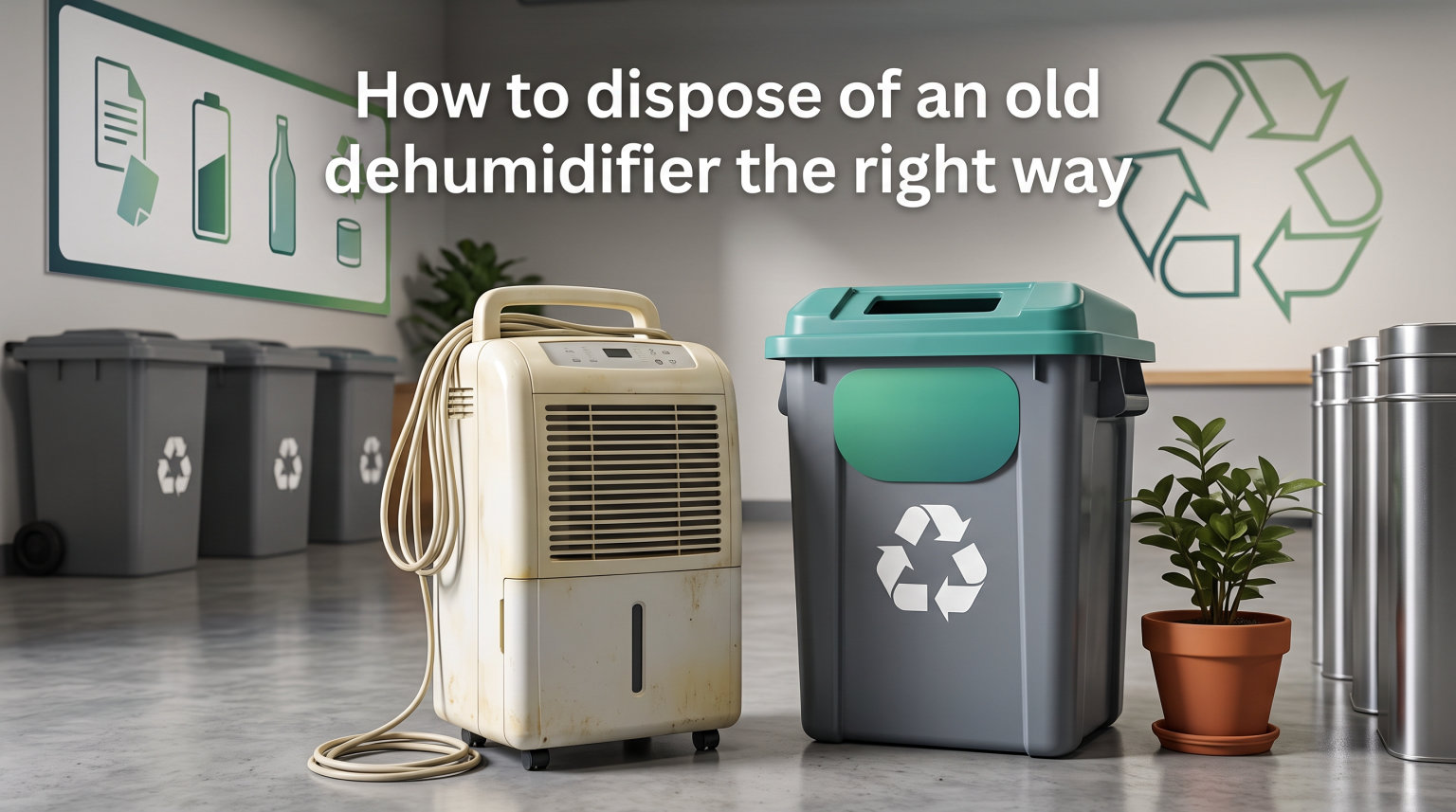
Figuring out how to dispose of an old dehumidifier the right way is one of those tasks that falls through the cracks for most homeowners. The unit sits in the basement or garage for months, then finally dies, and you’re left wondering if you can toss it on the curb. After helping dozens of friends walk through this exact situation, I can tell you there’s a specific process that protects you, the environment, and sometimes your wallet.
This guide covers every disposal method I’ve seen work, from free municipal drop-offs to retailer take-back programs. You’ll also learn which components make dehumidifiers hazardous, what regulations govern disposal, and what to do if your unit still works.
Table of Contents
What’s Inside a Dehumidifier That Makes Disposal Tricky?
Before you can decide how to dispose of an old dehumidifier, you need to know what you’re actually dealing with. I took apart a dead unit last year, and the contents surprised me. The list below covers the materials that turn a simple appliance into a regulated disposal item.
Refrigerant (Freon, R-22, or R-410A): Most dehumidifiers contain refrigerant chemicals that damage the ozone layer if released. These are governed by the EPA’s Clean Air Act Section 608.
Compressor: A sealed metal unit containing oils mixed with refrigerant residue.
Copper wiring and coils: Highly recyclable but require proper handling to avoid landfill contamination.
Circuit boards: Contain small amounts of lead, mercury, and other heavy metals that classify as e-waste.
Steel and aluminum housing: The bulk of the unit by weight and easily recycled once separated.
Plastic reservoir and housing: Generally recyclable but rarely accepted curbside.
That mix of refrigerants, heavy metals, and electronics is exactly why regular trash pickup usually won’t take the unit. Landfills and waste haulers have restrictions on appliances containing refrigerants because puncturing the sealed system during compaction can release those chemicals into the air.
Can You Just Throw Away a Dehumidifier?
No, you should not throw away a dehumidifier in your regular trash in most cases. Even if your local hauler physically picks it up at the curb, doing so may violate federal or state regulations, particularly if the unit still contains refrigerant.
The federal Clean Air Act requires that refrigerants be recovered by an EPA-certified technician before disposal. Many states layer additional rules on top of that, requiring units to go through licensed e-waste or appliance recyclers. I’ve seen Reddit threads where people tossed dehumidifiers on the curb and watched trash haulers leave them behind with a sticker explaining the policy.
If you live in a state with no specific restrictions, your trash company may technically accept the unit. Still, the responsible choice is recycling because refrigerant recovery prevents measurable environmental damage and the steel, copper, and aluminum can be reused.
How to Dispose of an Old Dehumidifier the Right Way
Here’s the step-by-step process I recommend based on what actually works across different regions. The order matters because some preparation steps are required regardless of which disposal option you choose.
Unplug the unit and let it dry. Give it at least 24 hours after the last use so internal components are completely dry. This prevents water from leaking during transport.
Drain and clean the water reservoir. Empty the tank, wipe it down, and leave it open or removed so the interior dries fully.
Remove accessories and detachable parts. Take off any washable filters, hose attachments, or drain connectors. These can be cleaned and reused or trashed separately.
Leave refrigerant handling to professionals. Do not attempt to puncture, drain, or dismantle the sealed cooling system. This is illegal without EPA certification and releases harmful chemicals.
Choose your disposal method. Pick from recycling centers, retailer take-back, junk removal, or municipal drop-off based on cost and convenience.
Transport the unit safely. Keep it upright during transport, secure it in your vehicle, and bring any required identification or fees.
Get a receipt or confirmation. Ask for documentation that the unit was accepted, especially if you paid a fee. This protects you if there’s ever a question about compliance.
Following these steps takes about 15 minutes of active work. Most of the time is spent waiting for the unit to dry before transport.
Where to Recycle Your Dehumidifier Near You
Licensed recycling centers are my top recommendation for most people because they handle refrigerants properly and recover the metals. Finding one is easier than it sounds once you know where to look.
Start with your county or city’s solid waste authority website. Most publish a searchable database of accepted items at local drop-off sites. Dakota County in Minnesota, Kent County in Michigan, and similar municipal pages let you search “dehumidifier” and see nearby options instantly.
Earth911.com is another reliable national resource. You type in your ZIP code and the material category (appliances or e-waste), and it returns a list of certified recyclers within driving distance. I’ve used it in three different states and always found at least one option within 20 miles.
Some recycling centers accept dehumidifiers for free because the metal value covers their handling costs. Others charge a small fee, typically between $10 and $25, to cover refrigerant recovery. Either way, you get proper disposal without the risk of breaking the law or harming the environment.
Retailer Take-Back Programs Worth Knowing
Major retailers offer some of the most convenient disposal paths, especially if you’re already buying a replacement unit. Here’s the current state of the major programs as of 2026.
Lowe’s accepts dehumidifiers for recycling at most store locations. The service is typically free when you’re purchasing a new appliance, but standalone drop-offs usually carry a $10 to $20 fee. Call your local store to confirm pricing because policies vary by region.
Best Buy has a robust appliance and e-waste recycling program that covers dehumidifiers in most states. There’s usually a $30 fee per unit, but the program includes proper refrigerant handling, which justifies the cost for many homeowners.
Home Depot partners with local recyclers in many areas. Some stores offer free drop-off for working trade-in programs during seasonal events. For standalone disposal, expect fees in the $15 to $40 range.
Call ahead. Retailer programs change frequently, and acceptance of refrigerant-containing appliances varies by state law. A two-minute phone call saves a wasted trip.
Junk Removal and Pickup Services
Full-service junk removal companies like 1-800-GOT-JUNK and LoadUp will pick up your dehumidifier from inside your home or garage and handle disposal for you. The convenience is real, especially for heavy basement units, but you’ll pay for it.
Pricing typically runs $130 to $300 for a single dehumidifier pickup, depending on your location and whether you bundle it with other items. The companies handle refrigerant recovery through certified partners, so the disposal is compliant even if the price feels steep.
For someone with mobility issues, no working vehicle, or a multi-unit cleanup, the premium is worth it. For everyone else, the recycling center or retailer route delivers the same end result for far less money.
Step-by-Step: Preparing Your Dehumidifier for Disposal
Proper preparation makes the handoff smooth and prevents rejected loads. Here’s the checklist I share with anyone helping me move a unit out of their home.
Run the unit until the reservoir is empty. If the dehumidifier still runs, run it in a dry room until the tank reads empty. This prevents water from spilling during transport.
Unplug and let it sit for 24 hours. This evaporates residual moisture in the coils and internal reservoir.
Remove and rinse the water tank. Clean it with mild soap, dry it thoroughly, and set it next to the unit or remove it entirely.
Clean or replace the air filter. Most dehumidifier filters are washable. A quick rinse prevents mold and dust from spreading during transport.
Bundle cords neatly. Wrap the power cord and secure it with a twist tie or velcro strap so it doesn’t snag on anything.
Keep the original manual if you have it. Some recyclers want the model number for refrigerant tracking. A photo of the spec plate on the back also works.
Total prep time is under 30 minutes. Doing this step means your recycling center or retailer won’t reject the unit when you arrive.
Federal and State Regulations You Need to Know
The EPA enforces the Clean Air Act Section 608, which governs refrigerant recovery from appliances. This is the federal backbone of dehumidifier disposal rules. Any technician who recovers refrigerant from your unit must be EPA 608 certified. That’s why most disposal options route the unit to licensed professionals rather than letting you drop it off anywhere.
The Resource Conservation and Recovery Act (RCRA) handles hazardous waste classification. Dehumidifiers don’t usually meet RCRA hazardous waste thresholds on their own, but the circuit boards and refrigerant oils can push a unit into regulated territory in certain states.
State rules vary widely. California, New York, Washington, and Massachusetts have stricter appliance disposal laws that require certified processing. Other states defer entirely to federal guidelines. Before you drive to a drop-off, check your state’s environmental agency website for current rules.
Penalties for improper disposal can reach $25,000 per day under the Clean Air Act for businesses, and individual fines vary by state. For homeowners, the practical risk is a refused pickup or a fine from your local waste authority. Neither is worth the savings of tossing the unit in your regular trash.
Cost Breakdown by Disposal Method
Here’s what real people pay across the disposal options, based on forum reports and published program fees.
Municipal drop-off: Free to $15 in most counties with active recycling programs.
Retailer take-back (Lowe’s, Home Depot): $10 to $40 per unit, often waived with new purchase.
Best Buy appliance recycling: $30 flat fee, which covers refrigerant handling.
Licensed recycling center: Free to $25, depending on refrigerant recovery costs.
Junk removal service: $130 to $300 for single-item pickup.
For most homeowners, the free or low-cost municipal and recycling center options handle the job. The higher-priced services exist for convenience and for situations where no other option works.
Can You Donate a Working Dehumidifier Instead?
Yes, if your dehumidifier still runs properly, donating it is the most sustainable option. Habitat for Humanity ReStores, Goodwill, and local thrift shops often accept small appliances in working condition. You can also list it for free on Craigslist, Facebook Marketplace, or Freecycle, where someone dealing with a damp basement will usually grab it quickly.
Skip donation only if the unit has failing parts, leaks, or has been recalled. A non-working dehumidifier is a liability for the receiving organization and should go through proper recycling instead.
Frequently Asked Questions
Can you just throw away a dehumidifier?
No, you should not throw away a dehumidifier in regular trash in most cases. Most units contain refrigerants regulated by the EPA’s Clean Air Act, and many local waste haulers refuse them entirely. Use a licensed recycling center, retailer take-back program, or municipal drop-off instead.
How do I dispose of a used dehumidifier?
Drain and clean the water tank, remove accessories, and take the unit to a licensed recycling center or retailer take-back program. Do not attempt to remove refrigerant yourself. Options include municipal drop-off events, junk removal services, or donation if the unit still works.
Does Lowe’s accept dehumidifiers for recycling?
Yes, most Lowe’s stores accept dehumidifiers for recycling. Fees typically range from $10 to $20 for standalone drop-offs, and the fee is often waived when you purchase a new appliance. Call your local store to confirm current pricing and accepted models.
How much does dehumidifier disposal cost?
Disposal costs range from free to over $300 depending on the method. Municipal drop-offs and some recycling centers accept units free of charge. Retailer take-back programs typically charge $10 to $40, while junk removal services run $130 to $300 for a single pickup.
Do all dehumidifiers contain Freon?
Most compressor-based dehumidifiers contain refrigerant, often R-410A or R-22 in older models. Desiccant dehumidifiers use no refrigerant. Any unit with refrigerant requires proper disposal through a certified technician, regardless of how little remains in the sealed system.
Wrapping Up: How to Dispose of an Old Dehumidifier the Right Way
Knowing how to dispose of an old dehumidifier the right way comes down to three actions: prep the unit properly, choose a certified disposal channel, and never touch the refrigerant system yourself. Free municipal drop-offs and licensed recycling centers cover most situations, while retailer programs and junk removal fill the gaps when convenience matters more than cost.
Start with your county’s recycling database or Earth911.com to find a drop-off near you. If the unit still works, list it for donation or free pickup before sending it through recycling. Either way, you’ll have it out of your garage within a week and you will have avoided the fines, the environmental harm, and the hassle of dealing with it later.