
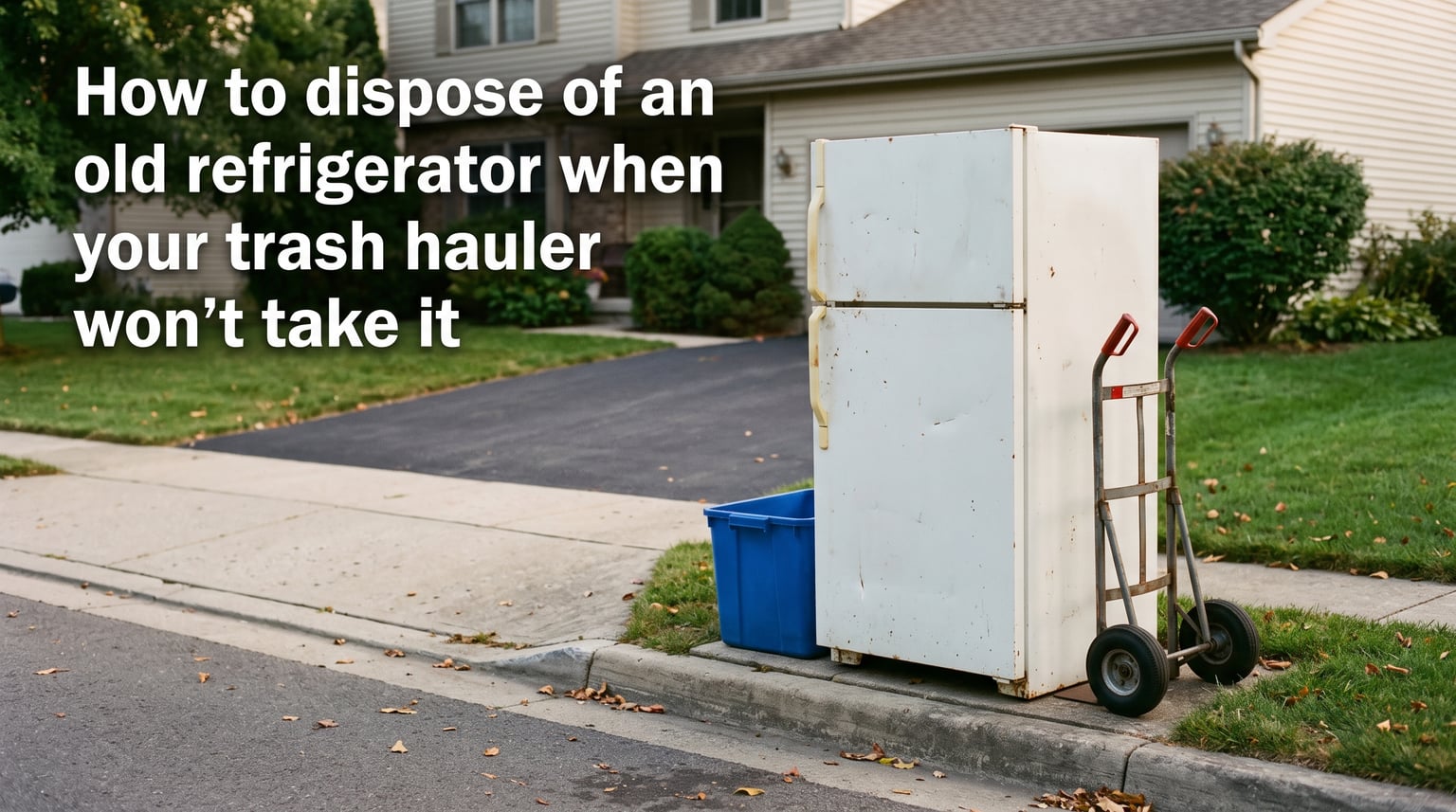
You put your old refrigerator out on the curb, confident the weekly trash truck will haul it away. Then you get a notice taped to the door, or worse, the fridge sits there for two weeks straight while neighbors start to wonder what is going on. Sound familiar? You are not alone. Thousands of homeowners run into this exact problem every year.
The truth is, most standard trash haulers will not touch a refrigerator, and for good reason. Federal regulations, safety concerns, and environmental hazards make these appliances a special category of waste that requires specific handling. But that does not mean you are stuck with a dead fridge in your garage forever.
In this guide, I will walk you through exactly how to dispose of an old refrigerator when your trash hauler will not take it. We will cover free options, paid services, recycling programs, legal requirements, and the preparation steps you need to handle before anyone picks it up. By the end, you will have a clear plan to get rid of that fridge quickly, legally, and with as little hassle as possible.
Table of Contents
Why Your Trash Hauler Refuses to Take Refrigerators?
Before we dive into disposal options, it helps to understand why trash haulers reject refrigerators in the first place. The answer comes down to three main issues: refrigerant chemicals, federal law, and child safety.
Every refrigerator contains refrigerants, the chemical compounds that make cooling possible. Older models use Freon (also called R-12 or CFCs), while newer ones use HFCs or HCFCs. These substances are potent greenhouse gases. A single refrigerator can contain chemicals that, if released into the atmosphere, have the warming power of burning hundreds of pounds of coal. That is why the Environmental Protection Agency strictly regulates who can handle and dispose of refrigerants.
Under the Clean Air Act Section 608, only EPA-certified technicians are legally allowed to recover refrigerants from appliances. Your local trash collector almost certainly does not have this certification. Even if they wanted to take your fridge, doing so without proper refrigerant recovery would violate federal law.
There is also the Refrigerator Safety Act, which requires doors to be removed before disposal to prevent child entrapment. Children have died after becoming trapped inside discarded refrigerators with latch-style doors. Most trash haulers simply are not equipped to verify door removal, recover refrigerants, and handle the heavy lifting involved.
So when your hauler says no, it is not just policy. It is a combination of environmental protection law, safety regulation, and practical logistics.
What to Do Before Disposal: Your Preparation Checklist
No matter which disposal method you choose, you need to prepare the refrigerator first. Skipping these steps can result in rejected pickups, safety hazards, or even legal trouble. Here is the preparation process our team recommends.
Step 1: Unplug and Defrost
Unplug the refrigerator at least 24 to 48 hours before your scheduled pickup or drop-off. This allows the unit to fully defrost, which prevents water leaks during transport. Open the doors and let the interior come to room temperature. Place towels around the base to catch any melting ice or condensation.
If you have a freezer compartment, the defrosting process may take longer. Check for ice buildup in the freezer seal and make sure all frost has melted completely before moving the unit.
Step 2: Remove All Food and Shelves
This sounds obvious, but you would be surprised how often people forget. Clear out all food, beverages, ice trays, and removable shelves. Glass shelves should be wrapped in bubble wrap or newspaper to prevent breakage during transport. If you are donating the fridge, clean the interior thoroughly with a mixture of baking soda and warm water to eliminate odors.
Step 3: Remove the Doors (Required by Law)
This is the step most people skip, and it is required by federal law under the Refrigerator Safety Act. Removing the doors prevents children from climbing inside and becoming trapped. Many donation centers, junk removal services, and recycling facilities will refuse your refrigerator if the doors are still attached.
Here is how to remove refrigerator doors safely:
1. Unplug the unit and locate the hinge covers on top of the refrigerator. Pop them off with a flathead screwdriver.
2. Use a socket wrench to remove the bolts holding the top hinge in place. Have a second person hold the door steady so it does not fall.
3. Lift the door straight up off the bottom hinge pin. Set it aside in a safe location.
4. If your model has a water dispenser or ice maker, disconnect the water supply line before removing the door. Use a towel to catch any residual water.
5. Repeat the process for the freezer door if you have a side-by-side or French door model.
Store the removed doors next to or strapped to the refrigerator so they travel together. Some disposal services may ask you to leave the doors off the unit entirely.
Step 4: Tape Loose Parts and Secure the Cord
Tape the power cord to the back of the refrigerator so it does not drag or get caught during transport. Secure any loose drawers, brackets, or hardware with tape or by placing them inside the unit. If you removed the doors, tape them to the side of the fridge for transport.
Free Refrigerator Disposal Options
Nobody wants to pay to get rid of an old appliance. The good news is that several completely free options exist, and some might even put cash back in your pocket. Let me walk you through the best free disposal methods I have found.
Utility Company Rebate and Recycling Programs
This is my top recommendation for anyone with a working refrigerator. Many electric and gas utilities across the country run appliance recycling programs that will pick up your old fridge for free and pay you a rebate. The rebate amount varies by utility, but I have seen programs offering anywhere from $20 to $75 per unit.
Here is how it works: you call your utility company or visit their website, schedule a free pickup, and they send a team to haul away your refrigerator. The unit goes to an EPA-certified recycling facility where the refrigerant is properly recovered and the metal is recycled. Some utilities even offer additional rebates for replacing an old fridge with an Energy Star certified model.
Programs I have encountered include Consumers Energy in Michigan, DTE Energy rebates, PSE&G in New Jersey, Mass Save in Massachusetts, BGE Smart Energy in Maryland, and Georgia Power in the Southeast. Check your local utility’s website or call their customer service line to ask about appliance recycling. You can also search the Energy Star website for participating programs in your area.
One important note: most utility programs require the refrigerator to be in working condition. If your fridge is dead, you will need to look at other options on this list.
City or Municipal Bulk Pickup Days
Many cities and counties offer bulk waste pickup days specifically for large items that regular trash service will not accept. These are often scheduled monthly, quarterly, or twice a year. Some municipalities include appliance pickup in these programs, though they may require advance scheduling or a special request.
Call your city’s sanitation or public works department to ask about bulk pickup schedules. Some cities will collect refrigerators for free on designated bulk days, while others charge a small fee of $15 to $50 per appliance. You may need to place the item at the curb by a specific time, and some programs require door removal before pickup.
If your city does not offer bulk pickup for appliances, ask whether they have a drop-off location. Many counties operate waste transfer stations or appliance recycling centers where residents can drop off refrigerators at no charge or for a minimal fee.
Donate to Charity
If your refrigerator still works, donation is an excellent option. Charities like Habitat for Humanity ReStore, Salvation Army, and Goodwill accept working appliances and will often schedule a free pickup at your home. Your donation may also qualify as a tax deduction, which can offset your costs if you had the fridge professionally cleaned or transported.
Habitat ReStore locations are particularly good about appliance donations because they resell items at discounted prices to fund housing projects. Call your local ReStore to confirm they accept refrigerators and to schedule a pickup. Some locations have age limits, typically accepting refrigerators that are less than 10 years old.
You can also check Donation Town, an online directory that connects donors with local charities offering free pickup. Just enter your zip code to find organizations in your area that take appliances.
Sell or Give It Away Online
Facebook Marketplace, Craigslist, and Freecycle are goldmines for getting rid of a working refrigerator. I have seen people give away perfectly functional fridges within hours of posting. List your appliance with clear photos, dimensions, and an honest description of its condition.
If the fridge works well and is relatively new, try selling it. Used refrigerators in good condition can fetch $50 to $300 depending on age, brand, and features. Be upfront about any issues, and require the buyer to handle pickup and transport.
For a quick giveaway, post on Buy Nothing groups on Facebook. These hyperlocal communities are full of people happy to pick up a free appliance, and they often have trucks. List it in the morning, and it is usually gone by evening.
Retailer Haul-Away When Buying a New Fridge
If you are replacing your old refrigerator with a new one, most major retailers offer free haul-away service with delivery. Best Buy, Home Depot, Lowe’s, and many local appliance stores will remove your old unit when they deliver the new one. This service is usually included at no additional cost, though some retailers charge a nominal fee.
This is by far the easiest disposal method because you do not have to lift a finger. The delivery team handles disconnection, removal, and proper disposal or recycling. Just confirm the haul-away service when you place your order, and make sure the old refrigerator is accessible and unplugged before delivery day.
One thing to check: some retailers will not haul away refrigerators that are full of mold, have standing water, or contain spoiled food. Clean the unit thoroughly before the delivery team arrives.
Paid Refrigerator Disposal Options
When free options are not available, or your refrigerator is broken beyond repair, paid disposal services are the next step. Costs vary widely based on your location, the condition of the appliance, and the service you choose.
Junk Removal Services
Companies like 1-800-GOT-JUNK, The Junkluggers, and local haulers specialize in removing bulky items from your home. They handle the heavy lifting, stair navigation, and loading. Most offer same-day or next-day service, which is ideal if you need the fridge gone quickly.
Based on my research and forum discussions, junk removal services typically charge between $100 and $600 for refrigerator removal. The price depends on your location, accessibility (is the fridge in a basement or second floor?), and whether you have other items to remove at the same time. Getting multiple quotes is always smart, as prices can vary significantly between companies.
The advantage of using a professional junk removal service is convenience. They do everything from disconnecting the unit to cleaning up the space afterward. Many companies also prioritize donation and recycling over landfill disposal, which is better for the environment.
When choosing a junk removal service, ask whether they are EPA-certified for refrigerant recovery. Reputable companies partner with certified facilities to handle refrigerants properly. If a company cannot answer that question, look elsewhere.
Local Handyman or Independent Hauler
Beyond national chains, many independent haulers and handymen offer appliance removal at lower rates. You can find them on platforms like TaskRabbit, Thumbtack, or through local community boards. These individuals often charge $50 to $150 per trip, making them a budget-friendly alternative to full-service junk removal companies.
Just be aware that independent haulers may not be EPA-certified for refrigerant recovery. Ask how they handle disposal and where they take the appliances. If they are simply dumping the fridge at a landfill, you could be inadvertently contributing to environmental harm.
Roll-Off Dumpster Rental
If you are doing a larger cleanup project like a kitchen renovation, estate cleanout, or major decluttering, renting a dumpster might make sense. A 10-yard or 15-yard dumpster can hold a refrigerator along with other renovation debris.
However, there is a catch. Many dumpster rental companies will not accept refrigerators in their containers due to refrigerant regulations. Those that do accept appliances typically charge an additional fee of $30 to $100 per unit for proper disposal and refrigerant recovery. Always confirm with the rental company before tossing an appliance into a dumpster.
Dumpster rental costs range from $200 to $500 per week depending on size and location. This only makes financial sense if you have other items to dispose of alongside the refrigerator.
Recycling Centers and Scrap Metal Options
Refrigerators are largely made of steel, aluminum, and copper, all of which are valuable recyclable materials. An average refrigerator contains 100 to 120 pounds of recyclable steel alone. This makes recycling an environmentally responsible and sometimes profitable disposal option.
Appliance Recycling Centers
Many communities have dedicated appliance recycling facilities that accept refrigerators. These facilities are equipped with EPA-certified equipment to safely recover refrigerants before breaking down the appliance for metal recycling. Some charge a small disposal fee of $25 to $50, while others accept units for free because the scrap metal has value.
To find a recycling center near you, search the Earth911 database or contact your county waste management office. Steel Recycling Institute also maintains a directory of appliance recyclers. When calling, ask about their fees, whether they accept non-working units, and their hours of operation.
Scrap Metal Yards
Scrap yards will sometimes take old refrigerators and pay you for the metal value. However, there are important restrictions. Most scrap yards will not accept a refrigerator unless the refrigerant has already been removed by a certified technician. Dropping off a fridge with the refrigerant still inside violates federal law.
If you can have the refrigerant professionally removed first, a scrap yard may pay you $15 to $40 for the metal content. Keep in mind that the cost of professional refrigerant removal often exceeds the scrap value, making this option more practical if you can find a certified technician who works at a reasonable rate.
Some full-service scrap metal facilities have certified technicians on staff who can recover the refrigerant on-site. Call ahead to confirm before loading up your truck.
What Happens to a Recycled Refrigerator?
When a refrigerator arrives at a proper recycling facility, the process is thorough. First, a certified technician recovers the refrigerant using specialized vacuum equipment. This prevents harmful chemicals from entering the atmosphere. Next, the compressor oil is drained and collected separately.
The facility then removes and separates the different materials. Steel goes to steel mills for reprocessing. Aluminum, copper wiring, and plastic components are sorted into separate streams. Even the insulation foam, which can trap refrigerant, is processed in sealed chambers to capture any residual chemicals. In total, up to 95% of a refrigerator’s components can be recovered and reused.
How to Transport a Refrigerator Yourself?
If you choose to drop off your refrigerator at a recycling center or scrap yard, you will need to transport it yourself. Moving a refrigerator is not like moving a bookshelf. These appliances weigh 150 to 300 pounds, have delicate cooling systems, and can cause serious injury if handled incorrectly. Here is how to do it safely.
Gather the Right Equipment
You will need an appliance dolly with straps, moving blankets or thick padding, a pickup truck or large SUV, and at least two strong people. A ratchet strap or heavy-duty bungee cords are essential for securing the unit during transport. Do not attempt to move a refrigerator without an appliance dolly. Regular hand trucks do not have the strap system needed to secure a top-heavy appliance.
Keep It Upright
This is the single most important rule of refrigerator transport. Always keep the refrigerator upright. Laying a fridge on its side or back allows compressor oil to flow into the cooling lines, which can destroy the compressor when the unit is plugged back in. If you absolutely must tilt the refrigerator to navigate a doorway or stairwell, keep the angle as shallow as possible and return it to an upright position immediately.
If the refrigerator does get tilted significantly, let it sit upright for 24 hours before plugging it in. This gives the compressor oil time to settle back into its proper position.
Secure for Transport
Load the refrigerator onto the appliance dolly and strap it securely. Wheel it to your vehicle and lift it into the truck bed or cargo area. Use ratchet straps to anchor the dolly and refrigerator to the vehicle’s tie-down points. Pad the unit with moving blankets to prevent scratches and dents from shifting during transit.
Drive slowly and avoid sudden stops. Have your passenger check periodically that the unit has not shifted. When you arrive at your destination, use the dolly to unload and never drag the refrigerator across the ground, as this can damage the cooling lines underneath.
EPA Compliance and Legal Requirements You Need to Know
Improper refrigerator disposal is not just bad for the environment. It can result in significant fines. The Clean Air Act imposes penalties of up to $37,500 per day for knowingly venting refrigerants into the atmosphere. While enforcement typically targets businesses rather than individual homeowners, you should still follow the law.
The core legal requirement is simple: refrigerants must be recovered by an EPA-certified technician using approved equipment before the appliance is dismantled, crushed, or disposed of. This applies whether you are recycling the unit, scrapping it, or sending it to a landfill. As long as you use a licensed junk removal service, utility program, or certified recycling center, compliance is handled for you.
The Responsible Appliance Disposal (RAD) program is a voluntary EPA partnership that recognizes companies committed to best practices in appliance disposal. When choosing a disposal service, look for RAD partners or ask about their refrigerant recovery procedures.
State and local laws add another layer. Some states ban refrigerators from landfills entirely. Others require specific labeling or documentation when transporting appliances. Check your state’s environmental protection agency website for local requirements before choosing a disposal method.
Finally, remember the door removal requirement. Whether you are donating, recycling, or junking your refrigerator, remove the doors first. This is a federal safety standard, and non-compliance can result in rejected pickups and potential liability if someone is injured.
The Environmental Impact of Improper Disposal
Understanding why proper disposal matters can motivate you to do it right. Refrigerators that end up in landfills or are dumped illegally cause serious environmental damage that lasts for decades.
The refrigerants inside older refrigerators are particularly harmful. CFCs and HCFCs deplete the ozone layer, which protects Earth from harmful ultraviolet radiation. While CFC production was banned in developed countries under the Montreal Protocol, millions of older refrigerators still contain these chemicals. When a refrigerator is crushed in a landfill without refrigerant recovery, those chemicals escape directly into the atmosphere.
Even newer refrigerants are problematic. HFCs do not deplete the ozone layer, but they are extremely potent greenhouse gases. One pound of a common HFC refrigerant has the warming potential of over 1,400 pounds of carbon dioxide. Improperly disposing of a single refrigerator can cancel out years of personal carbon reduction efforts.
On the positive side, recycling a refrigerator recovers about 120 pounds of steel, 8 pounds of aluminum, and 5 pounds of copper. That recovered metal reduces the need for mining and manufacturing, saving energy and reducing industrial emissions. Proper disposal is not just about following rules. It is a meaningful environmental action.
Quick Decision Guide: Which Option Is Right for You?
With so many options, it can feel overwhelming to choose. Here is a quick breakdown to help you decide based on your situation.
If your refrigerator still works: Start with your utility company’s rebate program. It is free, may pay you cash, and handles everything. If no program is available in your area, try donating to Habitat ReStore or listing it free on Facebook Marketplace.
If your refrigerator is broken: Look for a local appliance recycling center or call a junk removal service. City bulk pickup may also accept non-working units if you schedule it in advance.
If you are buying a new refrigerator: Use the retailer’s haul-away service. It is usually free with delivery and requires zero effort on your part.
If you have a truck and want to save money: Remove the doors, secure the unit, and transport it to a local recycling center. Call ahead to confirm they accept refrigerators and ask about fees.
If you need it gone today: Call a junk removal service that offers same-day pickup. Expect to pay $100 to $300 depending on your location.
If you are doing a larger cleanup: Consider a dumpster rental, but confirm the company accepts appliances and factor in the additional per-unit fee.
The bottom line: there is almost always a free or low-cost option available. You just need to know where to look.
FAQs
Can I throw away a refrigerator in a dumpster?
Most roll-off dumpster rental companies will not accept refrigerators due to EPA regulations on refrigerant recovery. Those that do accept appliances typically charge an additional fee of $30 to $100 per unit for proper handling and disposal. Always confirm with the rental company before placing a refrigerator in a dumpster.
How to get rid of an old refrigerator for free?
The best free options include utility company rebate programs (which may pay you $20 to $75), retailer haul-away service when buying a new fridge, donation to charities like Habitat ReStore, giving it away on Facebook Marketplace or Freecycle, and checking your city’s bulk pickup schedule. Call your local electric utility first, as their appliance recycling program is often the easiest free option.
Will a scrap man take an old fridge?
Some scrap metal yards will accept refrigerators, but most require the refrigerant to be removed by an EPA-certified technician first. Dropping off a fridge with refrigerant still inside violates federal law. Scrap yards with certified staff on-site may handle removal and pay you $15 to $40 for the metal value. Always call ahead to confirm their requirements.
What to do with an old refrigerator that doesn’t work?
For a non-working refrigerator, your options include taking it to an appliance recycling center, scheduling a paid junk removal pickup, checking if your city’s bulk waste program accepts broken appliances, or asking a scrap yard whether they accept units after refrigerant removal. Utility rebate programs typically require working units, so focus on recycling centers and junk removal for dead refrigerators.
Wrapping Up: Getting That Fridge Gone for Good
Dealing with a refrigerator your trash hauler will not take can feel frustrating, but the options are better than you might think. From free utility rebate programs that actually pay you, to charity donations, to professional junk removal services, there is a solution for every budget and timeline.
The key steps are simple. Prepare the unit properly by defrosting and cleaning it. Remove the doors as required by law. Then choose the disposal method that fits your situation, whether that is a free utility pickup, a charity donation, or a paid removal service. Knowing how to dispose of an old refrigerator properly keeps you compliant with EPA regulations, protects the environment, and gets that dead fridge out of your life for good.
Start by calling your local utility company to check for rebate programs. That single phone call could save you money and solve your problem in one step.