
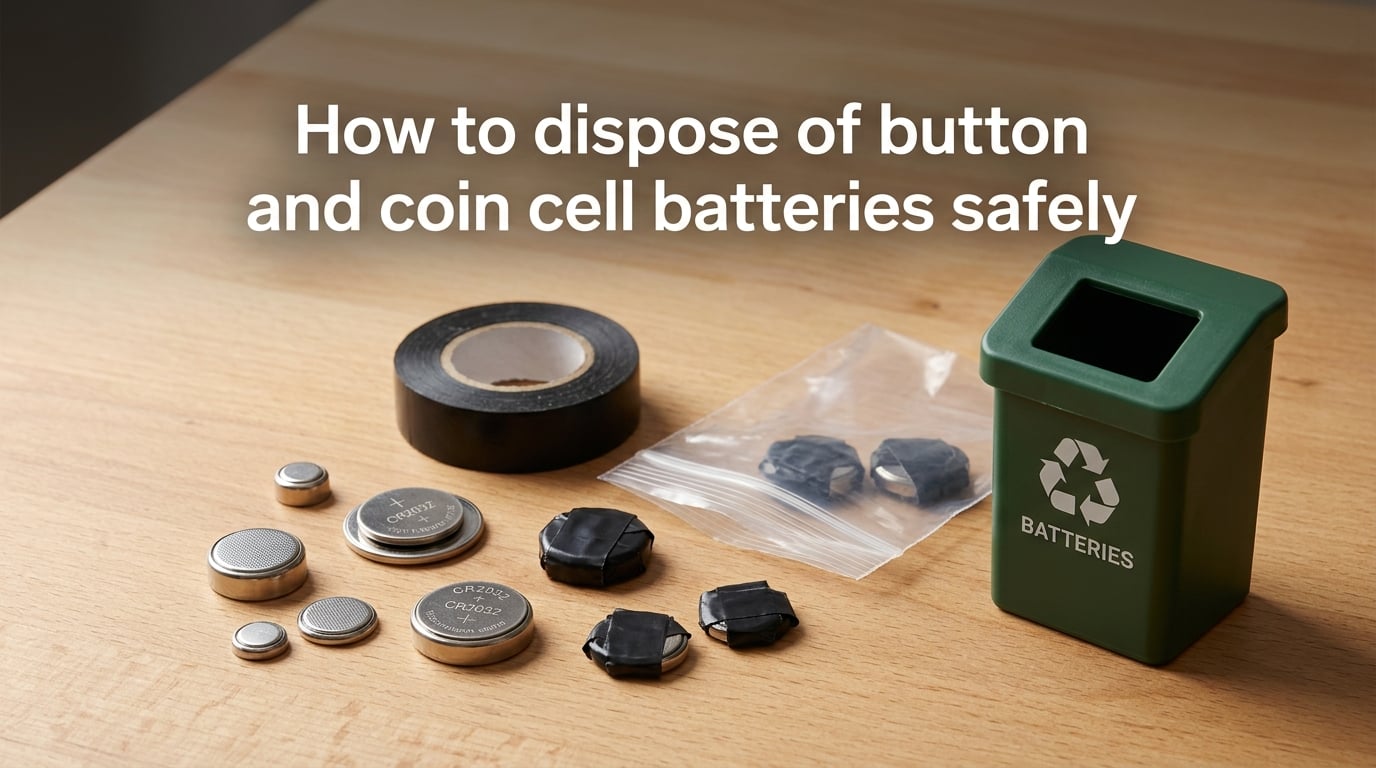
Tape both terminals, bag each battery separately, and take them to a recycling drop-off location. Never throw button or coin cell batteries in your household trash or curbside recycling bin, because they can spark fires in garbage trucks and cause life-threatening injuries if swallowed by children.
If you want to know how to dispose of button and coin cell batteries safely, you are in the right place. These tiny power sources run our watches, hearing aids, car key fobs, calculators, and medical devices. But when they run out of juice, they still carry enough residual charge to start fires and seriously injure a child.
Our team has pulled together the most current guidance from the EPA, Poison Control, and major recycling programs to walk you through every step. We cover taping methods, drop-off locations, state regulations, emergency procedures, and storage tips so nothing gets missed.
By the end of this guide, you will have a clear, repeatable process you can follow every time a button or coin cell battery dies in your home.
Table of Contents
Why Button and Coin Cell Batteries Need Special Disposal?
Button and coin cell batteries are small, but they pack enough energy to cause serious harm even after they appear dead. That residual charge is exactly why they cannot go in your regular trash bin.
When two or more loose batteries rub against each other, or touch metal objects like keys or coins in a garbage bag, they can complete a circuit. That circuit generates heat fast. In a trash truck’s compactor or a recycling facility’s sorting line, that heat can ignite a fire that spreads to the entire load.
The numbers are sobering. A recent study found that 29.8% of button battery ingestion cases involved batteries that were either discarded or left sitting out. That means improper disposal is directly responsible for nearly one in three swallowing incidents.
Beyond the fire and ingestion risks, there is an environmental cost. Many button batteries contain lithium, silver oxide, or zinc-air chemistries. When these metals leach into soil and groundwater at landfills, they contaminate the surrounding ecosystem. Recycling these batteries allows manufacturers to recover valuable materials like lithium and silver, reducing the need for new mining.
So while tossing a single CR2032 in the trash might feel harmless, the collective impact of millions of improperly disposed button batteries adds up to fires, injuries, and pollution every single year.
Button vs Coin Cell vs Lithium Batteries: What You Need to Know
People use the terms “button battery” and “coin cell” almost interchangeably, but there are small distinctions worth understanding before you dispose of anything.
Button Batteries
Button batteries are the shorter, cylindrical cells shaped like small buttons. They are most common in hearing aids, watches, and some medical devices. Their chemistry is typically silver oxide, zinc-air, or alkaline.
Coin Cell Batteries
Coin cells are slightly taller and flatter, resembling small coins. The CR2032 is the most recognizable coin cell, powering everything from car key fobs to remote controls and computer motherboards. Most coin cells use lithium chemistry.
Lithium vs Alkaline Chemistry
The chemistry matters for disposal. Lithium button and coin batteries carry the highest fire risk because lithium reacts violently when damaged or exposed to moisture. These must always be recycled, never trashed.
Silver oxide and zinc-air button batteries also belong at a recycling facility. Even though their fire risk is lower, they contain heavy metals that should not enter landfills.
Alkaline button batteries are the least hazardous, but many communities still recommend recycling them. Check your local rules before deciding.
Common Sizes You Might Recognize
If you see codes like CR2032, CR2025, CR2016, CR2450, LR44, or 377 on the battery, you are dealing with a button or coin cell. All of them follow the same disposal process outlined below.
How to Dispose of Button and Coin Cell Batteries Safely: Step-by-Step
Follow these four steps every time you have spent button or coin cell batteries to get rid of. The entire process takes about five minutes and could prevent a fire or a medical emergency.
Step 1: Tape Both Terminals
Place a strip of non-conductive tape across the top and bottom of each battery. Cover the positive side completely so the terminal cannot make contact with anything conductive.
The National Poison Control center recommends applying two layers of tape for maximum safety. A single layer can peel off inside a recycling bin. Two layers dramatically reduce that risk.
Which tape works best? Electrical tape is the top choice because it stretches and conforms tightly to the battery surface. Duct tape is a close second due to its strong adhesive and durability. Masking tape works in a pinch, but its weaker adhesive makes it less reliable for long-term storage. Painter’s tape and Scotch tape are not recommended because they are too thin and peel easily.
Step 2: Bag Each Battery Separately
After taping, place each battery in its own small plastic bag or envelope. If you do not have individual bags, you can place multiple taped batteries in a single rigid plastic container with a tight-fitting lid.
The goal is simple: prevent any two battery terminals from touching each other. Even taped batteries can shift and rub against one another in a shared container. Physical separation adds a second layer of protection on top of the tape.
Step 3: Find a Recycling Drop-Off Location
Use one of the free locator tools below to find the nearest battery recycling point. You can search by your zip code in just a few seconds.
The most popular options are Call2Recycle and Earth911, both of which maintain up-to-date databases of thousands of drop-off sites across the country.
Step 4: Drop Off or Mail In Your Batteries
Take your prepared batteries to the drop-off location you found in Step 3. Most retail locations have a small recycling bin near the customer service desk or entrance. Simply drop your bagged batteries in and you are done.
If no drop-off location is nearby, many programs offer mail-in recycling kits. You receive a prepaid shipping container, fill it with taped and bagged batteries, and send it back through the postal service. This option is especially useful for people in rural areas.
Where to Recycle Button Batteries Near You?
Finding a recycling location is easier than most people think. There are several free options, and many of them are places you already visit regularly.
Call2Recycle
Call2Recycle is the largest battery recycling program in North America. Their website features a simple location finder where you enter your zip code and get a list of nearby drop-off sites. They have over 30,000 collection points across the United States and Canada.
Call2Recycle partners with major retailers, municipal recycling centers, and local businesses to provide free battery collection bins. Their program accepts button and coin cell batteries along with many other battery types.
Earth911
Earth911 operates a comprehensive recycling search engine. Visit their site, type “button batteries” and your zip code into the search tool, and you will get a list of local recycling options with addresses and hours.
Earth911 also provides information on what types of batteries each location accepts, so you can confirm before making the trip.
Retail Drop-Off Locations
Many major retailers maintain battery recycling bins in their stores. Here are some of the most common ones:
Home Depot, Best Buy, and Lowe’s all participate in battery recycling programs. These stores typically place collection bins near the entrance or customer service counter. You can walk in, drop your prepared batteries, and leave.
Some Staples and Batteries Plus Bulbs locations also accept button batteries. Call ahead or check their website to confirm participation at your specific store, since programs can vary by location.
Household Hazardous Waste Facilities
Most counties and cities operate household hazardous waste collection facilities or periodic collection events. These sites accept button and coin cell batteries along with paints, solvents, and other hazardous materials.
Contact your local waste management department or visit their website to find collection days and facility hours in your area. Some jurisdictions hold quarterly or annual collection events specifically for household batteries.
Mail-In Recycling Programs
If you live far from a drop-off location, mail-in programs are a practical alternative. Several companies sell prepaid battery recycling kits in various sizes. You fill the container over time, seal it, and drop it in the mail.
This option works well for households that accumulate small numbers of button batteries over months or years. It also works for businesses that need a documented recycling trail for compliance purposes.
Are Dead Button Batteries Still Dangerous?
One of the most common misconceptions our team encounters is that a dead button battery is a safe battery. This is flatly incorrect, and the misunderstanding puts children at serious risk.
A button battery that no longer powers your watch or remote still carries residual charge. That leftover energy is enough to trigger a hydrolysis reaction in human tissue if the battery is swallowed. The reaction produces hydroxide, a corrosive substance that burns through the esophagus, sometimes in under two hours.
Dead batteries can still start fires too. When their terminals contact metal in a trash bag or sorting facility, the residual current generates heat. Multiple studies have confirmed that even batteries testing near zero volts on a multimeter can produce enough current under the right conditions to ignite surrounding materials.
This is why taping remains essential even for batteries you think are completely spent. Treat every button battery, dead or alive, as if it still has full power.
On Reddit’s recycling and declutter communities, users frequently share stories of confusion about dead batteries. Some assume they can be thrown away because they are “used up.” The research and injury data tell a very different story. Dead does not mean harmless.
What to Do If a Child Swallows a Button Battery?
Button battery ingestion is a medical emergency that requires immediate action. Every minute counts, because tissue damage can begin within two hours of swallowing.
Recognize the Symptoms
Symptoms of button battery ingestion can mimic other common illnesses, which makes diagnosis tricky. Watch for sudden coughing, drooling, difficulty swallowing, chest pain, vomiting, or refusing to eat or drink.
In some cases, a child may show no symptoms at all initially. That is what makes these ingestions so dangerous. Parents may not realize anything happened until significant damage has already occurred.
Take Immediate Action
If you suspect a child has swallowed a button battery, go to the nearest emergency room immediately. Do not wait for symptoms to appear or worsen.
Call the National Battery Ingestion Hotline at 800-498-8666 or Poison Help at 1-800-222-1222 for expert guidance while you head to the hospital. Medical professionals can advise you on next steps based on the specific situation.
Follow the Honey Protocol
Poison Control recommends giving the child two teaspoons of honey every 10 minutes for up to six doses, if the child is over 12 months old and can swallow normally. Honey has been shown in clinical studies to help coat the battery and slow tissue damage.
Do not give honey to children under one year old due to the risk of infant botulism. Do not induce vomiting, as this could cause additional damage if the battery shifts position in the esophagus.
What Not to Do
Do not try to make the child throw up. Do not give them anything to eat or drink other than the honey protocol. Do not assume the battery will pass harmlessly through the digestive tract on its own.
Bring the device the battery came from, or a matching battery, to the hospital so doctors can identify the exact size and chemistry. This information helps them plan the safest removal method.
Storage and Fire Prevention Tips at Home
Safe disposal starts with safe storage. If you keep spare button batteries in your home, a few simple precautions go a long way toward preventing accidents before you ever reach the disposal stage.
Keep Batteries Out of Reach
Store all spare button and coin cell batteries in a high cabinet or locked drawer that children cannot access. The original packaging is the best container because it is designed to keep terminals from touching.
If the original packaging is gone, use a dedicated battery storage case with individual slots. These cases cost very little and prevent the two biggest risks: accidental short-circuiting and child access.
Avoid Loose Storage
Never toss loose batteries into a junk drawer, purse, or pocket. When batteries rattle around alongside keys, coins, paper clips, or other metal objects, they can short-circuit and overheat without warning.
The same applies to the batteries inside devices you plan to dispose of. Remove them before recycling the device, then tape and bag them following the steps above.
Use Secure Battery Compartments
When buying devices that use button batteries, look for products with screw-secured or child-resistant battery compartments. Reese’s Law, passed in 2026, requires many consumer products to use secure compartments specifically to prevent child access.
Check that battery compartments on your existing devices are intact and secure. If a compartment door is loose or missing, tape it shut or replace the device.
Store in a Cool, Dry Place
Heat and moisture degrade battery integrity over time. Keep spare batteries in a cool, dry location away from direct sunlight, stoves, radiators, and humid environments like bathrooms.
A bedroom closet or hallway cabinet is usually a better choice than a garage or basement, where temperature fluctuations are more extreme.
State and Local Disposal Regulations
Battery disposal rules vary significantly depending on where you live. What is legal in one state may carry fines or penalties in another.
Reese’s Law and Federal Standards
Reese’s Law was named after Reese Hamsmith, a toddler who died after swallowing a button battery. The law directs the Consumer Product Safety Commission to establish mandatory safety standards for products containing button batteries, including secure compartment requirements and warning labels.
While Reese’s Law focuses primarily on product safety rather than disposal, it has raised national awareness about button battery dangers and has led to improved disposal guidance from federal agencies.
State-by-State Variation
California prohibits all batteries, including alkaline, from being disposed of in household trash. Residents must recycle every type of battery. Several other states have similar blanket prohibitions for lithium and button batteries.
New York, Vermont, Maine, and other states have extended producer responsibility laws that require battery manufacturers to fund recycling programs. This makes drop-off recycling more accessible in these states.
In states without explicit bans, the EPA still strongly recommends recycling button and coin cell batteries rather than trashing them. The fire risk alone makes trash disposal inadvisable regardless of what local law technically permits.
Check Your Local Rules
Before disposing of batteries, visit your city or county waste management website. Most provide clear guidance on what they accept, where drop-off locations are, and whether any community collection events are coming up.
If your area lacks convenient recycling options, consider advocating for better programs. Many communities have expanded their battery recycling infrastructure after residents raised the issue with local officials.
FAQs
Can I throw away a button-cell battery?
No. You should never throw button-cell batteries in the regular trash. They can spark fires in garbage trucks and recycling facilities, and they pose a serious ingestion risk to children if scavenged from waste. Always tape the terminals, bag them, and take them to a battery recycling drop-off location.
Can I put button batteries in the bin?
No, button batteries should not go in any household bin, including curbside recycling. They are too small for standard sorting equipment to detect and can slip through into the wrong waste stream. Place them in a dedicated battery recycling bin at a participating retailer or hazardous waste facility.
Are coin batteries a fire hazard?
Yes. Lithium coin batteries like the CR2032 carry a significant fire risk. When their terminals contact metal objects or other batteries, they can generate enough heat to ignite surrounding materials. This is why taping both terminals before disposal is essential for preventing fires in trash trucks and recycling centers.
Does Home Depot take button batteries for recycling?
Yes, most Home Depot locations have a battery recycling bin provided through Call2Recycle. You can drop off taped and bagged button and coin cell batteries free of charge. Best Buy and Lowe’s also offer similar programs. Check with your local store to confirm participation before visiting.
Is it safe to throw away button batteries?
No, it is not safe to throw away button batteries. Even dead batteries retain residual charge that can cause fires and serious internal injuries if swallowed. The EPA and Poison Control both strongly recommend taping terminals and recycling all button and coin cell batteries at designated drop-off locations.
How to get rid of a button battery?
To get rid of a button battery safely, tape both terminals with two layers of electrical or duct tape, place it in a separate small plastic bag, and take it to a recycling drop-off location such as Home Depot, Best Buy, or a household hazardous waste facility. Use Call2Recycle or Earth911 to find the nearest drop-off point by zip code.
Conclusion
Learning how to dispose of button and coin cell batteries safely comes down to four simple steps: tape both terminals, bag each battery separately, find a recycling location, and drop them off. The whole process takes minutes but prevents fires, protects children, and keeps hazardous metals out of the environment.
The most important takeaway is that dead does not mean safe. Every spent button battery still carries enough residual charge to cause harm. Treat every one with the same caution, whether it just came out of a device or has been sitting in a drawer for months.
Next time a watch stops, a key fob dies, or a hearing aid goes silent, you now have a reliable system ready to go. Tape, bag, recycle. That is all it takes to do your part for safety and sustainability.