
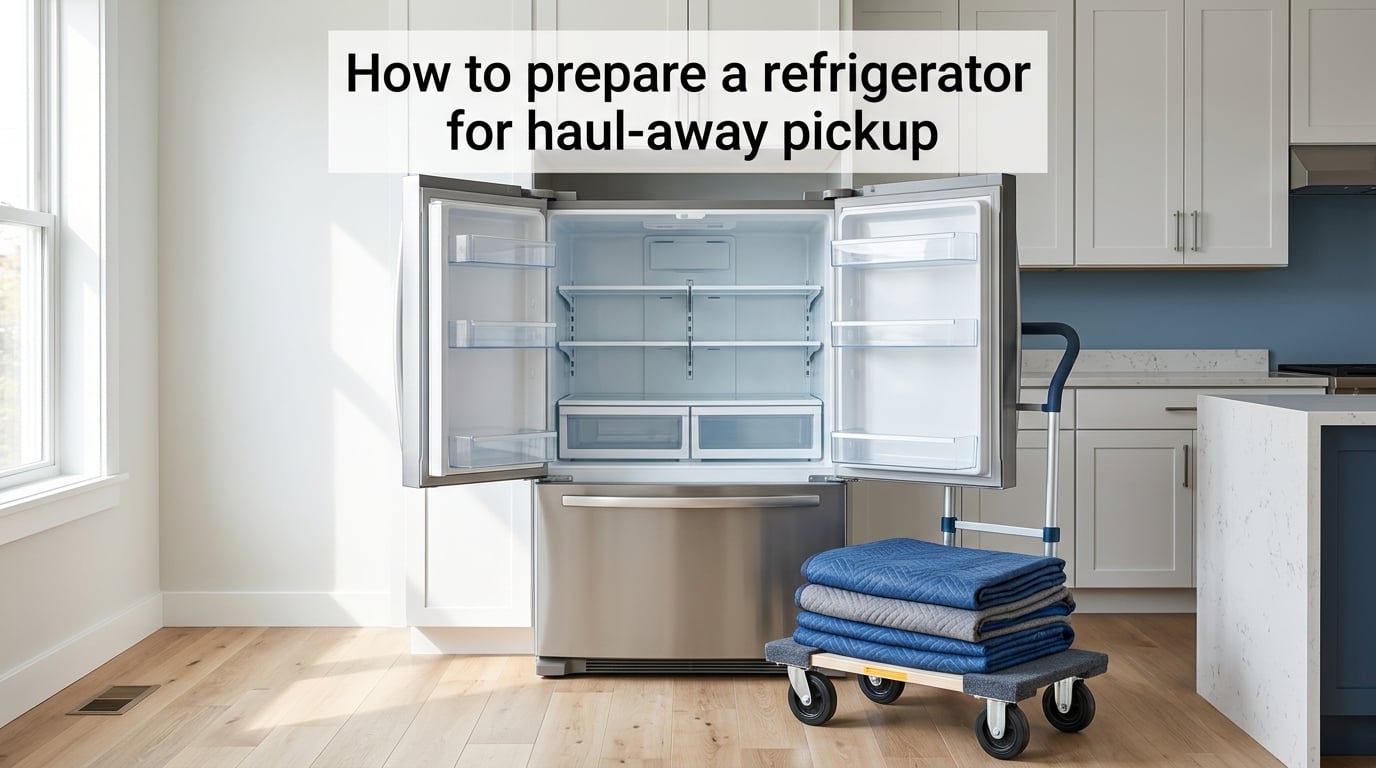
Getting a new refrigerator delivered is exciting. But if you do not prepare the old one correctly, the delivery crew can refuse to take it, leaving you stuck with a bulky appliance and a kitchen full of food that needs a home.
Haul-away pickup is a service where professionals remove your old refrigerator when delivering a new one or during a scheduled junk removal appointment. Most major retailers like Costco, Lowe’s, and Home Depot offer this as part of delivery, but they have strict requirements.
I have talked with homeowners who learned the hard way that contractors will walk away from a unit that is not fully prepped. In this guide, I will walk you through exactly how to prepare a refrigerator for haul-away pickup so your removal goes smoothly from start to finish.
Table of Contents
How to Prepare a Refrigerator for Haul-Away Pickup?
Preparing your refrigerator for haul-away pickup takes some planning. You should start the process about 24 to 48 hours before your scheduled delivery or pickup window.
Follow these nine steps in order, and you will avoid the most common mistakes that lead to refused pickups, water damage, and unnecessary stress.
Step 1: Empty the Refrigerator Completely
Remove every item from both the refrigerator and freezer compartments. This includes food, beverages, condiments, ice cube trays, and anything stored in the door bins.
Do not forget to check the back corners and drawer bottoms, where items often hide. The unit must be completely empty before the haul-away crew arrives.
I recommend sorting everything into three piles: keep and store, toss expired items, and give away. This makes the next step much easier.
Step 2: Plan Your Food Storage Strategy
You need a plan for your perishable food before the old fridge comes out. If your new refrigerator is arriving the same day, you may only need a cooler for a few hours.
If there is a gap of several hours or days between removal and delivery, borrow cooler space from a neighbor or use a secondary refrigerator in your garage. Pack perishables with ice packs and check the temperature periodically.
For frozen items, dry ice can keep food frozen for up to 24 hours in a well-insulated cooler. Just handle dry ice with gloves and keep the area ventilated.
Step 3: Disconnect the Power Supply
Unplug the refrigerator from the wall outlet at least 24 hours before pickup. This gives the compressor time to settle and the cooling system time to warm up gradually.
If your refrigerator is hardwired or plugged into a hard-to-reach outlet, shut off the circuit breaker for that section of the kitchen. This is safer than yanking the power cord.
Once unplugged, tape the power cord to the back of the unit so it does not drag or get caught during removal. Reddit users in appliance forums frequently mention this step as one that prevents cord damage and tripping hazards.
Step 4: Disconnect the Water Line and Ice Maker
Locate the shut-off valve for your refrigerator’s water supply line. This is usually behind the unit, under the sink, or in the basement directly below.
Turn the valve clockwise to shut off the water, then disconnect the supply line from the back of the refrigerator. Have a towel and small bucket ready, as residual water will spill out.
If your model has a built-in ice maker, remove the ice bin and empty it. Some retailers require that all water connections are fully detached before they will haul the unit away.
Step 5: Defrost the Freezer
Defrosting is one step many people skip, but it matters. Once the unit is unplugged, leave the doors open and let the ice melt naturally. This process takes 4 to 8 hours depending on the frost buildup.
Place towels on the floor around the base to catch melting water. Do not use knives, hair dryers, or sharp tools to chip away ice, as this can puncture the cooling lines and release refrigerant.
Some haul-away services will accept a unit with frost inside, but many will not. Defrosting also prevents water from leaking onto floors and carpets during transport, which is a common cause of property damage.
Step 6: Clean the Interior and Exterior
Wipe down the interior with a mixture of warm water and mild dish soap. Pay extra attention to shelves, drawers, and door gaskets where residue builds up.
For stubborn odors, use a paste of baking soda and water on problem areas. Follow with a clean, damp cloth to remove any residue.
Clean the exterior with a stainless steel cleaner or mild all-purpose spray. The haul-away crew handles your unit more carefully when it is clean, and some services actually inspect the condition before removing it.
Step 7: Secure Loose Parts and Shelves
Remove all removable shelves, drawers, and door bins from the refrigerator. Wrap each piece in moving blankets or bubble wrap to prevent cracking during transport.
Place the wrapped parts inside the empty refrigerator cavity and tape the doors shut. This keeps everything contained as one complete unit.
This is an important detail. Forum users on Reddit have reported that haul-away contractors refused to take refrigerators that were not complete units with all shelves intact. If you are missing shelves, mention this when scheduling the pickup.
Step 8: Clear a Path for Removal
Measure your doorways, hallways, and stairwells before pickup day. A standard refrigerator is about 30 to 36 inches wide, and tight turns can become a major problem.
Move furniture, rugs, and decorative items out of the path from the refrigerator to the nearest exit. Remove any tripping hazards like cords or loose flooring.
If the refrigerator is in a garage or basement, make sure the path upstairs or through the garage door is wide enough. Protect your floors with cardboard or moving blankets along the entire route.
Step 9: Remove Doors for Tight Spaces
If your refrigerator will not fit through a doorway, you may need to remove the doors. Start by locating the hinge covers on top of the unit and prying them off gently.
Unscrew the hinge bolts and lift the door straight up off the hinges. Have a second person help you, as refrigerator doors are heavier than they look.
Costco’s delivery guidelines specifically mention that homeowners may need to remove house doors, refrigerator doors, and handles for tight turns. Do this before the crew arrives if you know space is tight.
Retailer-Specific Haul-Away Requirements
Different retailers have different rules for haul-away service. Knowing your retailer’s specific policy ahead of time saves you from surprises on delivery day.
Costco: Requires the old unit to be disconnected from power and water before delivery. The old refrigerator must be a complete unit with all shelves and components present. Costco’s haul-away contractors have been reported as inconsistent, so confirm details with your local warehouse before delivery day.
Lowe’s: Offers haul-away for an additional fee when you purchase a new appliance. The old unit must be unplugged, emptied, and cleaned. Lowe’s delivery teams will not disconnect water lines or gas connections, so you must handle those yourself.
Home Depot: Includes basic haul-away with many appliance deliveries. The old refrigerator must be empty and unplugged. Home Depot crews typically handle removal but will not prep the unit for you, so all disconnection and cleaning must be done in advance.
Safety Warnings and Refrigerant Handling
Refrigerators contain refrigerant, a chemical compound that cools the interior. Under EPA regulations, refrigerant must be recovered by a licensed technician before the appliance is recycled or scrapped.
You do not need to remove refrigerant yourself. The haul-away service or recycling facility handles this step. But you should never attempt to cut refrigerant lines or puncture the cooling system, as releasing these chemicals into the atmosphere violates federal law.
Refrigerators are also heavy and awkward to move. A standard full-size unit weighs between 200 and 350 pounds. Always have at least two people lift the refrigerator, and use an appliance dolly with straps for safe transport.
Never lay a refrigerator flat on its back during transport. This position can damage the compressor and allow oil to flow into the cooling lines. If you must tilt the unit, keep it as upright as possible and let it sit for 24 hours before plugging it back in.
What Happens to Your Old Refrigerator
After haul-away, your old refrigerator typically goes to one of three places. Understanding these options helps you choose the most responsible disposal method.
Recycling: Most haul-away services transport refrigerators to facilities that recover the refrigerant, recycle the metal components, and safely dispose of foam insulation. This is the most environmentally responsible option.
Donation: If your refrigerator still works, charities like Habitat for Humanity ReStore and local food banks may accept it. Some organizations offer free pickup for working appliances, which saves you the haul-away fee entirely.
Junk removal: Services like 1-800-GOT-JUNK and local providers charge a fee but handle the entire process from removal to disposal. This is the best option if you are not buying a new appliance and just need the old one gone.
FAQs
Do I need to defrost the fridge before hauling away?
Yes, you should defrost your refrigerator before haul-away pickup. Unplug the unit 24 hours before pickup and leave the doors open so the ice melts naturally over 4 to 8 hours. Defrosting prevents water from leaking during transport and keeps floors dry. Some haul-away services will refuse a unit with heavy frost buildup.
Do you have to clean a fridge before Lowe’s comes and hauls it away?
Yes, Lowe’s requires the old refrigerator to be emptied and cleaned before the delivery team arrives. Remove all food, wipe down the interior, and unplug the unit. Lowe’s crews will not disconnect water lines, so you must handle that step yourself before pickup.
Can you just put a refrigerator by the dumpster?
No, you cannot place a refrigerator by a dumpster or curb in most areas. Refrigerators contain refrigerant, which is regulated by the EPA and must be recovered by a licensed technician. Many municipalities issue fines for illegal dumping of appliances. Use a haul-away service, recycling center, or retailer take-back program instead.
Can you lay a refrigerator on its back for hauling?
No, never lay a refrigerator on its back. This position allows compressor oil to flow into the cooling lines, which can permanently damage the unit. Always keep the refrigerator upright during transport. If you must tilt it slightly for a doorway, let the unit sit upright for 24 hours before plugging it in.
How long should I unplug my refrigerator before haul-away pickup?
Unplug your refrigerator at least 24 hours before the scheduled haul-away pickup. This gives the compressor time to settle, the cooling system time to warm up, and allows the freezer to defrost naturally. If your unit has heavy frost buildup, unplug it 48 hours in advance.
Conclusion
Knowing how to prepare a refrigerator for haul-away pickup comes down to a simple timeline and a clear checklist. Start 24 to 48 hours early, empty the unit, disconnect the power and water, defrost the freezer, clean everything, secure loose parts, and clear a path.
The steps that matter most are the ones people skip. Unplugging early, defrosting fully, and keeping the unit complete with all shelves are the details that separate a smooth pickup from a refused one.
Always check your specific retailer’s requirements before delivery day, since policies vary between Costco, Lowe’s, and Home Depot. And remember that refrigerant must be handled by professionals, so never try to cut cooling lines yourself.
Take these steps seriously, and your old refrigerator will be out the door without a hitch, leaving your kitchen ready for the new one.