
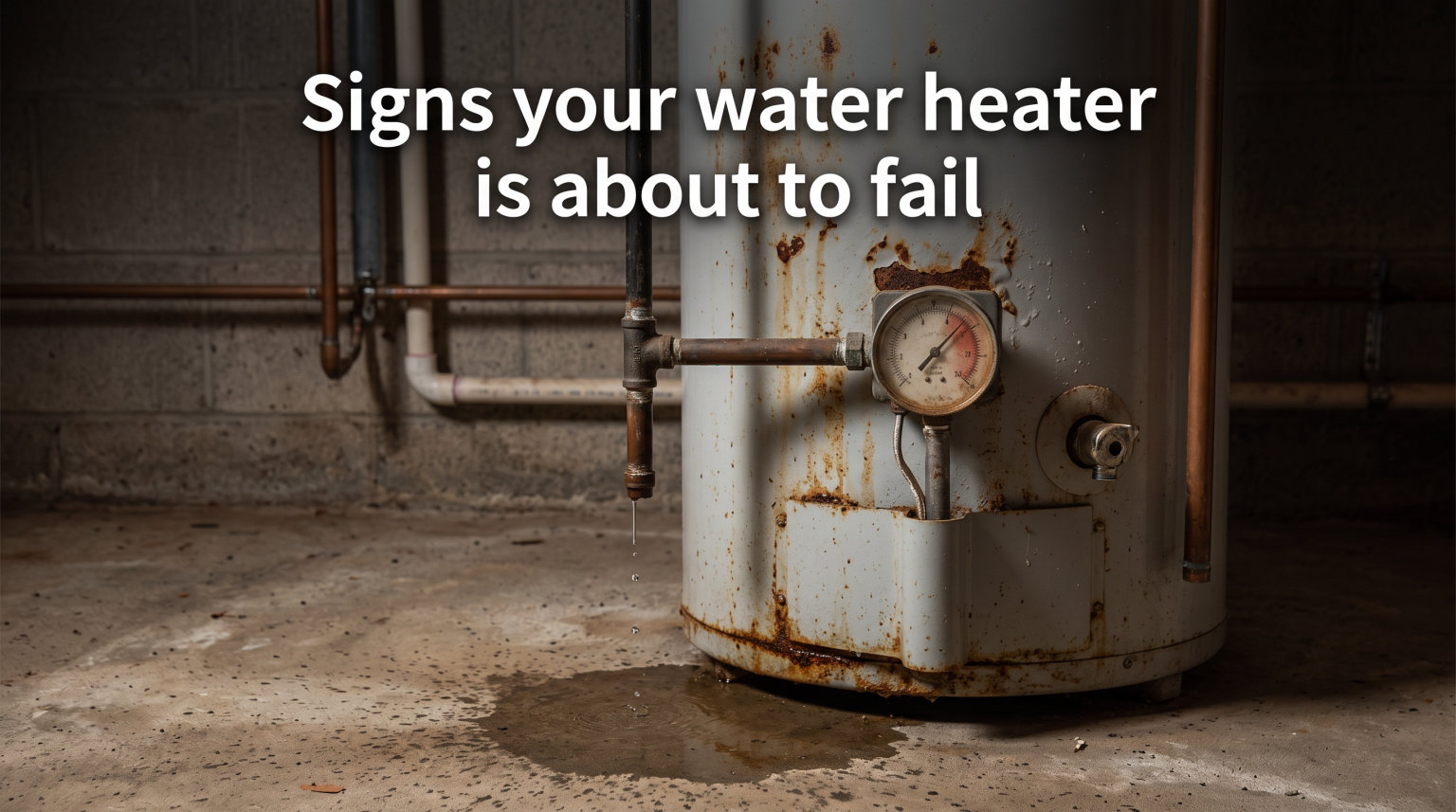
Most water heaters do not die suddenly. They send warning signals for weeks or even months before giving out, and recognizing the signs your water heater is about to fail can save you from a flooded basement, a freezing cold shower, and an emergency replacement bill that costs two to three times more than a planned upgrade.
I have talked with dozens of homeowners who wish they had paid attention sooner. One Reddit user in r/Plumbing shared how their mother’s water heater burst and flooded an inch and a half of water across a large basement, ruining the carpet entirely. Stories like that are common, and they are almost always preventable.
Your water heater works harder than nearly any other appliance in your home. It runs every single day, all year long, heating water for showers, dishwashers, laundry, and sinks. That constant workload means parts wear down, sediment accumulates, and corrosion creeps in over time.
In this guide, I will walk you through every major warning sign, explain what each one means, and tell you exactly what to do next. By the end, you will know whether your unit needs a simple repair, a routine flush, or a full replacement before disaster strikes.
Table of Contents
Quick Warning Signs Checklist
If you only have a minute, scan this list. These are the most common signs your water heater is about to fail, ranked by urgency:
Strange noises — rumbling, popping, banging, or cracking sounds from the tank
Visible leaks or pooling water — moisture around the base, dripping from valves, or water stains nearby
Rusty or discolored hot water — brown, yellow, or reddish tint when you run the hot tap
Inconsistent temperatures — lukewarm water, sudden temperature swings, or running out of hot water faster than before
Age over 10 years — most tank water heaters last 8 to 12 years; tankless units last 20 or more
Rising energy bills — unexplained increases as the unit loses efficiency
Low water pressure or foul odors — sulfur smell, reduced flow, or cloudy output from hot taps
If you checked three or more of these, it is time to seriously consider replacement. Even one or two warrant a closer look.
Sign 1: Strange Noises (Rumbling, Popping, and Banging)
A healthy water heater should be nearly silent. If yours sounds like a washing machine full of rocks, something is wrong inside the tank.
Rumbling and popping noises are the single most common warning sign homeowners report. The cause is almost always sediment buildup at the bottom of the tank. Over time, minerals from hard water settle and harden into a layer of calcium and magnesium.
When the burner or heating element fires up, water gets trapped beneath that sediment layer. It boils, turns to steam, and forces its way through the crust with a popping or rumbling sound. The more sediment accumulates, the louder the noise gets.
Banging sounds, sometimes called “water hammer,” can indicate a different problem. They often come from loose pipes, high water pressure, or a failing check valve. Either way, loud noises mean your unit is working harder than it should.
What to do: Drain and flush the tank to remove sediment. If the noises persist after flushing, the sediment may have hardened into a thick crust that cannot be removed, and the tank may need replacement.
Key takeaway: Occasional minor sounds are normal, but persistent rumbling, popping, or banging means your water heater is struggling and may be nearing the end of its life.
Sign 2: Leaks or Pooling Water Around the Unit
Water pooling around your water heater is never a good sign. Even a small amount of moisture deserves immediate attention because leaks only get worse over time.
Leaks are the most common failure point for tank water heaters. They typically originate from one of three places: the tank body itself (due to internal corrosion), the drain valve at the bottom, or the connections at the top of the unit.
A leak from the drain valve or a fitting can sometimes be repaired cheaply. But if water is seeping from the tank body itself, the inner lining has corroded through, and the tank is structurally compromised. This type of leak cannot be fixed. Replacement is the only safe option.
Is a leaking water heater dangerous? It can be. A slow leak can cause water damage to floors, walls, and anything stored nearby. Forum users on r/HomeImprovement frequently share stories of water damage that cost far more than a new water heater would have. A sudden catastrophic rupture can flood a basement within minutes.
What to do: Check around the base regularly. If you find water, identify the source. Tighten loose fittings or replace a faulty drain valve. If the tank itself is leaking, shut off power and water supply immediately and call a plumber.
Key takeaway: Any water outside the tank is a red flag. Find the source fast, because a small drip today can become a flood tomorrow.
Sign 3: Discolored or Rusty Hot Water
When you turn on the hot water and it comes out brown, yellow, or reddish, your water heater may be rusting from the inside out.
This is where the anode rod comes in. Every tank water heater has a sacrificial anode rod, usually made of magnesium or aluminum, designed to attract corrosive elements in the water. The rod corrodes so the tank does not. But once the anode rod is fully consumed, corrosion attacks the tank lining directly.
Rusty hot water means that protective rod is likely gone and the tank interior is rusting. This is a late-stage warning sign. If the tank corrodes through, it will leak or burst.
How to confirm the source: Turn on only the cold water. If the cold water runs clear but the hot water is discolored, the problem is inside your water heater. If both are discolored, the issue may be with your water supply or pipes instead.
What to do: Check and replace the anode rod if it is more than 50 percent consumed. If the tank is already heavily corroded, replacement is the safer long-term choice. Discolored water is not just a cosmetic issue. It can stain fixtures and clothing.
Key takeaway: Rusty hot water means internal corrosion has begun. Replace the anode rod or start shopping for a new unit before the tank fails completely.
Sign 4: Inconsistent or Lukewarm Water Temperatures
If your showers keep going cold, or the water never gets as hot as it used to, your water heater is losing the battle against demand.
Several issues can cause temperature problems. On electric water heaters, one of the two heating elements may have burned out, leaving the tank with half its heating capacity. On gas units, a faulty thermostat, a dirty burner, or a failing gas control valve can produce the same result.
Sediment also plays a role here. A thick layer of mineral buildup at the bottom of the tank acts as insulation, blocking heat from reaching the water. The unit runs longer, works harder, and still cannot maintain proper temperature.
Another clue is running out of hot water faster than before. If you used to get 30 minutes of hot shower water and now get 10, the tank’s effective capacity has dropped. That sediment layer is taking up space where heated water should be.
What to do: Check the thermostat setting first (120 degrees Fahrenheit is standard). Flush the tank to remove sediment. If the problem persists, have a professional test the heating elements or burner assembly.
Key takeaway: Lukewarm water and rapid hot water depletion signal failing components or heavy sediment. A professional diagnostic can tell you if repair is worth it.
Sign 5: Your Water Heater Is Past Its Age Limit
Sometimes the clearest sign that your water heater is about to fail is simply its age. Even a unit that seems to work fine can be on borrowed time.
Traditional tank water heaters typically last 8 to 12 years. Some high-quality units reach 15 years with good maintenance, but that is the exception. Tankless water heaters have a longer lifespan, often 20 years or more, because they do not store water and deal with less corrosion.
I see this question constantly on homeowner forums: “Should I replace my 15-year-old water heater?” The answer is almost always yes. At that age, components are worn, the anode rod is long gone, and the risk of a sudden, catastrophic failure is significant. Planned replacement costs far less than emergency replacement plus water damage cleanup.
The tricky part is that many homeowners do not know how old their unit is. If you moved into a house with an existing water heater, you might have no idea when it was installed.
Fortunately, every water heater has a serial number on its rating plate that encodes the manufacture date. I will show you exactly how to decode it in the next section.
What to do: Find your unit’s age using the serial number guide below. If it is over 10 years old, start researching replacements now rather than waiting for a failure.
Key takeaway: Age is the most reliable predictor of water heater failure. Units over 10 years old are living on borrowed time.
Sign 6: Higher Energy Bills Without Explanation
Have your gas or electric bills crept up even though your usage has not changed? A declining water heater could be the hidden culprit.
As sediment builds up inside the tank, the heating element or burner has to work longer and harder to heat the same amount of water. That sediment layer insulates the water from the heat source, wasting energy with every cycle.
A failing heating element can also cause this. If one of two elements in an electric heater is dead, the remaining element runs almost continuously trying to compensate, consuming more electricity while delivering less hot water.
Older tanks also lose insulation efficiency. The foam or fiberglass insulation around the tank degrades over the years, allowing heat to escape and forcing the unit to reheat water more frequently.
What to do: Compare your recent energy bills to the same months from a year or two ago. If you see an unexplained increase, have your water heater inspected for sediment buildup and component wear.
Key takeaway: Rising energy bills can signal a water heater that is losing efficiency. A flush or component replacement may help, but persistent increases point toward replacement.
Sign 7: Low Water Pressure and Foul-Smelling Water
Two less obvious signs can also point to a failing water heater: reduced hot water pressure and unpleasant odors from the hot tap.
Low hot water pressure often occurs when mineral deposits build up inside the tank and narrow the outlet pipes or clog the dip tube. If your cold water pressure is fine but hot water trickles out, the problem is likely in the heater or its connected plumbing.
A foul smell, often described as rotten eggs or sulfur, indicates bacterial growth inside the tank. Bacteria thrive in warm, stagnant environments, and a water heater with sediment buildup at the bottom provides the perfect breeding ground. This is more common in homes with well water or water high in sulfur.
The smell is not just unpleasant. It means hydrogen sulfide gas is being produced inside your tank, which can accelerate corrosion of the tank lining and connected plumbing.
What to do: For low pressure, flush the tank and check the dip tube for blockage. For odors, raise the thermostat to 140 degrees Fahrenheit for a few hours to kill bacteria (use caution), then flush the tank. If odors persist, the anode rod and tank may need replacement.
Key takeaway: Smelly or low-pressure hot water signals internal contamination and blockage. Flushing helps, but recurring issues mean the tank is deteriorating.
How to Check Your Water Heater’s Age by Serial Number?
Knowing your water heater’s age is the single most important piece of information for predicting failure. Here is how to decode the serial number on the most common brands.
First, locate the rating plate on the side of your water heater. It will have a serial number printed on it, usually near the model number.
Rheem and Ruud: The serial number starts with two letters followed by numbers. The first letter represents the month (A for January, B for February, and so on). The second letter or the following numbers represent the year. For example, a serial starting with “AH” would be from January, and the next digit tells you the decade year.
A.O. Smith: The first two digits of the serial number represent the year of manufacture, and the next two digits represent the week. For example, a serial starting with “1904” means it was built in the fourth week of 2019.
Bradford White: The serial number starts with a letter for the year (starting with Z in 1964, cycling through the alphabet) and a letter for the month (A for January through L for December). This one requires a conversion chart, but Bradford White publishes one on their website.
General tip: If your brand is not listed here, search for your manufacturer name plus “serial number decoder” and you will find a chart. Most manufacturers use a similar letter-and-number encoding system.
Once you decode the date, compare it to the 8 to 12 year lifespan window for tank heaters. If your unit falls outside that window, plan for replacement even if it still works.
When to Repair vs. Replace Your Water Heater
Once you have identified warning signs, the next question is whether to fix the problem or replace the whole unit. Here is a practical framework to help you decide.
Repair makes sense when the unit is under 8 years old and the problem is isolated. A faulty drain valve, a burned-out heating element, or a worn thermostat can often be fixed for far less than a replacement. These are component failures, not tank failures.
Replace when the unit is over 10 years old, the tank itself is leaking, or you are dealing with multiple warning signs at once. At that point, repairs are a bandage on a deeper problem, and you will likely face another failure within months.
A common rule of thumb among plumbers is the 50 percent rule. If the estimated repair cost is more than 50 percent of the cost of a new unit, replacement is the better financial decision. This is especially true for older heaters where additional failures are probable.
Consider upgrading to a tankless water heater if you are replacing anyway. Tankless units last up to 20 years, take up less space, and provide endless hot water. They cost more upfront but can save significantly on energy bills over their lifespan.
Emergency replacement always costs more than planned replacement. You pay premium rates for urgent service, plus potential water damage repairs. If your unit is showing multiple warning signs, proactive replacement is the smart financial move.
Gas vs. Electric Water Heater Failure Differences
Gas and electric water heaters share many failure signs, but each type has unique warning indicators worth knowing.
Gas water heaters have additional components that can fail: the pilot light, thermocouple, gas control valve, and burner assembly. If your pilot light keeps going out, the burner flame is yellow instead of blue, or you smell gas near the unit, these are gas-specific warning signs. A yellow flame indicates incomplete combustion, which can produce carbon monoxide.
Carbon monoxide safety: Gas water heaters should always have proper ventilation. If you have a gas unit, install a carbon monoxide detector nearby. Headaches, dizziness, or nausea when the heater is running could indicate a venting problem or cracked heat exchanger. Take these symptoms seriously and call a professional immediately.
Electric water heaters fail differently. They rely on two heating elements and two thermostats. When an element burns out, you lose half your heating capacity instantly. Tripped circuit breakers repeatedly can also signal a shorted element. Electric units do not produce carbon monoxide, but they can develop electrical faults that pose fire risks.
Both types share the common failure modes: sediment buildup, tank corrosion, anode rod depletion, and leaks. But understanding the fuel-specific signs helps you catch problems earlier.
Water Heater Explosion Risk: What You Need to Know
This is the topic most articles gloss over, but it is the one homeowners ask about most on forums. Can a water heater actually explode? The answer is yes, though it is rare with modern safety features.
The danger comes from excessive pressure inside the tank. If the thermostat fails and the water overheats, pressure builds rapidly. If the temperature and pressure relief valve (TPR valve) is also blocked or faulty, pressure has nowhere to go.
In extreme cases, the tank can rupture with significant force. There are documented cases of water heaters launching through roofs and causing structural damage. This is why the TPR valve exists and why it must be tested regularly.
Warning signs of dangerous pressure buildup include: water dripping from the TPR valve (a sign it is releasing pressure), extremely hot water even when the thermostat is set low, and banging or booming sounds from the tank.
What to do: Test your TPR valve once a year by lifting the lever briefly. Water should discharge through the overflow pipe. If nothing happens, or water continues to drip after you release the lever, the valve is faulty and must be replaced immediately.
Safety note: Never cap or plug a TPR valve overflow pipe. Never remove the TPR valve. These are critical safety devices that prevent catastrophic failure.
Annual Maintenance Checklist to Extend Your Water Heater’s Life
Regular maintenance can add years to your water heater’s lifespan and delay the warning signs described above. Here is a simple annual checklist any homeowner can follow.
1. Flush the tank once a year. Connect a garden hose to the drain valve, run it to a floor drain or outside, and drain the tank completely. Then briefly open the cold water supply to stir up remaining sediment and drain again until the water runs clear.
2. Inspect the anode rod every 2 to 3 years. Remove the rod from the top of the tank and check for corrosion. If more than half of the core wire is exposed, replace it. A fresh anode rod can extend tank life by several years.
3. Test the TPR valve annually. Lift the valve lever to confirm it opens and releases water. Replace the valve if it sticks or leaks continuously.
4. Check for leaks monthly. Take a quick look around the base of the unit and inspect the connections at the top. Catching a small leak early prevents major water damage.
5. Set the thermostat to 120 degrees Fahrenheit. Higher settings waste energy, accelerate sediment buildup, and increase scalding risk. Lower settings can allow bacterial growth.
Following this checklist consistently can push a tank water heater from the typical 10-year lifespan toward 12 to 15 years. It also keeps the unit running efficiently, which lowers your energy bills.
FAQs
What is the most common failure of a water heater?
The most common failure is a tank leak caused by internal corrosion. When the anode rod is depleted and the protective lining wears through, the steel tank rusts from the inside and eventually develops pinhole leaks or a major rupture. Sediment buildup is the second most common problem, causing noises, reduced efficiency, and premature component failure.
What happens before a hot water heater goes out?
Before a water heater fails completely, you will typically notice rumbling or popping noises from sediment buildup, rusty or discolored hot water from internal corrosion, reduced hot water supply, inconsistent temperatures, and small leaks around the base. These warning signs can appear weeks or months before total failure, giving you time to plan a replacement.
How many years does a hot water heater typically last?
A traditional tank water heater typically lasts 8 to 12 years, with well-maintained units occasionally reaching 15 years. Tankless water heaters last longer, averaging 20 years or more. You can determine your unit’s exact age by decoding the serial number on the rating plate, which encodes the manufacture date.
How do I tell if my hot water heater needs to be replaced?
Replace your water heater if it is over 10 years old, the tank itself is leaking, you have rusty hot water, multiple warning signs are present simultaneously, or repair costs exceed 50 percent of the cost of a new unit. Persistent noises after flushing, frequent temperature issues, and rising energy bills also point toward replacement.
Is a leaking water heater dangerous?
Yes, a leaking water heater can be dangerous. Slow leaks cause water damage to floors, walls, and belongings, and can lead to mold growth. A sudden tank rupture can flood a basement within minutes, causing thousands of dollars in damage. Shut off the power and water supply immediately if you discover a leak, and call a plumber right away.
What are the first signs of a water heater going bad?
The first signs are usually strange noises like rumbling or popping from sediment buildup, a slight reduction in hot water supply, and minor temperature inconsistencies. These early symptoms are easy to ignore but indicate the unit is working harder than it should. Addressing them early with a tank flush and anode rod inspection can prevent more serious problems.
Final Thoughts on Water Heater Warning Signs
Recognizing the signs your water heater is about to fail is one of the most practical skills a homeowner can develop. Strange noises, leaks, discolored water, temperature problems, and unit age are your early warning system.
Do not wait for a cold shower or a flooded basement to take action. Check your unit’s age today, test the TPR valve, look for leaks, and schedule a tank flush if you have not done one in the past year.
If your water heater is over 10 years old or showing multiple warning signs, start researching replacements now. A planned upgrade is always cheaper and less stressful than an emergency call at midnight. Your future self will thank you for paying attention early.