
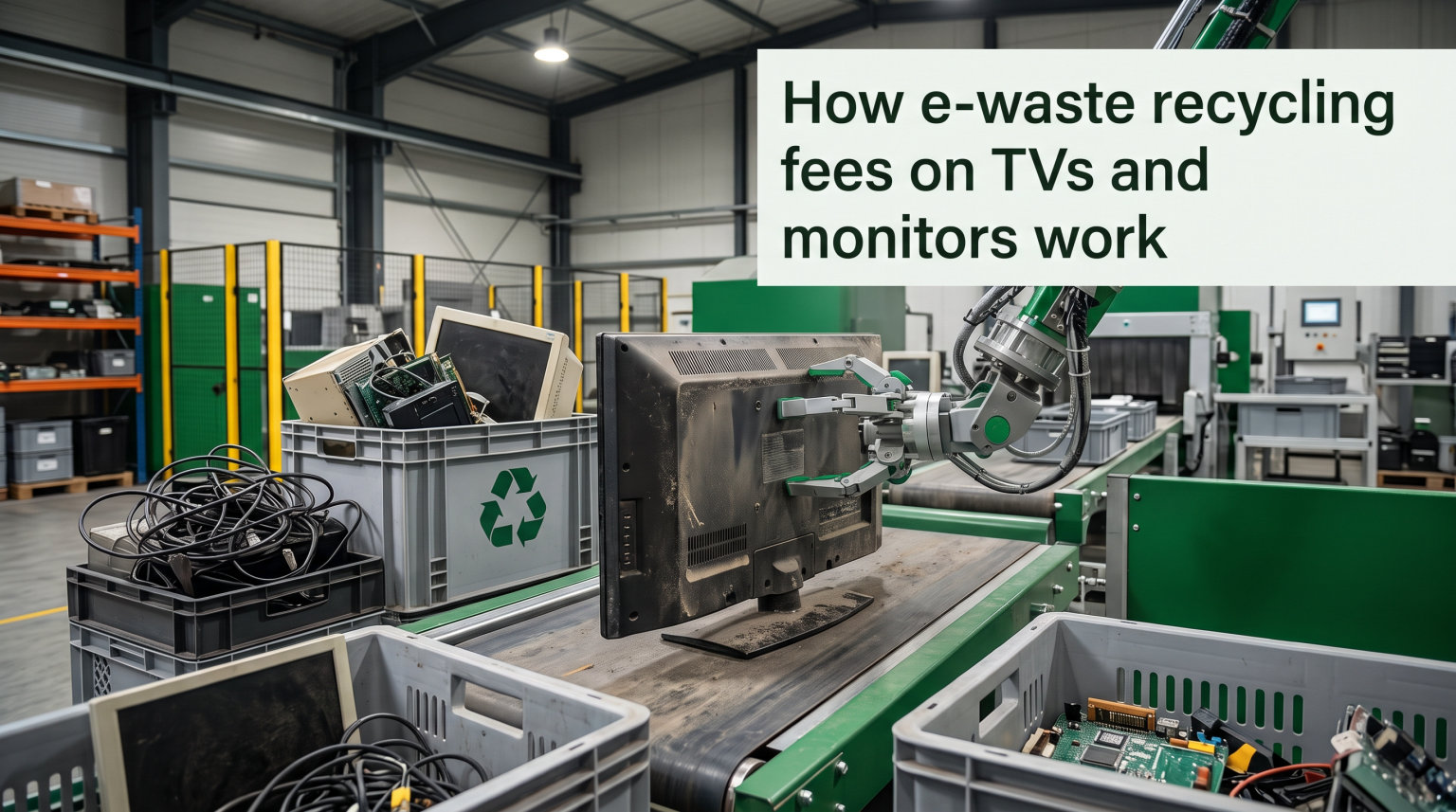
Buying a new TV or computer monitor often comes with a surprise line item at checkout: a recycling fee. Understanding how e-waste recycling fees on TVs and monitors work helps you plan your budget and know exactly where your money goes.
Our team dug into state program documents, retailer policies, and real consumer experiences from recycling forums to break this topic down clearly. Whether you live in California, Vermont, or somewhere with no formal program, this guide covers what you need to know for 2026.
We will explain the fee structure, why amounts vary so widely, where the money ends up, and how to find free or low-cost recycling options in your area.
Table of Contents
What Is the E-Waste Recycling Fee on TVs and Monitors?
An e-waste recycling fee is a mandatory charge added to the purchase price of certain electronic display devices to fund their safe end-of-life recycling. The fee is collected at the point of purchase by retailers and then remitted to state-approved collectors and recyclers.
In practice, when you buy a new TV or monitor at a store or online, the fee appears on your receipt alongside sales tax. The retailer does not keep this money. Instead, they forward it to a state agency or certified recycling program that distributes the funds to the facilities handling the actual dismantling and processing.
The concept started with California’s Electronic Waste Recycling Act, which created the Covered Electronic Waste (CEW) recycling fee system. Other states have since adopted similar programs, though the details vary significantly.
It is important to distinguish this purchase-time fee from the disposal fee some retailers charge when you drop off an old device. The purchase fee funds future recycling infrastructure. The drop-off fee covers the immediate cost of processing your specific item.
How the Fee Amount Is Determined
Fee amounts are based primarily on the diagonal screen size of the device, measured in inches. Larger screens cost more to recycle because they contain more materials, heavier glass, and in some cases more hazardous substances.
The screen size is always measured diagonally from corner to corner, which is the standard way manufacturers list TV and monitor dimensions. A 32-inch TV and a 32-inch monitor fall into the same fee tier despite being different product types.
California’s program uses three size categories, and many other states follow a similar tiered approach. The fee you pay depends entirely on which tier your device falls into.
Fee Breakdown by Screen Size
Here is the current California Covered Electronic Waste recycling fee structure for video display devices, which serves as the most widely referenced model:
Under 15 inches (measured diagonally): $5
At least 15 inches but less than 35 inches: $6
35 inches or greater: $7
These amounts apply to covered video display devices sold to consumers in California. The fees have been adjusted over the years as recycling costs and program needs changed.
Contrast that with retailer drop-off fees, which can run much higher. Based on forum reports and retailer policies, Best Buy typically charges $25 to $30 per TV or monitor for recycling. Local facilities may charge $10 to $15 per item.
This gap between the purchase-time state fee and the drop-off disposal fee is one of the biggest sources of consumer confusion.
Where Does Your Recycling Fee Go?
The money collected from e-waste recycling fees flows through a chain of participants in the recycling system. Retailers collect the fee from consumers at the register, then send it to the state agency administering the program.
The state agency uses those funds to pay certified collectors and recyclers who actually receive, sort, and process old electronics. Collectors are the drop-off locations where you bring your old TV. Recyclers are the facilities that break down the devices into component materials like glass, plastic, copper, and precious metals.
In California’s system, collectors and recyclers receive a payment based on the weight of covered electronic waste they process. This payment offsets the real cost of safely dismantling devices that contain lead, mercury, cadmium, and other hazardous materials.
Without these payments, recyclers would have no financial incentive to accept old TVs. The recycling process is expensive because it requires specialized equipment, trained workers, and compliance with strict environmental regulations.
The fee also funds public education programs about proper e-waste disposal and helps support free community recycling events.
Why E-Waste Recycling Fees Exist
E-waste recycling fees exist because TVs and monitors contain hazardous materials that cause serious environmental damage when dumped in landfills. Cathode ray tube (CRT) televisions, for example, can contain up to 8 pounds of lead per unit.
Modern flat-panel displays also contain concerning substances. LCD screens may include mercury in their backlighting, and the circuit boards inside both CRTs and flat panels contain flame retardants and heavy metals.
When these devices end up in regular landfills, the toxic materials can leach into soil and groundwater. A single CRT television can contaminate a significant area if it breaks open and its components are exposed to rain.
The fee system shifts the cost of safe disposal to the point of purchase, spreading it across all consumers rather than burdening only those who actually recycle. This approach is called extended producer responsibility, and it has become the standard model for electronic waste management worldwide.
Forum discussions reveal that many consumers feel frustrated by these fees, especially when they seem unexpected. But the alternative is far worse. Illegal dumping of e-waste creates expensive cleanup costs for local governments and poses real health risks to nearby communities.
State-by-State: How E-Waste Fees Vary
E-waste recycling fees vary dramatically from state to state. As of 2026, 25 states plus the District of Columbia have some form of electronic waste recycling law, but their fee structures and requirements differ widely.
California operates the most well-known purchase-time fee system. Every consumer buying a covered device in the state pays the fee at checkout, regardless of where the device was manufactured or where it will eventually be recycled.
Vermont takes the opposite approach. The Vermont E-Cycles program offers free recycling for computers, monitors, TVs, printers, and computer accessories at designated locations across the state. Manufacturers fund the program rather than consumers paying at the point of purchase.
States like Oregon, Washington, Minnesota, and Wisconsin also have manufacturer-funded recycling programs, meaning consumers do not pay a visible fee when buying a new TV. The cost is built into the product price instead.
The remaining 25 states have no specific e-waste recycling law. In those states, consumers may face full disposal costs when dropping off old electronics, with no fee collected at the time of purchase.
This patchwork of regulations is why someone in California pays a $7 fee at checkout while someone in Texas may pay $30 at a recycling drop-off center. The total cost of recycling is similar, but who pays and when differs based on the state system.
Retailer Recycling Fees: Best Buy, Staples, and More
Retailers that accept old electronics for recycling often charge their own fees, separate from any state program. These fees cover the retailer’s cost of transporting and processing the devices through third-party recyclers.
Best Buy charges approximately $25 to $30 per TV or monitor for recycling at their stores. They accept up to three items per household per day and have limits on screen size, typically capping at 50 inches.
Staples takes smaller electronics like computers and printers, often at no charge through their trade-in program. However, they generally do not accept televisions or large monitors.
Local waste management authorities sometimes offer electronics recycling for around $10 per item. Based on forum reports from users in various states, county-run hazardous waste facilities tend to offer the lowest disposal fees.
Some retailers waive their recycling fee if you purchase a new replacement device. This trade-in model encourages upgrading while keeping old devices out of landfills. Always ask about this option before paying a separate disposal fee.
The key takeaway from consumer experiences: always call ahead. Fees change frequently, size limits vary by location, and some stores temporarily stop accepting certain items during peak periods.
What Devices Are Covered by E-Waste Fees?
Devices covered by e-waste recycling fees are primarily video display devices, defined as screens with a display area greater than 4 inches measured diagonally. This includes CRT televisions, flat-panel TVs (LCD, LED, OLED, and plasma), and computer monitors.
California’s program also covers battery-embedded products (CBEPs), which includes devices like rechargeable power tools, electric bicycles, and small electronics with built-in batteries. These items carry their own separate fee structure.
Devices generally not covered include smartphones, tablets with screens under a certain threshold, calculators, and portable gaming devices. If you are unsure whether your device qualifies, check with your state environmental agency or the retailer.
The covered electronic waste designation matters because it determines which items qualify for free or subsidized recycling under state programs. A non-covered item may cost significantly more to dispose of.
How to Recycle Your TV or Monitor?
Recycling your TV or monitor takes just a few steps once you know where to go and what to bring. Here is the process our team recommends:
Step 1: Check your state program. Search for your state’s environmental agency website and look for their electronics recycling page. States with formal programs will list approved collection sites and any applicable fees.
Step 2: Contact local retailers. Call Best Buy, Staples, or other electronics stores near you to ask about their recycling policies. Confirm whether they charge a fee, what screen sizes they accept, and their daily item limits.
Step 3: Look for community recycling events. Many cities and counties host free e-waste collection events throughout the year. Check your local government website or community bulletin for upcoming dates.
Step 4: Consider manufacturer take-back programs. Brands like Samsung, LG, and Sony offer mail-in or drop-off recycling for their products. Some manufacturers partner with retailers to provide free recycling when you provide proof of purchase.
Step 5: Prepare your device. Remove any personal data from smart TVs. Disconnect all cables, stands, and accessories. Most recyclers want just the bare display unit.
Step 6: Transport safely. Keep the screen protected during transport. Many people use the original box, but a blanket wrap also works for short trips.
Following these steps helps you avoid the most common pitfalls, like showing up to a store that just changed its policy or discovering a size limit you were not expecting.
Free and Low-Cost Recycling Alternatives
Free recycling options do exist if you know where to look. Manufacturer take-back programs, state-sponsored events, and nonprofit electronics refurbishers all offer ways to dispose of old TVs and monitors without paying a fee.
Goodwill and Salvation Army locations in some states accept working TVs and monitors at no charge. They refurbish what they can and responsibly recycle the rest. Call ahead to confirm they accept your specific device type.
If your TV still works, consider donating it to a school, community center, or low-income housing organization. Working devices avoid the recycling system entirely, which saves money and extends the product’s useful life.
For non-working flat screens, search for local repair shops that may refurbish and resell them. Some shops offer free pickup for devices they consider repairable.
FAQs
Where can I dispose of old TV and computer monitors?
You can dispose of old TVs and monitors at certified electronics recyclers, retailer take-back programs like Best Buy, county hazardous waste facilities, and community e-waste collection events. Always call ahead to confirm accepted items, fees, and size limits before making the trip.
Why does it cost so much to recycle a TV?
TVs cost $25 to $30 to recycle because they contain hazardous materials like lead and mercury that require specialized handling. Recyclers must safely remove toxic components, separate glass and metals, and comply with strict environmental regulations. The fee covers labor, equipment, transport, and proper disposal of dangerous substances.
Does Best Buy charge a fee to recycle TVs?
Yes, Best Buy charges approximately $25 to $30 per TV or monitor for recycling at their stores. They accept up to three items per household per day and typically cap screen size at 50 inches. The fee may be waived if you purchase a replacement device.
What do you do with old flat screen TVs that don’t work?
Non-working flat screen TVs should be taken to a certified e-waste recycler, a retailer with a recycling program, or a community collection event. Some repair shops accept broken flat screens for parts. Never throw a TV in the regular trash because it contains hazardous materials that can contaminate soil and water.
Conclusion
Understanding how e-waste recycling fees on TVs and monitors work comes down to three key points. The fee is collected at purchase based on screen size, the money funds certified collectors and recyclers who safely process hazardous materials, and the amounts vary widely depending on your state and retailer.
By knowing your state’s program rules, checking retailer policies before you go, and exploring free alternatives like manufacturer take-backs and community events, you can dispose of old electronics responsibly without overpaying. The small fee you pay now prevents serious environmental damage and keeps toxic materials out of landfills for good.