
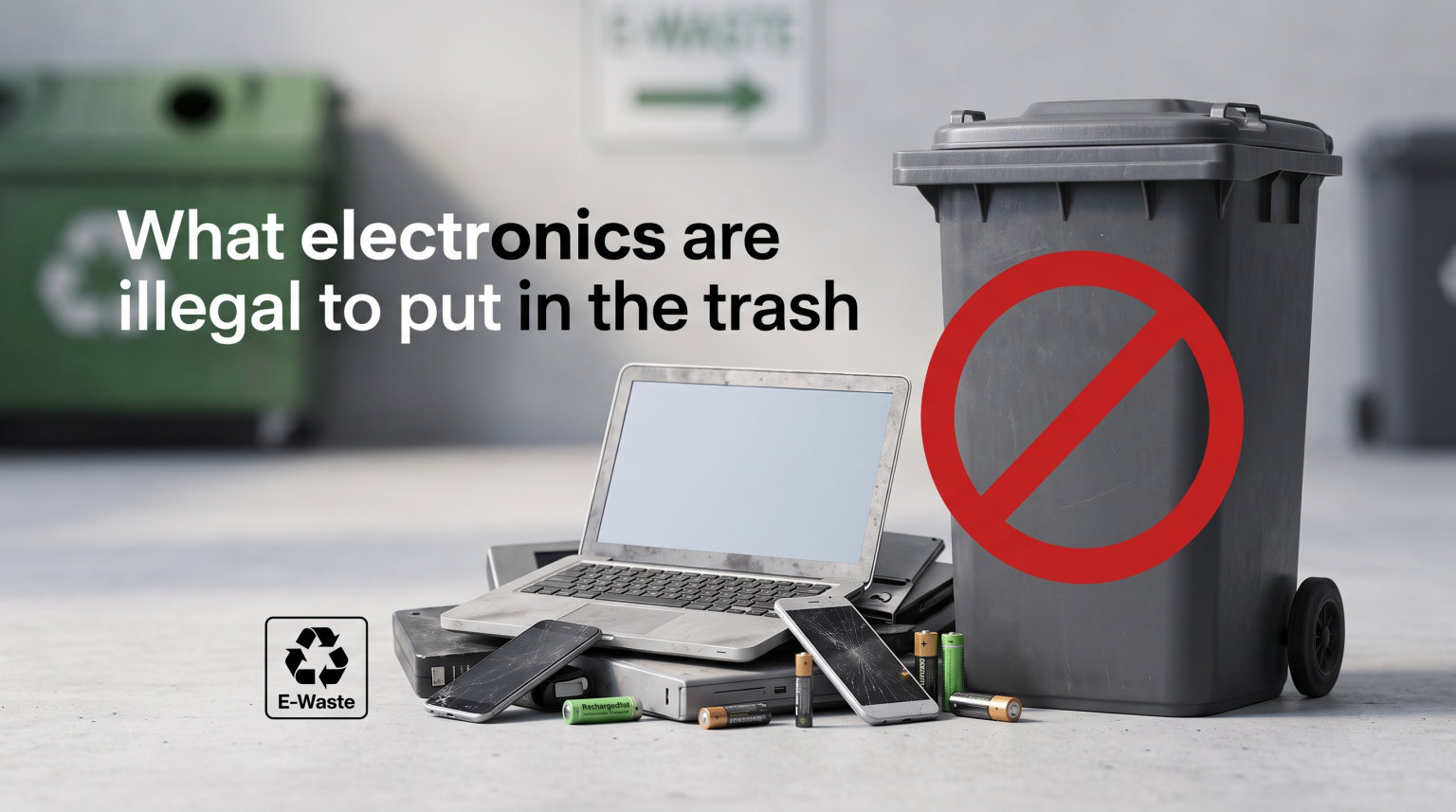
Electronics illegal to put in the trash include televisions, computers, monitors, laptops, tablets, cell phones, and printers in 28 US states. These devices contain toxic heavy metals like lead, mercury, and cadmium that contaminate soil and groundwater when landfilled. Federal regulations through the Resource Conservation and Recovery Act and individual state landfill bans restrict throwing electronics away with regular garbage.
I spent weeks digging through EPA documents, state environmental agency websites, and recycling industry reports to put this guide together. My goal is to give you a clear picture of what you can and cannot toss in the trash, what happens if you break the rules, and where to take electronics instead. I have also included a comparison of how other countries handle e-waste and a myth-busting section to address common misconceptions.
Table of Contents
What Electronics Are Illegal to Put in the Trash?
Yes, in most US states, certain electronics are illegal to put in the trash. The banned items are officially called “covered electronic devices” or CEDs. They are restricted because of hazardous materials inside them.
Most state laws ban the same core categories of electronics from landfills. The list includes any device with a circuit board, a screen over four inches, or a battery that contains heavy metals.
Here is the comprehensive list of electronics illegal to put in the trash in states with comprehensive bans:
Televisions including older CRT TVs and modern flat screens
Computer monitors and laptops
Desktop computers and central processing units
Computer peripherals like keyboards, mice, and printers
Tablets and e-readers
Cell phones and smartphones
Cable and satellite receivers
DVD, VCR, and Blu-ray players
Video game consoles
Small electronic devices including radios, alarm clocks, and toys with electronic components
Some states go further. California, for example, bans any video display device with a screen larger than four inches measured diagonally. New York covers printers, fax machines, and computer mice alongside traditional CEDs. Connecticut includes portable music players and digital cameras in its banned list.
The exact list varies by state, so check your local regulations before tossing anything electronic. What is illegal in California might be allowed in Texas, and vice versa. Even within the same state, different counties may have stricter rules through local ordinances.
Small electronics like cables, chargers, and earbuds often get overlooked. While not always specifically banned by name, these items contain copper, plastic, and trace heavy metals that should not go in regular trash. Most certified recyclers accept these items free of charge.
Federal Regulations Governing E-Waste Disposal
The Resource Conservation and Recovery Act (RCRA) is the main federal law that controls hazardous waste in the United States. It gives the Environmental Protection Agency the authority to regulate electronics containing toxic materials. RCRA was passed in 1976 and has been amended multiple times to address emerging waste streams.
Under RCRA, certain electronic components are classified as hazardous waste when they fail toxicity tests. Lead, mercury, cadmium, and hexavalent chromium found in circuit boards and screens trigger these classifications. The toxicity characteristic leaching procedure (TCLP) is the standard test used to determine whether a material is hazardous.
The EPA also created the Universal Waste Rule in 1995 to simplify handling of common hazardous items. This rule covers batteries, pesticides, mercury thermostats, and lamps. Many states extend these universal waste rules to cover additional electronics like computers and televisions.
Federal law does not directly ban electronics from household trash. Instead, RCRA sets the framework. States then pass their own laws making it illegal to throw specific devices in the garbage. This federalist approach means regulations vary dramatically based on where you live.
This is why the patchwork of state regulations exists. Federal agencies provide the legal foundation, but states enforce the actual trash bans. States also administer their own electronics recycling programs funded through manufacturer fees and consumer pre-purchased recycling fees.
EPA Enforcement Authority
The EPA can investigate violations, issue cleanup orders, and impose civil penalties up to $76,732 per violation per day under current 2026 guidelines. Criminal penalties can reach $250,000 for individuals and $1 million for organizations. These figures are adjusted annually for inflation.
In practice, the EPA focuses on large-scale commercial violations. Local authorities and state environmental agencies handle most household e-waste enforcement. State agencies typically have more staff dedicated to landfill inspections and waste hauler audits.
The EPA also operates the National Electronics Challenge, a voluntary partnership program that encourages manufacturers, retailers, and recyclers to improve electronics stewardship. Participating organizations commit to reducing environmental impact throughout the product lifecycle.
Why Electronics Disposal Is Heavily Regulated
Electronics contain heavy metals and toxic chemicals that pose serious environmental and health risks when landfilled. A single CRT monitor can contain four to eight pounds of lead. Older computer monitors and televisions built before 2007 are the most lead-intensive devices in the waste stream.
When electronics break down in landfills, these materials leach into the surrounding soil. Rain carries the contamination deeper, eventually reaching groundwater supplies. Once in the water table, heavy metals persist for decades. Lead exposure causes neurological damage, particularly in children, while mercury accumulates in fish and the food chain.
Toxic Materials in Common Electronics
Here are the hazardous substances found in everyday electronics:
Lead found in CRT glass, solder, and circuit boards
Mercury present in LCD backlights and older flat screens
Cadmium used in rechargeable batteries and semiconductors
Arsenic found in older semiconductors and LCD glass
Brominated flame retardants in plastic casings and circuit boards
Lithium in batteries that can cause fires when crushed
Hexavalent chromium in metal coatings and corrosion inhibitors
Polychlorinated biphenyls (PCBs) in capacitors and transformers from older equipment
The environmental impact goes beyond contamination. Electronics also contain valuable recoverable materials. One metric ton of circuit boards contains more gold than one metric ton of gold ore. Recycling recovers these materials, reducing the need for environmentally harmful mining operations.
The United Nations estimates 50 million tons of e-waste are generated globally each year. Less than 25% gets recycled properly. The rest ends up in landfills, incinerators, or informal processing operations in developing countries where workers face hazardous exposure without proper protective equipment.
Health consequences extend beyond environmental contamination. Studies link improper e-waste processing to elevated rates of respiratory illness, kidney damage, and developmental disorders in communities near informal recycling sites. The Basel Action Network has documented these impacts extensively.
States With E-Waste Landfill Bans
Currently, 28 states plus the District of Columbia have laws restricting electronics from landfills. The specific items banned and penalties vary significantly by state. Coverage ranges from a few specific items to comprehensive bans covering dozens of device categories.
States with comprehensive e-waste bans include California, New York, Illinois, Wisconsin, New Jersey, Massachusetts, Connecticut, Maine, Vermont, Rhode Island, Oregon, Washington, Hawaii, Minnesota, Maryland, Pennsylvania, Indiana, Iowa, Michigan, Missouri, North Carolina, Utah, West Virginia, Virginia, Georgia, Kentucky, Louisiana, and Texas.
State Penalty Comparison
Penalties range from warnings to fines over $100,000 depending on the state and severity. Here is how major states compare:
California: Fines up to $25,000 per day for illegal disposal under the Electronic Waste Recycling Act
New York: Civil penalties up to $4,500 per violation under the NYS Electronic Equipment Recycling and Reuse Act
Illinois: Class A misdemeanor for individuals, with fines up to $5,000 per day per violation
Wisconsin: Forfeitures ranging from $50 to $1,000 per violation for individuals
Massachusetts: Penalties up to $25,000 for businesses that illegally landfill electronics
New Jersey: Penalties of $1,000 to $10,000 per violation under the Electronic Waste Management Act
Connecticut: Fines up to $5,000 per offense for individual violations
States without statewide landfill bans still often have local ordinances. Cities and counties can pass their own rules restricting electronics disposal. Major cities like Phoenix, Seattle, and Atlanta have local electronics disposal rules that are stricter than state minimums.
Even in states without formal bans, many waste haulers refuse to collect electronics as part of regular trash pickup. Curbside programs in dozens of cities prohibit putting electronics in standard bins. Waste haulers face their own compliance risks if banned items are found in their collection trucks.
States that have not enacted landfill bans still typically regulate commercial e-waste disposal through RCRA. Businesses operating in any state must follow federal hazardous waste rules for large quantities of electronics, regardless of state-level residential bans.
Penalties for Illegal Electronics Disposal
Real enforcement actions show the consequences are serious. Companies have faced six and seven-figure fines for improper e-waste handling. The EPA has significantly ramped up electronics waste enforcement over the past decade.
In 2026, a national electronics retailer settled with the EPA for $4.55 million over improper handling of hazardous electronic waste. A separate case resulted in a $1.5 million fine for a California recycler that illegally exported CRT monitors. International e-waste trafficking cases frequently result in federal prosecution.
For individuals, penalties are typically lower but still significant. Most first-time household violations result in warnings or small fines between $50 and $500. Repeat offenders face escalating penalties. Some jurisdictions issue citations that go on permanent records when unpaid.
Business Penalties vs Household Penalties
Businesses face much higher penalties than households. A business generating electronic waste is considered a “generator” under RCRA. Generators must document proper disposal through licensed recyclers. The generator status triggers federal compliance obligations regardless of state law.
Failure to comply can result in:
Per-day fines for ongoing violations
Cleanup costs for contaminated sites
Criminal charges for willful violations
Loss of operating permits
Personal liability for business owners
Federal debarment from government contracts
Reputational damage from public enforcement records
The EPA estimates the average business e-waste compliance violation costs $15,000 to $50,000 when factoring in fines, cleanup, and legal fees. Larger organizations with significant electronics inventories face much higher exposure if violations are discovered during routine audits.
Healthcare organizations, financial institutions, and government contractors face additional scrutiny due to data security regulations. Improper disposal of devices containing protected health information or financial data can trigger separate penalties under HIPAA, GLBA, and state data breach laws.
How to Properly Dispose of Electronics?
There are four main legal ways to dispose of electronics banned from trash. Each option suits different situations and item types. Most options are free for consumers, though businesses typically pay for recycling services.
Manufacturer Take-Back Programs
Major electronics manufacturers offer free take-back programs. Apple, Dell, HP, Lenovo, and Samsung all accept their own products for recycling regardless of age. Best Buy operates the most extensive third-party program, accepting most electronics free of charge. Apple Trade In even offers credit toward new purchases for working devices.
These programs handle the recycling through certified partners. You typically mail items back or drop them at participating retail locations. Many programs include prepaid shipping labels for larger items. Apple, Dell, and HP all provide free shipping labels for mail-back recycling of their products.
Manufacturer programs typically accept accessories and peripherals from the same brand. Apple accepts any device sold under its brand including older iPods and accessories. Dell accepts monitors, keyboards, and mice purchased with Dell computers.
Retail Collection Programs
Beyond Best Buy, retailers like Walmart, Target, and Staples accept certain electronics for recycling. Cell phone carriers including Verizon, AT&T, and T-Mobile accept old phones regardless of carrier. Office Depot and Staples run recurring business recycling events with free electronics disposal.
Office supply stores often run business-focused recycling events. These events accept larger items like servers and networking equipment that retail stores cannot handle. Costco also accepts certain electronics at collection bins near store entrances.
Retail programs typically have limits on the number of items accepted per visit. Best Buy accepts up to three items per household per day for free. Additional items may carry small fees depending on the type and size.
Certified Recyclers (R2 and e-Stewards)
Two certifications mark responsible electronics recyclers. R2 (Responsible Recycling) and e-Stewards are the industry standards for proper e-waste handling. Both certifications require independent audits and ongoing compliance verification.
Certified recyclers must:
Document all materials received and processed
Refuse to export hazardous e-waste to developing countries
Protect data through certified destruction methods
Track materials through downstream vendors
Maintain insurance and financial responsibility
Implement environmental, health, and safety management systems
Provide downstream auditing of any subcontracted facilities
Always verify certification before choosing a recycler. The Basel Action Network maintains directories of certified R2 and e-Stewards facilities. The Sustainable Electronics Recycling International (SERI) organization oversees the R2 standard. The Basel Action Network administers the e-Stewards program.
Ask potential recyclers for proof of current certification, not just a logo on their website. Certifications expire and require annual renewal. Verify directly with the certifying body before entrusting them with your electronics.
Municipal E-Waste Events
Most cities and counties host periodic e-waste collection events. These events accept items that retail programs reject, including CRT monitors, large appliances, and mixed electronics. Many events also accept items not typically covered by commercial recycling, including holiday light strings and small kitchen appliances.
Check your local government website for upcoming collection dates. Some municipalities also operate permanent drop-off centers for household hazardous waste including electronics. These centers typically operate during business hours and accept items year-round.
Municipal events often accept items commercial recyclers reject, including broken electronics, devices with cracked screens, and items missing essential components. This makes them ideal for disposing of damaged or obsolete items that have been sitting in storage.
Business Compliance Guide for E-Waste Disposal
Businesses face stricter requirements than households. Every company that uses electronics needs a compliance plan. The plan should address disposal procedures, documentation requirements, and ongoing vendor management.
Start by documenting every electronic asset. Maintain records of purchase dates, serial numbers, and disposal methods. This documentation protects you during audits and demonstrates compliance to regulators. Asset management software can automate much of this tracking.
Data Security Considerations
Data security is the most overlooked compliance issue. Before recycling any device that stored data, completely wipe the storage. For businesses, this means following NIST 800-88 guidelines for media sanitization. The guidelines specify three sanitization levels: clear, purge, and physical destruction.
Simply deleting files is not enough. Forensic tools can recover deleted data from hard drives and SSDs. Use certified data destruction software or physical destruction services. For highly sensitive data, physical destruction through shredding or degaussing provides the strongest protection.
Request a Certificate of Destruction from your recycler. This document provides legal proof that data was properly destroyed. Keep these certificates for at least three years. Some industries require longer retention, particularly healthcare organizations subject to HIPAA documentation requirements.
For cloud-connected devices, also sign out of all accounts and unpair from any connected services. Factory reset provides additional protection beyond data wiping. Remove any SIM cards or memory cards before turning devices over to recyclers.
Working With Certified Vendors
Choose recyclers with current R2v3 or e-Stewards certification. Verify certification status directly with the certifying body. Certifications expire and require renewal. Ask for the most recent audit report and review any findings or corrective actions.
Establish a service agreement that specifies:
Acceptable disposal methods for each device category
Data destruction procedures and documentation
Reporting requirements for tracking materials
Audit rights to verify downstream handling
Insurance and liability provisions
Response times for scheduled and emergency pickups
Indemnification for any regulatory violations
Conduct annual audits of your e-waste vendor. Verify they are processing materials as contracted, not exporting hazardous waste or using prison labor, both of which violate most certification standards. On-site audits are more effective than document reviews for verifying actual practices.
Maintain a list of approved downstream vendors. R2 and e-Stewards recyclers use various subcontractors for different processing steps. Knowing the entire chain helps you assess total environmental and compliance risk.
International E-Waste Regulations Comparison
The European Union operates the most comprehensive e-waste system through the Waste Electrical and Electronic Equipment (WEEE) Directive. The directive requires producers to finance collection and recycling of electronics. Consumers pay an eco-fee at purchase that funds the recycling infrastructure.
WEEE sets collection targets requiring EU member states to collect 65% of electronics sold or 85% of waste generated. Most EU countries exceed these targets. The system has achieved collection rates well above what any US state has accomplished.
Other countries with significant e-waste regulations include Japan, South Korea, Taiwan, and Australia. Each operates extended producer responsibility programs requiring manufacturers to fund end-of-life recycling. These programs shift disposal costs from taxpayers to producers who benefit from the sales.
The United States has no federal extended producer responsibility law. Individual states have passed their own EPR programs with varying success. This fragmented approach creates uneven recycling access and inconsistent enforcement across the country.
Common Myths About Electronics Disposal
Several misconceptions lead people to improperly dispose of electronics. Let me address the most common myths with facts.
Myth: Electronics without batteries are safe to throw away. Fact: Circuit boards alone contain lead, mercury, and other hazardous materials. Batteries are only one source of toxicity in electronics.
Myth: Throwing electronics in recycling bins is acceptable. Fact: Regular curbside recycling programs do not accept electronics. Putting electronics in paper or plastic recycling contaminates those streams and can cause entire loads to be landfilled.
Myth: Old electronics have no value, so no one will steal data from them. Fact: Identity thieves actively target old hard drives and phones. Even factory-reset devices can retain recoverable data without proper sanitization.
Myth: Small electronics like cables do not matter. Fact: Cumulatively, small electronics represent millions of tons of recoverable copper and rare earth elements. Proper recycling recovers these materials for new products.
Myth: If my state does not ban electronics, throwing them away is legal. Fact: Federal RCRA still classifies many electronics as hazardous waste. Business disposal must comply with federal rules regardless of state-level residential bans.
Frequently Asked Questions
Can I throw electronic devices in the trash?
No, in 28 US states, you cannot throw most electronics in the trash. Televisions, computers, monitors, laptops, tablets, cell phones, printers, and similar devices are banned from regular garbage due to hazardous materials they contain. Even in states without formal bans, most waste haulers refuse to collect electronics curbside. Use manufacturer take-back programs, retail collection sites, or certified R2 or e-Stewards recyclers for legal disposal.
What electronics should not be thrown away?
Electronics that should not be thrown away include: televisions and monitors, desktop and laptop computers, tablets and e-readers, cell phones and smartphones, printers and scanners, keyboards and mice, cable and satellite receivers, DVD and Blu-ray players, video game consoles, and small electronics with circuit boards. These items contain lead, mercury, cadmium, and other toxic materials that contaminate soil and groundwater when landfilled. Recycling recovers valuable materials like gold, copper, and rare earth elements.
What are 5 things that cannot be recycled?
Five things that cannot be recycled through standard programs include: large CRT televisions over 32 inches, smoke detectors with radioactive components, devices containing PCBs from pre-1979 equipment, broken LCD screens leaking mercury, and lithium batteries that have been damaged or punctured. These items require specialized hazardous waste handling, not standard recycling. Contact your local household hazardous waste facility for proper disposal of these difficult items.
Can you put electronics in a garbage bin?
No, electronics should not go in a regular garbage bin in most areas. Even small electronics like cables, chargers, and earbuds contain materials that require proper recycling. Many curbside programs explicitly ban all electronics from collection bins. Violating these rules can result in your bin being skipped or tagged with a warning. Take small electronics to retail drop-off locations like Best Buy or use mail-back programs offered by manufacturers.
What items are not accepted at e-waste recycling?
Items not accepted at most e-waste recycling facilities include: large household appliances like refrigerators and washing machines, smoke detectors with radioactive components, items containing PCBs, biomedical electronic waste, and damaged lithium batteries posing fire risks. Some facilities also reject items contaminated with hazardous substances like gasoline or chemicals. Call ahead to confirm acceptance before dropping off unusual items, especially for industrial or commercial waste streams.
What happens if you throw electronics in the trash?
If you throw electronics in the trash where banned, consequences range from warnings to significant fines. Household violations typically result in $50 to $500 penalties for first offenses. Business violations can reach $25,000 or more per day under state laws like California’s Electronic Waste Recycling Act. Beyond fines, improper disposal contaminates soil and groundwater with lead, mercury, and cadmium. Electronics also represent lost resources, as recycling recovers gold, copper, and rare earth elements that would otherwise be mined.
Final Thoughts on Electronics Disposal Laws
Understanding which electronics are illegal to put in the trash protects you from fines and helps the environment. The list of banned devices keeps growing as states update their e-waste regulations to address new technology categories. Wireless earbuds, smart home devices, and connected appliances now appear in expanded state lists.
Start by checking your state’s specific rules through your state environmental agency website. Federal EPA resources provide baseline information, but state law controls the actual disposal requirements where you live. Local ordinances may add additional restrictions on top of state law.
For everyday disposal, retailer programs like Best Buy handle most consumer electronics free of charge. Businesses should establish relationships with certified R2 or e-Stewards recyclers and maintain documentation for every device disposed. Data destruction certificates protect against liability for sensitive information.
The bottom line is simple. Electronics illegal to put in the trash exist because of real environmental harm. Lead, mercury, and cadmium do not disappear when buried. They accumulate in groundwater and eventually reach drinking water supplies. Proper recycling keeps these materials out of the environment and recovers valuable resources for future use.
Updated for 2026, this guide reflects current federal regulations and state landfill bans. E-waste laws continue to evolve, so check with your local authorities for the most current requirements before disposing of electronics. New device categories like e-cigarettes and connected appliances are increasingly being added to banned lists as regulators respond to emerging waste streams.